


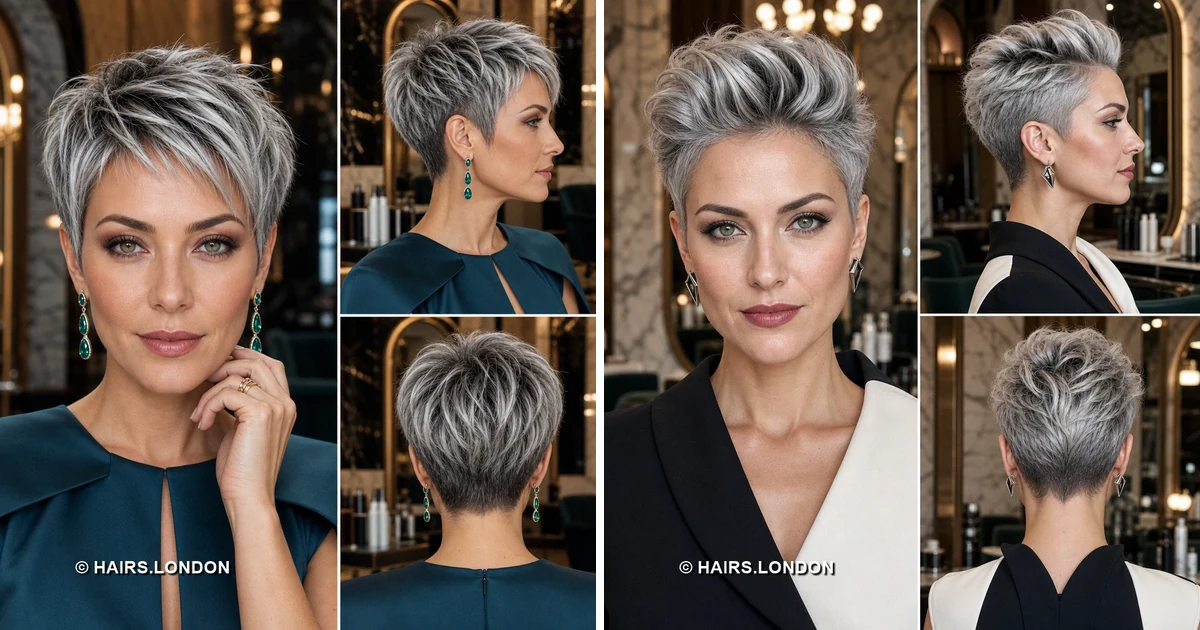
11. Soft Silver Pixie with an Eye-Skimming Fringe
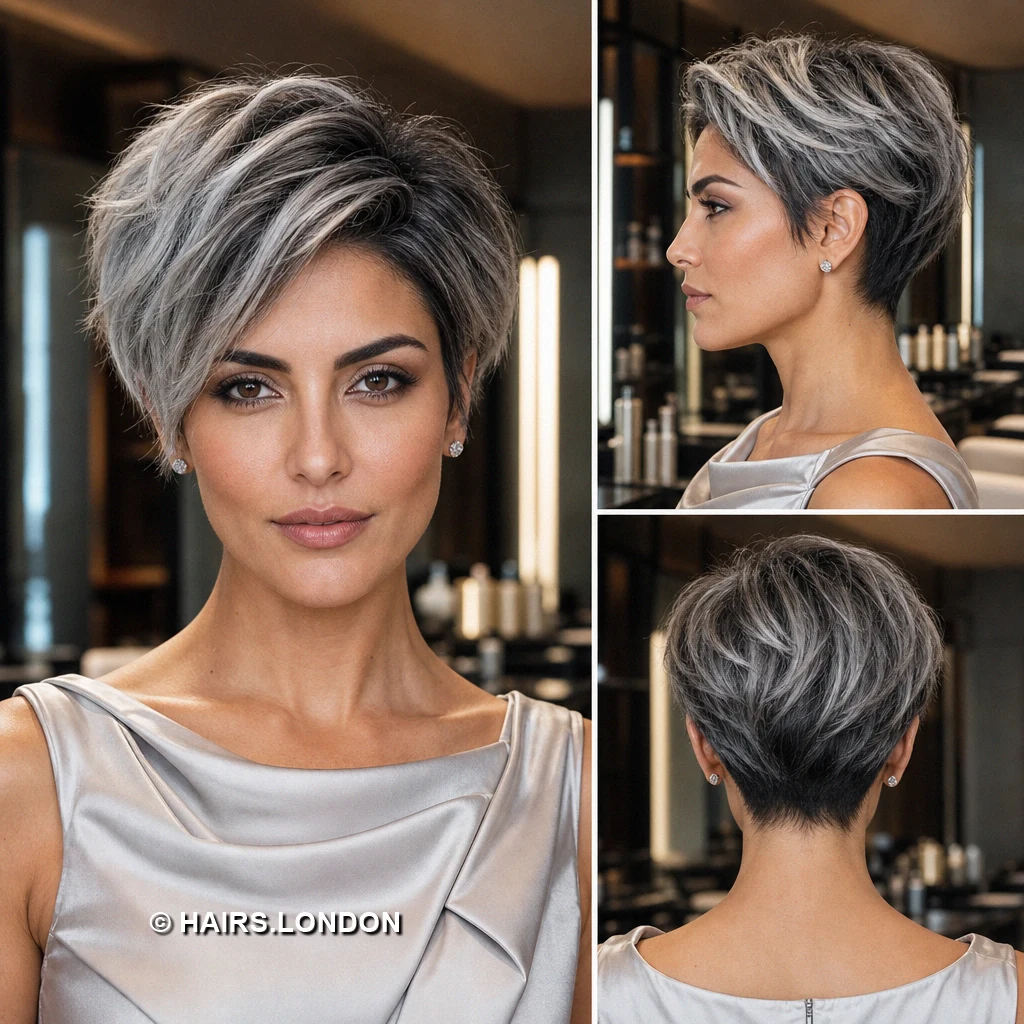
This rounded silver pixie keeps its fullest length forward. A fine, sideward fringe brushes close to one eye. Soft crown layers flow into compact sides without harsh separation. The back tapers neatly beneath a gently rounded outline. Ash depth between pale strands adds texture without pronounced spikes. Ask for fringe length based on your preferred eye clearance. Blow-dry the roots upward, then guide the ends sideways. Use light styling cream to preserve the smooth, touchable finish. Avoid aggressive thinning if your hair lacks natural density. Trim the fringe between full cuts when visibility becomes inconvenient. Check fringe placement after drying.
12. Silver Pixie with a Raised, Separated Front
Silver ribbons curl upward through this raised, textured front section. The crown has substantial lift, while the sides remain shorter. A few fine pieces fall toward the forehead for softness. Darker gray at the roots defines each loose surface strand. The back slopes down into a small, tapered nape. Ask for layered top length that supports lift without heaviness. Dry the front upward while directing the sides toward the head. Separate the finished layers with a fingertip amount of paste. Keep the shape pliable rather than fixing every piece rigidly. Review the side profile carefully with your stylist before leaving.
13. Choppy Ash-Silver Pixie with a Short Fringe
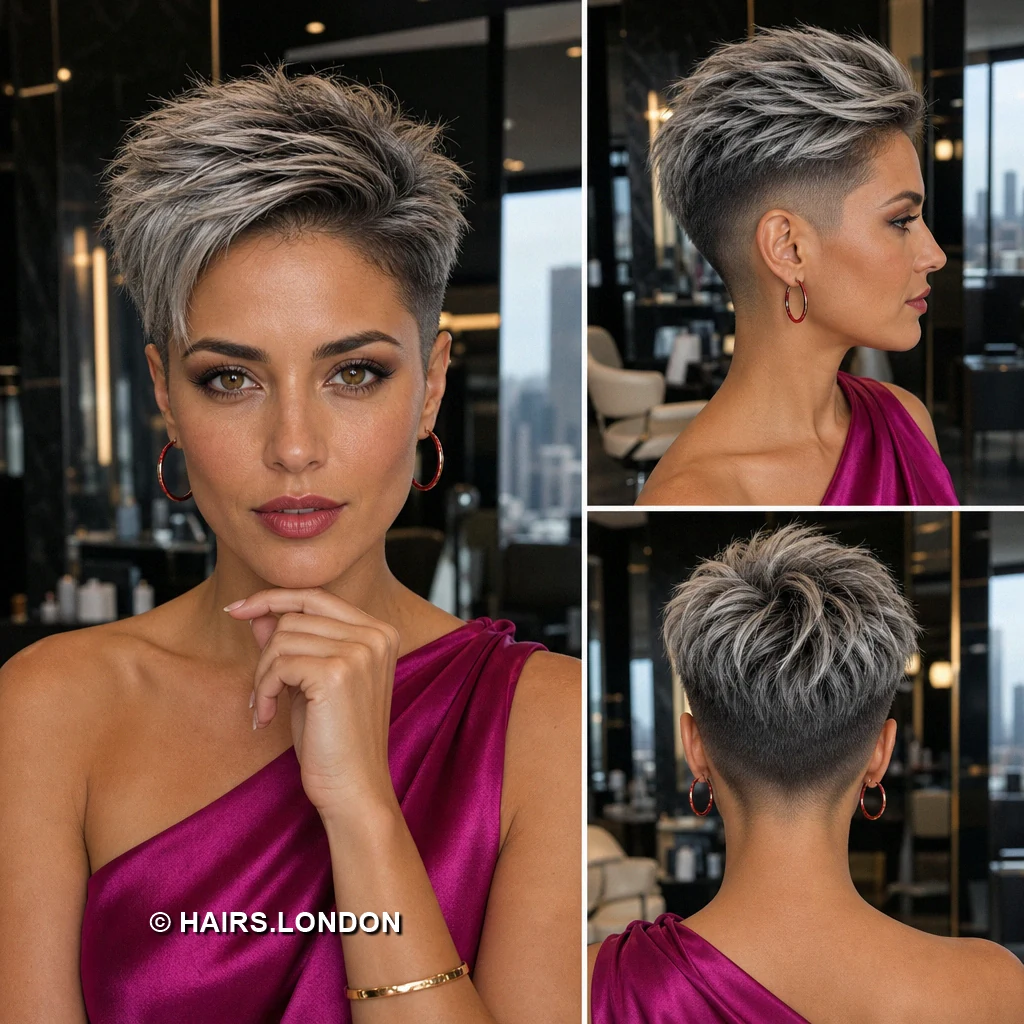
Choppy ash-silver layers create movement across this fuller pixie crown. Short front pieces interrupt the hairline without covering the eyes. The sides stay close, making the top look more expansive. Pale strands cross over darker sections in several directions. At the back, layered texture meets a closely tapered nape. Ask for varied lengths on top while keeping the outline controlled. Rough-dry with your fingers to encourage the visible separation. Add matte product sparingly, concentrating on the longest ends. Avoid flattening the crown with a heavy brush finish. Maintain the short perimeter to keep the shape balanced. Check the back silhouette.
14. Pale Silver Pixie with a Soft Side Sweep
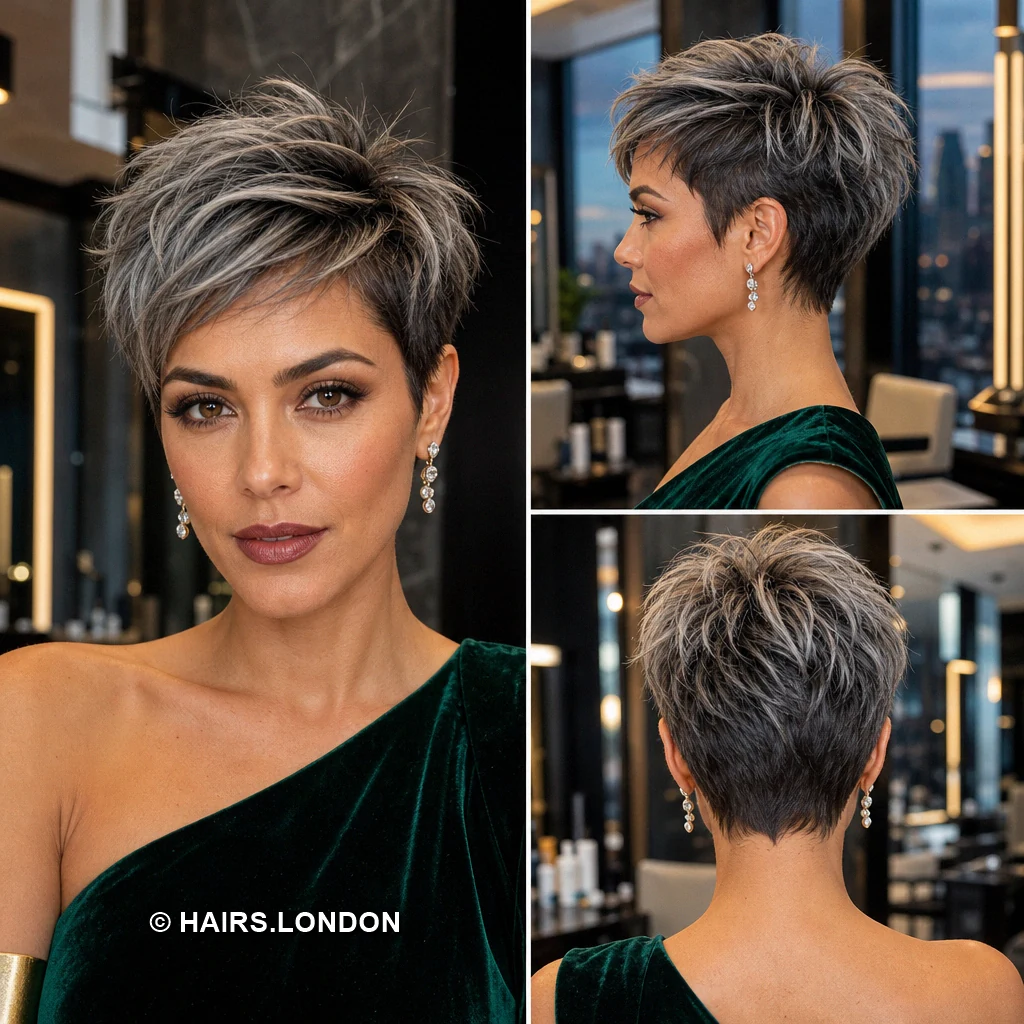
Pale silver length sweeps forward into a softly curved fringe. Deeper gray strands sit beneath the brighter, layered surface. The crown appears full but lies smoother than a spiked crop. Short sides frame the ears and support the longer front. A neat, tapered nape completes the rounded back shape. Ask for softness around the temples rather than severe disconnection. Use a round brush to lift and bend the fringe. Smooth the surface lightly while keeping movement at the ends. Discuss root contrast before committing to a bright silver finish. Trim strategically so the front retains its graceful curve. Check monthly.
15. Silver Pixie with an Upright Feathered Front
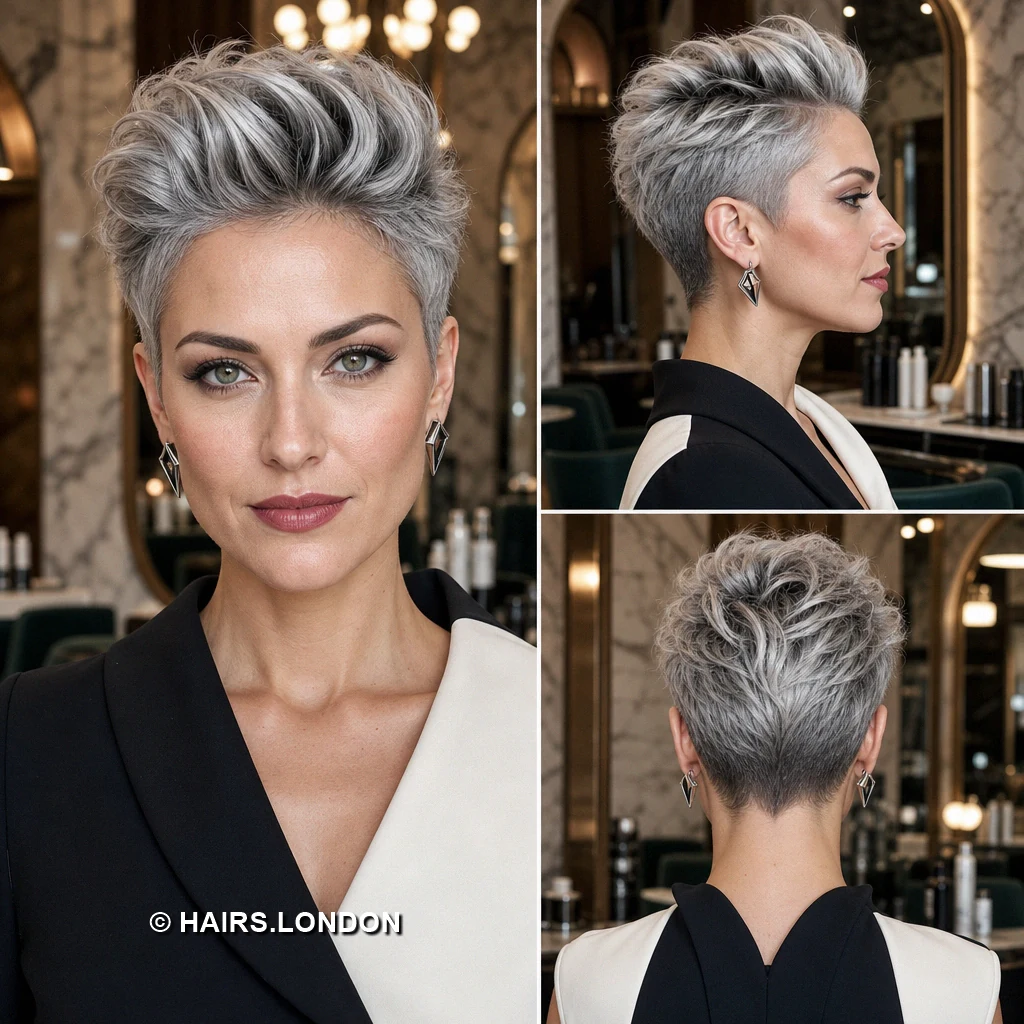
The upright front forms tall, feathered points above the forehead. Silver and charcoal strands alternate throughout the textured top. Short sides sit close while leaving a natural-looking hairline. The crown carries the height backward in loose sections. A dark taper sharpens the outline at the nape. Ask for enough top length to lift individual sections. Blow-dry against the growth direction for additional root volume. Shape the ends with matte paste rather than wet gel. Keep the temples neat to emphasize the taller central silhouette. Expect to restyle after sleep to restore the front height. Review your desired height after drying.
16. Silver Pixie with Sculpted Waves
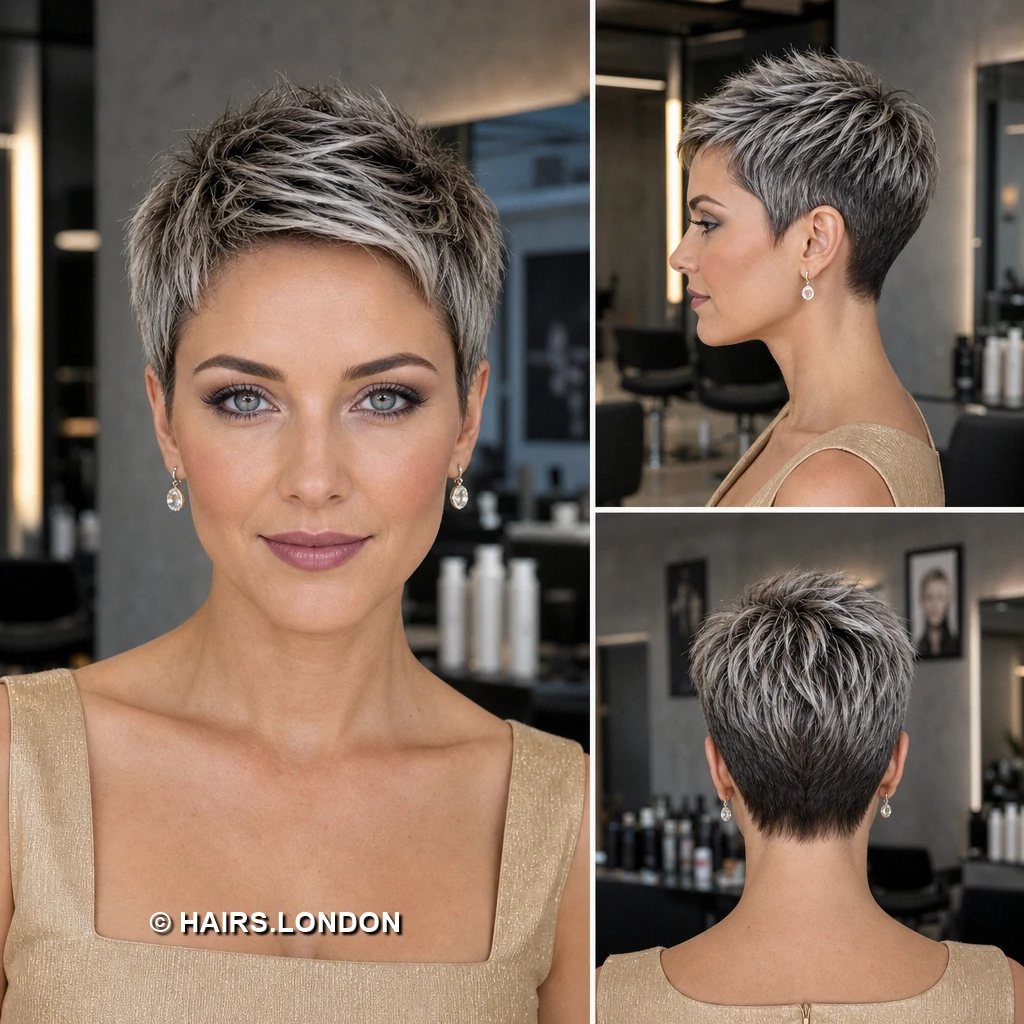
Broad silver waves roll across the longer top section. The raised front reveals the hairline instead of forming bangs. Smooth, shorter sides create a clear contrast with the crown. Behind the waves, layered hair narrows into a tidy nape. Ash shadows underneath make the curved shape more dimensional. Ask your stylist where the top should naturally change direction. Use a round brush to establish lift and gentle bends. Finish with flexible spray while keeping the waves touchable. Avoid excessive backcombing, which can disrupt their smooth surface. Trim the sides before they compete with the sculpted top. Assess waves after drying.
17. Charcoal Pixie with Silver-Tipped Crown Layers
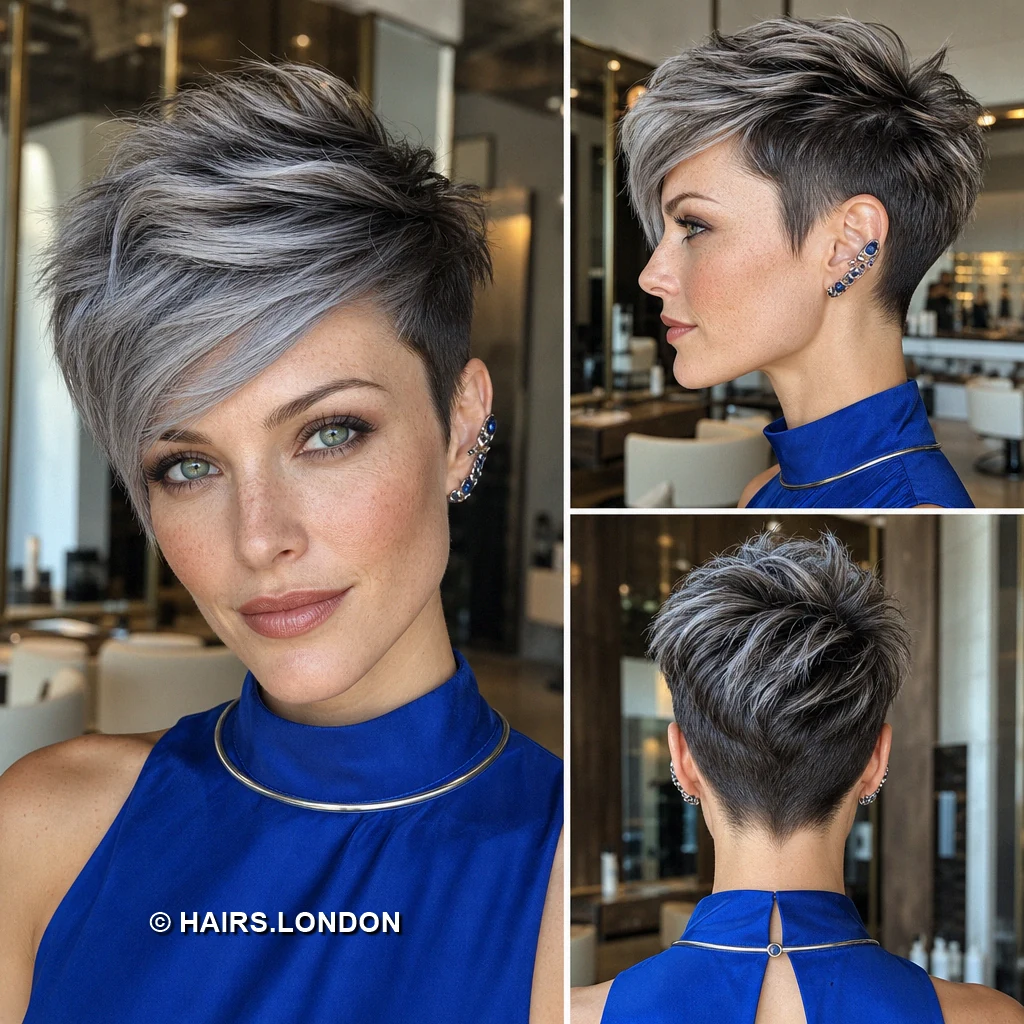
Silver-tipped pieces scatter across a darker, textured pixie crown. The front rises slightly before settling into short, broken points. Close charcoal sides give the lifted top a defined base. At the back, tousled layers taper into a clean nape. The overall shape looks airy rather than sharply sculpted. Ask for soft point cutting that leaves movement throughout. Rough-dry upward, then pinch a few pale ends into place. Choose lightweight paste so the narrow strands remain separate. Let the darker underneath color provide depth between highlights. Refresh the perimeter when it starts covering the ears. Discuss how often color needs refreshing.
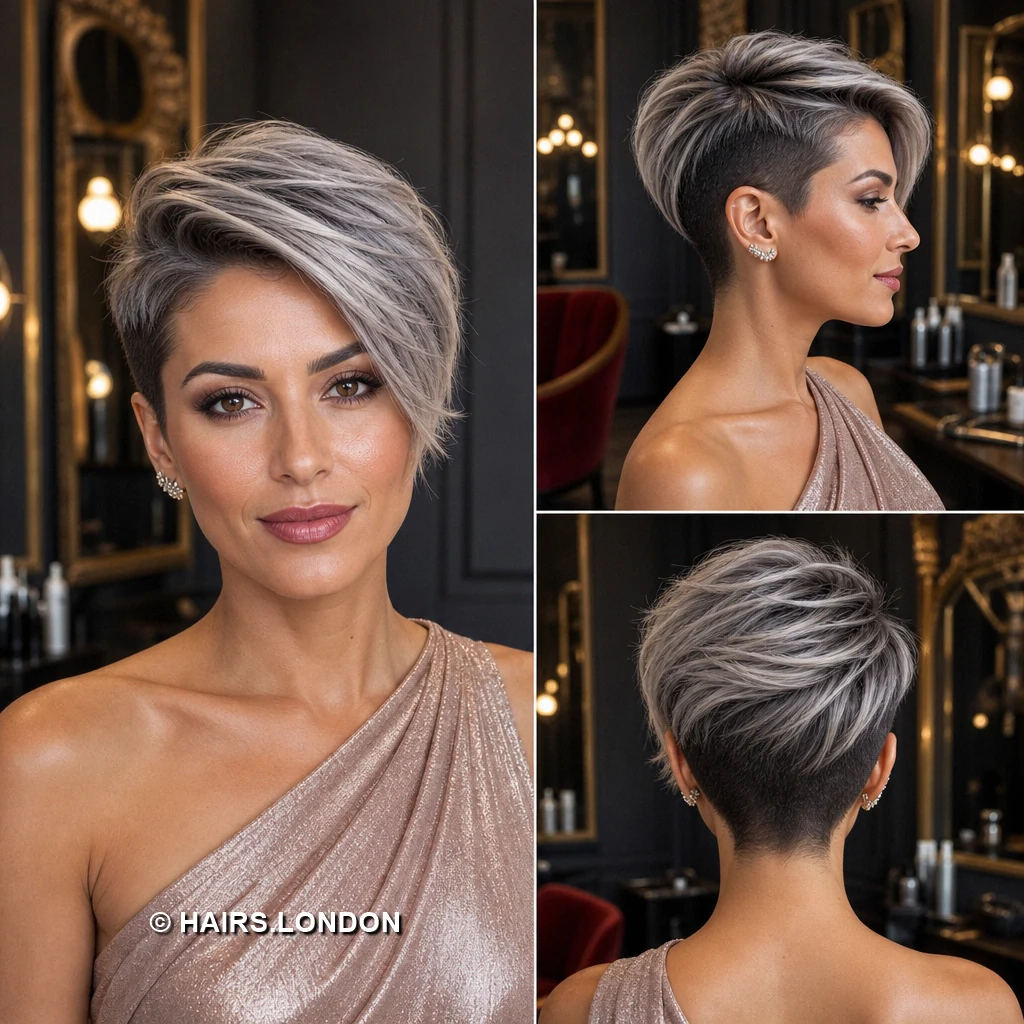
18. Cool Silver Pixie with a Swept-Back Wave
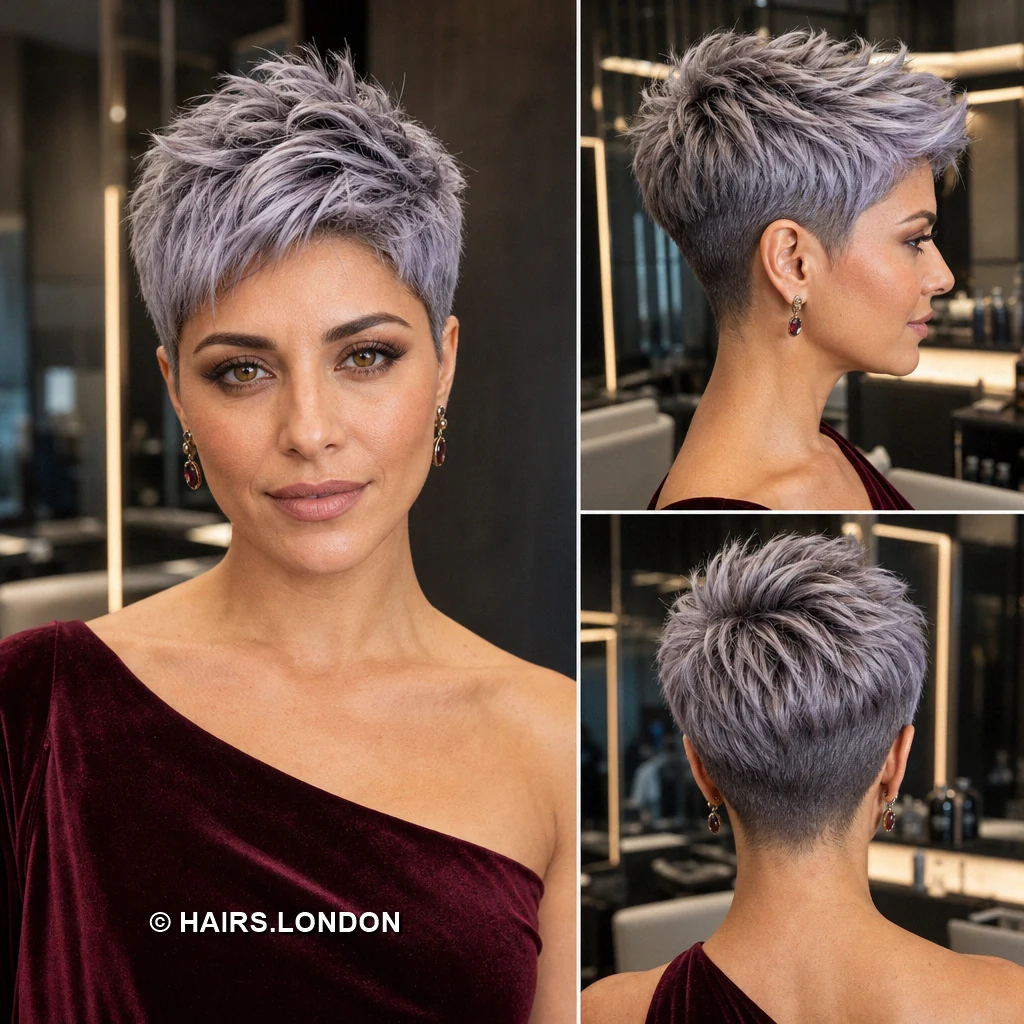
A cool silver wave lifts away from the forehead. Its curved front flows into fuller layers across the crown. Short, softly finished sides expose the ears without sharp lines. The back shows pale texture above a darker tapered nape. Subtle ash depth follows the direction of the wave. Ask for front length that can bend backward comfortably. Brush upward during blow-drying, then guide the hair toward the crown. Use flexible hold to keep the curve from collapsing. Smooth only the sides if you want the top airy. Show your stylist the back view to clarify the taper. Check your shape.
19. Lilac-Silver Pixie with a Tall Textured Quiff
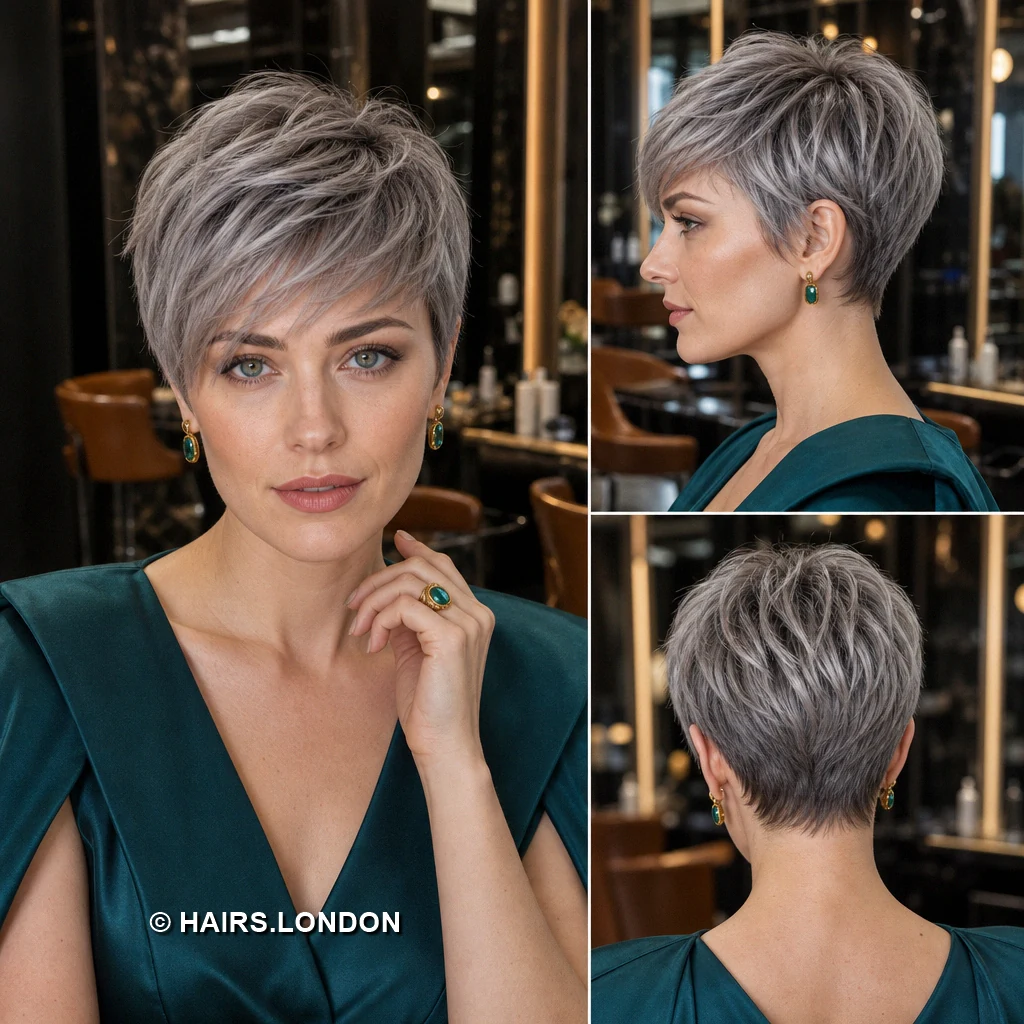
A lilac-silver quiff rises prominently above this short pixie. Long front sections sweep upward and back into pointed strands. Closely cut sides emphasize the height without appearing bare. The crown remains textured, continuing movement toward the tapered nape. Darker violet-gray depth separates the pale, lifted surface pieces. Ask for enough front length to build this dramatic height. Dry the roots upward before shaping the ends with paste. Use hairspray selectively if your hair drops during wear. Discuss the upkeep of both the lilac tone and perimeter. Rework flattened sections with fingers instead of adding excessive product. Reassess height after drying.
How to Choose Your Silver Pixie Shape
Start with the feature you want to control: fringe coverage, crown height or the closeness of the sides. A longer side sweep offers more flexibility around the forehead, while a short, broken fringe keeps it open. Lifted fronts show the hairline and generally require more deliberate drying. Compare the side and back views as carefully as the front; a close taper and a softly layered side can feel quite different as they grow.
Styling Silver Pixies on Different Textures
On fine hair, start with a small amount of root-lifting mousse and dry upward before adding any paste. Coarser hair may respond better to a light smoothing cream on the fringe, with matte product reserved for the ends. If your hair has a natural wave, use your fingers to follow its bend instead of forcing every strand straight. For a swept style, establish its direction while damp; for a quiff, dry the roots upward first and shape the ends afterward.
Keeping Silver and Lilac Color Fresh
The images show pale silver, deeper ash, charcoal-rooted color and two lilac-tinted variations, so a single color routine will not suit every result. Ask your colorist which cleanser and toning schedule fit your particular formula; too much purple-toned product can visibly shift a pale finish. Wash with lukewarm water, limit unnecessary heat and use heat protection when styling. If the color is created through lightening, discuss conditioning and root appointments alongside the initial service.
Maintaining the Pixie Shape
Short napes and sides reveal growth quickly, especially beneath a longer fringe or elevated top. Book trims according to when your own outline starts to lose contrast, rather than waiting until every section feels long. You may be able to tidy a fringe between full appointments, but leave the crown and taper to your stylist. Photograph the cut when you like its shape so the proportions are easier to repeat.
What to Discuss with Your Stylist
Bring the front, side and back view of the image you prefer. Point out the exact fringe endpoint, how much ear you want exposed, the desired crown height and whether the nape should look soft or closely tapered. Explain how your hair falls when air-dried and how much time you will spend styling it. For silver or lilac color, ask what your current hair can realistically achieve, what services are involved and how often the result will need refreshing.
Frequently Asked Questions
Which silver pixie is easiest to style each morning?
A compact, piecey crop generally needs less directional blow-drying than a long side sweep or tall quiff. It will still need occasional product and regular perimeter trims.
Will a long pixie fringe cover my eyes?
It depends on where your stylist cuts it and how you dry it. Agree on the endpoint while your hair is dry, especially if you prefer an uninterrupted line of sight.
How do I give fine hair more crown lift?
Apply a little lightweight mousse at the roots and blow-dry upward. Add minimal finishing product so the lifted sections do not become weighed down.
Can naturally wavy hair work with these pixies?
Yes, but its wave will change how the fringe and crown sit. Ask your stylist to plan the lengths around your natural bend and drying routine.
What is the difference between a soft taper and a closely cropped side?
A soft taper gradually shortens toward the perimeter. A closely cropped side creates a stronger length contrast against the longer top.
How can I keep a side-swept fringe in place?
Set its direction while damp, blow-dry with gentle tension and finish with a little flexible spray. Avoid loading the fringe with heavy cream.
Do lifted silver pixies need a long top?
They need enough front length to bend or stand above the hairline. The precise length depends on your hair’s density, growth direction and desired height.
How often should I trim a tapered pixie?
Book a trim when the sides, nape or fringe stop holding the proportions you want. Close tapers often show growth sooner than the longer crown.
Can I keep darker roots with silver lengths?
Yes. Many of these looks show darker depth beneath pale strands. Discuss where you want that contrast to appear and how it will look as roots grow.
Should I use purple shampoo on silver hair?
Use it only as your colorist recommends for your specific shade. Frequent use can alter the appearance of pale silver or lilac-tinted hair.
What should I ask before choosing a lilac-silver shade?
Ask what lightening, toning and at-home care your starting color requires. Also discuss how the lilac tone may change between appointments.
Which reference photo should I bring to the salon?
Bring the image whose front, side and back proportions you like most. Explain which individual details matter if you want to combine elements from different cuts.
Conclusion
The strongest choice is the silver pixie whose proportions suit your hair and your routine. Decide first whether you want a close, easy-to-shape crop, a fringe you can sweep across, or a lifted top you enjoy styling. Then use the back and side views to make the taper just as intentional as the front.