


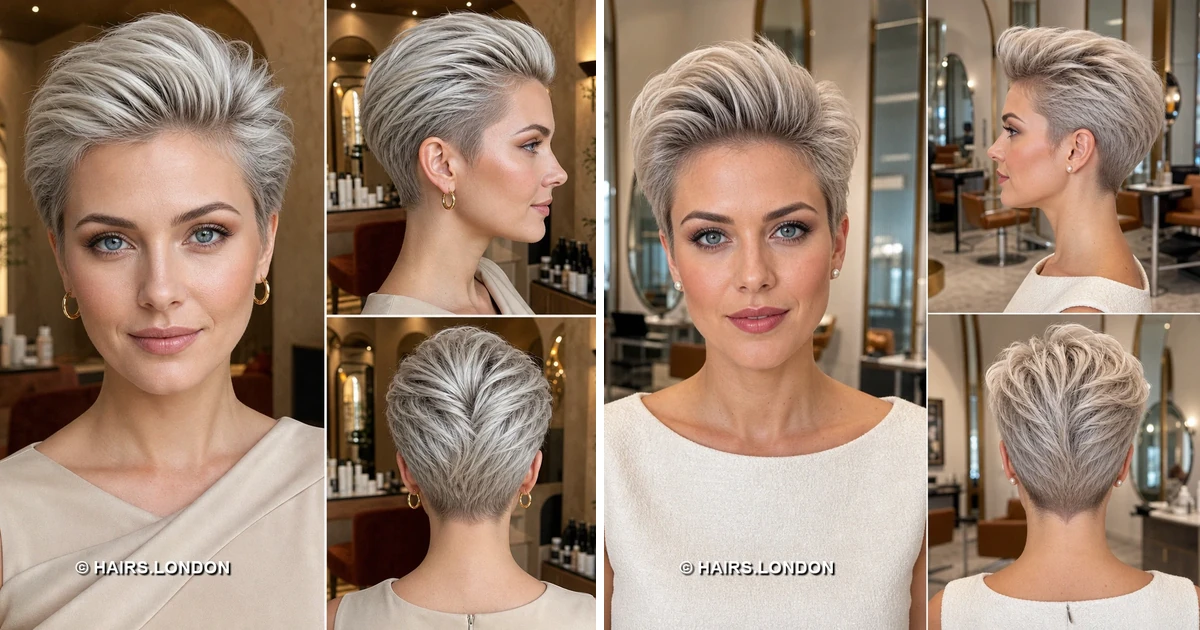
11. Loose Silver Wave Pixie
Silver layers curve back from the forehead into a loose wave, creating height above slim sides and a tapered nape. The fringe is swept away from the eyes, while scattered flyaway ends soften the otherwise sculpted crown and rounded back. Keep the top flexible rather than rigid; its movement depends on length at the front and blending behind the ears. Lift the front with a vent brush and moderate heat, then mist flexible spray without flattening the textured crown beneath. Protect lightened hair with conditioner and gentle heat settings, especially where the tapered ends feel drier after repeated styling sessions.
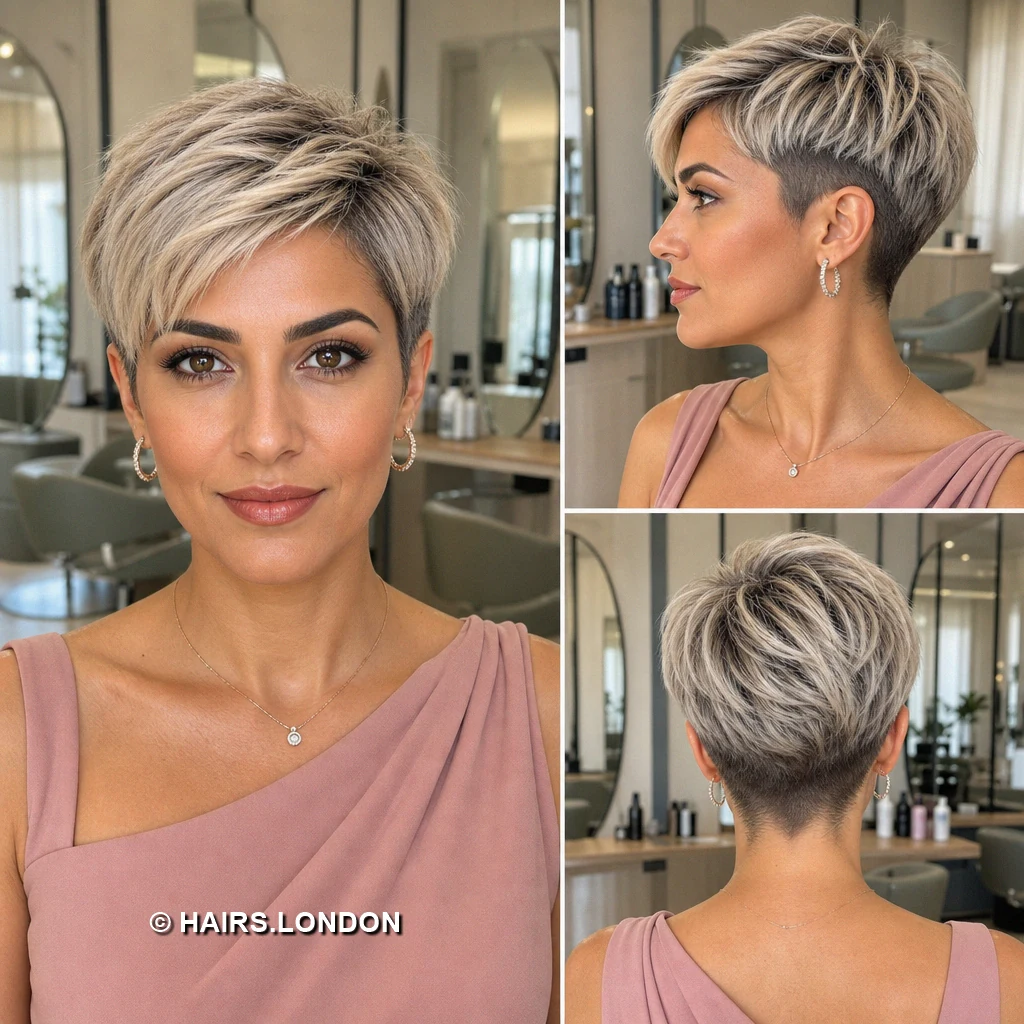
12. Feathery Silver Side Fringe
A long, translucent silver fringe crosses the forehead at an angle, with pale layered fullness throughout the crown and back. The short gray side sits close around the ear, and the narrow nape contrasts with the soft, feathery surface above. Request delicate fringe ends instead of a solid edge if you want the front to remain airy around your eyes. Smooth the fringe with a small round brush and low heat, then finish with flexible spray to keep movement intact. Schedule a shaping appointment as the ears become covered, and discuss root blending before the darker regrowth looks too distinct.
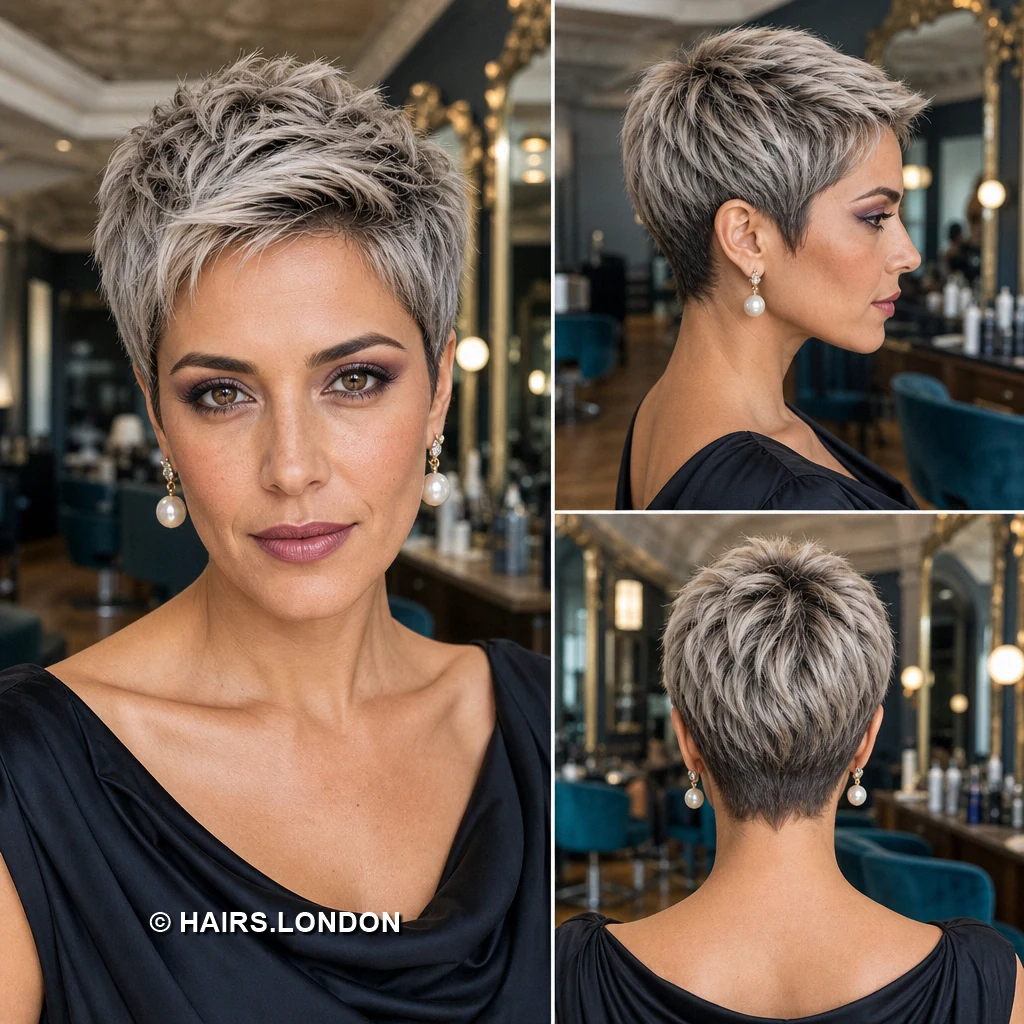
13. Upright Silver Quiff
An upright silver quiff reveals the forehead, with fine combed strands bending back into a full controlled rounded crown shape. Shorter gray sides draw attention to the height, and the back narrows into a small point at the center neckline. Ask for connected layers under the longer front so the quiff can stand up without creating a ledge behind it. Lift the front with a vent brush and moderate heat, then mist flexible spray without flattening the textured crown beneath. Arrange a trim before the neckline loses definition, and ask your colorist how often your pale shade needs professional refreshing.
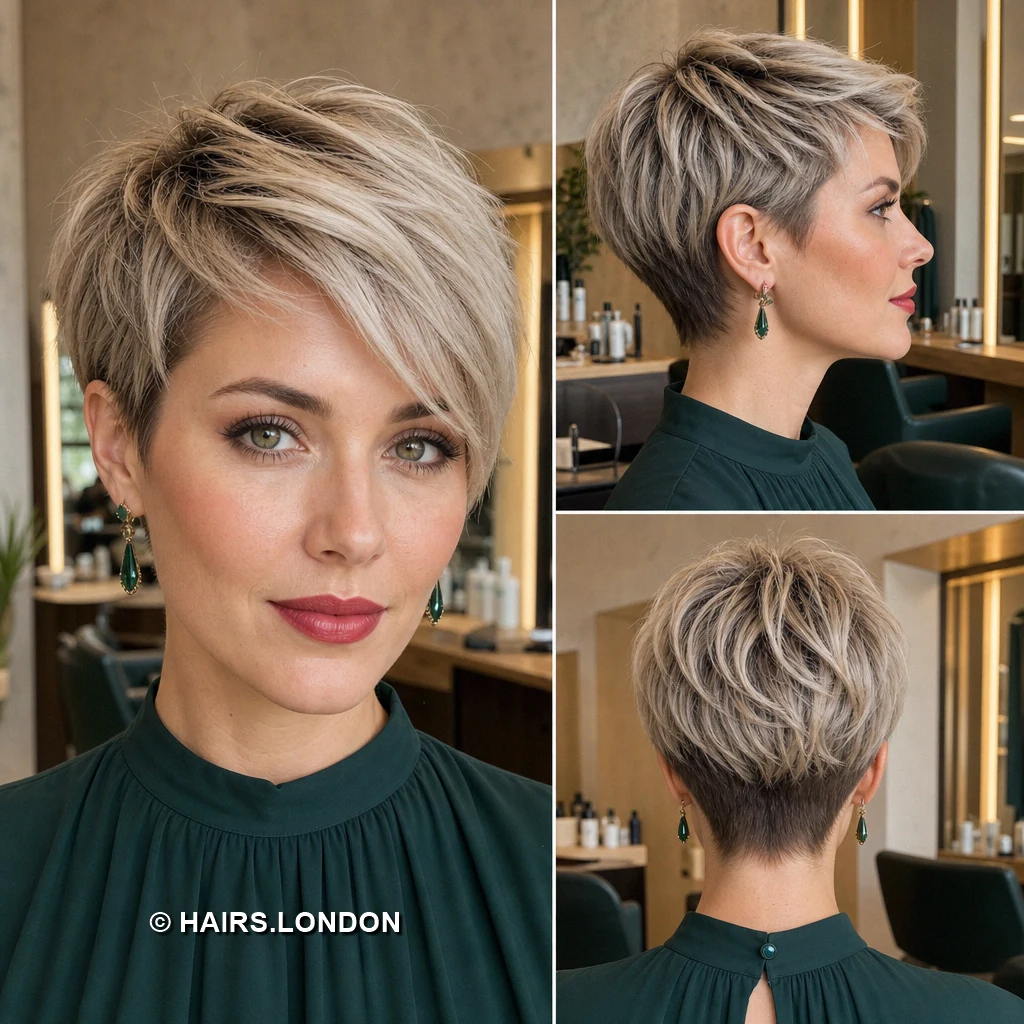
14. Soft Silver Pixie With a Tapered Back
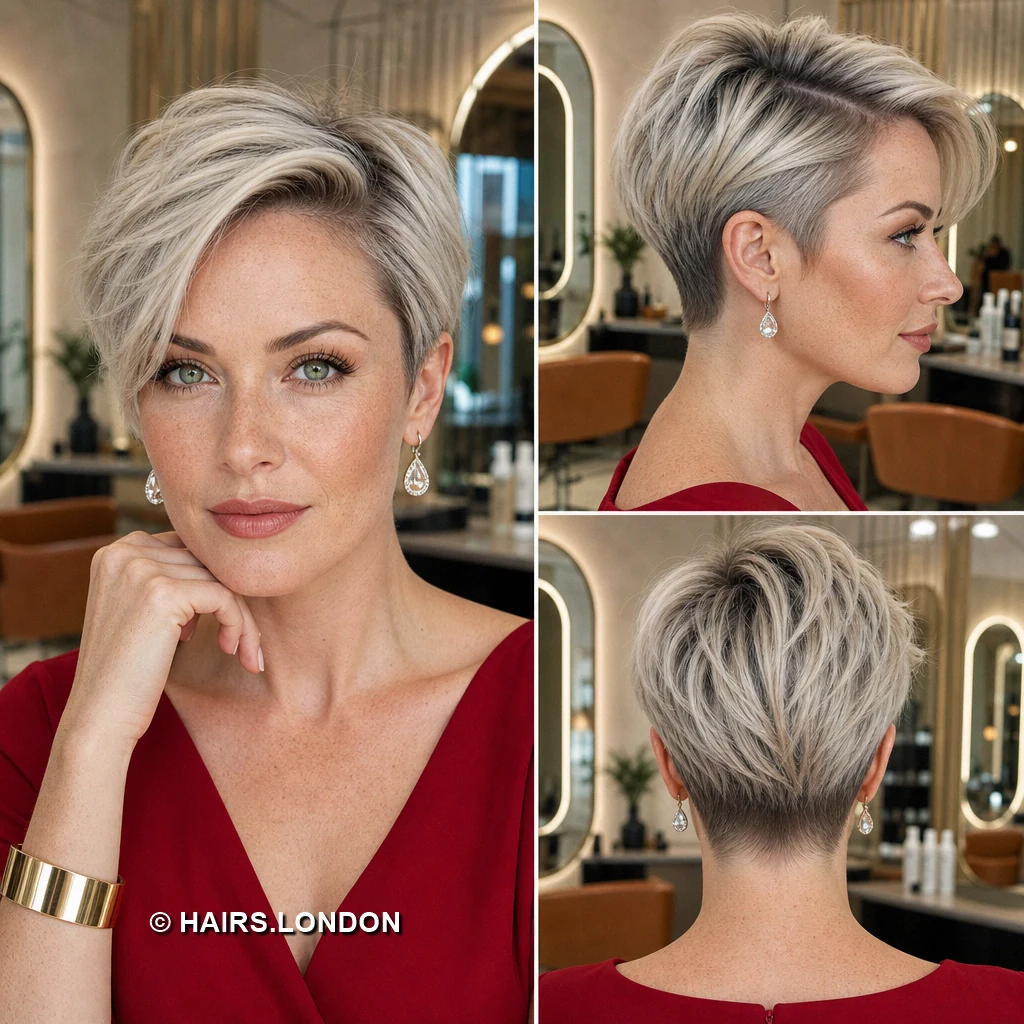
Soft silver layers drape across the forehead and temples, giving the upper shape an airy finish over closely fitted sides. The crown remains rounded with fine separated strands, while the back finishes in a taper instead of a hard edge. Ask your stylist to keep fringe around the brow for softness, but lighten its ends so the eyes stay visible. Blow dry the longer layers with your fingers, lifting at the roots and letting the shorter sides sit naturally close. Protect lightened hair with conditioner and gentle heat settings, especially where the tapered ends feel drier after repeated styling sessions.
15. Tousled Silver Crop With Light Bangs
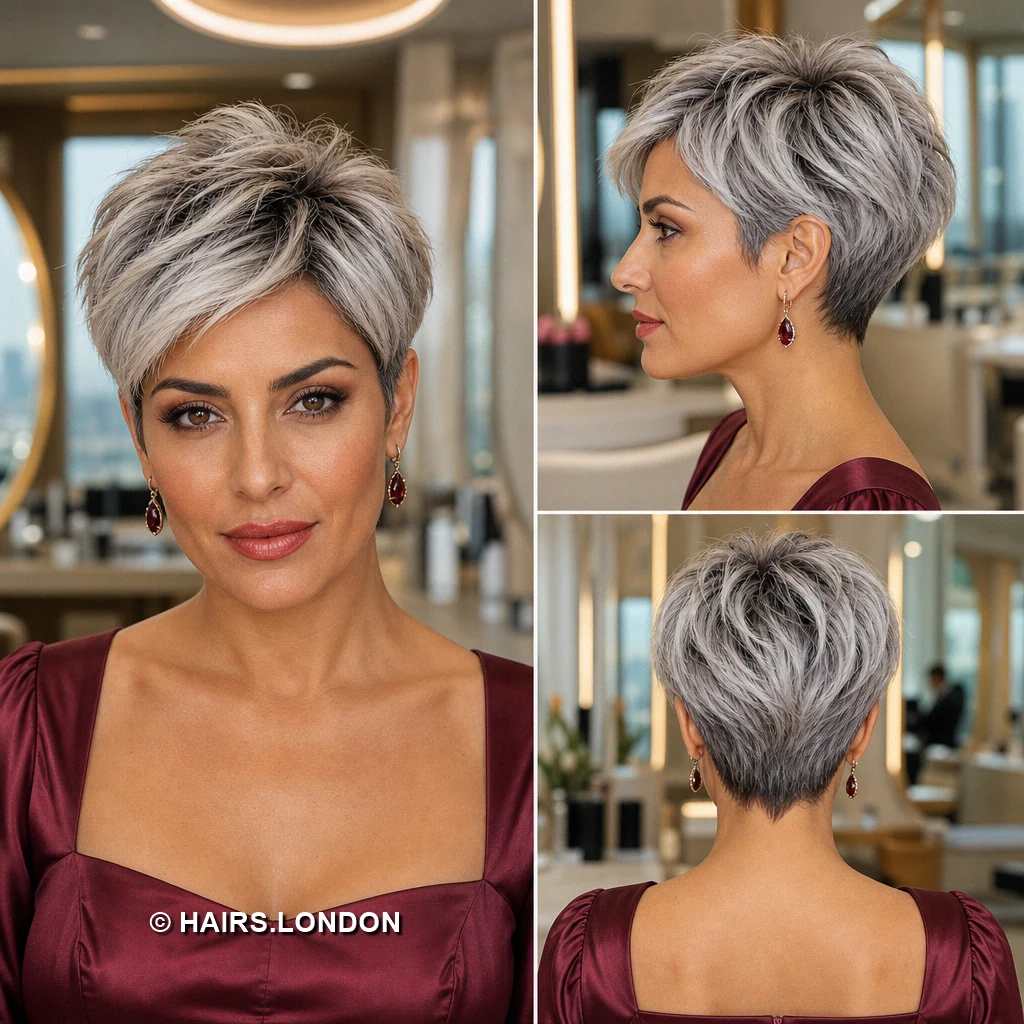
A wispy silver fringe touches the forehead, while tousled pieces rise at the crown above compact gray sides and back. The side view reveals a rounded upper profile and a dark taper at the nape, with the ears fully clear. Keep the fringe lightly chipped rather than blunt, and ask for uneven top lengths that can be styled separately easily. For airy separation, warm a pea dab of paste between your palms and pinch selected ends rather than coating everything. Keep violet shampoo occasional rather than automatic, since overuse can leave light hair looking dull or noticeably purple between appointments.
16. Long-Fringe Platinum Pixie
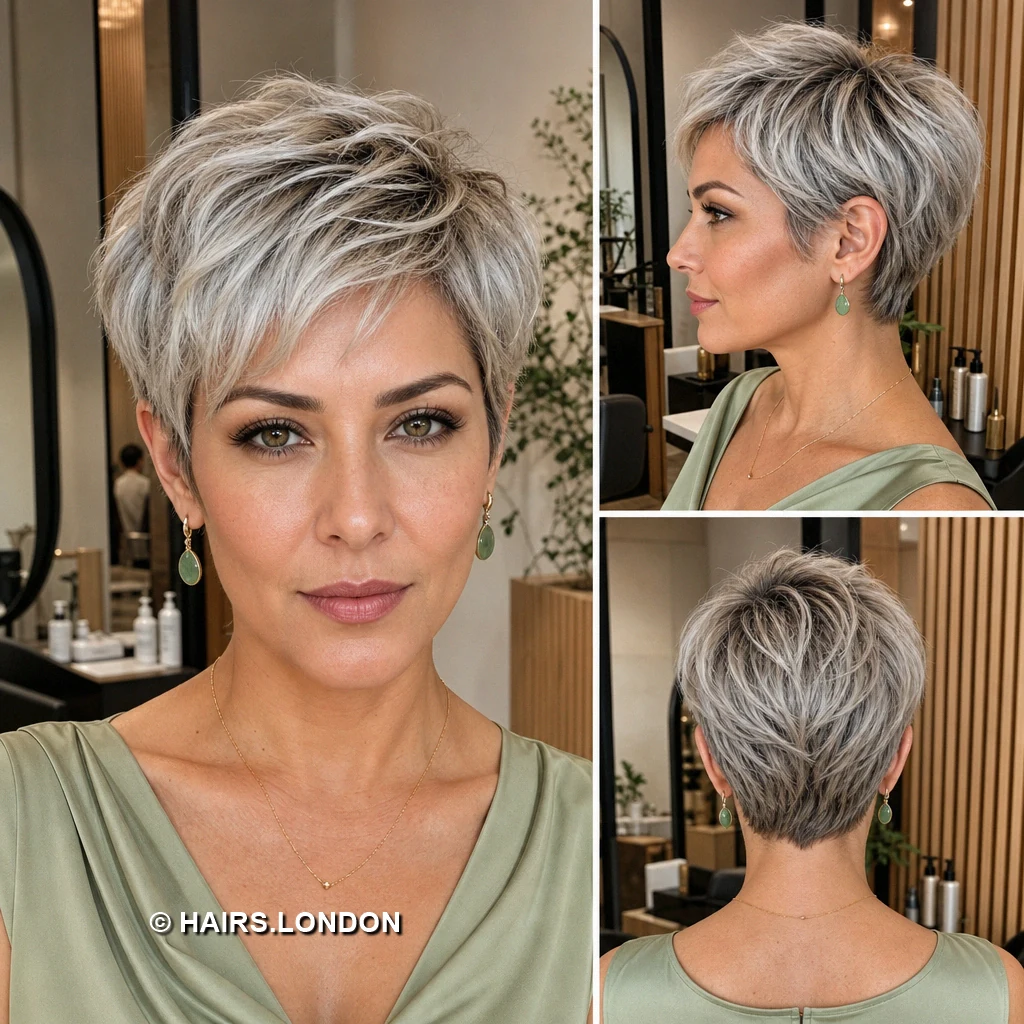
A long platinum fringe falls across one side of the forehead, offsetting a close silver temple and a layered crown. The profile shows a pronounced length contrast, while feathered strands at the back narrow into a neat, softly tapered neckline. Tell your stylist where the fringe should land when dry, especially if your natural part shifts its direction during wear. Smooth the fringe with a small round brush and low heat, then finish with flexible spray to keep movement intact. Request weight removal only where needed, because too much thinning can make the surface appear sparse and difficult to direct.
17. Brushed-Back Silver Pixie
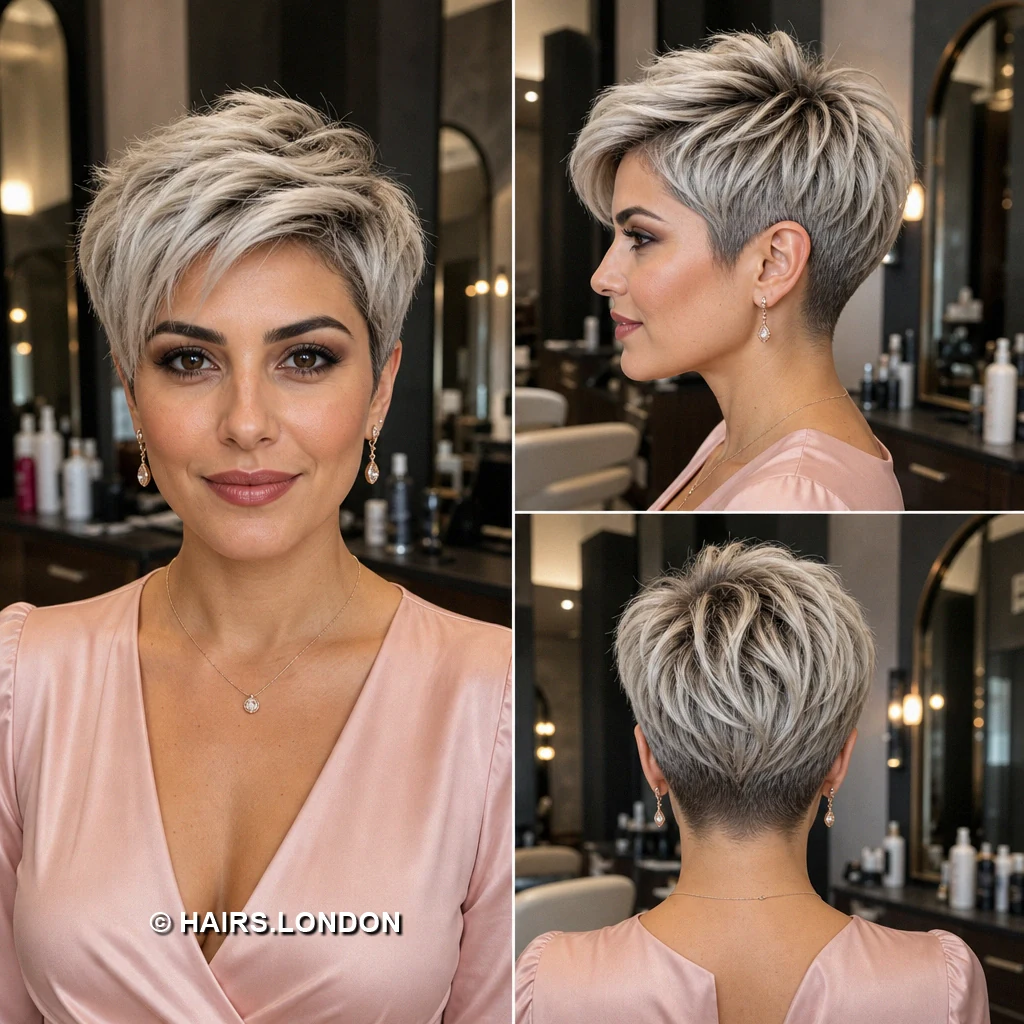
Brushed back silver strands form a high, rounded front, leaving the forehead bare above gray sides and a short nape. Fine dark streaks follow the backward flow, adding definition through the crown while the silhouette tapers smoothly behind each ear. Discuss the amount of height you prefer, since a longer front can be styled higher or pressed down for days. Lift the front with a vent brush and moderate heat, then mist flexible spray without flattening the textured crown beneath. Schedule a shaping appointment as the ears become covered, and discuss root blending before the darker regrowth looks too distinct.
18. Curled Silver Top Pixie
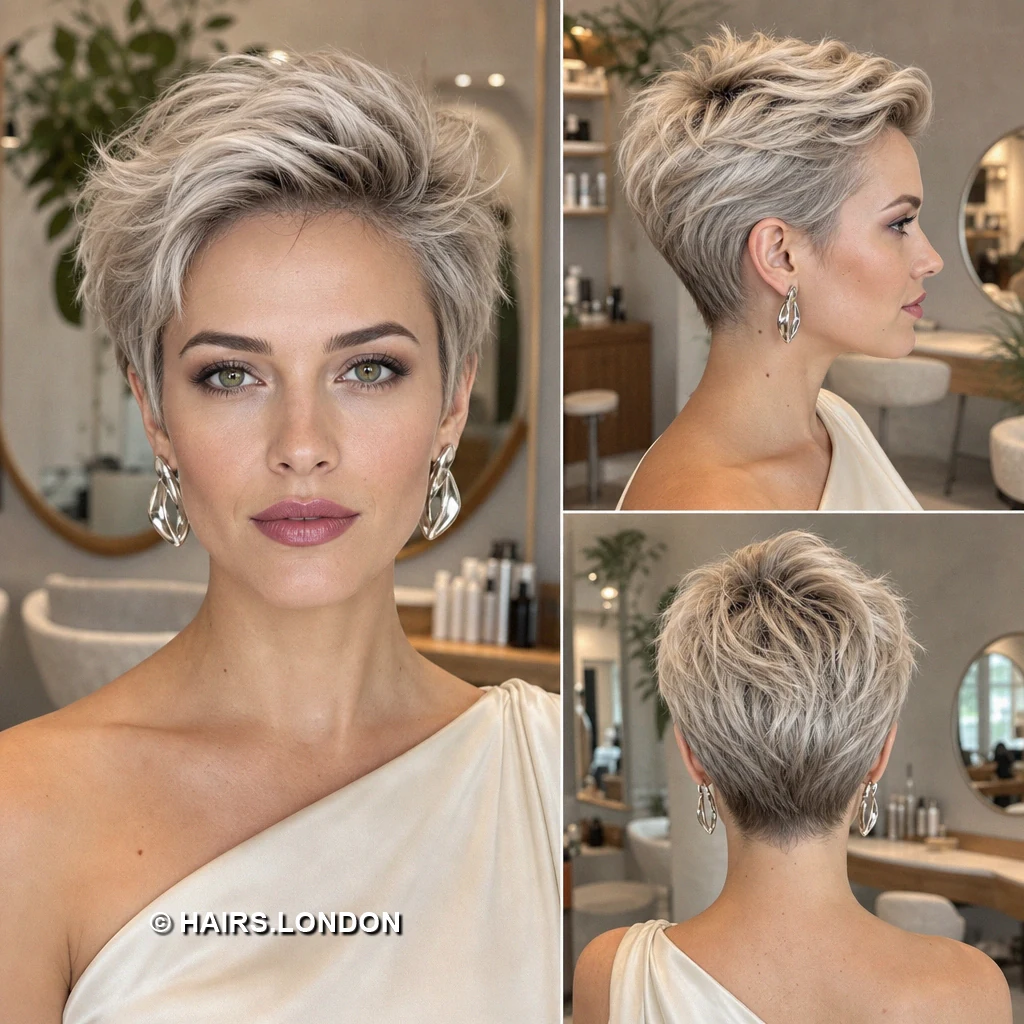
Defined silver waves curl across the top and toward the forehead, creating a looping fringe above closely clipped gray sides. Similar curved sections cover the rounded back before fading into a short nape, giving this cut movement from every angle. Maintain extra length over the crown to allow those bends to form, and avoid overly aggressive thinning through the waves. Use a diffuser on low airflow to encourage bends through the top, avoiding excessive heat around the closely cropped perimeter. Protect lightened hair with conditioner and gentle heat settings, especially where the tapered ends feel drier after repeated styling sessions.
19. Short Spiky Silver Pixie
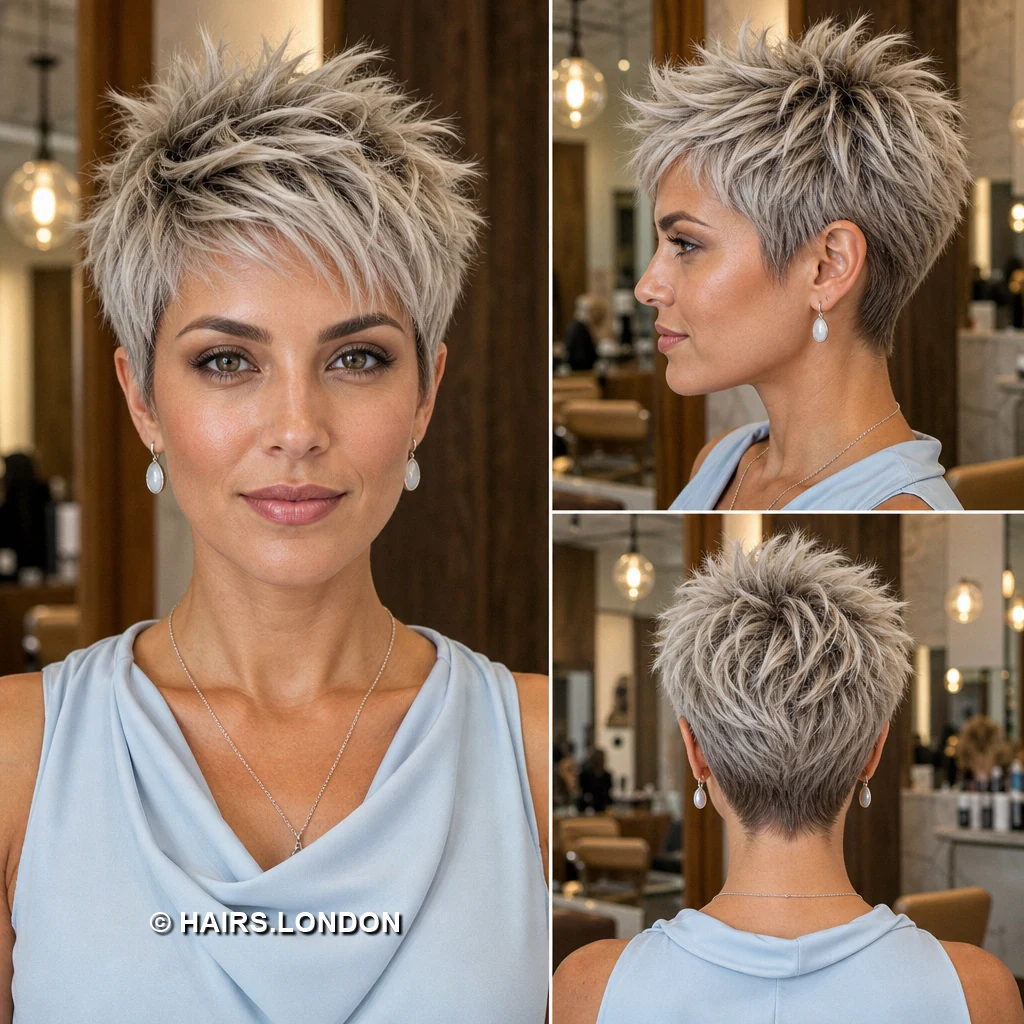
Short silver spikes sweep across the forehead and crown, with charcoal roots visible under separated, pointed ends of each layer. The sides lie close and the back forms a narrow dark taper, sharpening the outline beneath the airy upper texture. Request short textured fringe pieces rather than a single solid line, keeping enough crown length for fingers to create lift. For airy separation, warm a pea dab of paste between your palms and pinch selected ends rather than coating everything. Arrange a trim before the neckline loses definition, and ask your colorist how often your pale shade needs professional refreshing.
How to Choose a Silver Pixie Haircut
Start with the feature you want to keep most flexible. A longer fringe can be swept across the forehead or moved away from it, while a short, piecey fringe puts the crown texture on display. Compare the side views for ear coverage and the back views for nape shape; those details change how a pixie looks as it grows. If you prefer a softer outline, consider rounded layers or waves. For a more defined silhouette, look at the lifted fronts and closely tapered sides.
Styling Different Hair Textures
On naturally straight hair, lift damp roots with your fingers and a dryer, then use a little paste to separate selected ends. Hair with a natural bend can be scrunched with lightweight cream and dried with a diffuser on low airflow. If your hair forms tighter curls, ask your stylist to assess the cut dry or account for shrinkage before setting the fringe length. Fine hair often needs less product than expected; thicker hair may need careful internal weight removal so the top moves without losing its outline.
Keeping Silver Color Fresh
The images show pale silver and blonde surfaces alongside darker gray roots or sides, but the right color plan depends on your starting shade. Ask a colorist whether you need lightening, toning or simply a refresh of existing silver. Use conditioner suited to your hair’s condition, limit unnecessary heat and ask how often to use violet shampoo: too much can leave pale hair looking dull or purple. Root blending can make the contrast between the bright top and darker perimeter easier to maintain.
Maintaining the Pixie Shape
The ears and nape usually reveal growth first, especially on the closely tapered cuts. Book a shape-up when those areas begin to lose the outline you chose, rather than waiting for the fringe to feel too long. You can also ask for a fringe-only adjustment between full cuts. At home, direct damp hair into its intended sweep or lift; short layers are easier to style when they dry in roughly the right position.
What to Discuss with Your Stylist
Bring the front, side and back views of your preferred cut. Point out the exact fringe landing point, how much forehead and ear you want visible, the height you like at the crown and whether the nape should look soft or sharply defined. Mention your natural part, growth patterns, styling time and willingness to maintain pale color. Ask your stylist how the proposed length will behave on your own texture before any significant weight is removed.
Frequently Asked Questions
What makes these silver pixie haircuts different from one another?
The main differences are fringe length, crown height, texture and how closely the sides and nape taper. Some have smooth backward sweeps; others show waves, choppy pieces or short spikes.
Can I keep a longer fringe with a short pixie?
Yes. Several examples pair a long side fringe with closely cut sides and a tapered back. Agree on where the fringe should land when dry.
Which cut leaves the forehead most open?
A brushed-back pixie or upright quiff exposes more of the forehead than a cut with a forward or side-swept fringe.
How can I make a pixie look softer?
Choose rounded crown layers, feathery fringe ends or natural bends, and ask for a gently tapered neckline rather than a hard edge.
Will a textured silver pixie need styling product?
A small amount can help separate pieces or hold a lifted front. Start sparingly so the pale strands retain movement.
How should I dry a pixie with natural waves?
Try gentle scrunching and a diffuser on low airflow. Avoid repeatedly brushing the waves while they dry if you want their shape to remain visible.
What should I ask for if my hair is fine?
Ask for enough length and weight at the crown to create lift. Excessive thinning can make the top look sparse.
How do I decide between a soft and close nape taper?
Compare the back views and tell your stylist how defined you want the neckline. A closer taper shows growth sooner, while a softer finish has less contrast.
Do I need violet shampoo for silver hair?
Not necessarily. Ask your colorist whether it suits your shade and how often to use it; overuse can add an unwanted purple cast.
How often should I have the cut reshaped?
Arrange a trim when the hair around your ears or nape starts to obscure the intended outline. Your growth rate and preferred sharpness will determine the timing.
Can darker roots work with a pale silver top?
Yes. Several images show darker roots or sides beneath bright upper layers. Discuss the level of contrast and a root-blending plan with your colorist.
What photos should I bring to a salon consultation?
Bring front, side and back views of the cut you like. They help you discuss fringe placement, crown volume, ear coverage and the nape without relying on the haircut name alone.
Conclusion
A useful starting point is to choose the silhouette first: an open, lifted front, a sweeping fringe or a softer waved top. Then use the side and back views to settle the taper and neckline. With those details agreed upon, your stylist can adapt the silver pixie to your hair’s texture, color and daily styling routine.