


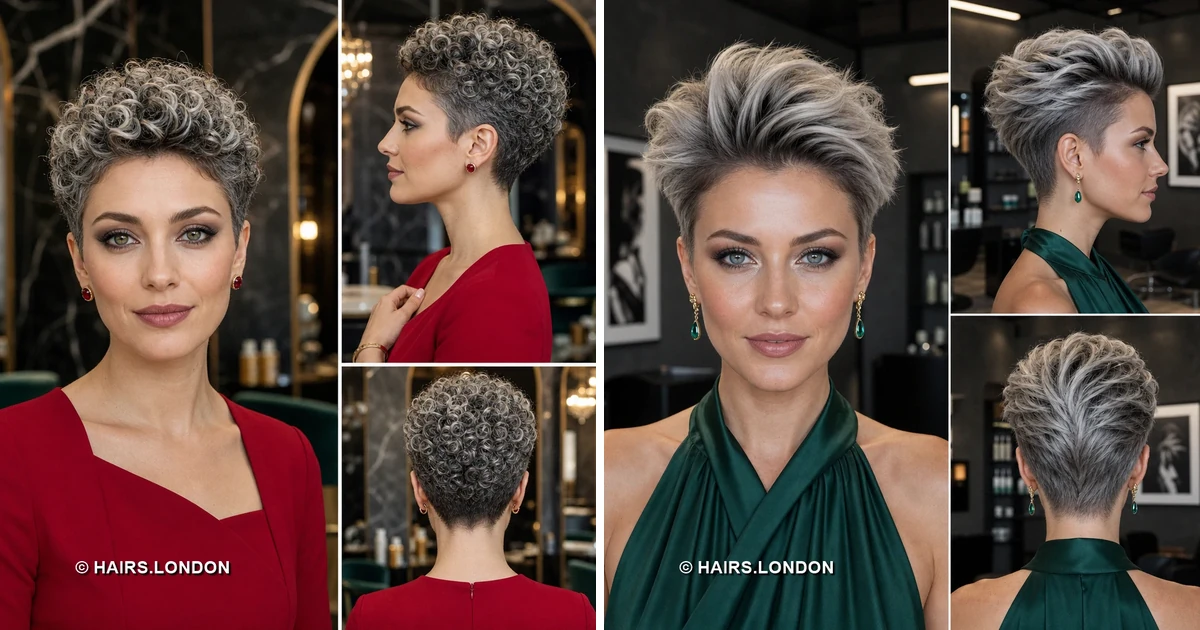
11. Silver Pixie with a Flowing Side-Swept Top
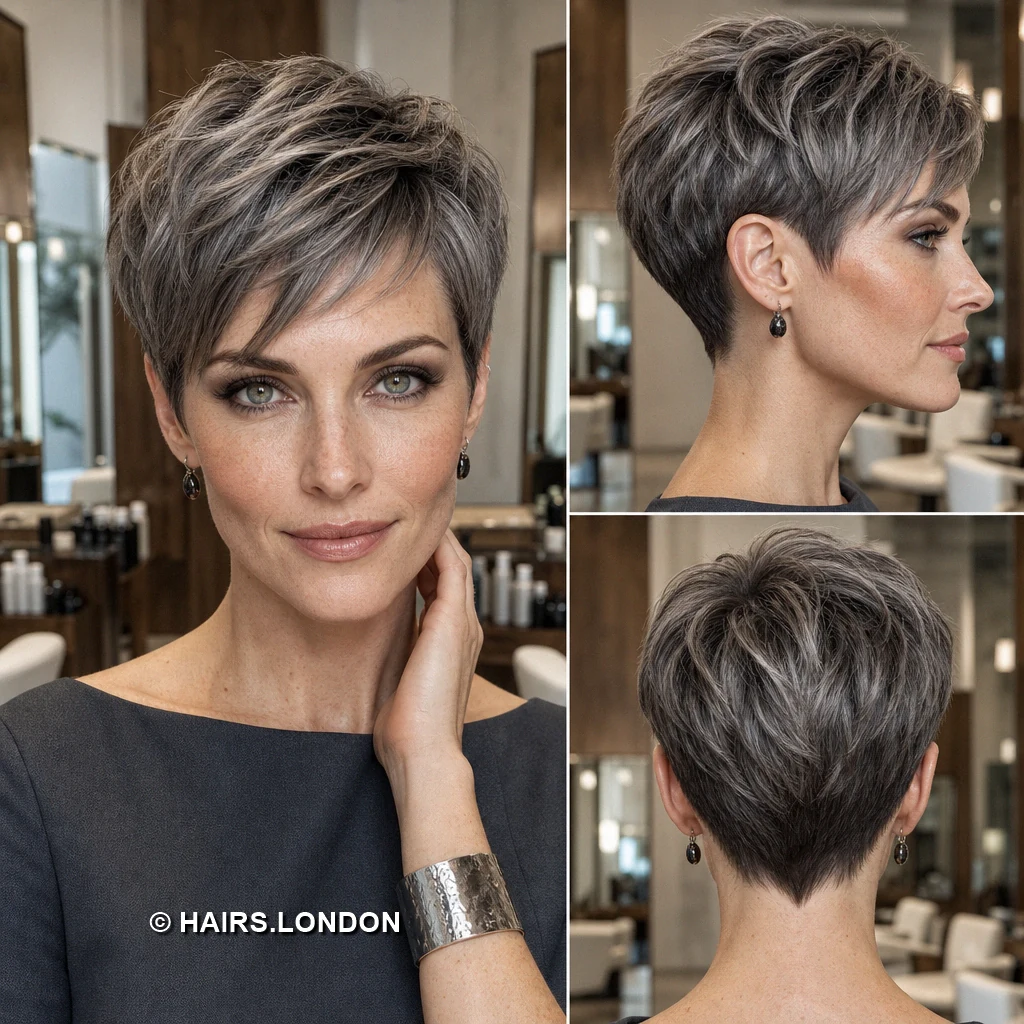
A flowing silver top curves sideways over this close pixie. The front is long enough to bend into a soft sweep. Cropped sides provide definition without interrupting the rounded crown. Darker gray underneath gives the pale top visible dimension. The rear layers meet in a narrow, tapered nape. Request smooth transitions if you dislike an obvious undercut line. Blow dry the longer section across its intended parting direction. Use a light serum only through the ends for polish. Reposition the sweep with clean, dry fingers rather than heavily teasing roots. Discuss whether your natural growth pattern supports this particular part.
12. Full Silver Quiff with a Close Taper
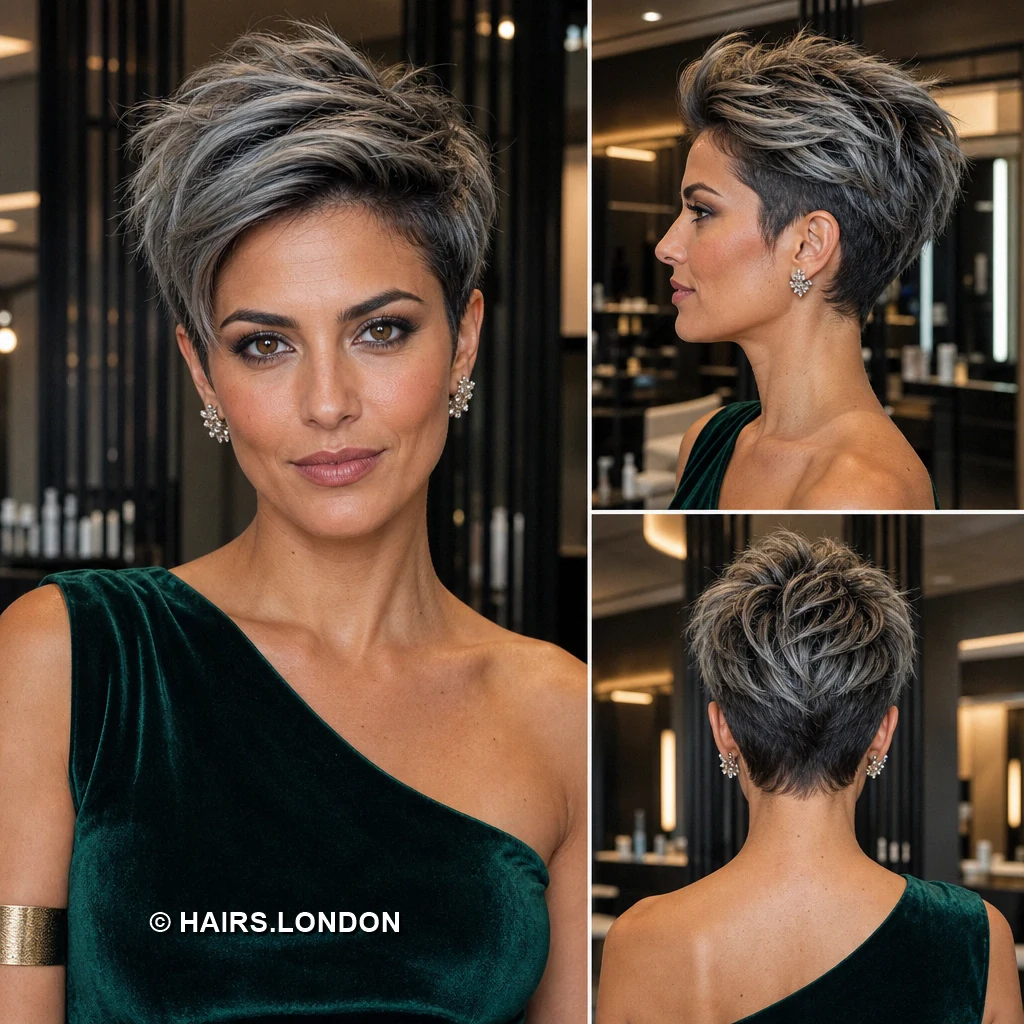
A generous silver quiff rises from the forehead and curves backward. The top retains broad, smooth movement with lightly separated ends. Sides sit close, emphasizing the height through the front. Behind the crown, layers descend into a finely tapered nape. Mixed silver and darker gray strands accentuate the swept shape. Ask to preserve length at the hairline for this roll. Lift roots while blow drying with a small round brush. Finger comb afterward so the finish stays soft, not fixed. Choose flexible hold if you want to adjust it later. Maintain close sides regularly to keep the quiff visually prominent.
13. Tall Silver Pixie with Feathered Backward Texture
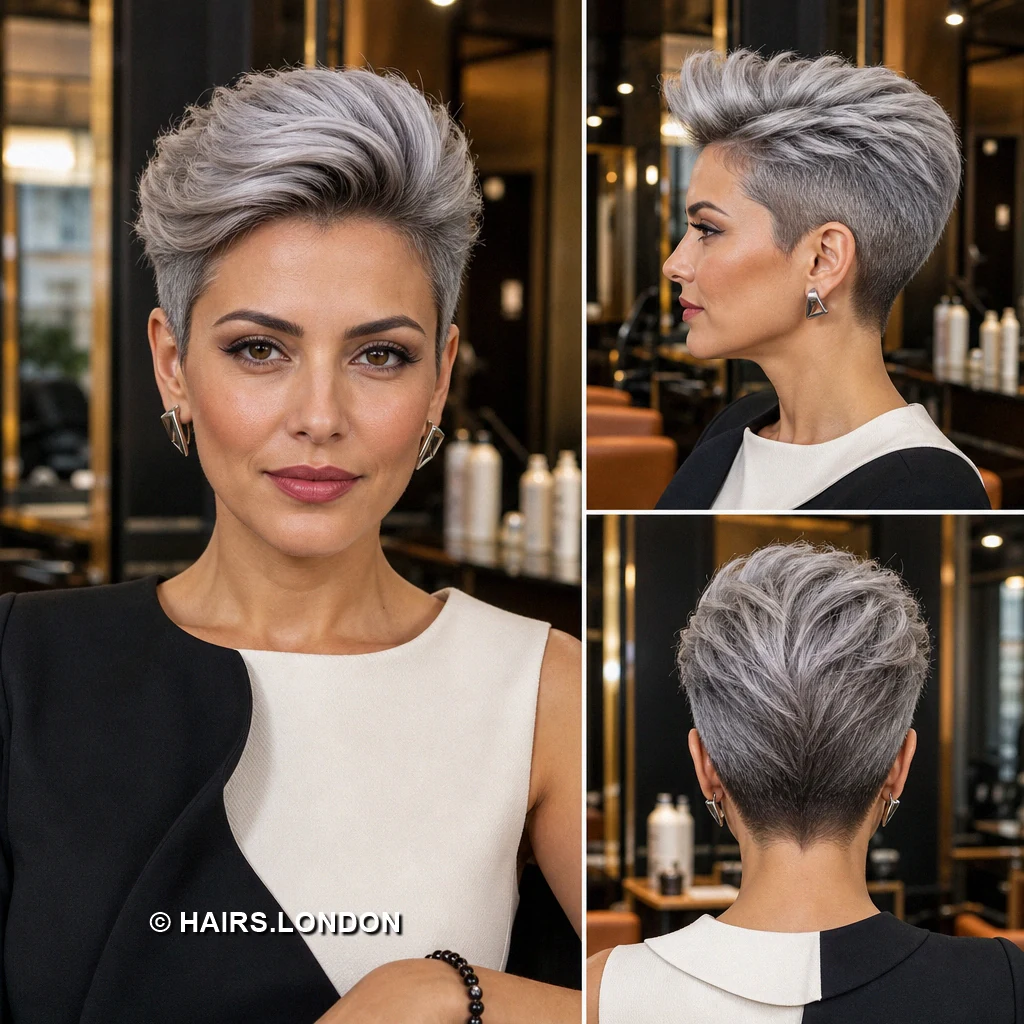
Tall, feathered silver strands fan backward from the front hairline. Their lifted direction creates height while leaving the forehead clear. The sides remain short, with a clean outline above ears. Textured layers continue through the crown into the upper back. Below them, the hair narrows toward a closely trimmed nape. Ask for layering that supports height without hollowing the crown. Blow dry upward and backward before applying any finishing product. Use fingertips to separate the ends into broad, airy sections. A light spray can help maintain lift through the day. Plan perimeter trims before the side profile becomes noticeably bulky.
14. Sculpted Silver Waves on a Cropped Pixie
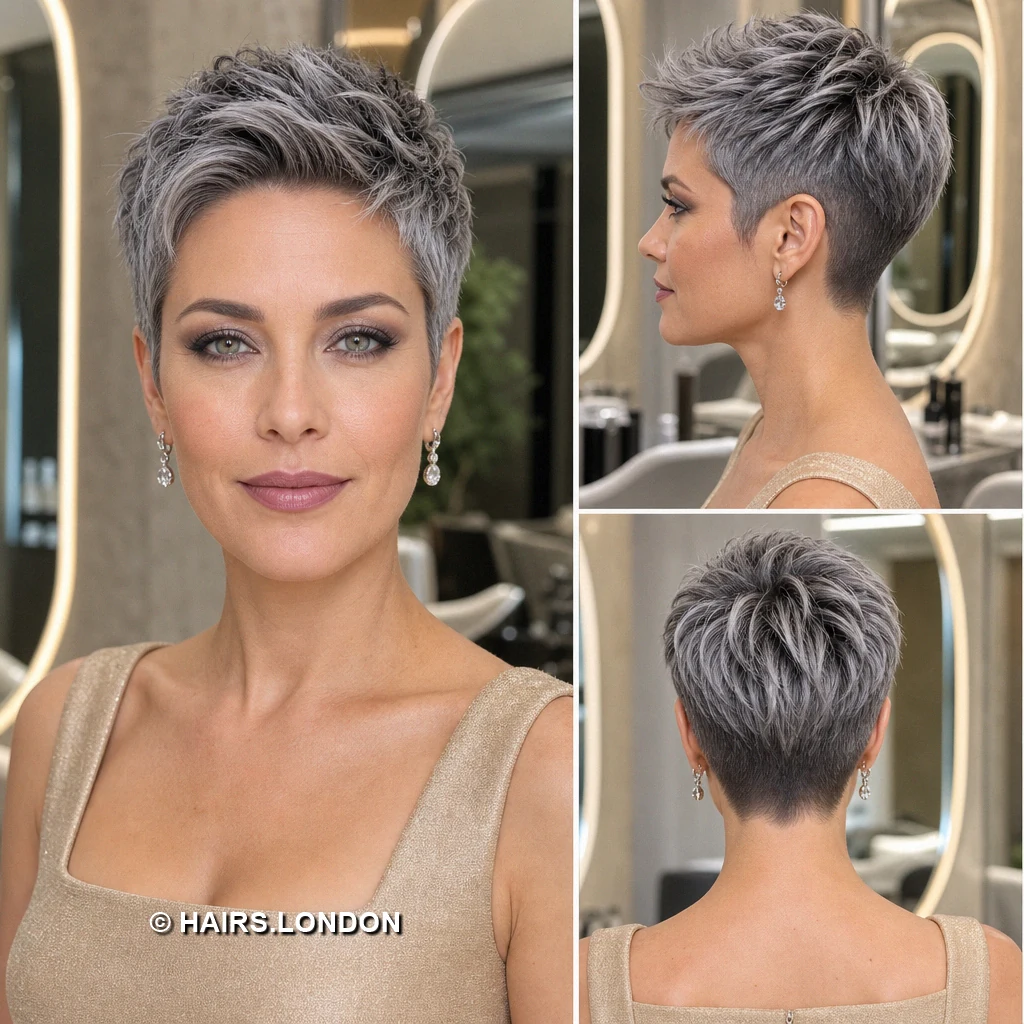
Sculpted silver waves curl prominently above the forehead and crown. The rolled front creates a distinct shape rather than fringe. Closely cut sides anchor the fuller, carefully arranged top. A gray base remains visible beneath the bright, dimensional silver ridges. The back shows combed texture before tapering toward the nape. Ask for sufficient top length to form these broad bends. Blow dry with a brush, shaping each section while warm. Set the front with fingers and a flexible styling product. Practice the rolling motion before relying on this daily finish. Keep the short perimeter precise to preserve the sculpted contrast.
15. Charcoal-Silver Pixie with Sharp Textured Spikes
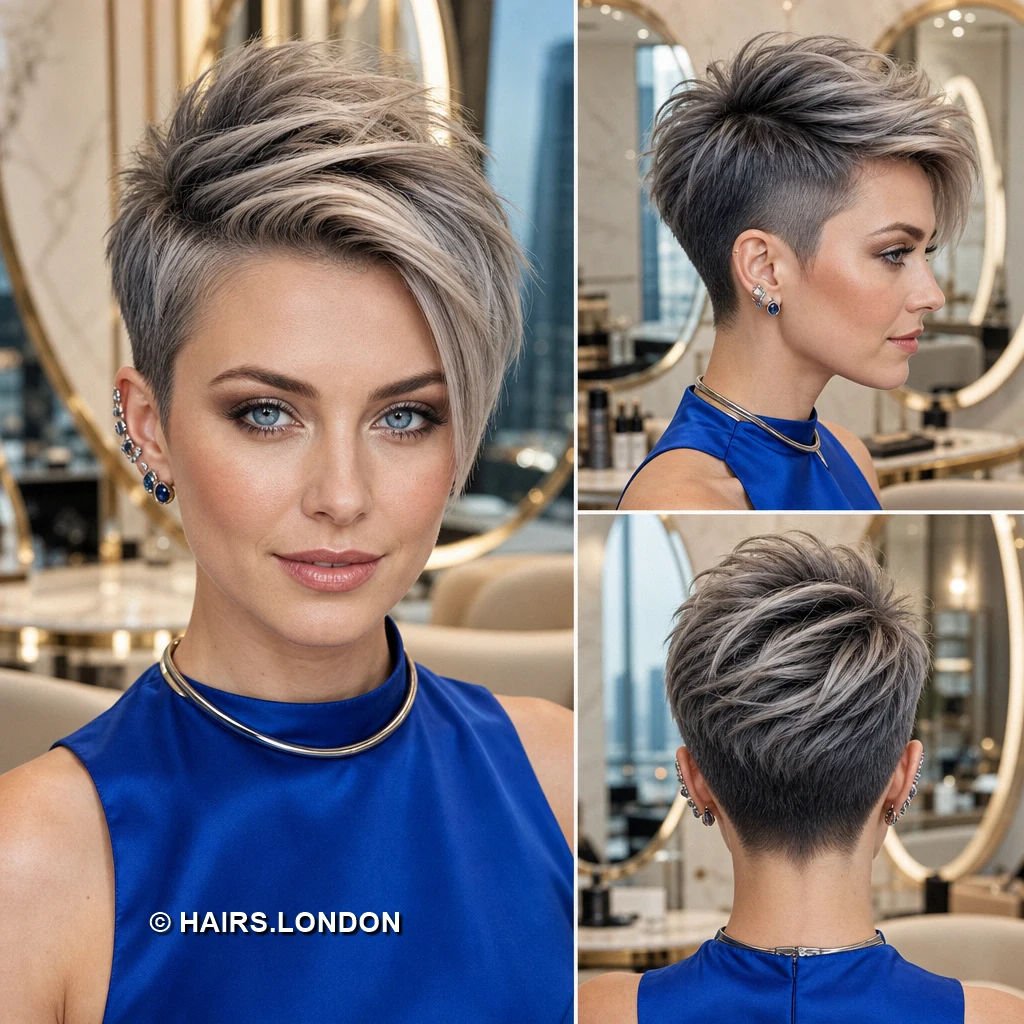
Charcoal roots and silver tips sharpen this strongly textured pixie. Pointed sections rise through the front, crown, and upper back. The fringe stays short and broken, keeping eyebrows unobstructed. Sides are cropped closely but retain small, textured ends. The nape tapers to a narrow point beneath the spikes. Request varied top lengths if you want separated, irregular peaks. Blow dry upward, using fingers to direct the individual sections. Add firm paste gradually rather than loading the entire crown. Pinch selected tips while leaving some hair naturally relaxed on the lower sides. Trim before grown-out sides weaken the cut’s compact outline.
16. Soft Silver Sweep with a Raised Crown
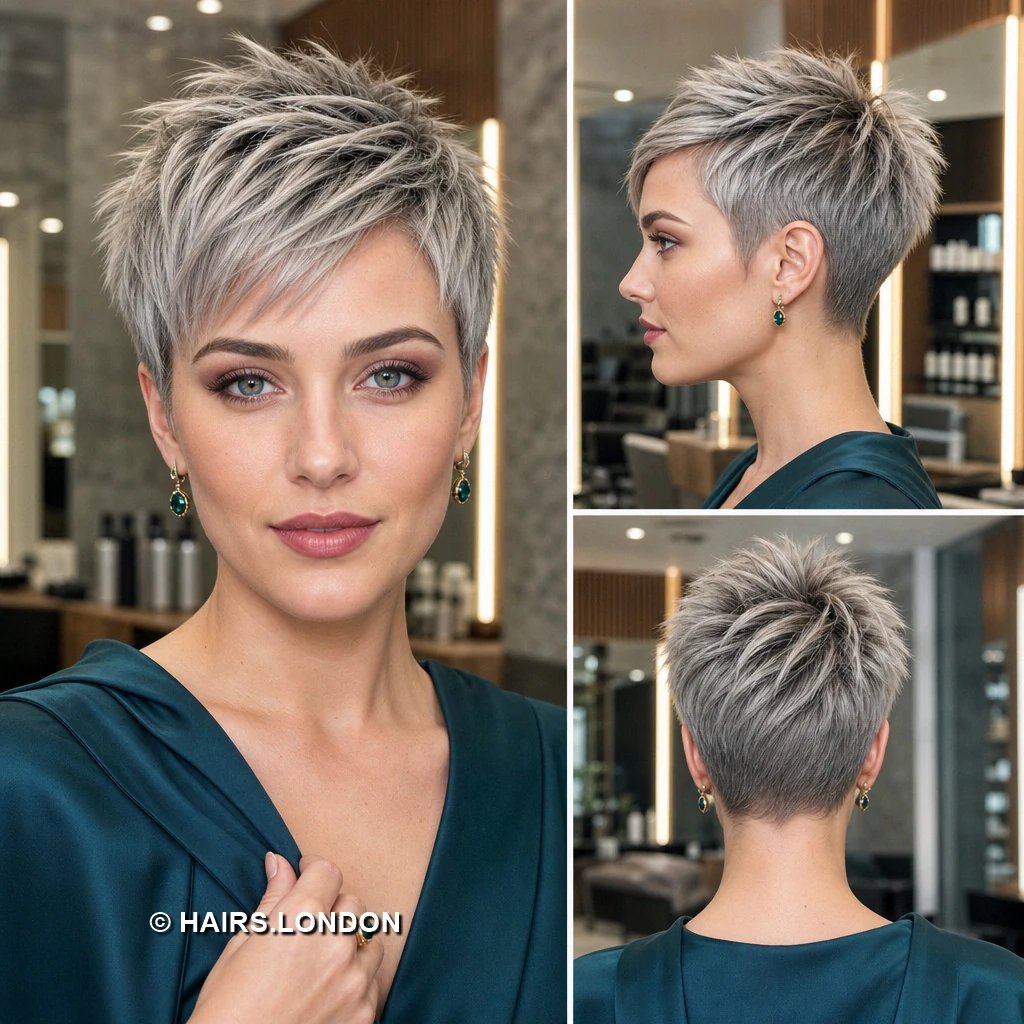
A soft silver sweep crosses the front of this pixie. Gentle height at the crown keeps its outline full. The sides fit closely against the head around the ears. Pale strands alternate with darker gray throughout the longer top. Back layers turn inward before meeting a closely tapered nape. Ask for a front section that moves without falling heavily. Blow dry from below the roots for controlled, natural lift. Smooth the surface lightly while preserving its visible strand separation. A flexible cream can tame ends without making them stiff. Schedule trims soon when the swept front starts losing its direction.
17. Long Silver Side Sweep over Cropped Sides
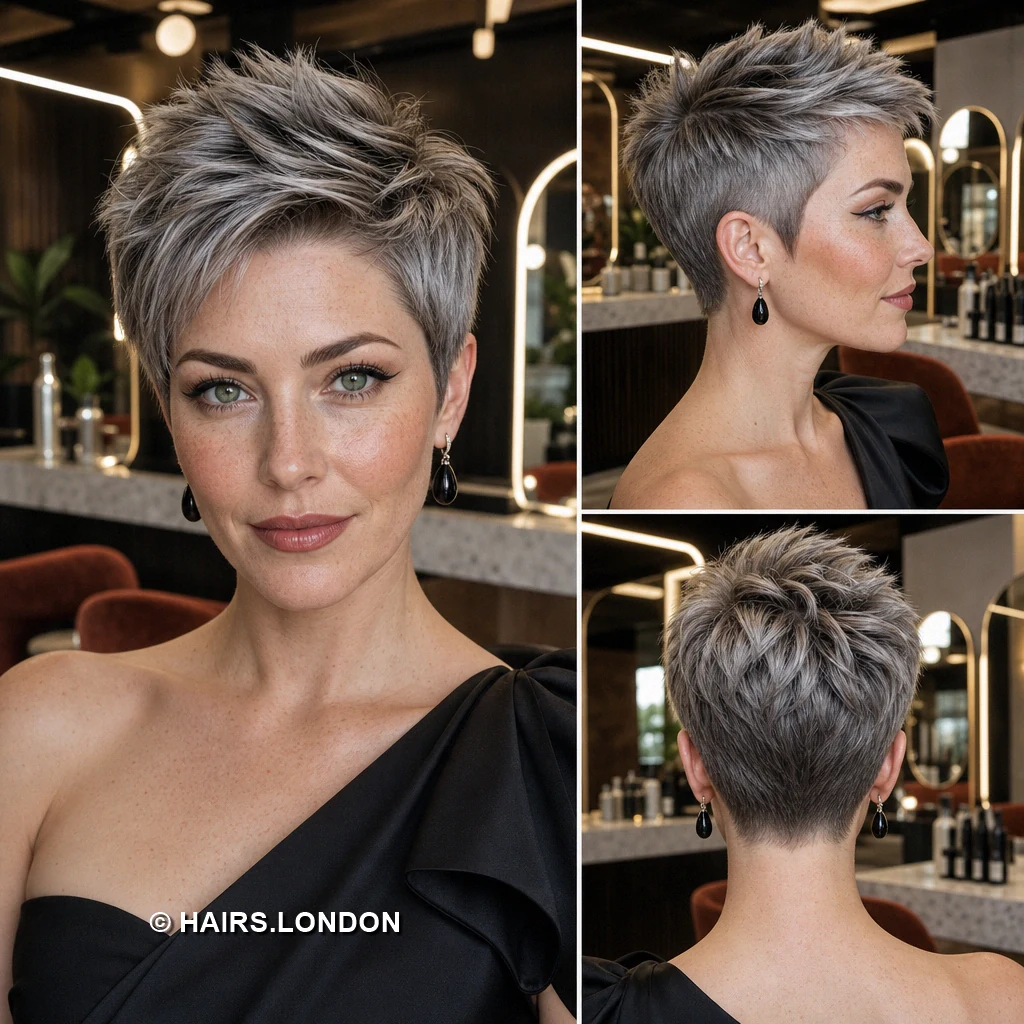
A sweeping silver front reaches across the forehead toward one eye. Its longer length contrasts strongly with the closely cropped sides. Layered strands flow backward into a full, rounded crown. The rear then narrows neatly to a short, dark nape. Pale silver ribbons remain distinct against deeper gray underneath. Ask your stylist to balance fringe length with clear vision. Dry the top sideways, lifting gently at its roots. Use light cream to gather flyaways without creating stiff sections. Check how the fringe falls when your hair dries naturally and completely. Maintain the short sides while letting the sweep remain expressive.
18. Airy Silver Pixie with a Lifted Side Fringe
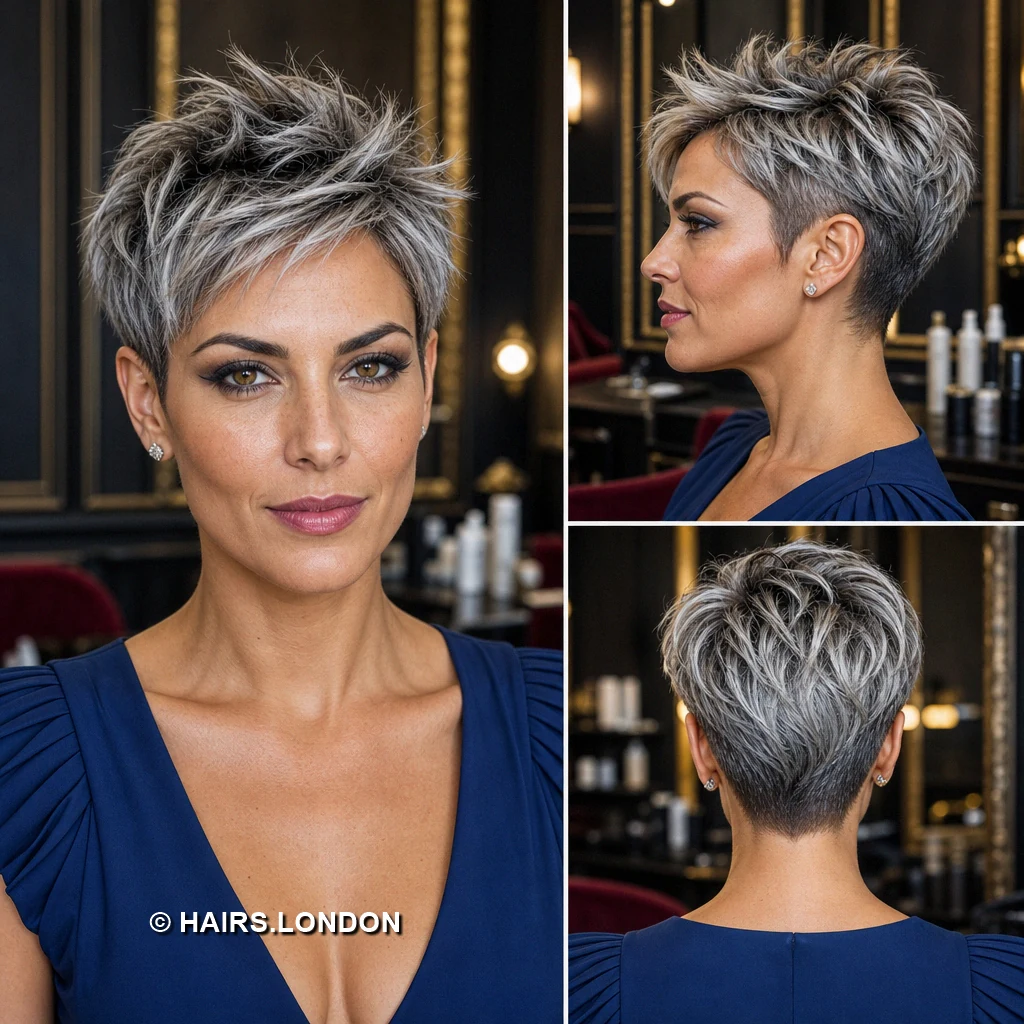
Airy layers lift around this silver pixie’s crown and fringe. The front sweeps sideways while remaining clear of the eyes. Short, tidy sides balance the generous volume above the ears. Deeper gray beneath the silver adds contrast through the texture. The back is full above a neatly narrowed nape. Ask for soft layering rather than blunt weight through crown. Blow dry against your usual part for temporary root lift. Turn the front back across its part once completely dry. Finish with light spray to preserve movement between the strands. Refresh the nape regularly before it grows wider than the crown.
19. Silver Ringlet Pixie with Curved Front Curls
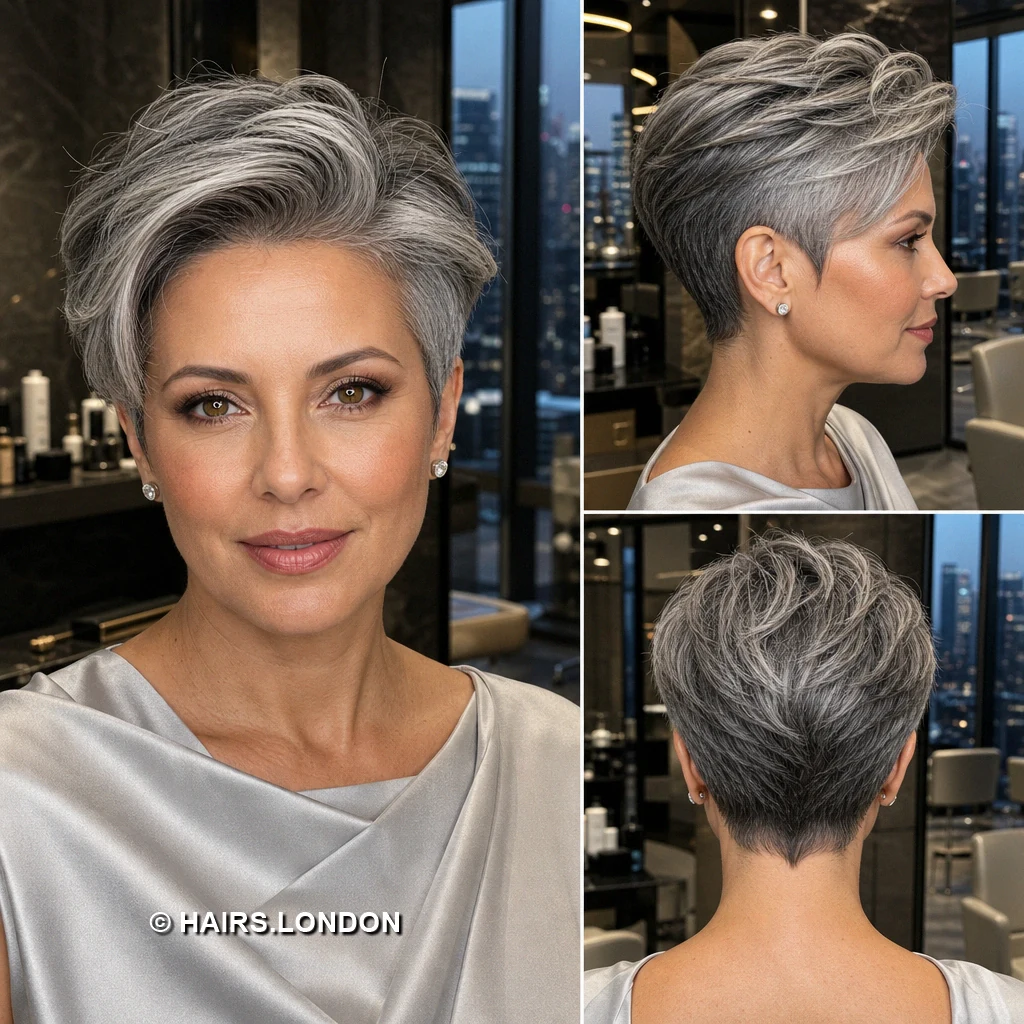
Springy silver ringlets gather densely across the top and front. Several curls fall forward, creating a short, curved fringe. The sides are closely tapered, leaving room for crown volume. Darker roots outline individual coils beneath the pale silver highlights. Behind, rounded curls narrow into a neat, pointed nape. Ask for curl-aware layering that preserves the front ringlets. Apply curl cream while damp, then scrunch without rough handling. Diffuse on gentle airflow to limit frizz and retain definition. Let curls cool before separating any sections with fingertips. Trim thoughtfully because damp curls can shrink after drying. Check the shape when dry.
20. Swept Silver Pompadour with a Tapered Back
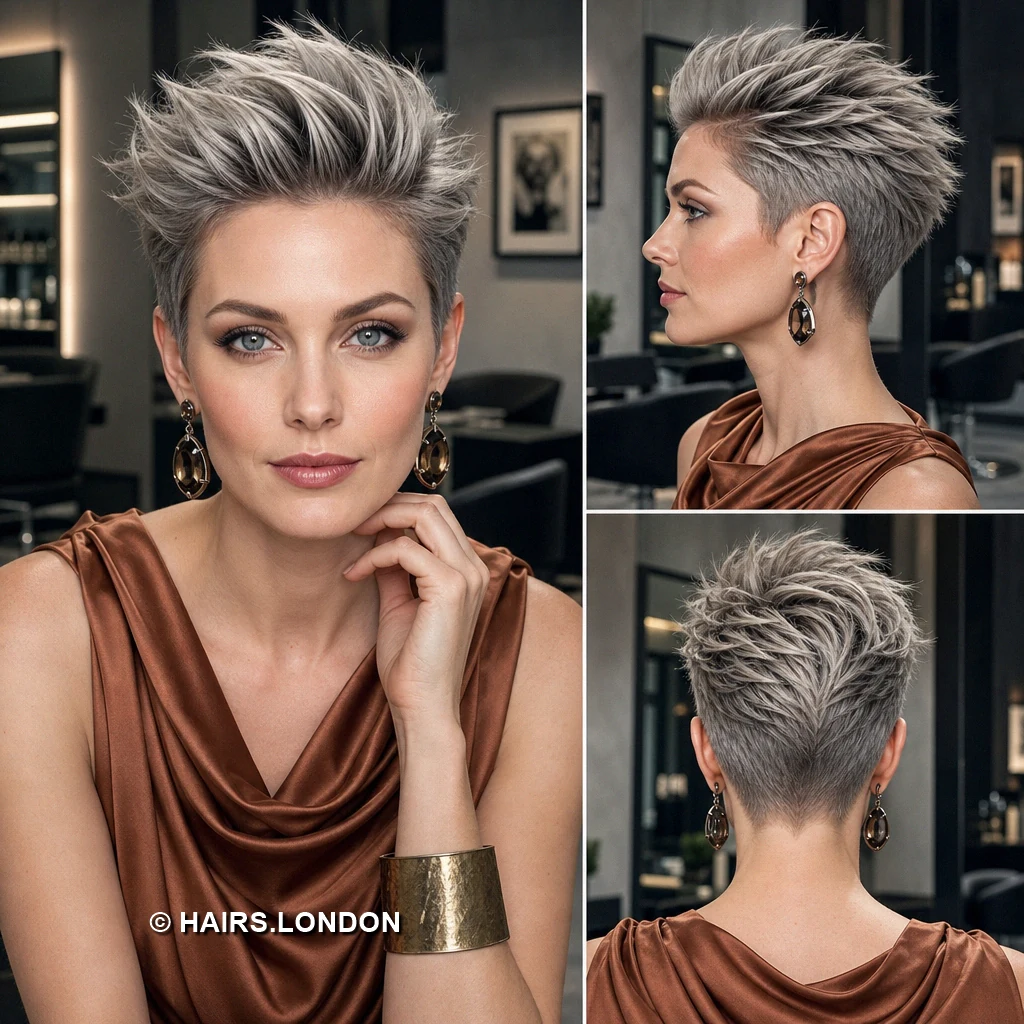
A broad silver pompadour rolls upward and back from the forehead. Its longer top flows into a softly textured, full crown. Close sides and a narrow nape sharpen the overall silhouette. Darker roots show between the pale, brushed silver ribbons. The front stays open, with no fringe crossing the eyebrows. Ask for enough hairline length to create the lifted roll. Blow dry upward first, then guide the hair backward gently. Use a small amount of flexible paste for separation. Avoid heavy wax that could collapse the airy front volume. Keep the tapered back tidy between longer top appointments as needed.
How to Choose a Silver Pixie Haircut
Start with the part you want to notice most. A long side sweep needs enough front length and a compatible growth pattern; a quiff needs top length that can be lifted; defined ringlets need room to spring up without being cut too short. Compare the profile and back views as carefully as the front. Decide whether you prefer a very close outline around the ears and nape or a softer transition into the crown.
Styling Silver Pixies on Different Textures
For straight hair, blow dry the roots in the direction needed for a sweep or against the growth direction for height, then use a small amount of paste to separate the ends. On wavy hair, try finger styling and gentle diffusing before deciding how much extra definition it needs. For curls, distribute curl cream through damp hair, scrunch and diffuse gently; avoid brushing out the finished coils. Begin with less product than you think you need, since it is easy to weigh down a short top.
Keeping Silver Color Fresh
The images show pale silver alongside darker gray roots or underlayers, so discuss whether you want an even finish or visible contrast. Ask your colorist what lightening and toning your current hair would require; the process and upkeep depend on your starting color and hair condition. Use color-safe care, limit unnecessary heat and ask how often a toner refresh would suit your shade. If a purple shampoo is recommended, use it as directed rather than at every wash by default.
Maintaining the Pixie Shape
The shortest areas usually show growth first. Arrange trims according to how quickly your sides and nape lose their intended outline; a close taper may need attention sooner than a softer crop. At each appointment, say whether you want to preserve top length, shorten a fringe that reaches your eyes or remove bulk at the crown. This prevents a routine cleanup from gradually changing the shape you chose.
What to Discuss with Your Stylist
Bring the front, side and back views of the cut you prefer. Point out the exact fringe length, crown height, ear coverage and nape shape you want, as well as any detail you do not want copied. Show how your hair naturally parts and explain how much time you will spend styling it. If you want silver color, discuss your starting shade, hair condition, desired root contrast and a realistic plan for color maintenance before the service begins.
Frequently Asked Questions
Which silver pixie is easiest to style each morning?
A softly layered crop with a short fringe generally requires less shaping than a tall quiff or long side sweep. Your natural texture and growth pattern matter too.
Can curly hair wear a tapered silver pixie?
Yes. The curly cuts shown keep enough length on top for defined coils while tapering the sides and nape. Ask your stylist to account for curl shrinkage.
How do I choose between a fringe and an open forehead?
Consider whether you enjoy hair near your eyes and how your front hair naturally grows. A side fringe offers coverage; a lifted quiff keeps the forehead open.
What should I ask for if I want volume at the crown?
Show your stylist where you want the fullness and ask them to preserve enough top length to support it without leaving unwanted bulk at the sides.
Will a long side sweep need more styling?
Usually. Longer front hair often needs blow-drying for direction and light product for control, particularly if it grows against the intended sweep.
How can I make a spiky pixie look separated?
Dry the hair upward, then pinch a small amount of paste into selected ends. Working section by section keeps the finish from becoming one stiff mass.
Should the nape match the sides?
Not necessarily. These cuts pair close sides with either a narrow taper or a subtly pointed nape. Decide which outline you prefer from the back view.
How often does a short pixie need trimming?
Book a trim when the sides or nape begin losing the shape you want. Closely tapered areas tend to make growth more noticeable than longer layers.
Can I keep darker roots with silver hair?
Yes. Several looks show darker gray or charcoal beneath pale silver strands. Bring an image to your colorist so you can agree on the amount of contrast.
Does silver hair require toner?
That depends on your starting color, how the silver shade was achieved and how it changes between appointments. Ask your colorist for a tailored refresh plan.
What product suits a soft, feathered pixie?
Try a small amount of lightweight cream or flexible paste through the ends. Avoid overapplying product if you want the strands to remain airy.
What photos should I take to a pixie consultation?
Bring front, profile and back views. Together, they clarify the fringe, crown, side length and nape much better than a single portrait.
Conclusion
The best choice among these silver pixie haircuts is the one whose shape works from every angle and suits the texture you actually have. Save images that show your preferred fringe, crown and nape, then talk through the cutting and color upkeep with your stylist before making the change.
20 Silver Pixie Haircuts, From Defined Curls to Swept Quiffs
Silver pixie haircuts can look strikingly different depending on what happens at the crown and fringe. These images show compact curls, feathered crops, sharp spikes and longer swept tops, all paired with closely cut sides and napes. Use the front, profile and back views to decide not just which finish you like, but where you want fullness and how much length you want to style.
1. Rounded Silver Curls with a Tapered Nape
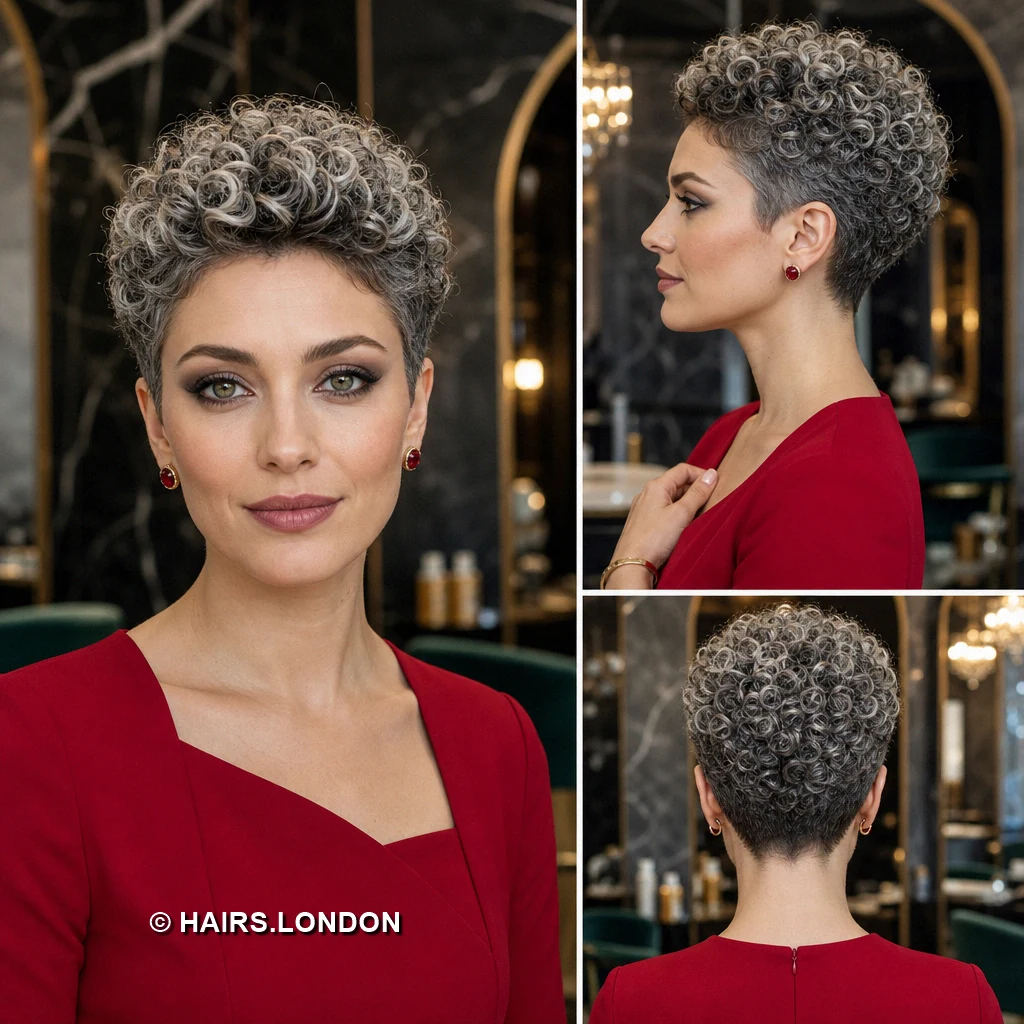
Defined silver curls build a rounded crown above close sides. The front curls sit high without forming a straight fringe. Darker roots give the pale coils visible depth and separation. Around the ears, the cut follows a neat, narrow outline. The nape tapers closely beneath the fuller curled back section. Ask for enough length on top to preserve curl shape. Cutting dry can help your stylist judge each curl’s spring. Work curl cream through damp hair without pulling coils straight. Diffuse gently, then separate selected curls with your fingertips afterward. Trim the sides regularly while allowing the crown to grow.
2. High Silver Quiff with Feathered Sides
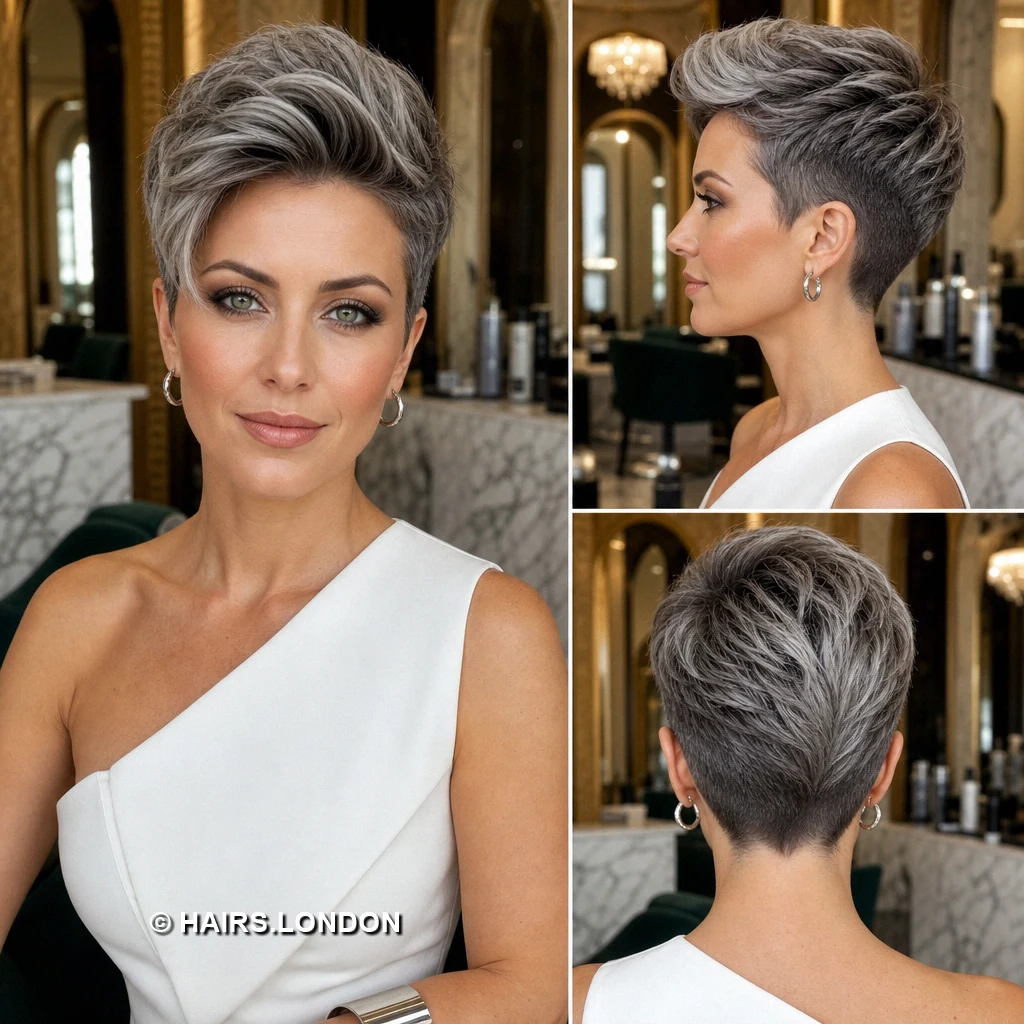
This pixie rises into a broad quiff above tapered sides. Pale silver strands sweep backward over a darker base. The lifted front leaves the forehead open instead of creating fringe. Feathered layers keep the crown full without forming hard edges. Short hair behind the ears narrows into a tidy nape. Request extra front length if you enjoy brushing hair upward. Blow dry against the growth direction using a small brush. Finish with lightweight paste to hold movement without stiff clumps. Keep the sides snug during trims to preserve height contrast. Discuss root color placement if you prefer this dimensional finish.
3. Soft Ash Pixie with a Side Fringe
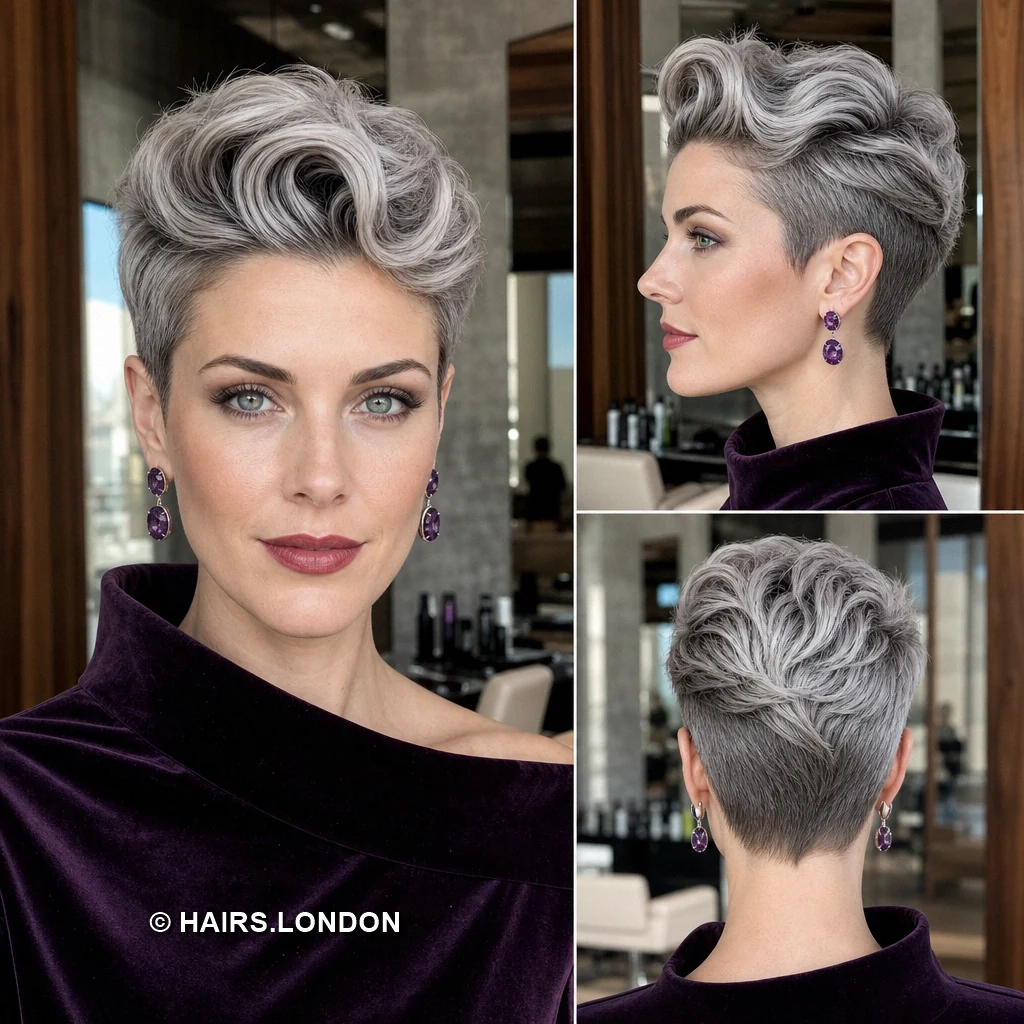
Soft ash and silver ribbons run through this layered pixie. The crown sits rounded rather than sharply lifted or spiked. A long, fine fringe angles across part of the forehead. Close sides reveal the ears while retaining a gentle outline. At the back, longer upper layers taper toward the nape. Ask your stylist to keep enough fringe for easy sweeping. Light point cutting can soften the ends without removing fullness. Dry with a small brush, directing the fringe sideways first. A little styling cream can define the silvery individual strands. Schedule shape trims before the fringe begins covering your eyes.
4. Textured Silver Pixie with a Deep Side Sweep
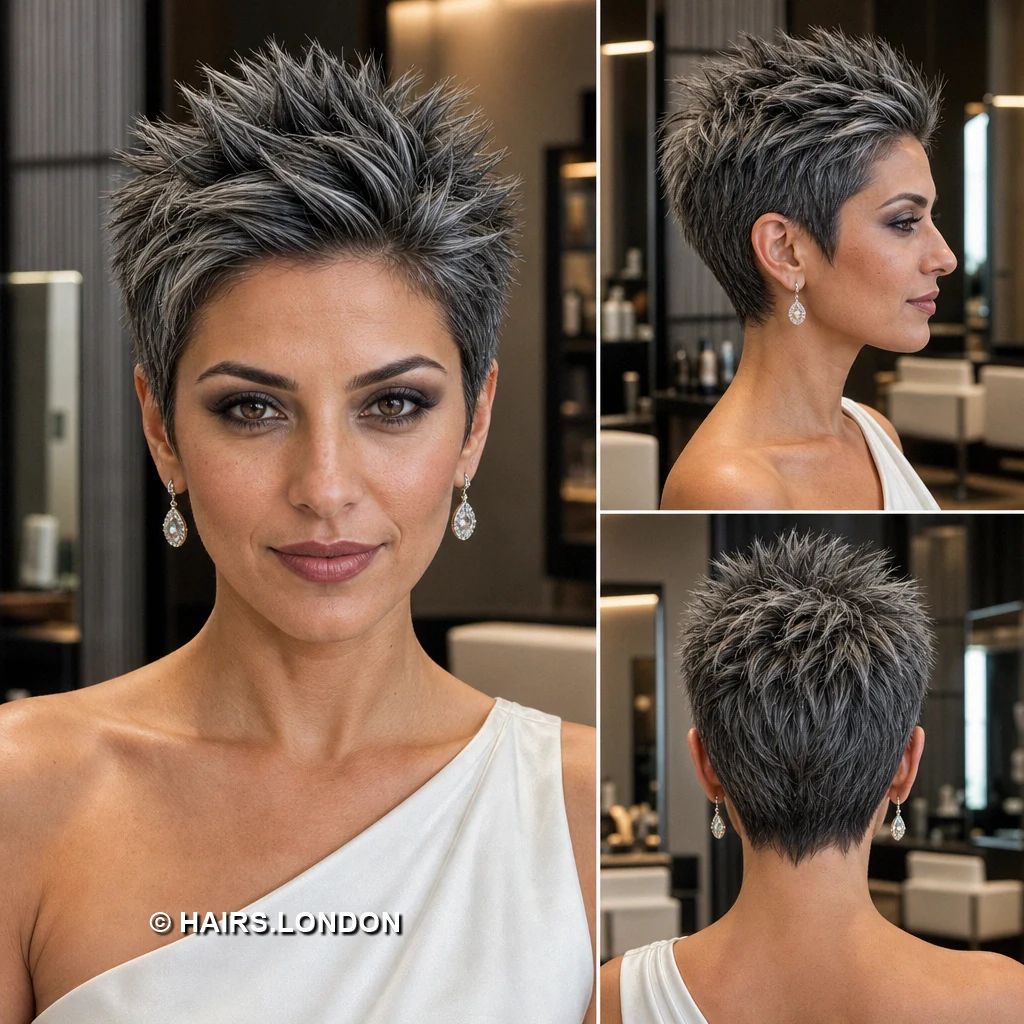
A deep side sweep gives this silver pixie directional movement. Longer top layers cross the forehead and lift at crown. Darker roots show beneath cool, pale streaks throughout the top. The sides are cropped close, particularly around the visible ear. Behind, textured layers narrow down to a short pointed nape. Ask for uneven ends rather than a solid, heavy fringe. Direct warm airflow from the roots to establish the sweep. Rub a small amount of paste between your palms first. Pinch a few ends to emphasize the airy, broken texture. Keep the tapered perimeter fresh with regular, modest cleanup trims.
5. Pale Silver Pixie with a Smooth Lifted Front
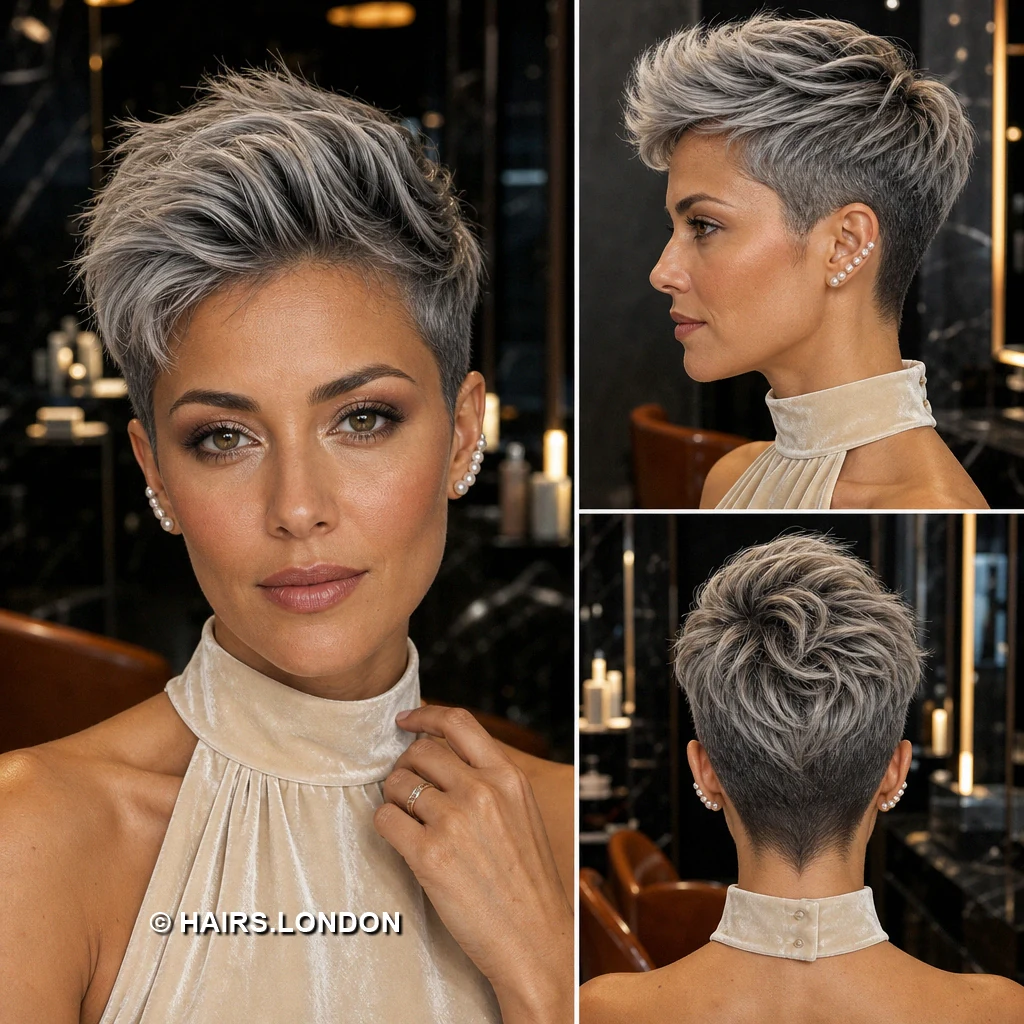
Pale silver hair sweeps upward into a smooth, generous front. Fine feathering adds separation without disrupting the broad quiff shape. Closely cropped sides create contrast beneath the longer top layers. The back follows the head before narrowing at the nape. A darker base remains visible beneath the light silver surface. Tell your stylist how much height you can style daily. Use root lift sparingly on damp hair before blow drying. Brush the front back, then loosen it with your fingers. A flexible spray can support height without making strands rigid. Refresh shorter sides when they begin obscuring the clean silhouette.
6. Compact Silver Pixie with Tousled Crown Texture
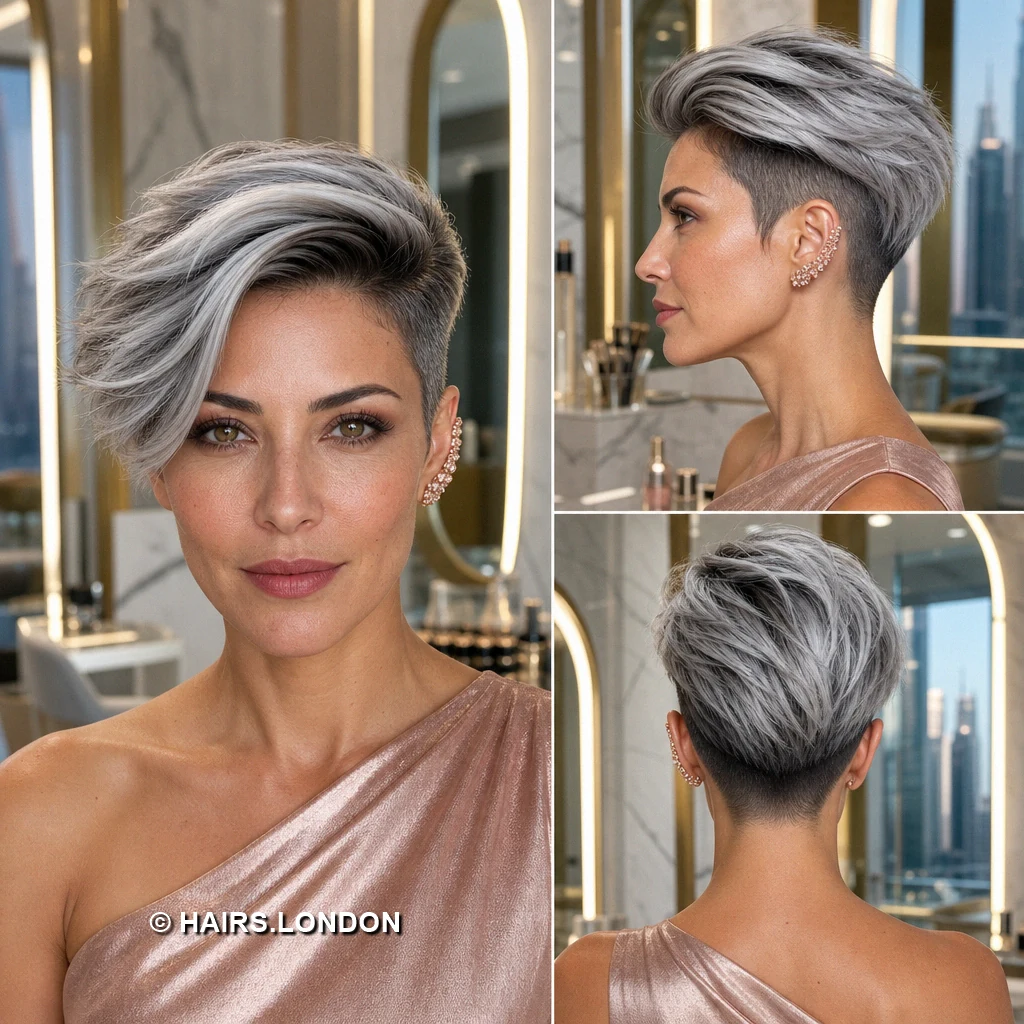
This compact pixie has short sides and a softly tousled crown. Silver and charcoal strands mingle across its closely layered top. The front lifts gently, leaving only a short, broken fringe. Around the ears, the cut remains tidy and lightly tapered. Back layers converge into a narrow, neatly shaped nape. Request soft surface texture if your hair needs natural movement. Dry forward initially, then lift small sections at the roots. Work matte paste through fingertips rather than coating every strand. Keep product light so the short layers retain their separation. Check the crown shape from behind during your next consultation.
7. Asymmetrical Silver Pixie with a Long Fringe
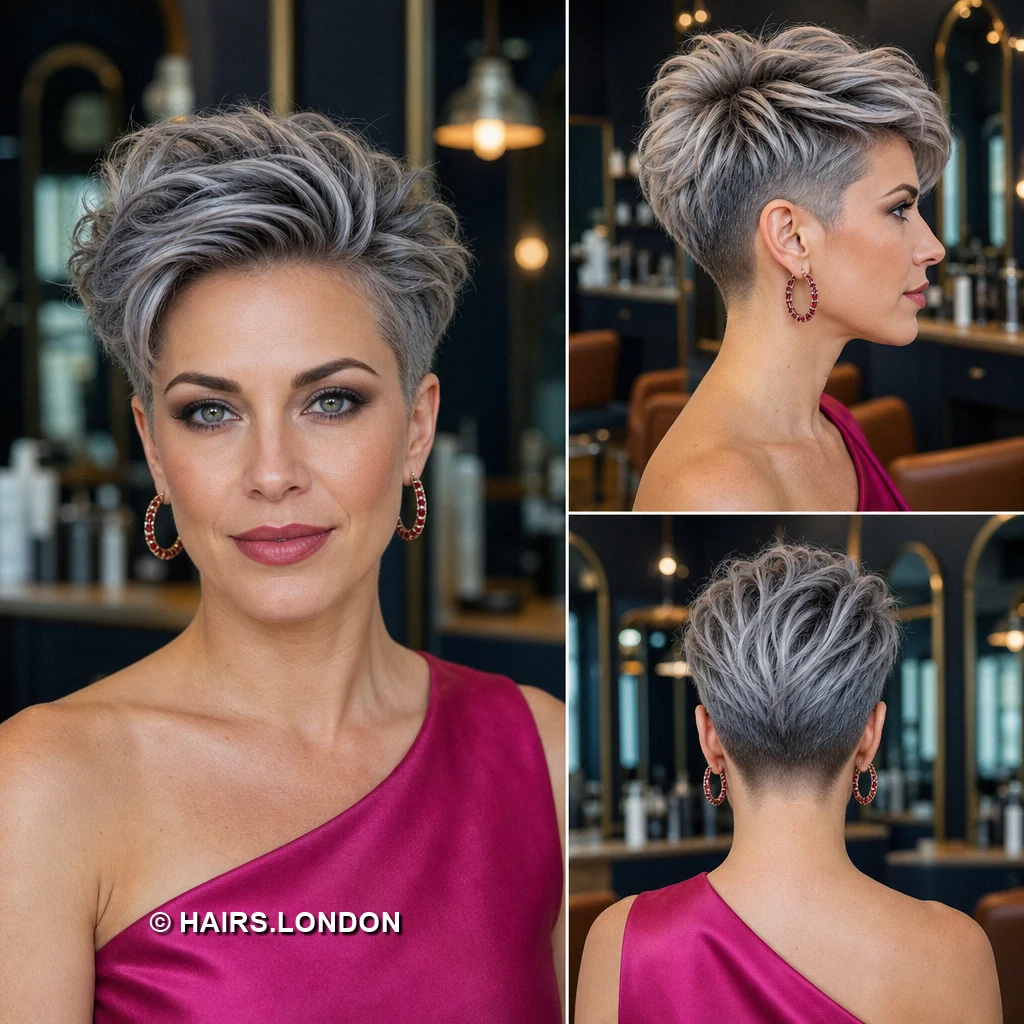
A long silver fringe sweeps diagonally over one eyebrow. The opposite side stays much shorter, exposing the ear clearly. Darker hair beneath pale ribbons emphasizes the cut’s asymmetry. Volume gathers above the part before flowing into softer lengths. The rear tapers closely, balancing the substantial front section. Ask your stylist to establish which side you naturally part. Keep the fringe long enough to sweep, not obscure vision. Blow dry across the forehead using a brush for direction. Apply light cream to control flyaways without flattening volume. Trim the short side separately if the fringe grows well. Check balance from behind.
8. Feathered Silver Crop with a Fine Angled Fringe
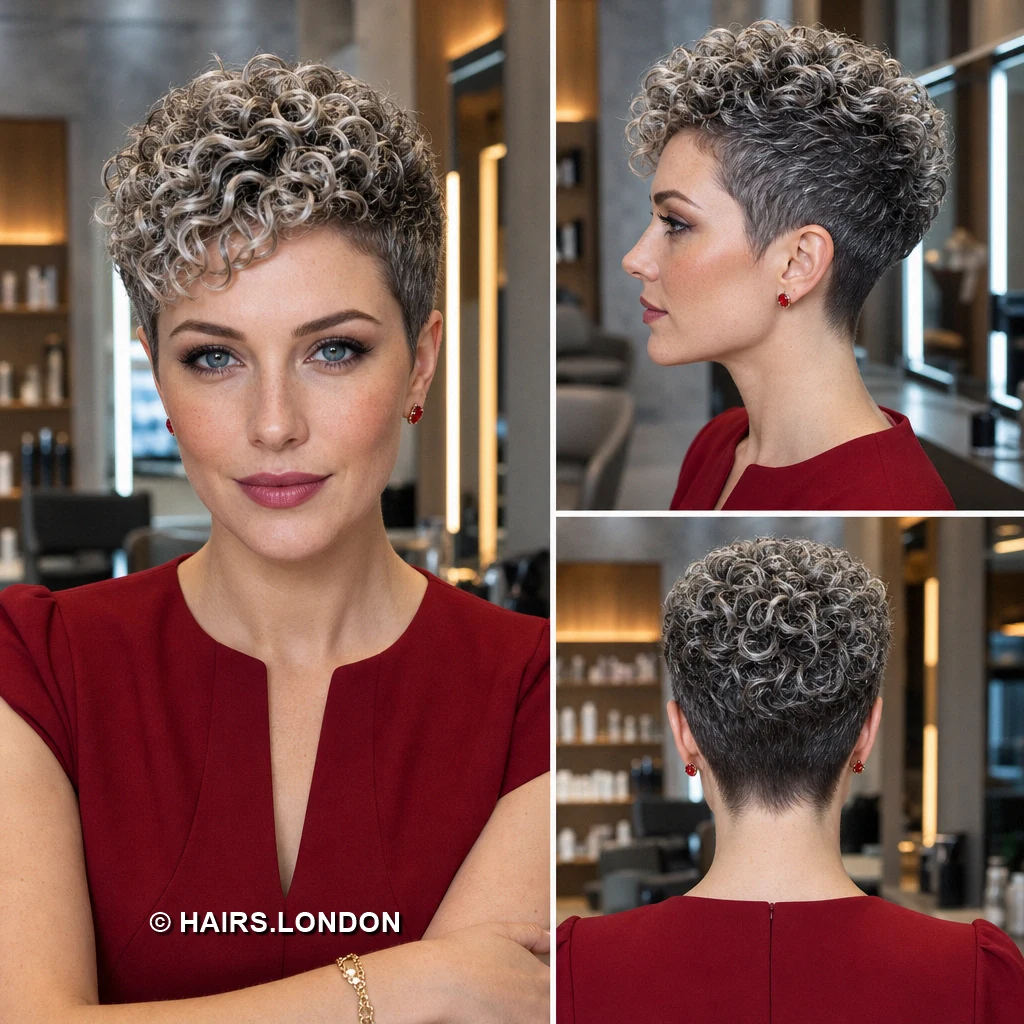
Fine silver layers create a light, feathery crown here. The fringe angles softly across the forehead in separated pieces. Short sides frame the ears without a severe shaved effect. From behind, the layered top tapers into a compact nape. Slightly darker strands add contrast between the pale surface pieces. Ask for delicate point cutting to keep the fringe wispy. Avoid excessive thinning if your hair already feels very fine. Blow dry with fingers for lift, directing ends slightly forward. A tiny amount of flexible paste defines the front pieces. Book regular trims when those pieces lose their light, angled shape.
9. Choppy Silver Pixie with a Swept Crown
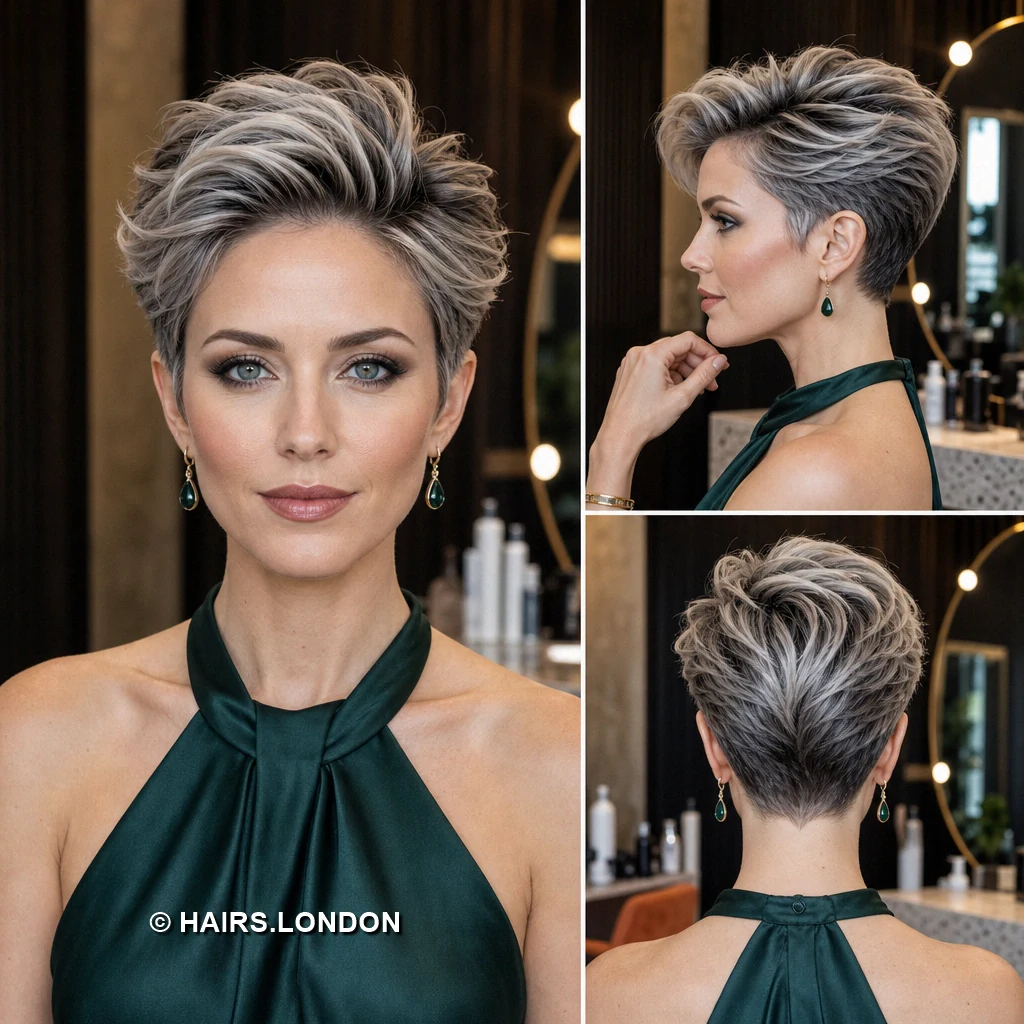
Choppy silver layers sweep across a full, slightly raised crown. Shorter pieces break up the front instead of forming bangs. The closely cut sides leave a clean outline around ears. A darker underlayer shows beneath the lighter, separated top strands. At the back, textured fullness tapers toward a narrow nape. Ask for movement through the top rather than uniform spikes. Dry from alternating directions to encourage natural-looking root volume. Use a pea-sized amount of matte paste for piecey definition. Avoid pressing down the crown while applying your finishing product. Refresh the precise perimeter when growth starts widening the lower shape.
10. Spiky Silver Pixie with a Short Fringe
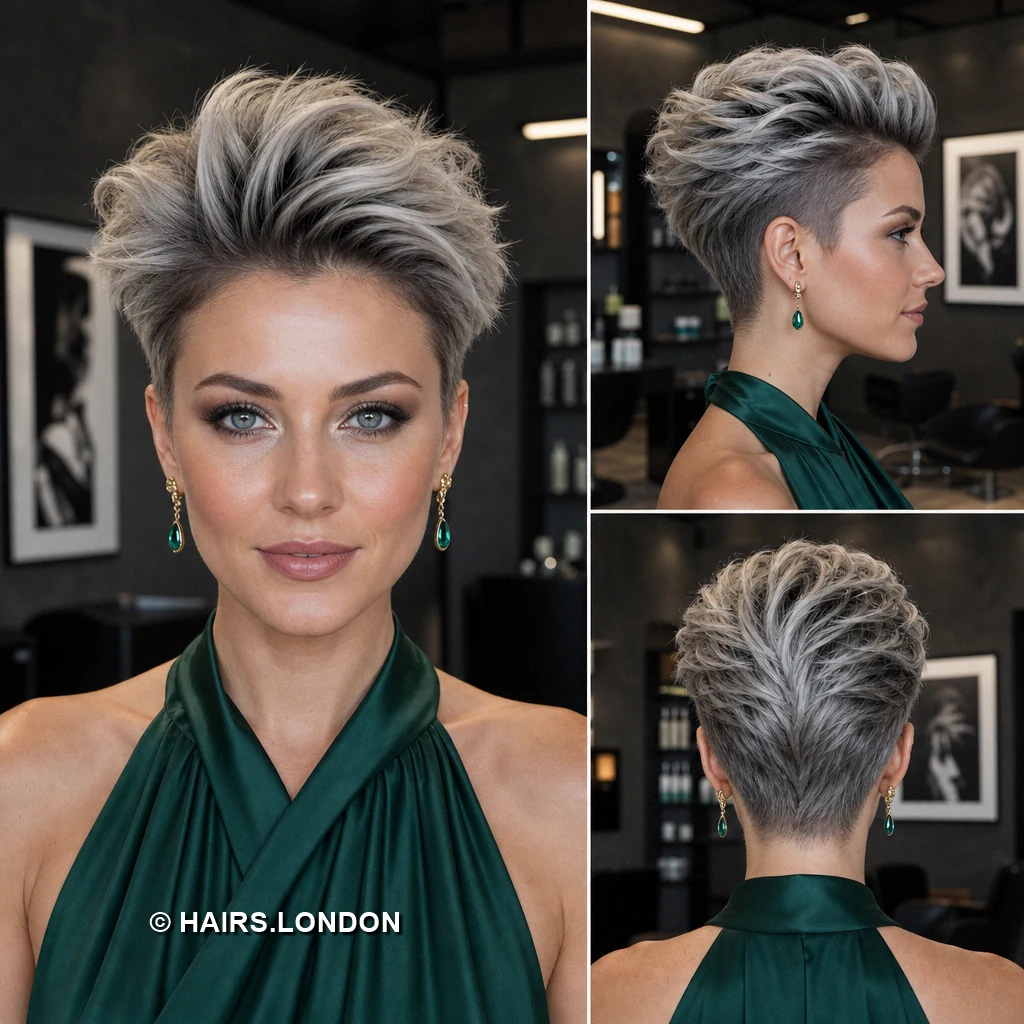
Short, pointed strands give this silver pixie its spiky finish. The front falls into irregular pieces above the eyebrows. Height concentrates through the crown instead of the closely tapered sides. Pale tips stand out against deeper gray near the roots. The back retains texture before narrowing into a short nape. Ask for enough top length to pinch sections into points. Dry upward with your fingers to establish lift before styling. Rub firm paste between fingertips and target individual ends sparingly. Leave some strands flatter to keep the texture from merging. Frequent edge trims help the short sides retain their proportion.
11. Silver Pixie with a Flowing Side-Swept Top
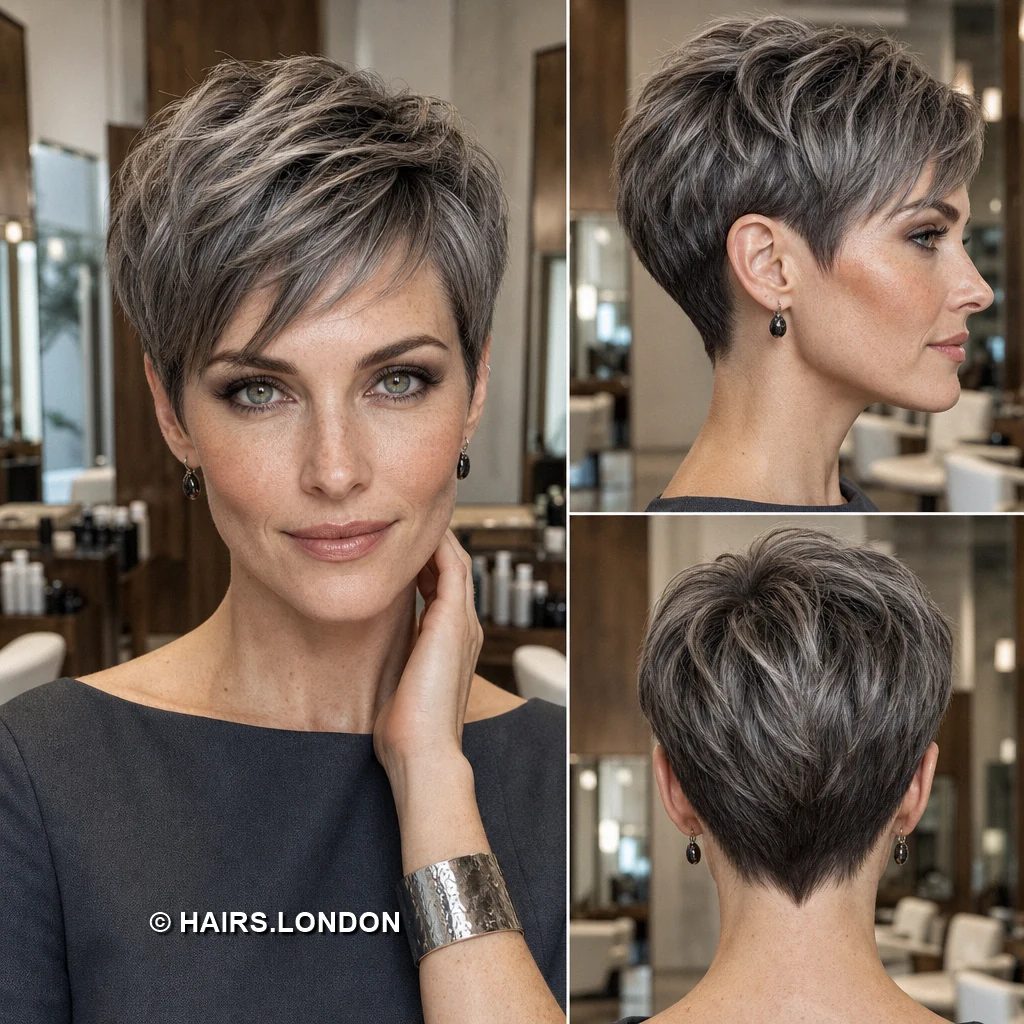
A flowing silver top curves sideways over this close pixie. The front is long enough to bend into a soft sweep. Cropped sides provide definition without interrupting the rounded crown. Darker gray underneath gives the pale top visible dimension. The rear layers meet in a narrow, tapered nape. Request smooth transitions if you dislike an obvious undercut line. Blow dry the longer section across its intended parting direction. Use a light serum only through the ends for polish. Reposition the sweep with clean, dry fingers rather than heavily teasing roots. Discuss whether your natural growth pattern supports this particular part.
12. Full Silver Quiff with a Close Taper
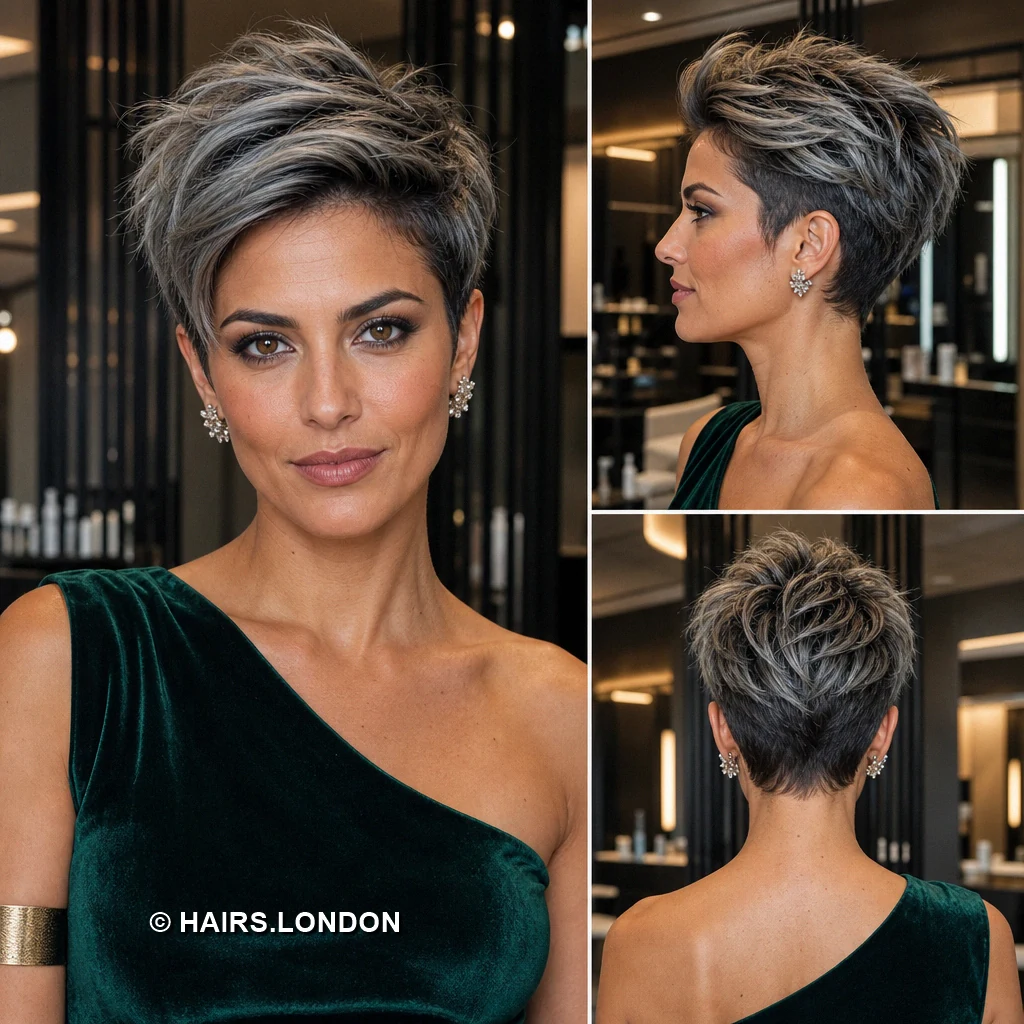
A generous silver quiff rises from the forehead and curves backward. The top retains broad, smooth movement with lightly separated ends. Sides sit close, emphasizing the height through the front. Behind the crown, layers descend into a finely tapered nape. Mixed silver and darker gray strands accentuate the swept shape. Ask to preserve length at the hairline for this roll. Lift roots while blow drying with a small round brush. Finger comb afterward so the finish stays soft, not fixed. Choose flexible hold if you want to adjust it later. Maintain close sides regularly to keep the quiff visually prominent.
13. Tall Silver Pixie with Feathered Backward Texture
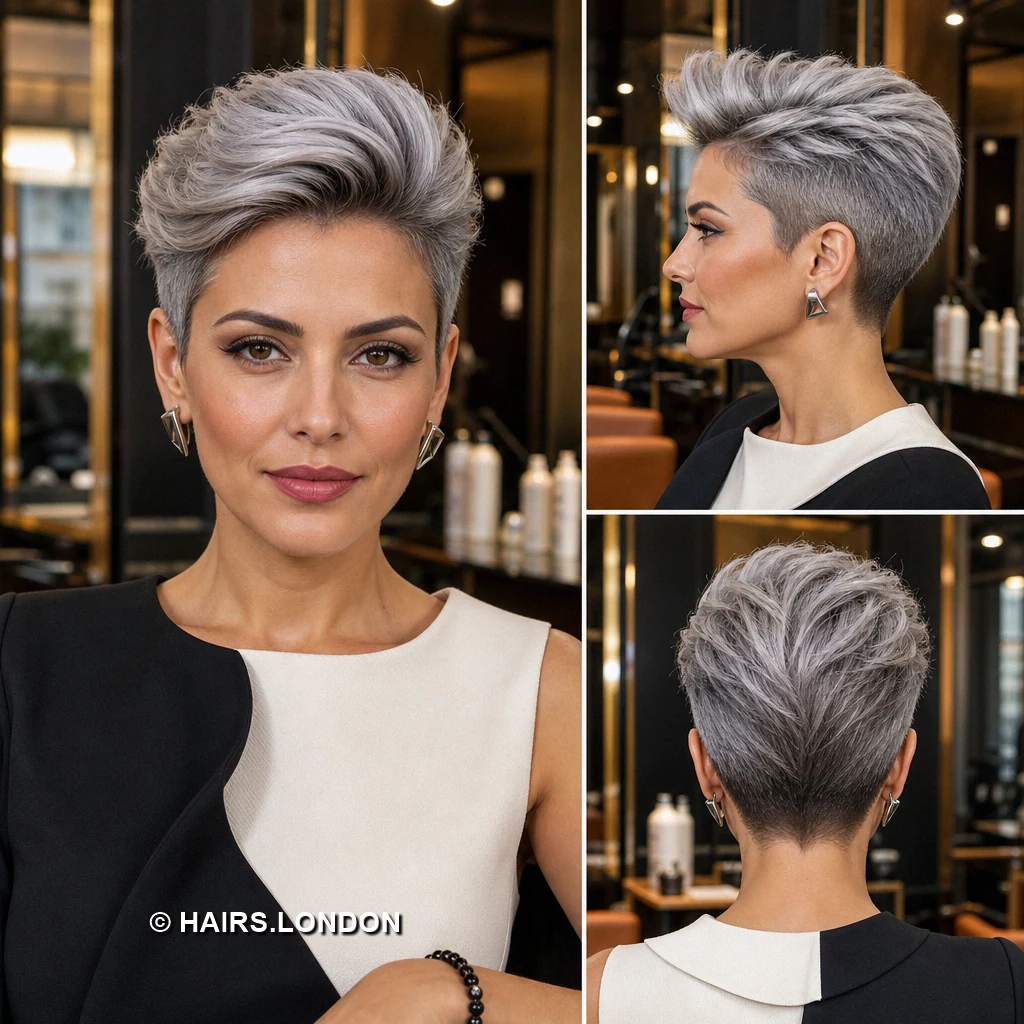
Tall, feathered silver strands fan backward from the front hairline. Their lifted direction creates height while leaving the forehead clear. The sides remain short, with a clean outline above ears. Textured layers continue through the crown into the upper back. Below them, the hair narrows toward a closely trimmed nape. Ask for layering that supports height without hollowing the crown. Blow dry upward and backward before applying any finishing product. Use fingertips to separate the ends into broad, airy sections. A light spray can help maintain lift through the day. Plan perimeter trims before the side profile becomes noticeably bulky.
14. Sculpted Silver Waves on a Cropped Pixie
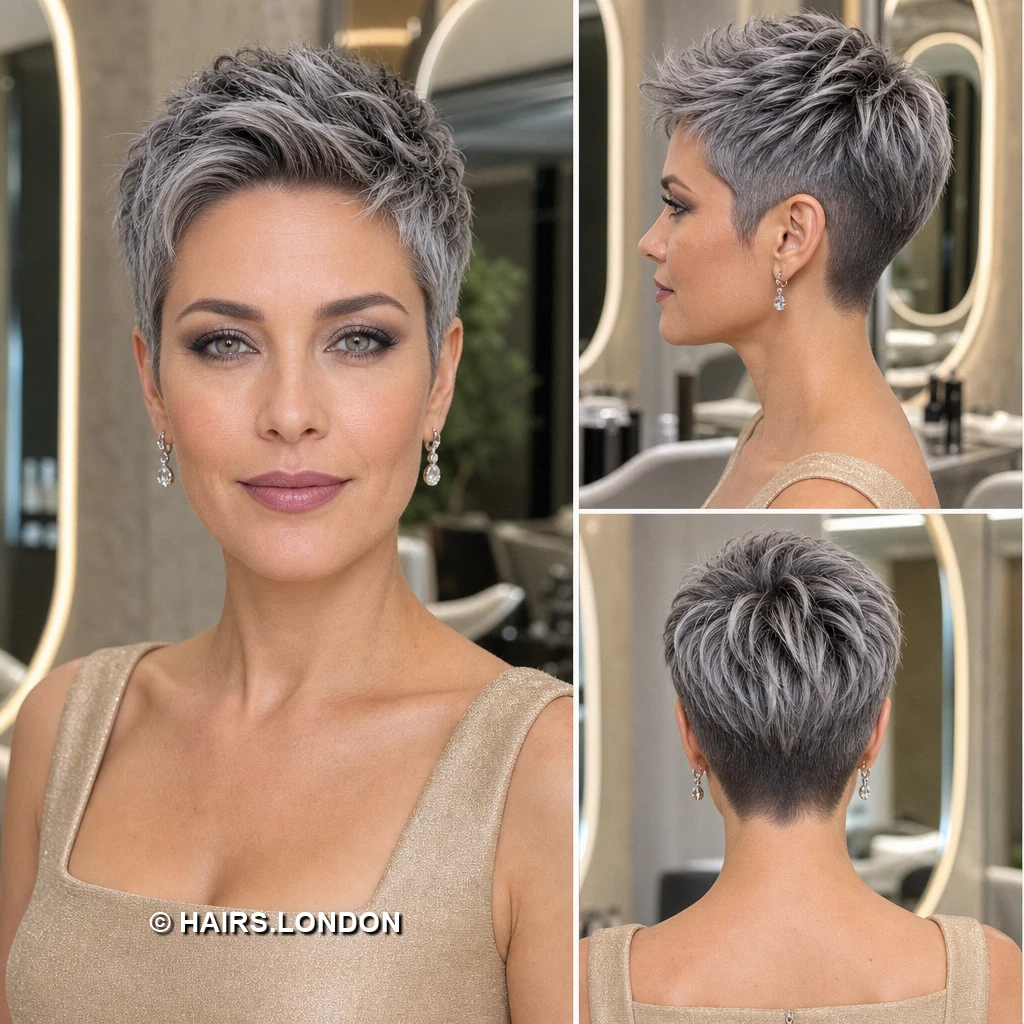
Sculpted silver waves curl prominently above the forehead and crown. The rolled front creates a distinct shape rather than fringe. Closely cut sides anchor the fuller, carefully arranged top. A gray base remains visible beneath the bright, dimensional silver ridges. The back shows combed texture before tapering toward the nape. Ask for sufficient top length to form these broad bends. Blow dry with a brush, shaping each section while warm. Set the front with fingers and a flexible styling product. Practice the rolling motion before relying on this daily finish. Keep the short perimeter precise to preserve the sculpted contrast.
15. Charcoal-Silver Pixie with Sharp Textured Spikes
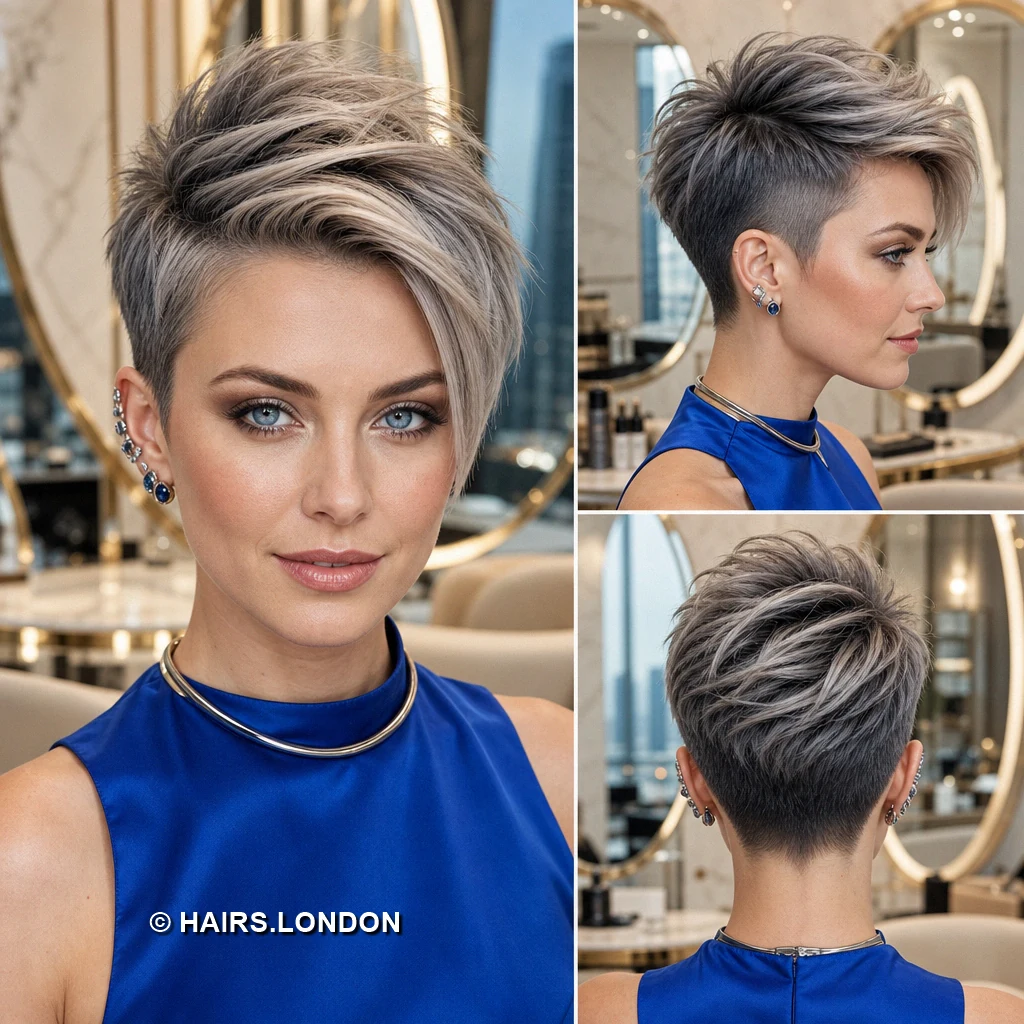
Charcoal roots and silver tips sharpen this strongly textured pixie. Pointed sections rise through the front, crown, and upper back. The fringe stays short and broken, keeping eyebrows unobstructed. Sides are cropped closely but retain small, textured ends. The nape tapers to a narrow point beneath the spikes. Request varied top lengths if you want separated, irregular peaks. Blow dry upward, using fingers to direct the individual sections. Add firm paste gradually rather than loading the entire crown. Pinch selected tips while leaving some hair naturally relaxed on the lower sides. Trim before grown-out sides weaken the cut’s compact outline.
16. Soft Silver Sweep with a Raised Crown
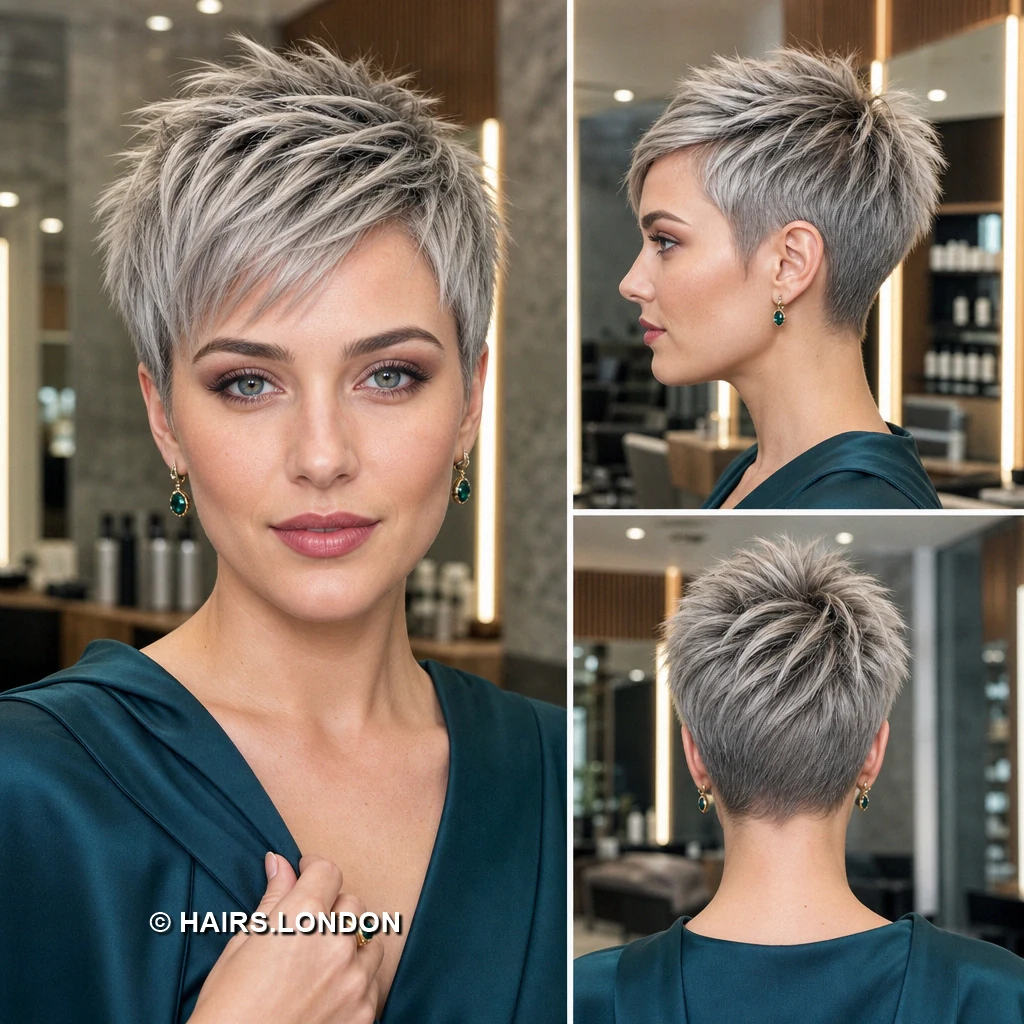
A soft silver sweep crosses the front of this pixie. Gentle height at the crown keeps its outline full. The sides fit closely against the head around the ears. Pale strands alternate with darker gray throughout the longer top. Back layers turn inward before meeting a closely tapered nape. Ask for a front section that moves without falling heavily. Blow dry from below the roots for controlled, natural lift. Smooth the surface lightly while preserving its visible strand separation. A flexible cream can tame ends without making them stiff. Schedule trims soon when the swept front starts losing its direction.
17. Long Silver Side Sweep over Cropped Sides
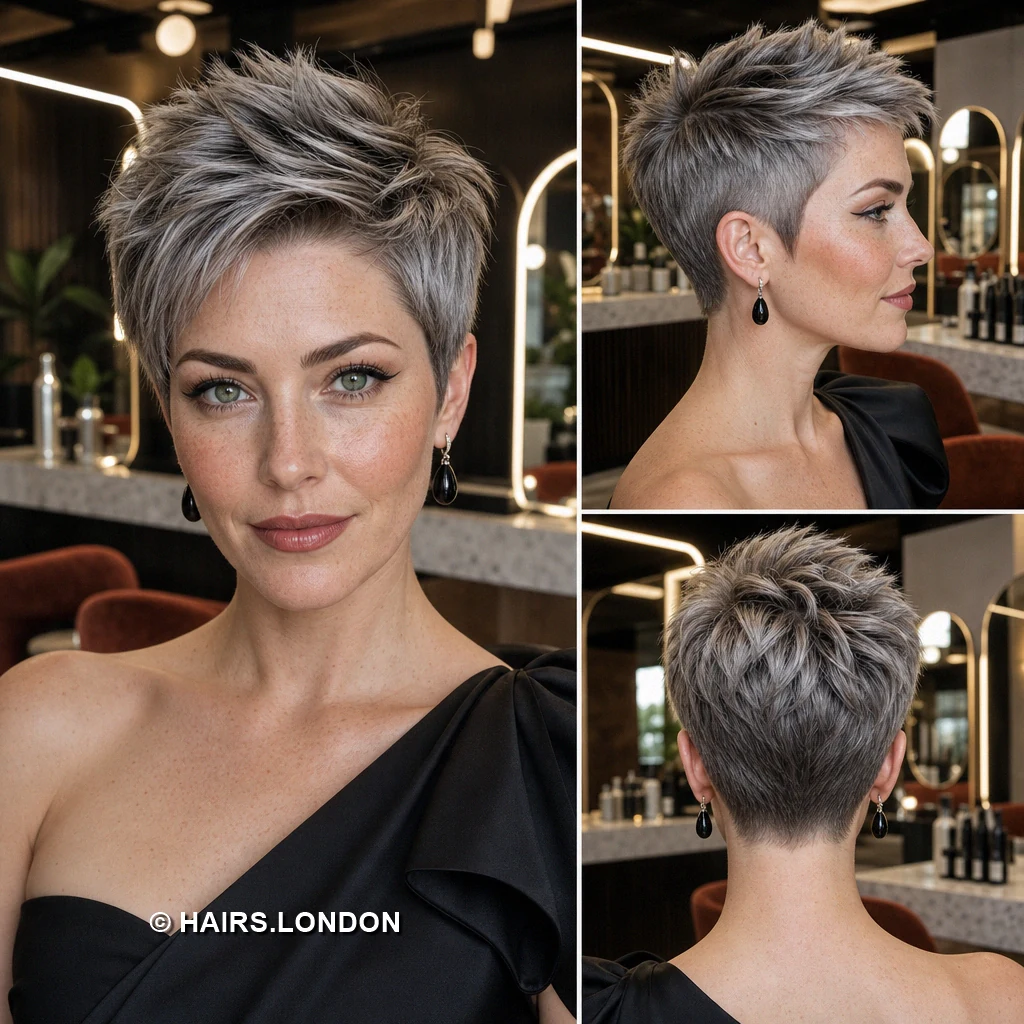
A sweeping silver front reaches across the forehead toward one eye. Its longer length contrasts strongly with the closely cropped sides. Layered strands flow backward into a full, rounded crown. The rear then narrows neatly to a short, dark nape. Pale silver ribbons remain distinct against deeper gray underneath. Ask your stylist to balance fringe length with clear vision. Dry the top sideways, lifting gently at its roots. Use light cream to gather flyaways without creating stiff sections. Check how the fringe falls when your hair dries naturally and completely. Maintain the short sides while letting the sweep remain expressive.
18. Airy Silver Pixie with a Lifted Side Fringe
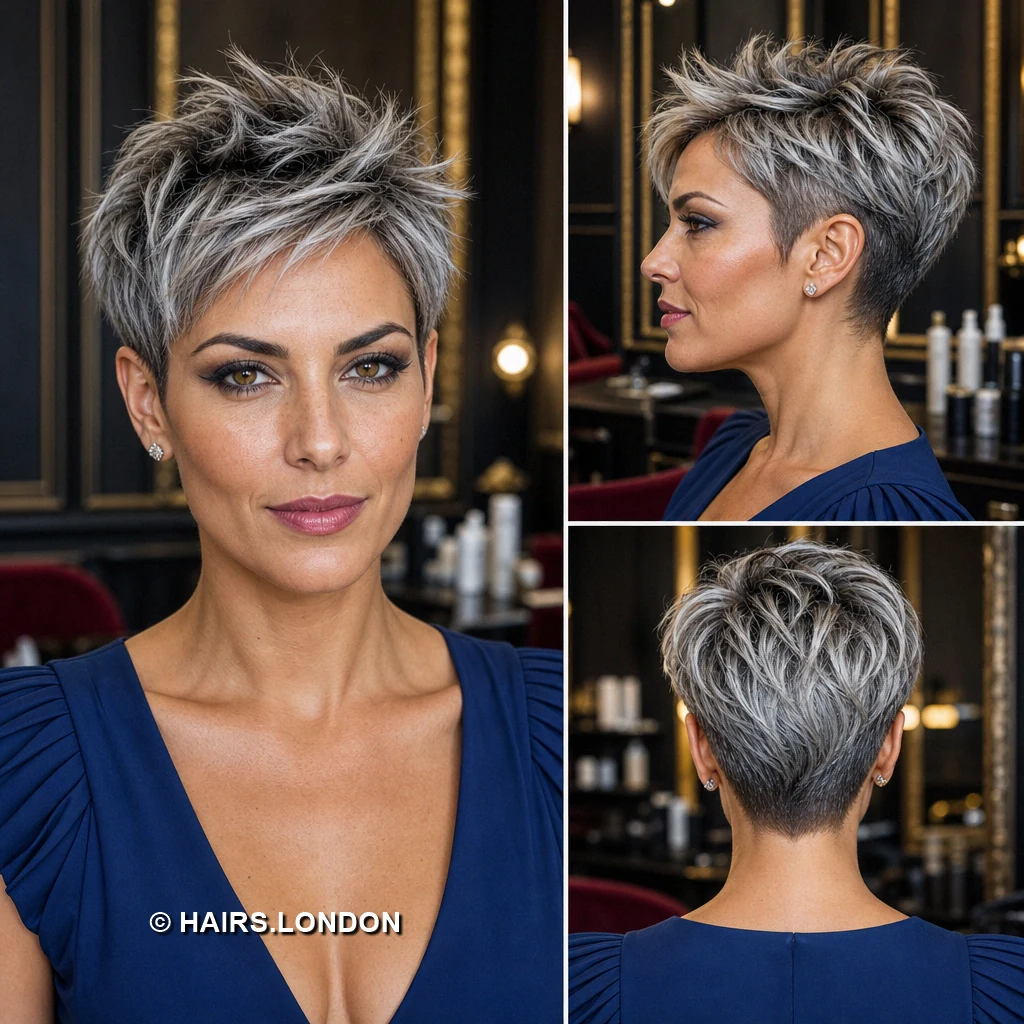
Airy layers lift around this silver pixie’s crown and fringe. The front sweeps sideways while remaining clear of the eyes. Short, tidy sides balance the generous volume above the ears. Deeper gray beneath the silver adds contrast through the texture. The back is full above a neatly narrowed nape. Ask for soft layering rather than blunt weight through crown. Blow dry against your usual part for temporary root lift. Turn the front back across its part once completely dry. Finish with light spray to preserve movement between the strands. Refresh the nape regularly before it grows wider than the crown.
19. Silver Ringlet Pixie with Curved Front Curls
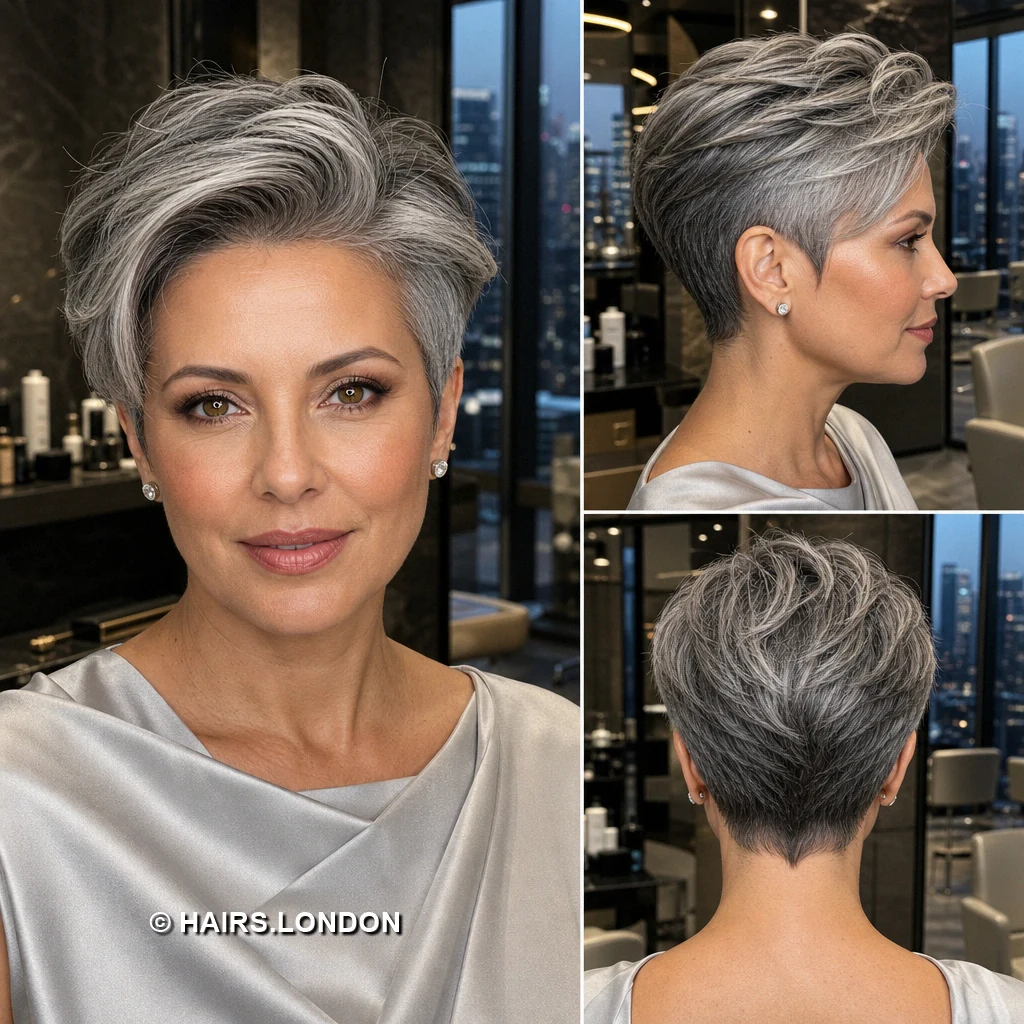
Springy silver ringlets gather densely across the top and front. Several curls fall forward, creating a short, curved fringe. The sides are closely tapered, leaving room for crown volume. Darker roots outline individual coils beneath the pale silver highlights. Behind, rounded curls narrow into a neat, pointed nape. Ask for curl-aware layering that preserves the front ringlets. Apply curl cream while damp, then scrunch without rough handling. Diffuse on gentle airflow to limit frizz and retain definition. Let curls cool before separating any sections with fingertips. Trim thoughtfully because damp curls can shrink after drying. Check the shape when dry.
20. Swept Silver Pompadour with a Tapered Back
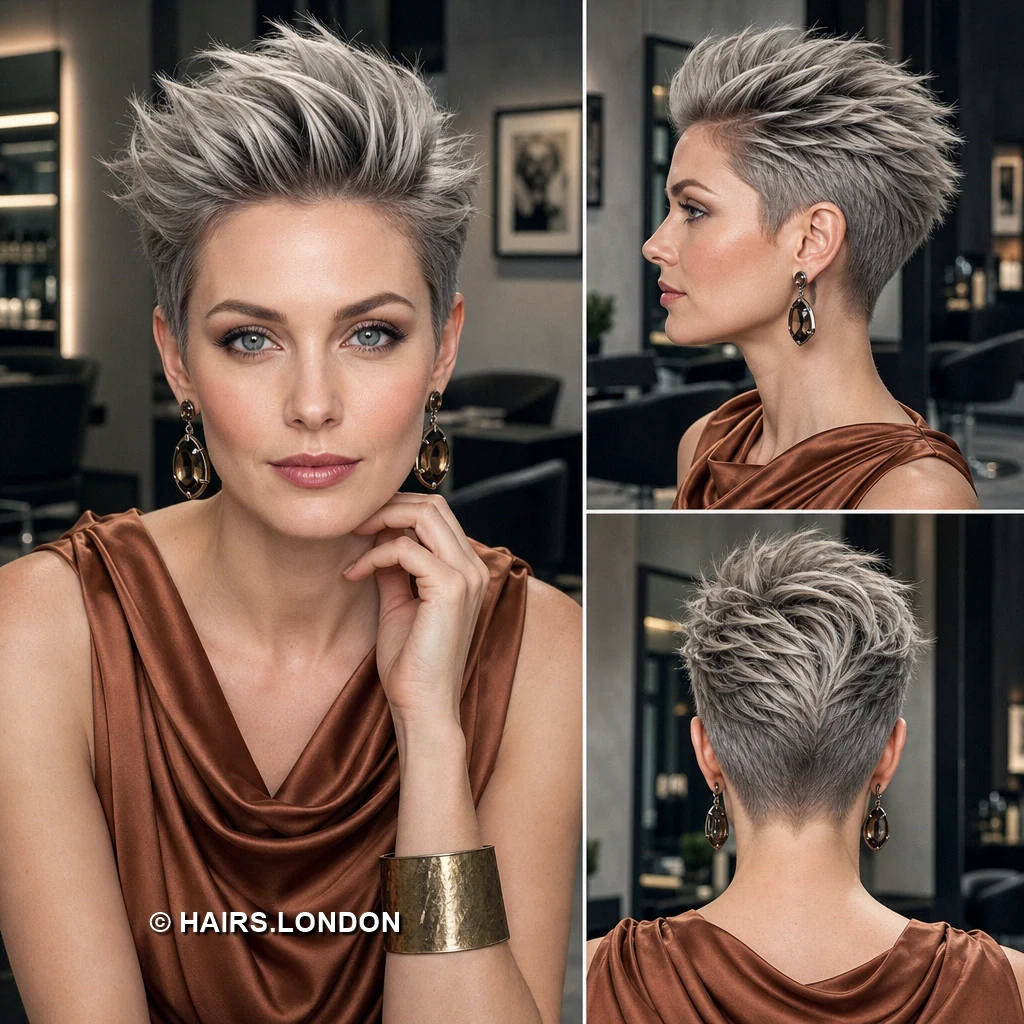
A broad silver pompadour rolls upward and back from the forehead. Its longer top flows into a softly textured, full crown. Close sides and a narrow nape sharpen the overall silhouette. Darker roots show between the pale, brushed silver ribbons. The front stays open, with no fringe crossing the eyebrows. Ask for enough hairline length to create the lifted roll. Blow dry upward first, then guide the hair backward gently. Use a small amount of flexible paste for separation. Avoid heavy wax that could collapse the airy front volume. Keep the tapered back tidy between longer top appointments as needed.
How to Choose a Silver Pixie Haircut
Start with the part you want to notice most. A long side sweep needs enough front length and a compatible growth pattern; a quiff needs top length that can be lifted; defined ringlets need room to spring up without being cut too short. Compare the profile and back views as carefully as the front. Decide whether you prefer a very close outline around the ears and nape or a softer transition into the crown.
Styling Silver Pixies on Different Textures
For straight hair, blow dry the roots in the direction needed for a sweep or against the growth direction for height, then use a small amount of paste to separate the ends. On wavy hair, try finger styling and gentle diffusing before deciding how much extra definition it needs. For curls, distribute curl cream through damp hair, scrunch and diffuse gently; avoid brushing out the finished coils. Begin with less product than you think you need, since it is easy to weigh down a short top.
Keeping Silver Color Fresh
The images show pale silver alongside darker gray roots or underlayers, so discuss whether you want an even finish or visible contrast. Ask your colorist what lightening and toning your current hair would require; the process and upkeep depend on your starting color and hair condition. Use color-safe care, limit unnecessary heat and ask how often a toner refresh would suit your shade. If a purple shampoo is recommended, use it as directed rather than at every wash by default.
Maintaining the Pixie Shape
The shortest areas usually show growth first. Arrange trims according to how quickly your sides and nape lose their intended outline; a close taper may need attention sooner than a softer crop. At each appointment, say whether you want to preserve top length, shorten a fringe that reaches your eyes or remove bulk at the crown. This prevents a routine cleanup from gradually changing the shape you chose.
What to Discuss with Your Stylist
Bring the front, side and back views of the cut you prefer. Point out the exact fringe length, crown height, ear coverage and nape shape you want, as well as any detail you do not want copied. Show how your hair naturally parts and explain how much time you will spend styling it. If you want silver color, discuss your starting shade, hair condition, desired root contrast and a realistic plan for color maintenance before the service begins.
Frequently Asked Questions
Which silver pixie is easiest to style each morning?
A softly layered crop with a short fringe generally requires less shaping than a tall quiff or long side sweep. Your natural texture and growth pattern matter too.
Can curly hair wear a tapered silver pixie?
Yes. The curly cuts shown keep enough length on top for defined coils while tapering the sides and nape. Ask your stylist to account for curl shrinkage.
How do I choose between a fringe and an open forehead?
Consider whether you enjoy hair near your eyes and how your front hair naturally grows. A side fringe offers coverage; a lifted quiff keeps the forehead open.
What should I ask for if I want volume at the crown?
Show your stylist where you want the fullness and ask them to preserve enough top length to support it without leaving unwanted bulk at the sides.
Will a long side sweep need more styling?
Usually. Longer front hair often needs blow-drying for direction and light product for control, particularly if it grows against the intended sweep.
How can I make a spiky pixie look separated?
Dry the hair upward, then pinch a small amount of paste into selected ends. Working section by section keeps the finish from becoming one stiff mass.
Should the nape match the sides?
Not necessarily. These cuts pair close sides with either a narrow taper or a subtly pointed nape. Decide which outline you prefer from the back view.
How often does a short pixie need trimming?
Book a trim when the sides or nape begin losing the shape you want. Closely tapered areas tend to make growth more noticeable than longer layers.
Can I keep darker roots with silver hair?
Yes. Several looks show darker gray or charcoal beneath pale silver strands. Bring an image to your colorist so you can agree on the amount of contrast.
Does silver hair require toner?
That depends on your starting color, how the silver shade was achieved and how it changes between appointments. Ask your colorist for a tailored refresh plan.
What product suits a soft, feathered pixie?
Try a small amount of lightweight cream or flexible paste through the ends. Avoid overapplying product if you want the strands to remain airy.
What photos should I take to a pixie consultation?
Bring front, profile and back views. Together, they clarify the fringe, crown, side length and nape much better than a single portrait.
Conclusion
The best choice among these silver pixie haircuts is the one whose shape works from every angle and suits the texture you actually have. Save images that show your preferred fringe, crown and nape, then talk through the cutting and color upkeep with your stylist before making the change.