


11. Forest Green Pixie with Wispy Bangs
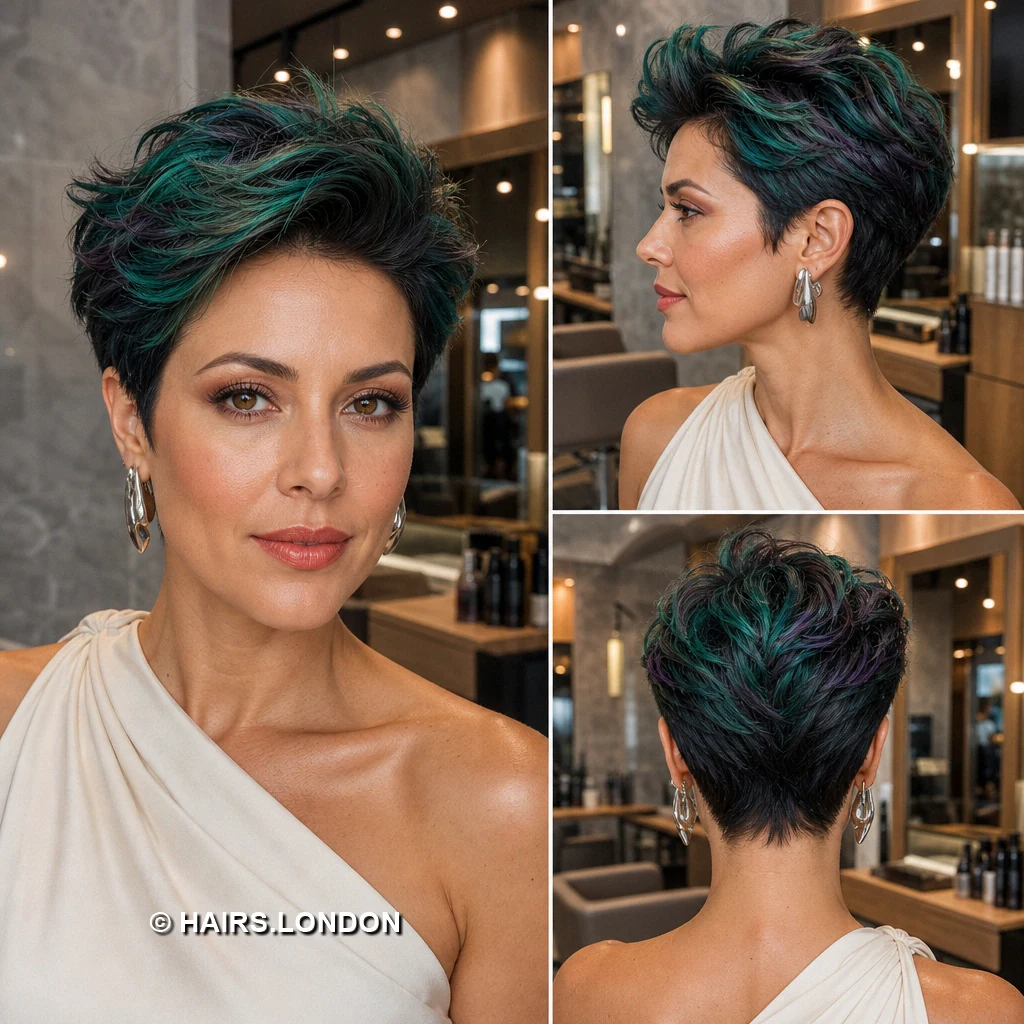
Forest green strands wind through the dark, tousled upper layers. Thin, separated bangs fall irregularly across the exposed forehead softly. The sides are compact, with gentle length surrounding the temples. At the crown, lifted wisps keep the silhouette looking airy. Dark back layers taper into a short, clean narrow neckline. Ask for broken fringe ends rather than a straight line. Rough dry the top gently, directing a few strands forward. Pinch light styling cream through ends to maintain soft separation. Color refreshes can focus on green pieces without covering everything. Trim wispy edges when fringe starts slightly obscuring the eyes.
12. Dark Green Pixie with a Soft Side Fringe
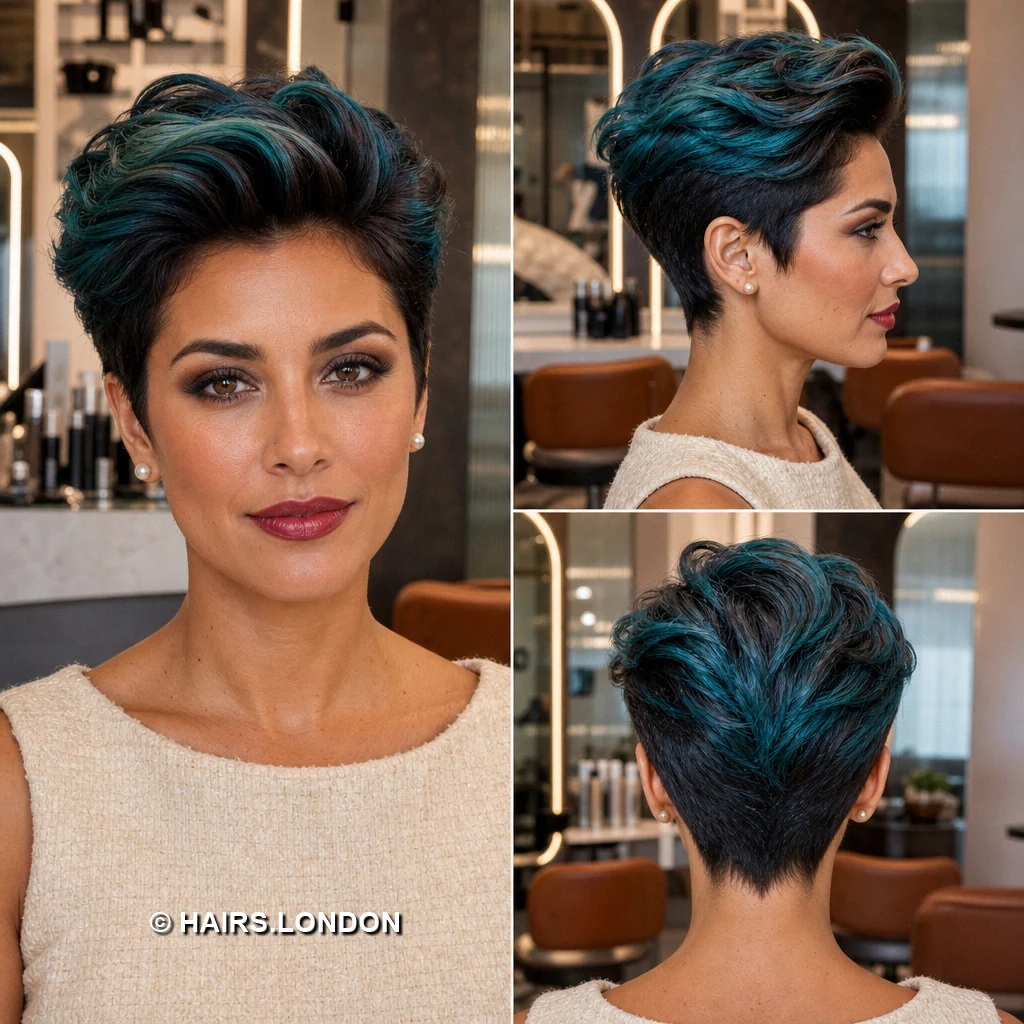
Deep green highlights thread through soft, dark textured upper layers. The side swept fringe curves gently across the upper forehead. Rounded crown volume settles into short, softly layered back sections. The sides hug the head while leaving ears clearly visible. A neat, dark nape grounds the fuller shape above it. Ask for blended top layers with a movable front edge. Blowdry forward first, then nudge the fringe lightly across gently. Apply flexible cream to shape bends without stiffening them unnecessarily. Discuss subtle green placement if you prefer darker overall color. Regular trims keep the neckline defined and side fringe manageable.
How to Choose a Teal or Green Pixie Cut
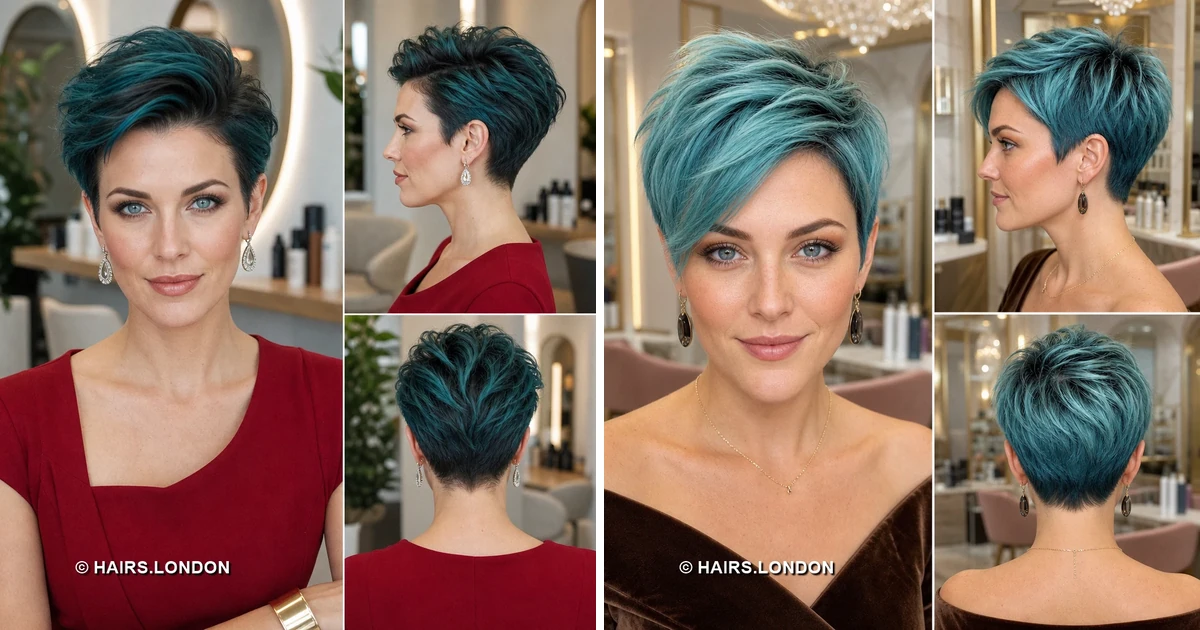
Start with the outline you want to maintain. A long diagonal fringe, as in images 8 and 9, gives you more hair to direct across the forehead. The shorter fringe in images 7 and 11 puts more emphasis on crown texture. Compare the side and back views as carefully as the front: close sides and a tapered nape change how often a cut needs tidying. Bring your stylist a favorite front view and its matching profile so you can discuss both length and shape.
Styling Different Textures
For natural waves, diffuse gently and shape the top with your fingers to keep bends distinct, as in images 1 and 3. Straighter hair can gain lift from blowdrying the roots upward or across the head before using a small amount of flexible paste. For the spikier finishes in images 7 and 10, pinch selected pieces rather than coating the entire crown. Start with little product; fine hair can lose height when cream or wax builds up.
Keeping Teal and Green Color Fresh
The images range from narrow green accents on dark hair to much lighter aqua and turquoise tops. Ask your colorist what lightening, if any, your chosen placement requires. Wash gently with cooler water, condition the colored lengths, and limit unnecessary heat. Bright teal or turquoise may need a refresh sooner than subtle green streaks; pale aqua can also change tone as it fades. Your colorist can recommend a refresh schedule based on the shade used and your hair’s condition.
Maintaining the Pixie Shape
Watch the areas that define your chosen cut. A close nape can look overgrown before the top needs shortening, while a long fringe may need attention when it reaches your eyes. Ask whether your salon offers a small perimeter tidy between full cuts. At a full appointment, specify which top pieces you still need for waves, lift, or a side sweep so a routine trim does not remove the styling length.
What to Discuss with Your Stylist
Show the front, profile, and back of the same image, then point out the fringe direction, crown height, side length, and nape taper you like. Describe how your hair behaves when air dried and how much time you want to spend styling it. For color, identify whether you prefer dark underlayers, scattered streaks, or a brighter surface. Ask how the proposed cut and shade will grow out, what home products are useful, and when to book a trim or color refresh.
Frequently Asked Questions
What distinguishes these teal and green pixie cuts?
They differ mainly in fringe length, crown texture, side taper, and the amount of colored hair. Some show small green streaks against dark layers; others have a predominantly turquoise or aqua top.
Which pictured cuts have the longest fringes?
Images 5, 8, and 9 show especially noticeable diagonal fringes. Image 9 has the smoothest, most continuous sweep.
Which cuts leave the forehead more open?
The lifted fronts in images 1, 2, 3, and 4 expose more forehead than the forward-fringe styles.
How can I style the wavy tops without flattening them?
Diffuse gently or dry with your fingers, then use a small amount of lightweight cream on individual bends. Avoid pressing product into all the roots.
What should I request for a spiky pixie?
Show images 7 or 10 and ask about short, uneven top layers that can be separated and lifted while the sides remain compact.
Can I keep my natural dark color visible?
Yes. Several images show dark roots, sides, or napes beneath colored upper strands. Point out the areas you want left dark during your color consultation.
Will pale aqua look the same as deep teal?
No. Images 6 and 9 appear lighter and softer, while images 2 and 4 show deeper teal or blue-teal accents. Bring the specific image that matches your preferred shade.
How do I keep a side-swept fringe in place?
Dry it in the direction you want it to sit, then use a little pliable cream or flexible spray. The fringe also needs enough length to make the sweep.
Which area usually needs trimming first?
That depends on the cut. Close sides and napes may lose their outline quickly, while longer fringes may become bothersome when they approach the eyes.
Should the nape match the top color?
Not necessarily. Many pictured cuts keep the nape dark, creating a clear contrast with the teal or green top. Image 7 carries more visible color through the back.
What if my hair does not naturally wave?
Choose the silhouette you like, then ask your stylist which parts can be achieved with blowdrying and product. Naturally straight hair may need more daily work to reproduce the loose waves.
What should I bring to a salon consultation?
Bring the complete image showing front, side, and back views. Note the fringe length, side taper, crown texture, and exact color placement you want to discuss.
Conclusion
A good reference does more than show a shade: it shows how the fringe, crown, sides, and nape work together. Choose the teal or green pixie whose shape suits your styling routine, then use its multiple views to make a clear plan with your stylist.