


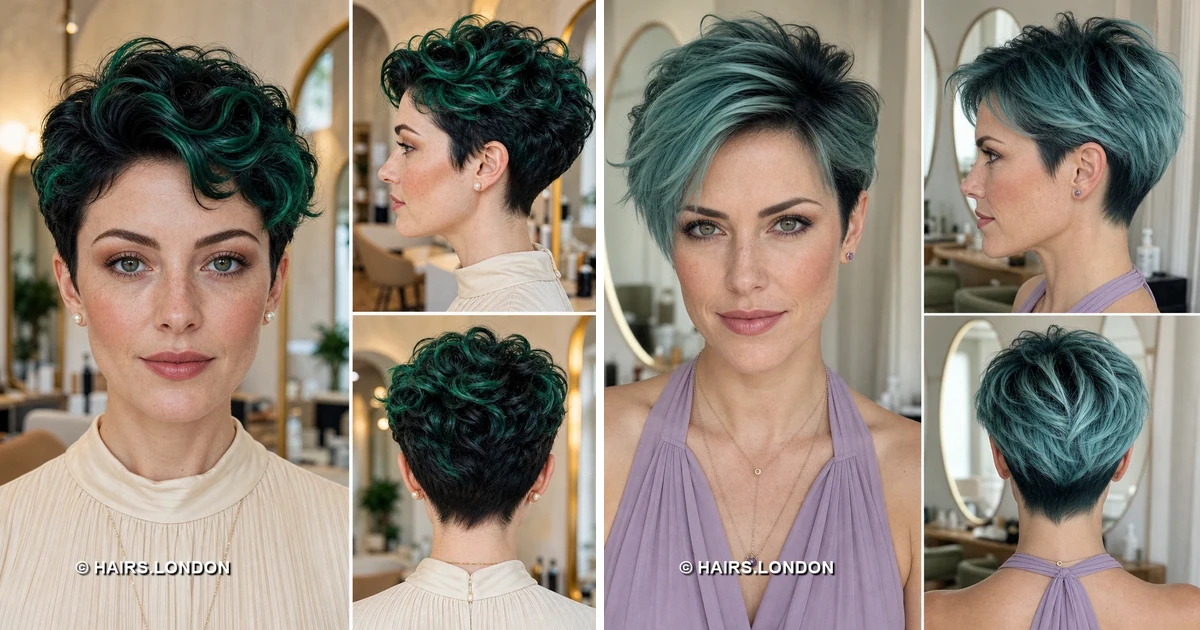
11. Dark Piecey Pixie with Subtle Green Streaks
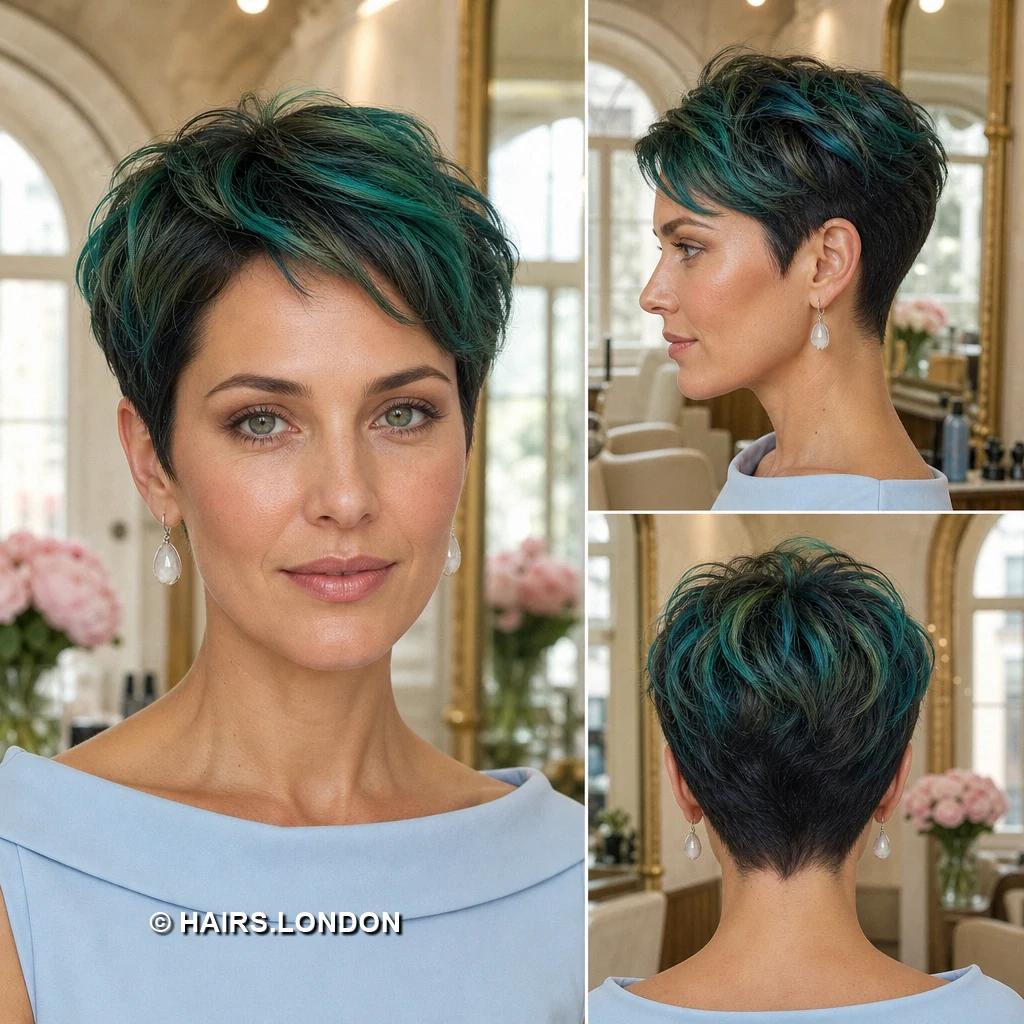
Near black hair holds restrained green streaks through jagged layers. Short pointed fringe pieces scatter across the upper forehead lightly. The crown lifts into irregular peaks, adding texture without curls. Compact sides frame exposed ears and follow the head closely. Rear layers become shorter toward a clean, slender tapered nape. Ask for piecey ends rather than one blunt top layer. Work paste into dry hair, lifting selected sections with fingertips. Keep the front slightly forward to display those colored tips. Discuss subtle green placement if you prefer a darker appearance. Trim sides before growth erases the contrast with lifted layers.
12. Deep Side-Swept Teal Pixie
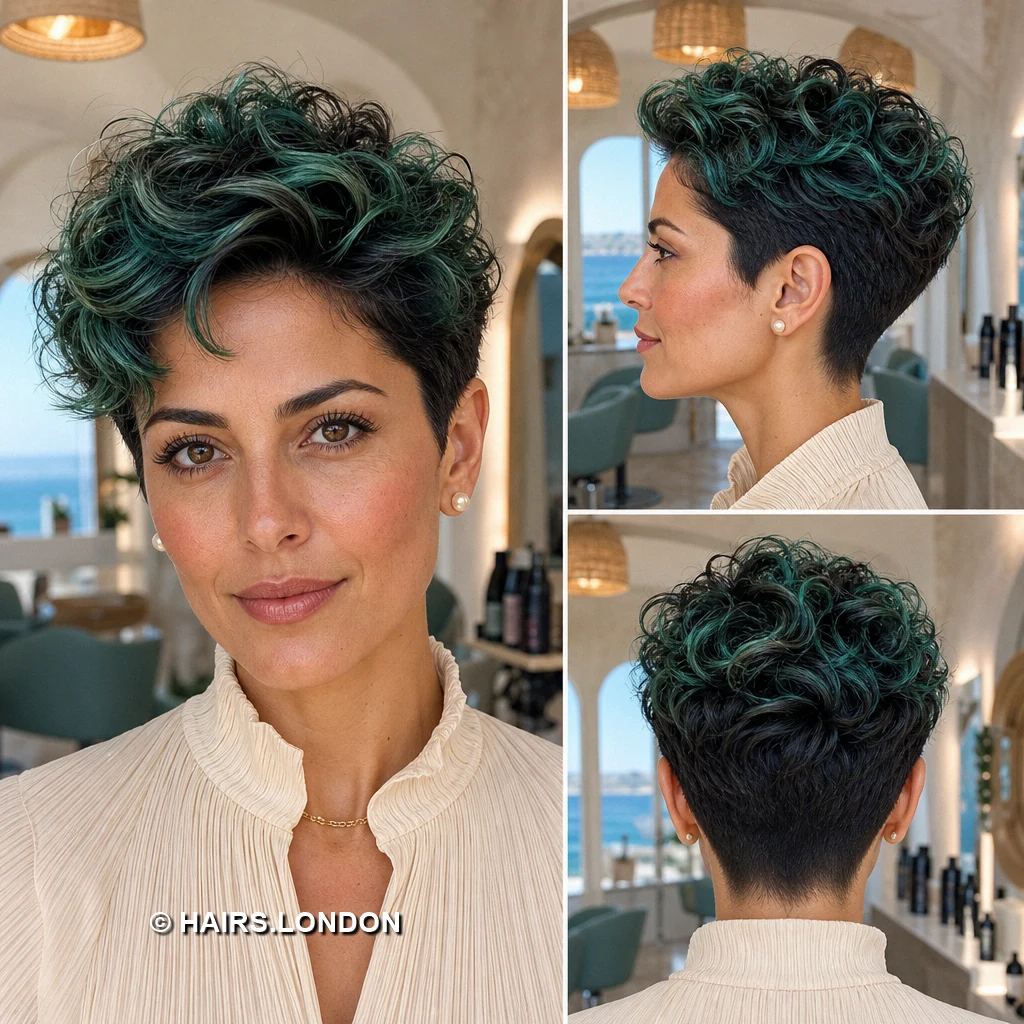
Dark hair carries teal across a long sweeping front panel. The deep side part sends fringe diagonally over one eye. A smoothly rounded crown blends into the shorter opposite side. Behind, layered strands flow downward into a narrow tapered nape. The tucked side remains compact, keeping the asymmetric silhouette defined. Ask for front length that can cross the forehead comfortably. Direct roots sideways with gentle heat, then smooth the surface. Use light finishing cream to keep the sweeping ends separated. Discuss teal placement across the fringe and expected color maintenance. Schedule perimeter trims while preserving enough length for the sweep.
13. Soft Asymmetric Pixie with Muted Teal Layers
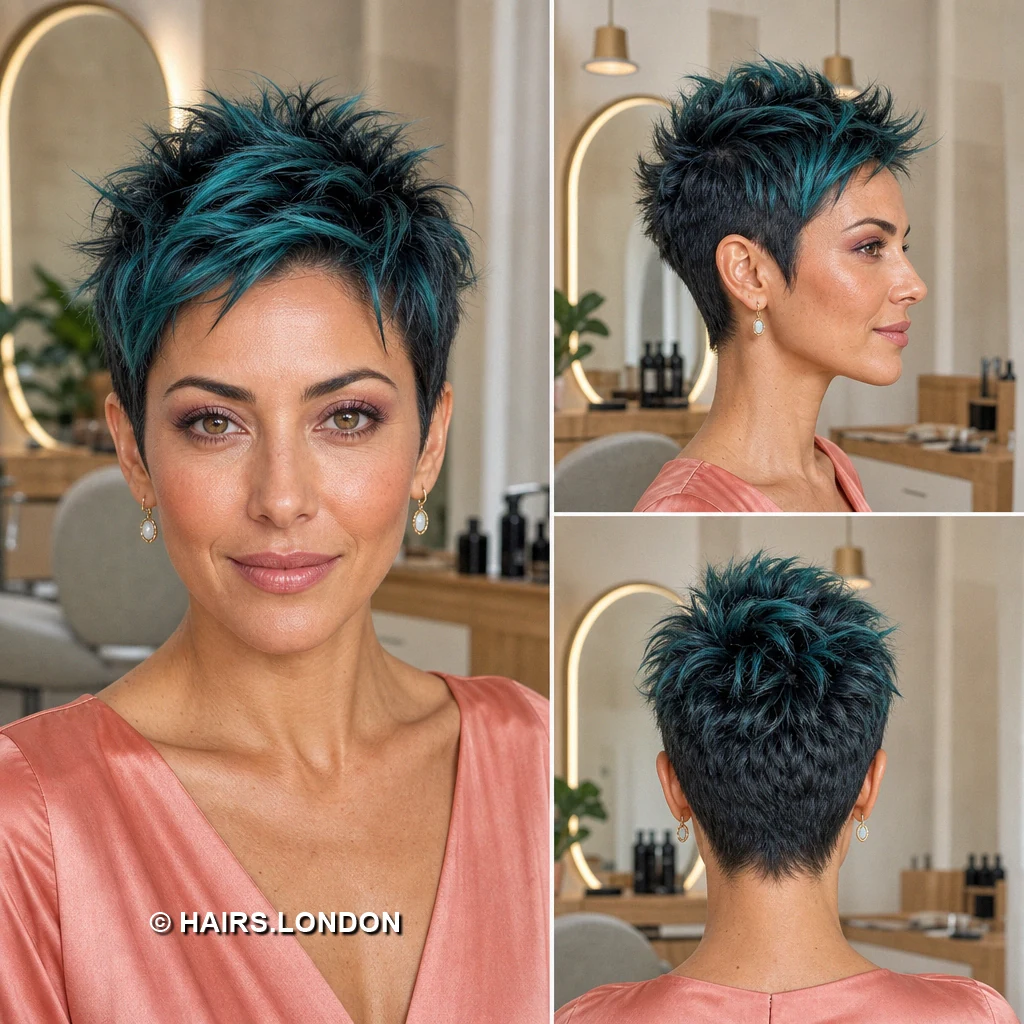
Dark brunette hair reveals muted teal through an elongated side. The loose front section drops diagonally beside one cheek softly. Fuller crown layers sweep back with a smooth airy finish. The shorter side hugs the ear while top stays flowing. Behind, soft overlapping layers taper cleanly into the short nape. Request an asymmetric outline with movement rather than rigid edges. Style the longer section sideways, allowing its tips to fall. Add lightweight cream for definition without losing the airy lift. Place teal through visible top layers, leaving darker depth underneath. Keep neckline appointments while discussing how the fringe grows out.
How to Choose a Teal Pixie Cut
Start with the amount of length you want around your face. Short, broken fringes leave the forehead open, while the longer sweeps in the later looks offer more coverage and need more directing each morning. Consider your natural growth pattern, too: a strong side part can help a diagonal fringe, whereas pronounced curls are best shaped around their spring. Decide whether you want a close, visible taper or a softer transition at the ears and nape.
Styling Straight, Wavy, and Curly Textures
For straighter hair, dry the roots in the direction needed for the finished shape, then use a small amount of paste to separate ends. Wavy hair can be finger-dried for a looser crown; add styling cream only where pieces need definition. On curly hair, apply curl product while damp and diffuse gently to retain the loops. Begin with less product than you think you need: excess wax or cream can flatten a short top quickly.
Keeping Teal and Green Color Fresh
The images show color ranging from subtle green ribbons to pale aqua sections over dark roots. Ask your colorist how your starting color affects the result, whether lightening is required, and how the chosen shade is likely to fade. Wash with comfortably cool water and a cleanser recommended for colored hair, and limit unnecessary heat. A color-depositing product may help between appointments, but confirm the shade and instructions with your colorist first.
Maintaining the Pixie Shape
Short sides and tapered napes show growth sooner than longer crown layers. Arrange trims according to how sharply you want to keep that outline; a neckline cleanup can sometimes preserve the shape without shortening the fringe. At each visit, explain whether the top still lifts, whether curls have become bulky, and where the fringe now falls. That feedback helps your stylist remove weight without losing the feature you chose the cut for.
What to Discuss with Your Stylist
Bring the front, side, and back views of your preferred look. Point out the exact crown height, fringe length, ear coverage, and nape taper you want rather than asking for a pixie in general. Discuss how your hair behaves when air-dried, how much daily styling you will do, and whether you want color on only the visible top or throughout it. Agree on a realistic cut and color maintenance plan before either service begins.
Frequently Asked Questions
What makes these pixie cuts different from one another?
Their main differences are crown texture, fringe length, and color placement. Some have defined curls or lifted spikes; others have smoother, longer side sweeps.
Can a teal pixie cut work with naturally curly hair?
Yes. The curly examples keep more length on top and taper the sides and nape. Ask for the shape to be assessed with your curls in their natural pattern.
Which look offers the most forehead coverage?
The long diagonal fringes in images 9, 12, and 13 provide more coverage than the short, piecey fringes.
Which cuts show the most crown height?
Images 1, 4, and 7 have particularly prominent lifted tops, achieved through curls or a swept-up front.
Do I need to color the entire pixie teal?
No. Several looks retain a dark base and use green or blue-green ribbons through the visible top and fringe.
Will the pale aqua color in image 10 need different upkeep?
Paler color can make fading and underlying tone more noticeable. Ask your colorist about the likely result and an appropriate refresh schedule for your hair.
How do I keep a short pixie from looking flat?
Lift the roots while drying, then define selected ends with a small amount of lightweight product. Avoid coating the roots with heavy paste.
How should I style the longer side-swept fringes?
Direct damp roots toward the intended side with gentle heat. Finish the lengths lightly so the fringe moves without separating into heavy clumps.
Should curly crown layers be thinned heavily?
Not automatically. Ask your stylist to assess how the curls spring and remove weight selectively so the top retains its shape.
How often should I trim the tapered nape?
Trim it when growth starts to blur the outline you want. Your stylist can advise whether a small perimeter cleanup or a full reshaping is needed.
Can I keep the dark roots shown in these looks?
Yes. Dark roots are visible in several images. Discuss how much depth to retain and where the teal should begin.
What should I show my stylist at a consultation?
Show front, side, and back views of the cut you prefer, and identify the fringe, crown, sides, nape, and color placement you want to reproduce.
Conclusion
The most useful choice is the one whose fringe and crown suit the way your hair naturally falls. Choose a preferred shape first, then decide whether a few emerald accents, vivid blue-teal strands, or a broader aqua sweep best supports it. With clear reference views and a plan for trims and color refreshes, your stylist can adapt the details to your hair.