


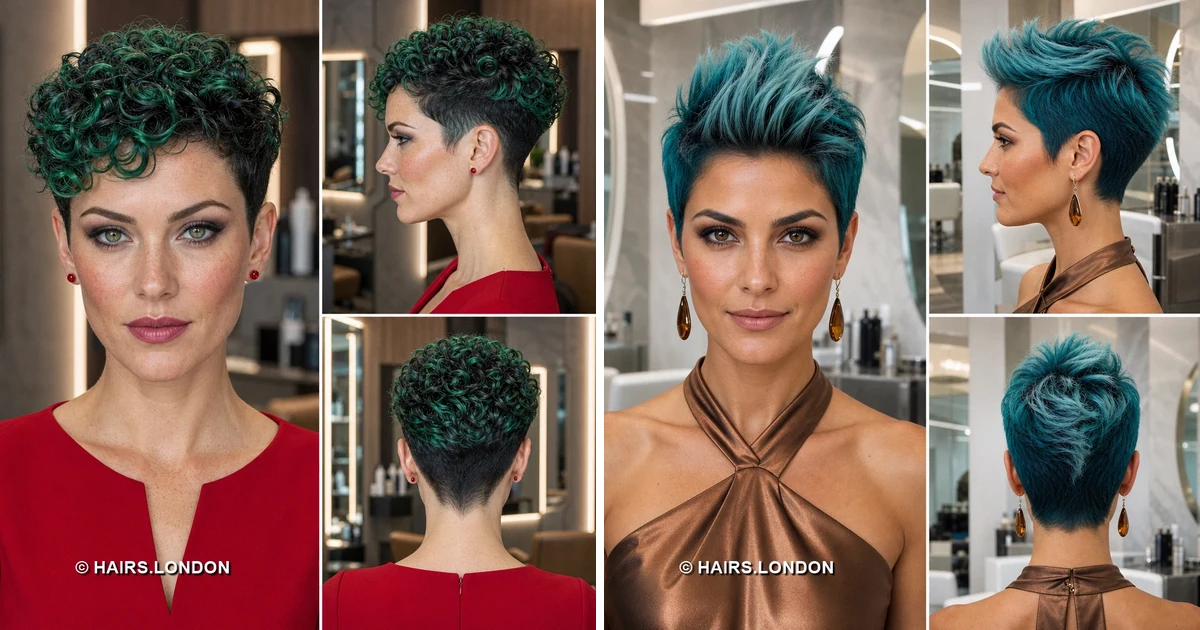
11. Soft Teal Pixie With Airy Crown Layers
Soft blue teal color covers the longer, tousled upper layers. Dark sides sit close beneath a noticeably fuller rounded crown. Wispy front pieces drift diagonally toward the forehead and temple. The back displays loose separation above a tidy tapered nape. Ask for movement through the top without removing excessive bulk. Dry with fingers, lifting the roots while guiding fringe sideways. A little flexible paste can define the curved upper pieces. Keep the finish soft rather than pressing every strand flat. Discuss root contrast before refreshing the lighter blue teal lengths. Book trims when the dark taper loses its defined shape.
12. Pale Aqua Pixie With a Swept, Lifted Front
Pale aqua strands sweep upward and sideways over darker roots. The long front creates height while leaving the forehead exposed. Feathered tips keep this broad, lifted shape light and separated. Close sides frame the ears beneath the brighter upper section. At the back, textured aqua layers taper into dark hair. Request enough front length to recreate the visible upward sweep. Direct warm airflow from roots toward the intended side part. Finish with lightweight paste, concentrating support near the front roots. Avoid heavy conditioner on top if your hair falls flat. Keep the darker nape neat between longer crown shaping appointments.
13. Turquoise Quiff With Dark Tapered Sides
A tall turquoise quiff rises prominently from the front hairline. Pale blue strands streak through the swept, textured upper section. The sides sit considerably shorter, outlining both exposed ears clearly. From the profile, the crown flows backward into fuller layers. A dark taper keeps the neckline compact beneath that height. Ask how much front length your hair needs for lift. Dry upward with fingers, directing airflow back from the forehead. Work firm paste through selected sections without flattening their base. Choose a finish that keeps separate strands visibly distinct. Schedule regular side trims to maintain the quiff’s sharp overall contrast.
14. Pale Blue Pixie With a Side-Swept Fringe
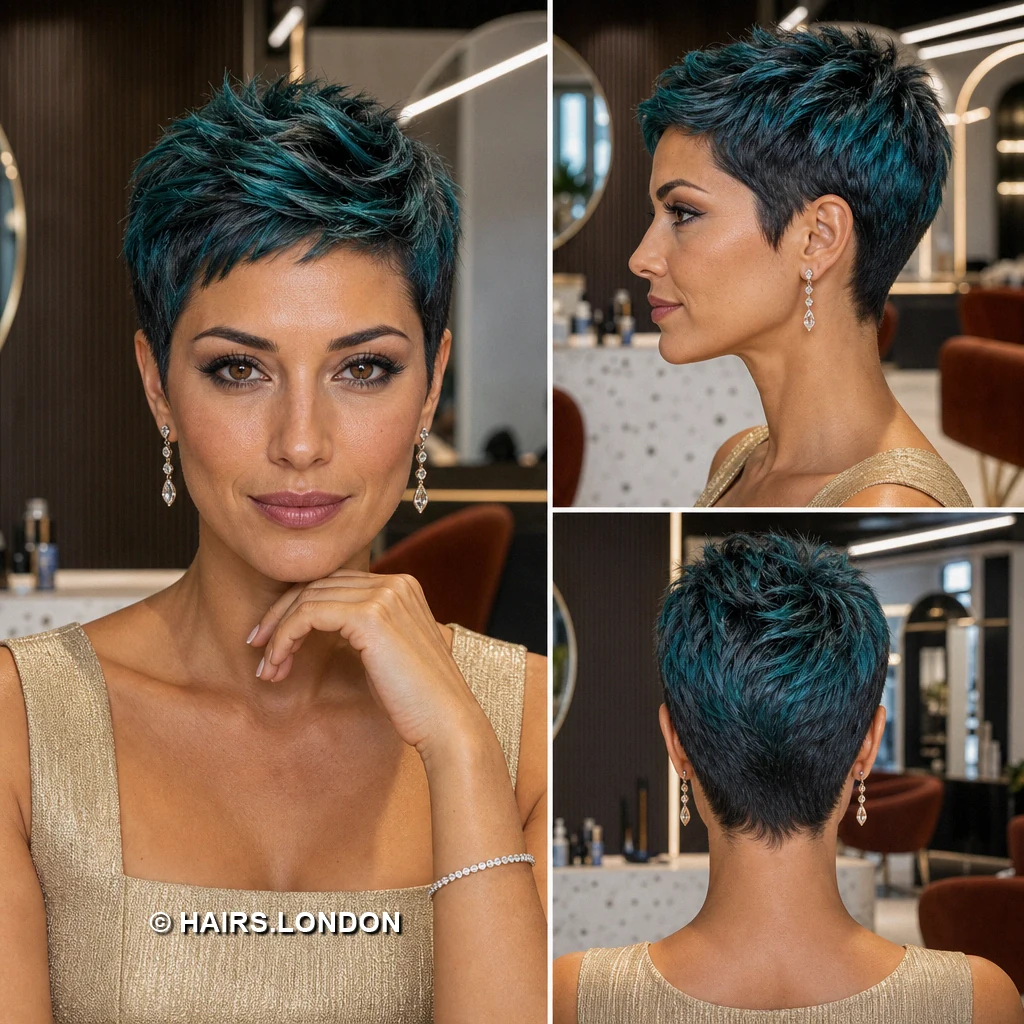
Pale blue layers sit above distinctly darker, closely cropped sides. A textured fringe sweeps across the forehead in fine sections. Soft crown lift rounds the top without creating exaggerated height. The upper back looks airy before narrowing into a dark nape. Ask for light layering that prevents the longer hair bunching. Guide damp fringe sideways while lifting roots with your fingers. Use a small amount of cream to settle flyaway tips. Leave some texture visible rather than brushing the surface smooth. Discuss color refreshes before the pale shade becomes uneven. Maintain the close sides to preserve their contrast with fullness.
15. Dark Pixie With a Green-Teal Swept Quiff
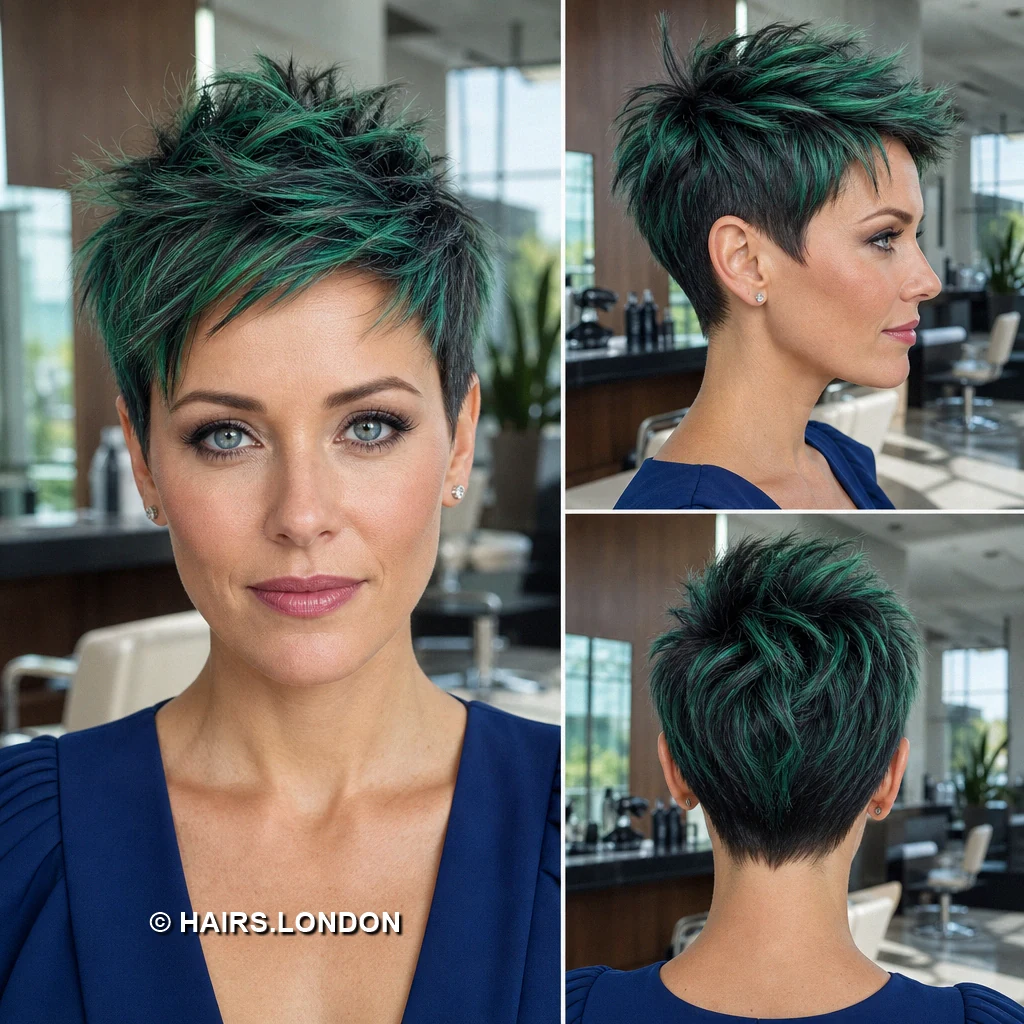
A sweeping quiff lifts dark hair streaked with green teal. The front curves upward, then travels sideways across the crown. Short, close sides create a pronounced change beneath that volume. The back retains textured height above a narrow tapered nape. There is no hanging fringe; the forehead stays fully open. Ask for front length that can bend without falling forward. Blow dry against the roots, guiding the longer section back. Shape the curve with paste applied lightly between your palms. Check the side profile with your stylist before shortening anything. Maintain the close perimeter so the sculpted top remains prominent.
16. Long Teal Fringe Over a Dark Taper
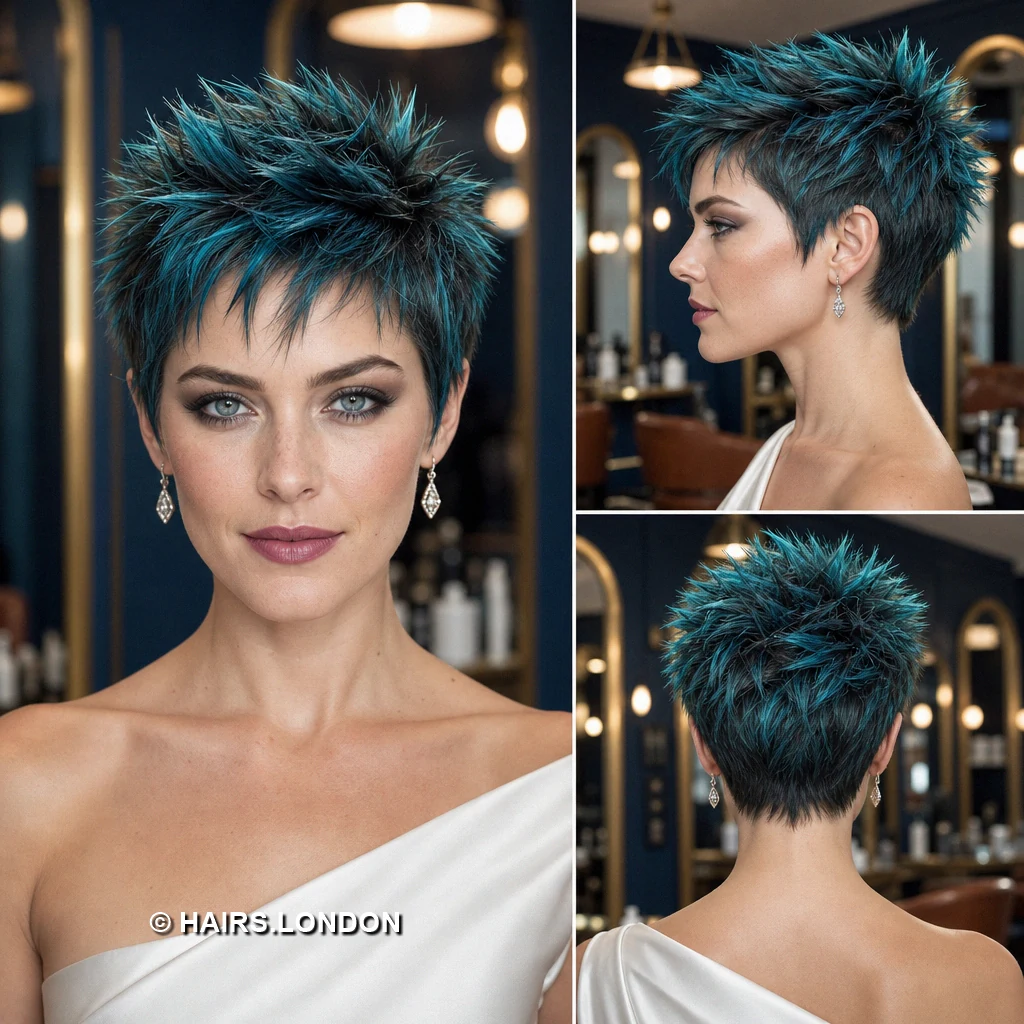
A long teal fringe drapes diagonally across the forehead. Darker textured layers rise behind it through the rounded crown. The opposite side sits short, exposing the ear and temple. From behind, deep blue tones blend into a dark taper. The nape remains narrow beneath the slightly fuller, swept upper shape. Ask to keep enough front length for this distinct drape. Direct damp strands toward the face using low dryer airflow. Add light cream to separate ends without stiffening the fringe. Move hair away from your eyes when checking practical length. Refresh the sides before they blur the intentionally asymmetric outline.
17. Sculpted Teal Waves Above Close Sides
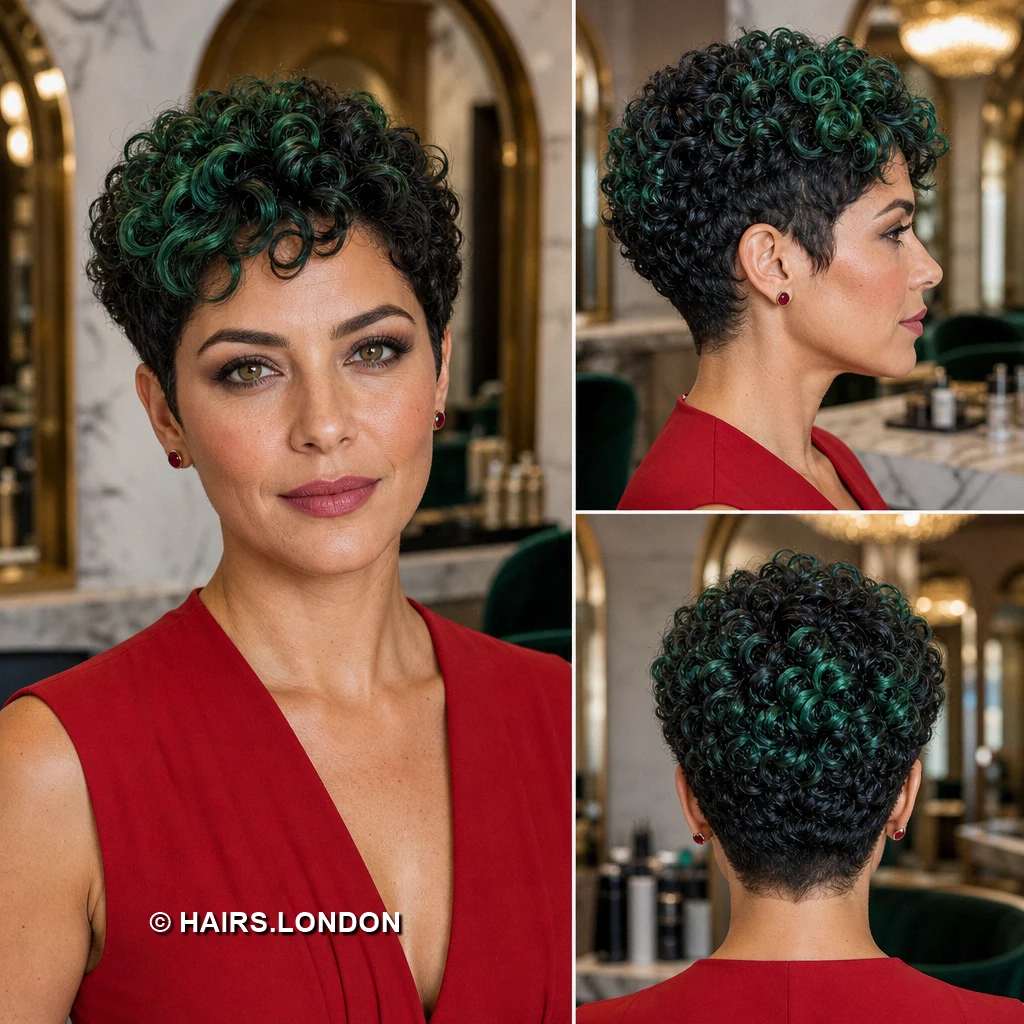
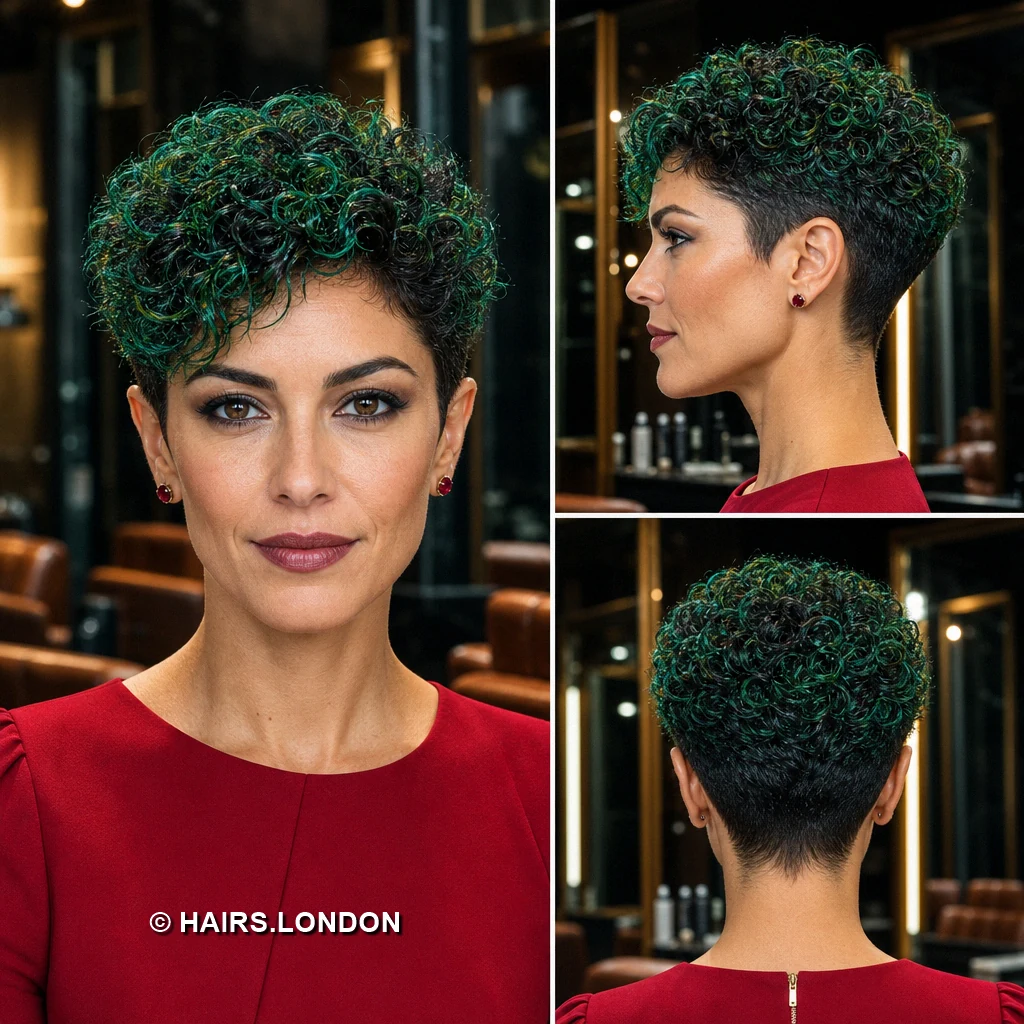
Glossy teal waves curl over a dark, closely fitted side. The front rolls upward before bending across the forehead edge. Layered curves continue over the crown, adding rounded height. Behind, the fuller waves narrow into a clean dark taper. The short side exposes the ear and emphasizes wave shape. Ask for enough length above to form these soft, curved sections. Dry with directional tension, then shape individual waves carefully using fingers. Apply a small amount of paste for controlled separation. Keep the neckline tidy without cutting into the upper fullness. Discuss how your natural texture affects the required styling time.
18. Dark Pixie With a Curved Green-Teal Front
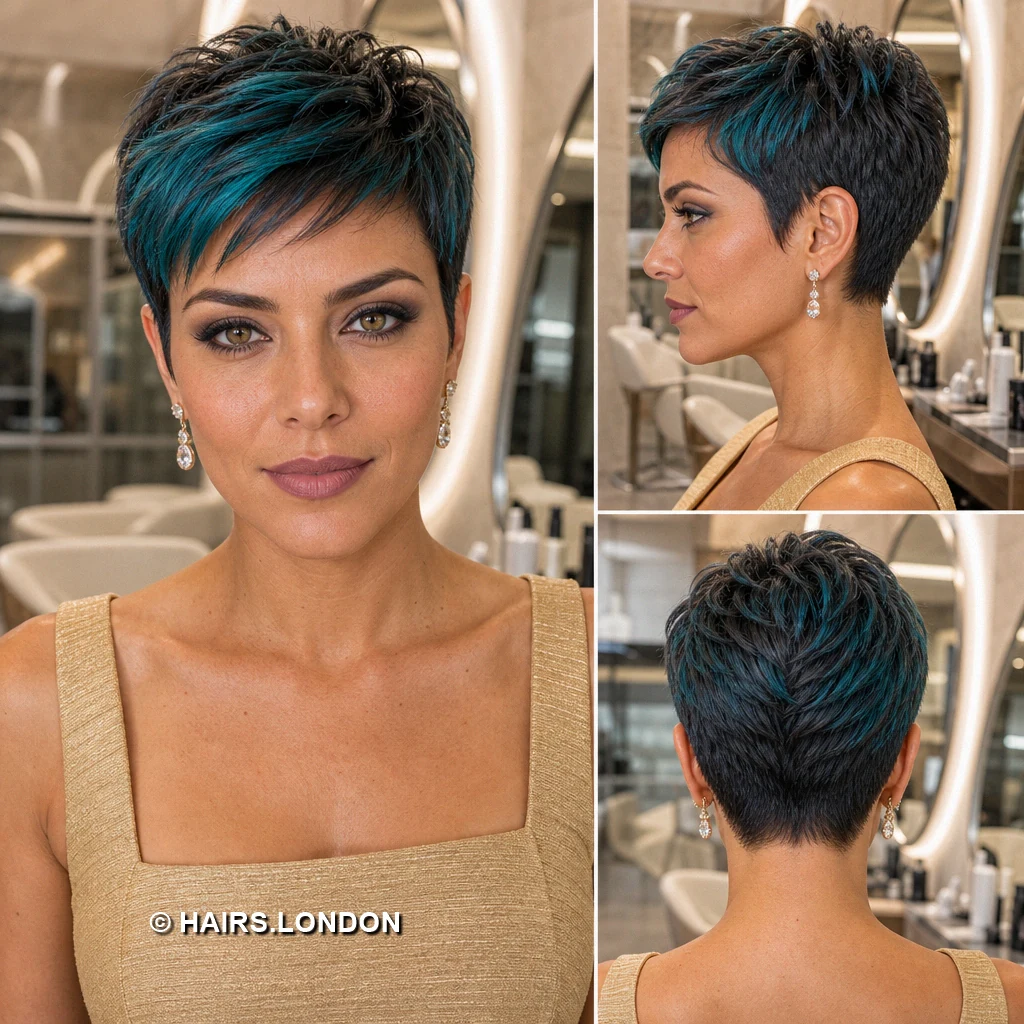
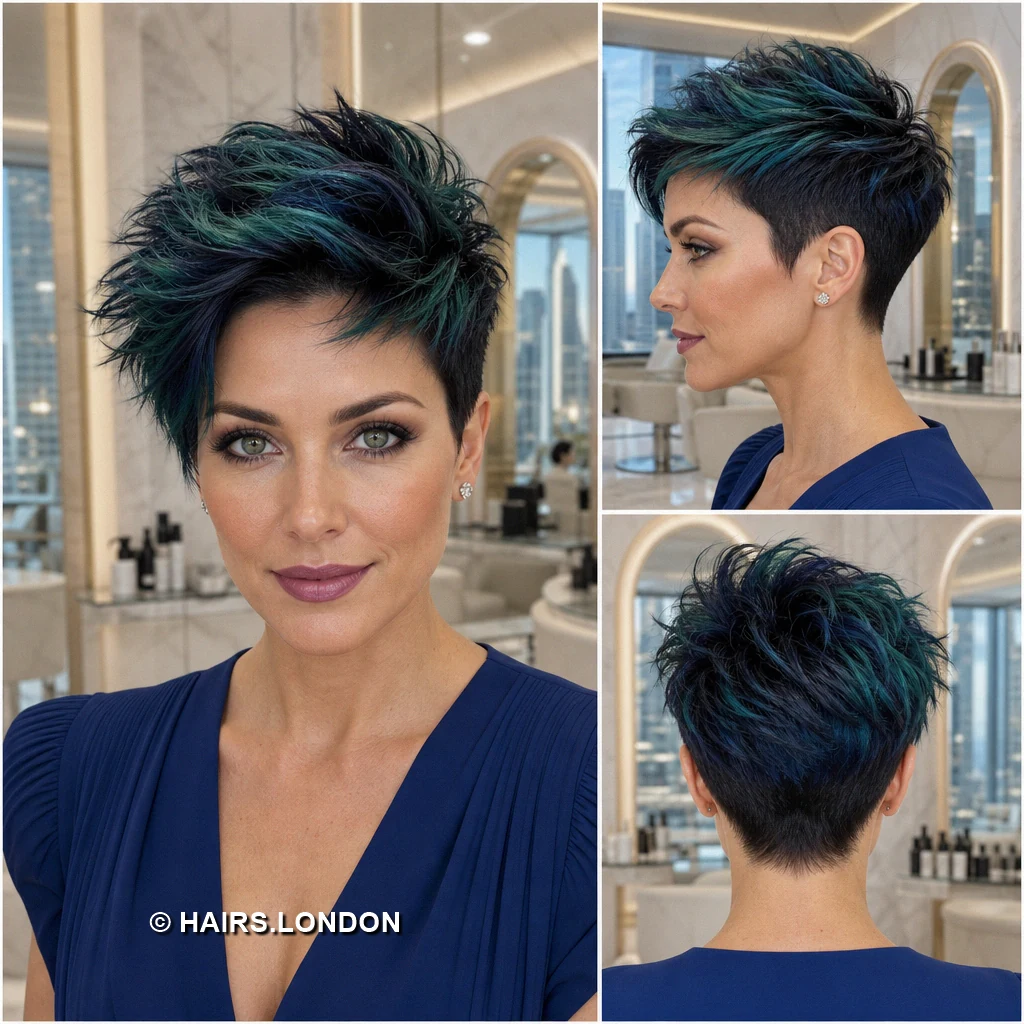
A broad green teal curve sweeps across the dark front. The longer section folds toward one side above the brow. Shorter sides hold closely around the ears beneath that movement. Behind, the upper layers curve softly toward a tapered nape. The result has defined shape without upright spikes or curls. Request a long front with enough weight to bend smoothly. Blow dry along the curve, lifting gently at its roots. Use flexible cream to control flyaways while retaining visible strands. Show your stylist where you want the front to finish. Trim the taper before it loses its close, neat outline.
19. High Green-Teal Quiff With a Dark Undercut
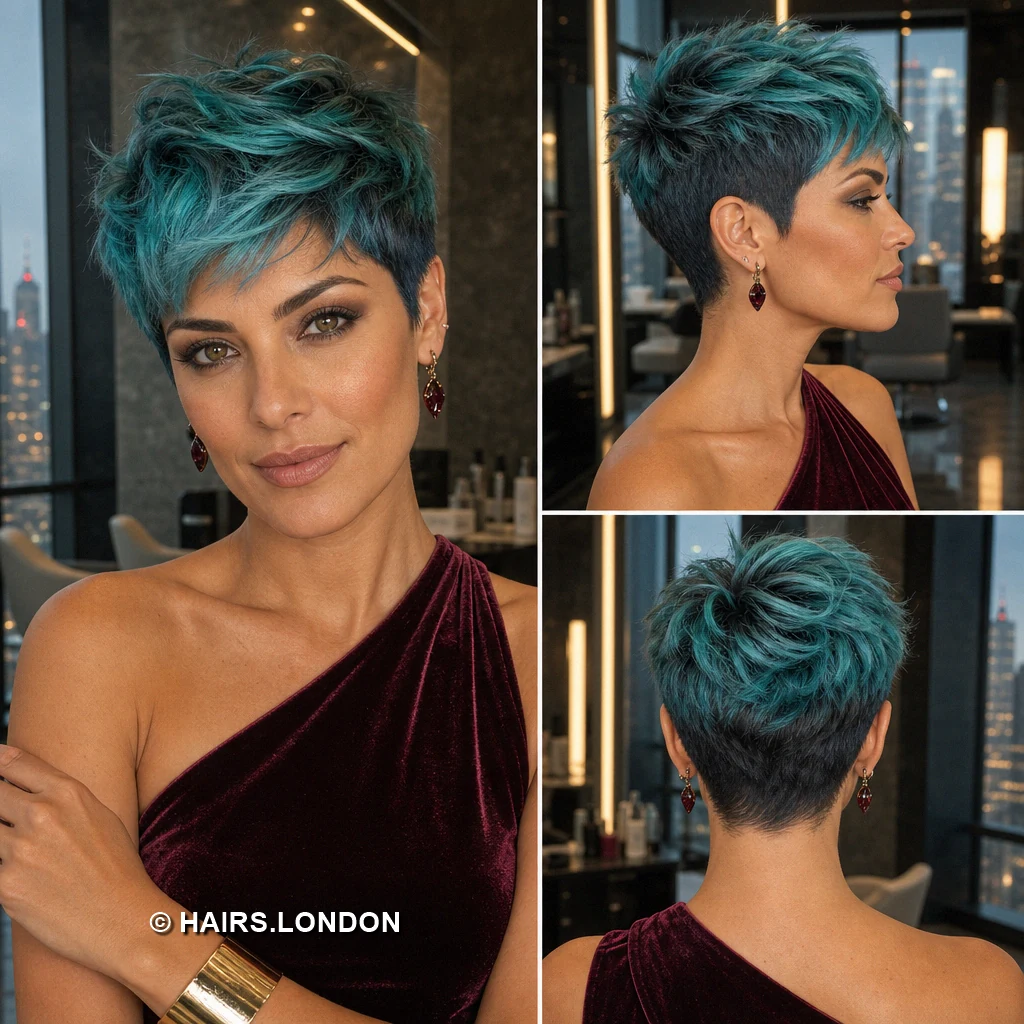
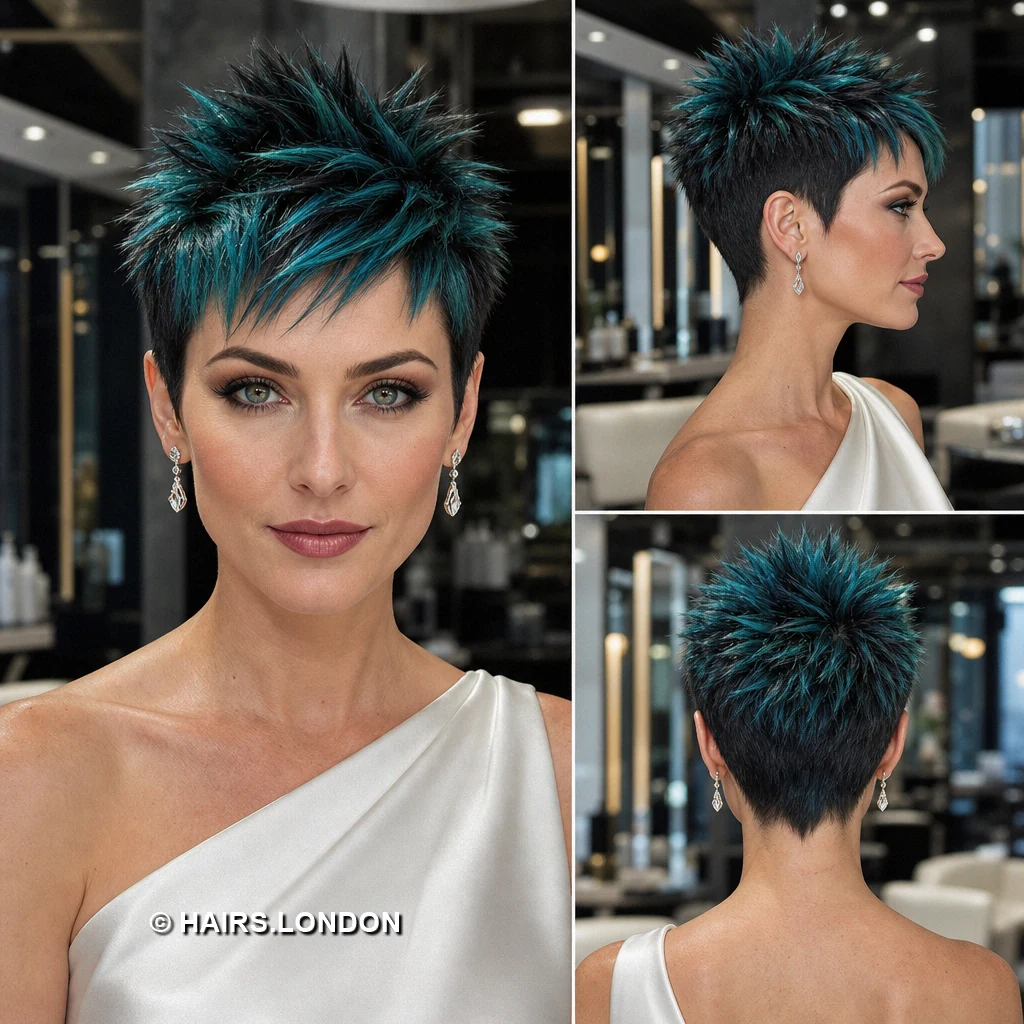
Green teal sections sweep high above a dark close undercut. The front lifts from the hairline and rolls toward back. Longer crown layers maintain height as they flow behind it. Close sides expose the ears and sharpen the dramatic profile. At the neck, dark hair tapers into a clean, compact point. Ask whether your front growth pattern supports this backward direction. Blow dry upward first, then guide the lengths toward back. Add firm styling paste sparingly to hold the lifted curve. Keep the upper layers separated so colored ribbons remain visible. Recut the sides regularly to preserve the strong contrast.
How to Choose a Teal Pixie Haircut
Start with the part of the shape you want to notice most. Compact curls emphasize a rounded crown, a side-swept fringe puts length at the front, and a quiff needs enough hair above the forehead to create height. Check the side and back views as carefully as the portrait: many of these cuts rely on close hair around the ears and a tidy nape. Choose a fringe length and amount of daily styling that suit your routine.
Styling Curly, Straight, and Wavy Textures
For tight curls, apply a small amount of curl cream to damp hair and diffuse gently, preserving defined clumps. For straighter hair, blow dry the roots in the direction needed for a sweep or upward for a quiff; finish by separating a few ends with paste. Natural waves can be guided into the curved styles with fingers and light cream. Use product gradually: too much can flatten feathered layers or join distinct spikes together.
Keeping Teal Color Fresh
The images show teal over different dark bases as well as lighter aqua lengths, so color care will depend on the result you choose. Ask your colorist what preparation your starting hair needs and how often the visible shade may require refreshing. Wash gently with color-friendly products, use cooler water when practical, and limit unnecessary heat. Bring a clear image of your preferred placement so the colored sections remain visible when you style the cut.
Maintaining the Pixie Shape
Short sides and napes can lose definition while the top still looks balanced. Arrange trims according to which outline matters most to you, and tell your stylist whether you are preserving length for curls, a draped fringe, or a raised front. Between appointments, assess the cut from the side and back as well as the front. Avoid trimming a curly fringe while it is stretched straight; check where it sits after it springs back.
What to Discuss With Your Stylist
Bring the front, profile, and back views of your chosen image. Point out the desired fringe direction, crown fullness, closeness around the ears, and nape finish. Explain how your hair behaves without styling, how much time you will spend drying it, and whether you prefer soft separation or firmer hold. For color, discuss your starting shade, the contrast you want against darker roots, and a realistic plan for upkeep.
Frequently Asked Questions
Which teal pixie shape works well with tight curls?
The rounded cuts in images 1, 5, and 9 retain length on top for defined ringlets while tapering the sides and nape. Ask for the fringe to be checked at its natural, dry length.
Can a teal pixie have a longer fringe?
Yes. Images 3 and 16 show longer asymmetric fronts, while image 18 has a broad curved section. Agree on where the fringe should sit when styled and when left alone.
What makes the spiky cuts different from the quiffs?
The spiky cuts in images 4 and 8 separate into narrow upright points. The quiffs in images 13, 15, and 19 lift a longer front into a more continuous swept shape.
Do these cuts require shaved sides?
Not necessarily. The images show closely cut or tapered sides, but they do not all appear shaved. Tell your stylist how much coverage you want around your ears.
How can I keep a short fringe from lying flat?
Dry its roots in the intended direction before adding product. A small amount of lightweight paste can define pieces without weighing down the entire front.
How do I style a lifted teal quiff?
Dry the front upward from the roots, guide it back or sideways, then add a little paste for hold. The amount of lift possible will depend on your length and natural growth pattern.
Should I choose green-teal or pale aqua?
Choose based on the contrast you want and the starting color of your hair. The images show green-teal accents against dark hair and paler aqua over dark roots; discuss the preparation and upkeep of either result with a colorist.
How can I make teal highlights visible in dark curls?
Place the color where the curls are most visible, particularly across the front and crown as shown in images 1, 5, and 9. Defined curls also help the colored sections stand apart.
Will a side-swept pixie need daily styling?
It may need a brief directional dry, especially if your hair naturally falls the other way. Ask your stylist to work with your growth pattern if you want less daily effort.
How often should I trim a teal pixie?
Book a trim when the sides, fringe, or nape stop holding the shape you chose. A closely tapered outline may need attention before a longer crown does.
What should I bring to a salon consultation?
Bring the image that best matches your goal, including its side and back views. Identify the exact fringe length, crown height, taper, and teal placement you want.
Can I change the styling without changing the cut?
Often, yes. Layered tops can be directed sideways, lifted, or worn with softer separation. A compact curly top will keep more of its rounded character, so ask which styling options your chosen cut allows.
Conclusion
The most useful choice is the teal pixie whose shape works with your texture and the time you want to spend styling it. Save the front, side, and back views you like, then use them to discuss length, taper, color placement, and upkeep before the cut begins.