


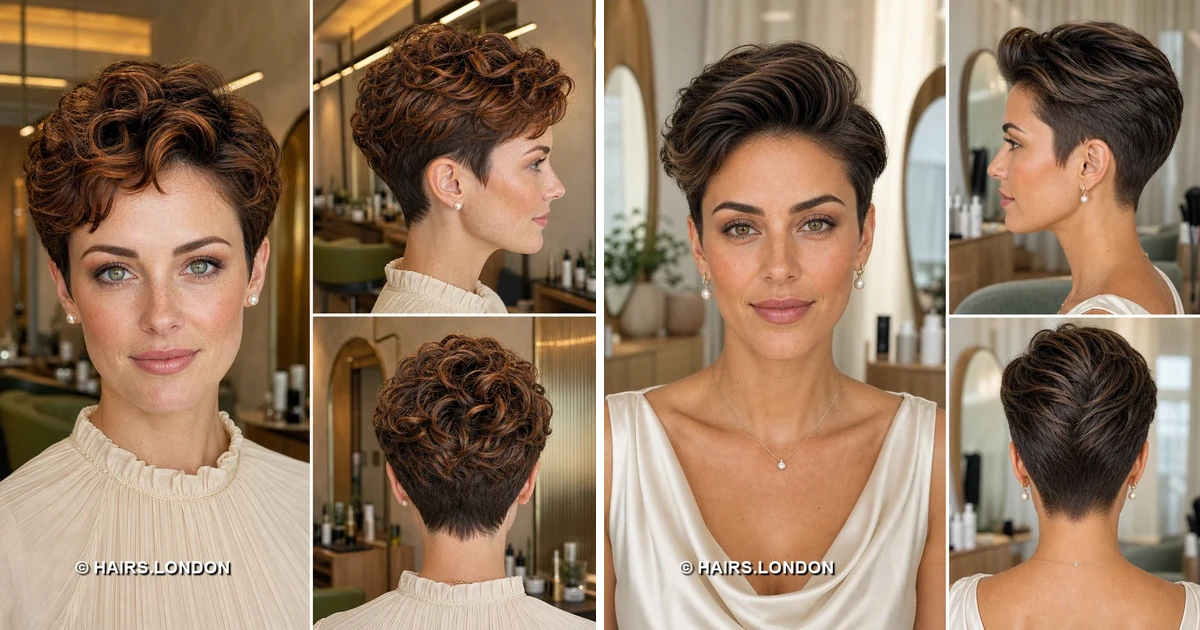
11. Deep Brunette Pixie With Wispy Bangs
This deep brunette crop pairs wispy bangs with tousled height. Longer pieces angle across the forehead, ending above one eyebrow. Crown layers lift irregularly, lending texture without rigid defined spikes. Short temple hair hugs the ears and balances fuller roots. A gradual back taper leaves small feathery points at nape. Request internal layers that release bulk without exposing sparse patches. Dry the roots upward, then direct longer pieces across forehead. Use small amounts of pliable paste to define individual ends. Schedule trims when the sides begin losing their tidy shape. Ask how your natural growth pattern changes the finished silhouette.
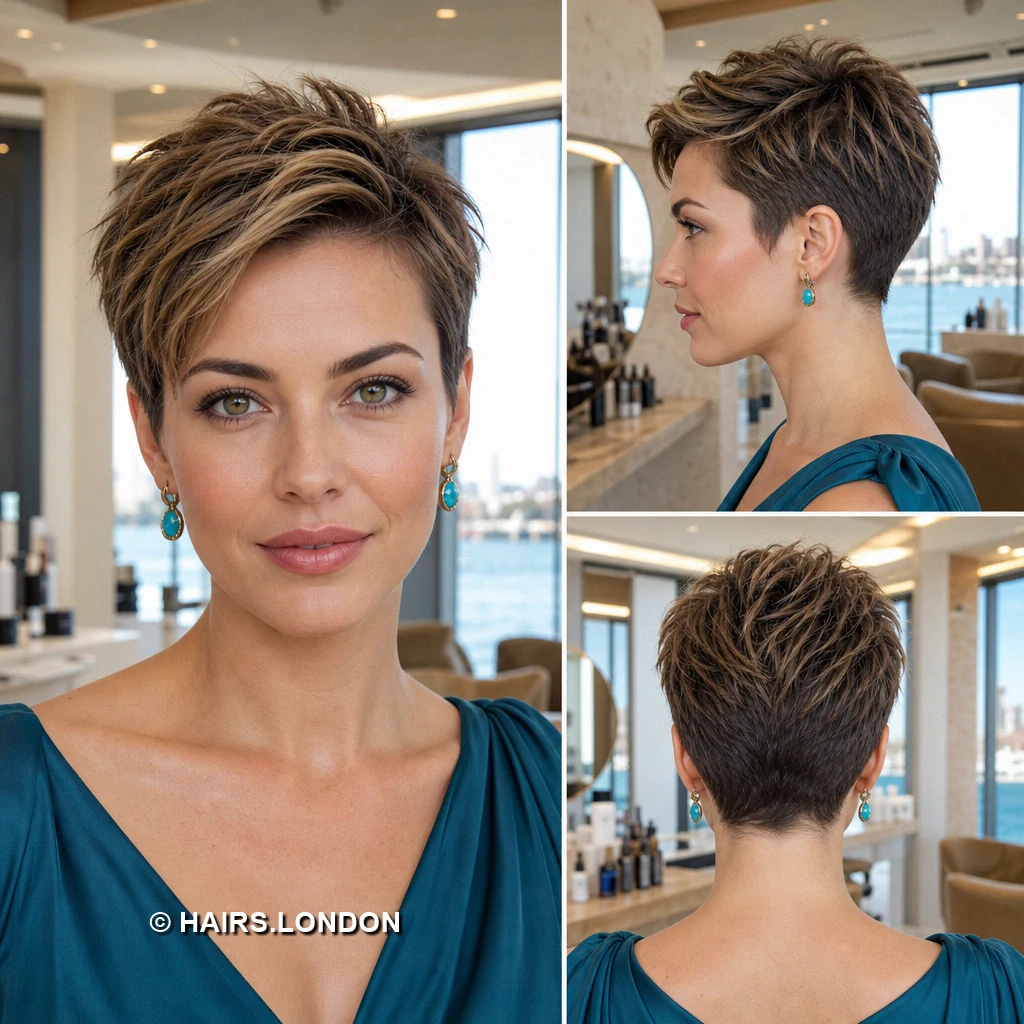
12. Feathered Brown Pixie With Short Fringe
Fine caramel streaks break up this softly feathered brown pixie. Its short fringe shifts sideways and leaves the eyebrows visible. Choppy crown pieces add height without dramatically changing the outline. Tidy temple sections hug ears above a narrow tapered neckline. Back layers remain softly textured rather than cropped completely flat. Ask for long top layers balanced against closely graduated sides. Blow dry with fingers, keeping the surface light and movable. Add a pea sized amount of matte paste at tips. Maintain definition with trims before side growth obscures the ears. Confirm fringe length while your hair sits naturally and dry.
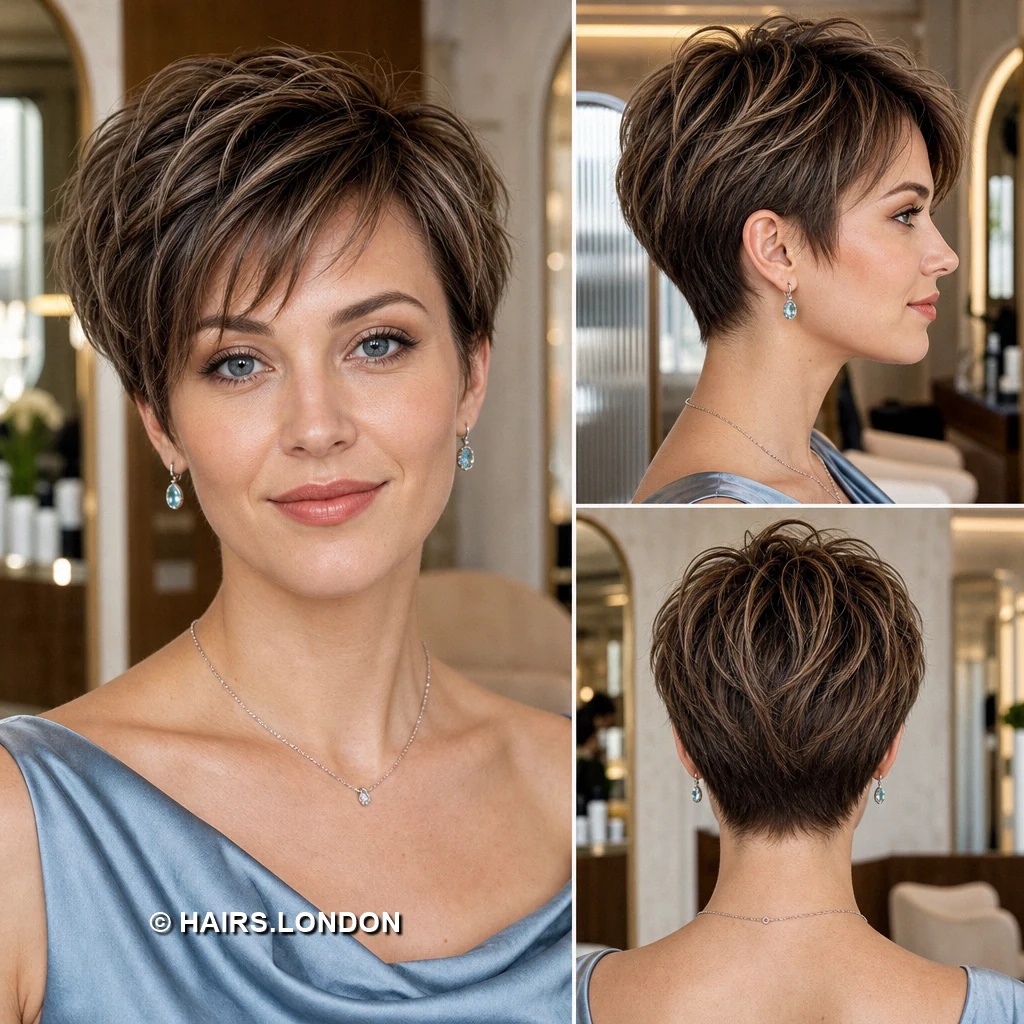
13. Sculpted Brunette Pixie With an Open Forehead
Smooth brunette layers form an elevated sweep above the forehead. The longer front curves backward, replacing bangs with open space. Close sides anchor the sculpted crown and expose both ears. Brown dimension appears subtle, with lighter strands along the crest. At back, graduating layers meet a clean, narrow tapered nape. Request internal layers that release bulk without exposing sparse patches. Brush front sections backward while lifting roots for controlled height. Use small amounts of pliable paste to define individual ends. Schedule trims when the sides begin losing their tidy shape. Ask how your natural growth pattern changes the finished silhouette.
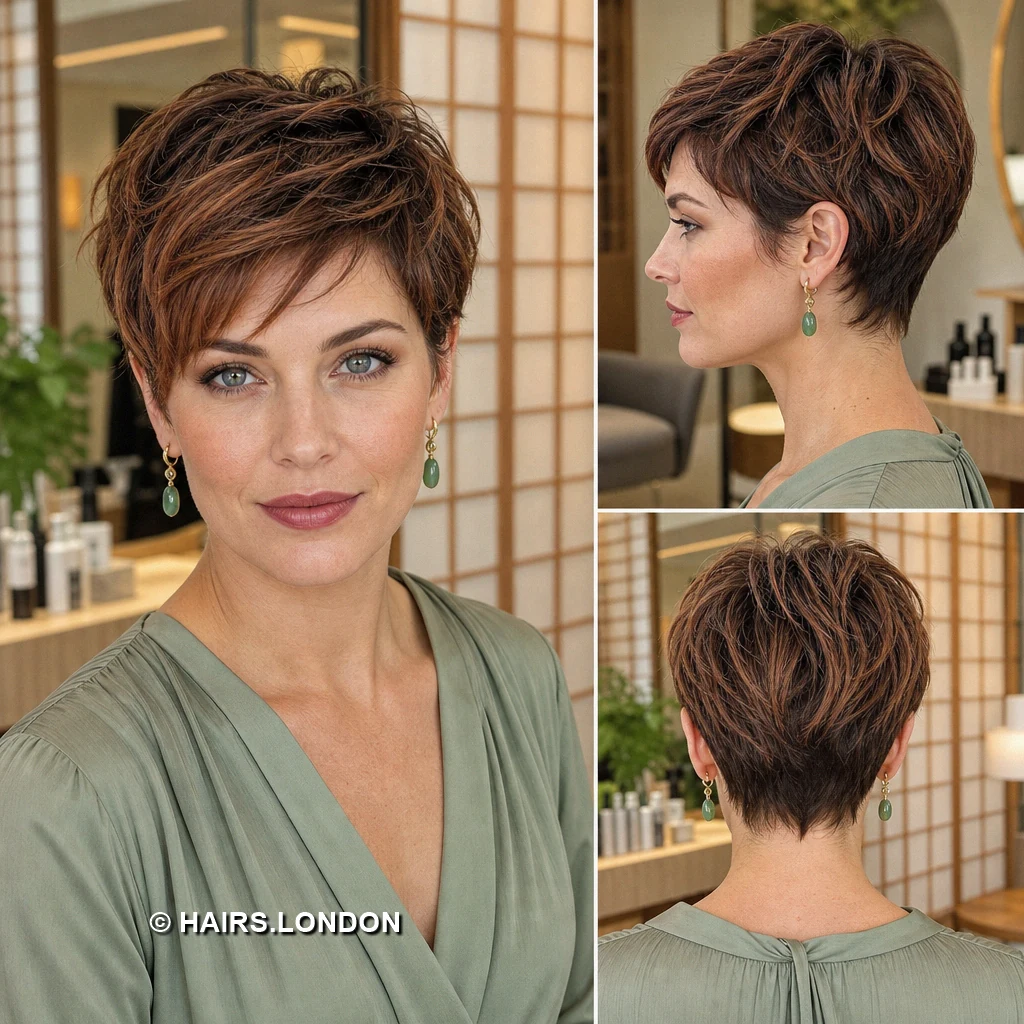
14. Caramel Streaked Pixie With Soft Lift
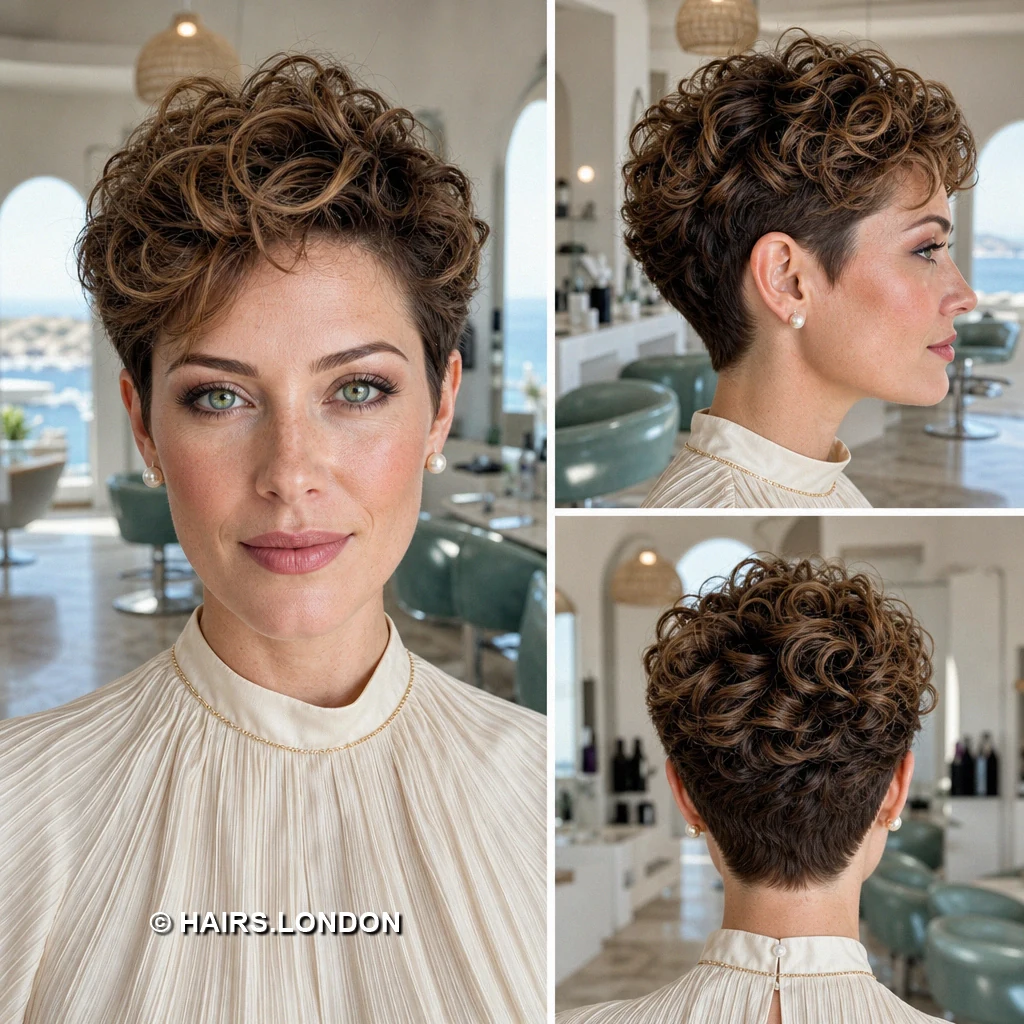
Caramel streaks weave through a lifted, softly tousled brown crown. Uneven fringe pieces dip over forehead without forming dense bangs. Side hair stays short, neatly exposing the outline of ears. The fuller upper back descends into a fine tapered nape. Loose bends create movement while darker roots add visible depth. Ask for long top layers balanced against closely graduated sides. Blow dry with fingers, keeping the surface light and movable. Add a pea sized amount of matte paste at tips. Maintain definition with trims before side growth obscures the ears. Confirm fringe length while your hair sits naturally and dry.
15. Asymmetrical Pixie With Outward Flicks
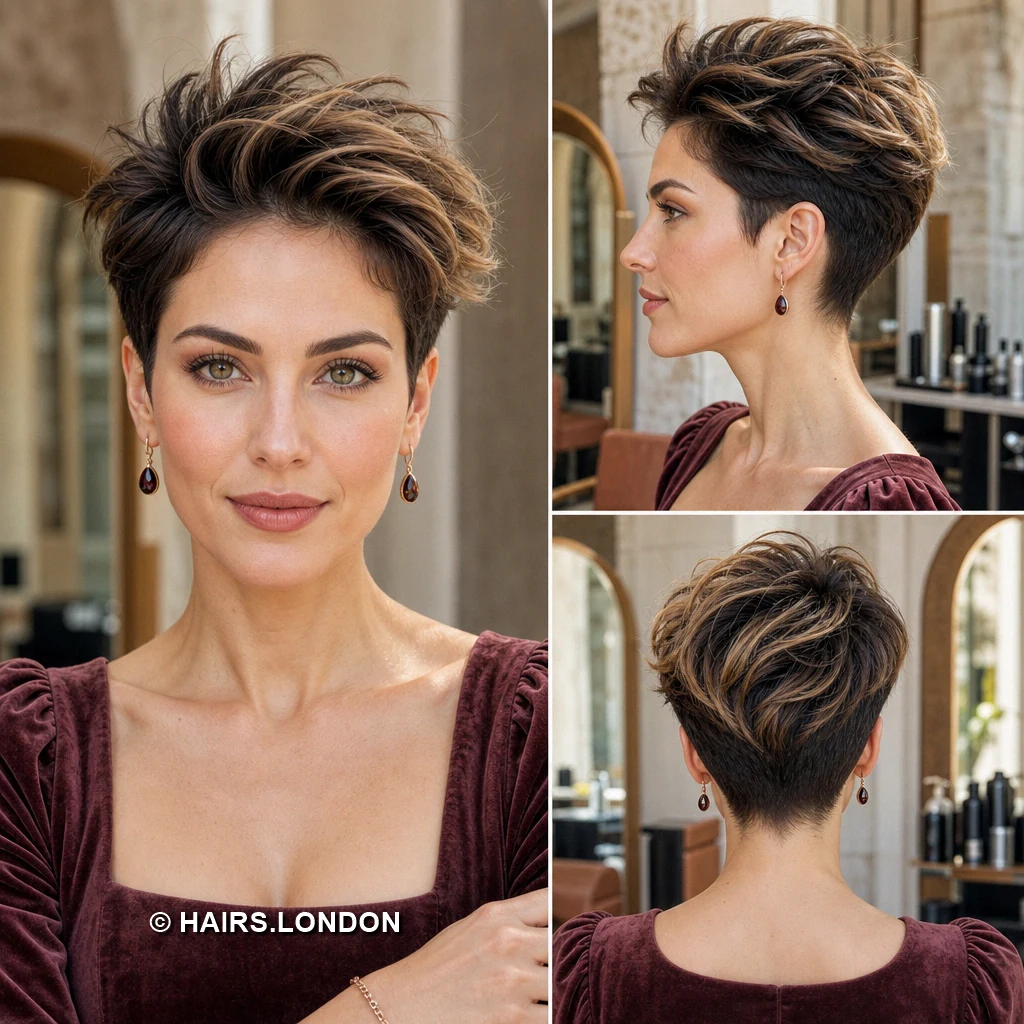
Long highlighted strands sweep diagonally across this asymmetrical brown pixie. The fringe grazes one brow while the opposite side opens. Spiky ends flick outward above closely tapered side and back. Caramel ribbons define the airy top against deeper brunette roots. Volume sits forward of crown, leaving the nape slim, sharp. Request internal layers that release bulk without exposing sparse patches. Dry the roots upward, then direct longer pieces across forehead. Use small amounts of pliable paste to define individual ends. Schedule trims when the sides begin losing their tidy shape. Ask how your natural growth pattern changes the finished silhouette.
16. Polished Chestnut Pixie With Diagonal Bangs
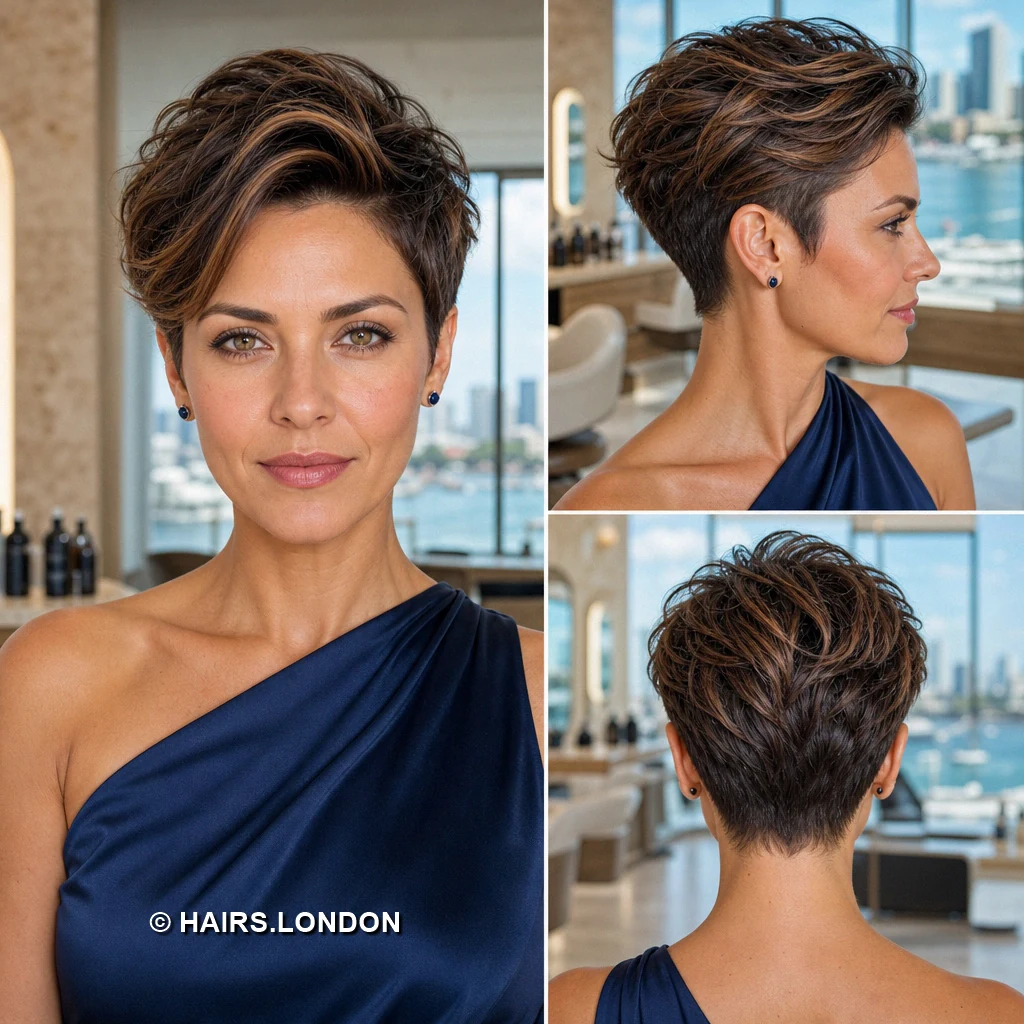
A polished chestnut pixie combines diagonal bangs with rounded volume. Short fringe tips rest above brows rather than concealing them. Delicate lighter threads lift the top without overwhelming brown depth. Snug sides reveal ears before graduating into a clean nape. Crown layers settle smoothly, with slight separation through the tips. Ask for long top layers balanced against closely graduated sides. Blow dry with fingers, keeping the surface light and movable. Add a pea sized amount of matte paste at tips. Maintain definition with trims before side growth obscures the ears. Confirm fringe length while your hair sits naturally and dry.
17. Short Spiked Pixie With a Tapered Nape
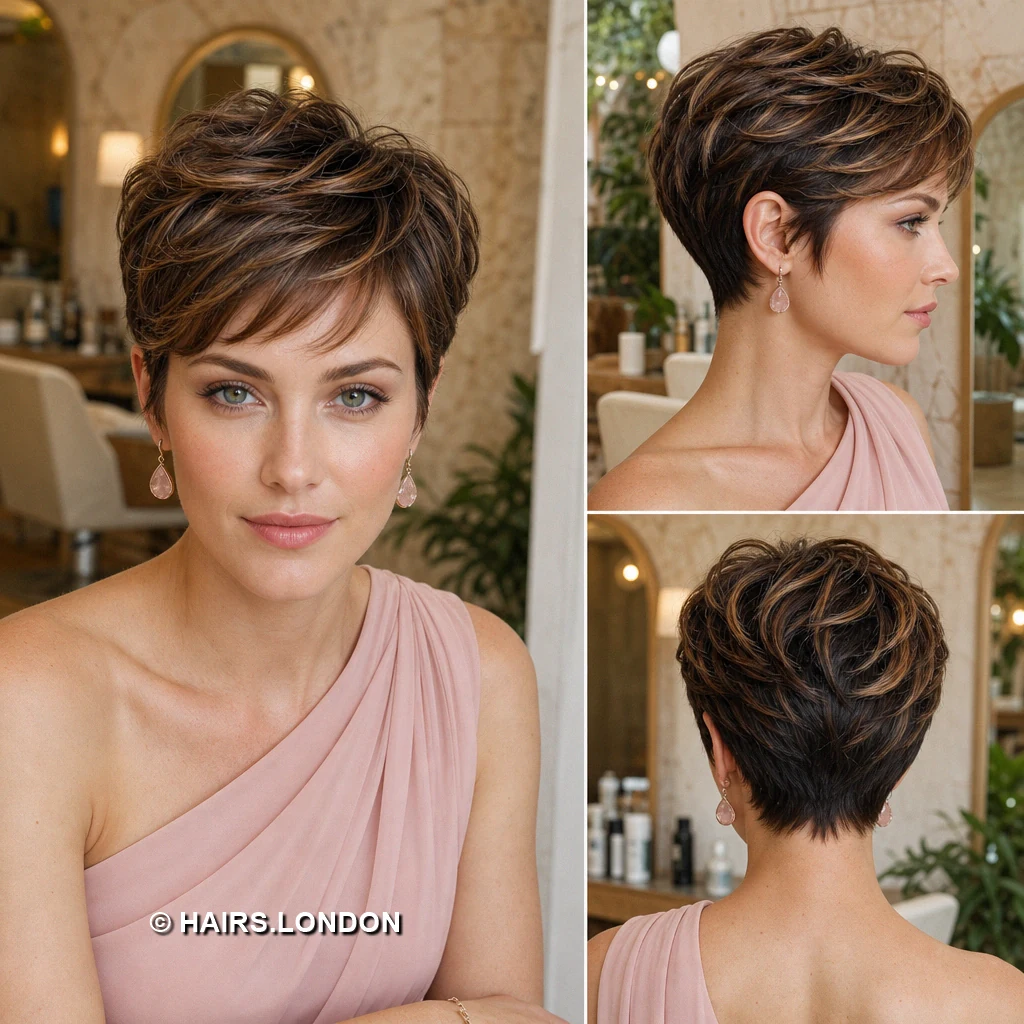
Short spiked layers create upright texture across this brunette crown. The cropped fringe sits high, keeping nearly all forehead visible. Soft bronze glints follow individual spikes instead of broad sections. Close cut sides hug temples; the nape narrows into points. Fullness remains behind the crown, balancing the short upright front. Request internal layers that release bulk without exposing sparse patches. Lift damp roots with fingers, aiming airflow against natural growth. Use small amounts of pliable paste to define individual ends. Schedule trims when the sides begin losing their tidy shape. Ask how your natural growth pattern changes the finished silhouette.
18. Textured Brunette Pixie With a Bent Fringe
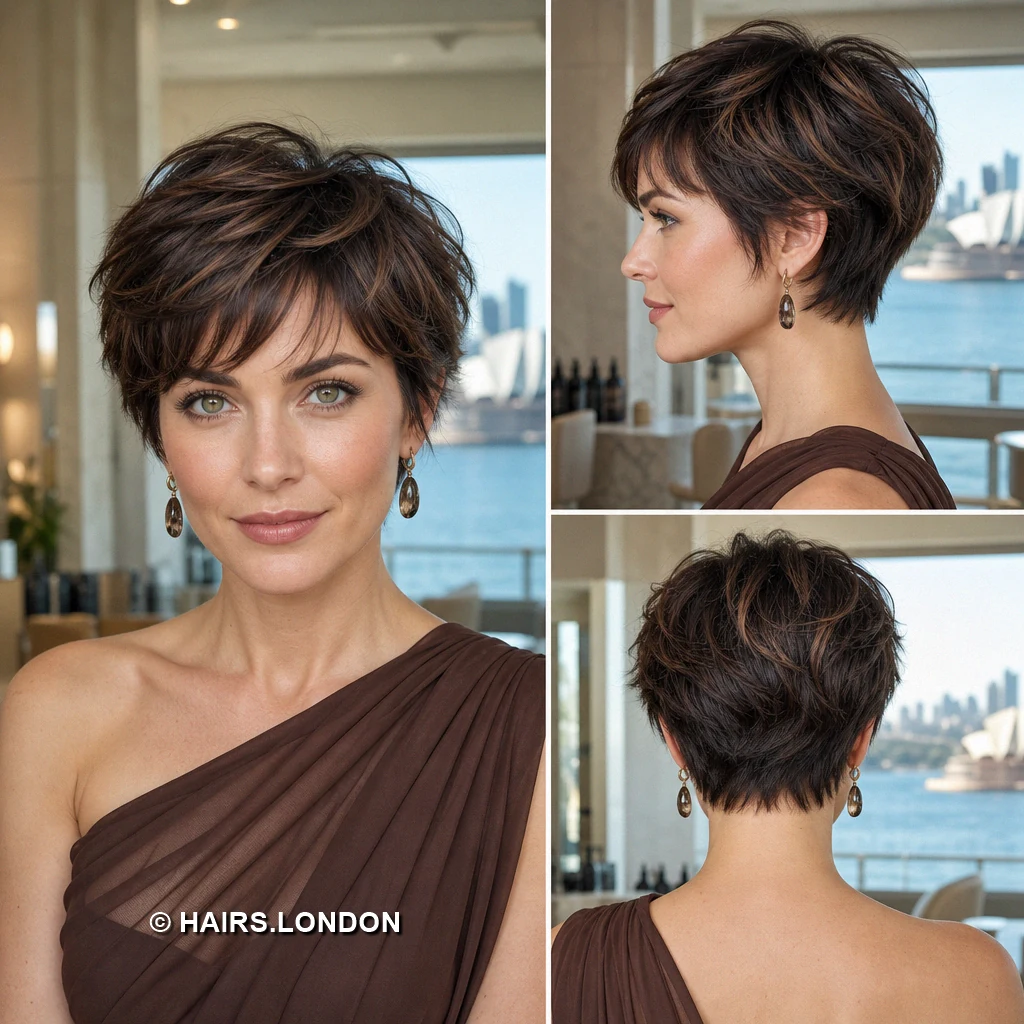
Light caramel ribbons curl across a lifted, textured brunette top. A loosely bent fringe drapes diagonally across part of forehead. The crown stays full while sides flatten gently above ears. Short dark layers at back converge in a tapered nape. Separated strands give dimension without sharply outlined spikes or curls. Ask for long top layers balanced against closely graduated sides. Blow dry with fingers, keeping the surface light and movable. Add a pea sized amount of matte paste at tips. Maintain definition with trims before side growth obscures the ears. Confirm fringe length while your hair sits naturally and dry.
19. Rounded Brown Pixie With Feathered Bangs
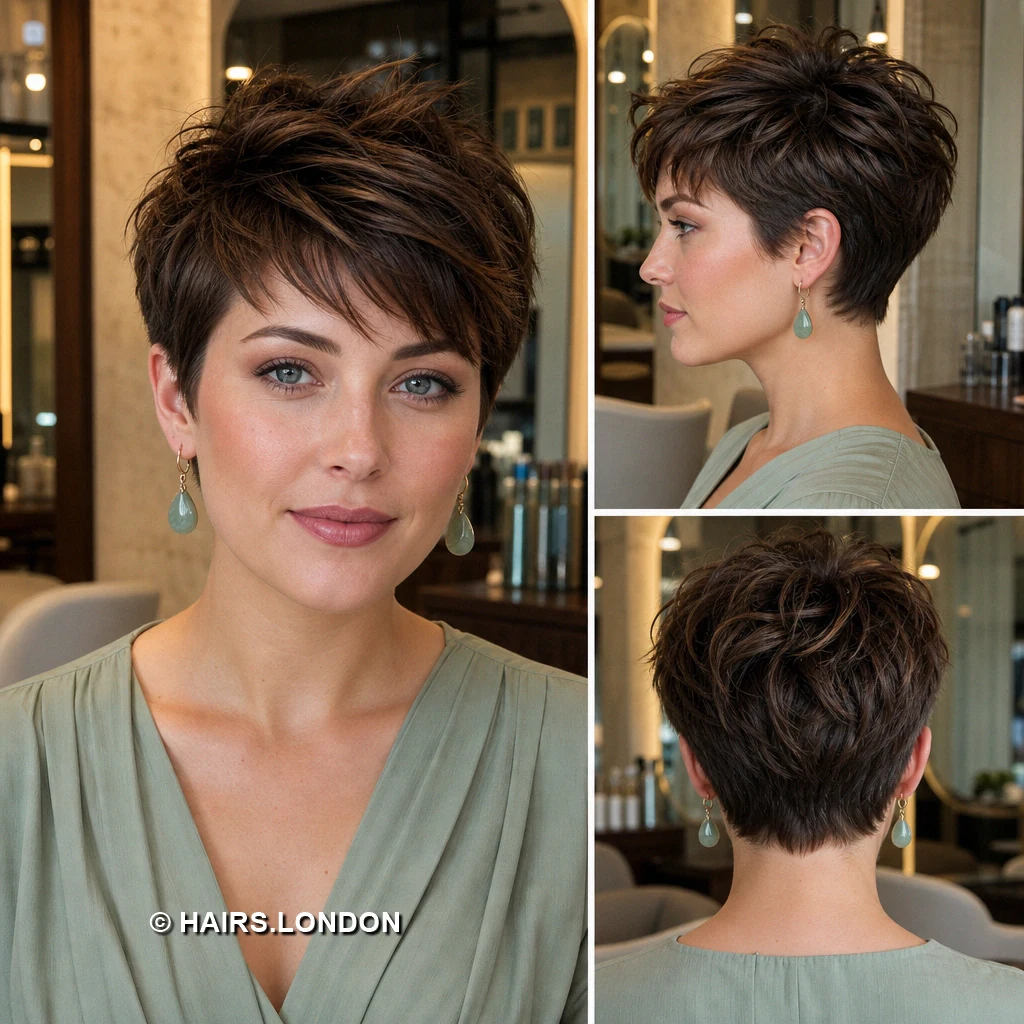
This rounded brown pixie places feathered volume over a taper. Delicate short bangs lightly brush the forehead above visible brows. The crown rises gently, with fine caramel threads weaving throughout. Compact sides outline the ears, and back narrows toward neckline. Broken layers soften the outline instead of producing hard edges. Request internal layers that release bulk without exposing sparse patches. Dry the roots upward, then direct longer pieces across forehead. Use small amounts of pliable paste to define individual ends. Schedule trims when the sides begin losing their tidy shape. Ask how your natural growth pattern changes the finished silhouette.
How to Choose a Textured Brunette Pixie Cut
Look first at where you want fullness. A rounded crown keeps the outline soft, while an elevated sweep or spiked top adds height. Next, decide how much forehead you want to show: these cuts range from cropped wisps to longer side fringes. Use the side and back views to compare how closely each cut hugs the ears and how sharply its nape tapers. Your hair’s density, growth pattern, and natural bend will affect the result more than a front view alone.
Styling Straight, Wavy, and Curly Textures
For straighter hair, lift damp roots with a dryer and fingers, then use a small amount of paste to separate the ends. Wavy hair can be directed into a side sweep while drying; avoid brushing out the bends once they are set. For curls, work curl cream through damp hair and diffuse gently, leaving enough top length for the ringlets to form. Start with less product than you think you need: short layers can quickly look weighed down.
Keeping Brunette Highlights Fresh
The visible color ranges from deep brown to warm chestnut, with fine caramel or coppery accents in many of the cuts. If you want similar dimension, ask your colorist to place lighter pieces where the top layers bend or separate. Show them whether you prefer subtle threads or a brighter sweep. Use color-safe shampoo, limit excessive heat, and ask when a gloss or highlight refresh would make sense for your chosen shade.
Maintaining the Pixie Shape
Watch the areas that reveal growth first: the hair around the ears, the nape, and the fringe. Book a trim when those sections stop sitting where you want them, rather than waiting for the entire top to feel long. If you are growing out a pixie, ask your stylist to tidy the perimeter while preserving top length. Between visits, restyle the roots after washing instead of relying on more product to hold an overgrown shape.
What to Discuss With Your Stylist
Bring the front, profile, and back views of your favorite cut. Point out the exact fringe length, crown height, side coverage, and nape finish you like. Discuss your hairline, cowlicks, density, and how much time you want to spend styling. If your hair curls, agree on a cutting length that accounts for shrinkage. For highlighted looks, discuss placement and upkeep separately from the cut so both fit your routine.
Frequently Asked Questions
What makes a brunette pixie look textured?
Visible separation, bends, curls, or softly feathered ends create texture. Layer placement and light styling product help those details show.
Can fine hair wear a rounded pixie?
Yes. A stylist can preserve density around the crown and use selective layers rather than thinning the cut throughout.
Which fringe is easiest to keep off my eyes?
A cropped fringe or an upward, swept front leaves more of the forehead clear than a longer diagonal fringe.
Do curly pixies need a longer top?
The curly examples keep enough length above the close sides for ringlets to form. Ask your stylist to account for your hair’s shrinkage.
How can I style a side swept pixie?
Direct damp front sections sideways as you dry, lift the roots for shape, and define a few ends with lightweight product.
What is the difference between a tapered and blunt nape?
A tapered nape narrows gradually into the neckline. A blunt nape ends in a more distinct, even edge.
Will caramel highlights show on short brown hair?
They can be visible along raised layers, bends, and fringe pieces, as several of these images show.
How do I keep a spiky pixie from looking stiff?
Lift the roots while drying, then pinch only selected ends with a small amount of pliable paste.
Should I cut my pixie shorter around the ears?
Choose the coverage you prefer from the profile views. Closely cut sides expose the ears, while longer sides soften that outline.
How often should I trim a textured pixie?
Arrange a trim when the fringe, sides, or nape lose their intended shape. The timing depends on your cut and how it grows.
What should I bring to a pixie consultation?
Bring front, side, and back reference views, and identify the specific fringe, crown, sides, and nape you want.
Can I keep the top longer while growing out a pixie?
Yes. Ask your stylist to maintain the sides and nape while leaving the top and fringe to gain length.
Conclusion
The most useful reference is the one that shows the whole haircut, not just its fringe. Choose the crown texture you like, check the sides and nape, and take those details to your appointment. A thoughtful cut will give your preferred brunette pixie shape room to work with your hair’s natural movement.