


11. Blush Pink Asymmetric Pixie with a Long Sweep
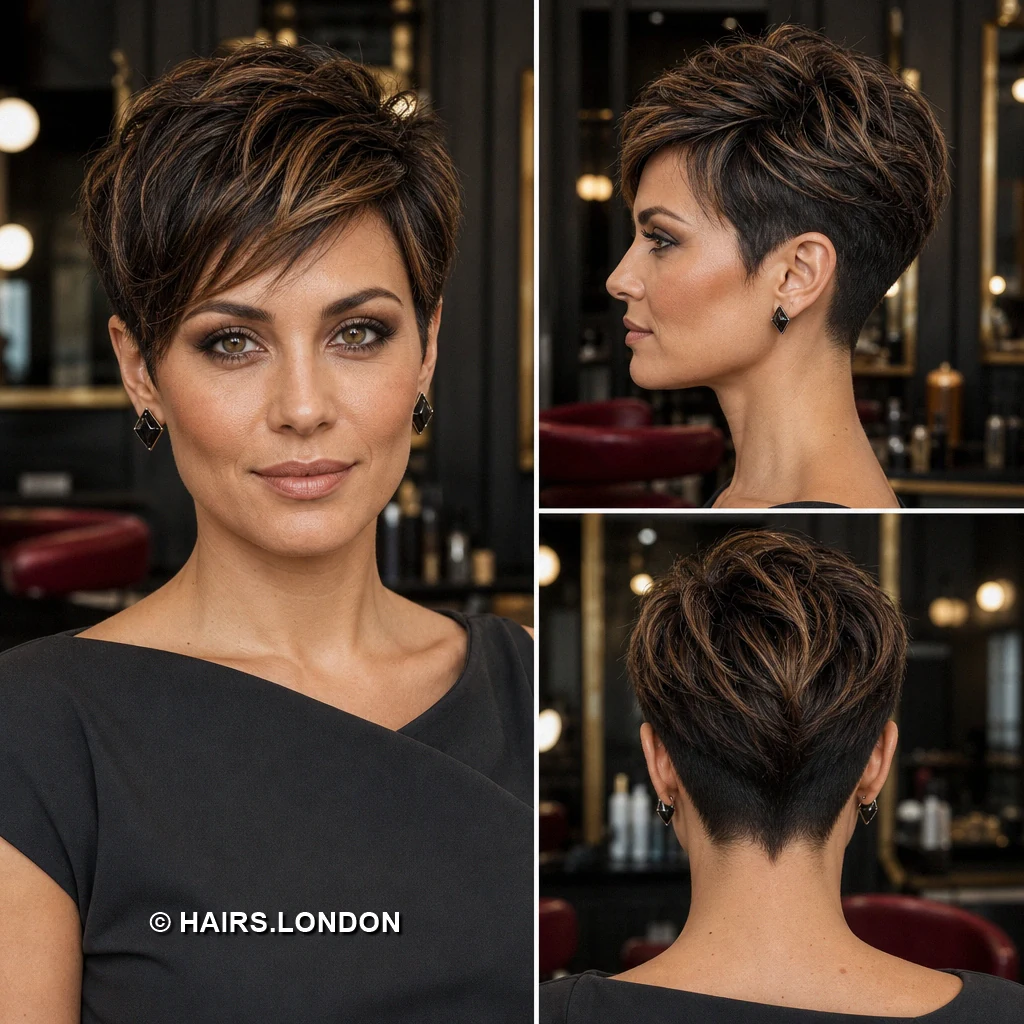
Blush pink lengths sweep dramatically across one side of forehead. The opposite side is closely clipped above its exposed ear. Feathered crown pieces lift backward, breaking the otherwise smooth sweep. At the back, pale pink layers meet a tight nape. Ask for an asymmetric outline with top and side lengths. Check fringe placement before committing to the closely cropped temple. Blowdry the long portion forward, then direct its tips sideways. Add airy texture spray to maintain lift without sticky stiffness. Pastel pink needs gentle washing and careful heat protection daily. Expect frequent side trims alongside planned color refresh appointments too.
12. Feathered Pastel Pixie with Pink and Blue Streaks
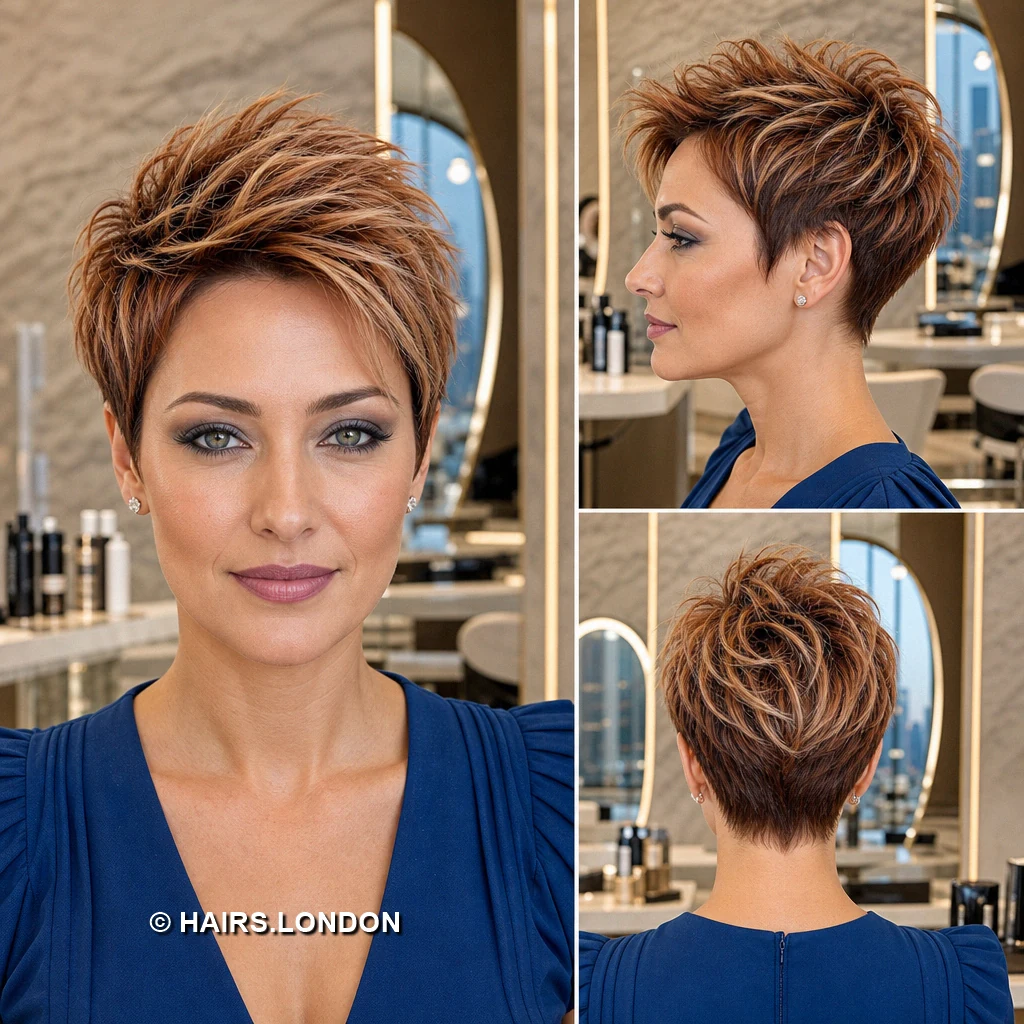
Beige blonde layers display soft pink and pale blue streaks. The choppy front brushes diagonally across part of the forehead. Feathered crown points project upward, creating plenty of airy movement. Shorter taupe sides expose the ears beneath bright top pieces. Pink and blue appear again above a neatly tapered nape. Request staggered top layers that allow each shade to show. Lift damp roots using fingers instead of smoothing everything flat. Separate individual points with minimal paste to preserve their softness. Wash gently with cool water to slow pastel color fading. Ask about strand testing before adding more pastel tones later.
13. Lilac Spiked Pixie with Turquoise Accents
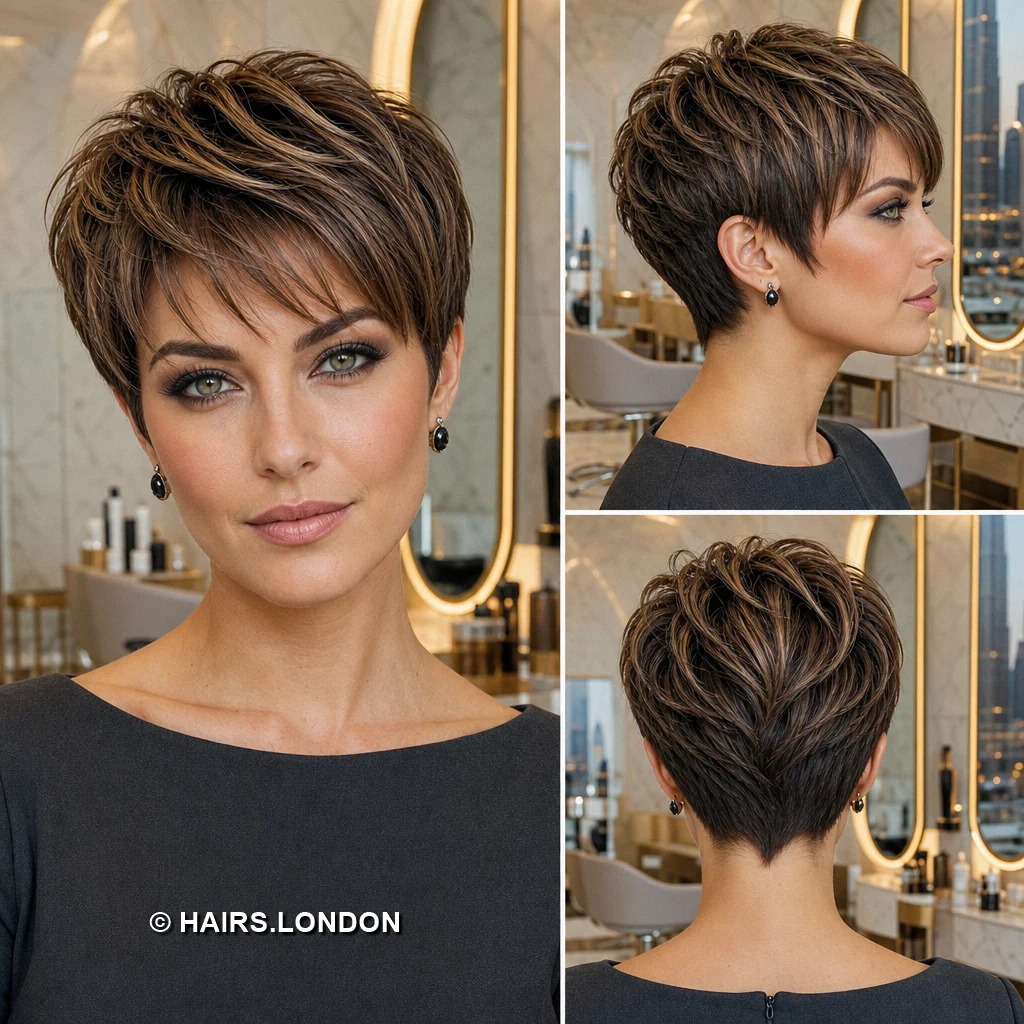
Lilac and turquoise streaks rise through an airy pastel crest. The front stands upright, exposing most of the forehead completely. Short taupe sides bring sharp contrast beneath those feathered spikes. Behind, lilac and blue patches blend above the tapered nape. Ask for long enough top sections to support upward styling. Check where each shade lands from both sides and behind. Blowdry against the roots, lifting front sections with your fingers. Pinch the tips with light paste rather than heavy wax. Pastels may fade unevenly, so request a manageable refresh plan. Keep the closely cut sides tidy with frequent salon visits.
14. Soft Lavender Pixie with a Fine Fringe
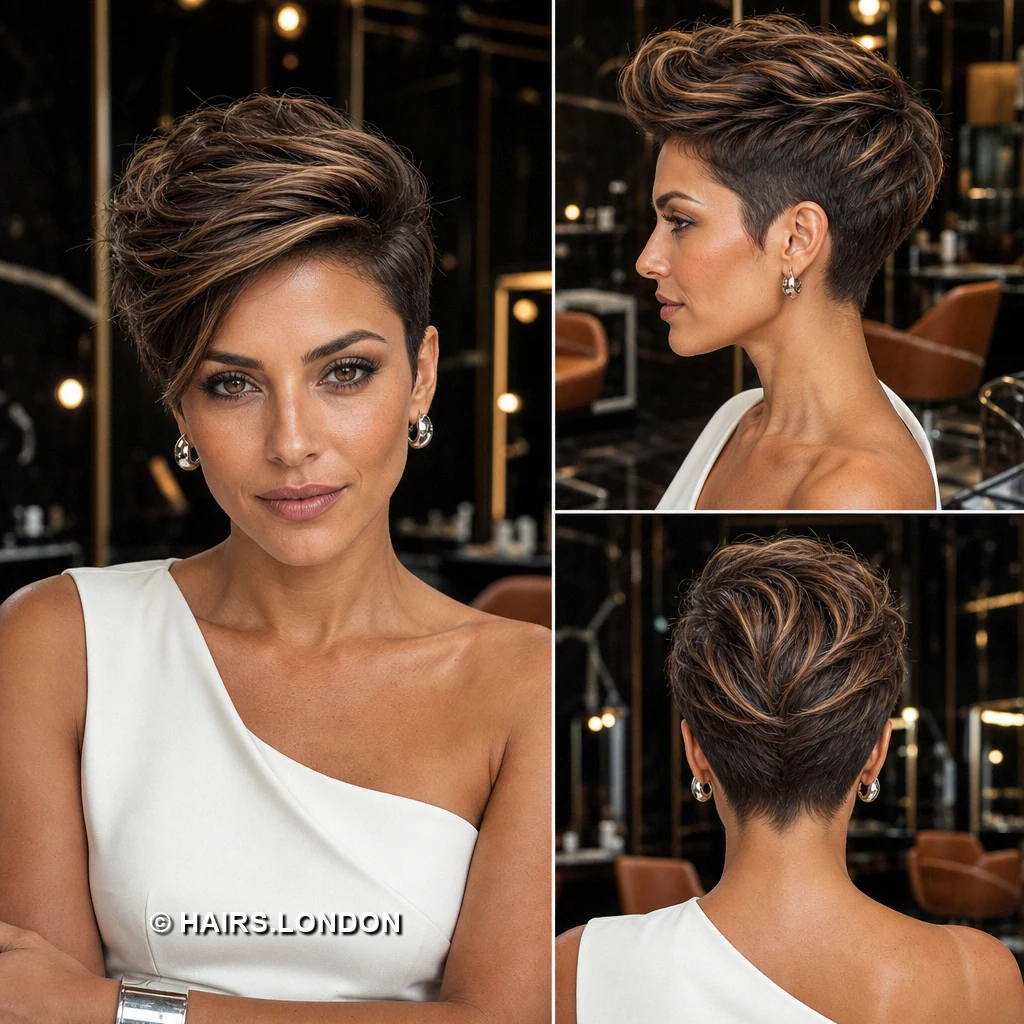
Soft lavender tones veil a short, evenly layered pixie cut. The fine fringe curves gently across the upper forehead here. Muted blonde strands add dimension to the lightly textured crown. The sides sit close around the ears without harsh clipping. Behind, wispy layers descend toward a clean, tapered nape line. Ask for gentle graduation that avoids excessive bulk above ears. Keep the fringe short enough to remain easy to wear. Work soft cream through damp hair, then dry with fingers. Color depositing treatments may help maintain the cooler lavender cast. Trim regularly to preserve the rounded shape and neat neckline.
How to Choose a Textured Pixie Cut
Start with the feature you want to live with every day: a short, open fringe; a longer sweep; defined curls; or a lifted front. Then compare the side and back views. A close taper exposes the ears and needs more frequent shaping, while a fuller crown leaves more options for changing the direction of your styling. Consider where your hair naturally parts and whether you are comfortable having fringe near your eyes.
Styling Straight, Wavy, and Curly Textures
For straighter hair, apply a light mousse at the roots and blowdry against the direction of growth before separating ends with a small amount of paste. Let natural waves guide a looser sweep; scrunch in cream instead of brushing out every bend. For curls, apply product while damp, shape individual ringlets, and air-dry or diffuse gently. Begin with less product than you think you need so short layers retain movement.
Keeping Highlights and Pastel Color Fresh
Warm ribbons are easiest to appreciate when placed where the crown separates or the fringe bends. Pastel pink, lilac, and blue generally call for a more deliberate refresh plan. Ask your colorist about the starting color, any lightening needed, and how your chosen shades are likely to fade. Wash gently, protect hair from heat, and use a color-depositing treatment only if it suits the specific mix of tones.
Maintaining the Tapered Pixie Shape
The neckline, areas around the ears, and fringe often reveal growth before the crown does. Arrange trims according to those details rather than waiting for the whole cut to feel long. If you want to grow the pixie out, ask your stylist to soften the taper gradually while keeping the top and back balanced. Between appointments, dry the fringe in its intended direction and use product sparingly.
What to Discuss with Your Stylist
Bring front, profile, and back references, then point out the exact fringe length, crown height, ear exposure, and nape finish you prefer. Discuss your natural growth patterns, texture, and usual styling time. Ask whether point cutting, gentle graduation, or curl-by-curl shaping makes sense for your hair. For highlights or pastels, confirm placement, processing needs, upkeep, and what a realistic faded result will look like.
Frequently Asked Questions
What makes a pixie cut look textured?
Varied layer lengths and separated ends create visible movement. Styling with fingers, cream, or a small amount of paste can make that movement more apparent.
Can a textured pixie have a long fringe?
Yes. A longer fringe can sweep diagonally or to one side while the temples and nape remain short.
Which of these cuts leaves the forehead most open?
The raised brunette front and upright lilac crest expose most of the forehead. The shorter, broken fringes also leave more forehead visible than a long side sweep.
Will a short pixie work with natural curls?
It can. Leave enough length on top for curls to form and spring back, then shape the shorter sides around that volume.
How do I keep a lifted crown from looking stiff?
Build volume while drying the roots, then use a small amount of flexible styling product. Avoid coating every strand with wax or spray.
What is the difference between a soft taper and a close side cut?
A soft taper gradually shortens toward the ears and nape. A close side cut creates a stronger length contrast with the top.
How often should I trim a textured pixie?
Book a trim when the fringe interrupts your preferred shape or the sides and nape lose their outline. Closely cut sections may need attention sooner than a longer crown.
Can I style one pixie in more than one direction?
Often, yes, if the top has enough length. Ask your stylist to cut around your natural part and show you which alternate directions are practical.
Where should highlights go in a short layered cut?
Highlights can follow the natural part, fringe sweep, or crown bends so the lighter strands remain visible when the hair is styled.
Are pastel pixie colors difficult to maintain?
They require a color refresh plan because pale shades can fade unevenly. Discuss washing, heat styling, and the expected faded tones with your colorist.
What product helps define piecey ends?
A small amount of styling cream or matte paste can separate selected tips. Apply it gradually so the layers do not become heavy.
What photos should I bring to a pixie consultation?
Bring front, side, and back views. They help clarify fringe length, crown volume, how much ear is exposed, and the shape of the nape.
Conclusion
The best textured pixie is one whose details work together: a fringe you can manage, crown length suited to your texture, and sides and nape you are willing to maintain. Use these views to narrow down those choices, then plan the cut, color, and everyday styling with your stylist.