


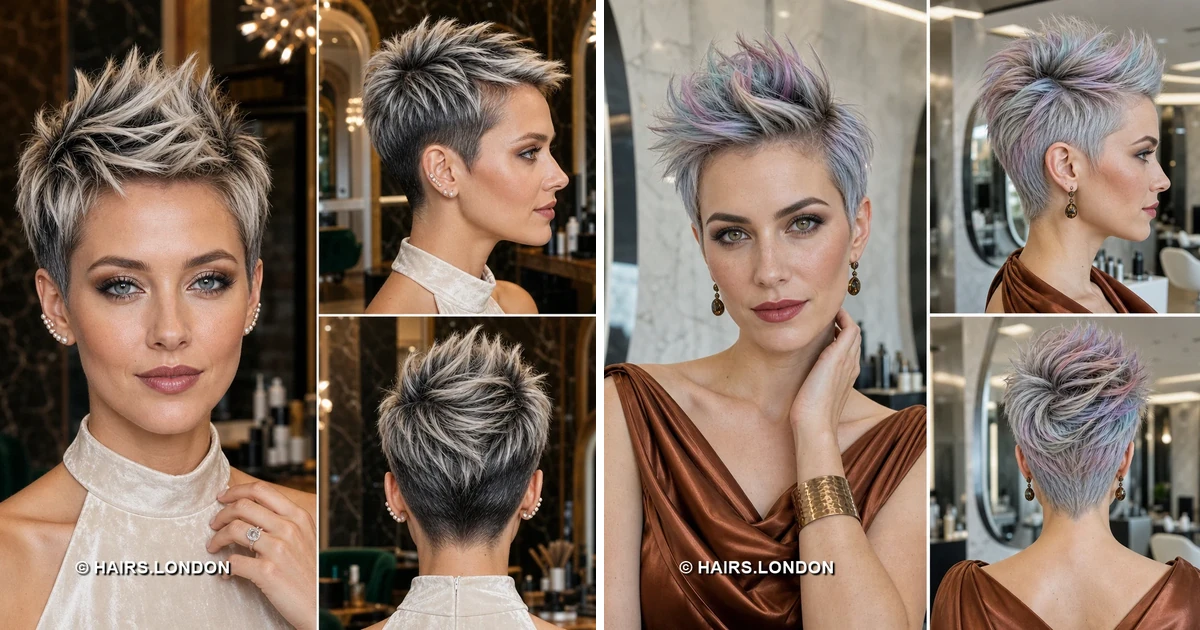
How to Choose a Textured Pixie Cut
Start with the fringe and crown: these determine how the cut frames your face and how much styling it needs. A short, broken fringe leaves more forehead visible, while a longer sweep offers more coverage and movement. Consider how close you want the sides and nape; a pronounced taper creates a stronger contrast with a full top. Choose a reference that shows the back as well as the front, and ask whether your hair has enough density to support the height you like.
Styling Different Hair Textures
For fine hair, apply a small amount of mousse at damp roots and blowdry upward before adding lightweight paste only where separation is needed. Thicker hair may benefit from internal layering and a smoothing cream so the crown moves without expanding too much. If your hair has a natural wave, work with its bend: scrunch in light cream and guide the fringe with your fingers. For straighter hair, a brush and directed airflow can build the curved sweep shown in the fuller cuts.
Keeping Silver and Pastel Color Fresh
The pale silver, pink, mint, and lavender sections shown here may need different refresh schedules. Ask your colorist how the chosen tones are likely to fade on your starting color and whether the darker roots will be kept for contrast. Wash gently, avoid unnecessarily hot water, and use heat protection before blowdrying. A toning product should match the colorist’s advice rather than be chosen by color alone, especially where several pastel shades share one cut.
Maintaining the Pixie Shape
The sides and nape tend to reveal growth sooner than the longer crown. Arrange trims according to how crisp you want the outline, and tell your stylist if you are growing the fringe rather than cutting every section equally. Between appointments, dry the crown in its intended direction before applying product. Start with less paste, wax, or cream than you think you need; adding more is easier than removing excess from short hair.
What to Discuss with Your Stylist
Bring the front, profile, and back views of the cut you prefer. Point out the desired fringe length, crown height, ear coverage, and nape shape separately. Discuss your natural part, growth patterns, daily styling time, and how often you can return for trims. For highlighted or pastel looks, request a color plan that covers lightening, root contrast, fading, and upkeep before committing to the shade.
Frequently Asked Questions
What makes a pixie cut look textured?
Varied layer lengths, point-cut ends, and styling that separates sections make the texture visible. The crown and fringe usually show it most clearly.
Which of these pixies has the longest fringe?
The platinum side-swept cut and the silver-mint cut both show long front sections that sweep across the forehead.
Can I keep a fuller top without leaving the sides long?
Yes. Several looks pair a rounded or lifted crown with sides cut close around the ears. Ask your stylist to show how the lengths will connect.
Will a close nape make a pixie harder to maintain?
A close nape makes growth more noticeable. It stays tidy with perimeter trims, even when you leave the top longer.
How do I style a spiky pixie without making it stiff?
Dry the roots upward, then pinch a little lightweight paste through selected strands. Leave some pieces loose instead of coating every section.
How do I style a soft side-swept fringe?
Direct damp hair across the forehead with a brush and blowdryer, then use a small amount of cream or flexible spray to hold the curve.
Are dark roots visible in these highlighted cuts?
Yes. Several styles deliberately show deeper roots or underlayers beneath silver, blonde, or pastel lengths.
Do pastel highlights need frequent refreshing?
They can fade noticeably, but timing depends on the shade, hair condition, washing routine, and color service. Ask your colorist for a plan specific to your hair.
Can naturally wavy hair work with these shapes?
Yes, provided the layers account for its natural bend. A stylist can preserve enough top length for waves while controlling bulk at the sides.
What product suits fine hair in a textured pixie?
Try lightweight root mousse for lift and a small amount of paste for definition. Heavy wax can flatten fine top layers.
What should I show my stylist besides a front photo?
Show the side and back views. They clarify the ear area, crown length, and nape taper that a front portrait cannot fully reveal.
Can I grow out the fringe while keeping the cut neat?
Yes. Ask for side and nape trims while preserving the front length, with small adjustments to the layers so the longer fringe still blends.
Conclusion
A textured pixie can look sharply separated, softly rounded, or swept to one side without losing its short, tapered shape. Choose the silhouette first, then decide how much contrast you want between the roots and highlighted top. Bringing multiple views to your appointment will make those choices much easier to explain.