


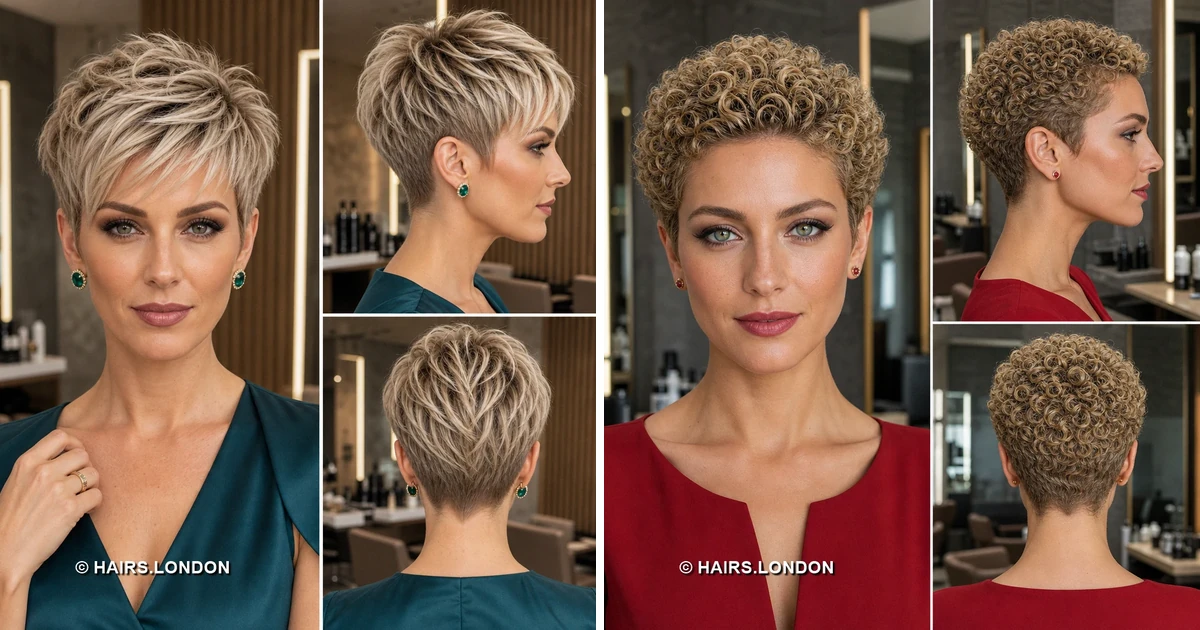
11. Angled Blonde Fringe
This layered pixie blends a long, angled blonde fringe with tousled crown pieces and a tighter outline around both ears. Cool ash highlights skim a darker base, while the back narrows gradually into a neat, slightly pointed neckline at nape. Keep the front weighty enough to sweep across, but request shorter layering behind it to stop the crown looking flat. For daily styling, work a small amount of lightweight paste through dry ends, then lift selected sections with your fingers. Request a trim when the neckline loses its clean taper, and use color safe shampoo to maintain the highlighted tones.
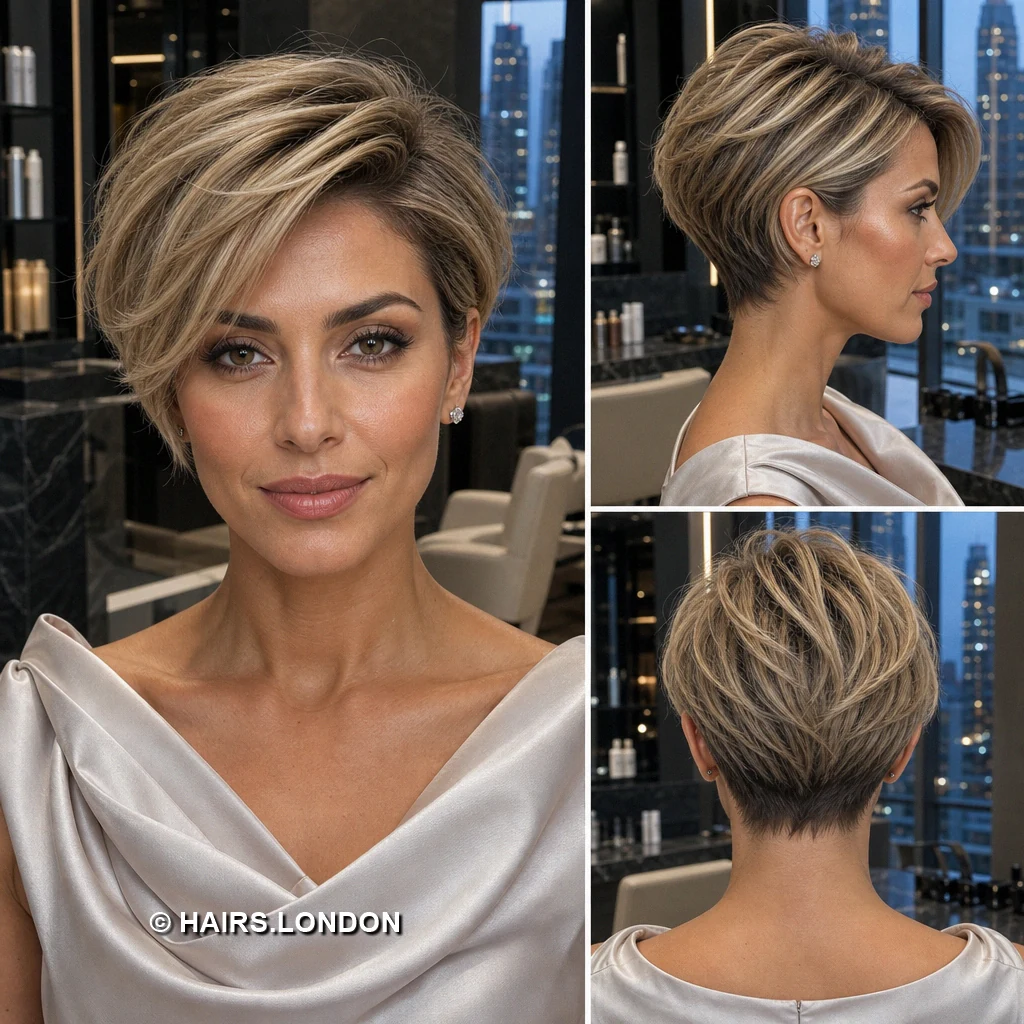
12. Brushed-Back Pompadour Shape
Combed upward and back, the longer top forms a lifted pompadour shape above closely trimmed, shaded sides and narrow neckline. Bright beige blonde ribbons accent sweeping layers at the crown, while darker roots and nape add clear visual tonal contrast. Blow dry with the brush lifting from the hairline, then smooth back just enough to retain the textured visible ridges. Discuss how much height you enjoy wearing, since product and drying direction can make the layers appear fuller or flatter. Request a trim when the neckline loses its clean taper, and use color safe shampoo to maintain the highlighted tones.
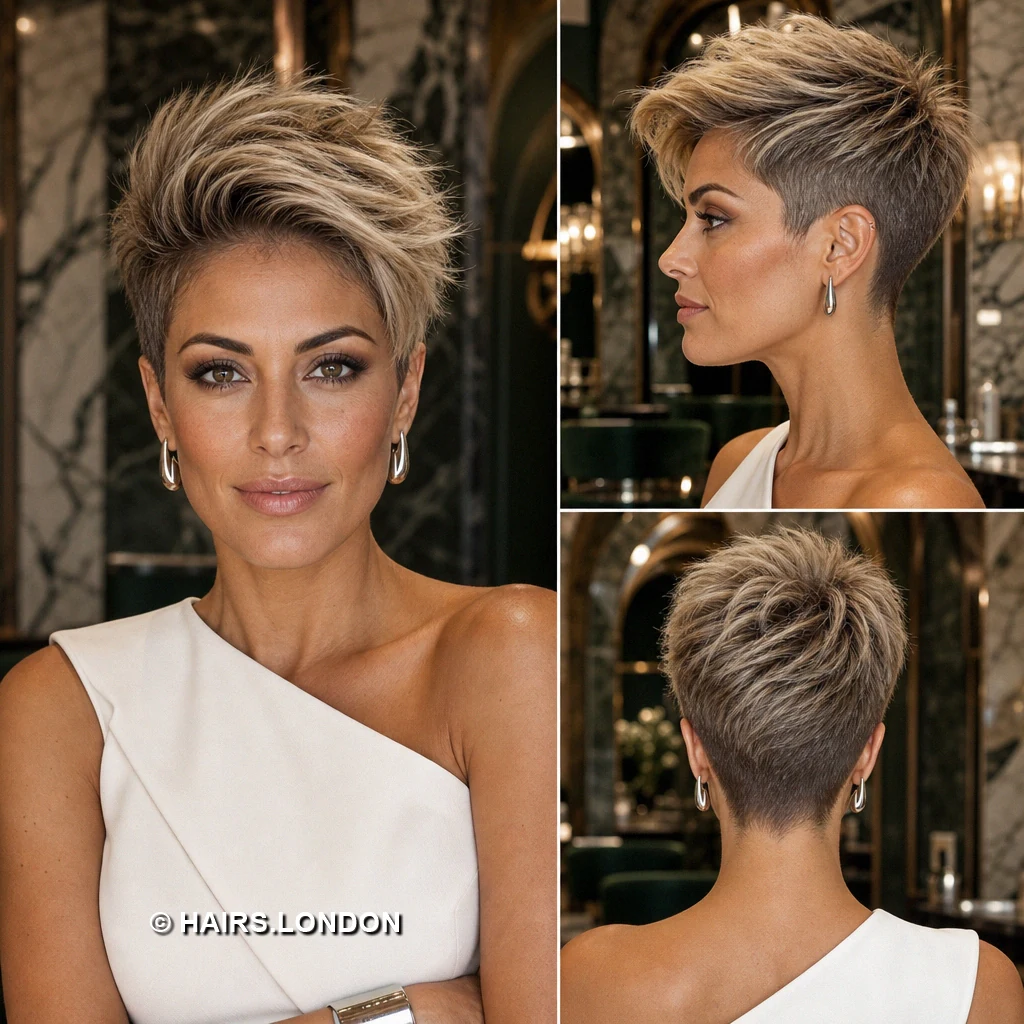
13. Short Feathered Bangs
Short feathered bangs cross the forehead, leading into a rounded, lightly tousled crown with clean edges beside both the ears. Soft blonde highlights weave through ash brown roots, and the rear layers taper neatly to a point at the nape. Style with fingers rather than a stiff brush, directing the short fringe diagonally while keeping the top airy and flexible. Take photographs of the front, profile, and back to your appointment, and confirm where the fringe should fall before cutting. Request a trim when the neckline loses its clean taper, and use color safe shampoo to maintain the highlighted tones.
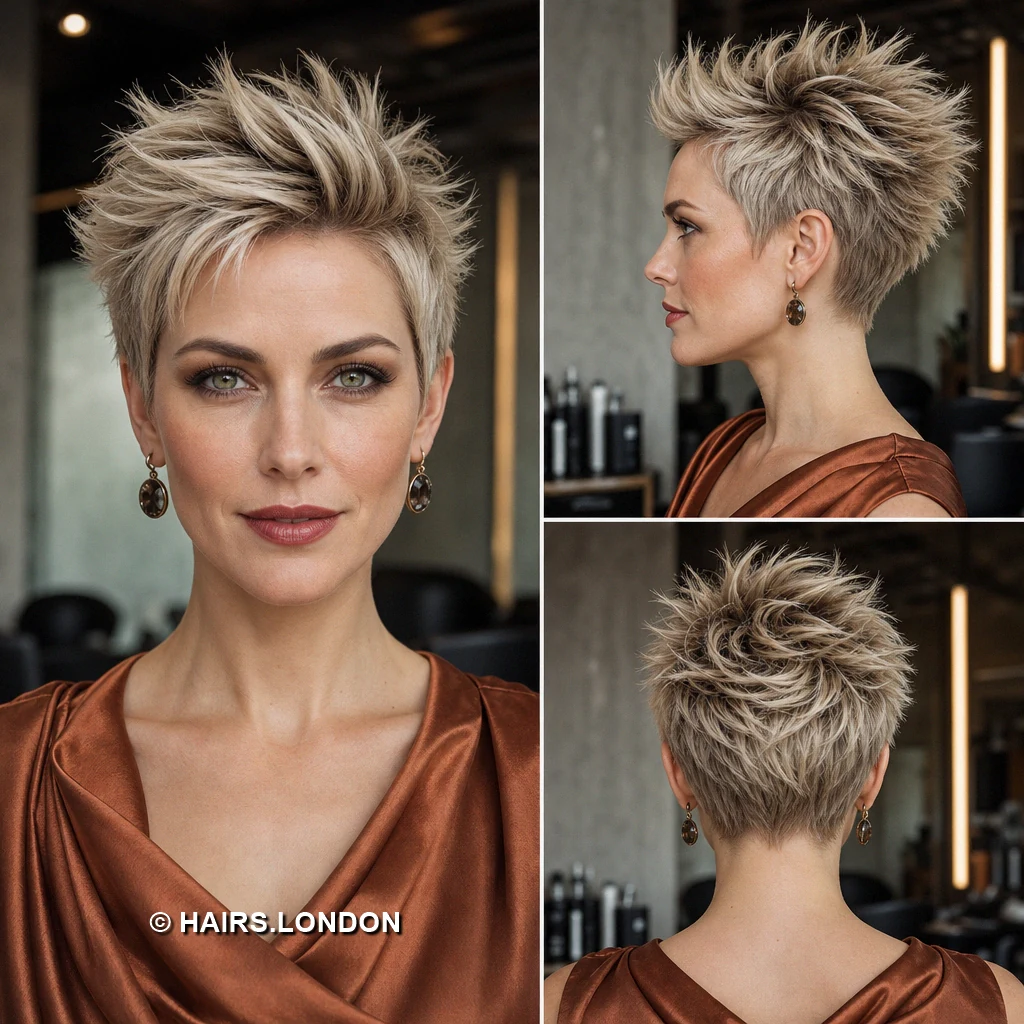
14. Asymmetric Fringe with a Close Temple
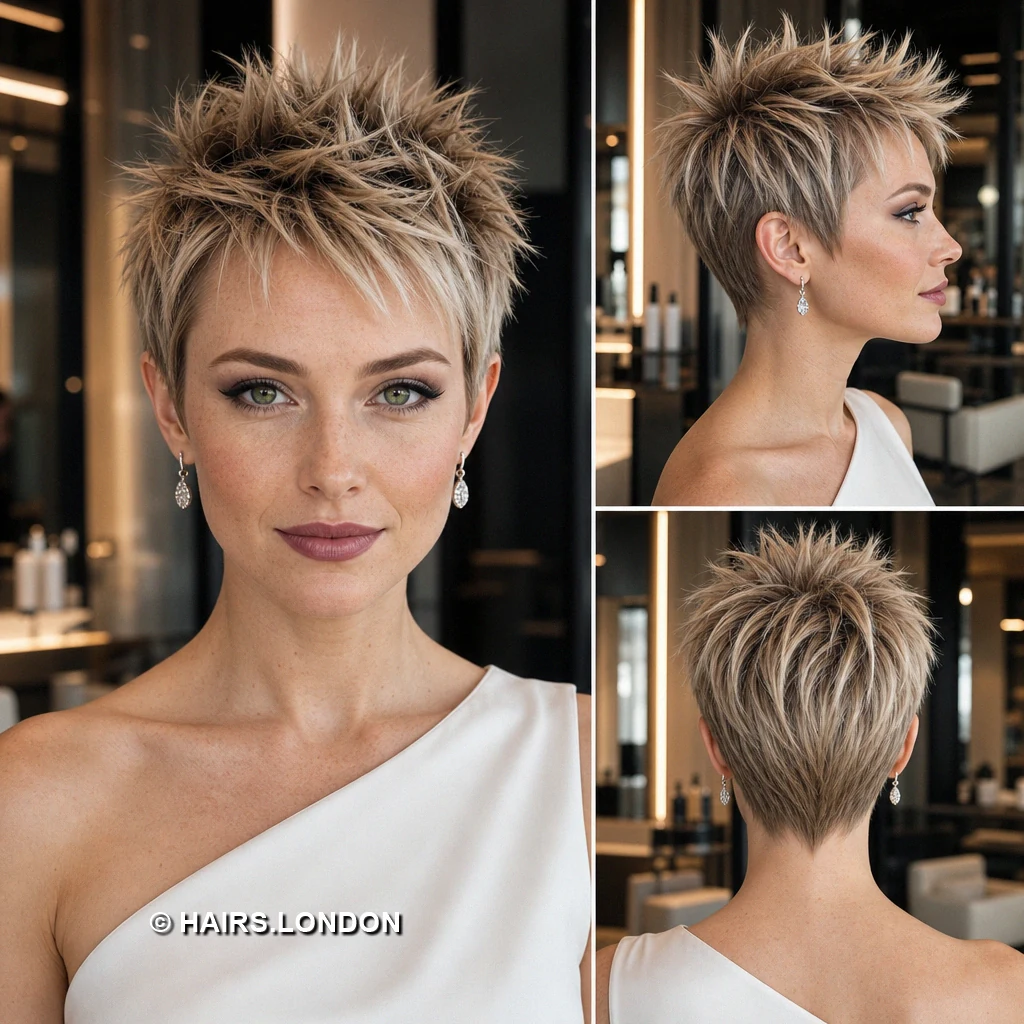
An asymmetrical fringe sweeps across one eye, offsetting the closely cropped opposite temple and softly elevated back of this pixie. Pale ash blonde lengths lie over darker roots, while the exposed side and tapered nape sharpen the contrasting overall silhouette. Ask for extra length through the fringe and confirm how much of the shorter side you want visible when styling. For daily styling, work a small amount of lightweight paste through dry ends, then lift selected sections with your fingers. Request a trim when the neckline loses its clean taper, and use color safe shampoo to maintain the highlighted tones.
15. Choppy Crown and Broken Fringe
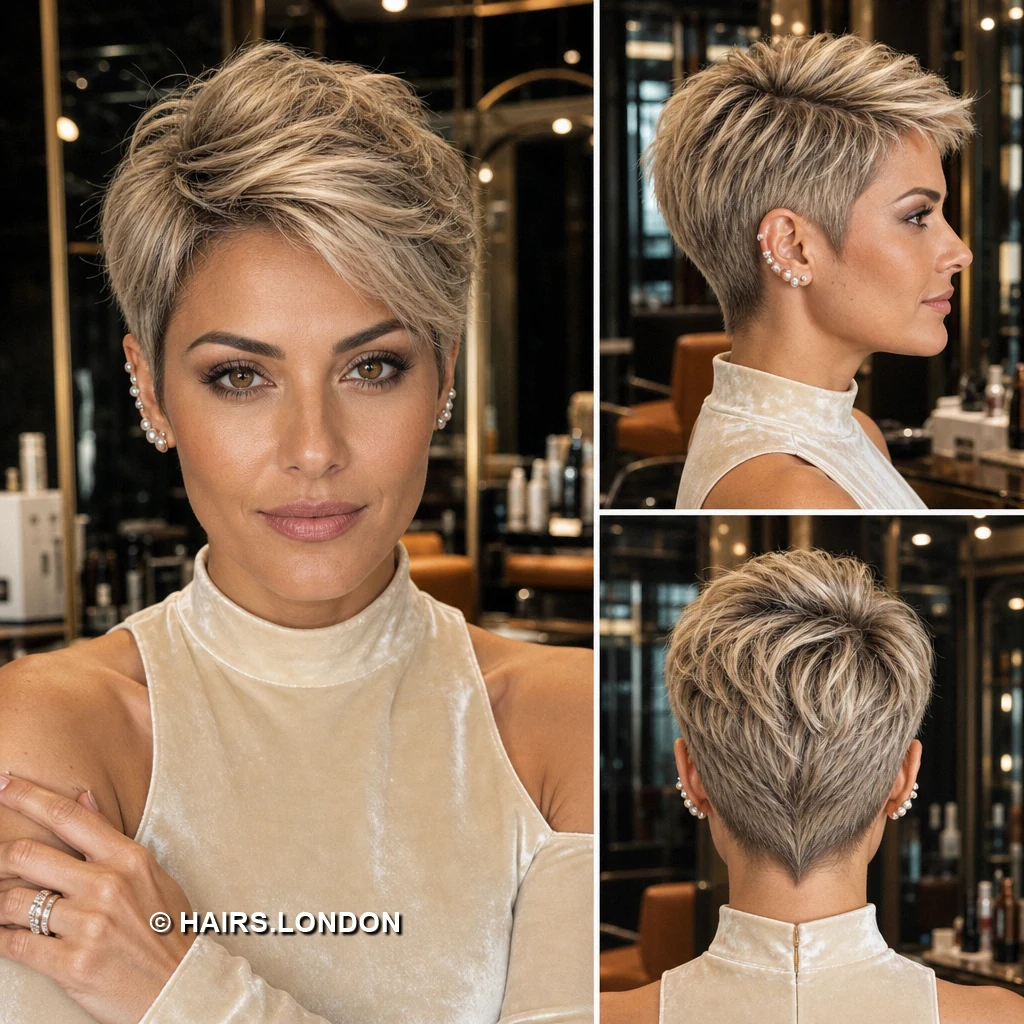
This compact crop combines a broken, short fringe with choppy crown layers, keeping the sides snug and the neckline tapered. Sand blonde streaks punctuate a darker base, bringing out the loose bends across the top without hiding its cropped edges. Rub a pea sized amount of paste between palms, then twist a few pieces upward rather than coating every strand. Take photographs of the front, profile, and back to your appointment, and confirm where the fringe should fall before cutting. Request a trim when the neckline loses its clean taper, and use color safe shampoo to maintain the highlighted tones.
16. Softly Separated Sweeping Layers
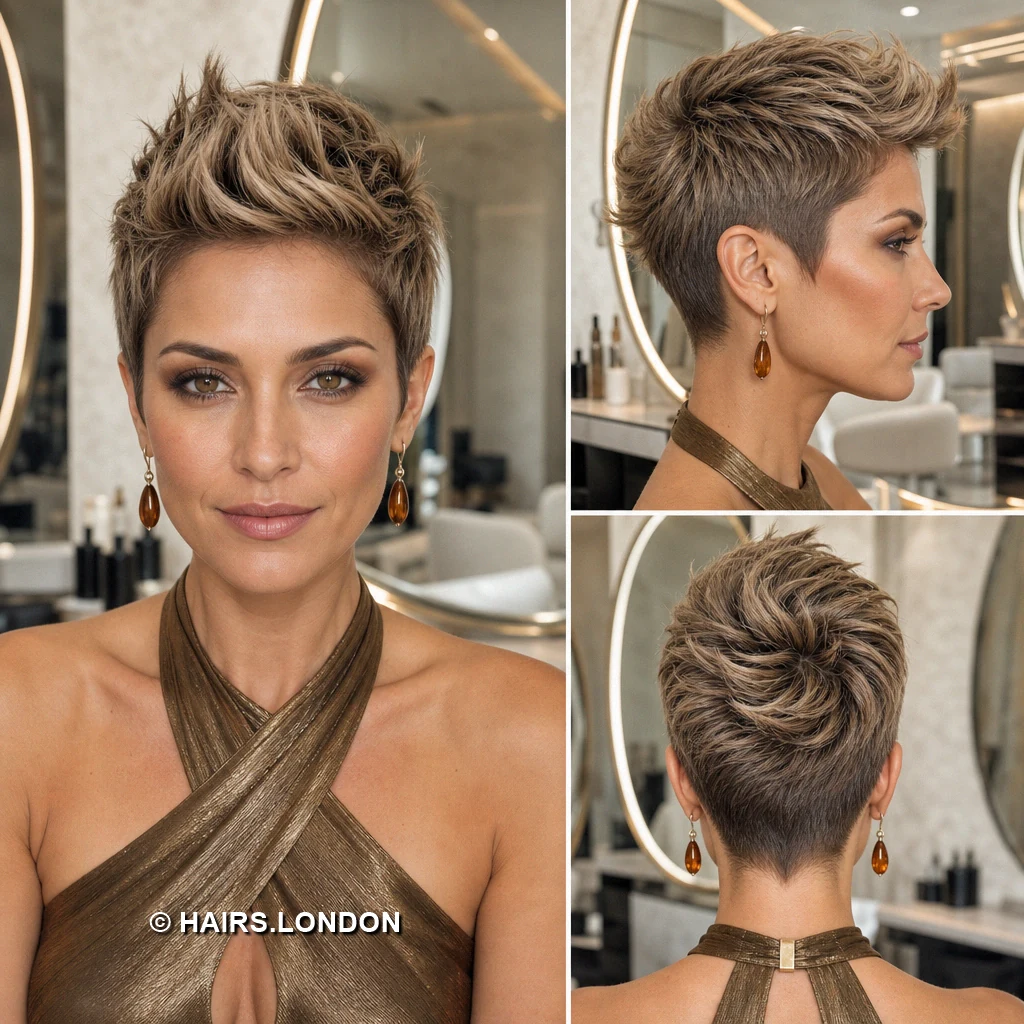
Long, gently separated top layers arc across the forehead, with a rounded crown that narrows into close sides and nape. Beige blonde highlights over smoky roots trace the movement, especially where the soft fringe meets the closely cut temple side. Air dry with a little mousse for softer definition, or direct the front forward using a dryer for fuller coverage. Ask your stylist to keep the crown long for movement while refining the sides and nape to suit growth pattern. Request a trim when the neckline loses its clean taper, and use color safe shampoo to maintain the highlighted tones.
17. Tousled Crown with Pointed Ends
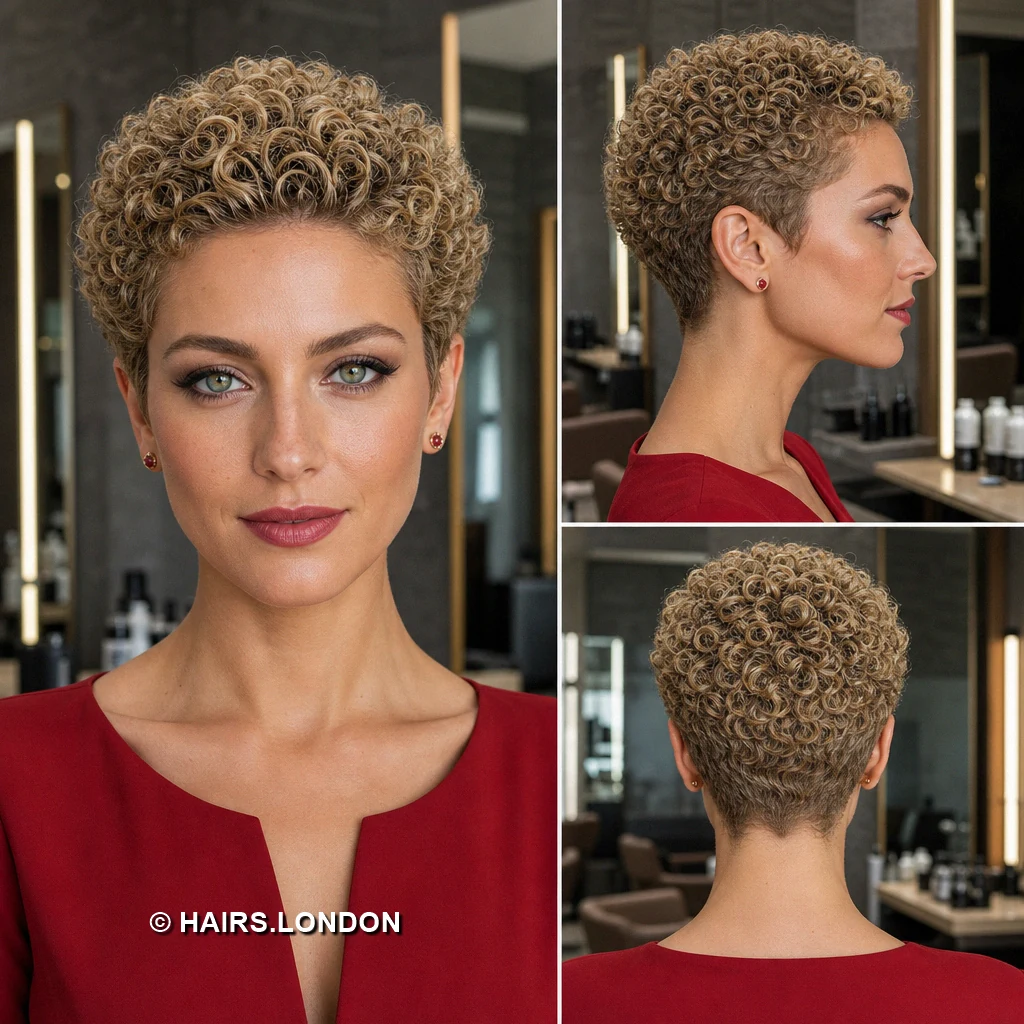
This tousled pixie features a pale, swept front and pointed, airy crown pieces above the closely cropped shorter side sections. Cool blonde highlights break up the deeper taupe base, while the nape tapers to a soft, narrow point at neckline. Rough dry the roots upward, sweeping the front sideways, then separate a few spiky ends with a barely visible paste. Take photographs of the front, profile, and back to your appointment, and confirm where the fringe should fall before cutting. Request a trim when the neckline loses its clean taper, and use color safe shampoo to maintain the highlighted tones.
18. Voluminous Brushed-Back Crest
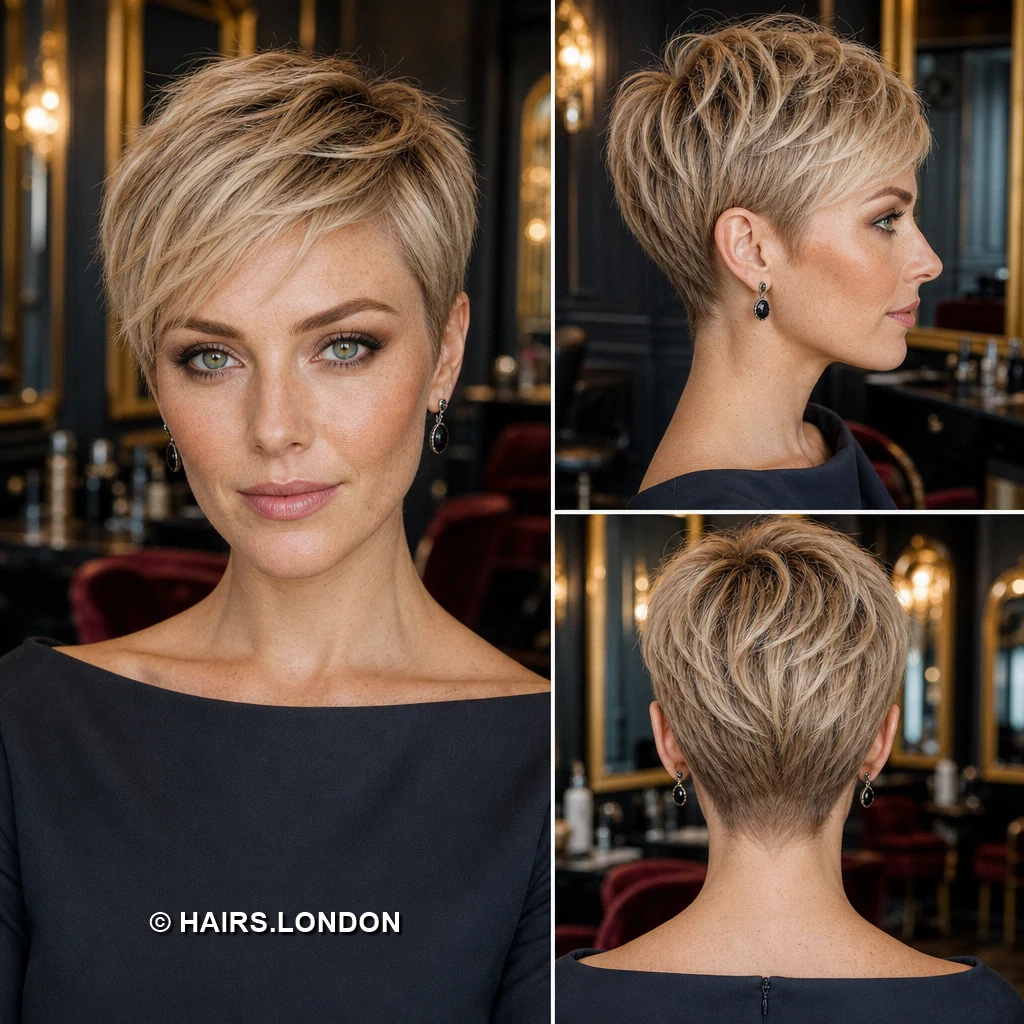
A voluminous, brushed back top creates a broad rounded crest, with darker close sides defining the outline around the ears. Caramel beige and pale blonde ribbons curve across the crown, while the shaded nape tapers closely against the back neck. Keep enough length at the front to push it backward, and apply lightweight mousse before drying for lasting controlled volume. Discuss how much height you enjoy wearing, since product and drying direction can make the layers appear fuller or flatter. Request a trim when the neckline loses its clean taper, and use color safe shampoo to maintain the highlighted tones.
19. Fuller Back with a Sweeping Fringe
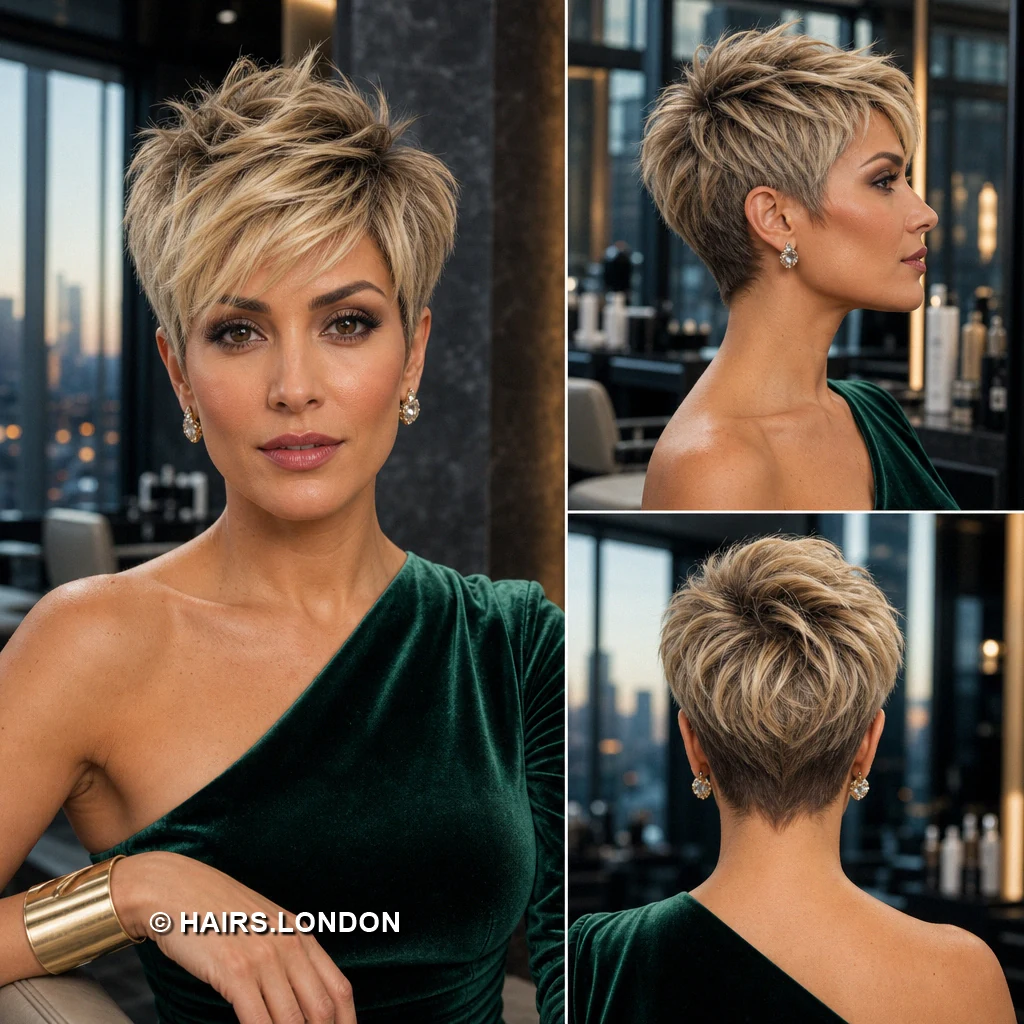
This longer pixie resembles a short, layered bob from the front, with a sweeping fringe and fuller, rounded upper back. Light beige blonde strands lie over brown shadow roots, while the sides cover part of each ear before tapering behind. Use a round brush to curve the fringe sideways, smoothing the surface without pressing down the airy upper crown layers. Ask your stylist to keep the crown long for movement while refining the sides and nape to suit growth pattern. Request a trim when the neckline loses its clean taper, and use color safe shampoo to maintain the highlighted tones.
How to Choose a Textured Pixie Cut
Start with the feature you want to emphasize. A longer side fringe offers more forehead coverage and styling flexibility; a short fringe opens the face and puts the crown texture forward. Compare the profiles as carefully as the front views: a close temple, rounded back, or raised quiff can change the whole silhouette. If you want an easy transition from a longer haircut, ask whether the fuller shapes in images 3 or 19 would suit your hair’s density.
Styling Different Hair Textures
Fine or straight hair may need mousse at the roots and upward blow-drying for the lifted shapes; keep paste light so the top does not collapse. Hair with a natural bend can be finger-dried, then separated with a small amount of cream or paste. For curls like those in image 9, work curl product through damp hair, allow for shrinkage, and avoid brushing the dry coils apart. Use heat protectant whenever you blow-dry.
Keeping Blonde Color Fresh
The visible highlights range from pale ash to warmer honey, usually with deeper roots. Ask your colorist which tone and placement fit your starting color and how often it will need refreshing. Wash gently, use conditioner where the hair feels dry, and discuss toning if pale blonde begins looking warmer than you want. Protect highlighted hair from unnecessary heat; a short cut still needs healthy ends to show its texture.
Maintaining the Pixie Shape
Short temples and tapered napes reveal growth quickly, so plan trims around how crisp you want the outline to remain. A longer fringe can often be adjusted between full cuts, but avoid cutting it without checking its dry fall first. At each appointment, review the crown: removing too much weight can change a soft sweep into a spiky shape, while leaving too much can flatten the lift.
What to Discuss with Your Stylist
Bring the front, side, and back views of your preferred image. Point out the exact fringe length, the amount of coverage around the ears, the crown height, and where the nape should end. Explain how you normally dry your hair and how much product you are willing to use. Before cutting, ask how your growth patterns, density, curl, and existing color will affect the pictured result.
Frequently Asked Questions
What makes a pixie cut look textured?
Layering and visible separation give the top movement. Styling with fingers or a small amount of paste can make those pieces more defined.
Which pictured cuts have the longest fringes?
Images 3, 14, and 19 show particularly generous side-swept fronts.
Can a textured pixie work with curly hair?
Yes. Image 9 shows a rounded top of defined curls with closely trimmed sides. Ask your stylist to account for curl shrinkage.
How can I add height to a short crown?
Apply lightweight mousse near damp roots and blow-dry upward. Finish with just enough product to separate the ends.
Will a heavy styling product flatten this shape?
It can, particularly on fine hair. Start with a small amount on the ends and add more only where needed.
How do I style a side-swept fringe?
Direct it sideways while drying, then arrange the ends with your fingers. Keep enough length through the front for the sweep you want.
What should I request for a neat nape?
Show your stylist the back view you prefer and specify whether you want a narrow point or a softer, rounded taper.
How often should I trim a tapered pixie?
Book a trim when growth starts changing the neckline or covering the close sides. The right interval depends on your growth rate and preferred finish.
Are the roots in these images darker than the highlights?
In most images, yes. Deeper roots provide contrast beneath the blonde or beige surface pieces.
How can I keep pale blonde highlights from looking too warm?
Ask your colorist about appropriate toning and use a gentle color-safe routine. Avoid excessive heat, which can leave highlighted hair feeling dry.
What if I do not want a spiky finish?
Choose a picture with a sweeping or rounded top, such as image 3, 16, or 19, and ask your stylist to retain enough length for that direction.
Which views should I bring to a consultation?
Bring front, profile, and back views. Together they show the fringe, temple length, crown volume, and nape shape more clearly than one portrait.
Conclusion
The most useful pixie reference is one that shows the shape from every angle. Choose a fringe and crown you would enjoy styling, then use the side and back views to settle the details with your stylist. With the right length left in the top and a maintenance plan for the taper, these textured cuts can be styled softly or with more lift.