


11. Honey-Streaked Pixie with a Rolled Front
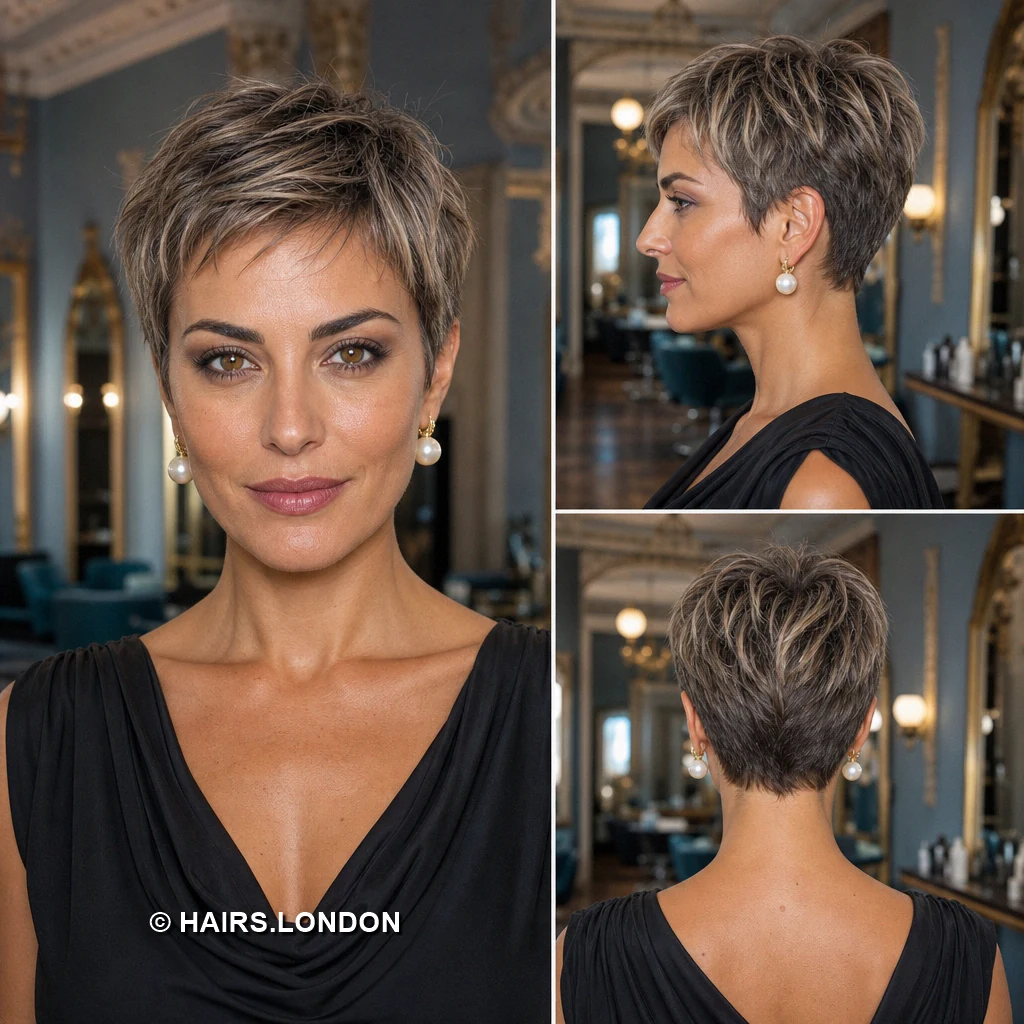
Highlighted brown hair rolls upward into a full, sweeping front. The deep brunette base remains visible along sides and nape. Long top sections create height while exposing the entire forehead. One closely cropped side emphasizes the contrast beneath lifted layers. The crown rounds out before narrowing toward a pointed neckline. Ask for longer top layers before refining the sides closely. Apply heat protectant before lifting the longer top with airflow. Avoid heavy waxes that flatten the rounded top and crown. Retouch highlights selectively so the dark base remains clearly visible. Plan regular trims to keep the tapered outline looking intentional.
12. Dark Pixie with Distinct Silver Streaks
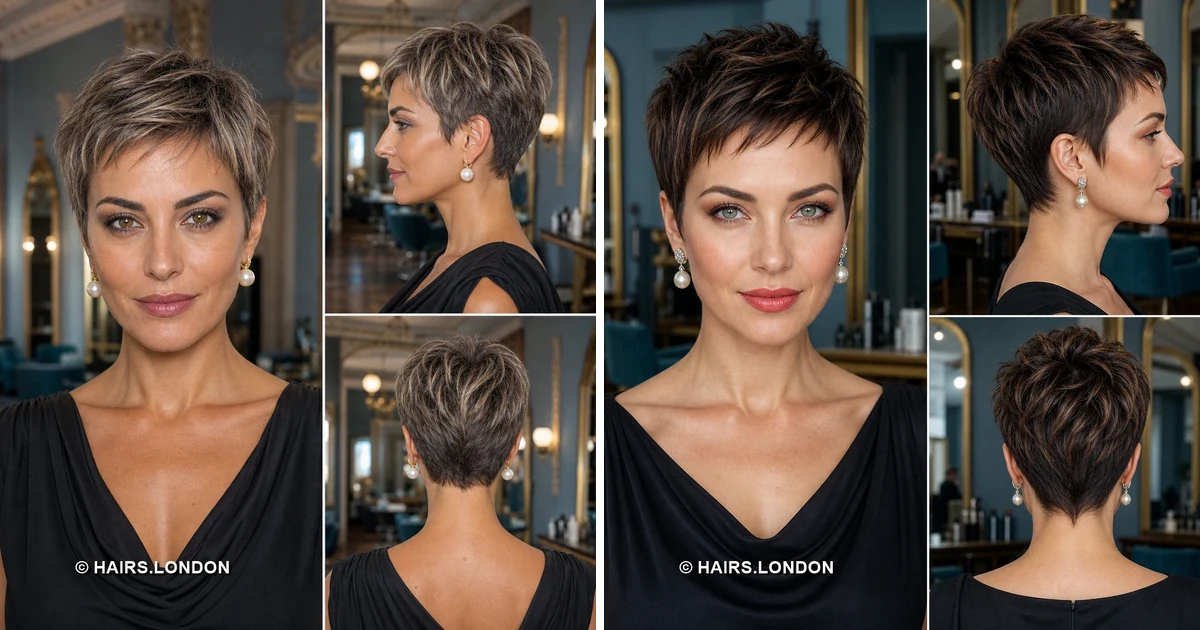
Bright silver pieces streak through the dark, textured upper layers. A pale diagonal sweep crosses the front without concealing eyebrows. The crown carries uneven lift over neat, closely tapered sides. White strands also appear behind, forming distinct lines through black. The rear silhouette narrows to a precise, pointed nape below. Bring front, side, and back references to your appointment together. Request subtle point cutting for separation rather than excessive thinning. Protect highlighted pieces from excess heat with a thermal spray. Keep lighter streaks conditioned to help maintain their reflective finish. Refresh the neckline when its clean taper starts growing out.
13. Chestnut Pixie with an Airy Raised Front
Chestnut brown layers push upward into a short, airy quiff. Finer warm strands add subtle dimension across the swept crown. One front section dips slightly while the opposite side lifts. The sides sit close, revealing ears beneath the heavier top. Softly disordered back layers converge at a slim tapered neckline. Ask your stylist to preserve weight through the upper sides. Dry the roots upward, then shape ends using your fingers. Choose a matte cream when you want touchable separation instead. Use occasional glosses to support the warmth of highlighted sections. Trim regularly so the sides stay distinct from the crown.
14. Close-Cut Brunette Pixie with Pointed Fringe
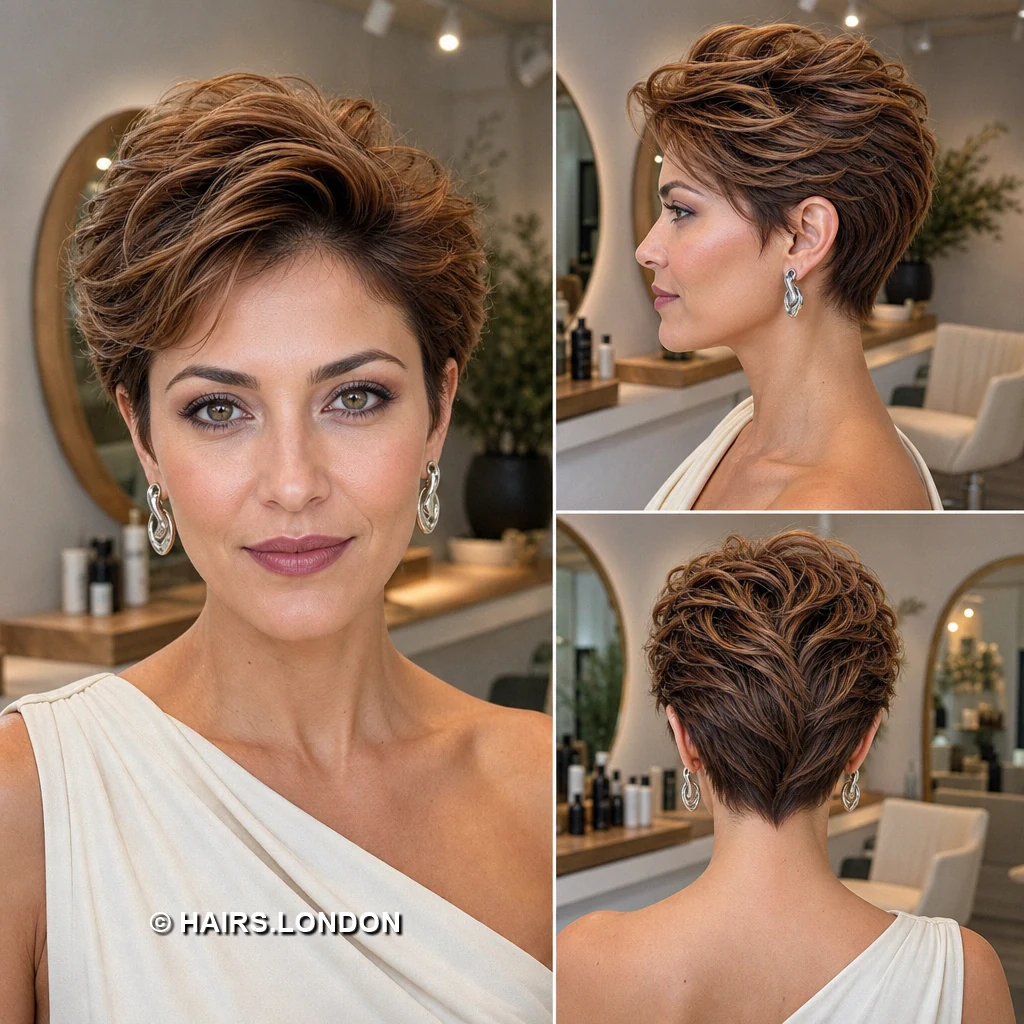
A cropped brunette fringe falls in fine points across forehead. Short upper layers hold quiet lift instead of exaggerated height. Soft brown highlights lend definition to the otherwise dark crown. Tidy sides skim the ears and follow the head closely. The back is rounded before tapering into a narrow point. Ask your stylist how much temple coverage suits your preference. Request subtle point cutting for separation rather than excessive thinning. Dry forward first, then redirect fringe gently across the forehead. Use a pea sized amount of light paste for definition. Schedule trims before the tapered nape loses its clean shape.
15. Chocolate Pixie with an Undone, Piecey Crown
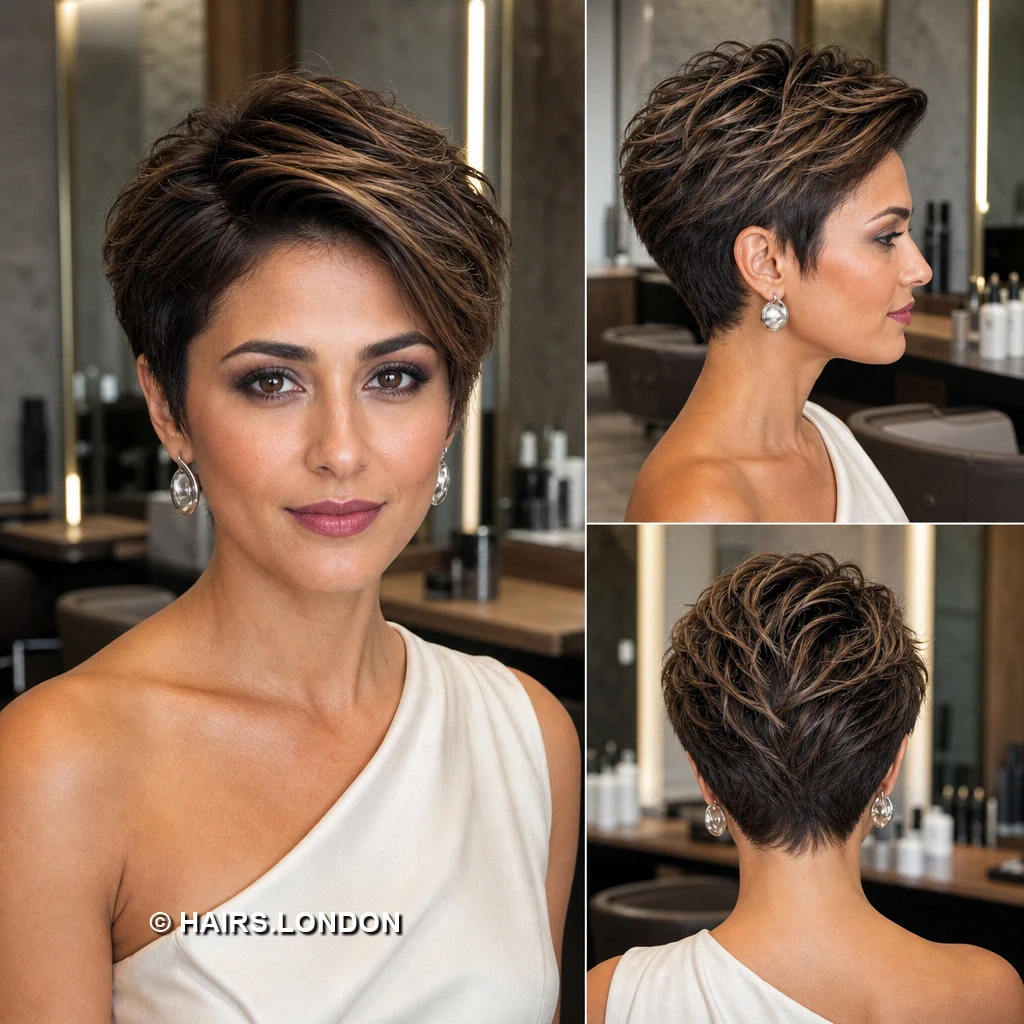
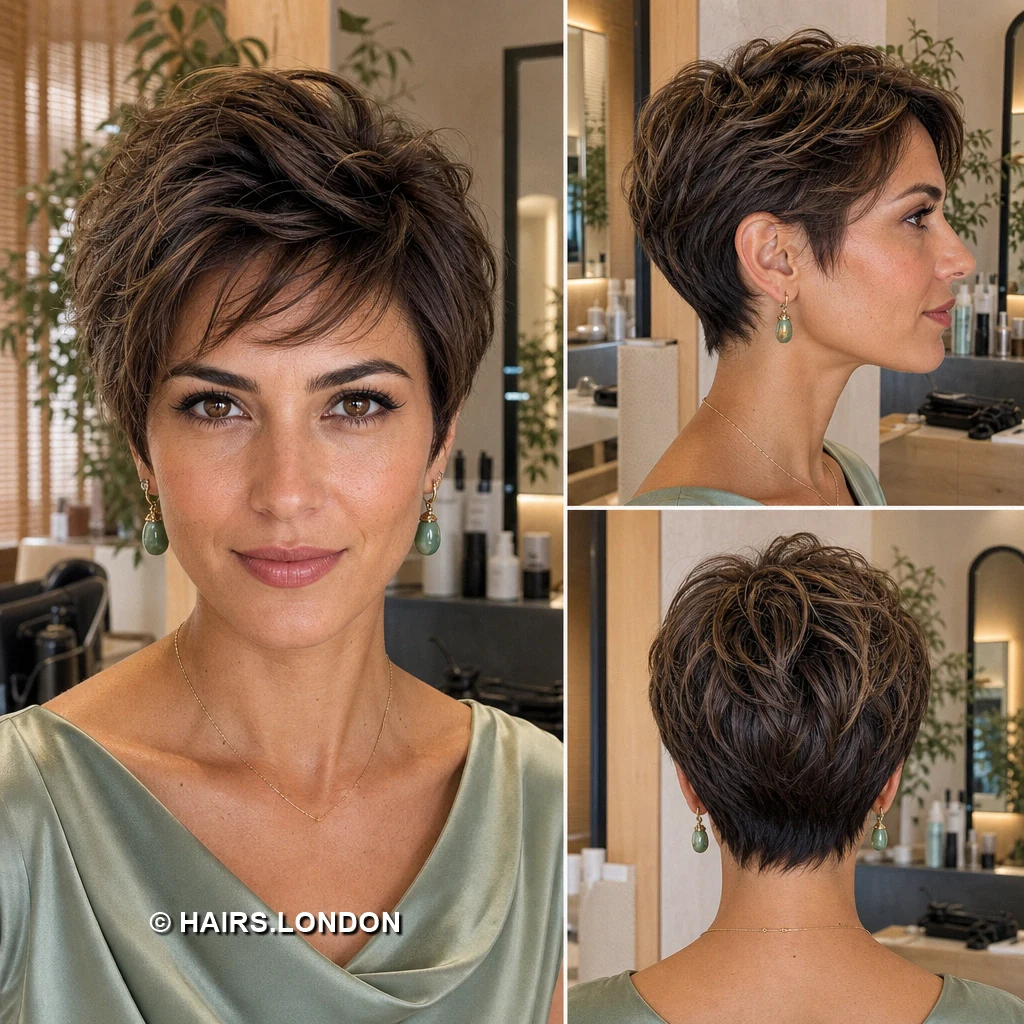
Dark chocolate layers form a lively, loosely tousled pixie top. Fine lighter brown strands weave between lifted sections and bangs. The short fringe breaks into separate pieces across the forehead. Cropped sides sit close below the fuller, deliberately disheveled crown. From behind, piecey layers end in a slim pointed nape. Request subtle point cutting for separation rather than excessive thinning. Start with a little mousse to support flexible root volume. Emulsify styling cream between palms before shaping individual front pieces. Finger comb dry layers to preserve their softly separated finish. Plan regular trims to keep the tapered outline looking intentional.
16. Smooth Brunette Pixie with Soft Side Bangs
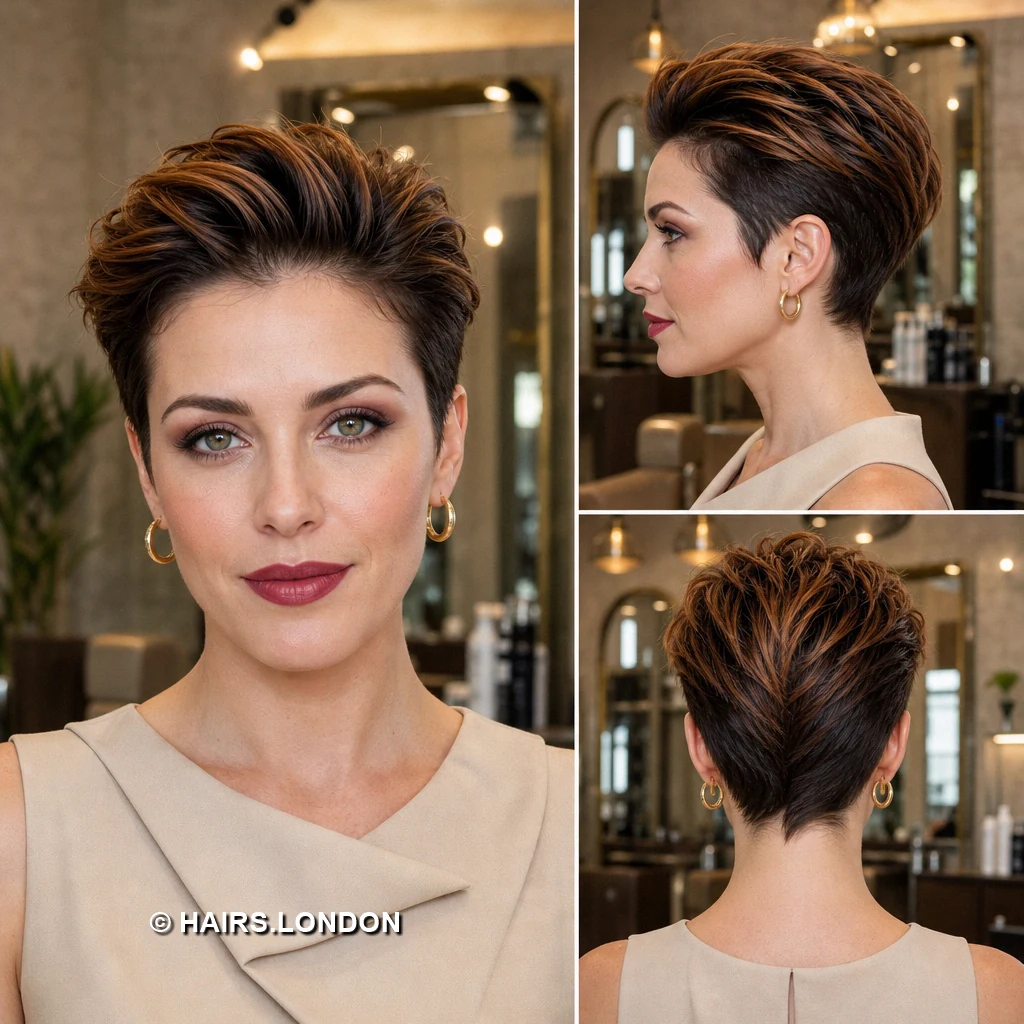
A soft brunette fringe sweeps diagonally toward one eyebrow gently. Warm brown threads lightly brighten the otherwise deeper chocolate crown. The side part supports rounded volume without an exaggerated lift. Short sides taper neatly around the ears and rear hairline. The back remains softly layered above its narrow, clean nape. Discuss your natural growth pattern before committing to directional fringe. Dry forward first, then redirect fringe gently across the forehead. Smooth the sides with fingertips while keeping movement above intact. Retouch highlights selectively so the dark base remains clearly visible. Schedule trims before the tapered nape loses its clean shape.
17. Chestnut Pixie with a Full Rolled Sweep
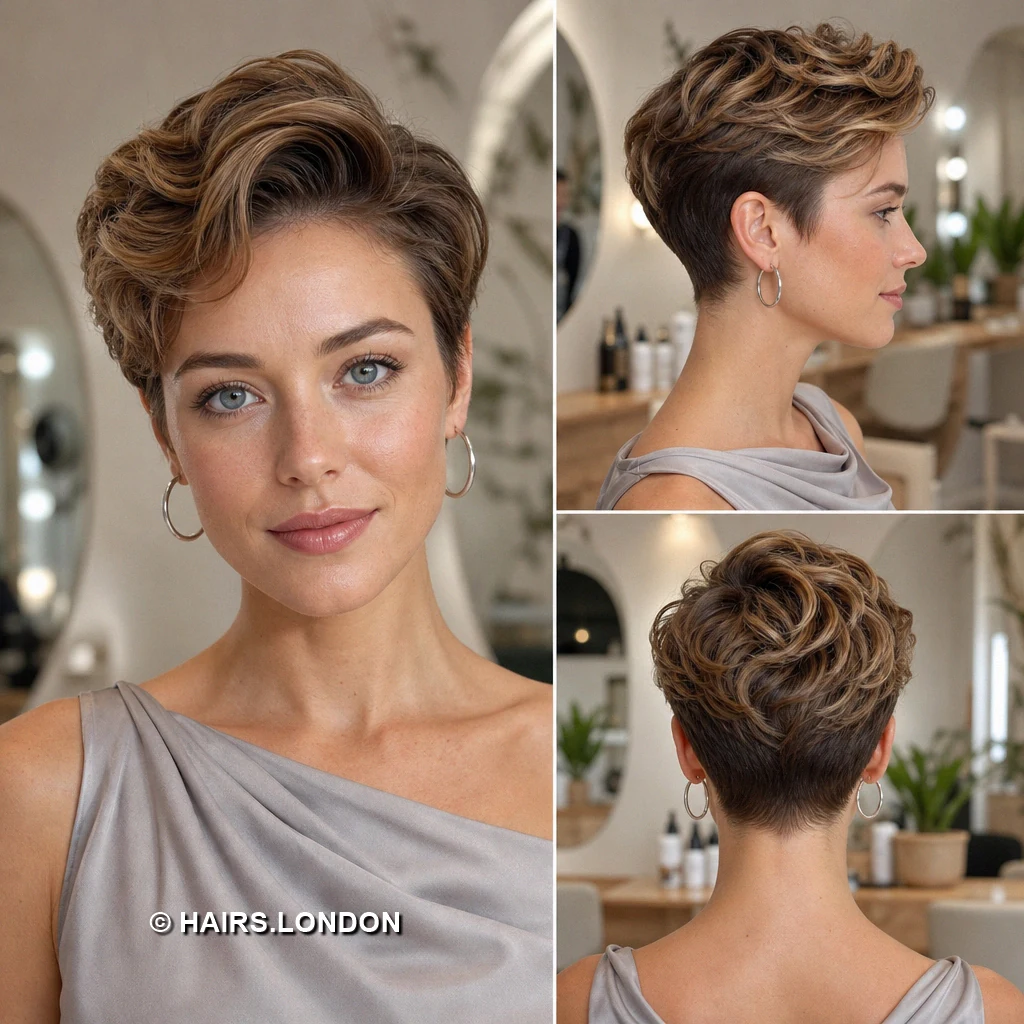
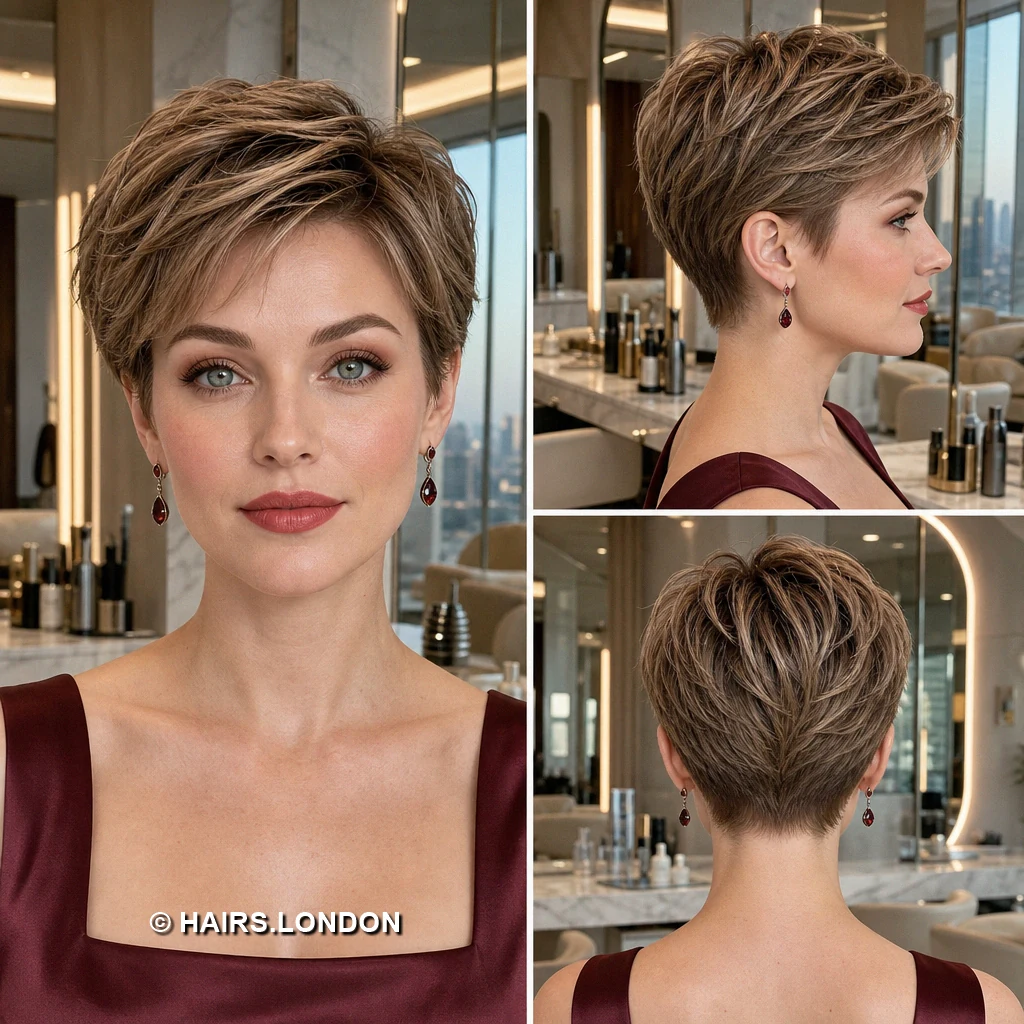
A generous chestnut front rolls back into an elevated sweep. Golden brown threads accent the curved sections above the forehead. The crown remains full, while the sides sit noticeably shorter. Neat hair around the ear emphasizes the lifted top silhouette. A soft taper keeps the back compact near the neckline. Ask for longer top layers before refining the sides closely. Blow dry the top upward with a small round brush. Finish with flexible paste to define the front without stiffness. Use occasional glosses to support the warmth of highlighted sections. Check the profile and back carefully during your salon consultation.
18. Soft Chestnut Pixie with Light Sideward Fringe
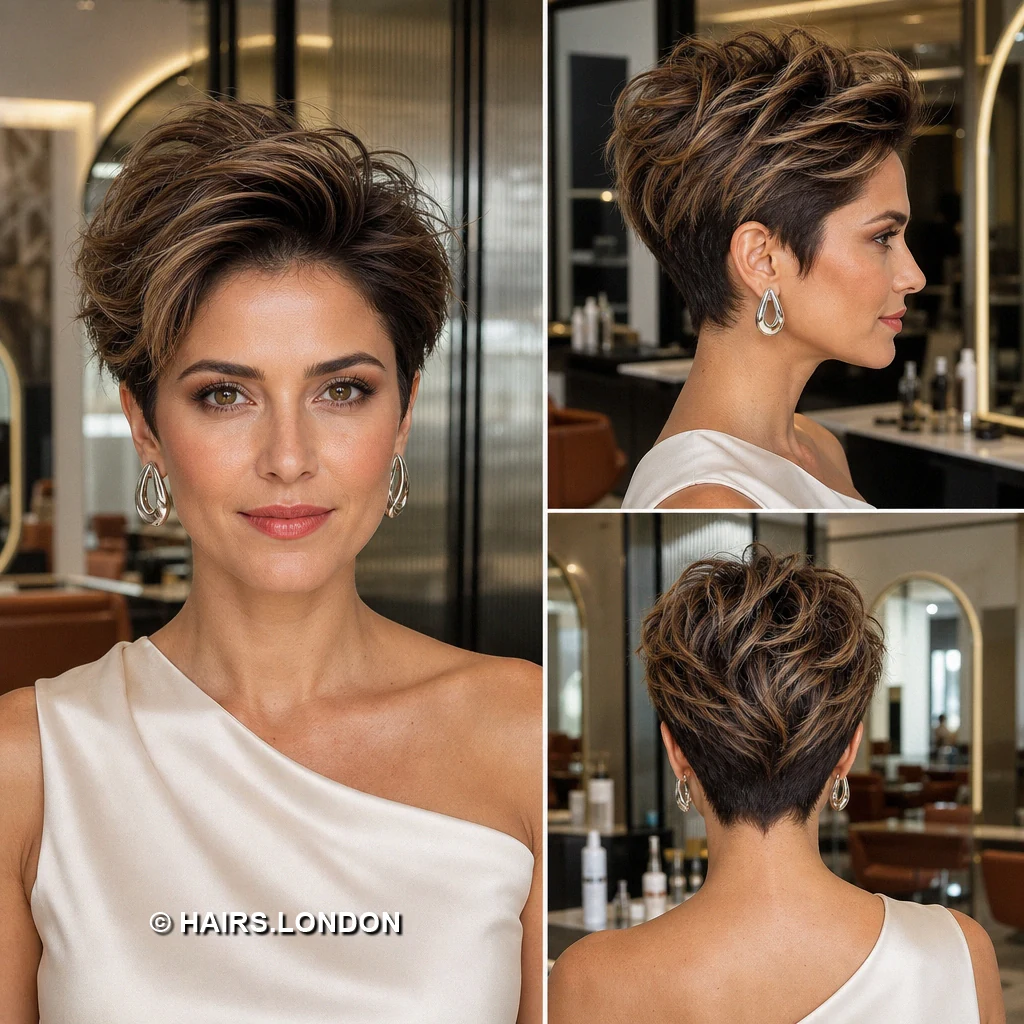
Soft chestnut layers lift naturally into a relaxed, sideward sweep. Fine caramel ribbons outline separate pieces over darker brown hair. Light fringe brushes the upper forehead without obscuring the eyes. The crown appears rounded above shorter sides tucked near ears. At the back, airy layering ends in a tidy taper. Ask your stylist how much temple coverage suits your preference. Start with a little mousse to support flexible root volume. Finger comb dry layers to preserve their softly separated finish. Keep lighter streaks conditioned to help maintain their reflective finish. Plan regular trims to keep the tapered outline looking intentional.
How to Choose Your Pixie Shape
Start with the front: decide whether you want an open forehead, a short piecey fringe, or a longer diagonal sweep. Then compare the profiles. A fuller top and close sides create stronger contrast, while a rounded crown and softer sides make a gentler transition. Check the back view too; a narrow or pointed nape is a deliberate part of these cuts, not an afterthought.
Styling Different Hair Textures
On straighter hair, apply lightweight mousse at the roots and direct the dryer where you want lift; use a small brush for a curved front. For natural waves, dry with less brushing and separate the bends with a little styling cream. If your hair is dense, ask for internal texture without thinning the perimeter excessively. Fine hair generally needs less paste, applied to dry ends rather than the roots.
Keeping Highlighted Color Fresh
The brown looks shown here rely on lighter pieces remaining visible against a darker base. Ask whether selective highlight retouches and an occasional gloss will meet your color goals. Condition lighter sections, use heat protection before hot tools, and avoid assuming every visit requires a full recolor. For the silver-streaked option, discuss the starting color and the maintenance needed to keep pale pieces distinct.
Maintaining the Tapered Shape
Short sides and napes reveal growth quickly, even when the top can go longer between cuts. Arrange trims according to how crisp you want the outline to remain, and tell your stylist if you are growing the fringe. At home, use a small amount of product so the crown keeps its separation without collapsing or looking coated.
What to Discuss with Your Stylist
Bring the front, side, and back views of your preferred cut. Point out your desired fringe length, crown height, coverage around the ears, and nape shape. Discuss your natural part, growth patterns, styling time, and whether you want highlights concentrated at the front or carried through the back. Ask your stylist to explain how the pictured shape would behave with your own density and texture.
Frequently Asked Questions
What makes a pixie cut look textured?
Layers and separated ends create visible movement. Styling product can emphasize that separation without making every section stand upright.
Can I keep a longer fringe with short sides?
Yes. Several cuts here pair a longer diagonal or swept front with sides cut close to the head.
Which option leaves the forehead most open?
The brushed-back and rolled-front pixies lift hair away from the face, while the short-fringe versions provide more forehead coverage.
How do I style a lifted pixie front?
Apply a little mousse to damp roots, dry the front upward, and use a small amount of flexible product to hold the direction.
What product helps create piecey bangs?
A small amount of lightweight cream or paste worked through dry ends can separate the bangs without weighing them down.
Will natural waves work with these cuts?
Yes. A longer top gives waves room to bend; ask your stylist to account for how much your hair springs up as it dries.
How can fine hair keep crown volume?
Preserve enough length and weight at the crown, use lightweight root support, and avoid applying heavy wax near the scalp.
Do I need highlights for a textured pixie?
No. Highlights make individual layers more visible in these images, but the cut can retain its shape in a single color.
How should I care for caramel highlights?
Condition the lightened pieces, protect them from heat, and ask your colorist whether a gloss or selective retouch suits the color.
How often does a tapered nape need trimming?
It depends on your growth and preferred outline. Book a cleanup when the nape no longer has the compact shape you want.
What should I show my stylist besides the front view?
Show the profile and back. They clarify the side length, crown volume, and precise nape taper.
Can I switch between a swept and tousled finish?
Often, if the top has enough length. Ask your stylist to leave flexible layers that can be directed with a dryer or shaped by hand.
Conclusion
The most useful detail to take from these textured pixie haircuts is the complete silhouette. Choose the fringe you like, then check whether the crown, sides, and nape match the amount of volume and upkeep you want. A clear reference from every angle gives your stylist a better starting point than a front view alone.