


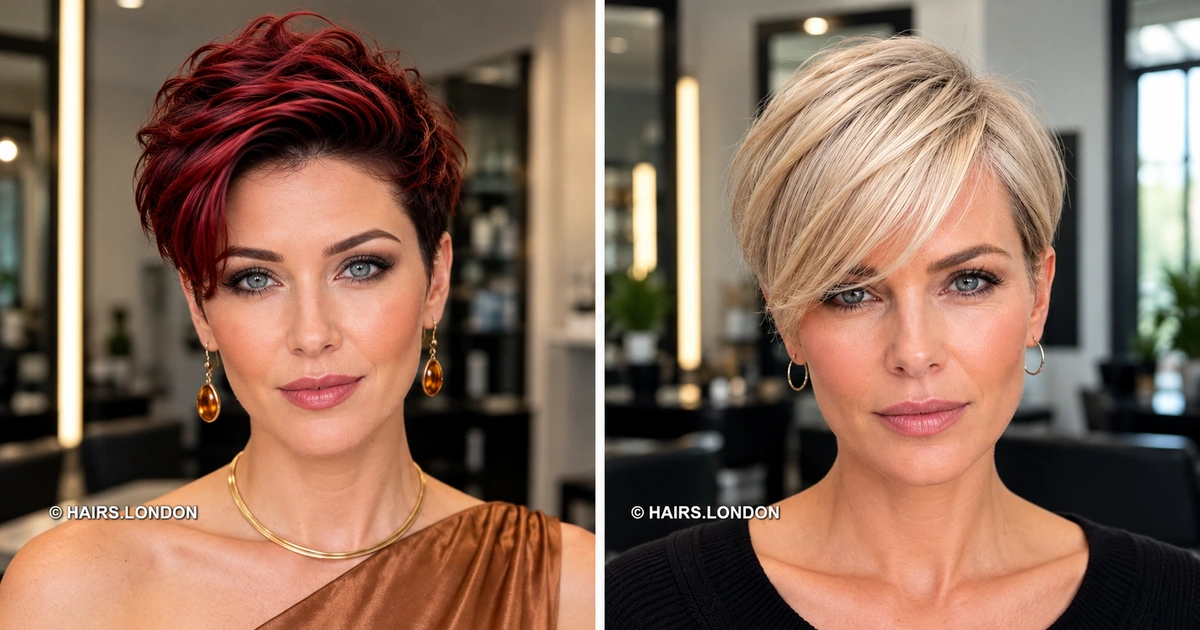
11. Copper Highlighted Layered Pixie
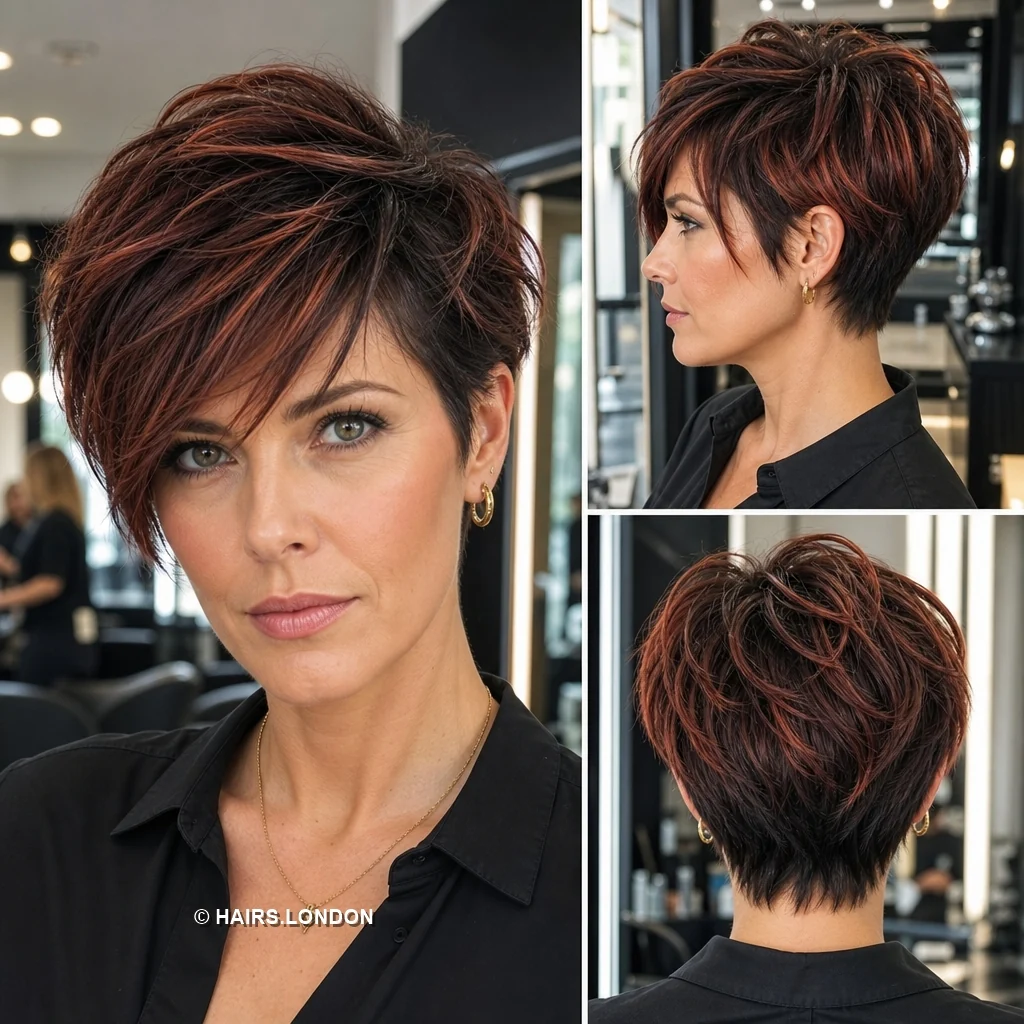
Copper highlights over a deeper brunette base trace the long layers of this fuller pixie, making the sweeping fringe and rounded crown easy to see. The sides are short and neat, while the back keeps more layered length than a skin-close taper. This shape offers a softer alternative to an undercut and can transition smoothly as it grows. Direct the fringe across the forehead during blow-drying and lift the crown at the roots. A light styling cream can control flyaways while preserving movement. For color upkeep, discuss whether glossing or selective highlight refreshes can maintain dimension without repeatedly processing every
12. Midnight Emerald Spiky Pixie
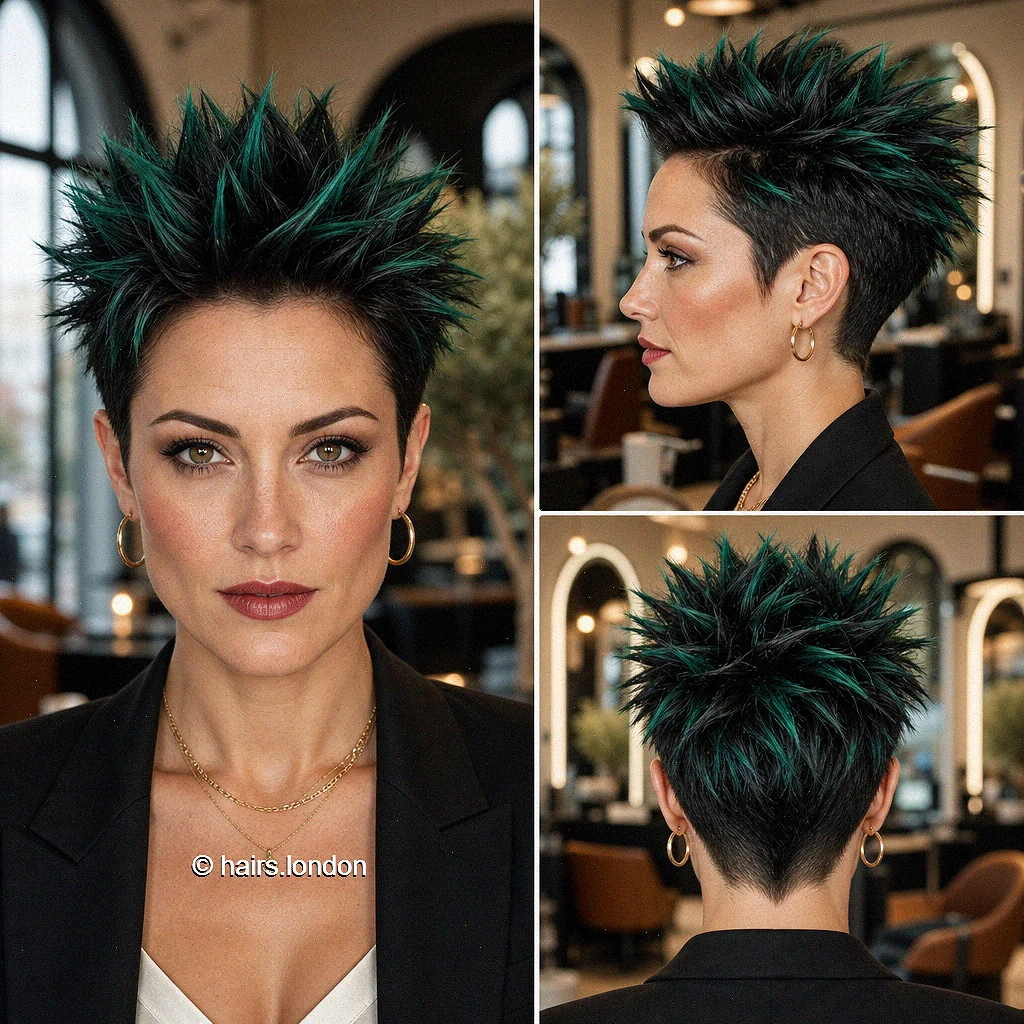
Midnight emerald color brings a dramatic finish to this short spiky pixie. The top is cut into narrow, separated sections with visible lift, while the sides sit close around the ears and the nape tapers neatly. The fringe is short enough to keep the forehead open, making the crown texture the main feature. Finger-dry the hair upward with a lightweight root product, then pinch selected tips with matte paste. Fine hair may need texture powder for extra support, while dense hair may need internal weight removal. Vivid green tones require gentle cleansing and periodic refreshing to keep their depth and
13. Fiery Copper Spiked Pixie
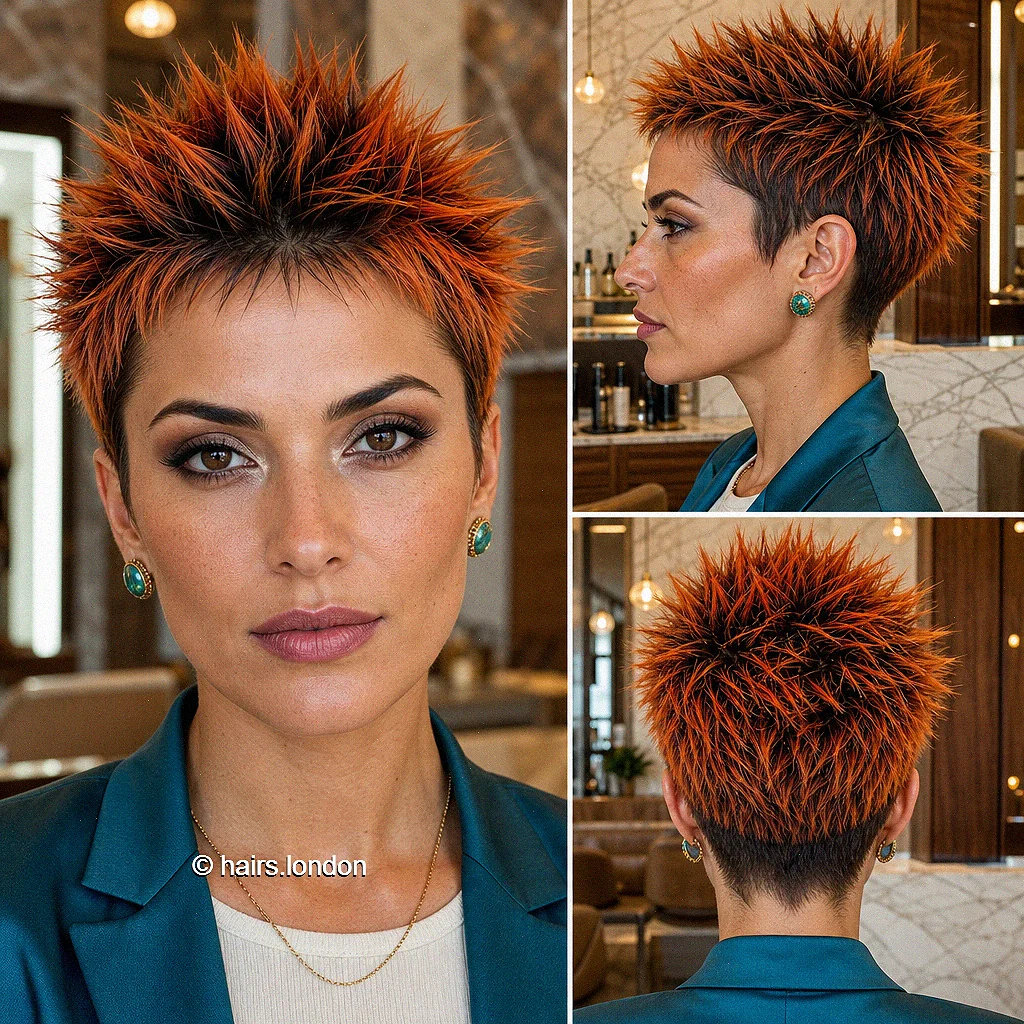
Fiery copper color intensifies the sharp texture of this cropped pixie. The crown and front are styled into short upward spikes, the sides taper close to the head, and the back narrows into a tidy nape. The fringe remains brief and broken, so the style feels open rather than swept. Use a root-lifting spray before blow-drying upward with fingers, then define only a few ends with a flexible matte product. Hair with strong density may need selective debulking to prevent the crown becoming bulky. Copper can lose brightness between color appointments, so gentle washing and heat protection are sensible maintenance
14. Copper Red Feathered Pixie
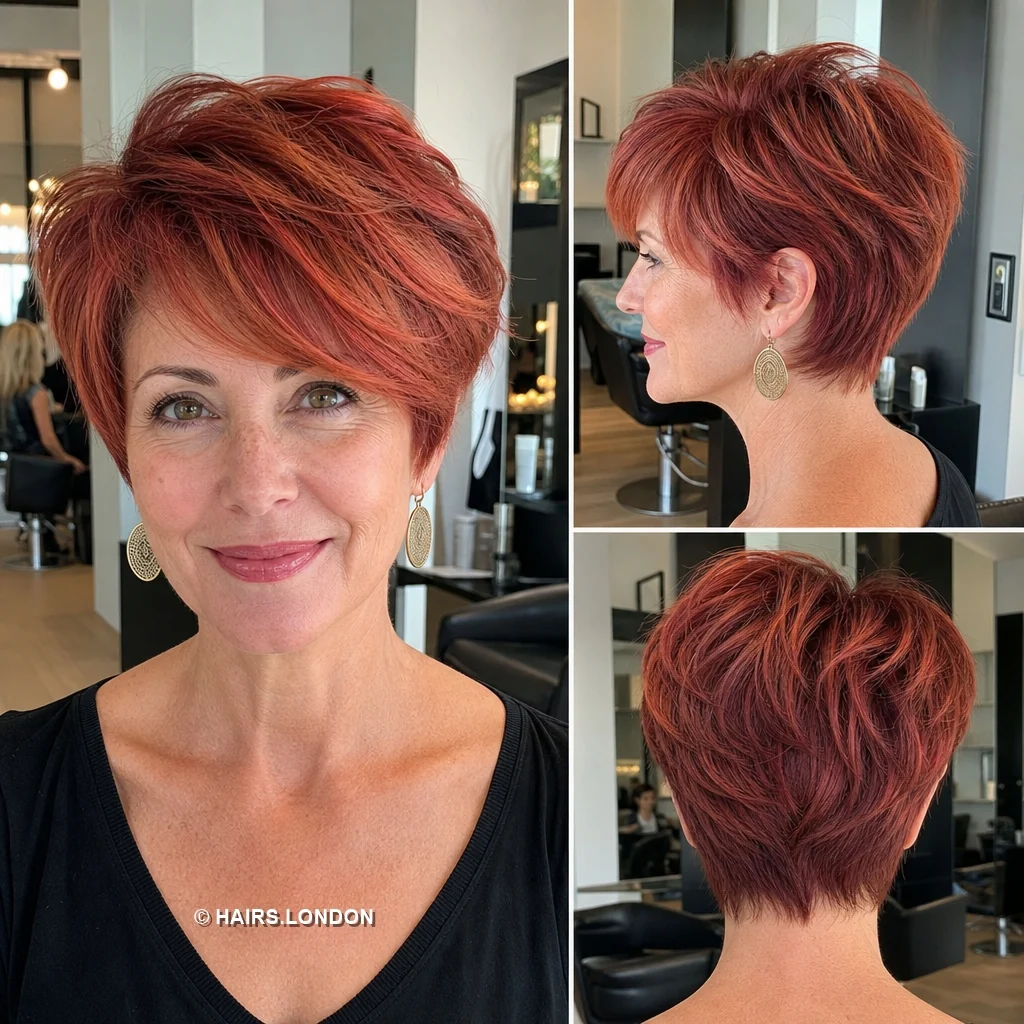
Copper-red layers create a softer pixie with a long side-swept fringe, rounded crown, and feathered back. The sides remain neat around the ears while the nape is tapered gently rather than clipped extremely close. This shape offers more movement and coverage than the sharper undercuts in the collection. Blow dry the fringe diagonally and lift the crown lightly at the roots, then use a small amount of styling cream for separation. Fine hair can benefit from preserving fullness through the perimeter. During consultation, discuss fringe length carefully, especially if you want to keep the front away from your eyes during
15. Silver Blonde Sculpted Pixie
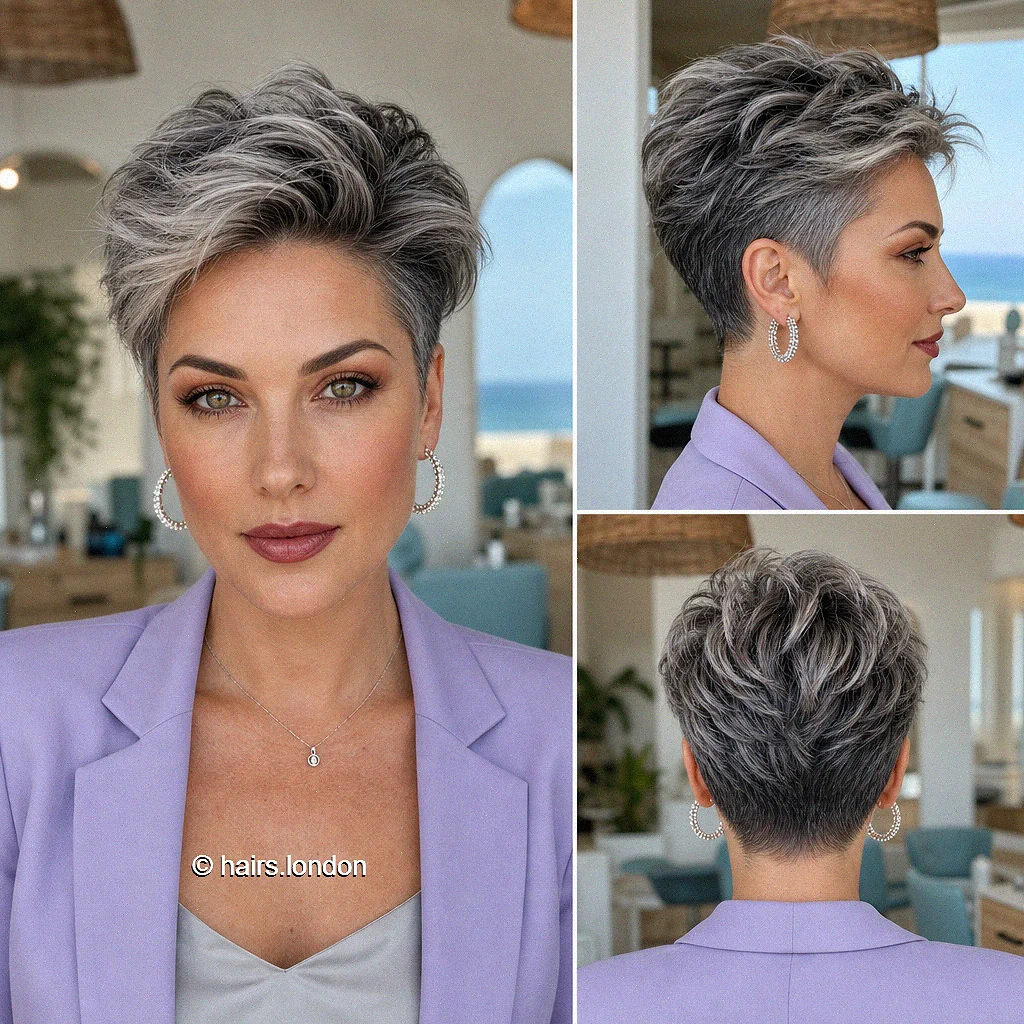
Cool silver-blonde hair is sculpted into a high, airy pixie with pronounced lift through the front and crown. The sides are closely tapered, creating a clean contrast with the longer upper layers, while the back narrows smoothly toward the neckline. This finish needs deliberate root direction rather than heavy product. Apply lightweight volumizer, dry the front upward and slightly back, then separate the tips with a small amount of paste. Lightened hair may need extra conditioning and careful heat use. If your hair grows forward strongly, ask your stylist how much top length is required to maintain this elevated shape
16. Black Cherry Spiky Pixie
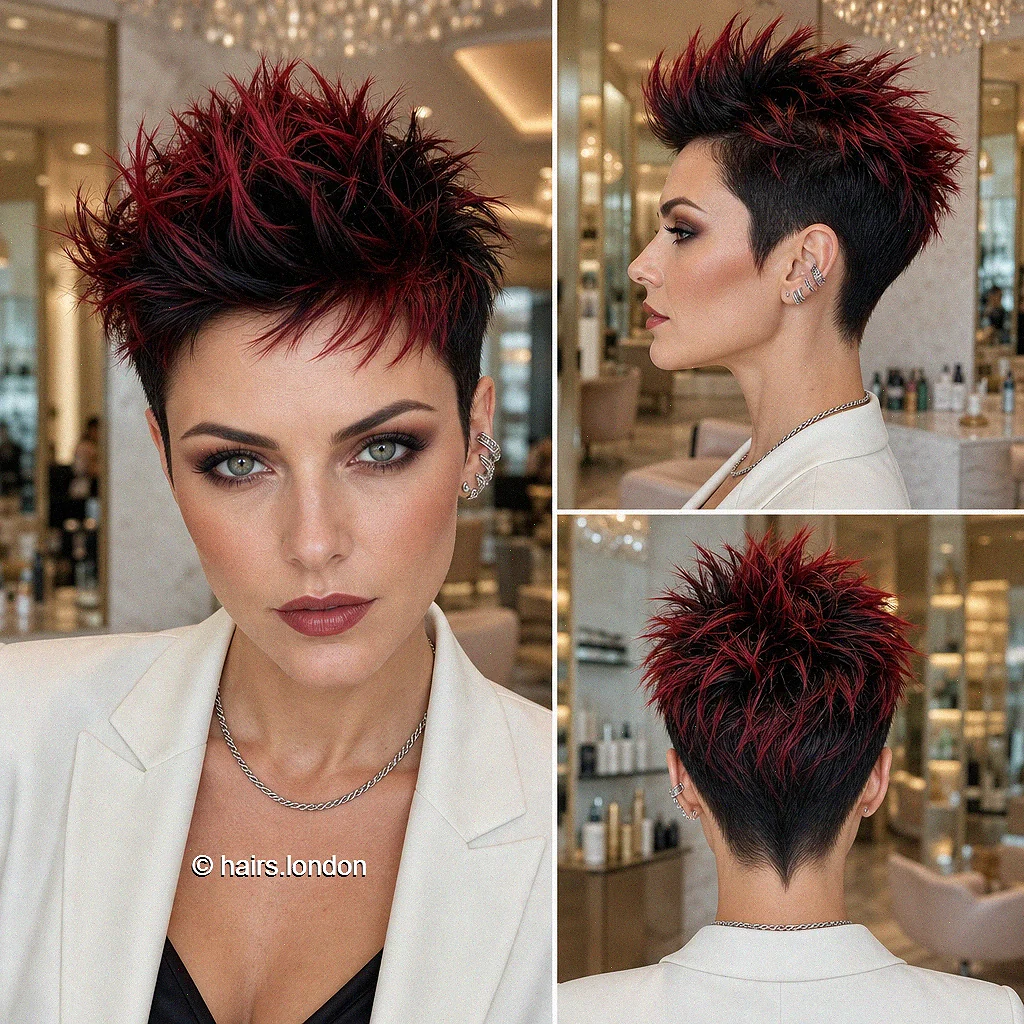
Black cherry color gives this compact spiky pixie depth and shine. Short, jagged layers rise through the crown, while the fringe stays narrow and textured and the sides taper closely around the ears. The back is kept neat, allowing the upper texture to remain the strongest feature. For styling, work root lift into damp hair and dry in alternating directions before defining selected ends with matte paste. Fine hair may need powder for grip, whereas thick hair can benefit from controlled internal weight removal. Burgundy-red shades often fade visibly, so cooler rinsing, color-safe cleansing, and periodic refresh appointments can help
17. Platinum Quiff Tapered Pixie
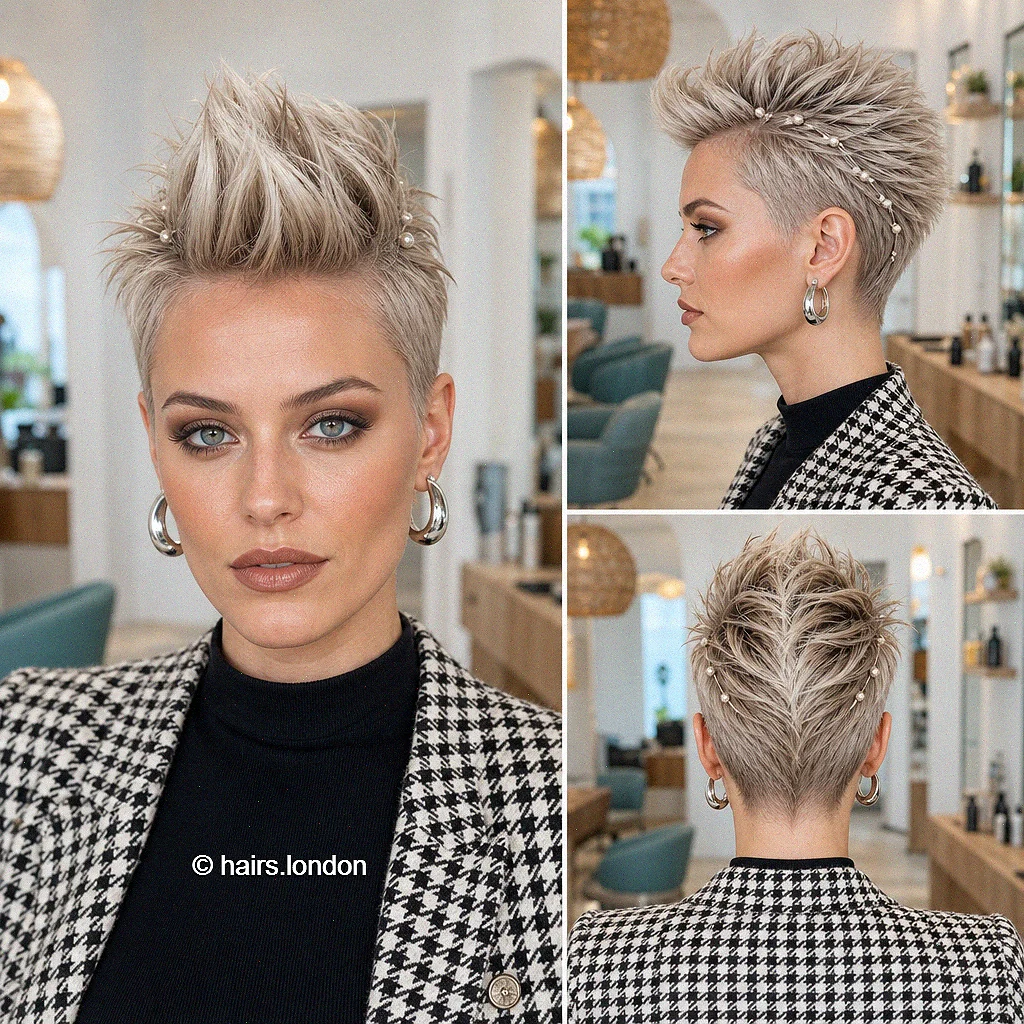
Alt text: Platinum Quiff Pixie
Platinum-blonde hair is styled into a dramatic quiff pixie with substantial height at the front and a closely tapered back and sides. The upper layers are longer than they first appear, allowing them to bend backward rather than stand as rigid spikes. This is a higher-maintenance styling shape because the lift depends on drying direction and root support. Use a lightweight volumizer, dry upward with a brush or fingers, then finish with pliable paste and light hairspray if necessary. Bleached hair can feel dry, so conditioning and heat protection matter. Ask your stylist to adapt quiff height to your natural
18. Midnight Emerald Undercut Pixie
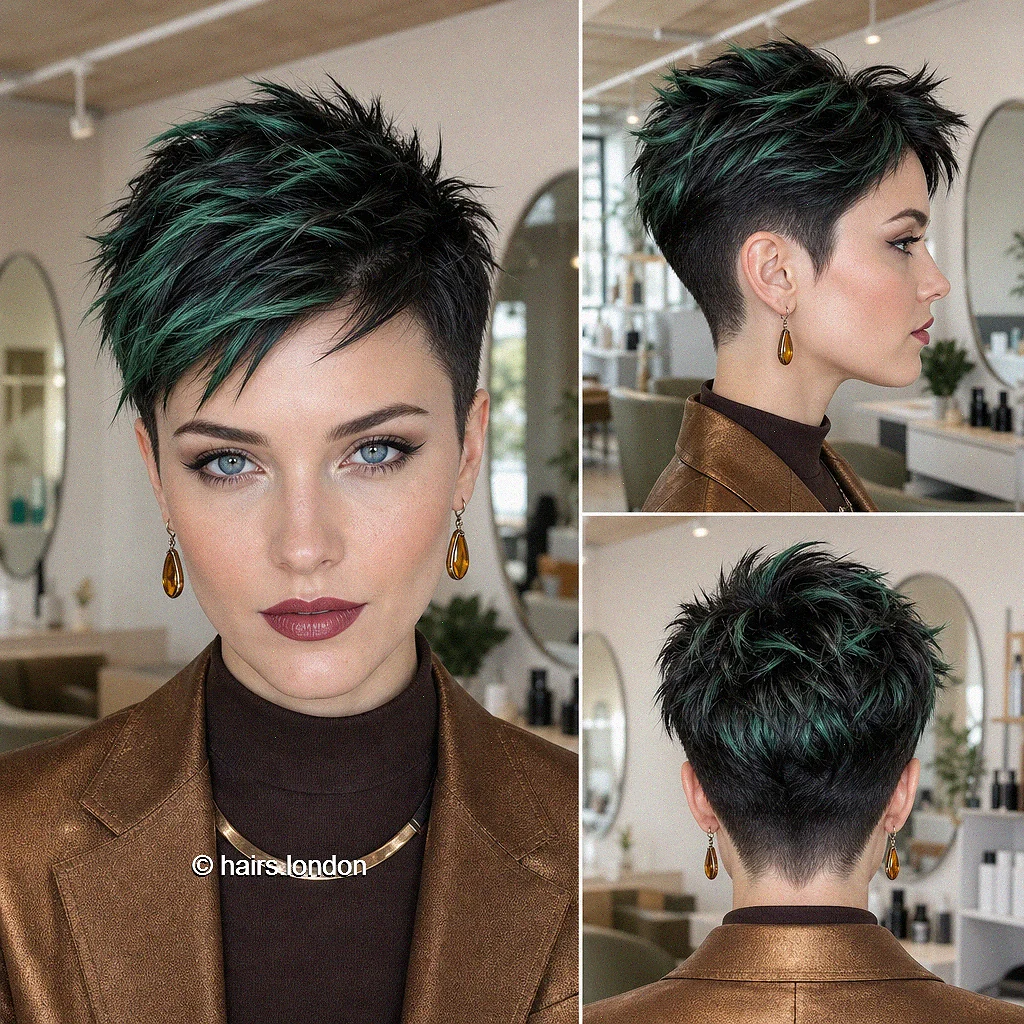
Midnight emerald color emphasizes the contrast in this edgy undercut pixie. The top remains longer and textured, with a sweeping front section and lifted crown, while the sides and nape are clipped much closer. This strong difference in length creates a defined silhouette but also makes regrowth noticeable sooner. Blow dry the longer top in the direction you want it to fall, then add a small amount of flexible paste for separation. A close undercut should be discussed carefully if you prefer softer grow-out. Green fashion color can shift or fade between appointments, making gentle cleansing and a planned refresh
19. Espresso Micro Fringe Pixie
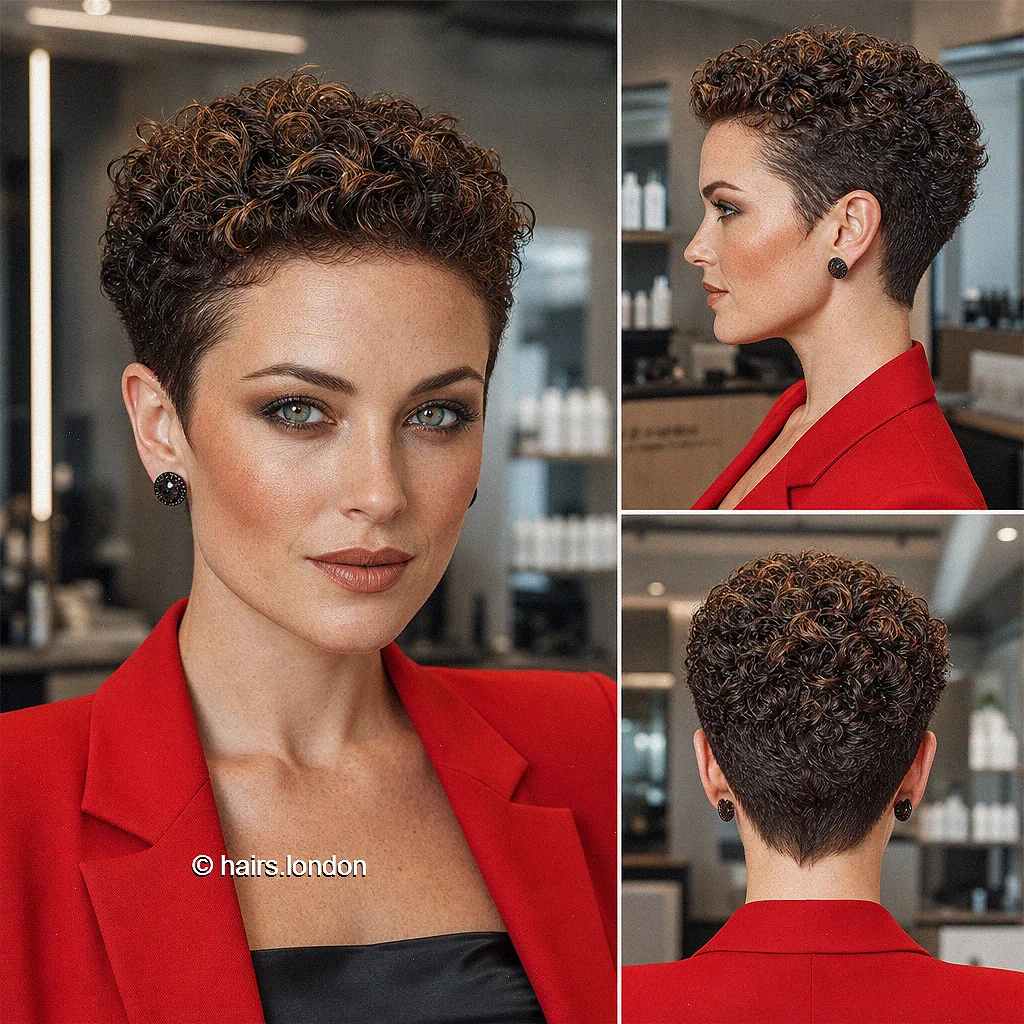
Deep espresso hair is cropped into a compact pixie with a very short micro fringe, softly textured top, and closely tapered sides and back. Unlike the longer swept styles, this cut keeps the front minimal and relies on subtle crown movement for shape. The finish can work well for someone who wants little fringe management, although the short perimeter needs regular reshaping to remain precise. Use a small amount of lightweight cream or paste to separate the top without creating stiff spikes. Natural cowlicks become more visible at shorter lengths, so ask your stylist to assess growth direction before deciding
20. Black Cherry Sculpted Pixie
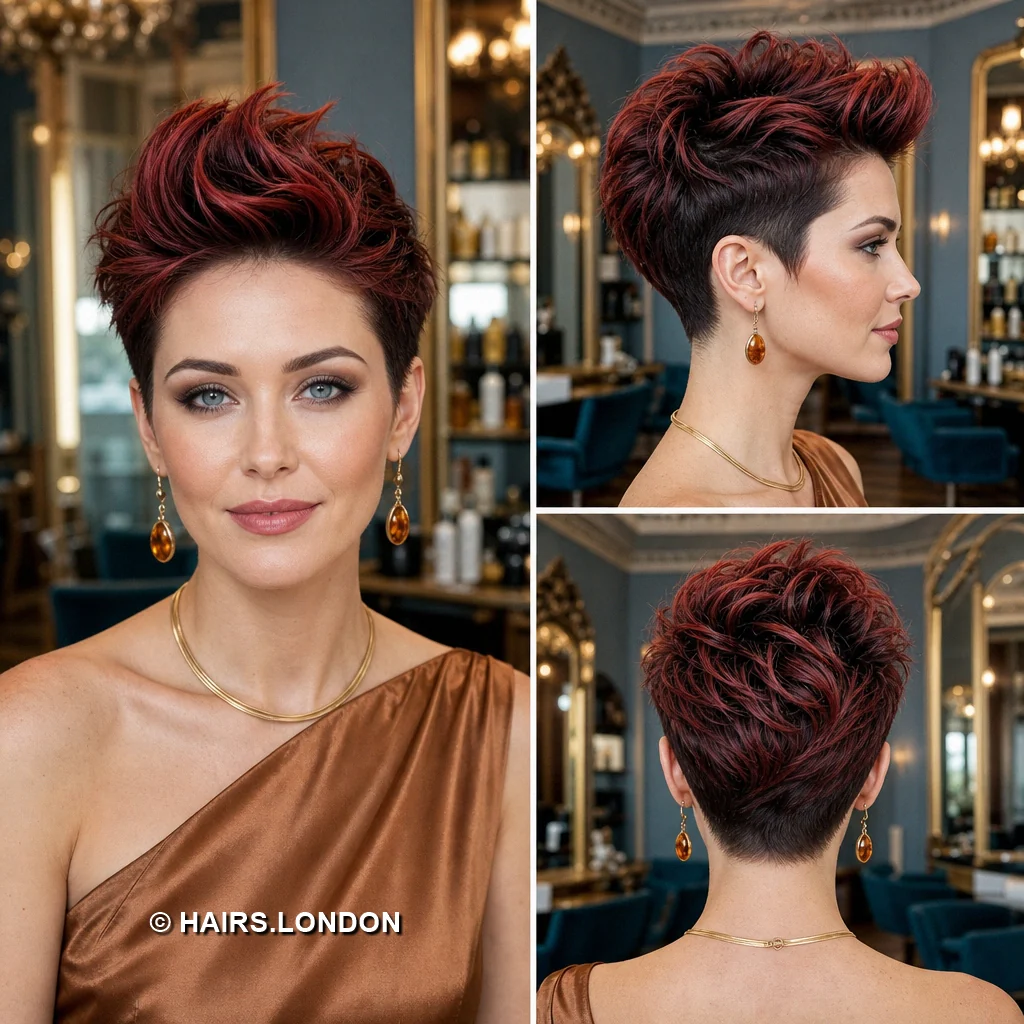
Black cherry and deep brunette tones shape this sculpted pixie with a lifted, swept-back crown and closely tapered sides. The front is directed upward and away from the forehead, while curved sections through the top create height without forming thin individual spikes. The nape remains compact, giving the longer crown a strong visual focus. Apply root lift before drying upward and backward, then use pliable paste to maintain separation and movement. Dense hair may need weight removed beneath the crown. Because the red highlights are vivid against the dark base, color-safe cleansing and occasional refreshing can help preserve the dimensional
How to Choose Among These Textured Pixie Haircuts
Start by deciding which feature matters most: fringe length, crown height, side coverage, or ease of styling. Swept pixies keep more length around the front and can be redirected, while spiky cuts depend on shorter, separated layers and stronger root lift. Undercut versions create the clearest contrast between top and sides. Softer tapered pixies are generally easier to grow out because the difference between lengths is less extreme. A consultation should focus on how the reference shape interacts with your natural parting, density, cowlicks, and willingness to use heat or styling product.
Fine Hair, Thick Hair and Natural Texture
Fine hair can look fuller when the crown keeps enough length for lift, but excessive thinning can make the perimeter appear sparse. Lightweight mousse, root spray, or texture powder may be more useful than heavy wax. Thick hair often needs selective internal weight removal, especially beneath a rounded or spiky crown. Naturally wavy hair can add movement to feathered pixies, although the finished direction may differ from a straight-haired reference. Curly hair may require a different cutting approach and should be assessed in its natural pattern before deciding how short the sides, fringe, and nape should become.
Fringe, Crown and Humidity Considerations
A long fringe can be swept across, tucked, or lifted, but it may fall forward in humid conditions or when the hair has a strong front cowlick. Ask for enough internal support and choose products that suit your texture rather than simply adding more hold. Crown lift is usually created through the combination of cut, drying direction, and lightweight product; the haircut alone does not guarantee height. For spikes, dry the roots first and define only selected ends. If you wear glasses, consider how side pieces and fringe length sit around the temples so the cut remains comfortable throughout the day.
Color Care for Blonde, Copper, Burgundy and Violet
The vivid shades in this collection need different maintenance from natural brunette tones. Copper, red, burgundy, magenta, and violet can lose intensity with frequent washing, hot water, and repeated high heat. Color-safe cleansing and sensible wash frequency can help. Pale blonde hair may need conditioning support and occasional toning, depending on the finish you want and your stylist’s advice. Avoid assuming a photograph reveals an exact dye formula: starting color, previous chemical services, porosity, and lighting all affect the result. Bring the image to a color consultation and discuss achievable tone, upkeep, and hair condition.
Growing Out a Short Pixie
A pixie changes quickly as the nape, sides, and crown grow at different rates. Close undercuts usually show regrowth sooner, while softly tapered shapes can blend more gradually. If you plan to grow the cut longer, tell your stylist before each trim so they can tidy the perimeter without repeatedly removing the length you are trying to keep. The fringe may need reshaping or side-sweeping during the transition. Small changes in styling direction can also help: a spiky crown can become tousled, and a longer front can shift toward a bixie shape as the sides gain coverage.
Frequently Asked Questions
Which of these pixie cuts is easiest for fine hair?
The softer layered and swept examples can be good references because they preserve visible crown length. Fine hair usually benefits from lightweight support rather than aggressive thinning. Ask your stylist to assess density before copying a highly razored or undercut version.
Can thick hair wear the spiky pixies shown here?
Yes, but the internal weight may need careful reduction so the crown separates instead of forming a solid block. The goal is controlled removal of bulk while keeping enough length for the spikes to bend and move.
Will a pixie haircut create curls or waves by itself?
No. A haircut can encourage existing movement by removing weight and arranging layers, but it does not create a natural curl pattern. Styling tools and products can add temporary texture when appropriate.
How can I keep a long pixie fringe out of my eyes?
Ask for a fringe length and parting that work with your natural growth direction. Blow-dry the roots away from the face first, then guide the lengths sideways. A light flexible product can help hold the direction without making the fringe stiff.
How do I maintain volume at the crown?
Dry the roots in the opposite direction from their natural fall and use a lightweight volumizer. Once dry, return the hair to the desired direction and separate a few sections. Heavy creams can flatten fine or soft hair.
How often does a short pixie need reshaping?
Many short pixies benefit from reshaping around four to six weeks, although growth rate and the precision of the taper matter. Very close undercuts or crisp napes may look grown out sooner, while softer shapes can tolerate more length.
What products help create separated spikes?
A root-lifting spray, mousse, or texture powder can build support, followed by a small amount of matte paste or clay on dry ends. Start with less product than you think you need and add only where separation is required.
How quickly can burgundy, copper, or violet fade?
Vivid and red-family shades often lose visible intensity faster than many natural brunette colors. Wash frequency, water temperature, heat styling, sun exposure, porosity, and the color service itself all influence how quickly the tone changes.
Does pale blonde pixie hair need purple shampoo?
Not automatically. Purple shampoo is useful when unwanted yellow warmth appears and a cooler result is desired. Overuse can make some blondes look dull or feel dry, so follow the toning schedule recommended for your particular color.
Can I wear these cuts if I have a cowlick?
Usually, but the cut should be adapted to the cowlick rather than fighting it blindly. A stylist can leave strategic length, change the parting, or use the natural growth direction as part of the finished texture.
What should I show my stylist during the consultation?
Bring front, side, and back views when possible. Point out the exact fringe length, crown volume, side exposure, nape shape, and color placement you like. Also explain which details you do not want copied.
How can I grow a pixie into a longer style?
Keep the crown and front growing while periodically tidying the nape and balancing bulky areas. As the sides gain length, the shape can move toward a bixie or short bob. Styling the fringe sideways can make transitional stages easier.
Conclusion
These textured pixie haircuts show that a short cut can be shaped in very different ways without relying on one formula. Swept copper and blonde versions offer softer movement, while violet, burgundy, brunette, and red examples demonstrate stronger tapering, undercuts, spikes, and crown separation. The most useful reference is the one that matches the amount of fringe, side coverage, volume, styling time, and color maintenance you actually want.
When narrowing your choice, compare the front, side, and back views rather than focusing only on color. Then discuss density, natural texture, cowlicks, humidity, and grow-out with your stylist. A reference photograph can communicate direction clearly, but the final cut should be adapted to your own hair and practical routine.