


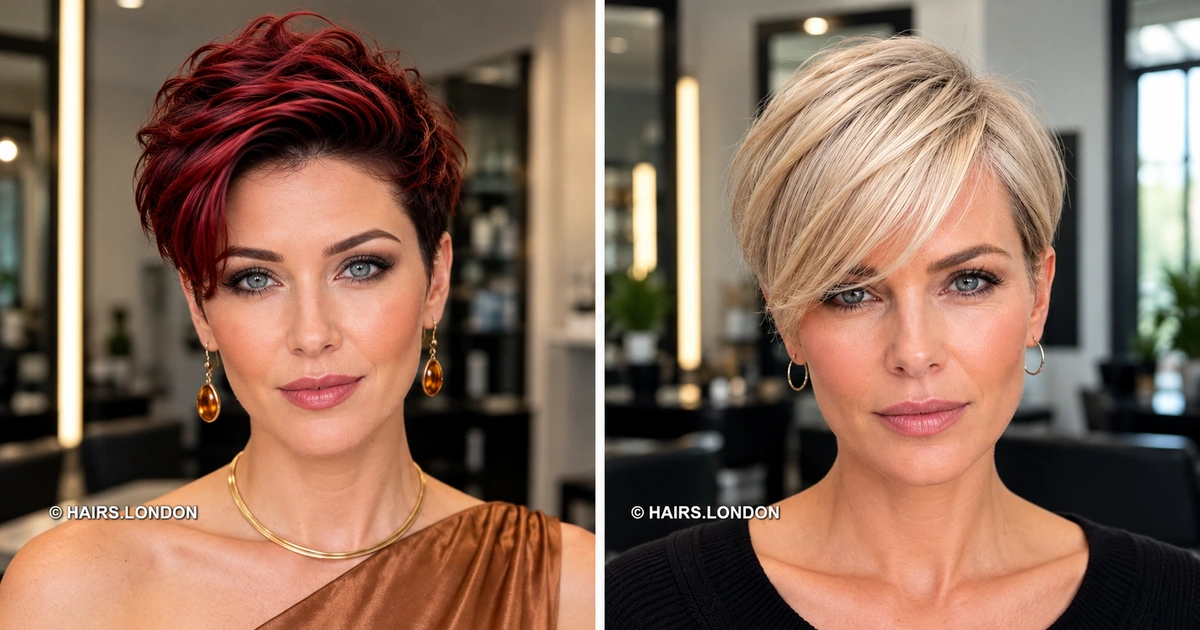
Textured pixie haircuts can range from softly swept and feathered to sharply tapered, undercut, or spiked, and this collection shows how much the silhouette can change through fringe length, crown volume, and color placement. The examples move through copper, burgundy, violet, blonde, brunette, and red finishes, with several cuts using darker roots or short sides to make the top layers appear more dimensional.
Before choosing a reference, compare the details that affect everyday wear. A long diagonal fringe gives more styling flexibility but may need regular directing to stay away from the eyes. A short, separated fringe feels lighter and exposes more of the forehead. Crown length determines whether the finish can be rounded, tousled, or lifted into spikes, while the nape can range from softly tapered to closely clipped. Undercuts create stronger contrast but also make regrowth more obvious.
Hair density and natural growth patterns matter as much as the photograph. Fine hair often benefits from strategic layering and lightweight root support, while thick hair may need internal weight removal so the crown does not become bulky. Cowlicks, natural partings, waves, and humidity can also change the way a fringe or spike sits. Use these images as consultation references, then ask your stylist how each shape could be adapted to your own texture, styling time, and preferred maintenance schedule.
What to Compare Before Choosing a Pixie
Compare fringe length, crown height, side exposure, nape shape, density, natural growth patterns, styling time, and color upkeep. The same short length can feel very different when one of those details changes.
1. Copper Swept Layered Pixie
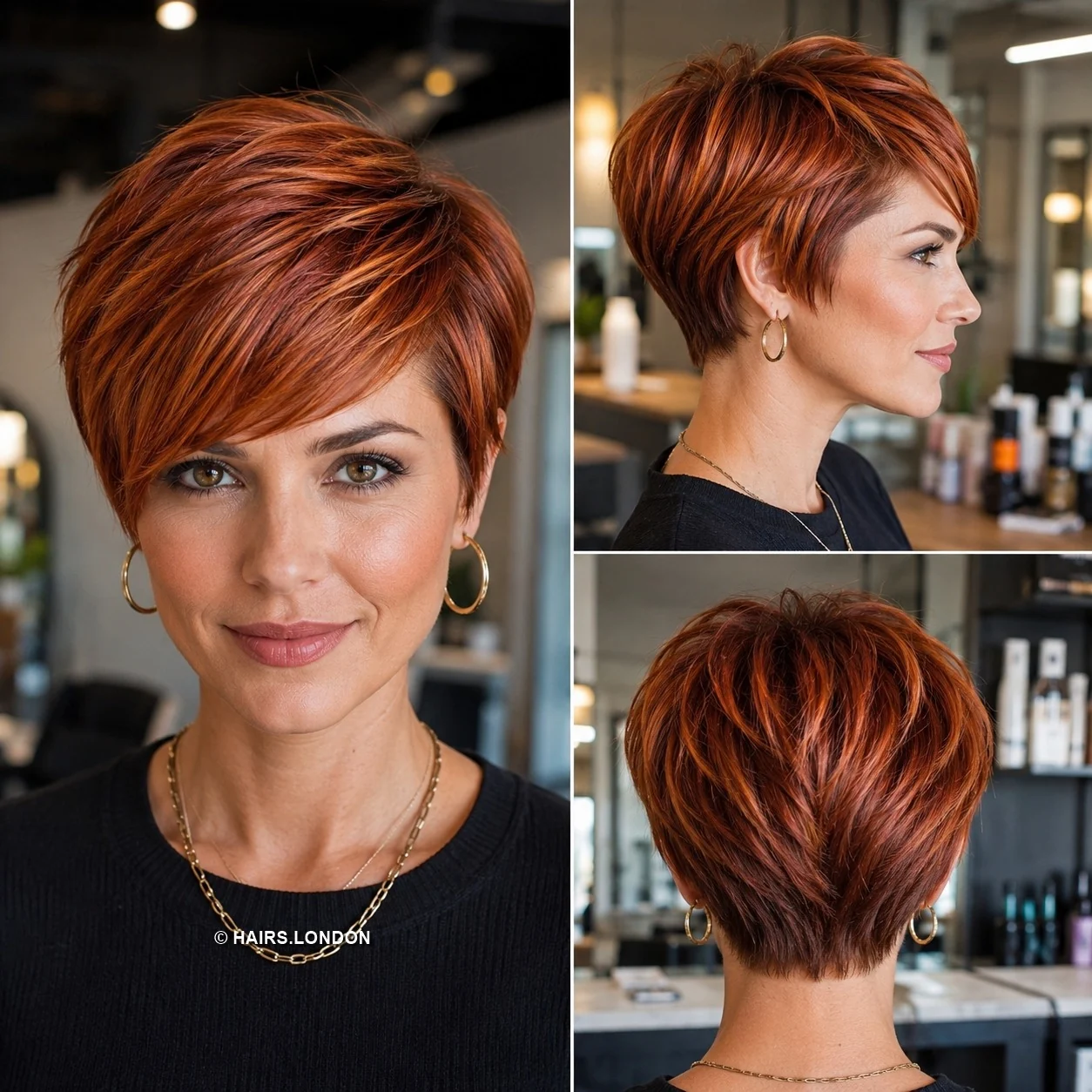
Warm copper layers sweep diagonally across the forehead, while shorter pieces around the ears and nape keep this pixie neat and light. The crown retains enough length for soft lift rather than sharp spikes, and the back shows tidy graduation with visible movement. This shape can work especially well when straight or gently wavy hair benefits from layered separation. Blow dry the fringe across with a small brush, then use a light paste on selected ends. Ask your stylist to preserve crown length if you prefer flexibility. Copper tones can lose brightness, so color-safe cleansing and sensible heat protection are
2. Violet Spiky Tapered Pixie
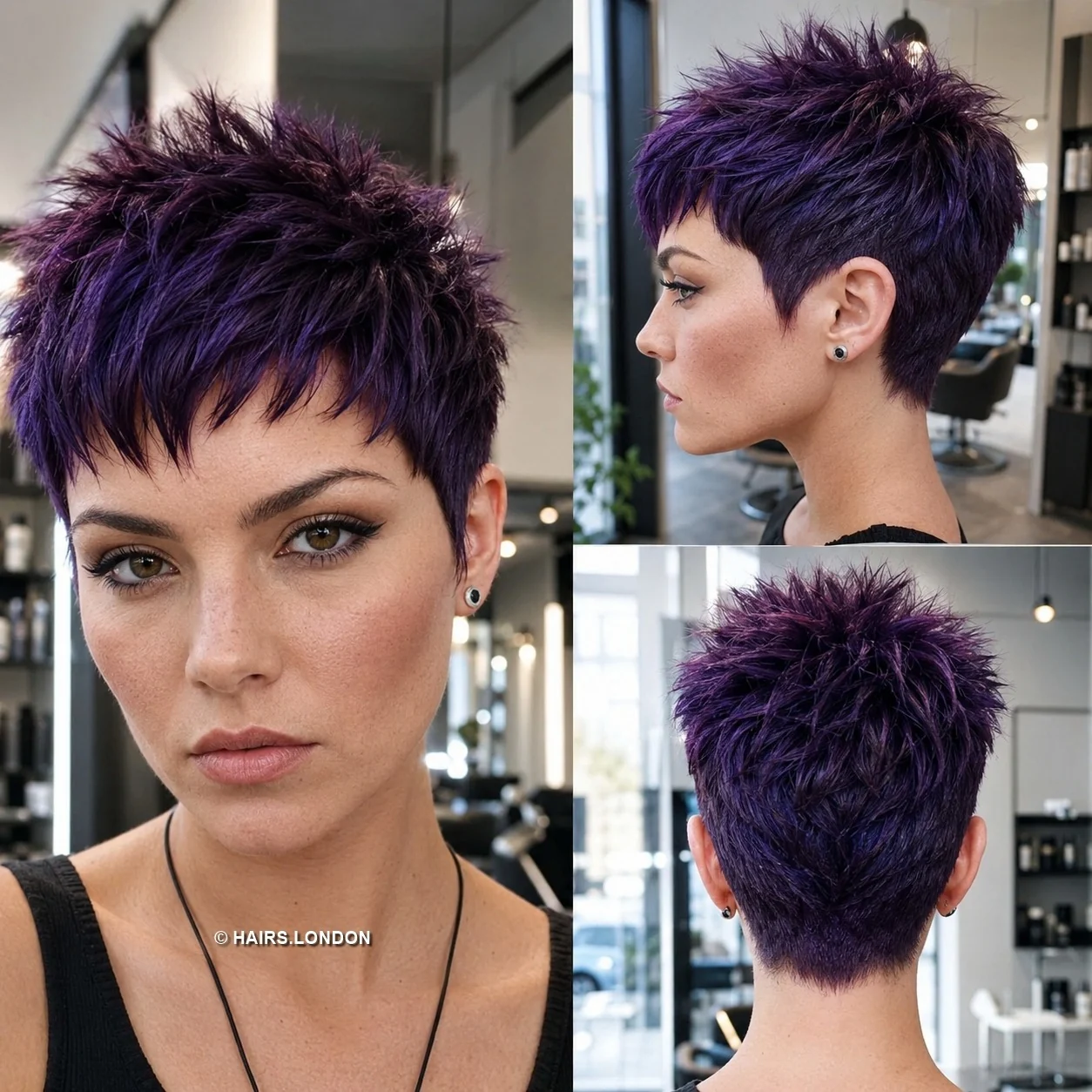
Deep violet color emphasizes every separated layer in this short, energetic pixie. The fringe is chopped into narrow pieces, the crown is lifted into deliberate spikes, and the sides taper closely around the ears before narrowing at the nape. Hair with enough density to support separation can make this texture easier to reproduce, while finer hair may benefit from root-lifting powder. Dry upward with your fingers and finish with a small amount of matte paste rather than heavy wax. Because both the perimeter and vivid color are precise, regular shaping and color refreshes may be needed to maintain the crisp
3. Magenta Undercut Swept Pixie
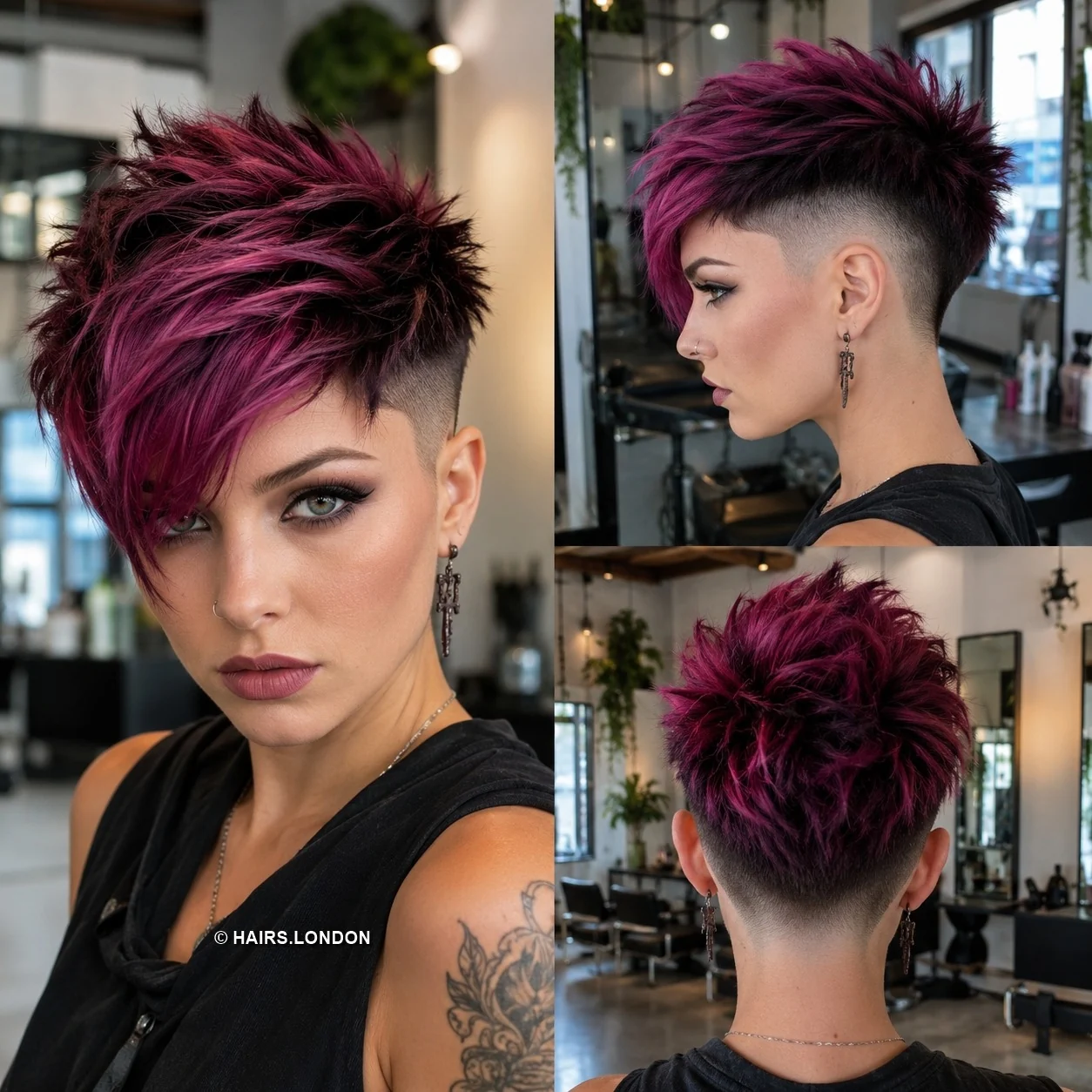
A long magenta fringe sweeps dramatically across the forehead while the opposite side is clipped into a close undercut, creating strong asymmetry. The top remains substantially longer, with jagged layers directed forward and sideways, and the nape fades cleanly into the neck. This cut offers styling contrast: the longer section can look smoother on some days or more separated on others. A lightweight texture cream or flexible paste can define the ends without flattening the crown. Discuss undercut height carefully with your stylist because it affects grow-out. Vivid magenta usually needs gentle washing and color-protective care to slow visible fading
4. Platinum Swept Bixie
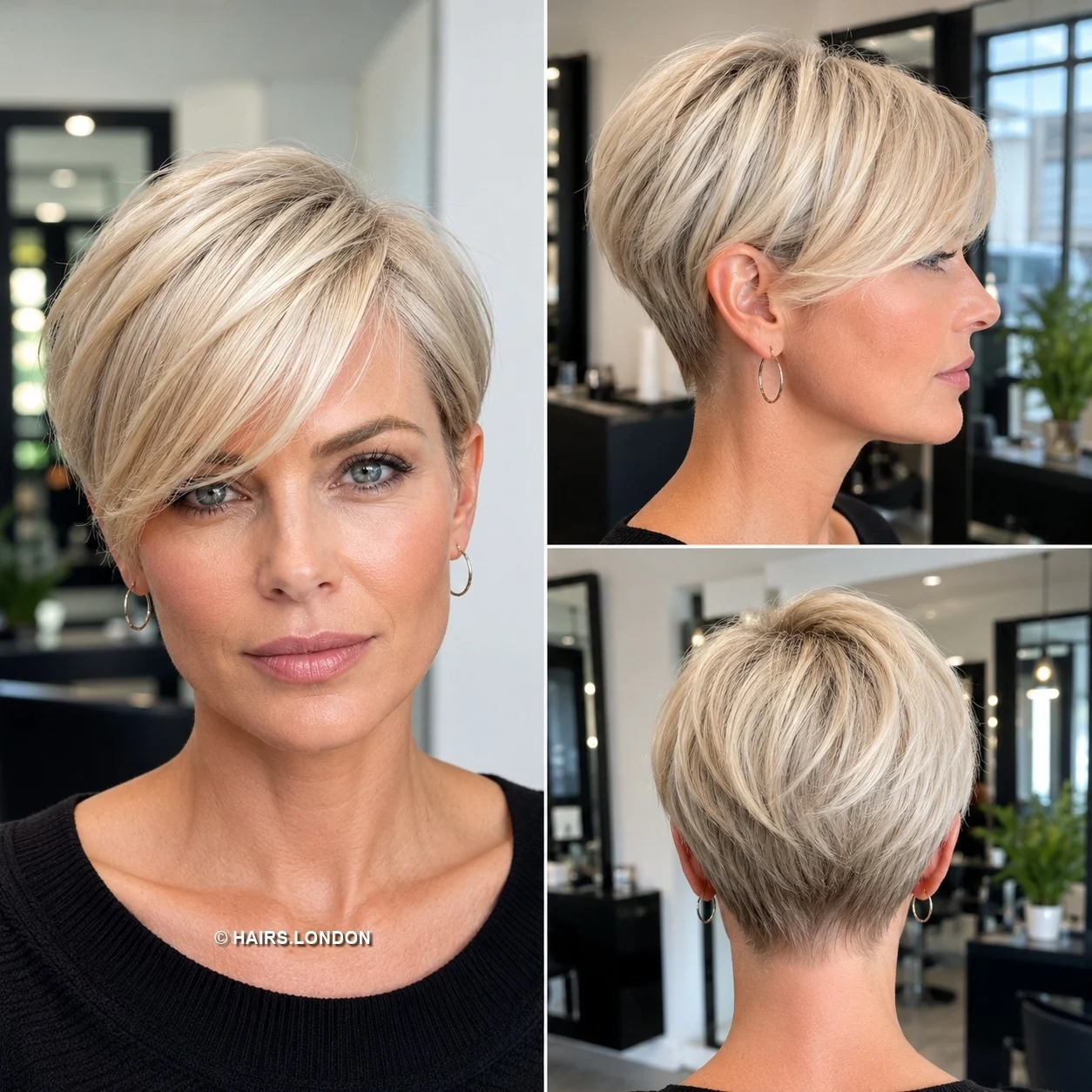
Soft platinum and beige-blonde layers form a rounded pixie-bixie shape with a long side-swept fringe. The crown is fuller and smoother than the spiky cuts in this collection, while the sides hug the head and the nape is softly tapered. This is a useful reference for someone who wants short hair without exposing too much of the sides. Fine hair can gain visual fullness from the layered crown, although over-thinning may reduce density. Blow dry from the roots and guide the fringe diagonally with a brush. Blonde hair often benefits from heat protection, conditioning care, and occasional toning chosen for
5. Black Cherry Undercut Pixie
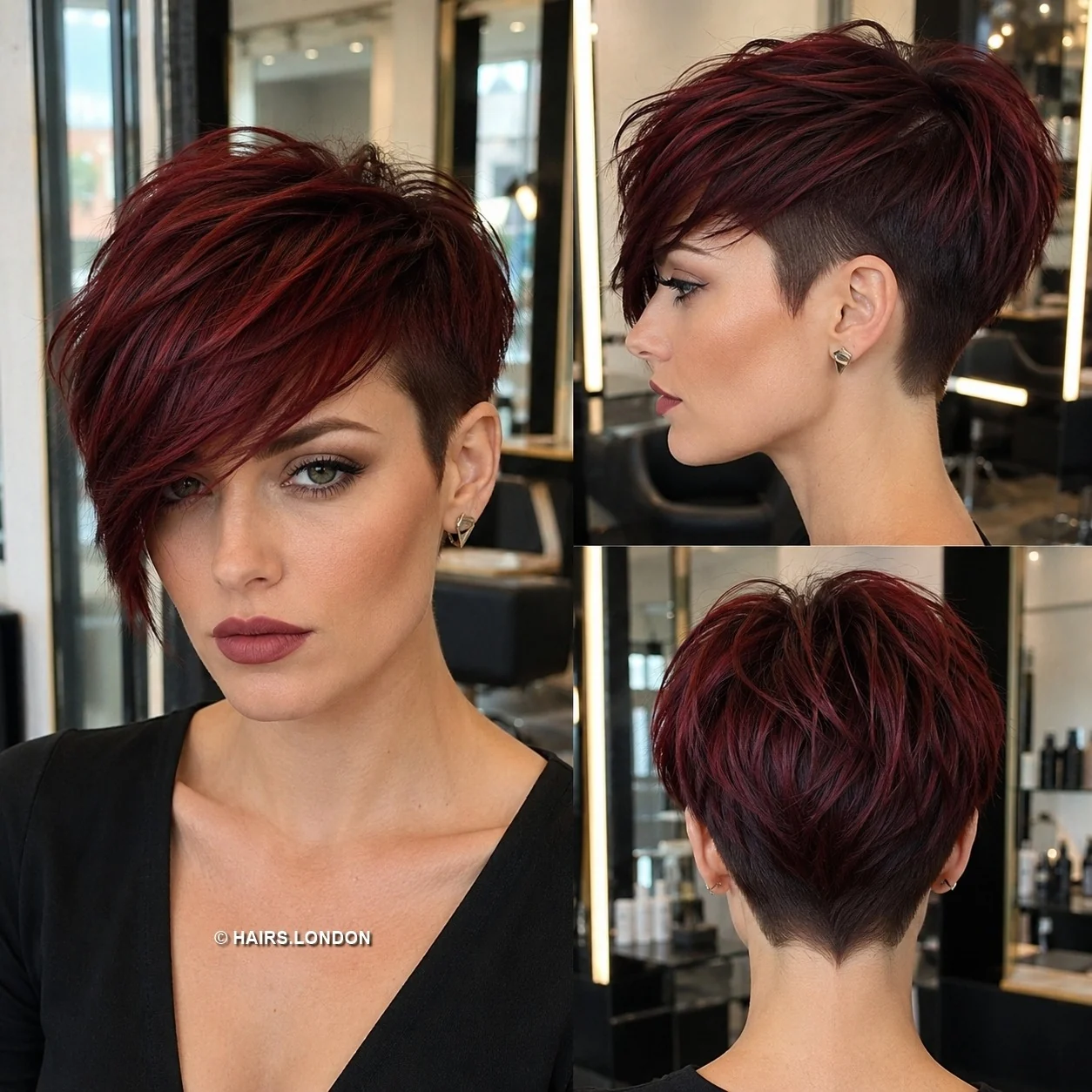
Black cherry and burgundy tones give this asymmetric pixie extra depth, especially where the longer fringe crosses over the darker undercut. The crown is layered for controlled volume, one side is clipped close, and the back narrows into a pointed, tidy nape. The long front creates several styling options, from sleek and side-swept to lightly tousled. Use a small amount of flexible paste through dry ends and avoid loading the short side with product. If your hair grows quickly, the undercut may lose definition before the top needs much trimming. Burgundy shades can fade noticeably, making gentle cleansing and cooler
6. Burgundy Spiky Layered Pixie
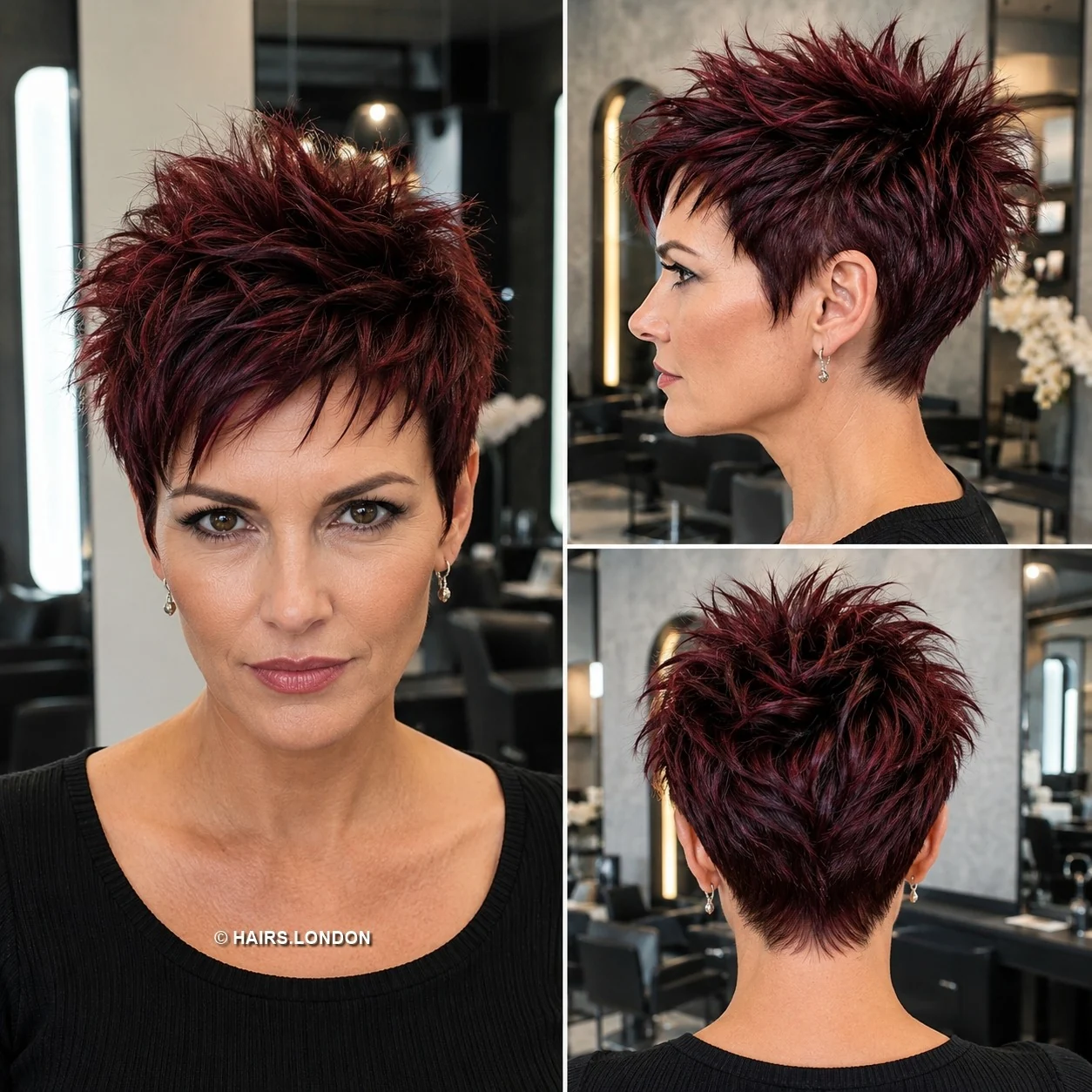
This burgundy pixie uses short, irregular layers to create a lifted, spiky crown without making the fringe overly long. The sides remain slim and textured around the ears, while the back shows a compact taper with pointed pieces at the nape. The shape is particularly useful as a reference for strong crown movement and visible separation. Work a root-lift product into damp hair, dry in several directions, then pinch selected ends with matte paste. Thick hair may need internal weight removal, whereas fine hair needs restraint with thinning. A stylist can adjust spike length and fringe softness according to your
7. Espresso Tousled Tapered Pixie
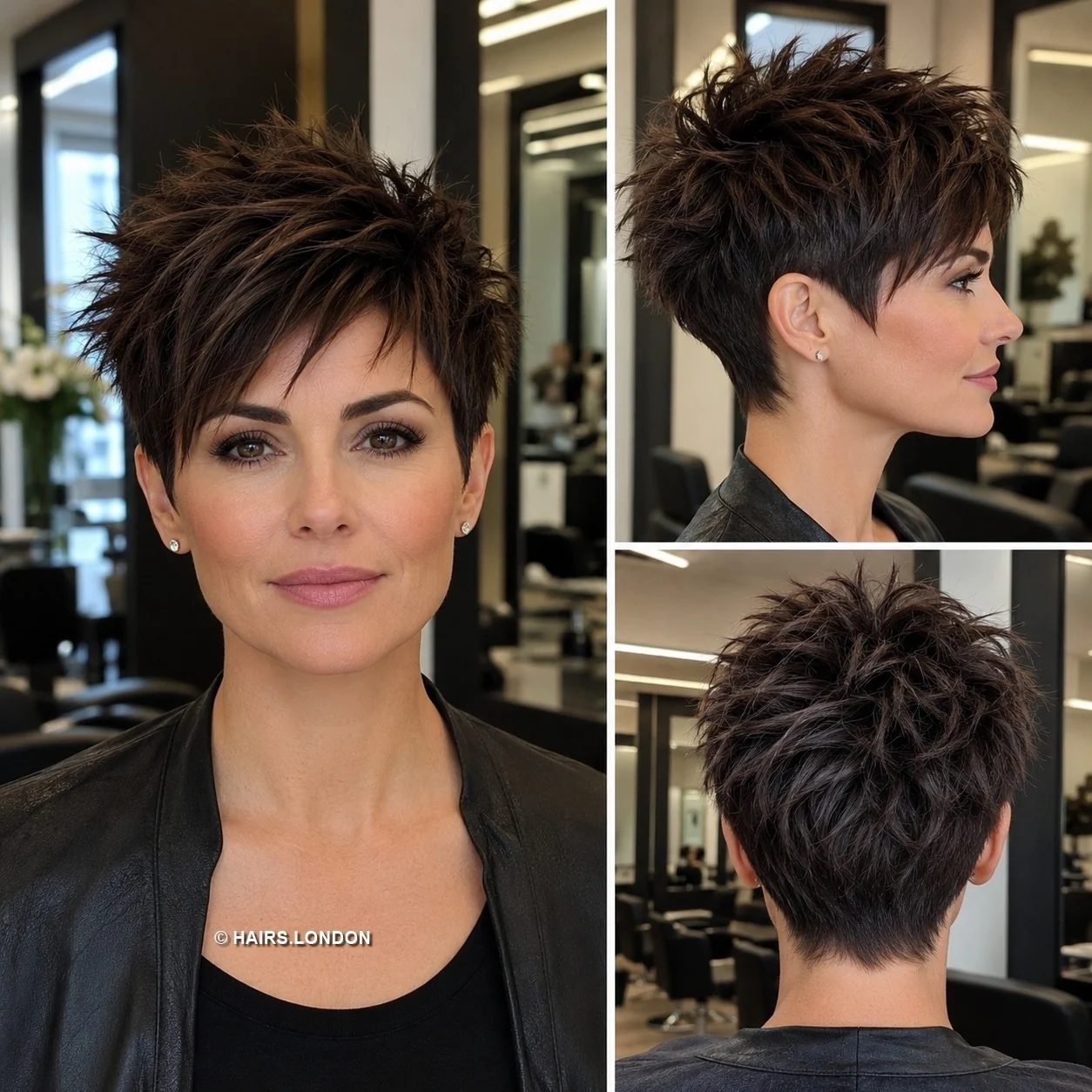
Deep espresso-brown hair is cut into a compact pixie with tousled crown layers, a broken side fringe, and a softly tapered nape. The silhouette stays close at the sides while retaining enough length on top for movement and airy lift. This is a versatile option for someone who likes texture but does not want a dramatic undercut or vivid color. Finger-dry the crown upward and slightly forward, then separate a few pieces with lightweight paste. Fine hair may benefit from a dry texture spray, while dense hair may require careful debulking. Keeping the neckline tidy will help the shape remain
8. Brunette Spiky Crown Pixie
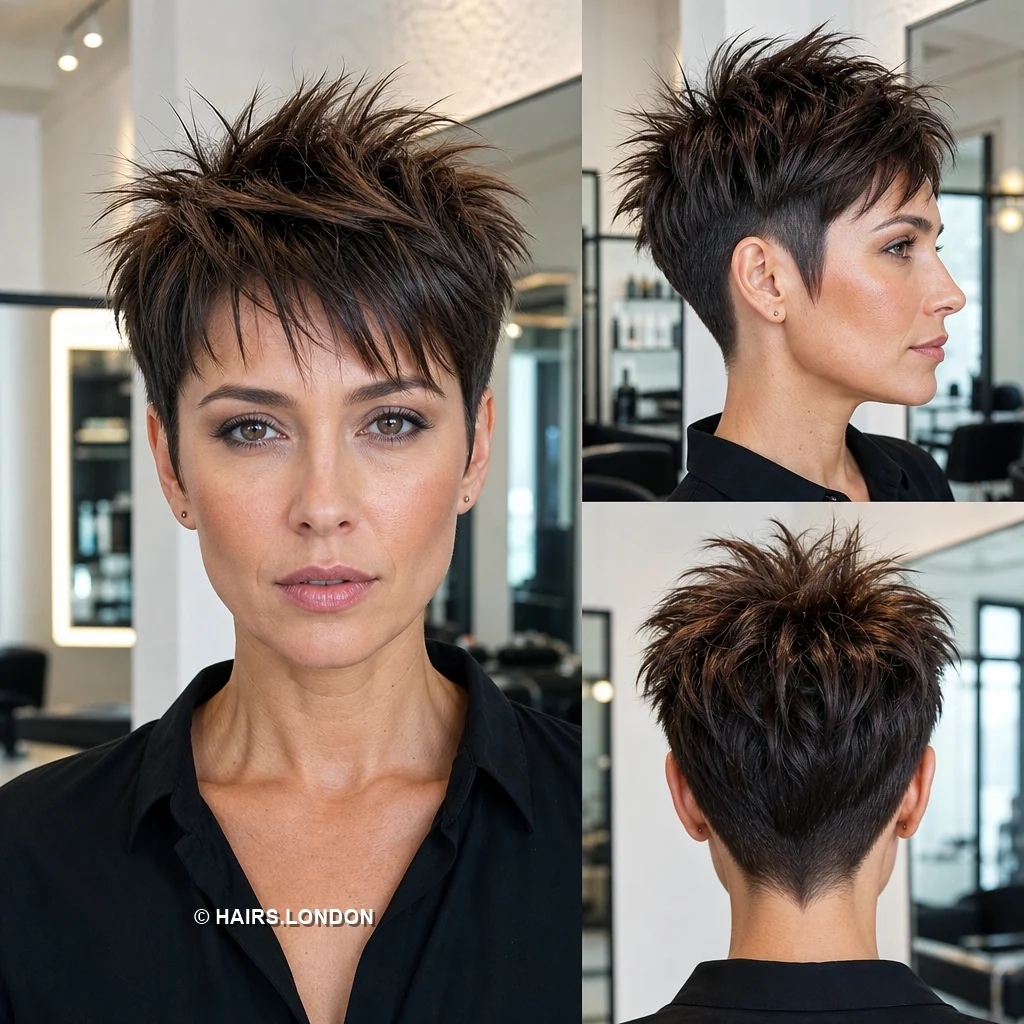
A dark brunette base supports a sharply textured crown with short spikes and a narrow, piecey fringe. The sides are cropped close but not fully shaved, and the back tapers into a clean point that emphasizes the longer top. This structure works best when the stylist balances enough crown length for lift with enough internal layering for separation. Apply a small amount of volumizing mousse or root spray before drying, directing the top upward with fingers. Finish only the tips with matte product. Cowlicks can change spike direction, so show your natural growth pattern during consultation. Frequent neckline cleanups can
9. Smoky Beige Spiky Pixie
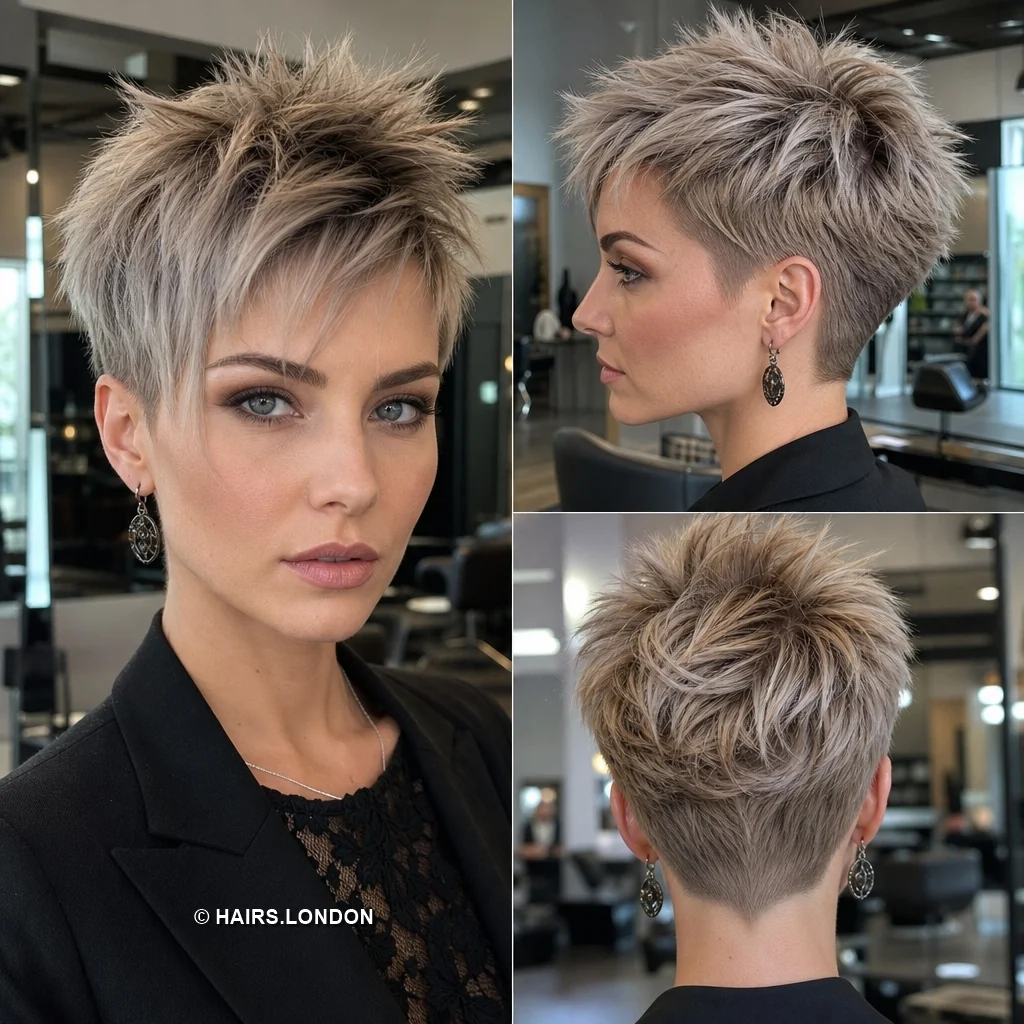
Smoky beige-blonde color makes the feathered texture of this pixie especially visible. The top is left longer and styled into airy spikes, while the sides and nape are tapered smoothly enough to keep the silhouette refined. A soft, narrow fringe falls forward rather than forming a heavy bang. Fine to medium hair can often achieve this type of lift with root spray and controlled blow-drying; very dense hair may need internal weight reduction. Use a light paste on dry hair to keep separation touchable. Pale blonde shades can show dryness quickly, so conditioning, heat protection, and a toning routine suited
10. Chocolate Choppy Undercut Pixie
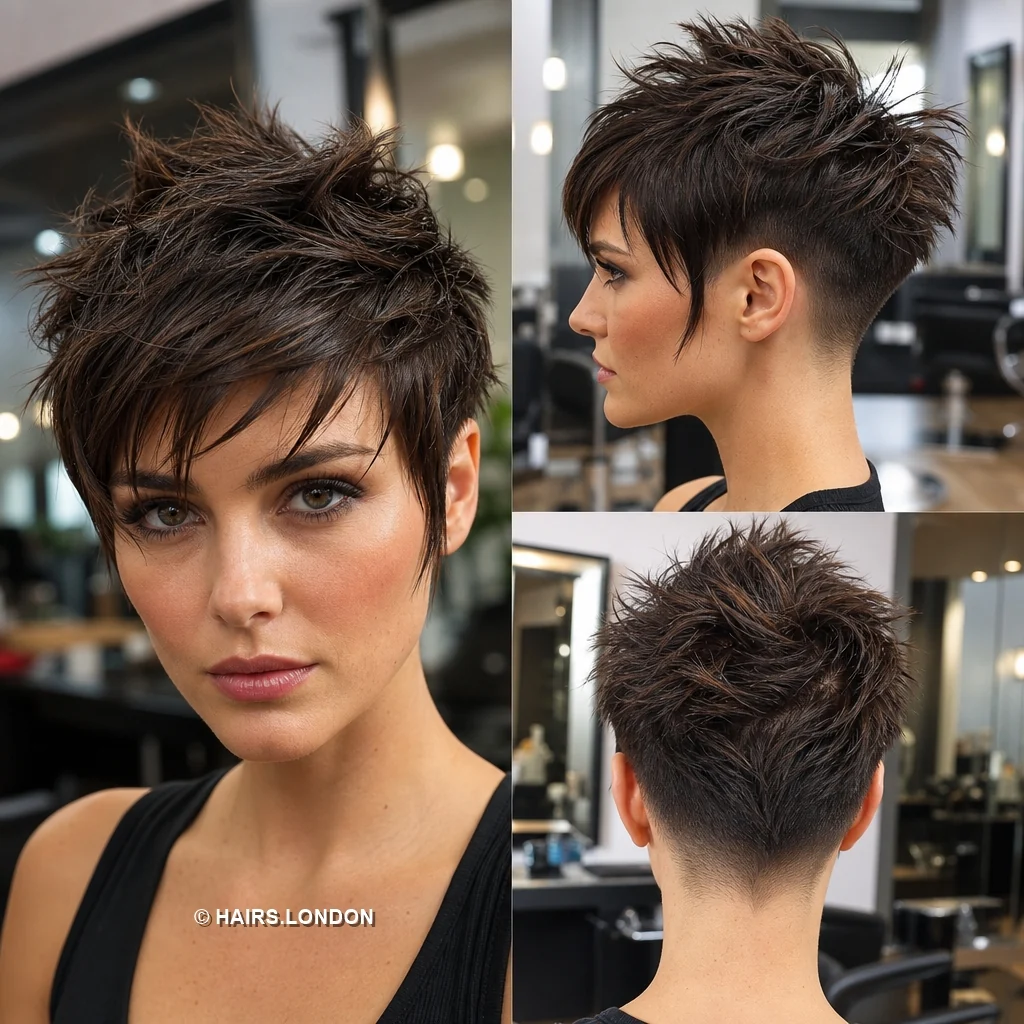
Chocolate-brown layers create a choppy pixie with a longer fringe, textured crown, and closely tapered sides. The front pieces fall diagonally and can be worn softer than the sharper spikes through the top. At the back, graduation removes bulk and keeps the neckline narrow. This shape is useful for hair that needs movement without a completely exposed undercut. Blow dry the top in alternating directions for separation, then smooth the fringe where desired. A flexible clay can provide definition without making the hair rigid.