


11. Dusty Rose Pixie with a Brushed Up Front
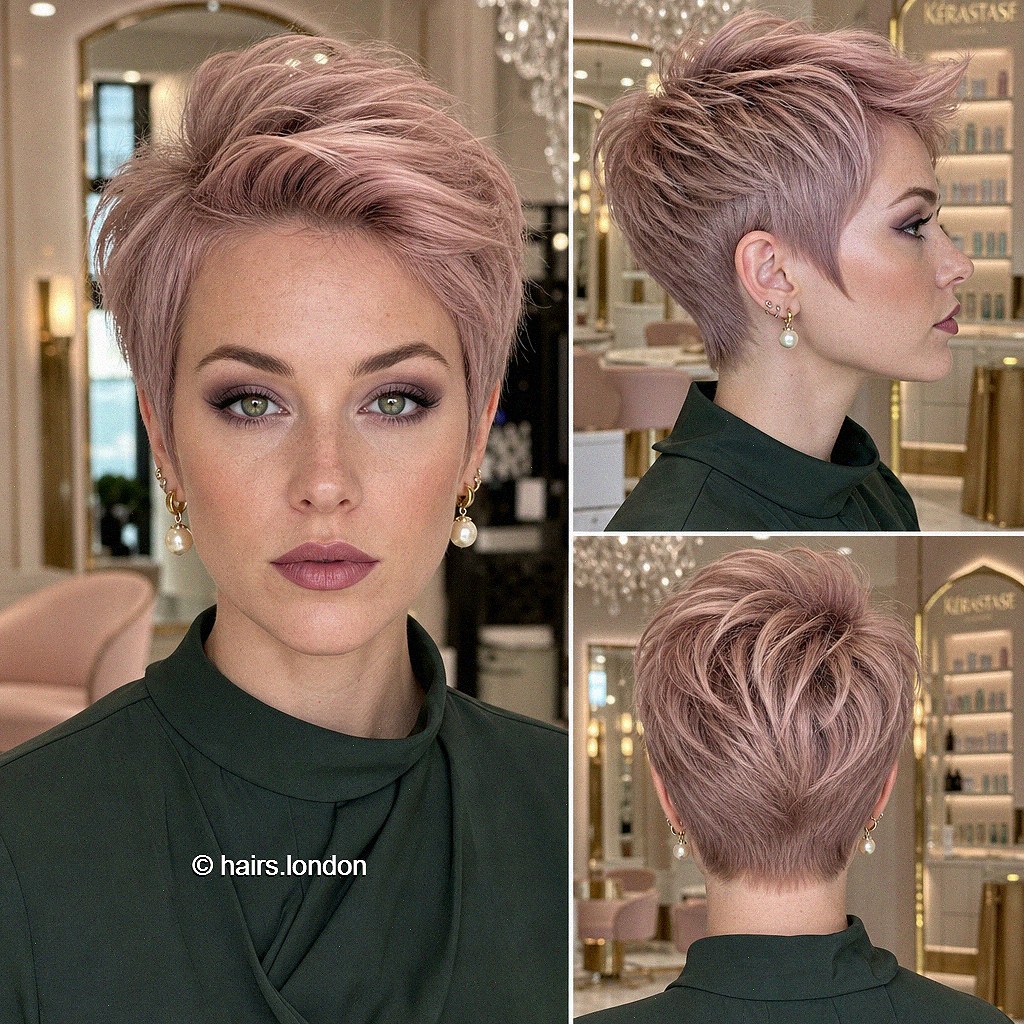
Dusty rose color softens the lifted front of this pixie, giving a sculpted shape a muted finish. The sides are short, with enough upper length to sweep back smoothly. Ask your stylist whether your hairline supports this direction naturally or needs deliberate drying to stay in place. Start by lifting the roots away from the forehead, then guide the ends backward with a small brush. Keep finishing product light so the pale pink layers retain movement. Before choosing the color, compare rose and beige swatches in the salon. That conversation helps separate this subdued tone from brighter pink or lavender.
12. Mocha Brown Textured Pixie with Choppy Crown Layers
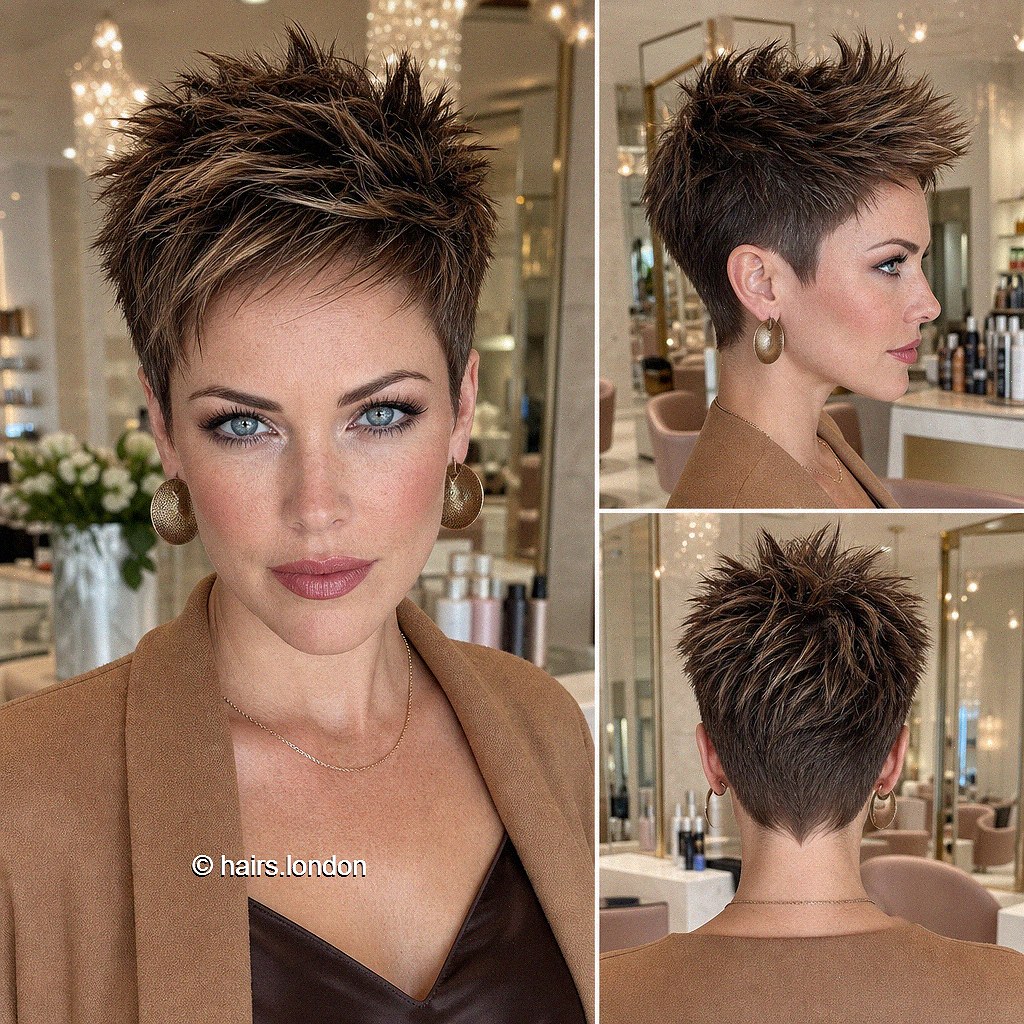
Mocha brown layers create a tousled crown above a neatly shaped nape, with lighter tips highlighting the broken texture. This pixie offers definition without requiring a vivid color change. Ask for a layered top that can be arranged loosely rather than fixed into one precise direction. Dry the hair with your fingers, then choose a few sections to separate with paste. If your hair is thick, discuss where weight collects before deciding how much to remove. The short fringe keeps the face open. Show the back photograph to explain how closely you want the lower outline to follow your head.
13. Crimson Burgundy Pixie with Tousled Spikes
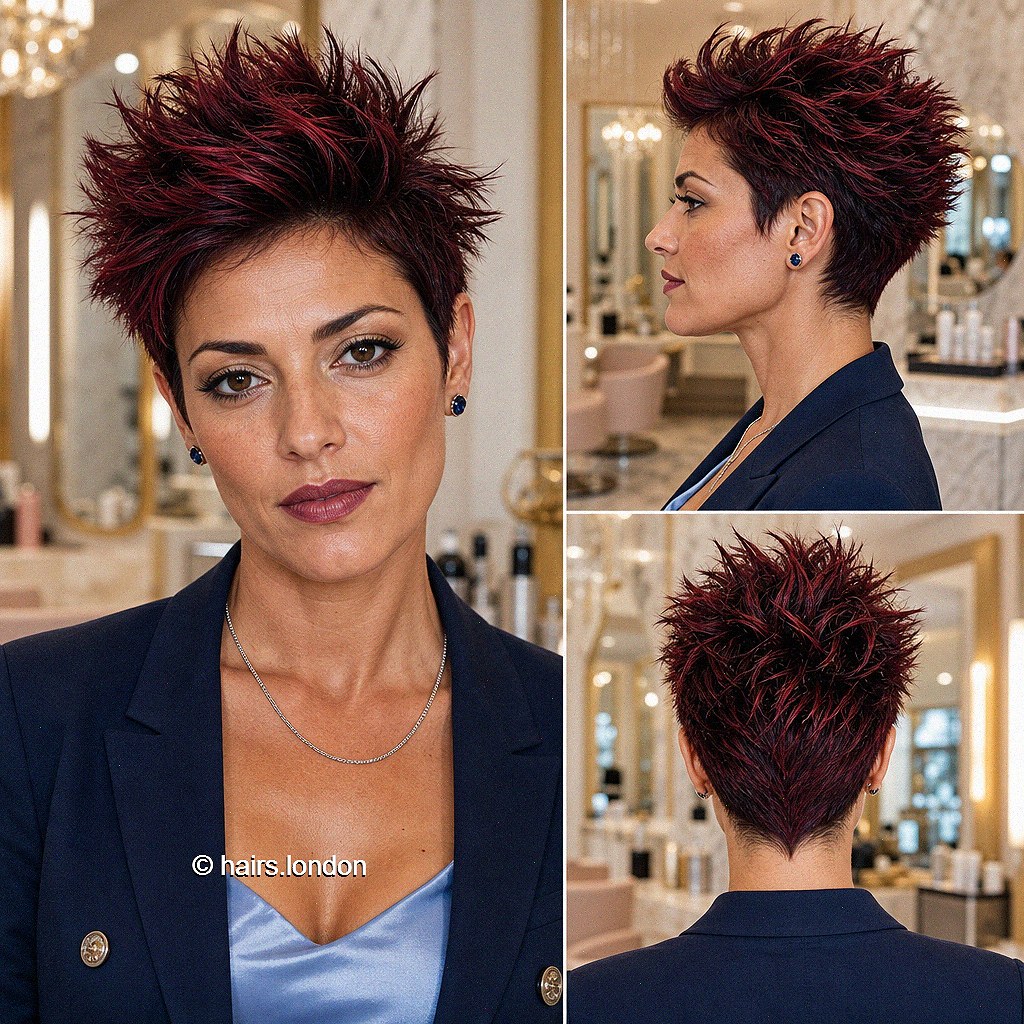
Crimson burgundy pieces lift through this pixie, with a fuller front and scattered spikes across the crown. The darker base keeps the color dimensional, while short sides prevent the top from looking too wide. Ask your stylist to leave enough front length for both an upright finish and a softer sideways arrangement. To style, establish root direction during drying before using a small amount of paste on the ends. Avoid forcing every piece into the same angle. The varied texture is part of the appeal. Discuss where brighter color should sit so it remains visible when you change your parting.
14. Cinnamon Copper Cropped Pixie with Piecey Bangs
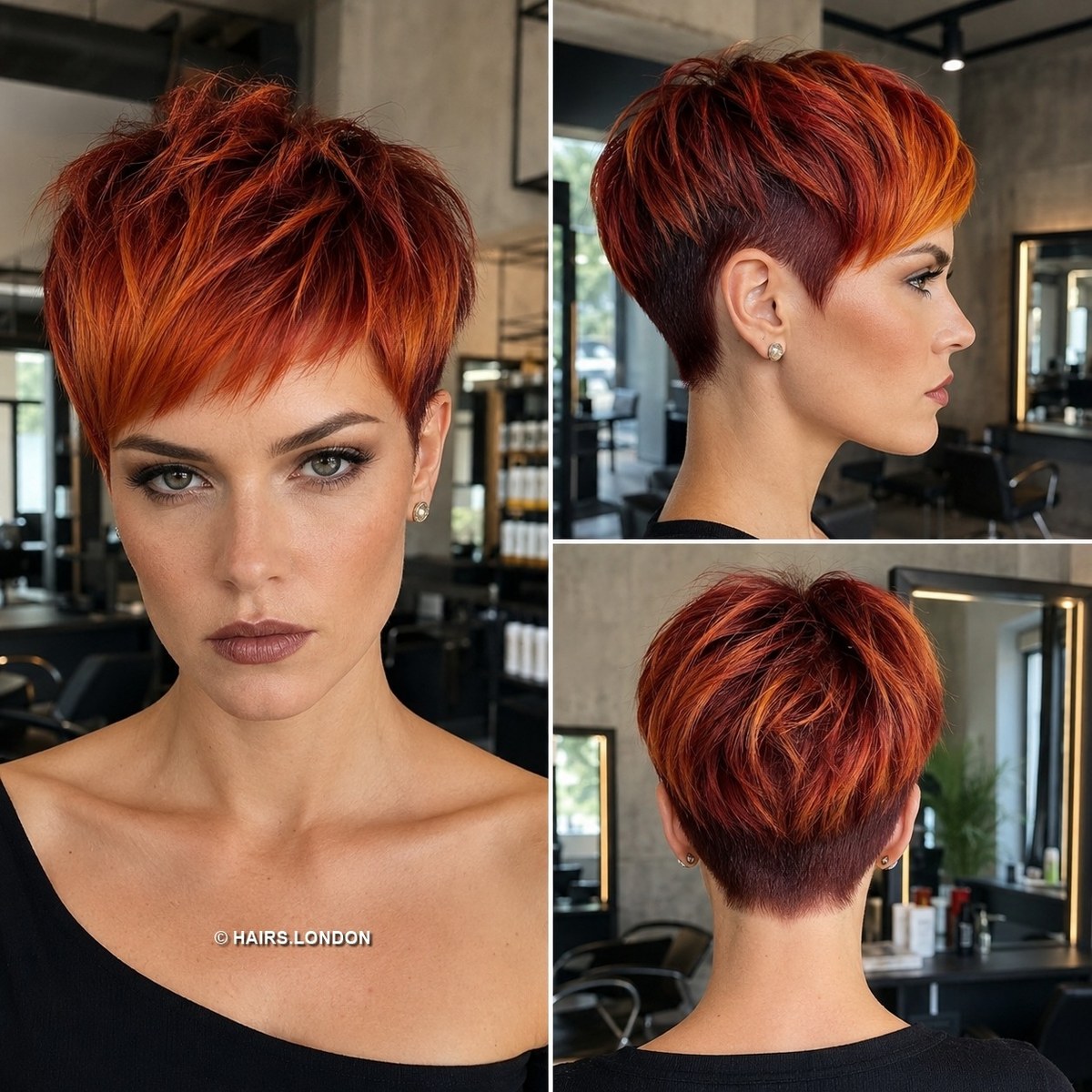
Cinnamon copper color brings attention to the short, piecey fringe in this rounded pixie. The crown has texture, but the overall outline stays controlled rather than strongly spiked. Ask your stylist to keep the bangs light enough to separate while preserving a substantial shape behind them. During drying, guide the front forward and slightly sideways, then arrange a few ends with your fingertips. If you have a front cowlick, check how this length will behave before cutting. The warm color and darker base work together to reveal the layers. Use salon swatches to agree on copper intensity before the appointment.
15. Caramel Brunette Choppy Pixie with Tapered Sides
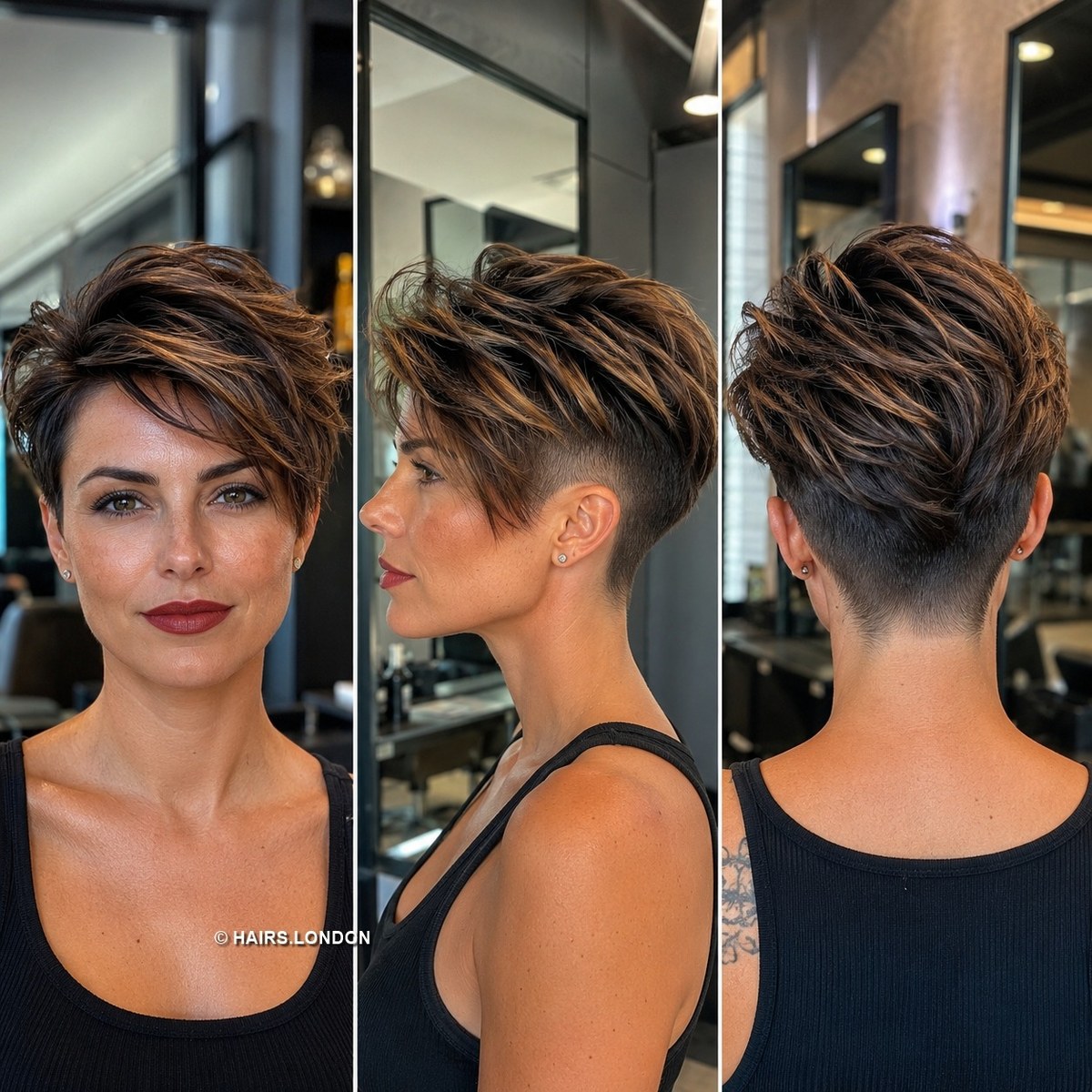
Caramel highlights trace the longer brunette layers of this choppy pixie, giving the top movement against closely tapered sides. The front falls diagonally, while the back retains texture above a compact nape. Ask your stylist to coordinate the layers with your preferred parting so the lighter strands sweep where you want them. Blow dry across the forehead, then separate the ends with a little paste. Thick hair may need weight reduced through the sides without losing support on top. This photograph is useful if you want contrast in the cut and color while keeping the overall finish natural and wearable.
16. Vanilla Blonde Pixie with an Undercut and Long Top
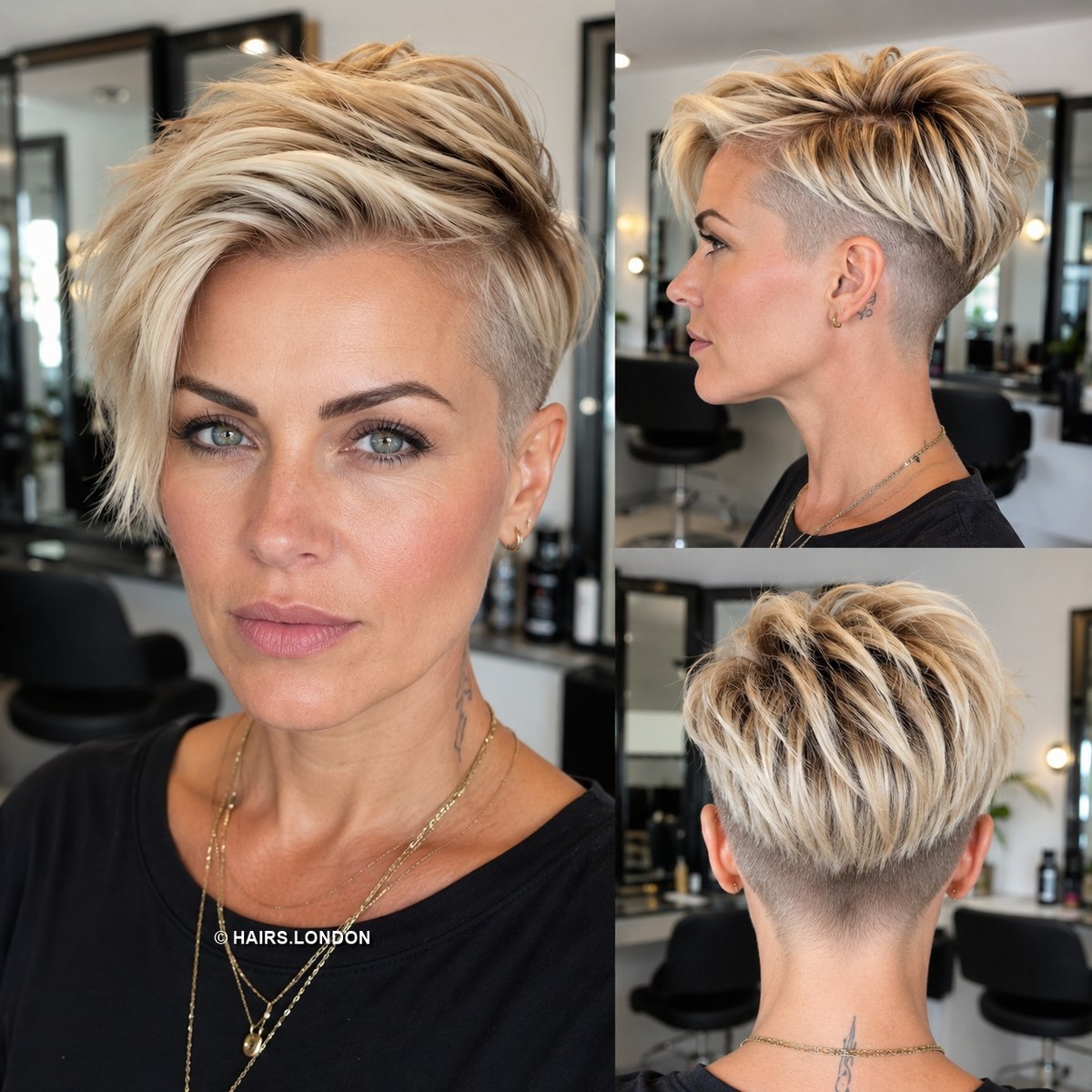
Vanilla blonde lengths sweep across a much shorter side, creating a clear contrast between the top and perimeter. The longer front gives this pixie room for a smooth diagonal fringe or a brushed back finish. Ask how pronounced you want the undercut to be, and whether it should remain visible when the hair falls naturally. Dry the longer section toward your chosen parting, lifting slightly at the roots. Keep smoothing product mainly on the ends. If you want to grow the haircut later, discuss how the shorter side will blend as it lengthens. The color contrast will also evolve gradually.
17. Magenta Spiked Pixie with a Cropped Undercut
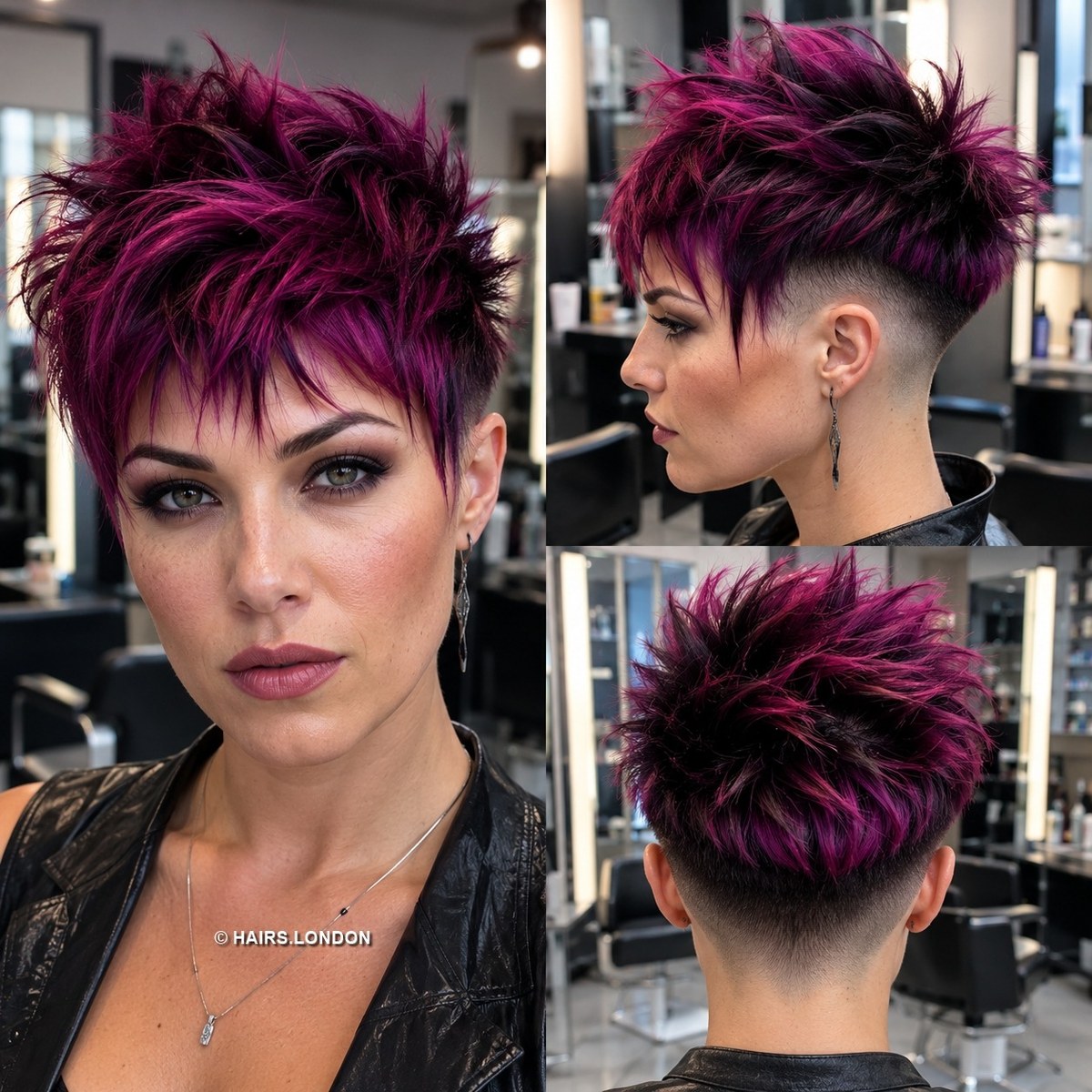
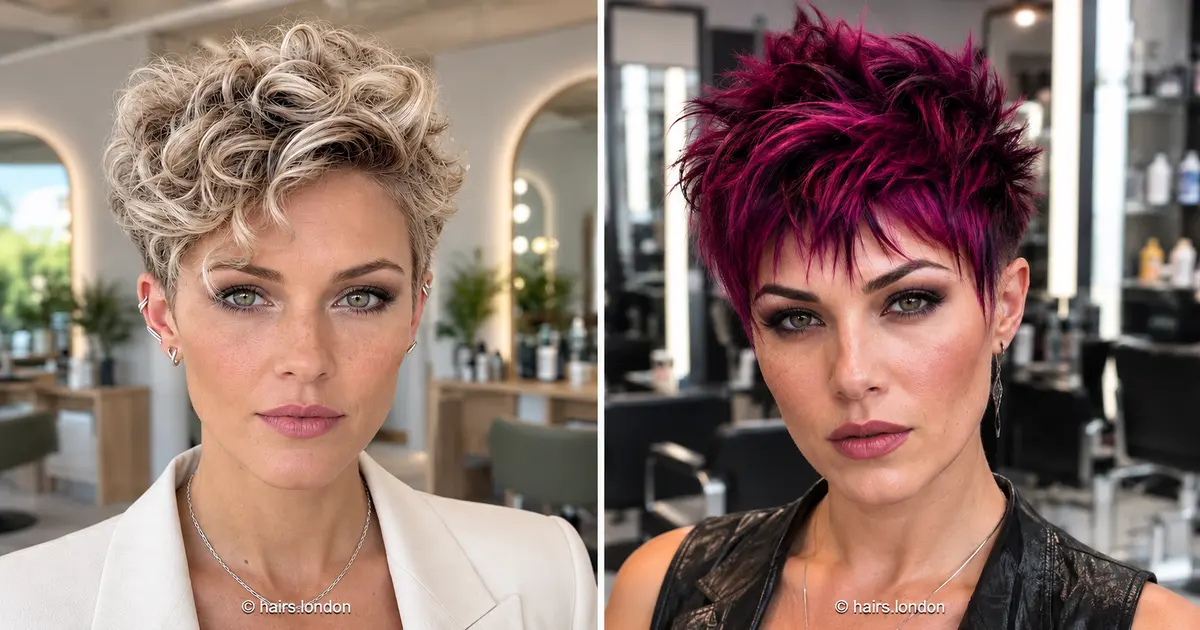
Magenta pieces create strong contrast above the cropped dark sides of this spiked pixie. The short fringe adds another pointed line, while the crown is lifted into a deliberately uneven arrangement. Ask your stylist to explain how the upper lengths will connect with the undercut, especially if you sometimes prefer a softer finish. Use paste sparingly on dry ends, shaping a few sections before deciding whether more definition is needed. The bright color placement follows the visible top layers rather than the whole head. Discuss lightening, fading, and regrowth before choosing this combination of a precise cut and vivid tone.
18. Amethyst Purple Layered Pixie with a Long Side Fringe
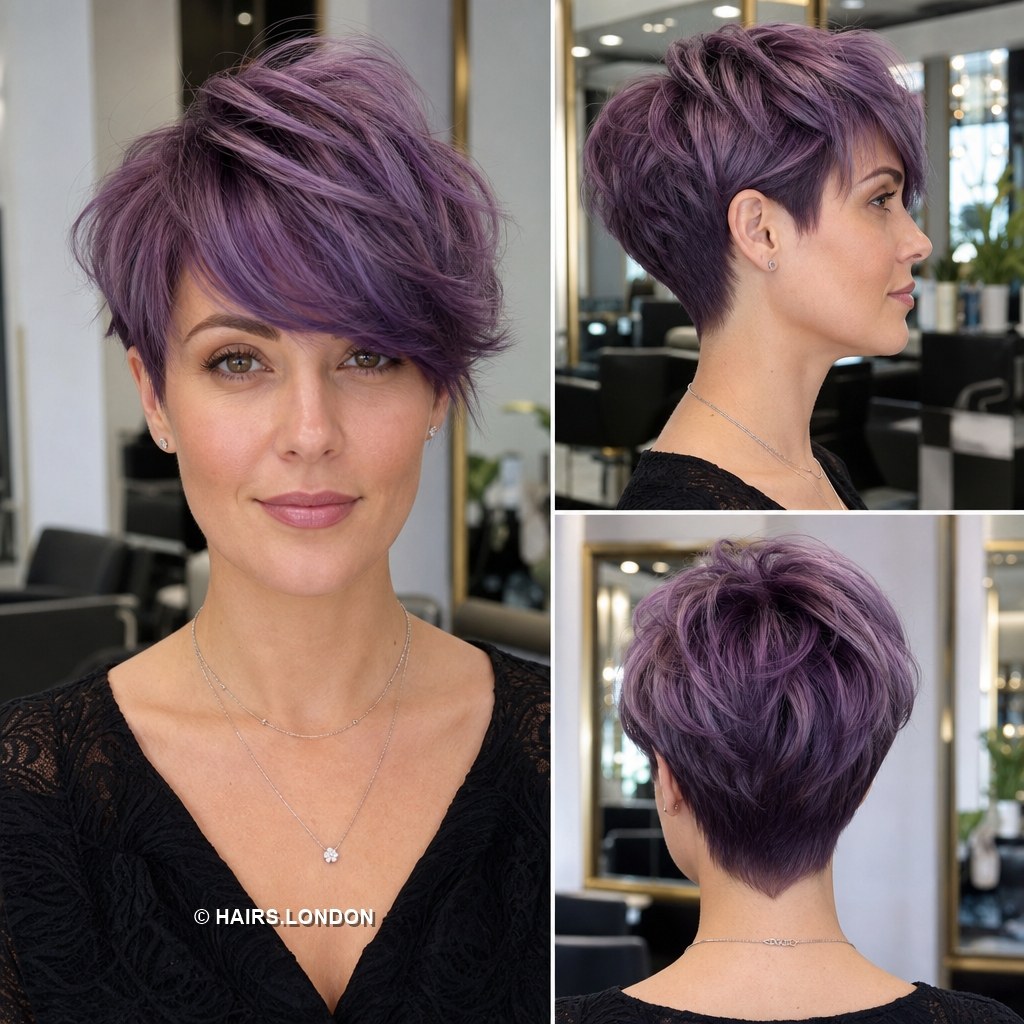
Amethyst purple layers sweep into a long side fringe, giving this pixie a softer outline than the sharply spiked magenta crop. The crown is rounded, and the short back keeps the longer front balanced. Ask your stylist to decide the fringe length with your natural parting in mind. Blow dry sideways using a brush, then loosen the ends so they do not sit as one solid section. If hair near your eyes bothers you, request a shorter diagonal version. The violet tone is a visual reference, so compare salon swatches and discuss how your starting shade may affect the result.
19. Blush Blonde Feathered Pixie with Soft Side Bangs
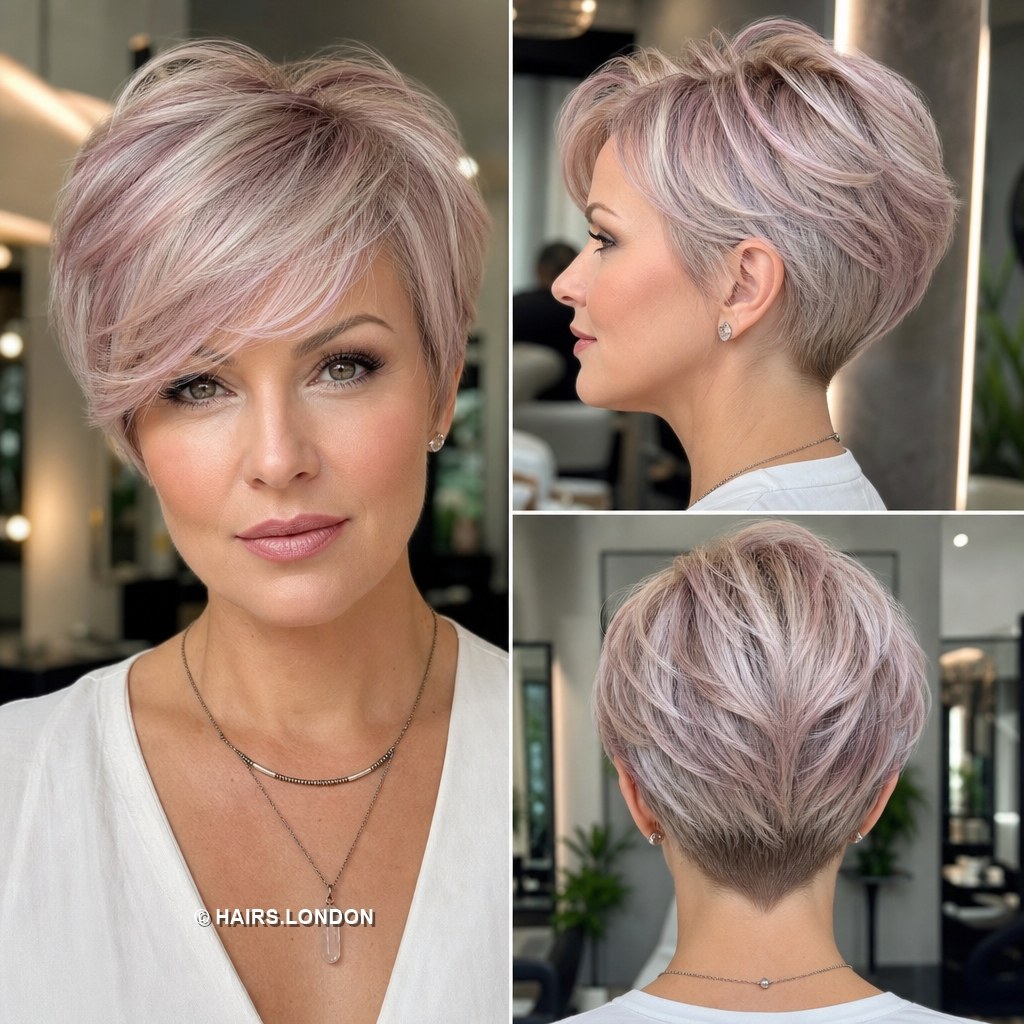
Blush blonde tones give these feathered layers a subtle pink cast, with side bangs resting softly across the forehead. The back follows a rounded shape above a tidy nape, making this a gentle alternative to an undercut. Ask your stylist to preserve fullness while refining the ends, particularly if your hair is fine. Dry the fringe toward the side you prefer, then use your fingers to separate a few pieces around the face. Keep product light to avoid flattening the crown. Discuss whether you want an obvious pink tone or just a delicate rose reflection through the pale blonde base.
20. Espresso Asymmetrical Pixie with Warm Highlighted Layers
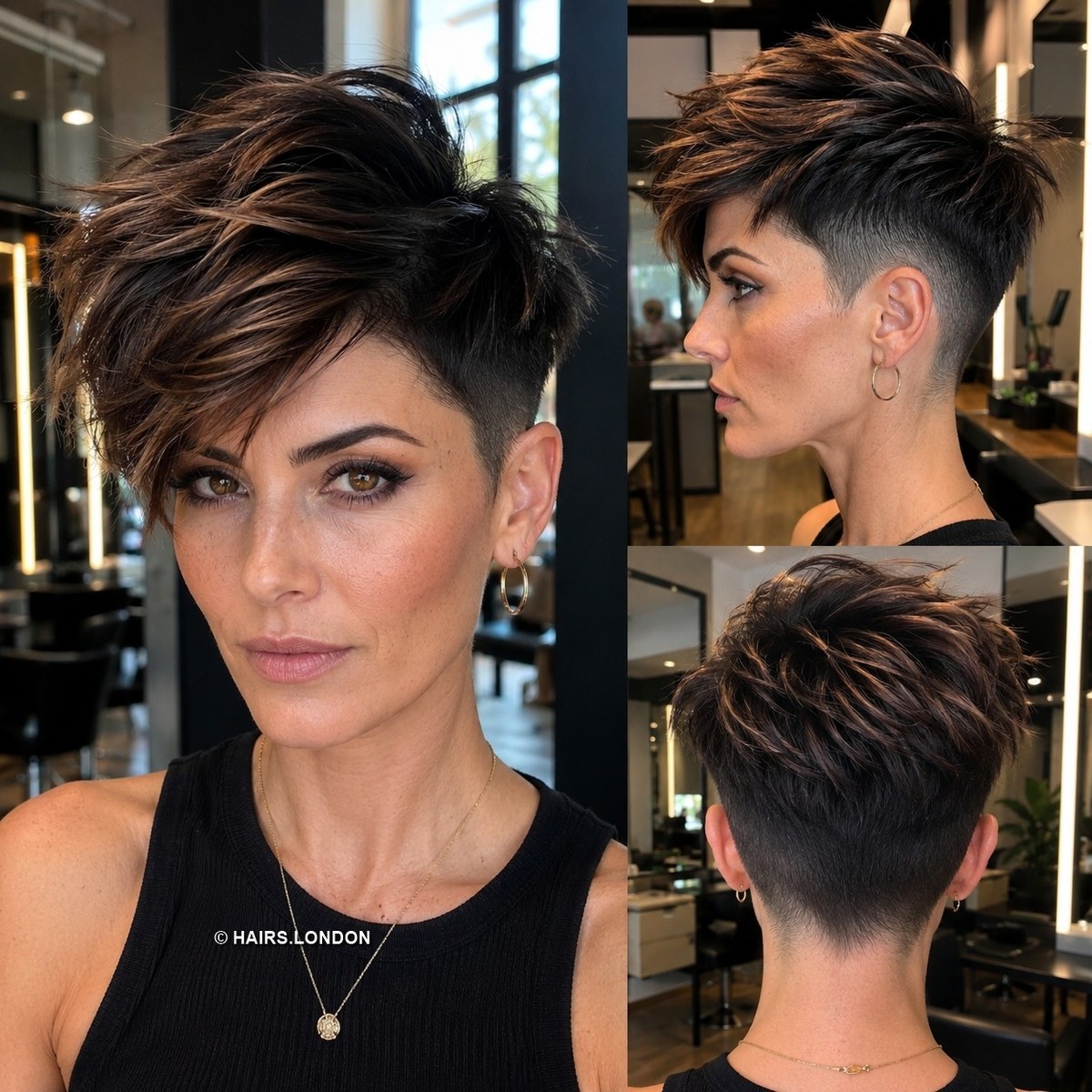
Espresso layers sweep into a longer diagonal fringe, while the opposite side is kept short and close around the ear. Warm highlights follow the movement, emphasizing the asymmetrical front without overwhelming the dark base. Ask your stylist where you want the longest section to finish when dry. Use a brush to guide it across the forehead, lifting the roots enough to maintain shape. A little paste on the ends can add separation. This image suits a conversation about combining a compact perimeter with a dramatic front. Discuss your usual parting before cutting, because changing sides may reveal a different balance.
Choosing between curls feathers and spikes
For fine hair preserve the right amount of fullness
Fine hair can look delicate when too much weight is removed through the top. Compare the mushroom blonde long pixie and blush blonde feathered style if you want a fuller fringe. Ask your stylist to keep enough density at the ends while introducing movement. A very light application of product is usually a better starting point than a heavy coating, especially near the roots.
For thick hair control the sides before shortening everything
If your hair expands around the temples or back, the solution may be selective weight removal rather than cutting the whole top shorter. The caramel choppy pixie and vanilla undercut show two ways to create a narrower perimeter. Discuss whether you prefer a visible undercut or a softer blend with scissors. Those choices affect both the side profile and how the haircut grows out.
For curls plan around the dry shape
The champagne and burgundy curly pixies keep enough upper length for curls to form. Your own curl pattern determines how short that length can be. Ask your stylist to account for shrinkage and show how you normally dry your hair. If you air dry at home, make sure the proposed silhouette is designed to work that way, rather than depend on a stretched or brushed finish.
For straight hair choose a direction you can maintain
A spiky crown and a smooth diagonal fringe may use similar lengths but require different styling. Notice whether your front naturally falls forward, sideways, or away from the face. A haircut that works with that tendency can be easier to manage. If you want a lifted quiff, ask your stylist to demonstrate root direction and show how much product is actually needed.
How to choose your fringe
A short fringe opens the forehead and makes the cut feel compact. A longer diagonal fringe adds softness and gives more room for movement, but its length needs to stay comfortable around your eyes. A brushed up front creates height and keeps the forehead clear. Compare the merlot crop, amethyst layered pixie, and graphite quiff to see how strongly that one choice changes the look.
Bring your glasses to the appointment if you wear them regularly. Check how the fringe meets the frames and where the temple pieces fall. Also mention a front cowlick before the hair is washed. Your stylist needs to see the natural growth direction to judge which fringe lengths are likely to sit well.
Color placement that shows off the layers
Highlights are most useful when they support the shape. Copper tips make pointed ends easier to see against dark hair, while caramel pieces follow the sweep of a brunette fringe. A darker base beneath a pale top creates depth and emphasizes the contrast between lengths. Ask which sections will be visible in your usual parting before agreeing on placement.
Pale silver, blush blonde, and dusty rose tones may involve a different process from warm brunette highlights. Discuss your starting shade, previous coloring, the lightening required, and the finish you want. For bright magenta or burgundy, ask how the tone may fade and whether you are comfortable refreshing it. Cut maintenance and color maintenance do not always fall on the same schedule.
Styling a textured pixie without making it heavy
Reset the sections that need attention
If your fringe or crown has dried in an awkward direction, lightly dampen that section and reshape it. Adding more product to misplaced dry hair often leaves a heavier surface without correcting the roots. Start with the direction, then choose your finish.
Build definition gradually
For spikes and choppy ends, warm a small amount of paste between your palms and apply it selectively. Pinch a few sections, step back, and check the outline before adding more. The goal is visible separation while retaining some flexibility.
Keep feathered layers soft
A feathered fringe should move rather than sit as a rigid shelf. Guide it sideways during drying, then loosen the ends with your fingers. If a finishing cream makes your hair collapse, use less or ask your stylist for a lighter texture.
Let curl groups settle
Arrange curls while the hair is damp and avoid repeatedly pulling them apart as they dry. Once the surface is set, adjust only the pieces that need attention. Your stylist can help you decide whether a cream or a lighter curl product suits your density.
Maintaining the shape and planning the grow out
Watch the areas that define your chosen haircut. A close side may lose its crisp outline before the top needs cutting. A long fringe may become difficult to place while the nape still looks tidy. Ask whether a small perimeter cleanup would help between full reshaping appointments, and agree on timing according to how your hair grows.
If you expect to grow the pixie into a longer crop or bob, mention that early. An undercut can create a larger difference between lengths, while a soft taper may blend more gradually. Let the areas you want longer gain length, and tidy the sections that begin to look unbalanced. Repeatedly cutting everything back to the original shape will delay the transition.
Questions to ask at your haircut consultation
- Which details in this reference will work with my natural texture and growth direction
- How long will the fringe sit when my hair is fully dry
- Should the sides be clipped or shaped softly with scissors
- Can you show me how to style the crown with one main product
- What will the haircut look like when I air dry instead of blow drying
- How will the color placement and shorter sections change as the hair grows
Frequently asked questions about textured pixie haircuts
What is a textured pixie haircut
A textured pixie uses layers or refined ends to create visible movement through a short shape. That movement can be curly, feathered, tousled, or spiky. The term does not specify one exact length, so show your stylist the outline and finish you want rather than relying on the name alone.
Which style in this collection is the softest
Start with the champagne curly pixie, mushroom blonde long pixie, or blush blonde feathered look. Their curls or sweeping layers soften the outline around the face. The right adaptation still depends on your texture and how much length you want near the forehead and ears.
Can a textured pixie work on fine hair
Yes, but layering should preserve enough density to keep the top and fringe looking substantial. Ask your stylist to distinguish between adding movement and removing weight. A fuller long pixie may be a better starting point than aggressively thinned, widely separated spikes.
Do I need naturally curly hair for the curly styles
Natural curls can make the pictured finish easier to maintain, but the image alone does not establish how the texture was created. If your hair is straight or loosely wavy, ask what styling or salon process would be needed. Also discuss whether you want that extra daily commitment.
Can I wear the spiky cuts more softly
Often you can arrange longer crown pieces sideways or loosely backward instead of lifting them into points. The result depends on the actual lengths and how the ends were cut. Ask your stylist to demonstrate a softer version before you commit to a sharply textured silhouette.
What is the difference between an undercut and a taper
An undercut creates a pronounced contrast between a short lower section and longer hair above it. A taper gradually shortens the hair toward the perimeter. The photographs show different degrees of contrast, so explain whether you want a visible change in length or a smoother transition.
Will short hair need less daily styling
It may take less drying time, but it can still need direction at the fringe or crown. A quiff or spiky finish generally needs more deliberate arrangement than a soft crop that follows your natural growth. Ask which version is most manageable with your usual morning routine.
How do I stop styling paste from weighing down my pixie
Start with a smaller amount, warm it thoroughly between your palms, and place it mainly on the ends that need definition. Avoid repeatedly coating the roots. If the haircut still collapses, ask whether the product texture or the amount of weight in the crown needs changing.
Can these cuts work with gray hair
Yes. The pearl silver, frosted, and graphite looks offer different shapes to discuss. Your natural gray pattern may give a different contrast from the pictures, and your texture may influence the finish. Decide the haircut first, then discuss whether you want any tonal adjustment.
Will vivid or pale colors need lightening
That depends on your starting shade, existing color, and the brightness you want. Pale pastels and silvers need a suitably light base to show clearly, while a darker burgundy effect may involve a different approach. A colorist should assess the process rather than infer it from the reference alone.
What if I have a cowlick or double crown
Show the growth pattern before your hair is wet or styled. Removing too much length can reveal movement previously controlled by weight. Your stylist can decide where extra length should remain and which direction the top is likely to support naturally.
How do I choose between two favorite pixies
Compare their fringe, side coverage, crown height, and nape separately. Identify the details you prefer in each, then ask your stylist whether they can be combined. Choosing a hairstyle this way often produces a more useful consultation than looking for one photograph that matches every preference.
Choose the texture you will enjoy wearing
The best reference makes your preferences clear. Decide whether you want curls that settle into a rounded shape, feathered layers that sweep across the face, or pointed ends that add definition to a close crop. Then choose a color commitment that fits your routine. These 20 pixie haircuts offer plenty of possibilities, but the final balance of length, texture, and tone should feel comfortable on your own hair.