


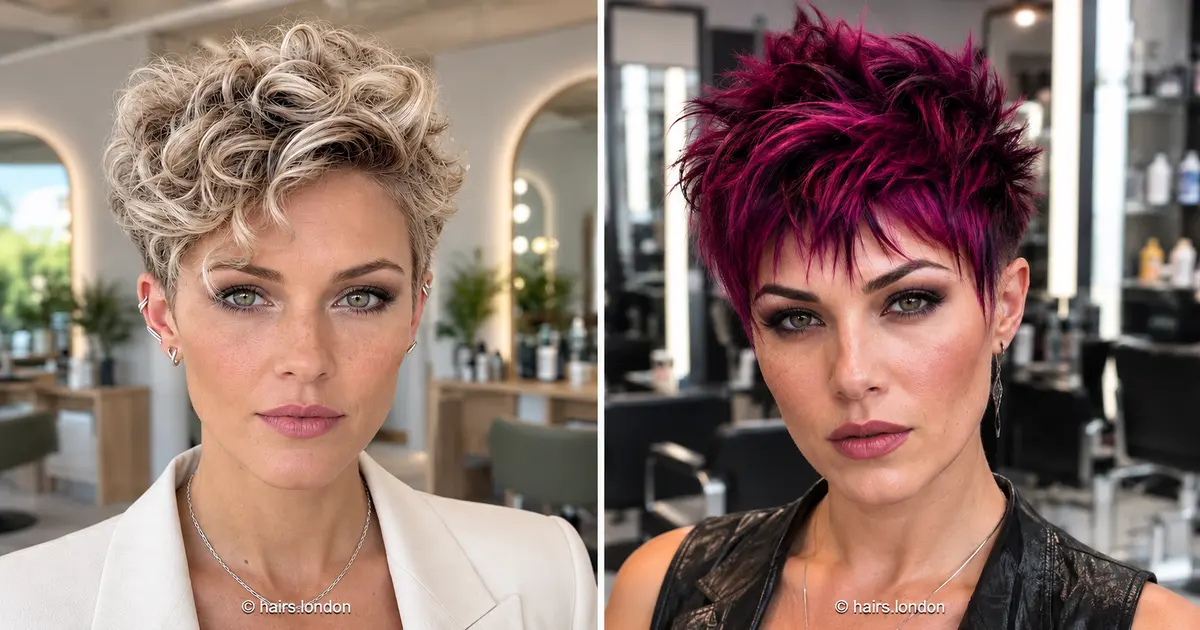
Texture changes the character of a pixie haircut. Loose curls give a short outline softness; feathered ends create movement through a longer fringe; pointed layers make a close crop feel sharper. The difference often comes down to where your stylist leaves length and how you arrange it after washing. Color adds another layer, whether that means a few warm highlights or a vivid magenta crown.
This collection brings together 20 textured pixie haircuts in blonde, silver, brunette, copper, burgundy, and purple shades. Each image shows several angles, so you can compare the front with the sides and nape before choosing a favorite. Alongside the photographs, you will find practical details about styling, hair density, fringe placement, and color decisions.
Look for a shape you would enjoy wearing on an ordinary day. A high quiff may appeal in a photograph, but a soft side fringe could suit your routine better. You can also borrow the silhouette from one look and the color from another. The point is to arrive at your appointment with clear preferences, rather than expect your own hair to behave exactly like a reference image.
Three details that make a textured pixie work
First, notice the balance between the crown and sides. A full curly top needs a controlled perimeter, while a long fringe benefits from a back that does not compete with it. Next, look at the ends: fine feathering, separated spikes, and defined curls need different finishing approaches. Finally, check the nape. Its length and shape affect how polished the haircut looks from behind.
The color names below describe the shades visible in the images. They are not verified salon formulas. Use them as a starting point for a conversation about tone, placement, and how your existing color may influence the result.
1. Champagne Blonde Curly Pixie with a Soft Taper
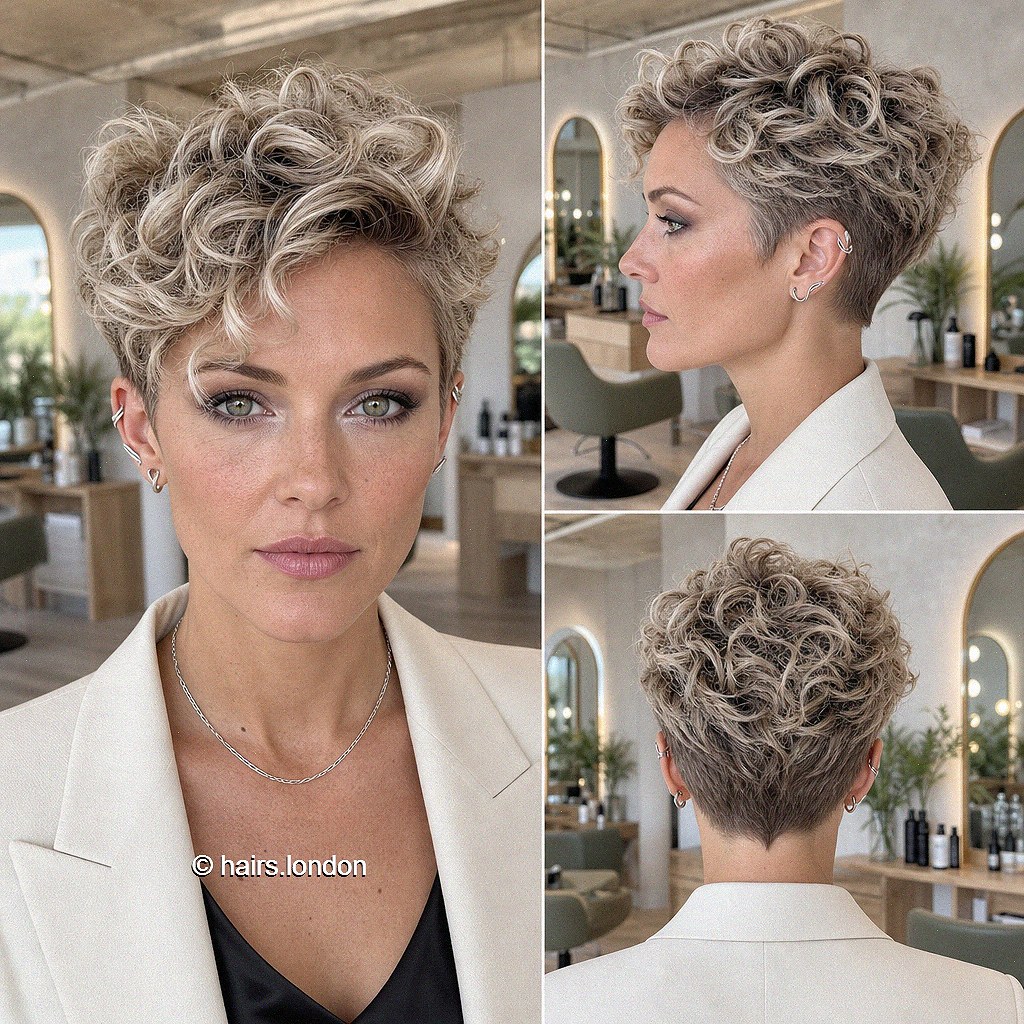
Loose champagne blonde curls give this pixie an easy, rounded shape, with a few pieces falling forward to soften the forehead. The sides sit close around the ears, so the fuller top feels balanced rather than bulky. Ask your stylist to leave enough length for your curls to form comfortably when dry. A little curl cream on damp hair can help organize the surface; avoid repeatedly touching it as it sets. This reference is especially useful if you want short sides without sacrificing movement. Compare the back view carefully, where the curls sit above a softly narrowed, neatly shaped nape.
2. Burgundy Curly Pixie with a Rounded Crown
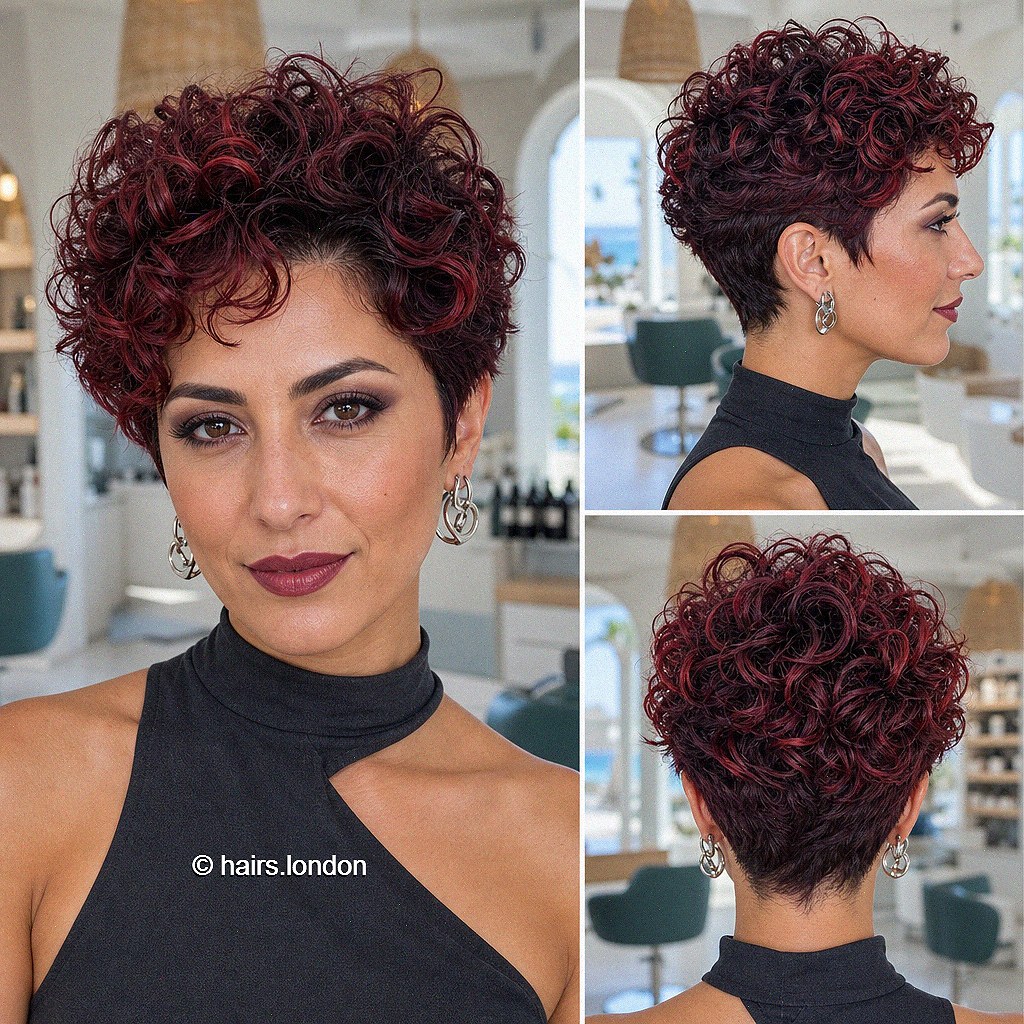
Burgundy ringlets create a fuller crown above short sides, giving this curly pixie definition from every angle. Darker areas between the curls add depth without making the outline look flat. At your consultation, discuss how tightly your hair curls and how much it contracts after washing. The front should be cut with that dry length in mind. Scrunch a modest amount of curl product through damp hair, then air dry or diffuse gently. If your curls are finer, use less product at the roots. Ask your stylist to preserve a rounded silhouette while keeping the perimeter comfortably clear of ears.
3. Ash Blonde Spiky Pixie with Closely Cut Sides
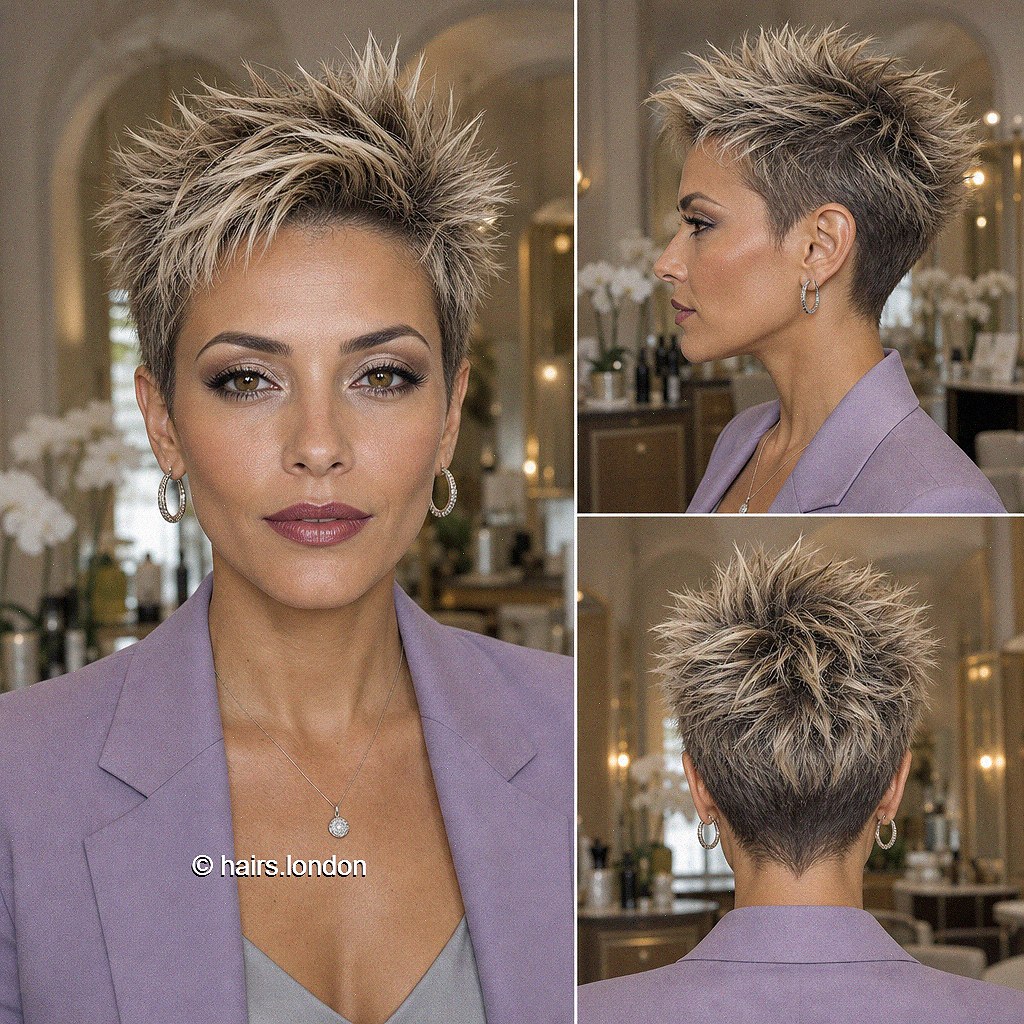
Ash blonde tips emphasize the pointed texture of this short pixie, while closely cut sides keep the profile compact. The top is deliberately irregular, with separate pieces rising in different directions. Ask for a textured crown rather than one uniform short length, and explain whether you want the sides clipped or softened with scissors. To style, warm a small amount of paste between your hands and work it lightly over dry ends. Lift selected strands instead of coating the whole head. If your hair grows strongly forward, discuss how much of this upright finish you can recreate comfortably each morning.
4. Dark Pixie with Copper Tips and a Lifted Front
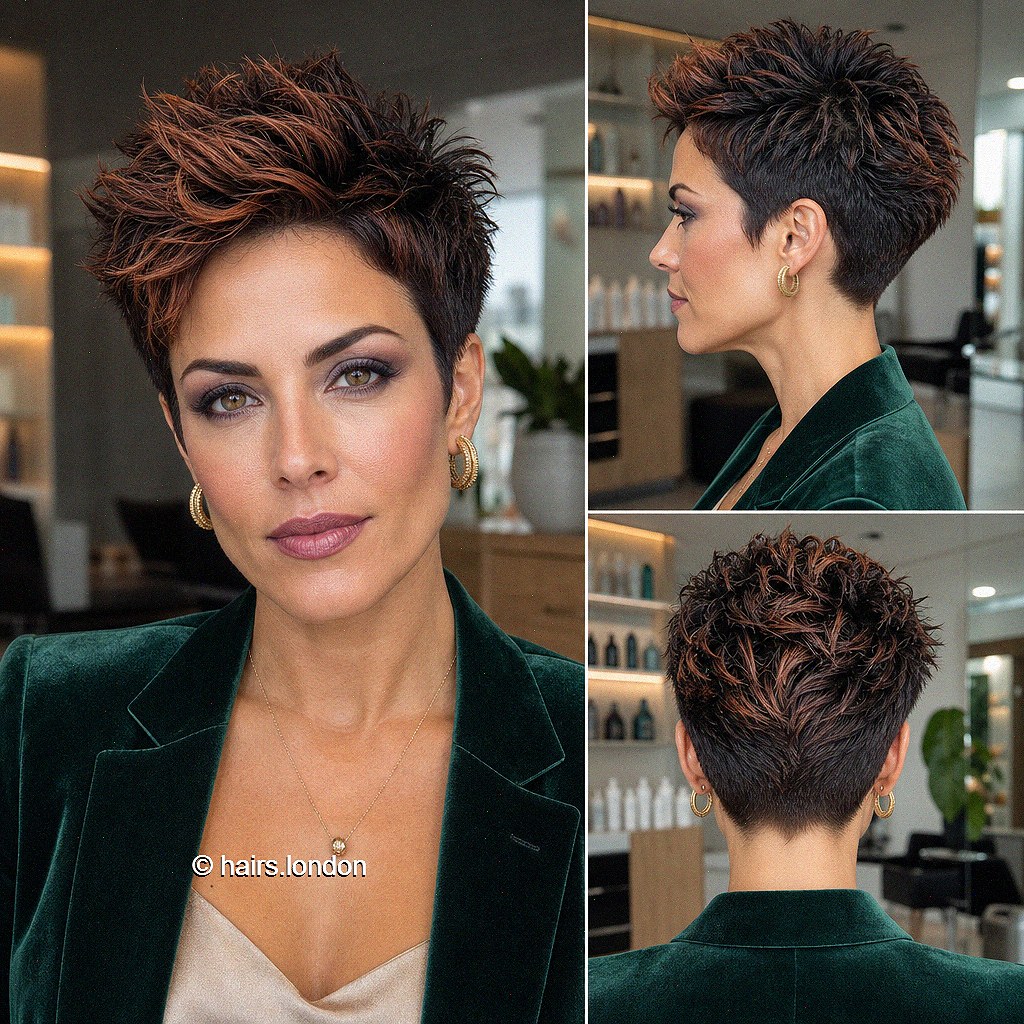
Copper tips bring warmth to this dark pixie, especially where the front lifts into a loosely sculpted shape. Short sides and a narrow nape make the longer crown look more pronounced. Ask your colorist to place the warm pieces where your layers naturally separate, so the contrast follows the haircut. During drying, lift the front at its roots before directing the ends slightly backward. Finish with a little paste where you want definition. Dense hair may need selective weight removal through the upper sides. Keep enough support at the crown so the shape remains balanced when styled more softly too.
5. Graphite Silver Pixie with a High Quiff
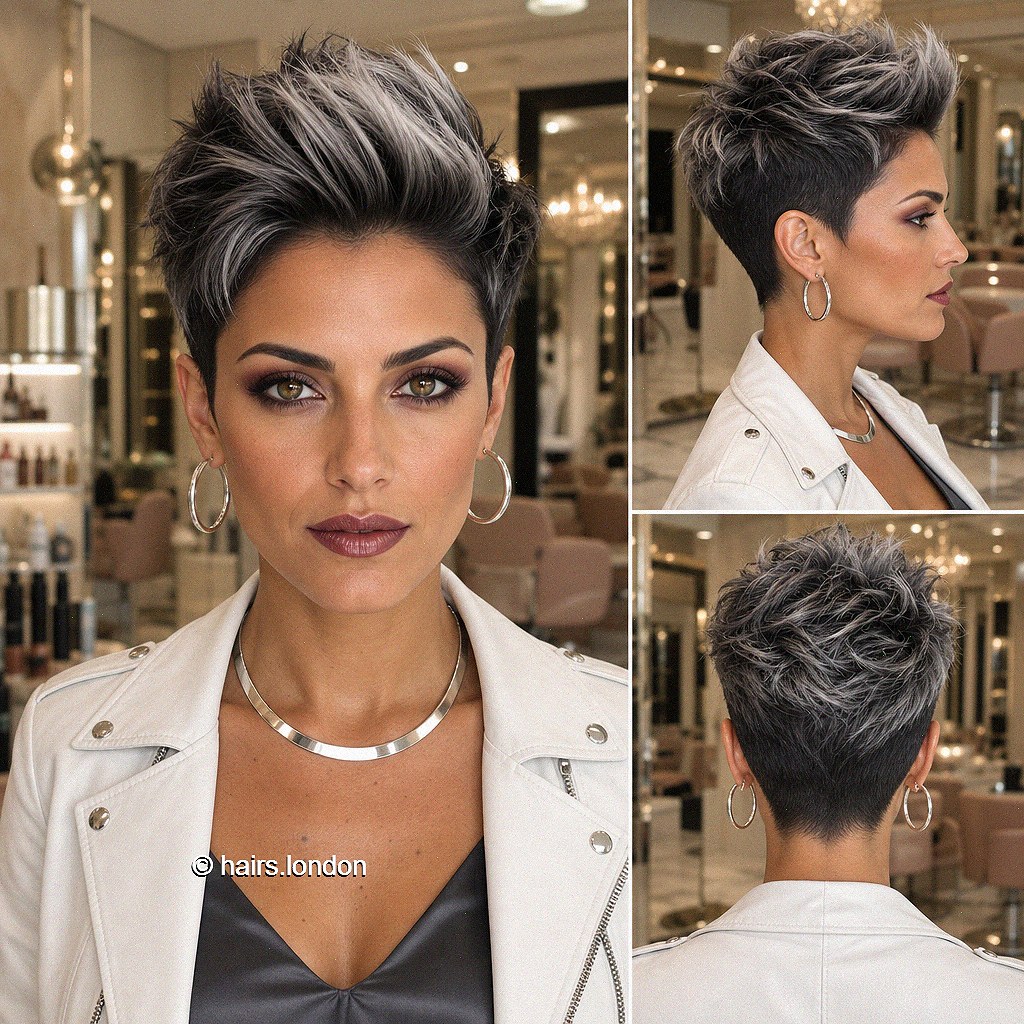
A high graphite silver quiff makes this pixie feel structured, with the front swept upward above a dark base. The sides remain close, allowing the pale top to become the main feature. Ask your stylist how much front length your hair needs to achieve this height without relying on excessive product. Blow dry the roots upward first, then guide the ends back using a brush. A light finishing spray can support the outline. If your hair is naturally gray, discuss whether tonal adjustment is necessary. Colored silver requires its own maintenance conversation, separate from keeping the short perimeter looking neat.
6. Platinum Spiky Pixie with Fine Pointed Layers
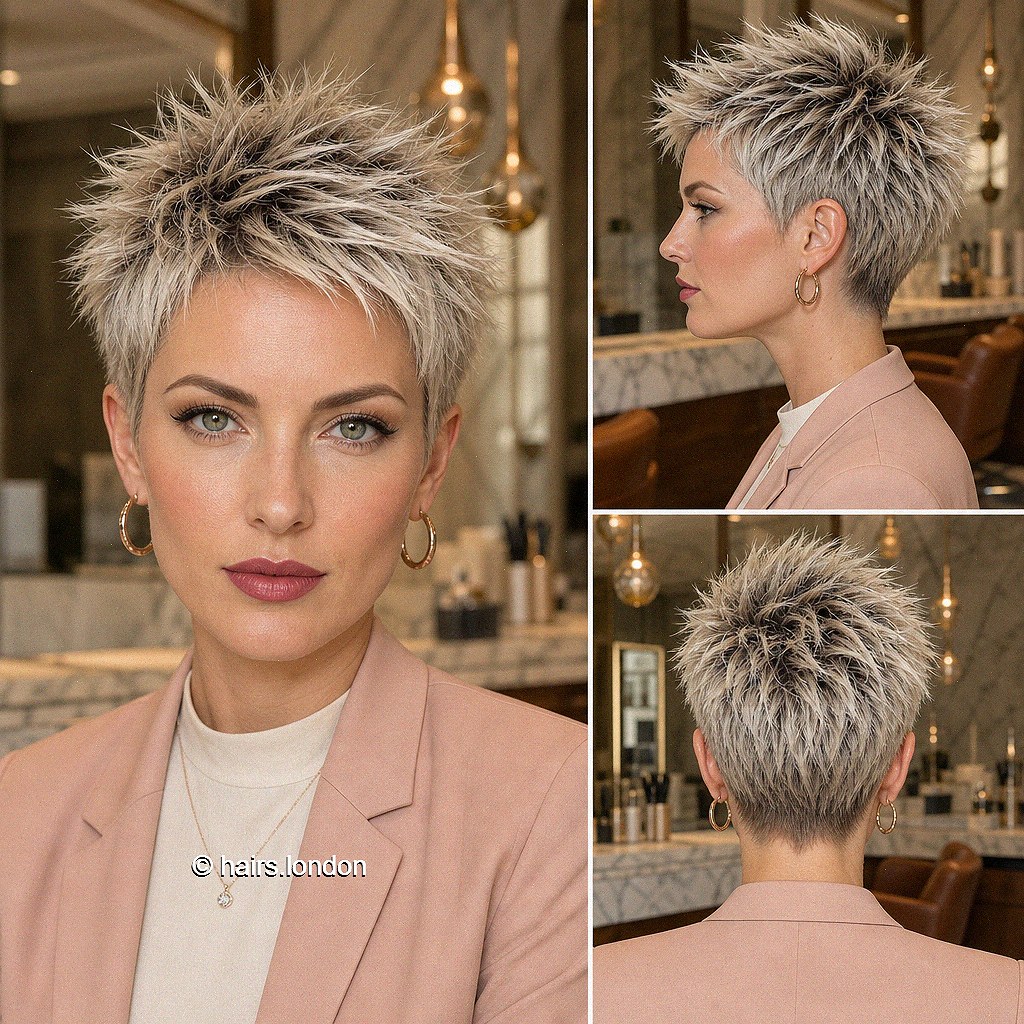
Fine platinum points give this cropped pixie a lighter, more scattered surface than a polished quiff. Darker roots help reveal the individual layers, while the sides follow the head closely. Bring the side photograph to show how little bulk you want around the temples. Ask your stylist to consider your hair density before thinning the top, since fine strands still need enough substance to look full. On dry hair, pinch a few ends with a tiny amount of paste. Avoid forming identical spikes everywhere. A deliberately uneven arrangement keeps this short silhouette relaxed and allows the pale highlights to show.
7. Pearl Silver Feathered Pixie with Side Bangs
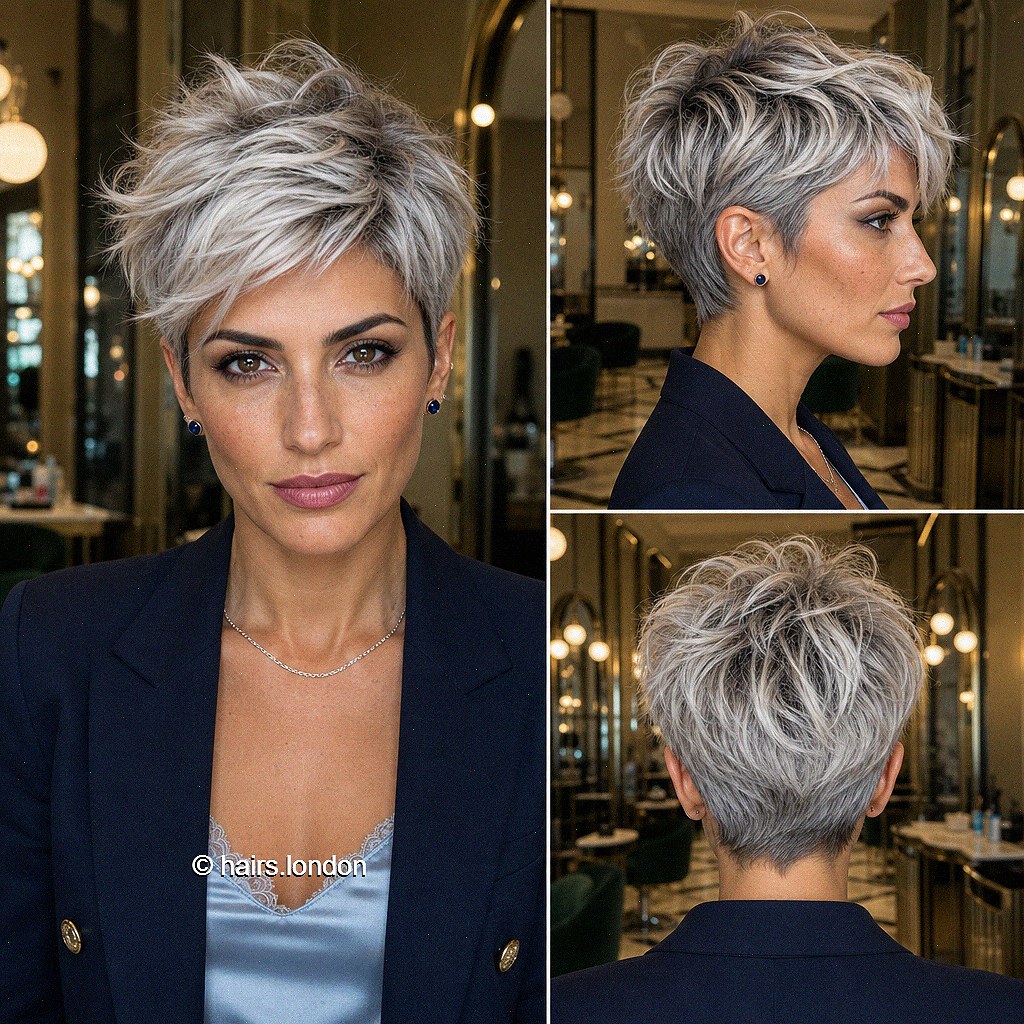
Pearl silver layers sweep sideways across this pixie, creating a feathered surface without the upright spikes seen elsewhere in the collection. The fringe is longer, and the rounded crown gives the back a softer outline. Ask your stylist to keep the upper layers mobile while controlling fullness around the ears. Dry the fringe in your preferred direction, then loosen the ends with your fingertips. Fine hair may benefit from preserving more density through the front. If you wear glasses, check where those pieces meet the frames. The clean nape helps the longer silver layers look purposeful from the back too.
8. Mushroom Blonde Long Pixie with a Sweeping Fringe
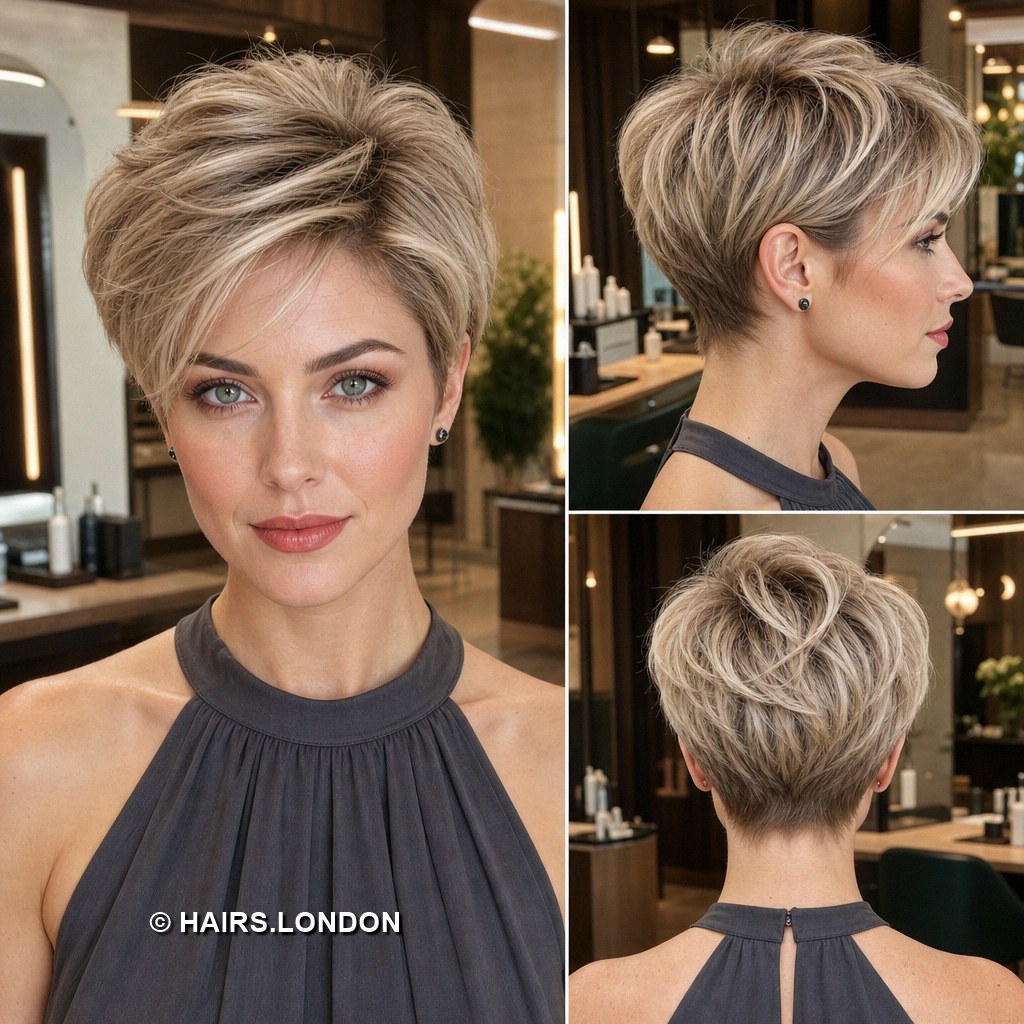
Mushroom blonde shading gives this longer pixie gentle dimension, while the sweeping fringe forms a soft diagonal across the forehead. The back is rounded above a short nape, making the haircut feel fuller than a close crop. Ask for a front length you can place comfortably without constantly moving it away from your eyes. A brush can guide the fringe sideways during drying, but avoid flattening the roots completely. This image is helpful for discussing a gradual move into shorter hair. Decide whether you want the ear exposed or lightly covered, because that detail changes the softness of the profile.
9. Frosted Silver Pixie with Airy Side Swept Layers
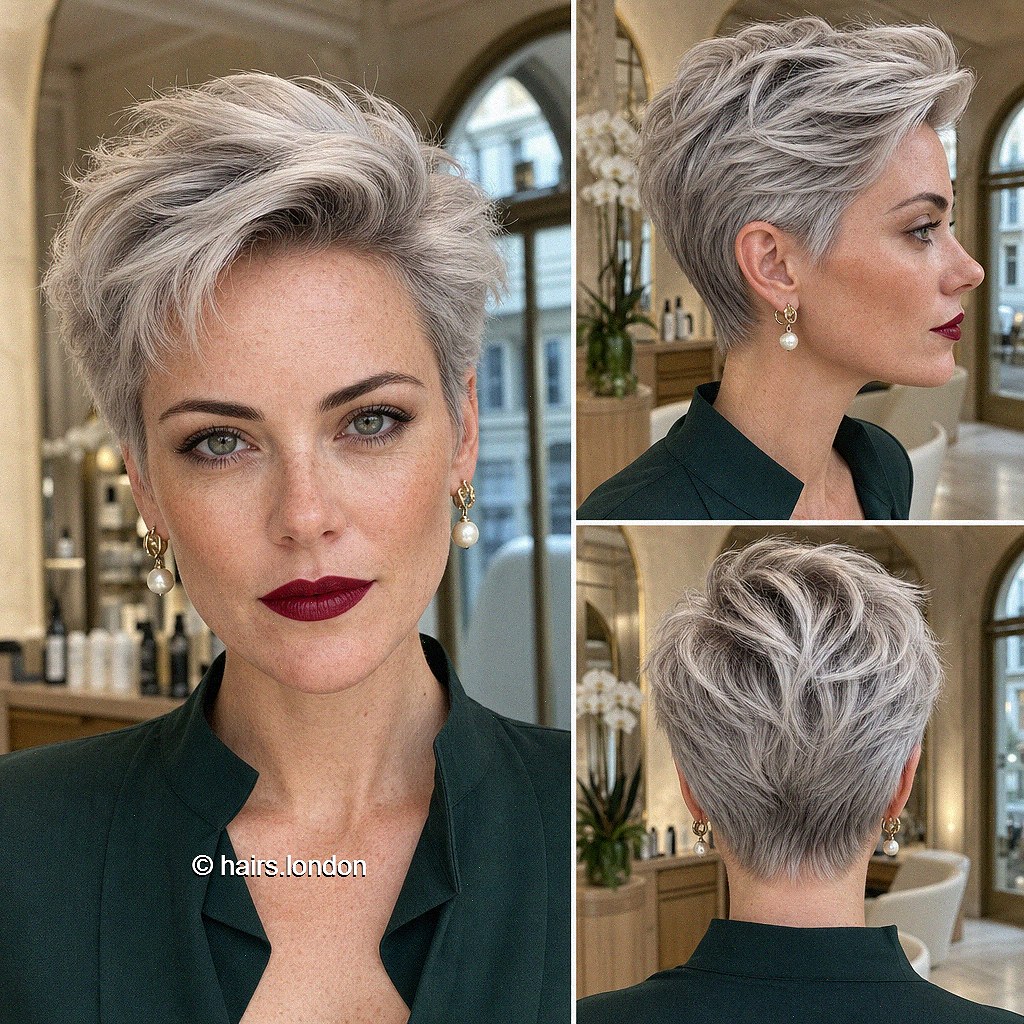
Frosted silver layers rise gently at the front before sweeping toward one side. The shape retains more softness around the temples than the tightly cropped spiky styles, while the back narrows neatly. Ask your stylist to balance crown height with the amount of hair you want beside your face. Blow dry with your fingers, directing the roots across rather than straight forward. A lightweight cream can soften the ends without making the silver surface look stiff. If your hair has a strong crown pattern, discuss where the layers should fall. The goal is a shape that settles naturally between washes.
10. Merlot Spiky Pixie with a Short Fringe
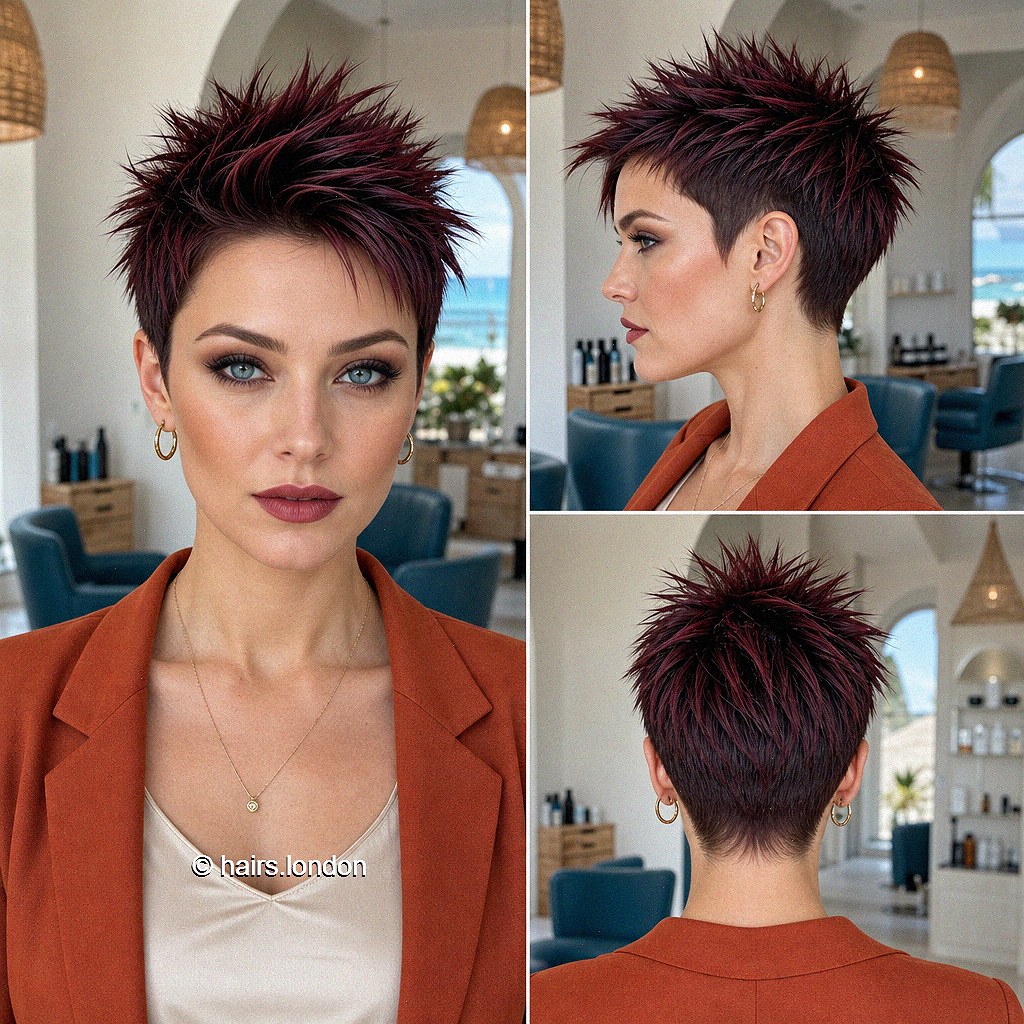
Merlot red points give this short pixie a sharp, compact outline. The fringe is minimal, leaving the forehead mostly open, and the sides are cropped closely enough to emphasize the crown. Ask your stylist to distinguish between texture and excessive thinning, particularly if your hair is fine. Work a little paste through dry ends, lifting sections where you want separation rather than dragging product into the roots. The red tone adds intensity, but the same silhouette can be worn in a natural shade. Discuss how the color will fade alongside how quickly the ears and nape may need tidying again.