


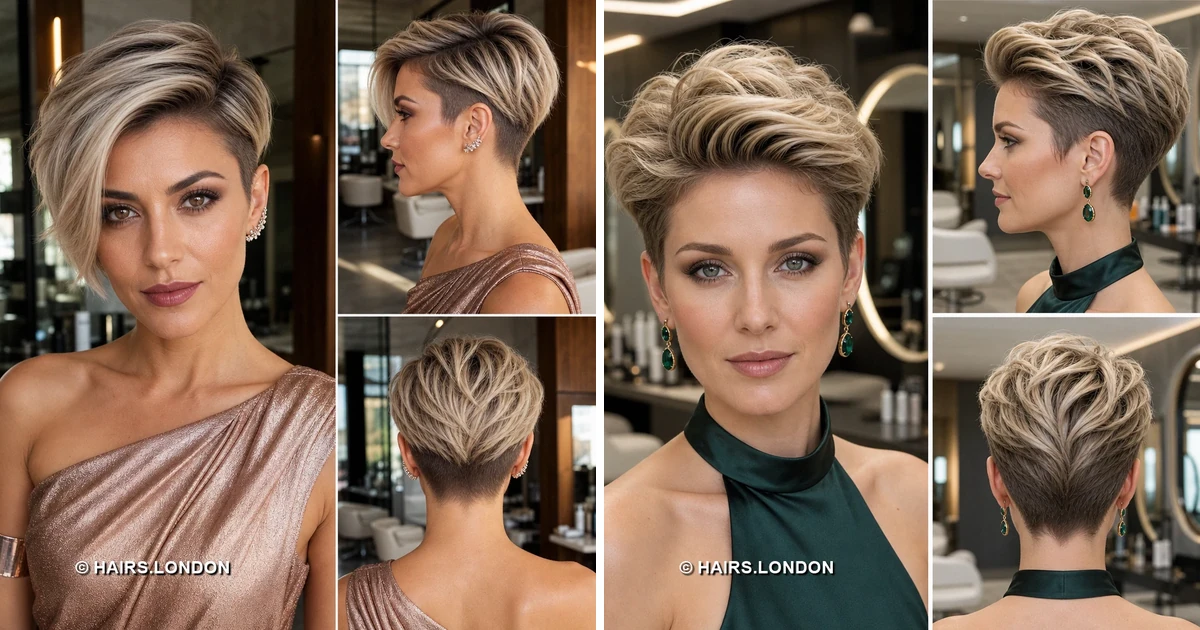
11. Ash Beige Pixie with a Tousled Crest
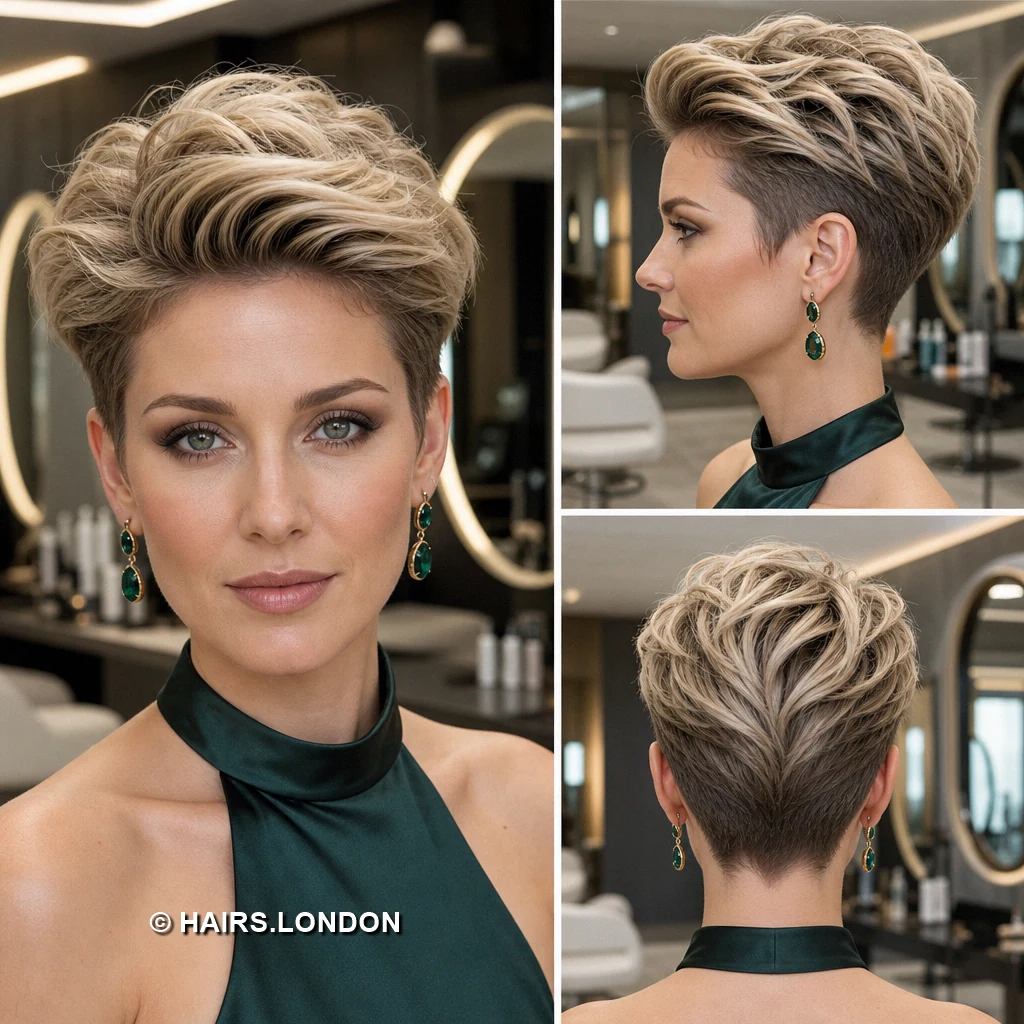
An ash beige pixie rises into an intentionally tousled crest. The front lifts back, exposing brows and emphasizing textured ends. Fine lighter pieces stand out against deeper roots throughout visibly. Short temple sections hug the ears beneath fuller top layers. The back stays compact and narrows into a soft taper. Request internal texture for lift without thinning the perimeter excessively. Lift damp roots while drying, then push the fringe backward. Apply matte paste lightly to selected tips for visible separation. Keep regular edge trims to preserve the close side silhouette. Revisit toner when lighter pieces lose their cool appearance noticeably.
12. Choppy Sandy Crop with a Piecey Fringe
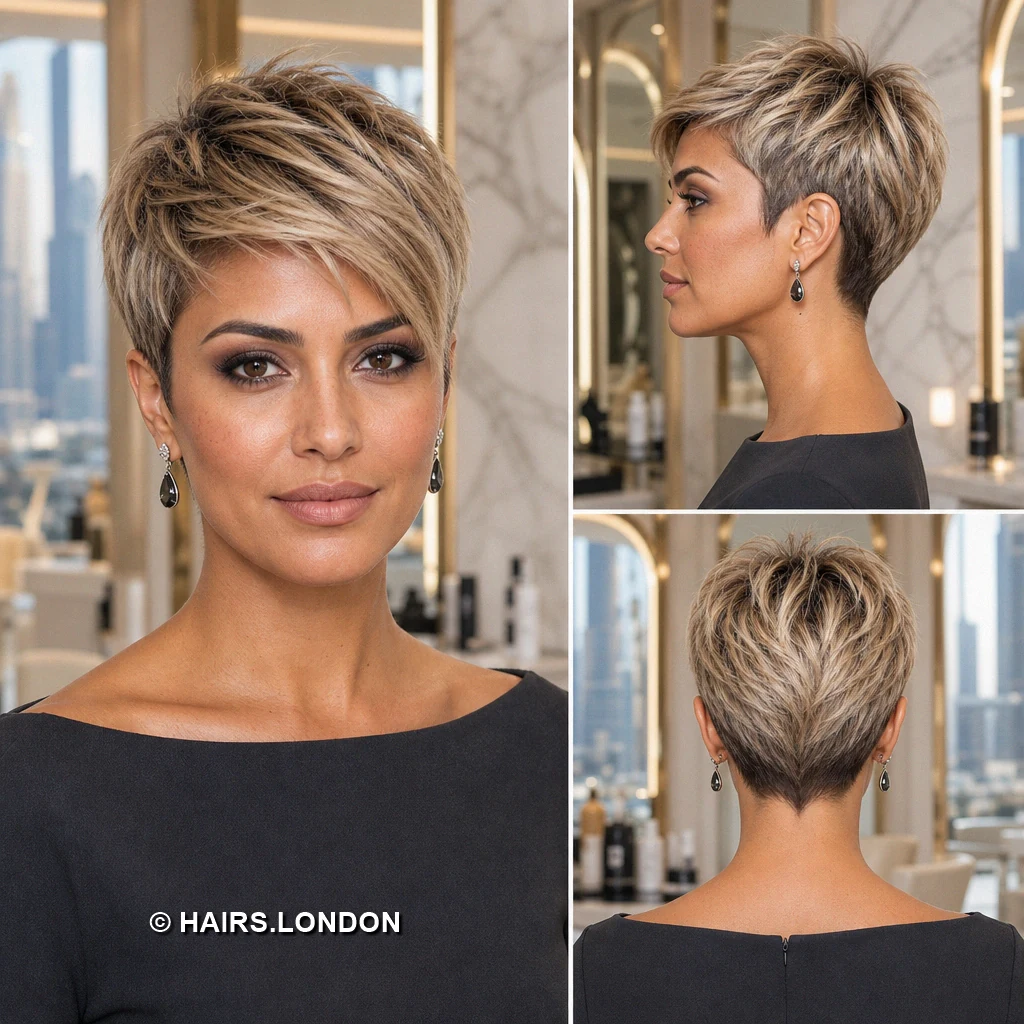
This sandy blonde crop shows a choppy, forward moving fringe. Irregular short points skim the forehead without covering eyebrows fully. The tousled crown carries height through distinctly separated upper strands. Muted brown roots anchor the lighter, warm beige surface highlights. Close sides expose ears before tapering into a narrow back. Ask for uneven texture above while retaining a clean perimeter. Air dry with mousse, then lift individual pieces using fingers. Use minimal paste so the short ends remain visibly airy. Trim the nape regularly to retain its snug tapered shape. Discuss whether your growth patterns support this lifted crown easily.
13. Soft Blonde Pixie with a Rounded Crown
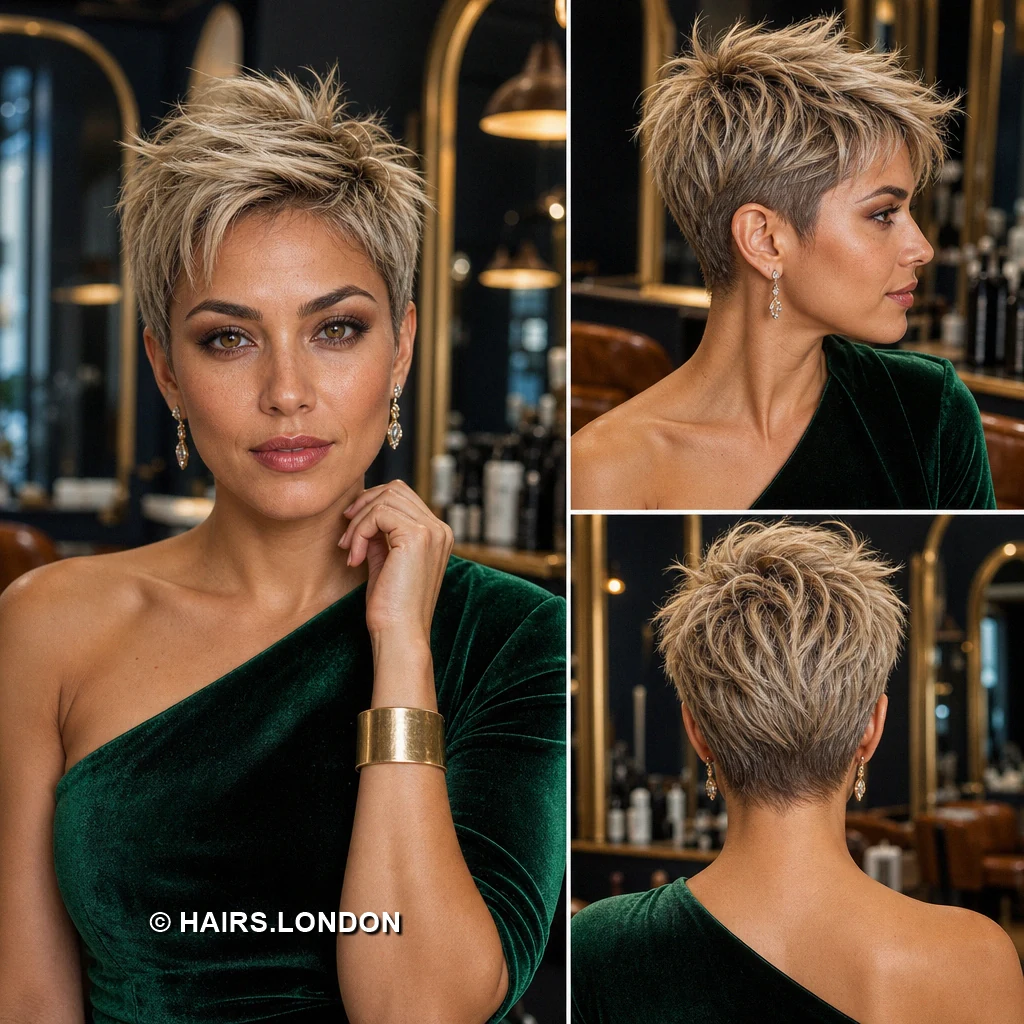
Soft blonde layers create a fuller and rounded pixie silhouette. A long diagonal fringe falls toward the outer eye corner. Darker root shading gives depth beneath the pale face framing. The crown remains gently elevated rather than spiky or rigid. Shorter sides uncover ears while back layers taper toward neckline. Request fullness around upper sides, with lighter ends for movement. Direct fringe diagonally with a brush while drying damp hair. A lightweight smoothing cream helps the curved layers retain softness. Keep the nape trimmed without taking too much crown weight. Discuss fringe length if you prefer an unobstructed eye area.
14. Beige Blonde Pixie with a Full Sweep
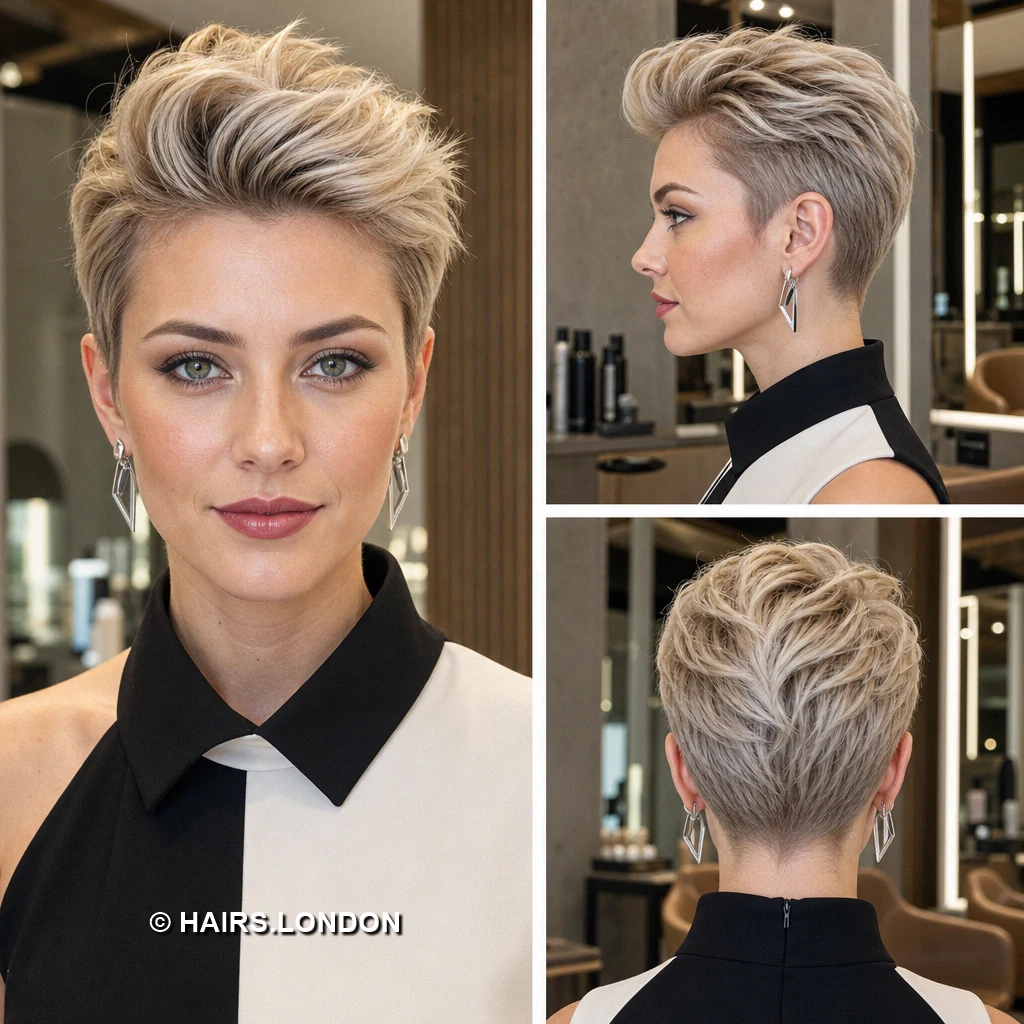
This beige blonde pixie balances a sweeping top against close sides. The heavier fringe arcs across the forehead toward one cheek. Dark roots deepen the separation between lighter ridges above them. One side remains especially short, exposing the ear and temple. Crown length sweeps backward before tapering cleanly into the nape. Ask for length contrast without removing necessary crown support. Blow dry the fringe across, using fingers for relaxed separation. Work lightweight paste through ends, keeping the shorter side smooth. Maintain the close taper before its contrast becomes less distinct. Talk through which side naturally takes your preferred deep part.
15. Pale Sandy Pixie with Feathered Spikes
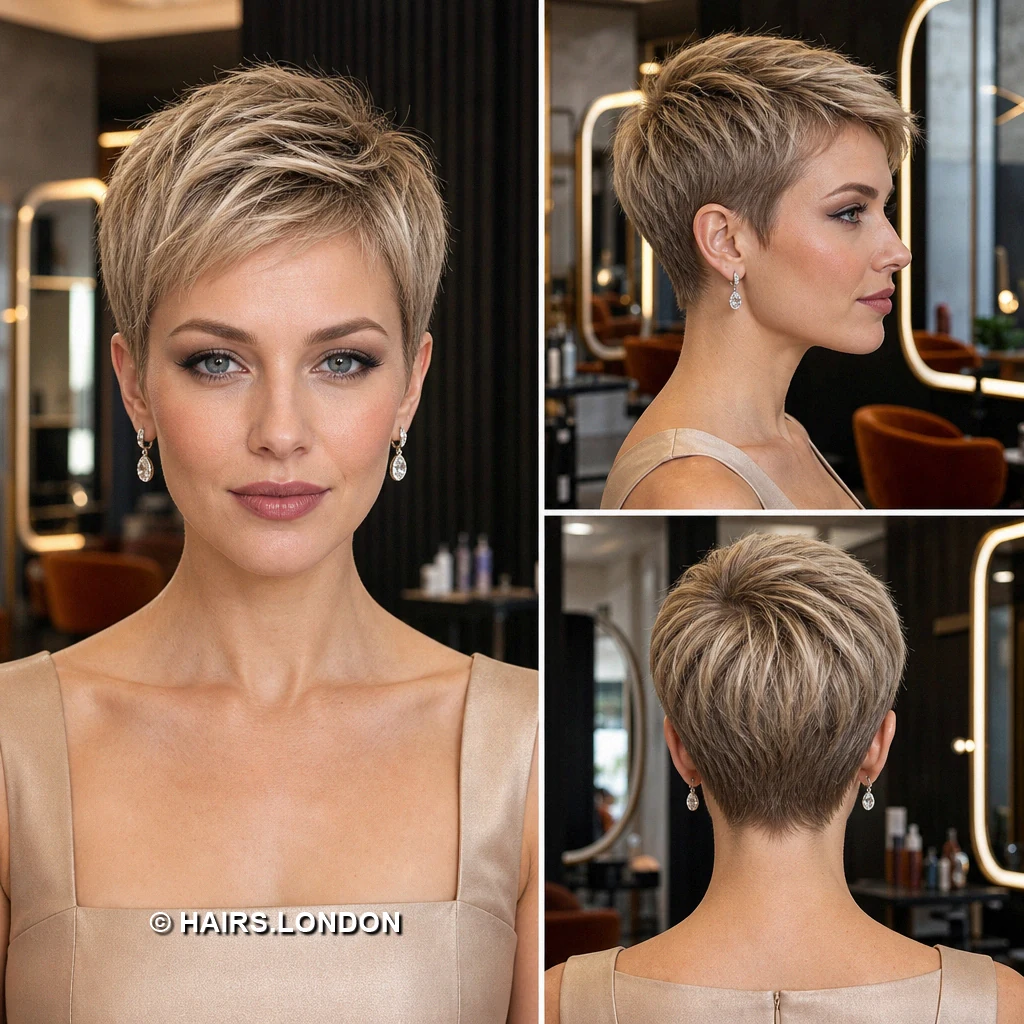
A pale sandy pixie pushes its front into irregular spikes. Feathered layers build airy height above the shorter side sections. Deeper roots remain visible beneath the lifted, lightly textured blonde. Brief forehead wisps interrupt the otherwise open front hairline slightly. Both sides contour ears, while back lengths taper toward neckline. Request varied top layers, not an evenly cropped horizontal shelf. Lift roots with fingertips while blow drying for extra movement. Use pliable wax sparingly to emphasize just a few tips. Maintain the tapered back with regular visits to your stylist. Ask about blonde toning if brassiness appears between color appointments.
16. Dark-Rooted Pixie with Sculpted Waves
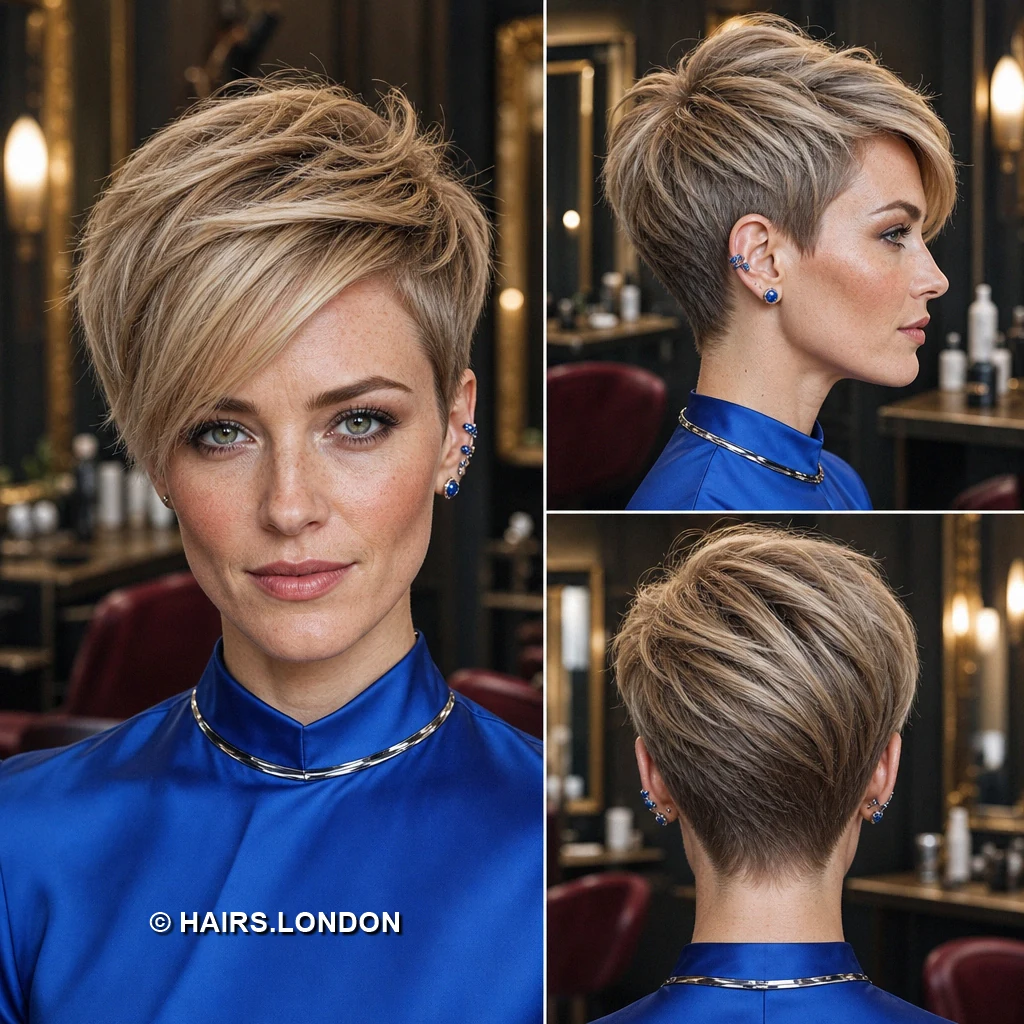
This dark rooted pixie features sculpted waves above close sides. Beige highlights trace curved ridges across its raised frontal section. The forehead stays open, with a smooth, lifted wave instead. Closely cropped temples create contrast beneath the expansive upper layers. Back strands curve into textured loops above a tapered nape. Ask for enough front length to form these broad bends. Dry roots upward, then guide longer pieces backward with fingers. Use flexible cream before setting selected ridges with light spray. Keep the shorter sides sharp with visits between top trims. Discuss whether your natural texture will hold this curved shape.
17. Icy Beige Pixie with a Lifted Front
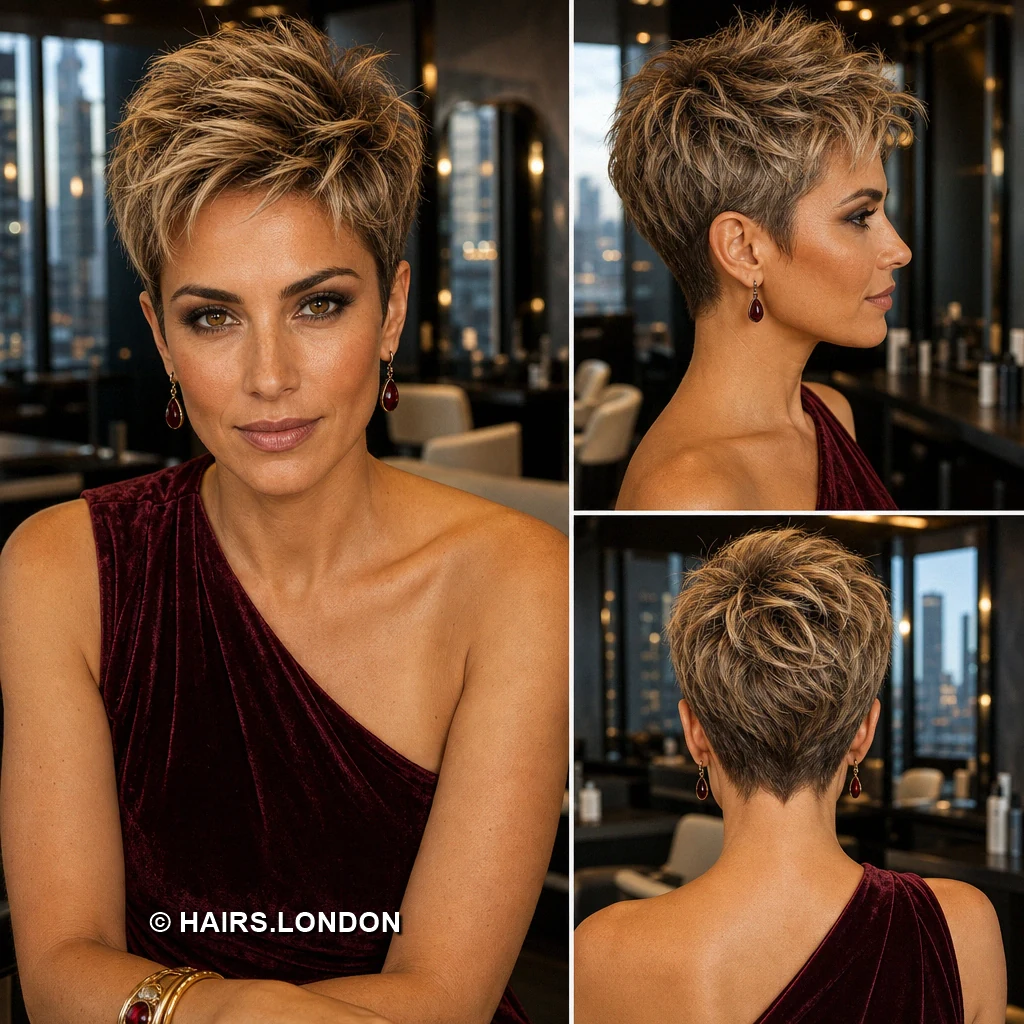
Icy beige blonde highlights brighten this short, lifted pixie style. The front stands up in soft peaks, leaving forehead exposed. Deeper roots provide contrast through the airy, separated crown layers. Snug side lengths follow the temples and reveal both ears. A tapered back narrows smoothly below the textured upper section. Request soft graduation rather than a harsh step behind ears. Blow dry front sections upward with fingertips and light mousse. Pinch a few ends with paste for controlled, flexible lift. Protect this cool blonde with occasional professional salon toning appointments. Plan frequent neckline tidying if you like this clean outline.
18. Warm Caramel Crop with a Compact Quiff
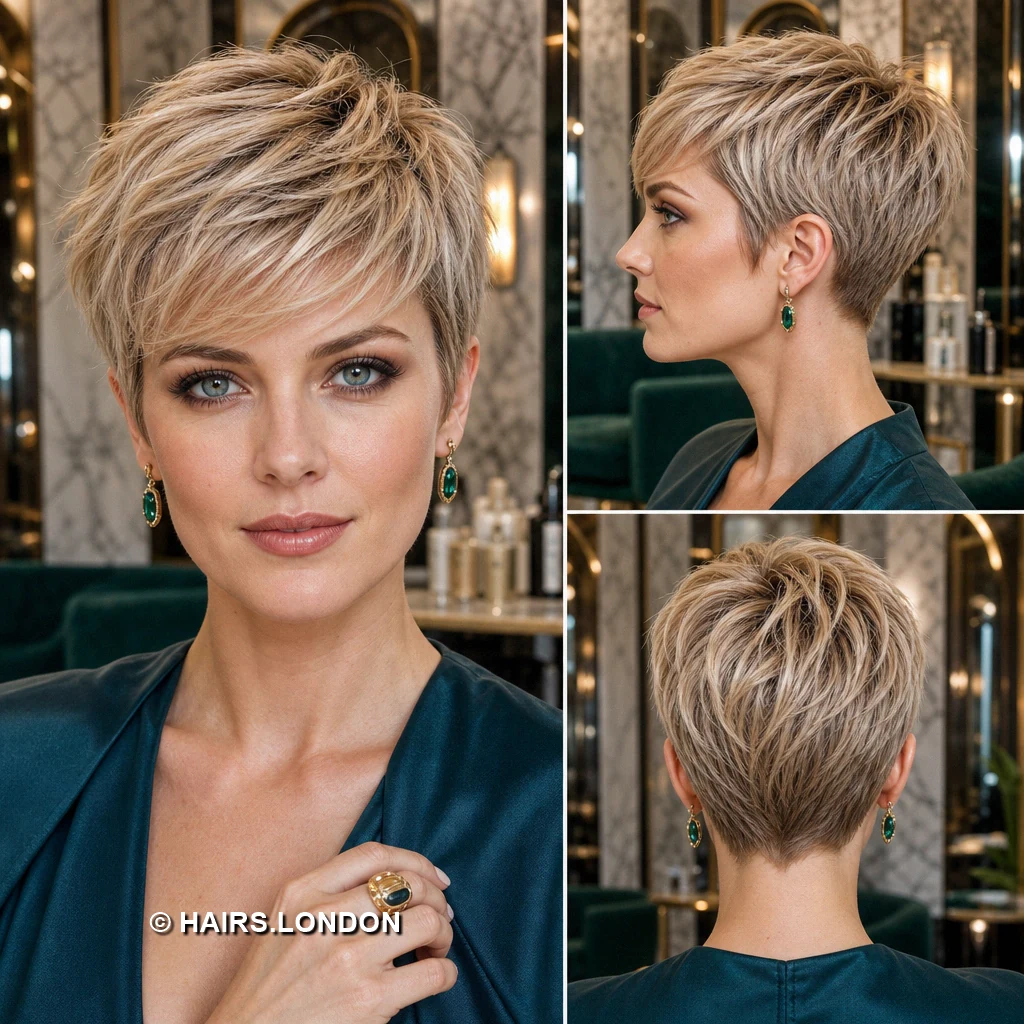
This warm caramel blonde crop lifts into a compact quiff. The front stands upright, displaying narrow, defined textured strands clearly. Shorter sides hug the head while the crown leans backward. Brown roots appear beneath the honey toned surface and fringe. Behind, layered lengths narrow into a neat, close cut nape. Ask for top length that stays upright without heavy backcombing. Apply mousse at damp roots before blow drying upward gently. Separate several front pieces with a tiny amount of wax. Keep temple edges precise while allowing crown texture to grow. Consult your colorist about refreshing lighter strands near the front.
19. Highlighted Brown Pixie with an Asymmetric Sweep
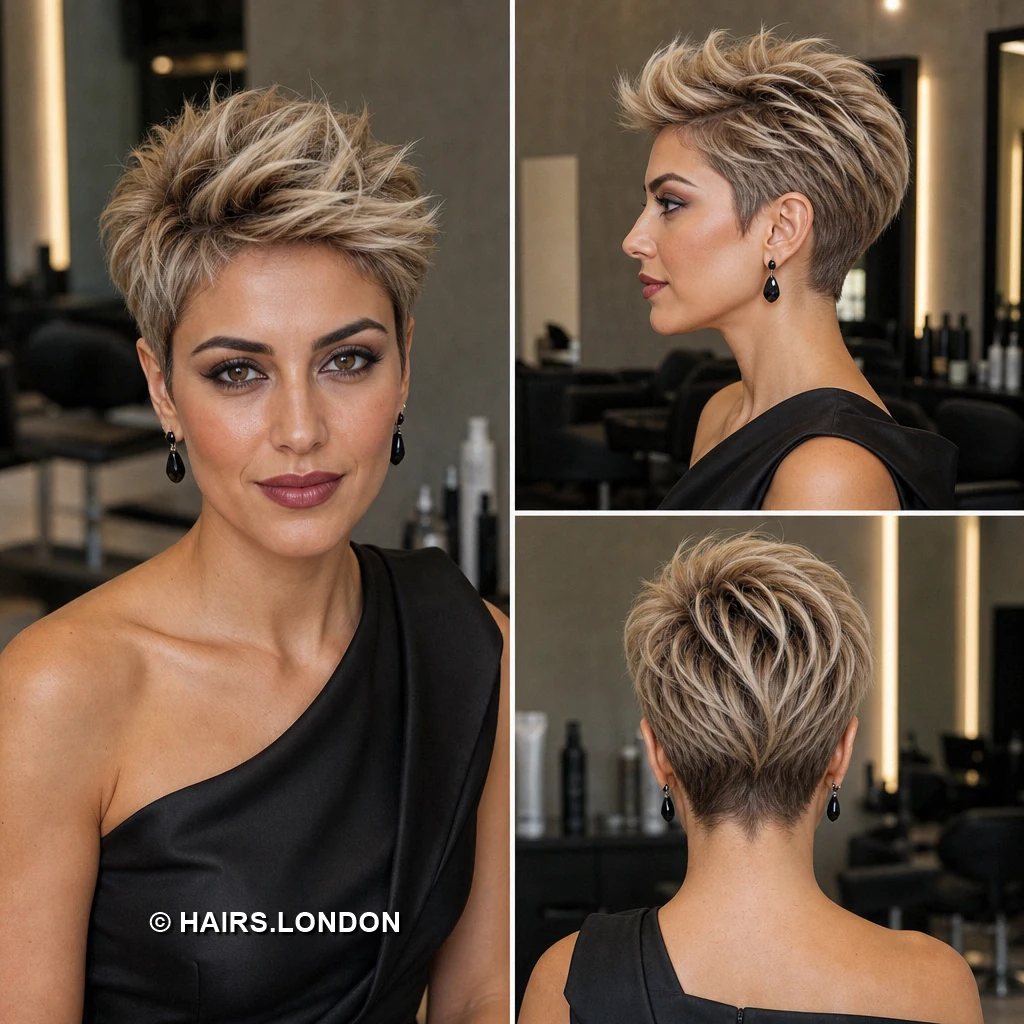
Soft brown hair gains dimension from beige blonde streaks above. A long fringe curves sideways, grazing the forehead above brows. The crown forms broad, loose waves with an asymmetric sweep. Very short sides reveal ears beneath the fuller upper shape. The back narrows neatly into a dark, closely tapered nape. Request longer front layers that bend without falling into eyes. Blow dry sideways, lifting the roots for a relaxed curve. Finish with flexible paste, concentrating product on lighter upper pieces. Keep the underlayer trimmed to preserve its visible length contrast. Ask about highlighting placement that enhances your natural parting best.
How to Choose a Textured Pixie Haircut
Start with the feature you want to wear every day. A long side fringe offers more coverage and styling flexibility; a lifted front keeps the forehead open but usually needs daily root styling. Compare the side and back views as carefully as the front: a close taper will show regrowth sooner than a softer, rounded outline. Ask your stylist to adapt crown height and fringe length to your hair density, growth patterns and preferred part.
Styling Different Hair Textures
For fine hair, work a small amount of lightweight mousse into damp roots and dry upward before adding any paste. Dense hair may benefit from carefully placed internal layers so the crown moves without becoming wide at the sides. If your hair has a natural wave, scrunch it as it dries and define a few bends rather than forcing every strand smooth. For a sleeker sweep, direct the fringe with a brush and finish with a little styling cream. Apply wax or paste mainly to the ends to avoid flattening the roots.
Keeping Blonde and Highlighted Color Fresh
The images show pale blondes, warmer beige and caramel tones, and darker roots that provide depth. Discuss whether you want that root contrast preserved or prefer more frequent color appointments. Use color-safe care and limit unnecessary heat. If a cool blonde becomes yellow, ask your colorist whether occasional toning or a sparingly used purple shampoo is appropriate; overusing either can leave the shade dull. Concentrating highlights on visible top layers can make the texture more apparent, but placement should follow your actual cut.
Maintaining the Pixie Shape
A pixie changes quickly as the sides and nape grow. Arrange trims according to how precisely you want those areas to sit, and have the fringe checked separately if it starts crossing your eyes. At each visit, specify whether you want to keep crown length for a sweep or quiff; removing too much can change the silhouette. Between appointments, restyle damp hair from the roots rather than building up more product on an older style.
What to Discuss with Your Stylist
Bring the image that best matches your preferred front, then point out the side taper and nape you like. Explain how much forehead coverage you want, where your hair naturally parts, how often you are willing to style it, and whether you want visible darker roots. Ask your stylist to assess cowlicks, density and natural texture before setting the crown and fringe lengths. Agree on a realistic trim and color schedule before cutting.
Frequently Asked Questions
What makes a pixie look textured?
Layers of varying lengths, softly cut ends and styling that separates selected strands create visible texture. The cut should still retain enough weight to hold its intended shape.
Which of these cuts offers the most forehead coverage?
The longer asymmetric sweeps and extended side fringes provide more coverage than the short, lifted fronts. Ask your stylist to check the fringe length when dry.
Can fine hair hold a lifted pixie?
It may, especially with suitable crown length, lightweight root mousse and upward blow drying. Avoid heavy products that collapse fine roots.
How can thick hair avoid looking bulky in a pixie?
A stylist can shape the sides closely and remove carefully chosen internal weight. Keeping enough surface length preserves movement without exposing overly thinned ends.
Do I need to blow dry a swept fringe?
Not always, but directing it while damp gives you more control over its part and curve. A small brush or your fingers may be enough.
What product creates piecey ends?
A small amount of flexible paste or matte wax can define individual tips. Start with less than you think you need.
How often should a tapered nape be trimmed?
Trim it when regrowth begins changing the outline you want. A very close, precise taper generally needs attention sooner than a softer nape.
Can I keep dark roots with blonde top layers?
Yes. Several pictured cuts use darker roots for contrast and depth. Ask your colorist how the placement will look as it grows.
Will a short fringe work with a cowlick?
That depends on the cowlick’s position and direction. Have your stylist assess it on dry hair before committing to a very short fringe.
How do I keep a pale blonde from looking yellow?
Follow your colorist’s toning advice and use purple shampoo only as needed. Heat protection and color-safe washing can also help preserve the shade.
Are these pixies suitable for naturally wavy hair?
Natural wave can enhance many of the lifted and tousled shapes. Your stylist should adjust layer lengths to account for how much your hair springs up when dry.
What should I bring to a pixie consultation?
Bring front, side and back views, and identify the fringe, crown height, taper and color details you actually want. Mention your daily styling time as well.
Conclusion
The most useful choice is not simply a favorite front view. Look for a fringe you can live with, a crown your texture can support, and sides and a nape you are happy to maintain. Those decisions will help your stylist turn one of these textured pixie haircuts into a shape that works from every angle.