


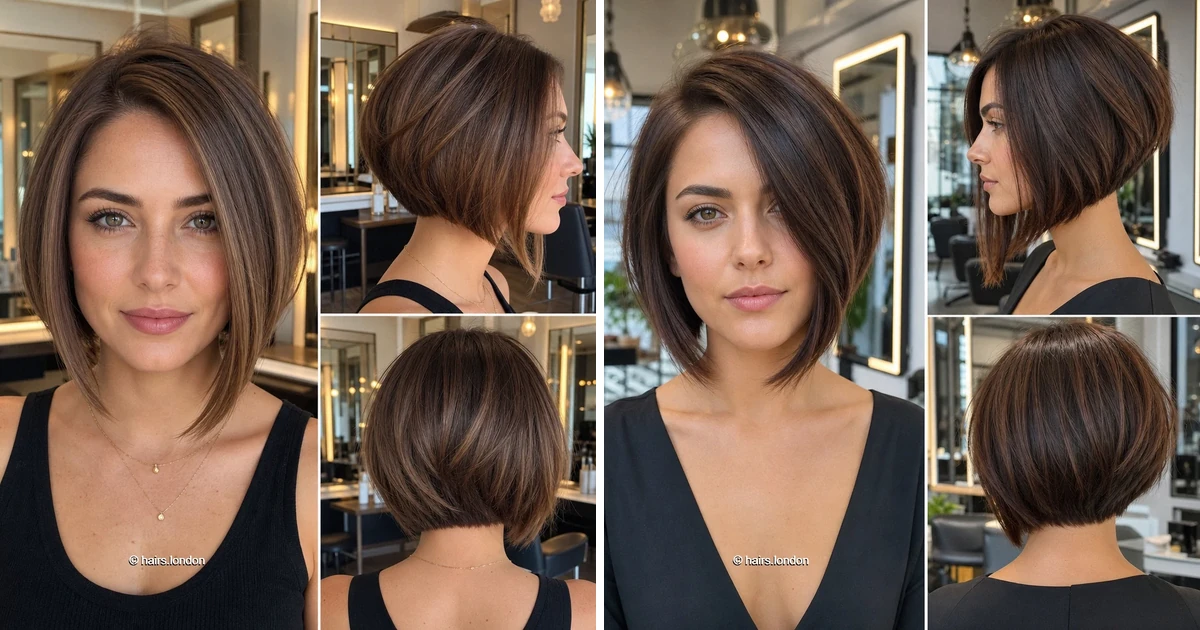
The most useful short bob inspiration shows more than the front. These ten cuts reveal how a jaw-length edge, a textured crown, or a closely shaped neckline changes the whole silhouette. Some are soft and tousled; others rely on a clear front-to-back angle. Use the front, side, and back views to decide which details suit your hair’s density, natural movement, and preferred styling routine.
1. Smooth Brunette Bob with a Longer Front
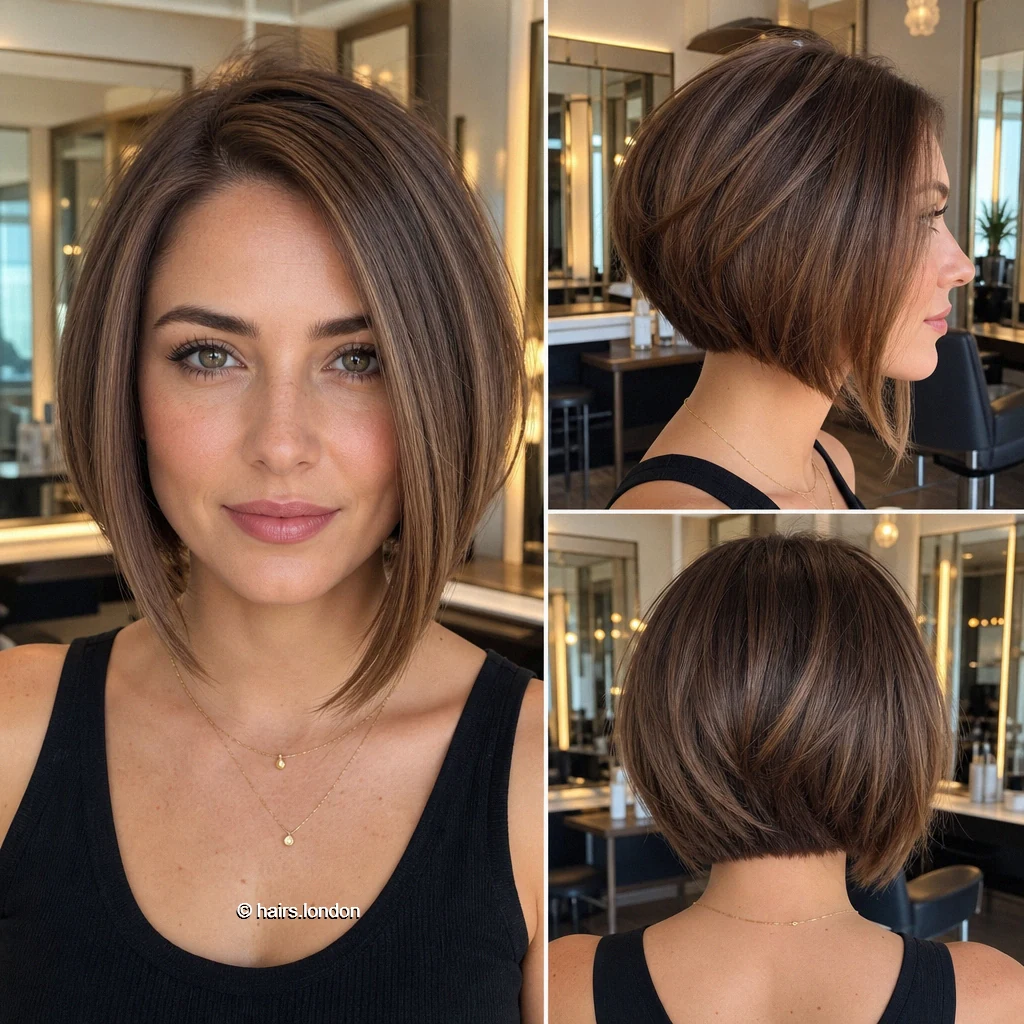
Soft brunette tones and fine caramel ribbons illuminate this bob. The front falls below the chin, framing the face gently. Behind, a shorter neck-skimming edge forms a softly compact silhouette. Subtle back layering adds fullness without disguising the clean perimeter. Ask for restrained graduation if your hair needs gentle lift. A side part brings the longer section across the face naturally. Blow dry downward, then bend the front ends inward gently. Use lightweight serum sparingly to preserve movement and shine. Regular trims keep the nape tidy and front clearly defined. Check your growth pattern before committing to this pronounced angle.
2. Tousled Jaw-Length Bob with a Soft Parted Fringe
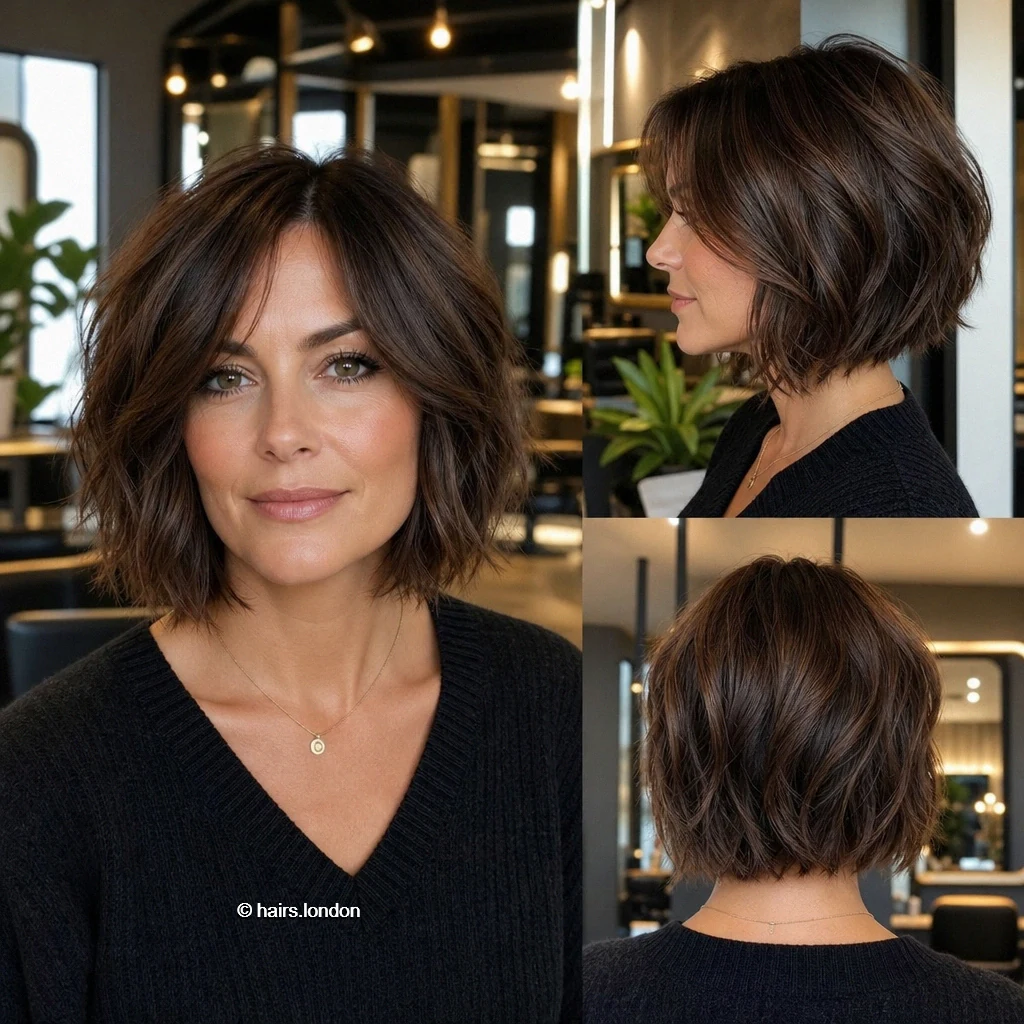
Deep brown color gives this jaw-length bob natural richness. Loose layers create airy volume through the sides and crown. Soft parted fringe opens around the eyes and cheekbones gently. The back appears softly textured, ending high against the neck. Request internal movement without thinning away the entire lower edge. Scrunch mousse into damp hair, then diffuse on low heat. Refresh face-framing pieces with fingers rather than stiff hairspray. Fuller hair may benefit from carefully placed internal weight removal when necessary. Finer strands need restraint so the ends remain visually substantial. Trim the fringe when it starts interrupting your preferred part.
3. Jaw-Length Bob with Broken-Up Ends
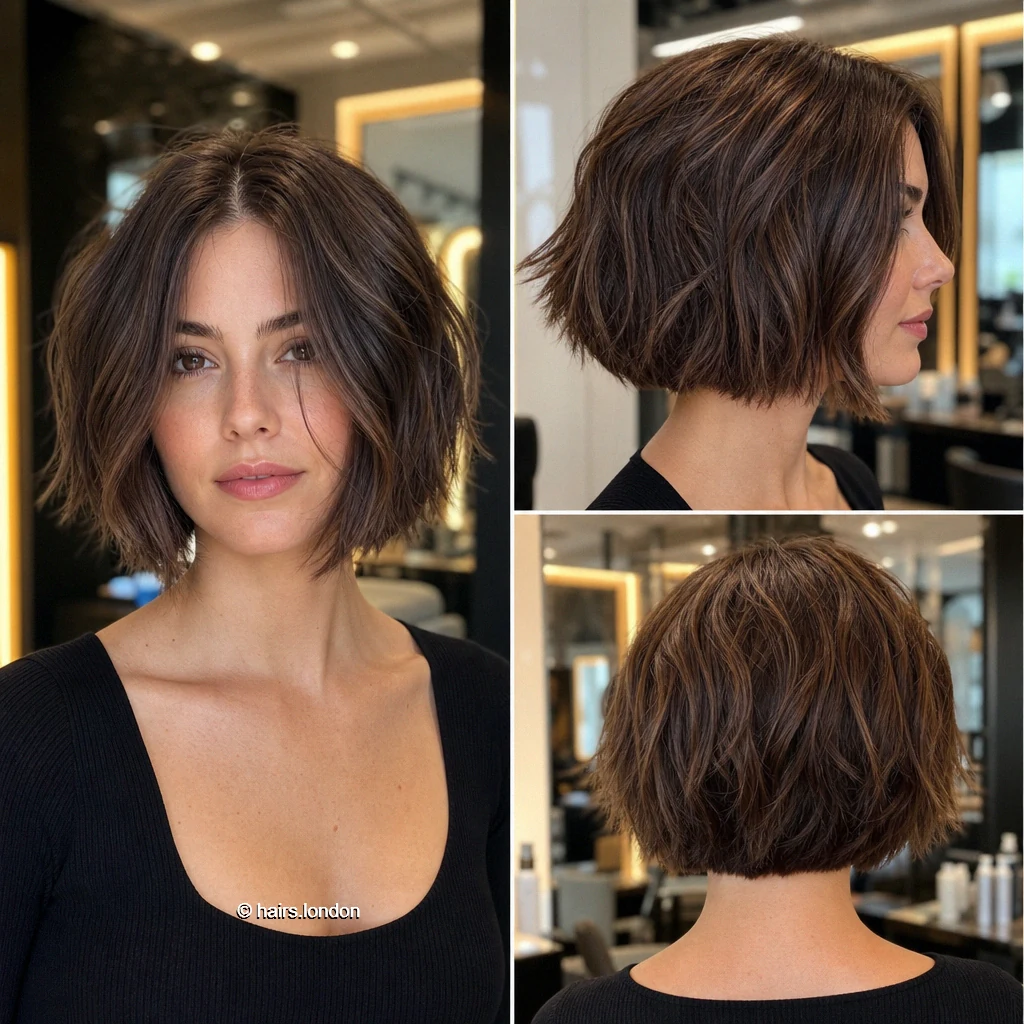
Chocolate brown strands form a tousled bob around jaw level. Separated surface layers give the crown lift and irregular movement. A middle part releases long pieces alongside both cheekbones softly. The back has a compact neckline beneath visibly broken ends. Ask your stylist to retain enough perimeter for lasting shape. Work cream through damp waves, then scrunch sections upward gently. If hair is straight, use a few loose bends instead. Avoid heavy oils that flatten its airy side volume quickly. Denser textures may need strategic debulking, not blanket thinning everywhere. Schedule reshaping when the neckline loses its cropped definition noticeably.
4. Loose Wavy Bob with a Short Neckline
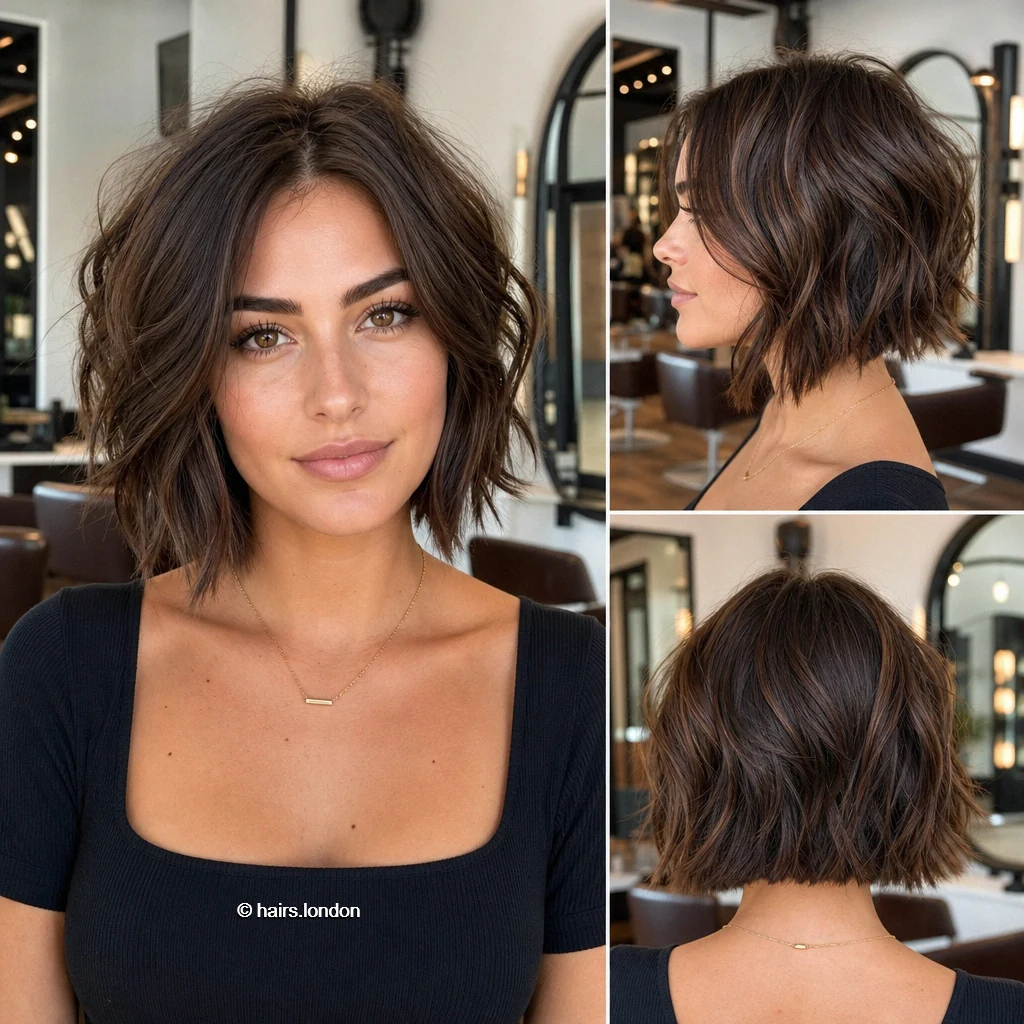
Warm brunette color accompanies a loose, chin-grazing textured bob. Long front pieces and a near-center part frame cheekbones. The neckline remains short, while uneven ends lend softness overall. Visible layering creates width and lift rather than sharp geometry. Ask for flexible layers if your natural waves need space. Apply light foam, then scrunch and allow movement to settle for definition. Smooth only the ends that stick out beyond the outline. Straight hair may need gentle heat styling for comparable texture. Thick hair benefits from selective weight control around the sides. Keep neck length refreshed before the rounded shape spreads outward.
5. Rounded Bob with a Deep Side Sweep
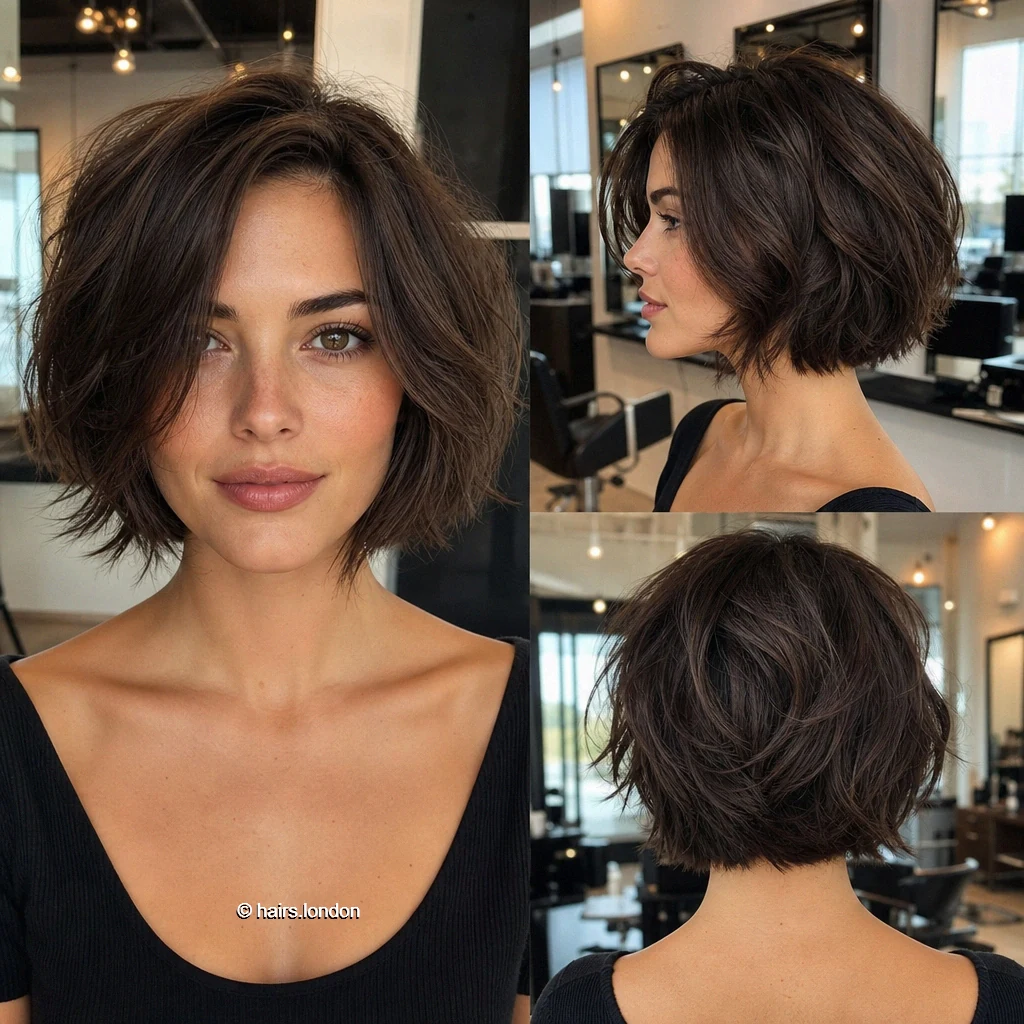
Dark brunette hair forms a rounded bob above the shoulders. Side-swept front layers graze one eye and soften cheekbones. Feathery edges break up the short, softly curved rear neckline. The crown looks airy rather than rigid or heavily stacked. Ask for subtle layering that preserves fullness around the bottom. Rake styling cream through damp strands and lift the roots. Let natural bends separate, or add loose waves sparingly instead. Fine hair needs lighter product to avoid flattened front pieces. Discuss cowlicks before choosing how far across to sweep hair. Trim uneven tips regularly when they obscure the deliberate curved outline.
6. Smooth Angled Bob with a Graduated Back
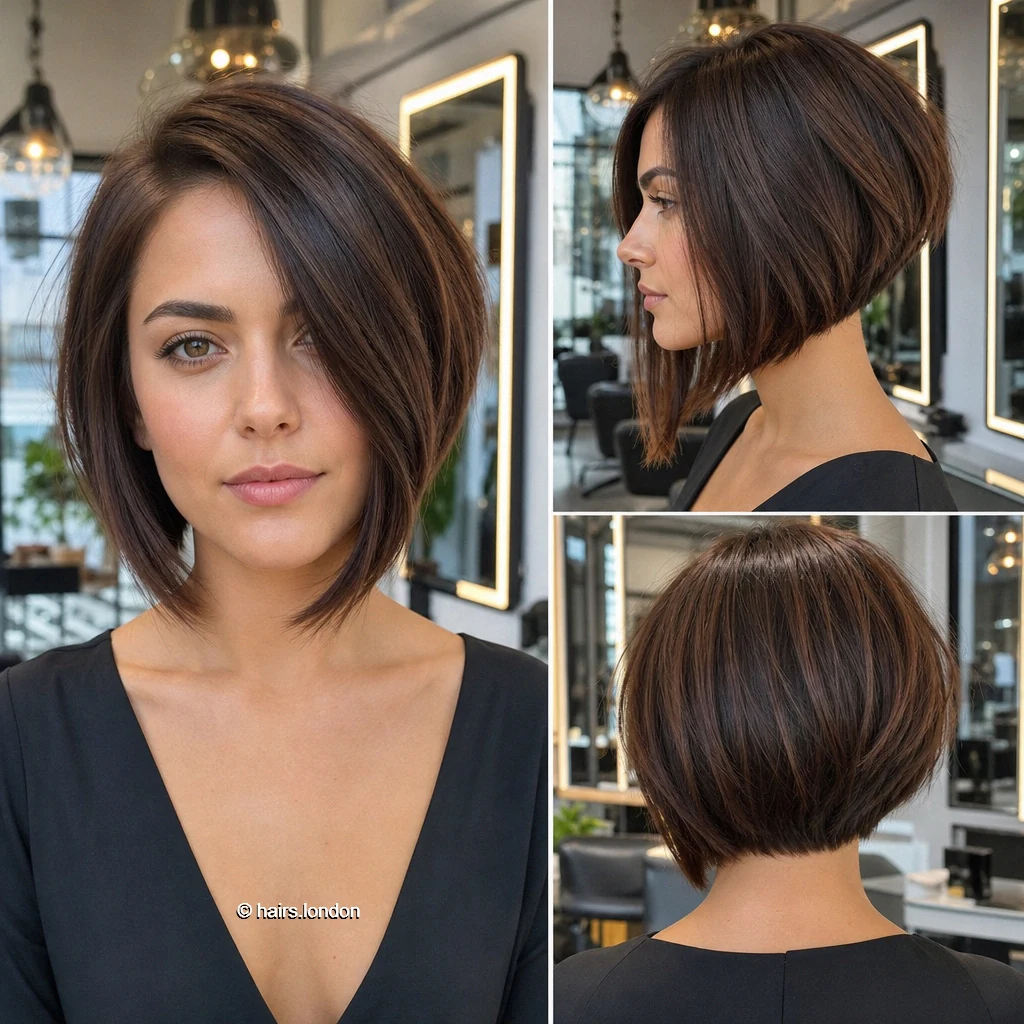
Deep brunette tones define this smooth, dramatically angled short bob. The front extends beneath the jaw while back hugs neck. Visible graduation builds fullness above a closely tapered short neckline. A deep side part sends long hair across the forehead. Request balanced weight so the shorter back retains its curve. Direct airflow downward with a brush, polishing the front edge. Use heat protection and avoid flattening the lifted rear section. Check how naturally dense hair sits behind each ear beforehand. This silhouette requires frequent neckline tidying to retain contrast clearly. Choose softer angles if daily smoothing does not appeal much.
7. Long-Front Bob with a Rounded Graduated Back
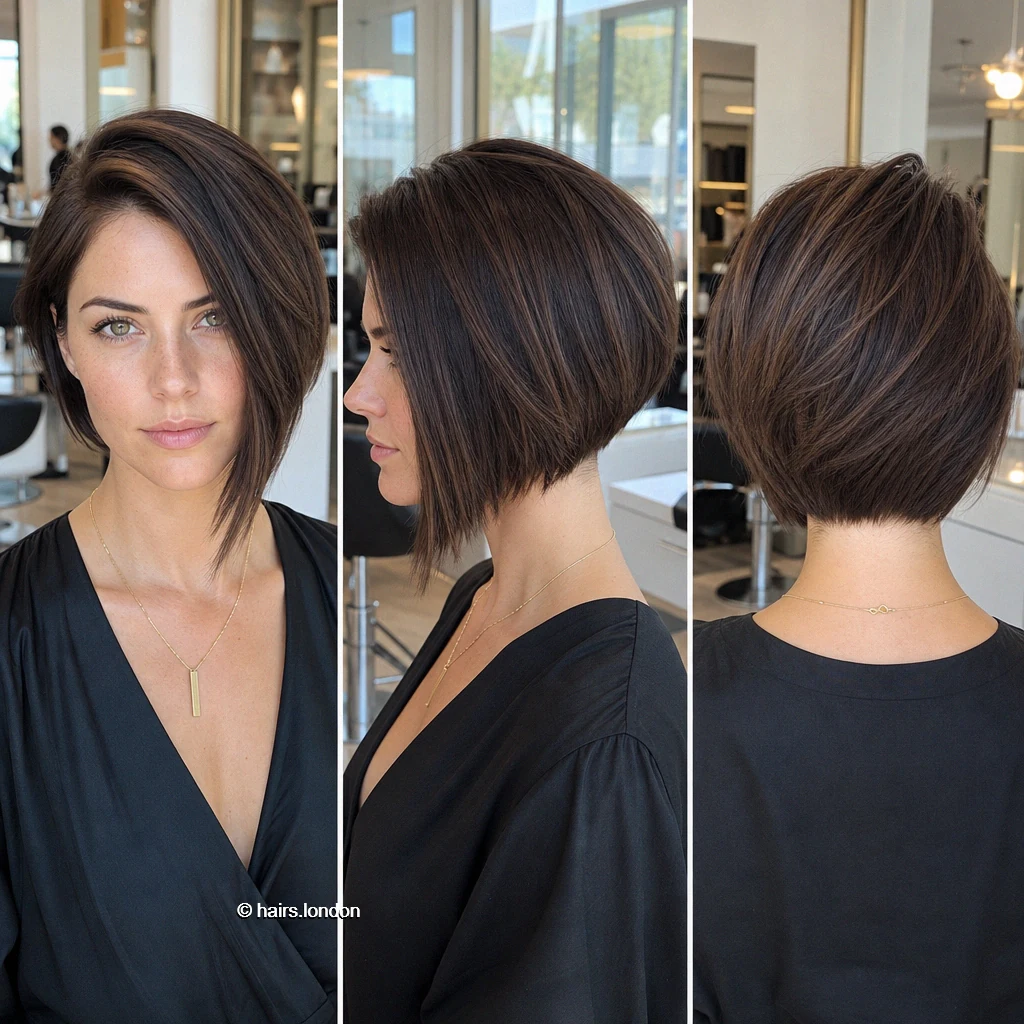
Brown hair with subtle lighter ribbons shapes an angled bob. Long front sections descend below the jaw against cropped neck. Rear graduation is visible beneath a rounded, substantial weight line. A swept side part leaves one cheek more exposed visibly. Ask for the front length you can comfortably style daily. Blow dry the back smoothly before guiding ends forward gently. A small brush helps follow the curve without overinflating it. Thicker strands may need weight adjustment beneath that rounded shape. Thin hair benefits from leaving the perimeter visually solid intact. Book neckline cleanups before the striking front contrast disappears entirely.
8. Asymmetrical Bob with One Extended Side
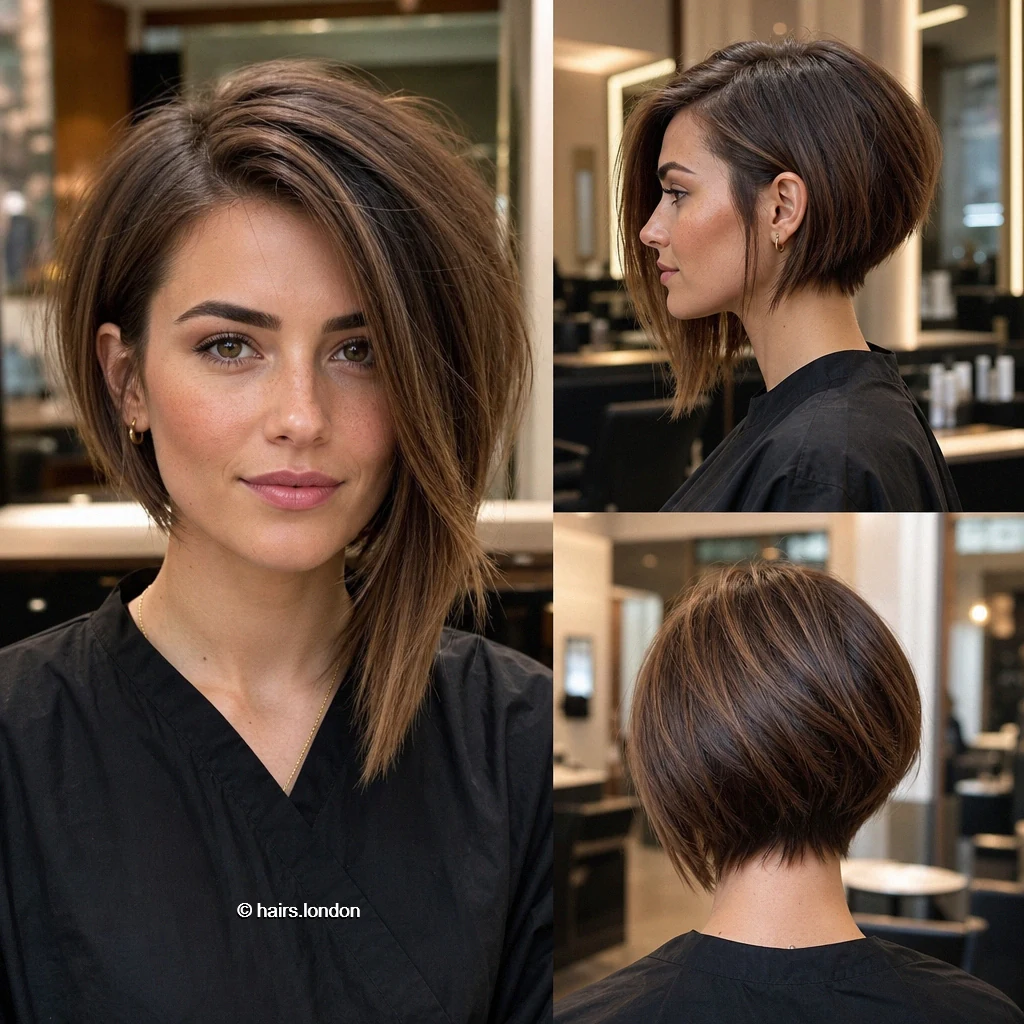
Highlighted brunette lengths create a boldly asymmetric short bob shape. One side tucks near the jaw; opposite pieces fall lower. The short back shows rounded graduation above the narrow neckline. Golden brown ribbons brighten the longer, freely falling front section. Talk through side preference and everyday parting before cutting begins. Smooth the cropped side, then loosely bend longer strands outward. Use lightweight spray to hold volume without hardening movement excessively. This pronounced imbalance needs regular trims to look clearly intentional. Consider density and growth patterns around the exposed ear first. Color glosses can refresh warmth between scheduled salon color visits.
9. Copper-Auburn Angled Bob with a Long Fringe
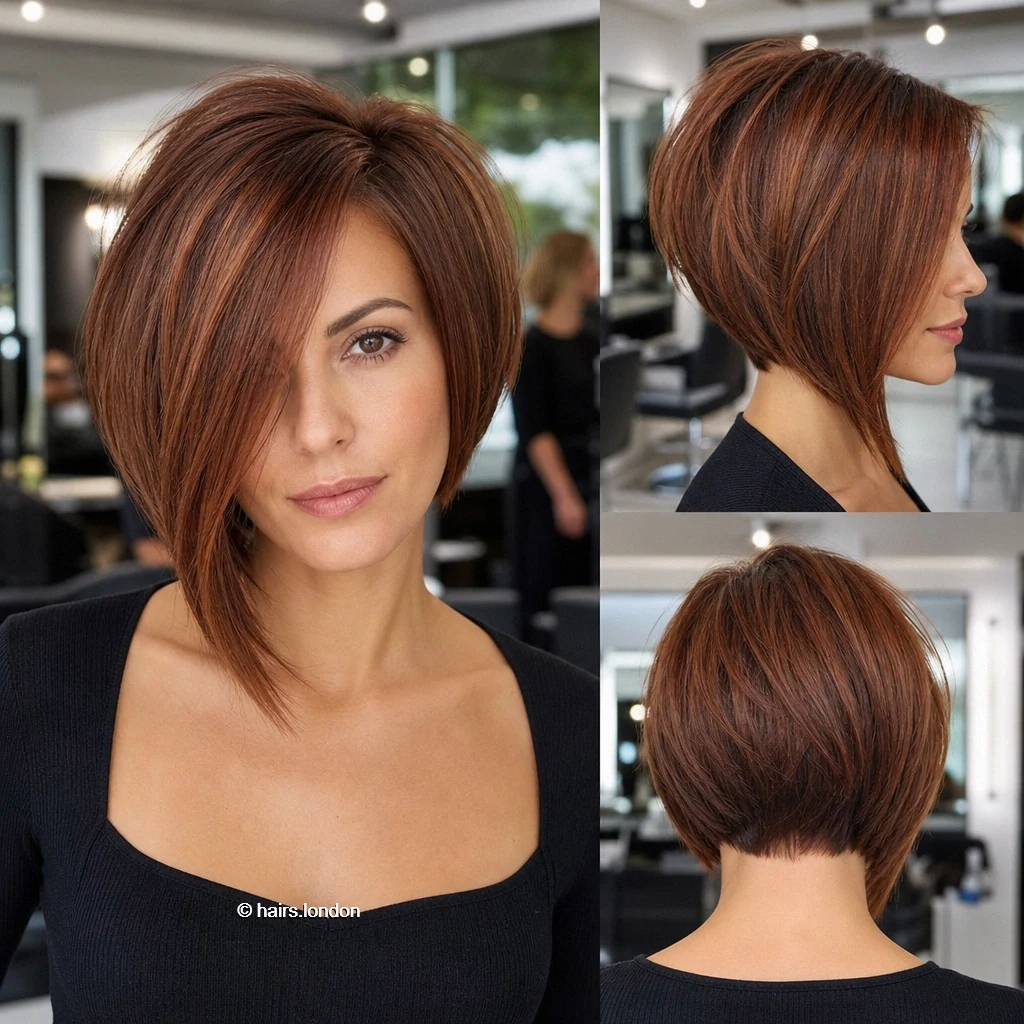
Warm copper auburn color brings dimension to this angled bob. The long side skims the collarbone; the back meets neck. Visible back graduation supports a rounded crown and tapered outline. An extended side fringe drapes across one eye softly here. Ask whether this longer front suits your daily routine comfortably. Dry roots upward, then smooth lengths toward the jaw gently. Light serum emphasizes shine without collapsing the sculpted back shape. Warm color needs color-safe cleansing and reliable heat protection consistently. Fine hair may prefer gentler graduation for fuller ends overall. Refresh neckline and fringe before their separation becomes unclear visually.
10. Rounded Graduated Bob with Caramel Highlights
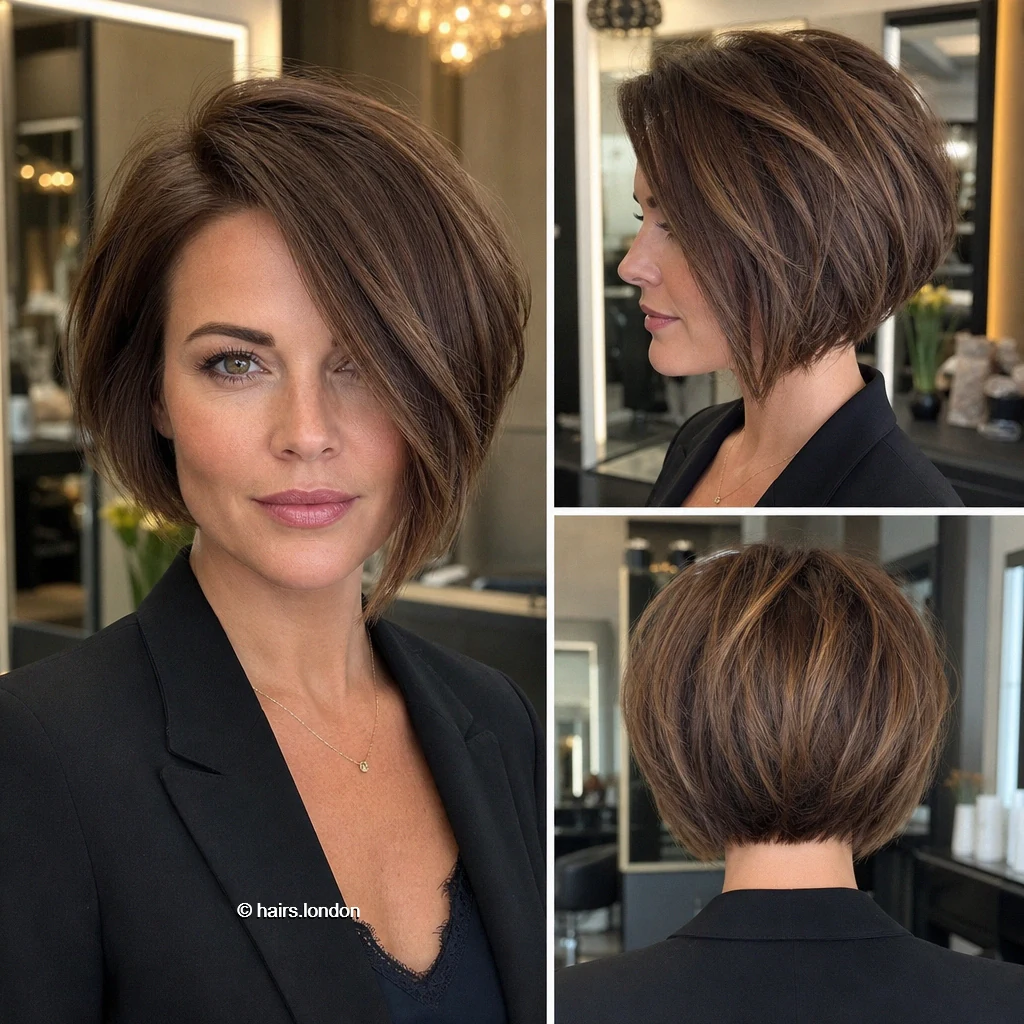
Medium brown hair carries delicate caramel highlights through the crown. A sweeping side part sends longer pieces across the face. The jaw-grazing front contrasts with a narrow, shorter nape. Rounded back graduation provides fullness above its close neckline edge. Ask for controlled layering that maintains this curved profile consistently. Blow dry with gentle lift at roots and smooth ends lightly. Place a little cream on flyaways, never throughout the roots. Stronger natural waves may need shaping rather than straightening completely. Thick hair requires careful volume placement to avoid bulk behind. Maintain the nape and parting to preserve this silhouette neatly.
How to Choose Your Bob Length and Shape
Start with where you want the front to land: near the jaw, below the chin, or closer to the collarbone. Then decide how much shorter the back should be. A longer front creates an A-line outline; visible, progressively shorter shaping at the back creates graduation. Several cuts here combine both. If your hair springs up when dry or grows strongly at the nape, leave room to adjust the finished length.
Styling Fine, Thick, Wavy, and Curly Textures
Fine hair usually needs a supported lower edge and lightweight root lift rather than extensive thinning. For thick hair, ask about removing weight internally while keeping the outline deliberate. Scrunch wavy hair with light foam or cream and diffuse gently to retain separation. If your hair forms curls, have the shape assessed at its natural shrinkage and favor curl-by-curl adjustments where needed. Smooth only the sections that disrupt the perimeter; polishing every strand can erase the movement that makes a textured bob work.
Keeping Bob Color Fresh
The brown and brunette shades shown range from deep and even to softly highlighted, while one cut has a warmer copper-auburn finish. Protect colored hair from unnecessary heat, use a cleanser suited to your color service, and ask your colorist whether a gloss would help maintain the intended tone. Concentrate shine products on the lengths and ends so short crowns do not become flat.
Maintaining the Perimeter and Graduation
A softly broken edge can tolerate some growth, but a pronounced angle or short, graduated back changes quickly as the nape fills in. Check the outline in profile as well as from the front. Arrange trims when the front-to-back contrast fades, the rounded back becomes bulky, or the fringe no longer sits where you want it. Keep heat styling gentle between appointments to prevent fragile ends from making a precise perimeter look uneven.
What to Discuss with Your Stylist
Bring the front, side, and back view of your preferred cut. Point out the exact feature you want—perhaps the side sweep, the jaw-length edge, or the rounded graduation—rather than relying on a subtype name alone. Discuss density, natural wave or curl, cowlicks, your usual part, and whether you tuck hair behind an ear. Ask how the proposed shape will dry naturally and how often its neckline and front will need reshaping.
Frequently Asked Questions
What is the difference between a bob and a lob?
A bob generally finishes around the jaw or neck, while a lob is a longer bob that approaches or reaches the shoulders. An angled cut can have a bob-length back and a much longer front.
Is an A-line bob the same as a stacked bob?
No. A-line describes a perimeter that gets longer toward the front. Stacked describes visible graduation that builds shape at the back. One haircut can have both features.
Which of these cuts needs the most precise upkeep?
The cuts with closely shaped napes and pronounced front-to-back contrast need the most attention. As the back grows, their angle and rounded weight line become less distinct.
Can fine hair wear a textured short bob?
Yes, depending on its density and growth pattern. Ask for restrained layering and a supported lower edge; too much thinning can make the ends look sparse.
How can thick hair avoid a bulky bob shape?
A stylist can assess where internal weight removal is useful while preserving the outer shape. The placement matters more than thinning every section uniformly.
Will these bob shapes work with natural curls?
Some can be adapted, but curls change the visible length and silhouette as they dry. Discuss shrinkage, curl patterns, and the desired dry shape before choosing a short nape or strong angle.
Do I need a fringe for a short bob?
No. These looks include open partings, long side-swept pieces, and softer parted fringes. Choose according to your growth patterns and willingness to style hair around your face.
How should I style a smooth angled bob each morning?
Direct airflow downward with heat protection, smooth the perimeter, and guide the longer front into place. Use only a small amount of finishing product so the back keeps its lift.
How do I keep a tousled bob from looking puffy?
Apply a light styler to damp hair, encourage its natural bends, and smooth isolated ends that extend beyond the intended outline. Avoid piling heavy product onto the crown.
How often should I trim a short bob?
Book a trim when its defining detail starts to disappear. A precise neckline, strong angle, or face-skimming fringe will usually signal that sooner than a deliberately tousled edge.
Can I grow an angled bob out evenly?
Yes. Ask your stylist to gradually reduce the difference between the front and back while preserving a tidy perimeter. The transition may take several shaping appointments.
What should I ask at a bob consultation?
Ask how the cut will sit with your natural texture, density, parting, and nape growth. Show all available views and agree on the front length, back shape, styling effort, and trim plan.
Conclusion
A short bob can feel softly undone or carefully sculpted, even when the lengths look similar from the front. Compare the neckline, weight line, and longest face-framing pieces before choosing a reference. Those details—and how they work with your own hair—will make the difference between a cut you admire and one you enjoy maintaining.


