
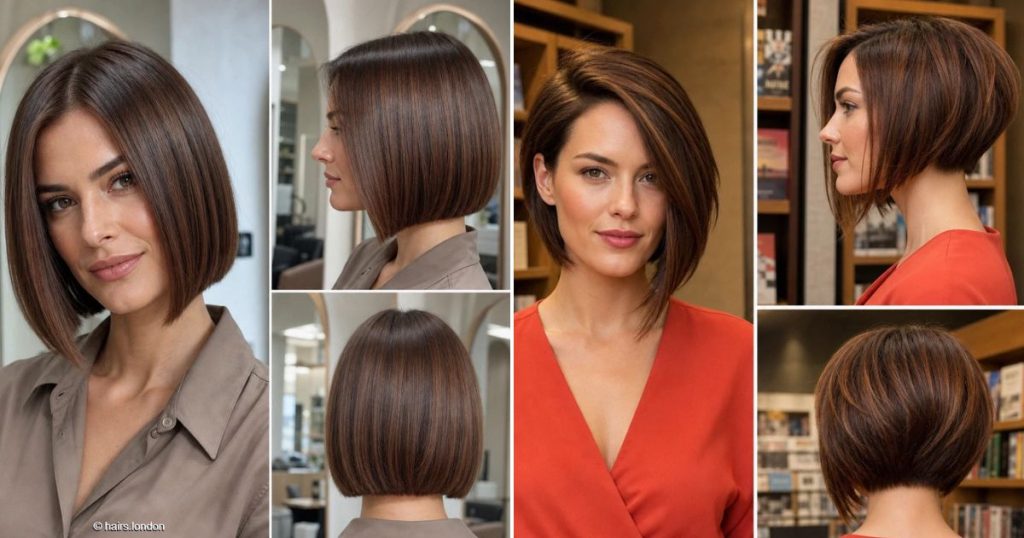
21. The mustard-top fringe bob
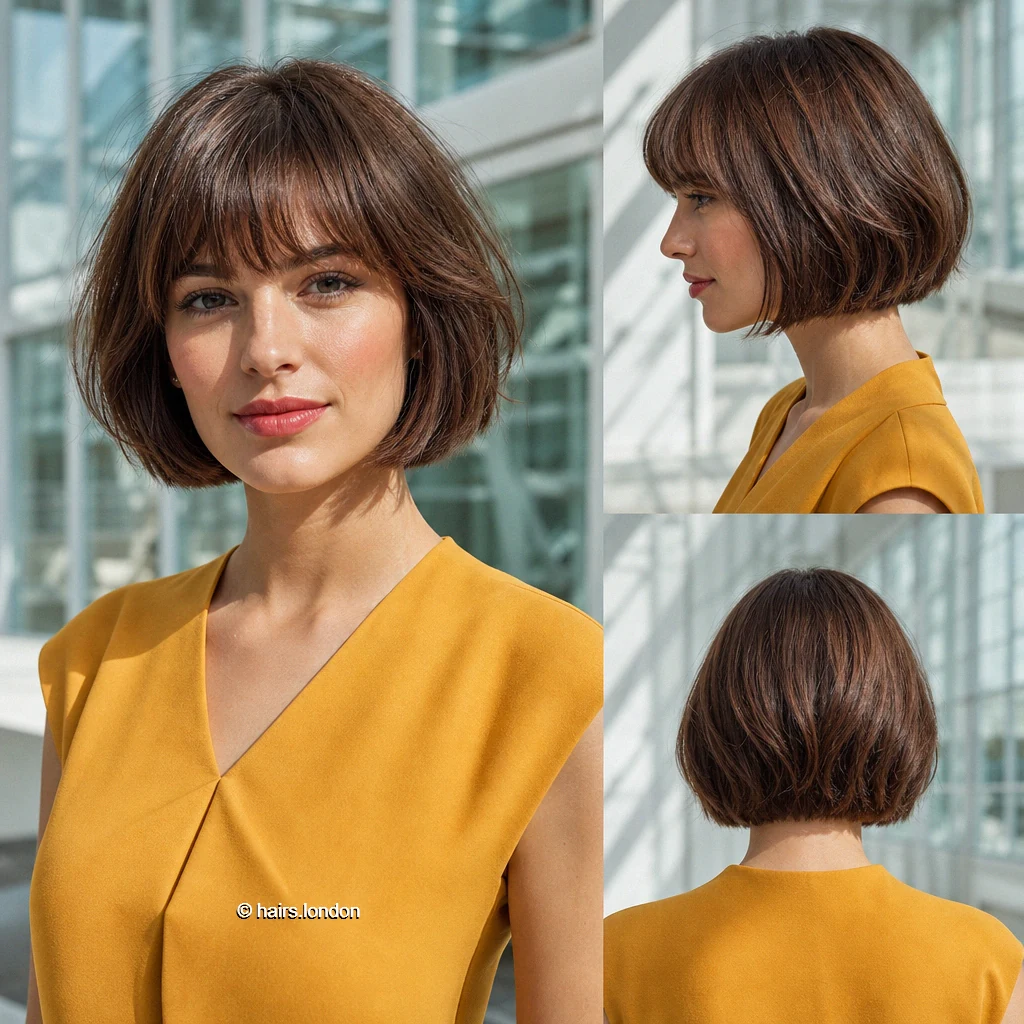
Full bangs and a rounded bob: a combination with real staying power. The fringe is cut wispy and falls to the brows, while the chin-length bob curves under in a smooth, rounded shape. The chestnut color is warm and even, with lighter strands on the surface. From the back, there is a neat, full curve at the nape. A mustard top makes the red-brown look warmer still.
- Best for: Straight hair; anyone who wants a fringe.
- Ask your stylist for: A rounded chin bob with full wispy bangs, in warm chestnut.
- How to style it: Blow-dry the bangs flat and turn the ends under with a round brush.
- Upkeep: Bang trims every 3 to 4 weeks; full trim every 8 weeks.
22. The freckles-and-fringe bob
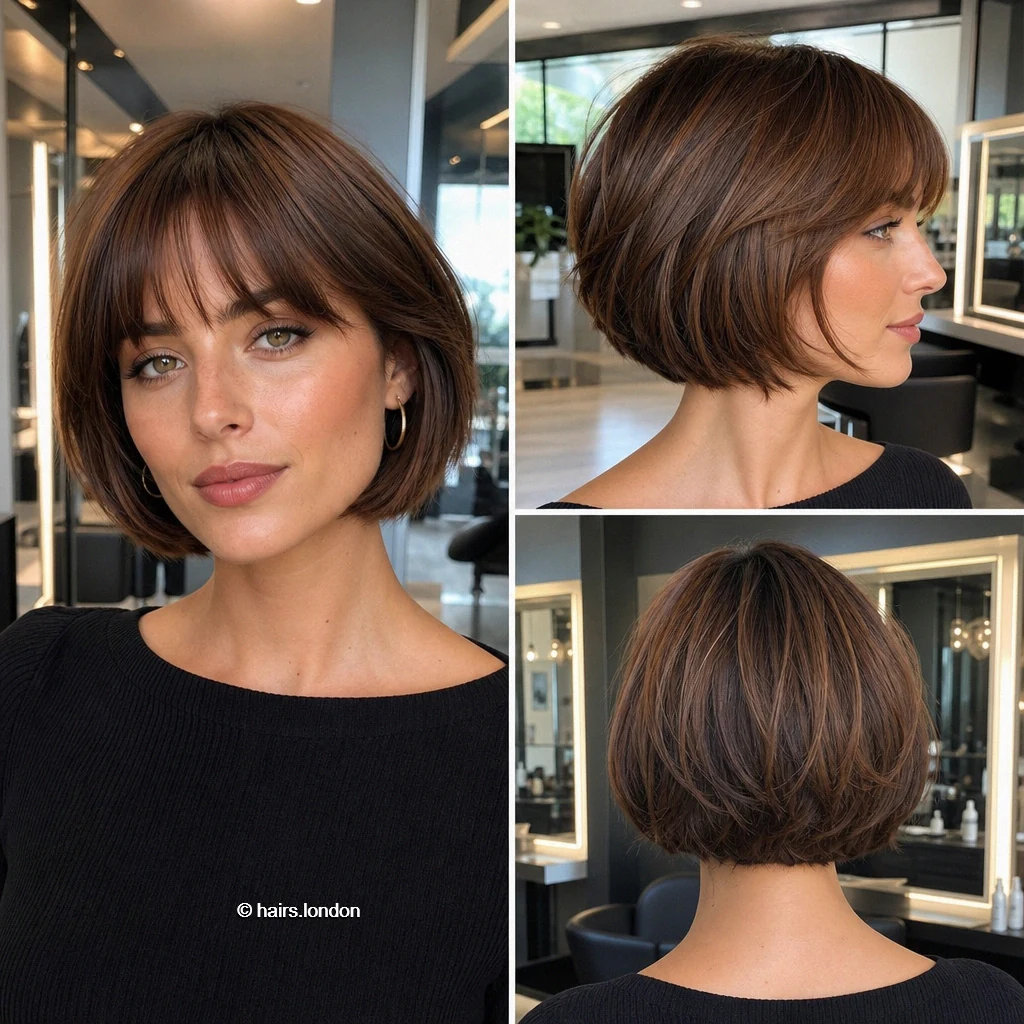
Ever noticed how a full fringe draws attention to the eyes? This chestnut bob pairs heavy, slightly wispy bangs with a rounded shape that curves under at the jaw. You get a deep red-brown with lighter tones at the ends. Seen from the back, it is a smooth, full curve. It is a classic cut that looks especially fresh with freckles and minimal makeup.
- Best for: Straight hair; anyone with a high forehead who likes bangs.
- Ask your stylist for: A rounded chin bob with a full fringe and chestnut color.
- How to style it: Blow-dry the fringe flat with a paddle brush and curve the ends under.
- Upkeep: Bang trims every 3 to 4 weeks; full trim every 8 weeks.
Chestnut lobs
Longer bobs give you room to wave, flick and tie back, while still feeling short. These four sit between the shoulders and the collarbone.
23. The wisteria wave lob
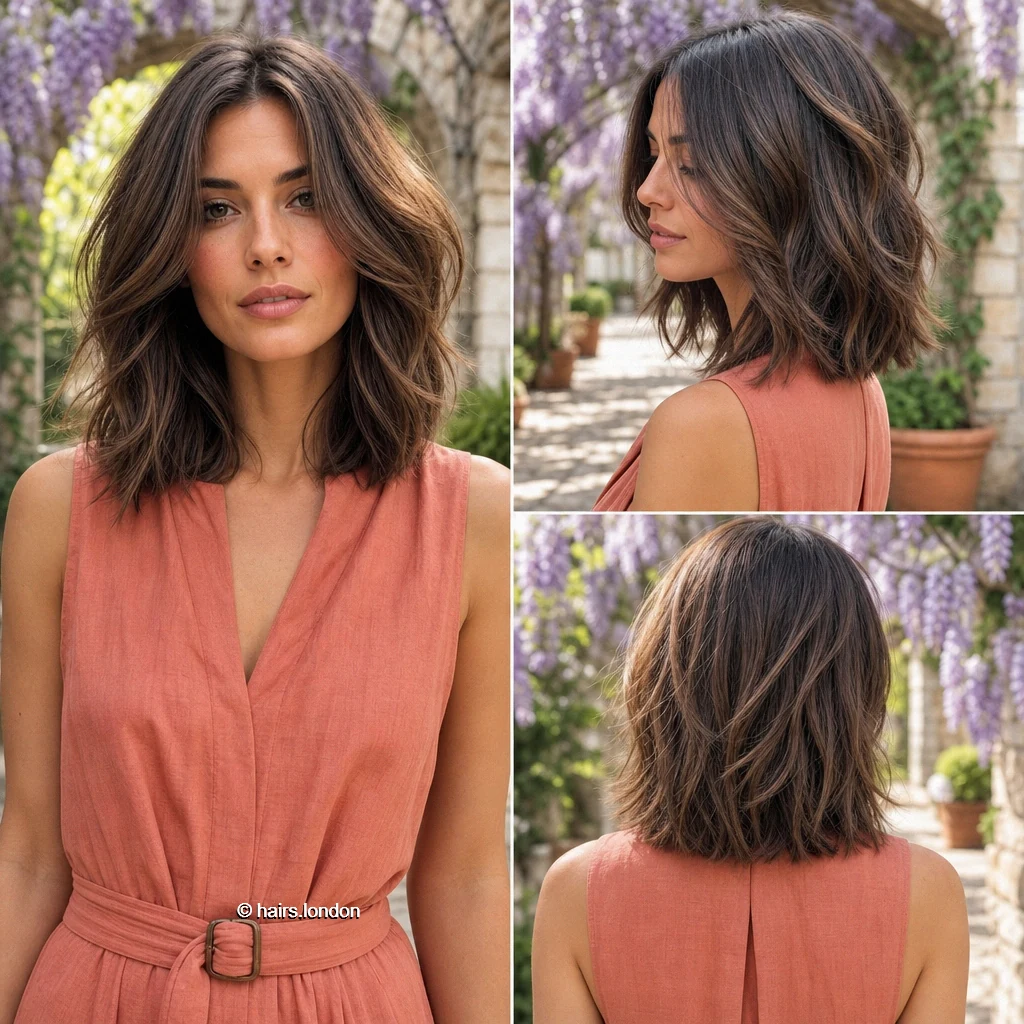
Long enough to tie back, short enough to feel like a change. This shoulder-length lob falls from a center part in loose, lived-in waves that bend outward near the collarbone. The tone is a deep chestnut that lightens slightly toward the ends, so each wave shows a little contrast between dark and warm. Seen from behind, soft layers keep the bottom light and swingy rather than blunt. The coral dress and purple wisteria make that red-brown base glow.
- Best for: Wavy or medium hair; anyone moving from long hair to something shorter.
- Ask your stylist for: A shoulder-length lob with long soft layers, a center part and chestnut that lightens toward the ends.
- How to style it: Wave mid-lengths with a 1.25-inch wand, leave the ends straight and shake out.
- Upkeep: Trim every 8 to 10 weeks; gloss every 8 weeks.
24. The silk-shirt collarbone lob
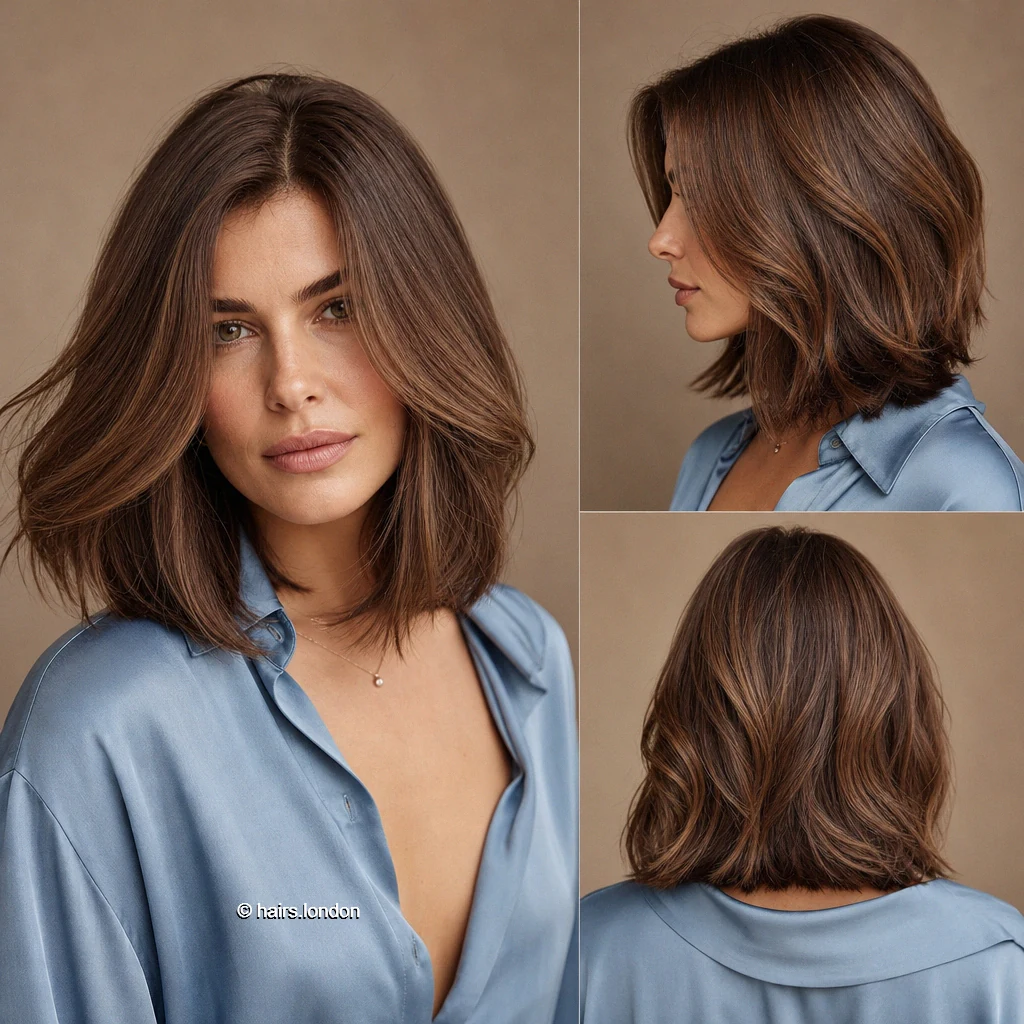
Smooth, swingy and grown-up, this is the lob to book if you want polish without much length lost. A deep side part drops the hair down to the collarbone in sleek lengths that bend softly outward at the ends. Caramel tones run through the chestnut base, brightest where the front pieces fall across the face. From the side, long gentle layers stop the ends from sitting in a heavy line. Against pale blue silk, the warm brown looks richer still.
- Best for: Medium to thick straight hair.
- Ask your stylist for: A collarbone lob with long internal layers, a deep side part and caramel balayage through chestnut.
- How to style it: Blow-dry with a large round brush, bending the ends outward for swing.
- Upkeep: Trim every 8 to 10 weeks; balayage every 12 weeks with a gloss in between.
25. The statue-garden shag lob
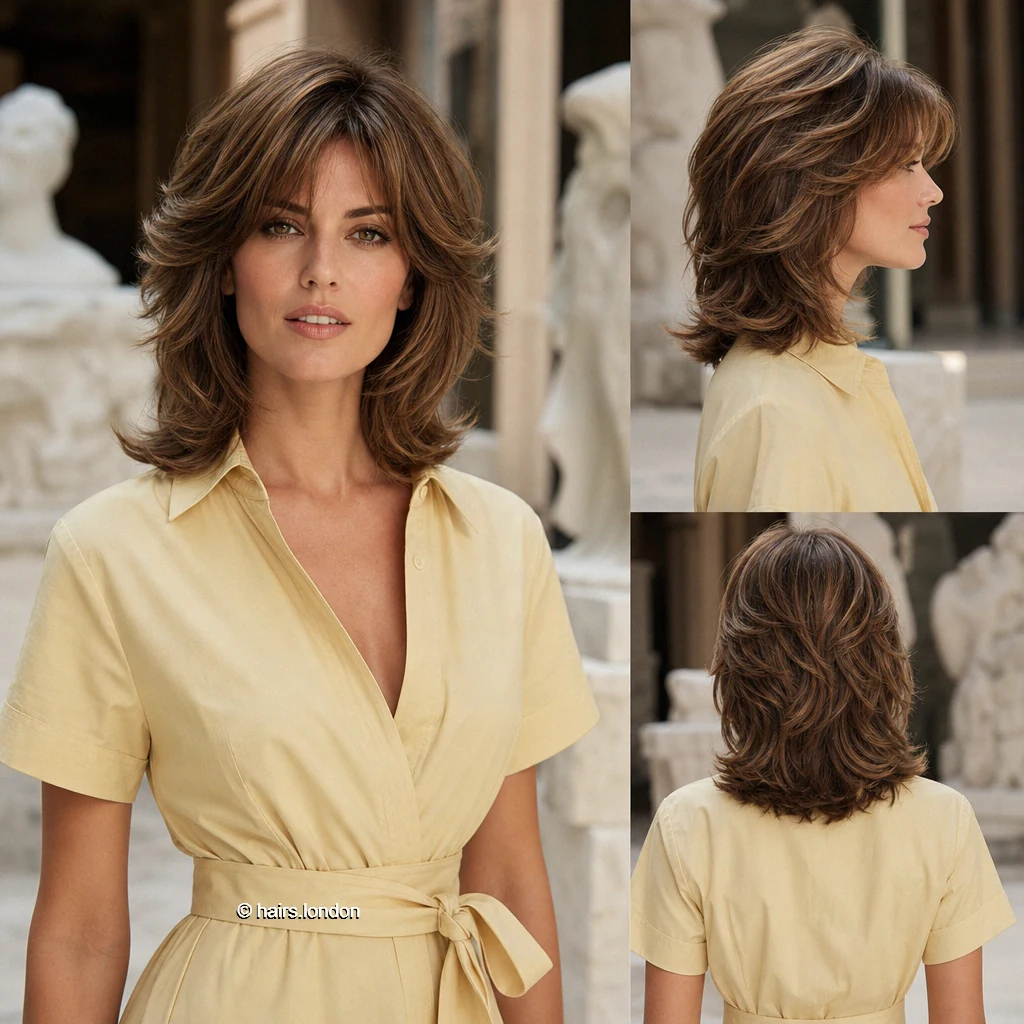
Think seventies blowout, cut for now. Curtain bangs sweep away from the face and flow into feathered layers that flip outward from the cheekbones down, ending just past the shoulders. The chestnut is warm and fairly even, with lighter tones on the surface that pick out each feathered piece. In profile, you can see how short the top layers are compared with the length. It suits thick hair that needs weight taken out, and it moves every time you turn your head.
- Best for: Medium to thick hair; anyone who enjoys a round-brush blowout.
- Ask your stylist for: A shaggy lob with curtain bangs and short feathered layers through the crown, in warm chestnut.
- How to style it: Blow-dry each layer over a round brush, flicking the ends outward.
- Upkeep: Trim every 8 weeks; gloss every 8 to 10 weeks.
26. The generous layered lob
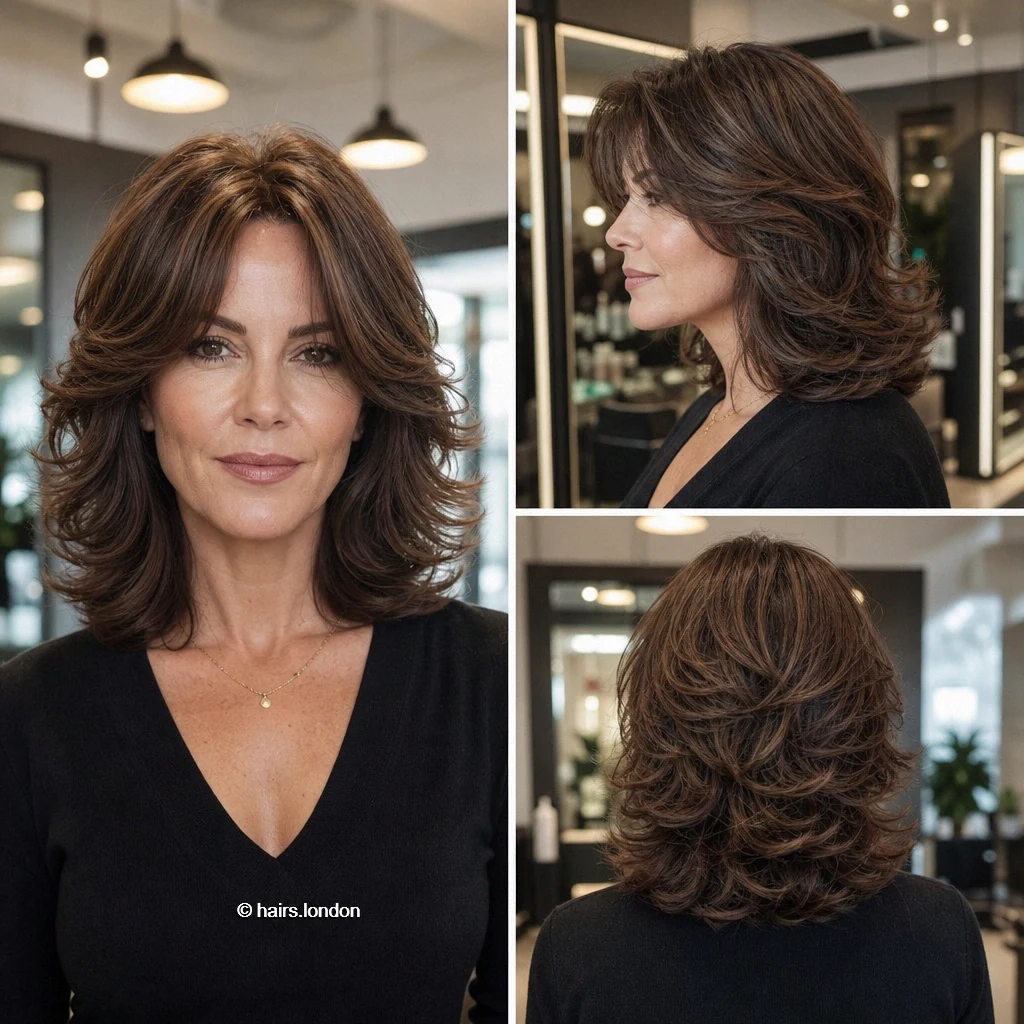
Big hair, but make it easy. This shoulder-length lob has a curtain fringe that parts at the center and flicks away from the cheekbones, with layers through the back that stack into bouncy volume. The dark chestnut has lighter red-brown tones on the surface, so the curls of each layer show up clearly. From behind, you can see the layers tumbling down to the shoulders in soft rolls. It is a strong option for mature hair that has lost some body.
- Best for: Medium to thick hair; anyone wanting more volume.
- Ask your stylist for: A layered shoulder-length lob with a curtain fringe and plenty of crown layers, dark chestnut with lighter surface tones.
- How to style it: Set with hot rollers or a large round brush, then brush out with fingers.
- Upkeep: Trim every 8 weeks; gloss every 8 weeks; cover gray every 4 to 6 weeks if needed.
Soft and swept chestnut pixies
These pixies keep some length on top for fringes, sweeps and soft waves, with tapered napes to keep them tidy. They are the gentlest way into a short cut.
27. The velvet feathered pixie
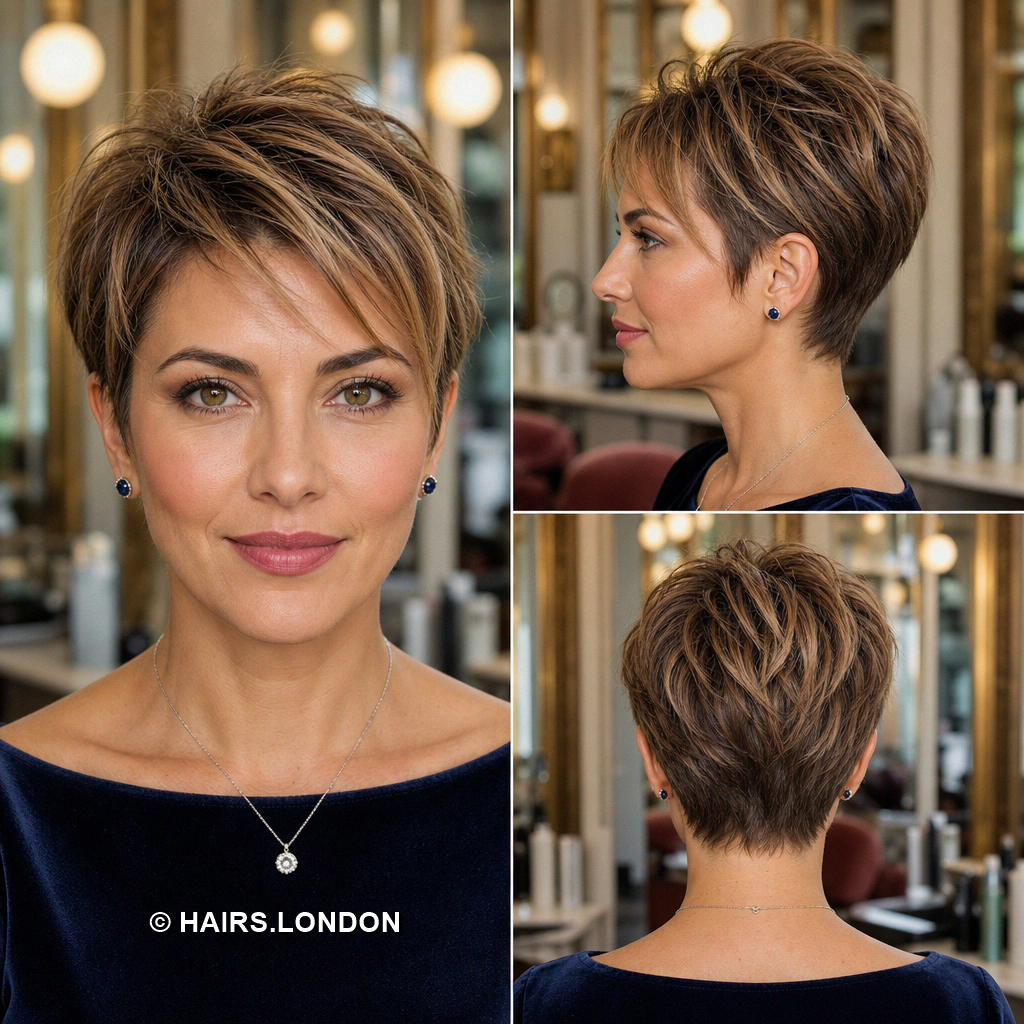
Soft at the front, neat at the back, and an easy first pixie. A long side-swept fringe feathers across the brow, while the layers behind are tapered close at the nape. Caramel highlights are woven through the chestnut base, mostly on top, which gives the short layers visible dimension. From the side, the hair wraps cleanly around the ear without looking clipped. With a navy velvet top and a fine pendant, the overall effect is quietly dressy.
- Best for: Fine to medium hair; anyone new to short hair.
- Ask your stylist for: A feathered pixie with a long side fringe and a tapered nape, chestnut with caramel highlights on top.
- How to style it: Blow-dry the fringe across with a flat brush and press a pea-size amount of cream through the ends.
- Upkeep: Trim every 4 to 6 weeks; highlights every 8 weeks.
28. The swept-back crop
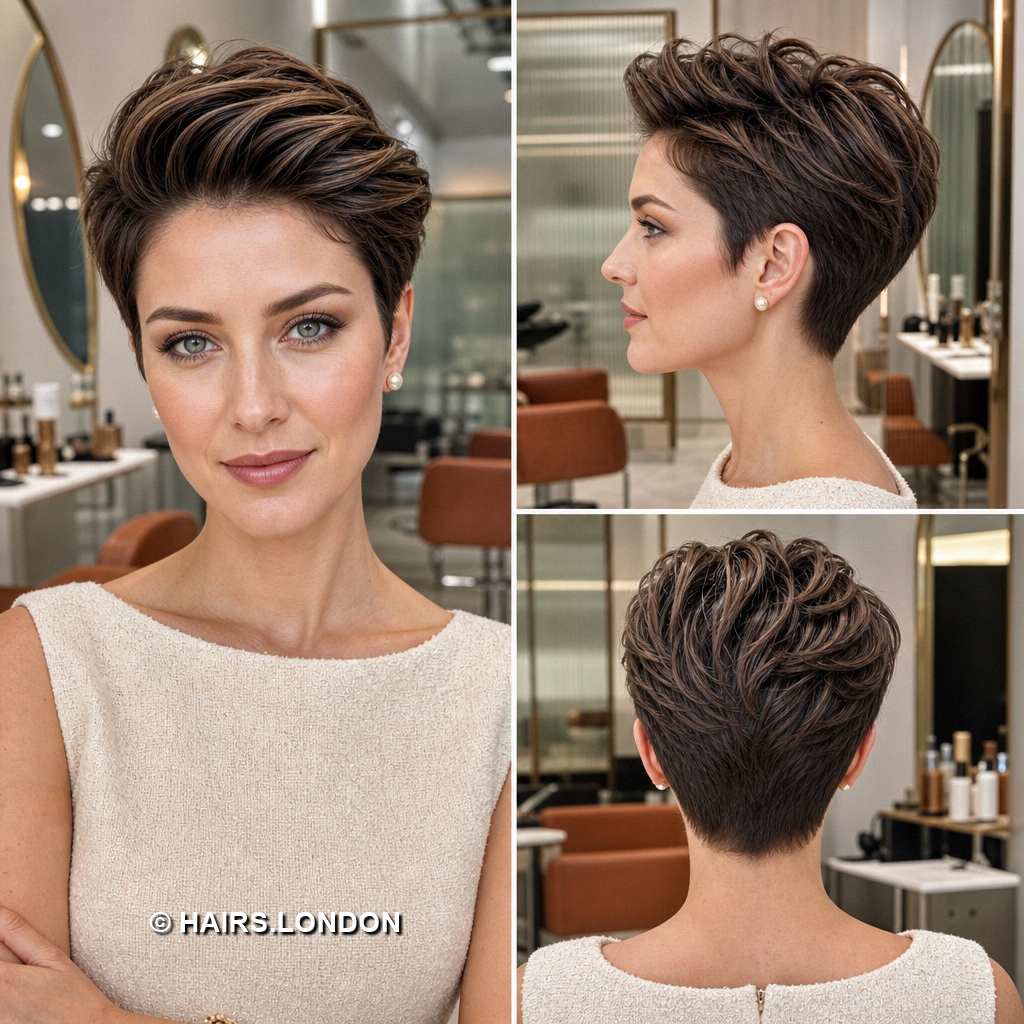
Arms crossed, hair swept back: this pixie has nothing to hide behind. The top is left a few inches long and brushed back in soft ridges, which builds height at the crown, while the sides and nape are tapered close. Expect a deep chestnut with subtle lighter strands running through the top. Turn to the profile and the shape is almost sculptural, with a clean line behind the ear. It suits you if your features like being on show.
- Best for: Medium to thick hair with some natural body.
- Ask your stylist for: A pixie with a longer swept-back top and a close taper at the sides and nape, in dark chestnut.
- How to style it: Blow-dry the top back with a round brush and set with a light pomade.
- Upkeep: Trim every 4 to 5 weeks; gloss every 6 weeks.
29. The airy quiff
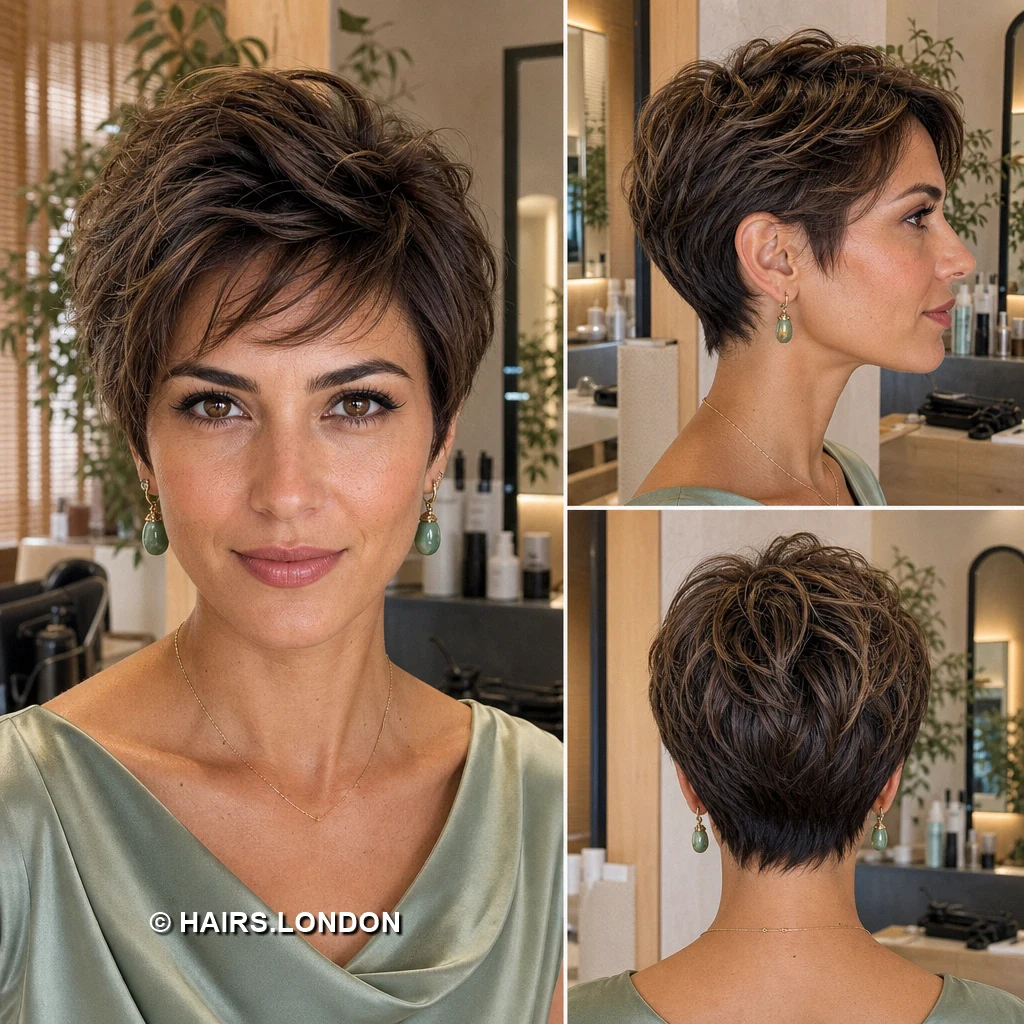
Got a cowlick at the front? Use it. This pixie has a soft, airy quiff that lifts away from the forehead, with a few choppy fringe pieces left to fall forward. Caramel tones are mixed into the chestnut base and catch the light on the tips of each piece. At the back, the layers are tapered neatly to the neck. The look is relaxed rather than sculpted, which makes it easy to restyle with your fingers during the day.
- Best for: Fine to medium hair, especially with a front cowlick.
- Ask your stylist for: A textured pixie with a lifted front and choppy fringe pieces, chestnut with caramel tones.
- How to style it: Rough-dry with your head tipped forward and work a texture paste through the top.
- Upkeep: Trim every 4 to 6 weeks; color every 8 weeks.
30. The curly chestnut pixie
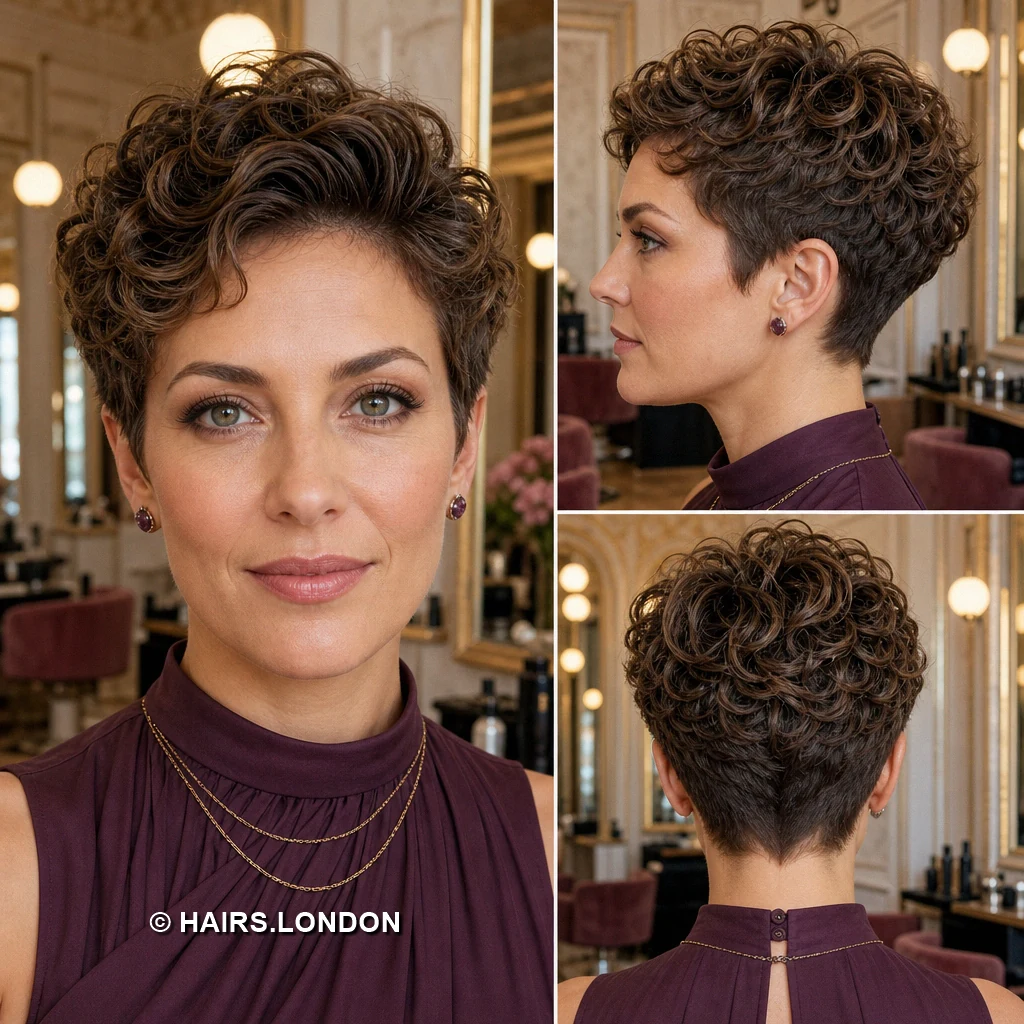
Curls cut short look their most carefree. This pixie keeps a cluster of defined curls on top and around the hairline, while the sides and nape are tapered short so the shape stays neat. This chestnut is warm and even, and the lighter tones show up on the rim of every curl. From the back, the curls sit in a rounded crown above a clean taper. A plum high-neck top and layered gold chains frame it nicely.
- Best for: Naturally curly hair.
- Ask your stylist for: A dry-cut curly pixie with curls left on top and a tapered nape, in warm chestnut.
- How to style it: Scrunch in curl cream on wet hair and diffuse without touching.
- Upkeep: Trim every 6 weeks; gloss every 8 weeks.