Ask ten stylists to cut a bob and you will get ten different haircuts. That is the beauty of it. Anything that ends between the cheekbone and the collarbone counts, which means the same basic idea can be cut blunt and glassy, angled long at the front, stacked tight at the nape, layered for waves and curls, or finished with a fringe. The length is the easy part. The shape is where the decisions are.
So we sorted 59 bobs by shape rather than by color: blunt one-length cuts, A-lines, stacked and inverted bobs, wavy and shaggy textures, curls, bangs, vivid color, silver and gray, and longer lobs. For each one you’ll find what the photo actually shows, who it tends to work for, the words to use in the salon chair, how to style it at home and how often you’ll need a trim. Start with the quick guide below to match the shape to your hair type.
How to choose a bob haircut
Three decisions shape a bob: the length, from chin to collarbone; the angle, level all round or longer at the front; and the finish at the ends, blunt and solid or layered and textured. Your hair type should guide all three. Fine hair usually wants a heavier edge, and our edit of bob haircuts for fine hair shows why; dense hair needs weight taken out, as in these bob haircuts for thick hair.
| Hair type | Bob haircuts that work best | What to avoid |
|---|---|---|
| Fine or thin | Blunt bob, one-length lob, sleek chin-length bob | Heavy stacking or choppy layers, which make the ends look sparse |
| Thick | Stacked or inverted bob, layered or shaggy bob, A-line with internal thinning | A blunt bob with no layers, which can turn triangular |
| Wavy | Textured wavy bob, shag bob, wavy lob | Very precise A-lines that need daily straightening |
| Curly | Rounded curly bob or curly lob, cut dry | One-length cuts done wet, which shrink unevenly |
| Straight | Blunt, A-line, inverted and sleek bobs | Very messy, piecey cuts if you dislike styling products |
Length: chin-length bobs put the focus on the jaw and neck; collarbone-length lobs are easier to tie back and to grow out. Maintenance: blunt, A-line and stacked bobs need a trim every six to eight weeks to keep their line; textured, wavy and longer bobs can usually go eight to ten.
Blunt and one-length bobs
Every strand stops at the same point, so the edge looks solid and the hair looks thicker than it is. These six prove a one-length bob is anything but plain.
1. The honey glass bob
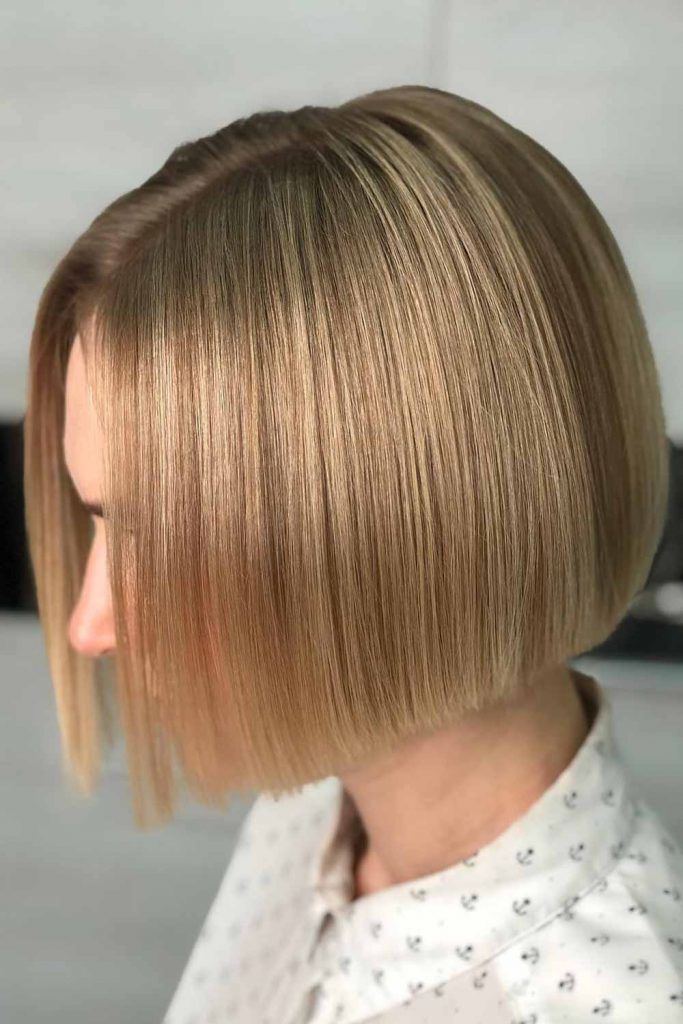
Shine is the whole point here. Honey blonde is cut to one length at the chin with a dead-straight edge and the slightest forward tilt toward the face. Smoothed to a mirror finish, every strand runs in clean, parallel lines. A soft, darker root keeps the blonde from looking flat and lets it grow out quietly. On fine hair, that solid perimeter is what makes the bob look full.
- Best for: Fine to medium straight hair; anyone who likes a polished look.
- Ask your stylist for: A one-length bob at the chin with blunt ends and a very slight forward angle, plus a soft root shadow.
- How to style it: Blow-dry with a paddle brush, directing the hair down, then run a flat iron over the lengths and finish with shine serum.
- Upkeep: Trim every 6 to 8 weeks; gloss every 8 weeks.
2. The beveled buttercream bob
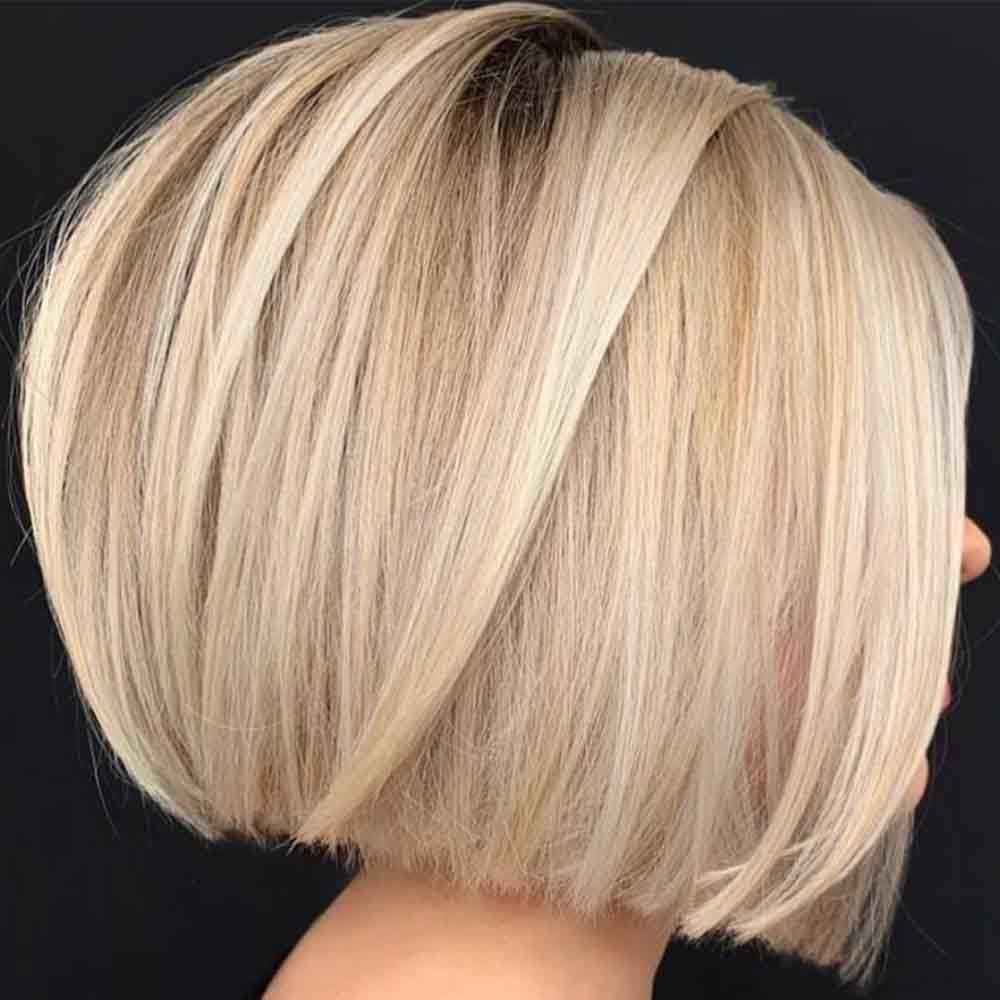
Turn around and look at that curve. From behind, this blonde bob has a smooth, rounded perimeter just below the jaw, with the ends turning gently under. Fine highlights laid over a darker root create movement in otherwise straight lengths. The secret is a slight bevel at the edge, cut so the bottom layer sits a fraction shorter, which gives a full, rounded shape without any visible layering.
- Best for: Fine to medium straight hair.
- Ask your stylist for: A blunt bob just below the jaw with a slight bevel at the ends, and fine highlights over a natural root.
- How to style it: Blow-dry with a medium round brush, turning the ends under, and finish with a light shine spray.
- Upkeep: Trim every 6 to 8 weeks; highlights every 10 to 12 weeks.
3. The penny-bright side part
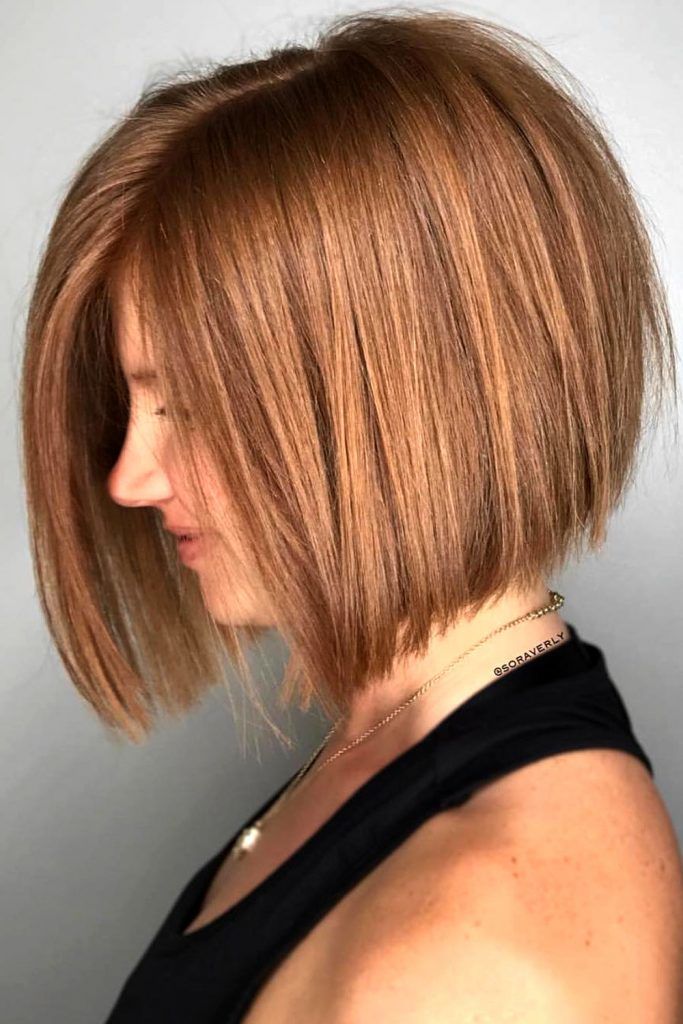
Copper this even needs nothing else. Rich, glossy color falls from a soft side part into a blunt bob just below the chin, with a straight, solid perimeter and no bend at the ends. Because the shade is a single tone, the light runs down the hair in one bright stripe. Keeping the cut minimal lets the warmth do the talking. Clean, modern and very wearable.
- Best for: Straight hair with fine to medium density; anyone drawn to warm shades.
- Ask your stylist for: A blunt bob just below the chin with a side part and an all-over copper color.
- How to style it: Blow-dry straight and finish with a flat iron and a drop of serum.
- Upkeep: Trim every 6 to 8 weeks; gloss every 6 weeks, as copper fades fast.
4. The espresso jaw-skimmer
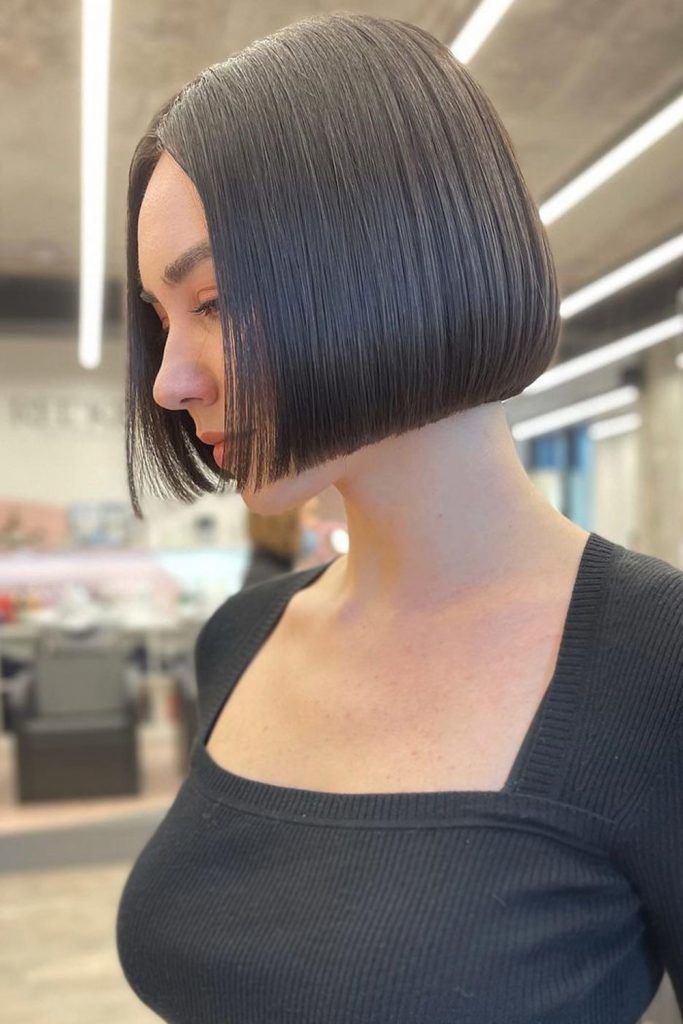
Office at nine, dinner at eight, no restyle needed. Deep brown hair is cut into a sleek bob that stops right at the jaw, with ends that curve neatly under and a surface as smooth as glass. A soft part sits just off center. The perimeter is clean all the way round, so the shape holds even on a humid day. It is the bob people mean when they say classic.
- Best for: Straight hair with fine to medium density.
- Ask your stylist for: A one-length bob at the jaw with blunt ends, slightly beveled so they curve under.
- How to style it: Blow-dry with a round brush, turning the ends under, then smooth with a flat iron.
- Upkeep: Trim every 6 to 8 weeks.
5. The bent platinum lob
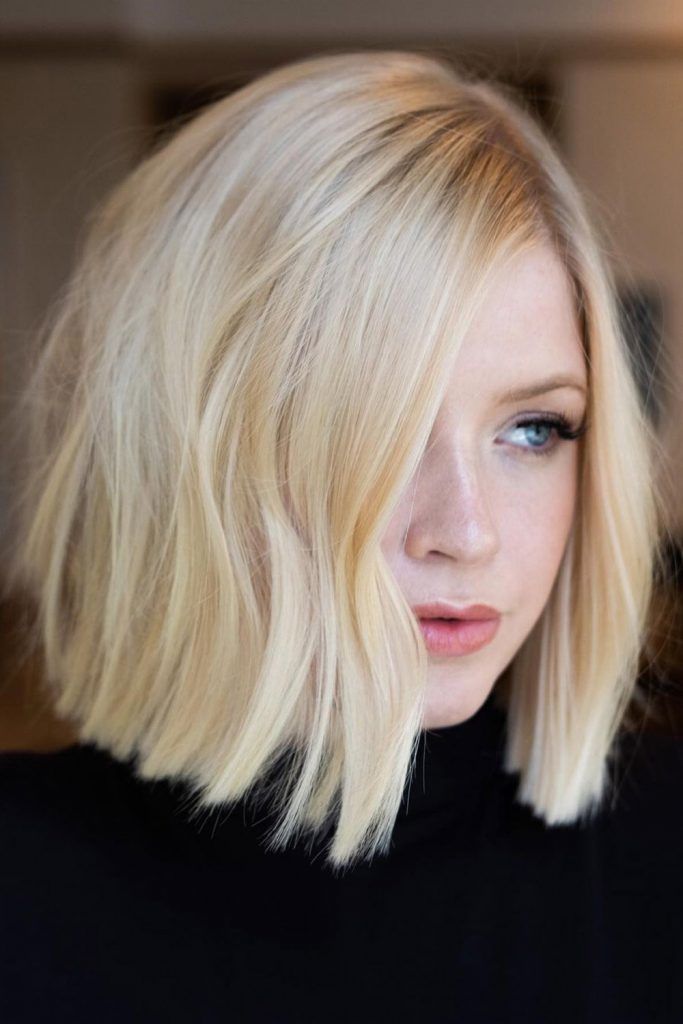
Platinum and fine hair can be tricky; a blunt edge fixes most of it. This lob falls near the collarbone from a deep side part, and the ends have a lazy flat-iron bend, so the shape looks relaxed rather than rigid. Keeping every strand the same length means lightened hair looks full right to the tips. Soft, pale and a little undone. Easy to wear every day.
- Best for: Fine to medium straight hair; anyone wearing platinum.
- Ask your stylist for: A blunt lob at the collarbone with a deep side part and a platinum color.
- How to style it: Blow-dry smooth, then use a flat iron to put a gentle bend in the ends.
- Upkeep: Trim every 6 to 8 weeks; tone every 4 to 6 weeks.
6. The cocoa-to-caramel fade
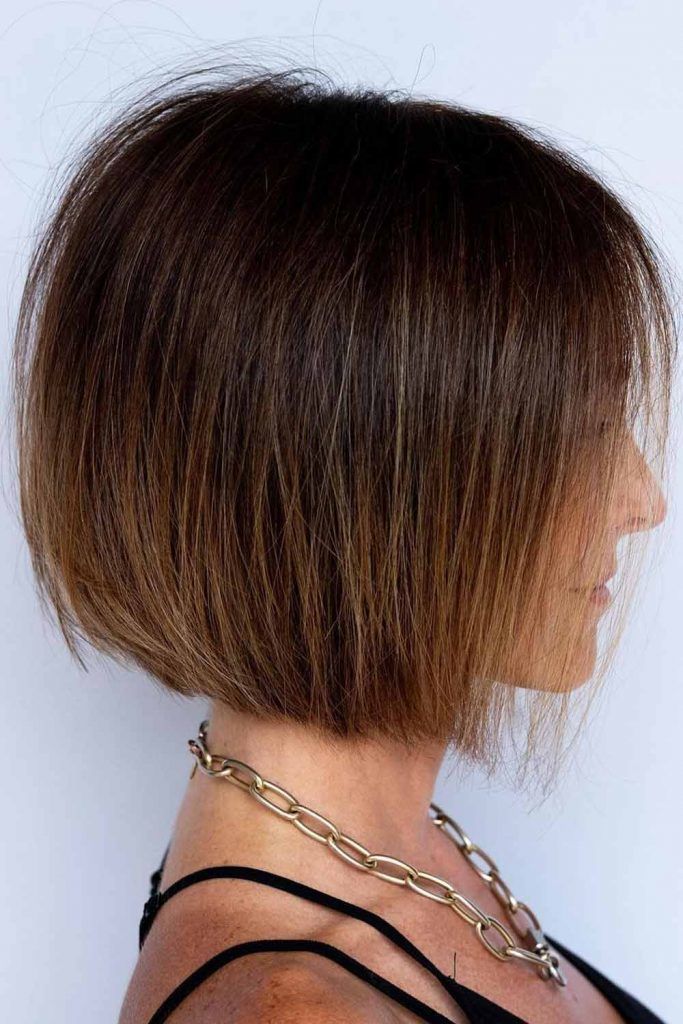
Want color that never shows its roots? Dark brown at the crown fades into lighter caramel ends on this chin-length blunt bob. The perimeter is solid with very slightly piecey tips, and the hair is smooth from root to end. The ombre adds dimension without breaking the clean line of the cut. Regrowth just looks like more of the dark top, so appointments stretch.
- Best for: Straight hair; anyone wanting low-maintenance color.
- Ask your stylist for: A chin-length blunt bob with slightly textured ends and a soft ombre from a natural root to caramel ends.
- How to style it: Blow-dry straight with a paddle brush and finish with a light shine cream.
- Upkeep: Trim every 6 to 8 weeks; tone the ends every 10 to 12 weeks.
A-line and angled bobs
Shorter at the back, longer at the front: the steeper the angle, the more drama. If this shape is the one for you, our full gallery of A-line bob haircuts has many more angles to compare.
7. The grown-up dark angle
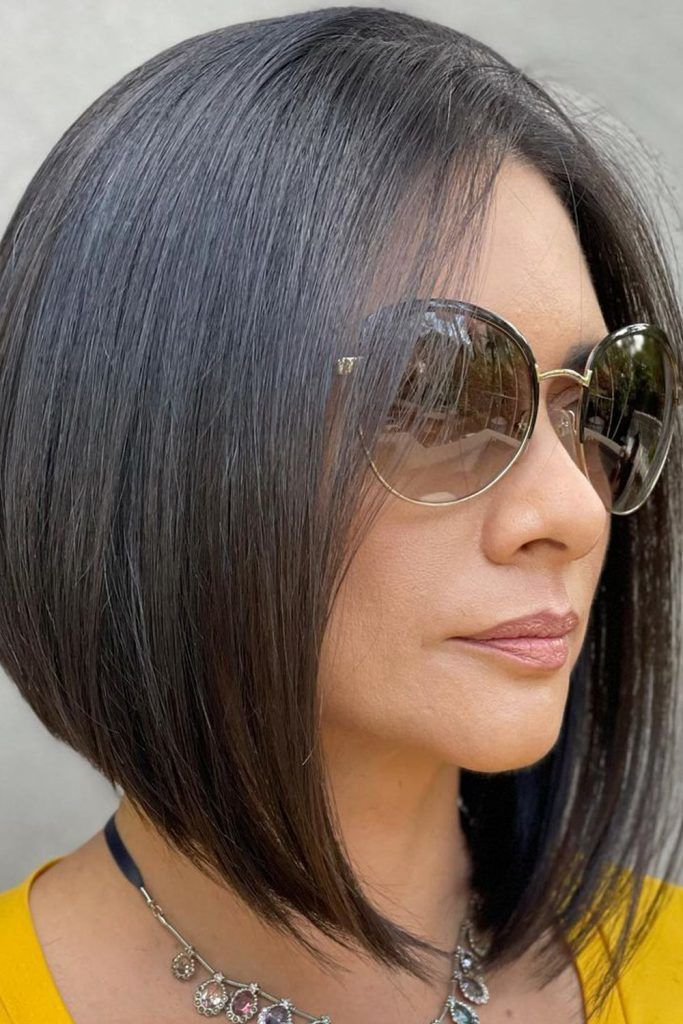
Sunglasses on, chin up, and the angle does the rest. This dark A-line is cut shorter at the back and slopes down to front lengths near the collarbone. The hair is sleek and glossy from a soft side part, and the ends are cut blunt so the angle reads as one clean line from nape to face. It is sharp without feeling severe, and it suits a polished wardrobe.
- Best for: Straight hair with medium density; anyone who wants a sharp, grown-up shape.
- Ask your stylist for: An A-line bob with a moderate angle, front lengths to the collarbone and a short, smooth back.
- How to style it: Blow-dry with a paddle brush and finish with a flat iron for a sleek line.
- Upkeep: Trim every 6 to 8 weeks.
8. The long midnight A-line
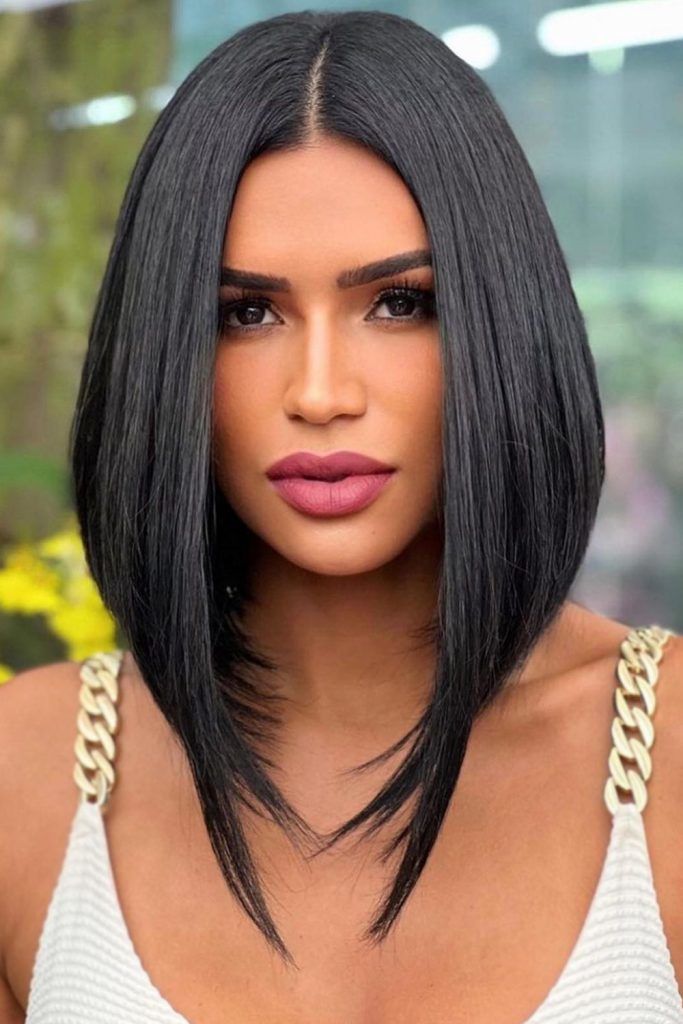
Pair a strong brow with an even stronger line. Glossy black hair is parted in the center and cut into a long A-line, with front pieces that fall past the collarbone. The back is shorter, and the ends are lightly point-cut, so the long angle doesn’t look heavy. That piecey finish catches the light along the edge and frames the face like a pair of curtains.
- Best for: Straight hair with medium to thick density.
- Ask your stylist for: A long A-line bob with a center part, front lengths past the collarbone and slightly point-cut ends.
- How to style it: Blow-dry straight and smooth with a flat iron; finish with shine serum.
- Upkeep: Trim every 6 to 8 weeks.
9. The sunlit side-part angle
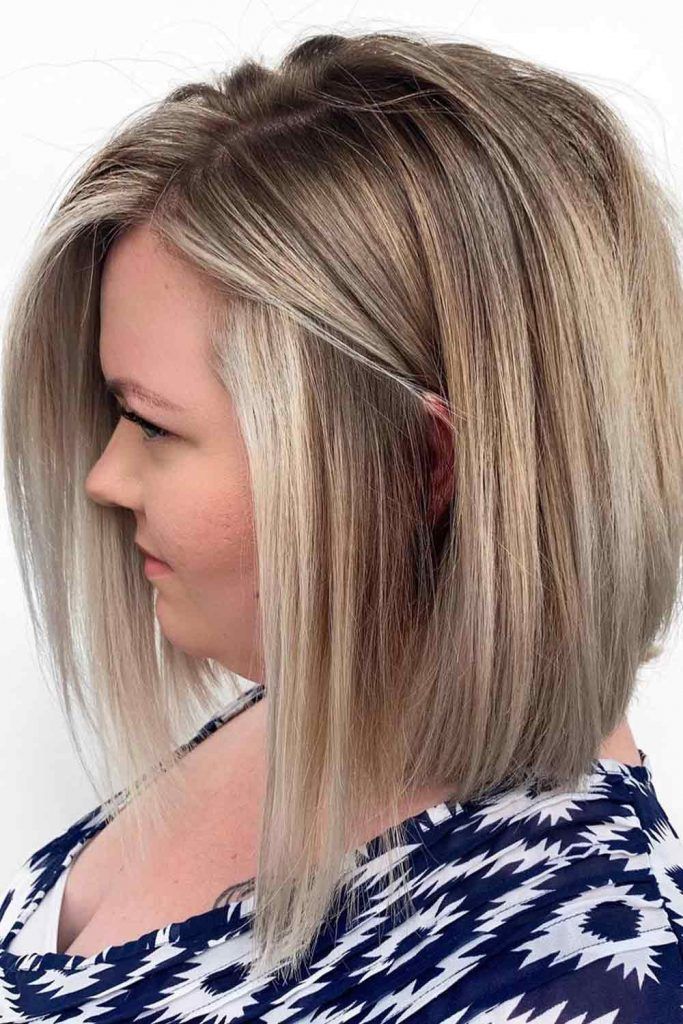
Notice how the color follows the cut. Blonde balayage is painted over a darker base on this A-line, with the front reaching the collarbone and the back cut shorter. A side part pushes extra lift to one side. The lighter pieces are placed along the angle, so your eye travels straight to the long front. It is a smart pairing that makes a simple shape look considered.
- Best for: Straight hair with medium density.
- Ask your stylist for: An A-line bob with front lengths to the collarbone, a side part and hand-painted blonde balayage.
- How to style it: Blow-dry smooth with a round brush and finish with a light shine spray.
- Upkeep: Trim every 6 to 8 weeks; balayage every 12 weeks.
10. The caramel-streaked back view
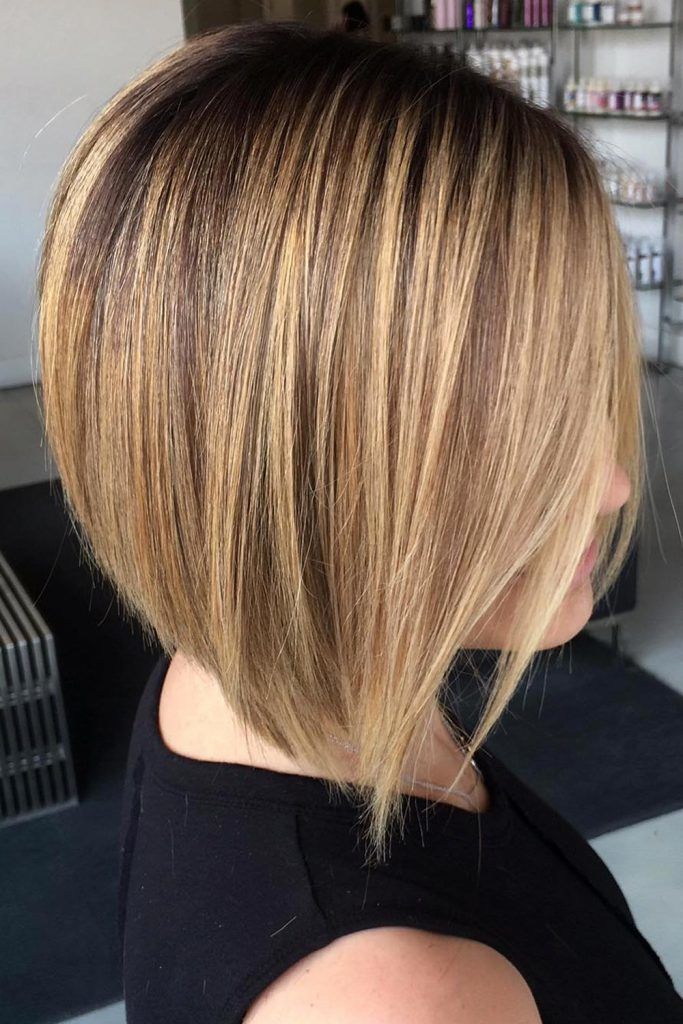
Spin the chair and this is what your stylist sees. Caramel and honey balayage runs through an A-line that is shorter at the nape and angles down to longer front lengths. Dark roots melt into the lighter ends, and the hair is straight and sleek. From behind, the back is smooth and rounded, and the angle is crisp on both sides. Warm, tidy and quietly bright.
- Best for: Straight hair with medium density.
- Ask your stylist for: An A-line bob with a smooth, rounded back and caramel balayage over a dark root.
- How to style it: Blow-dry with a paddle brush and finish with a flat iron.
- Upkeep: Trim every 6 to 8 weeks; balayage every 12 weeks.