


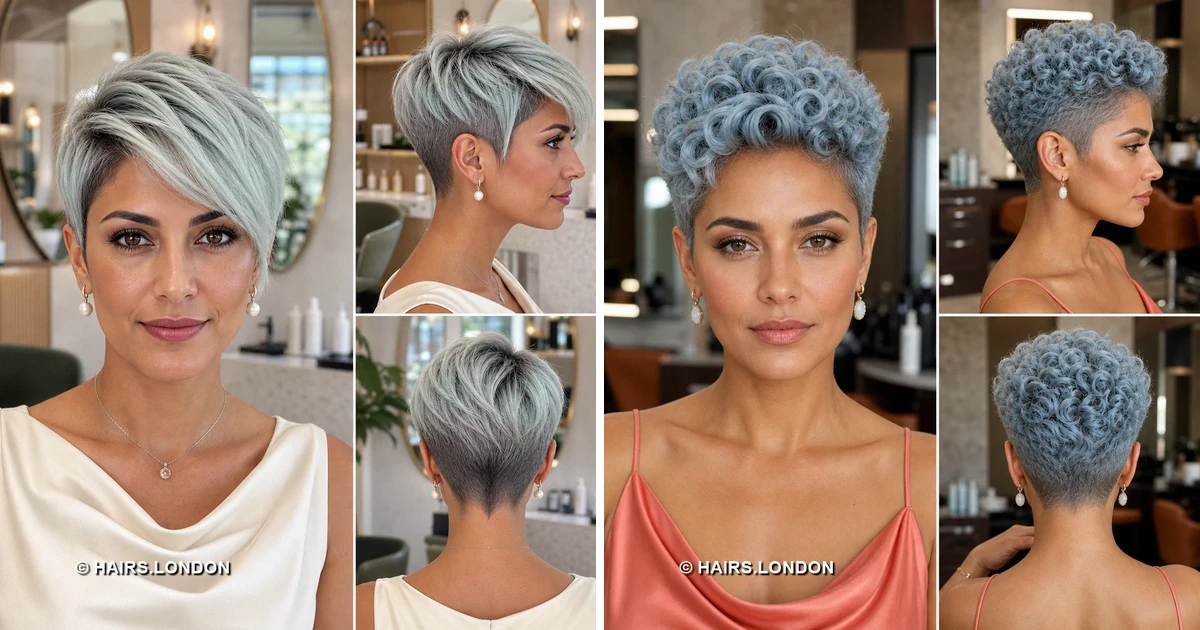
Cool-toned pixie cuts can look sleek, softly tousled, or full of curls. These six examples pair pale silver, blue, lavender, and mint tones with distinct shapes, from long side-swept fringes to rounded curly crowns. Front, side, and back views make it easier to see how each cut is built—and which details to discuss before your appointment.
1. Icy Silver Pixie with a Side-Swept Fringe
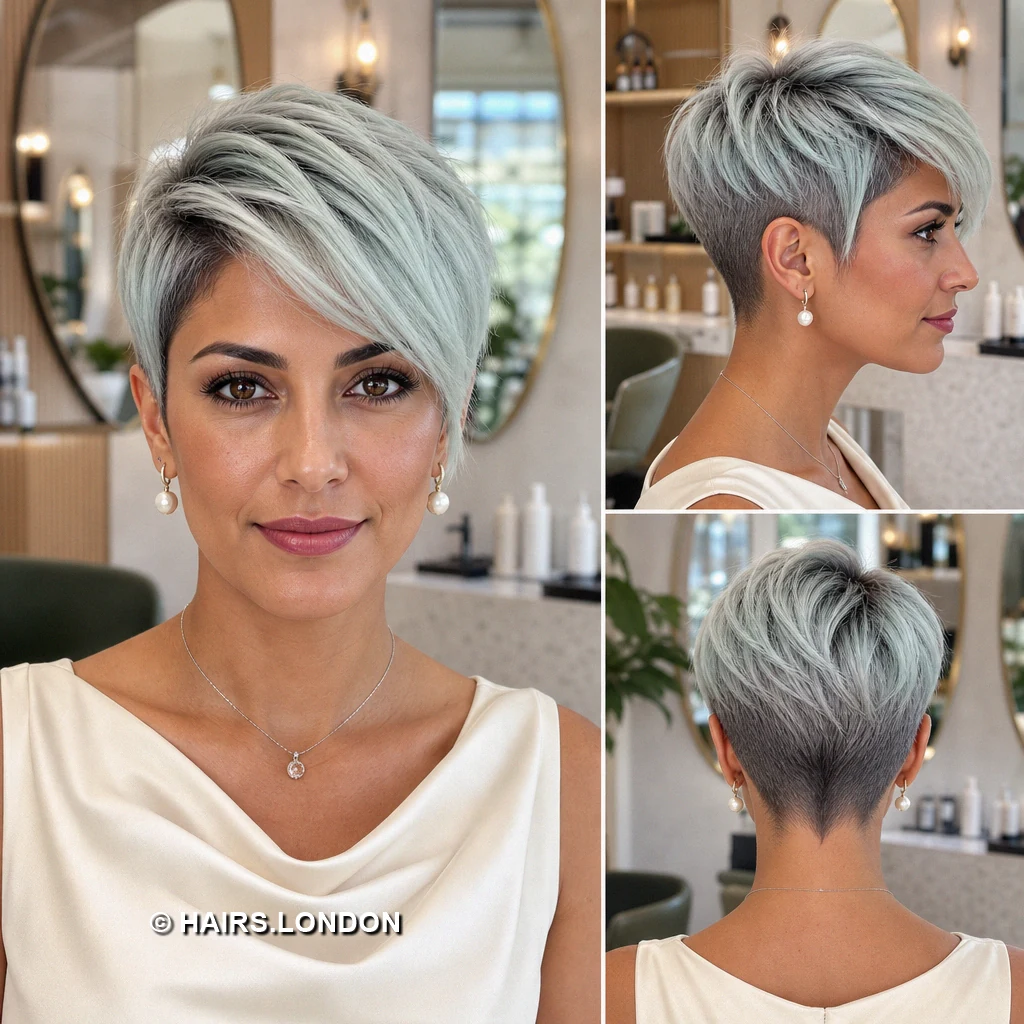
This icy silver pixie keeps the crown long enough to sweep diagonally across the forehead, while short, closely tapered sides expose the ears. Fine layers break up the surface without sacrificing the rounded silhouette. From the back, the darker root area narrows into a pointed nape, giving the pale top clear definition. Ask for soft scissor texture through the fringe and a neat, blended taper rather than a hard undercut. Blow dry the longer hair across with a small brush, then separate a few strands with lightweight paste. Schedule regular trims to prevent the fringe from covering your eyes completely.
2. Soft Blue Pixie with a Rounded Curly Crown
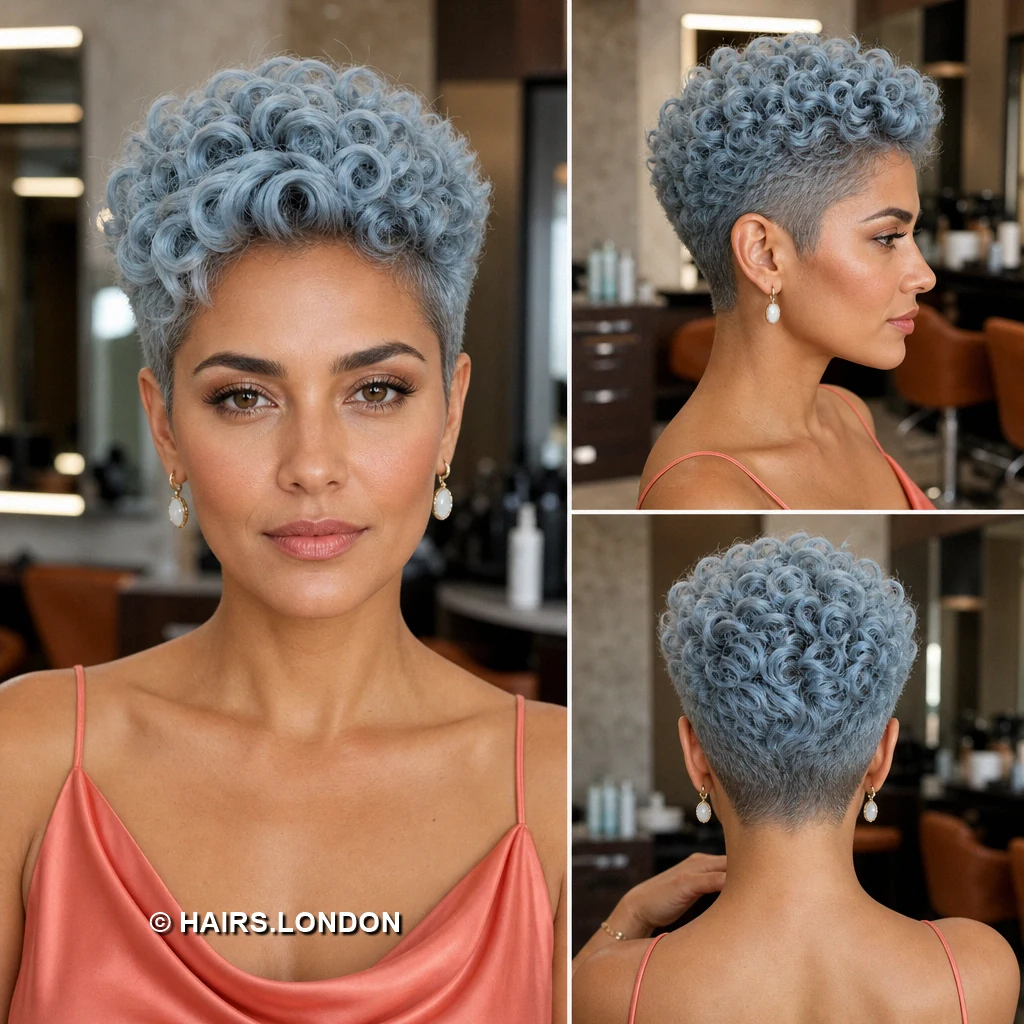
Soft blue curls form a rounded, elevated crown on this compact pixie, with small ringlets curling forward into a short, open fringe. The sides are clipped close around the temples, and the back tapers cleanly toward the neckline, leaving the curl pattern concentrated above. Ask your stylist to preserve enough length on top for complete coils and to blend the shorter sides gradually. Work curl cream through damp hair, scrunch gently, and diffuse on low heat or air dry. Avoid brushing once dry; lift individual curls with your fingertips instead. A satin pillowcase can help reduce friction between styling days.
3. Lavender and Mint Pixie with Feathered Layers
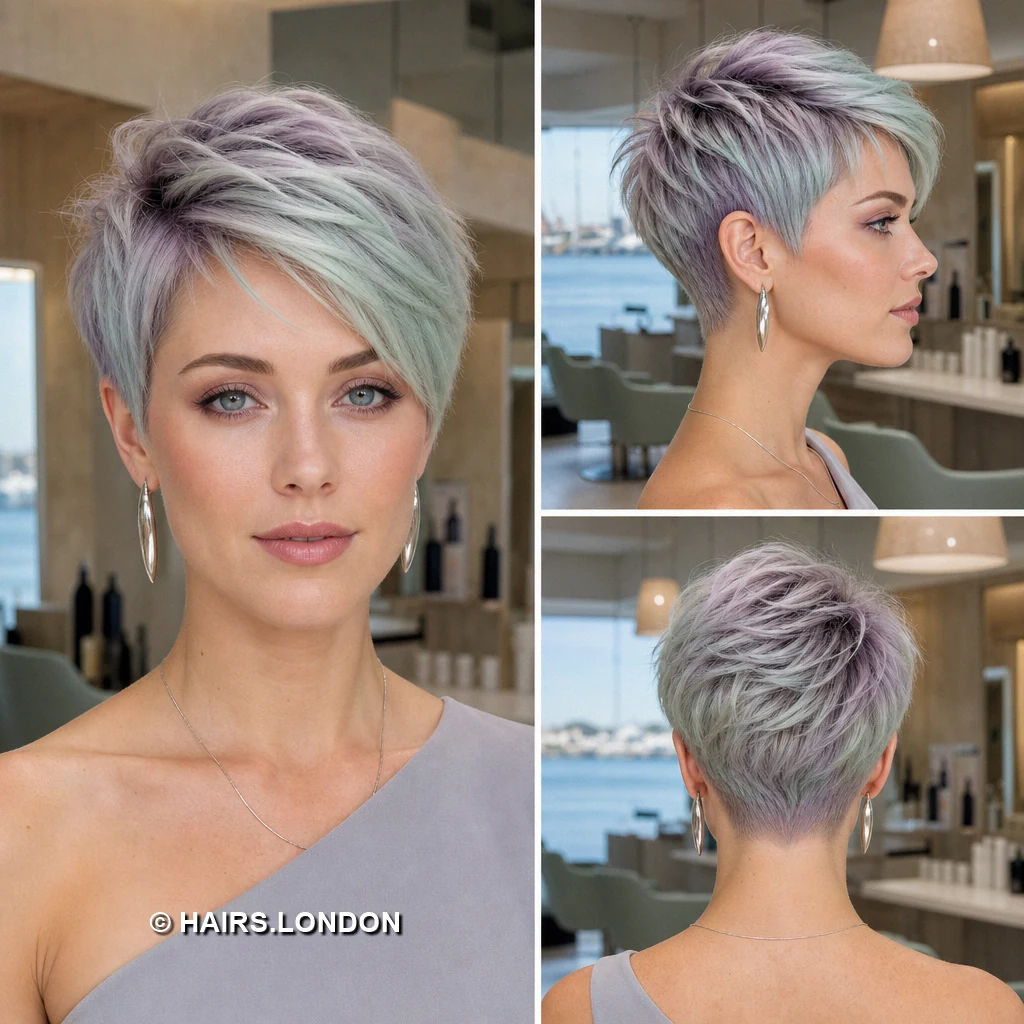
Pastel lavender at the crown blends into pale mint along the sweeping fringe of this airy pixie. Longer, feathered top layers travel across the forehead, while the sides sit close around the ears and the nape tapers into a narrow, muted lavender point. The back shows tousled, directional texture rather than a flat finish. Request a soft side fringe with enough length to skim the brow, and keep the upper layers light. Mist with heat protectant before blow drying against the roots for lift. Finish with flexible cream, touching only the ends so the pastel sections stay visibly separated throughout.
4. Pale Blue Pixie with an Asymmetric Curly Front
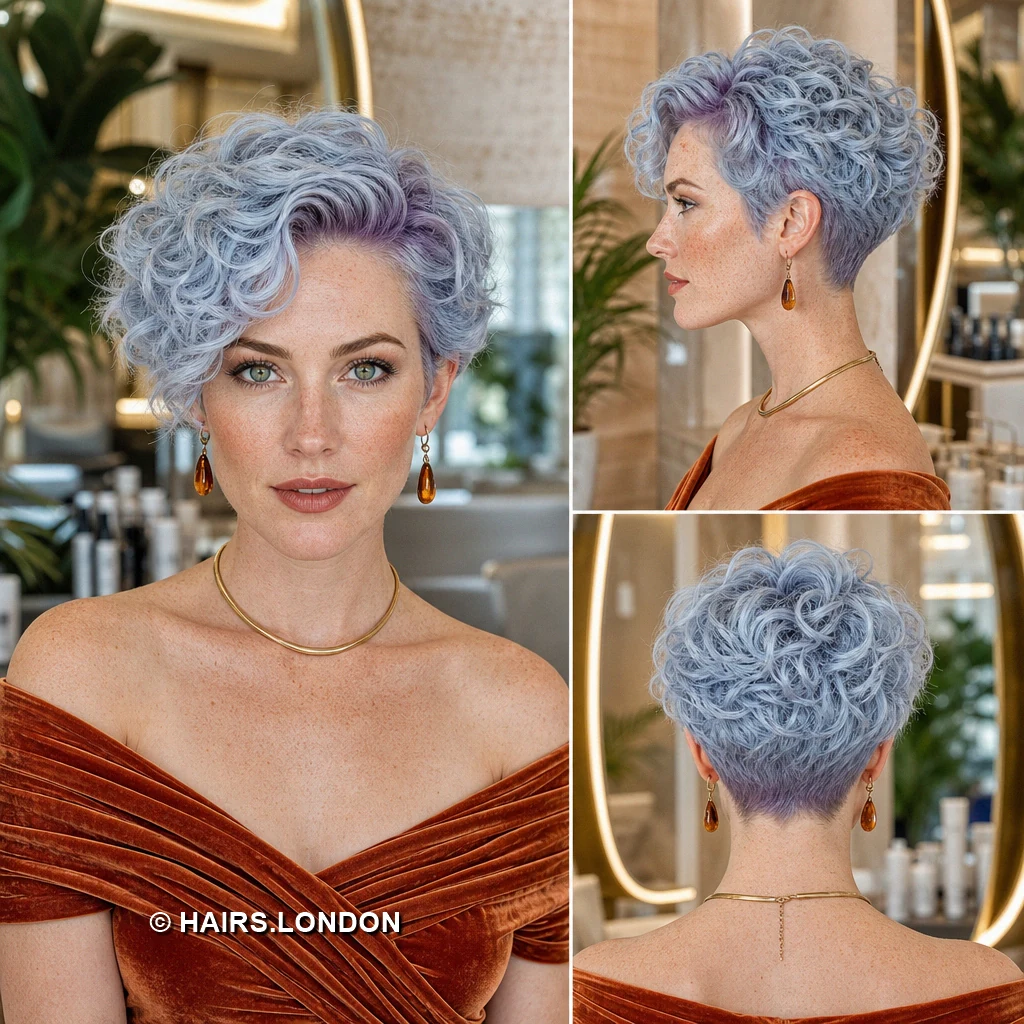
Loose, pale blue curls give this pixie a full, asymmetric outline, with the longest waves falling across one side of the forehead. A hint of lavender appears near the front roots and through the shorter, tapered nape. The opposite side sits closer to the head, allowing the curled crown to provide most of the volume. Ask for generous length through the top and shorter graduation beneath, without thinning the curls excessively. Apply mousse to damp hair, diffuse gently, and arrange the front curl by hand. Refresh flattened sections with a water mist; trim the neckline as it grows out gradually.
5. Silver Pixie with a Long Angled Fringe
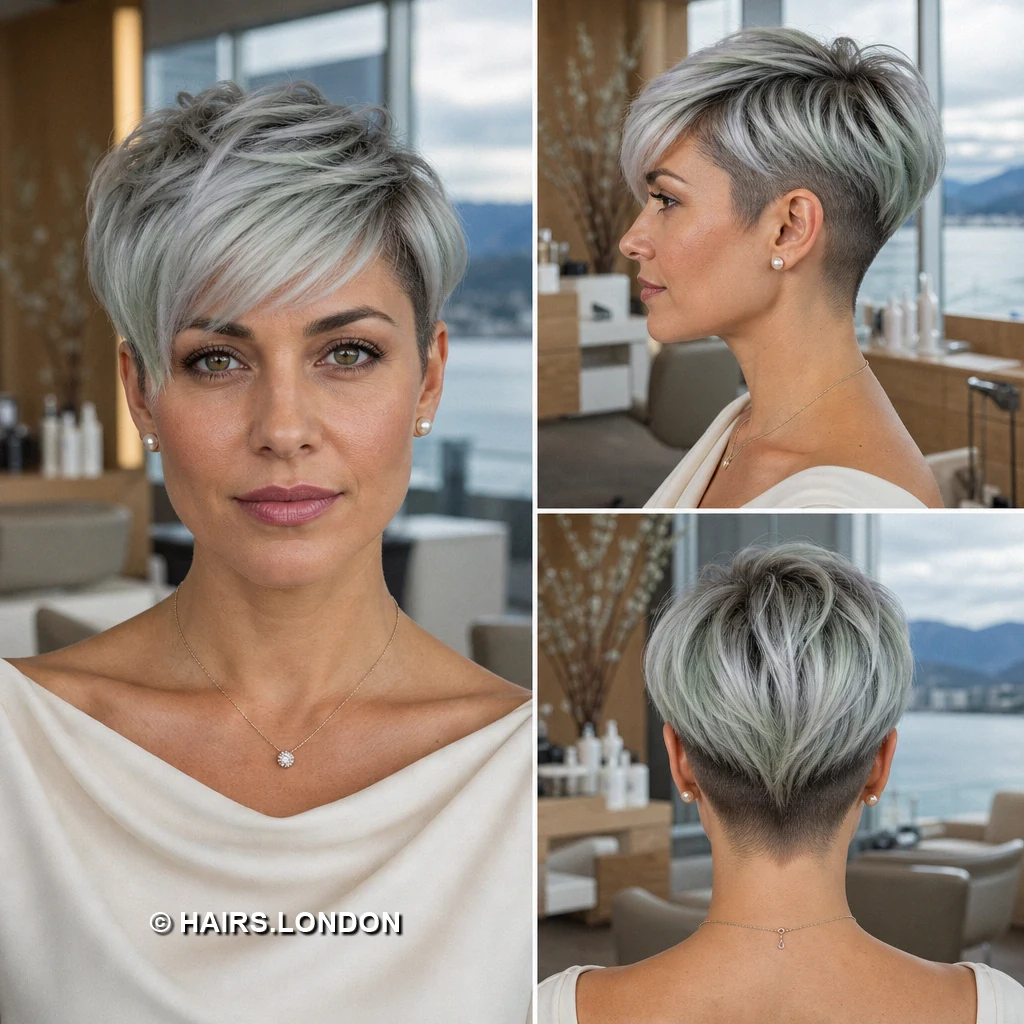
A silvery, pale, cool-toned top sweeps forward into a long, angled fringe on this closely tapered pixie. Darker gray roots and sides create contrast beneath the pale lengths, particularly around the ear and pointed nape. The crown carries subtle height, while the smooth fringe falls over one side of the forehead without obscuring the eye. Ask for weight left through the front and layering behind it; excessive thinning can make the sweep look sparse. Direct a dryer from crown to brow using a vent brush, then add a small amount of smoothing cream. Keep side trims frequent to preserve contrast.
6. Powder Blue Pixie with Defined Crown Ringlets
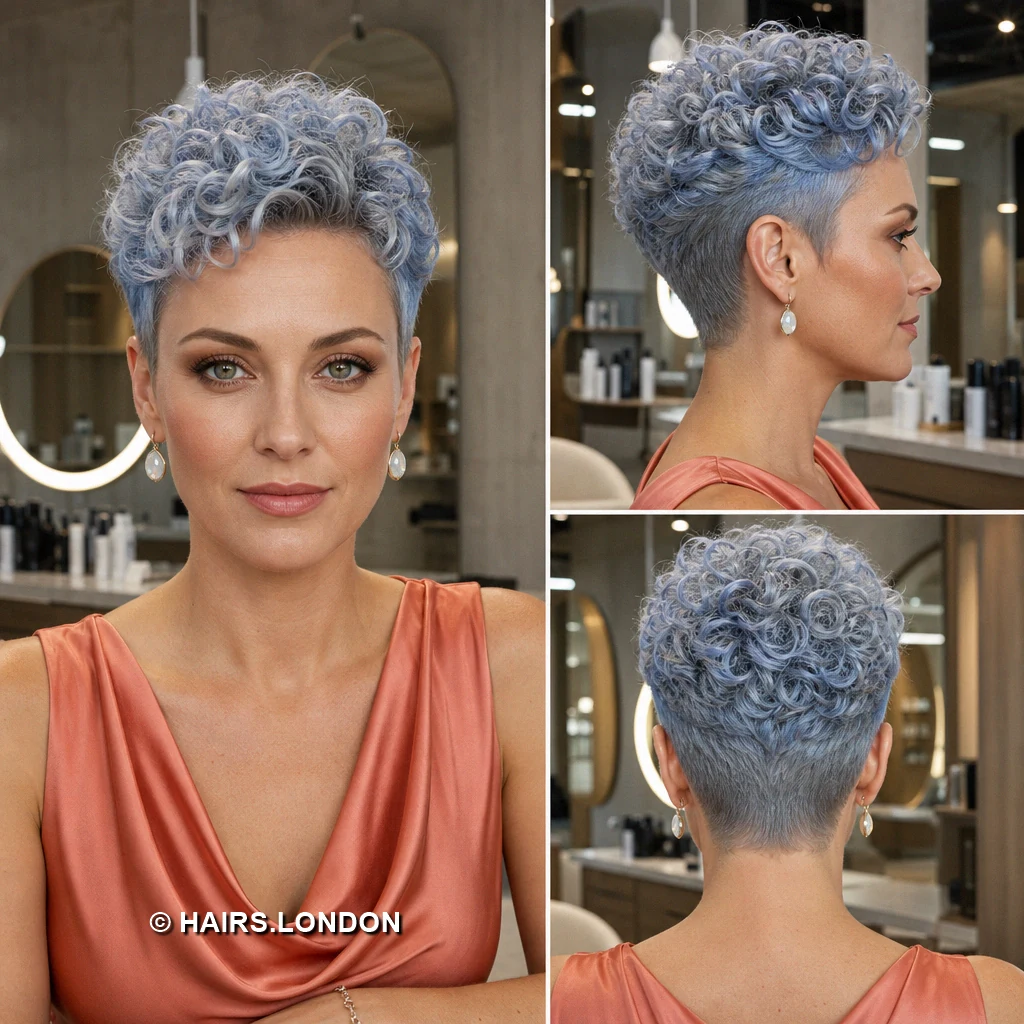
Powder blue ringlets cluster across the top of this short pixie, creating height without a heavy fringe. The curls curve forward above the forehead, while tightly cropped sides reveal the ears and taper evenly into a soft, narrow nape. A deeper blue-gray tone beneath the curls makes the rounded crown stand out. Tell your stylist to leave enough top length for spring and to avoid cutting curls at their stretched length alone. Scrunch in a light curl gel while damp, then diffuse without disturbing the shape. Between washes, revive individual coils with water and a little of your lightweight conditioner.
How to Choose a Cool-Toned Pixie Cut
Start with the amount of length you want around your face. A sweeping fringe gives you more hair to direct and tuck aside; an open curly fringe keeps the forehead more visible. Look at the side and back views too: these cuts rely on close tapers, but their crowns range from smooth and compact to full and rounded. Choose a shape that suits your natural texture and the time you want to spend styling it.
Styling Straight, Wavy, and Curly Textures
For straighter hair, blow dry the top in the direction the fringe will sit, lifting at the roots before smoothing the ends. A small amount of paste can separate feathered layers without flattening them. For waves, scrunch mousse into damp hair and diffuse gently to retain movement. For curls, apply cream or light gel while damp, then air dry or diffuse on low heat. Handle dry curls as little as possible to preserve their definition.
Keeping Silver and Pastel Color Fresh
Pale silver, blue, lavender, and mint tones can lose their visible distinction as color fades. Ask your colorist which cleanser and conditioner suit the shade they use, and wash with lukewarm rather than hot water. Limit unnecessary heat styling and use heat protectant when you do style. Agree on a color-refresh plan at your appointment, especially if you want the lighter top and darker tapered areas to remain distinct.
Maintaining the Tapered Pixie Shape
The sides and nape will change the outline first as they grow. Regular trims help preserve the clean area around the ears and the narrow neckline; your stylist can recommend an interval based on your growth and the closeness of the taper. Between visits, keep heavy products away from the roots, which can collapse a lifted crown. Let your stylist reshape a long fringe rather than cutting across it at home.
What to Discuss with Your Stylist
Bring the front, side, and back views of the cut you prefer. Point out your desired fringe length, crown volume, coverage around the ears, and how closely the nape should taper. If your hair curls, discuss shrinkage before deciding on top length. For color, ask what is needed to achieve a pale result on your starting shade, whether a darker root or taper will be retained, and what upkeep you can realistically manage.
Frequently Asked Questions
Which pixie has the longest fringe?
The silver pixie in image five has a long, angled fringe that sweeps across one side of the forehead.
Which cut keeps the forehead most open?
The powder blue curly pixie in image six has short curls above the forehead rather than a long, draped fringe.
Can these shapes work with naturally curly hair?
Yes. The cuts in images two, four, and six show curl-focused shapes with more length on top and closely tapered sides. Ask your stylist to account for curl shrinkage.
What should I ask for if I want a softer taper?
Ask for the shorter sides and nape to blend gradually into the longer top, rather than creating a sharply disconnected undercut.
How do I keep a side-swept fringe in place?
Dry it in the direction you want it to fall, then use a small amount of lightweight cream or paste on the ends. Avoid loading product at the roots.
Will the curly pixies need styling every morning?
Not necessarily. A water mist and a little curl product can refresh flattened ringlets between washes; how much reshaping is needed depends on your curl pattern.
How do I add volume to a straight pixie crown?
Lift the roots with your fingers or a small brush while blow drying, then use minimal finishing product so the top retains its height.
Should the curls on top be thinned out?
Discuss bulk with your stylist, but avoid excessive thinning if you want the full, rounded crowns shown here. The top needs enough length and density for defined curls.
Why do some of these cuts show darker roots or sides?
The visible darker areas add contrast beneath the pale top and make the taper easier to distinguish.
How often should a tapered pixie be trimmed?
Book trims when the sides, nape, or fringe begin to lose the shape you want. Your stylist can set a schedule based on how quickly your hair grows.
What helps pastel color last between appointments?
Follow your colorist’s product advice, wash with lukewarm water, and limit heat styling. Ask when the shade will need refreshing.
What photos should I bring to a consultation?
Bring front, side, and back views of your preferred cut so you can discuss the fringe, crown length, taper, nape, and color placement clearly.
Conclusion
The most useful choice is the shape you will enjoy wearing between appointments. Decide whether you want a smooth sweep, feathered movement, or defined curls, then use the side and back views to settle the taper and nape details with your stylist. A clear plan for both trims and color refreshes will help your chosen cool-toned pixie keep its intended outline.