


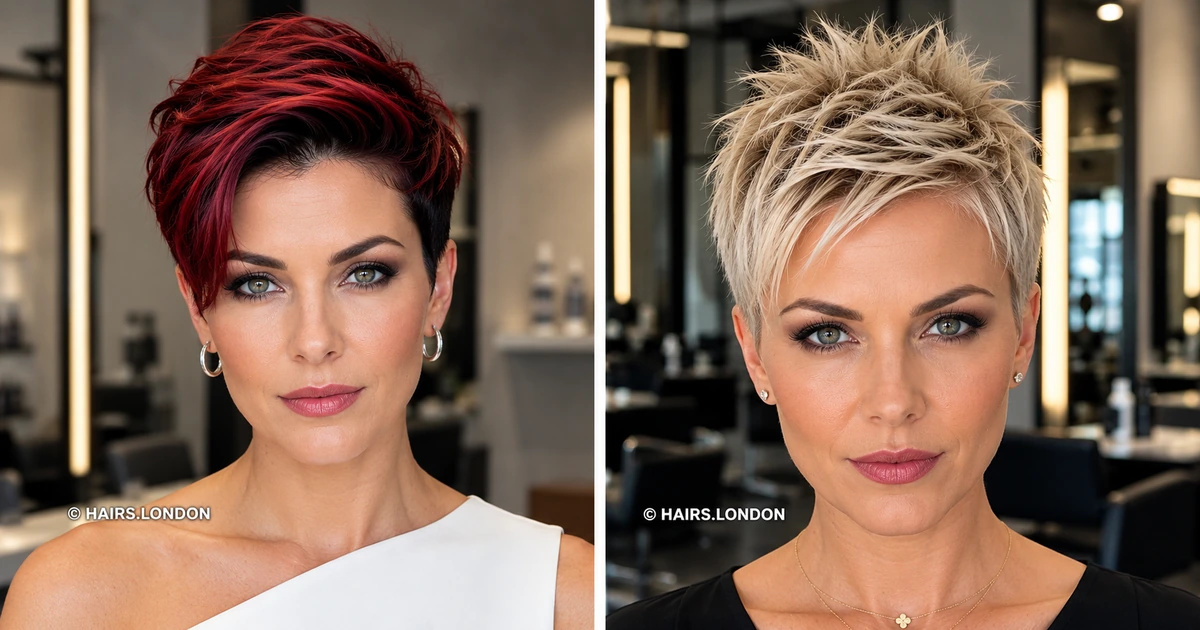
11. Chestnut Sculpted Pixie
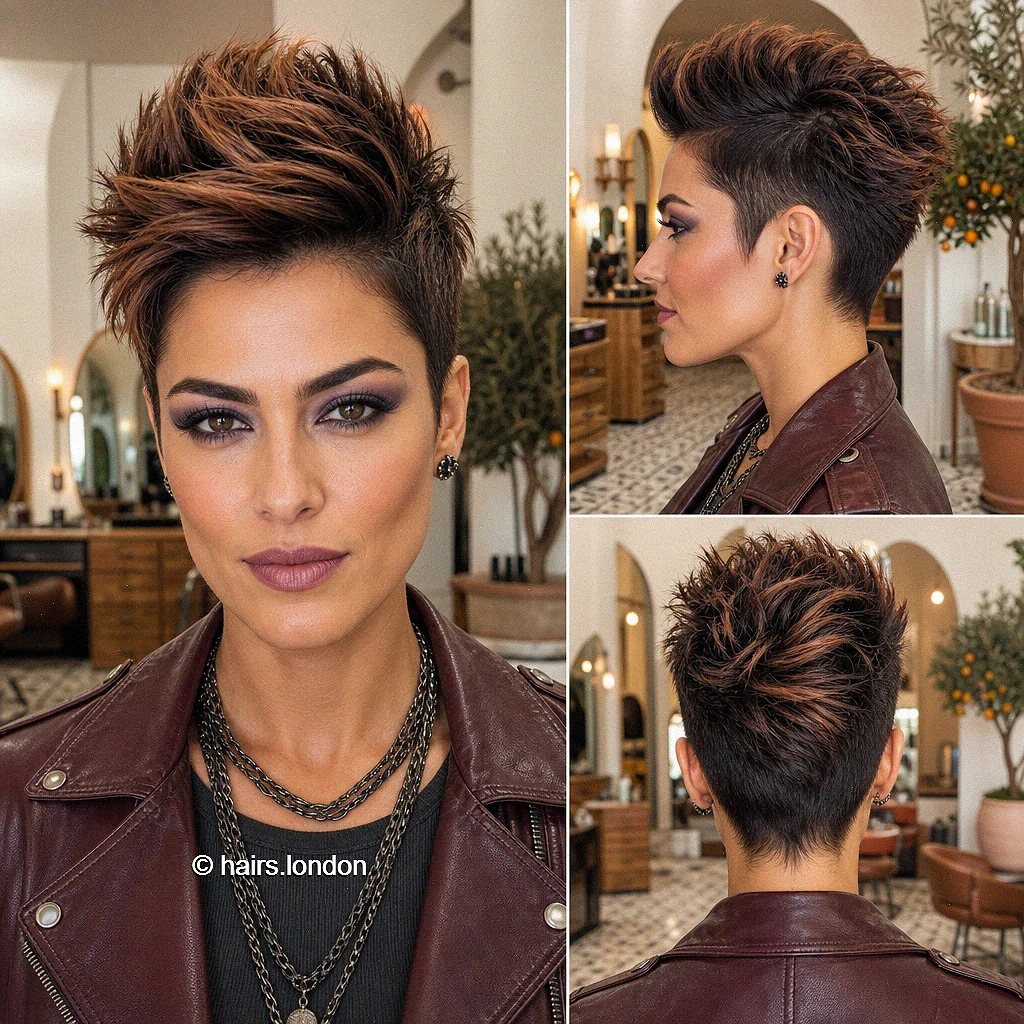
This chestnut pixie is sculpted upward into a polished quiff, with warm brunette highlights emphasizing the directional layers. The sides remain short and neat, allowing the longer top to create height without excessive width. Ask for graduated sides with a disconnected or semi-disconnected crown, keeping extra length through the front for lift. Blow-dry the fringe upward with a small brush, then use flexible paste to shape individual sections. This style can visually add height to the silhouette, so the exact amount of volume should be adjusted to personal preference. A light hairspray helps maintain the structure while preserving movement and.
12. Silver Feathered Pixie
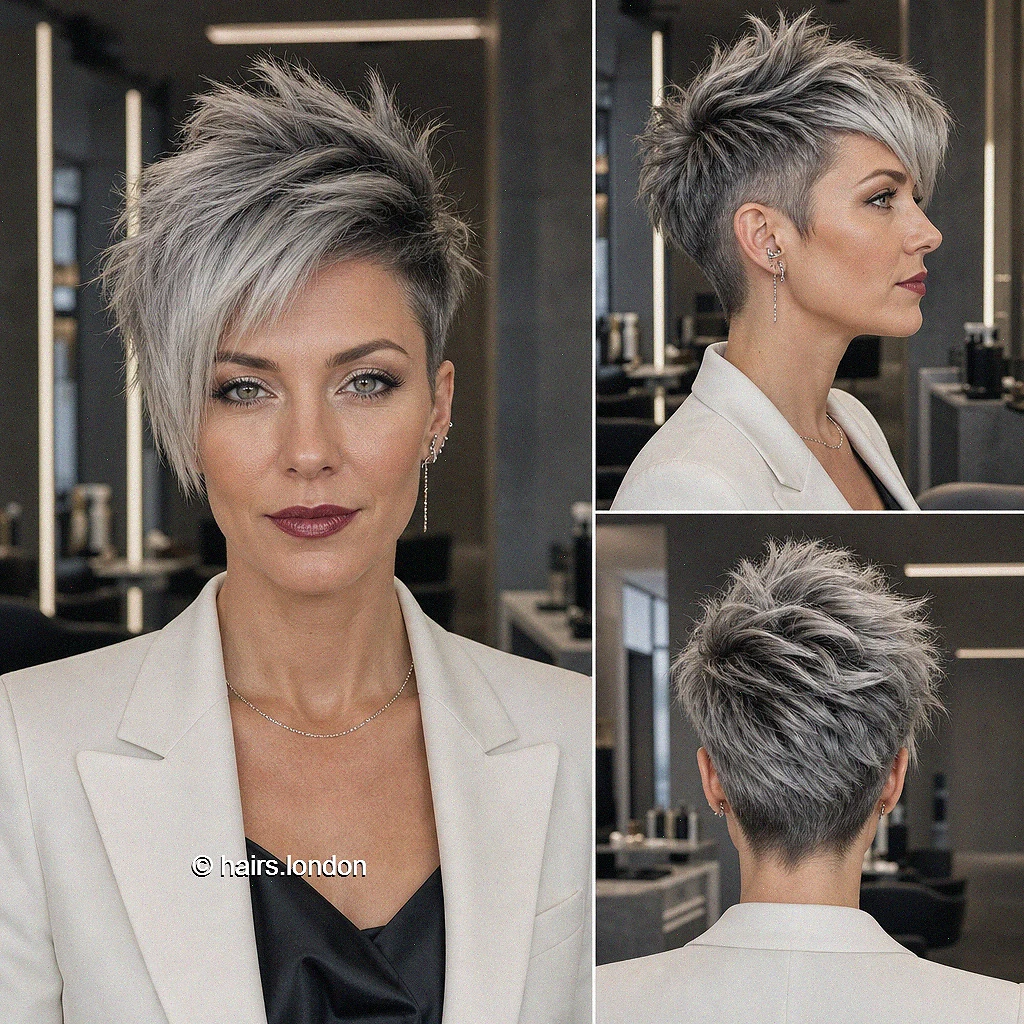
This silver feathered pixie blends a cool gray base with lighter pearl highlights through the top. The longer crown is swept back and slightly upward, while the sides and nape are tapered closely for a streamlined shape. Ask for feathered, point-cut layers that create movement without making the ends look thin. Root-lift spray and a lightweight styling cream can provide control, especially if the hair tends to fall flat. Naturally gray hair may need extra moisture because it can feel coarser, while colored silver requires careful toning. A purple or silver shampoo used occasionally can help maintain clarity, but conditioning.
13. Smoky Silver Curly Pixie
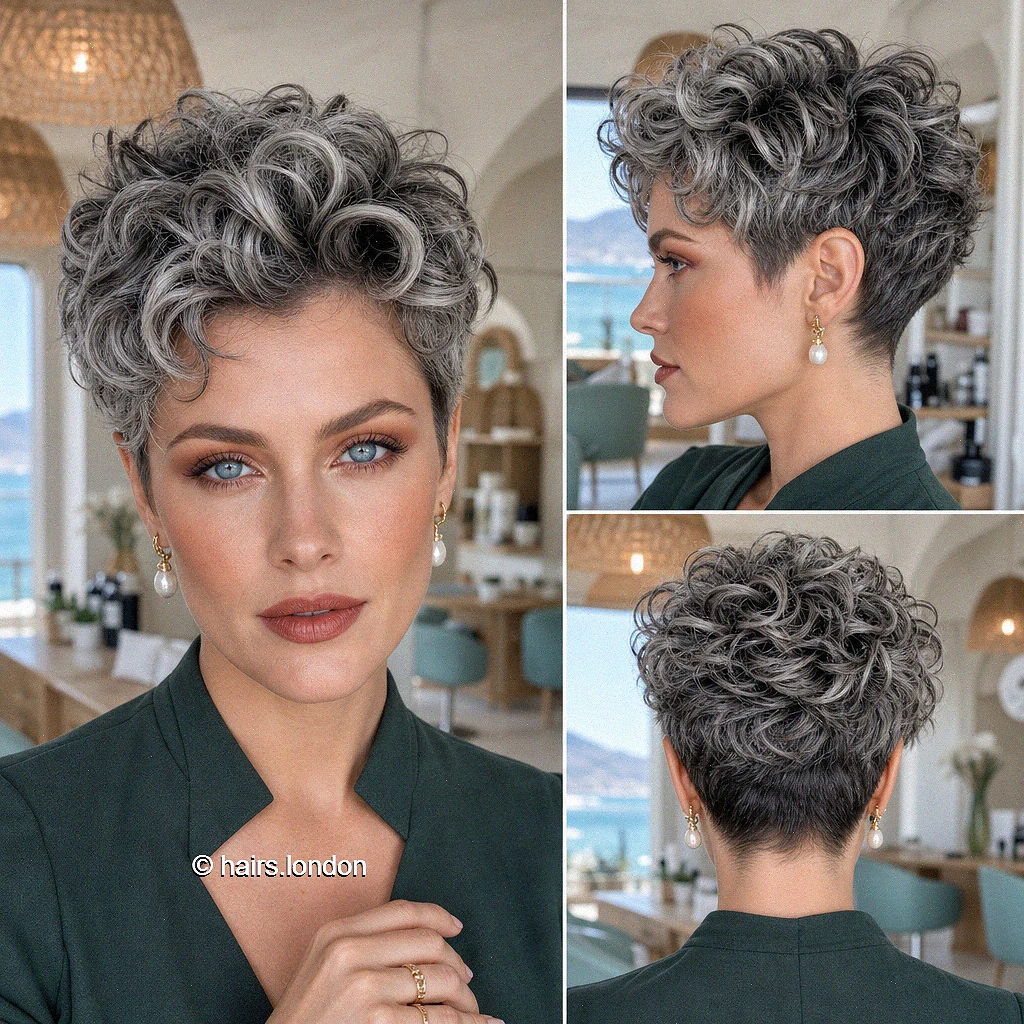
This smoky silver pixie celebrates natural-looking curl and wave with a softly tapered perimeter. The top remains longer and irregular, allowing bends and curls to form texture, while the sides are cropped enough to keep the silhouette controlled. Darker gray roots add depth beneath brighter silver pieces. Ask for curl-friendly point cutting rather than aggressive thinning, especially if your hair expands when dry. Apply curl cream or light mousse to damp hair, then diffuse on low heat or allow it to air-dry. Avoid brushing once dry because it can separate the curl pattern. Hydrating masks and gentle toning products help.
14. Smoky Silver Swept Pixie
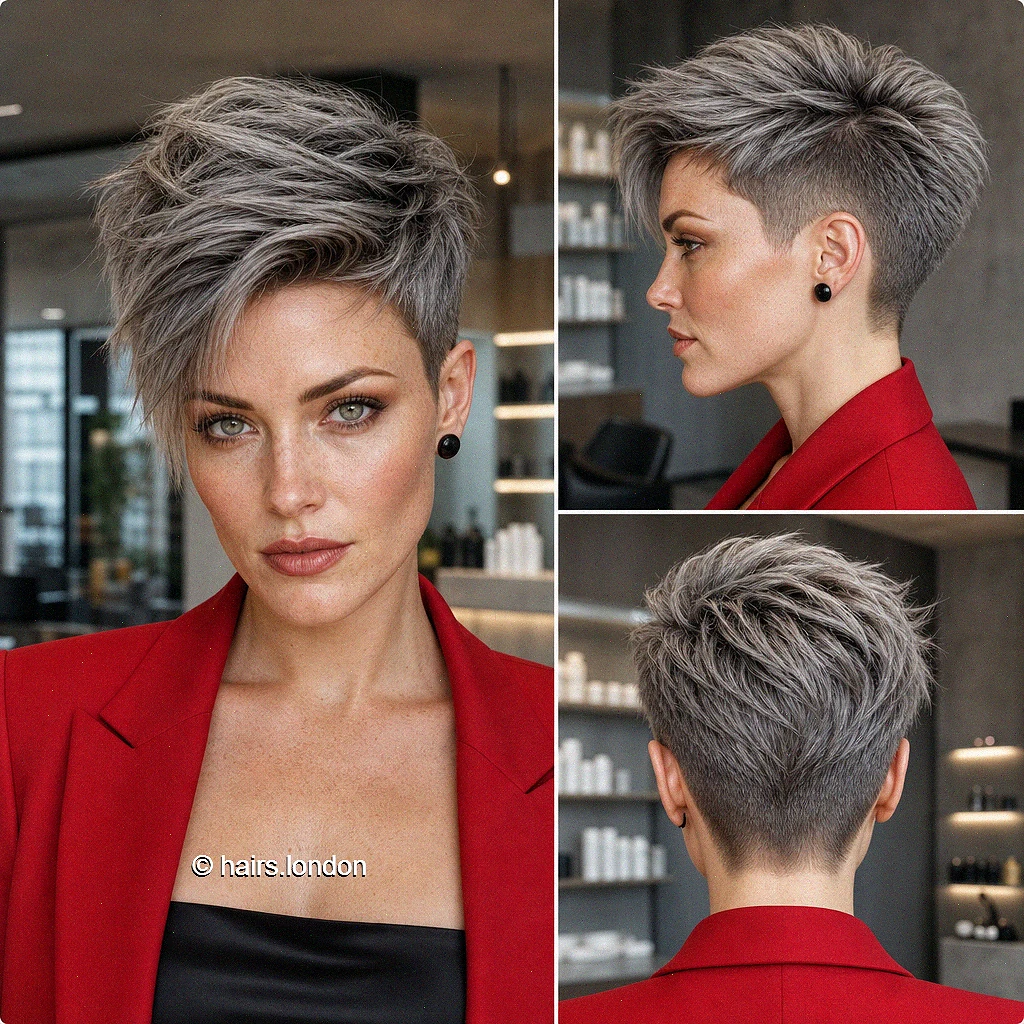
This smoky silver swept pixie combines a high, airy front with a neatly tapered undercut. Dark charcoal roots transition into cool silver lengths, creating strong dimension and making the textured layers easy to see. Ask for extra length at the front and crown, with shorter sides that follow the head shape closely. Blow-dry the top away from the face, directing the roots upward for lift, then separate the ends with flexible paste. Fine hair can use texture powder for additional support. If the silver is color-created, regular toning and heat protection are useful. Keep the nape tidy with frequent trims.
15. Pearl Blonde Voluminous Pixie
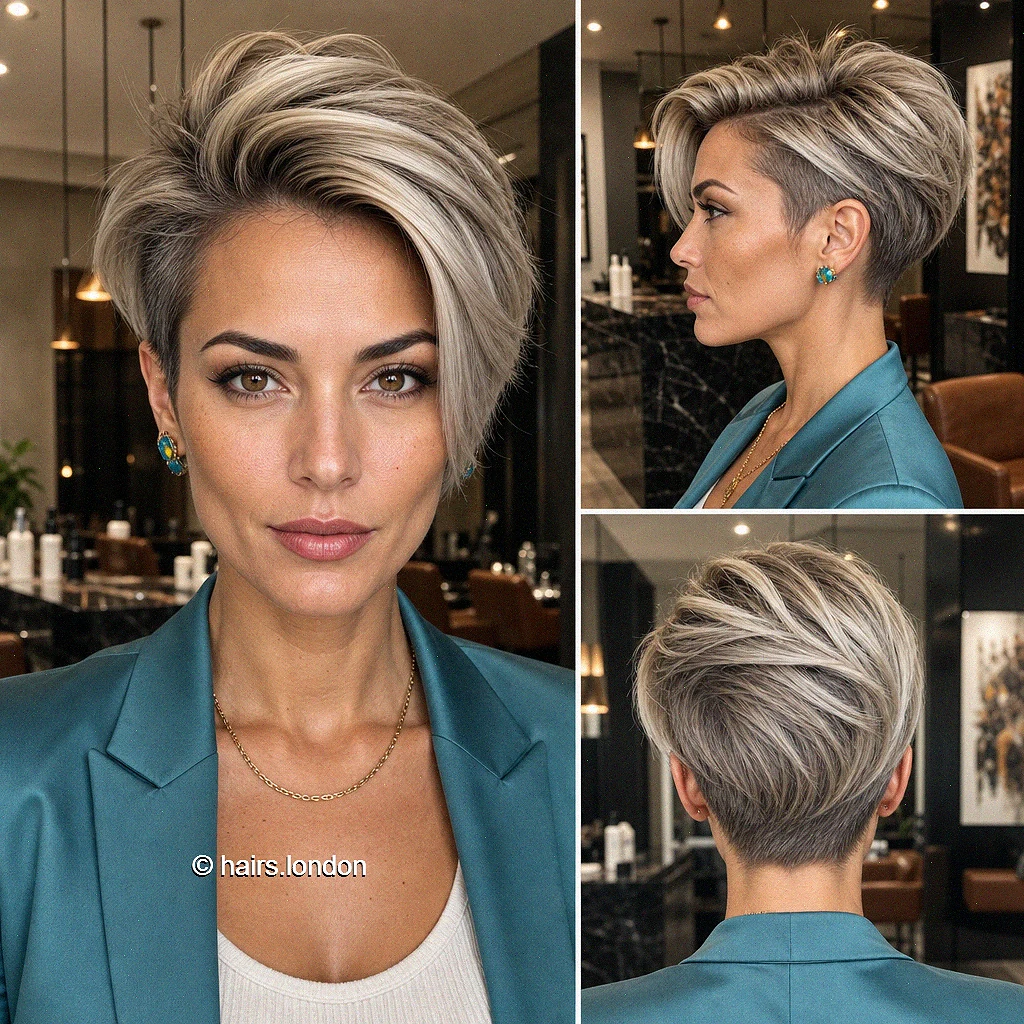
This pearl-blonde pixie has a soft, voluminous crown, sweeping fringe, and a gently tapered back that feels polished rather than severe. Creamy blonde highlights sit over a deeper beige base, giving the layers depth and a natural multi-tonal finish. Ask for longer layers around the crown and front, with subtle graduation through the back to support volume. Blow-dry using a small round brush, lifting at the roots and directing the fringe diagonally. A light volumizing mousse can add body without stiffness. Highlighted hair benefits from heat protection and regular conditioning. This shape can also be styled flatter for a softer.
16. Silver Quiff Undercut Pixie
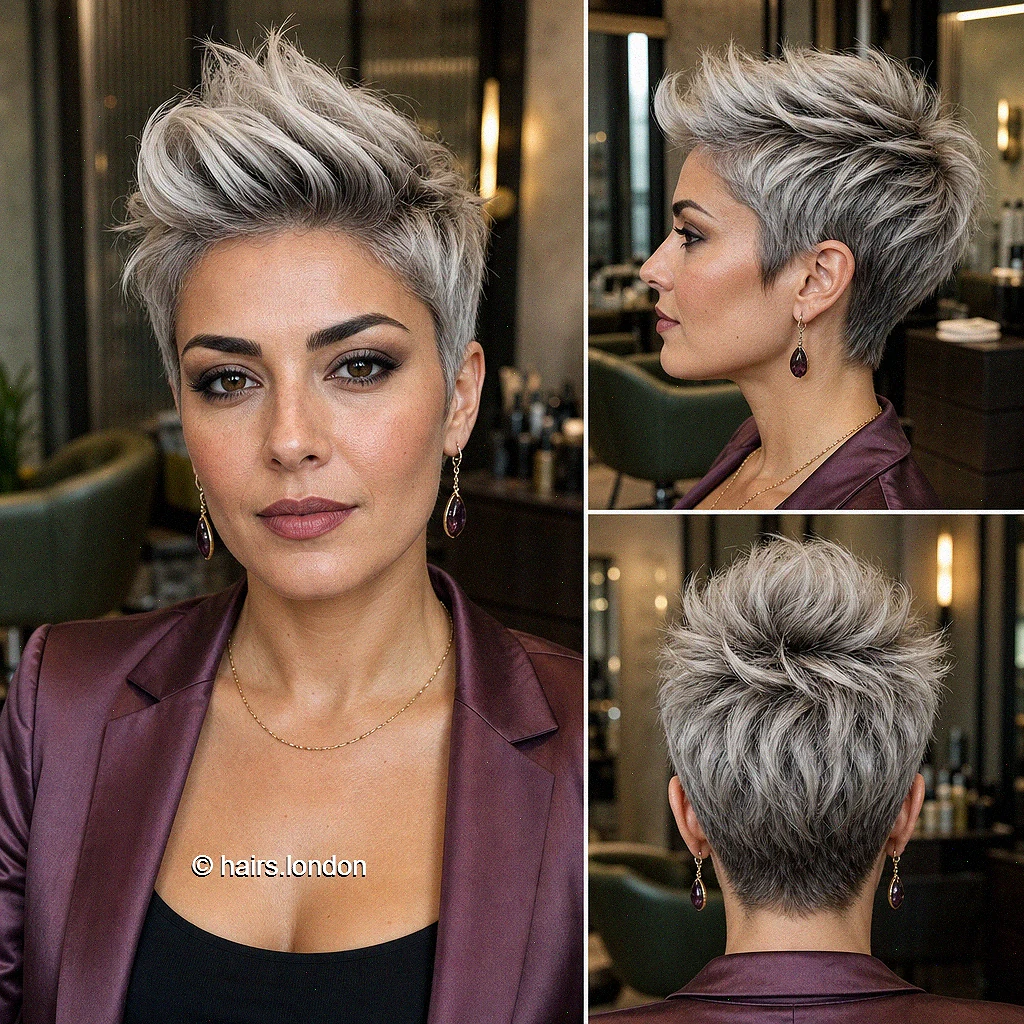
This silver quiff pixie combines a tall, swept-back front with close sides and a clean undercut effect. The charcoal base and bright silver top create contrast that makes the lifted shape especially noticeable. Ask for generous front length, shorter crown layers, and tight graduation around the ears and nape. Blow-dry upward and backward, using your fingers or a small vent brush to establish height before applying product. A pliable clay provides grip while keeping the quiff adjustable. For finer hair, begin with root-lift spray. Silver color needs careful maintenance, including heat protection, moisture, and occasional toning to prevent yellow warmth.
17. Smoky Silver Spiky Pixie
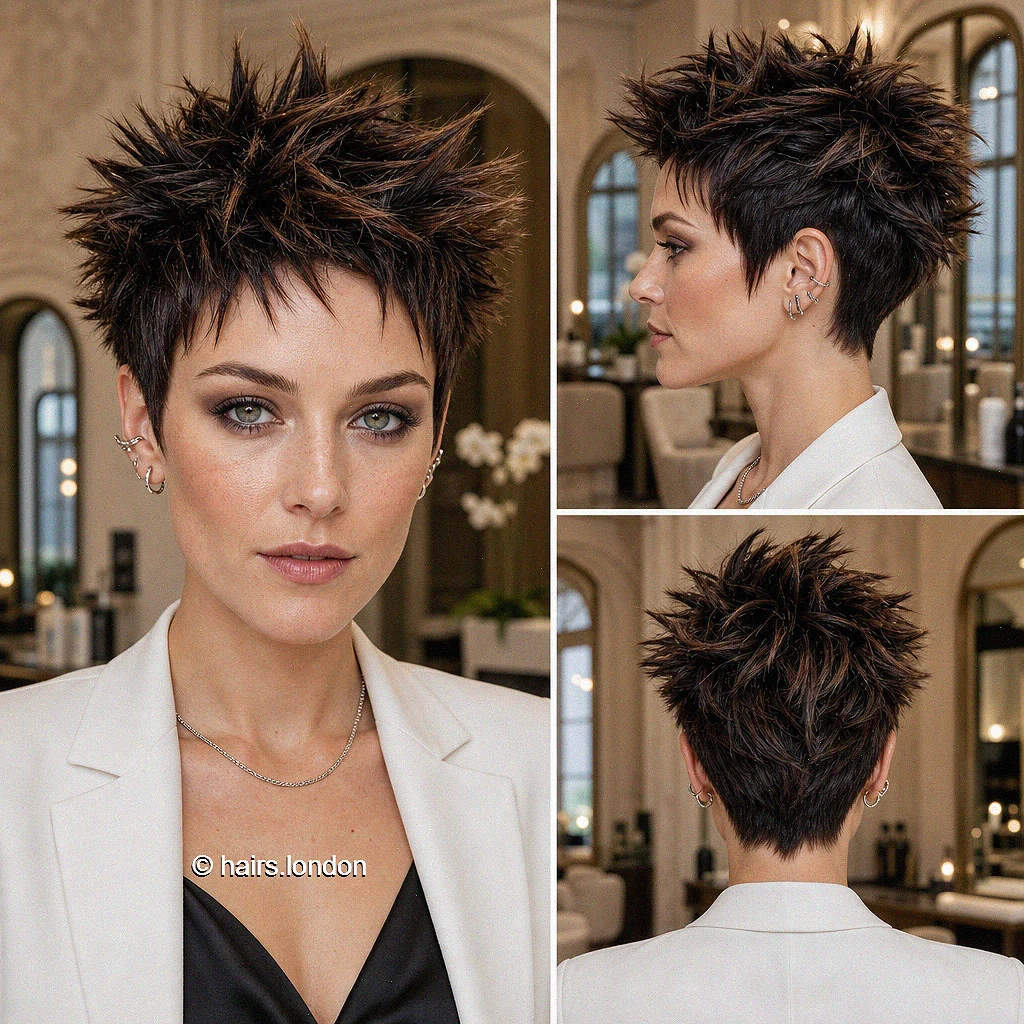
This smoky silver spiky pixie uses short, separated layers to create energetic texture without leaving excessive length. The cool gray base is brightened by pale silver tips, while the sides remain cropped and tidy. Ask your stylist for point-cut crown layers with slightly longer pieces near the front so the shape can be pushed up, forward, or diagonally. Texture powder is ideal for adding lift at the roots, and a small amount of matte paste can define the tips. Avoid overloading fine hair with wax. If the silver is achieved through lightening, maintain softness with conditioning treatments and reduce unnecessary.
18. Copper Voluminous Undercut Pixie
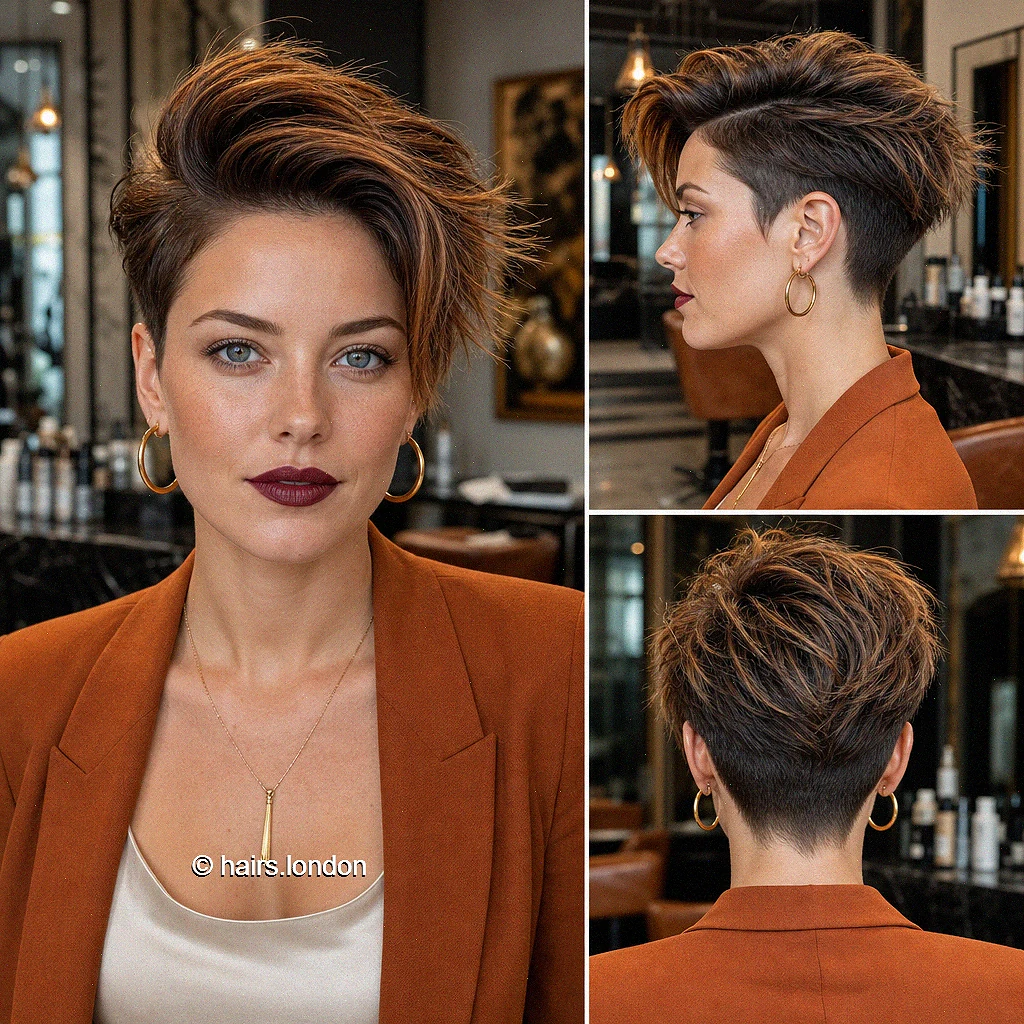
This copper undercut pixie keeps substantial length through the top, creating a dramatic wave of volume above closely clipped sides. The warm copper-brown shade contains darker roots and brighter cinnamon pieces that accentuate the sculpted movement. Ask for a disconnected top and enough fringe length to sweep upward or across the forehead. Blow-dry from side to side first for root movement, then direct the front into the desired shape. Flexible paste or styling cream can hold the bends without making them crunchy. Copper pigments can fade with frequent washing, so color-safe shampoo, cooler water, heat protection, and periodic gloss appointments.
19. Lavender Sculpted Pixie
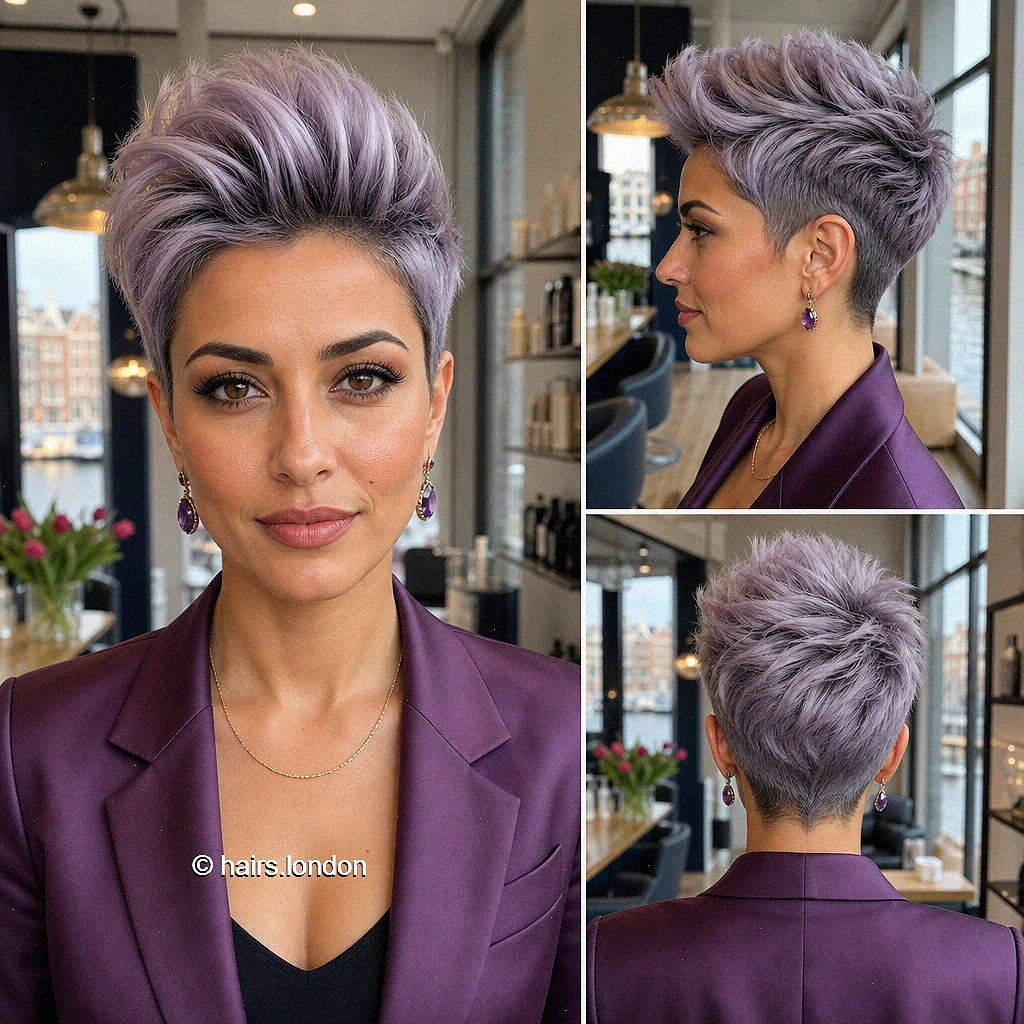
This lavender sculpted pixie blends a soft violet-gray color with a structured, swept-back top and tapered sides. The cooler lavender lengths appear brighter against the slightly deeper roots, adding dimension without the intensity of a vivid purple. Ask for longer front layers that can be lifted into a compact quiff, with clean graduation around the ears and nape. Blow-dry upward using a small brush, then shape the ends with lightweight paste. Pale lavender shades usually require a very light base, so hair condition should be considered before bleaching. Use gentle color-safe products, minimize high heat, and refresh the toner when.
20. Dusty Rose Curly Pixie
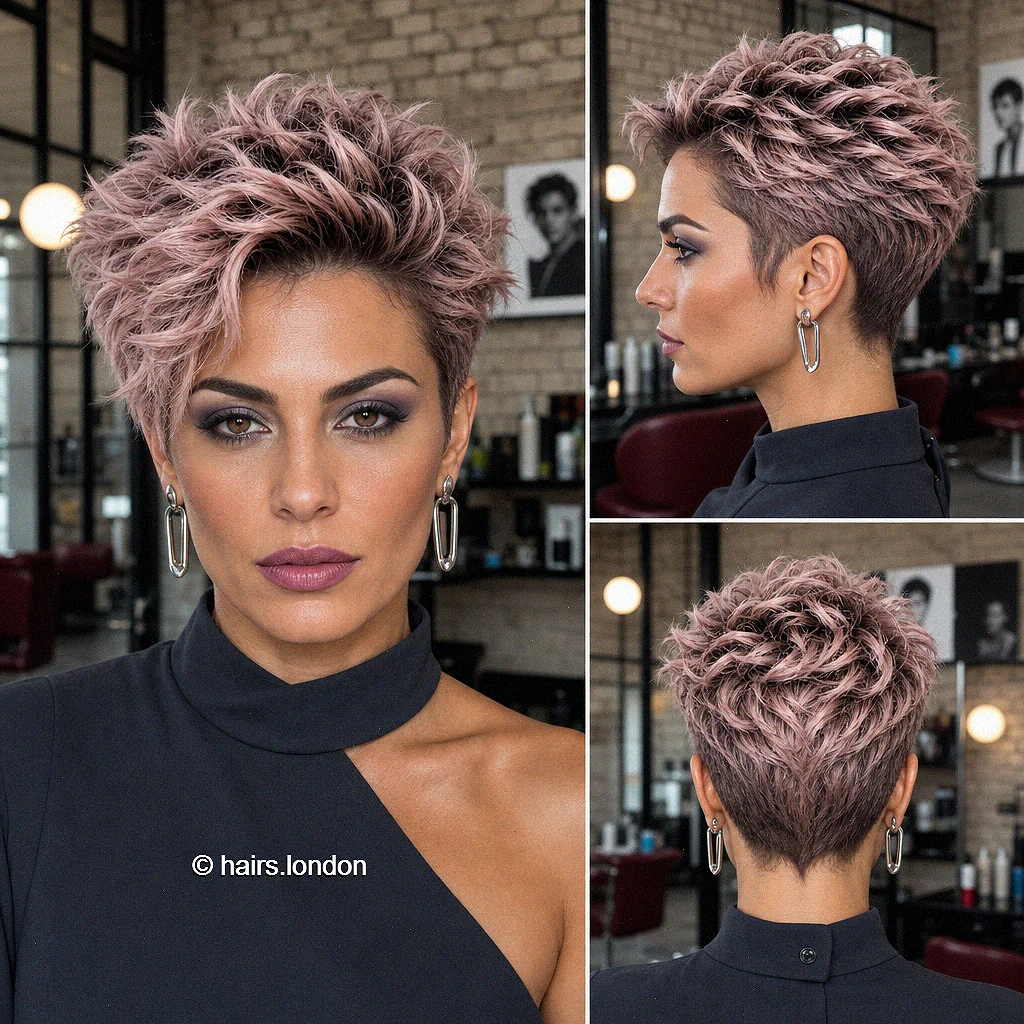
This dusty-rose curly pixie combines soft, irregular curls with a cropped taper around the sides and back. Muted rose and mauve tones sit over a deeper shadowed base, giving the texture a dimensional, slightly smoky finish. Ask your stylist to keep enough crown length for curls to bend naturally while removing bulk from the lower perimeter. Point cutting can preserve softness better than overly aggressive thinning. Apply curl cream or mousse to damp hair, scrunch gently, and diffuse on low heat. Rose tones can fade quickly, so wash with cooler water and color-safe products. A tinted conditioner can help extend.
How to Choose the Right Undercut Pixie
Start with your natural density, hairline, cowlicks, and preferred styling time. A tighter undercut removes bulk and creates stronger contrast, while a softer taper grows out more gently. Longer fringes can soften the forehead and provide styling flexibility. Bring front, side, and back references to your appointment so your stylist can discuss how much length is realistic for your texture.
Styling Fine, Thick, Wavy, and Curly Hair
Fine hair usually benefits from root-lift spray, texture powder, and lightweight paste. Thick hair may need internal weight removal so the crown does not become bulky. Wavy and curly pixies work best when enough top length is preserved for the natural pattern to form. Use curl cream or mousse, diffuse gently, and avoid heavy waxes that can collapse movement.
Color Upkeep for Blonde, Silver, Red, and Fashion Shades
Blonde and silver shades often need toning, moisture, and heat protection. Reds, coppers, magentas, violets, and dusty rose shades can fade more quickly, so cooler rinses and color-safe cleansing are useful. Ask your colorist whether a gloss, toner, direct dye, or tinted conditioner is the best refresh option for your chosen shade and starting hair color.
Maintenance and Salon Consultations
Short pixies show growth quickly around the ears and nape. Many people prefer shaping appointments about every four to six weeks, with tighter undercuts sometimes needing earlier perimeter cleanups. During consultation, discuss neckline shape, sideburn length, crown growth, fringe direction, styling products, and how often you are comfortable returning for trims and color maintenance.
Frequently Asked Questions
How often should an undercut pixie be trimmed?
A shaping trim every four to six weeks is common, although very tight sides may need earlier cleanup.
Can fine hair wear an undercut pixie?
Yes. Keep enough crown length for volume and use lightweight root-lift or texture powder instead of heavy wax.
Does an undercut pixie work on thick hair?
Yes. The cropped sides can remove bulk, while internal texturizing helps the longer top sit more comfortably.
Can curly hair be cut into a pixie?
Yes. Preserve enough length for the curl pattern and ask for curl-aware shaping rather than excessive thinning.
What product creates a piecey pixie finish?
A small amount of matte paste, clay, or spray wax can separate the ends without making them overly stiff.
How do I add volume to a short pixie?
Use root-lift spray or mousse before blow-drying, then finish with texture powder at the crown if needed.
How can I maintain silver hair?
Use color-safe care, regular conditioning, heat protection, and occasional purple or silver shampoo to manage yellow warmth.
How can vivid magenta or purple last longer?
Wash less frequently with cooler water, reduce high heat, and refresh with a stylist-approved direct dye or tinted conditioner.
Is an undercut pixie high maintenance?
Daily styling can be quick, but the short perimeter usually needs regular trims to keep its intended outline.
What should I show my stylist?
Bring clear front, side, and back reference views and point out the exact fringe, taper, nape, and crown details you like.
Can I style the same pixie sleek and spiky?
Often yes, provided the top has enough length. Product choice and blow-dry direction can change the finish significantly.
What should I ask before choosing a fashion color?
Ask about required lightening, hair condition, maintenance frequency, fading, home care, and whether the shade suits your starting base.
Conclusion
These undercut pixie haircuts show how much variety can come from changing top length, tapering, texture, and color. Save the examples that match your preferred level of contrast and styling effort, then use them as visual references during a professional consultation. A well-planned pixie should work with your hair’s natural behavior while giving you enough flexibility to create the finish you actually want at home.