


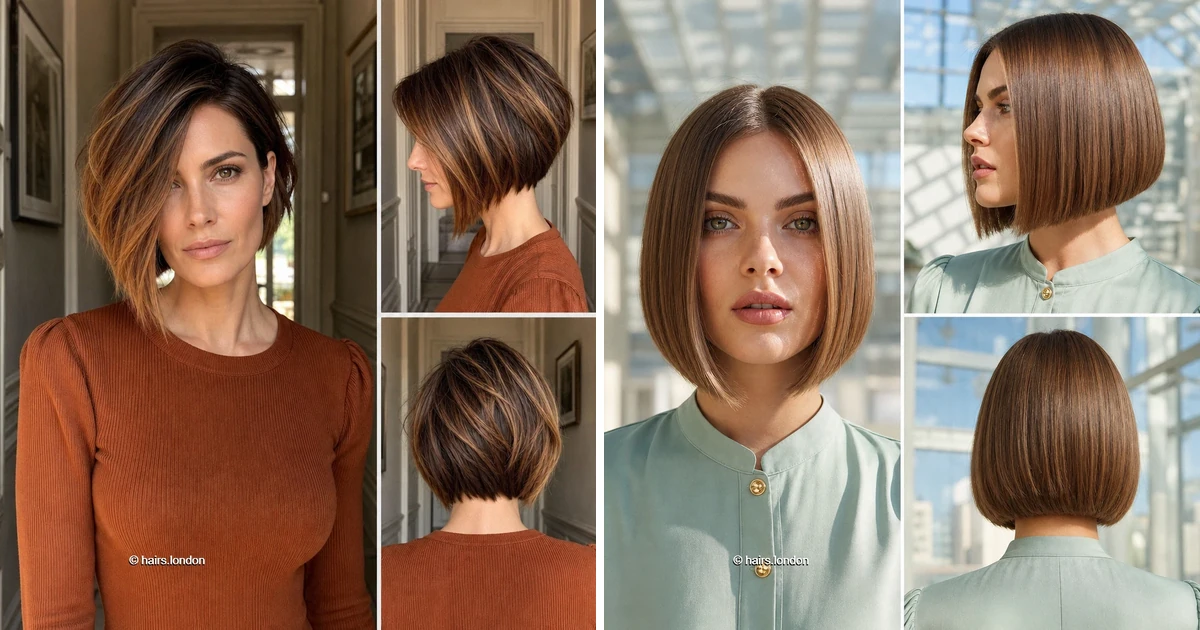
These bob haircut ideas show how much the outline can change a short cut. Some have loose, highlighted layers; others rely on a smooth perimeter or longer front pieces. The front, side and back views make it easier to compare where each shape carries its weight. Use the details that appeal to you as a starting point, then adjust the length and finish to your own texture and styling routine.
1. Tousled Caramel Bob with a Side Sweep
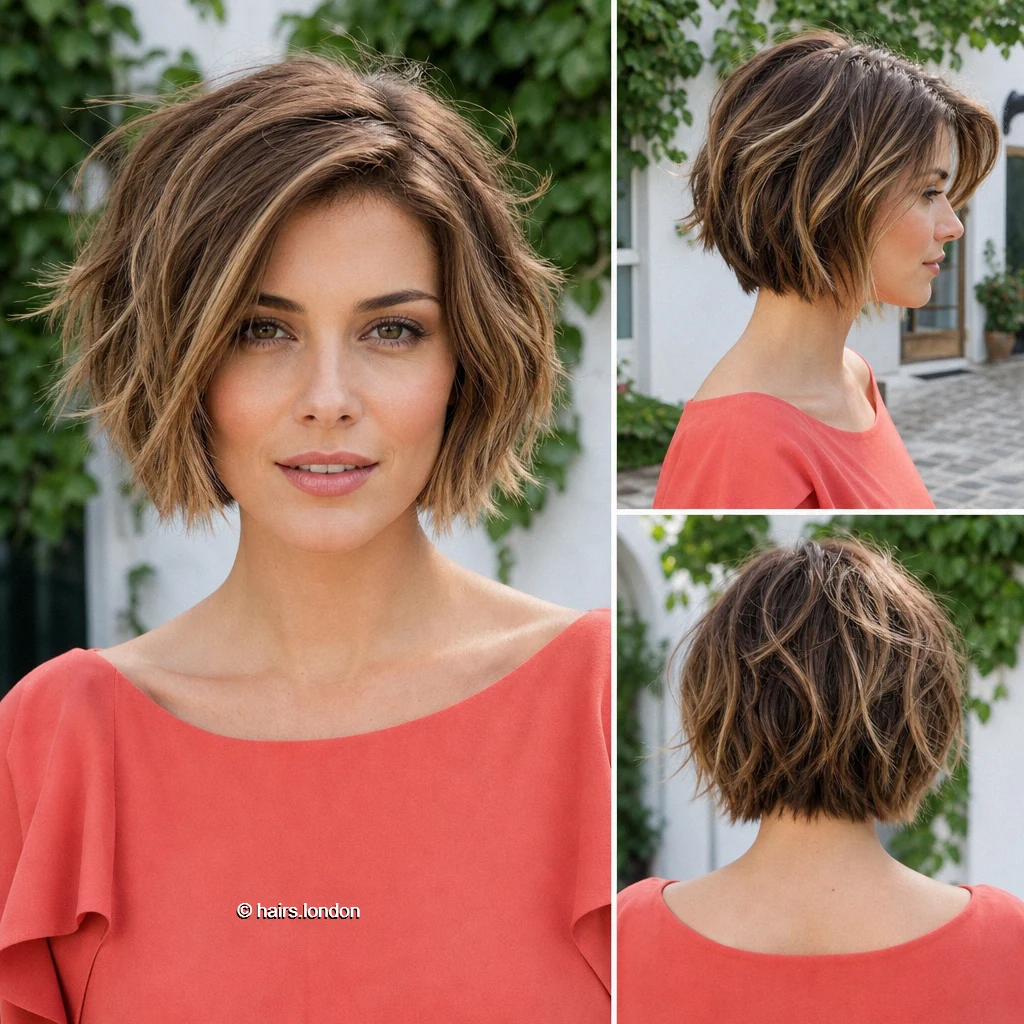
This tousled bob falls around the jaw with airy ends. Warm brown and caramel ribbons accent its loose, piecey texture. A side part sends longer strands sweeping across the forehead. Side and rear views show a softly shortened neckline here. Ask for restrained layering to preserve fullness near the perimeter. Work lightweight mousse through damp hair before gentle rough drying. Pinch individual bends rather than brushing away their natural separation. Fine hair may benefit from less removal through the sides. Refresh highlights as needed, protecting lighter pieces from excessive heat. Trim when the outline loses definition or ends begin spreading.
2. Side-Swept Layered Bob with a Shorter Back
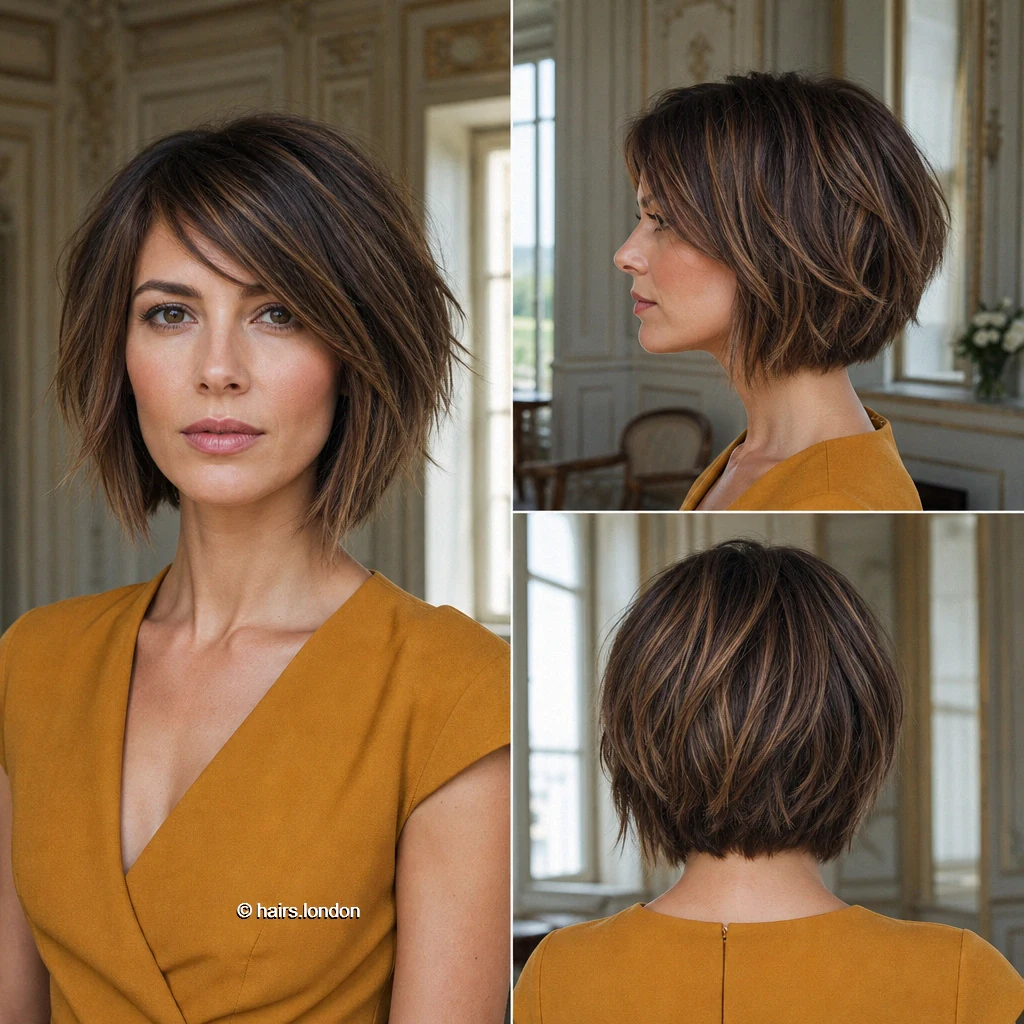
A sweeping fringe softens this brown bob’s jaw length front. The side view reveals a shorter back and layered fullness. Subtle lighter ribbons bring dimension without dominating the overall color. Its feathered ends look softer than a sharply blunt perimeter. Ask whether your density can support the airy side shape. Direct damp roots upward while blow drying for controlled lift. Smooth the fringe sideways without flattening the textured lengths underneath. Thick hair might need selective internal weight removal, not thinning. Book trims when the nape starts losing its compact outline. Discuss how your natural part affects the fringe before cutting.
3. Angled Bob with a Long Copper-Toned Front
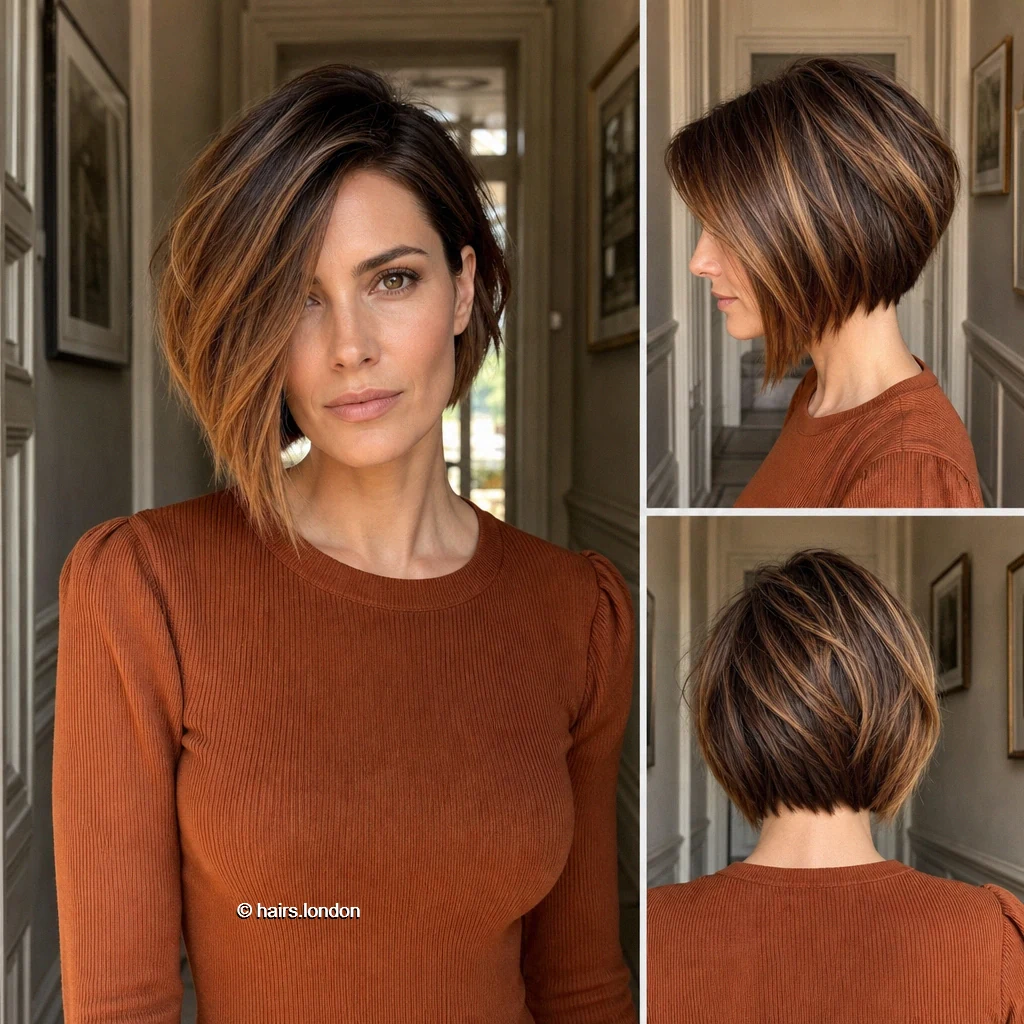
The longer front makes this highlighted bob distinctly angled here. Its back finishes near the nape, with visible rounded graduation. Deep brown roots contrast with warm copper toned face pieces. A deep side part gives the front its sweeping movement. Ask for enough length around the face to retain definition. Dry the back smoothly, then guide front sections forward gently. A light serum can polish ends without collapsing crown volume. This stronger angle suits anyone comfortable maintaining its distinct outline. Lighter sections may need toning when their warmth changes noticeably. Schedule shape checks as the shorter back grows toward shoulders.
4. Blonde-Highlighted Graduated Bob
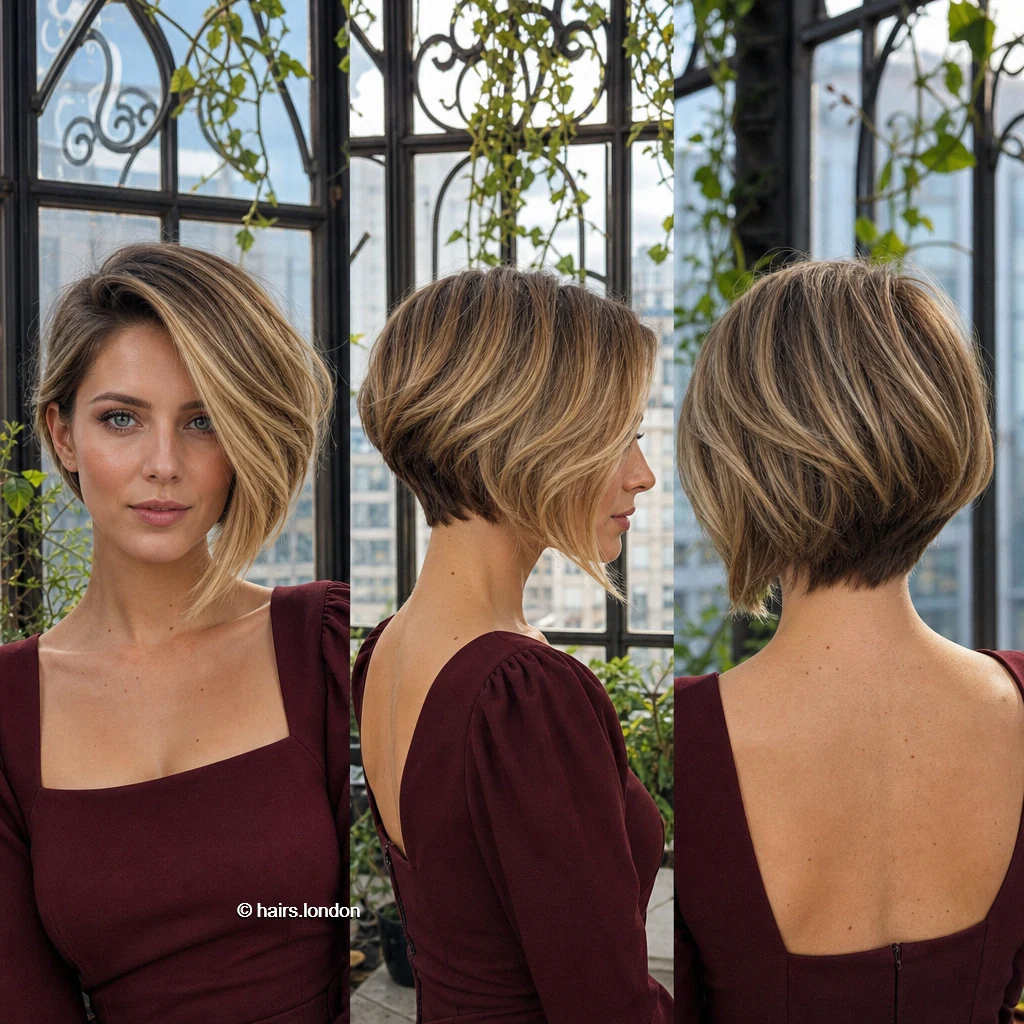
Blonde highlights trace the sweeping front of this graduated bob. Its side view shows length increasing from nape toward chin. The back has visible stacked layers and a rounded silhouette. A side part keeps the longer front falling diagonally forward. Ask for graduation that supports movement without overbuilding the crown. Smooth damp hair with a brush, directing ends slightly inward. Keep styling cream light so the highlighted sections remain separated. Dense hair may require careful weight control beneath the surface. Maintain the short neckline before its distinct shape grows out. Discuss highlight placement around the front during your color appointment.
5. Asymmetrical Bob with Caramel Face Framing
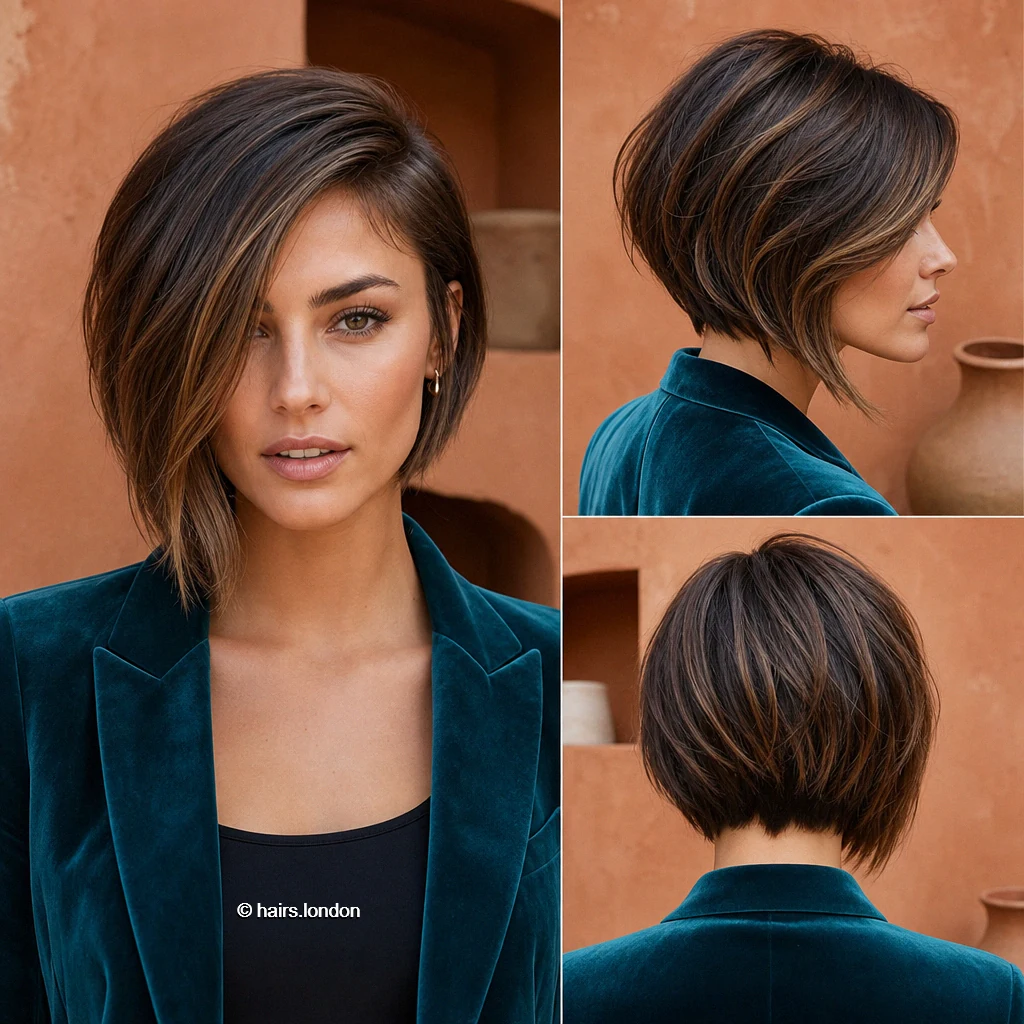
One front section extends noticeably farther than the opposite side. That asymmetry stands out against the compact, rounded back here. Dark brown hair carries fine caramel ribbons through its layers. The long side sweeps forward from a pronounced side part. Ask your stylist to confirm both front lengths before cutting. Blow dry downward, then separate the longer ends using fingers. A small amount of serum helps control their delicate tips. This shape works best if unequal sides match your preferences. Shorter back sections will need trims before losing their definition. Consider whether regularly tucking one side changes your preferred balance.
6. Softly Layered Bob with Wispy Fringe
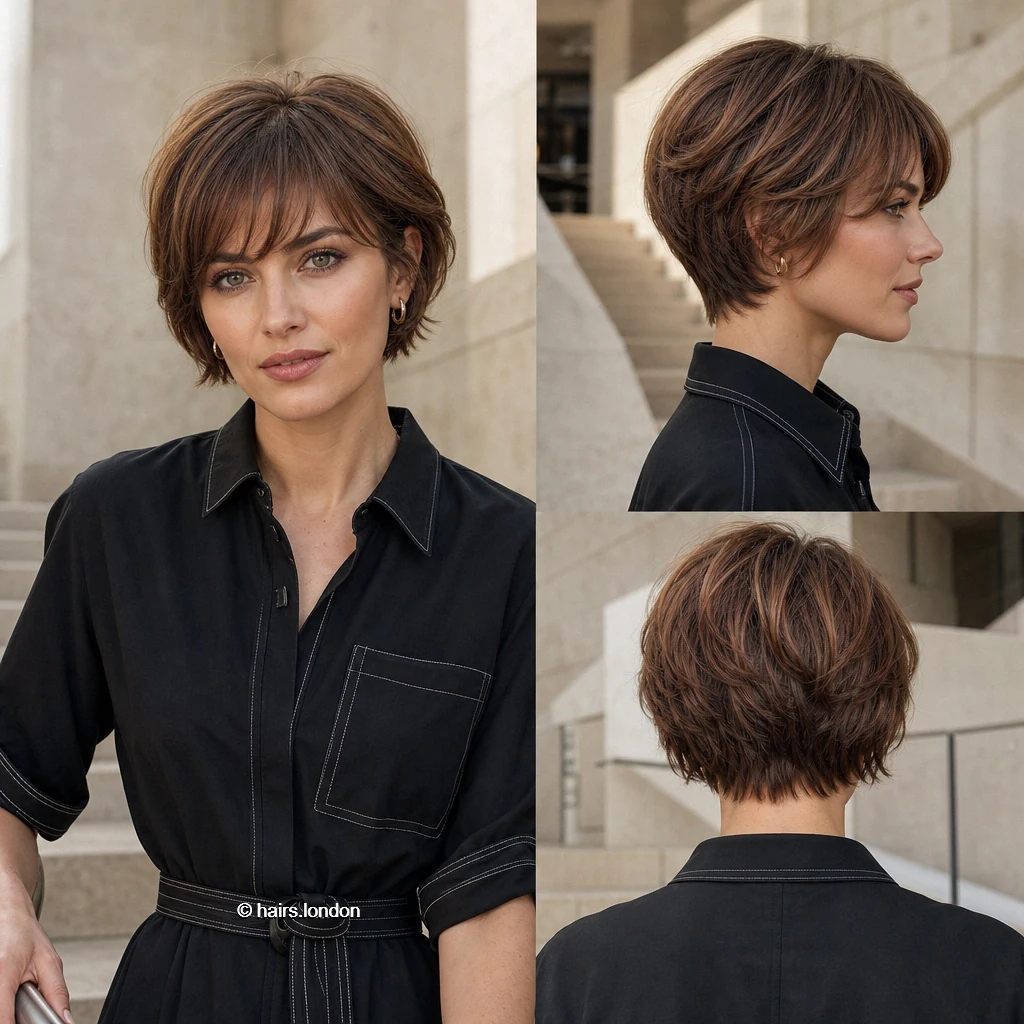
A wispy fringe skims the forehead above this compact bob. Soft brown layers round the crown and loosen the edges. The side and back views show a shaped neckline. Rather than blunt, the perimeter looks light and slightly feathered. Ask for fringe length that accommodates your natural growth patterns. Dry the fringe first, guiding it gently from side to side. Scrunch lightweight cream into lengths if they naturally form bends. Fine hair may need fewer layers to retain enough fullness. Trim the fringe independently when it starts obscuring your eyes. Check the back shape once its short edges become bulky.
7. Cropped Bob with a Long Side-Swept Fringe
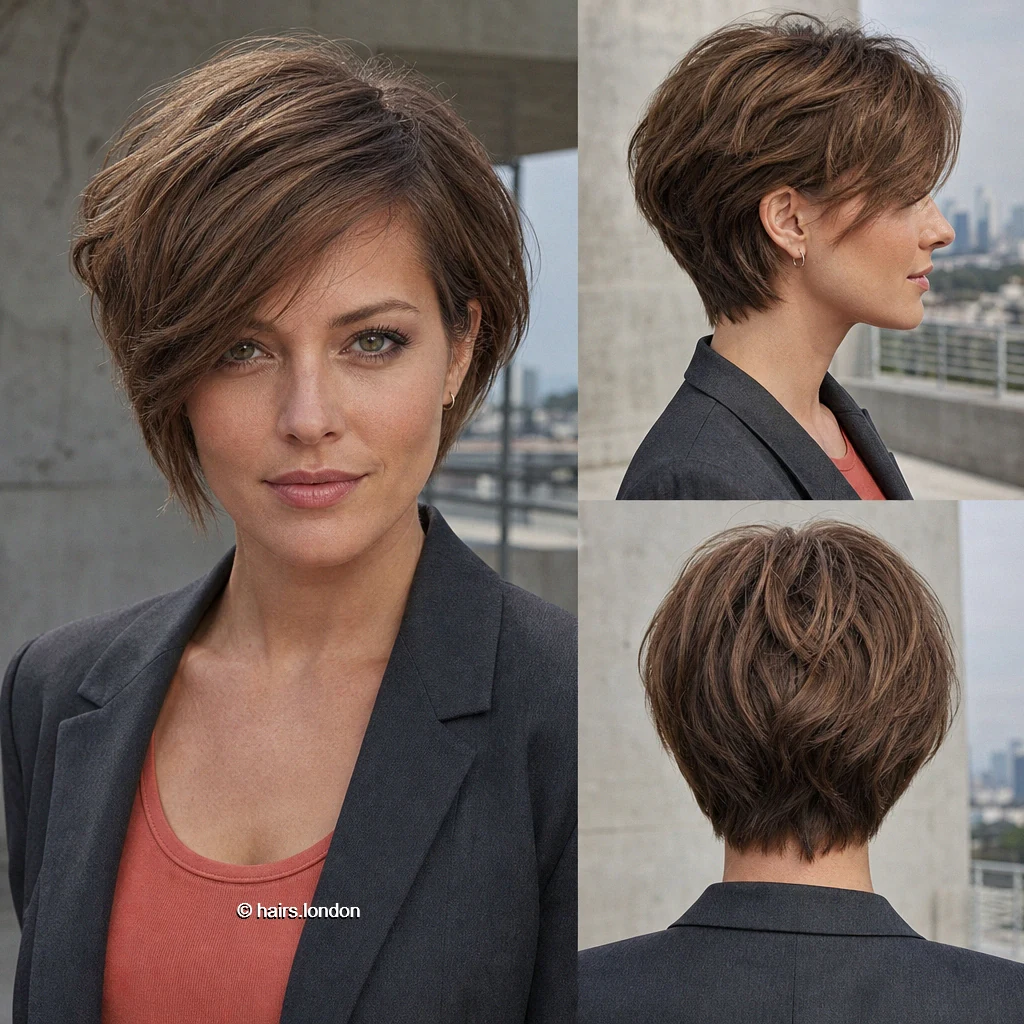
This short bob pairs a full side fringe with tapered edges. Its layered back has visible fullness above the close neckline. Brown hair shows lighter streaks across the surface. The longer fringe reaches toward the cheek, creating asymmetrical movement. Ask how much length your fringe needs when worn naturally. Lift roots gently while drying, then sweep the front across. Avoid heavy wax, which can separate fine ends too much. This compact shape demands frequent attention if precision matters to you. Arrange a neckline trim whenever its tapered edge starts spreading. Consider cowlicks before committing to such a directed front section.
8. Glossy Brown Bob with a Rounded Perimeter
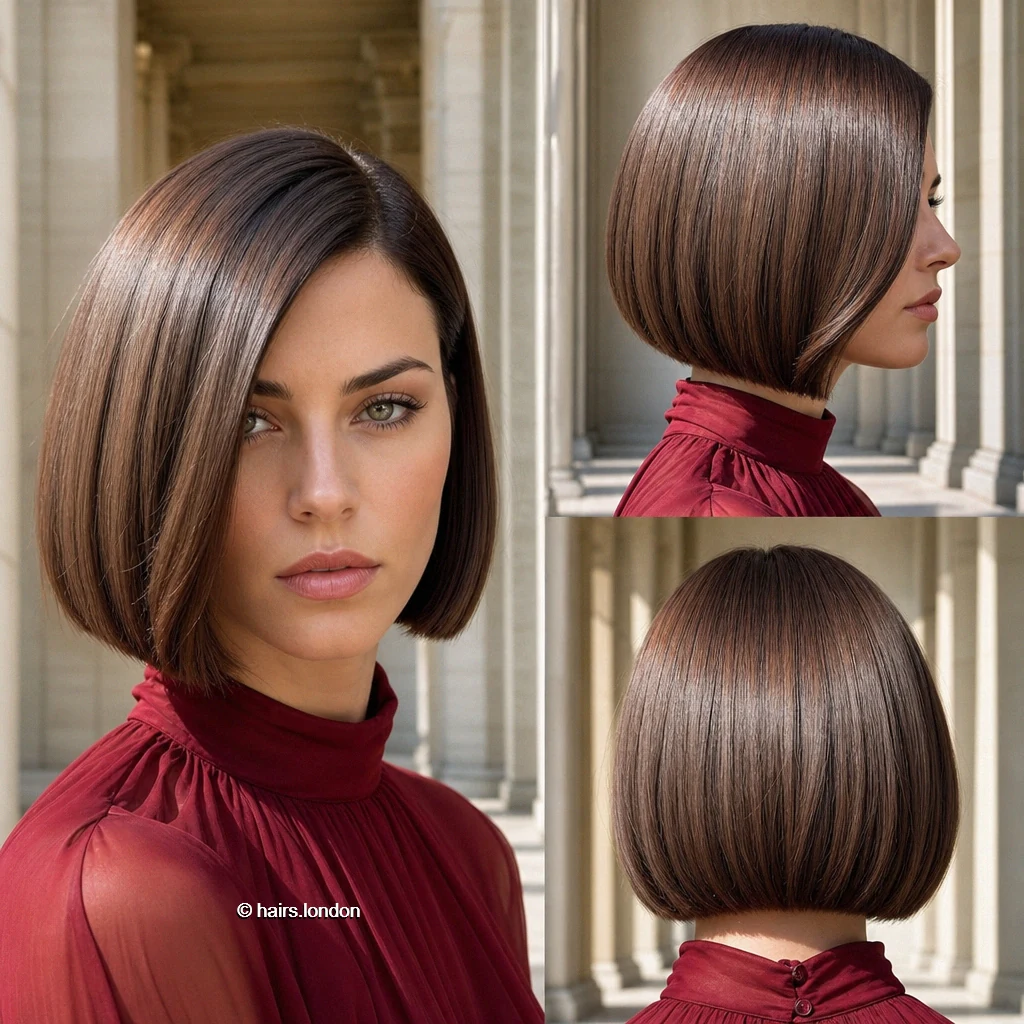
This sleek brown bob curves neatly around the jawline here. The side part creates a smooth sweep across the forehead. Front and back views reveal a substantial, rounded weight line. Its tidy nape looks solid rather than visibly stacked or layered. Ask for a perimeter that follows your desired jaw position. Use a heat protectant before brushing hair smooth while drying. Finish with minimal serum to keep the surface reflective. Thicker hair may need discreet weight adjustment beneath that outline. Precision trims help prevent the rounded edge from becoming uneven. Discuss daily smoothing needs if your natural texture resists straightness.
9. Center-Parted Bob with Longer Front Pieces
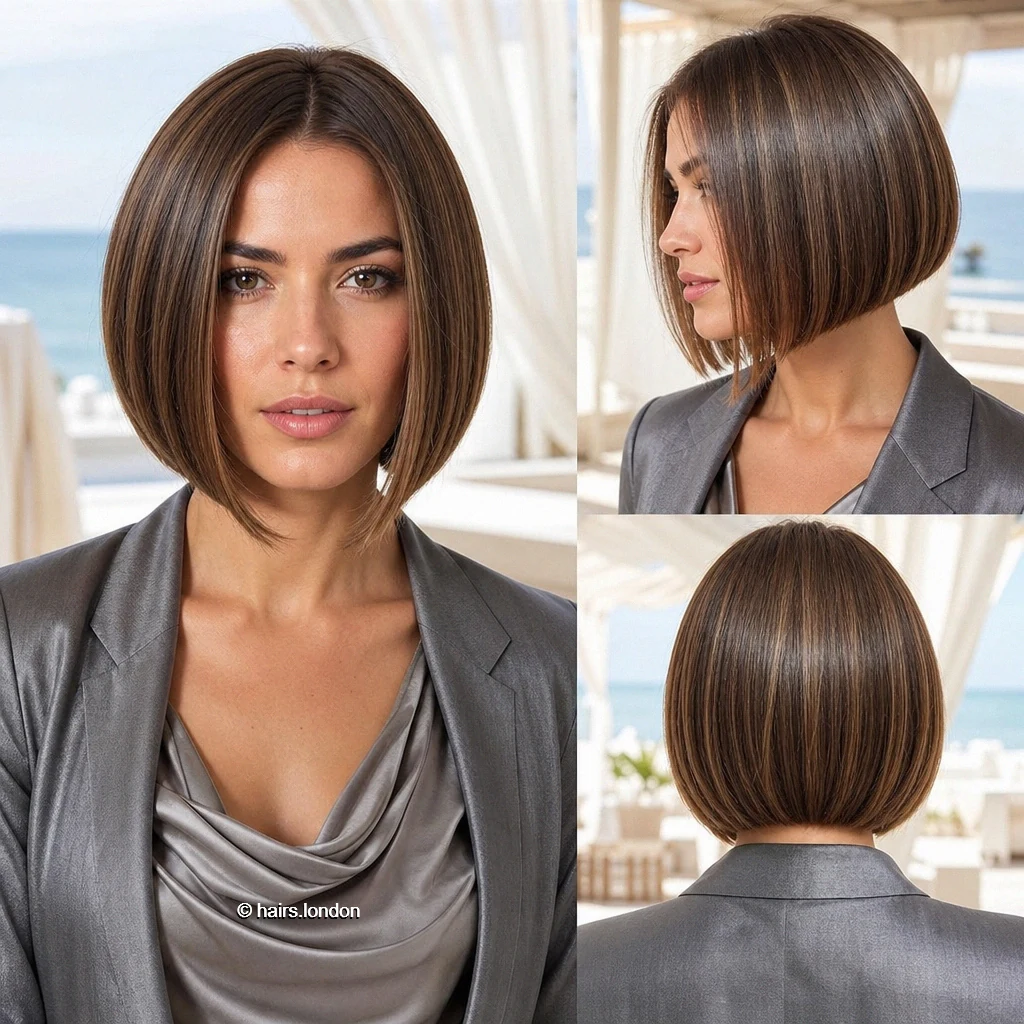
A center part divides this smooth brown bob evenly. Its front sections reach below the jaw toward the neck. The back rounds inward and finishes higher than those pieces. This visible front to back difference suggests a gentle A-line. Ask to preserve enough perimeter weight for the polished finish. Direct airflow downward while brushing each side toward the face. Tuck ends under lightly rather than creating a pronounced curl. This shape suits those willing to smooth their natural texture. Trim the ends when the front begins losing its clean line. Subtle lighter strands can be refreshed without changing the silhouette.
10. Dark Brunette Bob with a Smooth Silhouette
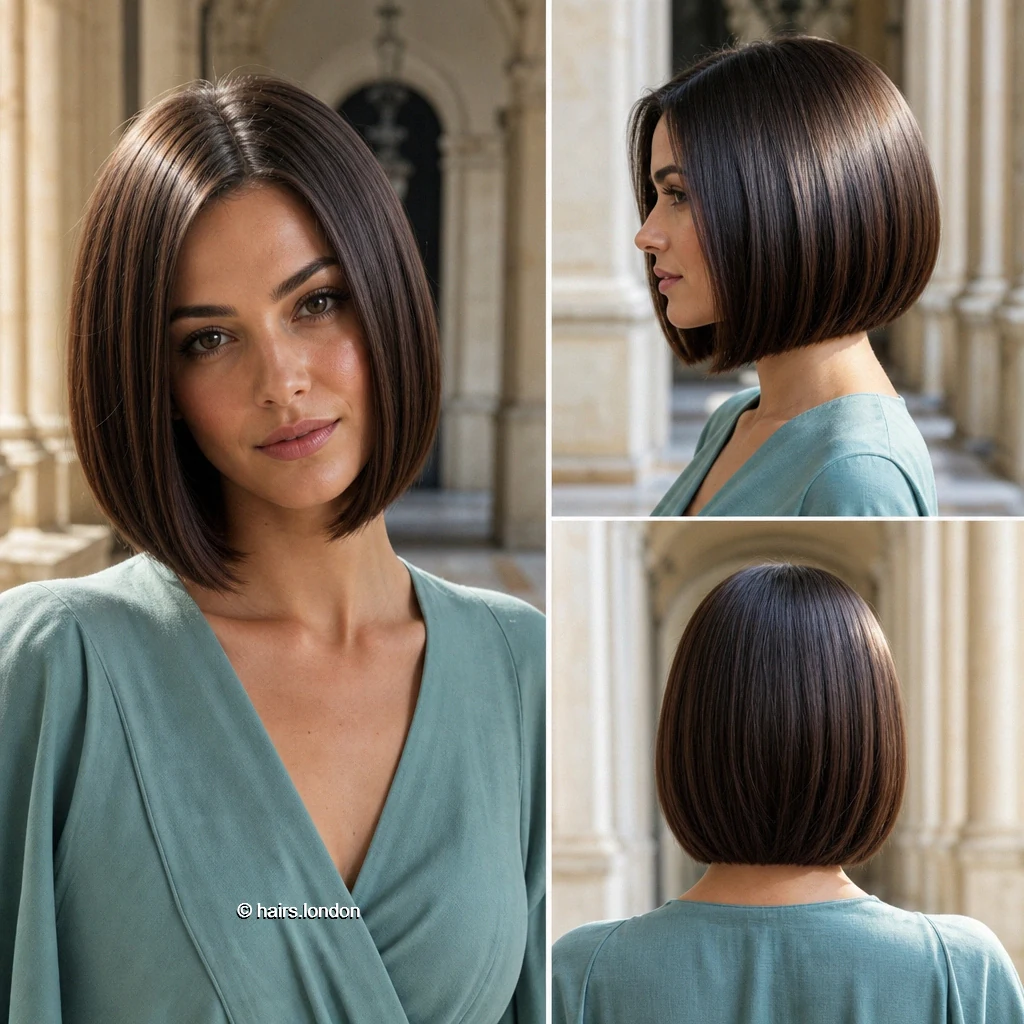
This dark brunette bob has a clean, smooth surface throughout. Its center part leads into jaw grazing front sections here. The side view shows a rounded outline around the nape. There is no obvious fringe or strongly separated surface layering. Ask for a solid edge if you prefer concentrated fullness. Blow dry in sections, following each strand downward with airflow. A small brush turn can guide the ends slightly inward. Fine hair may appreciate the weight of this restrained shape. Maintain its polished edge with trims before uneven ends appear. Use heat protection whenever straightening is part of your routine.


