


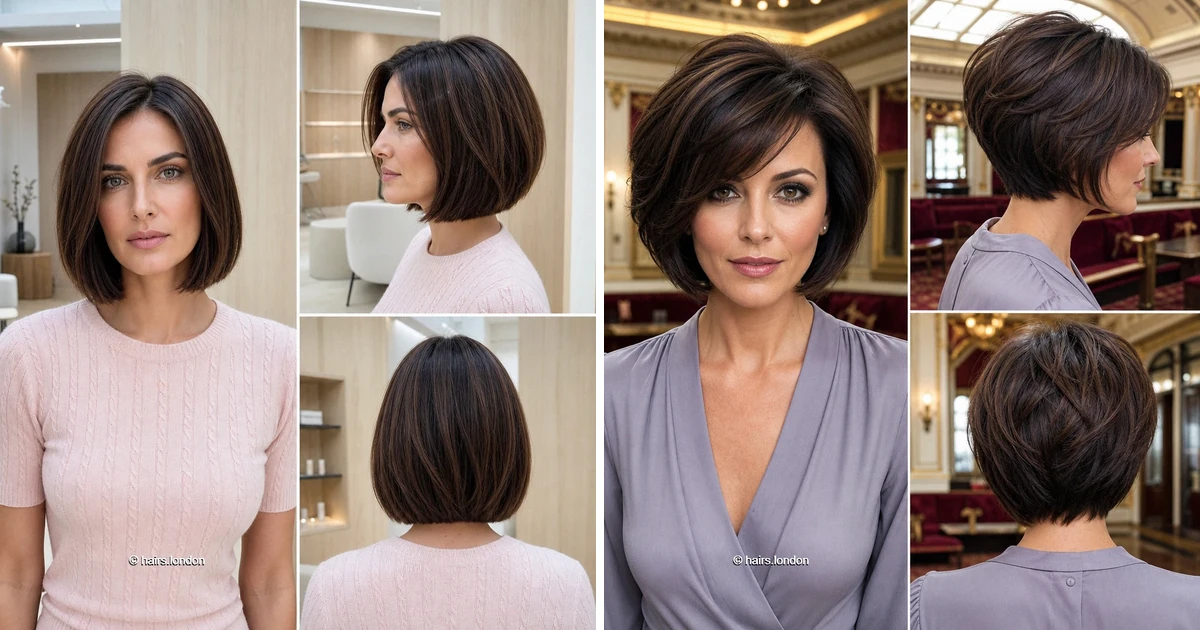
Brunette bob haircuts can look sharply defined, softly rounded or deliberately undone. These images show how length, parting, perimeter and layers change the result, even within a similar brown color palette. Use the front, side and back views to identify the details you like, then discuss how they could work with your own density, texture and styling routine.
1. Long-Front Bob with a Rounded Back
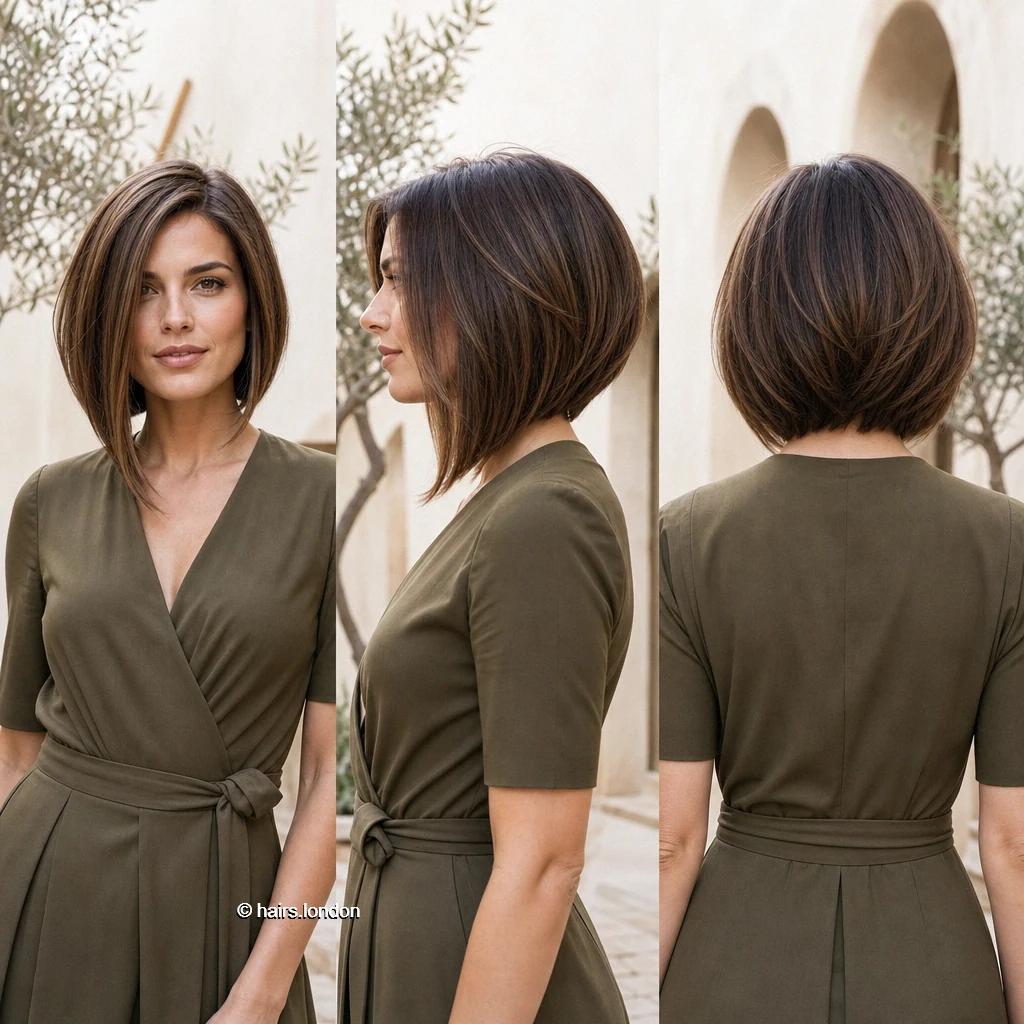
Longer front pieces extend below the jaw, framing the face. The side view reveals a shorter, rounded shape behind. Subtle brown highlights emphasize the smooth sweep and separation. A deep side part directs fullness across the forehead. Ask for front length you can comfortably style daily. Your stylist can tailor the rounded weight to density. Blowdry downward, then curve the ends with a brush. Keep heavier products away from the precise front points. Regular trims help preserve the visible front-to-back length difference. This shape works best when its styling commitment feels manageable. Check the front when tucked behind your ears.
2. Tousled Jawline Bob with Loose Movement
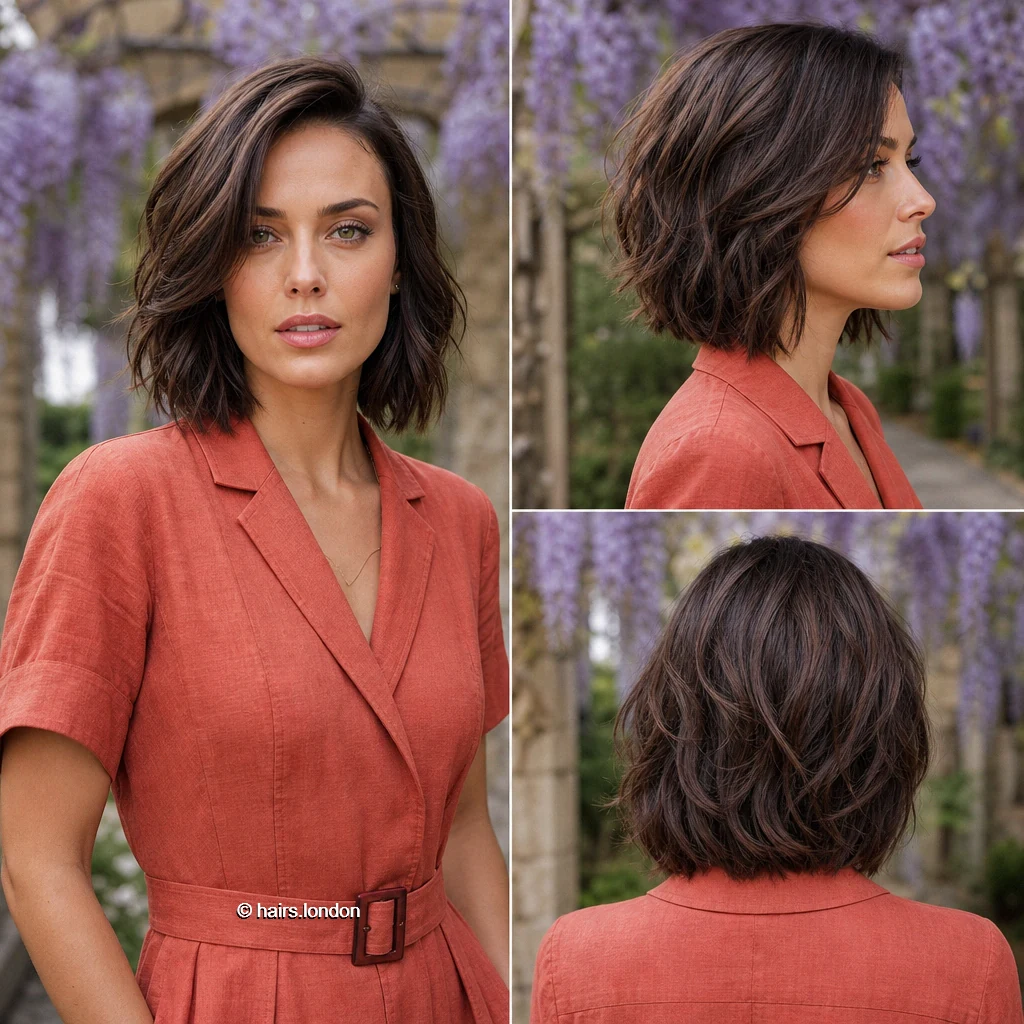
Loose bends give this dark brunette bob its relaxed outline. The ends hover around the jaw and upper neck. A sweeping side part adds lift without a heavy fringe. Side and back views show texture throughout the compact shape. Ask for movement while keeping enough weight at the perimeter. Scrunch in lightweight mousse, then dry gently without overworking. Alternatively, bend a few sections with a heated tool. Fine hair may need less product than dense hair. Trim when the jawline outline becomes uneven or overly wide. Discuss your natural wave before deciding how much layering helps. Keep the finish touchable.
3. Piecey Short Bob with a Side Sweep
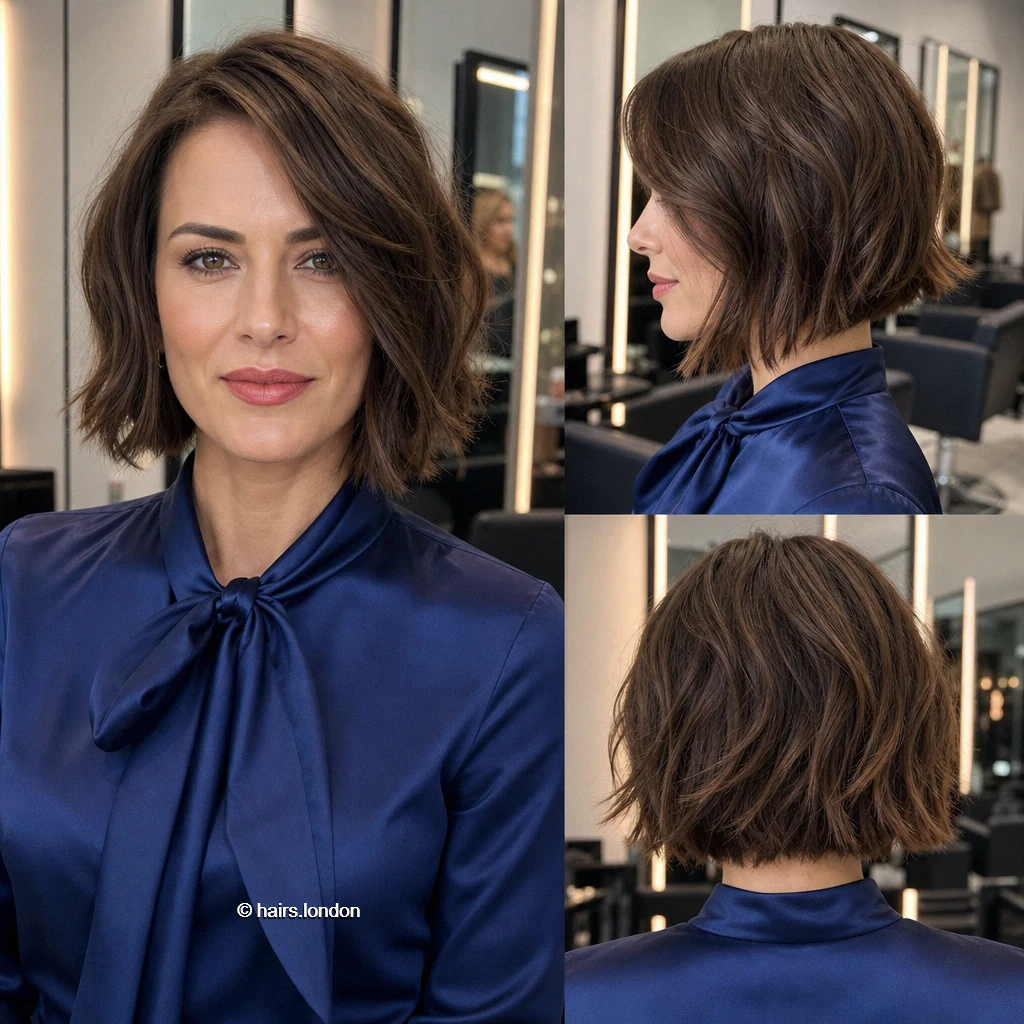
This short brown bob sits near the jaw with piecey ends. The side part sweeps longer sections across the forehead. Visible bends soften the outline without hiding its compact length. From behind, the perimeter looks textured rather than sharply blunt. Ask your stylist to retain fullness beneath the airy layers. Work a small amount of cream through damp midlengths. Lift the roots gently while drying for balanced volume. Dense hair may benefit from carefully placed internal weight removal. Refresh the fringe area whenever it stops falling comfortably. Keep trims focused on shape rather than shortening automatically. Avoid flattening the crown.
4. Center-Parted Wavy Bob at the Jaw
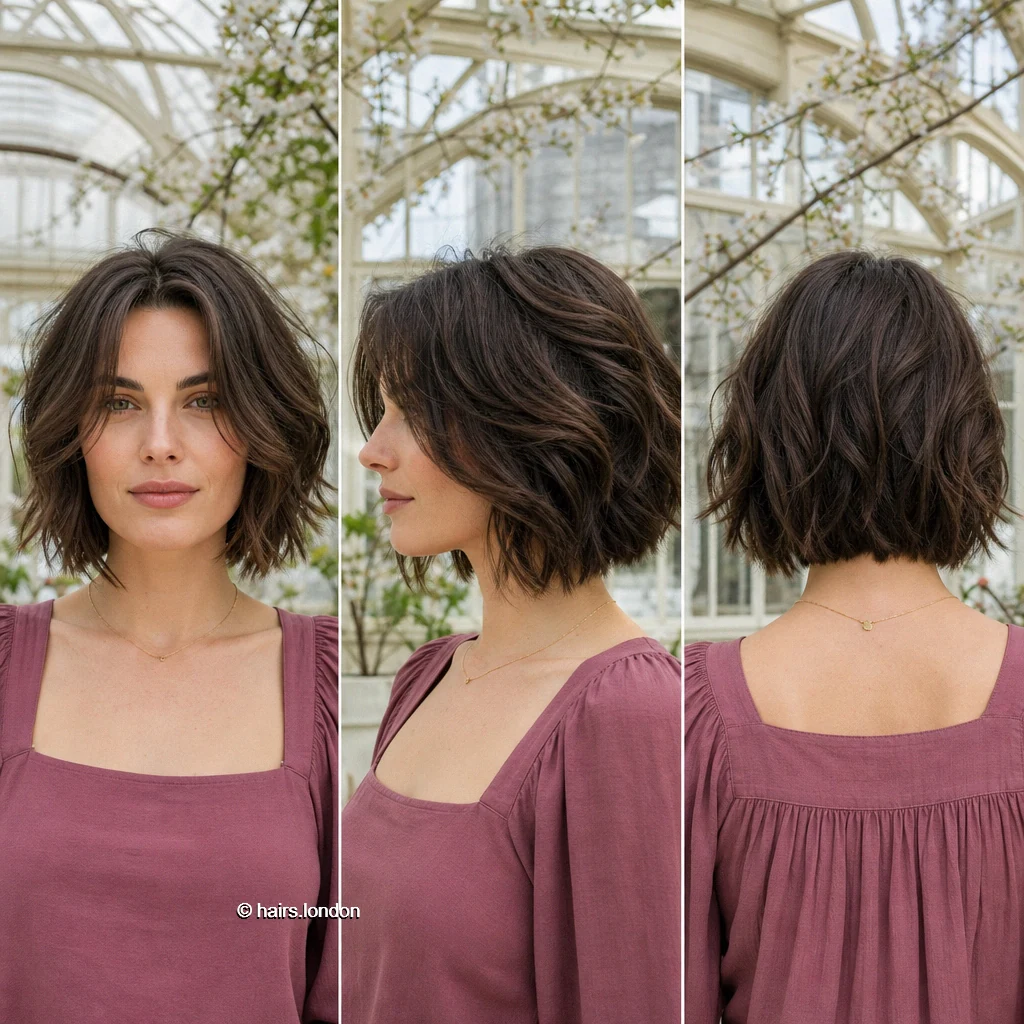
A loose center part opens this wavy brunette bob. Face-framing sections fall toward the jaw and turn outward. The back ends sit near the upper neck, visibly textured. Soft layers create separation without a thin-looking lower edge. Ask how much layering your natural wave pattern needs. Apply curl cream lightly, then diffuse while preserving clumps. For straighter hair, create alternating bends instead of tight curls. A wide-tooth comb can loosen waves after styling cools. Book a trim if the ends begin forming unwanted bulk. Consider humidity and daily styling time before choosing this finish. Keep the lower edge comfortably substantial.
5. Short Shaggy Bob with Airy Ends
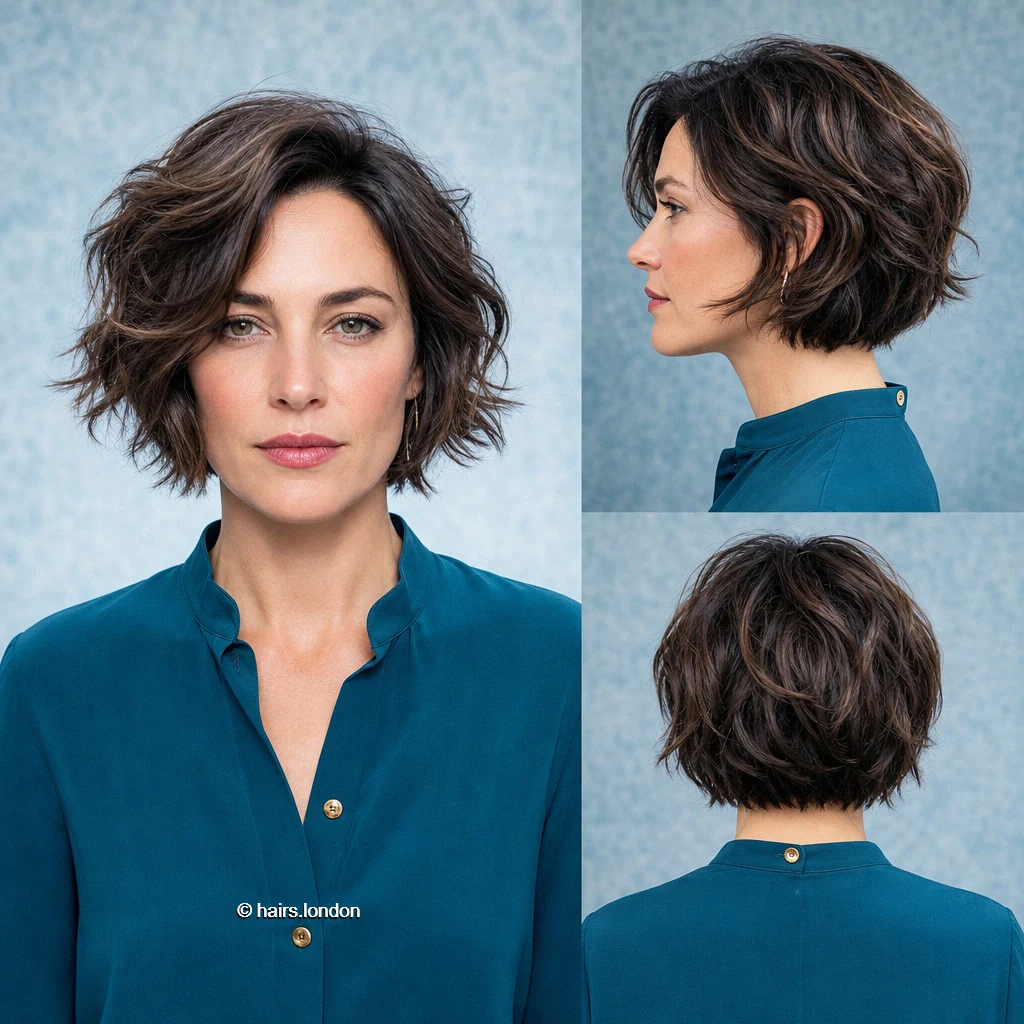
Airy layers make this short brunette bob look especially mobile. The side-swept top flows into wispy, outward-turning ends. Its shortest visible pieces sit around the cheek and jaw. The back appears fuller above a narrow, textured neckline. Ask for softness without removing essential perimeter weight. Scrunch damp hair with mousse and let waves develop. A diffuser can add lift while limiting unwanted frizz. Thick hair may need different weight distribution than fine hair. Trim the neckline when its delicate outline loses definition. Leave the crown flexible instead of coating it with hairspray. Check the shape from both sides before trimming.
6. Full Wavy Bob with Swept-Over Volume
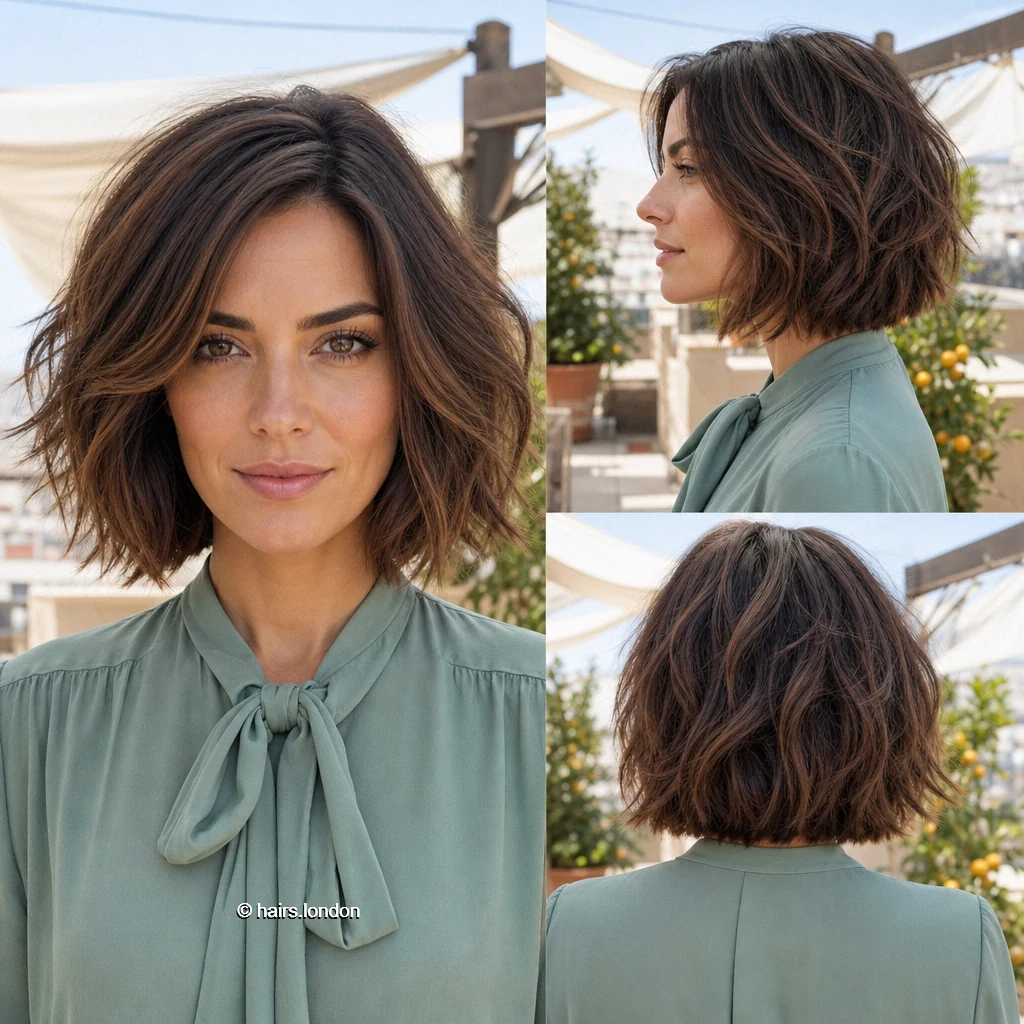
This brunette bob carries generous volume through its sides. The swept-over part sends a long section across the forehead. Textured ends land near the jaw and upper neck. The back remains full, with visible bends throughout. Ask whether your density supports this airy, expanded silhouette. Mist damp hair with mousse before diffusing its natural movement. Smooth only the outermost frizz to preserve separation. If hair is fine, avoid heavy oils at the roots. Trim as the lower edge begins spreading beyond your preference. Discuss how your part changes after washing or sleeping. Keep volume focused above the widest lower sections.
7. Feathered Bob with a Soft Side Fringe
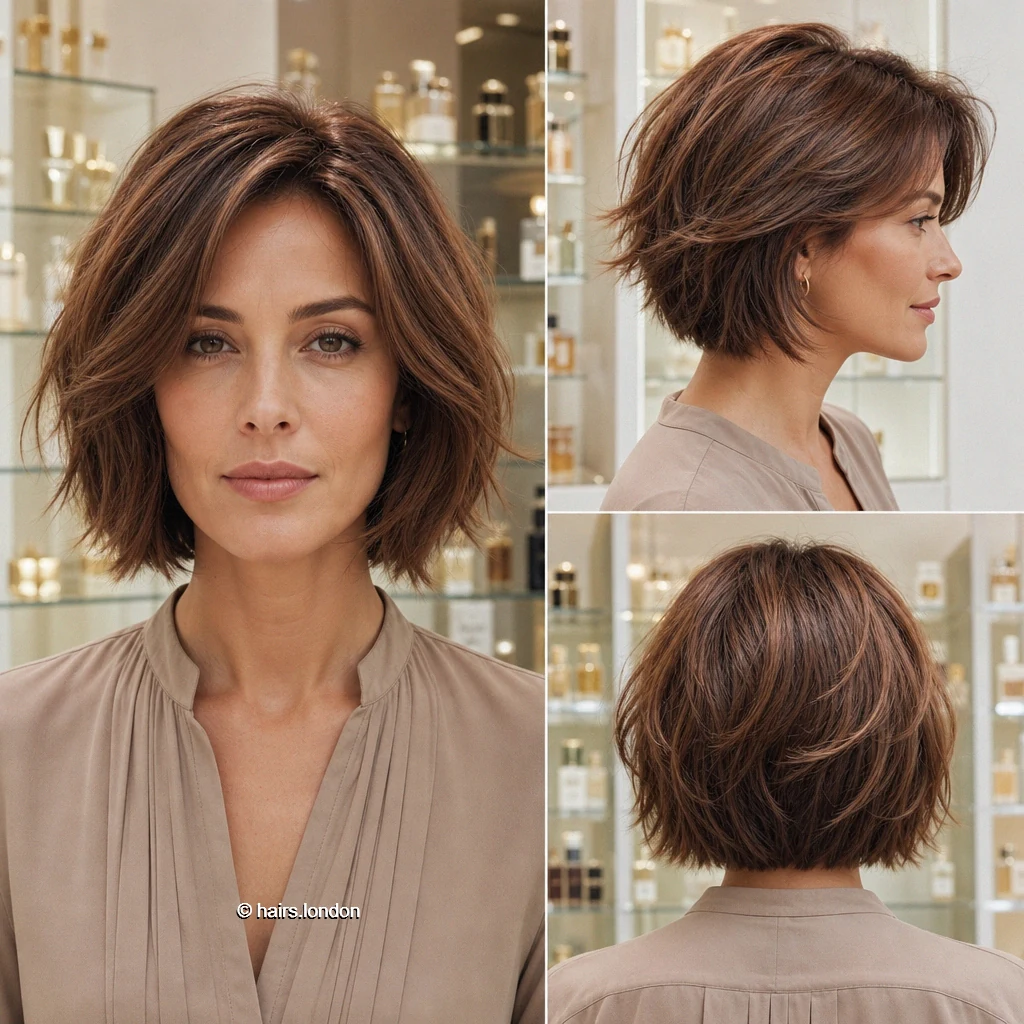
A soft side fringe blends into this jaw-length brown bob. Lightly feathered ends create movement around the cheeks. The back has a neat lower edge beneath fuller layers. Warm brown ribbons make the surface texture more noticeable. Ask your stylist where the fringe should meet your cheek. Dry that section first, directing it across the forehead. Use a little styling cream to separate the ends. Dense hair may require selective weight removal beneath the shape. Refresh the fringe between full trims if it obstructs vision. Avoid excessive texturizing if your ends already feel sparse. Check fringe length when hair dries.
8. Choppy Bob with Lighter Face-Framing Pieces
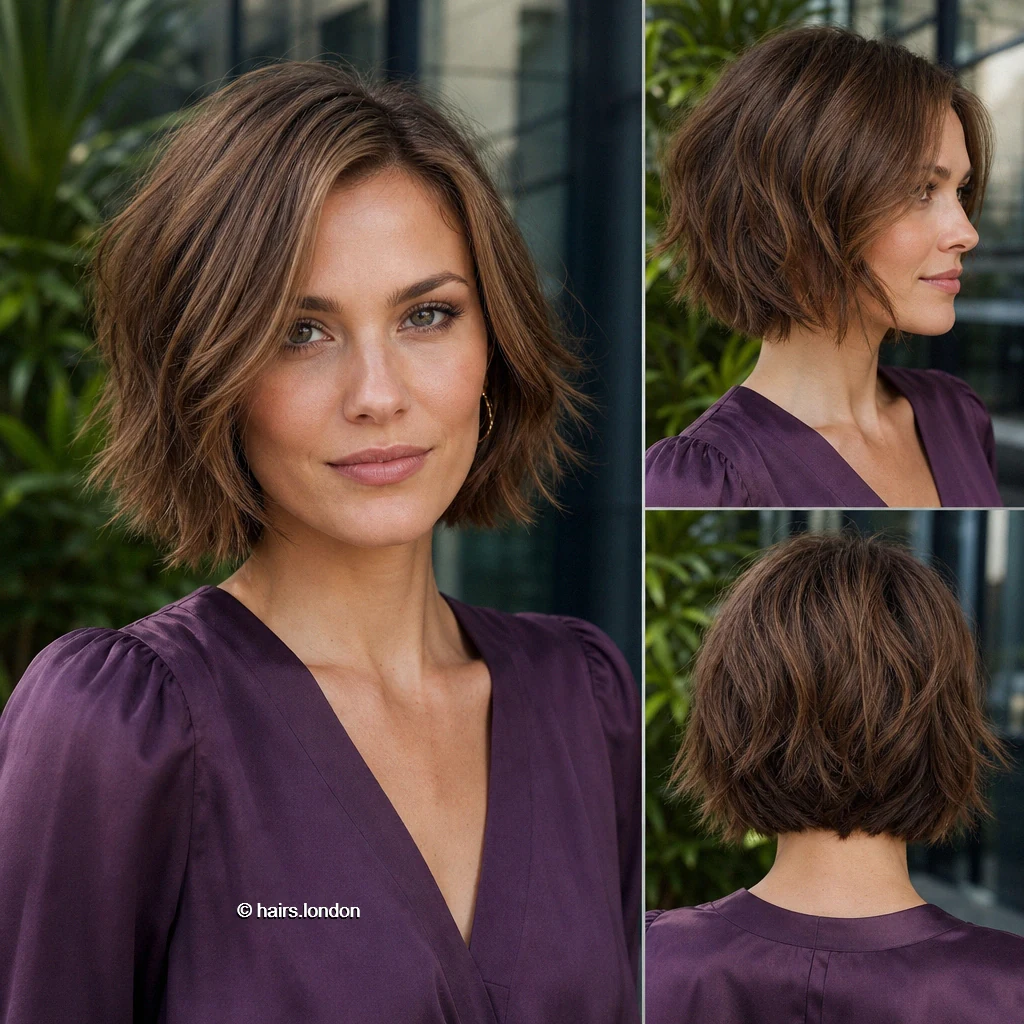
Lighter brown strands brighten the front of this textured bob. Its uneven, airy ends gather around the jawline. A side part gives the longer front section room. Visible layers break up fullness across the sides and back. Ask to keep the bottom edge substantial despite choppy texture. Finger-style with a small amount of flexible paste. Add bends selectively if your natural hair dries straight. For coarse hair, smoothing cream may control surface flyaways. Trim the outline before the ends lose their intended shape. Color maintenance depends on whether those lighter pieces are processed. Avoid pulling textured sections straight while drying.
9. Smooth Jawline Bob with a Clean Edge
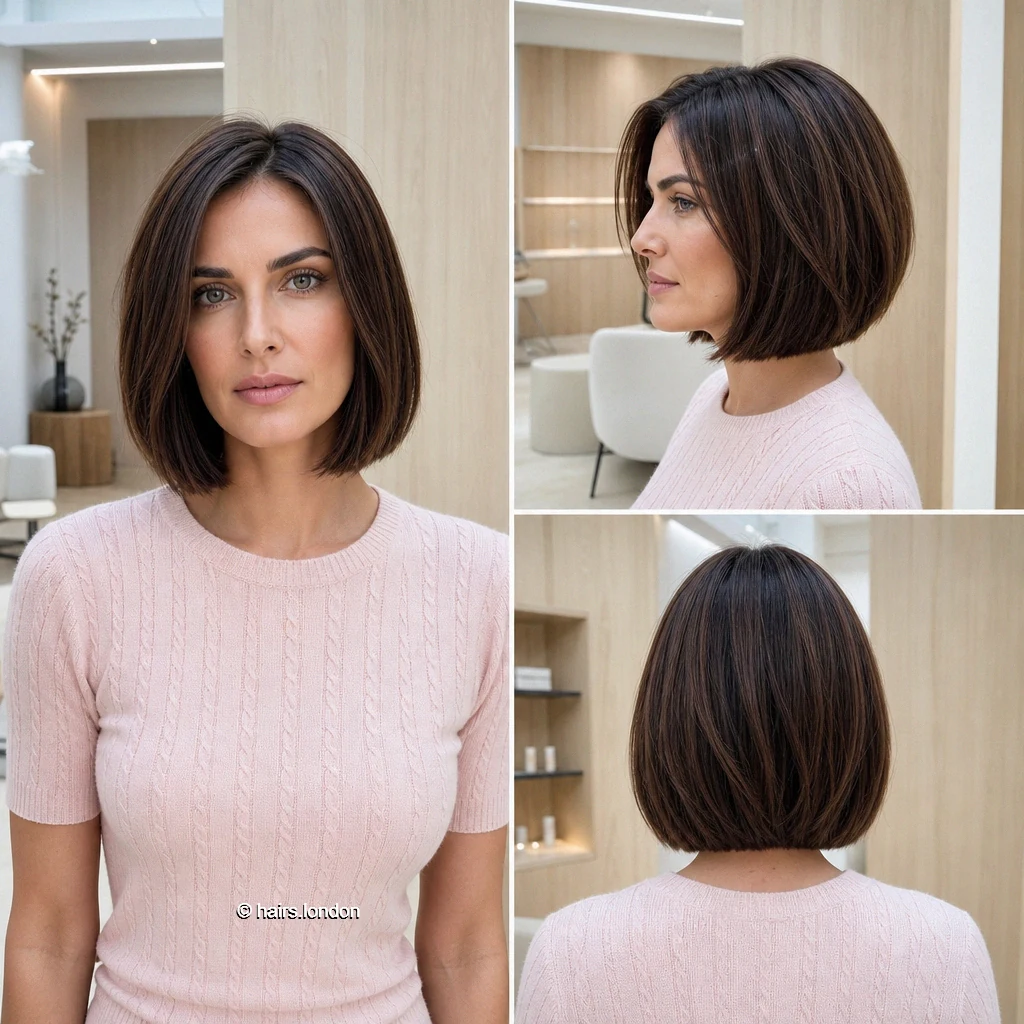
A nearly centered part divides this sleek brunette bob. The straight perimeter sits close to the jaw and neck. Its back appears softly rounded above a tidy edge. Fine brown tonal variation adds dimension without obvious contrast. Ask for enough weight to keep both sides smooth. Direct airflow downward while brushing sections from roots outward. Finish by checking the ends from both sides. Natural waves may require more smoothing time than straight hair. Schedule trims when the clean lower line starts shifting. Avoid heavy layering if a solid perimeter is your priority. Check the outline after styling your usual part.
10. Rounded Bob with Subtle Front Length
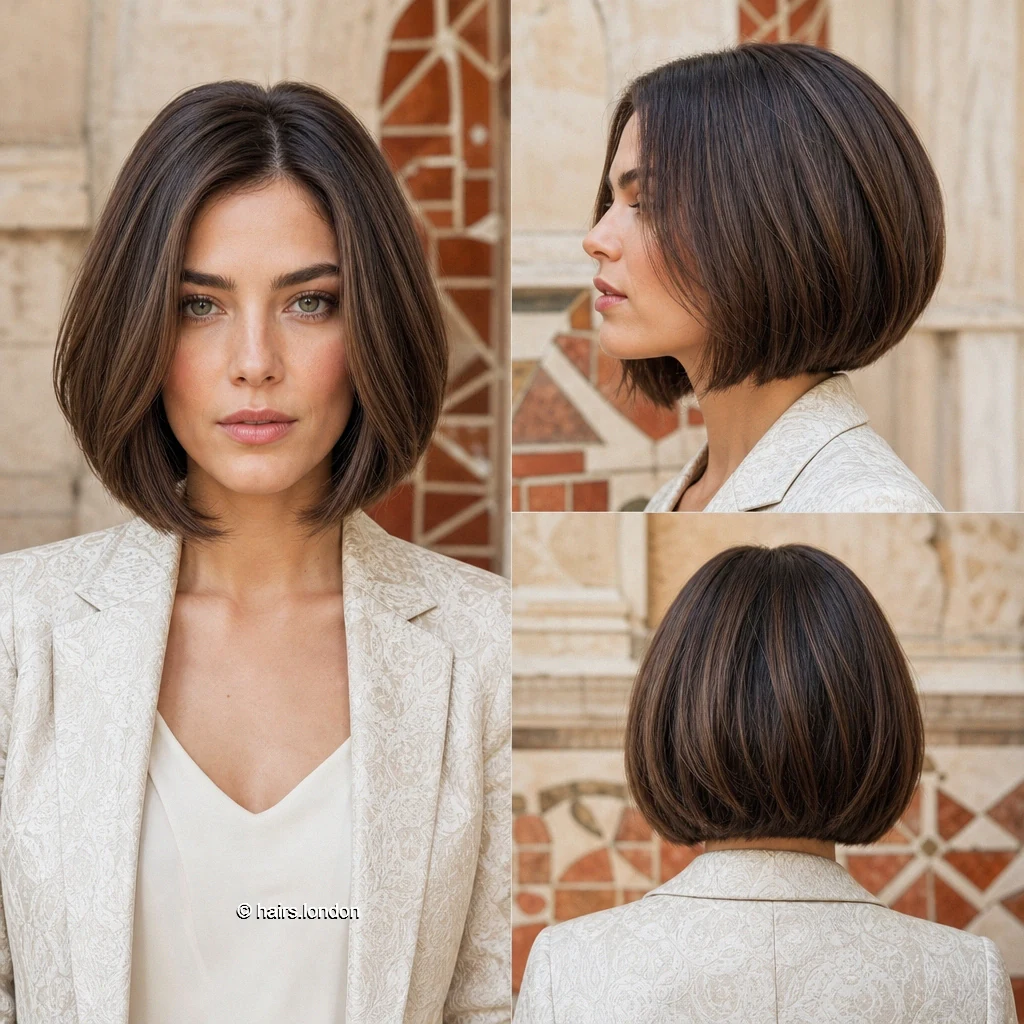
This polished brown bob curves inward beneath the jaw. The side view shows slightly longer front pieces. Its back finishes higher, with a compact rounded outline. A near-center part keeps the framing relatively balanced. Ask your stylist to assess the shape from every angle. Use a round brush to direct the ends inward. Apply heat protectant before refining stubborn sections with irons. Thicker hair may need thoughtful weight removal to prevent bulk. Book trims as the short back begins losing definition. Keep the front long enough for your preferred part. Photograph the side profile to show your stylist preferred proportions.


