

11. Sleek Compact Bob with an Even Perimeter
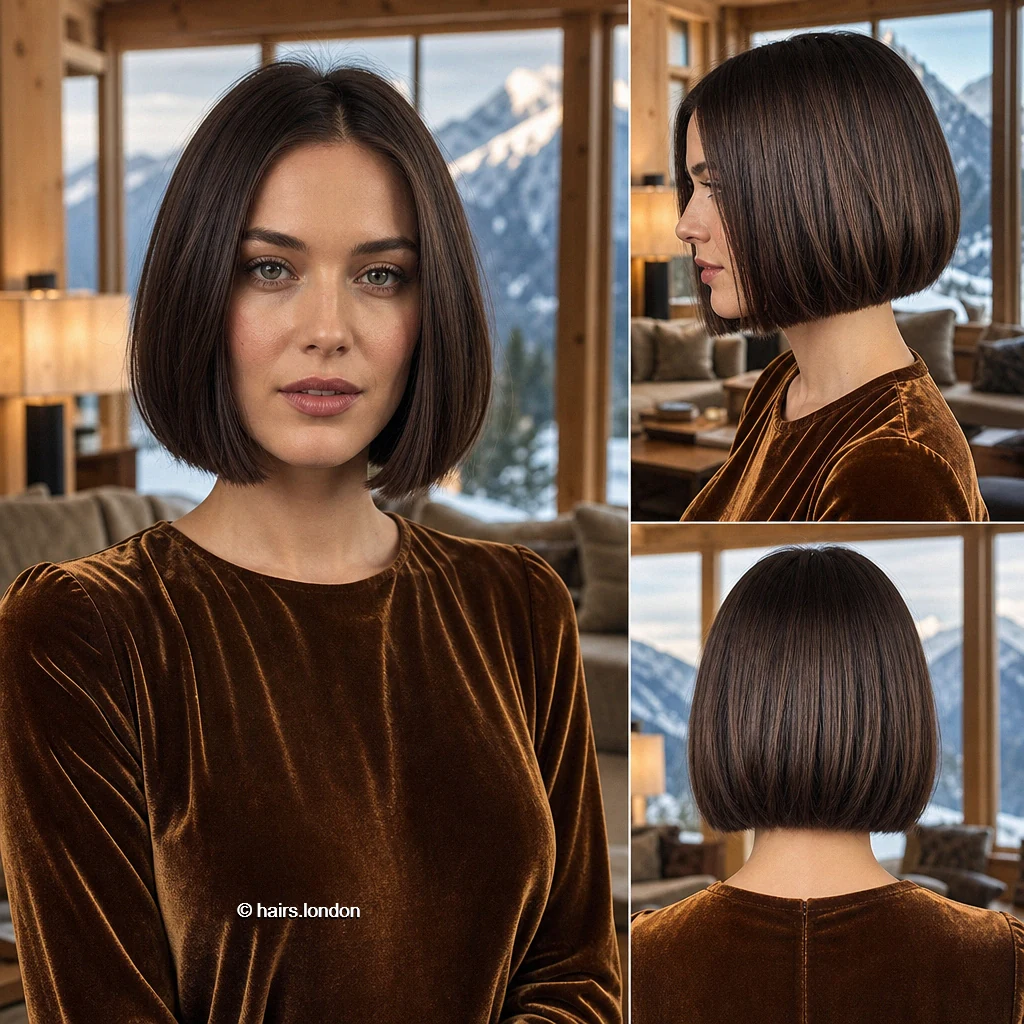
An even-looking edge anchors this smooth, dark brunette bob. The sides finish around the jaw, close to the neck. Its center part gives the compact shape quiet symmetry. The back shows a rounded silhouette without obvious choppy layers. Ask for perimeter precision that respects your natural growth patterns. Blowdry sections downward, turning just the tips inward. A light serum can enhance shine without stiffening movement. Fine hair may benefit from keeping the ends substantial. Trim when one side begins looking longer than the other. Check the finished shape both tucked and untucked. Let the brush release each section without tugging.
12. Short Rounded Bob with a Defined Nape
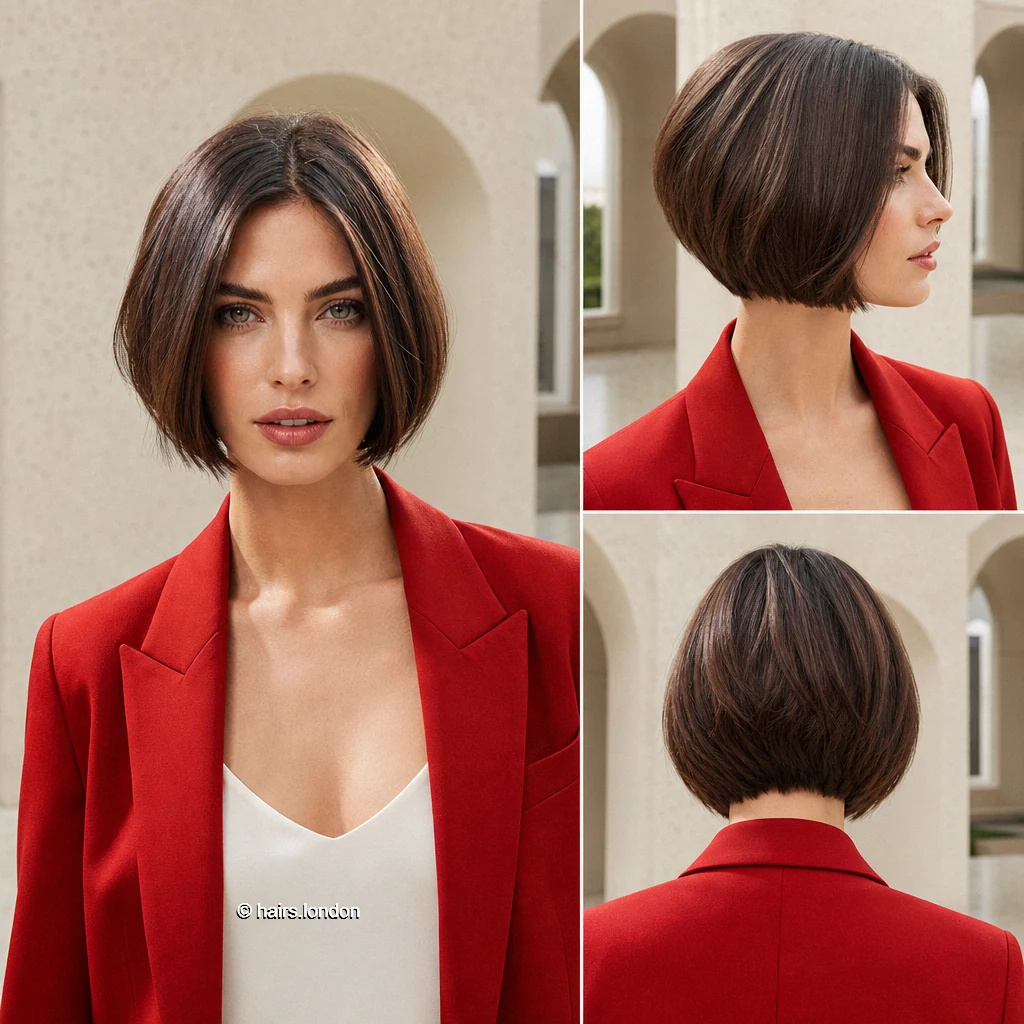
This chestnut-brown bob forms a rounded shape around the jaw. Its back finishes at the nape with a clean edge. The front appears longer in the side view. Smooth surface layers keep the silhouette continuous rather than piecey. Ask how the nape will behave as it grows. Brush the sides inward while drying for curvature. Use minimal finishing product to preserve the light swing. Dense hair might need internal adjustment beneath the rounded shape. Maintain the short back before it spreads onto the neck. Confirm that the front length clears your collar. Check its outline against your usual collar height.
13. Side-Parted Bob with a Sloping Outline
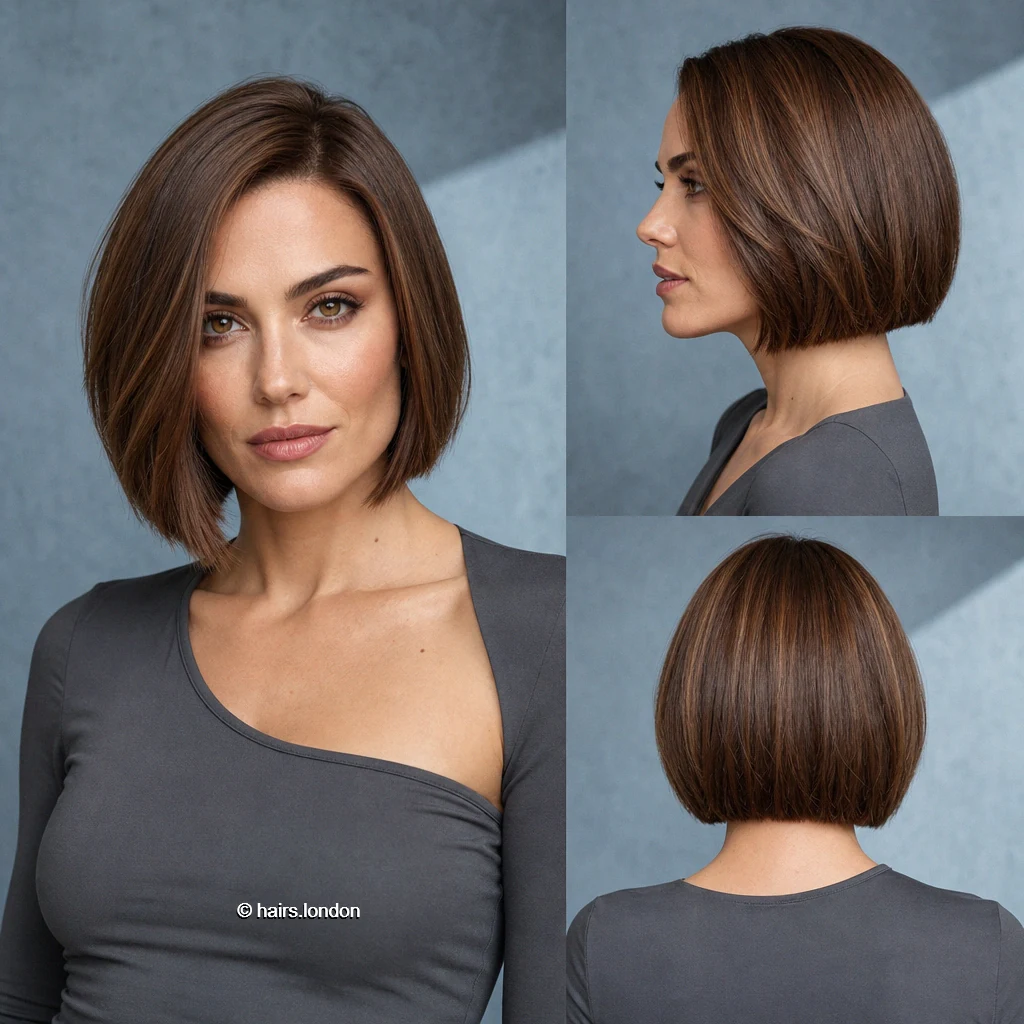
A side part gives this smooth brown bob asymmetrical styling. The front falls below the jaw, while back looks shorter. Its perimeter slopes gently in the visible profile. The rounded back retains fullness above a neat neckline. Ask to compare both front lengths before the final cut. Smooth with a paddle brush, then refine the ends. A small amount of serum can control surface flyaways. Thick hair may require internal shaping to prevent puffiness. Trim promptly when the sloping outline starts looking accidental. Discuss how switching your part might alter the balance. Keep the side part consistent when assessing length.
14. Balanced Blunt-Looking Bob with Soft Curvature
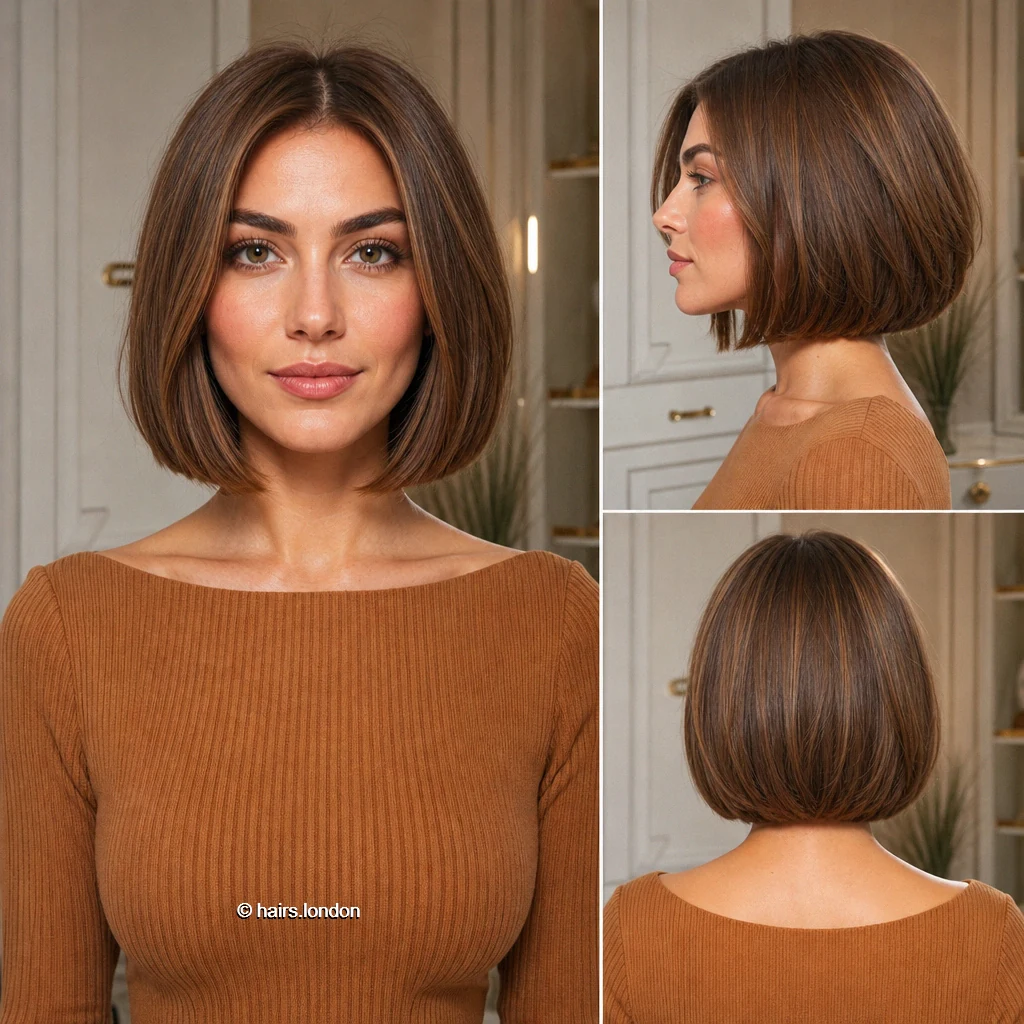
This medium-brown bob has a substantial, blunt-looking lower edge. The sides finish just below the jaw with soft curvature. A center part creates balanced framing around the face. The back stays rounded, without prominent visible graduation. Ask for minimal layers if you value that solid edge. Blowdry downward, then turn the ends under slightly. Use lightweight protectant before adding any finishing heat. Fine hair may look fuller with this perimeter preserved. Trim when the ends stop meeting in a clear line. Consider your natural bend before committing to daily smoothing. Check the outline carefully before any final texturizing is done.
15. Warm Brown Bob with a Rounded Perimeter
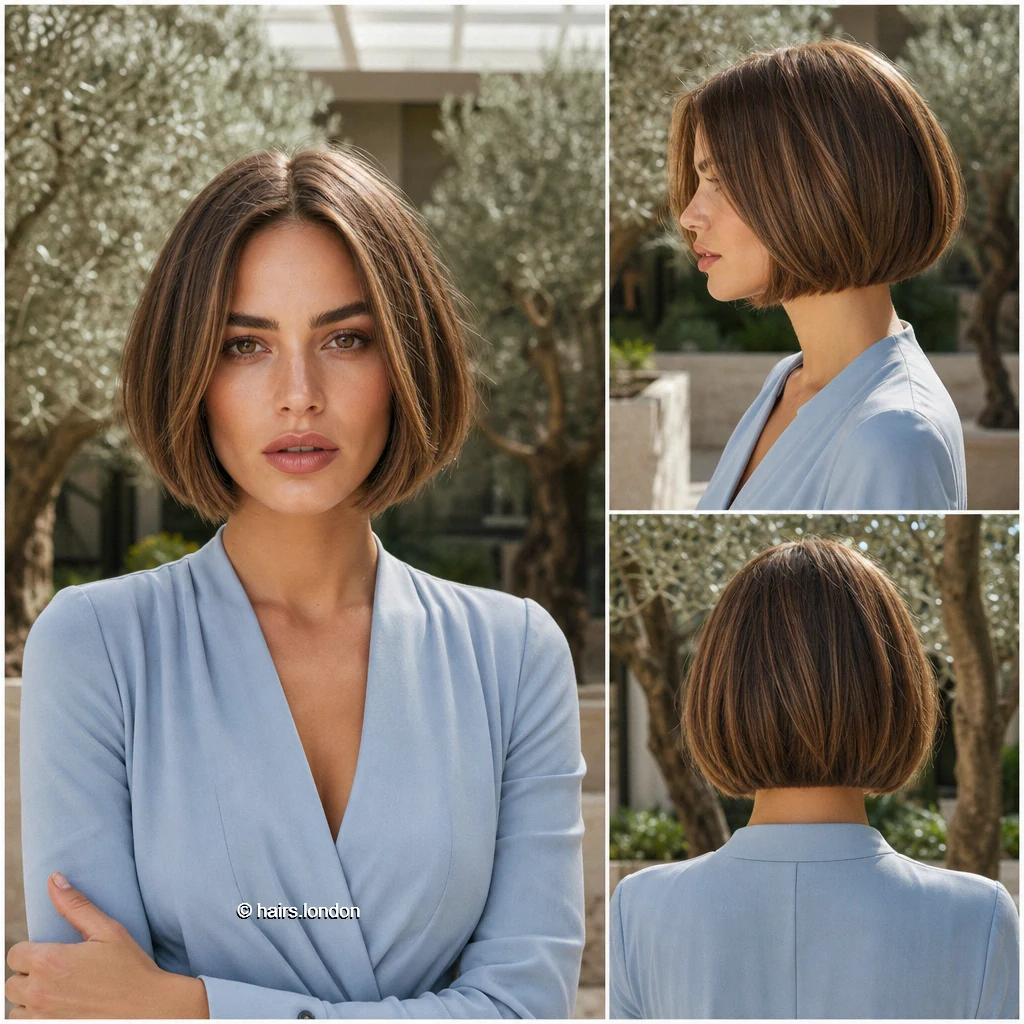
Warm brown dimension brings out this bob’s softly rounded shape. The ends sit close to the jaw and upper neck. A center part keeps both face-framing sides similarly full. From behind, the lower edge looks smooth and compact. Ask whether your density needs subtle internal weight removal. Dry with a round brush to encourage gentle inward movement. Limit heavy creams that could collapse the airy silhouette. Strong natural waves may call for additional smoothing time. Refresh the perimeter before its neat curve becomes uneven. Protect any lightened strands according to your colorist’s guidance. Check both sides after changing your part.
16. Airy Layered Bob Near Shoulder Length
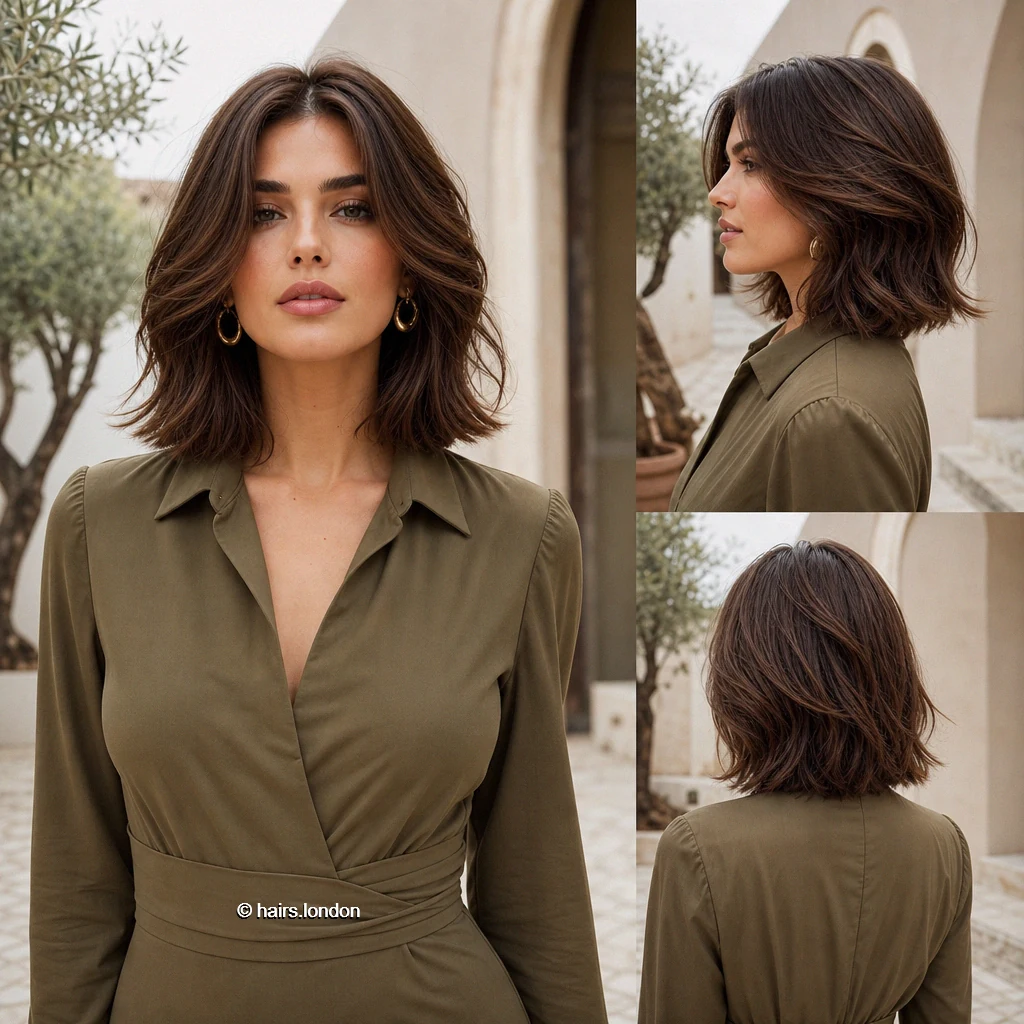
This longer brunette bob approaches the shoulders without resting heavily. Face-framing layers sweep away from a loose center part. Textured ends give the outline a light, uneven finish. The back shows movement rather than a sharply defined edge. Ask for layers that preserve enough weight at the bottom. Blowdry the front away from the face using a brush. Encourage natural waves with cream and gentle scrunching. Fine hair may need fewer layers to avoid transparency. Trim when the ends begin catching awkwardly on collars. This length offers flexibility if shorter bobs feel restrictive. Keep the ends light without exposing gaps.
17. Wavy Lob with Full Face-Framing Layers
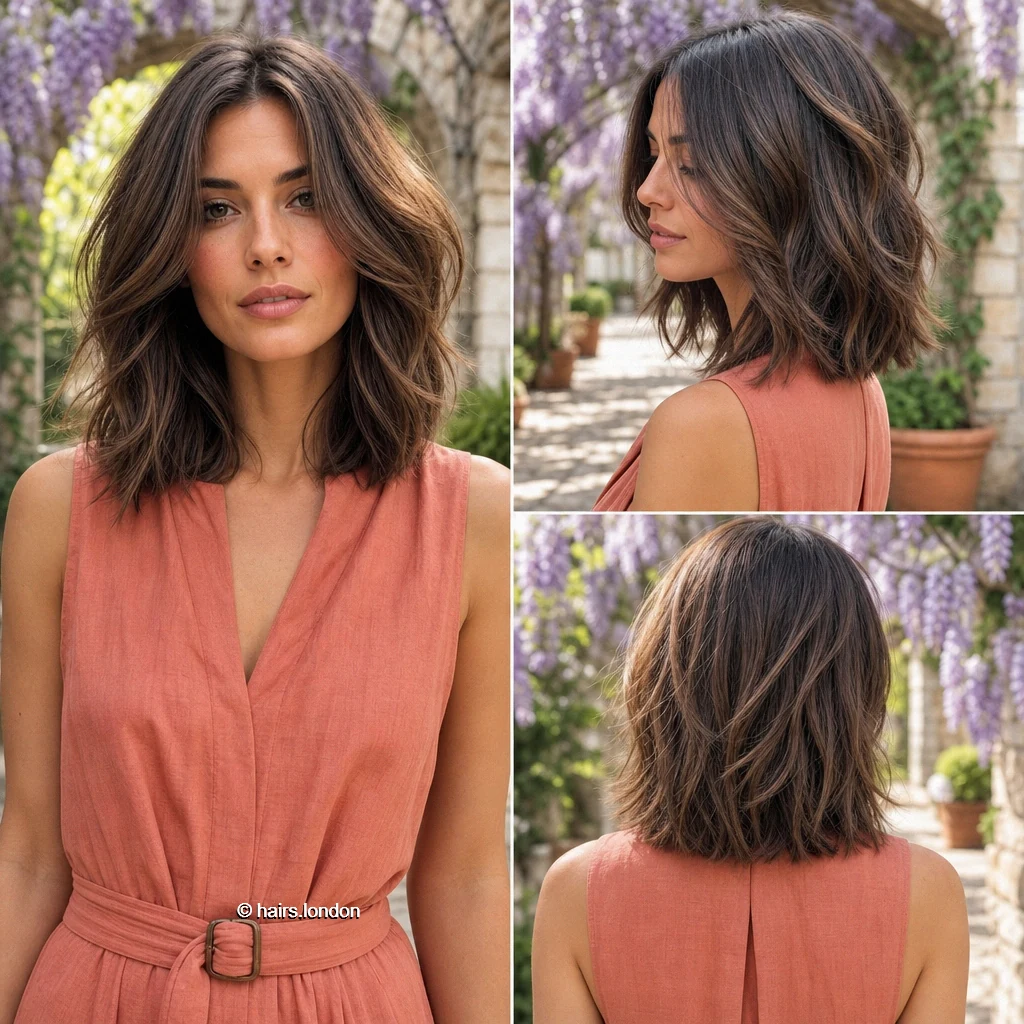
Loose waves give this brunette lob width and movement. The longer ends reach toward the shoulders at the front. A center part opens into generous face-framing layers. The back retains a textured, substantial lower edge. Ask your stylist to balance fullness against your density. Diffuse with your head upright for a controlled silhouette. Twist selected sections if natural waves need more definition. Avoid brushing dry waves when you want separated pieces. Trim once the ends lose their soft, deliberate outline. This length may allow more styling options than a jawline bob. Ask to see how the layers fall without styling.
18. Collar-Length Lob with Feathered Ends
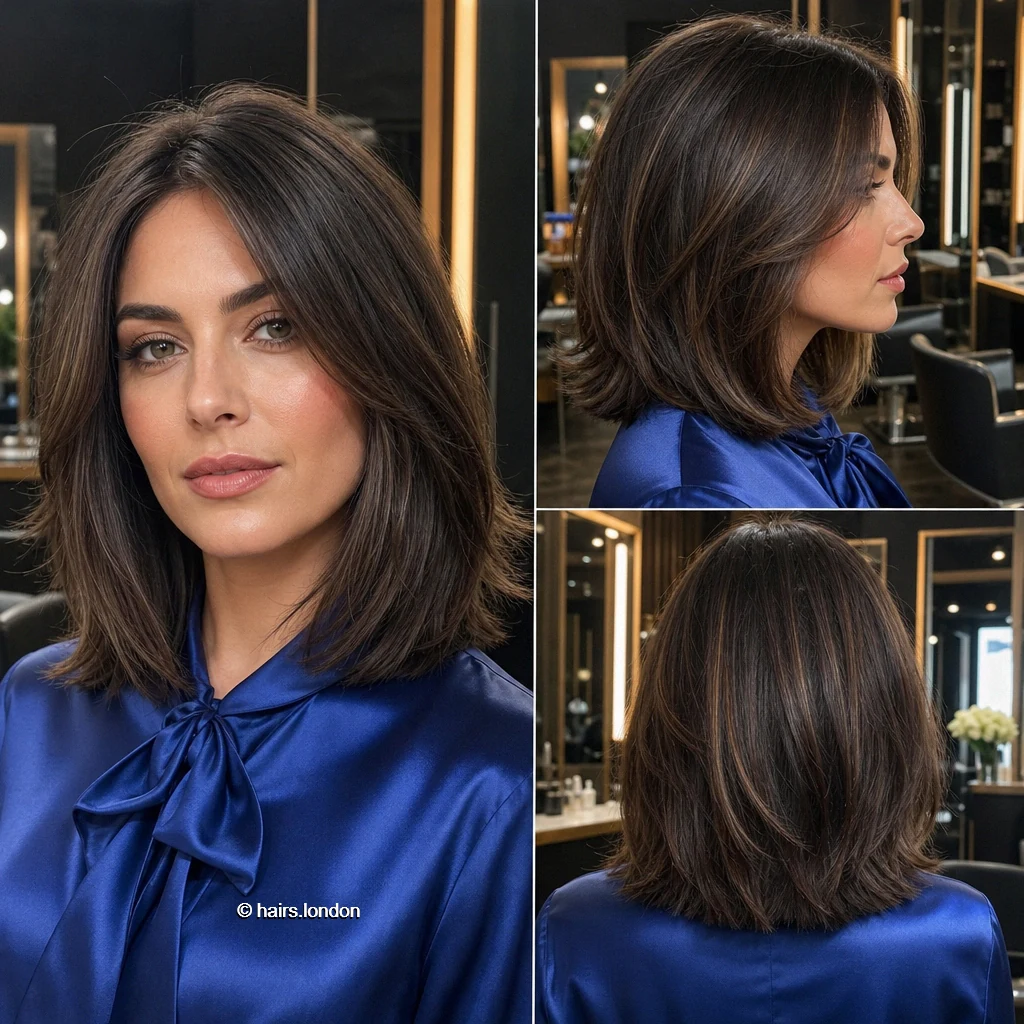
This dark brunette lob rests around the collar area. A relaxed part allows soft pieces to frame the face. Feathered ends turn outward along the sides and back. The overall silhouette stays fuller than its delicate tips. Ask for restrained layers if your hair is naturally fine. Blowdry the roots smooth, then flick selected ends outward. A flexible spray can hold movement without creating stiffness. Dense hair may need more internal control near the neckline. Trim when those feathered ends begin looking thin or ragged. The longer perimeter offers room to adjust future length. Keep outward flicks loose and touchable.
19. Full Shoulder-Skimming Bob with Soft Bends
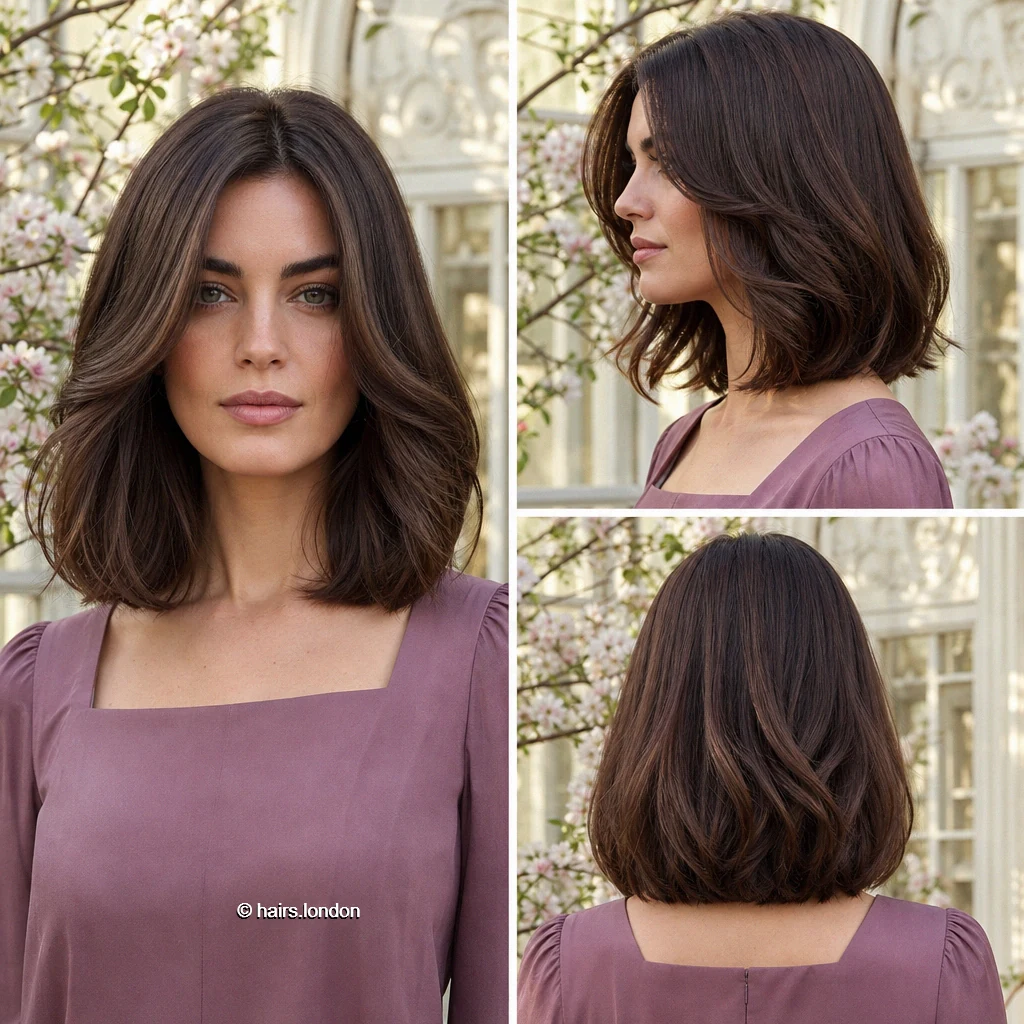
A softly centered part frames this substantial brunette lob. Its ends skim the shoulders, with gentle bends underneath. Long layers introduce movement without breaking the broad outline. The back looks full rather than sharply graduated. Ask your stylist to preserve enough weight for this shape. Dry roots smoothly and shape the ends with a brush. For natural waves, scrunch lightly instead of straightening everything. Heavy products could make this fuller length look rigid. Trim when shoulder friction starts flipping the ends unpredictably. Consider going shorter if you dislike contact with collars. Check how the perimeter sits with your usual clothing.
20. Textured Bob with a Side-Swept Front
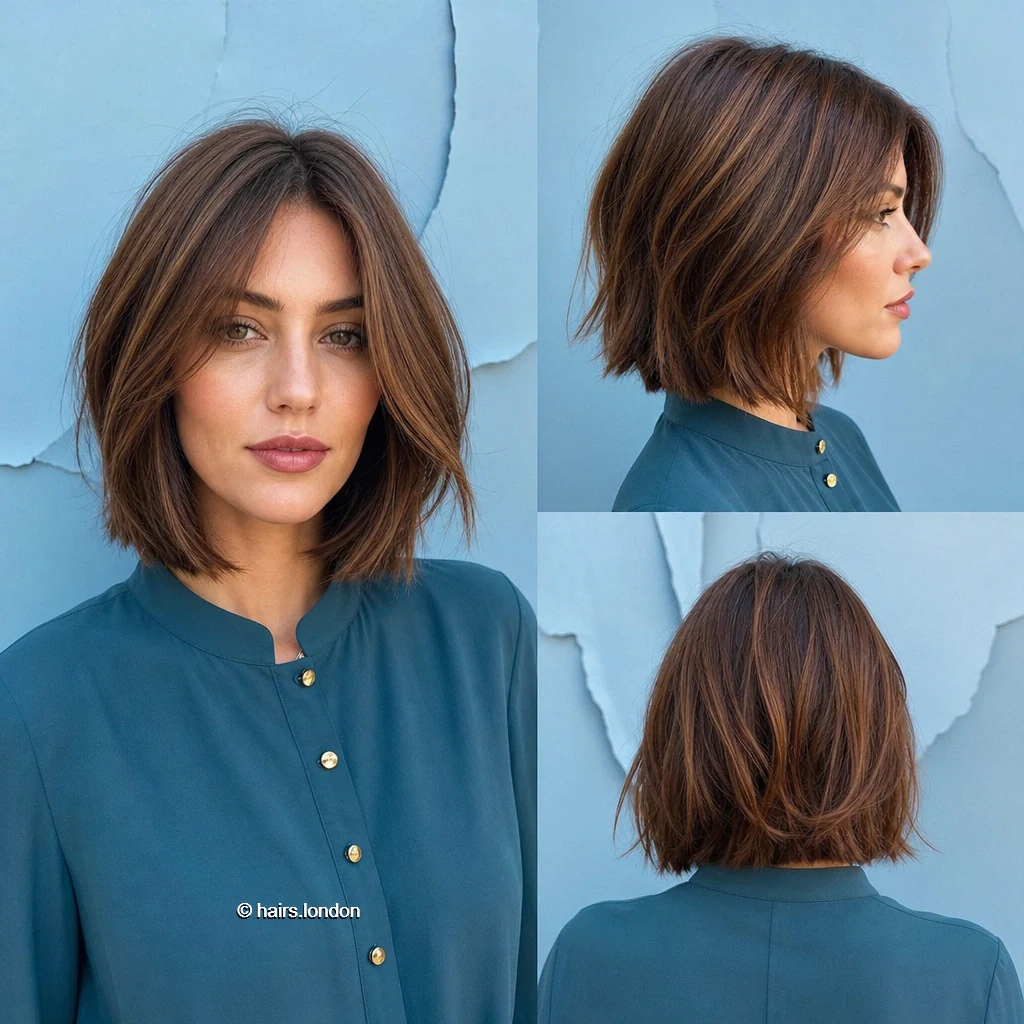
A long side-swept section defines this textured brown bob. The ends sit below the jaw but above the shoulders. Soft layers loosen the sides while maintaining visible fullness. From behind, the lower edge has a gently irregular finish. Ask how your natural part will support the sweeping front. Lift roots while drying, then shape a few outward bends. Use flexible cream sparingly to keep the ends separate. Very fine hair may need fewer layers through the bottom. Trim when the front begins overwhelming the shorter side. Discuss color upkeep if the lighter ribbons require toning. Keep the sweep comfortably manageable.
21. Wavy Lob with Warm Caramel Dimension
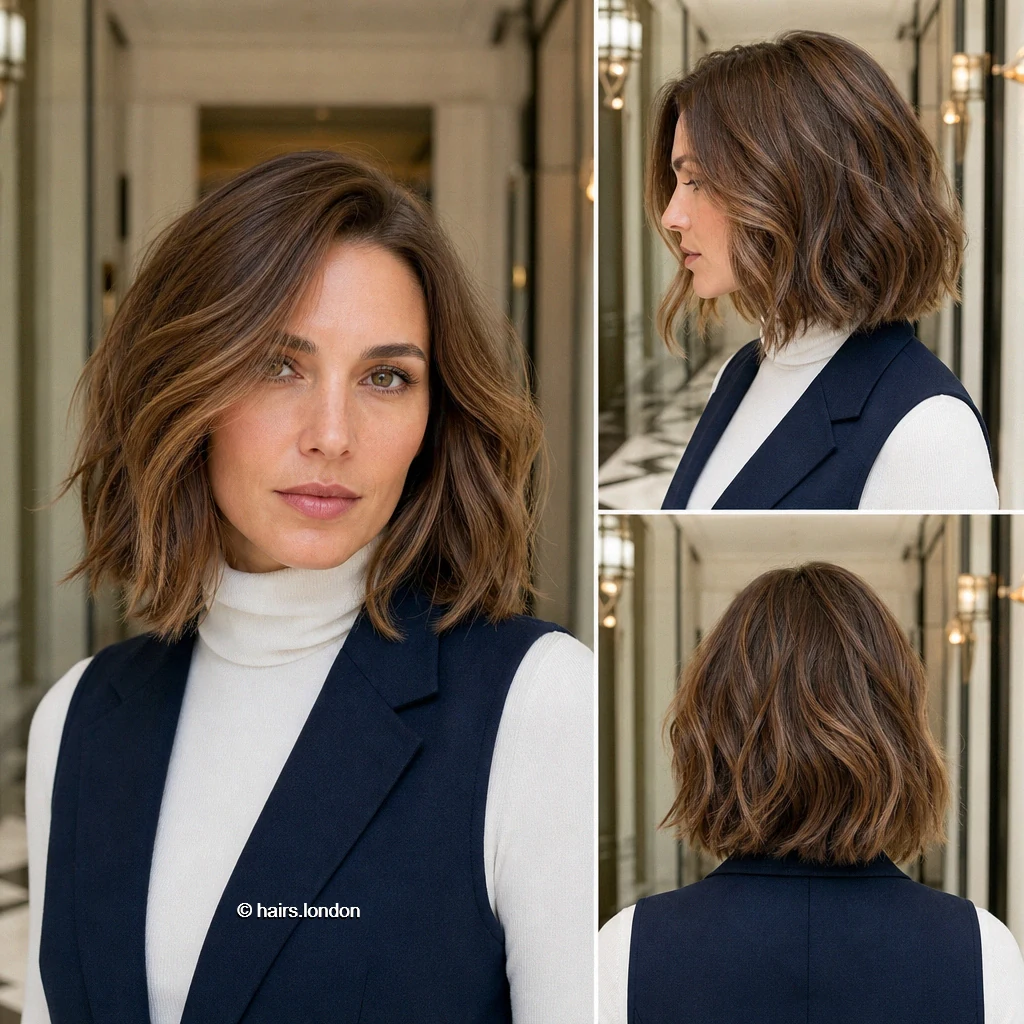
Warm caramel strands trace the waves in this brunette lob. The ends approach the shoulders with a deliberately textured finish. A side part creates height above the sweeping front. Layered bends add width through the sides and back. Ask for enough lower weight to avoid wispy ends. Scrunch in mousse, then diffuse until the waves settle. Fine hair may need less cream than thick hair. Protect lightened pieces from excessive heat and sun exposure. Trim when the textured edge loses its intended balance. Discuss where brighter pieces should fall around your part. Place lighter strands where your waves naturally gather.
22. Smooth Layered Lob with Tucked-Under Ends
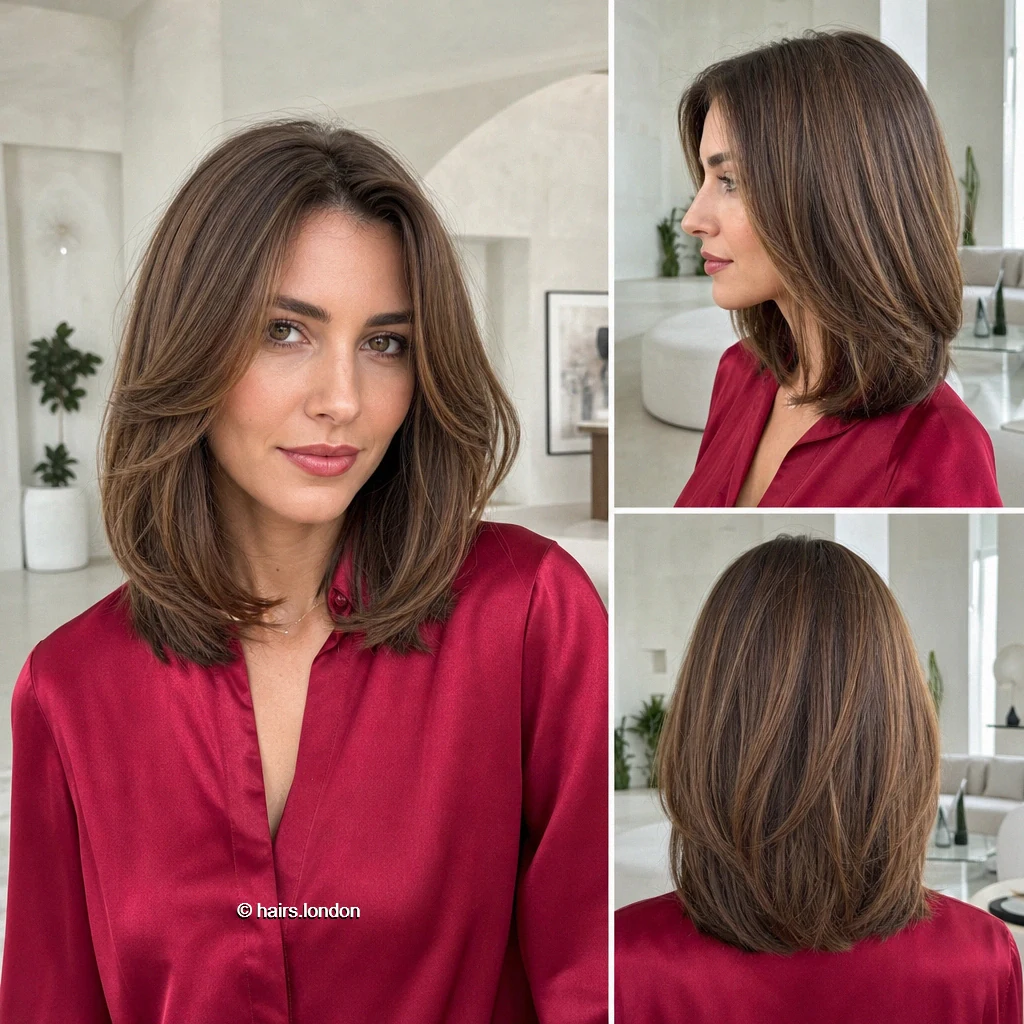
This medium-brown lob falls near the shoulders with polish. Long face-framing layers curve inward beneath the chin. The back has a full, rounded lower outline. A soft side part gives the front gentle lift. Ask for layers that blend without thinning the perimeter. Blowdry downward, then turn the final inches under. Add protectant before refining any sections with heated tools. Dense hair may need tailored weight removal for control. Trim when the ends stop curving together cleanly. Discuss whether your natural texture supports this finish routinely. Check the outline tucked behind the ears and loose around your face and shoulders.
23. Short Layered Bob with Crown Volume
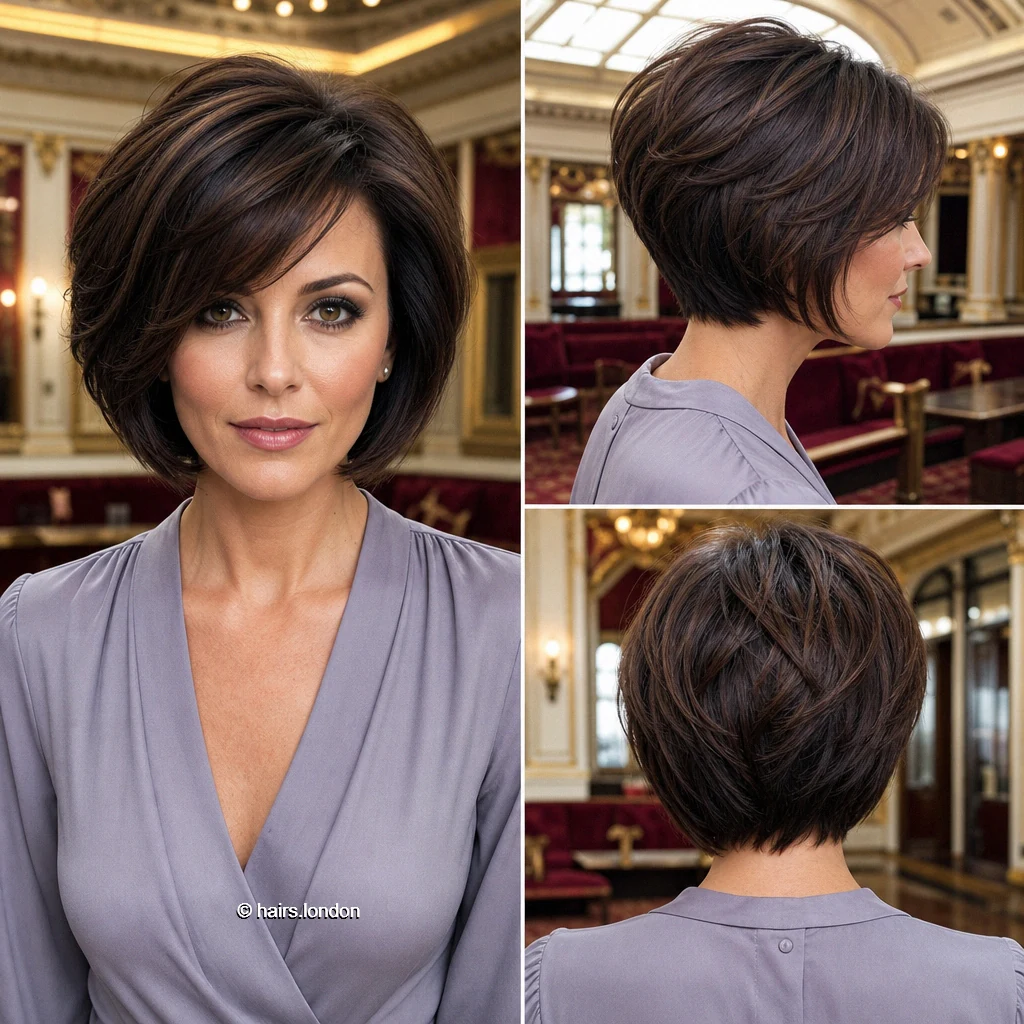
A sweeping fringe draws attention to this short layered bob. The dark brunette back looks rounded above a narrower nape. Visible layers create height and movement through the crown. The front curves toward the jaw rather than hanging straight. Ask your stylist to balance crown volume with side fullness. Dry the fringe across its intended direction while damp. Lift the crown gently without teasing it into stiffness. Growth patterns at the nape can affect upkeep. Schedule trims when the back begins losing its compact shape. Keep finishing cream light so the layers remain distinct. Avoid flattening the softly rounded crown.
24. Side-Swept Graduated Bob with a Tapered Nape
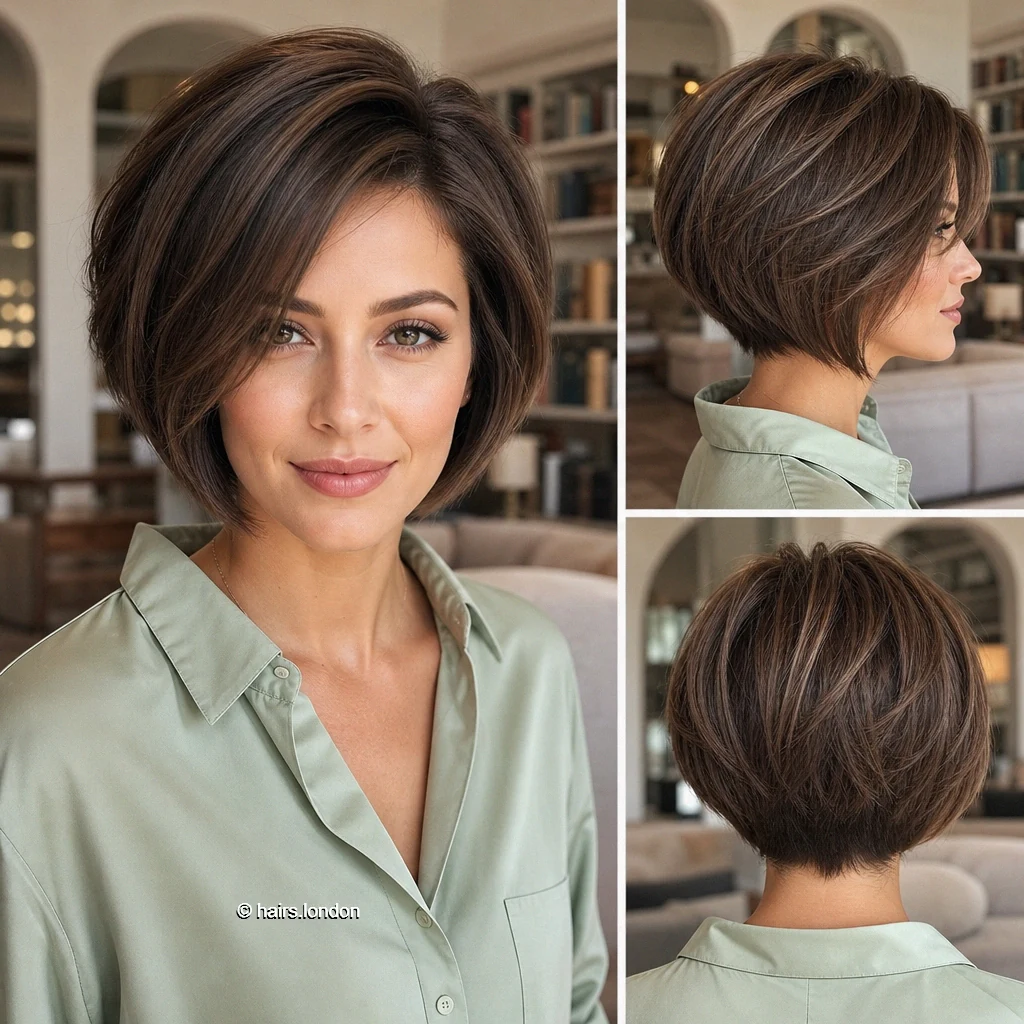
This brown bob shows fullness above a visibly tapered nape. Shorter back sections blend upward beneath a sweeping crown. The side view shows the front reaching toward the jaw. A long fringe crosses the forehead without covering everything. Ask how much visible graduation suits your density. Direct the fringe sideways while blowdrying its roots first. Smooth the outer curve, leaving the layered back mobile. Fine hair may need less weight removed underneath. Maintain the nape before its tapered outline grows out. Check side and back views together during your consultation. Check that the tapered back still feels comfortable against collars.
25. Rounded Graduated Bob with a Long Fringe
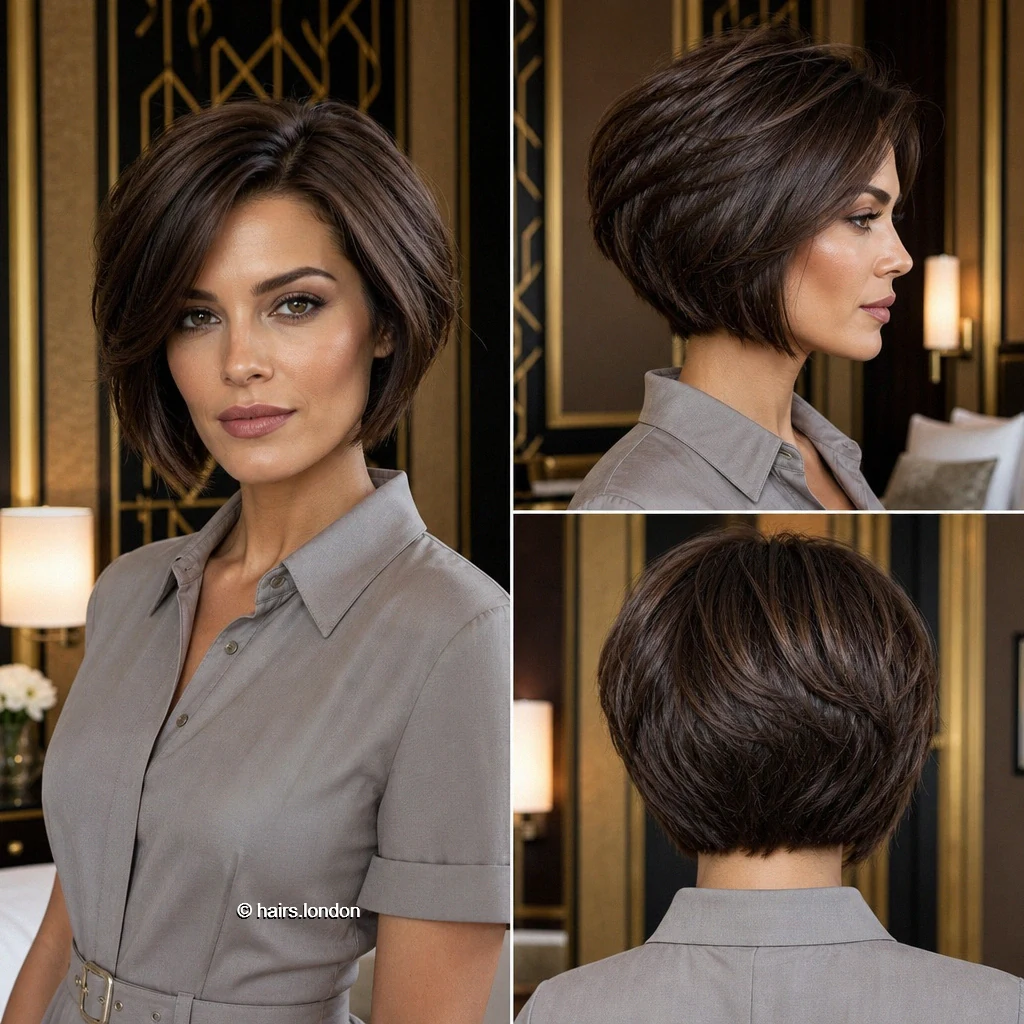
A long diagonal fringe softens this compact brunette bob. The back shows rounded fullness narrowing toward the nape. Visible layers sweep across the crown and sides. Front pieces finish near the jaw with a curved edge. Ask your stylist to adjust graduation around your growth patterns. Blowdry the fringe first so it falls comfortably. Use a brush to smooth the perimeter without flattening volume. Dense hair may need more control beneath the crown. Trim regularly enough to preserve the short back silhouette. Keep product flexible so the layered surface can move. Check fringe placement on humid or especially windy days.
How to Choose Your Bob Length and Shape
Start with where you want the perimeter to fall: at the jaw, along the neck or near the shoulders. A jawline bob makes its outline prominent, while a lob provides more length around the face. Compare front and side views before requesting an A-line shape; longer front pieces establish the angle, but a stacked or graduated bob also needs visible building of weight at the back. Consider where your hair naturally parts, how it behaves against a collar and how much time you want to spend shaping it.
Styling Fine, Thick, Wavy and Curly Textures
Fine hair often benefits from a substantial perimeter and restrained layering; start with lightweight mousse rather than heavy cream. For thick hair, ask about selective internal weight removal that keeps the outside line intact. Enhance waves with scrunching and gentle diffusing, then separate only a few pieces. If your hair forms curls, assess the intended bob length when dry and allow room for shrinkage. A curly bob may need curl-by-curl adjustments and a shape that looks balanced without requiring every curl to be stretched straight.
Keeping Brunette Bob Color Fresh
The images range from deep, relatively uniform brunette to brown with lighter ribbons. Ask your colorist whether your chosen look needs highlighting, glossing or neither; photographs cannot establish a color formula. Protect processed sections with appropriate conditioning and moderate heat. If highlights shift warmer than you want, discuss toner timing with your colorist rather than assuming every brown shade needs the same products. A sleek bob also shows surface dryness readily, so focus conditioner where the ends need it.
Maintaining the Bob Perimeter and Graduation
Watch the shape, not just the calendar. A crisp jawline edge needs attention once it stops reading as a clean line; a textured lob can usually tolerate more growth. Short napes and visibly graduated backs may lose their compact silhouette sooner than longer, softly layered shapes. Between cuts, smooth a precise perimeter with controlled airflow or refresh a wavy outline by dampening and scrunching. Avoid removing bulk yourself: weight taken from the wrong area can change how a bob sits.
What to Discuss with Your Stylist
Bring the relevant front, side and back views, then point to the exact length, parting, fringe and amount of movement you want. Explain your natural texture, density, cowlicks, previous color and usual styling routine. Ask what the shape will look like air-dried as well as styled, particularly if the reference has a smooth finish or lifted crown. Agree on where weight should remain, whether the nape needs graduation and how the cut could be adjusted as it grows.
Frequently Asked Questions
What is the difference between a bob and a lob?
A lob is a longer bob, generally falling closer to the shoulders. A shorter bob typically finishes around the jaw or neck, though the boundary is descriptive rather than exact.
How is an A-line bob different from a stacked bob?
An A-line bob is longer toward the front. A stacked bob has shorter layers or graduation that build visible weight at the back. One cut can have both features, but a longer front alone does not prove stacking.
Can fine hair support a layered bob?
Yes, if the layering is tailored to its density. Keeping enough weight at the perimeter can help fine ends look substantial while a few layers provide movement.
How can a thick bob avoid looking bulky?
Discuss where fullness collects when your hair dries naturally. Your stylist can adjust internal weight or layering while preserving the visible perimeter you want.
Will a bob work with natural curls?
It can, but curl shrinkage and density affect the finished length and shape. Agree on the dry appearance you want and ask your stylist to assess how the curls sit together.
Should I add a fringe to my bob?
A fringe can change the framing considerably, but its upkeep depends on your growth patterns and preferred styling time. A longer side fringe generally offers more flexibility than a short, precise one.
Which bob takes less daily styling: sleek or textured?
That depends on your natural texture. A sleek perimeter may be quick for naturally straight hair, while a wavy or textured bob may be easier for hair that already forms bends.
How do I keep a bob smooth without making it stiff?
Direct airflow down the hair, shape the ends with a brush and use a small amount of lightweight finishing product. Concentrate on the perimeter rather than coating every layer.
How often should I trim a short bob?
Arrange a trim when the perimeter or nape no longer holds its intended shape. Precision cuts and short graduated backs often need attention sooner than loose, longer bobs.
Can I switch the part on an angled bob?
Often, but changing the part can alter how its front lengths appear. Tell your stylist if you regularly switch sides so the finished shape can be checked both ways.
What happens when a graduated bob grows out?
The short back can lose definition and the weight may settle lower. Your stylist can maintain the graduation or gradually reshape the cut toward a more even bob.
What should I bring to a bob consultation?
Bring views showing the front, side and back of the shape you like. Also explain which features matter most and how you normally wear, dry and part your hair.
Conclusion
The most useful bob reference is one that shows more than a flattering front view. Compare its perimeter, side profile and back shape, then choose the details that suit your hair’s natural behavior and the upkeep you want. Whether you prefer a polished jawline cut, an airy layered bob or a shoulder-skimming lob, a clear consultation makes the inspiration more practical.