


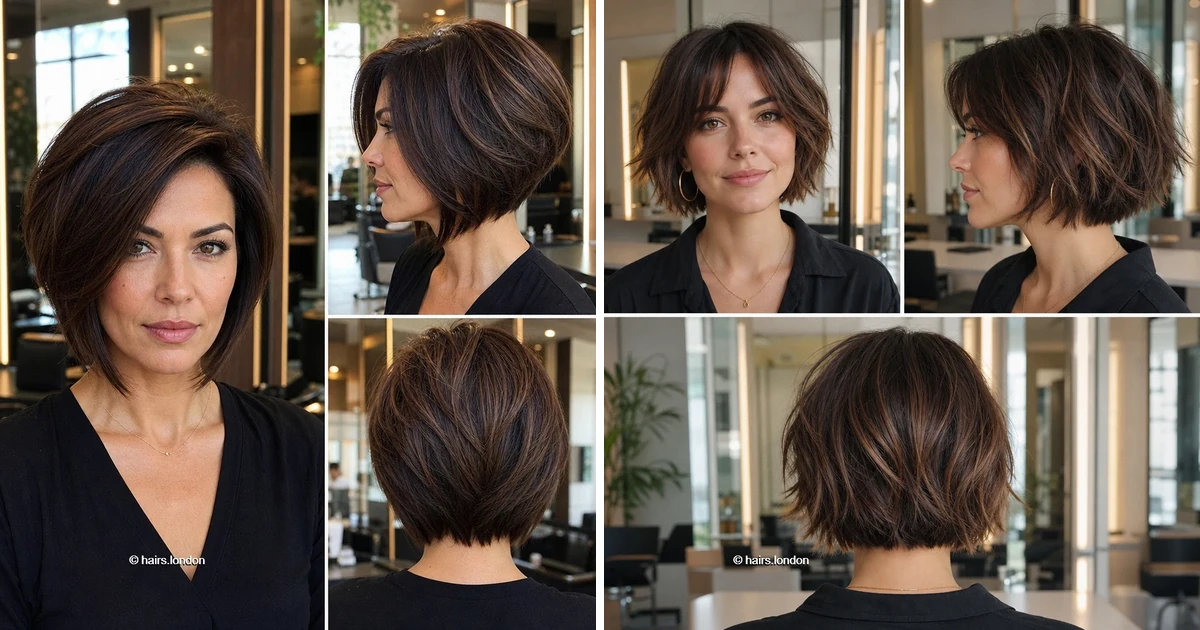
11. Chestnut Bob with Soft Face-Framing Layers
Chestnut brown and warmer ribbons bring dimension to this bob. Its side part falls into softly separated, face framing lengths. The front sits around the jaw, ahead of shorter sections. A rounded back rises from a neat, visible nape. Ask for subtle layering that preserves body around the lower edge. Dry the fringe away from your face for gentle movement. Finish with light cream rather than weighing down the crown. Discuss density before removing volume from the compact back shape. Trim the nape when its shorter edge begins to spread. Revisit lighter ribbons as they grow away from the part.
12. Tousled Brown Bob with a Loose Fringe
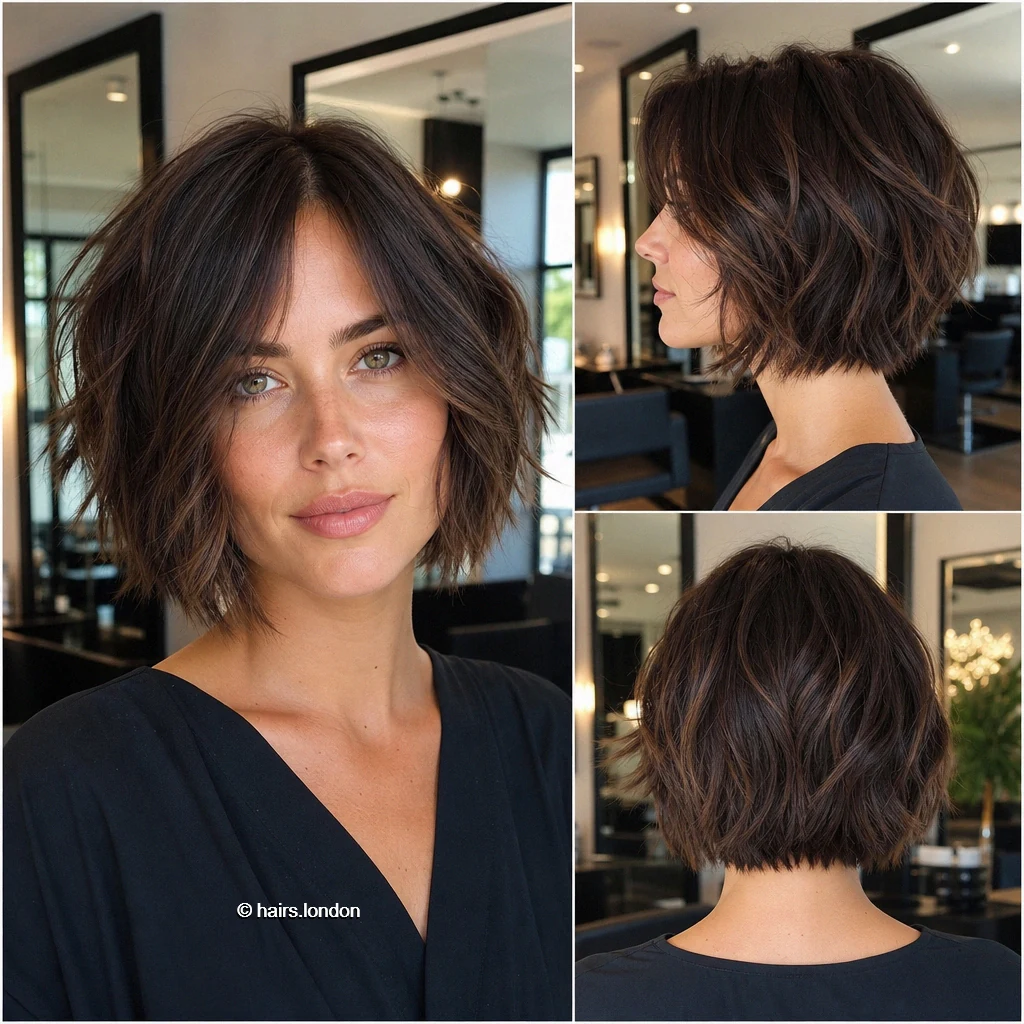
This dark brown bob exchanges polish for loose, uneven waves. A parted fringe blends into short pieces around the cheeks. The ends sit near the jaw with lightly separated texture. Side and back views show movement rather than strict graduation. Ask for layers that encourage waves without sacrificing the outline. Scrunch in a small amount of lightweight wave styling cream. Diffuse gently, or let the fringe settle while air drying. Natural wave pattern determines how readily this finish appears daily. Trim when the ends lose their distinct, airy bob shape. Discuss fringe length before committing to more frequent front trims.
13. Short Shaggy Bob with Curtain Fringe
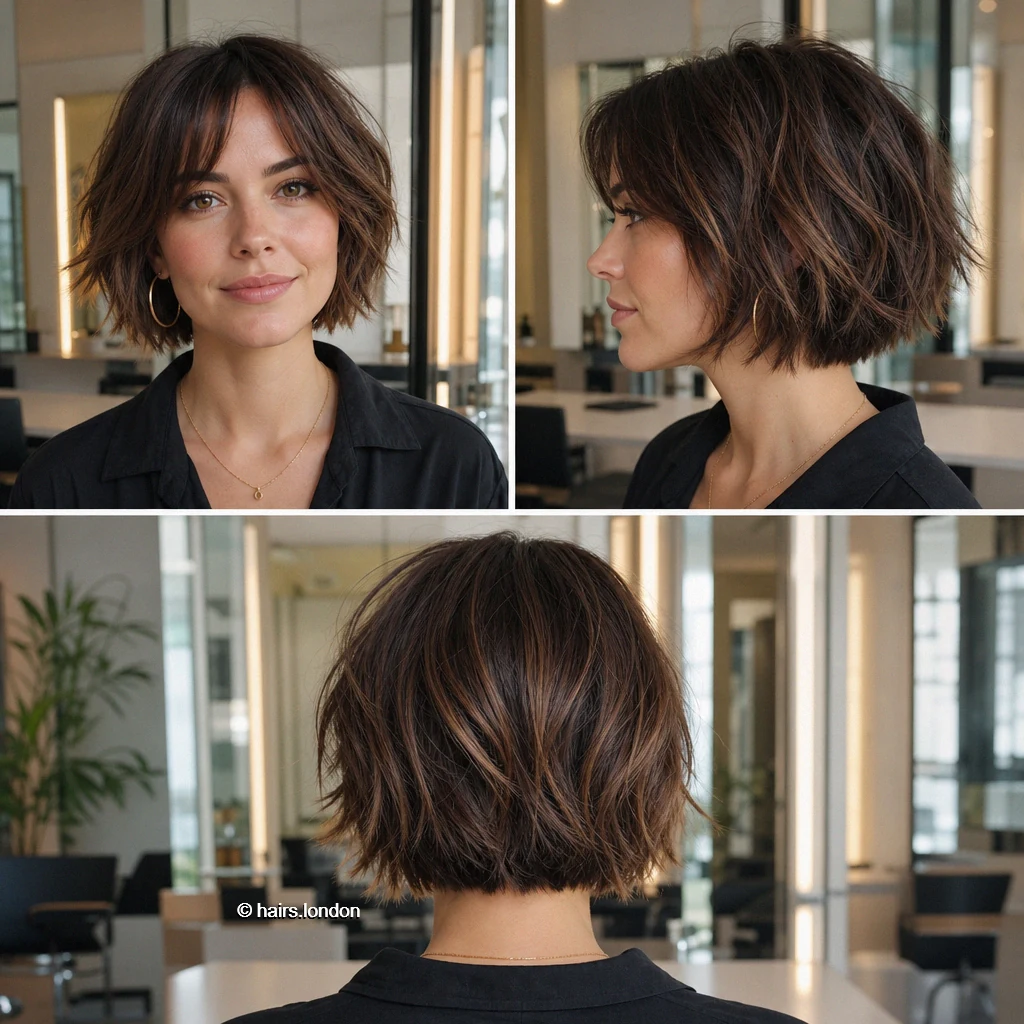
Soft brunette highlights emphasize the movement in this shaggy bob. A divided fringe opens around the eyes and cheekbones. The jaw length sides finish in airy, outward flicking ends. From behind, textured layers sit above a shorter neck edge. Ask for separation that still leaves enough hair at the perimeter. Work light mousse through damp lengths before diffusing gentle waves. Refresh the fringe alone when it falls into your eyes. This finish depends on texture and may need morning reshaping. Trim the outer edge as soon as flicks lose balance. Discuss how much layering your particular hair density can support.
14. Piecey Brown Bob with Wispy Bangs
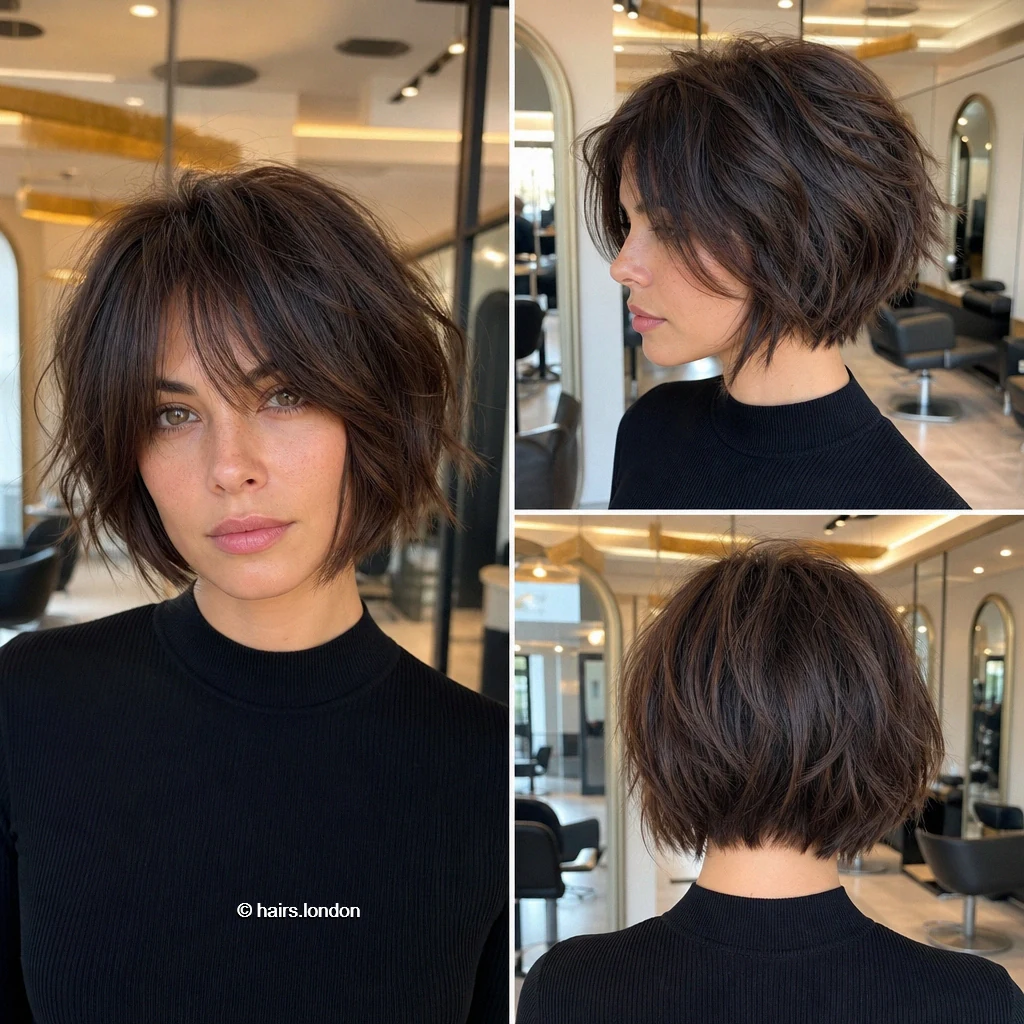
Dark brown tones give this piecey bob a finish. Wispy bangs cross the forehead above softly broken jaw length sides. The back appears full and textured over a short nape. There is no sharply defined front to back angle here. Ask for movement while retaining enough weight beneath the layers. Shape damp bangs first, then let the sides dry loosely. A small touch of paste can separate selected outer pieces. Thick hair might need internal refinement without excessive surface layers. Book trims when bangs obscure vision or ends lose definition. Discuss your natural wave before choosing the final fringe length.
15. Wavy Bob with Straight-Across Fringe
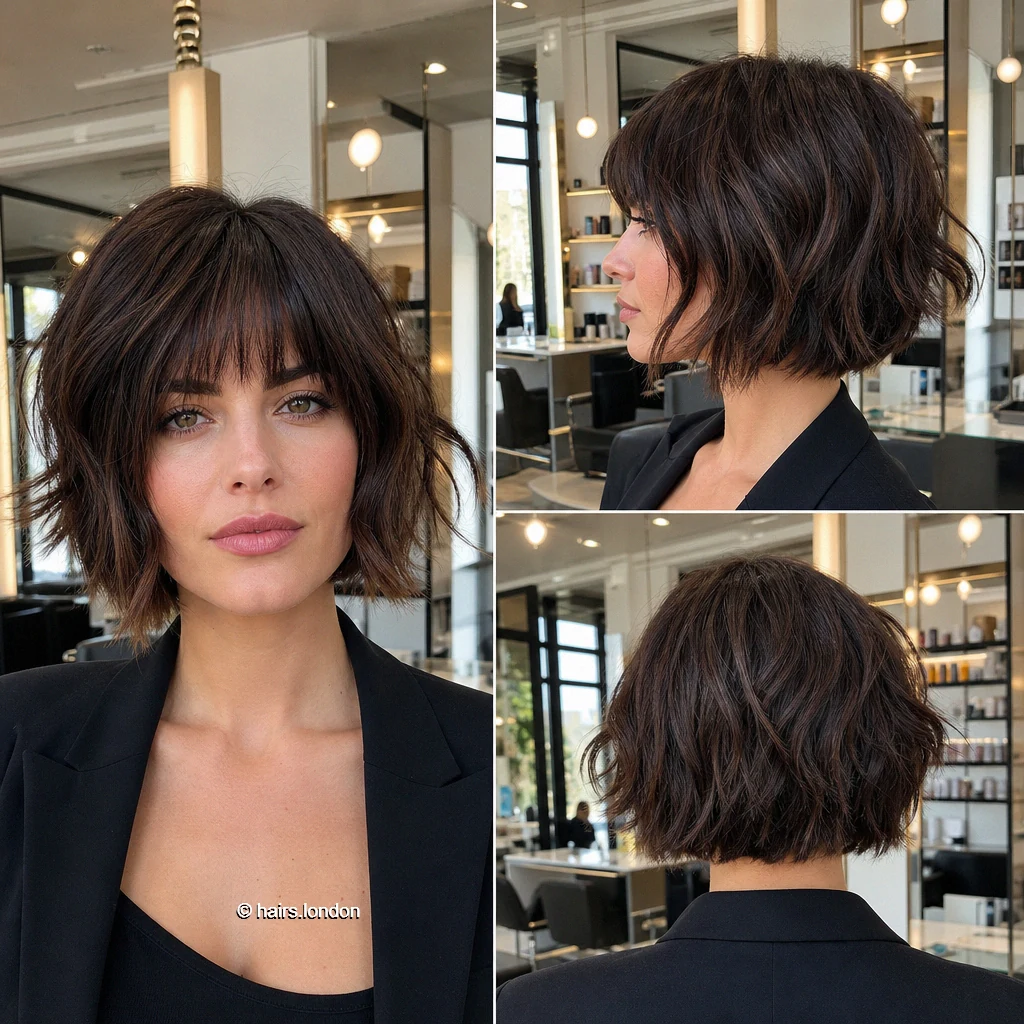
Warm brown hair forms loose waves around this compact bob. A straight fringe skims the brows above textured, jaw length sides. Back views show a fuller crown and softly irregular ends. The outline stays fairly level despite its wave movement. Ask for a fringe width that works with your part. Dry bangs first, then scrunch the remaining hair with mousse. Avoid brushing dry waves if you want distinct, separated pieces. Curly hair may need additional allowance for shrinkage when cut. Refresh the fringe before it begins sitting against your lashes. Maintain the lower edge when waves start appearing overly bulky.
16. Airy Brunette Bob with Side-Swept Layers
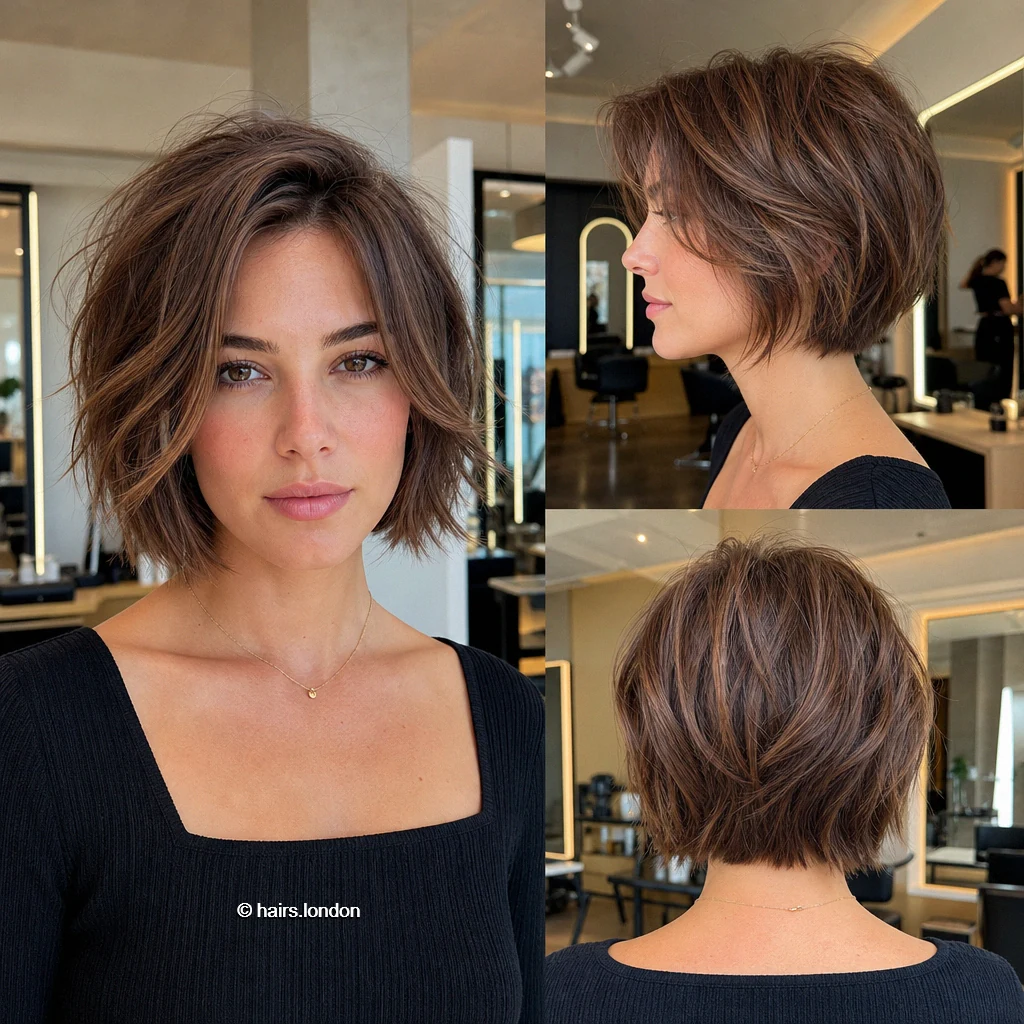
Caramel touched brunette strands give this airy bob visible depth. A soft side sweep blends into loosely waved cheek framing. The ends gather around the jaw and upper neck. Back layers create fullness without a sharply stacked lower section. Ask for enough perimeter weight to prevent overly scattered ends. Diffuse from underneath or air dry with minimal handling. Smooth only the fringe if you prefer a tidier finish. Fine hair may need fewer layers to maintain its shape. Trim when the back begins widening beyond the intended outline. Discuss how your natural wave changes considerably after washing and drying daily.
17. Layered Bob with Light Brown Movement
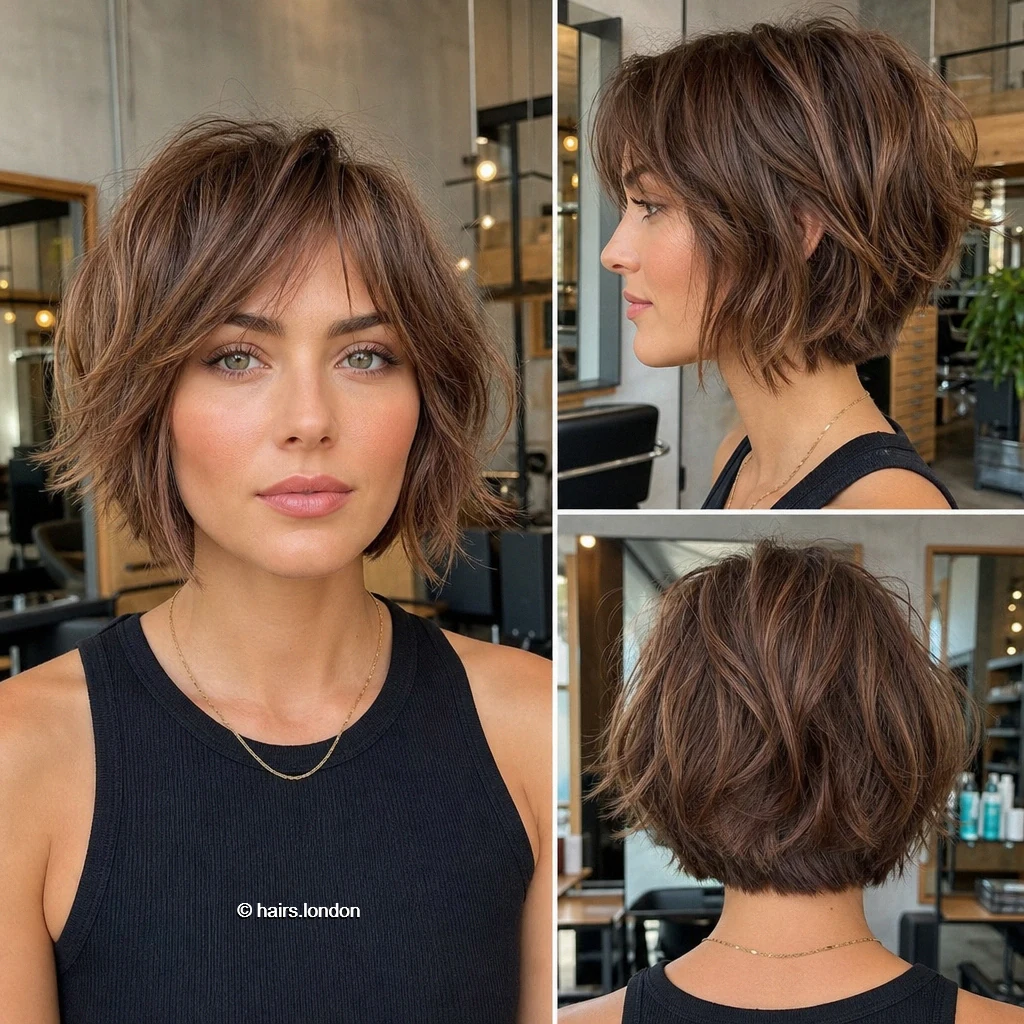
Light brown ribbons pick out layers throughout this textured bob. Wispy front pieces part loosely above the brows and temples. The sides sit near the jaw, with flicks extending outward. Rounded back fullness ends at a shorter, textured neckline. Ask for layers that release movement without creating unwanted bulk. Scrunch damp hair lightly, then dry gently to preserve its bends. Twist individual pieces only where extra definition feels useful. This airy shape depends on density and natural texture alike. Recut the perimeter when its short outline begins losing balance. Review fringe growth alongside the rest of your regular trim schedule.
18. Side-Swept Textured Bob with Soft Ends
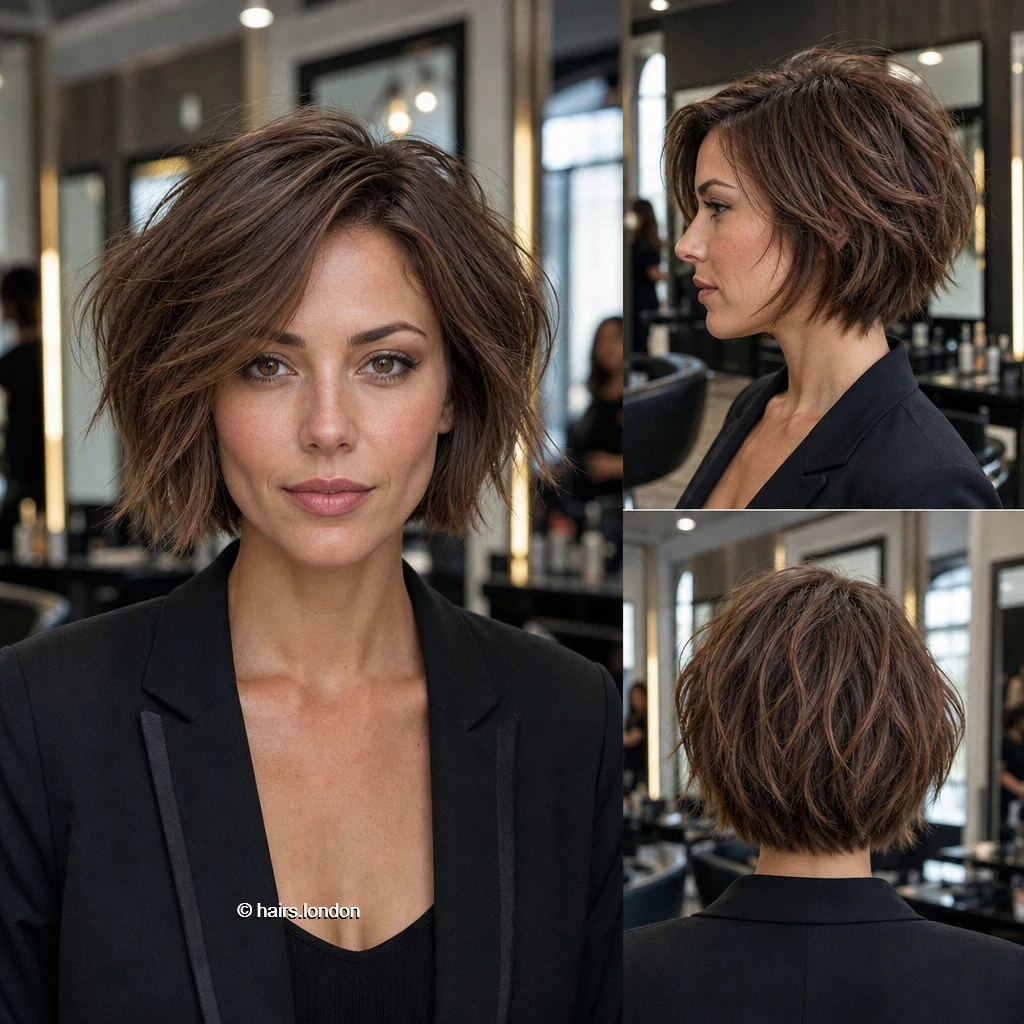
Warm brunette highlights trace the loose, soft layers of this bob. A broad side sweep creates fullness above one eye. Softly uneven sides finish around jaw level and upper neck. The back looks rounded, with texture through its outer layers. Request controlled separation rather than a heavily thinned lower edge. Lift roots briefly, then scrunch the ends for gentle movement. Keep wax application sparse to avoid a clumped silhouette. Discuss whether your hair naturally supports that sweeping front section. Trim regularly when the sides start dropping below the intended jawline. Ask how highlights will look between appointments as roots grow.
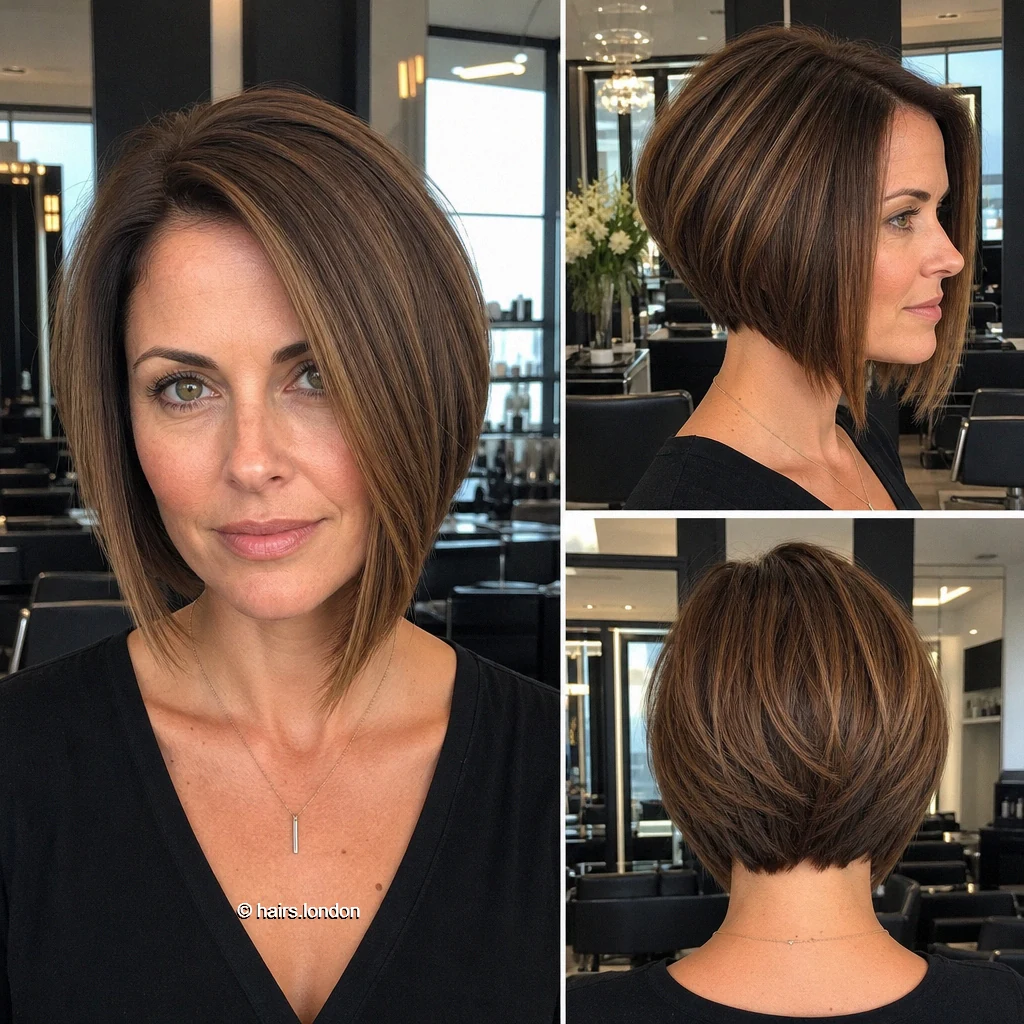
19. Glossy Angled Bob with a Long Side Fringe
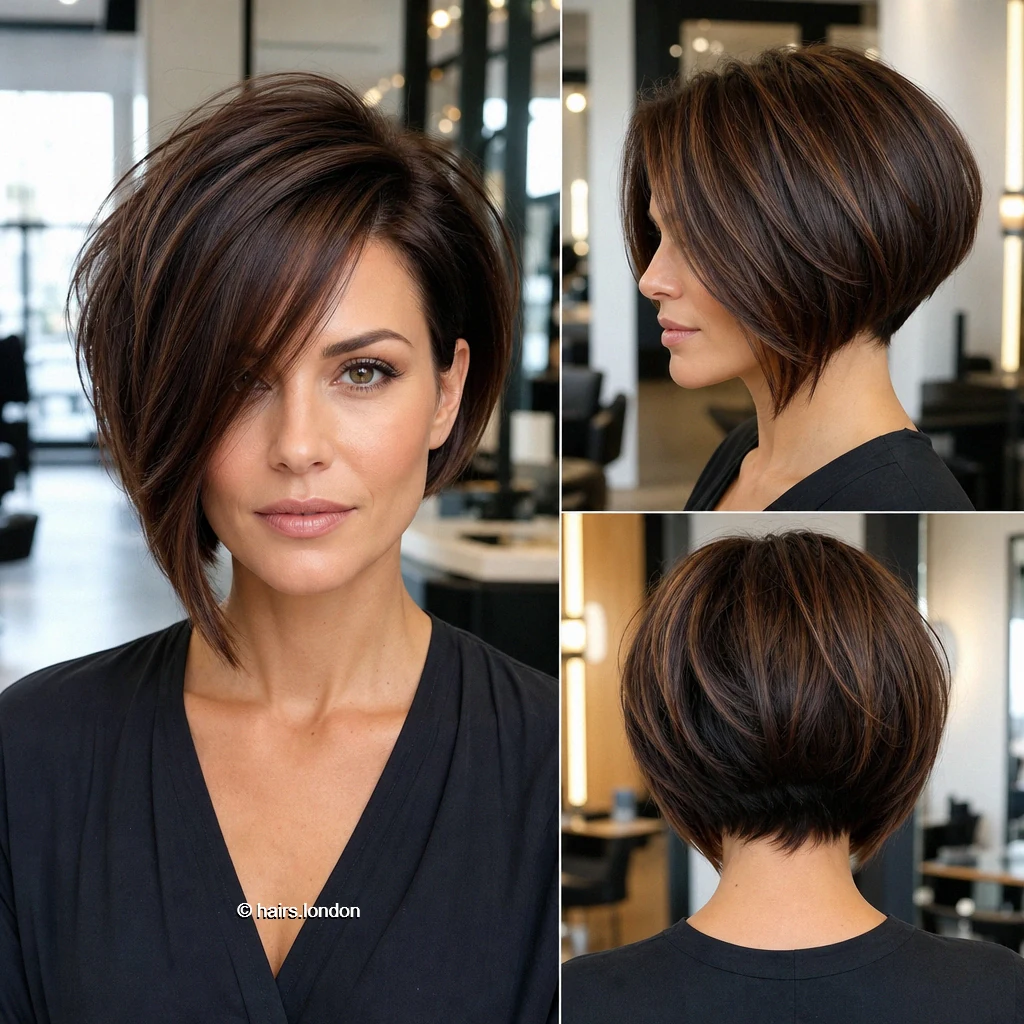
Rich brown hair shows warm ribbons across this smooth bob. A long side fringe merges with the pronounced forward section. The front descends below the chin; the nape stays short. Side and back views confirm rounded volume over visible graduation. Ask for the front length to work with your neckline. Brush the sweep across, then polish ends with gentle heat. Avoid flattening the back while smoothing its outermost surface. A strong growth pattern may alter how the fringe falls. Trim the nape often enough to keep its definition intact. Discuss regular color upkeep if you want to preserve warm dimension.
20. Asymmetrical Brown Bob with a Rounded Back
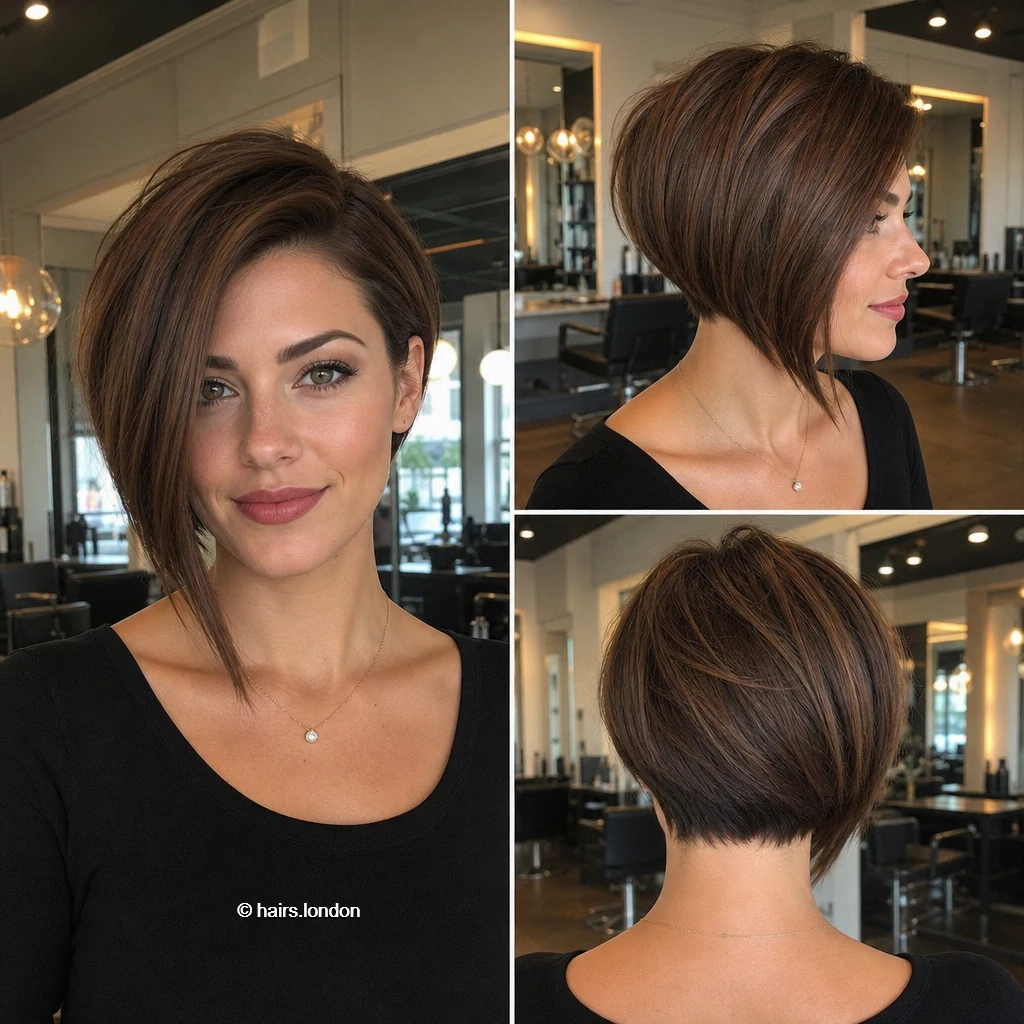
Warm brown highlights follow the smooth lines of this bob. One sweeping front section reaches below the opposite, shorter side. The back rises into rounded fullness above a closely tapered nape. That visible asymmetry makes its profile more dramatic than average. Ask your stylist to confirm which side carries more length. Blow dry toward your preferred part, smoothing the longer edge. Use light finishing spray to hold movement without stiffness. Consider whether your density supports fullness at the rounded back. Maintain short nape trims even when preserving the extended front. Check both profiles during consultation before deciding on the contrast.
How to Choose Your Bob Length and Shape
Start with where you want the front to fall: at the jaw, below the chin, or farther down the neck. Then compare that length with the back. Several polished examples have a visibly longer front and rounded, graduated rear; the textured bobs keep their weight closer to jaw level. If you often tuck your hair back or prefer less frequent shaping, ask how a strong front-to-back contrast will behave as it grows. Your density, natural bend, and growth patterns matter as much as the photograph.
Styling Fine, Thick, Wavy, and Curly Textures
For fine hair, protect fullness at the bob perimeter and use lightweight root lift instead of heavy finishing products. Thick hair may benefit from carefully placed internal weight removal, particularly beneath rounded backs, while keeping the visible ends substantial. Scrunch and diffuse waves to encourage the piecey shapes shown here; smooth only the fringe or perimeter if you want a cleaner contrast. If your hair forms curls, discuss shrinkage and the dry shape before choosing a jaw-length edge or short bangs.
Keeping Brunette Color and Highlights Fresh
These images show dark and medium browns with varying amounts of warm, lighter dimension. If you want similar contrast, ask where highlights will be visible when the hair falls into its usual side part and how noticeable regrowth will be. Color-safe washing, appropriate heat protection, and a refresh schedule suited to your chosen contrast can help maintain the finish. A glossy surface also makes the lines of a polished bob easier to see.
Maintaining the Bob Perimeter and Graduation
A short nape can change the profile quickly as it grows, even while longer front pieces still look tidy. Arrange trims around the part of the shape that loses definition first: the nape on a graduated bob, the lower edge on a jaw-length textured bob, or the fringe when it reaches your eyes. Ask your stylist to check the cut from both sides and the back so a rounded silhouette stays intentional without removing too much weight.
What to Discuss with Your Stylist
Bring front, side, and back references rather than requesting an angle by name alone. Point out the front length, the amount of fullness behind the ear, whether you want visible graduation, and how soft or precise the perimeter should look. Explain your usual part, styling time, natural texture, and any nape growth patterns. For a fringe, agree on its dry resting length; for highlights, discuss upkeep alongside the haircut.
Frequently Asked Questions
What is the difference between a bob and a lob?
A bob generally finishes around the jaw or neck, while a lob extends closer to the shoulders. Long front pieces do not necessarily make the entire cut a lob when the back remains short.
Is an A-line bob the same as a stacked bob?
No. A-line describes a perimeter that lengthens toward the front. Stacked or graduated describes shorter sections building shape at the back. A cut can show both features.
How do I choose between a jaw-length and longer-front bob?
Consider where you want hair to frame your face and how much length you want near the neck. Also account for your texture, density, and willingness to maintain a pronounced angle.
Can fine hair hold a rounded bob shape?
It may, but the result depends on density and growth patterns. Ask your stylist to preserve perimeter weight and avoid more layering than your hair can support.
How can thick hair avoid looking bulky in a bob?
Discuss selective internal weight removal and where the bob should carry its fullness. Removing too much from the ends can weaken an otherwise clean perimeter.
Can natural curls work with an angled bob?
Yes, depending on curl pattern and the desired shape. Have the stylist account for shrinkage and compare how the front and back sit when the hair is dry.
Should I add a fringe to a textured bob?
A fringe can complement piecey layers, but consider your hairline, preferred part, and how often you will style and trim it. Agree on its dry length first.
How much daily styling does a smooth angled bob need?
That depends on your natural texture and how readily the front and nape fall into place. A brush and dryer may be enough for some; others may prefer occasional heat refinement.
How often should I trim a graduated nape?
Arrange a trim when growth begins changing the back profile. Short, precise napes typically show that change sooner than softly textured, longer perimeters.
Will a side part change how an asymmetrical bob looks?
Yes. Moving the part changes where the front weight falls and can alter the apparent contrast between sides. Choose the cut around a part you can wear comfortably.
How can I grow out a strongly angled bob?
Keep the perimeter tidy while allowing the shorter back to catch up. Your stylist can gradually soften the front-to-back contrast without cutting away all the front length at once.
What should I bring to a bob consultation?
Bring views showing the front, side, and back you like. Identify your preferred length, fringe, texture, and color upkeep, then explain how your hair behaves without styling.
Conclusion
The most useful bob reference is one that shows more than a polished front view. Compare the nape, front length, fringe, and movement in these images, then choose the features your own hair can support. A consultation can turn those preferences into a shape that looks considered from every angle and remains manageable between trims.


