


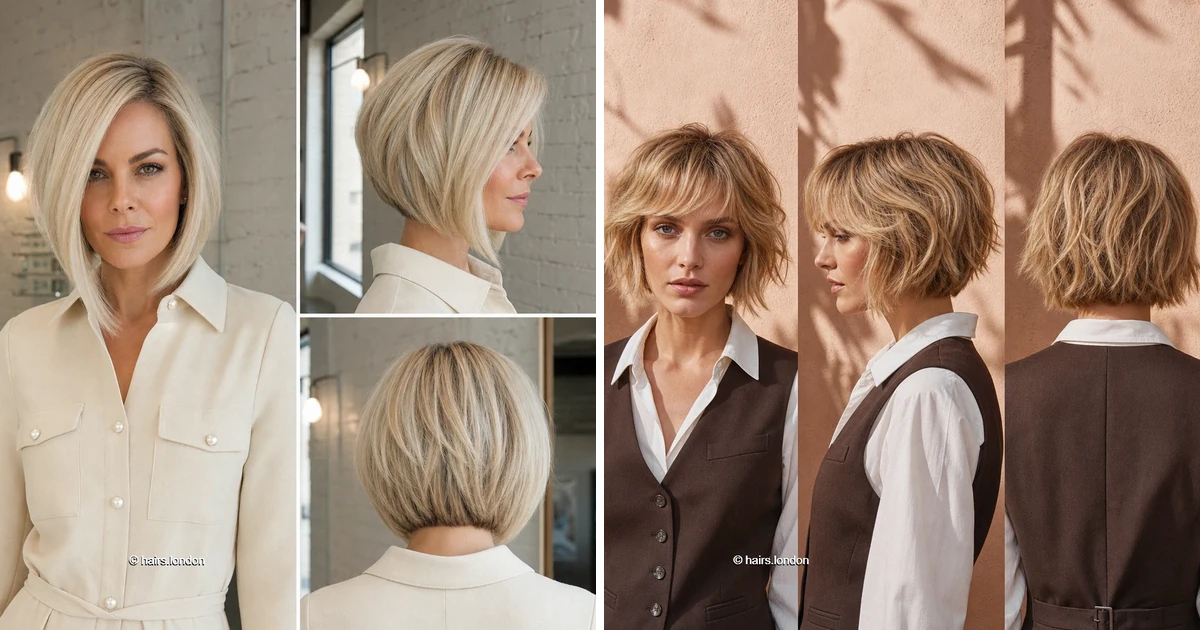
11. Asymmetrical Blonde Bob with One Long Front Section
Beige blonde highlights accent this asymmetrical, deeply parted bob shape. One front section reaches below the chin beside shorter hair. The side and back reveal rounded volume above tapered nape. Visible graduation supports lift while one side tucks behind ear. Discuss keeping enough front weight for this strong directional sweep. Smooth longer pieces with a brush, lifting roots near part. A little cream tames flyaways without collapsing the rounded back. Consider whether your growth patterns permit regular ear tucking comfortably. Maintain the nape frequently to preserve contrast between lengths here. Refresh highlights according to root visibility and personal preference levels.
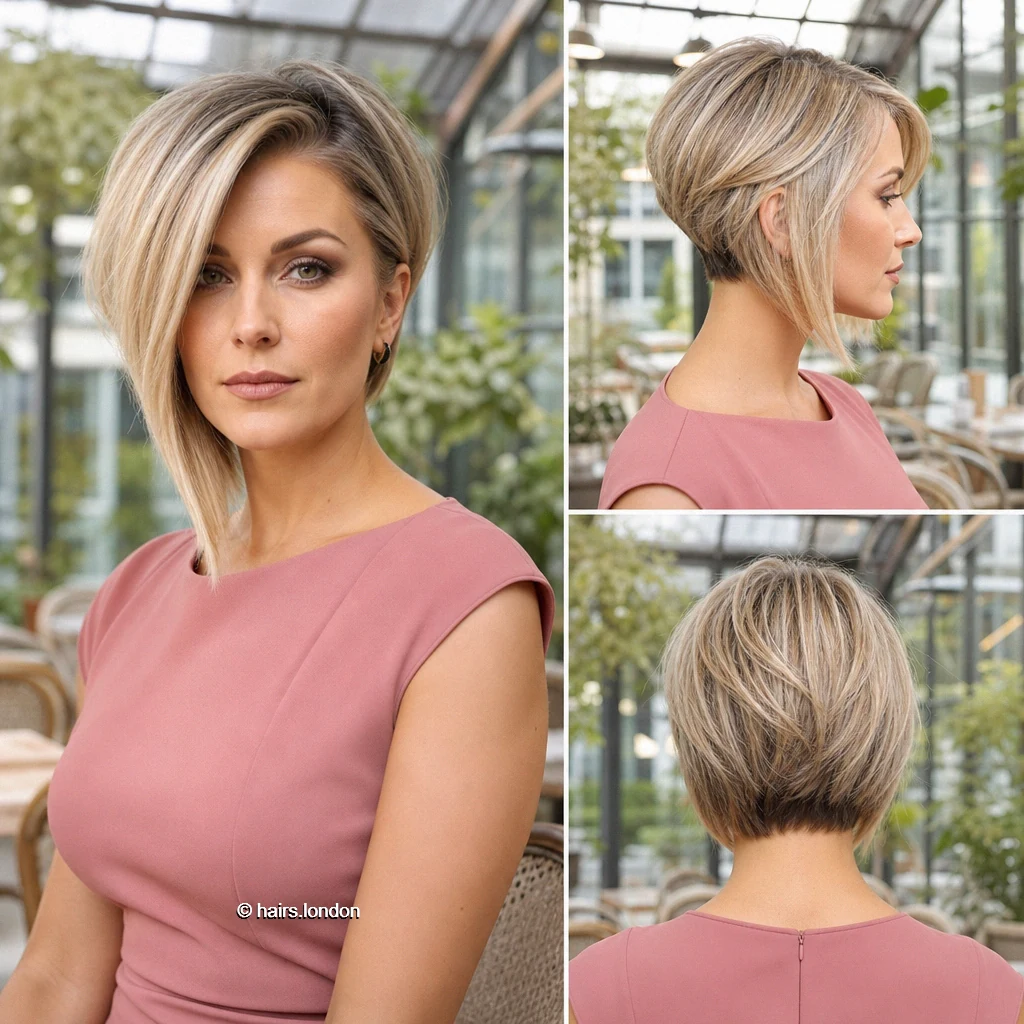
12. Cool Blonde Graduated Bob with an Extended Fringe
Cool blonde highlights define this side swept, graduated bob shape. An extended fringe veils one eye while opposite hair tucks. Profile and back views clearly show a closely tapered nape. Layered fullness sits above the neckline, balancing shorter sides neatly. Ask for fringe weight that moves without hiding your vision. Lift the top with airflow while smoothing the longer front. Fine hair might need minimal product to maintain airy volume. If dense, discuss selective debulking instead of excessive layering everywhere. Short nape regrowth can change the silhouette surprisingly quickly here. Protect pale highlights with gentle washing and sensible heat settings.
13. Caramel Blonde Bob with a Compact Graduated Back
Caramel blonde ribbons warm this compact, side parted bob shape. The face framing section extends below the jaw on profile. A rounded back tapers distinctly into the short nape area. Visible graduation gives the back structure without rigid styling products. Ask for enough perimeter weight to keep the front sleek. Blow dry along the hair shaft for a smooth surface. Turn the brush gently underneath, avoiding an overly rounded front. Thick hair may require subtle shaping inside the fuller back. Trim the nape before its neat outline becomes too heavy. Color appointments depend on how much root contrast you enjoy.
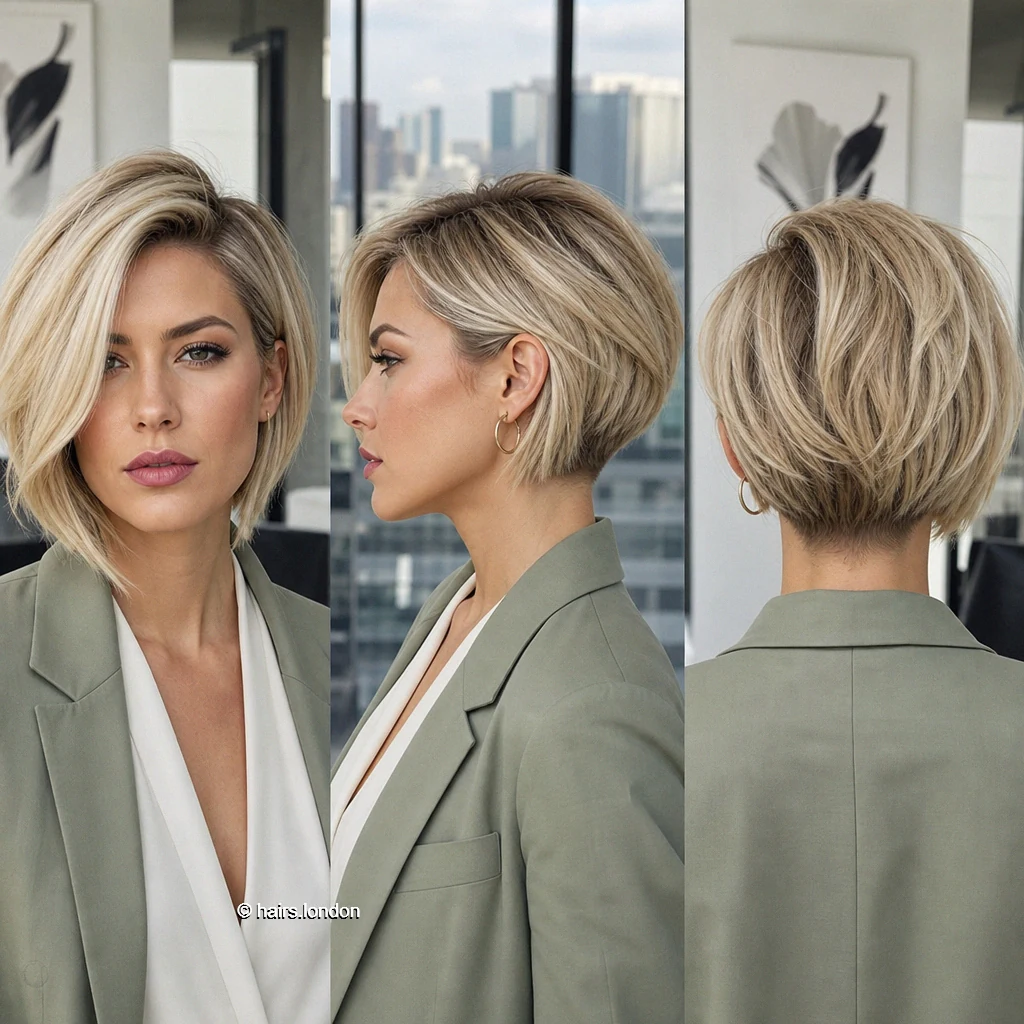
14. Cool Beige Blonde Bob with a Curved Outline
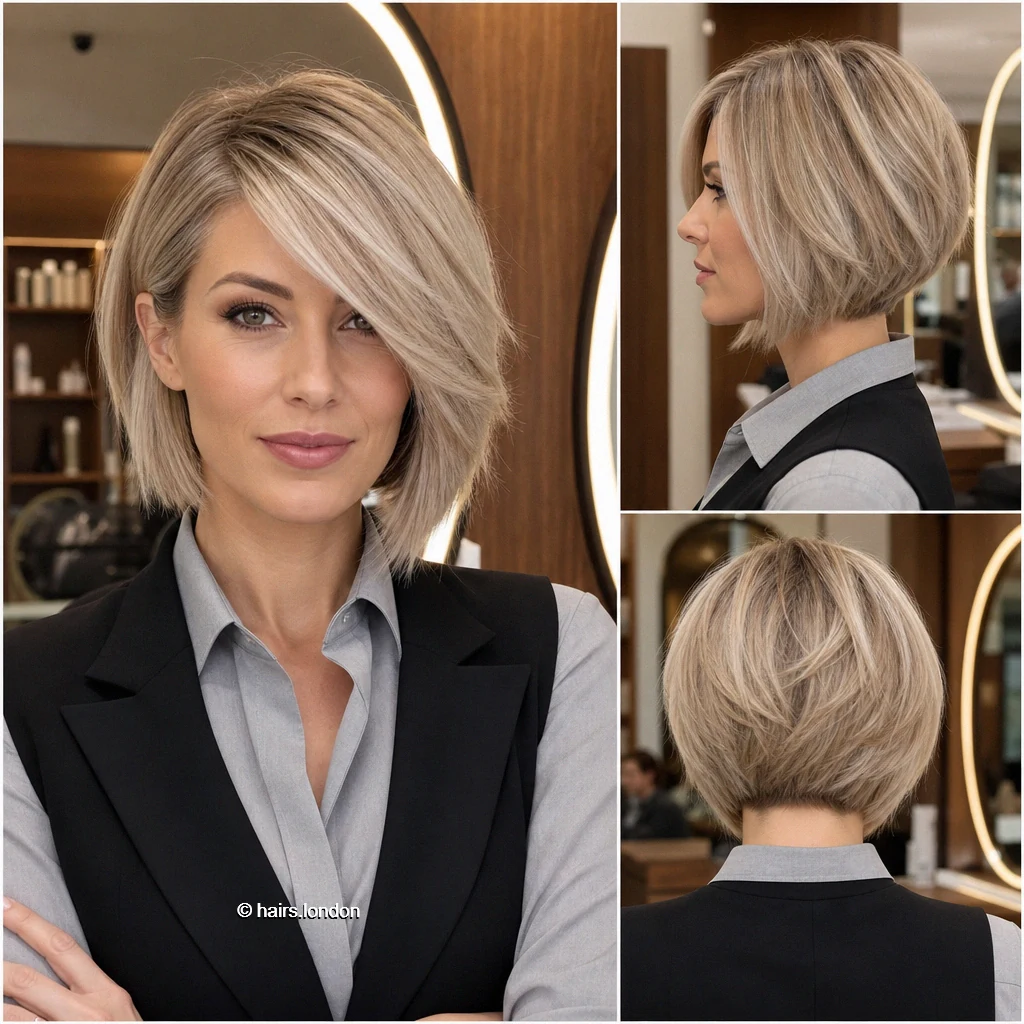
Cool beige blonde softens this side swept, rounded bob shape. The longest front reaches the jaw while back hugs neck. Rear views show a low, tidy nape under fuller layers. Soft graduation supports a curved silhouette without a severe angle. Ask for movement around the cheek rather than blunt heaviness. Use a round brush selectively, smoothing rather than puffing ends. Lightweight finishing cream keeps the sweeping front controlled yet flexible. Fine hair may prefer fewer layers to retain body below. Book trims when the curved neckline begins losing its definition. Discuss root color expectations before committing to frequent highlighting appointments.
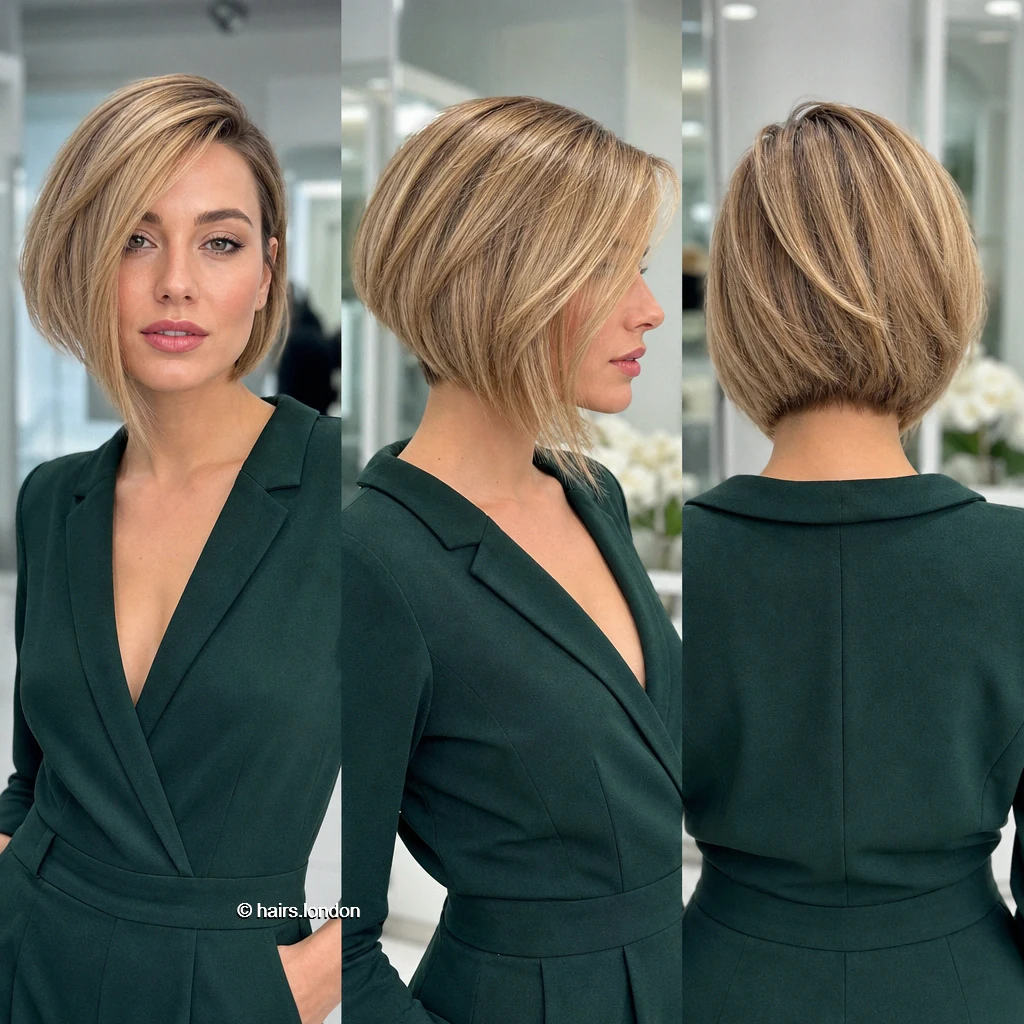
15. Honey Blonde Graduated Bob with a Prominent Side Sweep
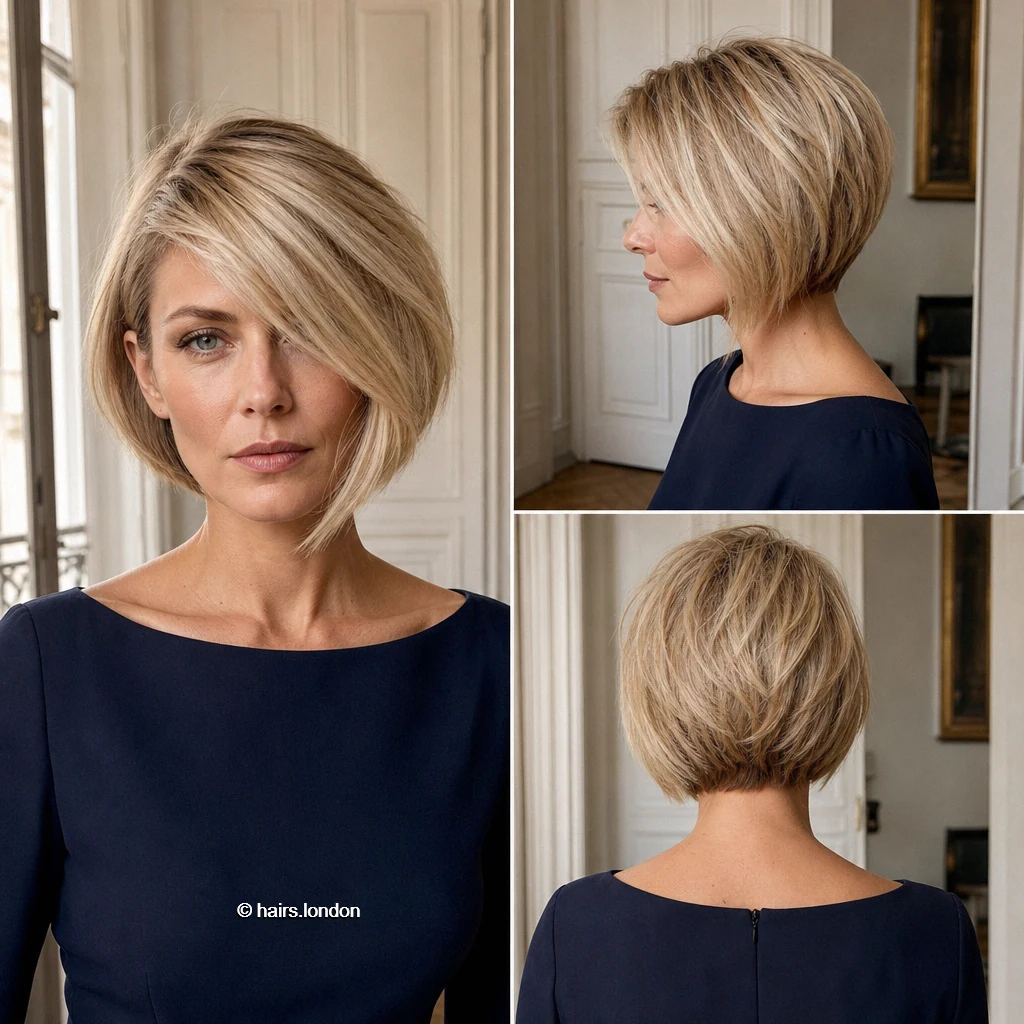
Honey blonde highlights brighten this short, sweeping graduated bob shape. A heavy side sweep crosses the forehead and brushes cheek. At profile, longer front hair contrasts with the tapered nape. The back shows rounded, layered fullness above its close neckline. Ask whether your part naturally supports such a prominent fringe. Blow dry the top across, then smooth the front lightly. Use minimal product to preserve movement within the rounded crown. Coarse density could need controlled shaping beneath the upper layers. Refresh the nape and fringe separately when their shapes shift. Condition lightened ends, especially if regular heat styling feels necessary.
How to Choose Your Bob Length and Shape
Start with the point where you want the front to end: near the jaw for a compact bob or below the chin for more face-framing length. Then look at the back separately. Several cuts here have both a longer front and visible nape graduation; the softly waved bobs rely less on a strong front-to-back contrast. Ask how much fullness your density can support at the crown and whether an exposed neckline fits your preferences.
Styling Fine, Thick, Wavy and Curly Textures
For fine hair, preserve weight through the perimeter and use a small amount of mousse at the roots rather than loading the ends with product. Thick hair may benefit from selective interior weight removal, especially beneath a rounded back, while keeping the front substantial. Enhance natural waves by scrunching and diffusing on gentle airflow. If you have curls, ask for a shape assessed at their natural spring and shrinkage; these photographed bobs are not a reliable guide to how the same lengths would sit on tighter curls. Smooth only the sections that need polish so the cut retains movement.
Keeping Blonde Bob Color Fresh
The images show blonde tones ranging from cool pale shades to warmer beige and honey highlights, often with darker roots. Choose upkeep around the amount of root contrast you enjoy. A stylist can advise whether toning would help your chosen shade; use conditioning care and heat protection to keep lightened ends looking soft. The shorter perimeter also makes dry or uneven ends more noticeable.
Maintaining the Bob Perimeter and Graduation
A precise, close nape changes character as soon as it grows out, so the visibly graduated cuts may need shape checks sooner than the looser, textured bobs. Ask for the neckline and back weight line to be assessed at each trim, not just the longest front pieces. On shaggy or wavy versions, refresh bulky ends without cutting away all the softness. A sweeping or brow-grazing fringe may need attention between full haircuts.
What to Discuss with Your Stylist
Bring the front, profile and back view of the cut you prefer. Point out the front length, the degree of nape exposure, where the back looks fullest, and whether you want a soft or clearly angled outline. Discuss your natural part, fringe growth patterns, density and the time you will spend styling. For color, compare the visible highlights and roots with your desired maintenance schedule rather than asking for an exact formula from a photograph.
Frequently Asked Questions
What is the difference between a bob and a lob?
A bob typically ends around the jaw, chin or neck; a lob is a longer bob that falls closer to the shoulders. Long front pieces alone do not make a short-backed bob a lob.
Is an A-line bob the same as a stacked bob?
No. A-line describes a perimeter that gets longer toward the front. Stacked or graduated describes shorter sections building shape and weight at the back. A cut can show both features.
Which of these bobs has the clearest graduation?
The first five and several later cuts show shorter napes beneath rounded back fullness. The waved and shaggy versions have softer outlines and should not be assumed to have the same structured graduation.
Can fine hair wear a graduated bob?
It may, particularly if graduation creates useful back fullness. The stylist should assess density and avoid removing so much perimeter weight that the front looks thin.
How can thick hair avoid a bulky rounded bob?
Ask about selective interior weight removal beneath the fuller areas while preserving the visible outline. Removing weight indiscriminately can make the ends look uneven.
Can naturally curly hair wear these bob shapes?
Yes, but the photographed lengths will sit differently as curls spring up. Have your stylist assess your curl pattern, shrinkage and preferred amount of volume before choosing the perimeter.
Should I choose a fringe with my bob?
A fringe can add softness, as in the shaggy cuts, or form a stronger side sweep. Consider your growth patterns, eye clearance and willingness to style or trim it separately.
Which bob is easiest to style day to day?
That depends on your natural texture. Someone with loose waves may find the softly textured bobs simpler, while someone who likes a smooth blowout may prefer a more structured perimeter.
How do I keep the longer front pieces smooth?
Direct dryer airflow down the hair shaft and brush the front into place. Use heat protection and a little finishing cream, avoiding heavy product that makes the points separate or collapse.
How often does a graduated nape need trimming?
It depends on growth rate and how crisp you want the neckline. Arrange a shape check when the close nape begins to fill in or the rounded back loses its intended position.
Will darker roots work with a blonde bob?
Several images show visible root depth against lighter lengths. Whether to maintain or soften that contrast is a color preference to discuss with your stylist.
What happens when a short bob grows out?
The nape usually loses its close contour first, while long front sections may remain prominent. Your stylist can gradually rebalance the perimeter if your goal is a more even bob or eventual lob.
Conclusion
The most useful choice is not simply a favorite front view. Compare the nape, back fullness, front length and texture together, then choose the blonde bob details that fit your hair and the upkeep you want. A clear salon conversation can turn one of these shapes into a cut that feels practical beyond the photograph.


