

11. Warm Blonde Layered Bob with Flipped Ends
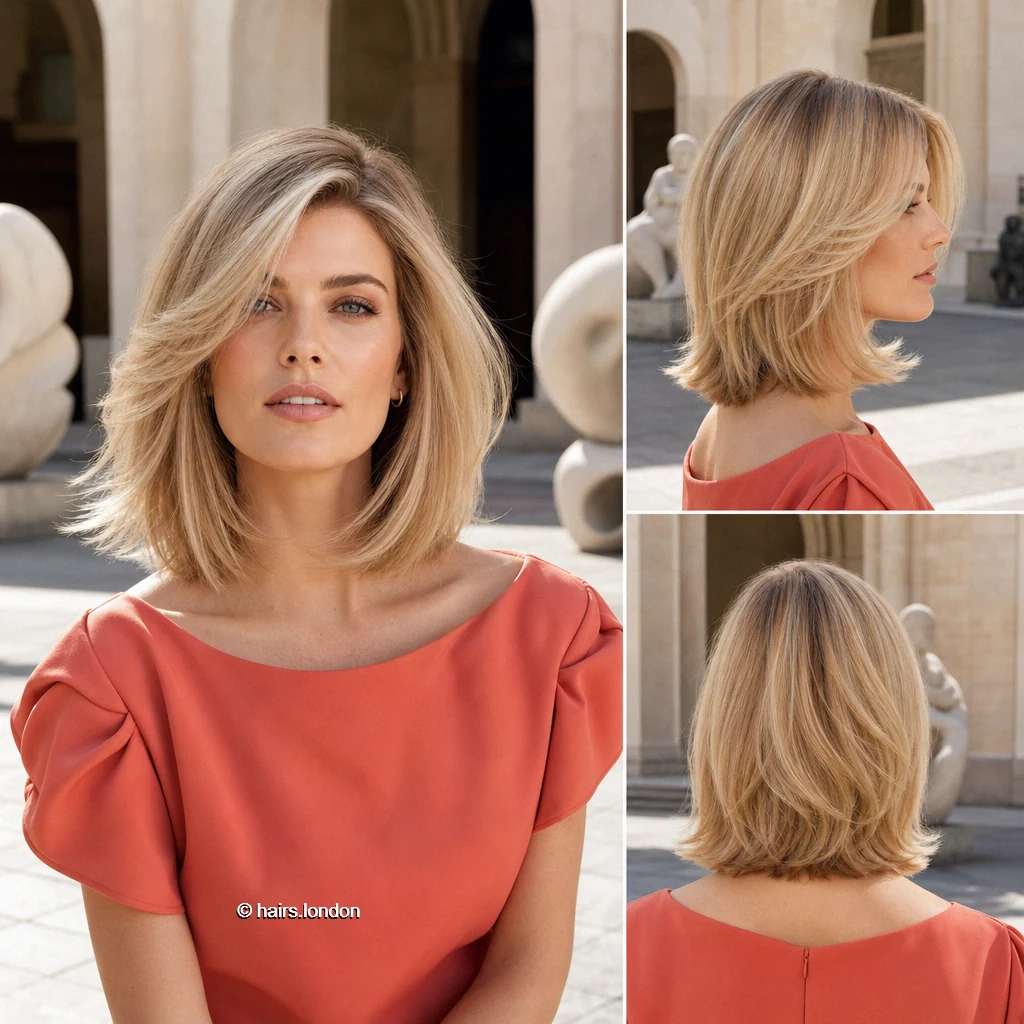
Warm blonde hair reaches the neck in this layered bob. A deep side sweep adds lift around the front hairline. The side and back views show lightly flicked, separated ends. This longer outline feels softer than a sharply cut bob. Ask for layers that leave sufficient fullness along the bottom. Blow dry front sections outward for the visible sweeping movement. Turn selected ends away rather than flipping every strand uniformly. Refresh layers when the shape begins to look bottom heavy. Highlight maintenance depends on the contrast you want near roots. This suits hair with enough body to support airy layering.
12. Pale Blonde Long Bob with Face-Framing Layers
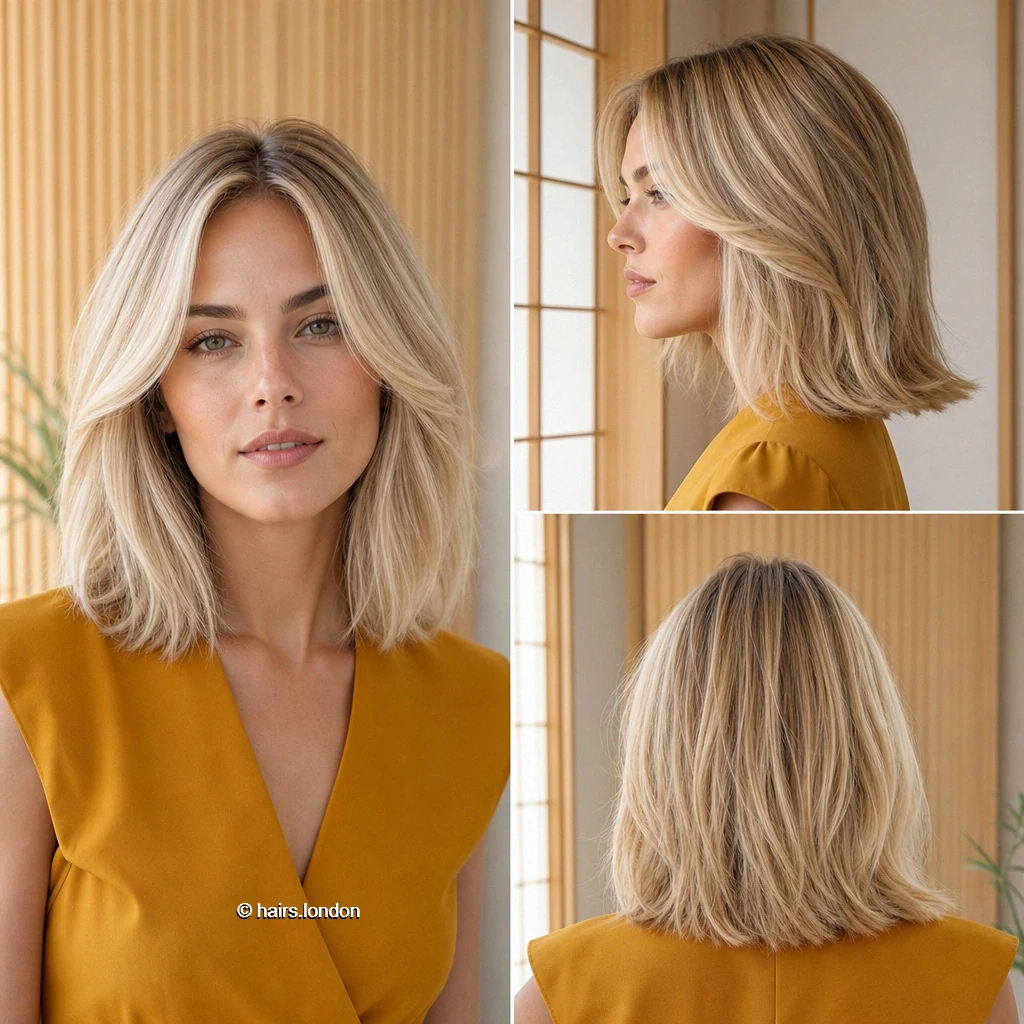
This pale blonde long bob falls close to the shoulders. A center part introduces soft layers beside the face here. The back shows a gently textured edge, not blunt precision. Longer lengths offer movement without the compactness of chin cuts. Ask where the ends should rest when your hair dries. Encourage bends with a brush or your existing natural wave. Keep heavier conditioners away from roots if volume matters most. Trim damaged tips before they obscure the relaxed perimeter shape. Discuss toning for pale highlights and care for processed ends. This length offers flexibility if frequent short trims feel impractical.
13. Golden Bronde Lob with Softly Layered Ends
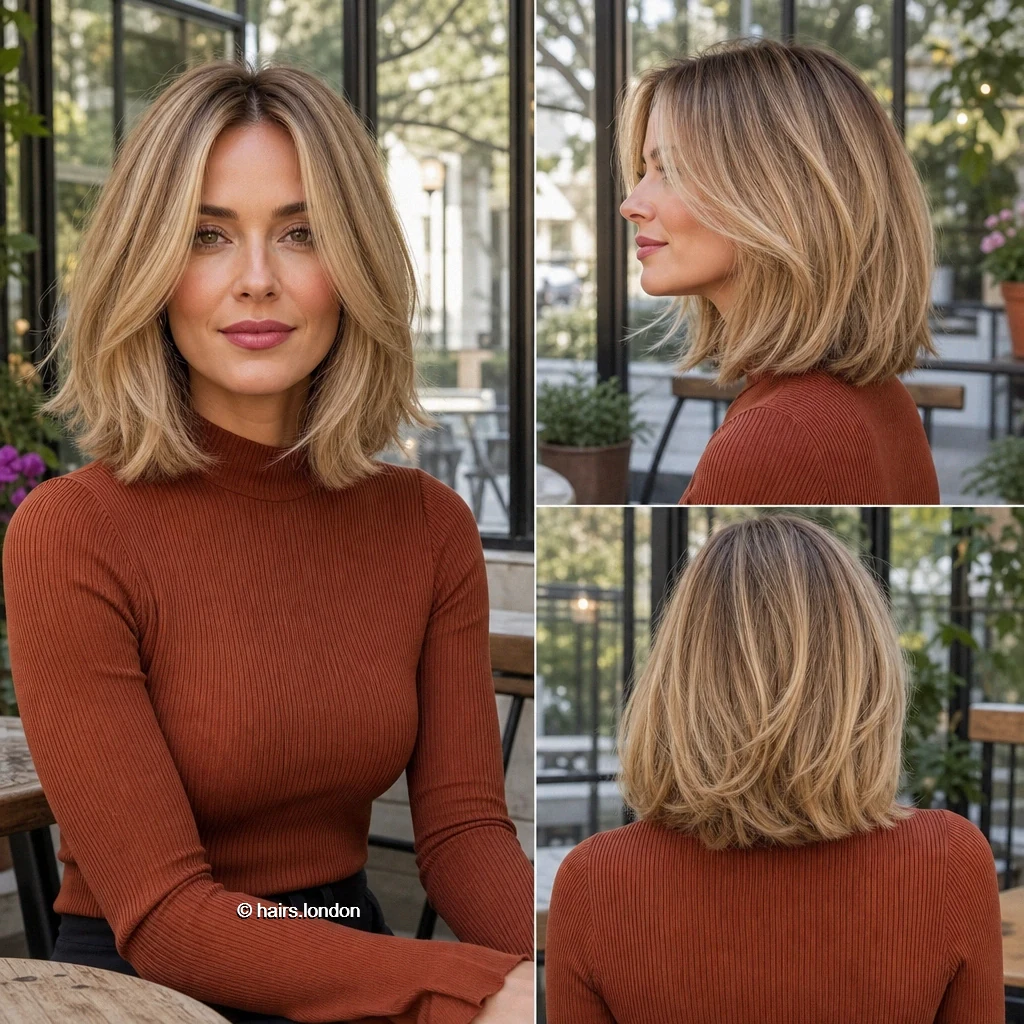
Golden bronde lengths skim the shoulders in this soft lob. Its center part opens into longer layers around the cheeks. From behind, the ends look textured and slightly turned outward. The overall shape retains weight despite its visible surface layering. Request face framing pieces that work with your natural part. A brush can direct front lengths away during gentle drying. Apply flexible cream sparingly so the ends retain their movement. Trim when the shoulder contact makes the perimeter look uneven. Ask whether highlights need refreshing or only a gloss session. This suits those comfortable styling longer layers around their face.
14. Cool Beige Lob with Sweeping Layers
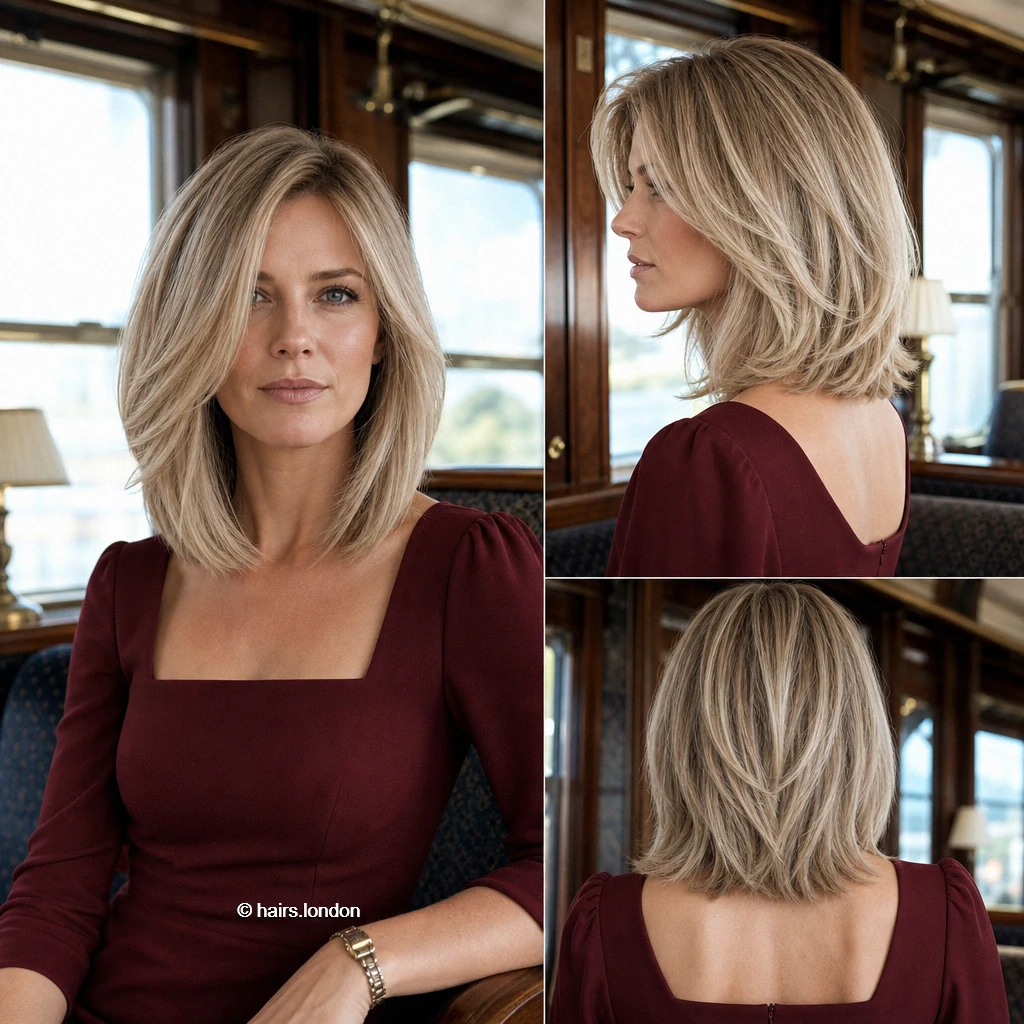
Cool beige blonde hair falls between neck and shoulder here. A side swept front leads into visibly feathered side layers. The back view shows separated ends rather than solid weight. Its length allows the layers to fan outward without stacking. Ask your stylist to maintain substance beneath those airy pieces. Lift the front with a brush while directing ends outward. Use light hold spray instead of coating every separated strand. Refresh the layers when they collapse into a heavier outline. Discuss whether cooler highlights need toning between full color appointments. This shape works when density can support its flowing layers.
15. Ash Blonde Long Bob with Airy Movement
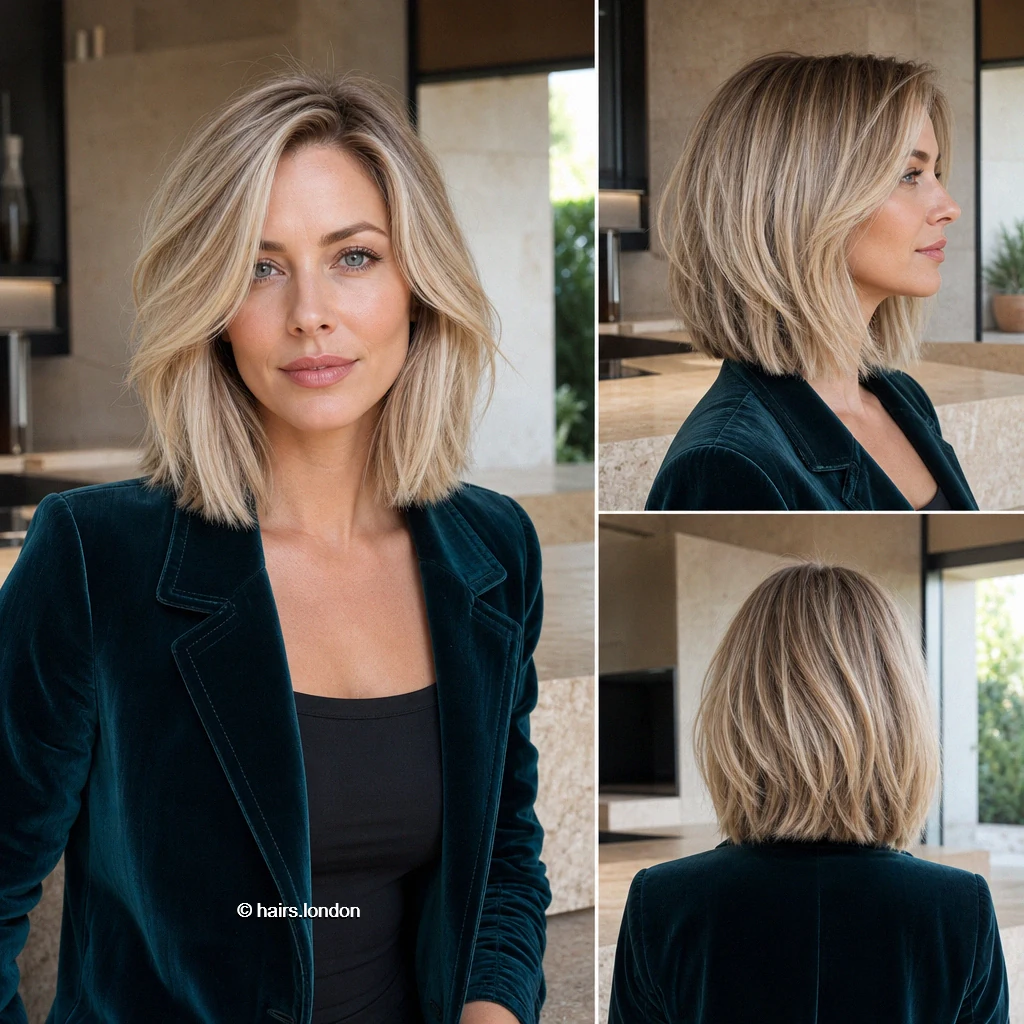
Ash blonde highlights define this longer, softly layered bob shape. A side part sends loose front pieces across one cheek. The ends sit above the shoulders and appear lightly textured. From behind, overlapping layers create movement without a sharp graduation. Ask for perimeter weight that remains visible under the layers. Air dry with styling cream if your natural bends cooperate. Otherwise, make loose bends while leaving the ends fairly straight. Trim split ends before they interrupt the soft bottom line. Cooler highlighted sections may need toning when they become warm. This look suits a preference for flexible, not precise, styling.
16. Sandy Blonde Graduated Bob with a Swept Fringe
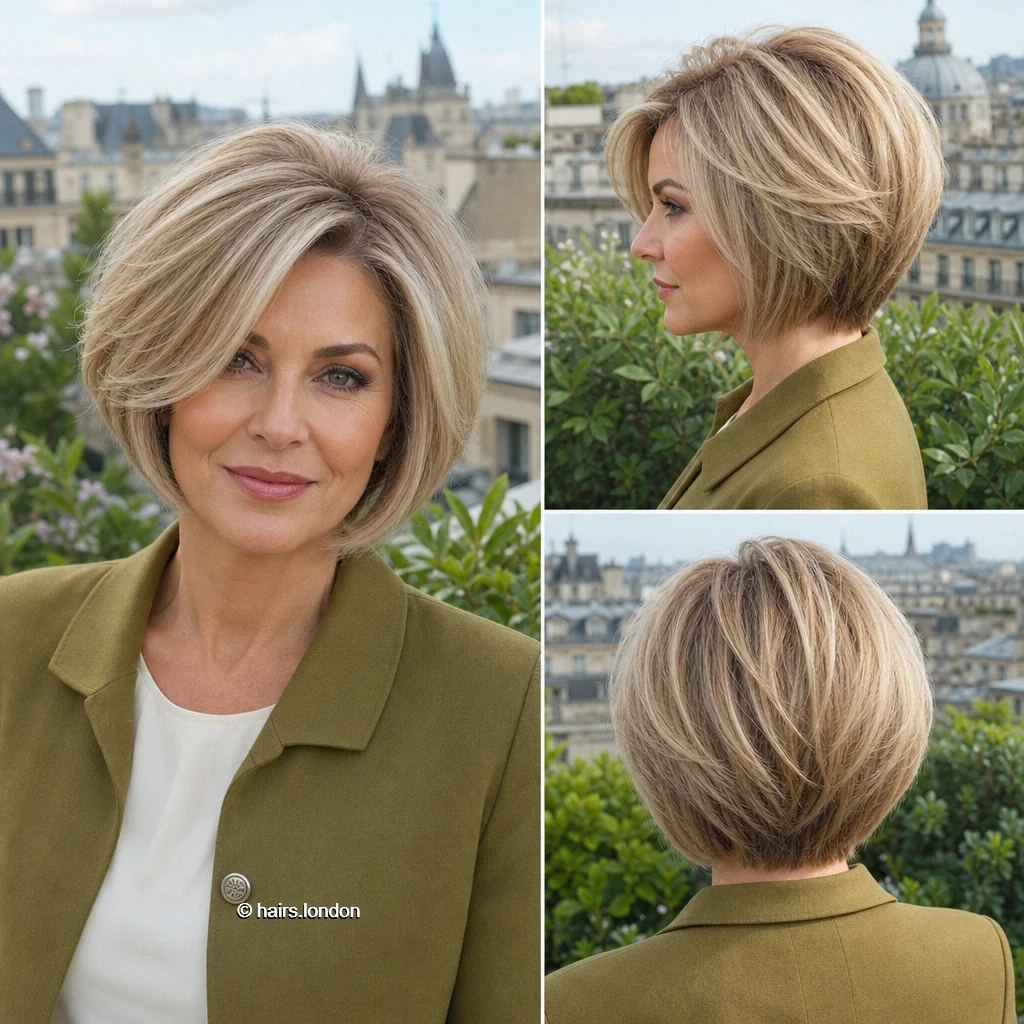
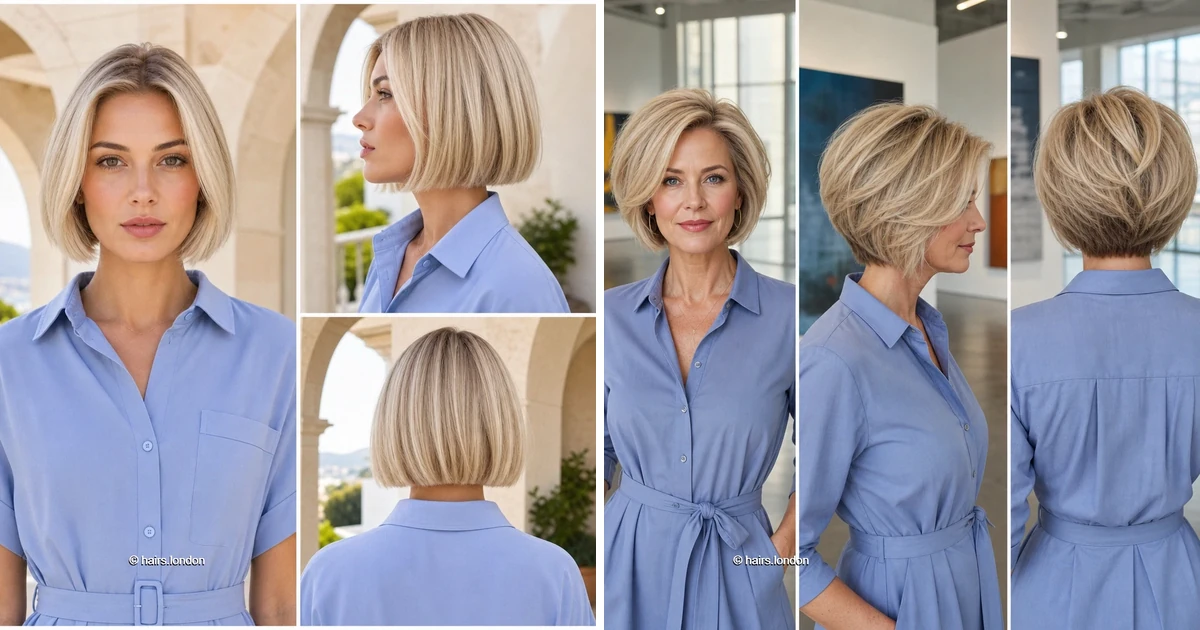
A sandy blonde bob curves around the jaw and neck. Its long side swept front contrasts with the shorter nape. Side and back views reveal visible graduation beneath crown volume. Feathered upper layers keep the rounded shape from looking solid. Ask your stylist how much nape exposure feels comfortable daily. Lift the crown while drying, then smooth the front sweep. Avoid heavy products that could pull down the graduated shape. Book trims when growth begins filling in the tapered back. Discuss maintaining the blonde tone alongside frequent shape appointments too. This cut rewards hair that supports lift without excessive teasing.
17. Champagne Blonde Stacked Bob with Crown Volume
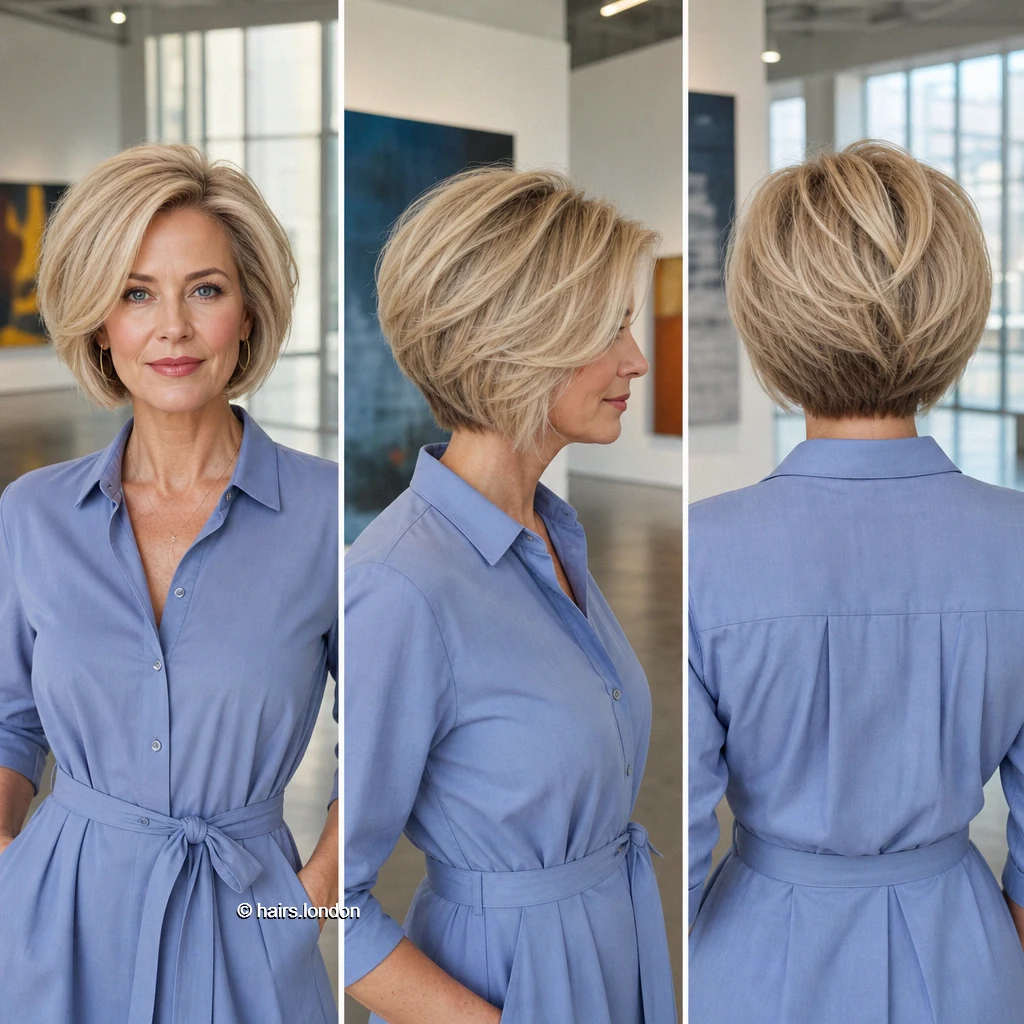
Champagne blonde layers build volume high on this short bob. The front sweeps sideways while lower pieces frame the jaw. Its side profile shows a shorter nape beneath fuller layers. The back tapers inward, supporting a visibly stacked silhouette here. Ask your stylist to show how the nape will grow. Dry roots upward before guiding the longer front pieces across. Use flexible spray sparingly to keep layered strands moving freely. The short back needs attention sooner than longer bob perimeters. Discuss highlights around visible roots when planning maintenance visits ahead. This shape suits density that supports volume without unwanted bulk.
18. Caramel Blonde Graduated Bob with a Rounded Crown
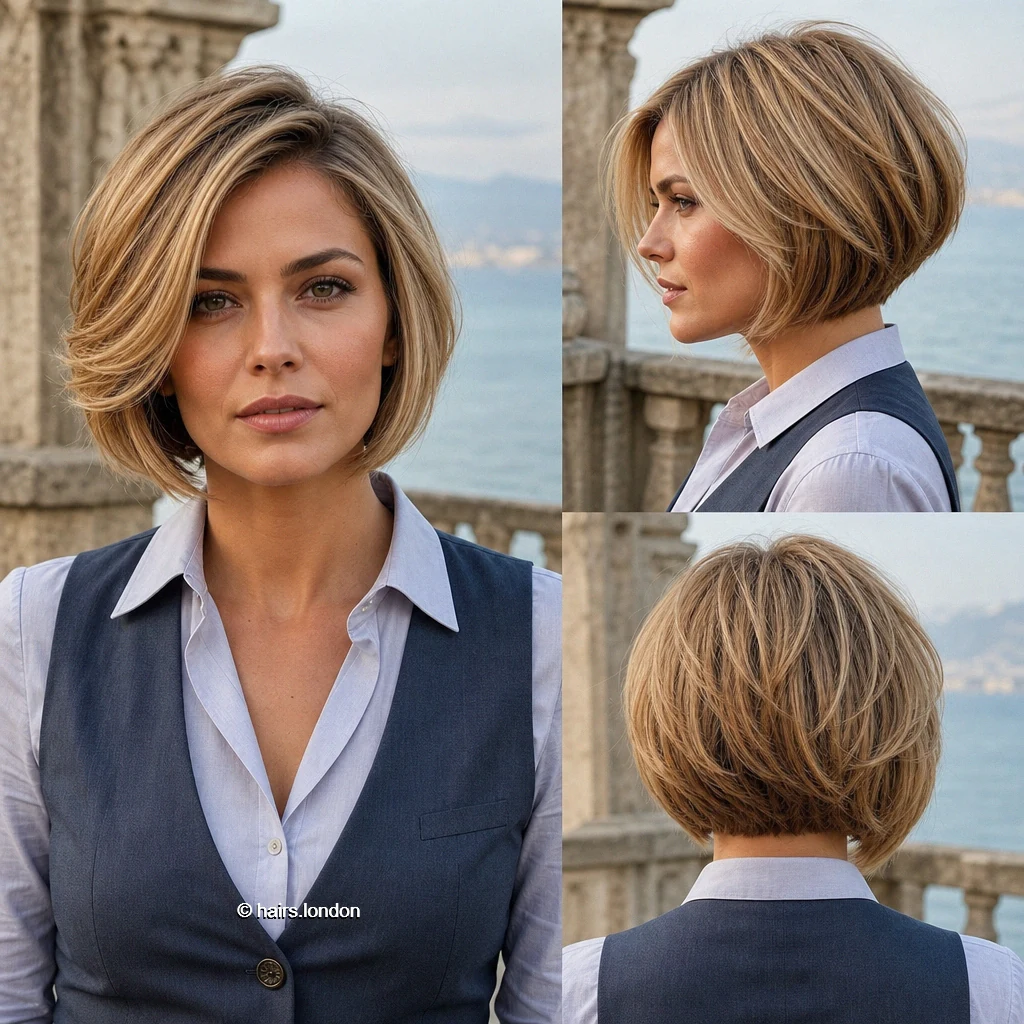
Caramel blonde and lighter ribbons emphasize this bob’s rounded crown. A side swept front reaches toward the lower jaw line. Behind it, shorter layered lengths narrow into the visible nape. The profile shows graduation rather than merely longer front hair. Discuss how much volume your crown can hold without teasing. Direct warm air upward at roots, then smooth surface layers. Keep the front supple with cream applied only sparingly there. Trim the graduated back when its neat taper starts expanding. Ask about color refreshes for the warmer highlighted sections too. This works best when your texture responds to rounded shaping.
19. Butter Blonde Stacked Bob with a Full Crown
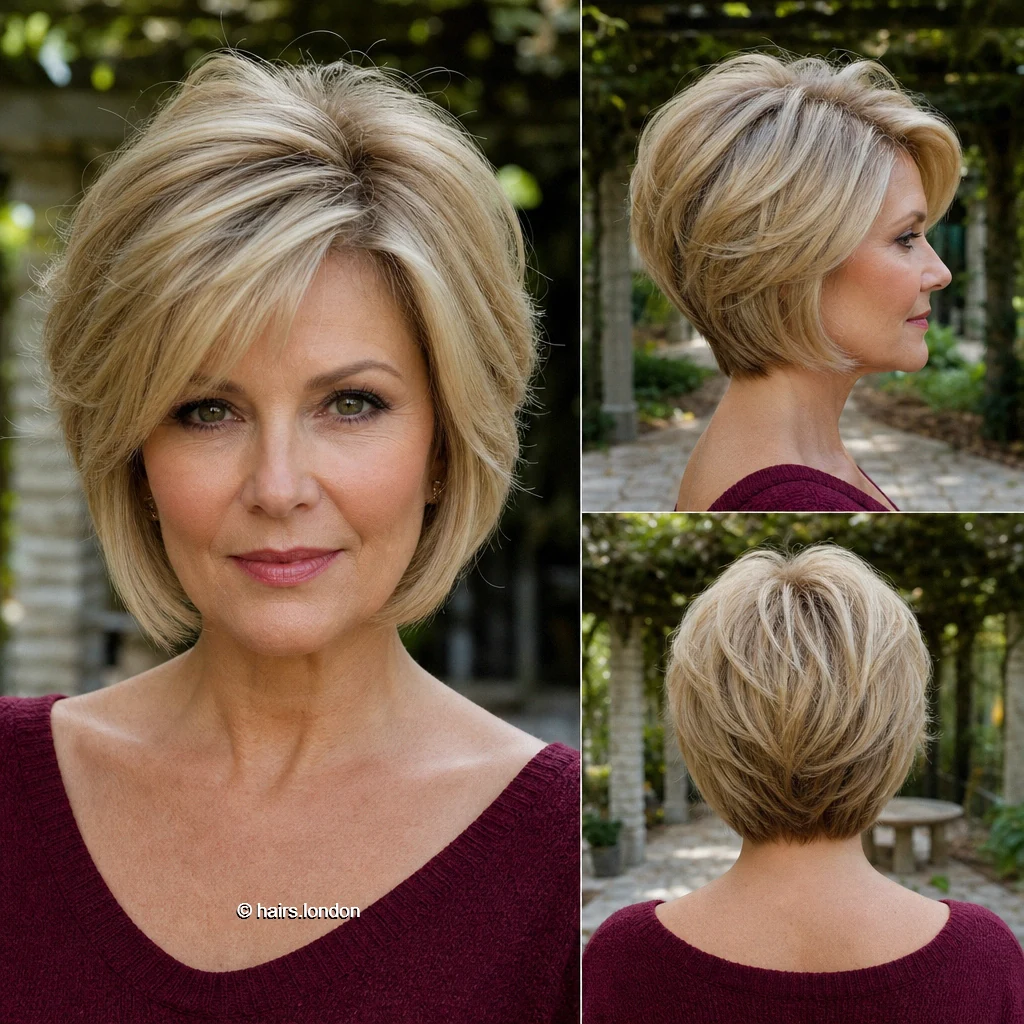
Butter blonde hair forms a full crown above its nape. A broad side sweep softens the short, rounded front. The profile reveals upper volume tapering into shorter back lengths. Visible back graduation distinguishes this shape from a simple A line. Ask whether your density needs selective removal beneath the crown. Blow dry upward at roots while controlling the perimeter carefully. Apply a small amount of cream to settle flyaways afterward. Schedule back trims before the tapered silhouette loses definition completely. Discuss blonde upkeep according to your preferred root contrast level. This cut suits those comfortable maintaining a deliberately shaped back.
20. Beige Blonde Graduated Bob with Feathered Layers
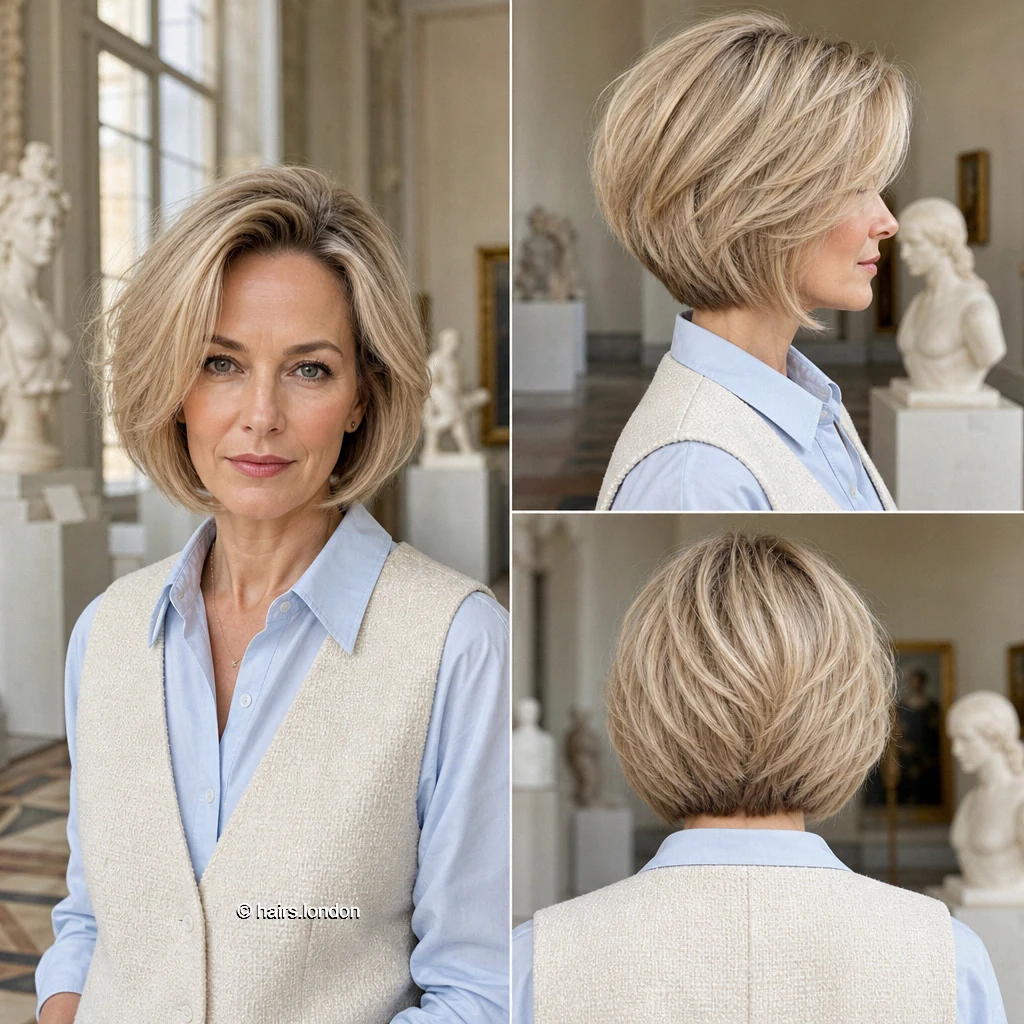
Beige blonde layers sweep across this softly rounded short bob. The side view shows jaw framing strands above a compact nape. From behind, shorter lower lengths support a fuller layered crown. Its edge is feathered, not a continuous blunt line here. Ask your stylist to balance the front against back volume. Dry the crown for lift while smoothing the side sweep. Separate a few ends with lightweight cream, avoiding excess product. Refresh the nape when growth makes the outline appear heavy. Talk through toning needs for the pale blonde pieces. This shape favors manageable volume and willingness to style it.
How to Choose Your Bob Length and Shape
Start with where you want the perimeter to sit when your hair is dry: at the jaw, along the neck or nearer the shoulders. A compact, smooth bob makes its edge prominent; a layered bob or lob trades some precision for movement. If you want a longer front, compare the side view carefully. An A-line shape describes that front-to-back length difference, while a stacked or graduated bob also shows shorter, built-up layers at the back. Consider your density, growth patterns and willingness to style before choosing either.
Styling Fine, Thick, Wavy and Curly Textures
Fine hair often benefits from retaining weight at the bob perimeter and using lightweight products for lift. Thick hair may need carefully placed internal shaping so the sides move without becoming bulky or losing their outline. For natural waves, scrunch product through damp lengths and diffuse gently rather than brushing out the pattern. If your hair is curly, agree on the finished dry length with your stylist, accounting for shrinkage; a curl-by-curl approach may help preserve an even-looking shape. Style a side sweep or fringe first if it changes direction as it dries.
Keeping Blonde Bob Color Fresh
The images show blonde shades ranging from warm honey to pale, cooler beige, often with darker roots or dimensional highlights. Ask your colorist which upkeep matches your chosen contrast rather than assuming every blonde needs the same schedule. Tone when unwanted warmth appears, protect lightened ends with appropriate conditioning and use heat thoughtfully. A softer root transition may be more practical if you prefer fewer color appointments.
Maintaining the Bob Perimeter and Graduation
A blunt or compact bob looks different as soon as its clean edge grows past the intended jaw or neck position. Layered lobs can tolerate a softer outline, though split ends still affect their movement. Graduated and stacked cuts need particular attention at the back: as the short nape grows, the rounded silhouette can become heavy. Arrange trims around the detail you want to preserve, and check the shape from the side and back rather than judging only the front.
What to Discuss with Your Stylist
Bring images that show the front, profile and back of your preferred bob. Point out the exact features you want—such as a solid edge, airy layers, a longer front or a visibly tapered nape—and anything you do not want. Discuss how your hair behaves when air dried, where it naturally parts, whether the front falls into your eyes and how much daily styling you will do. Ask how the planned cut and blonde color will look between appointments.
Frequently Asked Questions
What is the difference between a bob and a lob?
A bob generally ends around the jaw or neck, while a lob is a longer bob that approaches the shoulders. The names are less useful than agreeing on a clear finished length.
Is an A-line bob the same as a stacked bob?
No. A-line refers to a longer front than back. A stacked bob has visible shorter layers building shape at the back; a cut can show both features, but one does not automatically imply the other.
Which bob details help fine hair look fuller?
A defined perimeter and restrained layering can preserve the appearance of fullness. Your stylist can adapt the shape to your actual density and growth patterns.
How can thick hair avoid a bulky bob shape?
Ask about selective internal shaping while keeping enough weight at the edge. Removing too much from the ends can make a bob look wispy rather than balanced.
Can natural waves work with a smooth bob?
They can, but achieving the pictured smooth finish may take regular blow drying. A textured perimeter may be a better fit if you prefer to wear your natural waves most days.
What should I consider before cutting a curly bob?
Allow for shrinkage and discuss the intended length when dry. Your curl pattern, density and preferred styling method all affect where the perimeter appears to sit.
How do I keep a side-swept fringe in place?
Dry it in your chosen direction early, before it sets in its natural growth pattern. Use a light finishing product so the sweep stays flexible.
Which bob is easiest to style each day?
That depends on your natural texture. A softly layered bob may be easy for naturally wavy hair, while a smooth, precise bob may take less effort on hair that already dries straight.
How often should I trim a bob?
Book a trim when its defining detail begins to change. A precise jaw-length line or short graduated nape usually shows growth sooner than a softly layered lob.
Will a graduated bob expose the nape?
The examples here show shorter hair at the nape, but the amount of exposure varies. Show your stylist a back view and agree on a length you are comfortable wearing.
How can I grow out a short bob?
Keep the perimeter balanced as the back catches up with the front, and gradually adjust shorter layers. You can then move toward a neck-length bob and, later, a lob.
Do blonde highlights change how I should maintain my bob?
Color and shape have separate upkeep needs. Lightened ends may need extra conditioning or toning, while the cut may need a trim to retain its perimeter or graduation.
Conclusion
The most useful bob inspiration is the one you can picture on your own hair between salon visits. Compare the perimeter, layering and back shape in these views, then choose a length and finish that fit your texture and styling routine. Bring those details—not just a favorite front-view photo—to your consultation.