


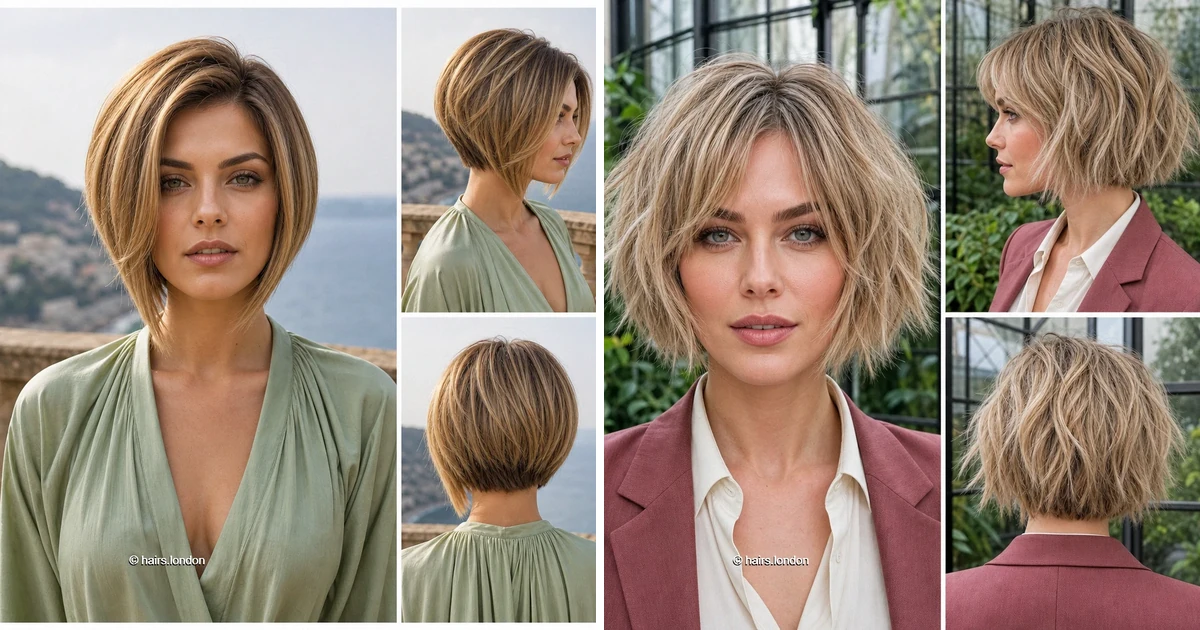
11. Ash Blonde Graduated Bob with a Sweeping Fringe
Light ash blonde sweeps over deeper roots in this bob. One long front section approaches the jaw; back exposes neck. Clearly graduated layers create a rounded profile above its nape. A deep side part produces a dramatic, smooth diagonal fringe. Ask for the shorter side to remain proportionate when tucked. Blow dry across the part, then polish only visible ends. Too much oil could flatten the full, shaped upper section. Fine density needs support; dense hair might require discreet thinning. Maintain the nape regularly so the rounded graduation stays legible. Ask about toner timing if keeping this pale finish cool.
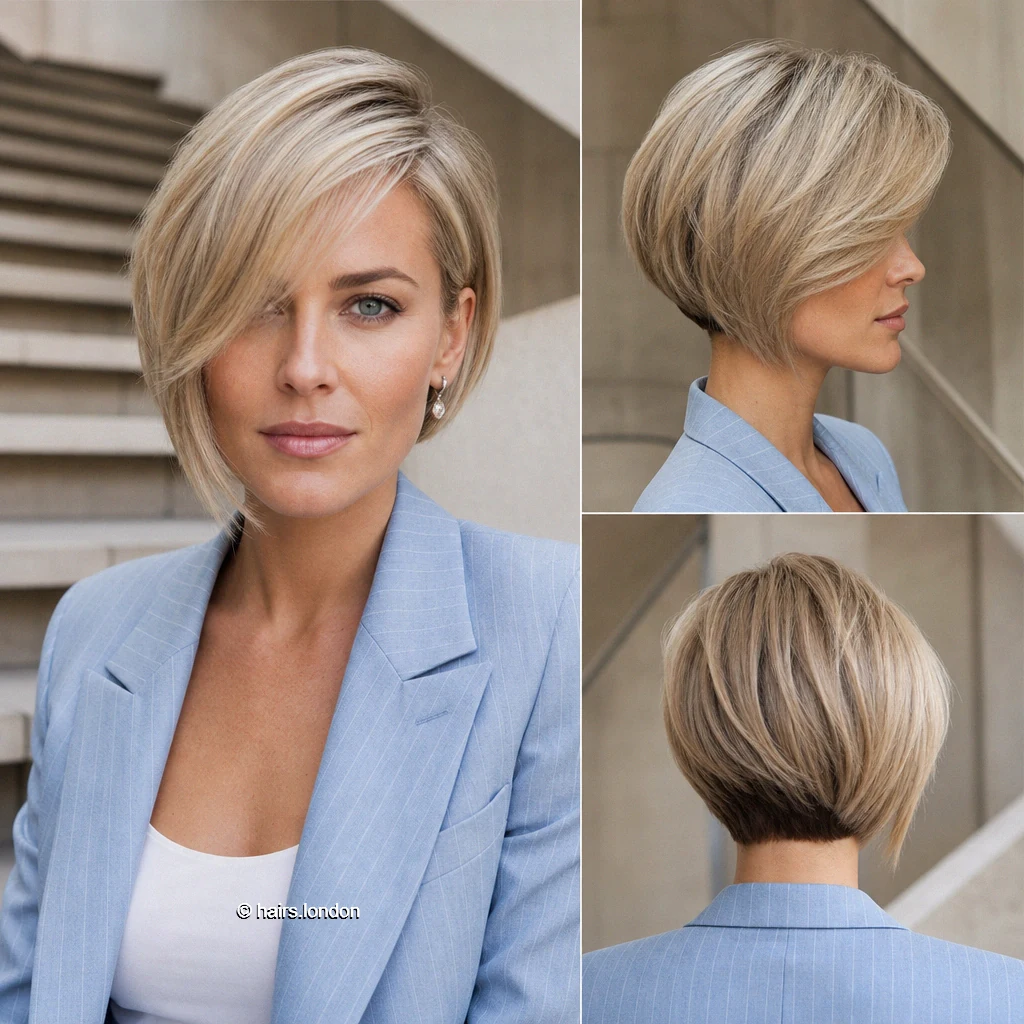
12. Pale Blonde Angled Bob with a Tapered Nape
Pale blonde lengths show darker roots in this compact bob. The rounded back tapers toward an exposed, neatly shaped nape. An extended front section crosses the cheek below jaw level. Strong side parting makes the long sweep especially prominent here. Ask for visible rear graduation and a controlled front taper. Brush downward while drying, keeping the nape close and smooth. Finish with light cream only where the front needs control. Growth patterns near the neckline determine whether frequent tidying helps. Finer hair may appreciate fullness; thick hair needs tailored graduation. Plan pale blonde maintenance around your natural regrowth and budget.
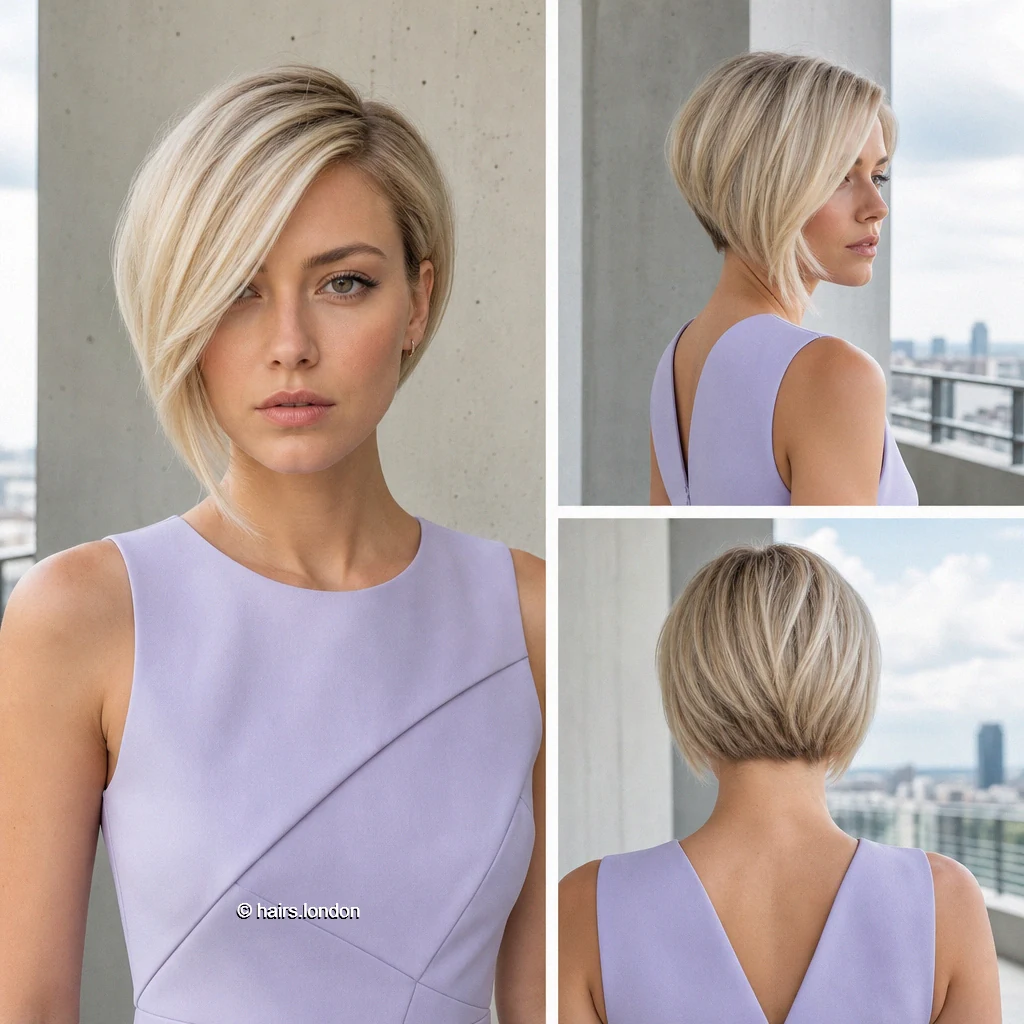
13. Golden Blonde Angled Bob with a Long Front Section
Warm golden blonde ribbons animate this sharply angled graduated bob. One front section extends below chin while back clears neck. Layered rear fullness settles into a distinctly tapered lower edge. Deep side parting directs long hair across the forehead diagonally. Ask your stylist to balance front length against rear graduation. Smooth the sweeping front with downward airflow and controlled tension. Light root lift helps sustain the rounded shape without stiffness. Dense hair might need internal weight removal; fine hair less. Trim the nape before growth conceals the clear length contrast. Discuss highlight placement where the sweeping front reveals brightest pieces.
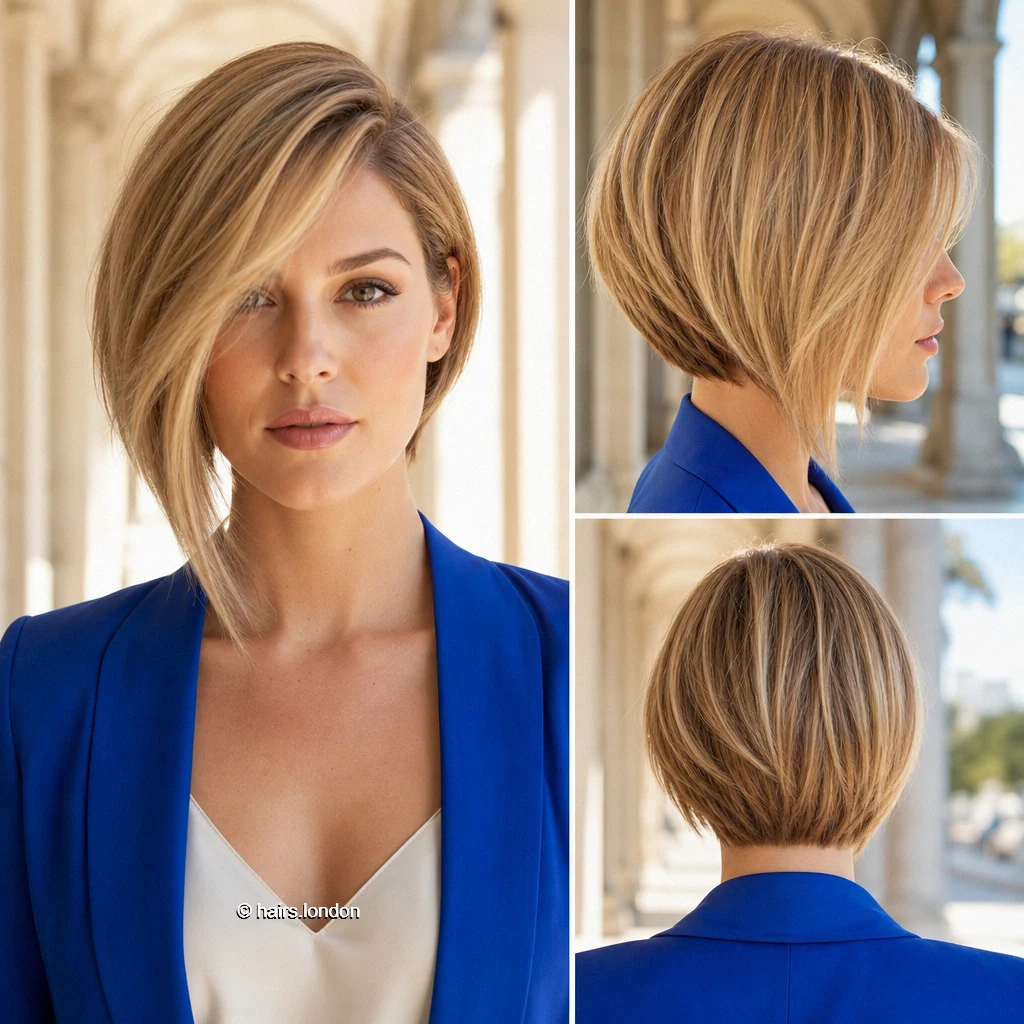
14. Beige Blonde Bob with Rounded Graduation and Longer Sides
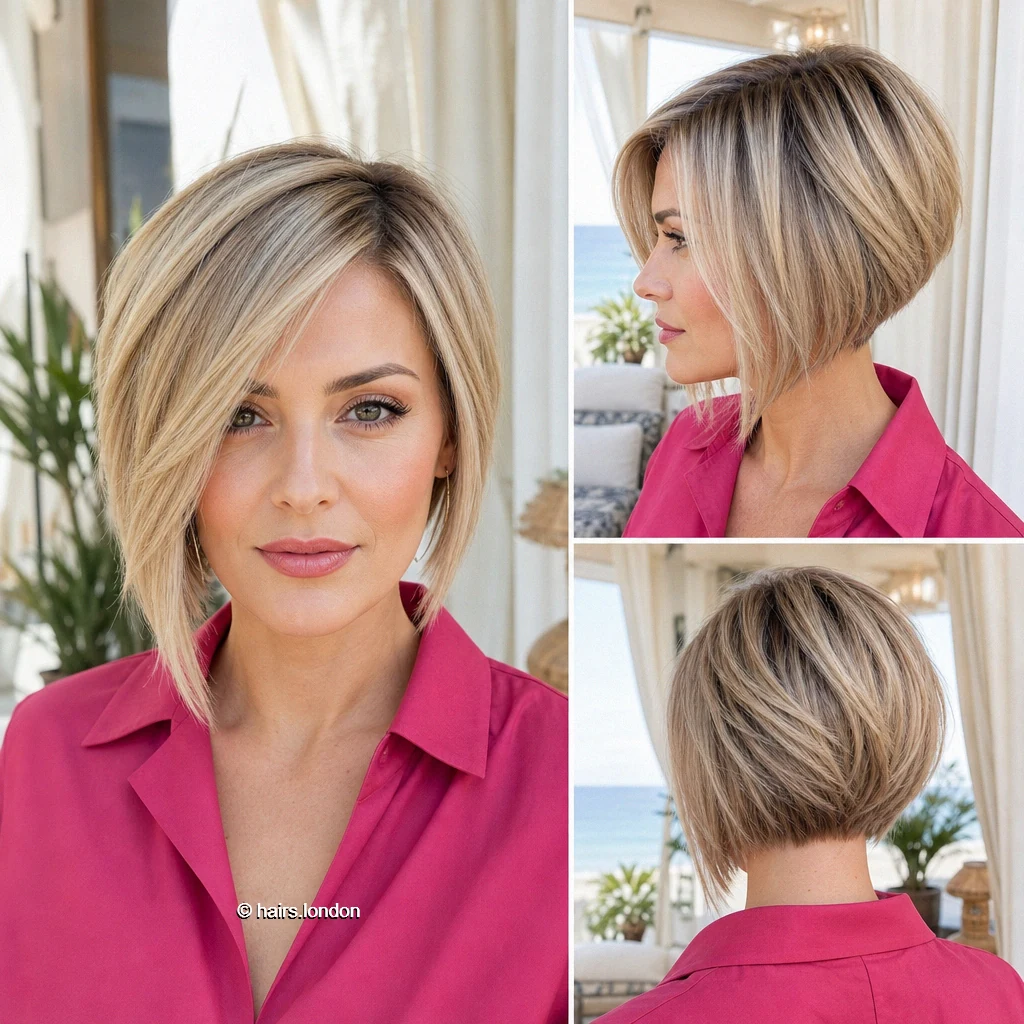
Beige blonde highlights contrast with darker roots across this bob. Long sweeping front pieces descend below jaw above the collar. Visible graduation builds rounded fullness above the closely tapered nape. A side part keeps the fringe blended into longer lengths. Ask for rear shaping that leaves the front substantial enough. Direct a dryer downward, then bend face framing strands gently. Light spray can secure the sweep without creating rigid strands. Finer hair may benefit from lift; thicker hair needs balance. Refresh the neckline as the graduation begins losing its contour. Discuss blonde upkeep and visible root contrast at each visit.
15. Bronde Graduated Bob with a Deep Side Part
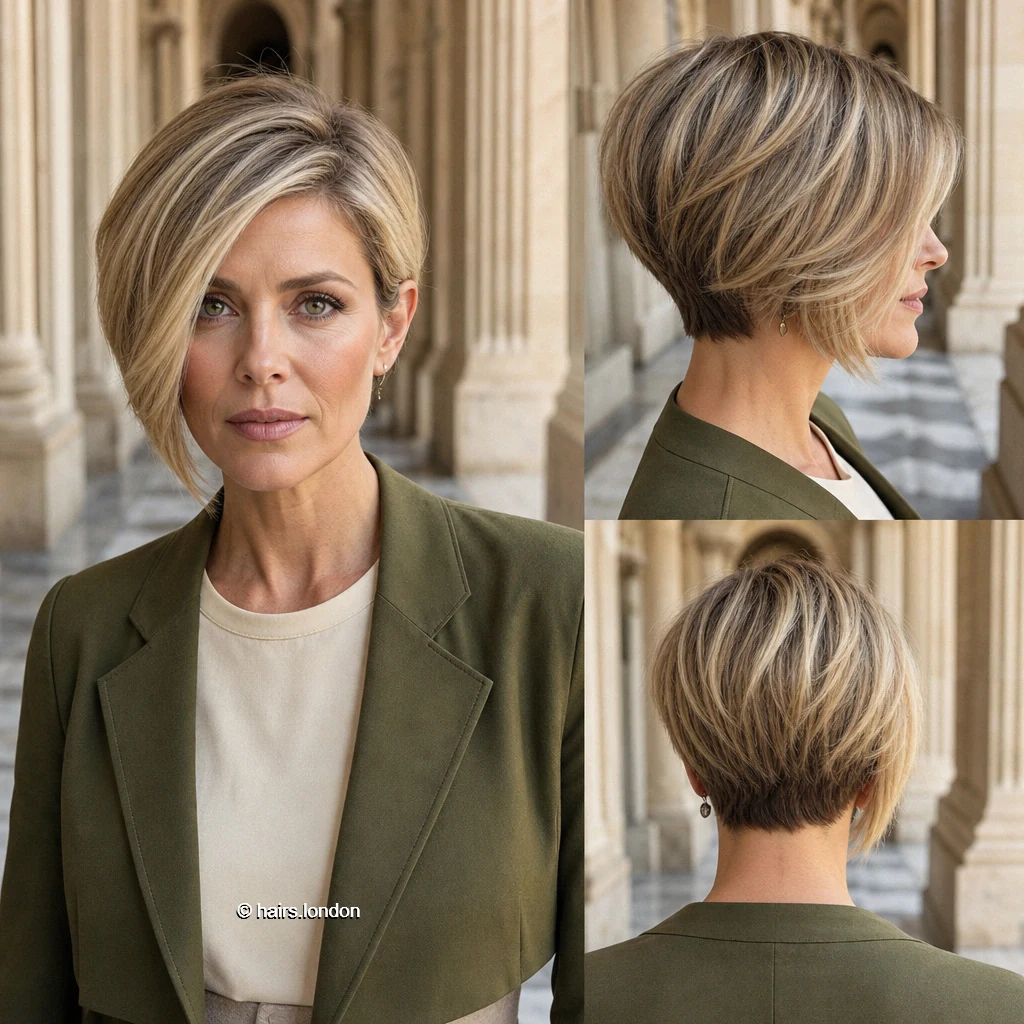
Beige blonde streaks thread through deeper brown in this bob. The swept front reaches chin level while back clears neck. Graduated back layers create rounded fullness over a tapered nape. A deep part sets the long fringe across one eyebrow. Ask for connected side layers that preserve the forward sweep. Dry upward briefly at roots, then smooth the outer surface. Use little product near the nape to avoid heavy buildup. Natural cowlicks can disrupt parting; discuss manageable alternatives beforehand together. Regular nape trims retain contrast between short back and front. Ask whether highlighted ribbons suit your preferred color maintenance schedule.
How to Choose Your Bob Length and Shape
Start with the point where you want the front to fall: at the jaw, just below the chin or longer. Then decide whether you prefer a relatively even outline or a shorter back with more length toward the face. Several pictured bobs show both a longer front and visible rear graduation; those are separate details to discuss. Consider how your neckline grows, whether hair tucks behind your ears and how much fullness you want around the sides. Ask to see the proposed shape from behind as well as from the front.
Styling Fine, Thick, Wavy and Curly Textures
For fine hair, begin with light mousse or root lift and avoid saturating the perimeter with cream. Thick hair may need carefully placed internal weight removal, but taking too much from the ends can make a bob look thin. On wavy hair, scrunch or diffuse before deciding which pieces need smoothing; polishing only the perimeter can preserve movement. If your hair is curly, discuss its dry shape and shrinkage before cutting. Curl-friendly layers and enough length at the baseline can help avoid unwanted width, while a fringe needs its own styling plan.
Keeping Blonde Bob Color Fresh
The images show blonde and bronde tones with varying degrees of darker root contrast. Ask your colorist whether you want that contrast maintained or prefer a brighter result closer to the scalp. Toner visits, gentle washing and heat protection can help preserve a chosen tone, but the useful schedule depends on your starting color and how your hair responds. Place highlights where your part and sweeping front reveal them rather than assuming every strand needs equal brightness.
Maintaining the Bob Perimeter and Graduation
A short, tapered nape changes the silhouette as soon as it grows out, so the more defined graduated bobs may need earlier cleanups than the loosely layered examples. Check a sleek bob’s front-to-back length difference and smooth perimeter at each trim. For a shaggy bob, focus instead on ends that become heavy, a fringe that falls into the eyes and layers that stop moving. Your growth rate and preferred degree of precision should set the appointment interval.
What to Discuss with Your Stylist
Bring the image that best shows your preferred front, side and back, and point to specific features rather than requesting a label alone. Say whether you want visible nape graduation, a long side sweep, a fringe or a deliberately choppy edge. Discuss density, natural bends, cowlicks, how you normally part your hair and whether you will blow-dry it. Ask how the proposed cut will sit without styling, what will change as it grows and what the blonde color will require between visits.
Frequently Asked Questions
What is the difference between a bob and a lob?
A bob generally ends around the jaw, chin or neck; a lob extends farther toward the shoulders. A long front piece does not necessarily make the whole haircut a lob.
Is an A-line bob the same as a stacked bob?
No. A-line describes a perimeter that grows longer toward the front. Stacked or graduated describes visible shorter-to-longer layering that builds shape at the back. One bob can have both features.
How do I choose between a sleek and a shaggy bob?
Choose based on the finish you enjoy maintaining. A sleek outline emphasizes a smooth perimeter; a shaggy bob relies on separated layers and a softer edge. Your natural texture and density also matter.
Can fine hair hold a graduated bob?
It can, provided the graduation leaves enough weight to support the shape. Ask your stylist to assess your density before removing bulk or adding short layers.
What should thick-haired clients ask for in a bob?
Ask where weight can be removed without hollowing out the perimeter. A stylist can tailor internal shaping to the amount of fullness you want at the sides and back.
Can naturally curly hair wear a short bob?
Yes, but the shape should be planned around curl pattern, shrinkage and how the hair sits dry. The smooth and tousled finishes pictured are not a guarantee of the same result on natural curls.
Should I add a fringe to my bob?
A fringe can soften the front, as the textured examples show. Discuss how it behaves with your part and growth patterns, plus whether you are willing to style and trim it separately.
Which bob is likely to need less daily styling?
The one that works with your natural texture is usually the simpler choice. A naturally wavy person may find a loose layered bob easier than a polished, sharply angled shape.
How often should a graduated bob be trimmed?
Arrange a cleanup when growth starts to obscure the short nape or shift the rounded weight line. The right interval depends on your growth rate and how precise you want the silhouette.
How can I keep a bob perimeter smooth without making it flat?
Dry airflow downward along the outer surface and refine the ends with a brush. Keep heavier products away from the roots, and use only as much smoothing product as the ends need.
How do I maintain blonde highlights on a bob?
Agree on a regrowth and toning plan with your colorist, particularly around a prominent part or long front sweep. Protect the hair from excessive heat and adjust appointments to your preferred root contrast.
What happens when an angled or graduated bob grows out?
The nape gets longer, the back may lose its rounded contour and the front-to-back contrast becomes less obvious. Your stylist can either restore the shape or gradually bring the perimeter toward a more even length.
Conclusion
The most useful detail to take from these blonde bob haircuts is the shape you want to see from every angle. Decide where the front should end, whether the back should be visibly graduated and how much texture you want to style. A consultation can then turn those preferences into a bob that works with your hair rather than against it.


