

11. Deep Teal Bob with a Graduated Back
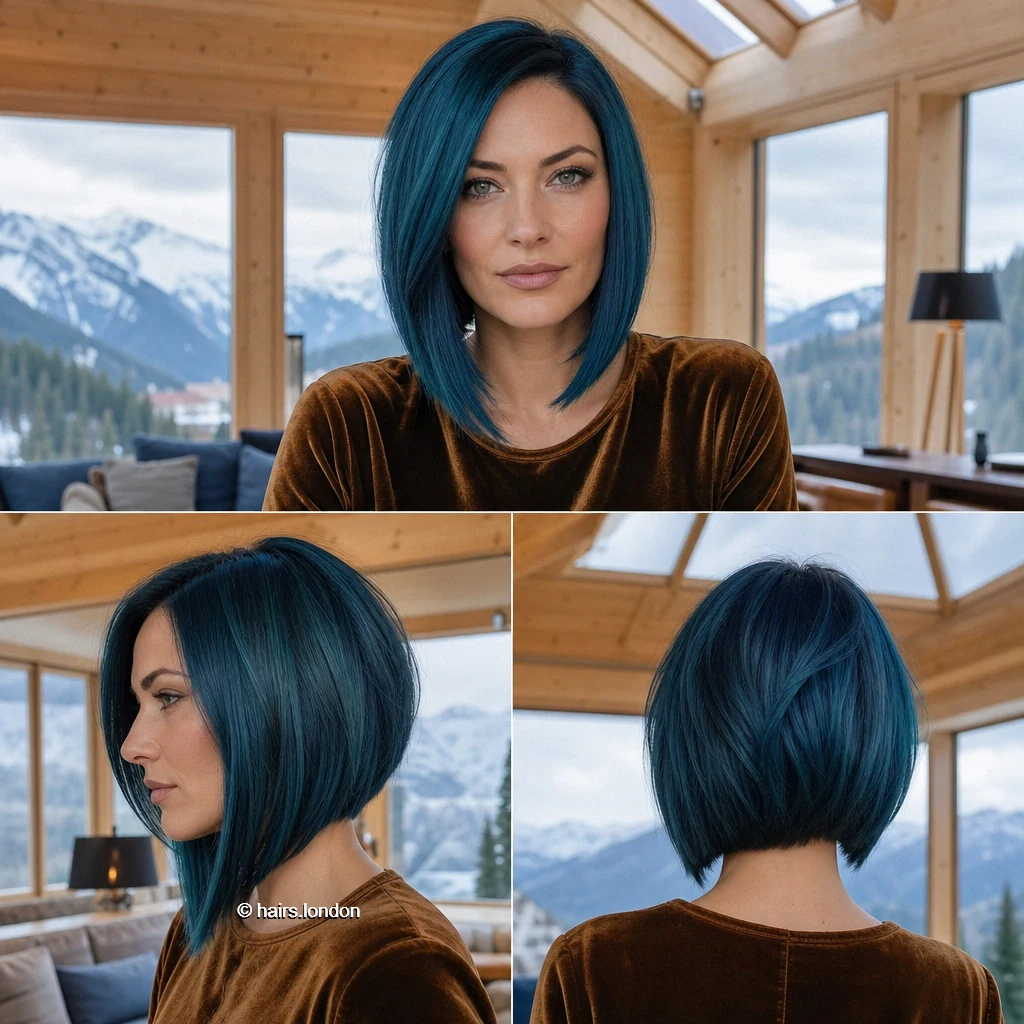
Deep teal blue colors this sleek bob with length forward. The side part creates an elongated strand below chin level. Behind the jaw, the rear rises toward a short nape. Back layers appear softly graduated beneath rounded crown weight above. Ask about preserving front length while refining back graduation carefully. Direct airflow down each panel for a smooth finish daily. Use a small brush to turn the nape inward slightly. Fine hair might welcome restrained layers rather than debulking throughout. Gloss the teal as needed when cool tones dull noticeably. Book reshaping before the shorter nape obscures its angle visibly.
12. Forest Teal Graduated Bob
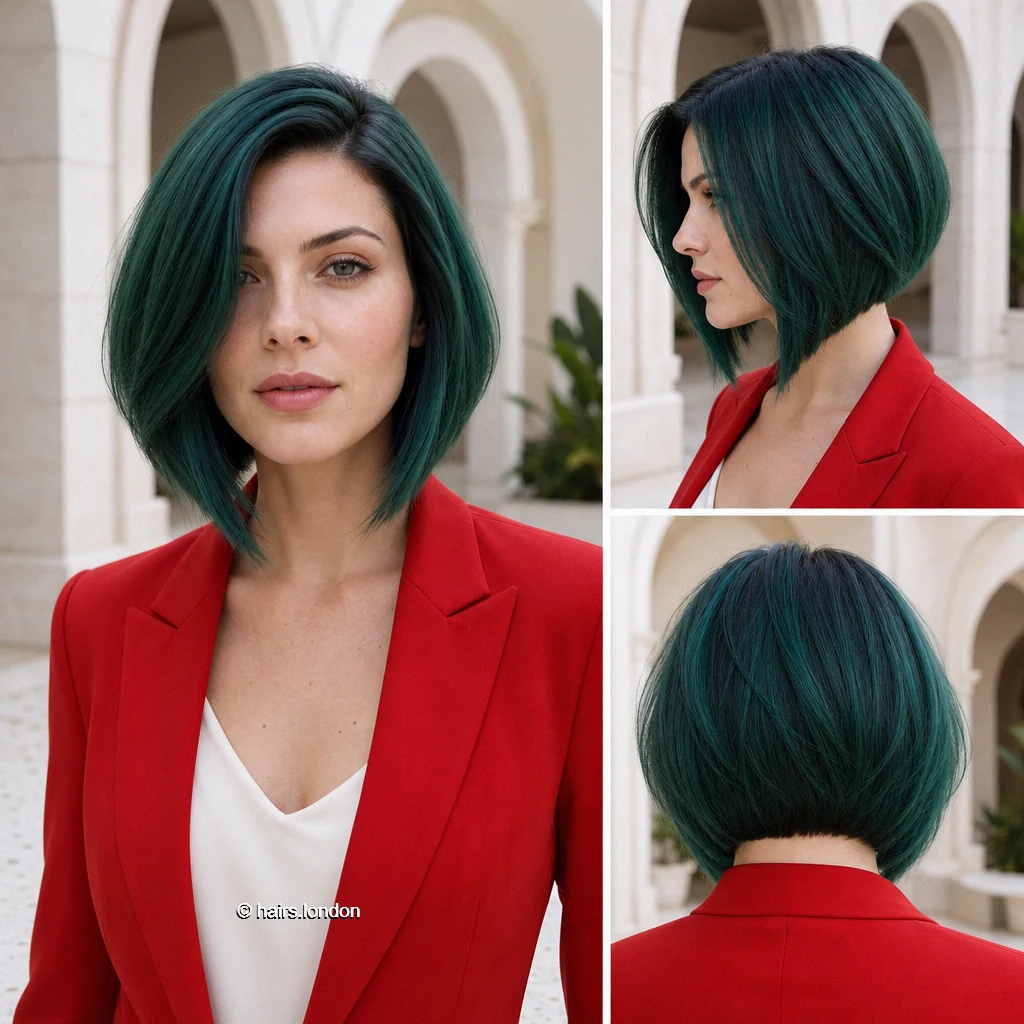
Dark forest teal gives this graduated bob rich dimension throughout. A deep side part sends fuller hair across forehead softly. Long front pieces descend beneath jaw, framing the face closely. Side and back views reveal a shorter, rounded nape perimeter. Visible back layering supports fullness above that tidy neckline edge. Discuss keeping both front points substantial rather than wispy ends. Brush smooth from roots, then bend the ends inward slightly. Thick hair may need thoughtful shaping below crown weight instead. Protect green tones with gentle washing and heat moderation routinely. Maintain the nape and front contrast with timely trims regularly.
13. Electric Blue Wavy Bob
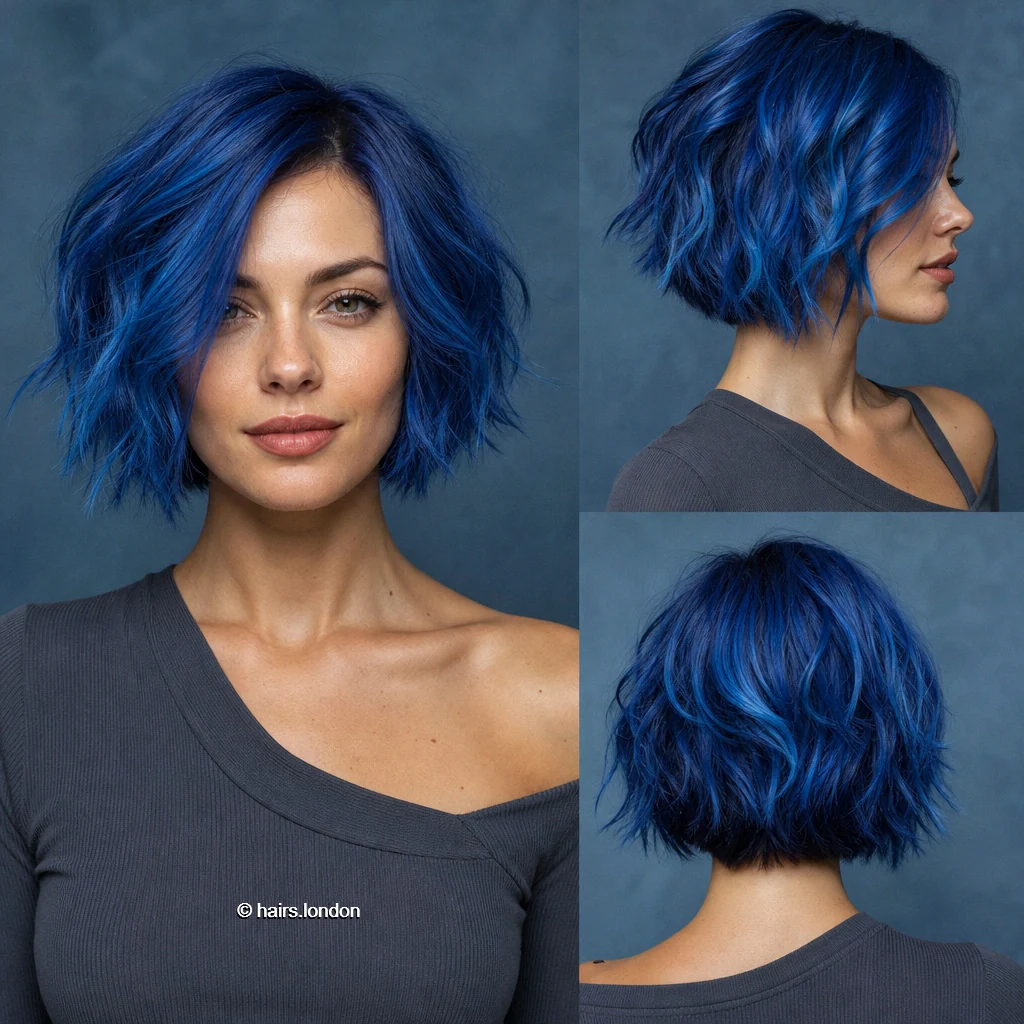
Electric blue waves give this jaw length bob movement throughout. A side part lifts one sweeping section over forehead softly. The textured perimeter falls near jaw, with shorter back pieces. Rear views show tousled layers, not precise stacked graduation lines. Ask for texture that keeps adequate weight along ends everywhere. Scrunch damp hair with mousse to encourage existing bends gently. Diffuse softly, leaving the fringe loose and touchable afterward too. Naturally straight textures may need heat styling for waves regularly. Refresh blue selectively when brighter sections begin fading unevenly visibly. Trim stray ends without erasing the intentionally broken outline entirely.
14. Indigo Tousled Layered Bob
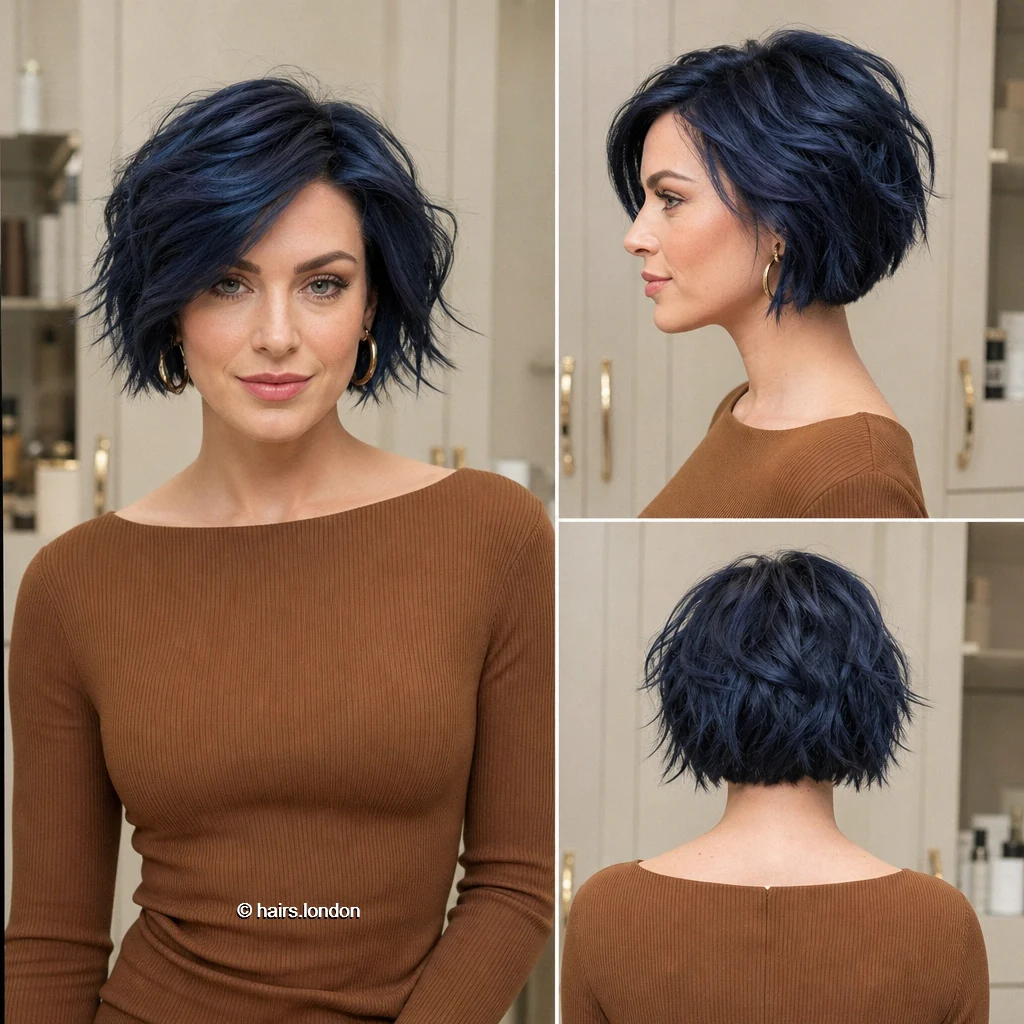
Indigo blue tones accent this short, tousled layered bob shape. The long side fringe crosses forehead above cheekbone strands here. Short nape ends support a fuller, airy back silhouette overall. Ragged texture makes the outline softer than blunt cuts appear. Request controlled layers while retaining visible jaw framing pieces intact. Work volumizing foam through roots before drying with fingers loosely. Add pliable paste to ends, avoiding sticky fringe buildup entirely. Fuller density can support texture, provided bulk stays balanced throughout. Use color friendly products as the indigo gradually fades out. Shorter layers need reshaping when crown volume starts collapsing downward.
15. Muted Blue-Teal Soft Wave Bob
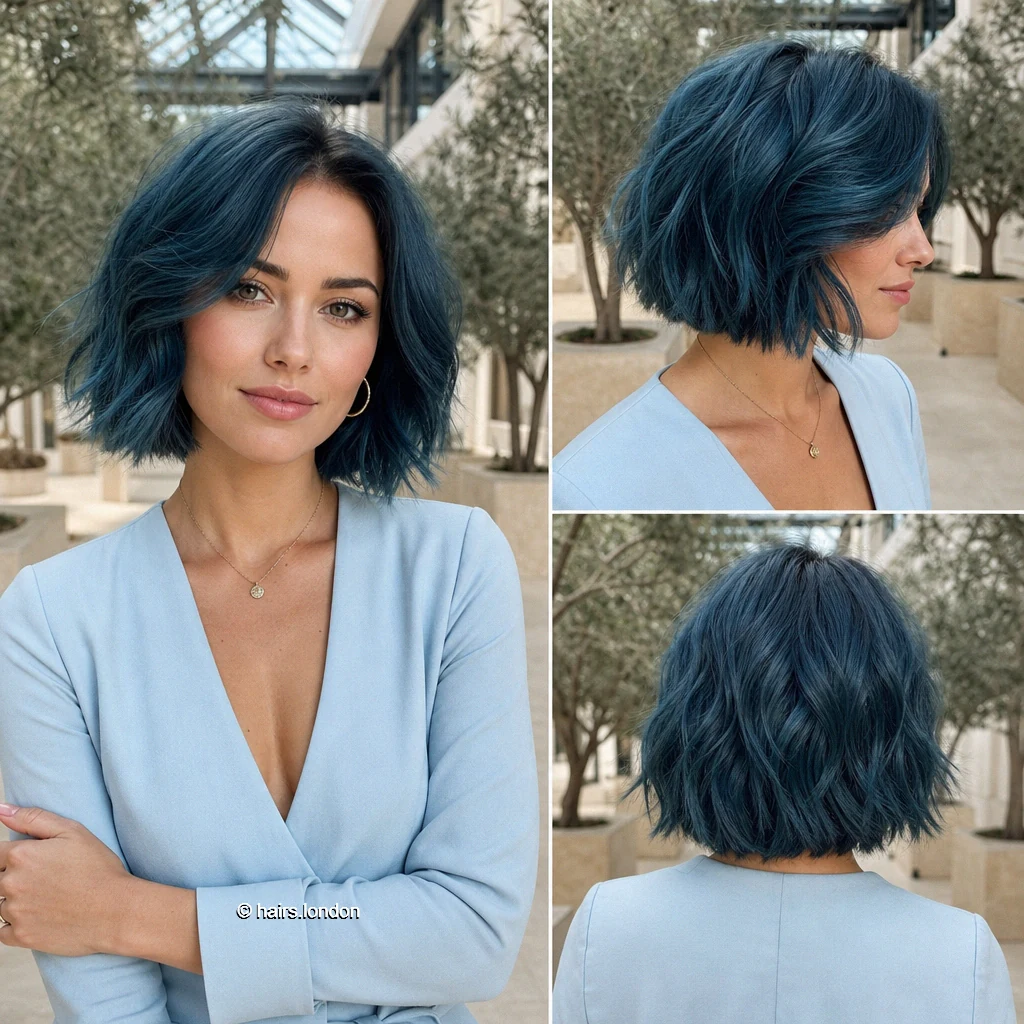
Muted blue teal colors this softly waved, jaw grazing bob. A loose side part gives forehead pieces relaxed movement here. The sides sit near jawline above a slightly shorter back. Visible layers loosen the perimeter without revealing sharp graduation lines. Discuss keeping enough density at the ends for definition overall. Apply wave cream to damp sections, then scrunch lightly throughout. Air dry or diffuse gently to preserve individual bends intact. Naturally wavy hair may require fewer styling steps overall daily. Cool rinses and sun protection help slower color fading somewhat. Trim when the soft edge starts looking uneven or heavy.
16. Deep Green Loose Layered Bob
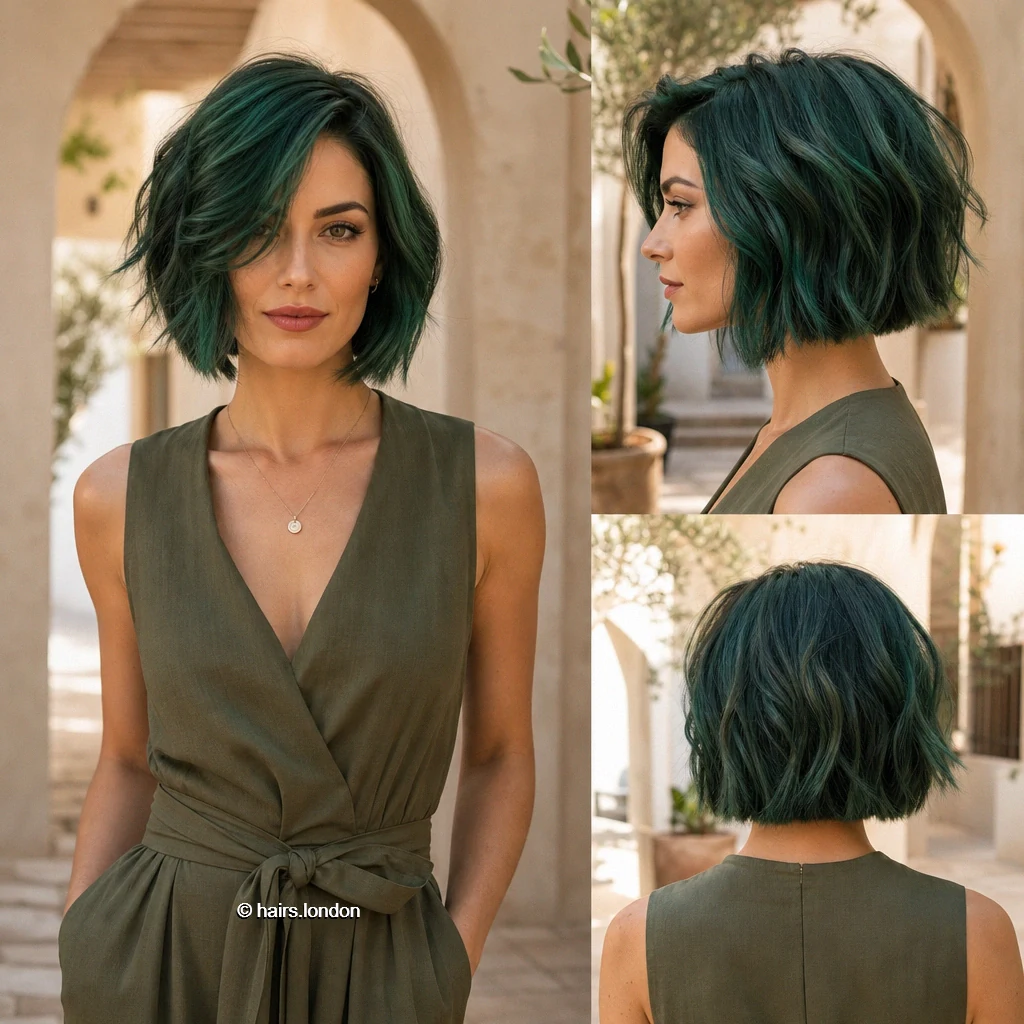
Deep green layers shape a loose, chin length bob silhouette. The side swept front partially covers one eyebrow here softly. Soft bends run through sides above a lightly textured edge. Back length stays around neckline, with no pronounced stacking visible. Ask for gentle layers that allow waves without excess bulk. Scrunch curl cream lightly through damp hair after washing gently. Diffusing gently or air drying preserves the loose shape well. Coarser strands might need added moisture before defining waves evenly. Green tones may fade faster with frequent clarifying shampoos used. Tidy individual ends while keeping the outline naturally relaxed looking.
17. Royal Blue Blunt Chin Bob
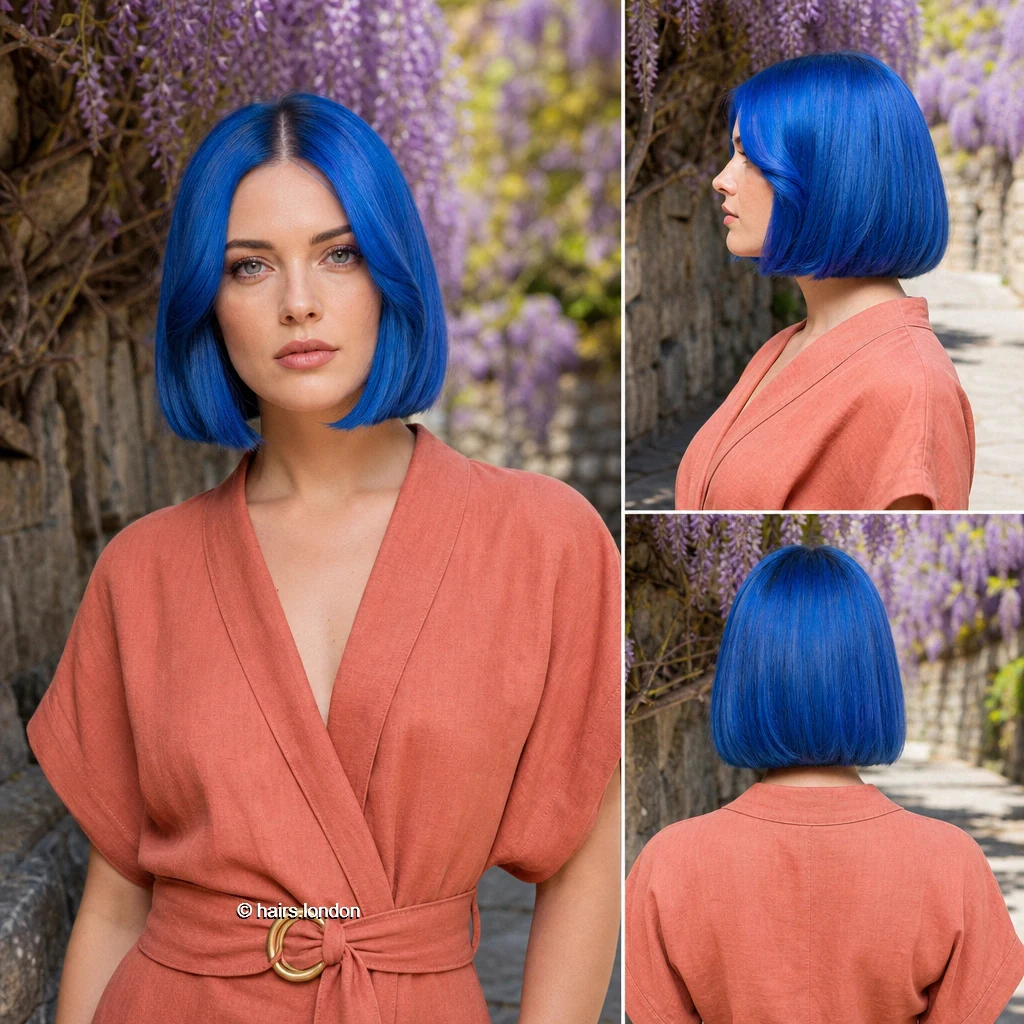
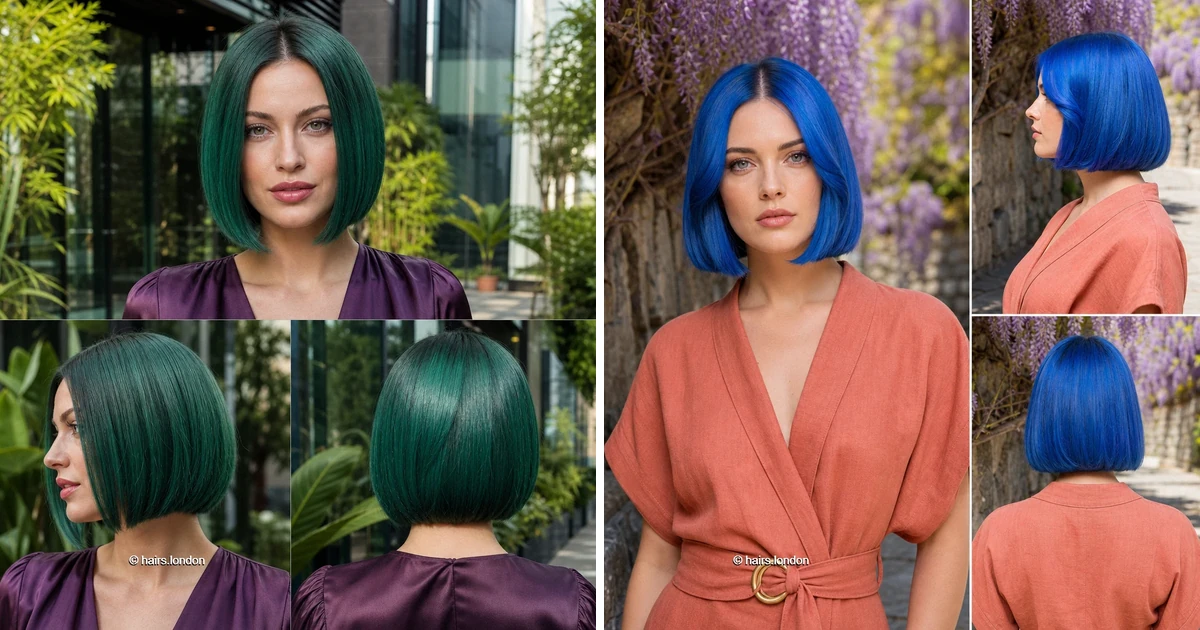
Vibrant royal blue distinguishes this sleek, blunt chin bob immediately. A center part divides smooth, gently face framing panels evenly. The perimeter sits near chin with little frontward angle visible. Back views show a dense, rounded edge above neckline level. Ask for a crisp baseline softened enough to move naturally. Smooth downward using heat protection and a broad brush gently. Straight textures simplify upkeep, while waves require additional smoothing work. A light finishing oil gives shine without dragging ends down. Preserve vivid blue with cooler water and careful sun exposure. Trim regularly because uneven growth disrupts this blunt line quickly.
18. Indigo Rounded Bob
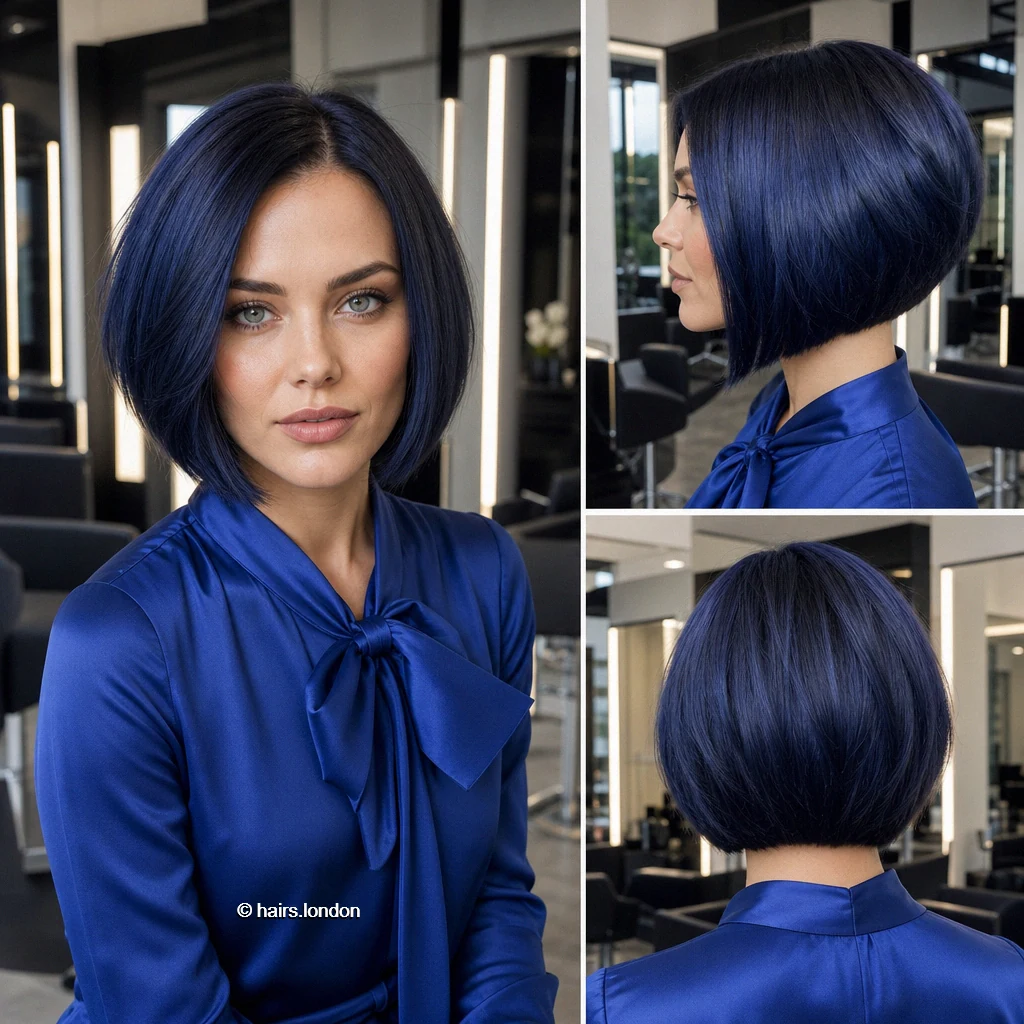
Subtle indigo blue gives this rounded bob cool depth throughout. A side part sweeps smooth hair across the forehead gently. Chin grazing front sections curve toward a shorter nape edge. Visible back fullness rests above a narrow, tidy neckline perimeter. Discuss subtle graduation if recreating its smooth rounded profile closely. Brush roots upward briefly, then direct the lengths downward smoothly. Turn ends under sparingly to avoid excessive helmetlike volume here. Fine density may benefit from retaining weight at edges especially. Gloss cool pigments when repeated washing reveals warmer undertones underneath. Rebalance nape fullness when the back begins looking heavy again.
19. Deep Teal Gently Angled Bob
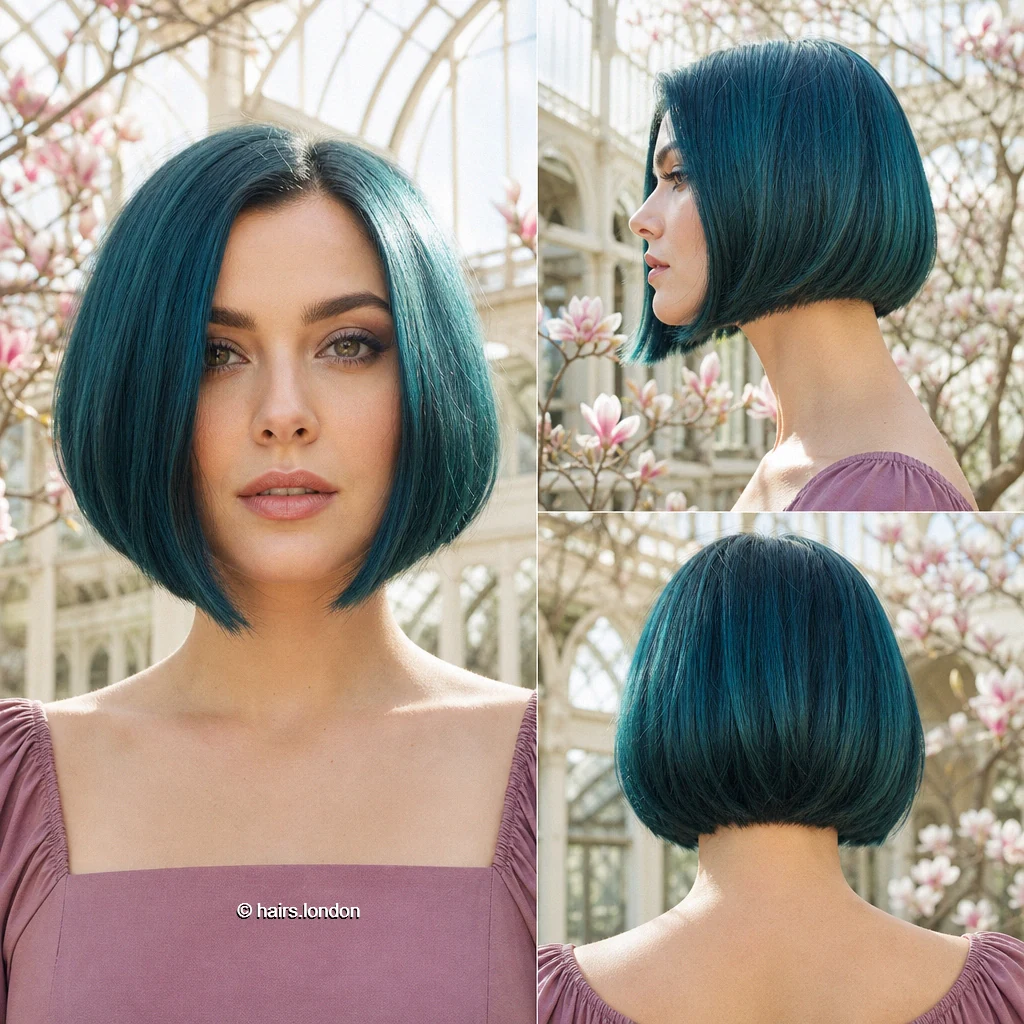
Deep teal forms a smooth, gently angled jaw length bob. A near center part frames the face with even panels. Front strands extend slightly beyond the short rounded back edge. The back retains curved fullness without pronounced visible stacking beneath. Request gentle forward length and an uninterrupted lower outline throughout. Use a smoothing brush to guide the ends inward softly. Avoid heavy oils that collapse the softly curved sides prematurely. Thicker hair may require discreet shaping inside the perimeter only. Limit hot washes to help maintain its green blue tones. Refresh the short back edge when growth alters proportions visibly.
20. Emerald Green A-Line Bob
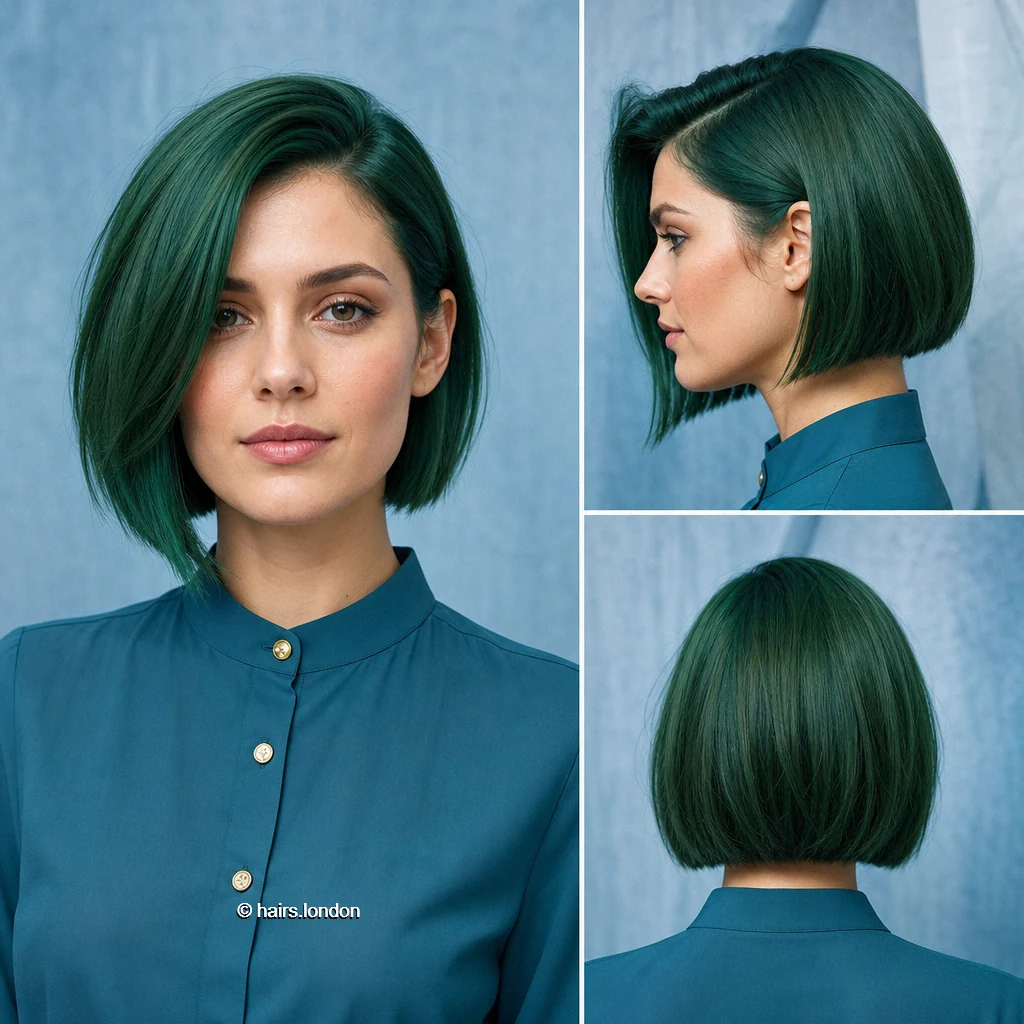
Emerald green enhances this smooth bob with elongated fronts visually. A deep side part adds an asymmetric looking sweep here. Front lengths reach below jaw while the back sits higher. The side view shows forward angling over rounded nape fullness. Ask for a clean A-line edge with controlled back weight. Blow dry each section downward to emphasize glossy panels evenly. Keep the tucked side smooth without flattening the crown completely. Growth patterns around ears may change how sides settle naturally. Protect green color with gentle shampoo and moderated heat use. Trim longer points once their angle begins losing definition visibly.
How to Choose Your Bob Length and Shape
Start with where you want the front to land: near the cheek, at the jaw, or below the chin. A shorter, layered bob exposes more of the neck and usually needs more frequent reshaping; a longer front offers more room around the face. Ask to see the proposed outline from the side. An A-line bob has a longer front, while a stacked or graduated bob needs visible shortening and weight buildup at the back. The two features can coexist, but one does not prove the other. Consider your density, natural texture, growth patterns, and willingness to style before choosing a precise edge or airy layers.
Styling Fine, Thick, Wavy, and Curly Textures
Fine hair often looks fuller when the lower perimeter retains weight; start with minimal product and lift the roots rather than heavily layering the ends. For thick hair, ask about selective internal shaping so the bob moves without becoming hollow at its edge. Enhance waves with a small amount of cream or mousse, scrunching and diffusing gently instead of brushing the finished texture. For curls, plan the shape around their dry spring and shrinkage, and avoid removing so much bulk that the outline becomes uneven. Smooth bobs with downward airflow and heat protection; keep side fringes flexible so they can settle naturally.
Keeping Blue and Green Bob Color Fresh
The images range from inky navy and dark teal to vivid cobalt and emerald, so color upkeep will vary. Ask your colorist how your starting hair color and desired shade affect the lightening, refreshing, and home-care plan. Gentle shampoo, cooler rinses, moderate heat, and sun protection can help limit fading. If the color loses depth or shifts unevenly, discuss a tailored pigment refresh rather than assuming one tinted product suits every blue or green shade. Conditioning also matters on sleek bobs, where dryness is particularly visible along the smooth surface.
Maintaining the Bob Perimeter and Graduation
A blunt chin-length edge shows uneven growth quickly, while an A-line bob loses definition when its front points grow out of balance. Short graduated backs need attention when the nape lengthens and the weight line drops. Textured bobs can tolerate a softer outline, but still need the ends checked so movement does not become bulk. Set trim appointments according to your particular shape and growth rate rather than using one schedule for every bob. Between visits, smooth a precision perimeter lightly or refresh waves without repeatedly overworking the ends.
What to Discuss with Your Stylist
Bring front, side, and back references, then identify the feature you most want to keep: fringe direction, front length, rounded weight, a short nape, or a broken, wavy edge. Ask what is achievable with your density, natural texture, and growth patterns, including how the bob will sit without a blowout. Agree on whether you want a clear A-line angle, visible back graduation, or simply a rounded perimeter. Discuss how much daily smoothing or diffusing you will do, how often you can maintain the cut, and the likely upkeep for your chosen blue or green color.
Frequently Asked Questions
What is the difference between a bob and a lob?
A bob typically sits around the jaw, chin, or neck. A lob is a longer bob that approaches or reaches the shoulders. The dividing point is descriptive rather than an exact measurement.
Is an A-line bob the same as a stacked bob?
No. A-line describes a perimeter that gets longer toward the front. Stacked describes visible graduation that builds weight above a shorter back. A haircut can have both features.
How can I tell whether a bob has back graduation?
Look for shorter nape hair supporting a visible buildup of weight above it. A back that merely looks round or sits higher than the front does not, by itself, establish pronounced stacking.
Will a blunt bob work with fine hair?
It may, especially when the ends retain enough density to form a clear edge. Ask your stylist to assess your growth patterns and avoid unnecessary thinning if fullness is your priority.
How can thick hair avoid looking bulky in a rounded bob?
A stylist can assess where selective internal shaping might release weight while protecting the visible perimeter. Heavy removal throughout the ends can weaken the outline instead of improving it.
Can naturally curly hair be cut into a bob?
Yes, provided the length and layers account for the curls’ spring, shrinkage, and density. Discuss where the dry perimeter should sit rather than judging length only while the hair is wet.
Should I add a fringe to a short layered bob?
A fringe can complement short layers, but its length and direction should suit your hairline and daily styling preferences. Ask how it will fall when air dried as well as styled.
Which bob needs less daily styling: sleek or textured?
That depends on your natural texture. Straight hair may hold a smooth outline with little work, while naturally wavy hair may be quicker to scrunch and diffuse than to straighten.
How often should I trim an A-line or graduated bob?
Book a trim when the front angle, nape, or back weight line starts losing its intended shape. Short, precise versions generally show growth sooner than softer, textured cuts.
How do I keep blue or green bob color from fading quickly?
Use a gentle cleansing routine, moderate hot-water washing and heat styling, and ask your colorist about sun protection and shade-specific refreshes. Fading varies with the color and starting hair.
Can I grow out a short graduated bob without an awkward shape?
Yes, though interim reshaping helps. Your stylist can gradually balance the longer back against the front while preserving enough perimeter weight for the next stage.
What should I bring to a bob consultation?
Bring images showing the front, profile, and back, plus examples of the color you want. Explain your natural texture, daily styling time, and how frequently you are willing to return for cut and color maintenance.
Conclusion
The strongest choice among these blue and green bob haircuts is the one whose shape works with your hair as well as your preferred color. Decide whether you want a crisp edge, a visibly shaped back, or easy movement, then use the matching front, side, and back views to make that request clear at the salon.