

11. Teal Graduated Bob With an Extended Front
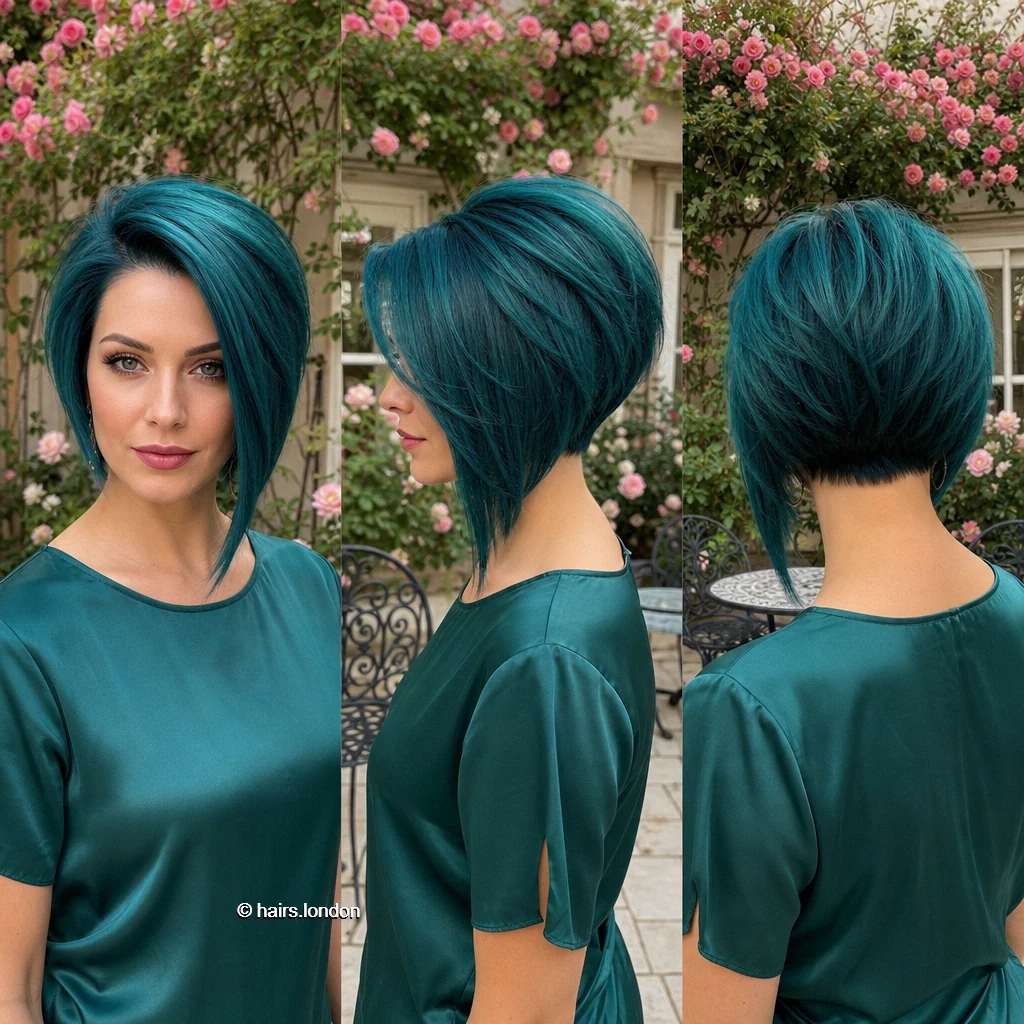
Rich teal defines this bob with a notably extended front. Its side swept section passes the chin on one side. A short nape and visibly graduated back support rounded fullness. The longer front makes the silhouette angled rather than even. Brush that section smooth while directing lift into the back. Apply a small amount of serum only through dry ends. Discuss front length carefully if hair tangles against your neckline. Strong cowlicks may affect the exposed nape and side part. Keep rear trims regular to preserve the front to back contrast. Color protection matters when maintaining this saturated teal finish.
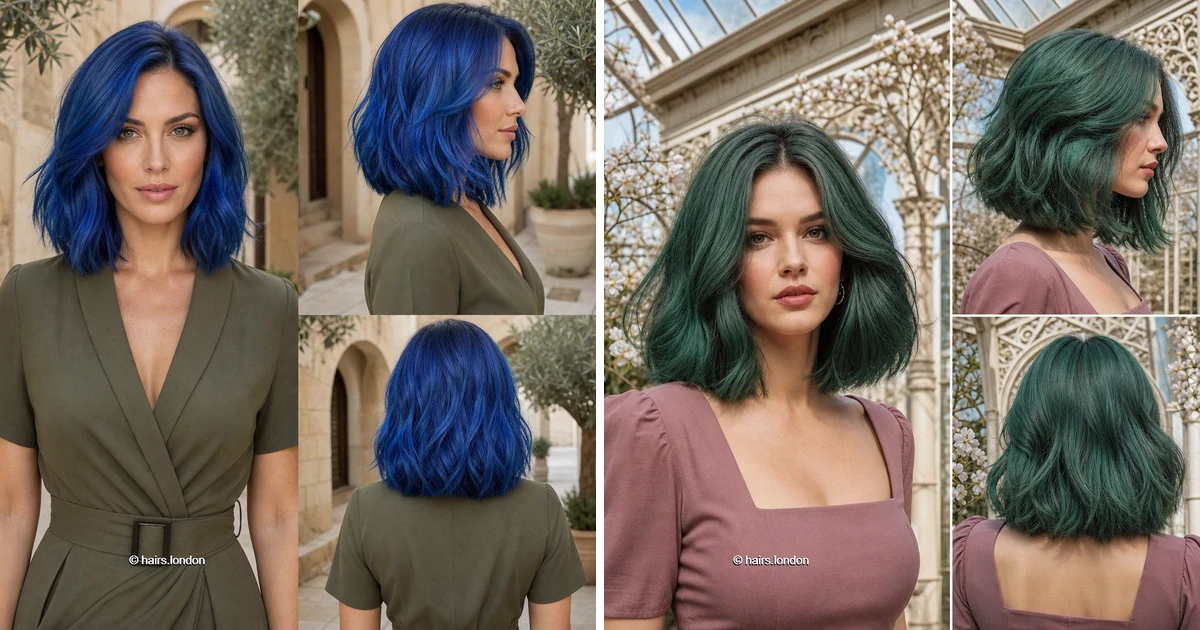
12. Dark Green Angled Bob With Airy Front Pieces

Dark green lends dimension to this airy, strongly angled bob. Loose front sections reach below the jaw beside the face. The profile shows a much shorter back and clearly exposed nape. Softly rounded rear fullness suggests graduation beneath the longer upper layers. Dry the back with lift, leaving the front lightly separated. Resist overloading those fine looking ends with finishing product. If your density is low, discuss preserving front section strength. Thicker hair may need discreet removal around the rounded back. Nape growth will quickly alter the pronounced change in length. Refresh green selectively when faded areas become more noticeable.
13. Cobalt Shaggy Bob With Wispy Bangs
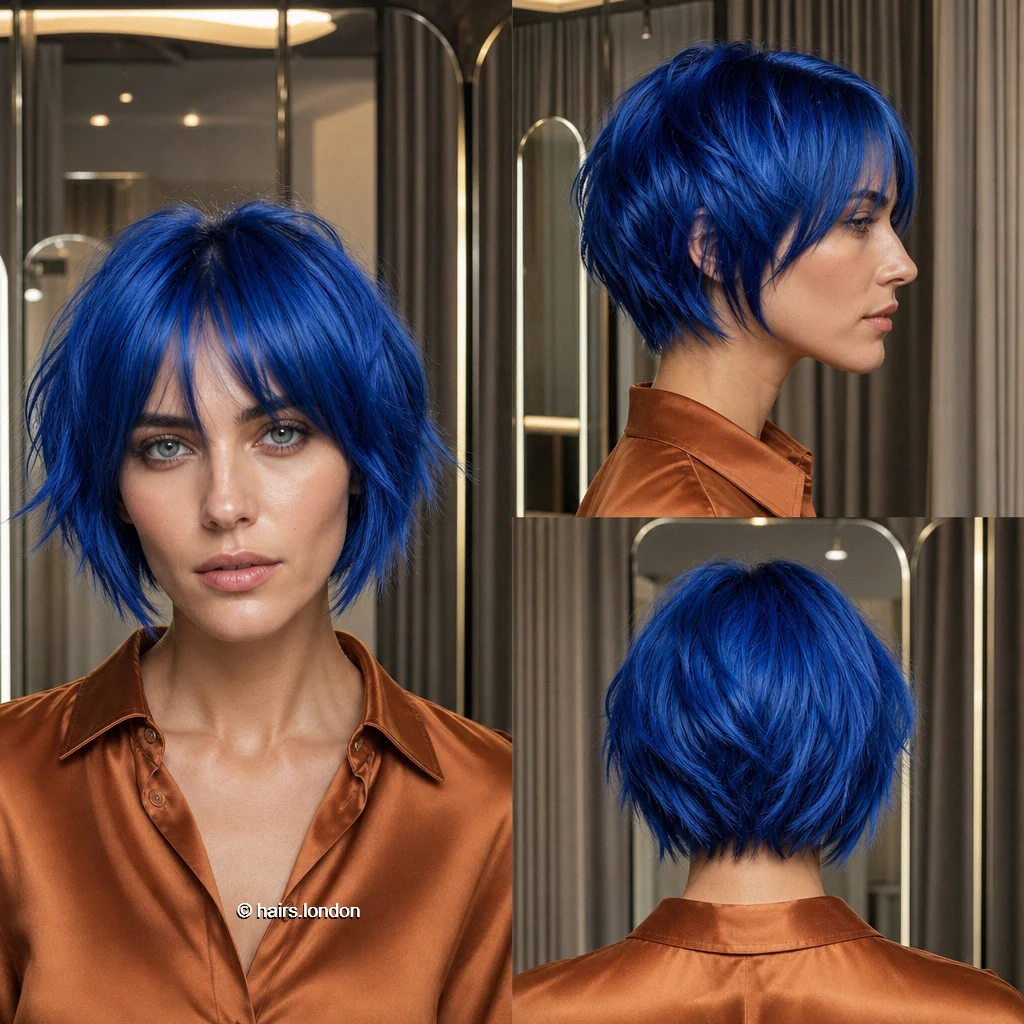
Bright cobalt covers this short, distinctly layered shaggy bob. Wispy bangs skim the brows and break into narrow pieces. The sides fall around the jaw with visibly feathered ends. Short back layers create visible texture without a sleek stacked outline. Scrunch lightweight foam through damp hair to encourage separation. Shape the fringe carefully with fingertips before allowing it to dry. Avoid excessive thinning if your ends already feel quite sparse. Dense, straight hair may need strategic layering for similar movement. Maintain bangs when they start interfering with your preferred view. Gentle washing and reduced heat exposure help protect vibrant cobalt.
14. Midnight Blue Shaggy Bob With a Soft Fringe
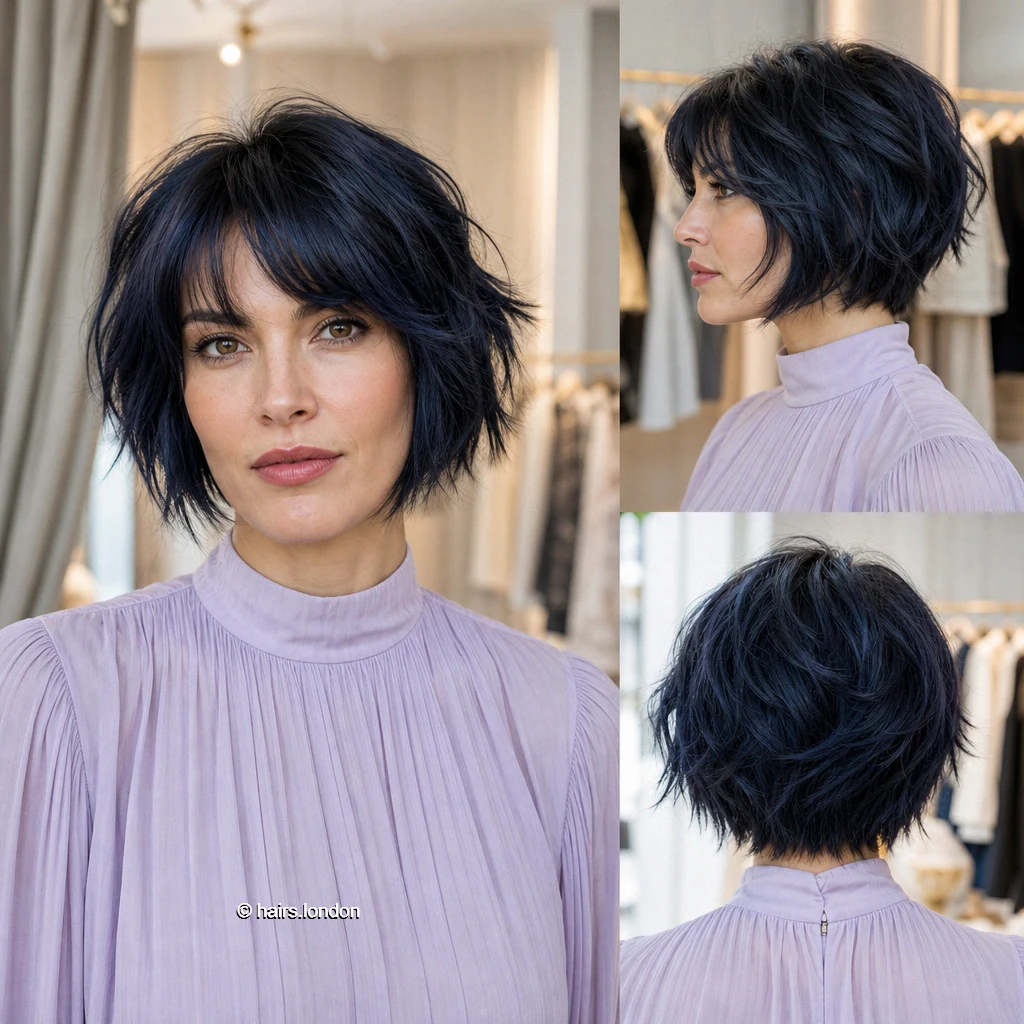
Midnight blue gives this short shaggy bob understated depth. A light fringe opens across the forehead in soft pieces. Choppy side layers surround the jaw without forming straight edges. At the back, uneven tips reinforce its deliberately loose texture. Encourage movement with a little spray worked through damp lengths. Let the fringe settle naturally before adjusting individual stray strands. If hair is fine, avoid removing too much perimeter weight. Thick hair might welcome selective layering instead of extensive thinning. Trim overgrown side pieces regularly when they begin obscuring the jaw. Discuss color refresh timing if the dark blue loses definition.
15. Turquoise Tousled Bob With a Side Fringe
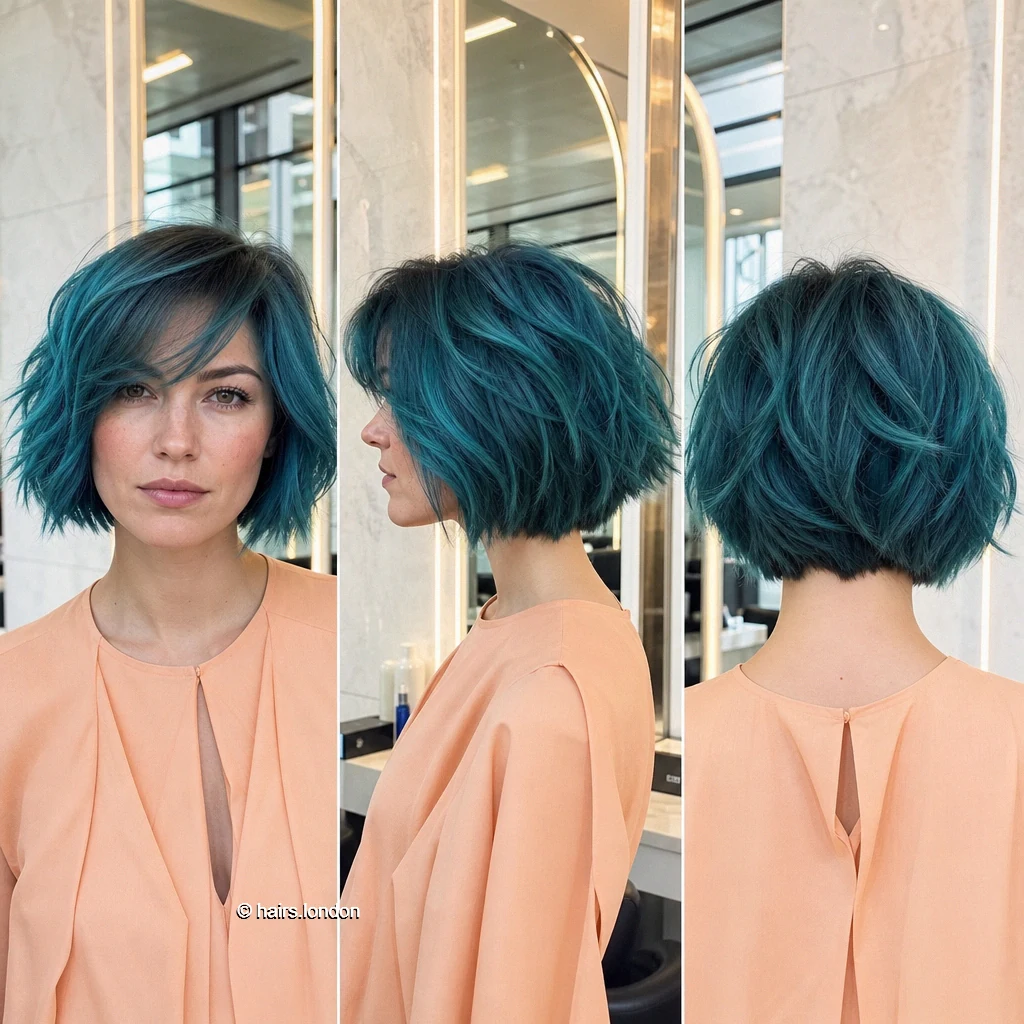
Turquoise blue colors this tousled bob with darker underlying depth. A sweeping fringe crosses the forehead toward one eye. Piecey sides end around the jaw, with a slightly shorter neckline. The back appears layered and textured rather than precisely stacked. Scrunch damp sections gently and individually to emphasize their loose direction. Keep the fringe smoother if you prefer an unobstructed face. Natural waves could achieve separation without much heated styling here. Straighter, denser hair may need carefully placed supporting layers. Tidy the neckline when the textured outline grows too wide. Color safe care can help the brighter turquoise remain distinct.
16. Deep Green Wavy Bob With Separated Ends
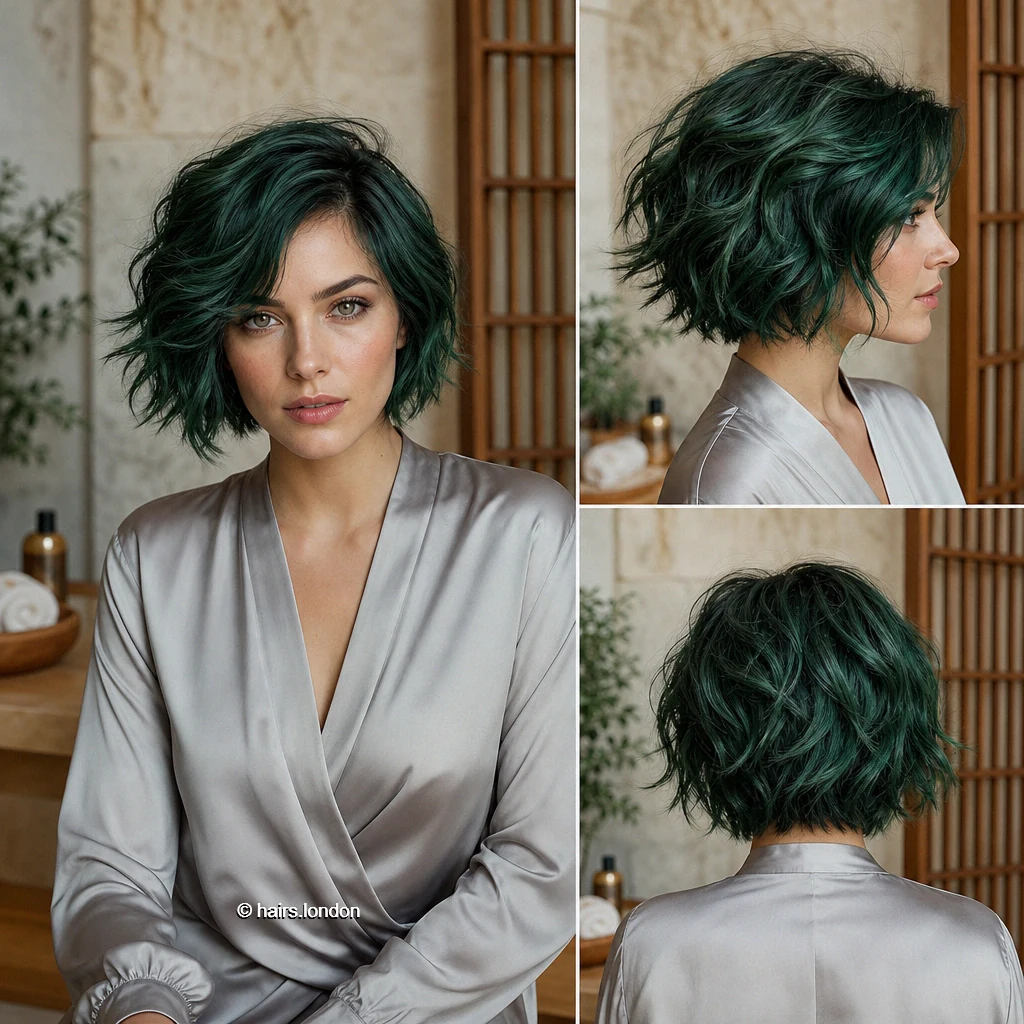
Deep green runs through this loosely waved, chin length bob. A sweeping front blends into the face framing side pieces. The back has textured layers and an uneven, compact edge. These waves produce volume without a rigidly rounded weight line. Apply a modest amount of curl cream to damp sections. Diffuse gently, leaving individual ends separate rather than brushed together. Natural curl patterns may need a different dry cutting approach. Fine waves benefit from less product than dense, coarse waves. Trim when the nape starts looking heavy instead of airy. Protect the green tone according to its actual fading rate.
17. Vivid Blue Graduated Bob With a Long Sweep
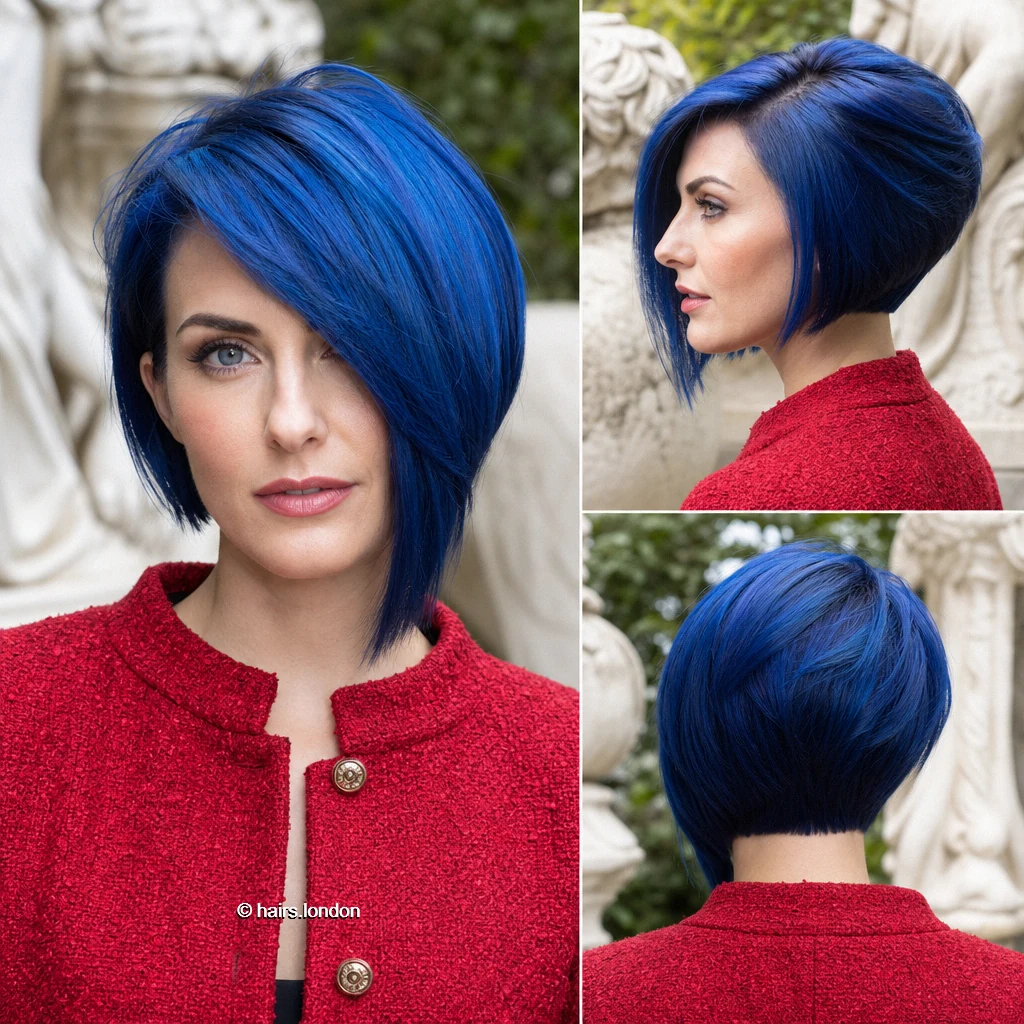
Vivid blue strongly emphasizes the sweeping front of this graduated bob. The longest section passes the chin while exposing shorter sides. A rounded back sits above a closely shaped nape. Visible graduation supplies lift rather than merely a sloping perimeter. Brush the front downward, then smooth its ends with care. Direct airflow upward behind the crown for restrained rear volume. Discuss whether your density can support that rounded upper shape. Nape growth patterns may require a softer or shorter finish. Trim the back before its precise rear contrast becomes less apparent. Choose blue color upkeep that fits your washing habits.
18. Navy Side-Parted Bob With Subtle Graduation
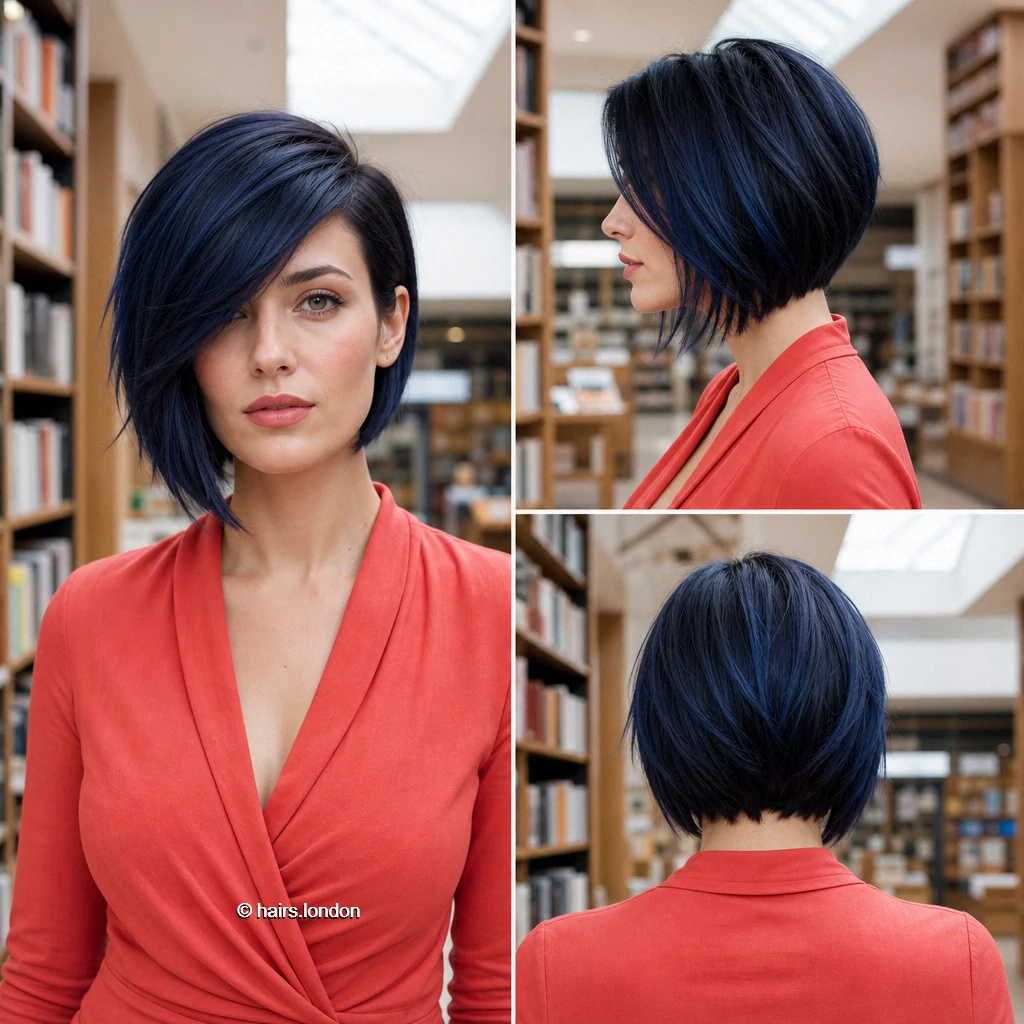
Dark navy blue gives this side parted bob quiet dimension. A broad front sweep reaches below the chin on one side. The opposite side curves neatly along the jaw and neck. From behind, layered hair narrows toward a short nape. Its profile shows gentle graduation, not an extreme stacked shelf. Smooth the sweep downward while preserving lift at its roots. Hair with strong parting patterns may need daily fringe adjustment. Keep heavier density controlled without stripping the front section thin. Check the nape outline as soon as its shape softens. Protect darker pigment from repeated hot washing and harsh sunlight.
19. Muted Teal Asymmetrical Bob With an Exposed Side

Muted teal colors this visibly asymmetrical, side parted bob. One long front falls past the chin; the opposite side hugs the jaw. The back narrows into a short, tidy nape edge. Layering gives the upper rear section softly rounded fullness. Smooth the extended front while leaving its tips lightly movable. Tucking the shorter side gently reveals the difference in length. Discuss whether your natural part reliably maintains this uneven arrangement. Dense hair might need internal shaping to prevent rear bulk. Trim both sides regularly with their different outlines clearly in mind. Ask how frequently this subdued teal needs color refreshing.
20. Emerald Angled Bob With a Smooth Perimeter
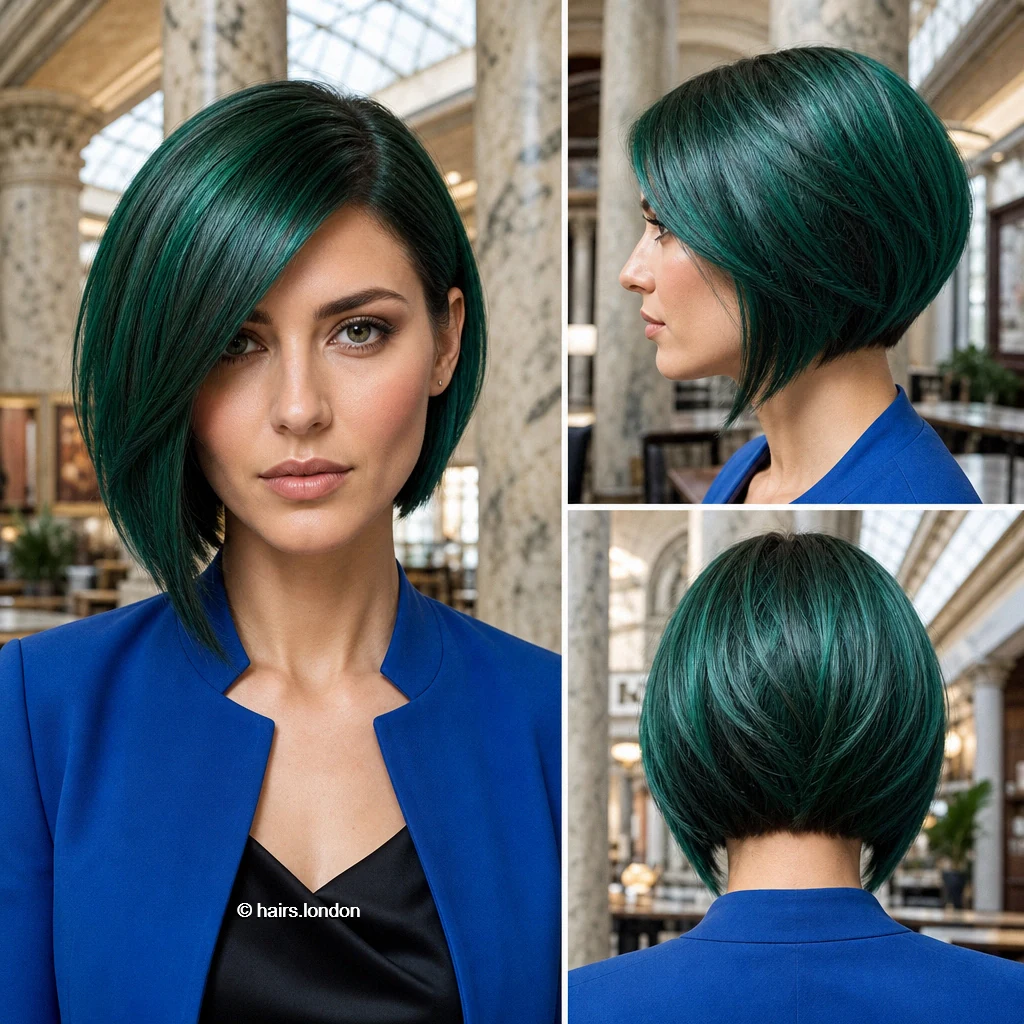
Glossy emerald green defines this smooth, angled bob silhouette. A long side swept front falls beneath the jawline. Behind the cheek, hair curves toward a noticeably shorter nape. The back shows rounded fullness above its closely shaped edge. Smooth the perimeter deliberately with downward airflow and a light brush. Preserve the front point instead of turning every end inward. Especially thick hair may need concealed weight removal beneath that polish. Fine hair could require a less dramatic back volume target. Check the nape often to retain the visible angle throughout. Discuss green color maintenance alongside the shape’s regular salon trims.
How to Choose Your Bob Length and Shape
Compare where you want the perimeter to sit when your hair is dry: at the jaw, against the neck or close to the shoulders. The wavy lob offers more length, while the compact graduated bobs expose the nape and place fullness higher at the back. A longer front creates an A-line outline; it does not, by itself, establish that the back is stacked. Consider how your density, growth patterns and preferred part will affect the shape between washes.
Styling Fine, Thick, Wavy and Curly Textures
For fine hair, keep heavier creams away from the roots and ask for enough perimeter weight to prevent see-through ends. Thick hair may benefit from selective internal weight removal, particularly in rounded or graduated backs, rather than indiscriminate thinning. Enhance waves with a small amount of foam or cream and gentle diffusing; separate the ends with fingers instead of brushing out all movement. If your hair forms curls, discuss the bob at its dry length and plan for shrinkage. Smooth a long front or manage a fringe separately from the rest of the cut when needed.
Keeping Blue and Green Bob Color Fresh
These images range from dark navy and forest green to vivid cobalt and turquoise, so upkeep will differ. Ask your colorist how your chosen shade is likely to fade on your hair and whether a suitable color-depositing product would help. Gentle washing, cooler water when comfortable, heat protection and reduced prolonged sun exposure can help preserve color. Watch the ends as well as the roots: layered tips and long front sections may show fading differently.
Maintaining the Bob Perimeter and Graduation
A wavy, irregular edge can tolerate some growth before it needs reshaping; a smooth front point or closely cut nape shows changes sooner. Check whether the bob still falls where intended at the jaw and neck, and whether the two sides retain their planned relationship. On graduated shapes, book a trim when the back loses its rounded lift or the nape becomes untidy. Ask the stylist to preserve movement while restoring the outline, rather than removing bulk from every layer.
What to Discuss with Your Stylist
Bring the views that show your preferred front length, side profile and back—not just the color. Point out whether you want a soft layered outline, a longer A-line front, or visible graduation above an exposed nape. Discuss your natural texture, density, cowlicks, usual part, fringe tolerance and daily styling time. For blue or green color, agree on a shade and realistic refresh plan separately from the haircut schedule.
Frequently Asked Questions
What makes a bob different from a lob?
A lob is a longer bob, generally approaching or reaching the shoulders. The petrol blue cut here sits near the shoulder, while most other examples end around the jaw or neck.
Is an A-line bob the same as a stacked bob?
No. A-line describes a perimeter that gets longer toward the front. Stacked or graduated describes visible shorter-to-longer layering that builds shape at the back. A cut can show both.
Which of these bobs need the most precise trims?
The cuts with exposed napes, smooth front points and pronounced graduation will reveal growth sooner than loose, wavy bobs. Arrange trims according to when the outline changes, not a single schedule for every cut.
Can fine hair wear a rounded bob?
Potentially. Ask the stylist to assess whether your density supports the desired fullness, preserve an adequately weighted perimeter and avoid removing more interior hair than necessary.
How can thick hair avoid excessive bulk in a short bob?
A stylist can assess where selective internal weight removal would help, especially beneath a rounded back. Keeping the outer shape intact helps avoid an overly thin or frayed perimeter.
Will a bob work with natural curls?
It can, but dry length, shrinkage and curl placement matter. Discuss the intended outline with your stylist and have the shape assessed in its natural texture rather than assuming it will fall like the smoother examples.
How do I keep a side-swept fringe manageable?
Set its direction while damp, then use light airflow or your fingers to guide it. Ask for a length that works with your growth pattern and the amount of hair you prefer near your eyes.
Do the wavy bobs require daily heat styling?
Not necessarily. If your hair already waves, a small amount of styling product and gentle air drying or diffusing may be enough. Straighter hair may require more work to recreate that separation.
How do I keep a graduated bob from looking flat?
Focus light root lift where the back needs support, then smooth the outer layers without coating them heavily. The cut also needs maintenance when growth shifts its rounded weight line.
Can I grow a short graduated bob into a longer bob?
Yes. Ask your stylist to tidy the nape while gradually allowing the back to catch up with the front. The shape will change during the process, so agree on an intermediate outline.
How often will blue or green bob color need refreshing?
It depends on the shade, your starting hair, washing habits and the products used. Ask your colorist for a plan based on your chosen result and refresh it when fading becomes noticeable to you.
What should I bring to a bob consultation?
Bring images showing the front, side and back of the shape you like. Explain your preferred dry length, part, fringe, styling routine and willingness to maintain both the perimeter and the color.
Conclusion
The strongest choice is the bob whose outline you want to maintain, not simply the blue or green shade that first catches your eye. Compare the softer wavy cuts with the short graduated backs, then take clear views of your favorite to a stylist who can adapt its length, weight and color upkeep to your hair.