


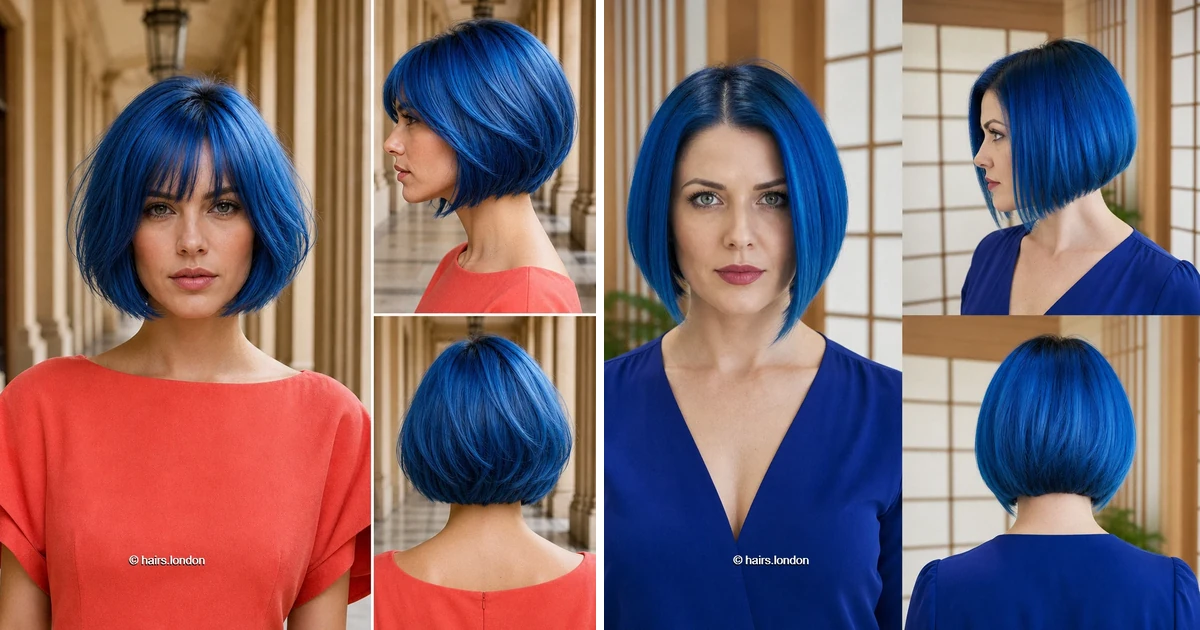
11. Tousled Cobalt Bob with Side-Swept Layers
Side-swept cobalt layers make this short, layered bob look relaxed. The front lands around the jaw, with ends breaking softly. From behind, textured pieces gather above a tidy neckline. The shape has movement rather than a sharply defined perimeter. Encourage natural bends with light cream and gentle scrunching. Dry the fringe away from the face with care if preferred. This approach may suit wavy hair when layers are balanced. Fine hair may need fewer layers to avoid sparse ends. Trim once the neckline spreads or the fringe grows heavy. Ask your stylist how much texture requires daily encouragement at home.
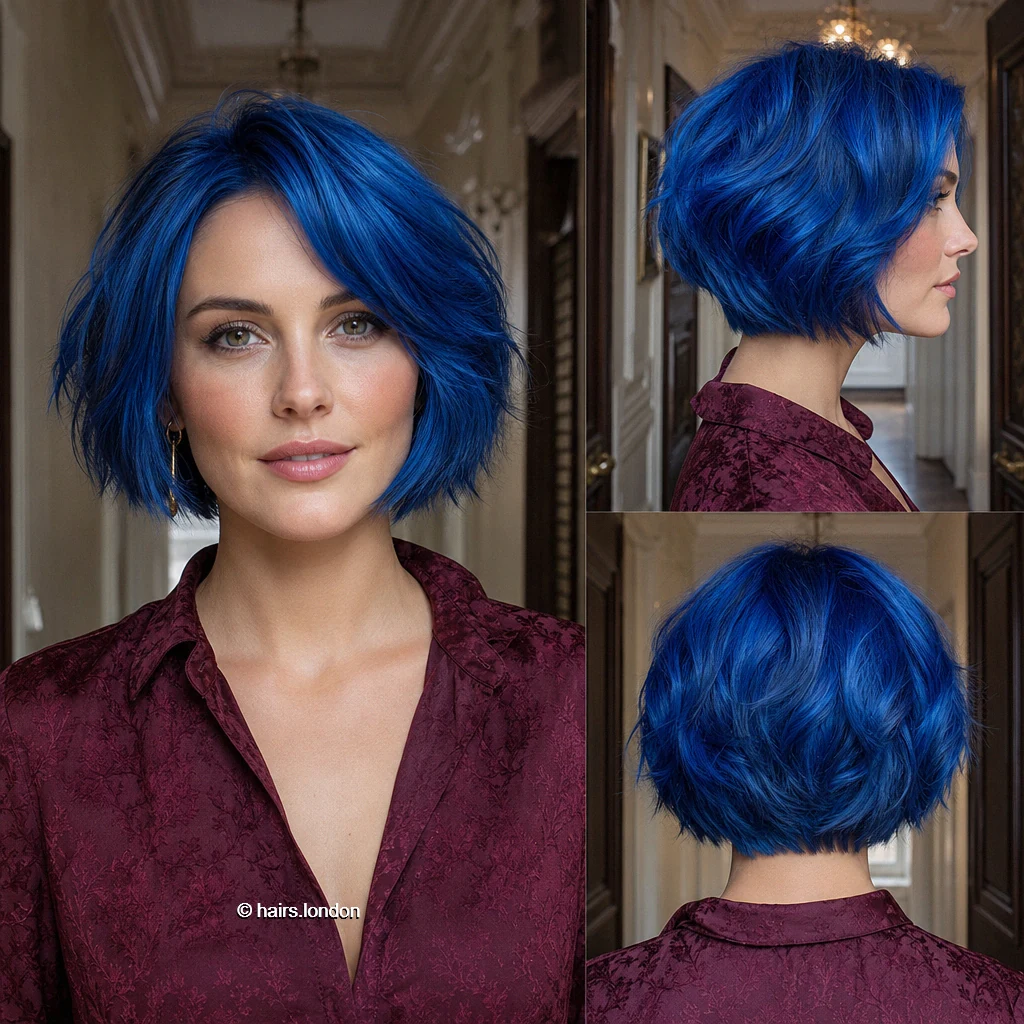
12. Sleek Blue Bob with a Curved Nape
This smooth blue bob pairs a center part with face-framing sides. Its front reaches the jaw, while the nape sits higher. Side and back views show a rounded shape beneath sleek lengths. The lower edge curves inward without appearing heavily choppy. Blow-dry downward, then polish only sections that resist smoothing. Keep oils light so the perimeter retains its shape. This style may work well when hair naturally lies flat. Wavy or thick hair might need more deliberate finishing. Maintain the nape before its compact curve begins growing out. Discuss the most manageable length for your individual growth patterns at home.
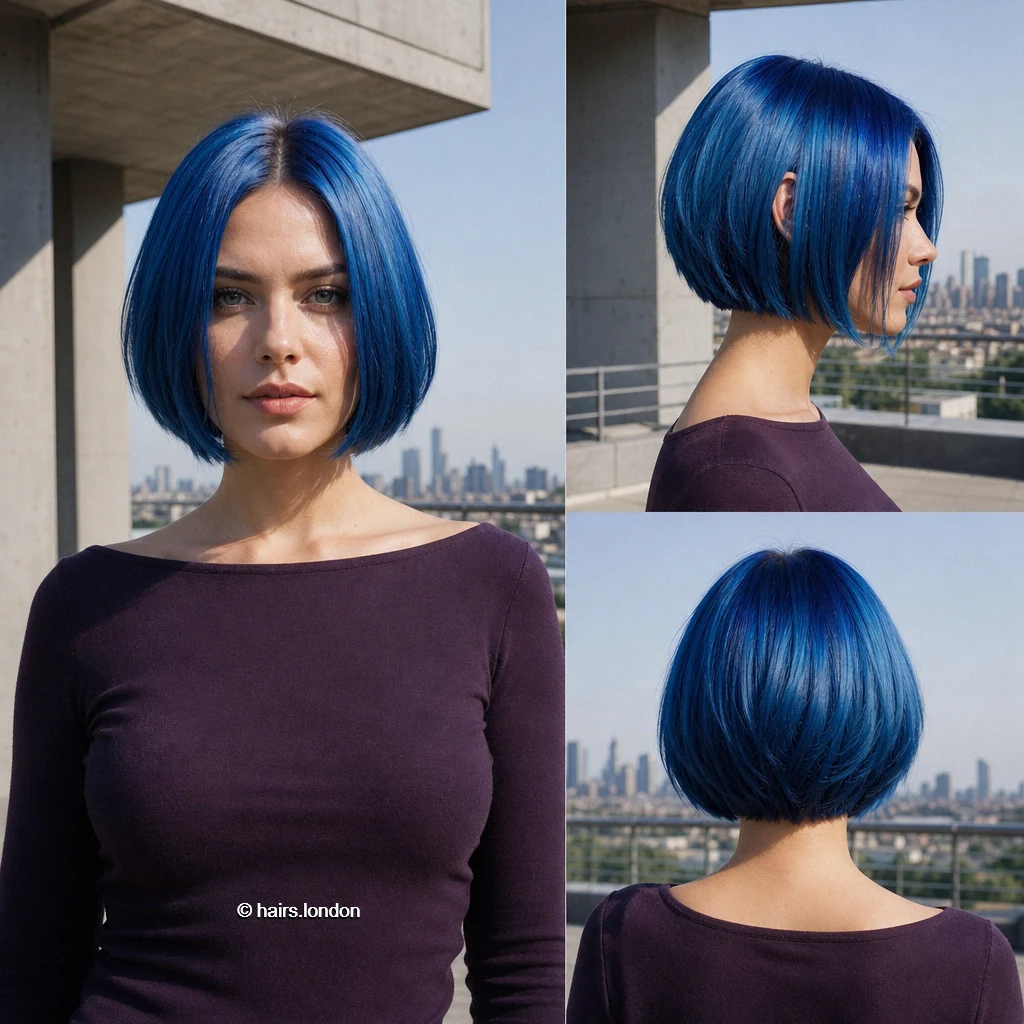
13. Longer Blue Layered Bob with Face-Framing Ends
This longer blue bob has face-framing pieces near the neck. A loose side part sends a sweeping section across the forehead. Visible layers give the sides movement and soften the back. Its perimeter appears less rigid than the shorter polished examples. Use a brush to direct the front away or inward. Apply lightweight smoothing cream mainly through the lower lengths. This shape may offer flexibility for thicker, slightly wavy hair with natural movement. On fine hair, preserve enough weight along the bottom. Trim when the face-framing ends stop falling where intended. Discuss whether this length supports your usual styling habits.
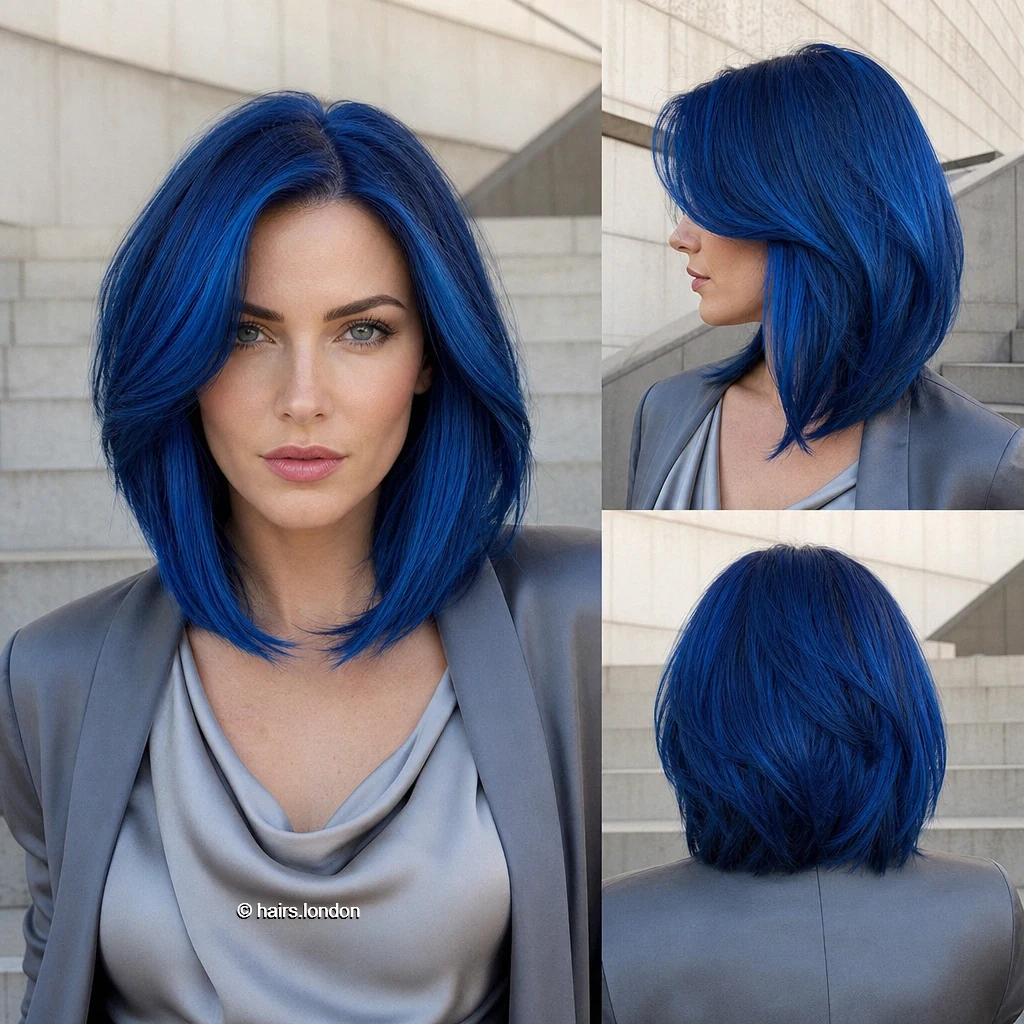
14. Sweeping Blue Bob with a Close Nape
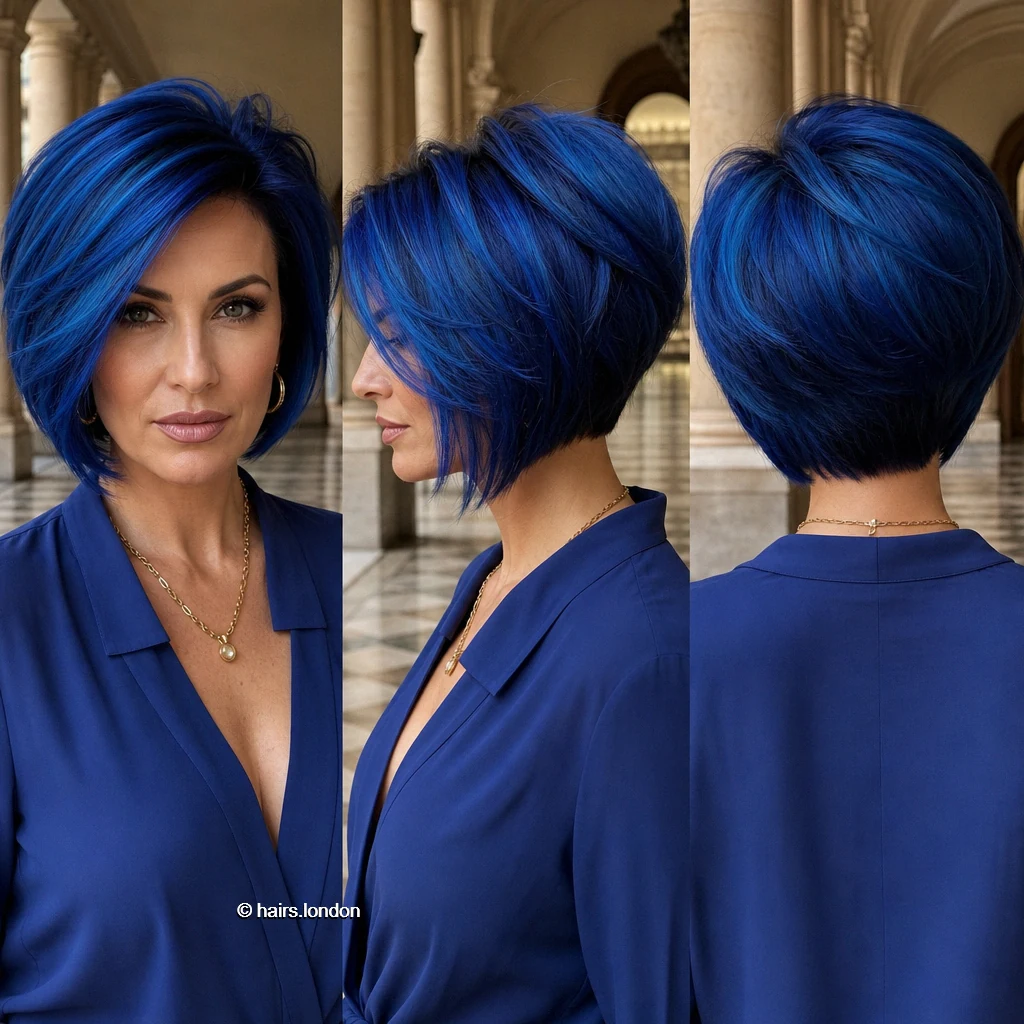
A dramatic side sweep defines this vivid blue bob. The longer front falls beside the jaw and narrows downward. Side and back views show a shorter, close-fitting nape. Fuller upper layers create lift above the compact lower shape. Dry against the part briefly for root volume, then redirect with a brush. Smooth the long front without removing all its movement. This shape may suit density that supports the rounded crown. Ask about weight control if thick hair widens excessively. Maintain the neckline and front tip as separate trim priorities between visits. Discuss how your preferred part affects the finished silhouette.
15. Angled Blue Bob with a Long Front Point
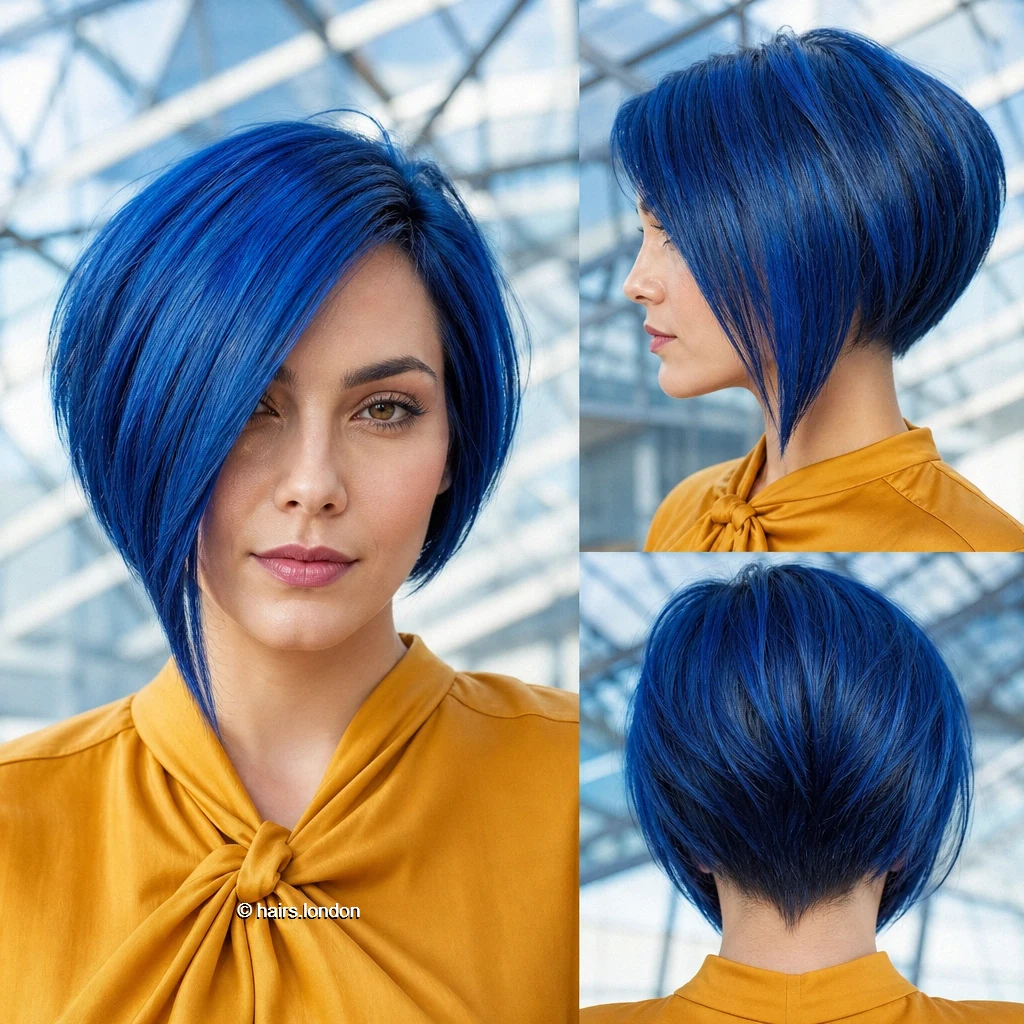
One long blue front point draws attention to this angled bob. The side view contrasts that length with a much shorter nape. Rounded fullness through the back softens the striking profile. A deep side sweep partly covers the forehead. Smooth the front downward to preserve its clean taper. Lift the back lightly while drying rather than flattening it. This silhouette may require regular styling on strongly wavy hair. Fine hair may benefit from keeping the longer point substantial. Trim before the nape grows enough to blur the contrast. Ask your stylist to assess balance from both sides during your consultation.
16. Shaggy Blue Bob with a Wispy Fringe
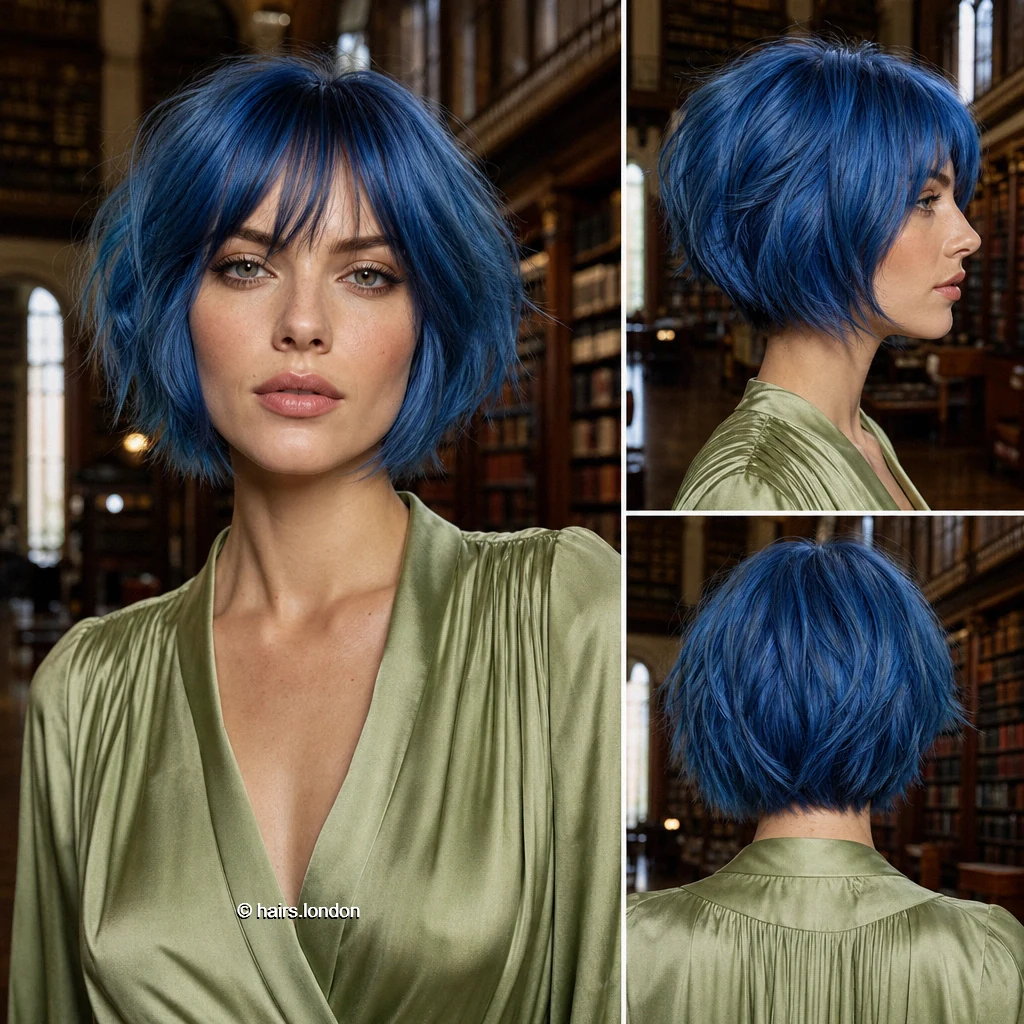
Wispy bangs and uneven blue layers distinguish this shaggy bob. The front ends sit around the jaw with gentle separation. Side and back views reveal a textured, neck-length outline. No solid weight line dominates the airy silhouette. Scrunch damp hair to bring out its natural bends. Style the fringe lightly so it stays soft rather than stiff. This shape may suit waves that already form loose movement. Straight, fine hair might need selective styling and restrained layering. Trim when the bangs obstruct your eyes or ends lose definition between appointments. Discuss how your texture behaves without heat styling at home.
17. Asymmetrical Blue Bob with a Tapered Nape
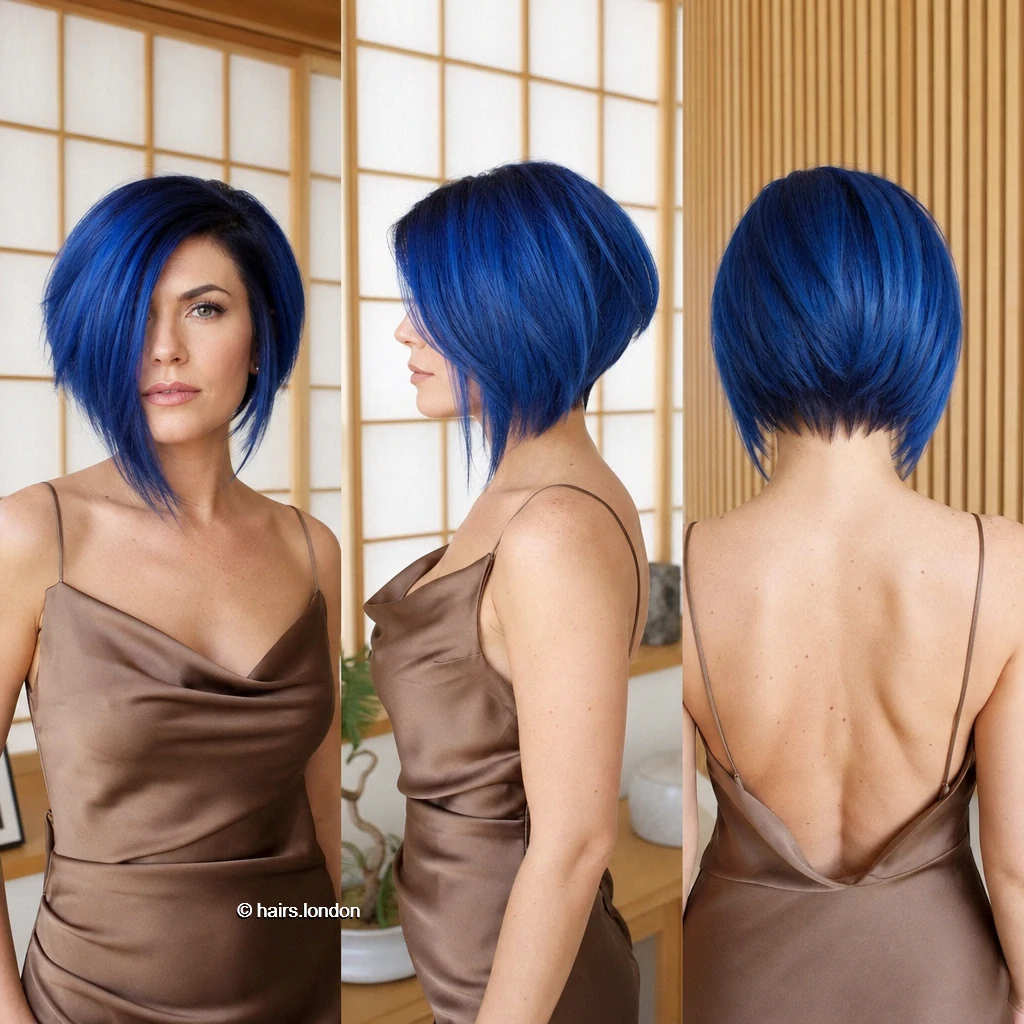
This blue bob places noticeably more length across one side. Its sweeping front drops below the jaw, creating asymmetry. The profile and back show a short, tapered neckline. Smooth upper layers preserve fullness without a heavy lower edge. Direct the longer side across the forehead while drying. Define its tip with minimal product to avoid stringiness. This design may suit someone comfortable styling a consistent part. Strong growth patterns could change how the long side falls. Trim the nape and front separately to preserve contrast and its upkeep. Ask your stylist to check the shape while standing from every angle.
18. Dark Blue Asymmetrical Bob with a Rounded Back
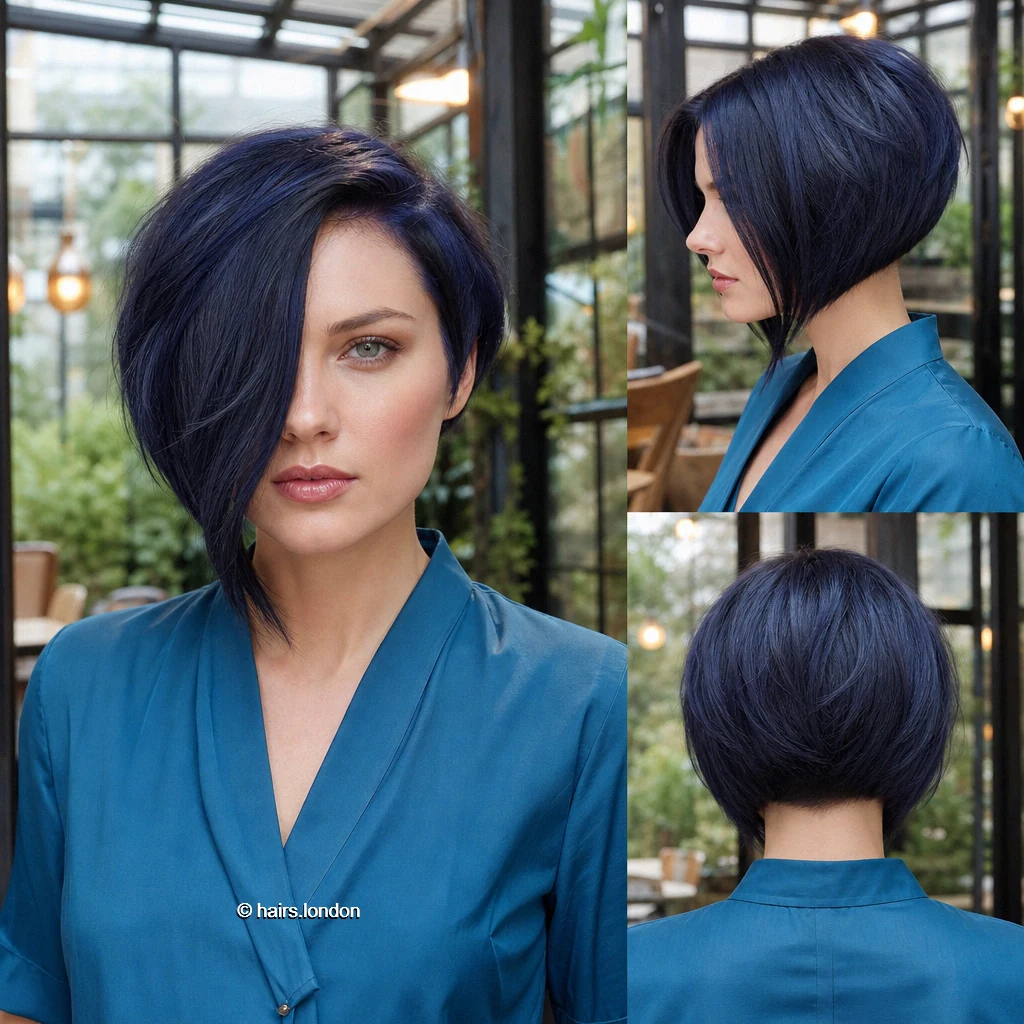
A dark blue side sweep crosses one eye in this bob. The longer front narrows below the jaw on one side. Its visible profile rises toward a short, rounded back. The opposite side sits closer to the face, emphasizing asymmetry. Smooth the sweeping section while keeping lift at the crown. Use a light finishing product to control flyaways, not movement. This shape may need regular adjustment as the front grows. Density and natural parting affect how reliably it stays positioned. Maintain the close neckline before it loses its curve. Discuss whether the eye-covering section suits your daily routine each morning.
How to Choose Your Blue Bob Length and Shape
Start with the point where you want the front to fall: above the jaw, at the chin or down the neck. Then compare it with the side and back views. A-line bobs have visibly longer fronts; a close nape alone does not establish a stacked cut. Rounded shapes keep more apparent fullness through the back, while shaggy layers break up the outline. Consider how your density, growth patterns and willingness to style will affect the shape.
Styling Fine, Thick, Wavy and Curly Textures
Fine hair often benefits from a substantial perimeter and lightweight products; too many layers can leave the ends sparse. Thick hair may need carefully placed internal weight removal rather than extensive surface thinning. For waves, scrunch in a light cream and diffuse gently to preserve bends. For curls, discuss the intended dry shape and shrinkage before cutting, then define rather than brush out the finished pattern. Smooth precise bobs by directing dryer airflow down the hair shaft, without pressing all movement out of the ends.
Keeping Blue Bob Color Fresh
The images show blues ranging from vivid cobalt to deeper navy. Ask a colorist what your starting color would require and how the chosen shade is likely to fade. Use color-safe cleansing and moderate heat, and protect hair during strong sun exposure. A vivid shade may call for more frequent refreshes than a darker blue; schedule these according to visible fading and root growth rather than assuming one timetable fits every bob.
Maintaining the Bob Perimeter and Graduation
Check the outline in the mirror from the front and sides, and ask a stylist to assess the back. Clean, sleek perimeters show growth quickly, especially where a long front contrasts with a short nape. Rounded or visibly graduated areas also change as the neckline grows. Textured bobs can tolerate a softer edge, but their fringe and separated ends still need attention. Book a trim when the defining shape starts to disappear, not simply by the calendar.
What to Discuss with Your Stylist
Bring the front, side and back views of the example you prefer. Point out the front length, parting, fringe, perimeter and amount of fullness you want at the back. Explain how you normally wear your hair, whether you use heat and how much time you can spend styling. Ask how your density, natural texture and neckline growth will change the result, and request a realistic plan for both trims and blue color upkeep.
Frequently Asked Questions
What is the difference between a bob and a lob?
A lob is a longer bob, generally reaching toward the shoulders. Many examples here finish around the jaw or neck; the longer layered option approaches lob territory.
Is an A-line bob the same as a stacked bob?
No. A-line describes a perimeter that is longer in front. Stacked describes visible graduation that builds weight at the back. A cut can have both features, but one does not prove the other.
Which bob shape can help fine hair appear fuller?
A clean, weightier perimeter and restrained layering can preserve fullness. Your stylist should also account for growth patterns and how your hair falls when dry.
How can thick hair avoid looking bulky in a rounded bob?
Ask about discreet internal weight removal while retaining the intended outer shape. Removing too much from the surface can make a smooth bob harder to polish.
Can natural curls work with a blue bob?
Yes, provided the length and layers are planned around curl pattern and shrinkage. Discuss the desired dry outline before cutting rather than copying a straight-haired perimeter exactly.
What should I consider before adding bangs?
Consider your hairline, natural part and how often you will style and trim them. Wispy bangs and a sweeping fringe create different amounts of forehead coverage.
Which blue bob needs the least daily smoothing?
A textured shape that works with your natural wave may need less smoothing than a sleek, precise bob. The easiest choice depends on your own texture and preferred finish.
How do I keep a sleek bob from looking flat?
Dry for gentle root lift, then smooth the lengths and perimeter. Use finishing products sparingly so the hair retains movement.
How often should a precise bob be trimmed?
Trim when its edge, front-to-back contrast or neckline begins losing definition. A sharply outlined or short-nape shape usually shows growth sooner than a softly textured one.
Will vivid blue fade differently from dark navy blue?
The visible change can differ by shade and starting hair color. Ask your colorist what fading and refresh appointments to expect for the specific blue you choose.
Can I grow out an angled bob without an awkward shape?
Yes. Your stylist can gradually rebalance the longer front and shorter back during trims, with the end goal determining how much length to retain.
What photos should I bring to a bob consultation?
Bring front, side and back views when available. Mark the details you want most, especially front length, neckline, fringe, texture and whether the perimeter should look crisp or soft.
Conclusion
The most useful blue bob reference is one whose shape you can picture on your own hair, not just whose color you love. Compare the outline from every available view, then work with your stylist on a length, texture and maintenance plan that fits your routine.


