

11. Shoulder-Grazing Layered Lob With Curtain Pieces
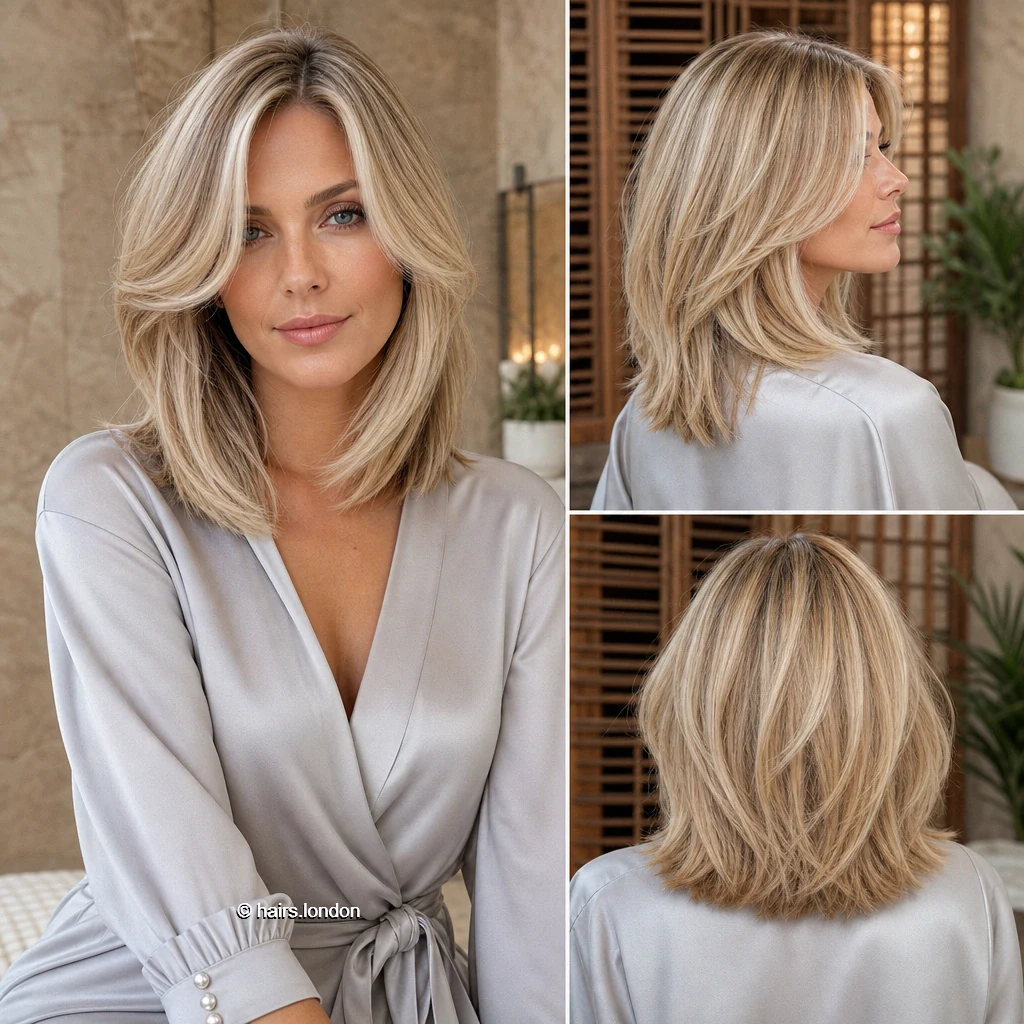
This layered lob reaches the shoulders with feathered, mobile ends. Long curtain pieces sweep away from its nearly centered part. Blonde highlights over darker roots emphasize the airy layering. The back shows movement rather than a solid blunt line. Ask to retain enough perimeter weight for a bob silhouette. Lift the front with a round brush during drying. Use a light cream through the ends to define separation. This length offers flexibility if shorter bobs feel restrictive. Fine hair may need fewer layers to avoid sparse tips. Trim when the feathered ends start catching awkwardly on shoulders during everyday styling.
12. Full Layered Lob With Flipped Ends
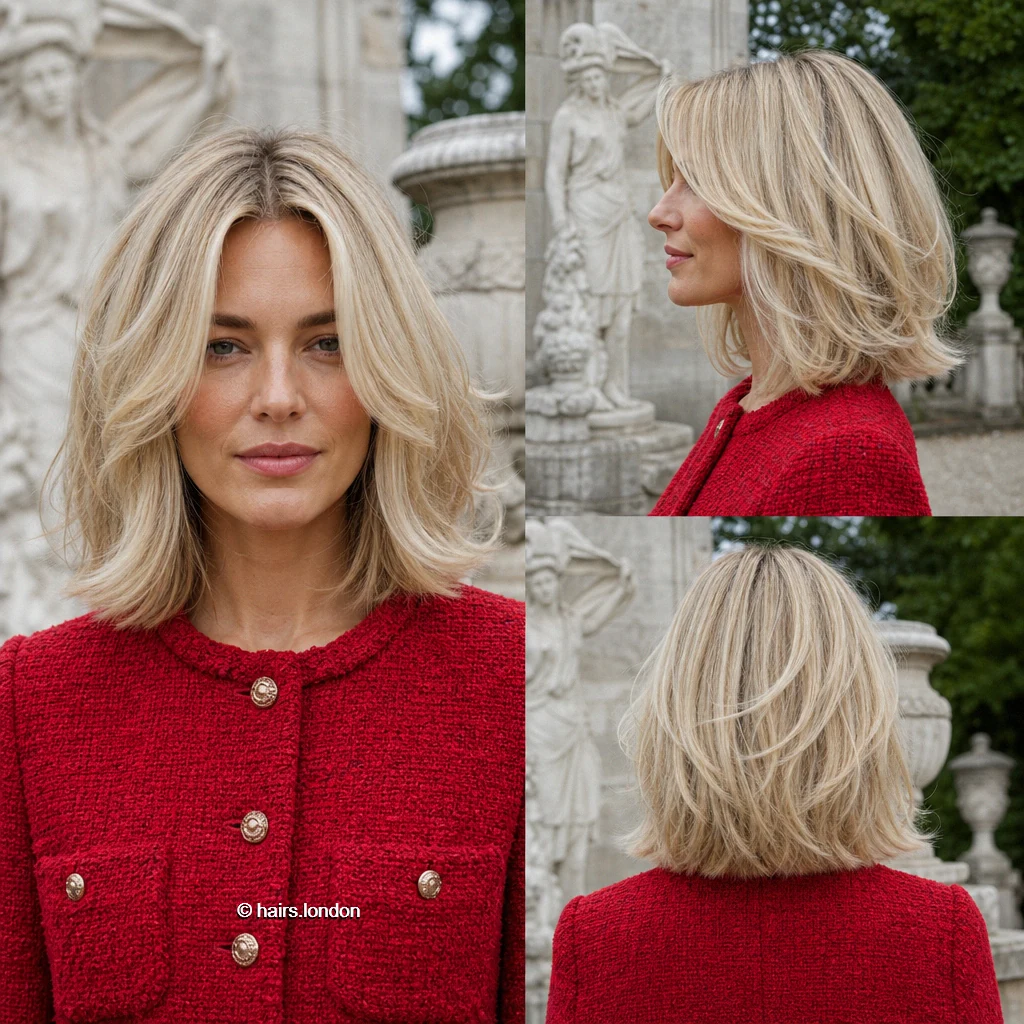
A full curtain opening frames this light blonde layered lob. The ends reach the shoulders and flick outward naturally. Longer layers create movement across the sides and back. Subtle darker tones at the roots deepen the blonde. Ask how much layering preserves fullness in your hair. Dry the front away from the face for openness. Encourage the outward flick with a brush rather than forcing curls. This shoulder length may suit someone wanting occasional styling flexibility. Thick hair could need measured internal weight removal. Maintain the ends when their soft flick becomes uneven or stringy between your regular salon visits.
13. Honey-Blonde Lob With Sweeping Layers
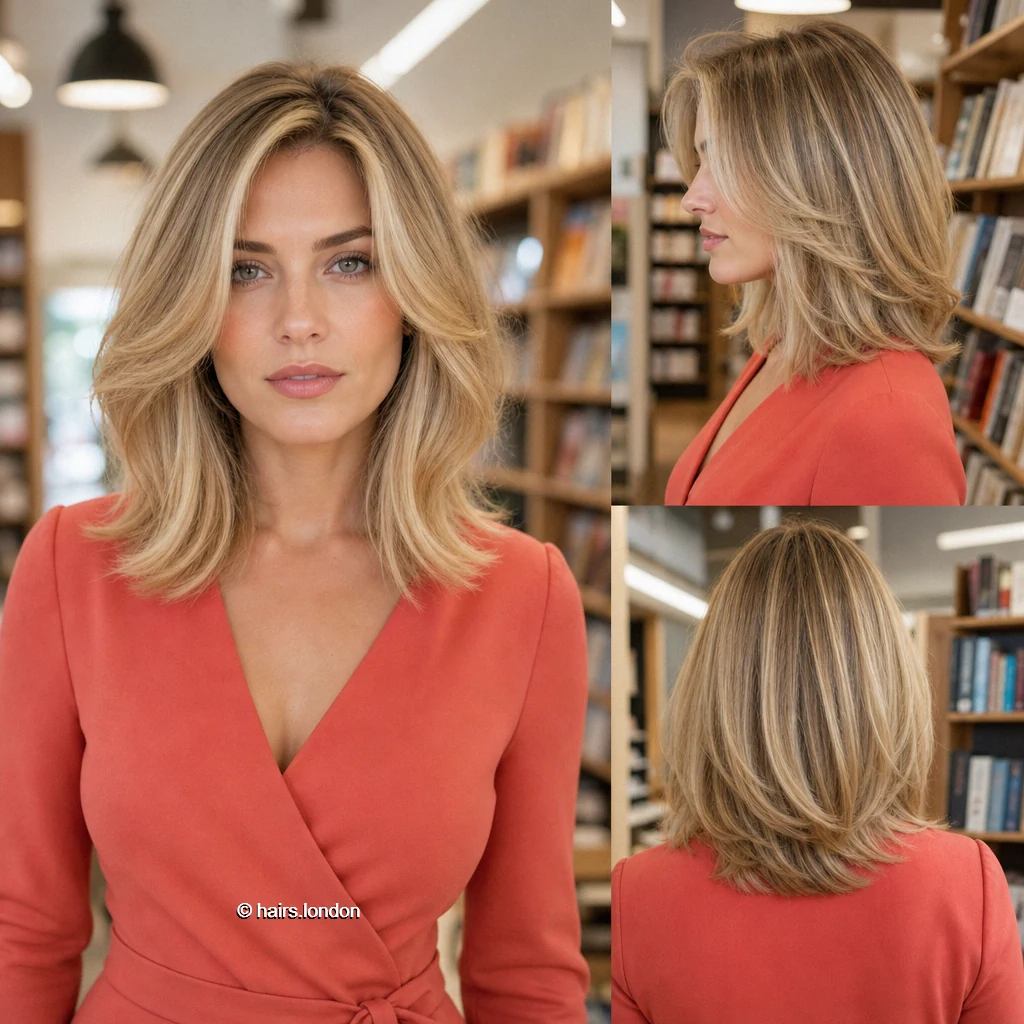
Sweeping layers make this honey-blonde lob appear light and flowing. The longest ends meet the shoulders, while shorter pieces frame cheeks. A loose side part increases lift around the front. The back remains layered without a sharply defined graduation. Ask for a perimeter substantial enough to avoid wispy gaps. Blow-dry the face frame backward using a medium brush. Let the remaining lengths move rather than smoothing every strand. Hair with some natural body may hold this shape easily. Very fine hair could benefit from less layering underneath. Refresh the longest ends when shoulder contact distorts their shape through daily wear.
14. Wavy Neck-Length Bob With Soft Separation
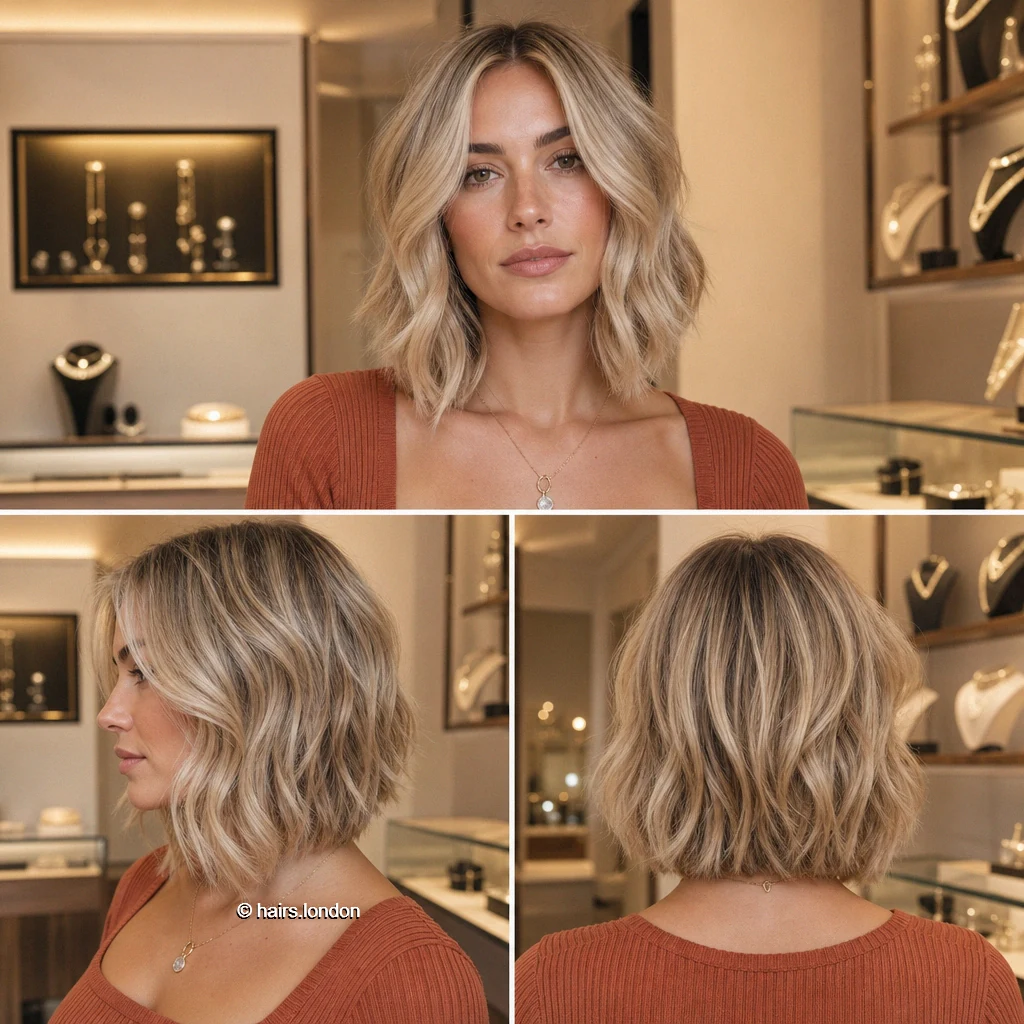
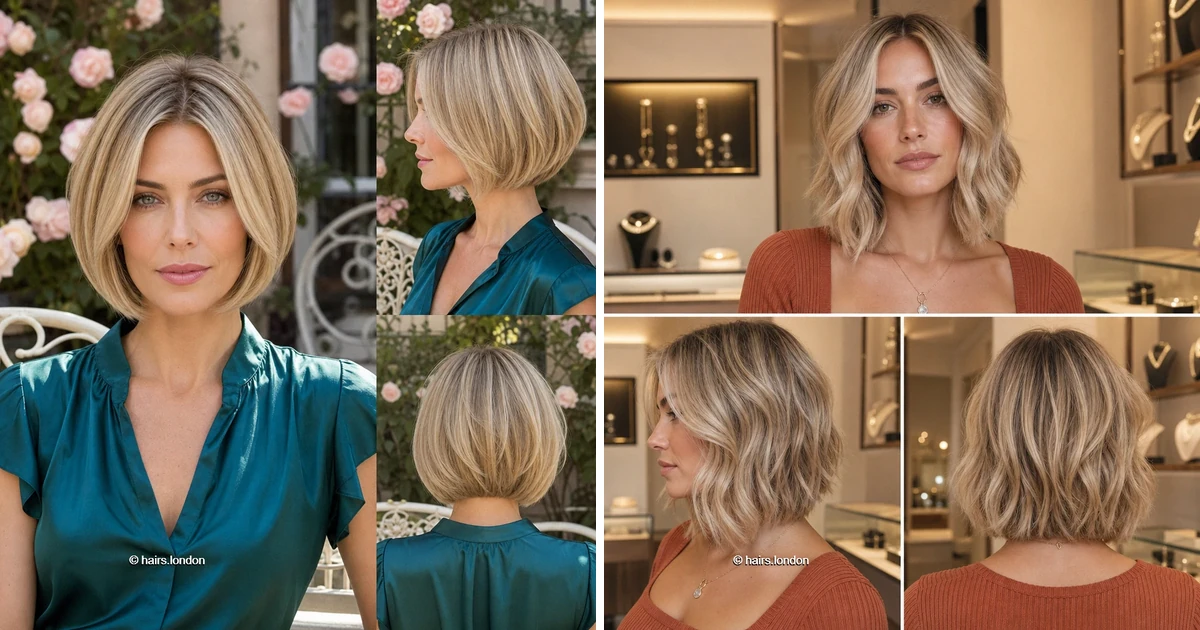
Soft waves bring generous movement to this neck-length blonde bob. Its centered part opens into loose, face-framing bends. Dark roots and pale ribbons make the texture more visible. The back edge appears textured but still holds noticeable weight. Ask for layers that release movement without hollowing the ends. Scrunch damp hair with mousse, then diffuse until nearly dry. Separate finished waves gently rather than brushing through them. Naturally wavy hair may require less daily shaping here. Dense hair could need careful bulk control near the sides. Trim when the lower waves lose their cohesive bob outline between your scheduled cuts.
15. Feathered Shoulder-Length Lob With Side Volume
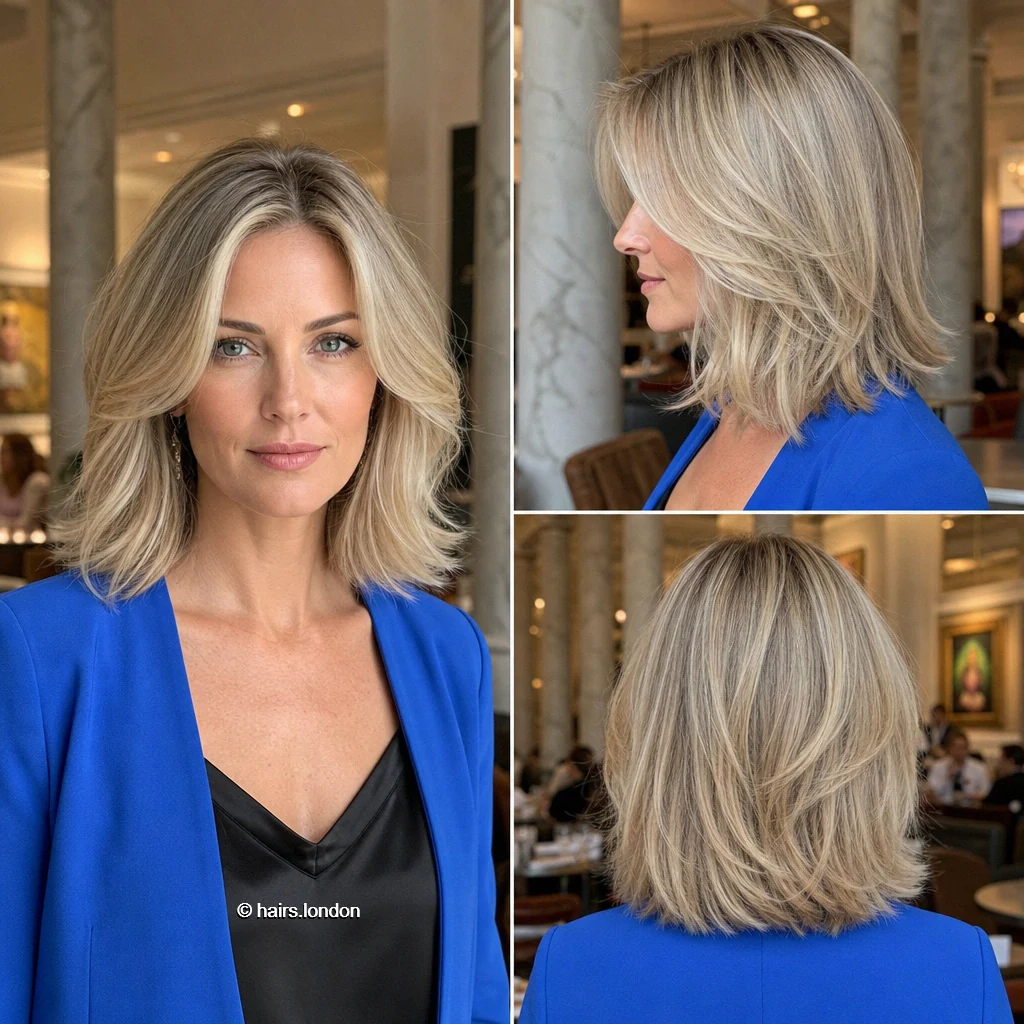
This ash-blonde lob has feathered layers and generous side volume. Its longest pieces skim the shoulders rather than stopping at the jaw. A soft side part sends shorter sections across the cheekbones. The rear view shows layered ends with an airy perimeter. Ask for movement while protecting the length of finer strands. Direct the front away from the face while blow-drying. Finish with minimal cream to keep the ends from clumping. Natural body can help maintain the lifted silhouette. Straight, heavy hair may need more styling to reproduce it. Remove damaged tips before their feathered texture becomes frayed over time.
16. Short Graduated Bob With a Swept Front
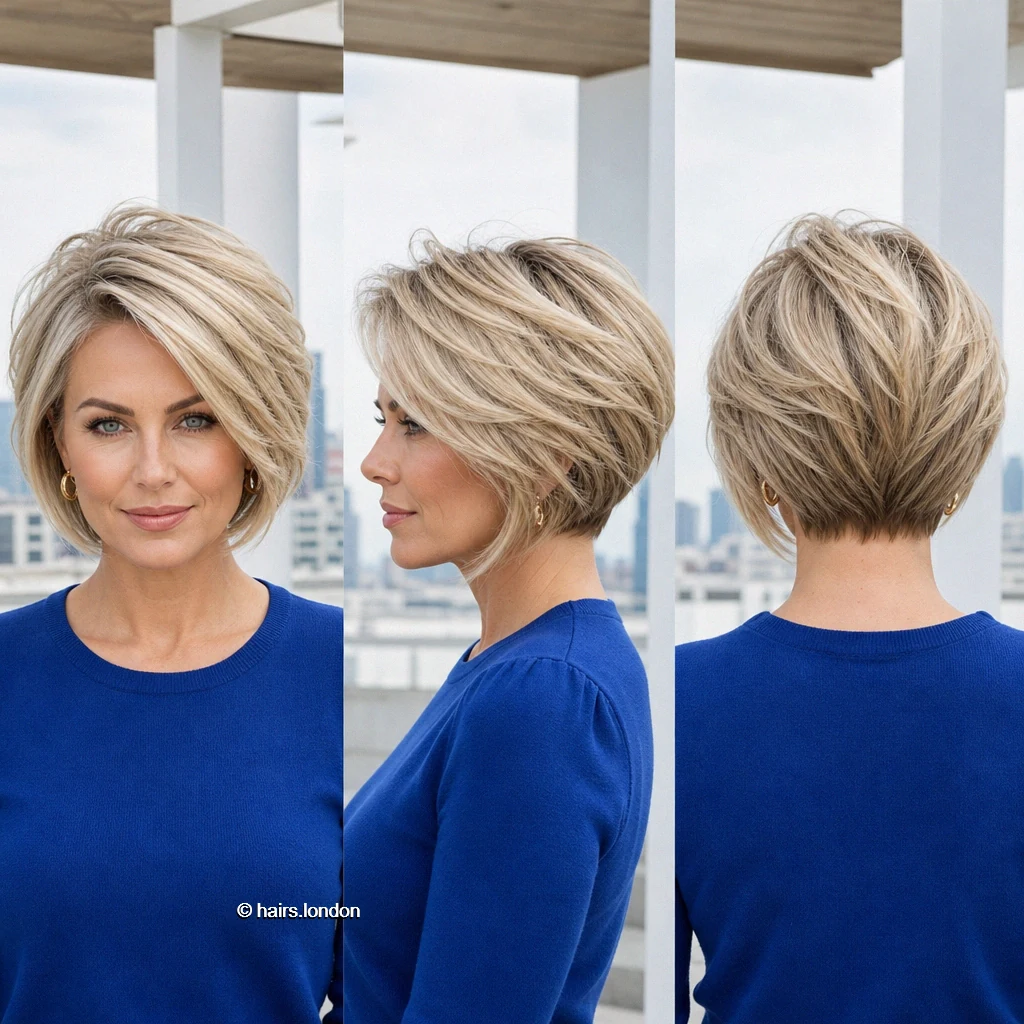
This short blonde bob carries fullness above a closely tapered nape. Side and rear views clearly show graduation through the back. A long swept front approaches the jaw for contrast. Lighter surface pieces highlight the layered, rounded shape. Ask how short the nape should feel against your neck. Blow-dry the crown for lift, then smooth the longer front. Keep styling products light to avoid flattening the graduation. Dense hair may need careful weight management around the crown. Strong nape growth patterns can affect its tidy outline. Plan trims before the shorter back loses its definition between more substantial shaping appointments.
17. Rounded Stacked Bob With a Tapered Nape
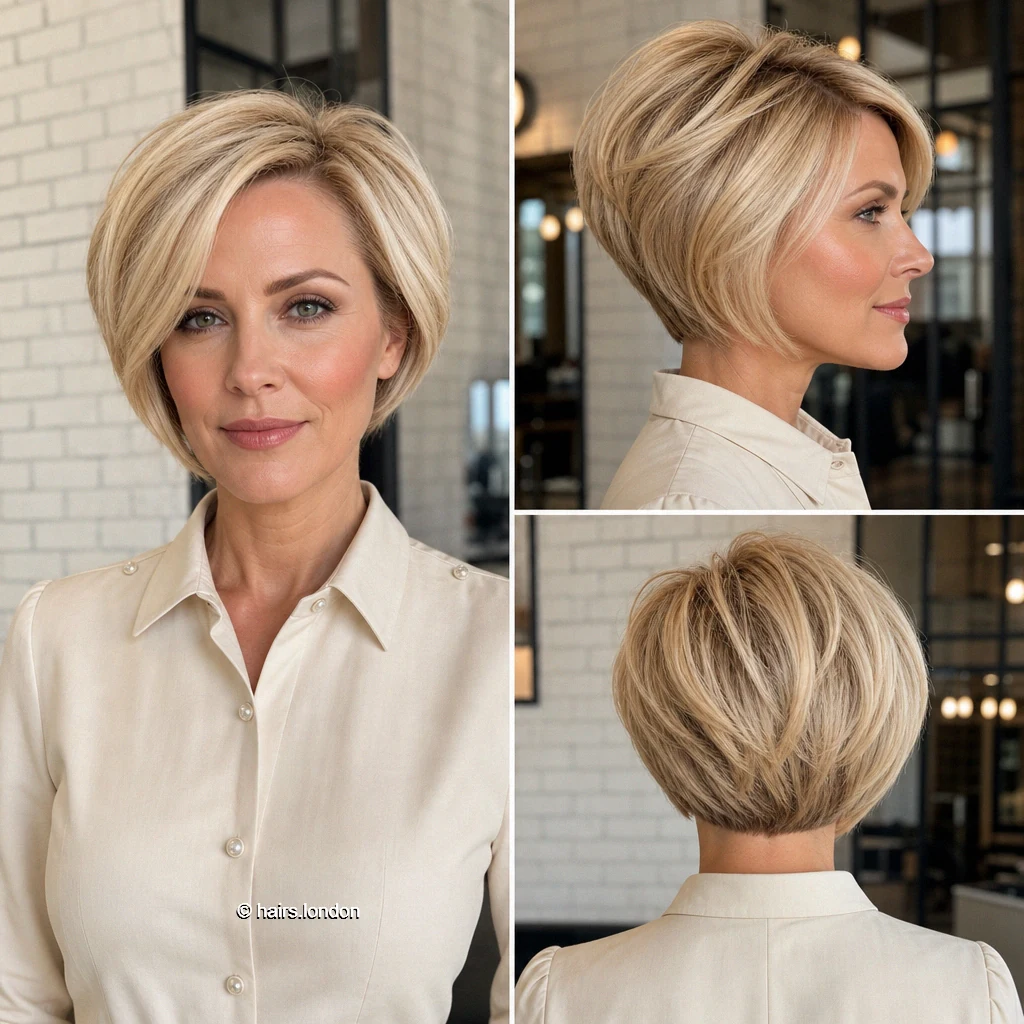
A tapered nape supports the rounded fullness of this blonde bob. Its side view shows visible graduation beneath the fuller crown. The longer front sweeps toward the jaw without dramatic points. Warm blonde strands and darker lowlights emphasize the layered surface. Ask for a stack proportionate to your natural density. Dry the crown upward, then direct the sides smoothly forward. Avoid heavy wax that could separate the lower shape excessively. Thick hair may require thoughtful debulking within the graduation. Fine hair may need lighter products for lasting lift. Rebook when the nape starts losing its clean taper between routine appointments.
18. Sculpted Graduated Bob With Side Volume
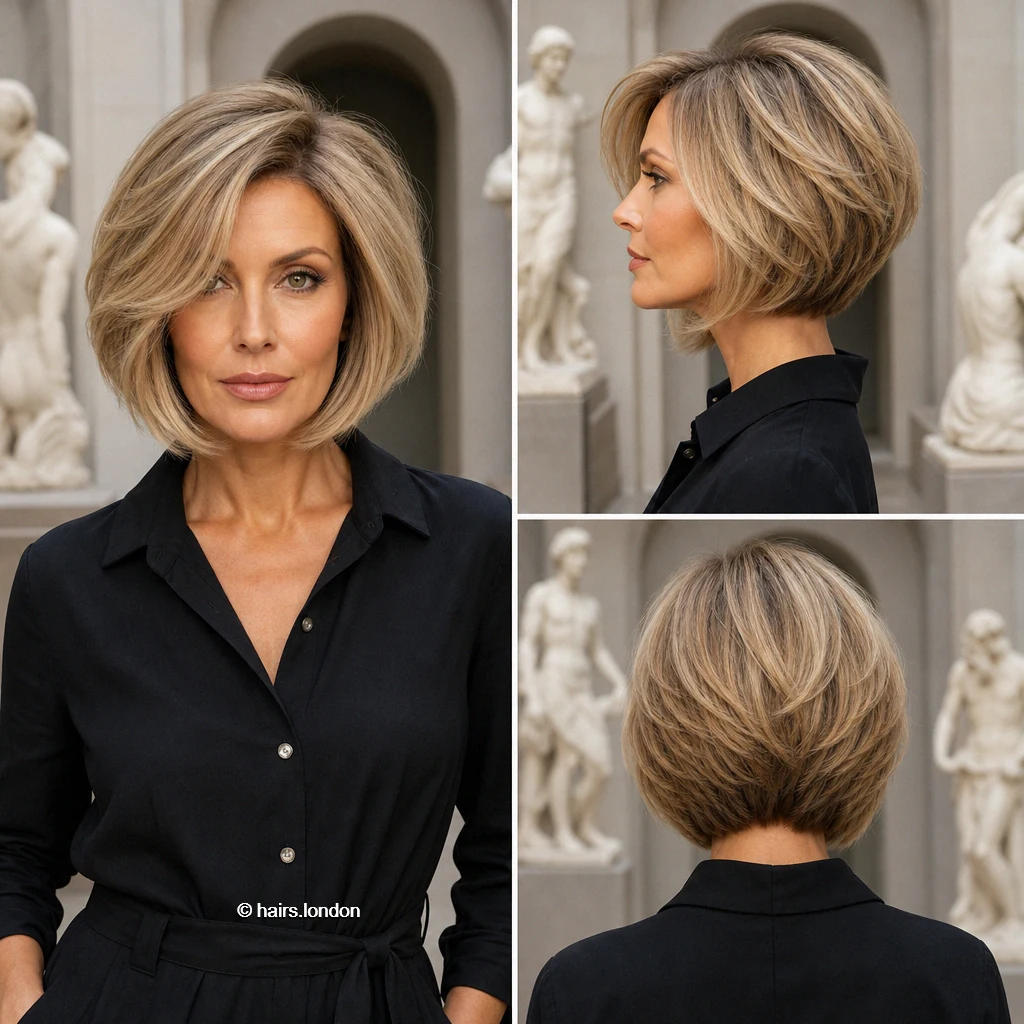
This blonde bob combines sweeping side volume with a graduated back. The rear view shows a narrow nape beneath rounded layers. Front lengths curve around the jaw with a substantial edge. Darker tones underneath add depth to the lighter surface. Ask your stylist to balance crown fullness against nape tightness. Lift the upper layers while drying, then smooth the sides. A flexible finish preserves movement within the sculpted silhouette. Hair density and growth patterns determine how naturally it settles. Very coarse strands may require additional smoothing for this finish. Maintain the nape before its short outline becomes bulky between appointments.
19. Short Layered Bob With Airy Crown Height
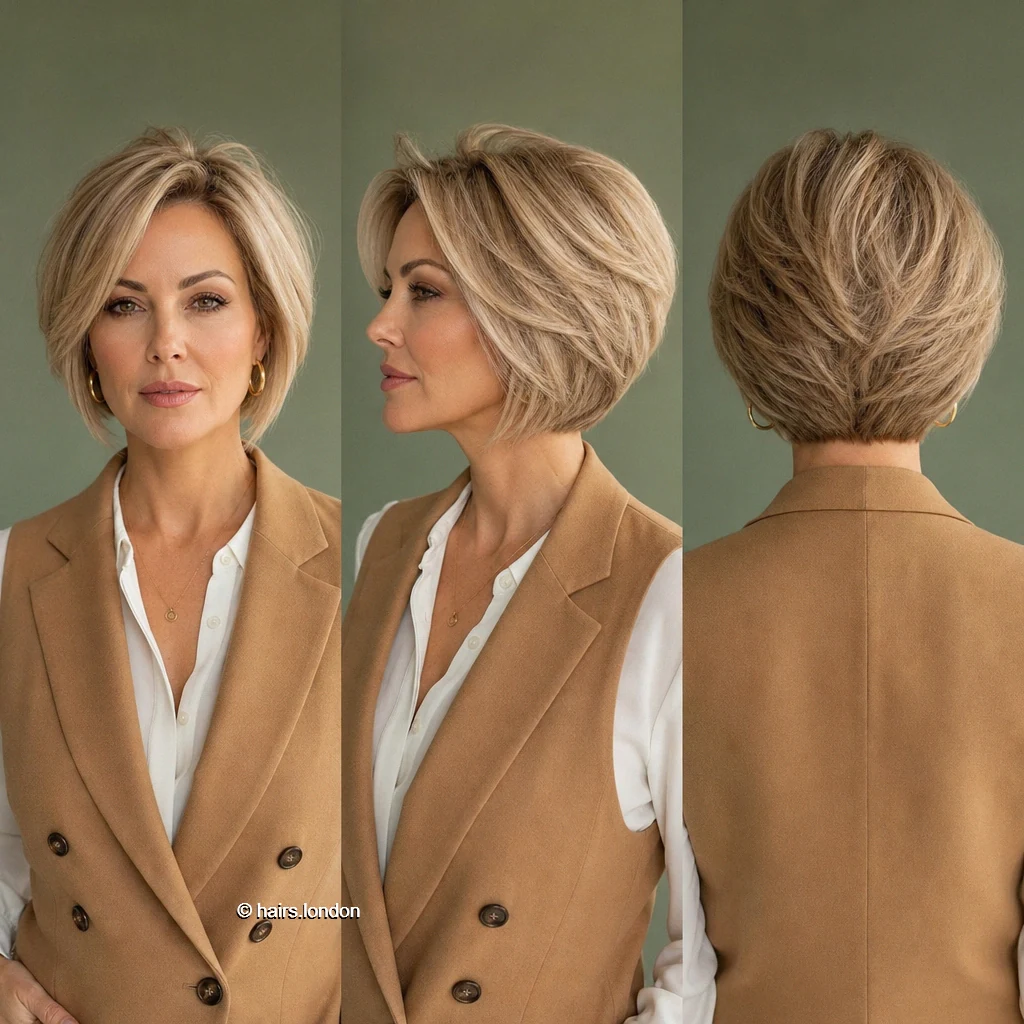
Airy crown layers give this short blonde bob rounded height. A longer side sweep falls softly across the forehead. The side and back views reveal a closely tapered nape. Lighter highlights distinguish the overlapping layers from deeper strands underneath. Ask for softness around the ears rather than sharp points. Direct airflow upward at the roots, then smooth the sweep. Use little product so the layered crown remains touchable. This shape may suit hair that supports natural volume. Flat growth at the crown could demand regular blow-drying. Frequent nape trims preserve the contrast between short and full between your regular appointments.
20. Full Graduated Bob With a Smooth Side Sweep
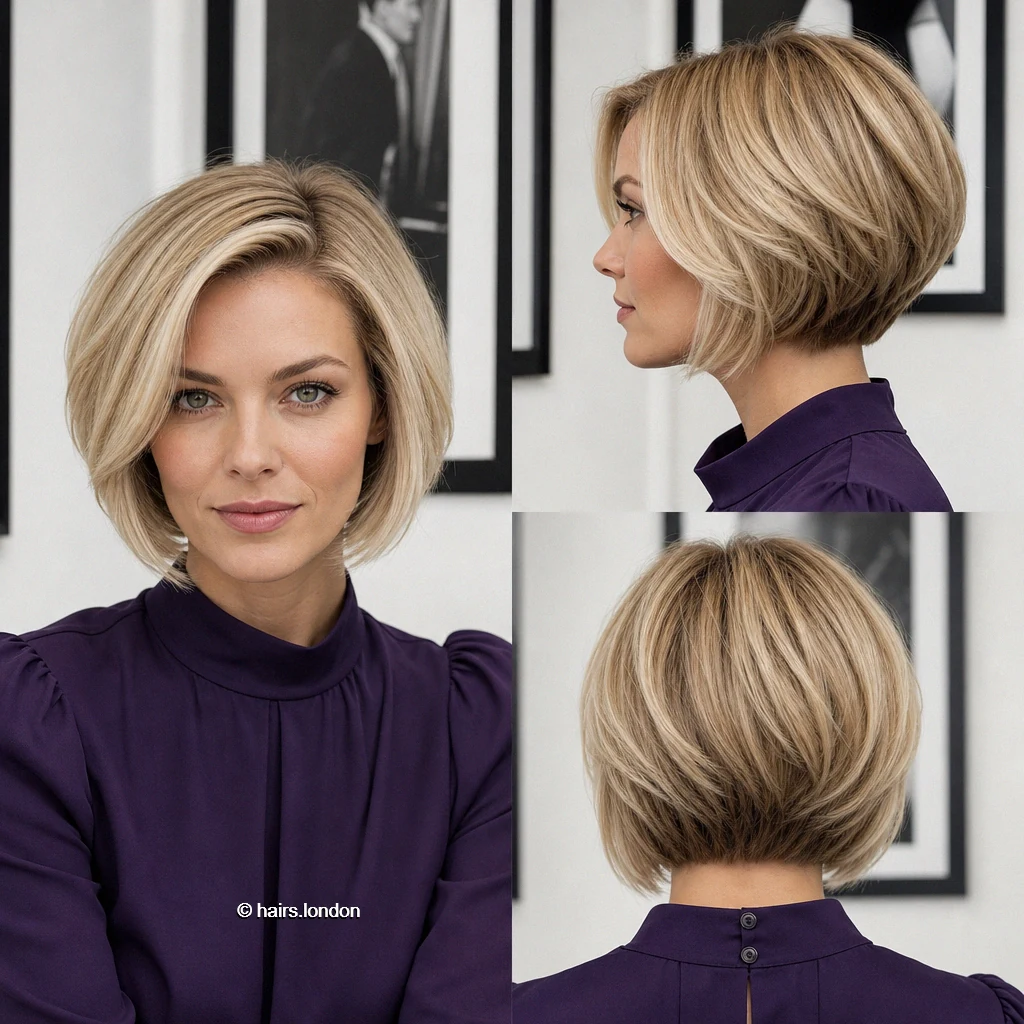
This blonde bob shows pronounced fullness over a shorter back. Visible rear graduation narrows neatly toward the nape. A side sweep extends toward the jaw with smooth edges. Darker underneath tones give its highlighted upper layers dimension. Ask for a back shape that respects your growth pattern. Blow-dry the crown for height while controlling the lower edge. Smooth the longer front without turning it into a rigid curve. Moderate density may help support its rounded weight distribution. Very thick hair could need controlled interior weight removal. Trim the graduated back as soon as its silhouette begins dropping between regular appointments.
How to Choose Your Bob Length and Shape
Start with where you want the ends to sit when your hair is dry: at the jaw, along the neck, or near the shoulders. A compact, full perimeter gives a different result from airy layers, even at the same length. If you like longer front pieces, compare the side view with the back before calling a shape A-line. Choose visible back graduation only if you want its shorter nape and are comfortable maintaining it.
Styling Fine, Thick, Wavy, and Curly Textures
For fine hair, preserve a substantial lower edge and use lightweight root lift rather than heavy creams. For thick hair, ask about selective internal weight removal while keeping the perimeter intact. Encourage natural waves with mousse and gentle diffusing; smooth only pieces that disrupt the outline. Natural curls need a dry-length discussion because shrinkage changes where a bob lands. Keep curl layers and the lower edge balanced so volume does not collect in an unwanted triangle.
Keeping Blonde Bob Color Fresh
These images show blonde shades with varying darker roots and lighter pieces, not a single color formula. Ask your colorist whether your preferred contrast requires root maintenance, occasional toning, or both. Use color-safe washing and heat protection, especially if you regularly blow-dry a smooth bob. A conditioning treatment can help highlighted ends remain supple, but avoid applying so much product that a short cut loses lift.
Maintaining the Bob Perimeter and Graduation
A smooth jaw-length bob shows changes in its edge quickly, so check when the ends begin flipping or sitting unevenly. Textured bobs and layered lobs can often tolerate more growth, though thinning tips still need attention. Short graduated backs usually need earlier appointments: as the nape grows, the rounded weight line shifts downward. Bring front, side, and back reference views to each trim so the intended silhouette stays consistent.
What to Discuss with Your Stylist
Show the image closest to your preferred shape and point out exactly what you like: the front length, amount of layering, fringe, perimeter, or nape. Discuss your density, natural texture, parting, cowlicks, and how much time you will spend styling. Ask what the cut will look like air-dried as well as polished, and whether the pictured blonde contrast fits your color-upkeep preferences. Agree on a practical trim plan before cutting shorter.
Frequently Asked Questions
What is the difference between a bob and a lob?
A bob generally ends around the jaw or neck; a lob is a longer bob that approaches or reaches the shoulders. The exact distinction is less useful than agreeing on where your dry ends should fall.
Is an A-line bob the same as a stacked bob?
No. A-line describes a perimeter that is longer toward the front. Stacked describes visible graduation that builds weight above a shorter back. A cut can have both features, but one does not imply the other.
How can I tell whether a bob has back graduation?
Look for a shorter nape with layers building a rounded weight line above it. A full-looking back alone is not enough to establish a stacked or graduated cut.
Which bob shape can help fine hair look fuller?
A compact bob with a substantial perimeter can make fine ends appear fuller. Keep layering restrained and choose lightweight styling products; the best length still depends on your density and growth pattern.
How can thick hair avoid a bulky bob?
Ask your stylist to assess where weight collects and whether selective internal removal would help. Avoid indiscriminately thinning the ends, which can undermine the bob’s outline.
Can naturally curly hair work with a bob?
Yes, but the cut should account for your curl pattern, shrinkage, and where volume forms. Discuss the finished dry length and ask how the layers will preserve a balanced perimeter.
Should I add a fringe to my bob?
A curtain or side-swept fringe can soften the front, but consider your parting, hairline growth, and willingness to style it. Fringe may also need attention between full haircuts.
How much daily styling does a smooth bob need?
That depends on your natural texture and growth patterns. Some hair needs only directed blow-drying; strong waves or an unruly nape may need more smoothing to maintain a polished outline.
How do I keep a wavy bob from looking too wide?
Keep enough weight at the ends, avoid excessive short layers at the sides, and define waves without brushing them into fluff. Ask your stylist where controlled weight removal would help.
How often should I trim a short graduated bob?
Book a trim when the nape loses its taper or the rounded weight line starts dropping. That often happens sooner than it does with a textured bob or shoulder-length lob.
How can I grow out a bob without an awkward shape?
Have your stylist rebalance the back as it grows and tidy uneven ends without repeatedly shortening the front. A longer, softer perimeter can ease the transition toward a lob.
What should I bring to a bob haircut consultation?
Bring front, side, and back references, and identify the features you want to keep. Explain your usual styling routine, natural texture, color plans, and how often you can return for trims.
Conclusion
A strong bob reference is one that matches both the shape you want and the effort you want to spend maintaining it. Compare these cuts from every visible angle, then ask your stylist to adapt the perimeter, layers, and back shape to how your own hair behaves.