


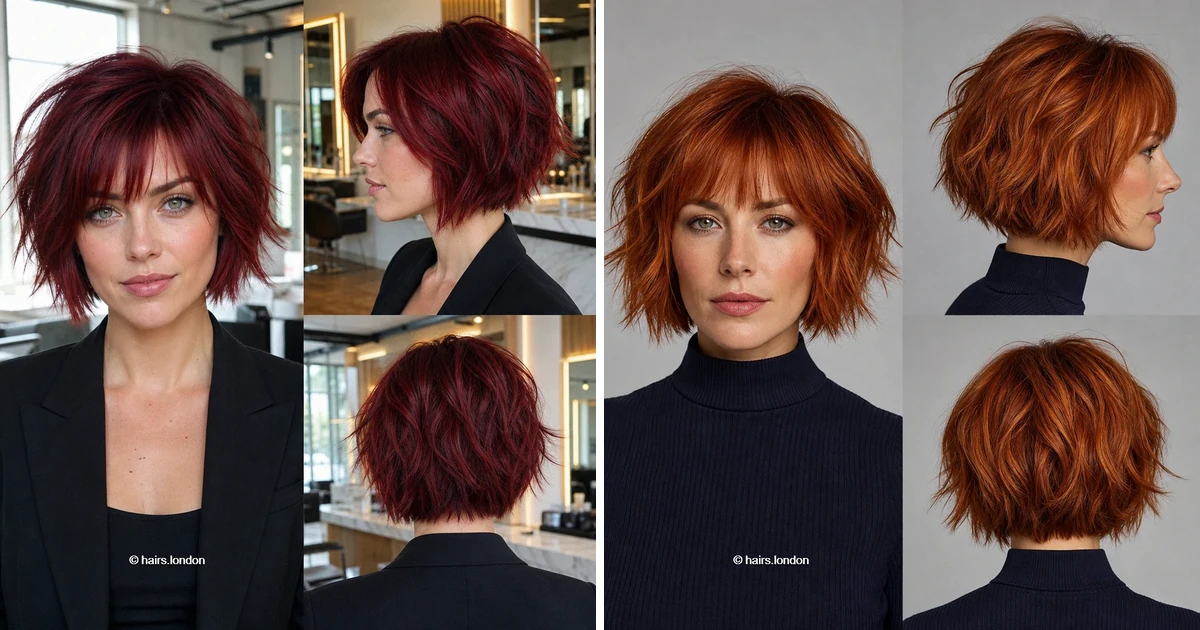
11. Auburn Inverted Bob with a Sweeping Fringe
Rich auburn color highlights the smooth sweep of this bob. The fringe falls diagonally across one side of the forehead. Its front extends below the jaw while the neckline sits higher. Side and back views show rounded volume and visible graduation. Together, those details support the sharply inverted bob description. Smooth the longer front downward, adding modest lift behind it. This contrast needs regular shaping if you prefer precision. Thick hair may require balanced internal weight to avoid heaviness. Ask how your parting affects the visible front lengths. Discuss auburn upkeep and heat protection before selecting daily styling at home.
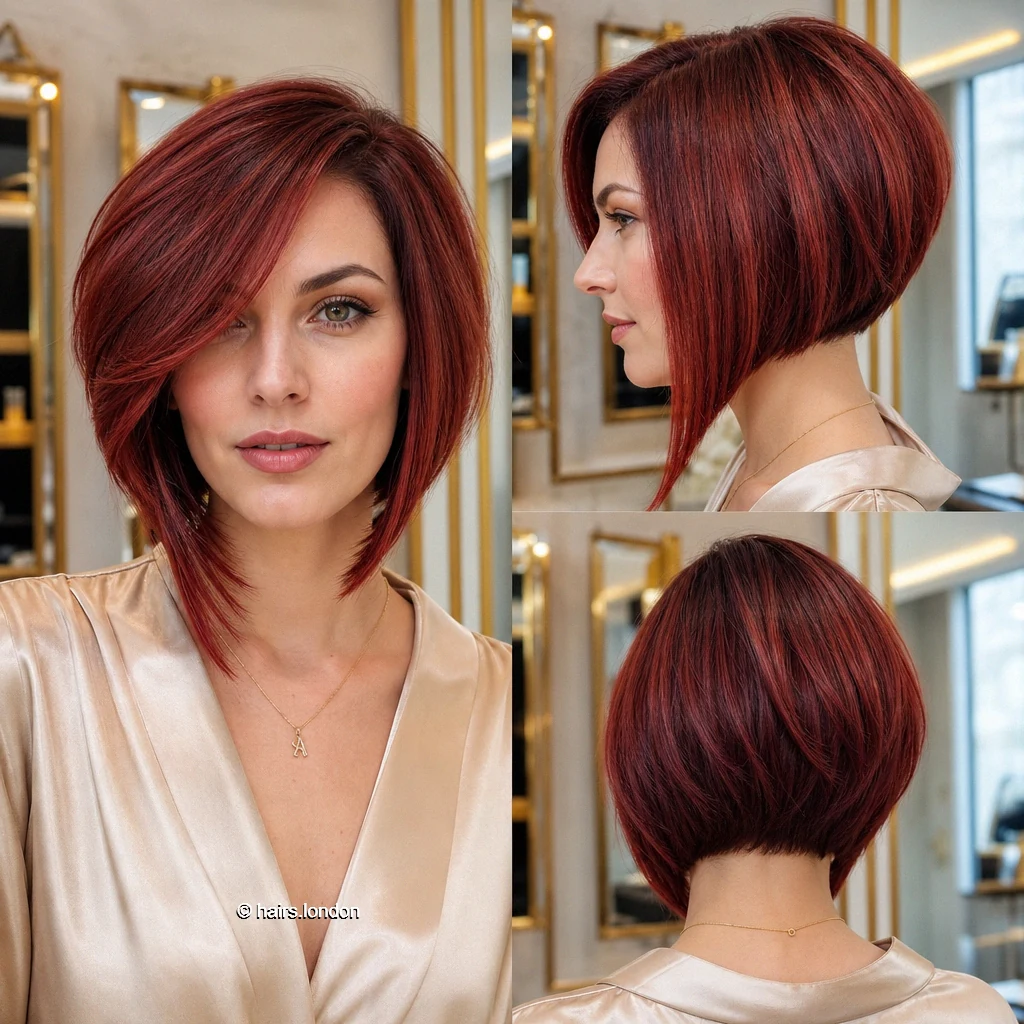
12. Copper Red Graduated Bob with a Dramatic Sweep
Copper red strands accentuate this bob’s rounded back volume. The short neckline contrasts with one longer face framing section. A deep side part creates a broad, eye grazing sweep. Profile and back views show visible graduation through the rear. Blow dry with a brush, directing the front downward smoothly. Leave some movement at the ends instead of overstraightening. The shorter back requires upkeep as its weight line drops. Dense hair may need careful balancing beneath that rounded exterior. Ask whether the sweeping section works with your natural part. Color safe products help maintain the bright copper appearance between color appointments.
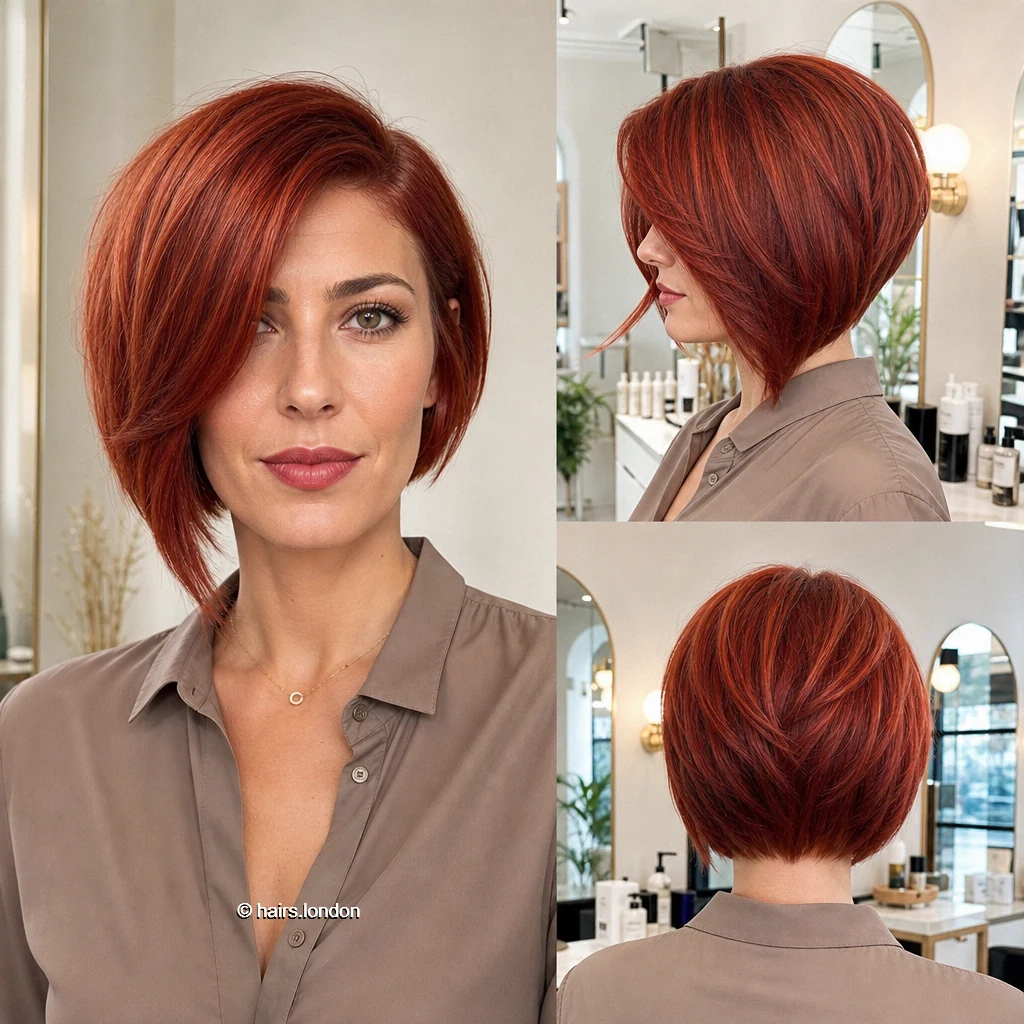
13. Warm Auburn Bob with an Asymmetrical Front
Warm auburn color runs through this sleek, rounded bob. One long front section reaches below the jawline visibly. The opposite side appears shorter, creating an asymmetrical front impression. Side and back views reveal a lifted, graduated rear. A deep side part reinforces the broad forehead sweep. Use controlled brush tension to polish the longer front. Avoid heavy product near the roots, where volume supports balance. This style requires commitment to maintaining its shorter neckline. Ask your stylist to assess density before removing internal weight. Discuss whether the asymmetry suits your preferred everyday parting. Plan adjustments as the longer front grows.
14. Black Cherry Inverted Bob with a Polished Curve
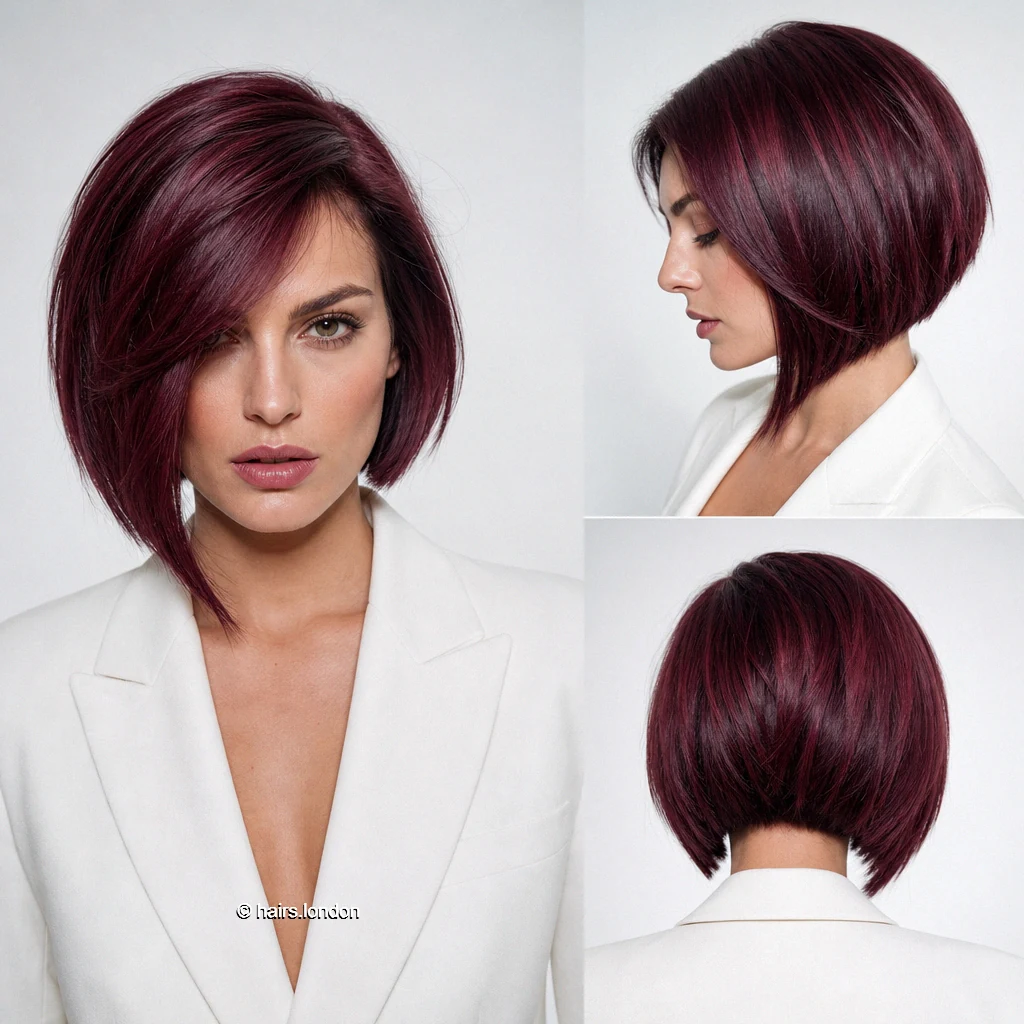
Black cherry tones emphasize this bob’s glossy, rounded silhouette. Its long front falls below the jaw on one side. Visible back graduation lifts the shape above a short neckline. The front to back difference creates a defined inverted profile. A side part moves smooth hair diagonally across the forehead. Dry downward with a brush, then refine only the ends. Too much smoothing product could weigh down the rounded back. Discuss density and nape growth before requesting this precise shape. Maintain the short perimeter with trims suited to growth. Gentle washing helps preserve the dark red color’s richness and visible shine.
15. Crimson Graduated Bob with a Long Face Frame
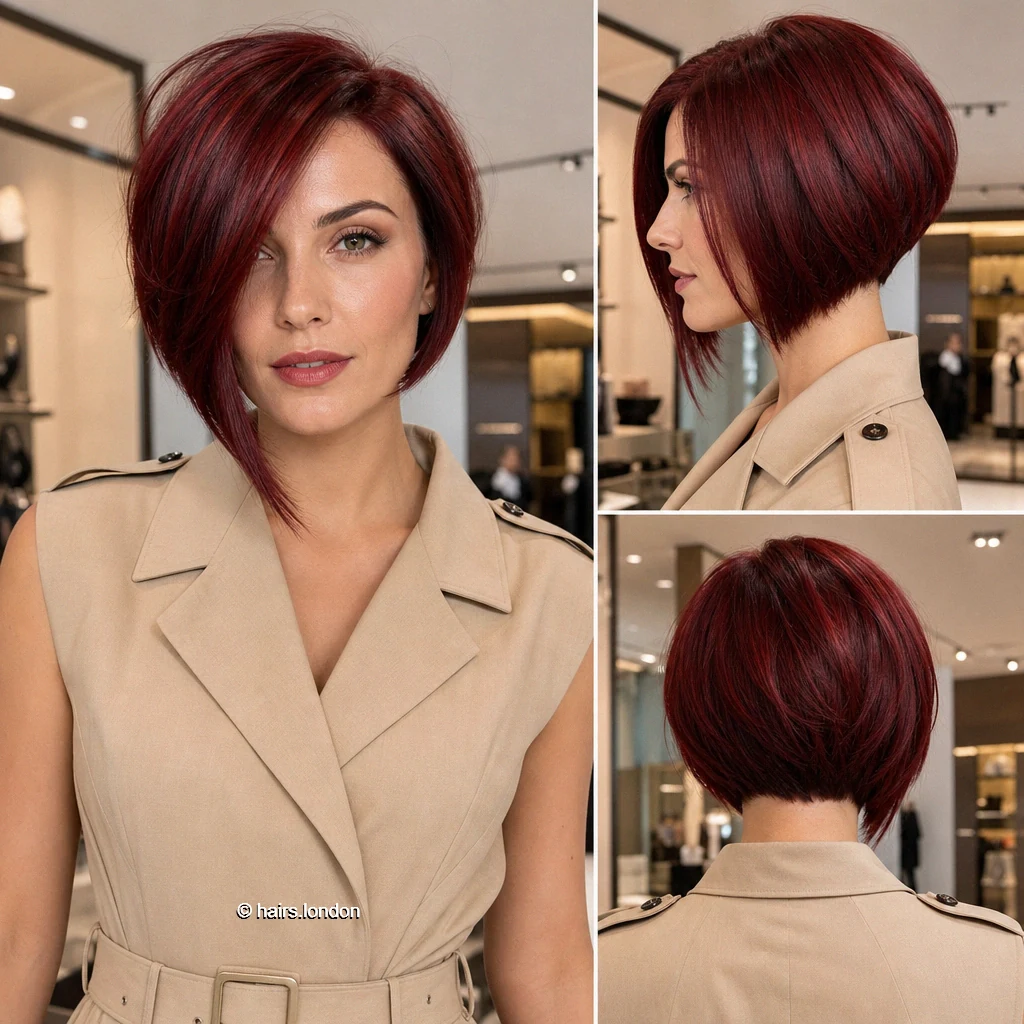
Crimson red color sharpens the contrast in this graduated bob. A long front section falls past the jaw on one side. The side view shows rounded fullness above a shorter neckline. Back strands taper inward, making the graduation especially visible. A side part directs the front diagonally across the forehead. Smooth that length with a brush while preserving rear lift. Dense hair may need internal balancing to keep fullness controlled. Fine hair might require a lighter finish for similar height. Book shaping trims before the back loses its compact outline. Ask about realistic maintenance for both ongoing color and cut.
How to Choose Your Bob Length and Shape
Start with where you want the front to fall: near the jaw for a compact bob or below it for more face-framing length. Then consider the back. An A-line bob is defined by a longer front; a stacked or graduated bob also has visible buildup through the back. If you want the pronounced contrast shown in several images, check how a shorter neckline feels with your growth pattern and styling routine. For a softer option, keep the perimeter closer to one length and add restrained layers.
Styling Fine, Thick, Wavy and Curly Textures
Fine hair often benefits from a substantial perimeter and lightweight root lift rather than extensive texturizing. Thick hair may need carefully placed internal weight removal so a rounded back moves without expanding. For waves, apply a light cream or mousse, scrunch and diffuse gently; smooth only the perimeter if you want a cleaner outline. Natural curls need a shape planned around their dry position and shrinkage. Keep fringe styling separate when it needs a different direction or amount of control.
Keeping Bob Color Fresh
The rose, copper, red and plum shades here have different upkeep demands, so discuss the shade you want rather than assuming one refresh schedule fits all. Wash gently, use heat protection and limit unnecessary hot-tool passes, especially on the exposed front pieces. Ask your colorist how fading, root growth and your starting color may affect the result and the frequency of appointments.
Maintaining the Bob Perimeter and Graduation
A sleek long front makes uneven ends noticeable, while a short graduated neckline changes shape as it grows. Have both checked at trims, along with the back weight line and the way the front meets the sides. Textured bobs can tolerate a softer outline, but their layers still need attention if the ends become bulky or sparse. A fringe may need tidying between full haircut appointments.
What to Discuss with Your Stylist
Bring the relevant front, side and back view, and point to the exact details you want: front length, nape exposure, rounded fullness, fringe and finish. Mention your density, natural texture, parting, growth patterns and how much time you will spend styling. Ask what can be achieved without excessive thinning, how the cut will look air-dried, and what cut and color maintenance will involve.
Frequently Asked Questions
What is the difference between a bob and a lob?
A bob typically finishes around the jaw or neck; a lob is a longer bob that approaches the shoulders. The exact distinction depends on the finished shape.
Is an A-line bob the same as a stacked bob?
No. A-line describes a perimeter that becomes longer toward the front. Stacked describes visible graduation and buildup at the back; a cut can have both features.
When is it accurate to call a bob inverted?
Use inverted when the visible cut has a distinctly shorter, graduated back and longer front, creating a pronounced front-to-back contrast.
Will a graduated bob work with fine hair?
It can, if the graduation creates lift without leaving the perimeter too thin. Ask your stylist to assess density before deciding how much to layer.
How can thick hair avoid looking bulky in a bob?
A stylist can balance weight internally while preserving a strong outline. The placement matters more than removing as much hair as possible.
Can I wear a bob with natural curls?
Yes, but plan the length around curl shrinkage and choose layers that work with your dry curl pattern. A cut designed only for a straightened finish may behave differently.
Which fringe needs less daily attention?
A longer side sweep may be easier to blend into the rest of the bob than short, defined bangs. Your growth pattern and natural texture still matter.
How do I style a smooth bob without flattening it?
Direct the dryer downward over the perimeter, then add gentle lift at the roots. Use finishing product sparingly, particularly around a graduated back.
What is a quick way to style a textured bob?
Work a lightweight mousse or cream through damp hair, scrunch and let it air-dry or diffuse. Refine the fringe separately if needed.
How often does a precision bob need a trim?
Book a trim when its perimeter or short neckline begins losing the shape you want. Sharply graduated cuts often show growth sooner than softly textured ones.
Can an angled bob grow out gracefully?
Yes. Periodic reshaping can bring the shorter back closer to the front while keeping the ends tidy. Tell your stylist if growing it longer is the goal.
What should I ask before choosing vivid red or pink color?
Discuss your starting color, likely fading, refresh appointments and the products you use at home. That gives you a realistic maintenance plan.
Conclusion
The best choice among these bob haircut ideas is the one whose front length, back shape and texture you can maintain comfortably. Save the views that show those details clearly, then use them to plan a cut—and, if you want one, a color—that works with your own hair.


