


11. Raspberry Short Bob with Piecey Fringe
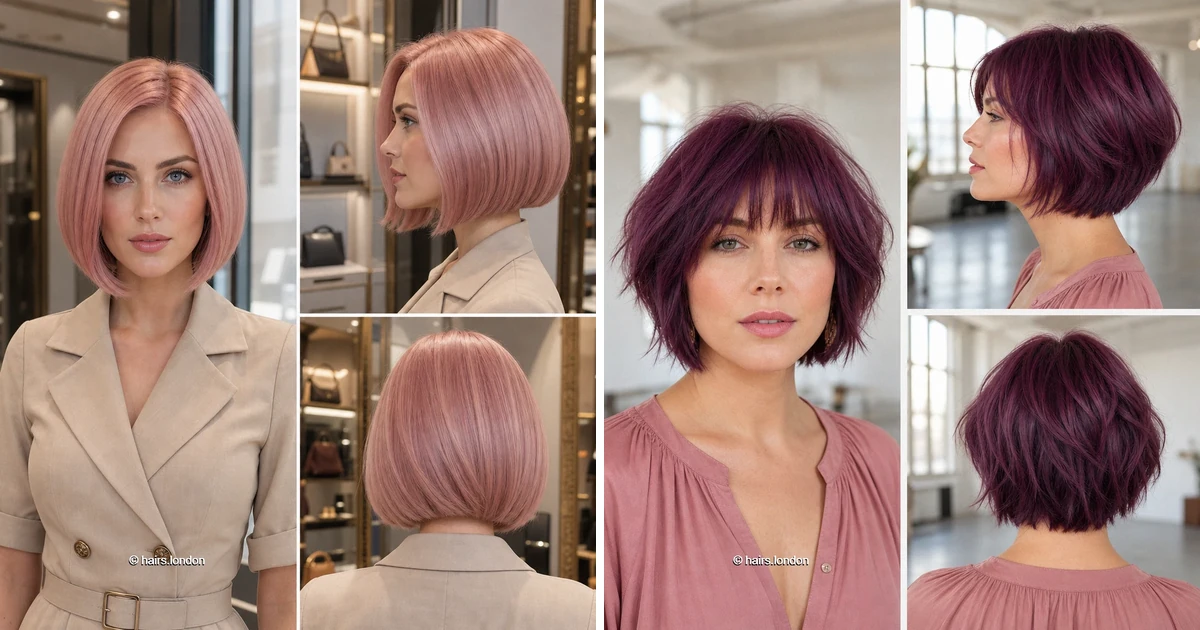
Raspberry pink gives this compact layered bob strong visual impact. A piecey side fringe crosses the forehead above the brows. The sides finish around the jaw with feathery tips. From behind, short, softly separated layers break up the exposed neck length. This is a textured bob rather than a solid perimeter. Ask your stylist to tailor fringe depth to growth patterns. Dry the fringe first, directing it across with your fingers. A touch of paste defines tips without clumping delicate sections. This cut may suit hair that responds well to layering. Frequent fringe checks help maintain its light, open appearance.
12. Mauve Shaggy Bob with Light Fringe
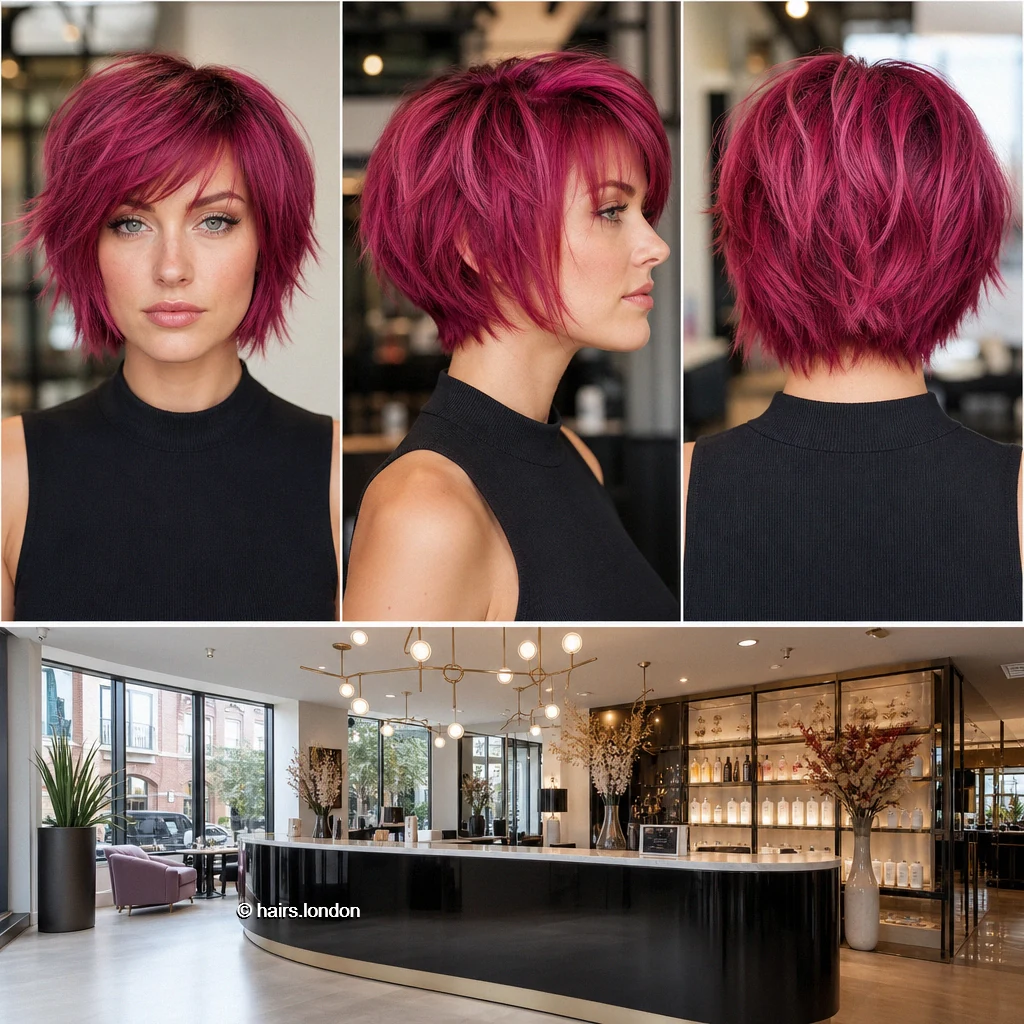
Soft mauve color complements the airy texture of this bob. A light, softly separated fringe rests across the upper forehead above separated sides. The jaw length outline looks deliberately loose and feathered. Side and back views show movement through multiple layers. Ask for softness without removing all weight from the ends. Enhance existing waves with a small amount of styling foam. Diffuse gently, then separate only the pieces needing extra definition. This shape may work for hair with natural body. Straight, low density hair might need more daily styling effort. Keep the fringe clear and reshape layers when they collapse.
13. Deep Plum Angled Bob with Rounded Graduation
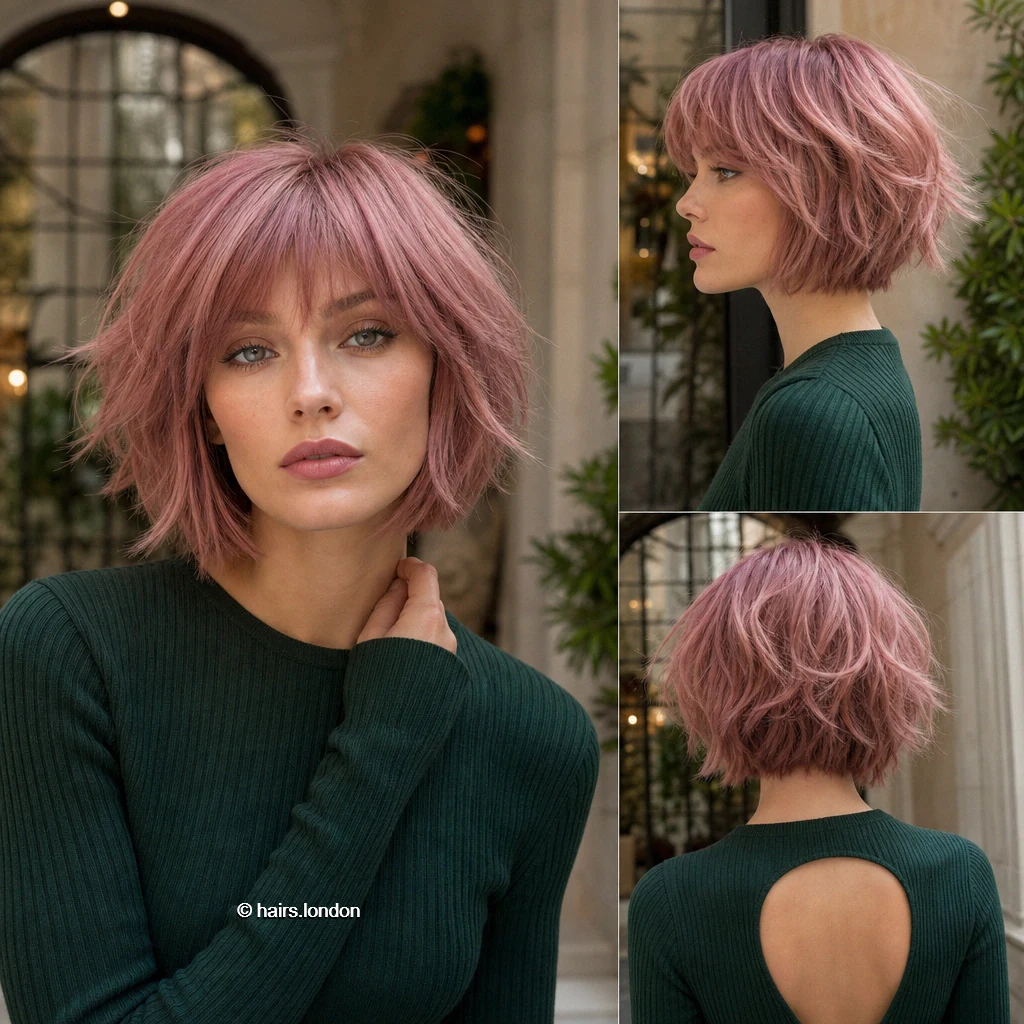
Deep plum tones bring out this bob’s smooth directional shape. A long, smooth, sweeping front extends well below the jaw. It rises toward a shorter back that exposes the neck. The rear view shows smooth, rounded fullness over shorter lower lengths. That visible graduation distinguishes it from an angled line alone. Discuss how much front weight your texture can comfortably support. Blow dry the longer section smooth, following its downward direction. Keep crown lift modest so the silhouette remains controlled. This shape suits those willing to preserve its sharp contrast. Schedule trims before the neck grows beyond its compact outline.
14. Lilac A-Line Bob with a Rounded Back
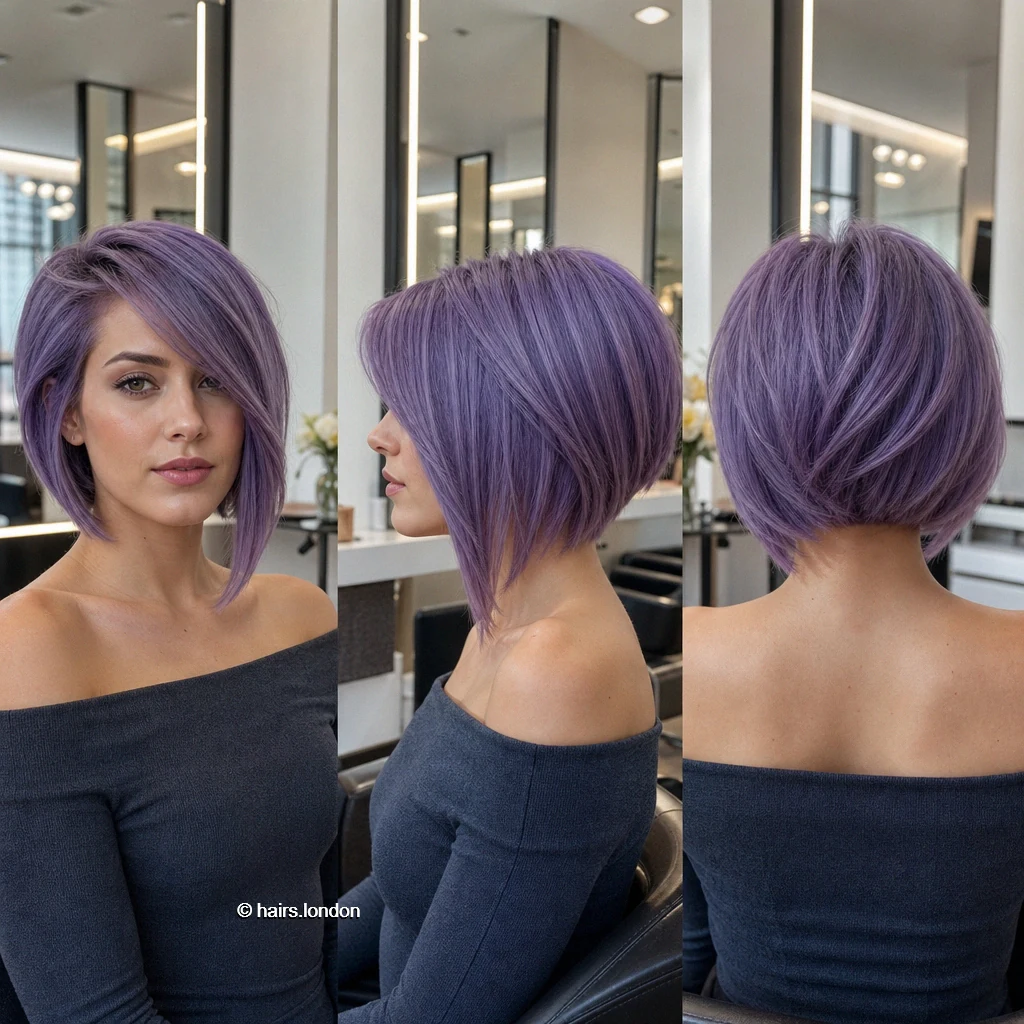
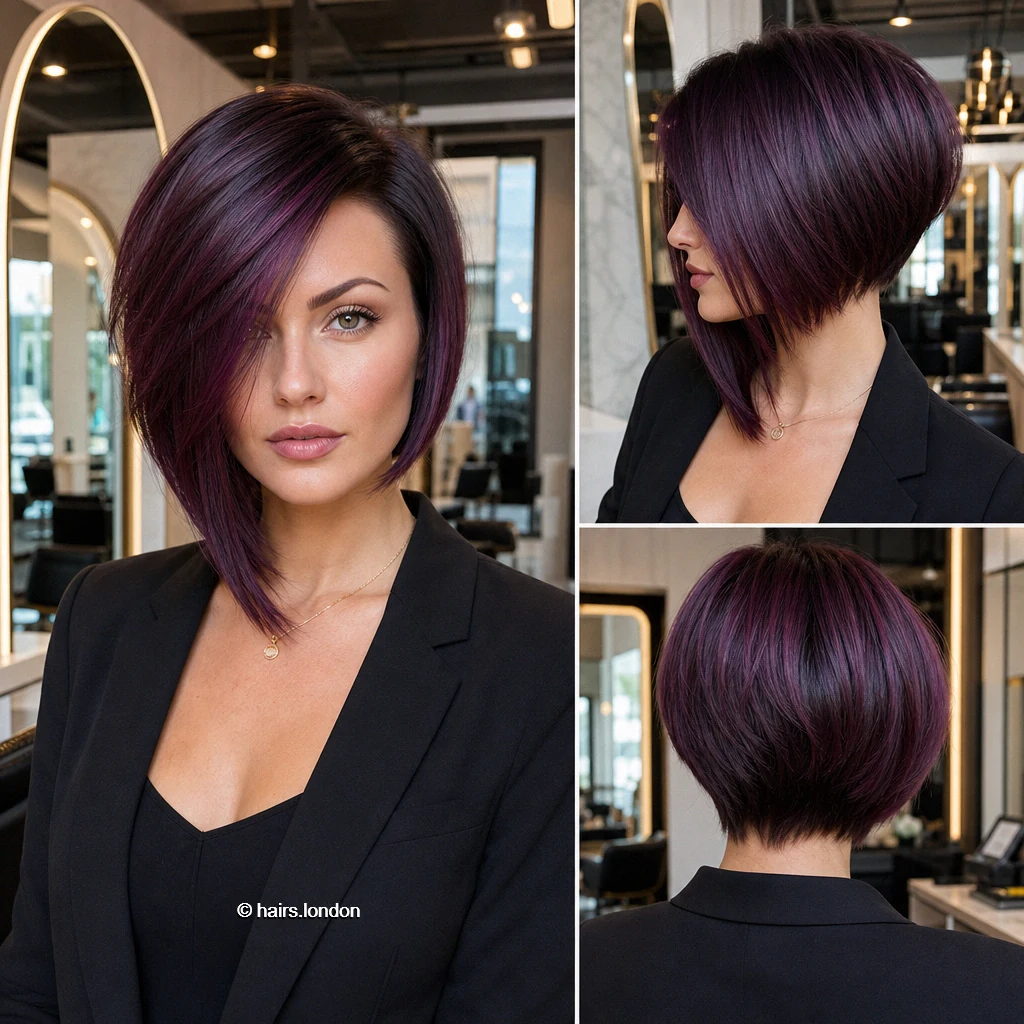
Cool lilac color emphasizes this bob’s long front section. Its front drops below the jaw while the back clears the neck. The smooth side view shows a clear front to back slope. Back views also reveal rounded fullness above the lower edge. Ask your stylist whether your density needs subtle internal shaping. Dry the front downward while guiding the rear into place. A light smoothing product helps keep individual strands aligned. This shape may suit those happy to style longer sides. Check both profiles at trims so their lengths remain balanced. Protect the lilac tone with a color care routine.
15. Vibrant Magenta Bob with a Swept Front
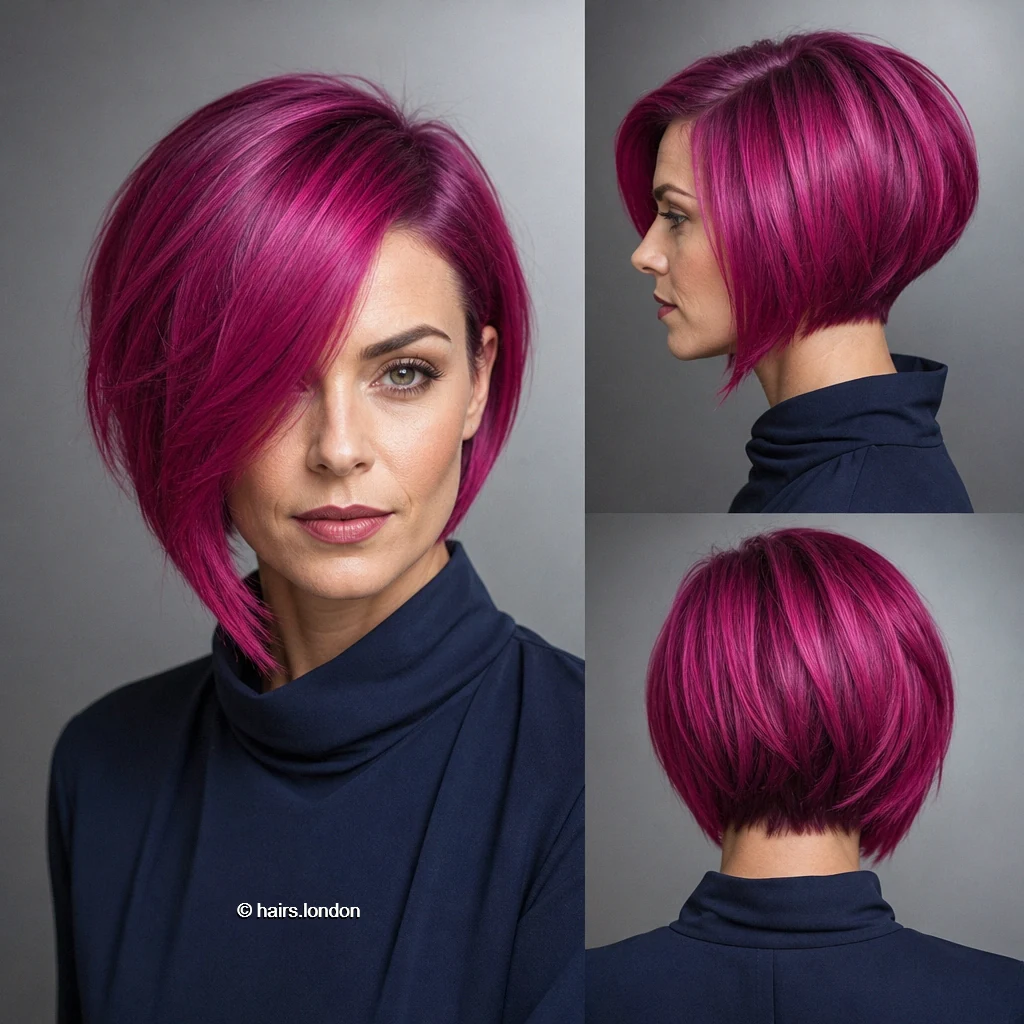
Vibrant magenta gives this sleek, angled bob a striking finish. Its sweeping front extends below the shorter jaw length side. A rounded back sits over a compact, exposed neck edge. Smooth upper layers create controlled fullness without any obvious choppy separation. Ask your stylist to retain the dramatic sweep through trimming. Blow dry along the part, keeping the front panel controlled. Use lightweight shine product sparingly near the tapered back. This design may suit hair that holds a smooth surface. Strong cowlicks could require extra effort around its deep part. Maintain both the neckline and vivid color as they grow.
16. Pink Asymmetrical Bob with a Shaped Neck
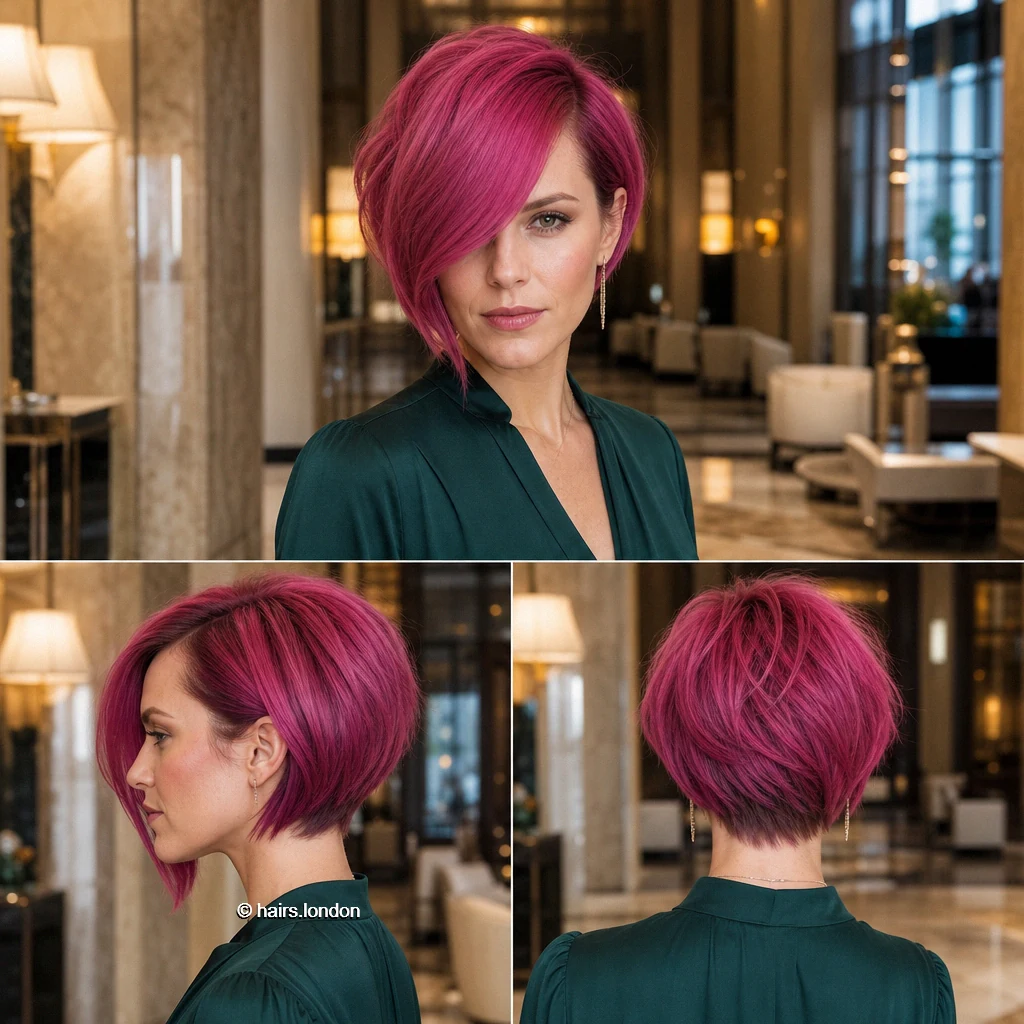
Bright, saturated pink clearly defines this bob’s distinctly uneven front lengths. One sweeping side falls below the jaw toward the neck. The opposite side sits shorter and reveals an ear. Its back looks softly rounded above a narrow, closely shaped neck area. That contrast supports calling this bob asymmetrical and graduated. Ask your stylist to plan the part before cutting. Smooth the longer front carefully while preserving gentle lift behind it. Lightweight mousse can help keep the crown from falling flat. This shape suits anyone comfortable maintaining its deliberate unevenness. Trim the neck before growth blurs the stronger front contrast.
17. Muted Rose Bob with a Long Side Sweep
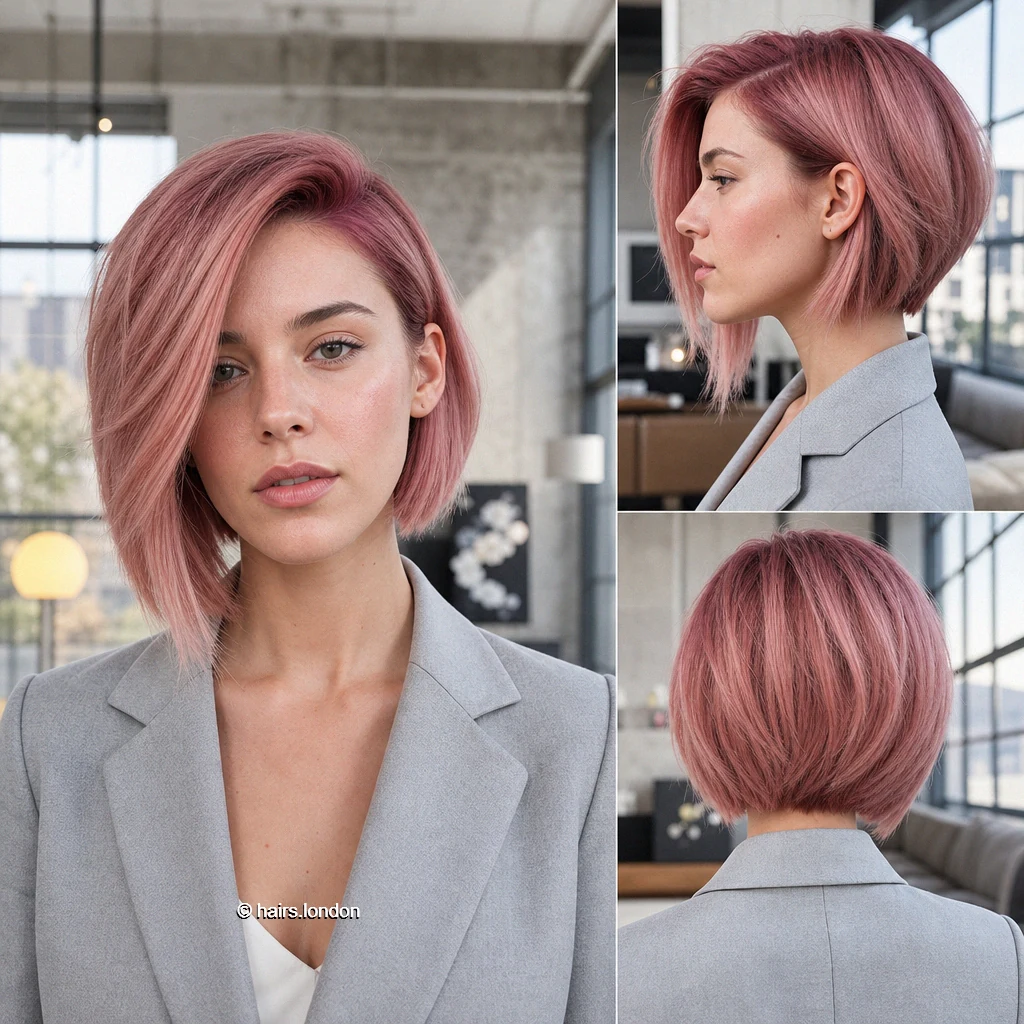
Muted rose pink softens this bob’s noticeable front length contrast. A deep side part directs longer hair across one eye. The longer front passes the jaw, unlike the shorter opposite side. Profile and rear views show rounded fullness near the neck. The lower back edge stays compact beneath that fuller shape. Ask your stylist to preserve softness around the longer front. Brush it away from your face if visibility matters. A small amount of smoothing cream controls the outer surface. This cut may suit density that supports its rounded back. Maintain the neckline and refresh color as both grow out.
How to Choose Your Bob Length and Shape
Start with the point where you want the front to land: around the jaw, below it, or closer to the neck. Then decide whether you prefer an even, curved perimeter or visible front-to-back contrast. An A-line bob has a longer front; a stacked or graduated bob also shows shorter lengths building fullness at the back. Consider how your density, natural texture and hairline will affect either shape, rather than choosing by the front view alone.
Styling Different Bob Textures
Fine hair often benefits from light root mousse and a perimeter with enough weight to avoid wispy ends. With thick hair, ask for selective internal weight removal instead of indiscriminate thinning, which can make the outline expand. Scrunch wavy bobs with foam and diffuse gently; shape curly bobs around the way the curls dry and spring up. Smooth precise edges with directed airflow, but keep products light enough for the bob to move. Dry a fringe early, following its growth pattern.
Keeping Bob Color Fresh
The rose, copper, magenta, plum and lavender shades shown here make faded ends and new growth easier to notice. Ask your colorist what refresh schedule is realistic for your chosen shade and starting color. Gentle washing, heat protection and reduced exposure to unnecessary heat can help preserve a polished finish. A refresh plan should account for the bob’s frequent shape trims, especially when freshly cut ends reveal a different tone.
Maintaining the Bob Perimeter and Graduation
A smooth, curved bob loses its intent when the lower edge becomes uneven; a short graduated back loses contrast as its neck lengths grow. Check the outline in profile and from behind, not just around the face. Textured bobs can tolerate a softer edge, but may need reshaping when layers stop separating well. Set trim timing with your stylist according to your growth rate, fringe length and how precise you want the silhouette to remain.
What to Discuss with Your Stylist
Bring images showing the front, side and back of the bob you prefer. Point out the exact features you want: front length, parting, fringe, perimeter softness, back fullness and how much neck you want exposed. Explain your natural texture, density, cowlicks and realistic daily styling time. Ask how the proposed shape will look without a salon blowout, what upkeep its color needs, and how it can be adjusted if you later decide to grow it out.
Frequently Asked Questions
What is the difference between a bob and a lob?
A bob typically ends around the jaw or neck, while a lob is a longer bob that approaches or reaches the shoulders. The exact dividing point depends on the overall silhouette.
How is an A-line bob different from a stacked bob?
A-line describes a perimeter that becomes longer toward the front. Stacked or graduated describes visibly shorter back lengths building into longer layers above; a cut can have both features.
Does a graduated bob require a very short back?
No. Graduation can be subtle. Discuss how much neck exposure and back fullness you want before your stylist sets the shape.
Which bob shape can help fine hair look fuller?
A bob with a reasonably weighty lower edge can make fine ends appear less sparse. Keep layering and heavy styling products in proportion to your density.
How can thick hair avoid a bulky bob silhouette?
Ask your stylist to assess where weight collects and remove it selectively if needed. Keeping the outside perimeter intentional helps prevent an overly hollow or uneven result.
Can natural curls be cut into a bob?
Yes, provided the length and shape account for curl spring, shrinkage and your individual growth patterns. Discuss how you normally dry and wear your curls.
Should I add a fringe to a short bob?
A fringe can change the balance of a bob, but it adds upkeep. Check how your hairline grows and whether you prefer wispy, sweeping or more defined coverage.
How much daily styling does an angled bob need?
That depends on your natural texture and how crisp you want the angle to appear. A pronounced long front often needs more directed drying than a loose, textured bob.
How do I style a textured bob without making it stiff?
Apply a small amount of foam or flexible cream, then scrunch or separate the ends. Build product gradually so the layers retain movement.
How often should I trim a bob?
Trim when its defining feature starts to disappear: a precise perimeter becomes uneven, a graduated neck grows heavy, or a fringe obstructs your view.
What should I consider before choosing vivid bob color?
Discuss your starting color, the work needed to achieve the shade, how it may fade, and whether you are comfortable with refresh appointments and home care.
Can a short bob be grown out without losing its shape?
Yes. Your stylist can gradually soften back graduation and maintain the front and lower edge as lengths catch up. Expect transitional trims rather than an immediate lob.
Conclusion
A bob works best when its visible outline matches your hair and your routine. Choose the front length and back shape first, then decide how much texture, fringe and color maintenance you want. Bring the relevant views to your stylist so the finished cut makes sense from every angle.


