


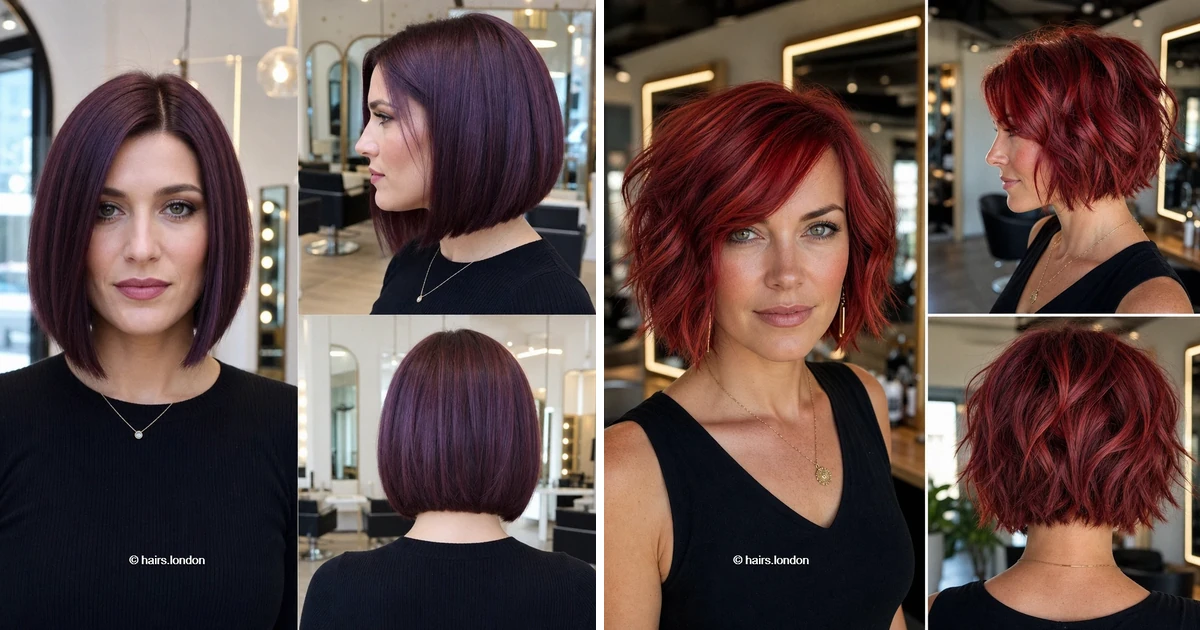
11. Choppy Ruby Bob With a Soft Fringe
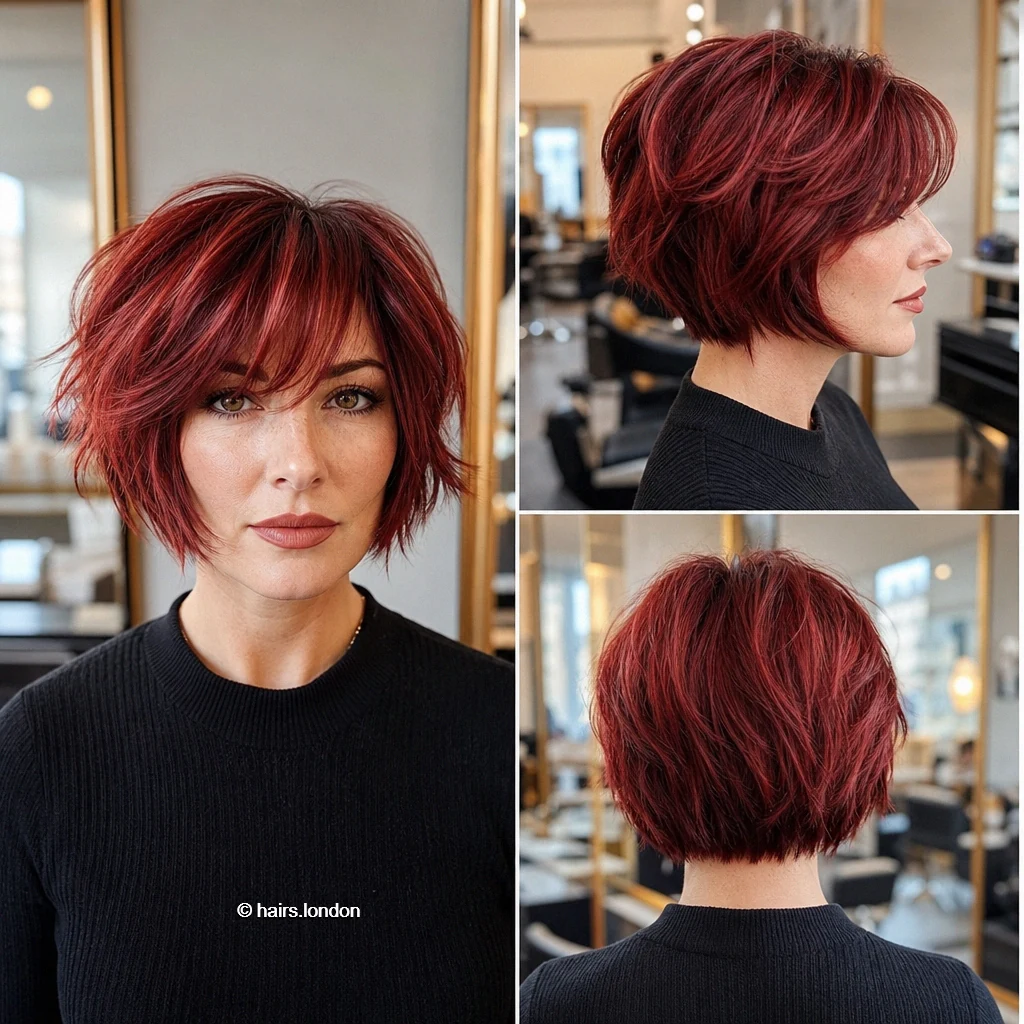
Ruby red highlights brighten this compact, visibly layered bob. A broken fringe skims the brows and parts lightly. Piecey sides end around the jaw, with shorter sections above. At the back, textured layers gather near the neckline. Discuss fringe density before committing, particularly with strong growth patterns. Dry the fringe first, steering it across with gentle airflow. Add texture cream sparingly to distinguish the choppy tips. Thick hair may benefit from targeted weight removal inside. Fine density could need fewer layers to maintain shape. Trim the fringe separately when it starts obscuring your eyes or the shape starts feeling heavy.
12. Ginger Shaggy Bob With Airy Layers
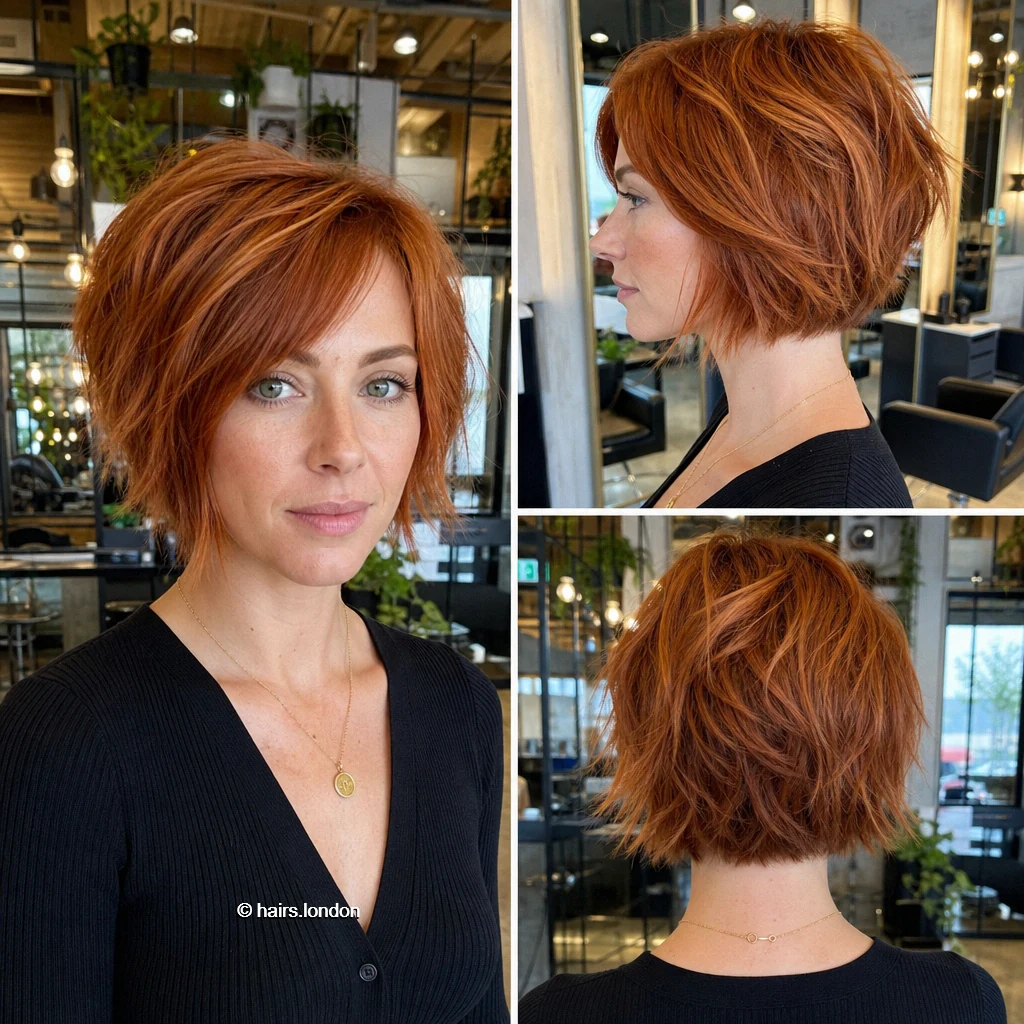
Bright ginger color emphasizes this airy, softly shaggy bob. A loose side sweep crosses the forehead without forming bangs. Wispy layers open the shape around the cheek and jaw. The back shows scattered, outward moving ends near the neck. Ask for layers that follow your density rather than uniform thinning. Rough dry for lift, then define selected ends with cream. Avoid heavy oil if you want the airy separation. Natural waves may enhance this undone finish with little effort. Straighter hair could need a brush or loose bends. Neaten straggling ends while allowing room for movement without sacrificing baseline fullness.
13. Aubergine Layered Bob With a Side Sweep
Deep aubergine color gives this textured bob a rich finish. Its full side sweep angles across the brow and cheek. Short, separated layers create width around the upper sides. The back ends near the neck with a visibly broken perimeter. Ask your stylist to keep enough weight beneath the layers. Lift the roots while drying, then loosen sections using fingers. A light paste can define tips without creating stiff spikes. Medium or thick density may support the airy upper shape. Fine hair could look sparse if the ends are overthinned. Recut the fringe when it begins losing its direction regularly.
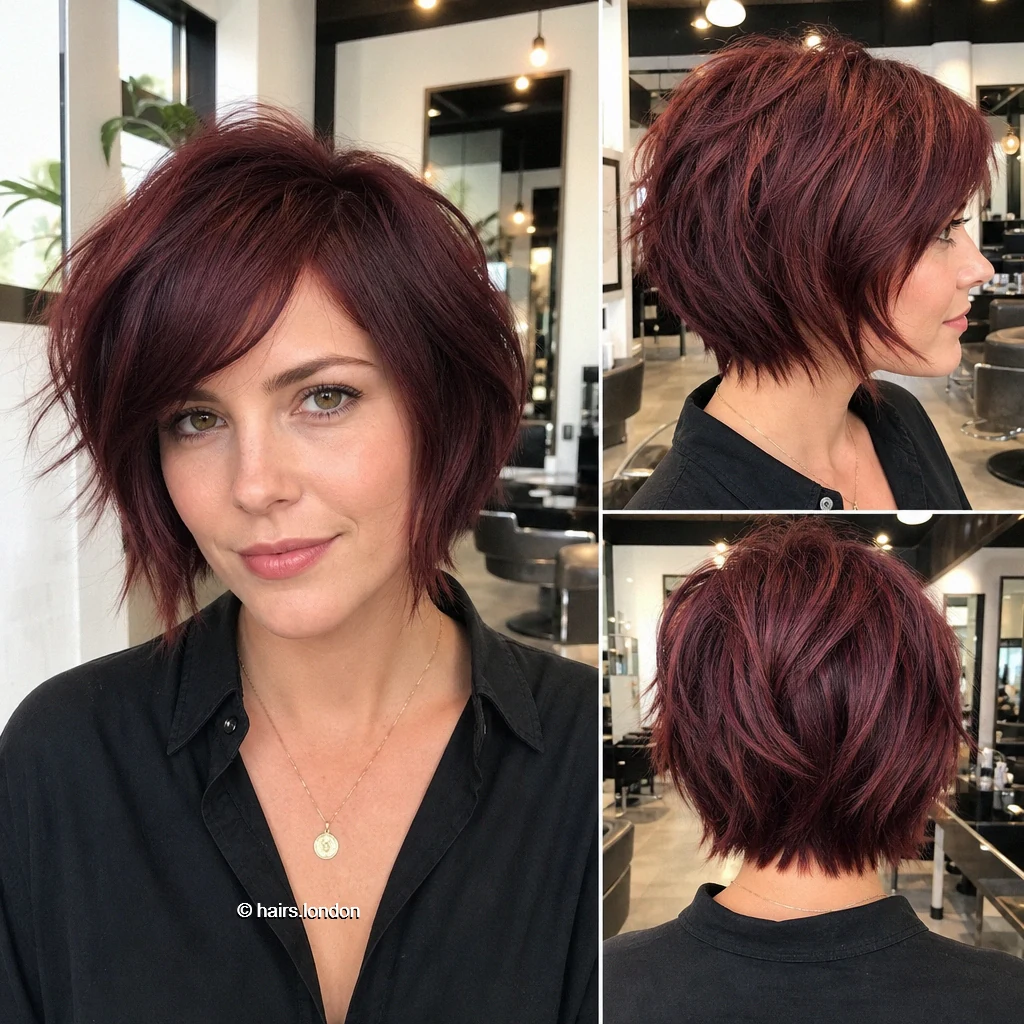
14. Burgundy Piecey Bob With Wispy Bangs
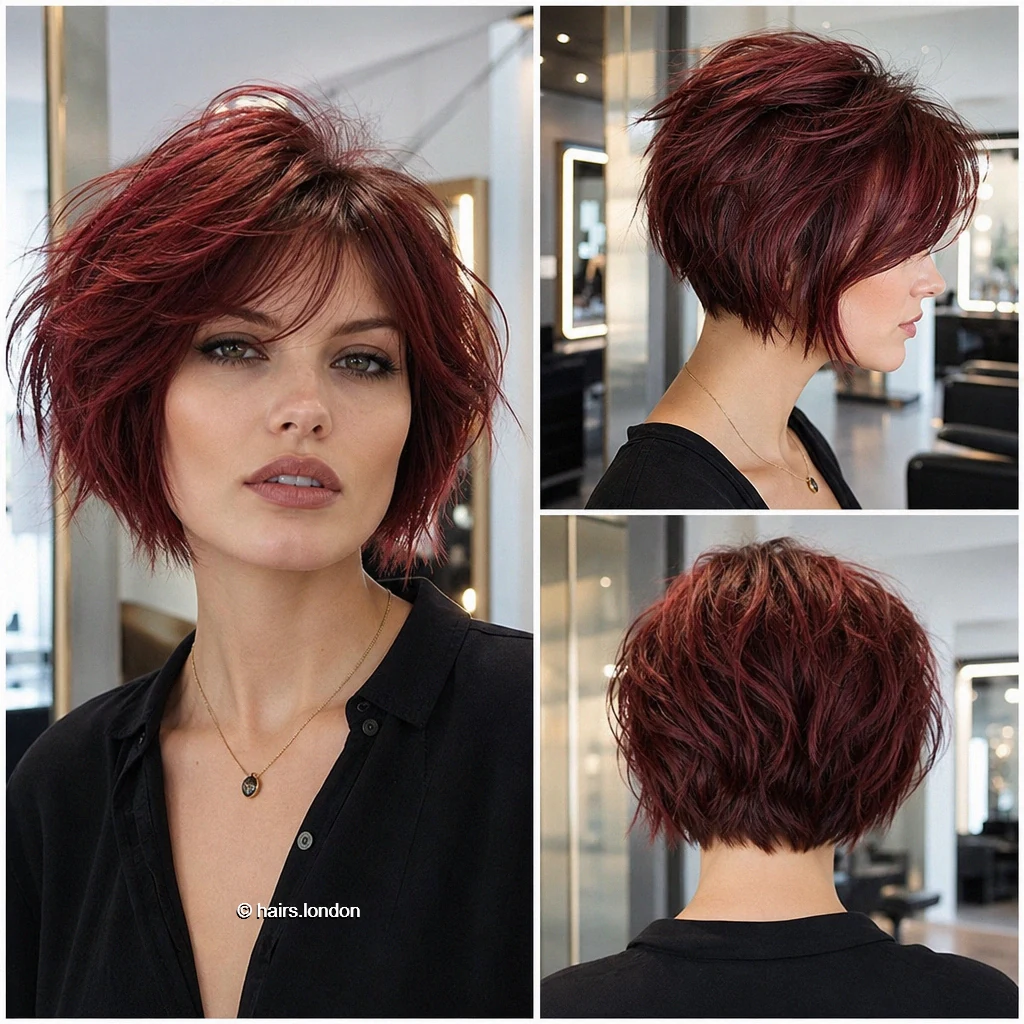
Burgundy color carries warm red glints across this piecey bob. Fine, wispy bangs skim the forehead beneath lifted top layers. The sides sit around the jaw with deliberately separated ends. From behind, the short outline looks textured rather than blunt. Discuss how much fullness you want around your ears. Dry the bangs forward before lifting the crown lightly. Work a small amount of paste through individual tips. Dense hair might need interior shaping to avoid side bulk. Fine hair needs restraint to preserve a convincing lower edge. Trim bangs and uneven pieces as their placement changes or the sides spread.
15. Crimson Graduated Bob With a Sweeping Front
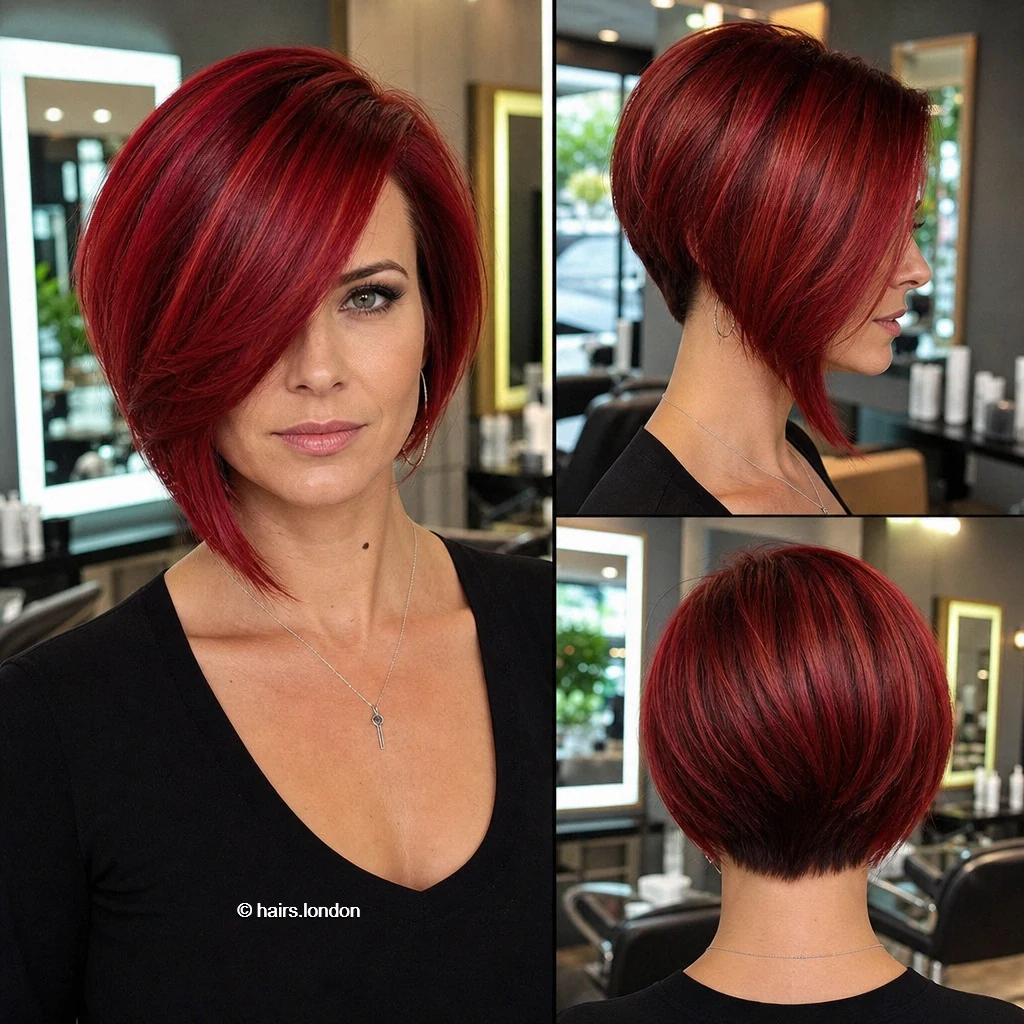
Bright crimson color makes this smooth, graduated bob especially defined. A long side sweep covers much of the forehead. The front descends below the jaw into a tapered point. Behind it, rounded volume sits above a short nape. Ask to retain weight in front while shaping the back. Blow dry downward with a brush to align the perimeter. Finish with minimal shine product to keep strands together. Straight or easily smoothed hair may showcase this contrast. Coarse density could require careful weight reduction beneath the crown. Refresh the nape outline and vibrant red as needed before the precise shape fades.
16. Ruby Long-Front Bob With a Compact Nape
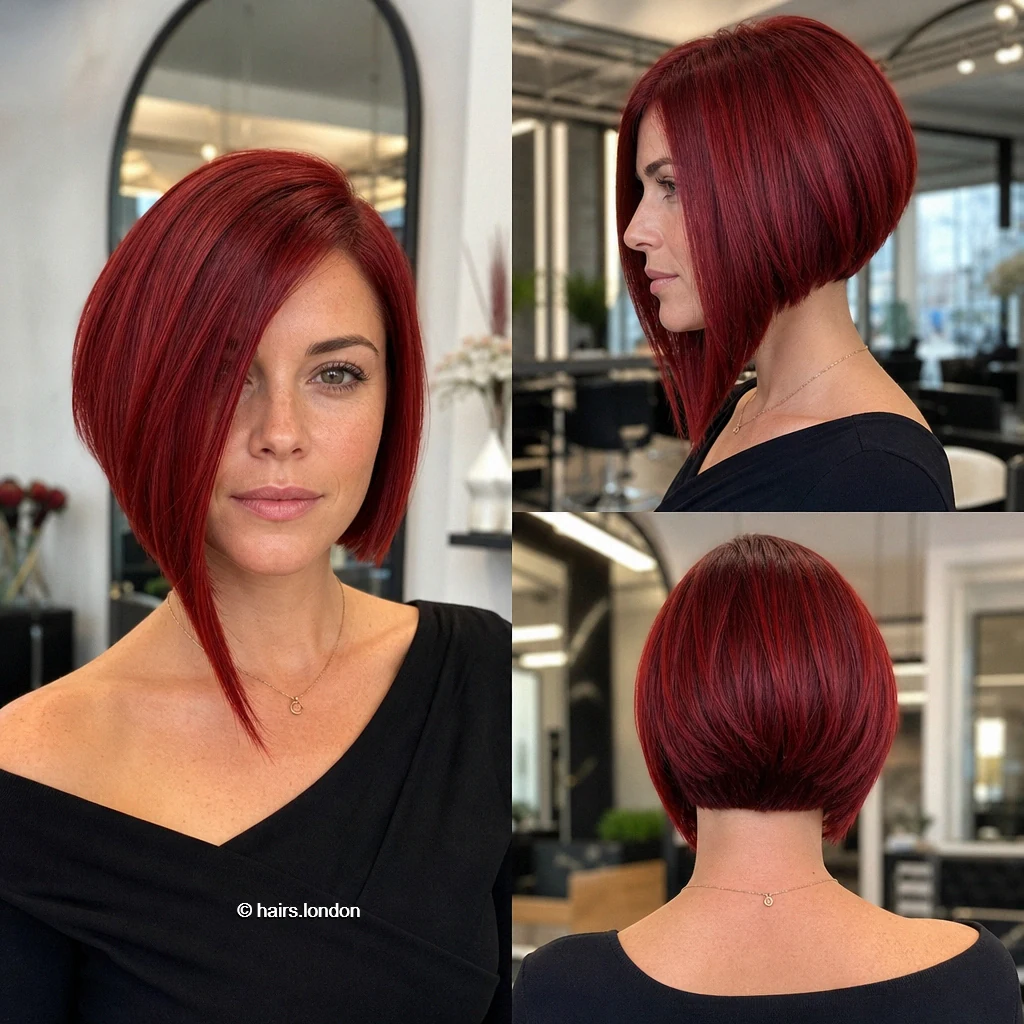
Ruby red color intensifies the contrast in this angled bob. Its long side panel reaches toward the collarbone. The opposite side appears shorter, framing the jaw more closely. A rounded back tapers into a tidy, short neckline. Discuss whether that extended panel fits your daily styling routine. Smooth from roots to ends, directing the front downward. Keep the shorter side controlled without flattening back volume. Fuller hair may need discreet shaping below the rounded surface. Fine hair benefits from keeping that front panel substantial. Trim regularly if the nape loses its compact finish, and check the front for split ends.
17. Copper Graduated Bob With a Side Sweep
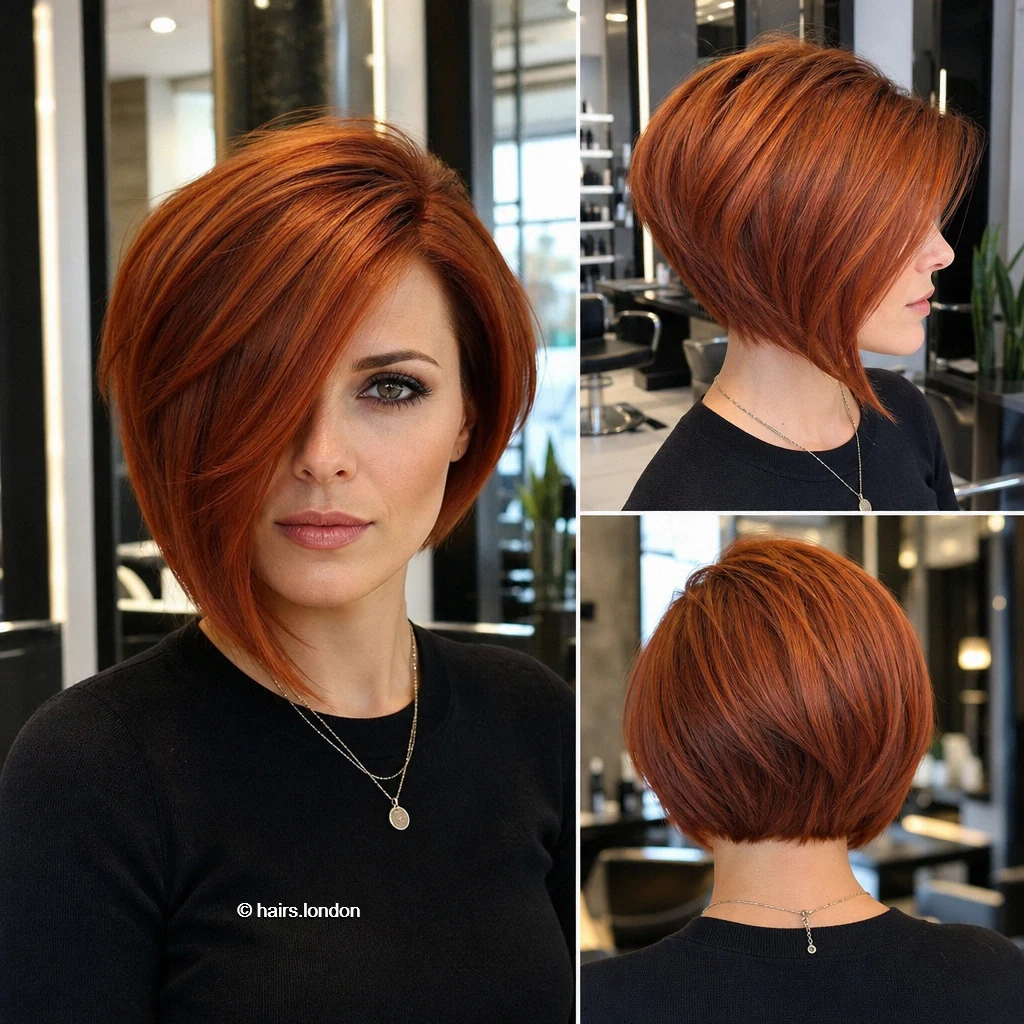
Radiant copper lends dimension to this full, angled bob. The long side sweep flows into a pointed front section. Its profile reveals shorter hair rising toward the rounded back. Visible graduation supports volume above the close nape line. Ask for the front to remain substantial despite back layering. Brush the surface smooth while lifting roots behind the crown. A little flexible spray preserves the sweep without stiffness. Medium density may hold the curve with manageable styling. Very thick hair could need selective interior weight removal. Maintain the nape and revive copper when brightness fades, and avoid overloading the pointed ends.
18. Plum Asymmetrical Bob With a Polished Curve
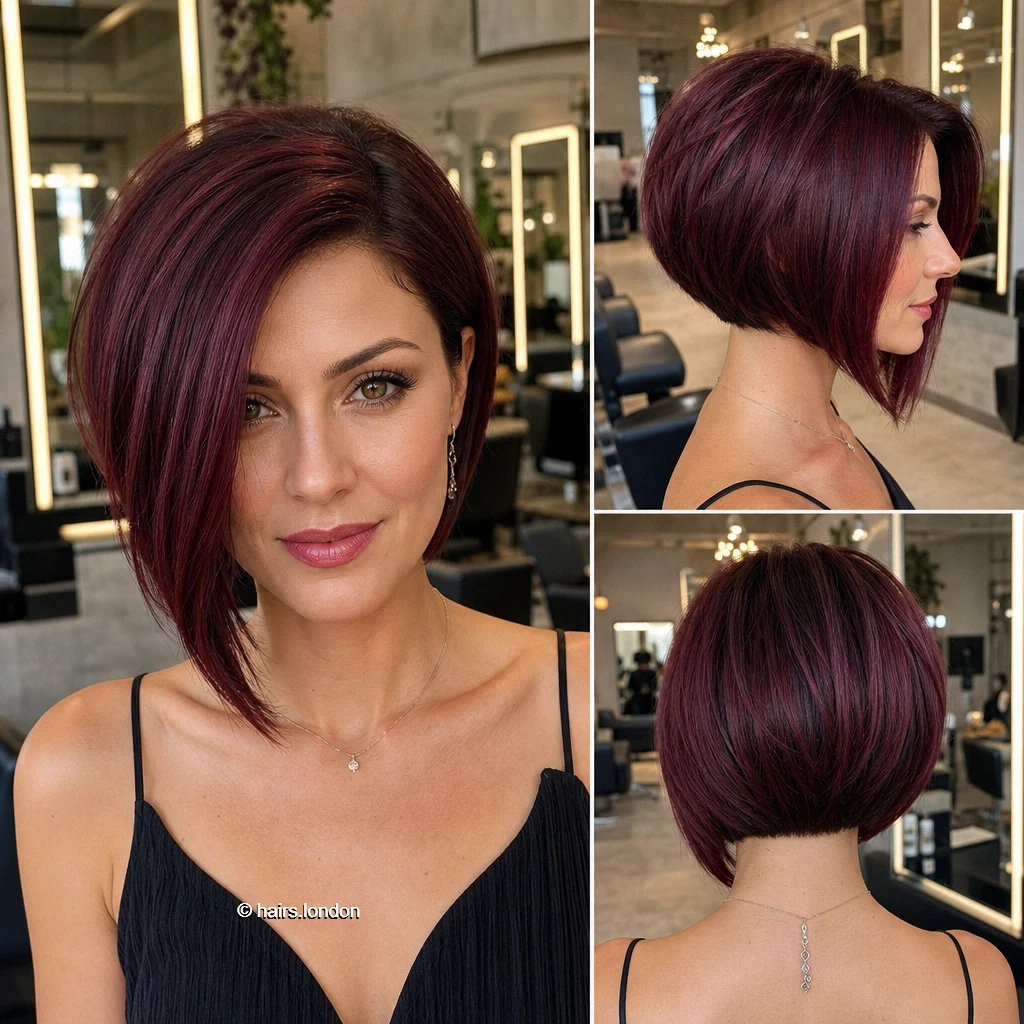
Deep plum color brings shine to this asymmetrical bob. One sweeping front section falls below the opposite jaw. The profile shows a rounded back narrowing toward the nape. Its smooth surface makes the contrast between lengths especially clear. Ask where the longer panel should end when dry. Guide a brush downward while gently curving the back inward. Use lightweight serum only where flyaways disrupt the outline. Straight textures may require less effort to maintain definition. Dense curls would need a differently planned shape and finish. Check both front lengths whenever the short nape needs trimming to keep the contrast intentional.
19. Wine Side-Swept Bob With a Short Back
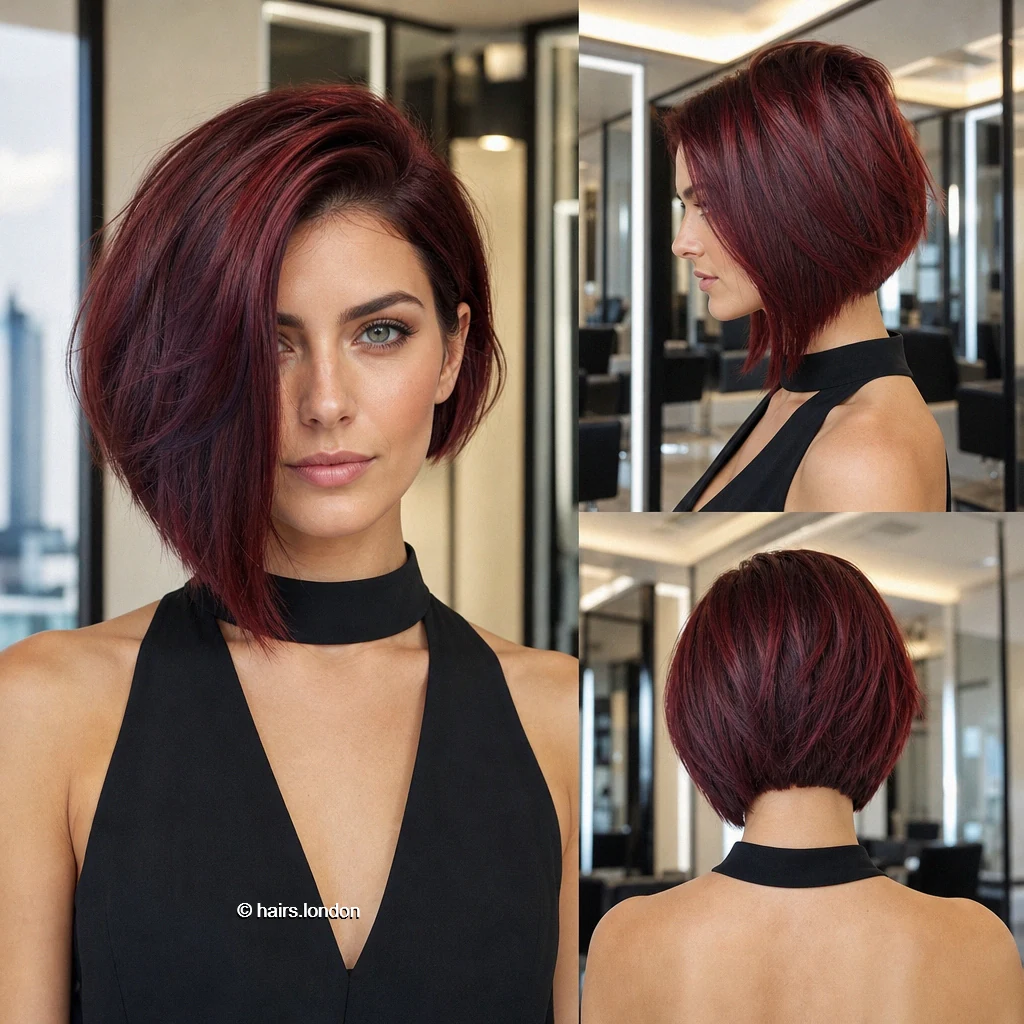
Dark wine tones run through this side swept bob. The heavy front section falls past the jaw on one side. Its shorter opposite side exposes more of the cheek. A full back narrows into the visibly short nape. Discuss the side part and fringe direction with your stylist. Blow dry the long sweep downward for a fluid edge. Lift the back slightly rather than piling on product. This contrast suits people comfortable styling an uneven front. Thick density may need careful shaping behind the ears. Recut the nape before its growth obscures the outline and keep the side sweep controlled.
20. Violet-Plum Angled Bob With Rounded Graduation
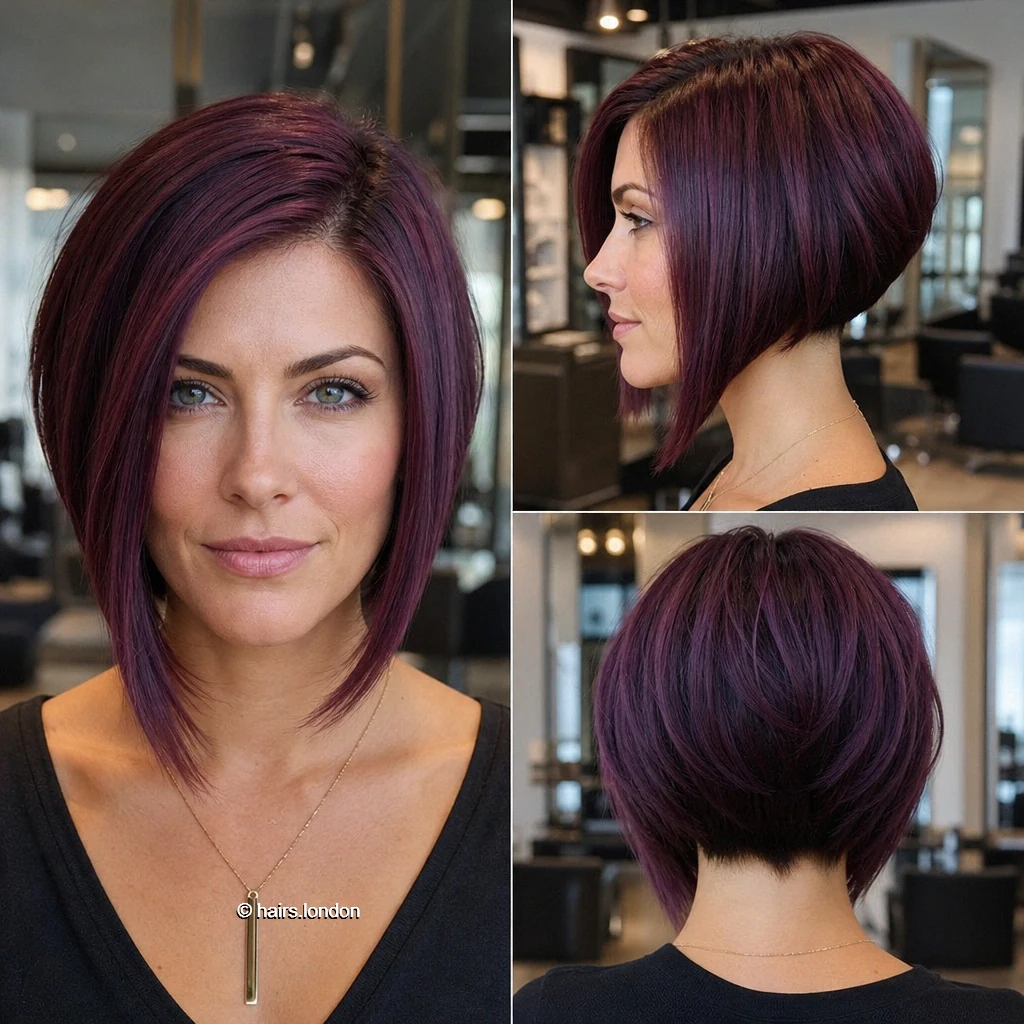
Violet plum color gives this smooth bob subtle dimension. A side part sends long front pieces below the chin. From the profile, those pieces contrast with the shorter nape. Visible rear graduation builds a rounded, closely controlled silhouette. Ask to balance the back volume against your hair density. Blow dry downward, then lightly curve the rear sections inward. Keep shine products sparse so the front retains movement. Medium density may support the shape without heavy styling. Strong curls require planning around shrinkage before cutting this outline. Trim the nape as its compact graduation begins expanding to preserve its rounded profile.
21. Dark Plum Shaggy Bob With Light Bangs
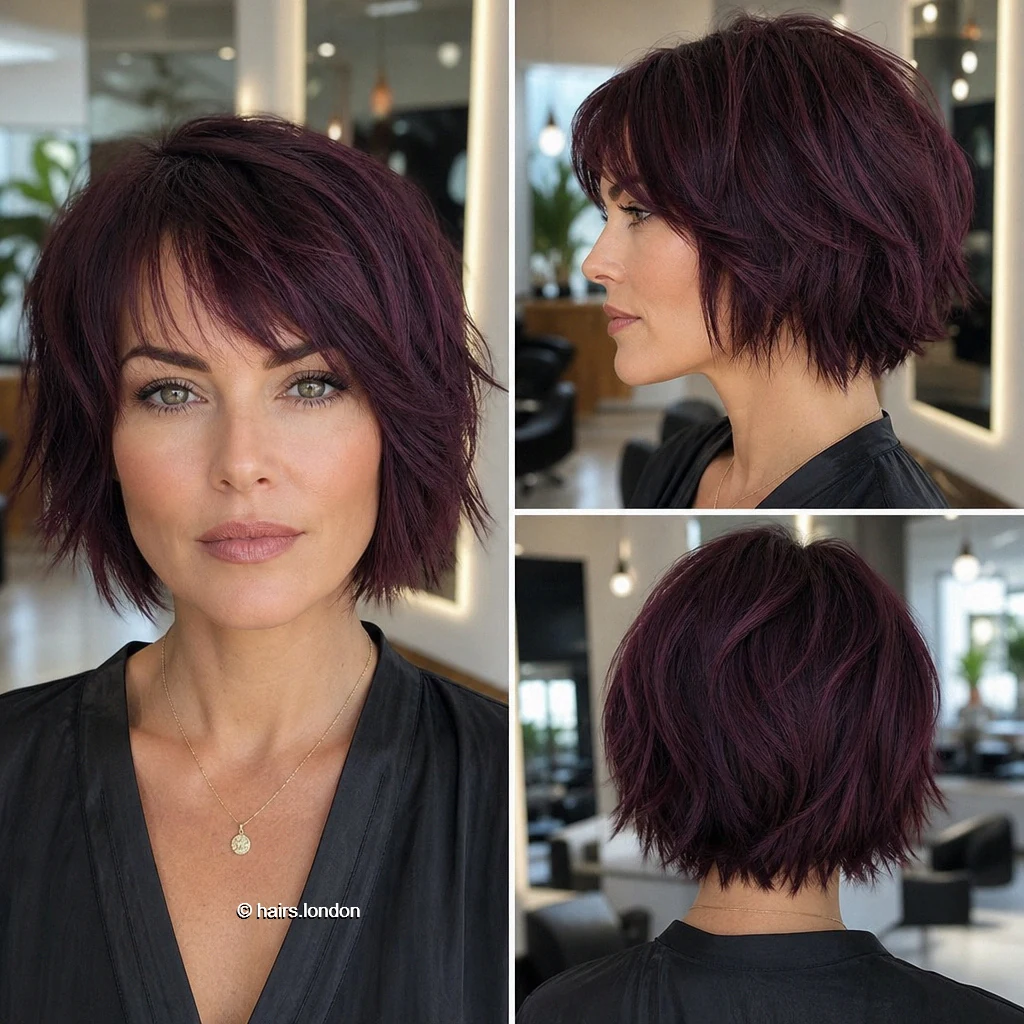
Dark plum color unites this short, textured bob. Fine bangs spread across the forehead above the brows. Choppy side layers fall around the jaw with airy separation. The back has a broken edge close to the neck. Ask for fringe placement suited to your natural growth pattern. Air dry waves with mousse or diffuse on low heat. Define only selected ends to avoid weighing down movement. Fuller hair may appreciate controlled layering around the sides. Fine density needs enough uncut weight beneath those pieces. Refresh the bangs and perimeter whenever they lose balance without removing too much weight from ends.
22. Aubergine Asymmetrical Bob With a Long Sweep
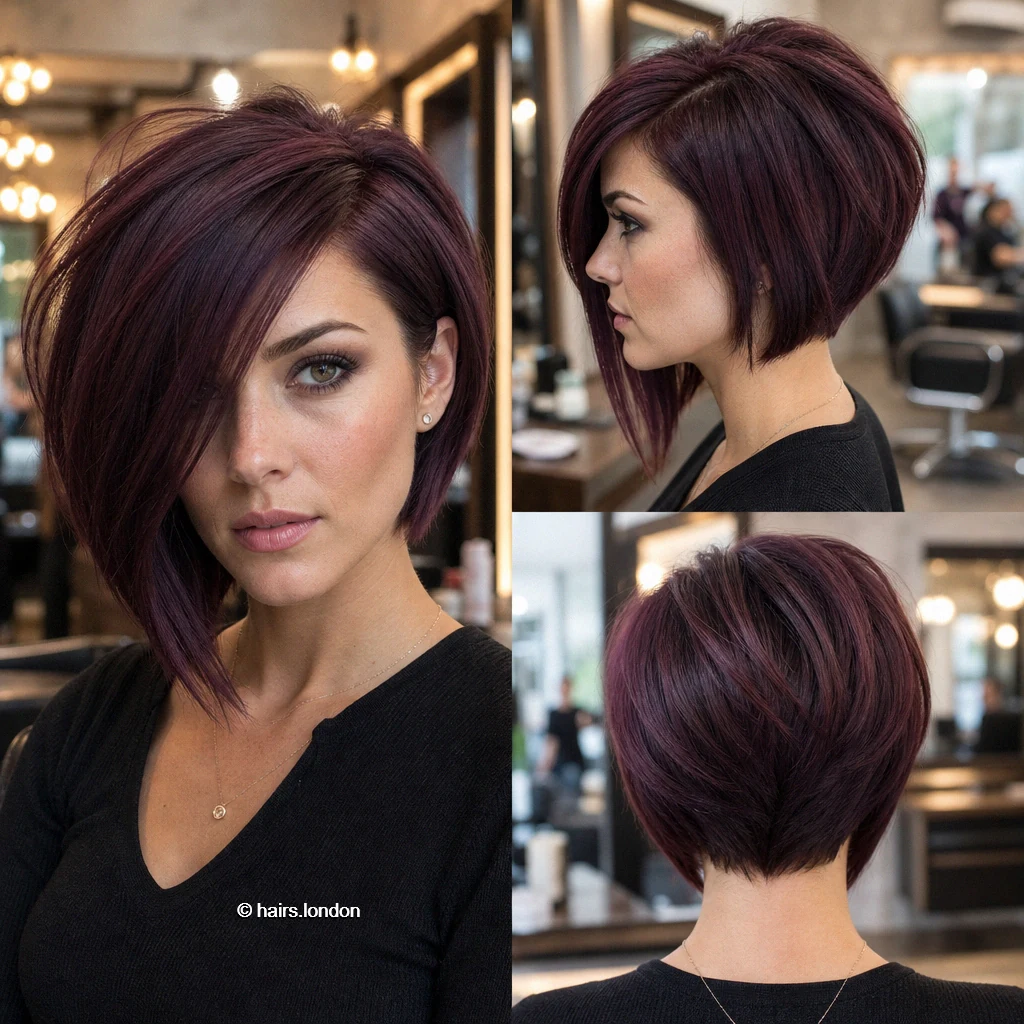
Aubergine tones deepen this striking bob with its extended front. The side swept panel crosses the forehead and jaw. Its opposite side sits shorter, close to the cheek. From behind, layered fullness tapers toward a compact nape. Discuss the amount of asymmetry you can style comfortably. Dry the long panel downward while supporting rear volume. A small brush can smooth its pointed, face framing tip. Thick density might need internal shaping around the crown. Straight hair may display the contrast with less effort. Maintain the nape and inspect the long tip between trims to keep the front contrast looking deliberate.
How to Choose Your Bob Length and Shape
Start with the point where you want the front to fall: near the jaw, below the chin or toward the collarbone. Then consider the back separately. A nearly even perimeter feels different from a long-front bob, while visible graduation creates fullness above a shorter nape. If you want to tuck your hair behind your ears or tie back some of the front, account for that before choosing a pronounced angle.
Styling Fine, Thick, Wavy and Curly Textures
Fine hair often benefits from a more substantial lower edge and restrained layering; use light mousse for lift without coating the ends. With thick hair, ask about selective internal weight removal rather than thinning the visible perimeter indiscriminately. Scrunch natural waves and dry gently to retain their bends. For curls, agree on the finished shape and allow for shrinkage before deciding where the bob should sit. Smooth an angled perimeter with a brush when you want definition, but leave enough flexibility for movement.
Keeping Red and Plum Bob Color Fresh
The pictured reds, coppers, burgundies and plums vary in brightness, so their upkeep will vary too. Ask your colorist how often your chosen shade may need refreshing and whether a color-depositing product is appropriate. Follow the care directions for your color service, limit unnecessary heat, and use heat protectant when styling. A healthy-looking, aligned surface also helps the color’s dimension remain visible.
Maintaining the Bob Perimeter and Graduation
Check the shape from the side as well as the front. On a polished bob, uneven front tips or a softening lower edge show quickly; on a tousled bob, the ends can grow a little less uniformly before the silhouette changes. Graduated backs may lose their compact nape and rounded weight line as they grow. Book a reshaping appointment when those features no longer sit where you want them, and maintain a fringe separately if it reaches your eyes first.
What to Discuss With Your Stylist
Bring the view that shows the detail you actually want: front length, side angle, fringe or back shape. Explain your natural part, density, wave or curl pattern, growth patterns, and how often you use a dryer or brush. Ask whether the proposed layers will preserve enough weight at the edge, how the cut will look without styling, and what upkeep its nape, perimeter and color will require.
Frequently Asked Questions
What is the difference between a bob and a lob?
A lob is a longer bob, generally approaching the shoulders. Many cuts here end around the jaw or neck, although some have substantially longer front panels.
Is an A-line bob the same as a stacked bob?
No. A-line describes a perimeter that gets longer toward the front. Stacked or graduated describes visible shorter-to-longer shaping that builds weight at the back; a bob can have both features.
How do I choose between a blunt and layered bob?
Consider how much movement you want and how much density you can spare at the ends. A stronger perimeter preserves visual fullness, while carefully placed layers can release bulk or encourage texture.
Can fine hair wear a graduated bob?
It can, if the graduation supports the shape without removing too much weight from the lower edge. Ask your stylist to assess your density before choosing the amount of layering.
How can thick hair avoid a bulky bob shape?
Ask about targeted internal weight removal and a perimeter suited to how your hair expands when dry. Removing bulk everywhere can leave the ends thin without solving the shape.
Will a bob work with natural curls?
Yes, but plan the shape around your curl pattern and shrinkage. A curly bob need not copy the sleek, long-front outlines shown here to be successful.
Should I add a fringe to my bob?
A fringe changes both the framing and the daily routine. Discuss its density, your growth pattern, and whether you are willing to dry or adjust it between washes.
Which bob needs the least daily styling?
Usually the one shaped for your natural texture. An undone, layered bob may need little work on naturally wavy hair, while a sleek angle could require regular smoothing.
How often should I trim a bob?
Trim when its defining line, fringe or nape begins to shift. A precise, short graduated back generally shows growth sooner than a loose, textured perimeter.
Can I have a longer front without a stacked back?
Yes. A longer-front A-line perimeter does not require visible back graduation. Show your stylist both the front-to-back length difference and the back fullness you want.
How do I keep a side-swept bob from falling flat?
Dry the roots in the direction of the sweep, lift them briefly with a brush, and use a light hold product. Keep heavier creams away from the roots.
What happens when a short bob grows out?
The nape can become heavier, a fringe can lose its placement, and an angled front can appear less deliberate. A reshaping trim can preserve the design or help guide it toward a longer bob.
Conclusion
The most useful bob inspiration is a detail you can describe clearly: a crisp lower edge, a rounded graduated back, a longer front or layers that move naturally. Choose the silhouette you like, then adapt its length, weight and styling demands to your own hair.


