

11. Teal Bob With Longer Face Framing Sides
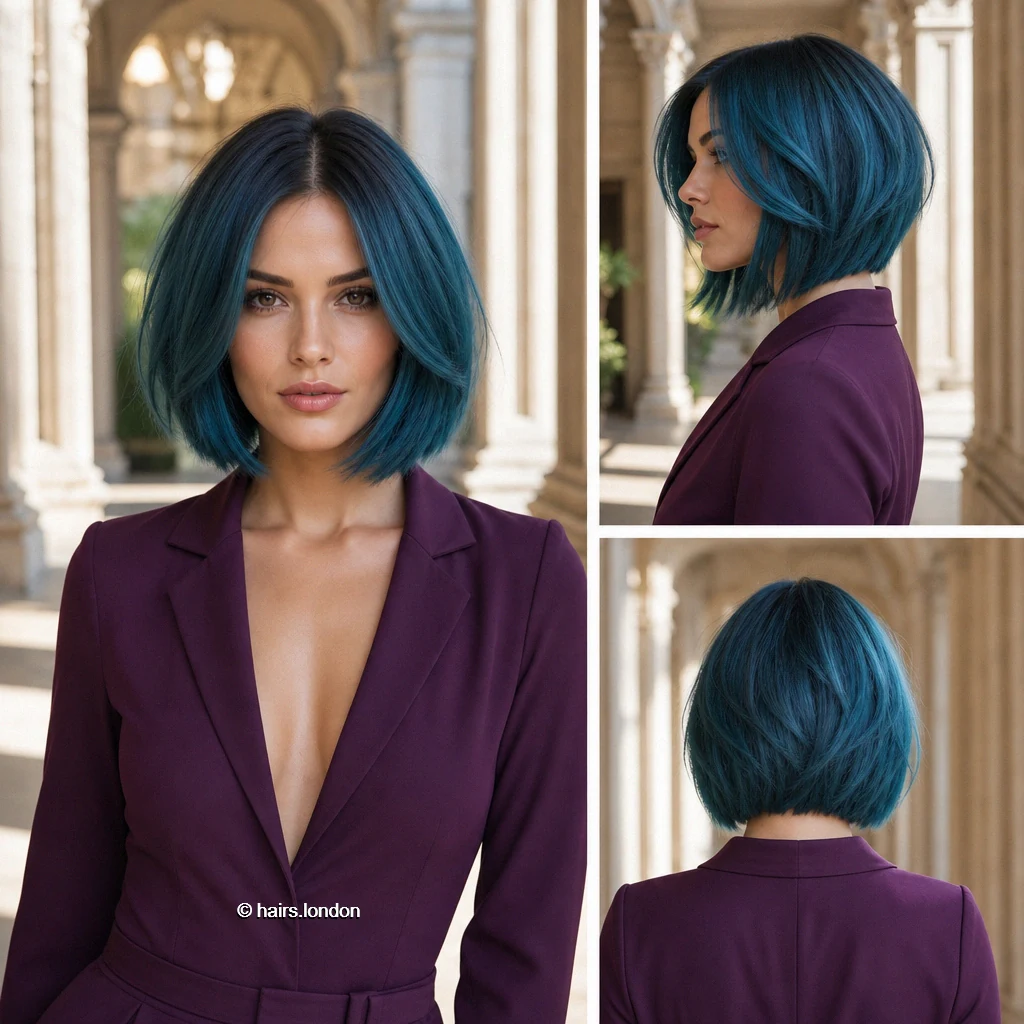
Teal blue color highlights the shape of this short bob. A center part leads into longer pieces around the jaw. The side view shows a shorter back beneath rounded fullness. Soft, airy layers create movement without hiding the compact neck line. Blow dry with a brush, guiding the front pieces downward. Finish with light cream to separate the framing ends. This shape suits density that can support its curved back. Ask your stylist to compare front and back lengths together. Trim as the nape grows and the outline loses shape. Plan teal refreshes around visible fading, not a fixed schedule.
12. Emerald Layered Lob With Feathered Ends
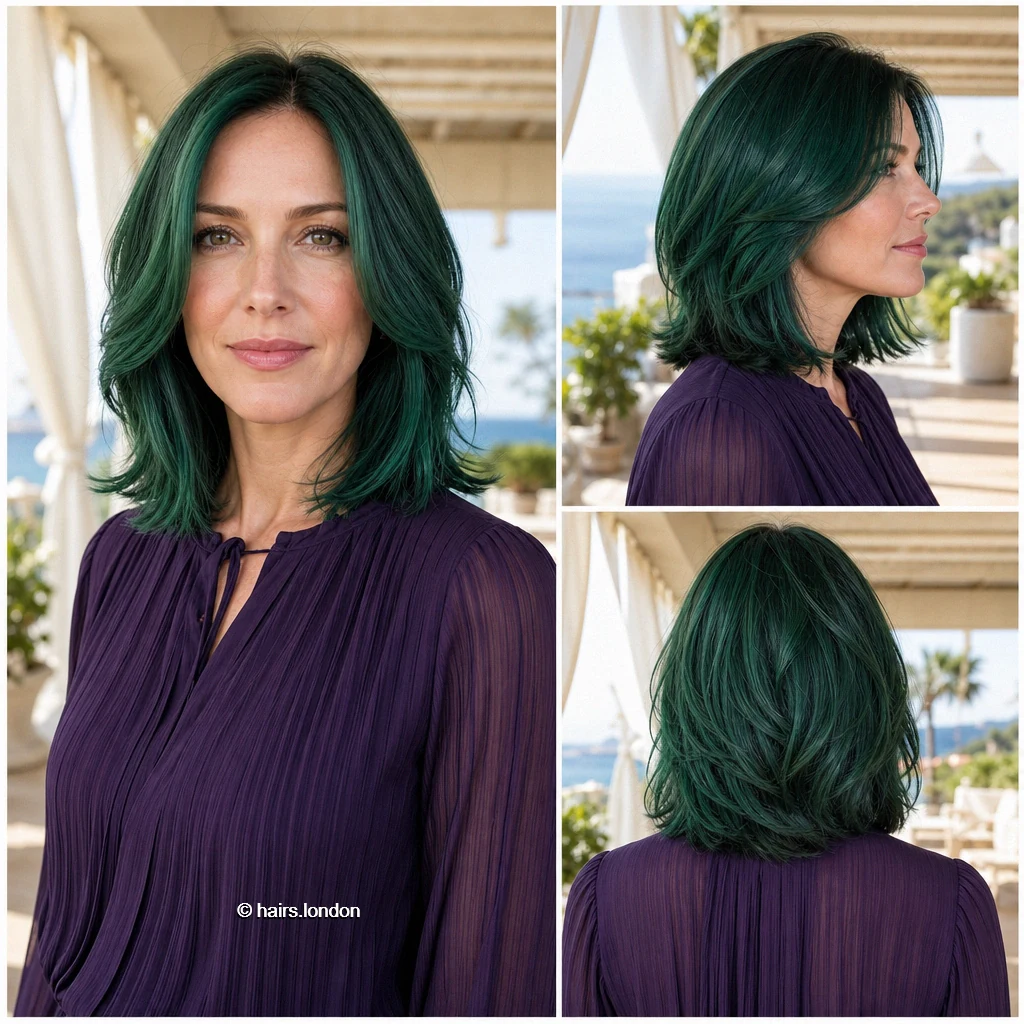
Emerald green strands bring depth to this softly layered lob. A center part leaves long front sections near the shoulders. Feathered ends flick outward along the sides and across the back. The perimeter stays loose rather than forming a solid line. Use a round brush to direct selected ends outward gently. Alternatively, enhance natural bends with a little styling cream. This longer shape offers movement when density permits balanced layering. Ask how the face framing pieces will behave air dried. Trim when the feathered ends begin merging into uneven bulk. Color safe care can help the green look fresh longer.
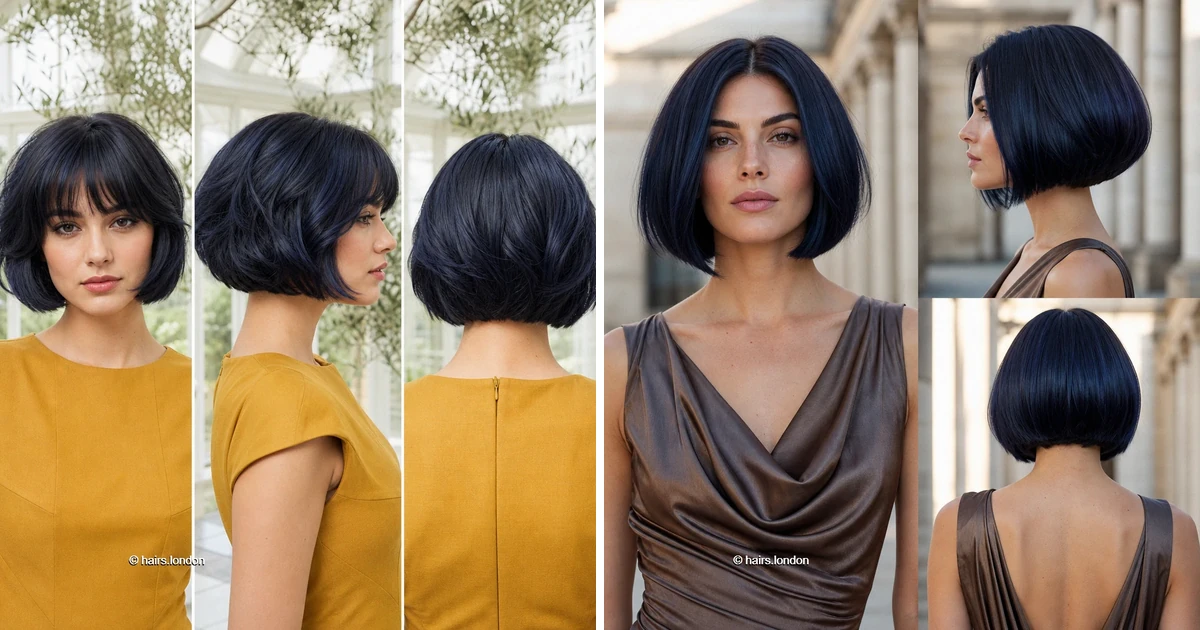
13. Compact Navy Bob With Crown Fullness
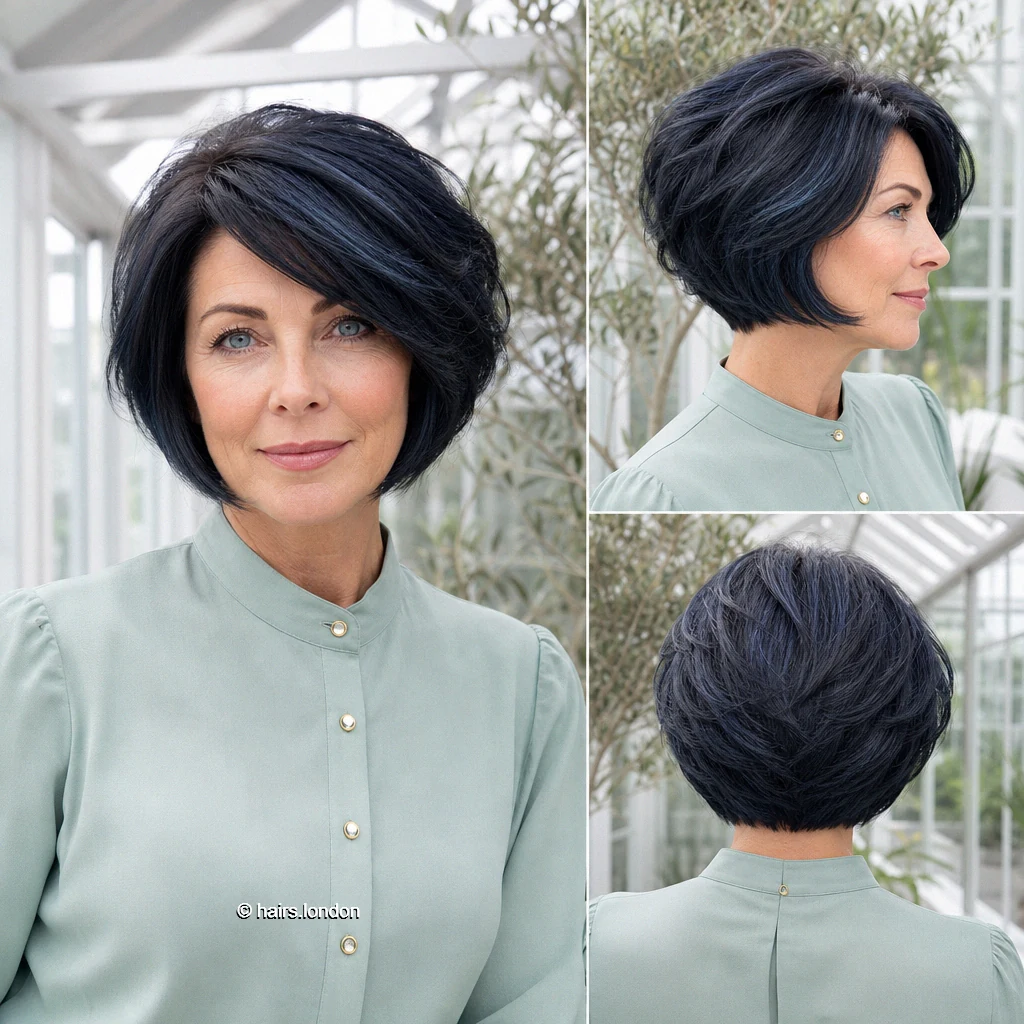
This compact navy bob pairs a side sweep with crown fullness. The front curves around the jaw, exposing the neck behind. Side and back views show a rounded, softly layered crown. Shorter lower sections keep the silhouette close around the nape. Lift the roots while drying, then smooth the outer surface. Avoid heavy oils that might collapse the airy upper shape. This cut needs enough density to hold its rounded profile. Discuss crown growth patterns and desired volume with your stylist. Trim when the back loses its neat, close fitting outline. Maintain the blue black finish with gentle washing habits.
14. Dramatic Navy A-Line Bob With a Graduated Back
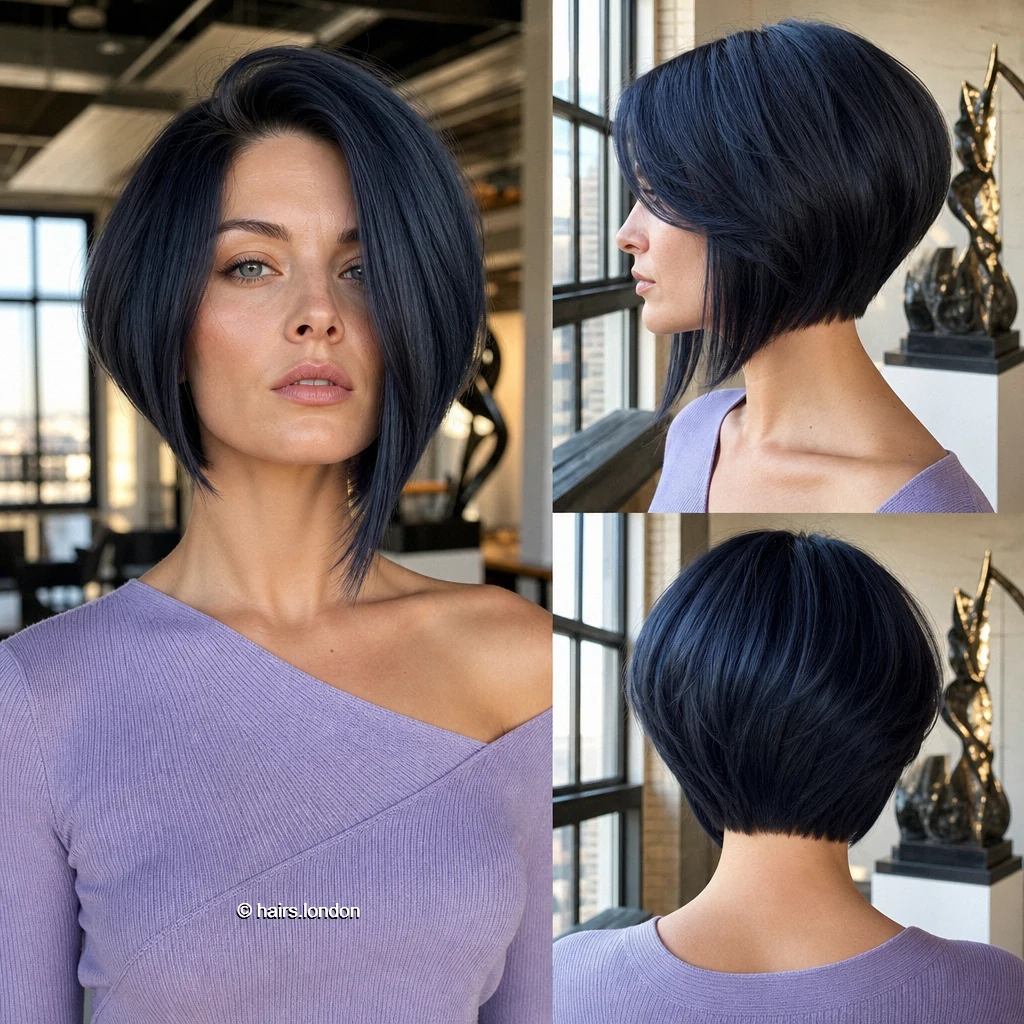
A dramatic navy A line bob drops well below the jaw. Its long front contrasts with a visibly shorter, distinctly graduated back. A side part emphasizes the sweeping, sharply extended front. The rear shows layered fullness above a close neck edge. Blow dry the front straight while lifting the back gently. Smooth the long tips without weighing down the crown. This contrast needs density and styling time to hold shape. Confirm your comfortable front length and back exposure before cutting. Frequent trims protect the distinct angle as the nape grows. Keep navy color polished with heat protection and gentle cleansing.
15. Deep Green A-Line Bob With Long Front Points
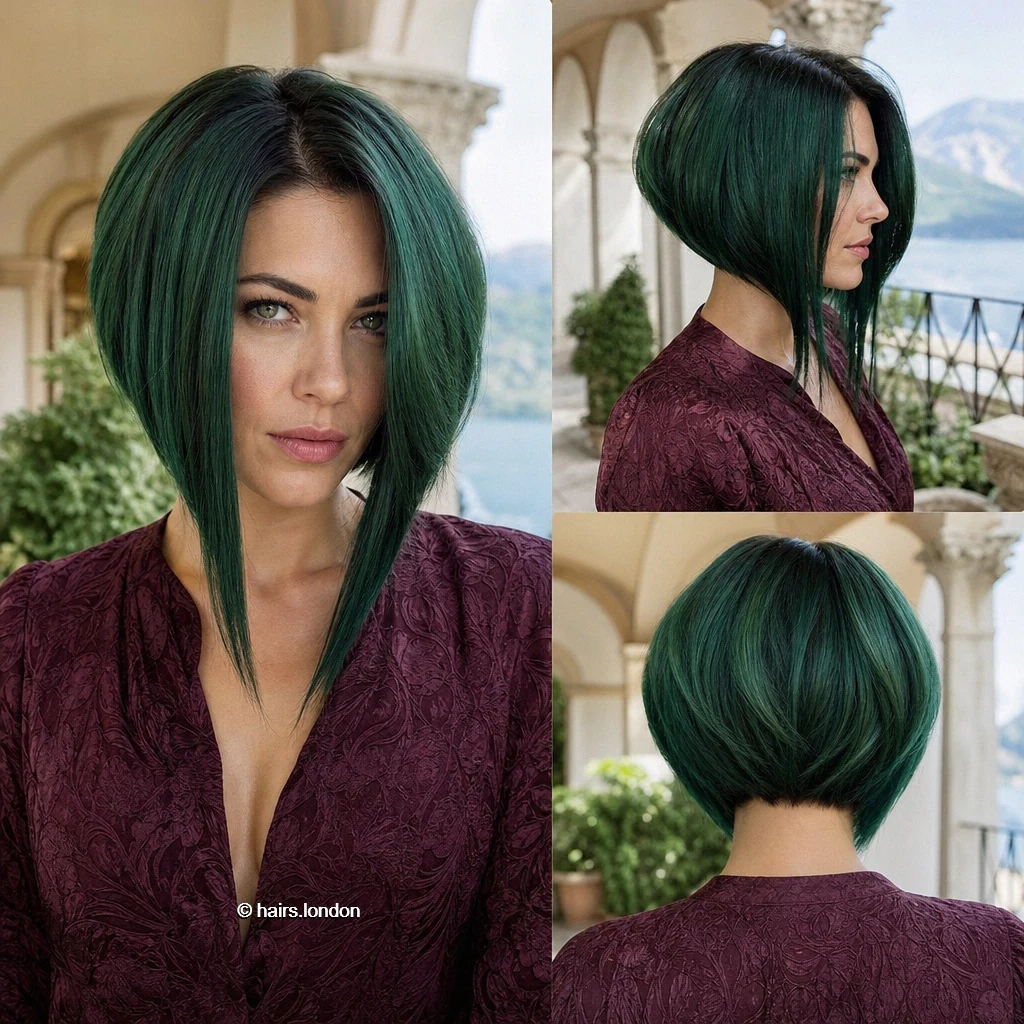
Deep green color accentuates this bob’s elongated front points. The visibly shorter, rounded back sits above a compact neck edge. A center part lets both long front sides frame the face. Side and rear views show clear back to front contrast. Smooth the front sections downward using a brush and protectant. Lift the back gently so its curved fullness remains visible. This pronounced shape requires enough density through its long tips. Ask your stylist how much nape exposure feels comfortable. Schedule trims when the front points or back outline soften. Discuss color upkeep if maintaining saturated green matters to you.
16. Shaggy Navy Bob With Soft Bangs
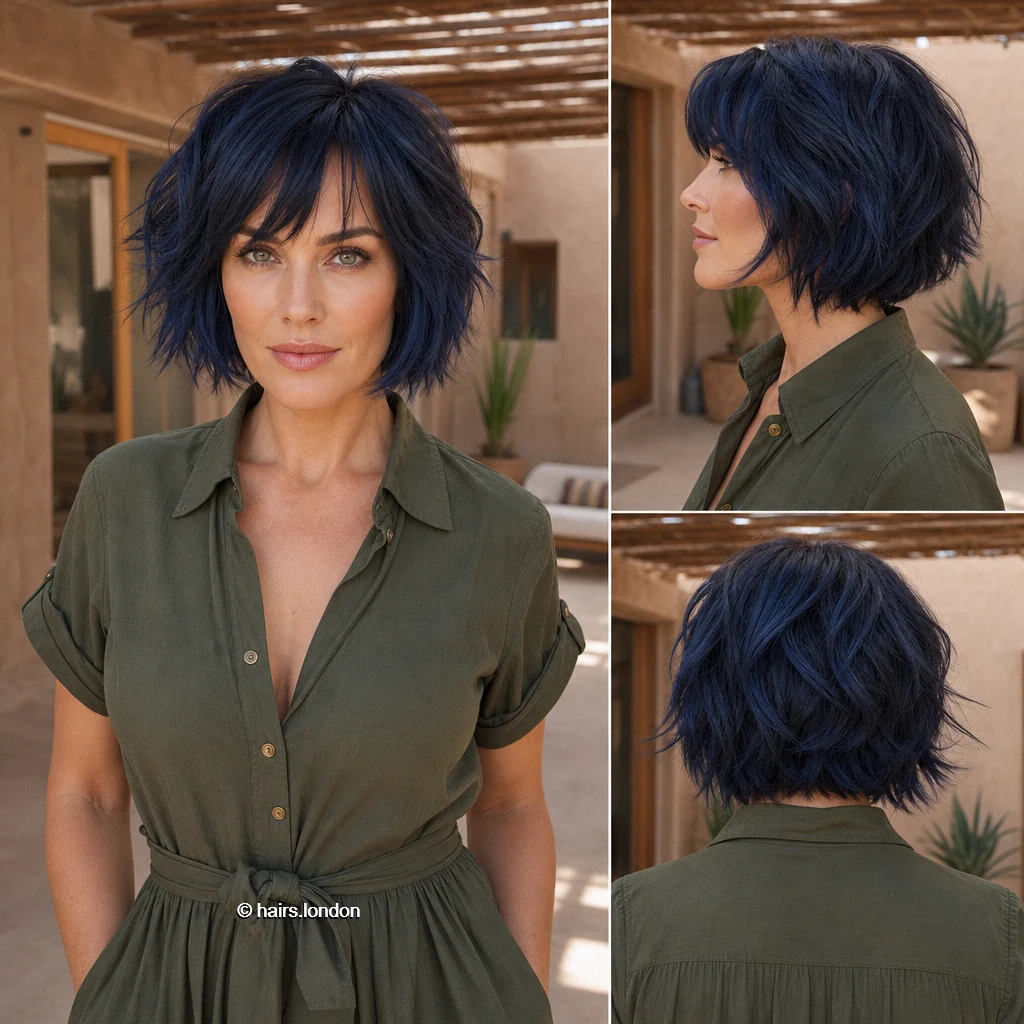
Choppy layers give this navy bob a loose, shaggy finish. Soft bangs cross the forehead and blend into cheek framing pieces. The sides sit around the jaw, with separated ends behind. Its broken perimeter creates movement rather than a solid edge. Scrunch mousse through damp hair and diffuse for airy texture. Tame the bangs first if their growth pattern needs guidance. This style suits hair that responds well to light layering. Discuss how much fullness you want left at the ends. Trim the fringe separately when it begins covering your eyes. Color gentle washing helps protect the rich navy shade.
17. Teal Choppy Bob With Wispy Fringe
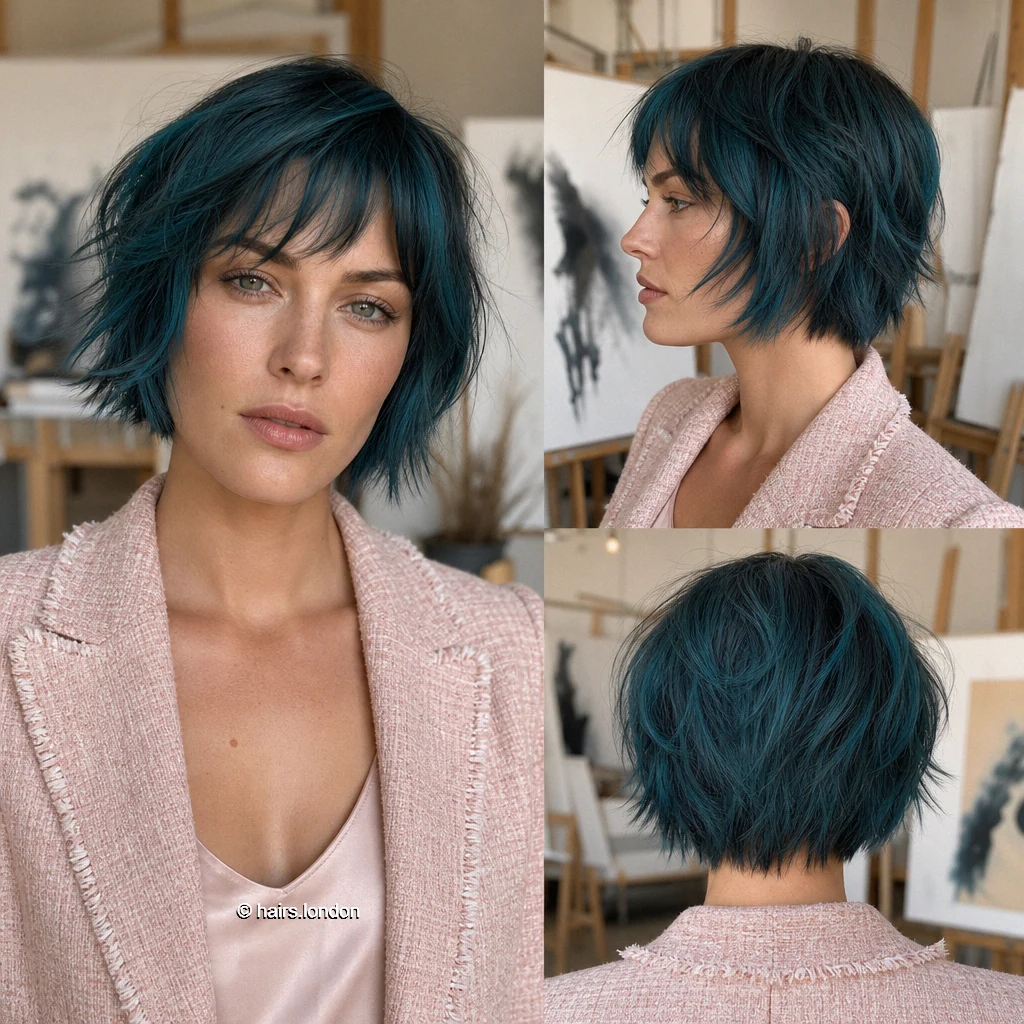
Teal blue hair adds dimension to this tousled jawline bob. A wispy fringe breaks across the forehead without appearing heavy. Choppy side pieces and textured ends keep the silhouette airy. The back view shows a short, deliberately uneven looking outline. Work lightweight foam through damp hair, then diffuse for separation. Style the fringe with fingers to avoid an overly uniform finish. Fine density may need fewer layers to retain end fullness. Ask your stylist to adapt the fringe to growth patterns. Trim when the short back begins losing its textured edge. Refresh teal color when fading changes its desired depth.
18. Shaggy Green Bob With a Piecey Fringe
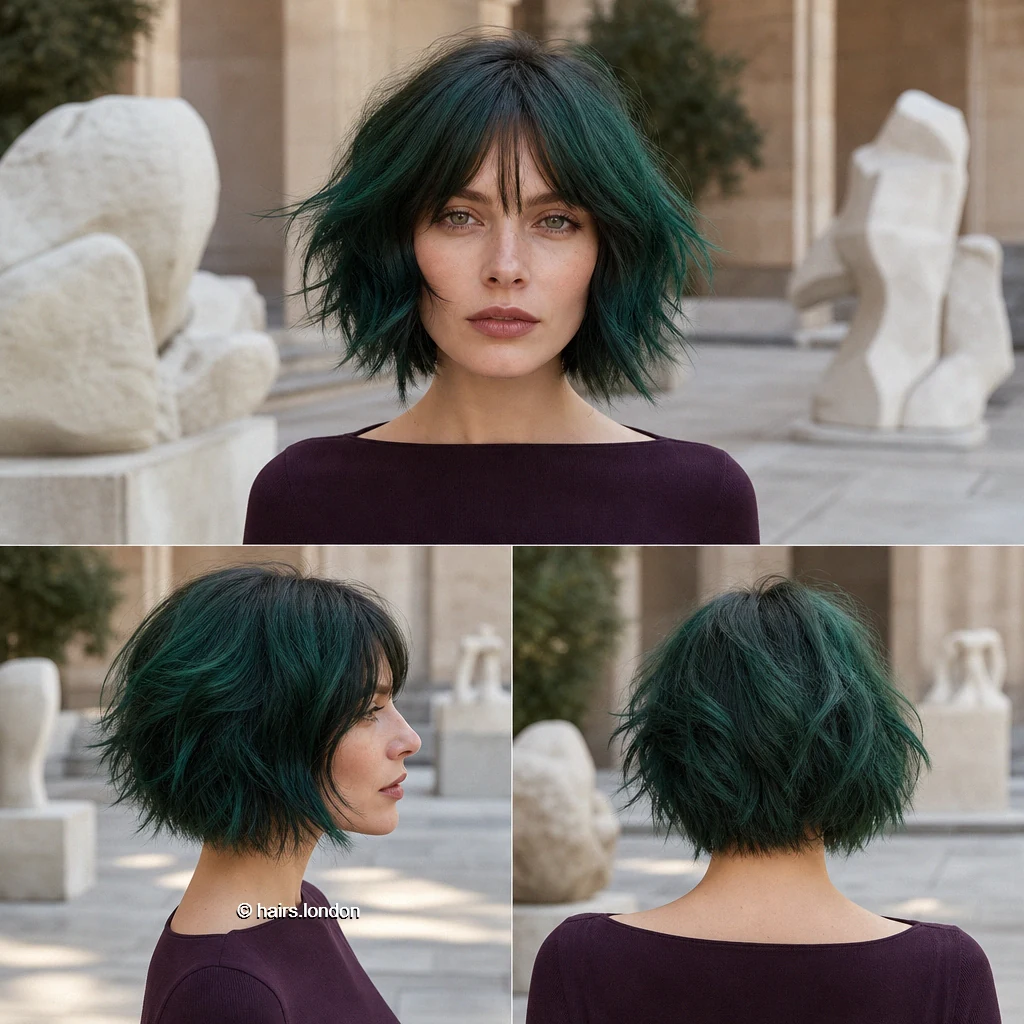
Deep green hair frames the face in a shaggy bob. A piecey fringe sits above brows, blending into loose sides. Jagged ends rest around the jaw while the back stays short. Visible layers create broad movement through the crown and sides. Apply a very small amount of texture cream to damp hair. Air dry or diffuse, keeping the fringe lightly separated. This look works when natural texture supports its informal outline. Discuss whether your density can tolerate the visible layering. Trim the fringe and back before either loses its shape. Use color considerate care to help green tones remain vivid.
19. Teal A-Line Bob With an Extended Side Sweep
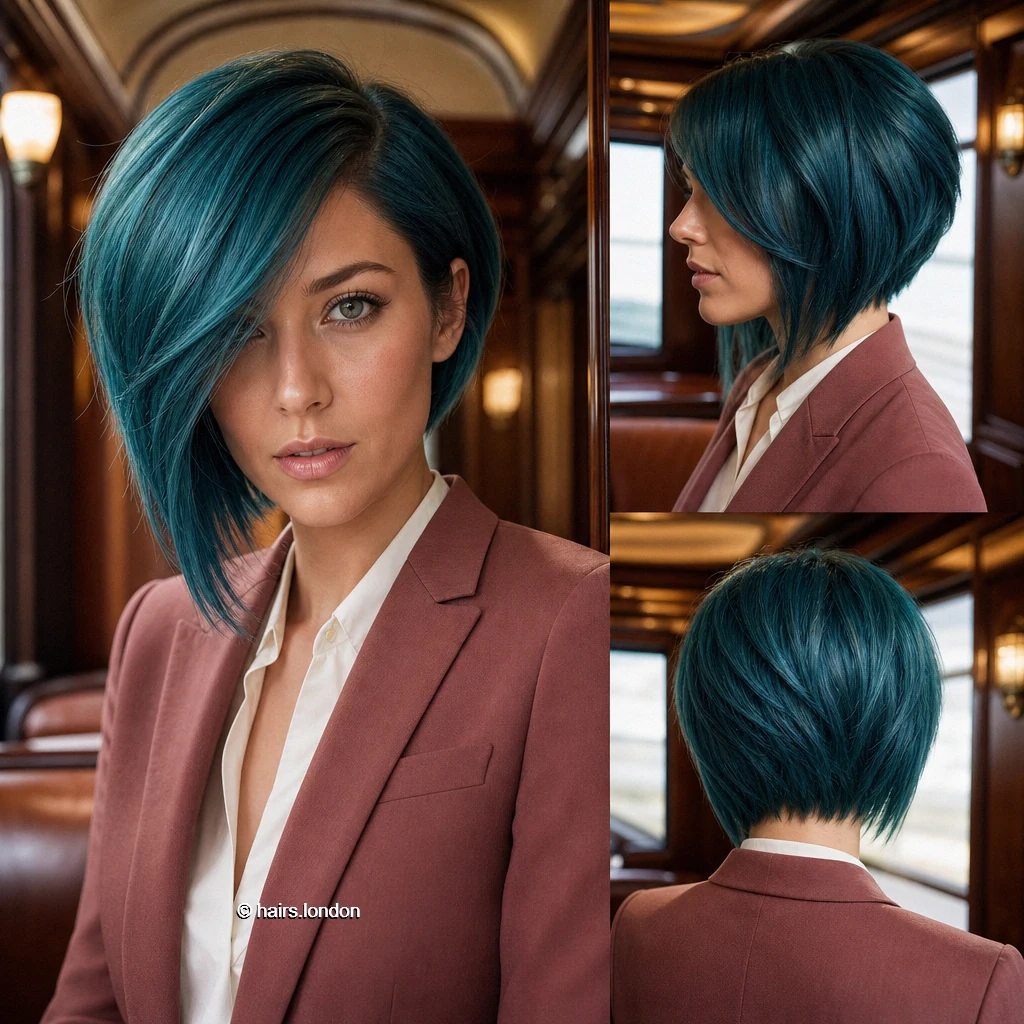
Rich teal blue brings sheen to this strongly angled bob. A deep side sweep falls over one eye toward the jaw. The side view clearly reveals longer front lengths and a visibly shorter back. Layered rear fullness tapers into a close neck edge. Dry the sweeping section forward, then refine its pointed ends. Keep product light so the front retains clean movement. This shape requires comfort with both styling and nape exposure. Discuss your preferred part before setting the front lengths. Trim regularly to keep the angle and short back distinct. Protect teal tones from heat and frequent harsh washing.
20. Deep Green Asymmetrical Bob With a Short Back
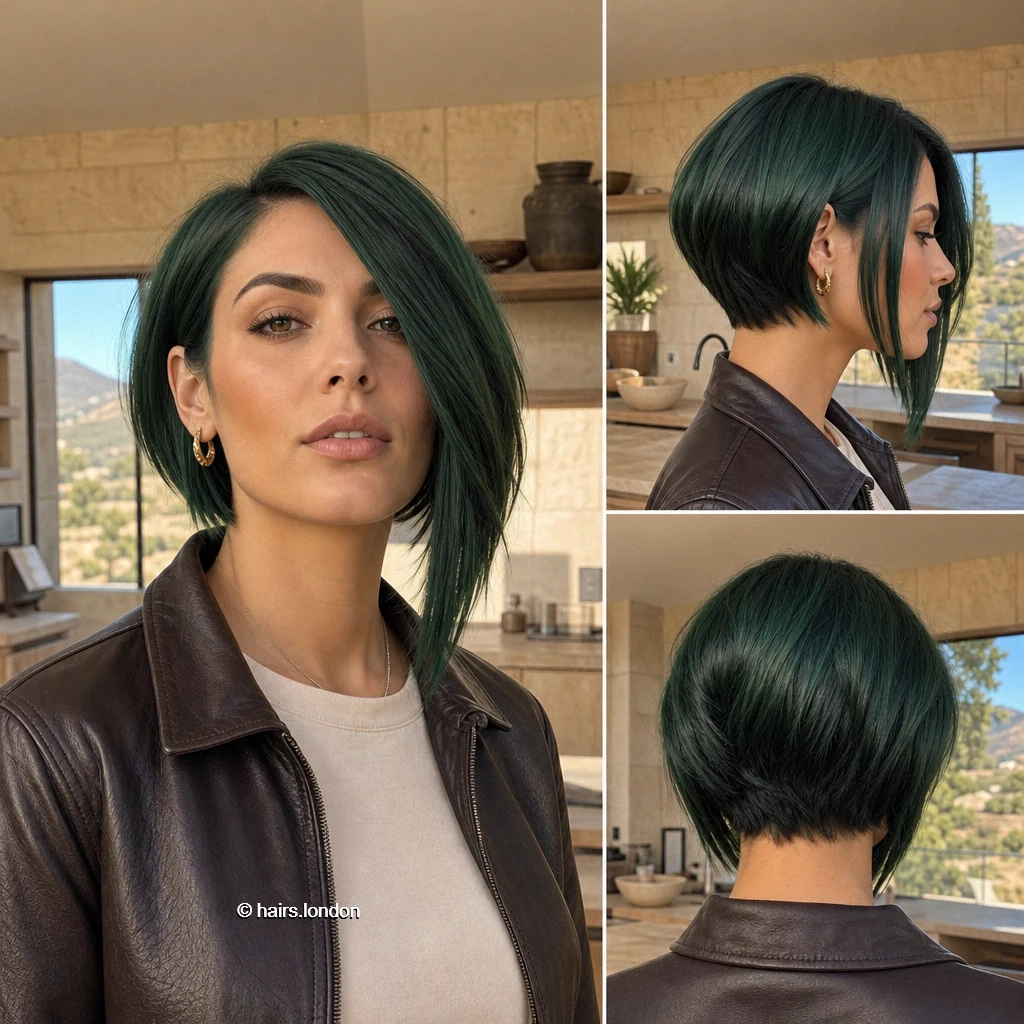
Deep green color defines this sleek, asymmetrical short bob. One front side extends below the jaw, while the opposite side finishes shorter. The profile shows a rounded back and close neck edge. A deep side part reinforces the striking difference between front lengths. Blow dry downward and smooth the longer section carefully. Tuck the shorter side if that feels comfortable for you. This design needs density that keeps the extended tip substantial. Confirm both front lengths and nape coverage during consultation. Trim before growth blurs the deliberate side to side contrast. Plan green color refreshes around fading and visible roots.
How to Choose Your Bob Length and Shape
Start with where you want the front to fall: above the jaw, at the jaw or nearer the shoulders. Then consider the back separately. A rounded bob keeps its fullness close to the head; an A-line bob has a visibly longer front; a stacked or graduated bob needs visible shortening and buildup at the back. These features can occur together, as they do in some of the more dramatic cuts here. Account for shrinkage, cowlicks, density and whether you want hair off your neck before choosing a short back.
Styling Fine, Thick, Wavy and Curly Textures
Fine hair often looks fuller when the lower edge keeps enough weight; use light mousse and avoid excessive thinning. Thick hair may need carefully placed internal layers to prevent a rounded bob from becoming bulky, while preserving the perimeter you want to see. For waves, scrunch product into damp hair and diffuse or air dry before adjusting individual ends. Natural curls need a shape planned for their dry spring and shrinkage, not simply a straightened version of the photo. Dry fringes first if they tend to split, and use only enough finishing product to define movement.
Keeping Dark and Vivid Bob Color Fresh
Navy, teal, green and pink can fade differently, and the most useful refresh schedule depends on the existing color, condition and washing routine. Ask your colorist what upkeep your chosen shade would require on your hair. Gentle cleansing, cooler water when comfortable, and heat protection can help reduce avoidable fading. Keep color maintenance separate from cutting appointments when necessary: a precise perimeter might need reshaping before the shade needs refreshing, or vice versa.
Maintaining the Bob Perimeter and Graduation
Watch the defining feature of your cut rather than following one trim interval for every bob. A sleek jawline edge may look untidy as soon as its line becomes uneven. A shaggy bob can tolerate more growth but may lose its balance around the fringe or sides. Short backs and visible graduation need attention when the nape grows out or the rounded weight shifts downward. Longer angled fronts also need checking so their points remain intentional. Bring photos of the front, side and back you want maintained.
What to Discuss With Your Stylist
Bring a view of the whole shape, not just a front portrait. Point out your preferred fringe, part, shortest back length, front length and degree of layering. Ask what will happen when your hair is air dried, how your growth patterns affect a fringe or exposed nape, and whether your density will support the pictured weight line. If you want vivid color as well, discuss your starting shade, hair condition, expected fading and the time and cost of upkeep before making a change.
Frequently Asked Questions
What is the difference between a bob and a lob?
A lob is a longer bob, generally falling nearer the shoulders. A shorter bob typically sits around the jaw or neck, though the exact boundary varies with the shape.
How is an A-line bob different from a stacked bob?
A-line describes a front that is longer than the back. Stacked describes visible graduation that builds shape at the back. One bob can have both features.
Will a rounded bob work on fine hair?
It can, if the perimeter retains enough weight. Ask your stylist whether lighter layers would add movement or make your ends appear too thin.
How can thick hair avoid too much bulk in a short bob?
Carefully placed internal layers can remove weight while keeping the outside shape intact. The right amount depends on your density, texture and desired fullness.
Can natural curls be cut into a bob?
Yes, but plan the length around curl shrinkage and the shape your curls form when dry. A consultation about layering and daily styling is especially useful.
What should I consider before adding a fringe?
Consider your growth patterns, preferred part and willingness to style and trim it. A wispy fringe and a straight, full fringe also require different amounts of density.
Which bob is simplest to style each day?
That depends on your natural texture. A softly layered bob may need little work on naturally wavy hair, while a sleek, precise perimeter may require regular smoothing.
How often should a short bob be trimmed?
Book a trim when its defining line, short nape or graduated shape starts to shift. Precision cuts and exposed backs usually show growth sooner than loose, layered bobs.
Will an angled bob still look angled as it grows?
The difference between front and back can become less distinct as the back grows. Regular reshaping helps preserve a deliberate angle.
How do I grow out a short bob?
Ask for small adjustments that keep the perimeter balanced while the back catches up with the front. You can gradually move toward a longer bob without committing to the original short nape.
Do vivid bob colors require more upkeep?
They may require separate color refreshes as they fade or roots become visible. The schedule depends on the shade, starting hair color, hair condition and washing habits.
What photos should I take to a bob consultation?
Bring front, side and back views showing the length, fringe, perimeter and nape you like. Also identify features you do not want so your stylist can adapt the shape to your hair.
Conclusion
The most useful bob inspiration is specific: decide where you want the front to end, how much fullness you want at the back, and whether you prefer a crisp edge or visible texture. Once those choices fit your hair and routine, the dark or vivid color becomes a finish that complements the shape.