


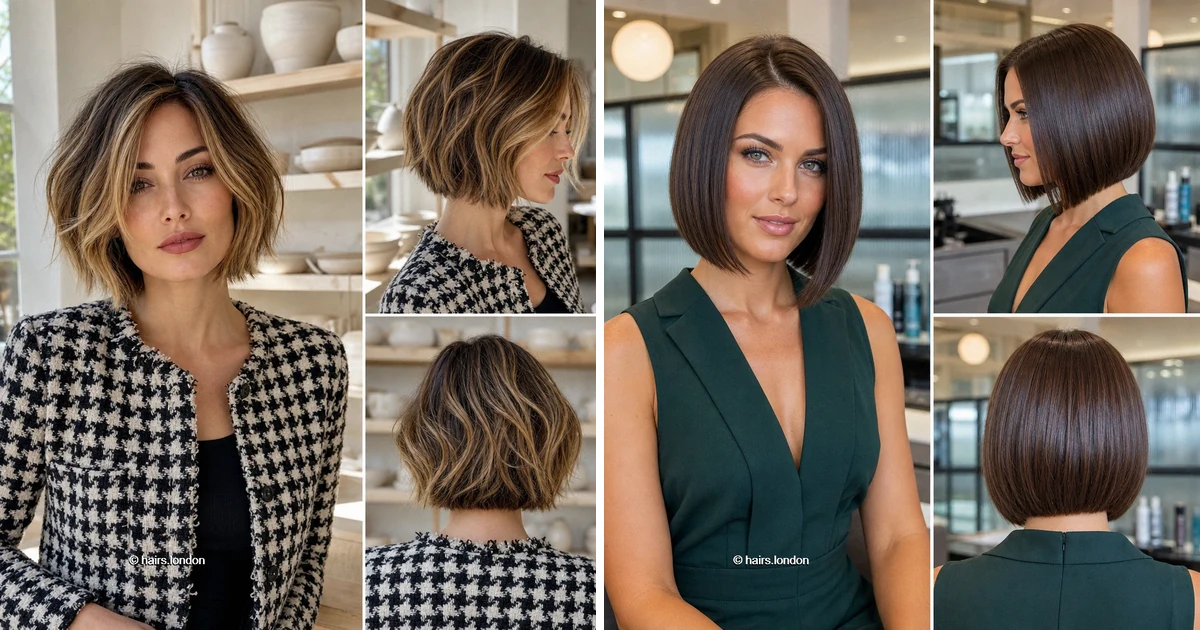
11. Polished Brown Bob with a Rounded Outline
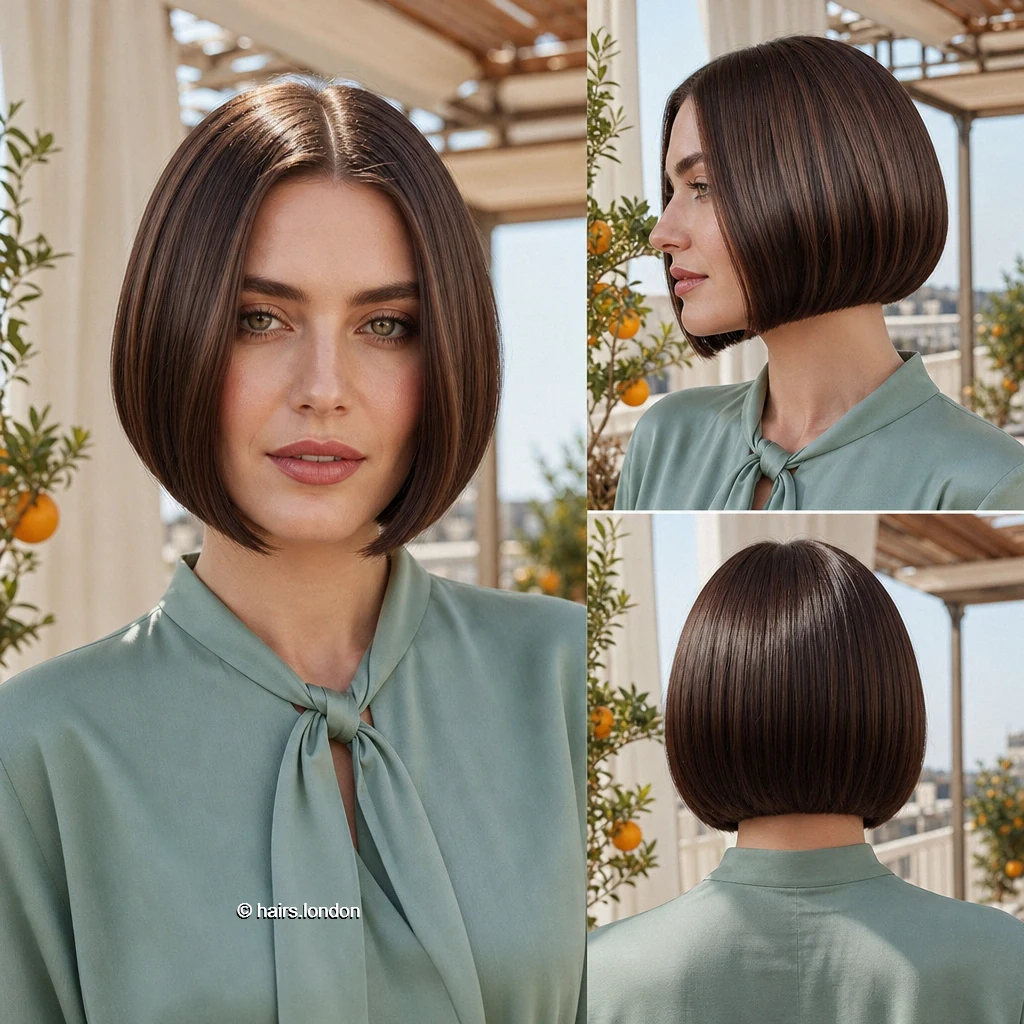
The center part highlights this smooth, warm brown bob. Its front grazes the jaw while the back curves inward. A compact perimeter gives the style an especially tidy, polished finish. Visible layering is minimal across the glossy outer surface here. Brush hair downward and turn only the very ends under. Use heat protection whenever recreating its sleek finish at home. Fine strands may benefit from a lightweight volumizer at roots. Coarser strands could require more time smoothing the outer surface. Frequent perimeter checks help preserve the bob’s balanced back curve. Discuss whether your natural part stays centered throughout the day.
12. Warm Brunette Bob with a Defined Nape
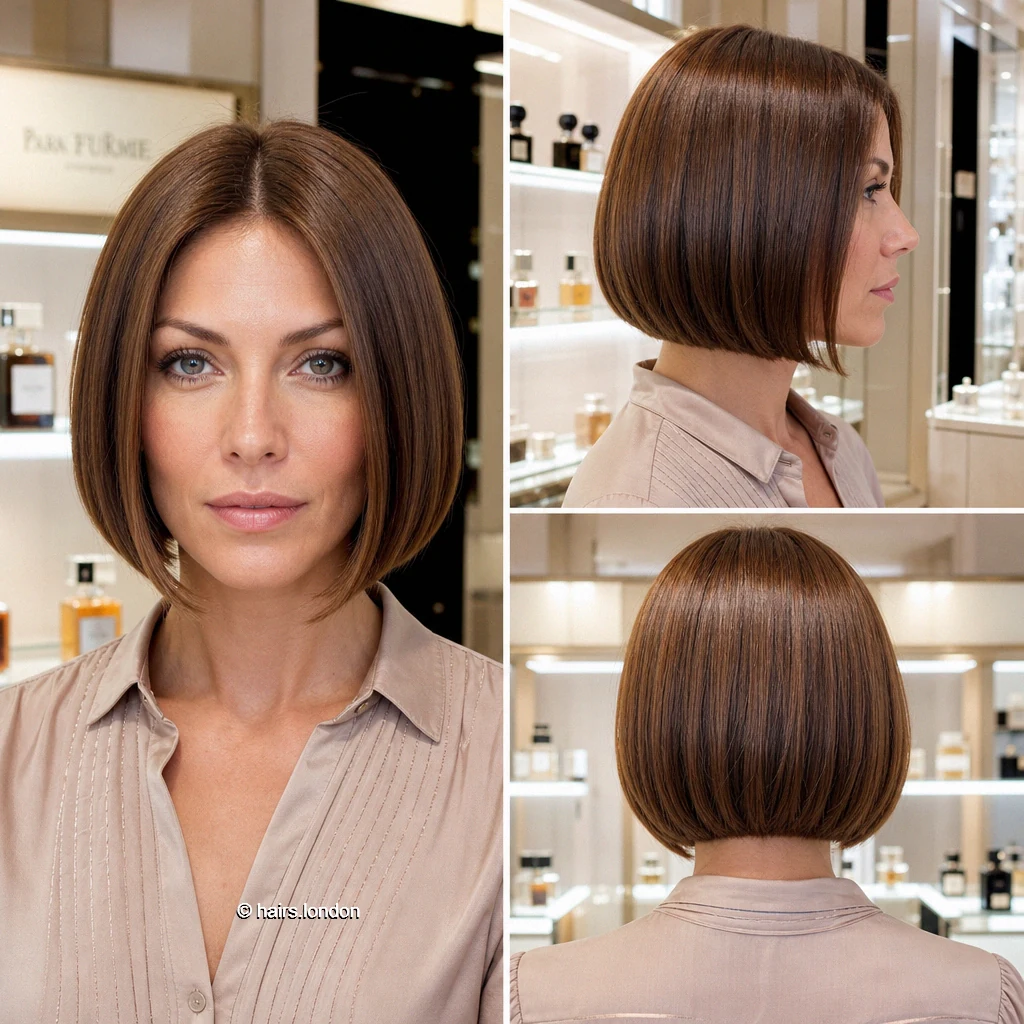
Warm brunette color complements this smooth, chin length bob. Its center part leads into softly curved face framing lengths. From behind, the defined nape line supports rounded fullness above. The front sits lower than the back in profile here. Smooth carefully with a paddle brush before refining the ends underneath. Keep root products light so the curved outline moves naturally. Dense hair may require internal shaping to prevent excess width. Finer hair can keep more weight along its lower edge. Revisit the salon when the short nape looks less distinct. Confirm the intended front length using your usual natural part.
13. Straight Bob with a Crisp Perimeter
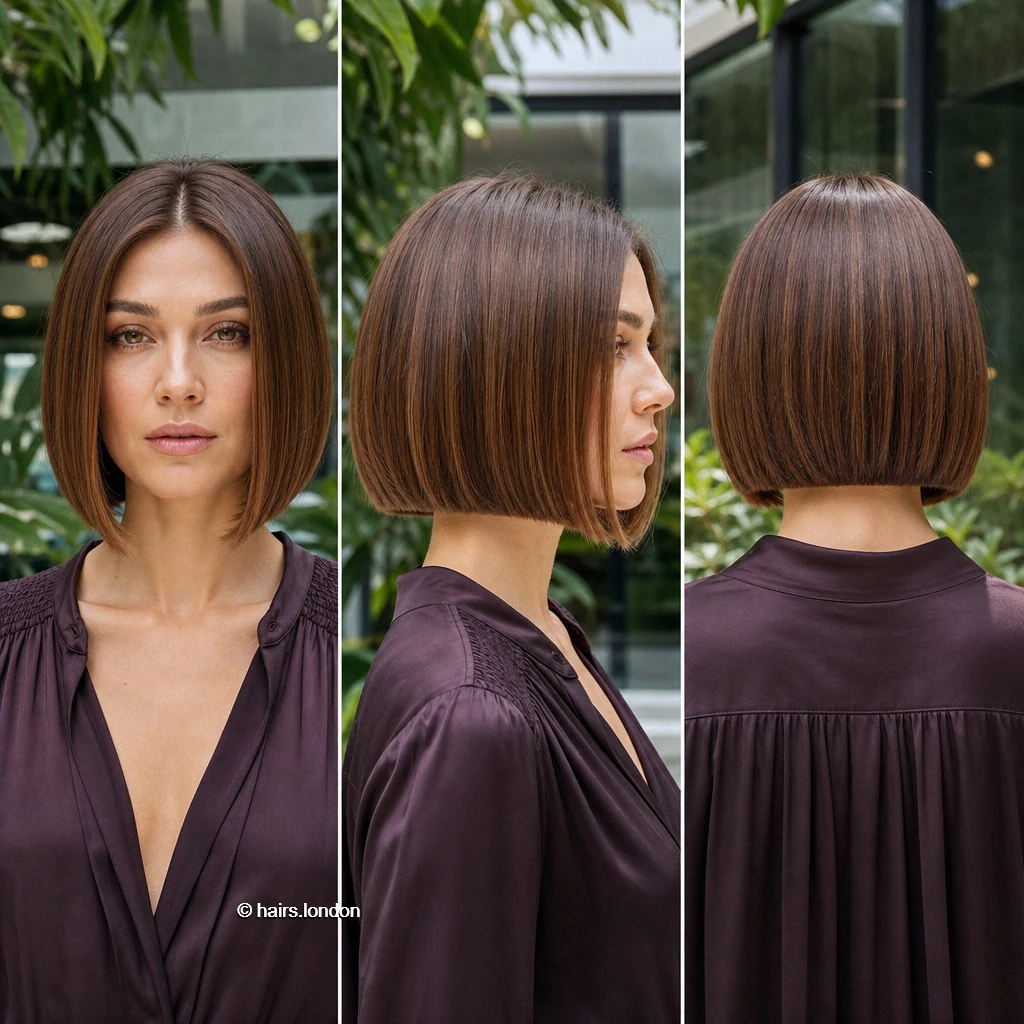
This chestnut bob shows a particularly crisp lower edge. A center part sets straight front panels near the jaw. Its back line runs cleanly above the exposed neck area. The sides appear slightly longer than the back in profile. Blow dry with steady downward airflow for a smooth finish. Pass a flat iron over resistant sections using heat protection. Fine hair may enjoy the visual fullness of unbroken ends. Thick hair might need careful interior shaping without thinning tips. Precise trims matter when every section of perimeter remains visible. Ask your stylist to check the balance from multiple viewing angles.
14. Softly Curved Brown Bob
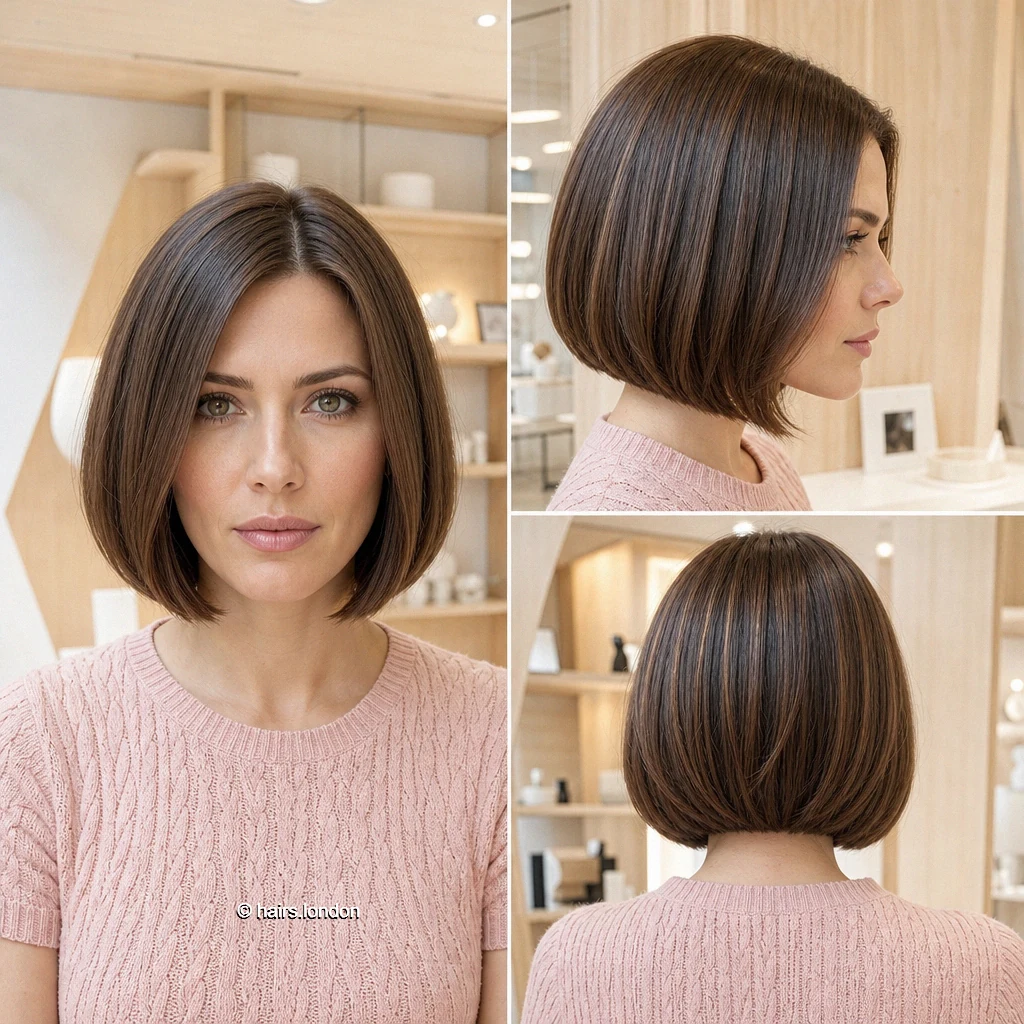
Brown hair with subtle highlights forms a gently curved bob. The near center part keeps face framing lengths evenly distributed. Rounded back volume meets a shorter, tidy neckline below. Its smooth perimeter retains weight without looking completely rigid here. Brush the sides gently toward the face while drying the ends. Finish with light serum through midlengths, avoiding the roots entirely. Fine hair may need minimal layering to maintain this fullness. Dense hair could require hidden debulking around the lower curve. Trim before the back begins sitting heavily against your neck. Bring reference views showing the softness you prefer around cheeks.
15. Long-Front Bob with a Rounded Back
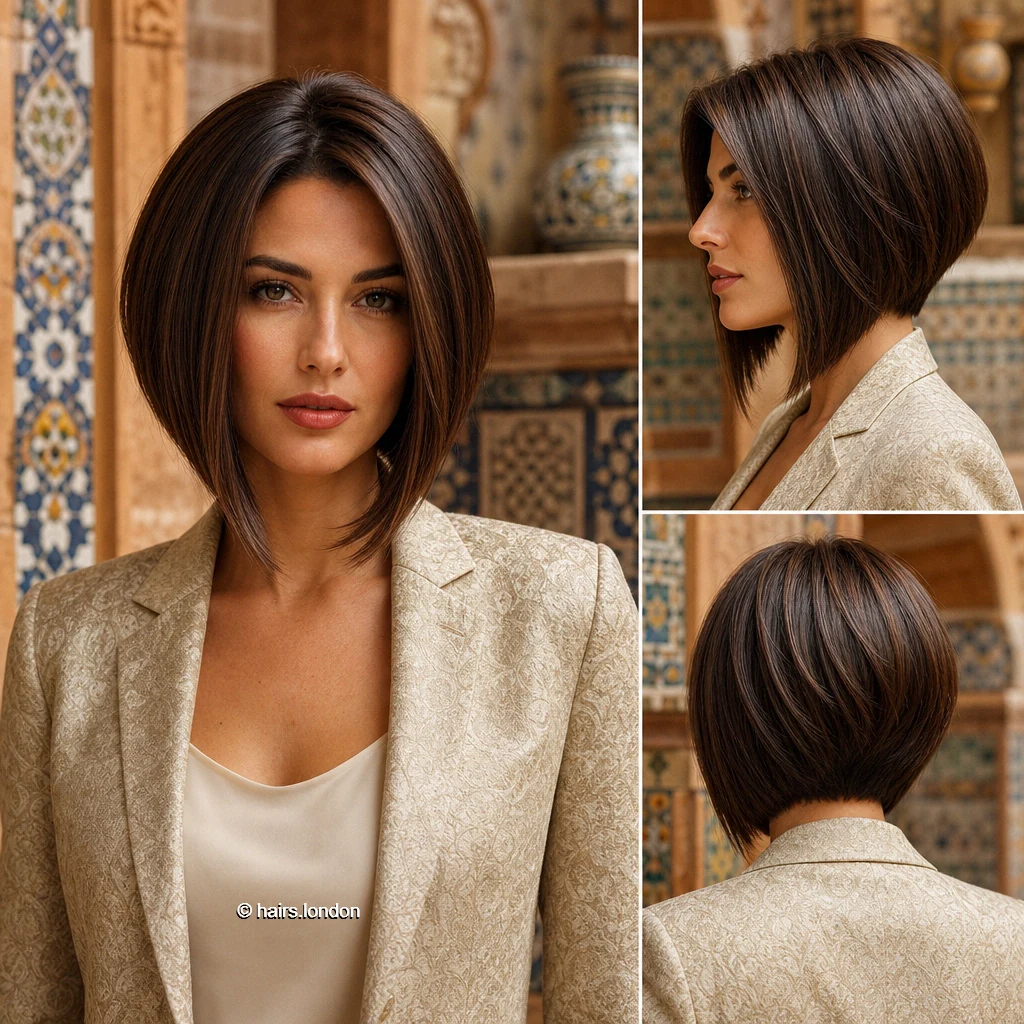
Deep brunette hair carries subtle lighter strands through this bob. The longer front points toward the neck and collarbone area. Its back is shorter, rounded, and visibly fuller above nape. A side part adds lift without a separate cut fringe. Smooth the front downward to emphasize its distinct length contrast. Use a brush to support back volume without overinflating it. Density affects whether this rounded silhouette needs internal weight removal. Natural waves can soften the sharpness of its front points. Maintain both the short nape and longer face framing ends. Agree on the front length before shaping the shorter back.
16. Full Angled Bob with Soft Surface Layers
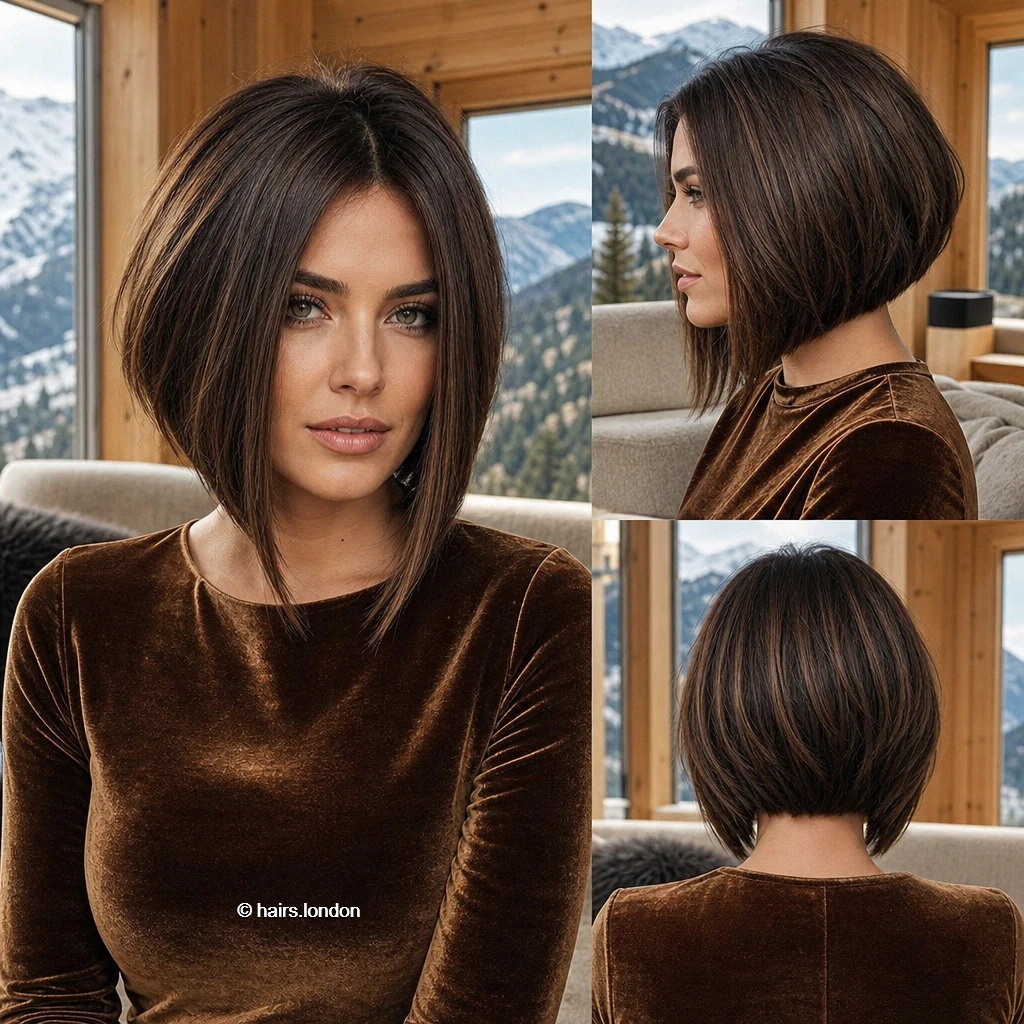
This brunette bob pairs long fronts with a rounded back. Its darker base shows restrained warm highlights through the surface. Soft visible layers create movement above the shorter back perimeter. The side part makes the face framing pieces appear asymmetric. Dry the front smooth, then lift the back with fingers. Avoid heavy wax that could make the soft layers clump. Thick hair may need weight controlled beneath its rounded silhouette. Fine hair might prefer fewer layers to preserve front fullness. Trim the nape when its shorter line starts losing definition. Discuss how your natural wave affects the visible front angle.
17. Dark Angled Bob with a Tapered Nape
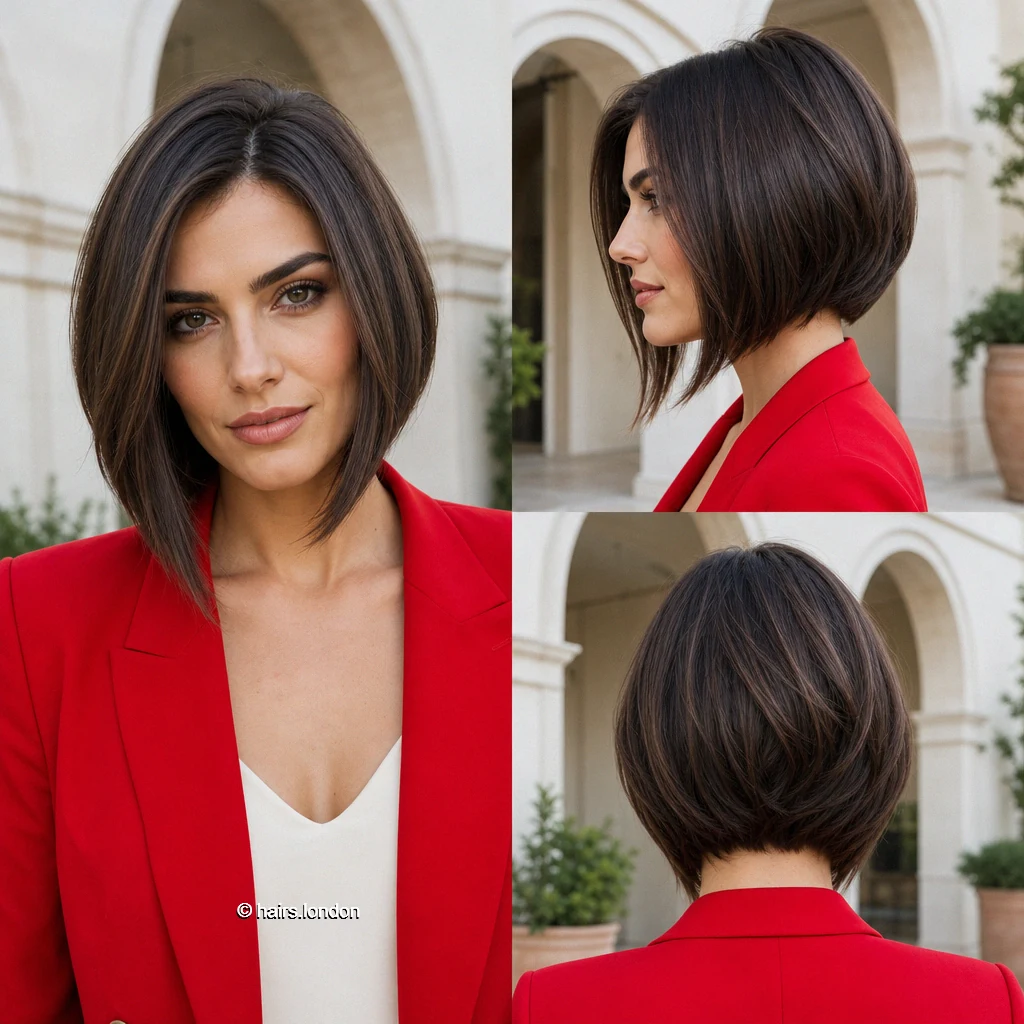
A dark brunette finish gives this angled bob definition. Longer face framing pieces extend below its rounded back line. The visible back narrows toward a close, tidy neckline. A soft side part adds height without heavy fringe. Blow dry the front downward to show its longer points. Shape the back with gentle lift, keeping the nape smooth. Dense hair may require interior refinement to control back volume. Fine hair needs enough weight for the front points. Regular nape trims maintain the contrast between short and long. Show your stylist both side and back views and your usual part before cutting.
18. Side-Swept Bob with Rounded Back Volume
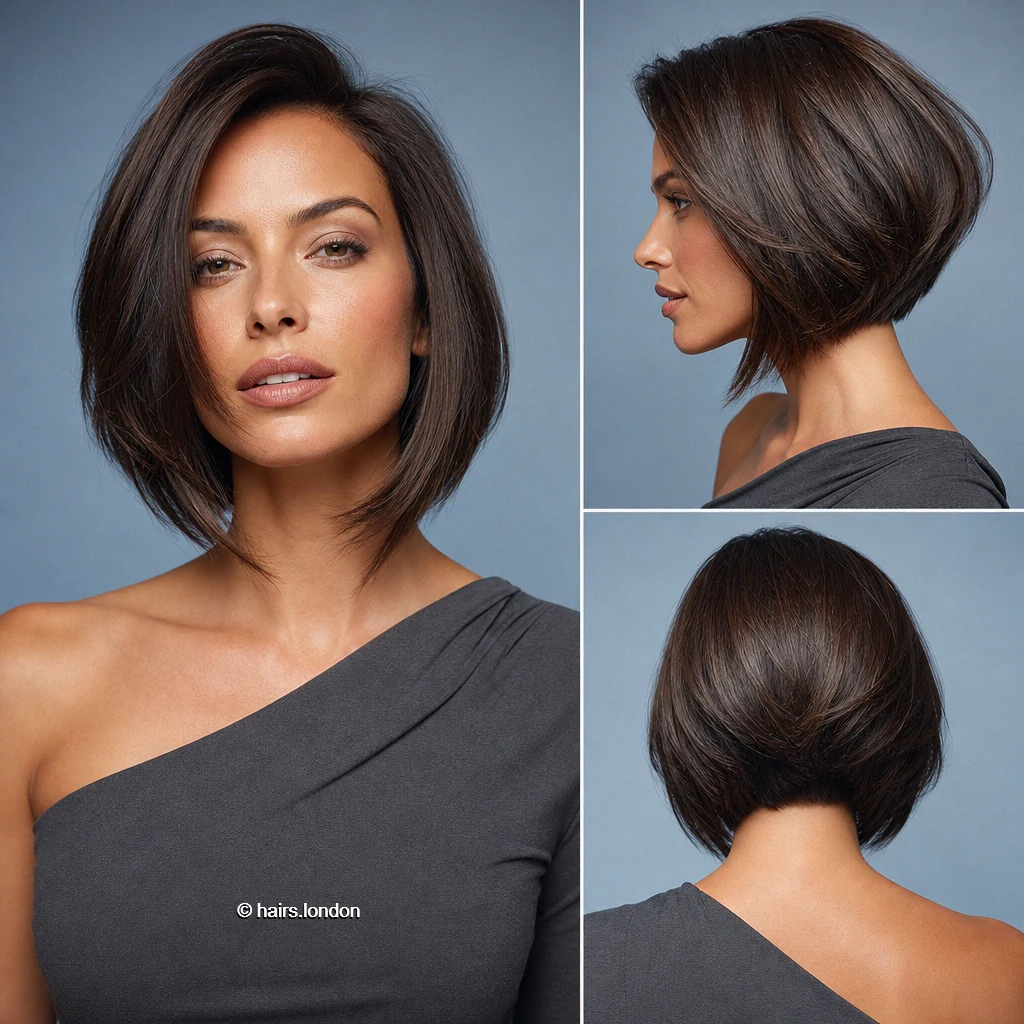
Deep brown hair falls into a softly side swept bob. Its front reaches the jaw while the back rounds gently inward. Visible layers add movement across the surface and crown area. The nape looks shorter beneath the fuller back shape. Brush the long sweep away from the part while drying. Finish by smoothing the ends without flattening crown movement completely. Fine hair may need light products to maintain that lift. Dense hair could benefit from selective shaping within the back. Book trims when the nape no longer looks neatly contained. Discuss whether the side sweep matches your natural growth direction.
19. Chestnut Angled Bob with a Full Crown
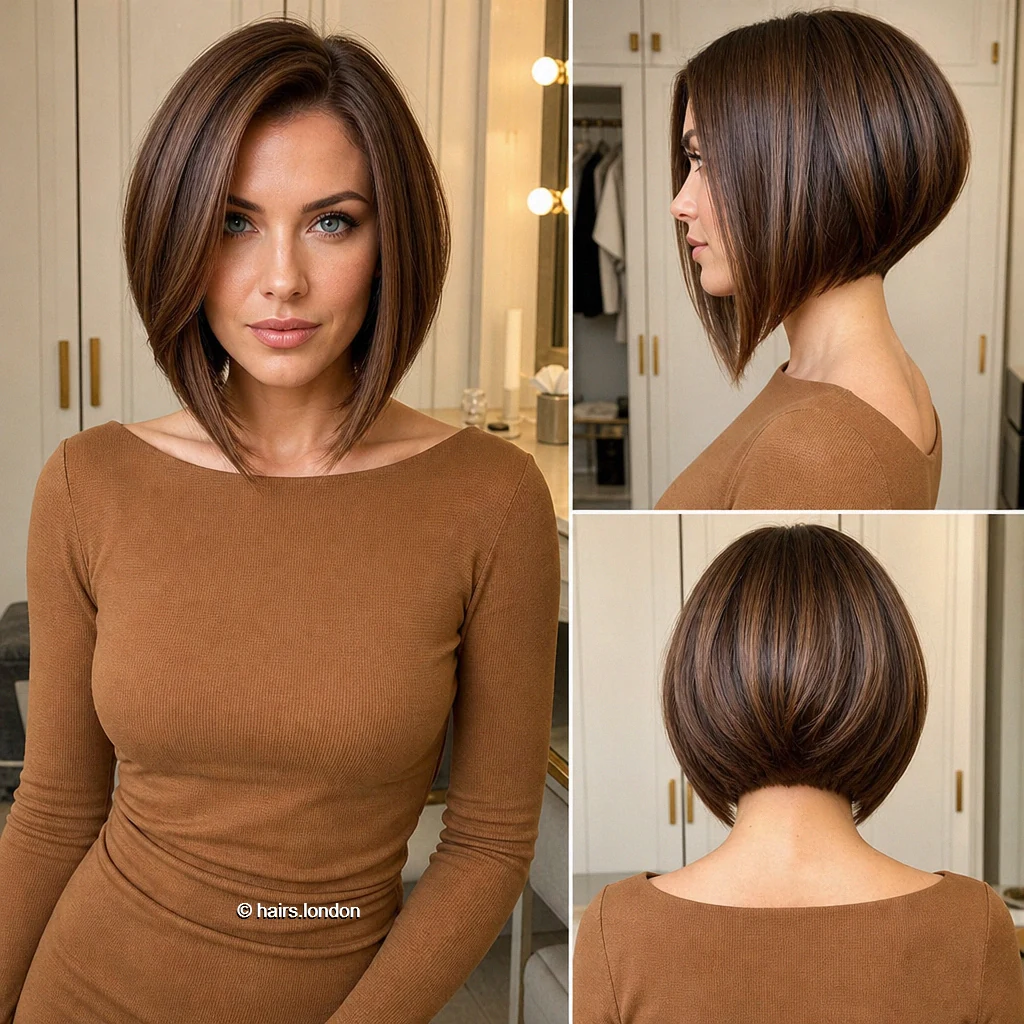
Warm chestnut color brightens this smooth, long front bob. The front falls below the jaw toward the neck area. Behind, rounded crown fullness narrows into a shorter nape. Its side part creates an uninterrupted sweep across the forehead. Smooth longer pieces gently with a brush, leaving their ends naturally flexible. Direct air underneath the back to preserve its rounded silhouette. Thick hair may need discreet interior shaping to control bulk. Finer hair could lose fullness if the back becomes overlayered. Trim the nape and front points to preserve their contrast. Confirm how pronounced the angle should appear when hair dries.
20. Caramel Swept Bob with a Short Back
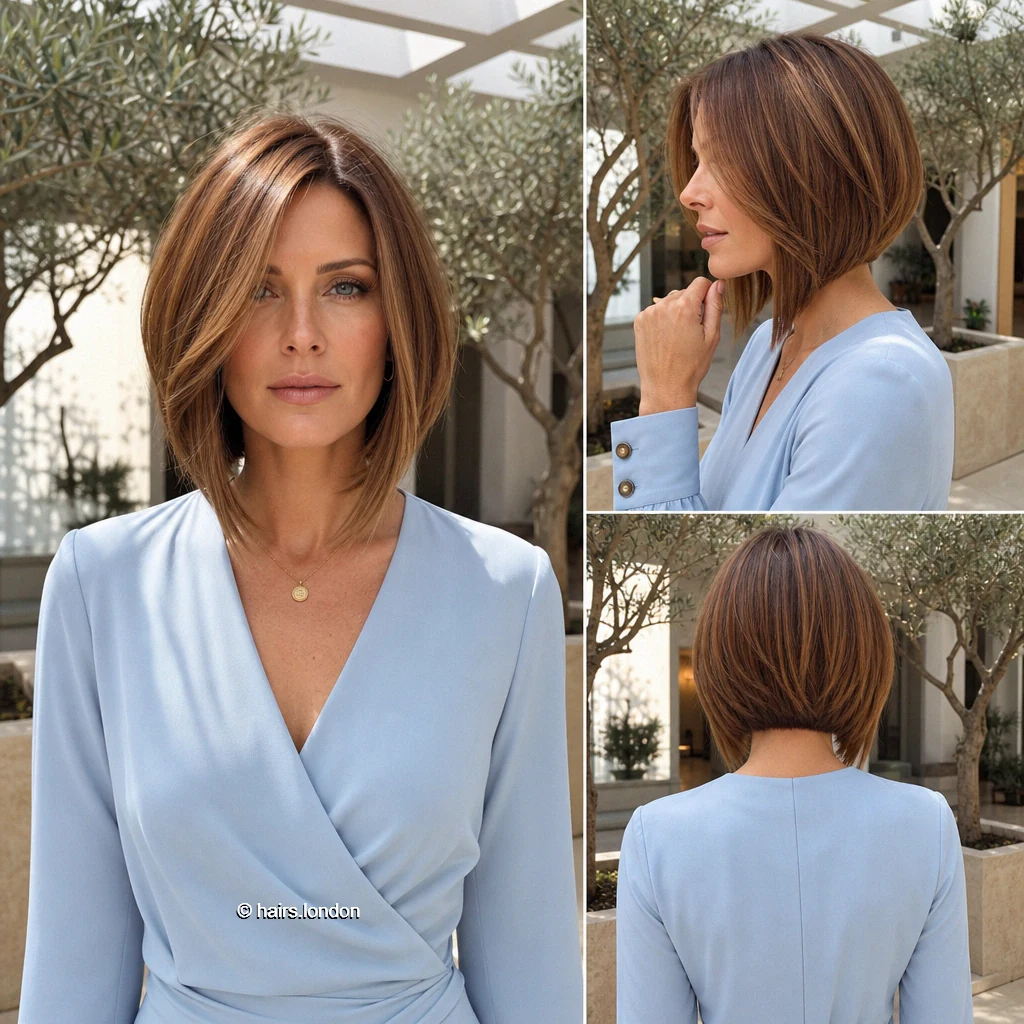
Caramel highlights trace the sweeping front of this brunette bob. The side part falls across the forehead without cut bangs. Its face framing lengths extend beyond the shorter, rounded back. Visible surface layers soften the shape above its neat nape. Dry the sweep first, following its natural direction with airflow. Smooth the front ends while keeping the back lightly lifted. Dense hair may benefit from weight removal beneath the curve. Fine hair needs restraint with layers around the longer front. Short nape growth changes this silhouette sooner than front growth. Ask your stylist to assess your part and growth patterns.
How to Choose Your Bob Length and Shape
Start with the point where you want the front to fall: near the jaw, at the chin, or lower toward the neck. Then decide whether the back should look similarly long, softly rounded, or distinctly shorter. A longer front creates an A-line outline; a stacked or graduated back requires visible buildup of length and fullness behind. Consider how your hair shrinks, waves, or lifts as it dries before settling on a perimeter.
Styling Fine, Thick, Wavy, and Curly Textures
For fine hair, apply lightweight root support and avoid removing so much weight that the bob’s edge looks thin. For thick hair, ask about discreet internal weight removal rather than thinning every visible end. Diffuse natural waves with a light mousse, then refine only the pieces that disrupt the perimeter. Curly hair benefits from a shape planned around its dry spring and curl pattern; scrunch in definition and avoid brushing it into unwanted width. Smooth bobs need downward airflow and heat protection, while sweeping fronts are easiest to direct when still damp.
Keeping Highlighted and Brunette Color Fresh
These looks range from deep, glossy brunette to brown hair with caramel or beige highlights. Use color-safe cleansing products if your hair is colored, protect it from excessive heat, and ask your colorist when a gloss or highlight refresh makes sense for your shade. Concentrate conditioner on the lengths: a smooth bob shows dryness readily, but heavy product at the roots can flatten a rounded shape.
Maintaining the Bob Perimeter and Back Shape
A crisp, even bob reveals growth at its lower edge, so arrange a trim when that line starts looking uneven. Short napes and visibly graduated backs can lose their shape sooner than a softer, tousled bob. For an angled cut, have your stylist check the front points and shorter back together; trimming only one area can change the intended contrast. The right interval depends on your growth rate and how precise you want the outline to remain.
What to Discuss with Your Stylist
Bring front, side, and back references, and identify the specific details you want to keep. Show where you normally part your hair and explain whether you prefer a smooth finish or natural movement. Discuss density, waves or curls, neckline growth patterns, time available for styling, and whether you want to maintain a short nape. Ask your stylist to explain how much layering or graduation your hair can support without sacrificing the perimeter you like.
Frequently Asked Questions
What is the difference between a bob and a lob?
A bob typically finishes around the jaw, chin, or neck. A lob is a longer bob that approaches or reaches the shoulders.
How is an A-line bob different from a stacked bob?
A-line describes an outline that is longer in front than in back. Stacked describes visible graduation and buildup of fullness at the back; a cut can have both features.
Does fine hair need a blunt bob?
Not necessarily. A substantial perimeter can make fine hair appear fuller, while restrained layers can add movement without leaving the ends sparse.
How can thick hair avoid a bulky bob?
Ask your stylist to assess where weight collects and whether selective internal shaping would help. Removing too much from the visible edge can make it uneven.
Can naturally curly hair wear an angled bob?
Yes, if the shape is planned around curl pattern and shrinkage. The angle may appear softer when worn curly than it does when smoothed.
Should I choose a fringe or a side sweep?
A side sweep offers a fringe-like effect without a separate short section. A cut fringe needs its own length, styling, and maintenance plan.
What is the quickest way to style a smooth bob daily?
Direct airflow downward while brushing the perimeter into place. Use heat protection before any hot tool, and refine only the sections that need it.
How do I keep a wavy bob from looking too wide?
Use lightweight definition, diffuse gently, and avoid separating every wave. If width persists, ask whether the shape needs internal adjustment rather than more product.
How often does a short nape need trimming?
It depends on growth rate and your tolerance for change. Arrange a trim when the neckline begins to obscure the intended back shape.
What happens when an angled bob grows out?
The shorter back often changes first, reducing the contrast with the front. Your stylist can rebalance the perimeter or guide it toward a longer bob.
Are highlights necessary to show bob layers?
No. Highlights can make movement more noticeable, but a well-shaped bob also shows its layers through its outline and texture.
Which photographs should I bring to a bob consultation?
Bring front, side, and back views. Point out the perimeter, front length, parting, and amount of back fullness you want rather than relying on a haircut name alone.
Conclusion
The most useful bob reference is one that shows more than a flattering front view. Compare the perimeter, front-to-back length, and back fullness in these cuts, then choose a version that fits your natural texture and the upkeep you want to take on.


