


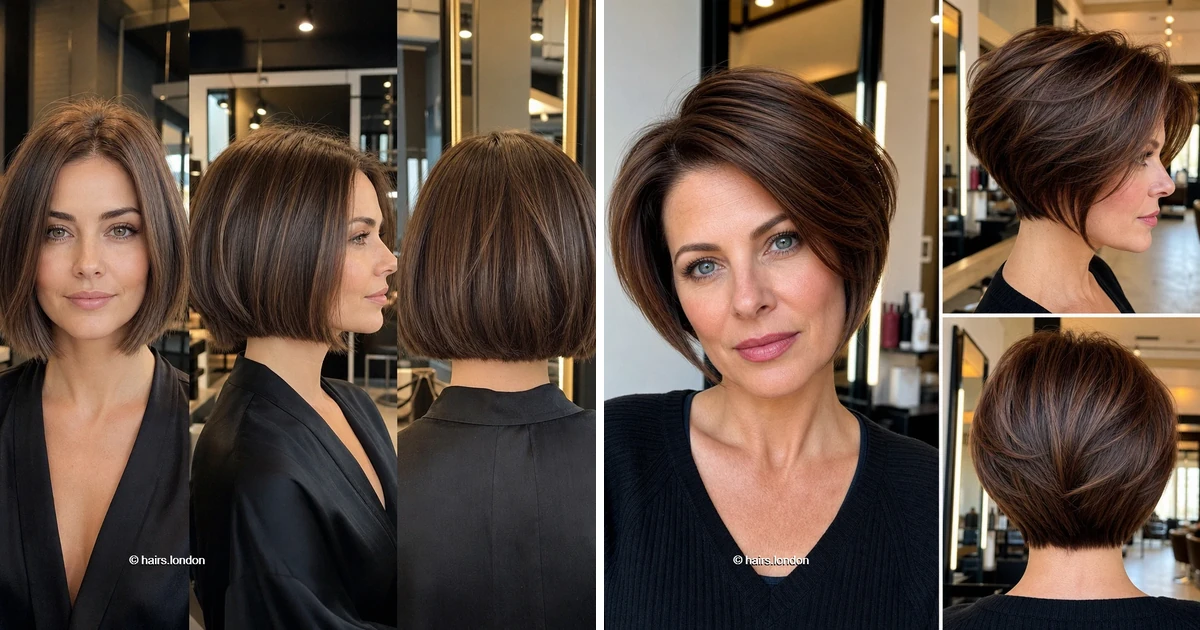
11. Collarbone-Skimming Brunette Bob With Flowing Layers
This brunette cut approaches the shoulders, placing it near lob length. Face framing pieces sweep outward from an off center part. Layers soften the sides and loosen the lower outline. The back has movement rather than a sharp, blunt edge. Ask for layers that balance your density without emptying ends. A round brush can lift the front away from cheeks. Let the remaining lengths bend naturally for an easy finish. Fine hair may need fewer layers to preserve bottom fullness. Dense hair can benefit from movement without excessive surface frizz. Trim when the ends begin catching against clothing or shoulders.
12. Shoulder-Grazing Brown Lob With Flipped Ends
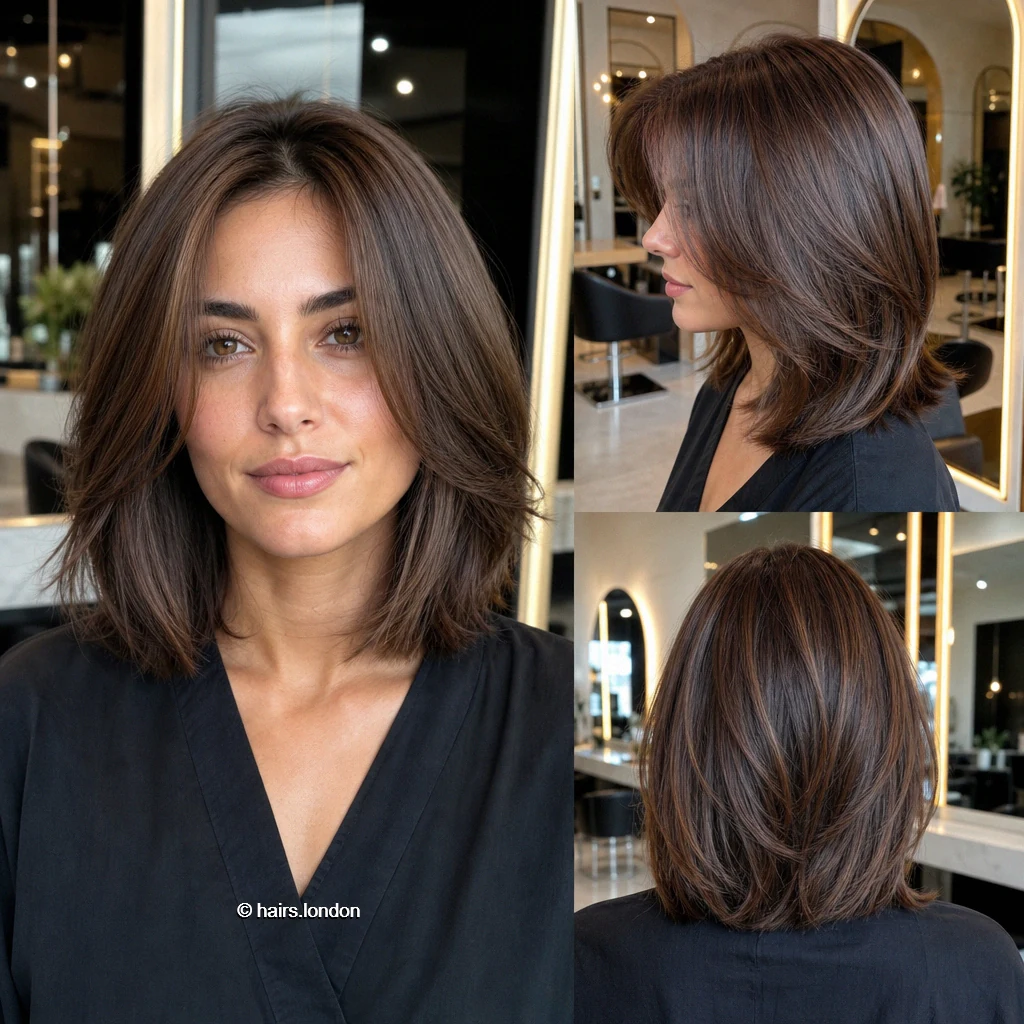
Deep brown hair falls around the shoulders in this layered lob. Its open center part leads into broad face framing sections. The ends turn outward slightly, especially through the visible sides. Soft layers continue across the back without a blunt line. Ask your stylist where the ends will meet your shoulders. That contact can encourage flipping even without deliberate heat styling. Smooth the upper lengths while leaving the tips free. Finer density might need a stronger perimeter than shown here. Thicker hair may need enough layering to prevent triangular width. Trim and reshape the ends when they stop moving cleanly.
13. Dark Brunette Layered Lob With Face Framing
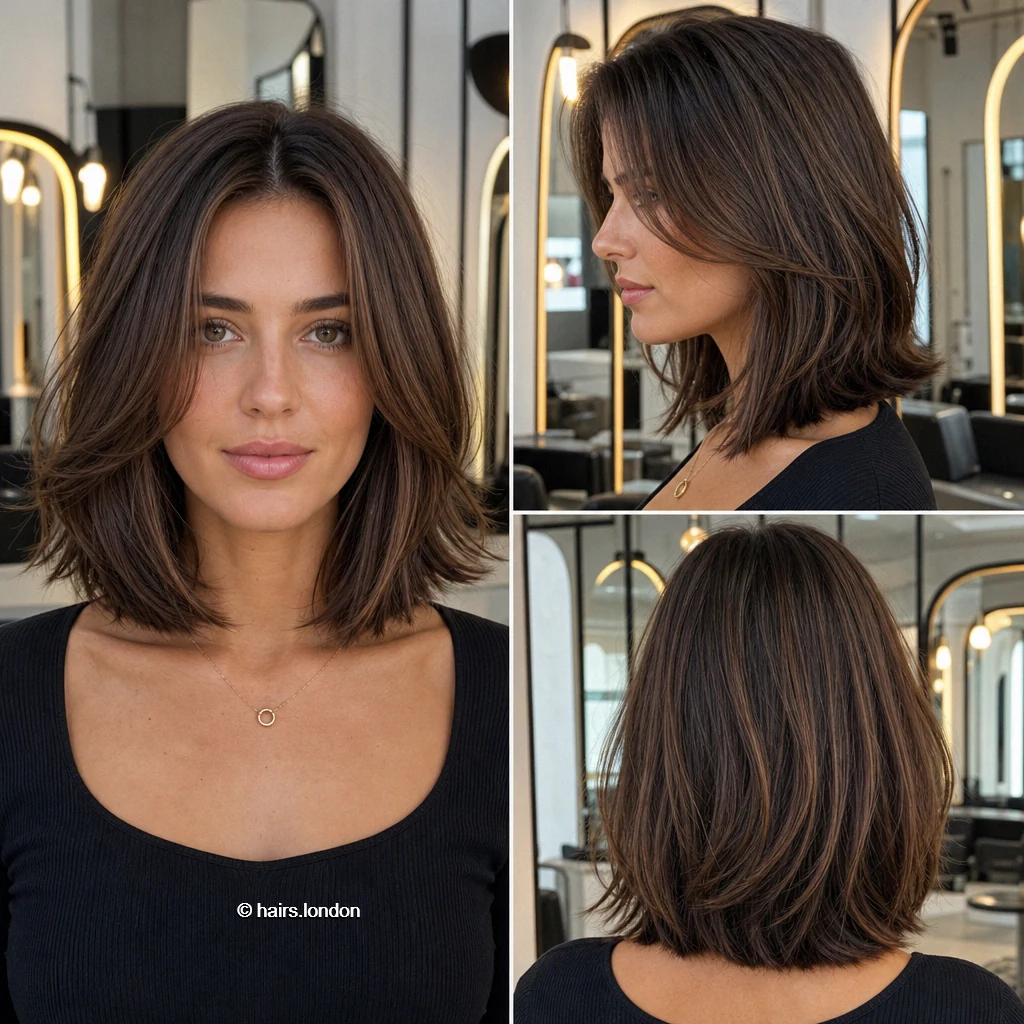
Dark brunette lengths skim the shoulders with a gently layered outline. A near center part sends longer sections around the face. The profile reveals feathered ends rather than a strict perimeter. Back layers create movement while retaining visible fullness beneath them. Discuss where your shortest face framing piece should begin. Use a brush to direct those pieces away from cheeks. Finish with flexible spray if natural texture needs gentle control. Fine hair may require fewer layers to keep ends dense. Thick hair can take more movement when bulk collects below. Refresh the face frame before it loses its intended flow.
14. Tousled Brunette Lob With Piecey Layers
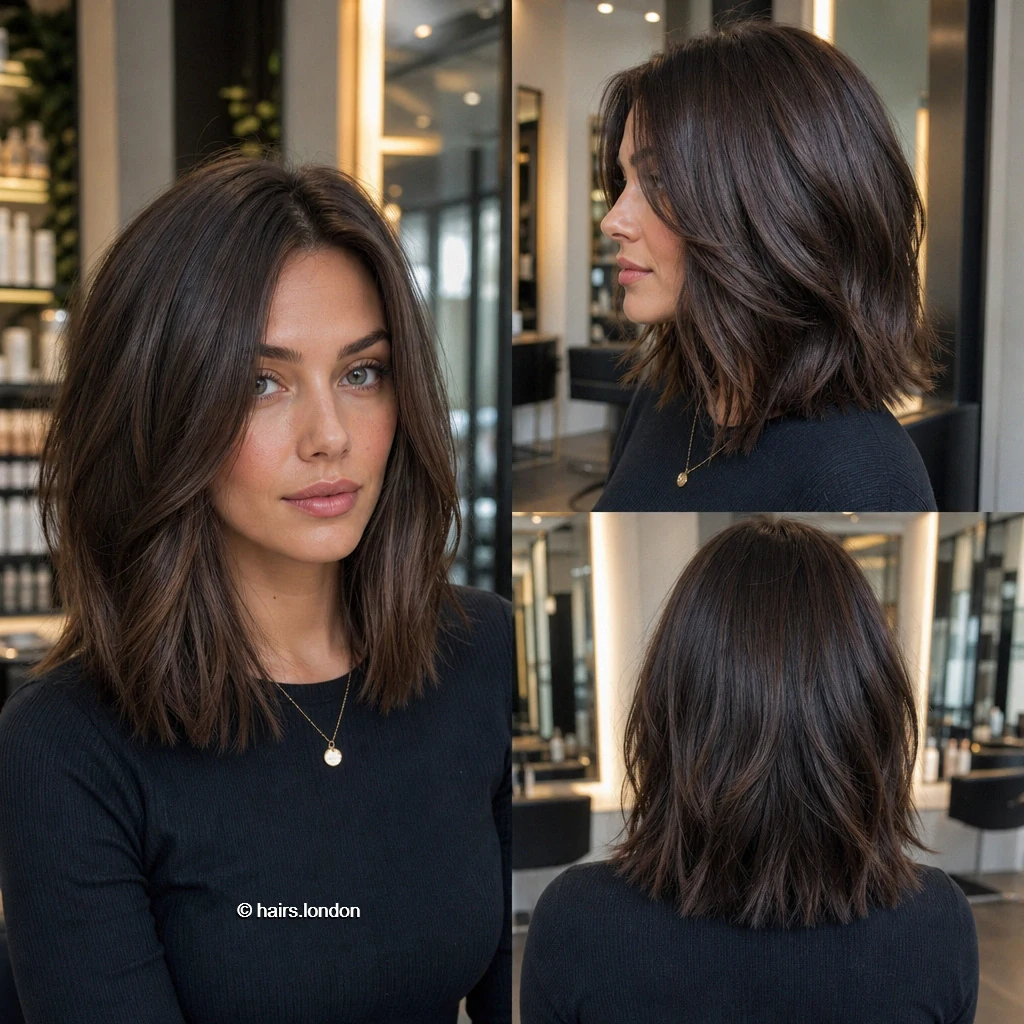
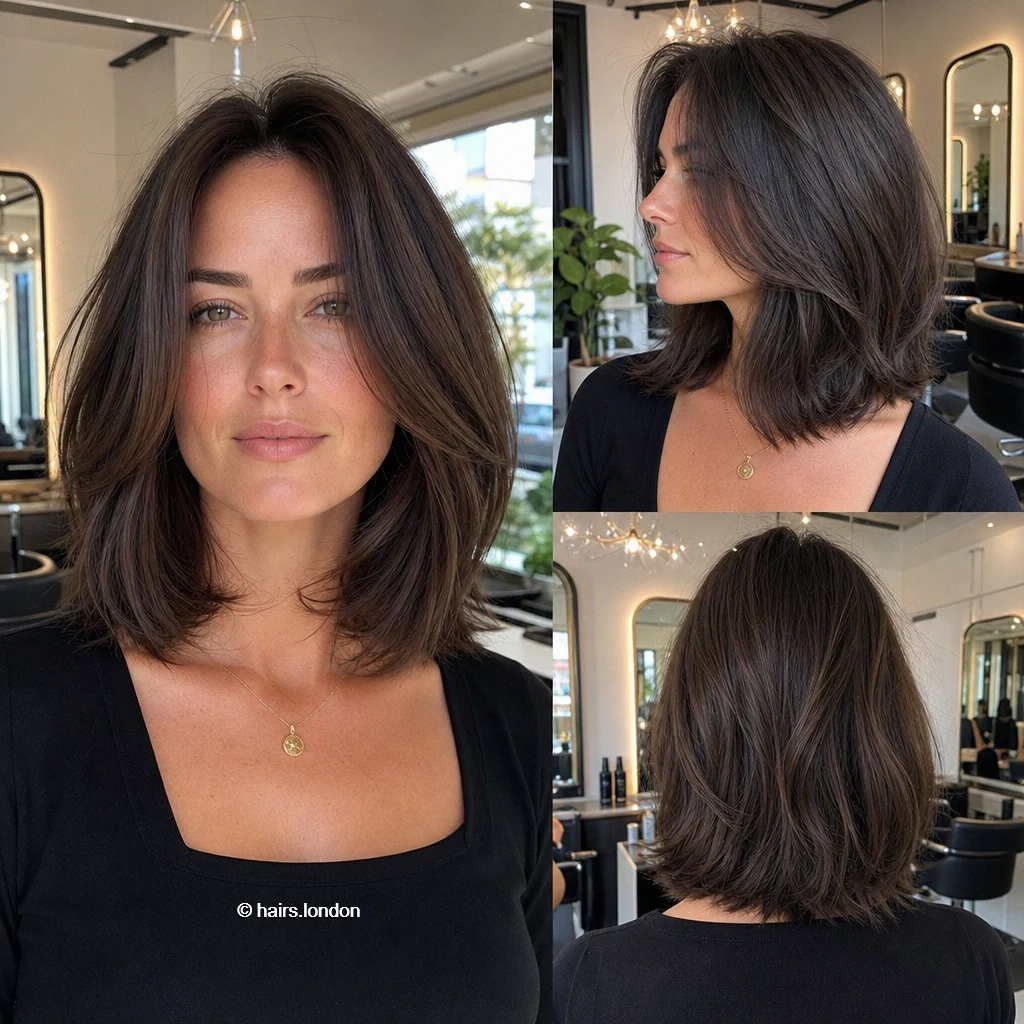
This dark brunette lob rests close to the shoulders. A soft side part allows the longer front to sweep. Piecey layers give its sides and back an undone finish. The perimeter looks light, with no sharply blunt lower line. Ask for texture that respects your hair density and wave pattern. Work mousse through damp lengths, then encourage bends while drying. Separate a few ends with cream, avoiding heavy product buildup. Fine hair could look thinner with too much layering here. Dense hair may welcome selective bulk reduction around the sides. Trim when the airy ends become sparse or difficult to arrange.
15. Chestnut Lob With Soft Curtain Framing
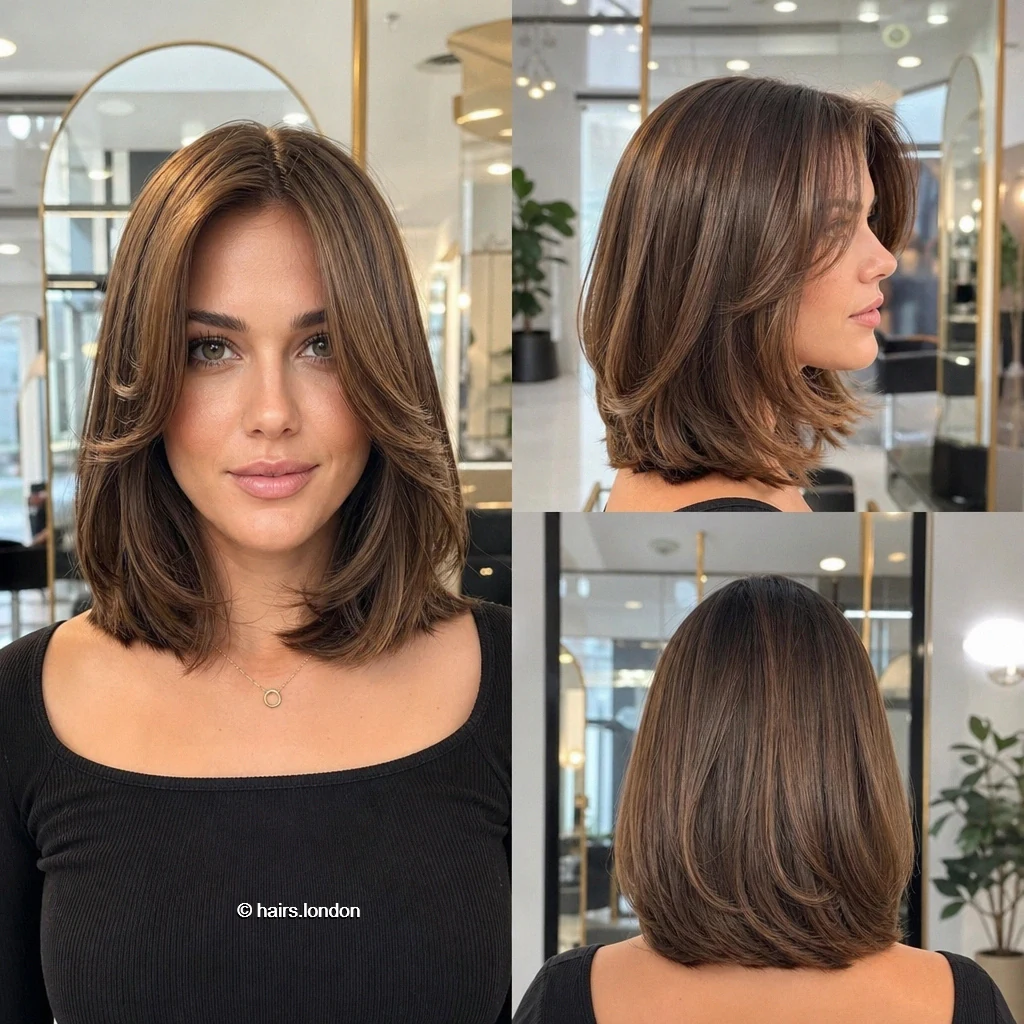
Warm chestnut brown gives this shoulder skimming lob gentle dimension. Shorter front sections sweep away from an almost central part. Layered ends curve softly outward, while the back retains visible rounded fullness. There is no separate, straight across fringe in view. Ask where the face framing lengths will fall when dry. Style them with a round brush directed away from cheeks. Keep the lower lengths smooth without pressing out their movement. Fine hair may need fewer layers through the back area. Thick hair might benefit from weight control beneath the surface. Refresh the framing pieces when they stop opening cleanly.
16. Airy Brown Lob With Textured Ends
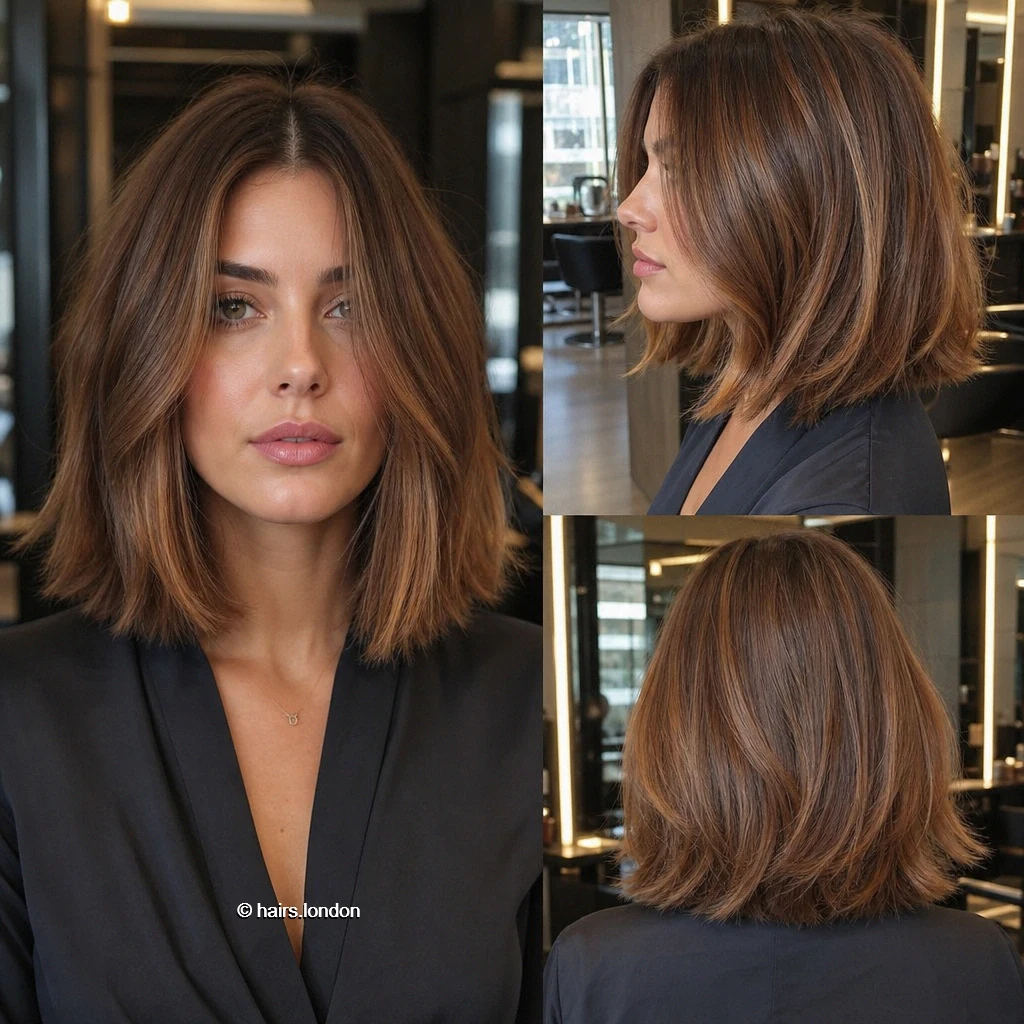
Medium brown tones accompany this relaxed, near shoulder length lob. An open part lets the front fall in loose sections. Textured layers soften its back and keep the ends airy. The lower outline appears irregular rather than sharply cut straight. Ask for movement without removing too much overall lower weight. Scrunch a lightweight styling cream into damp lengths before drying. Lift roots gently if your natural hair lies close. Fine density may need a firmer base to avoid separation. Thick hair can benefit from distributed layers instead of bulk. Trim when the tips look wispy rather than intentionally textured again.
17. Highlighted Brown Lob With Sweeping Layers
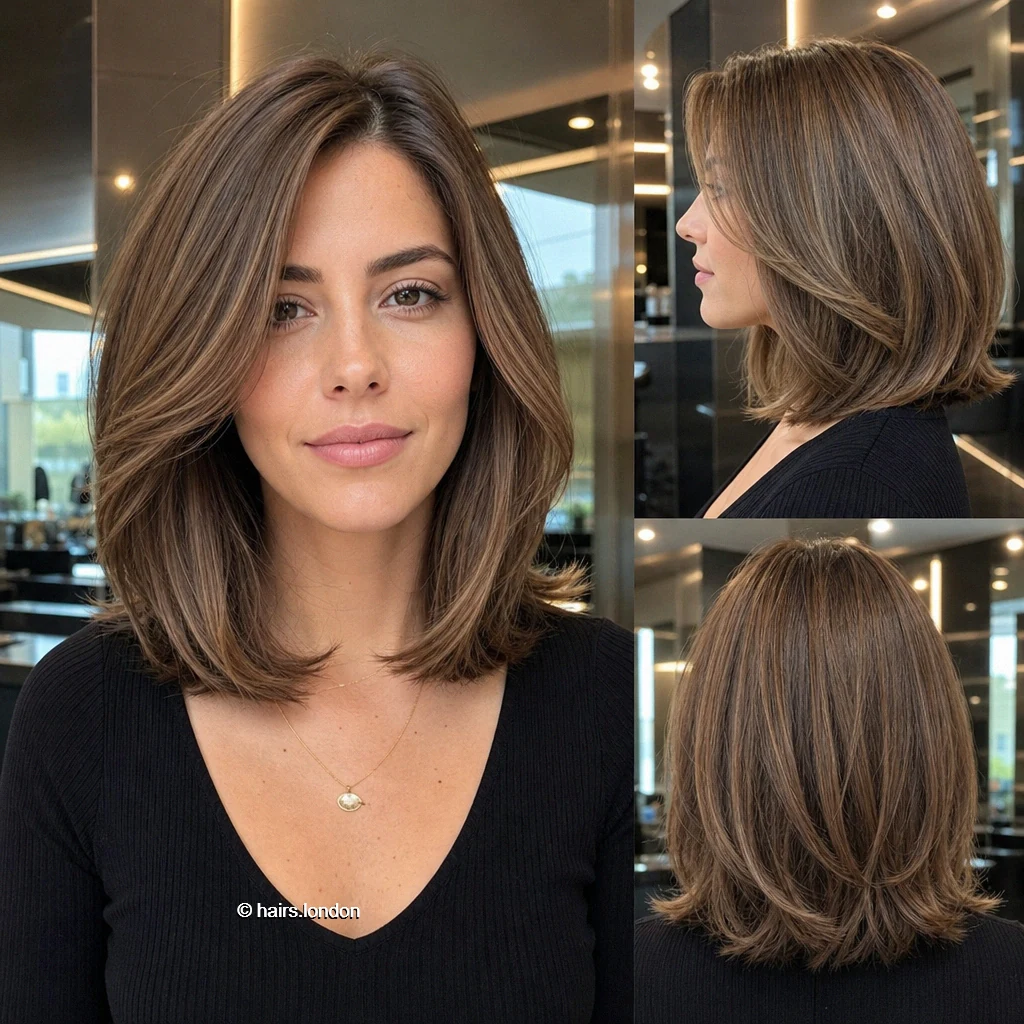
Soft brown hair with subtle lighter ribbons shapes this layered lob. The front sweeps outward, opening the face without blunt bangs. Side and back views show feathered movement near shoulders. Its ends remain substantial despite the visible layers above them. Ask for face framing that works with your preferred part. Turn a brush outward near the ends for gentle lift. Keep heat moderate to protect the lighter, potentially delicate pieces. Fine hair may need a smaller amount of layering. Dense hair could need more internal movement to avoid heaviness. Maintain color selectively and trim regularly when the feathered ends tangle.
18. Short Chestnut Bob With Visible Graduation
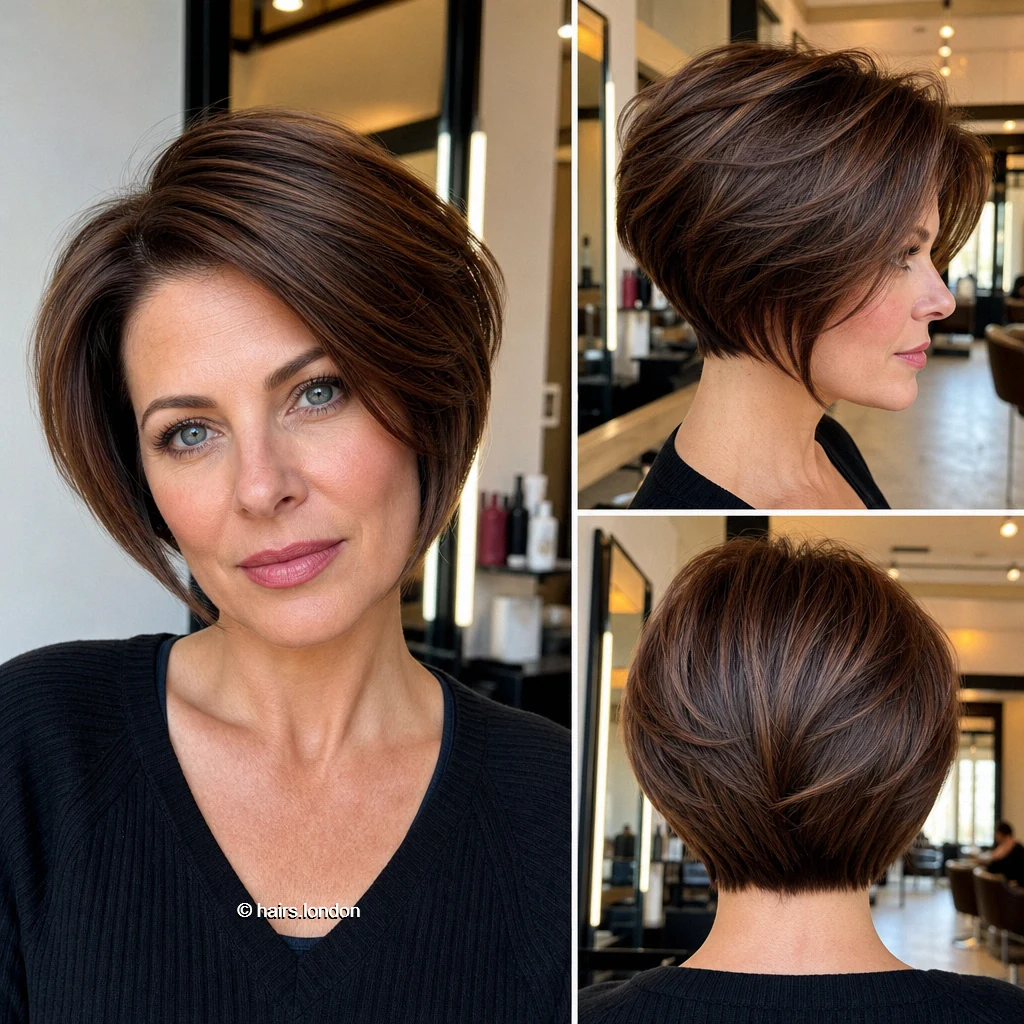
Rich chestnut brown highlights the sculpted silhouette of this bob. Longer front sections contrast with a closely shaped, visibly short nape. Side and back views clearly show graduation beneath crown fullness. A deep side sweep creates height without a separate fringe. Ask how much back volume your density can reliably support. Blow dry roots upward, then smooth lengths toward the neckline. Keep finishing products light so the graduation remains visible. Fine hair may need less layering to retain coverage behind. Strong growth patterns can change how the short nape settles. Trim regularly before the back loses its compact, rounded shape.
19. Rounded Graduated Bob With a Side Sweep
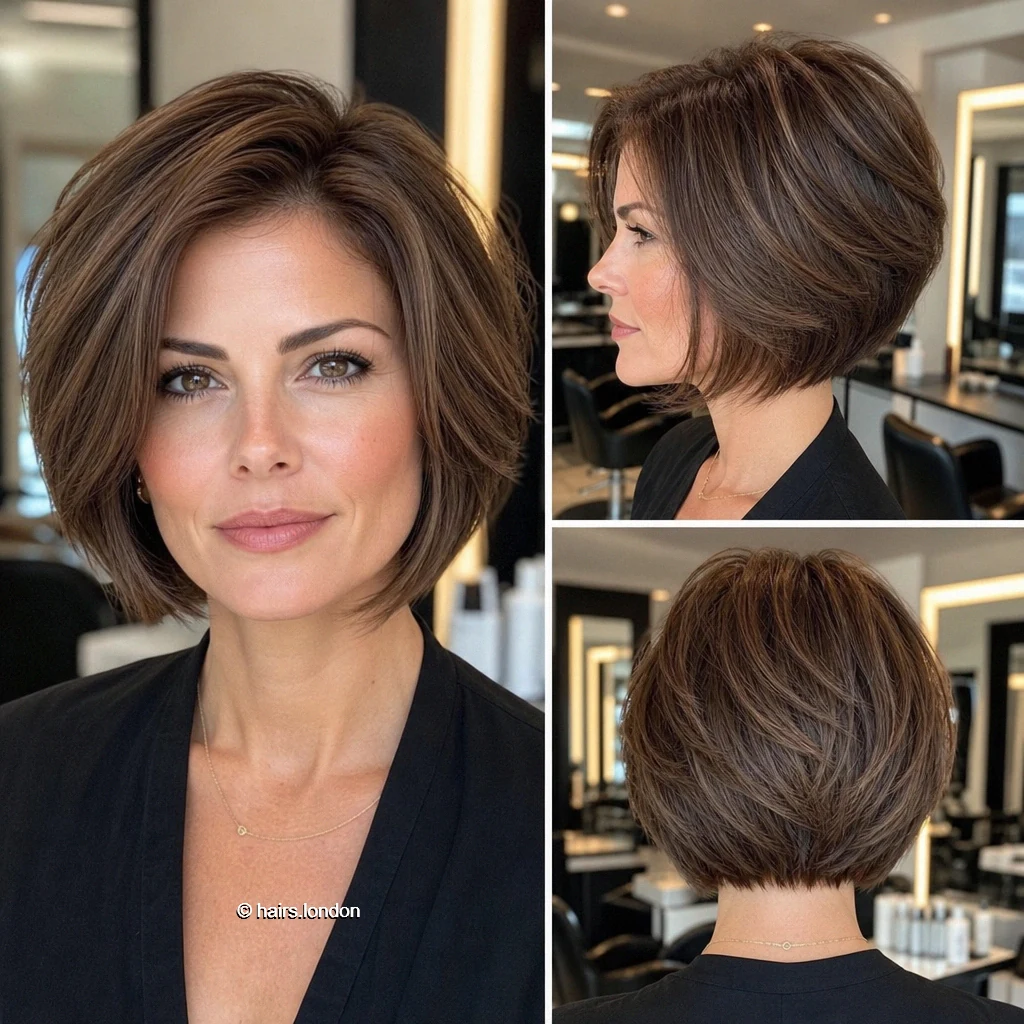
Cool brown hair forms a rounded crown above the nape. The side view shows shorter back layers beneath longer lengths. A sweeping front section frames the face near jaw level. Its visible graduation creates fullness without a blunt horizontal base. Discuss nape growth patterns before choosing such a compact outline. Lift the roots with a brush while directing ends downward. Avoid heavy wax that could separate the smooth outer surface. Fine hair may need careful graduation to preserve visible density. Dense hair might require controlled bulk removal beneath the crown. Schedule trims as soon as the nape begins looking overgrown.
20. Deep Brown Graduated Bob With a Long Front
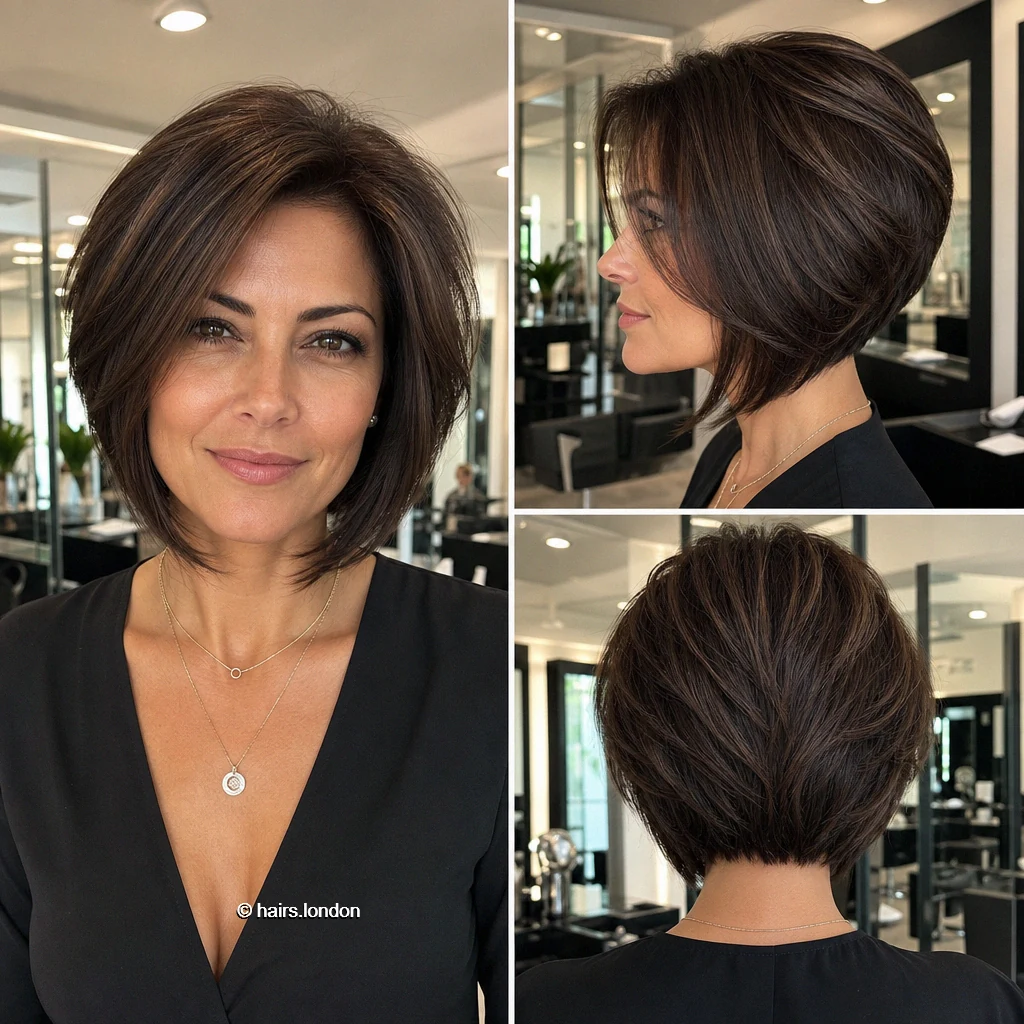
Deep brown color emphasizes this bob’s curved, graduated back. The front falls toward the jaw beneath a sweeping part. Behind, closely shaped lower layers support a fuller upper silhouette. That visible structure distinguishes it from a simply angled bob. Ask your stylist to assess crown density and neckline growth. Brush the longer front smooth while gently lifting the back roots. Use flexible hold to preserve movement through the sweeping section. Fine hair may require gentler graduation to avoid gaps. Thick hair could need weight managed without exposing the nape. Maintain the back shape regularly before growth softens its visible structure.
How to Choose Your Bob Length and Shape
Start with where you want the perimeter to sit when your hair is dry: at the jaw, below the chin or near the shoulders. A solid edge emphasizes thickness, while layers can release weight and add movement. If you want longer front pieces, compare the side view with the back: an A-line outline needs a visible front-to-back length difference, whereas a stacked or graduated bob has shorter layers building shape at the back. Also consider collars, glasses, your usual part and how your hair responds to humidity.
Styling Fine, Thick, Wavy and Curly Textures
Fine hair often looks fuller with a substantial lower edge, modest layering and lightweight root lift. For thick hair, ask about discreet internal weight removal rather than thinning every visible end. Let natural waves guide a textured bob: scrunch in a light product and diffuse or air dry, then refine only the pieces that need it. For curls, choose the length with shrinkage in mind and discuss shaping when dry. Smooth a polished bob’s perimeter with downward airflow, but avoid so much product or heat that the cut loses movement.
Keeping Brown Bob Color Fresh
These cuts show everything from deep brunette to chestnut, caramel-ribboned brown and warm copper brown. Color upkeep depends on the finish you choose: lighter pieces may need a more targeted refresh, while warmer tones can visibly fade between appointments. Use color-safe care suited to your hair, protect it from excessive heat and ask your colorist how often the visible contrast or warmth will need attention. A neat bob edge also helps color look deliberate.
Maintaining the Bob Perimeter and Graduation
A smooth, solid bob usually needs a trim once its edge stops sitting evenly; a tousled lob can tolerate more growth if its ends remain full. Watch the front corners of an angled bob, since their relationship to the back defines its shape. Graduated cuts need particular attention at the nape and through the back: as those shorter layers grow, the silhouette can lose its compact structure. Base your appointment schedule on what the cut is doing, not a single timetable for every bob.
What to Discuss With Your Stylist
Bring front, side and back references for the shape you prefer, and identify the details you do not want. Discuss your natural part, density, wave or curl pattern, cowlicks and willingness to blow dry. Ask where the perimeter will fall when dry, how much weight will remain at the ends and whether the back needs visible graduation. If you want color, agree on the amount of warmth or contrast you would like and the upkeep you can manage.
Frequently Asked Questions
What makes a bob different from a lob?
A bob generally ends around the jaw or neck; a lob, or long bob, approaches or reaches the shoulders. The dividing line is flexible, so the dry perimeter matters more than the label.
How is an A-line bob different from a stacked bob?
An A-line bob has front lengths visibly longer than the back. A stacked bob has shorter, graduated layers building shape at the back. One cut can show both features, but neither should be assumed from a front view alone.
Can fine hair wear a layered bob?
Yes, if the layering leaves enough density at the lower edge. Ask your stylist to show where layers will fall and whether a more solid perimeter would give you the fullness you prefer.
How can thick hair avoid a bulky bob?
The length and weight line matter as much as layering. A stylist can assess whether selective internal weight removal will reduce width without leaving the visible ends thin.
Will a bob work with natural curls?
It can, but choose the length and shape around your curl pattern, density and shrinkage. Discuss how the cut will sit dry rather than relying only on a straightened reference.
Does a bob need fringe?
No. Many of these cuts use an open center part or a side sweep instead. If you want fringe, discuss its length, growth patterns and the daily styling it may require.
Which bob is easiest to style each day?
That depends on your natural texture. A softly textured bob may need little work on naturally wavy hair, while a crisp perimeter may be simpler for hair that dries smooth.
How often should a precise bob be trimmed?
Book a trim when its perimeter or front-to-back relationship begins to change. Short graduated backs and sharp outlines usually show growth sooner than a softly layered lob.
Can I grow a graduated bob into a lob?
Yes. Ask your stylist to let the back gain length while tidying its outline and gradually balancing it with the front. The transition may take several reshaping appointments.
Should a bob be cut with my usual part in place?
Tell your stylist where you normally part your hair and whether you change it. That information is especially useful for a side sweep, fringe or precise front corners.
How do I keep a smooth bob from looking too rounded?
Direct the brush downward rather than rolling the ends firmly under, and use only a little finishing product. If unwanted roundness persists, discuss the weight distribution at your next cut.
How can I maintain highlights in a brown bob?
Ask your colorist which lighter sections need refreshing and how to protect them from heat. A selective color appointment may preserve dimension without changing the entire brown base.
Conclusion
The most useful bob reference is the one that matches both your preferred outline and your everyday texture. Compare the perimeter, front length and back shape in these brown bob haircuts, then take those specific details to your stylist. A small adjustment to weight or length can make the difference between a cut you admire and one you enjoy styling.


