

11. Softly Rounded Brunette Bob
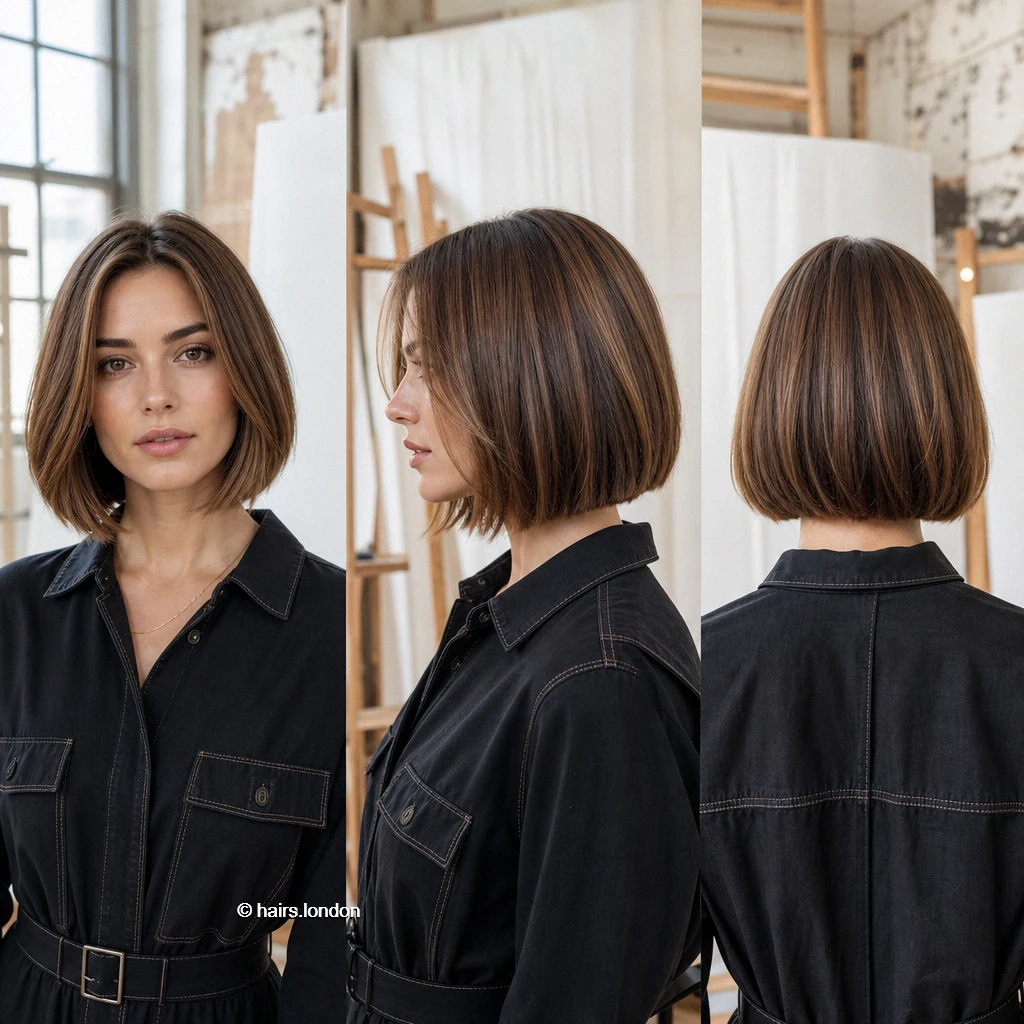
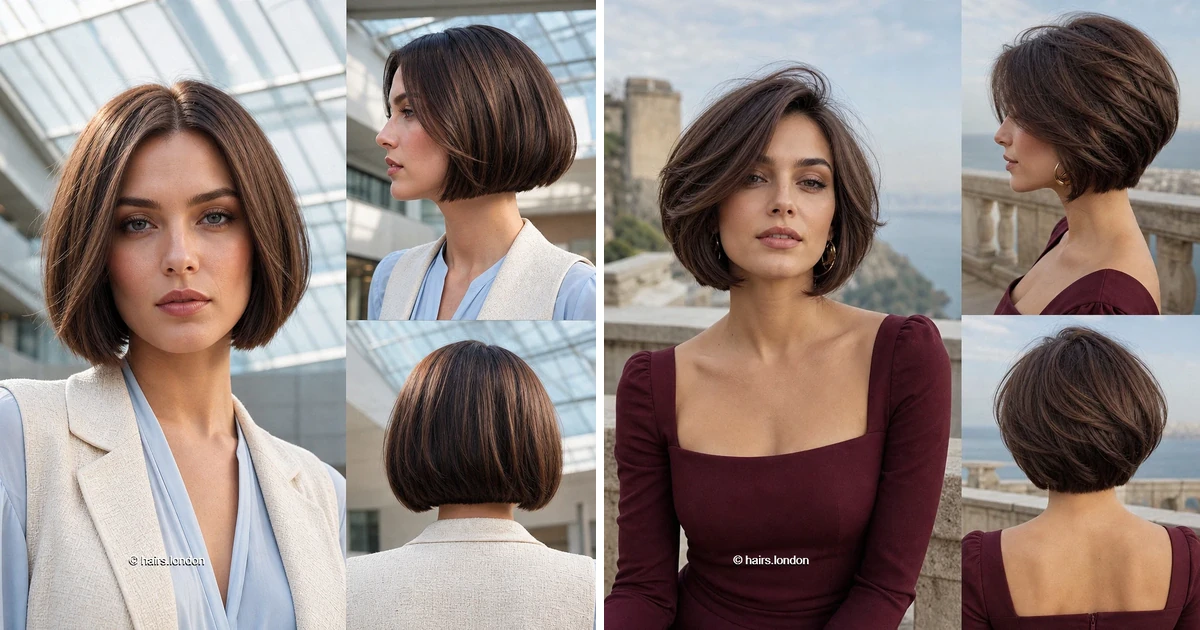
Medium brown hair falls into a compact, softly rounded bob. The near central part allows longer pieces to frame both cheeks. From the side, the front sits slightly below the back. The rear outline remains full rather than stacked high. Ask for enough weight to support that smooth lower curve. Blow dry downward, guiding the front away from your face. Use lightweight polish when the ends appear dry or separated. Thick hair may need careful internal shaping for manageable bulk. Refresh the perimeter as soon as its gentle curve shifts. Discuss your usual part before settling on the front length.
12. Airy Brown Layered Bob
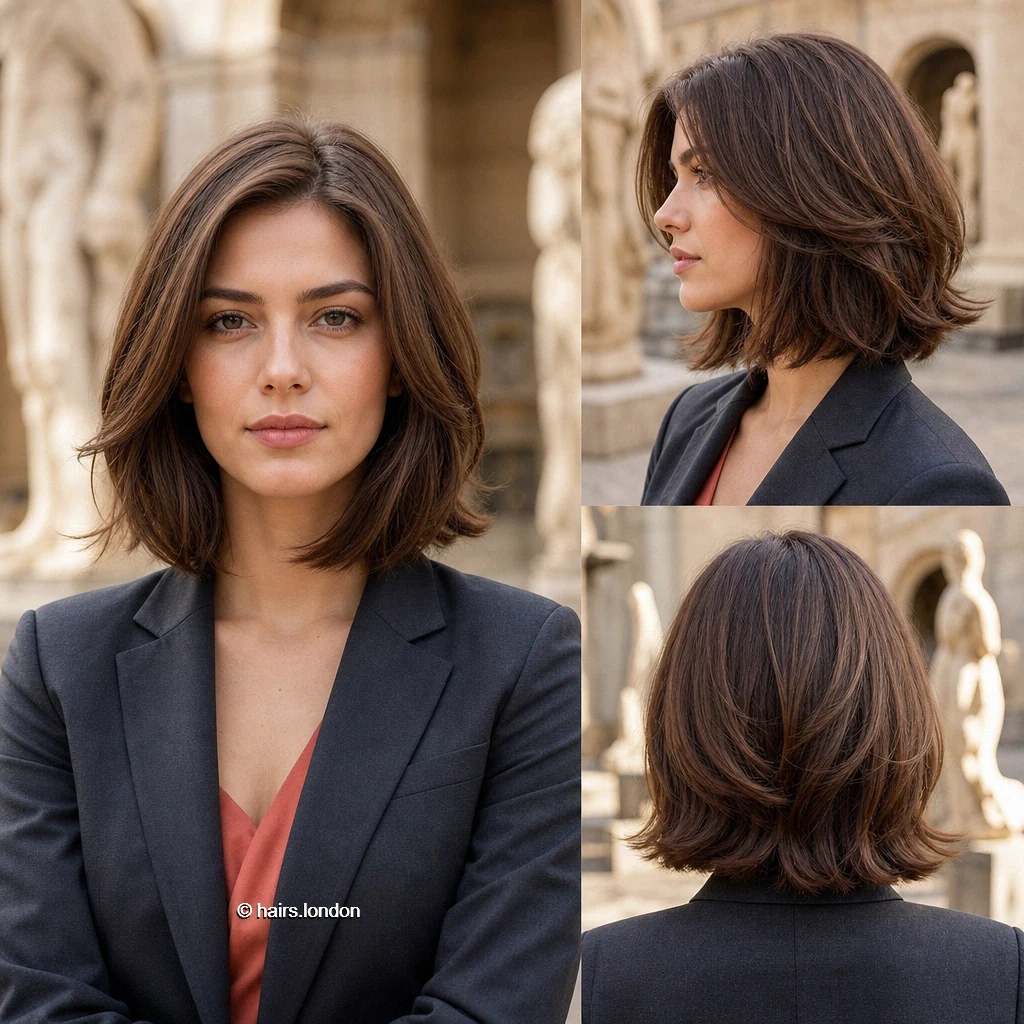
Soft brown layers give this longer bob a breezy outline. The front falls around the lower jaw, near the neck. Its back shows separated ends rather than a solid line. A side part adds lift without creating a defined fringe. Ask for layers that release movement without removing necessary weight. Work mousse through damp hair, then dry with gentle airflow. Turn selected ends outward if you like the visible flick. Dense hair may welcome this shape; fine hair needs restraint. Trim the longest pieces before the bob loses its outline. Discuss how your natural bends affect the final, dry length.
13. Dimensional Chestnut Layered Bob
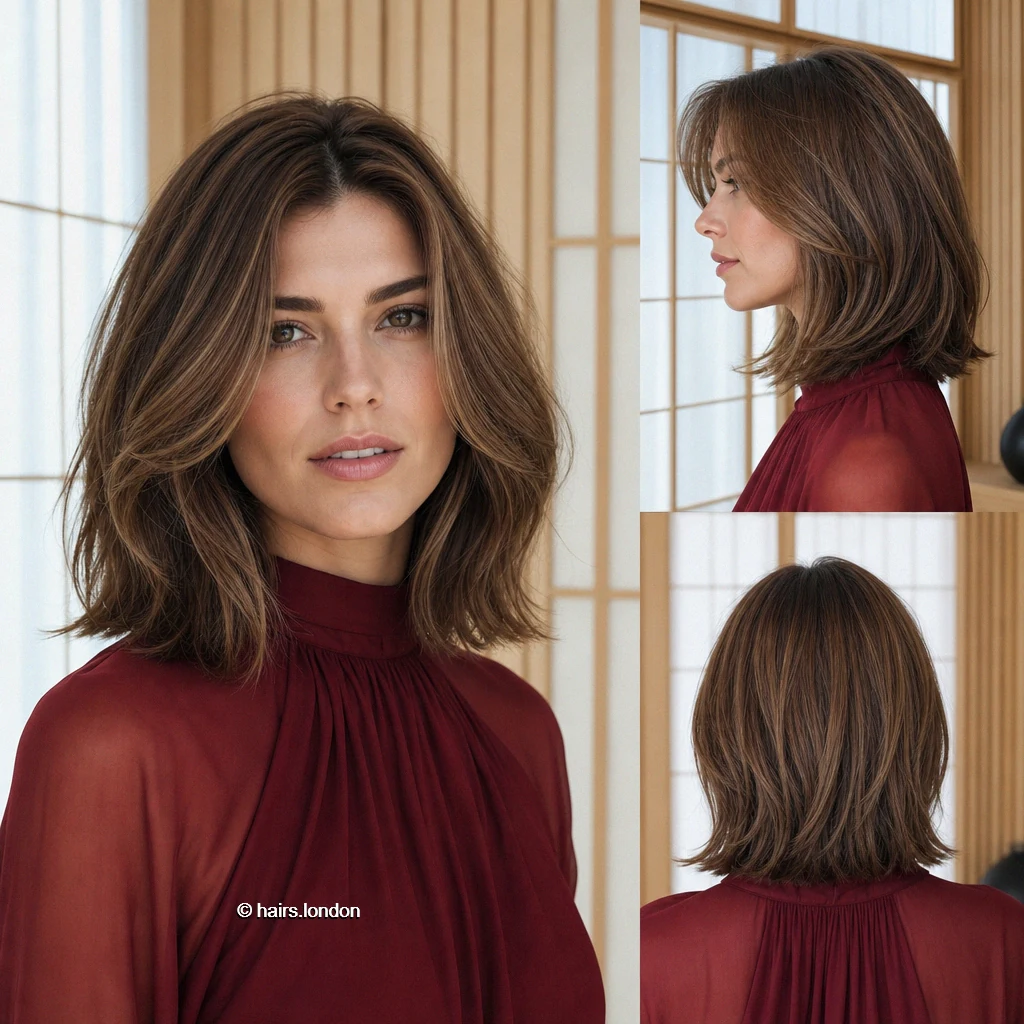
Chestnut brown lengths carry lighter ribbons through this layered bob. The front frames the jaw while the back reaches lower. Softly flicked ends loosen the outline around the neck. Longer face framing pieces blend into an open, relaxed part. Ask whether your density can support layers throughout this length. Blow dry the front smoothly, then encourage movement underneath. Use a small amount of cream to define separated ends. Fine hair may prefer fewer layers near its lower edge. Refresh the shaping when those flicks begin looking heavy. Review color maintenance and refresh frequency with your stylist if brighter ribbons fade.
14. Dark Brown Bob with Flipped Layers
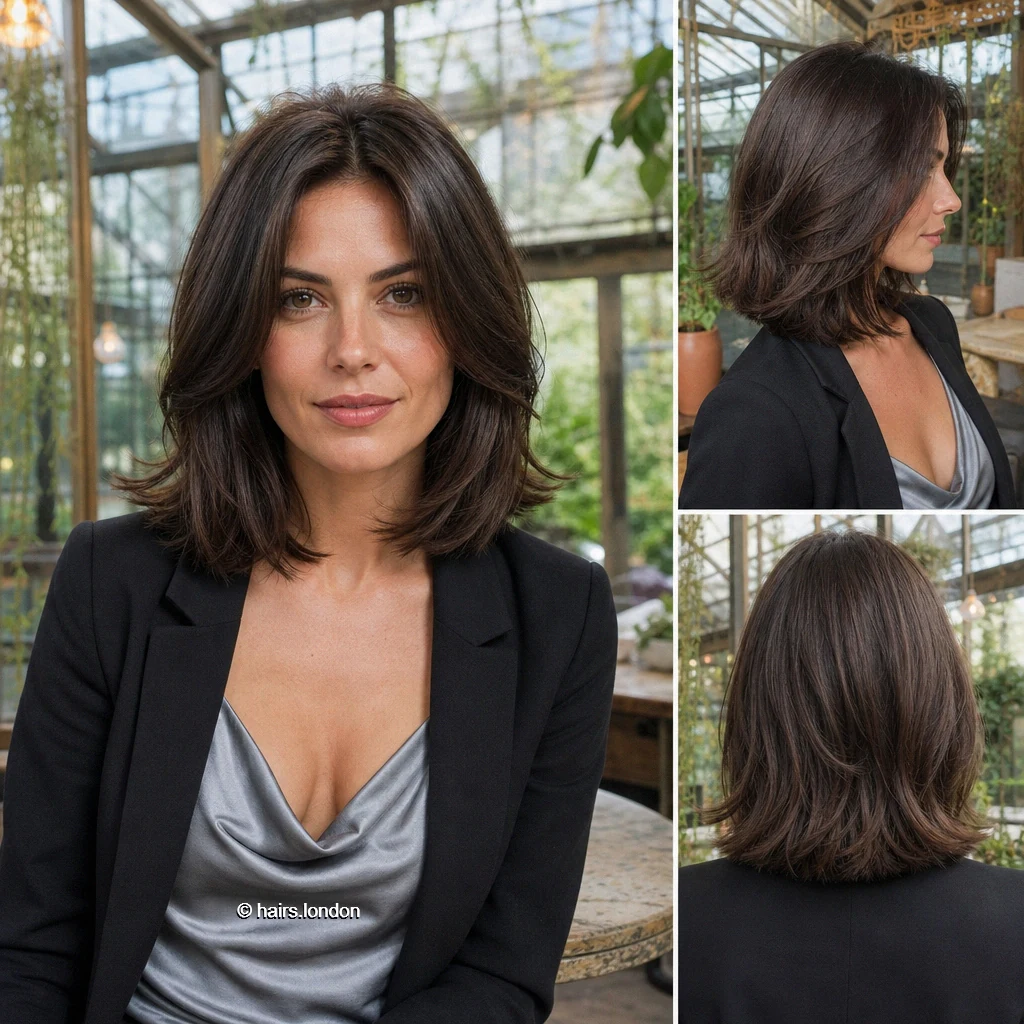
Dark brown hair forms a longer bob with flipped ends. The front reaches past the jaw toward the upper neck. Visible layers lift the sides and break up the back. An open part leaves soft pieces framing the face. Ask for movement that works with your natural density. Brush the upper lengths smooth, then turn ends outward for a softer finish. Avoid heavy cream if it collapses the airy shape. Thick hair may need selective bulk reduction around the sides. Trim once the lower layers stop sitting comfortably together when dry. Discuss whether this length suits your preferred wash routine.
15. Chocolate Brown Bob with Soft Layers
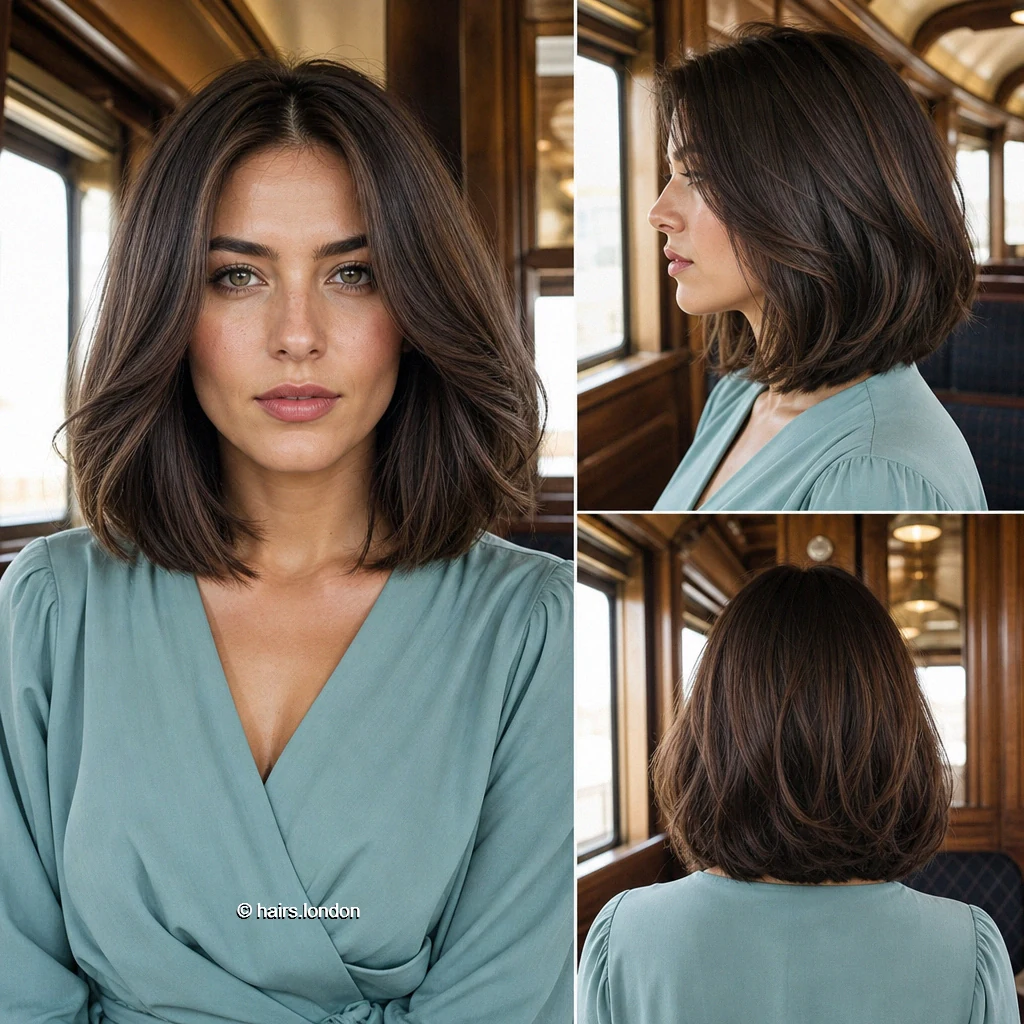
Deep chocolate brown gives this softly layered bob rich dimension. Its front grazes the lower jaw and upper neck. The back carries gentle movement above a fairly full perimeter. Loose layers keep the sides from looking overly solid. Ask your stylist to maintain weight beneath the softer surface. Smooth the top, then bend selected lengths away from the face. A light spray can hold movement without making ends rigid. This approach may suit dense hair that dislikes blunt bulk. Check the back shape when scheduling your next perimeter trim. Discuss how much daily brushing your natural texture needs each day.
16. Relaxed Brunette Layered Lob
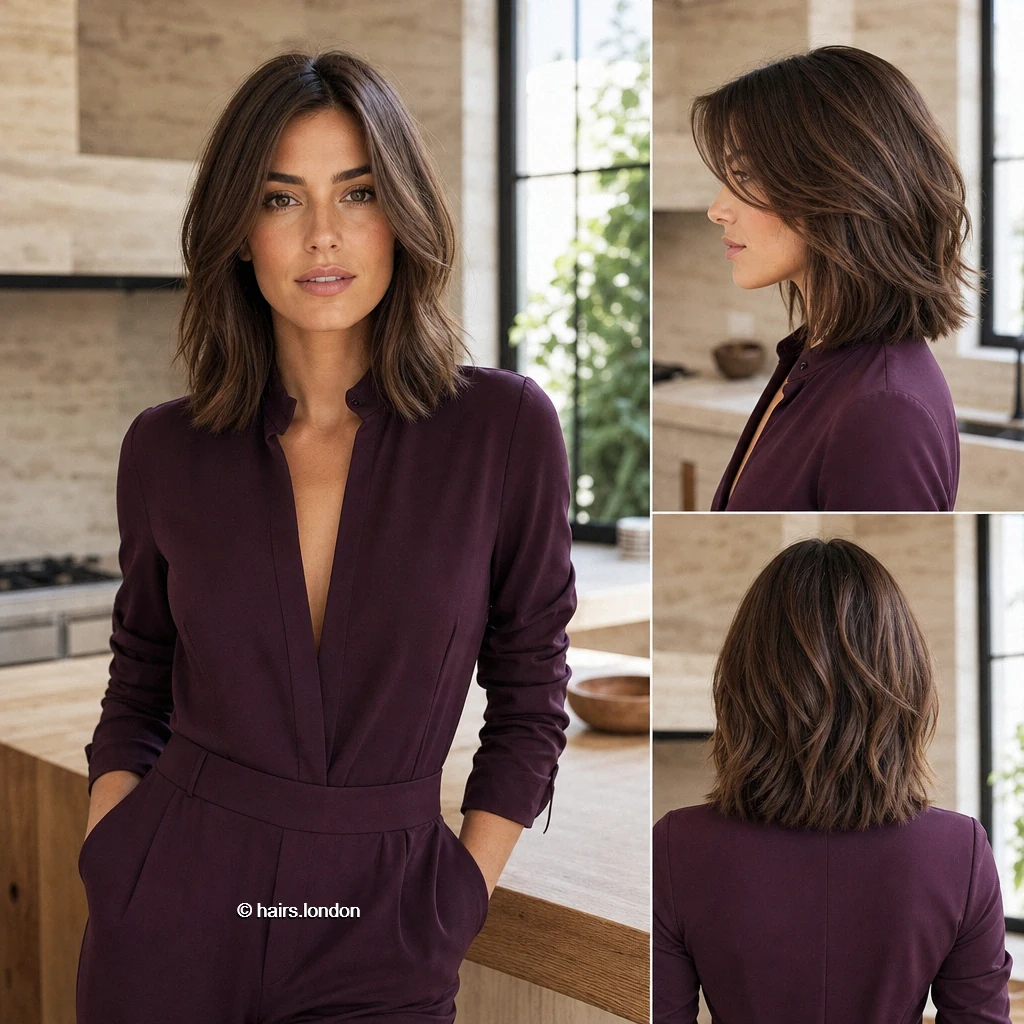
This brunette lob sits near the shoulders with loose layers. Its longer front opens around a soft central part. The back looks textured, with ends landing above the shoulders. Unlike shorter bobs, this length leaves more styling room. Ask for restrained layers if your hair is naturally fine. Scrunch waves with mousse on damp hair or smooth the surface with brushing. Avoid excessive product that makes the longer ends look heavy. Thick hair may need movement through the middle lengths. Trim before split ends obscure the relaxed but deliberate perimeter. Confirm whether you want the finished length touching your shoulders.
17. Caramel Brown Bob with Sweeping Layers
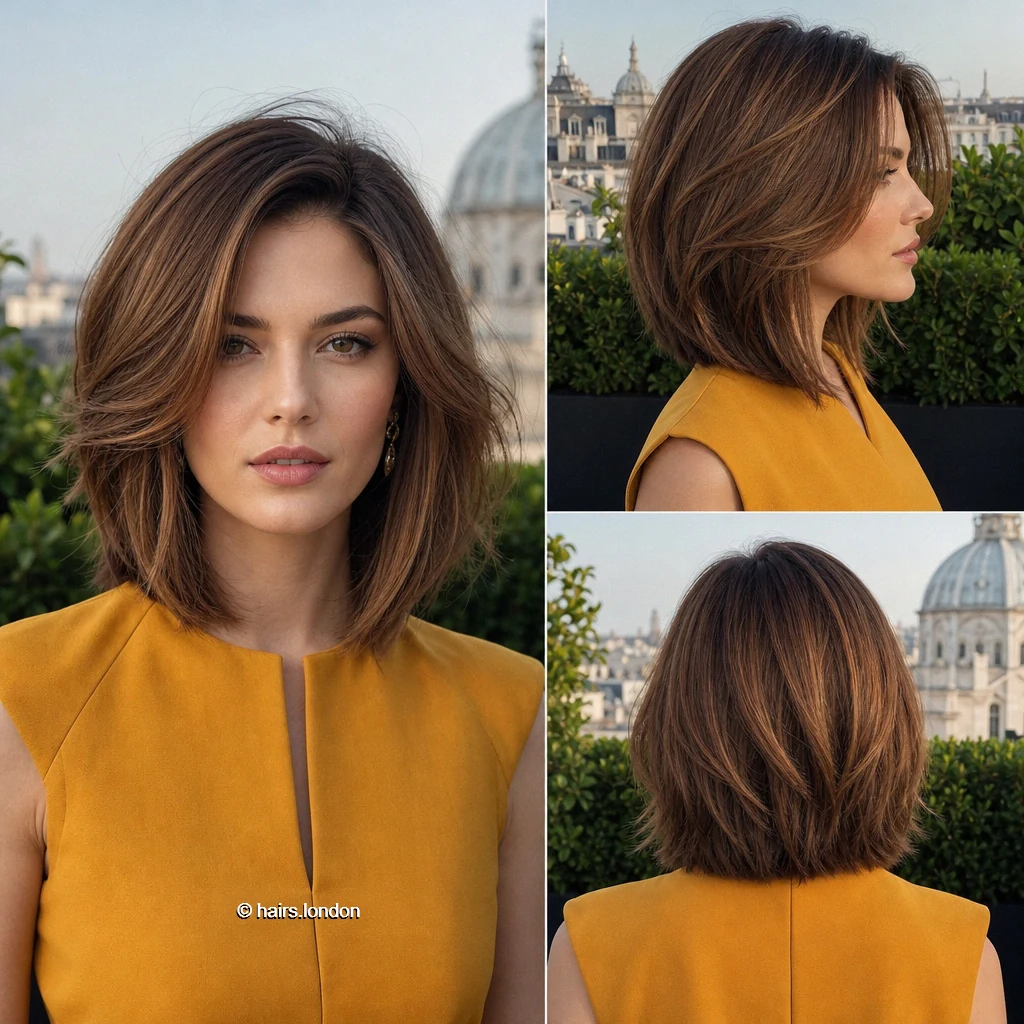
Warm caramel strands brighten the sweeping layers of this bob. A deep side part creates lift and face framing movement. The front reaches below the jaw while visible back ends separate. Its softly tapered outline avoids a strict, blunt weight line. Ask for layers that complement your hair’s natural fall. Blow dry the front away from your face using protection. Let the lower sections retain some bend and separation. Dense hair may handle more movement than delicate ends. Trim when the sweeping front stops blending into the sides. Discuss how often brighter strands need refreshing for your preferences and budget.
18. Warm Brown Tousled Longer Bob
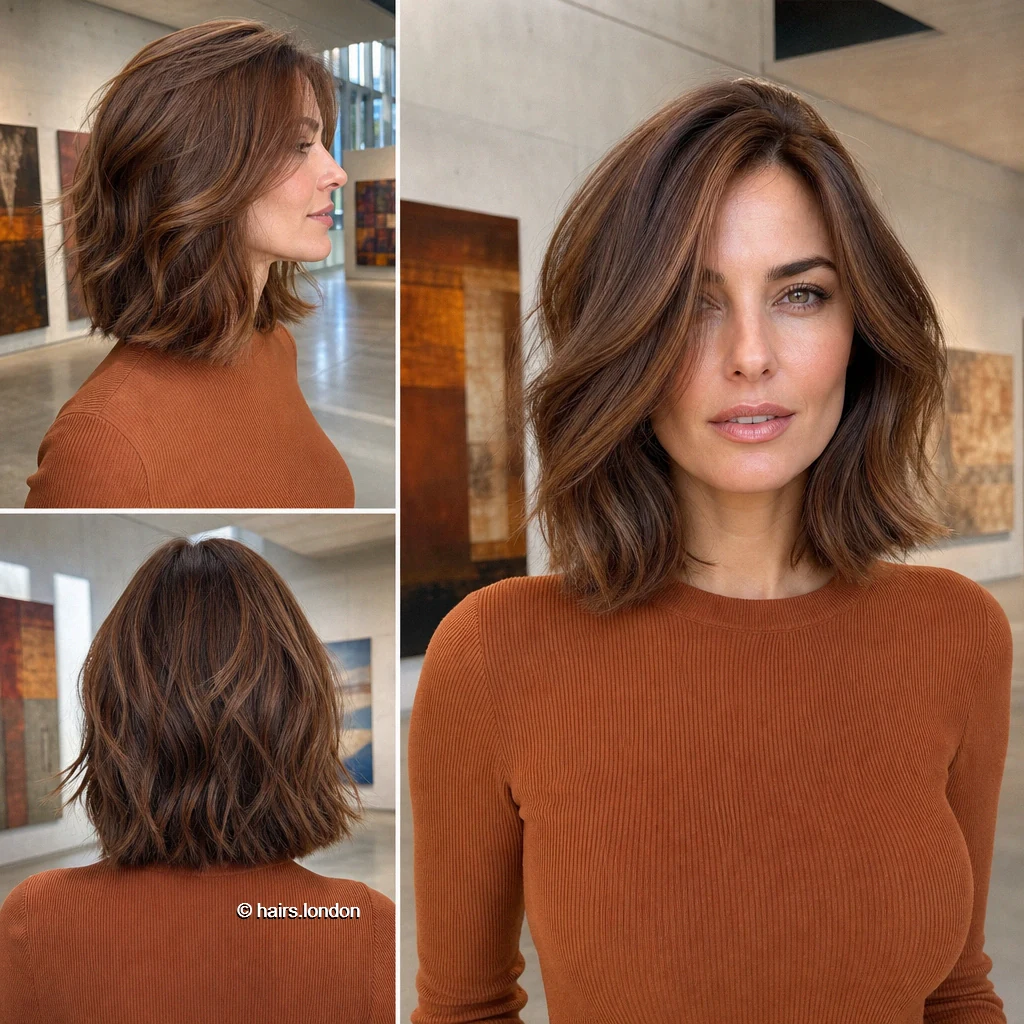
Warm brown tones run through this softly tousled longer bob. The front falls below the jaw with side swept movement. At the back, textured ends form a loose, broad outline. The visible layers emphasize volume more than perimeter precision. Ask for shaping that supports your natural wave pattern. Scrunch styling cream into damp lengths and let them settle. Define individual bends instead of curling every section identically. Finer hair may require lighter products and fewer layers. Trim when the lower edge becomes wispy or difficult to style between washes. Bring the back view to discuss your preferred amount of texture.
19. Short Brunette Bob with a Tapered Back
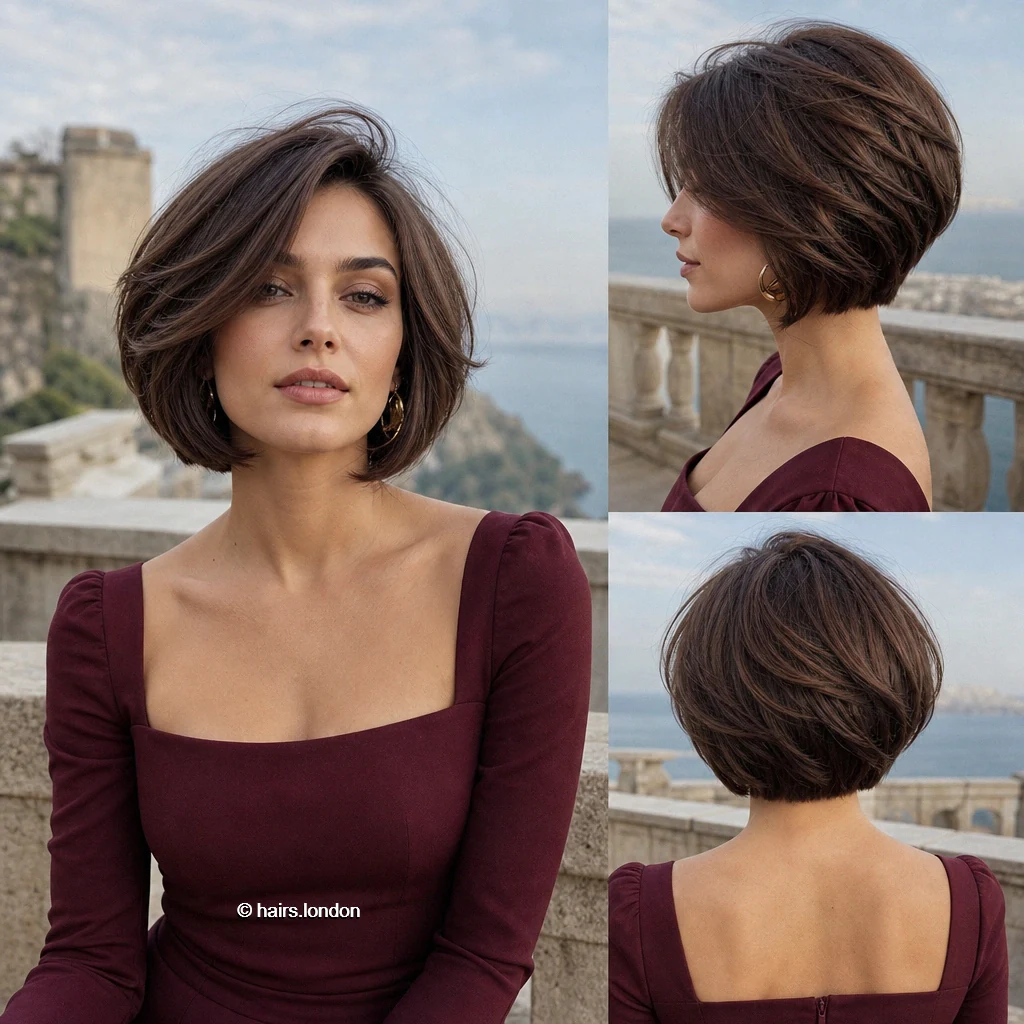
A deep side sweep adds volume to this short brunette bob. The front curves around the jaw, opening near one cheek. Behind, layered fullness narrows toward a close neck length. That visible taper distinguishes it from a uniformly blunt bob. Ask how much graduation your density can comfortably support. Lift the roots while drying, then smooth the lower edge using a round brush. Avoid piling product onto the shorter sections near the neck. Growth can quickly soften this compact shape and side sweep. Arrange trims before the back loses its defined taper. Discuss how your hairline behaves at the nape.
20. Chestnut Bob with Visible Back Graduation
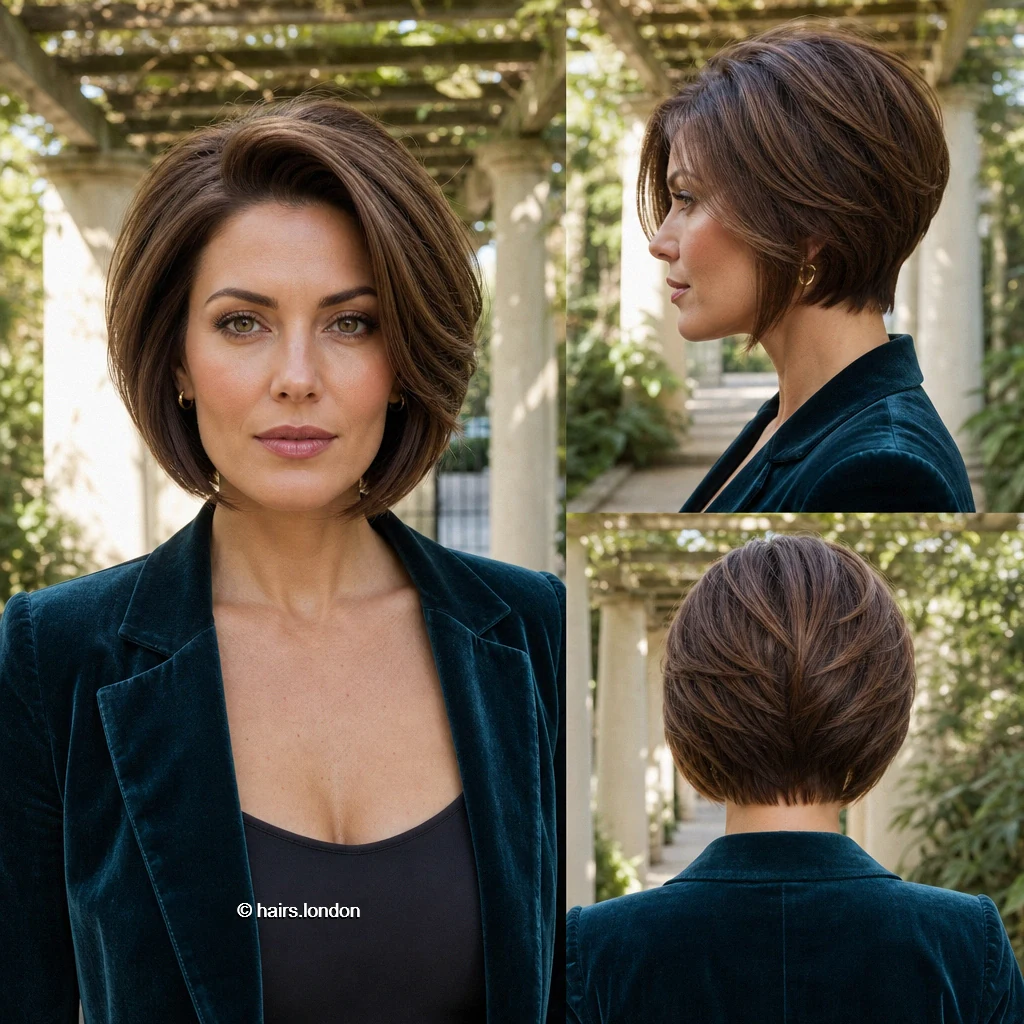
Chestnut brown layers build rounded volume through this shorter bob. The side reveals a longer front beside a tapered nape. Back views show fullness rising above the close lower edge. Together, those features support a softly graduated bob description. Ask your stylist where that fullness suits your density and natural hair growth patterns. Blow dry upward at the back without overinflating the crown. Smooth the jawline pieces separately to preserve their direction. Thick hair may need bulk controlled beneath the rounded surface. Trim regularly as nape growth changes the visible silhouette. Confirm your preferred front length before adjusting the graduation.
21. Side Swept Brown Graduated Bob
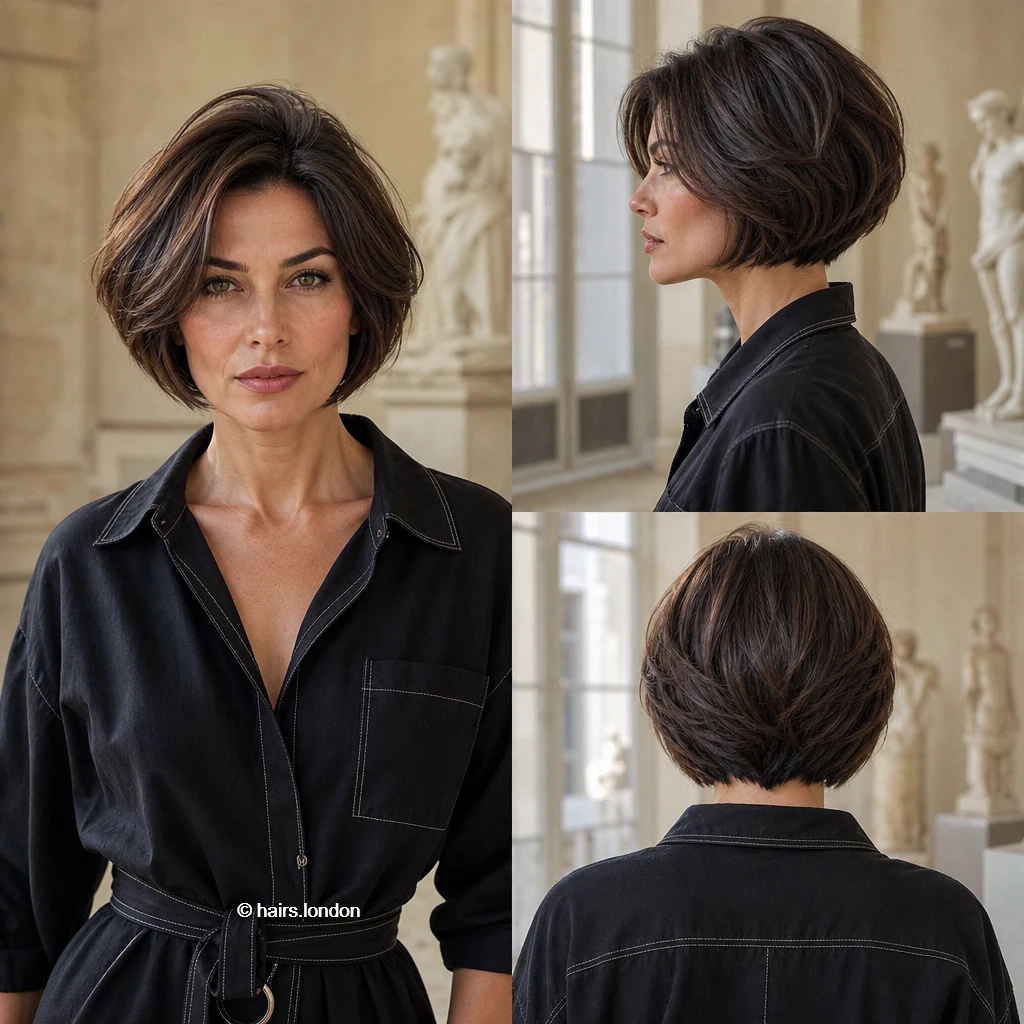
Dark brown hair sweeps across this compact, layered bob. A longer front curves beside the jaw and cheek. The back shows rounded fullness above a visibly shorter nape. That graduation creates shape without requiring a sharply angled front. Ask for layering that accommodates your crown growth patterns. Dry the sweep first, directing it across your usual part. Then smooth the nape while leaving upper layers lightly lifted. Fine hair may need less layering to keep fullness. Schedule trims before the close back loses its definition. Discuss whether the sweeping front stays clear of your eyes throughout your usual working day.
22. Rounded Espresso Bob with a Short Nape
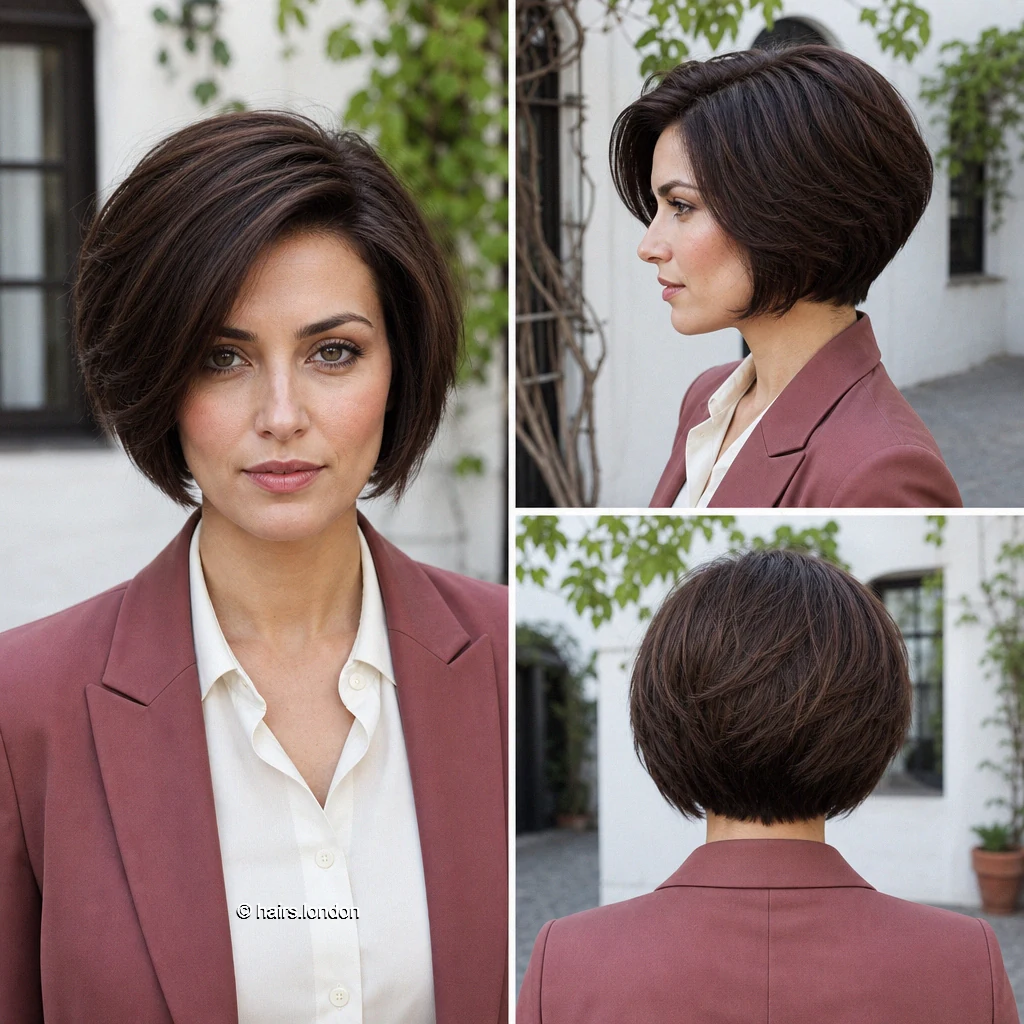
Deep espresso brown emphasizes the rounded profile of this bob. A sweeping front blends into full sides around the jaw. The back narrows visibly toward a short, tidy nape. Soft upper layers provide movement without scattering the outline. Ask whether your density supports this compact, graduated shape. Use a brush to smooth sides while lifting the crown. Keep finishing product light so the profile retains movement. Natural curls would require different shaping to achieve comparable balance. Refresh the nape when growth makes the back look heavy. Show your stylist which parts of the rounded silhouette matter most for your routine.
How to Choose Your Bob Length and Shape
Start with the point where you want the perimeter to sit: around the jaw, at the neck or nearer the shoulders. A longer bob offers more room to tie or tuck hair back, while a jawline cut makes its outline more prominent. If you want longer front pieces, look at an A-line shape. If you want fullness above a shorter nape, discuss graduation instead. Check the proposed length when your hair is dry, especially if it waves or curls.
Styling Fine, Thick, Wavy and Curly Textures
Fine hair often benefits from a substantial lower edge and lightweight products; too many short layers can make the perimeter look sparse. On thick hair, ask for controlled internal weight removal rather than indiscriminate thinning. Enhance waves by scrunching mousse or light cream into damp lengths and diffusing gently. For curls, plan the bob around their dry shape and shrinkage, with enough space for the perimeter to form without excessive bulk. Smooth only the sections that need it so the cut keeps its movement.
Keeping Brunette Bob Color Fresh
The images range from deep brunette to chestnut and warm auburn brown, with some visibly lighter strands. Ask your colorist which upkeep applies to the shade you choose: subtle dimension and an allover warm tone may need different appointment schedules. Use color-safe care suited to your hair condition, protect hair during heat styling and discuss a gloss if shine or tone fades. Avoid assuming a particular color formula from a photograph.
Maintaining the Bob Perimeter and Graduation
A smooth, blunt-looking edge shows uneven growth sooner than a broken, textured perimeter. Check how the front meets the sides and whether the back still sits at your intended neck length. Graduated bobs need particular attention when the short nape grows into the rounded fullness above it. Longer layered bobs can usually tolerate a softer outline, but still need shaping when the ends lose their balance. Set your trim schedule with your stylist according to your cut and growth rate.
What to Discuss with Your Stylist
Bring front, side and back references, then point to the features you actually want: front length, parting, fringe, perimeter weight, layer placement and any visible graduation. Explain how much time you spend styling and show where your hair naturally separates or lifts. Ask how the proposed cut will sit on your density and dry texture, what it will look like as it grows, and which details will require the most frequent maintenance.
Frequently Asked Questions
What is the difference between a bob and a lob?
A lob is a longer bob, commonly falling near the shoulders. A shorter bob may sit around the jaw or neck; the intended outline matters more than a rigid length rule.
How is an A-line bob different from a stacked bob?
A-line describes a visible perimeter that extends longer toward the front. A stacked or graduated bob has shorter sections building fullness above the back or nape. A cut can show both, but one feature does not automatically prove the other.
Which bob shape can help fine hair look fuller?
A relatively weighty perimeter and restrained layering can help preserve the appearance of fullness. Choose the length and amount of graduation with a stylist who can assess your density and growth patterns.
How can thick hair avoid a bulky bob?
Discuss the location of the bulk before removing weight. Selective internal shaping or well-placed layers can help, while over-thinning the perimeter may leave it looking uneven.
Can naturally curly hair work in a bob?
Yes, when the length and layers account for your curl pattern, shrinkage and density. Have the stylist assess the dry shape rather than relying only on how the hair hangs when wet.
Should I add a fringe to a brunette bob?
A fringe is optional. The images show several open or side-swept fronts without a separate straight-across fringe. Discuss your hairline, usual part and willingness to style and trim it.
What is a simple daily routine for a smooth bob?
Apply heat protectant, dry in manageable sections and direct the hair downward. Use a brush to guide the perimeter into place, then add only enough finishing product to control flyaways.
How do I style a wavy bob without losing movement?
Apply a lightweight wave product to damp hair, scrunch and diffuse gently or air-dry. Smooth an unruly section only if needed rather than straightening the entire perimeter.
How often does a precise bob need trimming?
That depends on your growth rate and tolerance for changes in the outline. A blunt edge or short graduated nape generally shows growth sooner than a loose, layered bob; agree on a schedule with your stylist.
What happens when a graduated bob grows out?
The shorter nape grows down and the fullness above it can shift, softening the original profile. Ask for transitional trims if you want to grow it into a more even bob.
Can I change my part without changing my bob cut?
Often, but the sides may appear different if the cut was shaped around one part. Try your alternate part before the appointment and ask whether the front lengths will still sit as you want.
What should I bring to a bob consultation?
Bring images showing the front, side and back, including an example of your preferred finish. Explain your natural texture, styling routine, color plans and how much maintenance you want.
Conclusion
The most useful bob reference is the one whose shape makes sense from every visible angle. Decide whether you prefer a firm perimeter, movable layers, a longer front or a shorter graduated back, then adapt that idea to your own hair with your stylist. The right maintenance plan should fit both the cut and the way you actually wear it.