

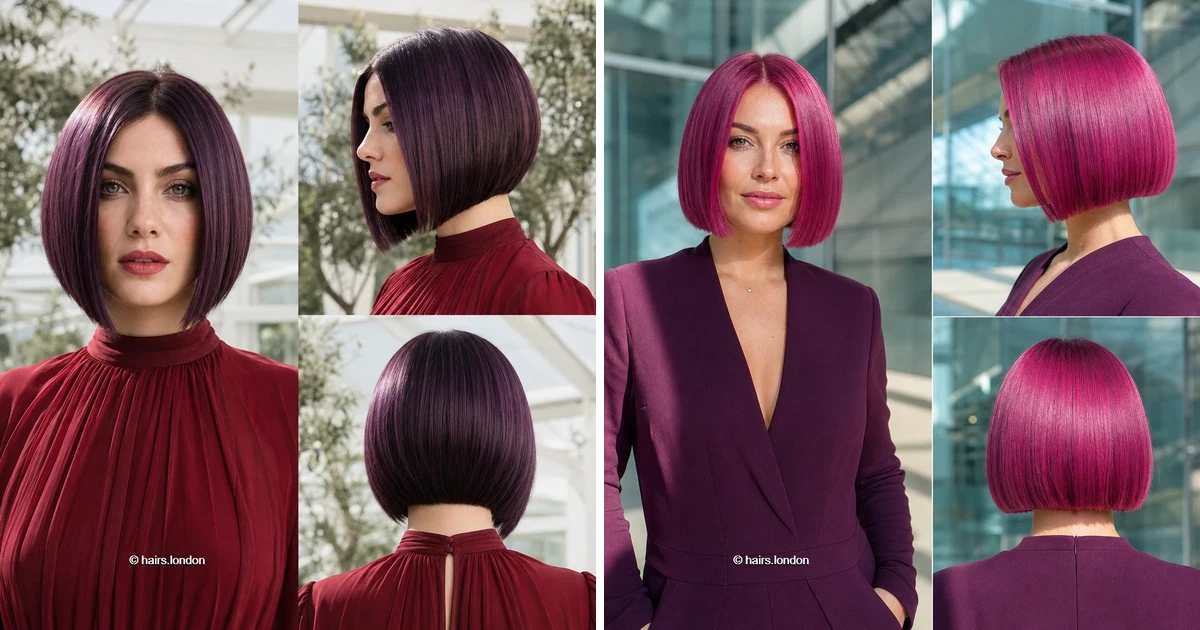
11. Rose Gold Rounded Bob
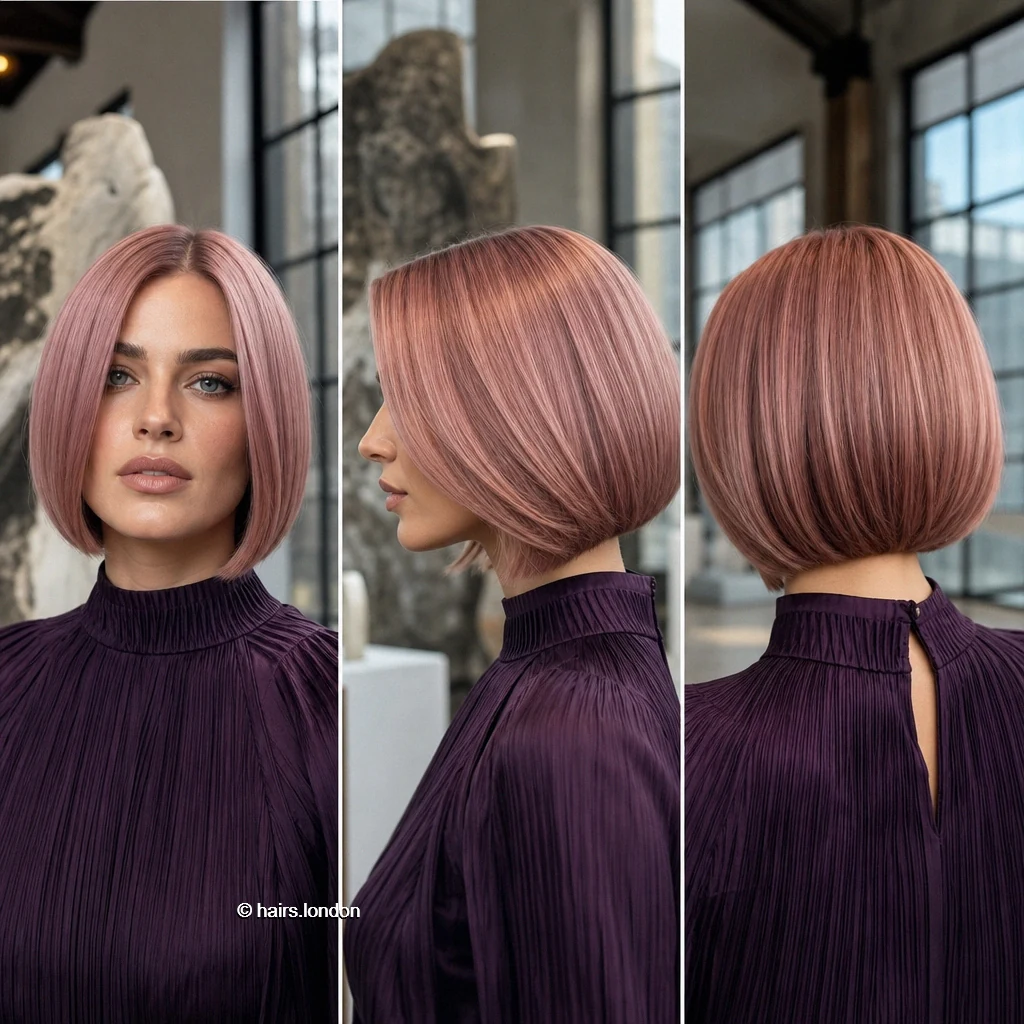
Rose gold color softens the outline of this jaw-length bob. Its center part creates two smooth sections framing the face. The side view shows a gentle curve toward the back. Rear views reveal a rounded perimeter that hugs the neckline. Layers are not prominent across the sleek outer surface here. Ask for enough weight to keep the lower curve continuous. Dry with a brush, directing the ends inward only slightly. Avoid heavy oils that could make finer hair look flat. Trim the back edge when its rounded shape starts dropping. Review color maintenance according to your starting shade and porosity.
12. Dark Plum Graduated Bob With Long Fronts
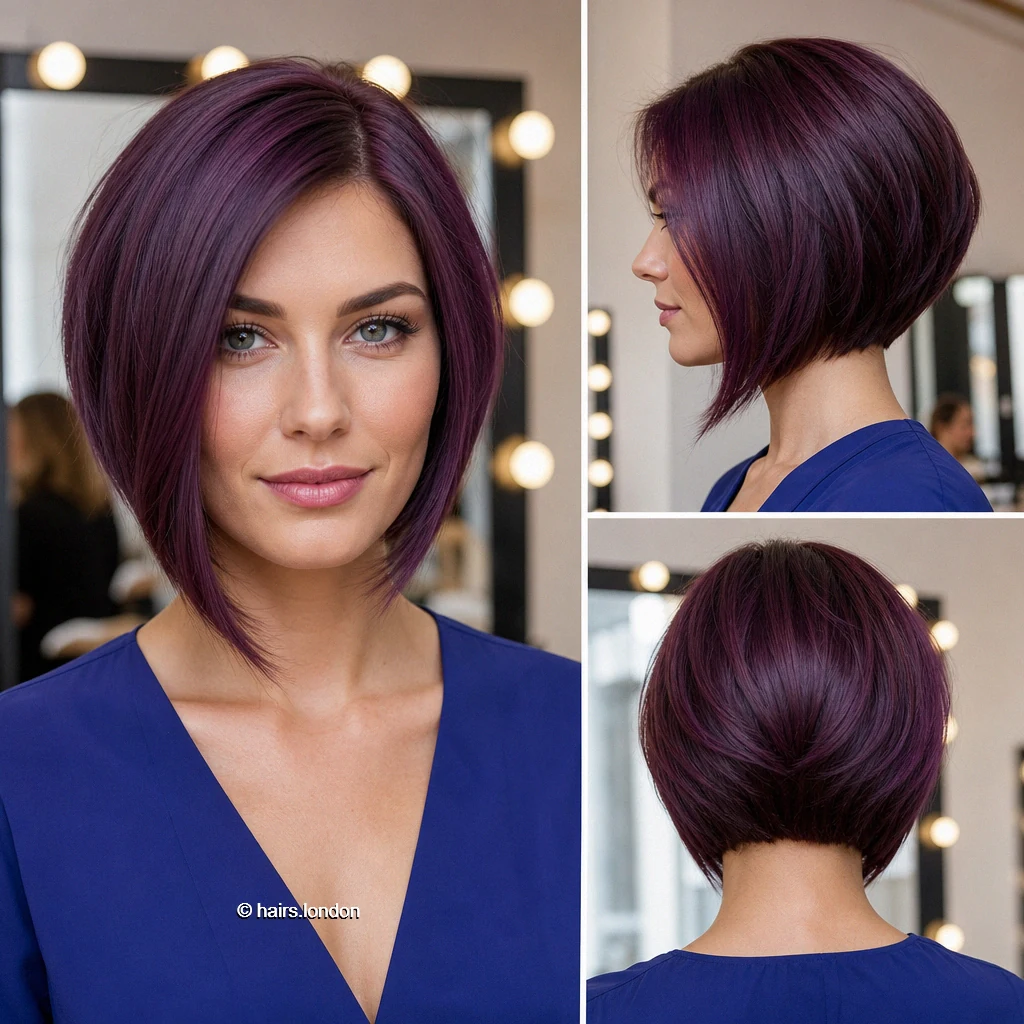
Dark plum color emphasizes this bob’s curved, graduated back. Longer front pieces taper toward the chin from shorter sides. The profile shows fullness above a distinctly narrow rear neckline. Unlike a simple A-line perimeter, its back shows distinct layered graduation. Ask your stylist to balance that volume against your density. Smooth the front while lifting the back with directed airflow. Use minimal product near the roots to preserve natural movement. A stubborn nape growth pattern may change daily styling needs. Schedule trims before the short graduation becomes too heavy below. Refresh plum tones when fading alters the depth you prefer.
13. Lavender Angled Bob With Layered Back
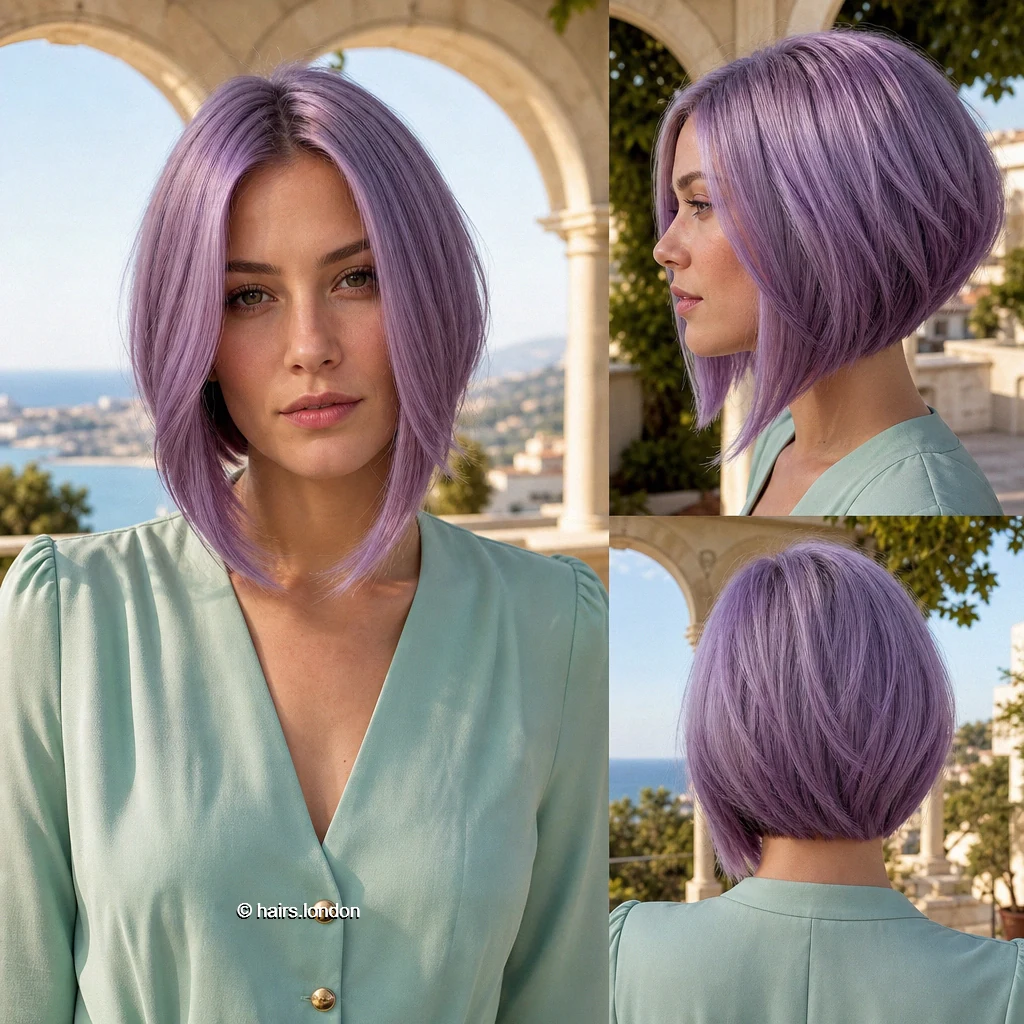
Soft lavender shades brighten this bob’s smooth longer face-framing sections. The front extends below the chin while the back shortens. Side and rear views reveal layers building a rounded back. That visible graduation distinguishes its silhouette from a flat A-line. Ask for front length that works with your preferred part. Blow-dry the longer sections downward to show their taper clearly. Lift the back lightly without creating an overly bulky crown. Wavy hair may need adjustments to account for natural shrinkage. Maintain the short rear shape before its weight line drops. Pastel color warrants gentle cleansing and regular conversations about refreshing.
14. Berry Angled Bob With Side-Swept Front
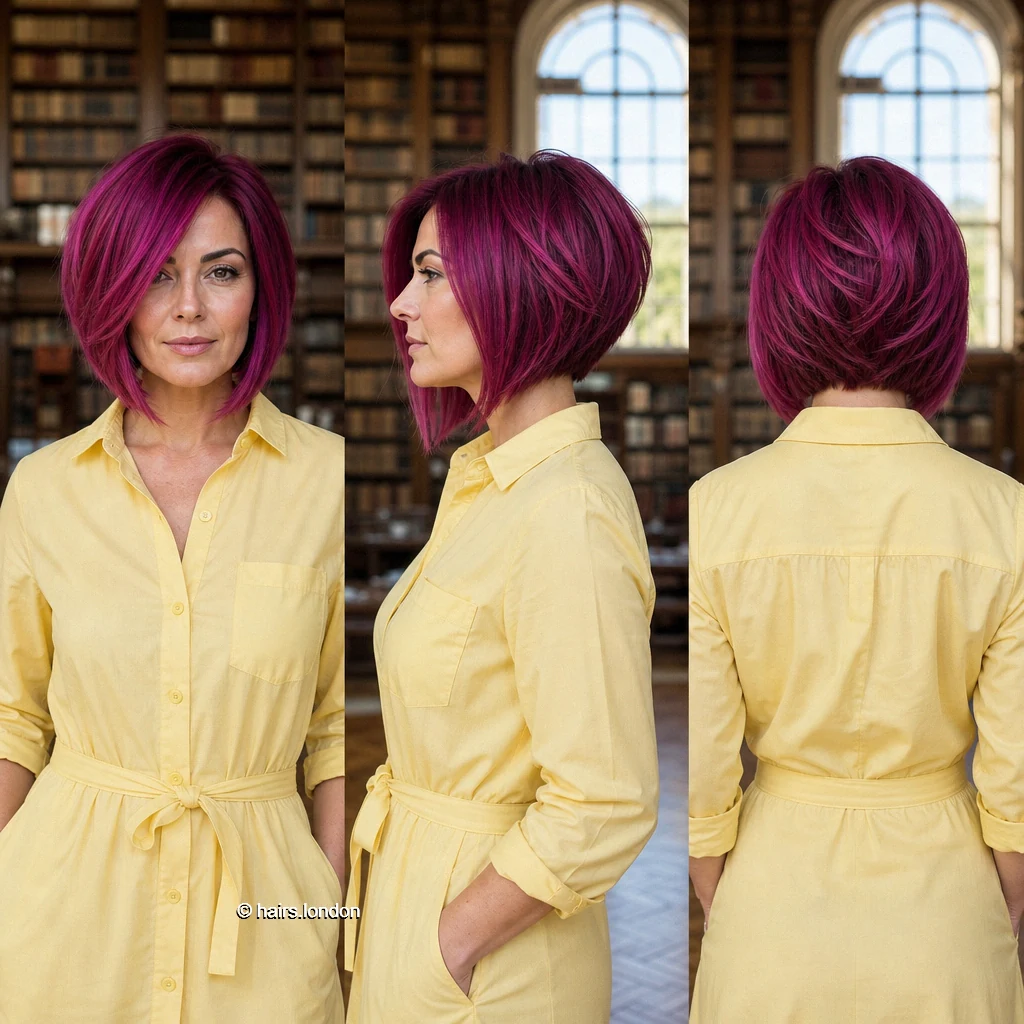
Vivid berry color picks out the layers within this bob. A deep side sweep brings extra length across one cheek. Front ends below the jaw; the back sits higher. Side views reveal layered fullness tapering into the shorter nape. Ask for movement that does not sacrifice those distinct front points. Dry the fringe toward its intended side while still damp. Work a small amount of cream through separated back layers. Density and growth patterns determine how much layering feels manageable. Trim the rear before its angled profile becomes overly rounded. Discuss color refresh timing alongside your preferred cut maintenance schedule.
15. Raspberry Bob With a Rounded Back
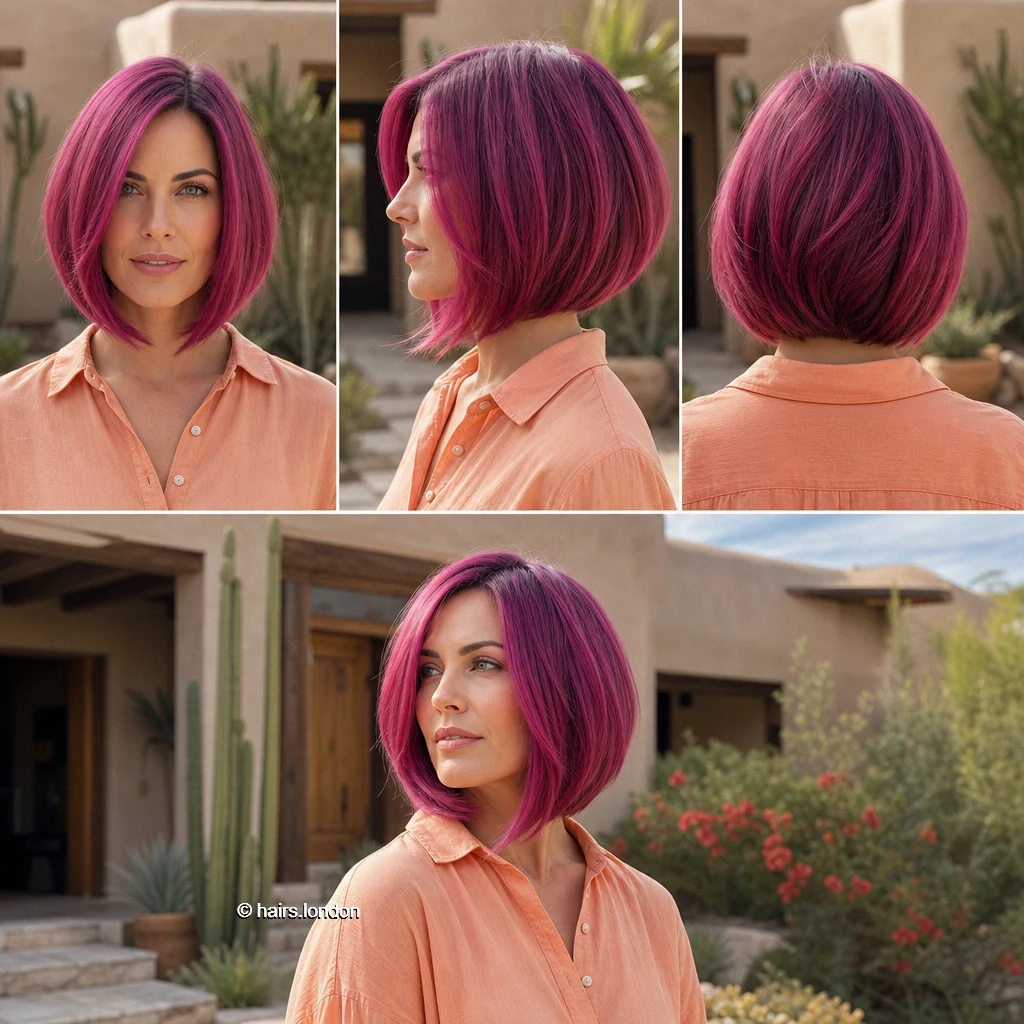
Raspberry pink brings depth to this softly rounded, angled bob. A side part gives one front section greater visual weight. The face-framing lengths reach around the jaw and taper backward. Rear views show a compact neckline beneath a fuller crown. Subtle layers appear through the sides, rather than blunt ends. Ask for the back shape to match your natural density. Dry the front smooth, then gently lift the rear roots. Avoid excessive teasing that could distort its clean side profile. Regular trims keep the neckline from overtaking the longer fronts. Maintain the shade according to fading and your starting color.
16. Dusty Rose Graduated Bob With Long Points
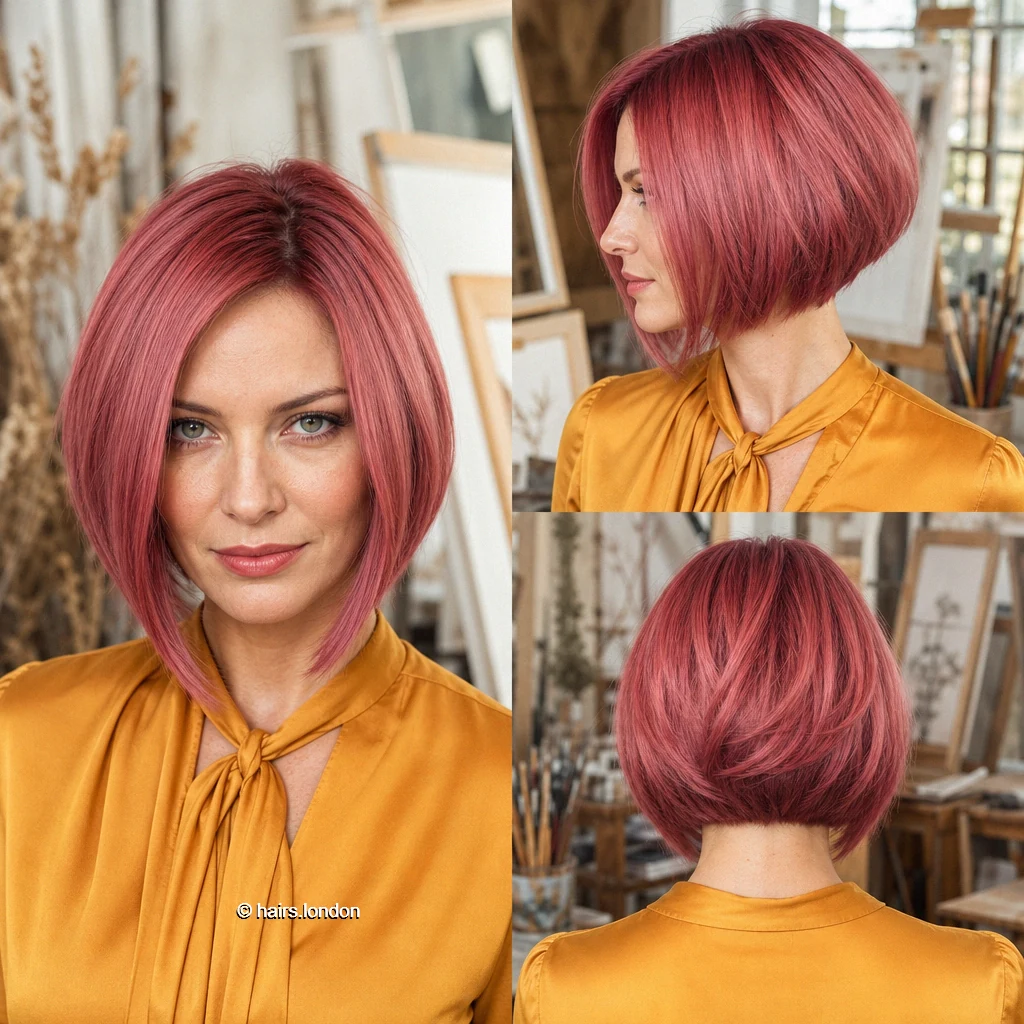
Dusty rose shades define the long points of this bob. A side part directs smooth hair diagonally across the face. The profile shows pronounced front length against a noticeably shorter, compact back. Rear views reveal rounded fullness over a narrow neckline. Visible layers through the back support that graduated overall shape. Ask to keep sufficient weight in the fine front ends. Blow-dry those pieces downward while lifting the back gently. This silhouette requires styling adjustments if your hair curls naturally. Trim the back before its graduation settles onto the neck. Limit repeated hot-tool passes to protect delicate colored lengths daily.
17. Blue-Black Layered Bob With Side Fringe
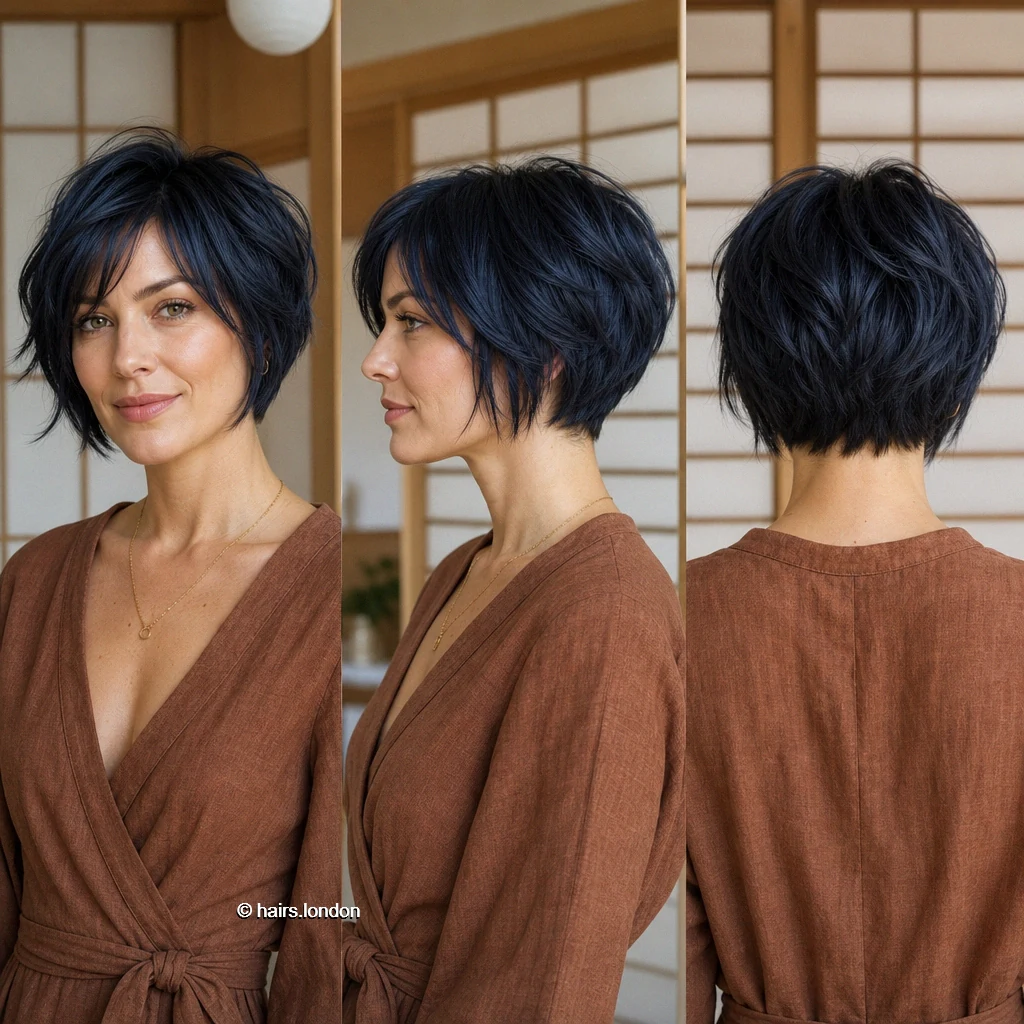
Blue-black color adds cool highlights to this short, softly layered bob. A side-swept fringe crosses the forehead with light separation. Wispy side pieces reach the jaw while the back shortens. Rear views reveal textured layers above a close neckline finish. Ask for enough perimeter hair to retain a recognizable bob. Finger-dry the crown for lift and guide the fringe sideways. A small styling cream can separate ends without creating stiffness. Dense hair may need controlled debulking around the rounded back. Short fringe and neckline sections benefit from timely salon trims. Discuss how the dark blue tone may fade between appointments.
18. Teal Textured Bob With Wispy Fringe
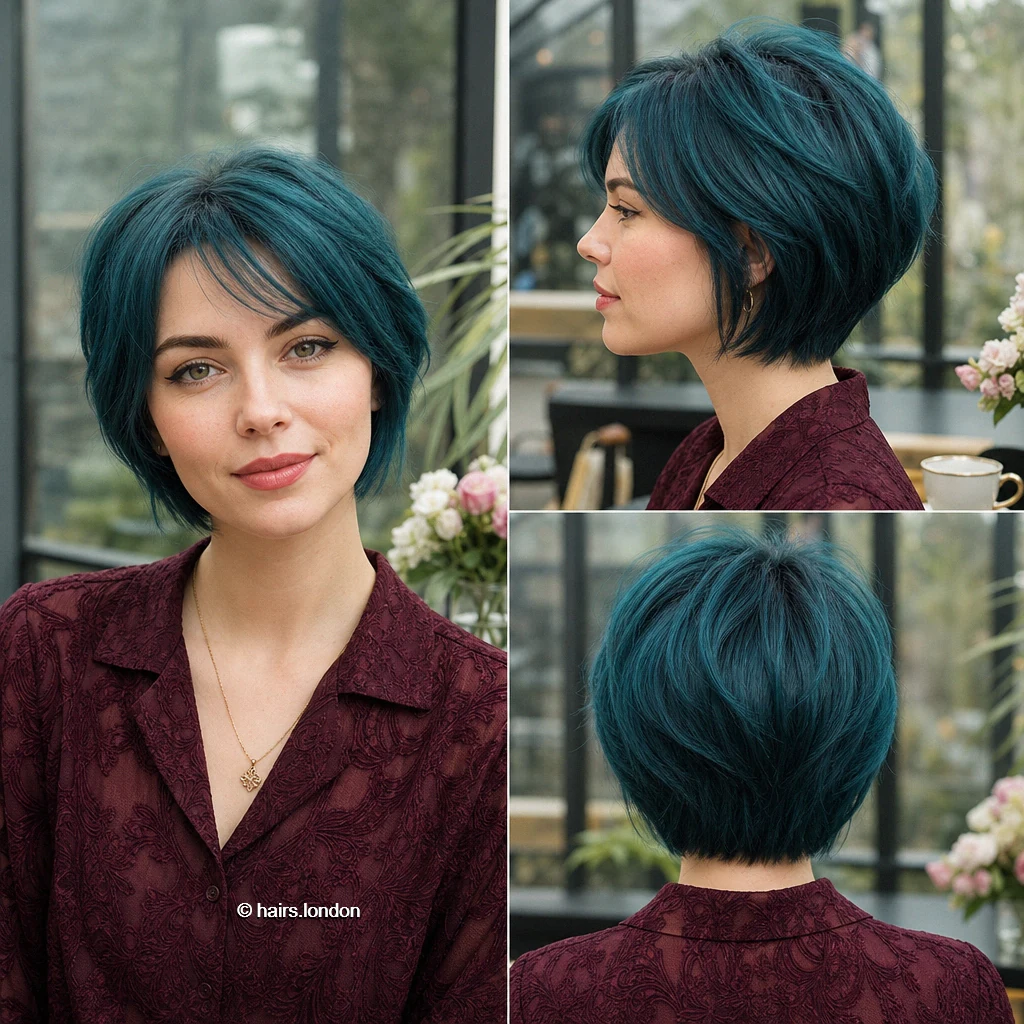
Deep teal color makes this short bob’s texture clearly stand out. Wispy fringe pieces skim the forehead without forming heaviness. The sides frame the jaw, and the back sits higher. Rear views show a rounded, layered crown and tapered neckline. Ask for softly separated ends that still leave perimeter weight. Dry with your fingers, lifting the crown without puffing sides. Use light cream to define individual pieces around both cheeks. Natural density affects how closely this silhouette will sit comfortably. Trim the neckline as soon as its compact shape loosens. Protect the teal shade from frequent washing and excessive heat.
19. Forest Green Layered Bob With Sweeping Fringe
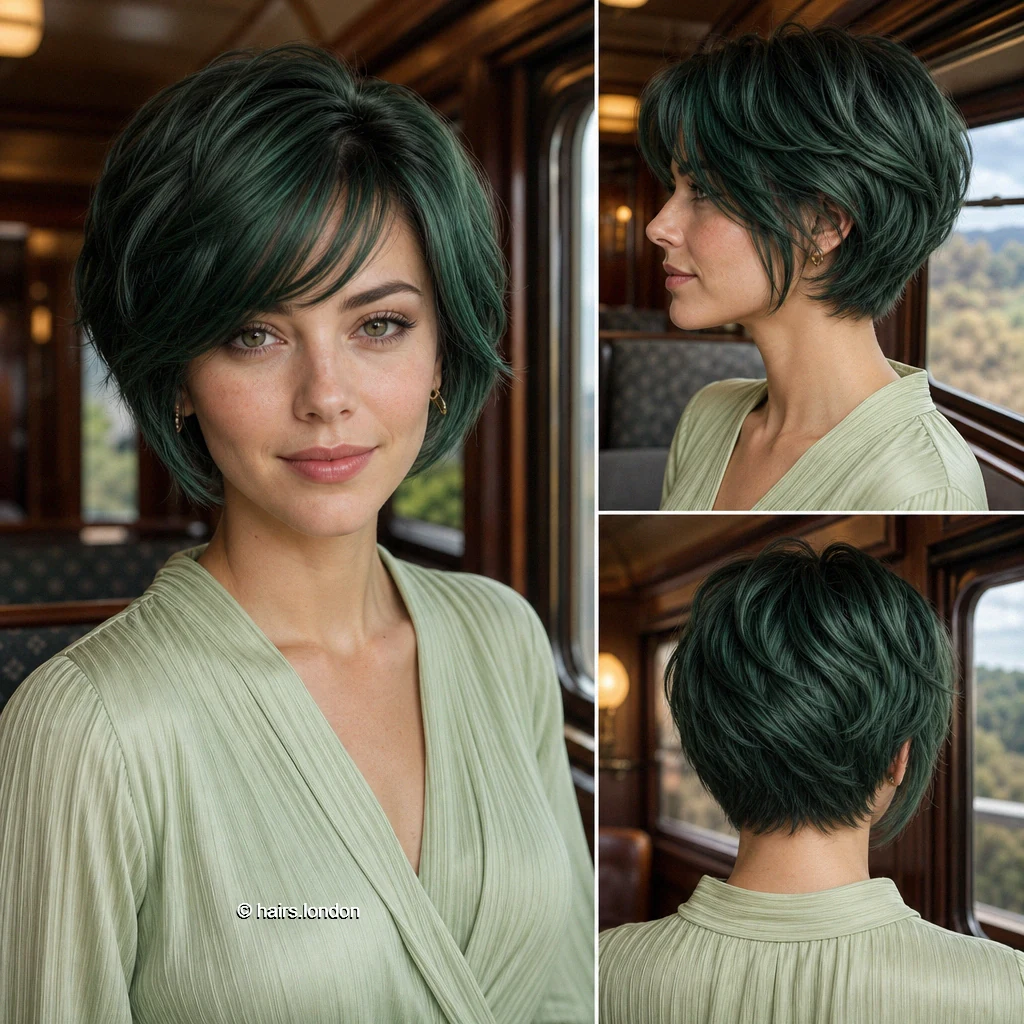
Forest green color brings depth to this short, layered bob. A long side fringe sweeps across the forehead toward one eye. Airy upper layers create fullness above the shorter jaw-level sides. The back shows textured movement and a tapered neckline. Ask for layers that support movement without exposing sparse ends. Direct the fringe first when blow-drying to control its sweep. Finger-style the crown with lightweight product rather than heavy paste. Suitability depends on density, growth patterns, and desired styling time. Refresh the neckline before its tapered outline becomes less distinct. Discuss green color upkeep alongside any planned change in length.
How to Choose Your Bob Length and Shape
Decide where you want the front to fall before choosing a subtype: around the jaw for a compact bob, below the chin for longer face framing, or nearer the shoulders if you want a lob. Look at the side and back as well as the front. An A-line bob has a longer front; a stacked or graduated bob also shows shorter layers building shape at the back. Discuss how your density, natural texture, neckline growth patterns and preferred part will affect the result.
Styling Fine, Thick, Wavy and Curly Textures
Fine hair can benefit from a weightier perimeter and restrained product, while thick hair may need carefully placed internal weight removal to keep a rounded back from becoming bulky. For natural waves, scrunch in a light cream and diffuse gently rather than brushing out the shape. If you have curls, agree on the finished dry length before cutting because curl shrinkage changes where the bob sits. Direct a fringe while damp, smooth a precise baseline when desired, and leave layered ends free to move.
Keeping Pastel and Vivid Bob Color Fresh
The pinks, purples, blues and greens here may fade differently depending on the hair’s starting color, porosity and previous processing. Ask your colorist what upkeep your chosen shade requires rather than assuming every bright color needs the same schedule. Gentle washing, sensible heat settings and heat protectant help preserve the finish. A short bob also makes new growth conspicuous quickly, so consider whether you prefer frequent root appointments or a softer transition.
Maintaining the Bob Perimeter and Graduation
A blunt bob needs its lower edge checked as it grows; once the baseline becomes uneven, the whole outline changes. On an angled bob, protect the intended difference between the front and back instead of trimming each section independently. Graduated styles need attention at the neckline and through the back weight line, where growth can make the shape feel heavy. Fringe trims may fall between full appointments. Let your stylist tailor timing to your texture and how precisely you like the cut to sit.
What to Discuss With Your Stylist
Bring views of the front, side and back of the bob you like, then point to the exact features you want: front length, perimeter, part, fringe, back fullness and degree of layering. Explain how you normally dry your hair and whether you want to preserve natural waves or curls. Ask how the proposed shape will behave at your density and around cowlicks. Before committing to a pastel or vivid shade, discuss your current color, likely maintenance and how cut and color appointments can work together.
Frequently Asked Questions
What is the difference between a bob and a lob?
A bob usually finishes around the jaw, chin or neck; a lob is a longer bob that approaches the shoulders. The practical distinction is where the perimeter falls on you.
How is an A-line bob different from a stacked bob?
An A-line bob is longer at the front than the back. A stacked bob has visible graduation at the back that builds fullness above a shorter neckline. One cut can have both features.
Does a blunt bob work on fine hair?
It can, because a relatively solid edge preserves visible weight. Ask your stylist to judge your density before adding layers or thinning the ends.
How can thick hair avoid a bulky bob shape?
Discuss where the weight collects, particularly behind the ears and at the back. Selective interior shaping can help while retaining enough hair to support the perimeter.
Can naturally curly hair be cut into a bob?
Yes, but curl pattern and shrinkage affect the finished length and silhouette. Show your stylist how you normally wear your curls and agree on the desired dry shape.
Should I choose a fringe with my bob?
Choose a fringe if you like styling it and its placement works with your growth patterns. Wispy or side-swept versions may feel more flexible than a dense, straight fringe.
What is the easiest way to style a smooth bob daily?
Apply heat protectant, direct airflow downward and smooth the perimeter with a paddle brush. Use just enough finishing product to control flyaways without flattening the shape.
How do I style a layered bob without making it stiff?
Start with a small amount of lightweight cream or mousse, then dry with your fingers or a diffuser. Separate a few ends afterward rather than coating every layer.
How often does a bob need a trim?
It depends on growth and the precision of the shape. Short necklines, blunt baselines and graduated backs generally show changes sooner than softer, longer bobs.
Will a pastel or vivid bob color fade quickly?
Fading varies with the shade, starting hair and washing routine. Ask your colorist about realistic refresh appointments and use the cleansing and heat advice suited to your hair.
Can I change my part without changing my bob cut?
Often, but a strong side part can alter how even the front lengths look. Tell your stylist if you regularly switch parts so the cut can be assessed both ways.
What happens when a short graduated bob grows out?
The neckline lengthens and the back weight line can drop, changing its profile. Your stylist can reshape the graduation during trims or guide it toward a longer, softer bob.
Conclusion
The most useful inspiration is the bob whose shape you would enjoy wearing after the salon finish has worn off. Choose the length and back profile first, then plan the fringe, styling routine and color upkeep around your own hair.