


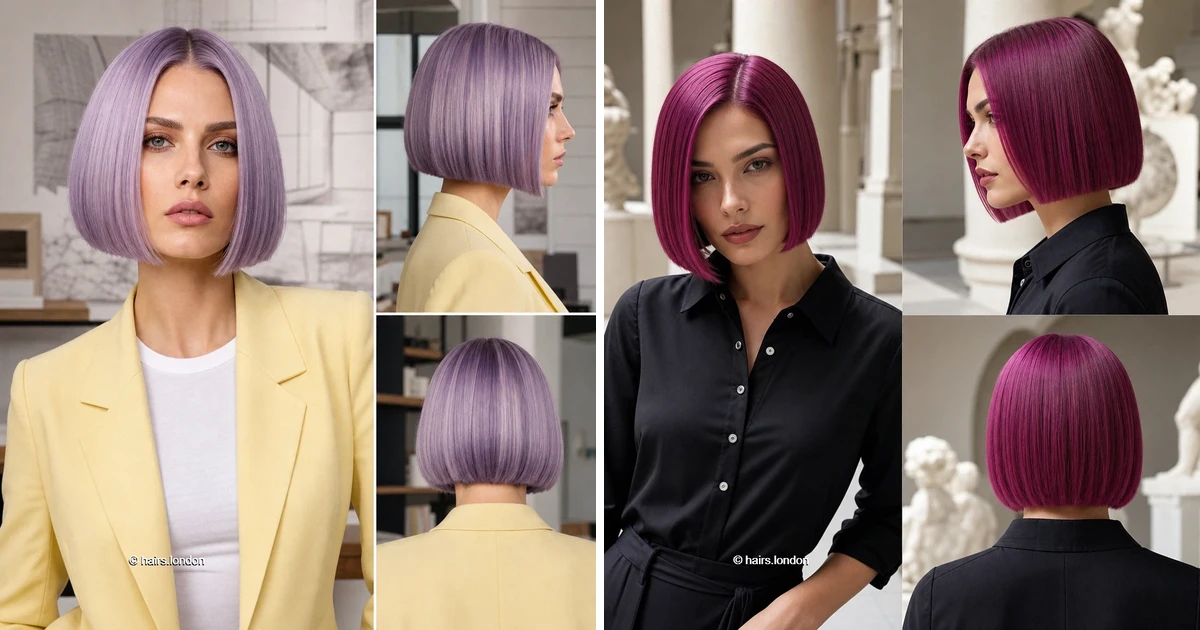
11. Dark Violet Bob With a Sleek Angled Outline
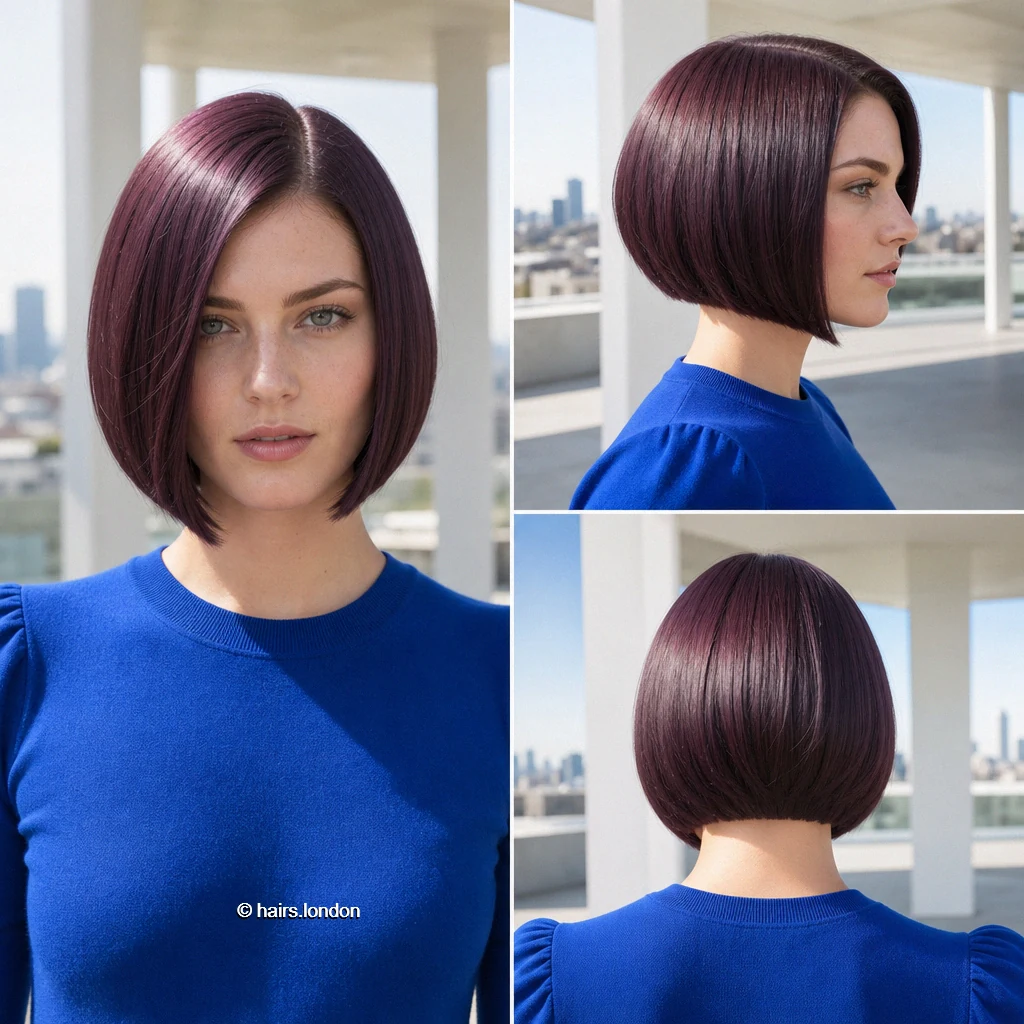
Dark violet color gives this polished, side parted bob depth. The front rests around the jaw and extends beyond the back. Its profile shows an angle, not a dramatic point. A smooth, rounded rear keeps substantial weight over the nape. Ask for an outline that suits your preferred part location. Blow dry downward, polishing the ends with minimal inward bend. Straight hair may make the line easier to maintain daily. Wavy hair can wear the shape with a softer outline. Protect shine with gentle cleansing and heat protection when styling. Schedule perimeter trims when the front begins losing its definition.
12. Muted Lavender Bob With a Longer Jawline Front
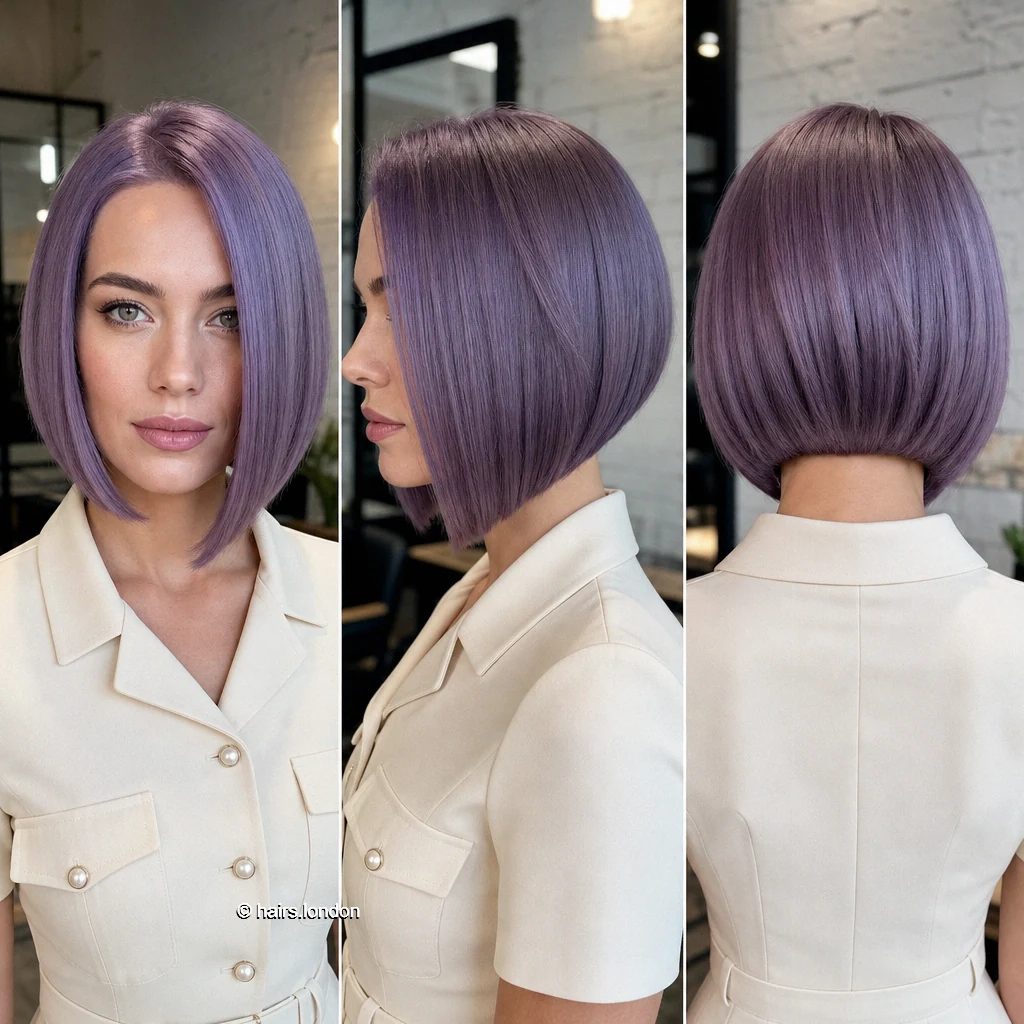
Muted lavender gives this sleek bob a cool finish. Its side part creates a broad, face framing front panel. The front drops below the chin while the nape curves inward. In profile, the longer front establishes a clear angled outline. The back looks rounded, with weight concentrated near its base. Ask for enough front length to preserve that difference. Smooth the surface without excessive lift at the lower sides. Dense hair may need hidden bulk control beneath the shape. Maintain the angle with trims and monitor fading between color services. Discuss your natural part before committing to these front lengths.
13. Berry Magenta Bob With a Crisp Perimeter
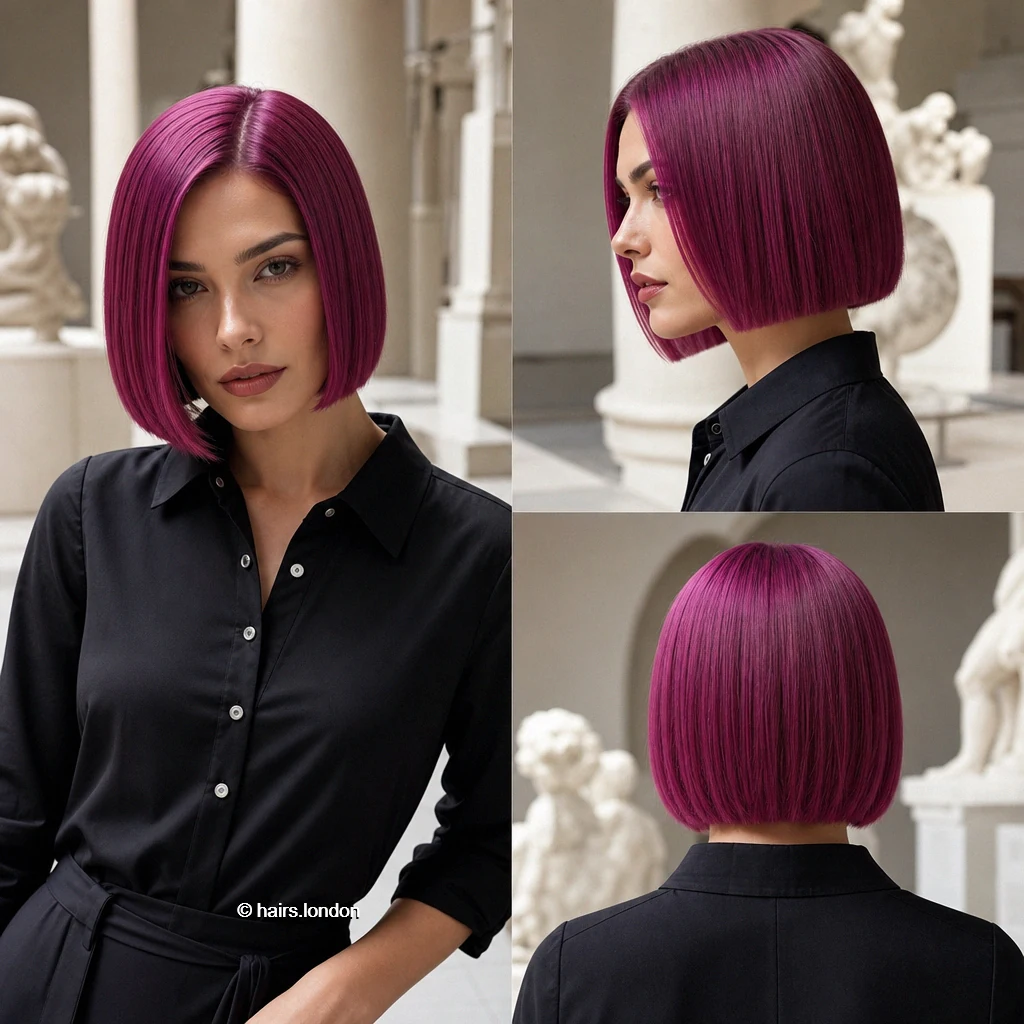
Berry magenta color covers this smooth, sharply outlined short bob. A near center part divides its straight, face framing sides. The front reaches approximately chin level, with a shorter back. From behind, the rounded outline finishes neatly against the neck. There is no clearly exposed stack beneath the rear weight. Ask for perimeter precision rather than conspicuous surface layering. Direct a dryer downward, then lightly smooth the final inch. Finer hair may benefit from preserving this substantial looking edge. Thick hair could require discreet internal shaping to prevent puffiness. Protect vivid color and trim before uneven corners become especially obvious.
14. Rosy Red Bob With a Rounded Neckline
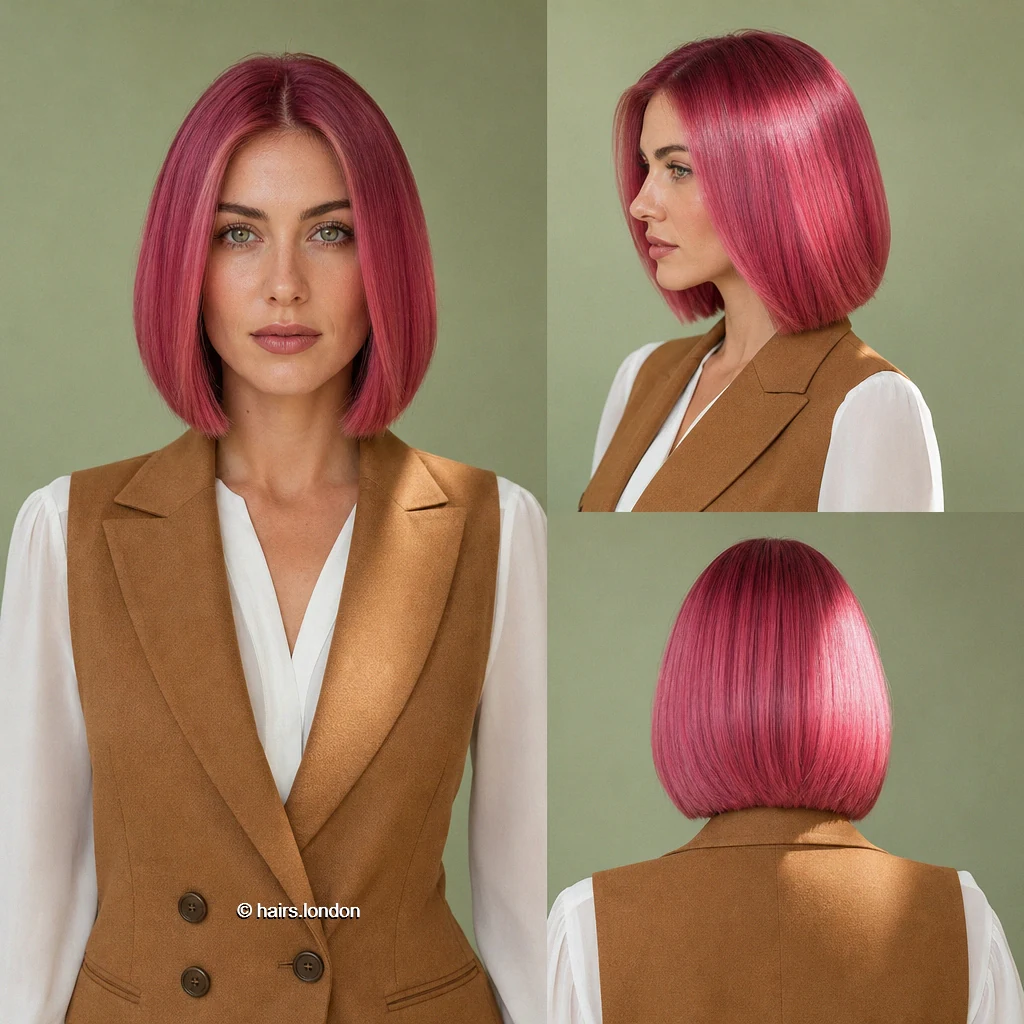
Rosy red color adds warmth to this center parted bob. The smooth, straight front panels finish near the lower jaw. Its side view shows modestly longer fronts and gently rounded sides. Behind, the weight line curves inward above the neckline. The smooth surface shows little obvious layering or exposed graduation. Ask for a balanced perimeter that works with your density. Brush downward during drying, keeping the ends gently tucked. Waves may make this precise outline appear softer between styling. Color safe care can help preserve the visible rosy tone. Trim regularly when the rear line spreads or front corners lengthen.
15. Muted Pink Bob With a Smooth Side Part
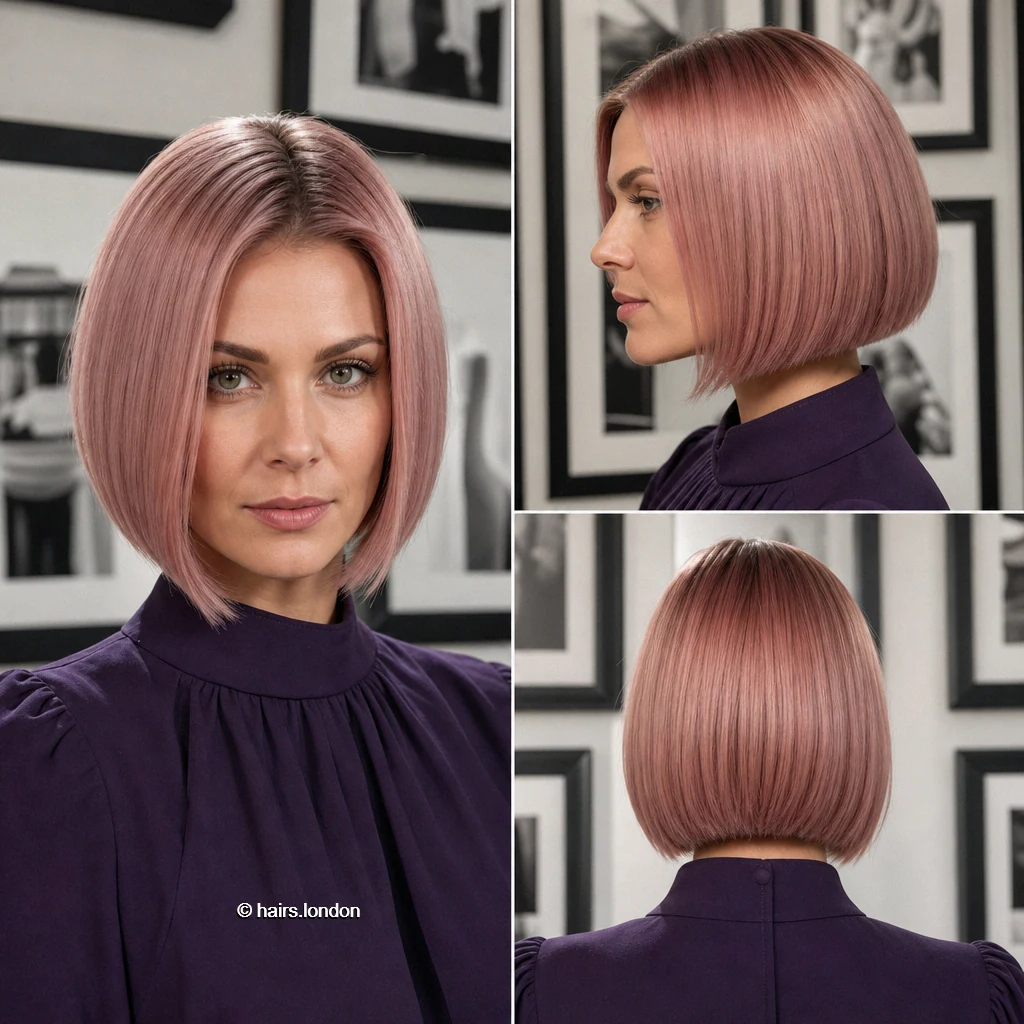
Muted pink lengths frame this smooth, side parted short bob. The front sits around the jaw, slightly below its rear. A rounded back gives the shape fullness at neck level. Its sides look solid, with no prominent surface layers. Ask for subtle internal adjustment if your hair expands outward. Smooth with carefully controlled airflow, following the curve of the perimeter. A lightweight finish helps maintain movement without coating fine strands. Naturally wavy hair will need different styling for this polish. Discuss how often the pale pink needs refreshing for you. Maintain both the front corners and short back during trims.
16. Black Cherry Bob With Pronounced Front Length
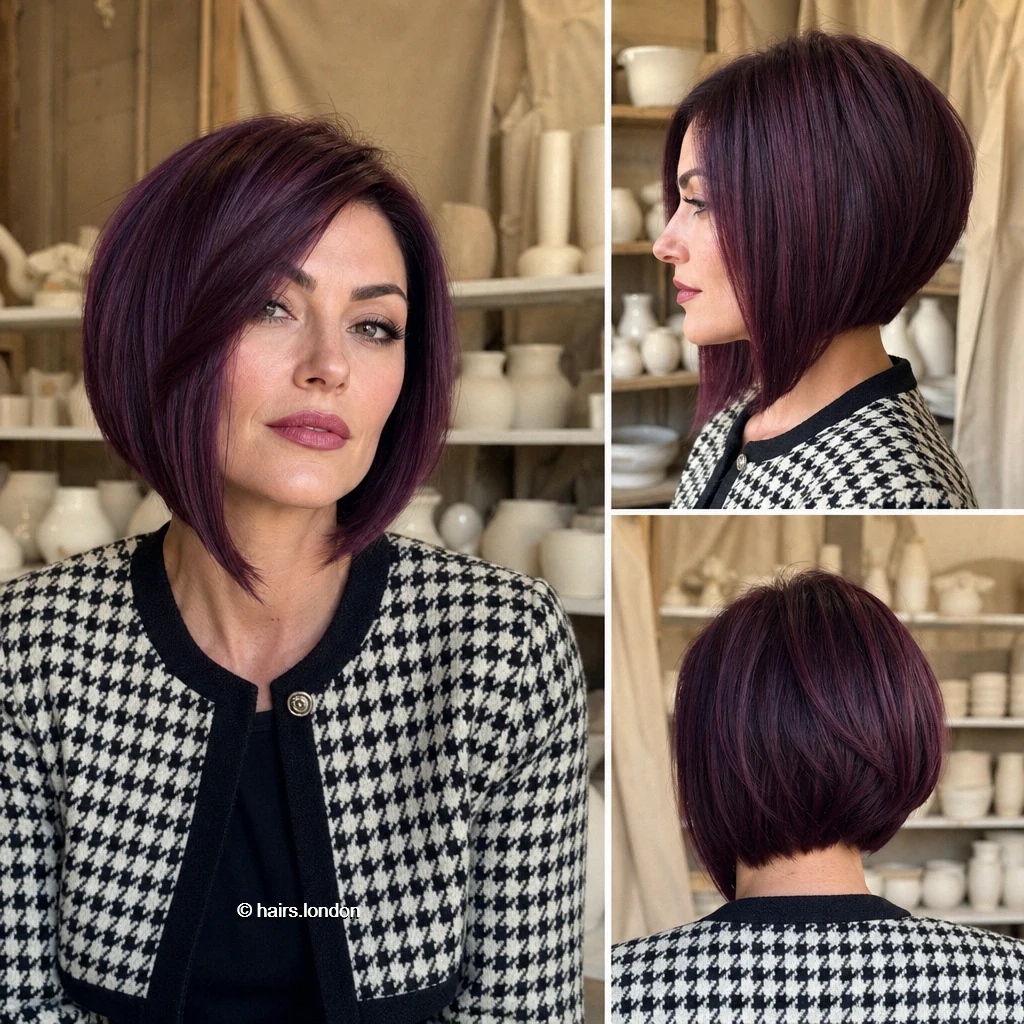
Black cherry coloring lends depth to this angled, side parted bob. Its longer front extends below the chin toward the neck. The back sits close to the nape beneath rounded fullness. That length contrast supports an inverted outline in profile. Ask how much rear graduation your hair can support comfortably. Smooth the longer panel while directing roots away from collapse. Dense hair may require careful weight management around the back. Waves can make the sharp angle look more relaxed. Keep the short nape trimmed as front lengths continue growing. Use gentle color care to maintain the rich dark violet sheen.
17. Smoky Lavender Bob With an Asymmetric Front
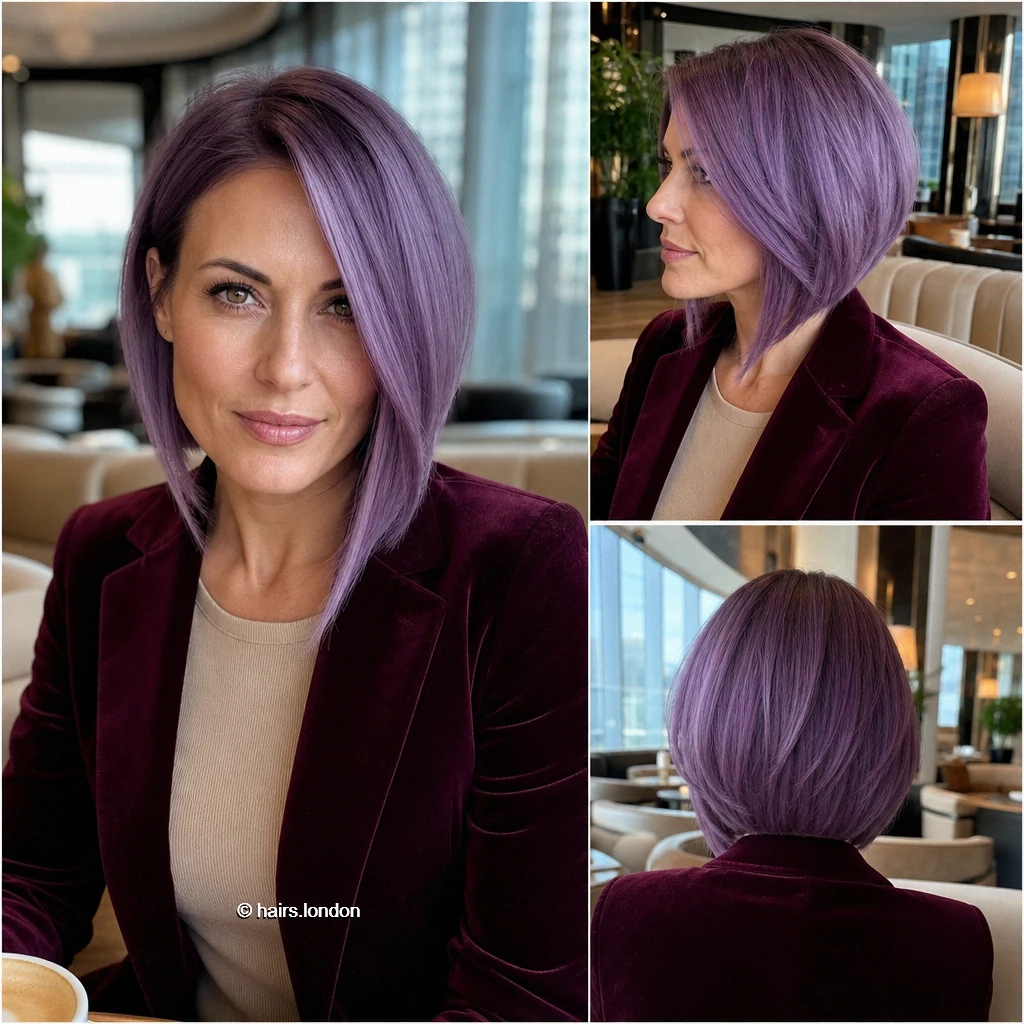
Smoky lavender brightens one side of this dark rooted bob. A deep part creates an asymmetric, below chin front section. The shorter opposite side sits nearer the jaw. At the back, the outline rounds into a compact nape. Ask your stylist to check balance with your usual, natural part. Smooth the long section while leaving gentle lift above it. Fine hair may prefer minimal product along those long front ends. Thick hair needs enough shaping to avoid a bulky back. Plan color maintenance around the lighter lavender rather than guessing. Trim the long point before its distinction becomes an accident.
18. Hot Pink Angled Bob With a Sweeping Fringe
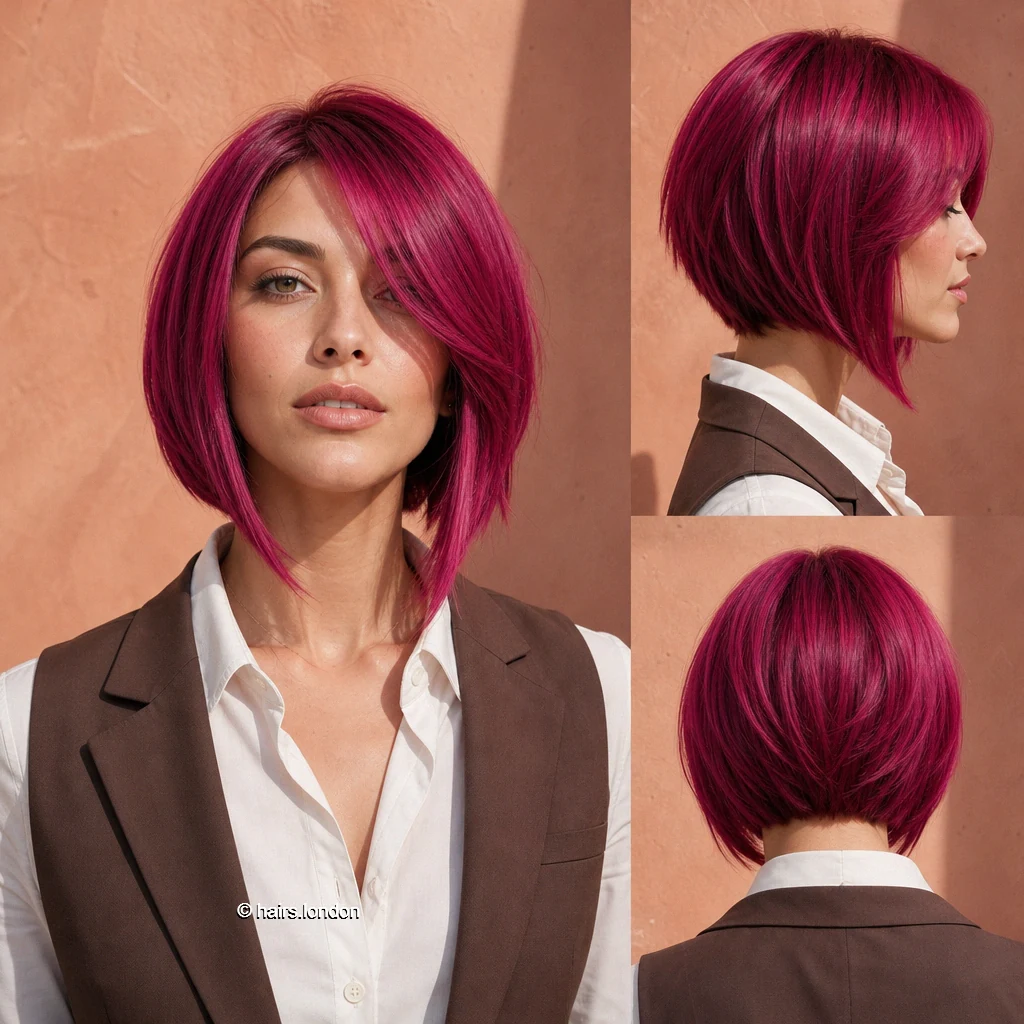
Bright hot pink highlights intensify this layered, strongly angled short bob. A long, sweeping side fringe blends into pieces below the chin. The nape finishes much shorter, beneath a full, rounded back. Visible separation throughout the crown softens its dramatic front line. Ask for movement without thinning the longer points too much. Dry the fringe across, then define selected layered ends lightly. Natural waves may make the layers look more tousled. Dense hair can need interior shaping behind the ears. Refresh vivid pink when it fades against the darker base. Maintain the nape to keep its dramatic front contrast clear.
19. Ruby Pink Bob With an Extended Front
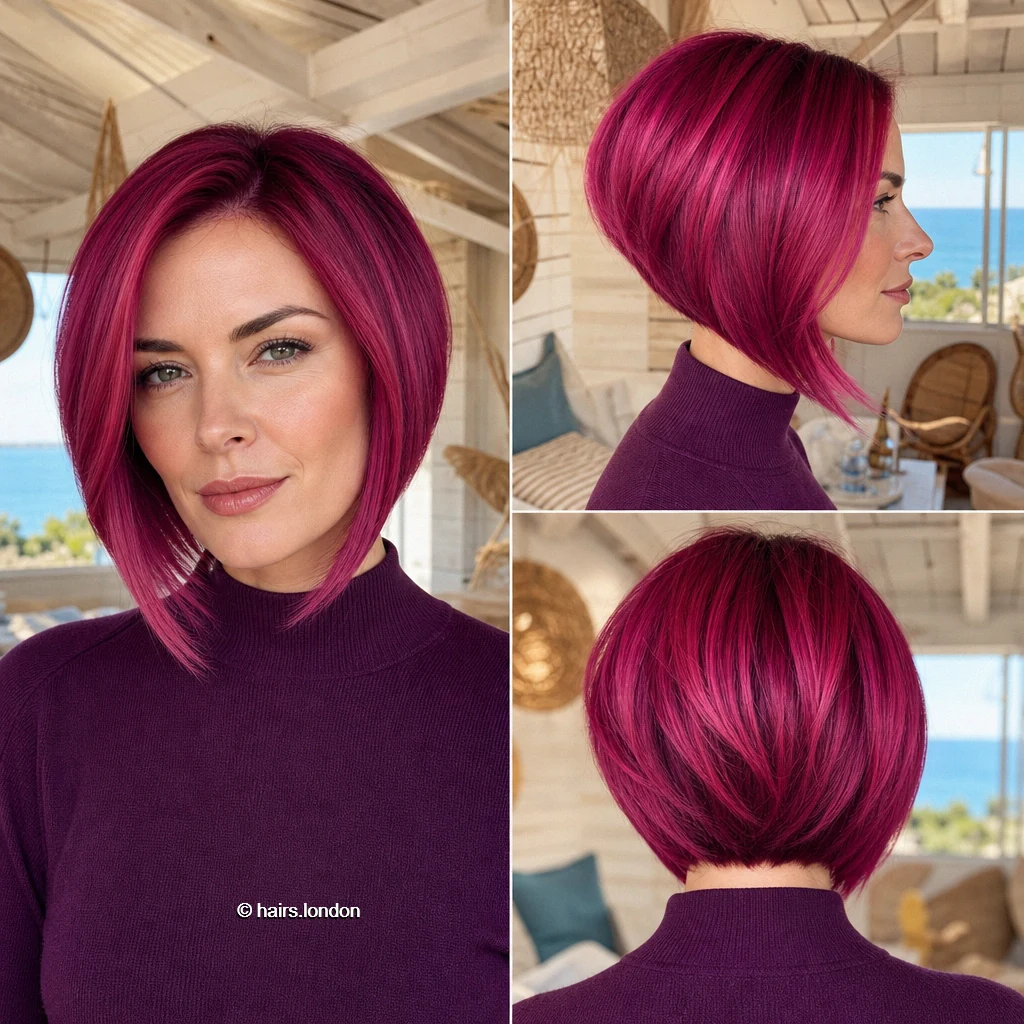
Ruby pink color covers this full, side parted angled bob. Its front extends below the jaw into a narrow point. A shorter nape supports the visibly rounded back and sides. The side profile emphasizes longer fronts without a blunt base. Ask whether your density can hold that rounded rear weight. Direct the front forward while smoothing flyaways along its surface. Use modest root lift if the upper shape falls flat. Thick hair may need hidden weight removal, not shredded ends. Protect the vivid color with gentle care and limited heat. Trim the nape before it obscures the distinct front angle.
20. Rose Pink Layered Bob With Face-Framing Points
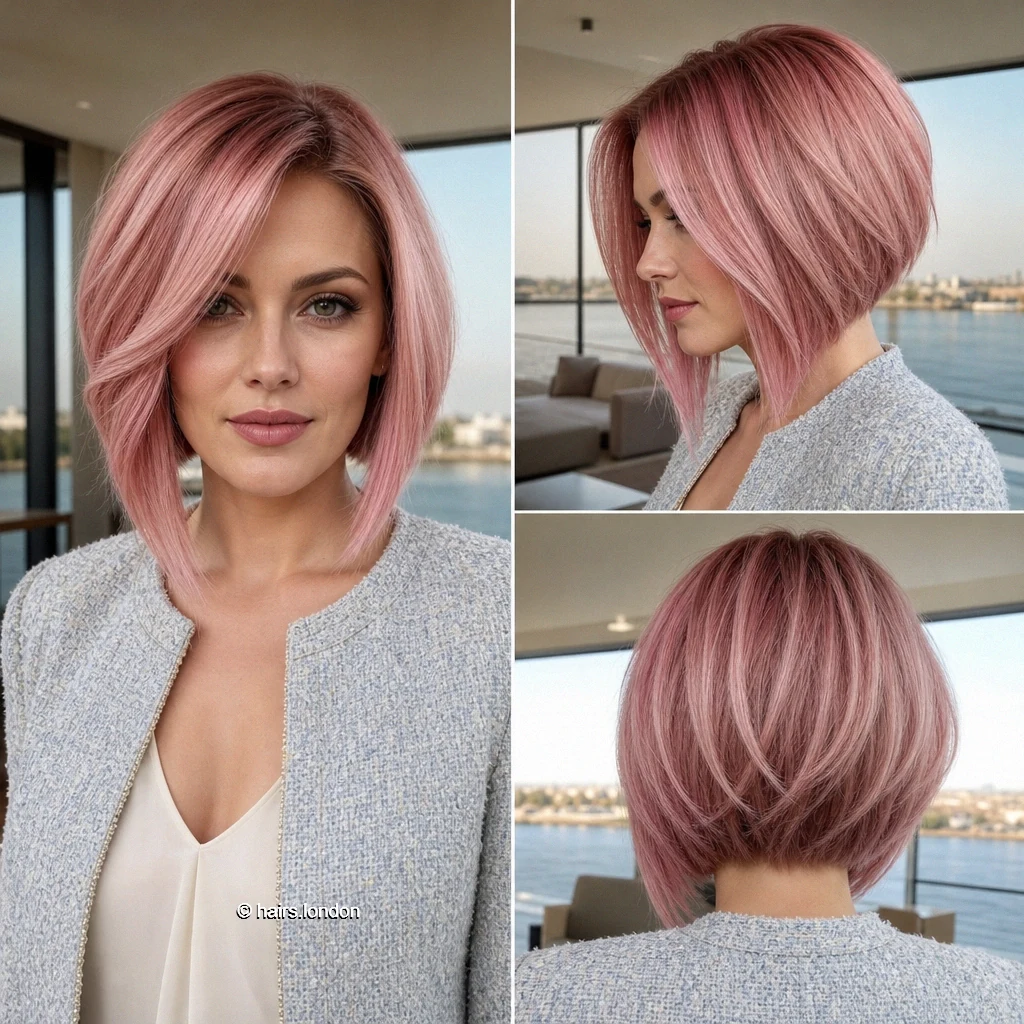
Rose pink coloring softens this side parted, layered angled bob. The front pieces reach below the chin beside both cheeks. Behind them, the back rounds inward above the nape. Visible layers add movement through the crown and rear surface. Ask to retain enough length for those slender front points. Blow dry the top smoothly, then separate ends with fingers. Fine hair may need lightweight lift instead of heavy wax. Dense hair can benefit from shaping that avoids rear bulk. Pale pink maintenance depends on fading and your natural base. Trim the neckline regularly while checking that the front stays balanced.
How to Choose Your Bob Length and Shape
Start with where you want the front to fall: near the jaw, at the chin or below it. Then decide whether you prefer a nearly level edge or a visibly longer front. An A-line describes that front-to-back length difference; a stacked or graduated bob also has shorter lengths building shape at the back. These images include both smooth, weighty outlines and softer layered ones. The two shortest crops will expose more ear and neck than a conventional bob, so compare them separately.
Styling Fine, Thick, Wavy and Curly Textures
Fine hair often benefits from keeping a strong perimeter and using lightweight root lift instead of heavy finishing products. With thick hair, ask about removing bulk internally while retaining enough outer length to stop the sides puffing out. For waves, try enhancing the natural bend and accept a softer outline rather than straightening every day. If your hair is curly, have the shape assessed at its usual dry volume: shrinkage changes where the front and nape will sit. Keep fringe styling manageable for your growth pattern.
Keeping Bob Color Fresh
The lilac, pink, magenta and plum shades shown here will not all fade at the same rate. Discuss your starting color and a realistic refresh schedule before choosing one. Gentle cleansing, less frequent hot styling and heat protection can help preserve the finish. A darker root may make regrowth less conspicuous, but it will not prevent vivid lengths from fading. If you enjoy changing shades, ask how the current color could affect a future appointment.
Maintaining the Bob Perimeter and Graduation
A sleek jawline bob reveals uneven corners quickly, so book a trim when its edge stops looking intentional. On a longer-front style, have the stylist check both face-framing points as well as the back. Graduated and close-neck cuts can need earlier nape tidying because growth changes their rounded silhouette. Softer layered bobs may tolerate more length, although their fringe can need attention first. Avoid routinely thinning the outer perimeter if a full edge is what gives your cut its shape.
What to Discuss with Your Stylist
Bring the front, profile and back views of your chosen image. Point out the feature you mean: a solid edge, longer front, rounded back, short nape or sweeping fringe. Show your usual part and explain how much daily smoothing you are willing to do. Your stylist can then assess density, natural texture and growth patterns before recommending length, internal shaping and a trim schedule. Discuss color upkeep and any lightening required as a separate part of the consultation.
Frequently Asked Questions
What is the difference between a bob and a lob?
A bob generally finishes around the jaw, chin or neck; a lob is a longer bob that approaches the shoulders. The exact label matters less than agreeing on where the front and back should fall.
Is an A-line bob the same as a stacked bob?
No. A-line describes a front that is longer than the back. Stacked describes visible shorter lengths or graduation building shape at the back. A cut can have both features.
How do I choose between a blunt and layered bob?
Choose by the outline and movement you want, then consider your density. A stronger edge retains visual weight; layers can add separation or reduce bulk, but too much layering may weaken a precise perimeter.
Can fine hair wear a rounded bob?
It may, provided the cut keeps enough weight at the edge. Ask your stylist whether subtle shaping and lightweight root lift will create the roundness you want without making the ends look sparse.
What should I ask for if my hair is very thick?
Show where the bob tends to expand on your hair. Your stylist can assess whether discreet internal weight removal would control the sides or back while preserving the visible perimeter.
Can natural curls work with an angled bob?
Yes, but the angle will read differently once curls spring up. Discuss the shape at your usual dry volume and consider how much variation in the front outline you enjoy.
Will a side fringe require daily styling?
That depends on your texture and growth pattern. A fringe that naturally falls the desired way may need little help; another may need root drying and light product each morning.
How can I style a sleek bob without losing movement?
Direct airflow downward and smooth the perimeter, concentrating any inward bend at the ends. Use a small amount of finishing product rather than coating the entire cut.
How often should I trim a precise bob?
Trim it when the edge, front corners or parting balance visibly changes. A close nape or strong angle may need attention sooner than a softly layered outline; your stylist can suggest a schedule after seeing your growth.
What happens when a graduated bob grows out?
The nape lengthens and the back can lose its compact, rounded shape. During grow-out, ask for small adjustments that keep the outline balanced without repeatedly cutting away the length you want to gain.
How demanding are vivid pink and lavender bob colors?
Upkeep varies with your starting color, shade and washing habits. Ask about any required lightening, expected fading and refresh visits before committing.
Are the shortest cuts here still bobs?
The layered cuts in images 6 and 7 are closer to tapered crops than conventional jawline bobs. They are useful comparisons if you like short, side-swept hair but are considering more neck and ear exposure.
Conclusion
The most useful reference is the one whose side and back views appeal to you as much as its portrait. Pick your preferred front length and perimeter first, then talk through how your own density, texture and styling routine could change the result. That conversation is especially important for a close nape, a pronounced angle or a vivid color.


