


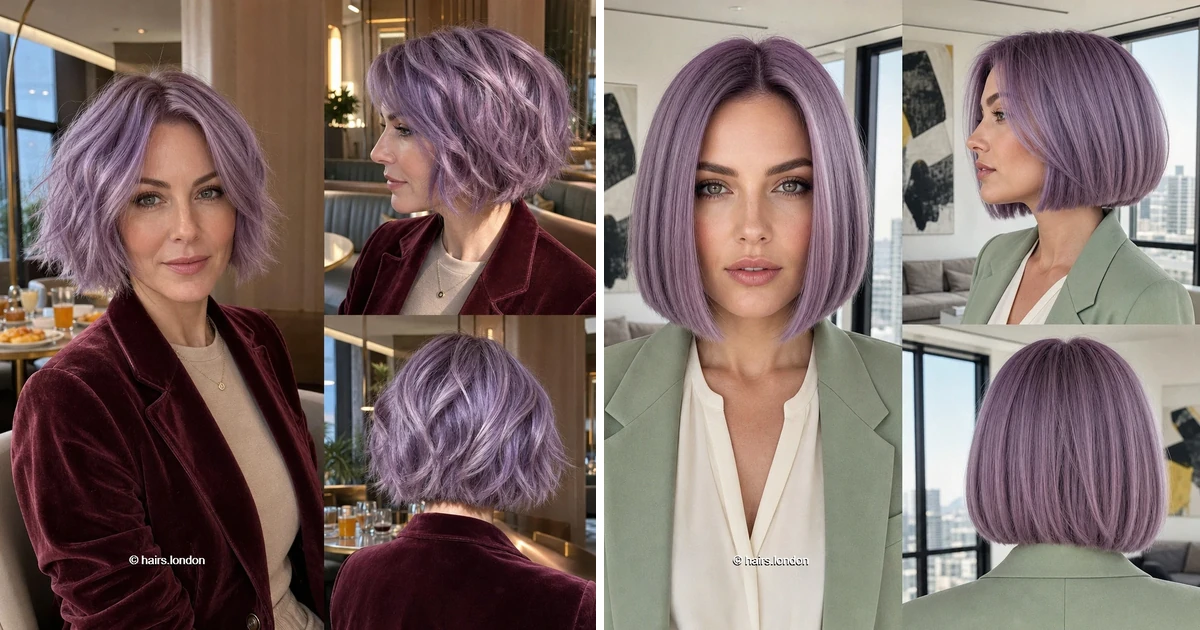
11. Burgundy Wavy Lob with Loose Ends
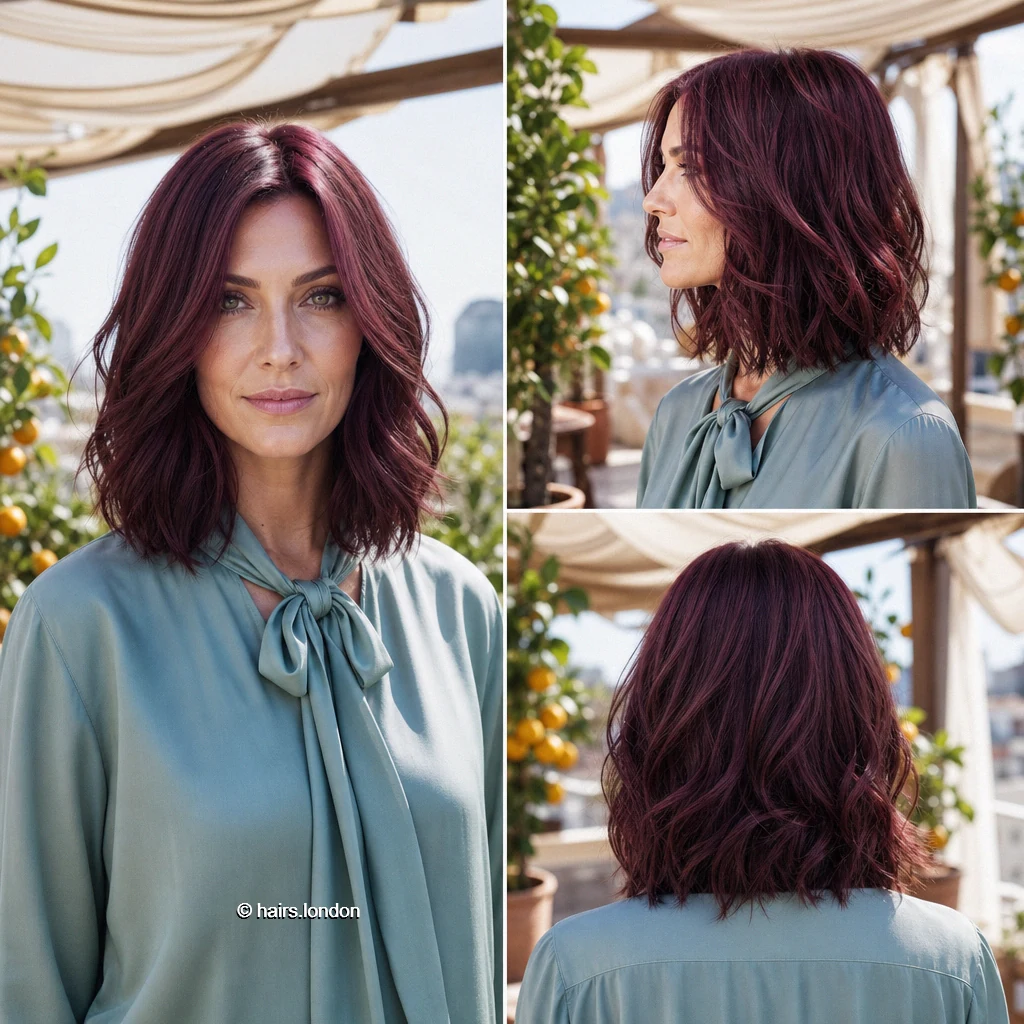
Dark burgundy brings depth to this relaxed, wavy lob. The center-parted front falls below the chin toward the shoulders. Its loose bends create width through the lower side sections. Back views show a softly uneven edge without visible graduation. Ask for layers only where your waves need extra movement. Fine hair may look fuller with a more substantial baseline. Scrunch wave cream into damp hair for added definition, avoiding heavy root application. Air-dry or diffuse before separating any larger wave clusters. Trim worn tips while allowing the overall lob to grow. Discuss how burgundy color will fade between salon appointments.
12. Violet Wavy Lob with Side-Parted Volume
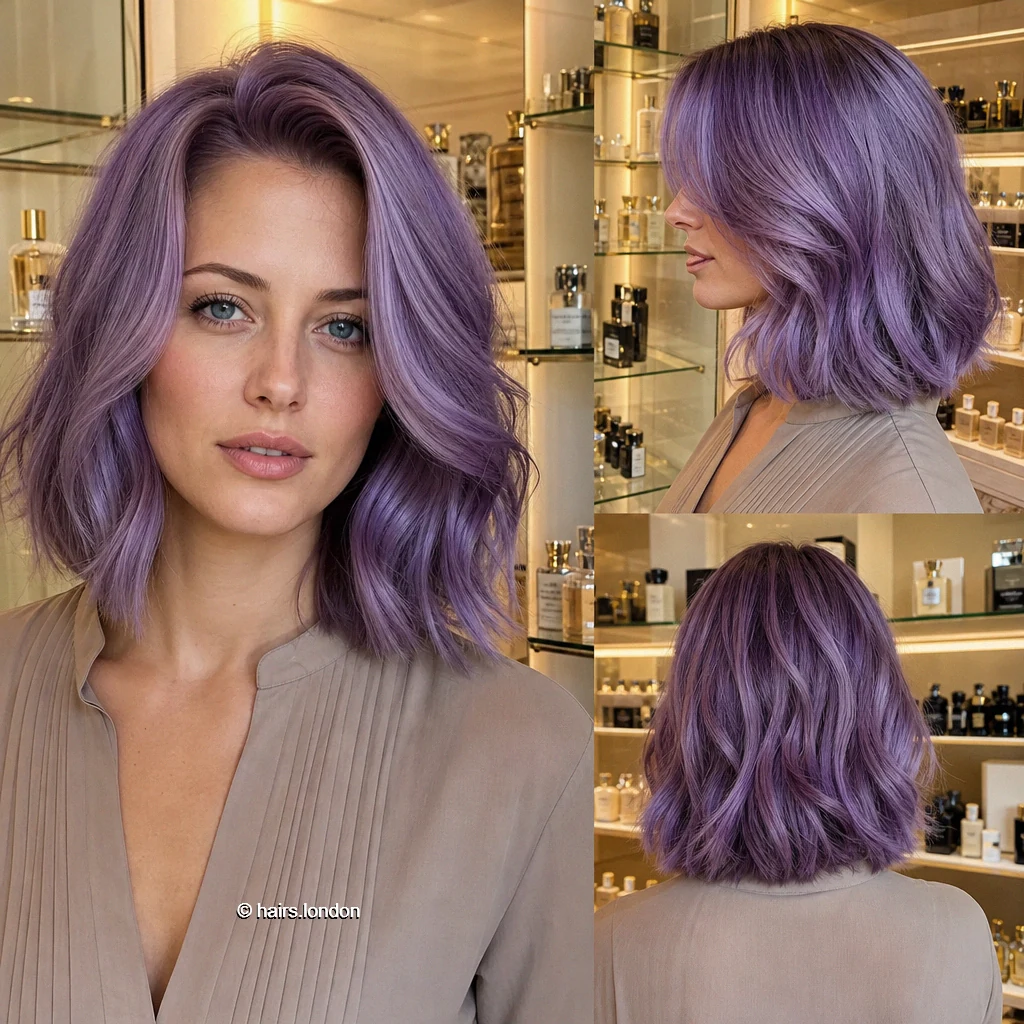
Muted violet color follows the flowing waves of this lob. A side part adds lift and sends longer pieces across. The front drops below the chin, approaching shoulder length. Side and back views reveal layered movement and softened ends. Ask for weight that supports waves without making tips sparse. Hair with stronger natural waves may require less styling at home. Apply lightweight cream, then diffuse with minimal touching or friction. Gently sweep the front aside once everything is completely dry. Trim dry ends when waves stop clumping into defined sections. Protect violet tones with a washing routine your colorist recommends.
13. Raspberry Wavy Bob with an Airy Outline
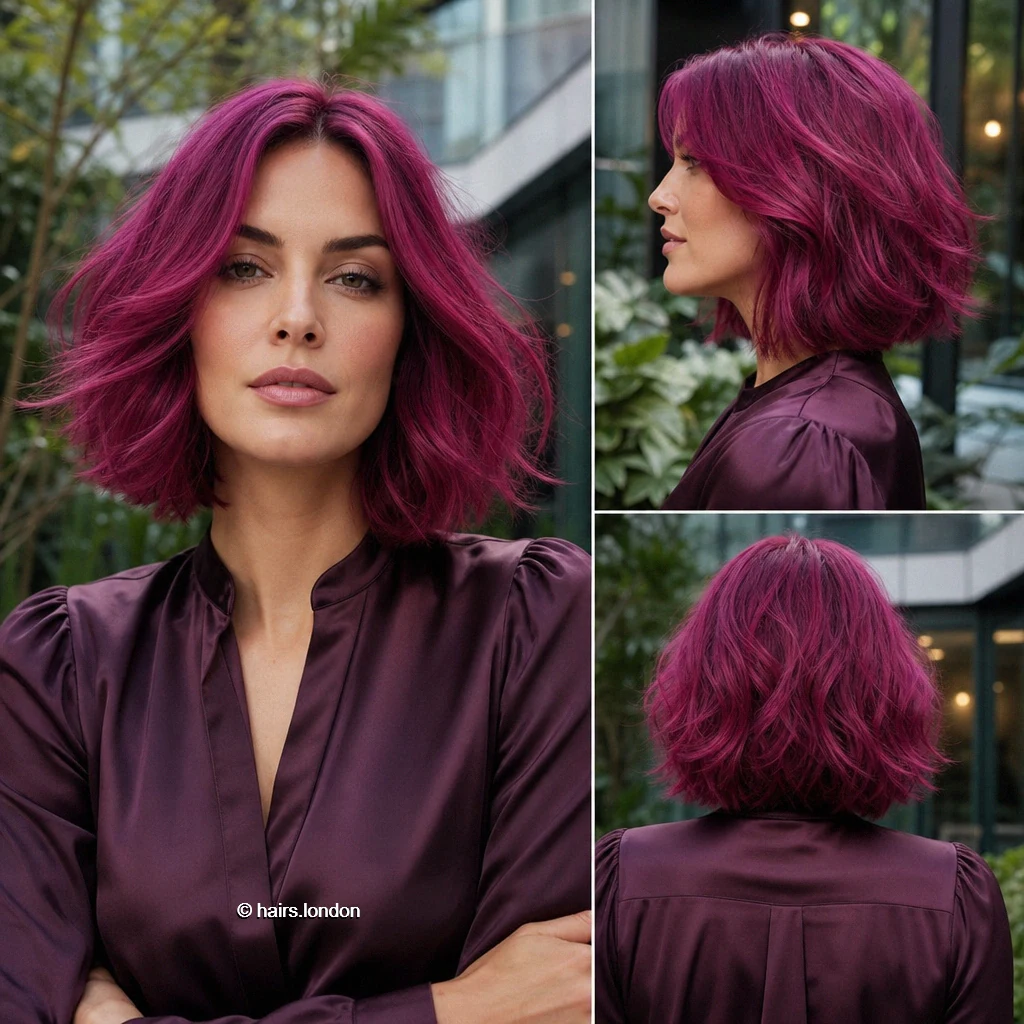
Saturated raspberry color brightens the loose, naturally flowing waves in this bob. A center part opens the face beneath voluminous upper sections. The side lengths skim the jaw, ending in wispy pieces. Back views show texture throughout and a softly irregular perimeter. Ask for layers that release bulk without removing essential weight. That distinction matters when dense hair forms a wide triangle. Scrunch a small amount of flexible mousse into damp waves. Diffuse gently, then lift the roots using your fingers. Trim once the ends look frayed instead of purposefully airy. Discuss raspberry refreshes before committing to its vivid color.
14. Pink Layered Bob with a Lifted Side Part
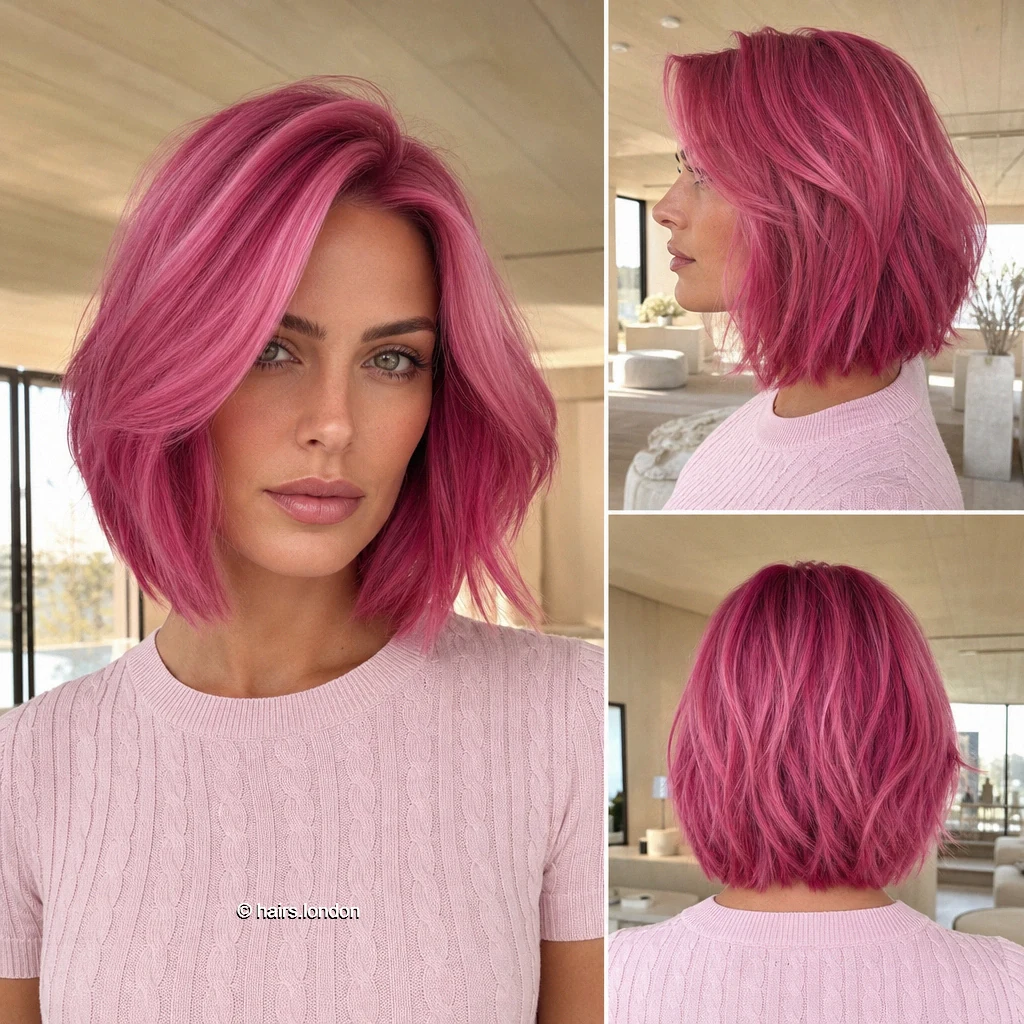
Bright pink draws attention to this bob’s lifted side part. A long front sweep flows into softly separated side layers. The sides reach around the jaw, while the back stays rounded. Surface layers create movement without a sharply angled bottom line. Ask for face framing that respects your usual parting. Thick hair may need selective weight removal beneath the waves, depending on density. Blow-dry the roots upward, then smooth only prominent flyaways. Leave some separation at the tips to retain natural movement. Trim the perimeter when its rounded balance becomes uneven. Consider your preferred fade before scheduling bright pink refreshes.
15. Blush Wavy Bob with Soft Face Framing
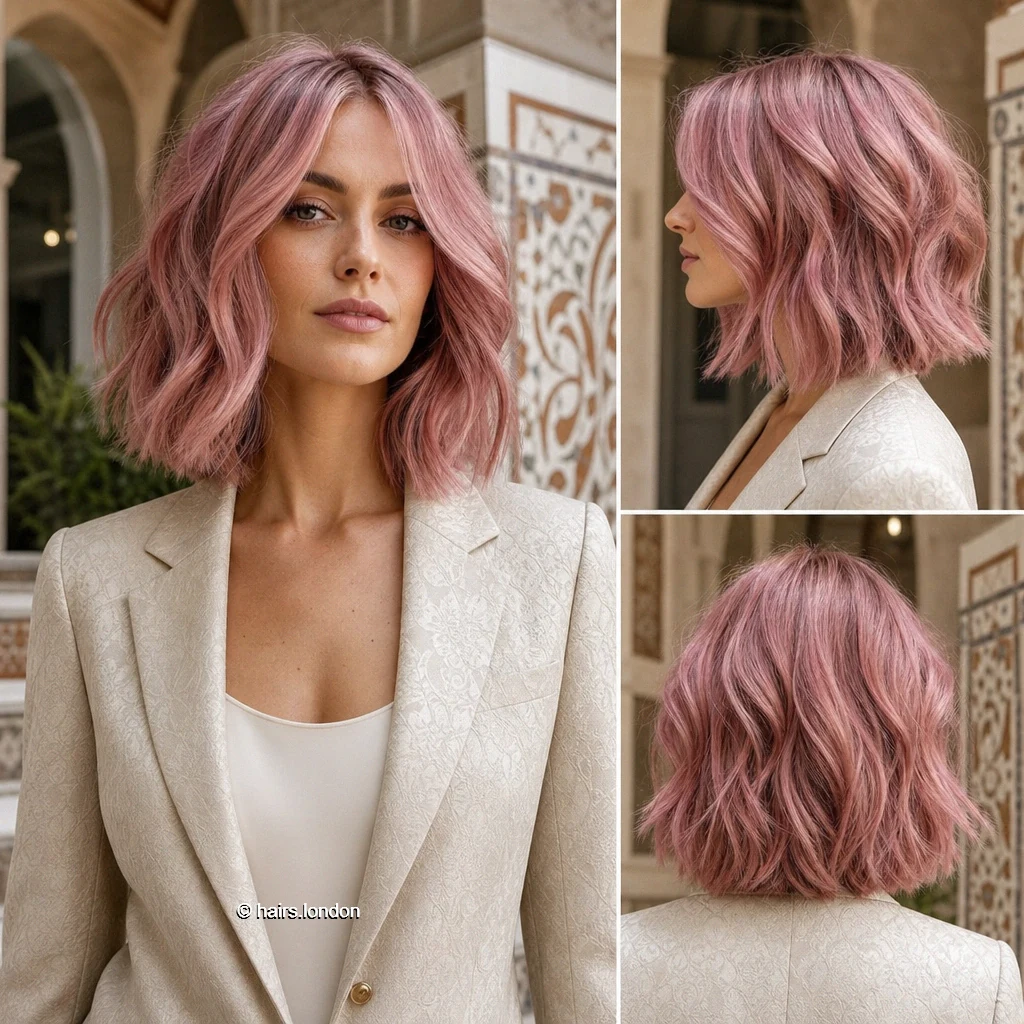
Muted blush pink complements the soft waves of this bob. Its middle part creates open, cheek-framing pieces without bangs. The sides fall below the jaw but clear the shoulders. Loose bends continue through the back to uneven tips. Ask for layering that supports waves instead of thinning ends. If your hair is fine, retain a fuller baseline. Apply wave cream sparingly for soft, natural movement, then scrunch from ends upward. Diffuse at low speed to preserve definition and reduce frizz. Refresh the cut when its lower edge starts looking straggly. Ask your colorist how to maintain this subdued pink finish.
16. Deep Plum Graduated Bob with a Swept Front
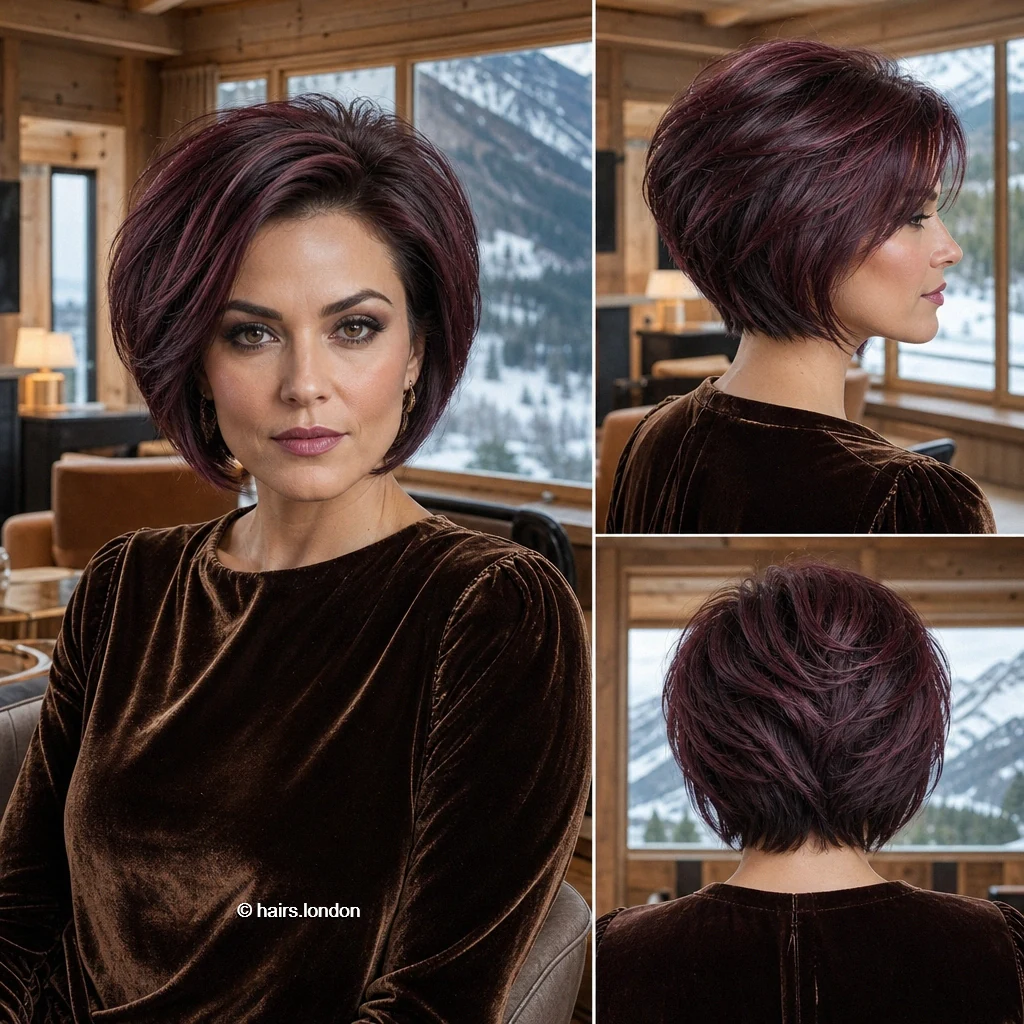
Deep plum highlights the sculpted volume of this short bob. Its side-swept front curves across the forehead toward the jaw. Side and back views reveal a close nape beneath fuller layers. That visible change in length supports a graduated bob description. Ask your stylist to adapt the graduation to your density. A strong growth pattern may require extra nape styling attention. Lift the upper sections while drying with care, then direct ends inward. Avoid too much product, which can flatten the rounded shape. Trim the short back before its silhouette grows bottom-heavy. Plan plum color maintenance alongside those shape appointments.
17. Lavender Graduated Bob with a Long Sweep
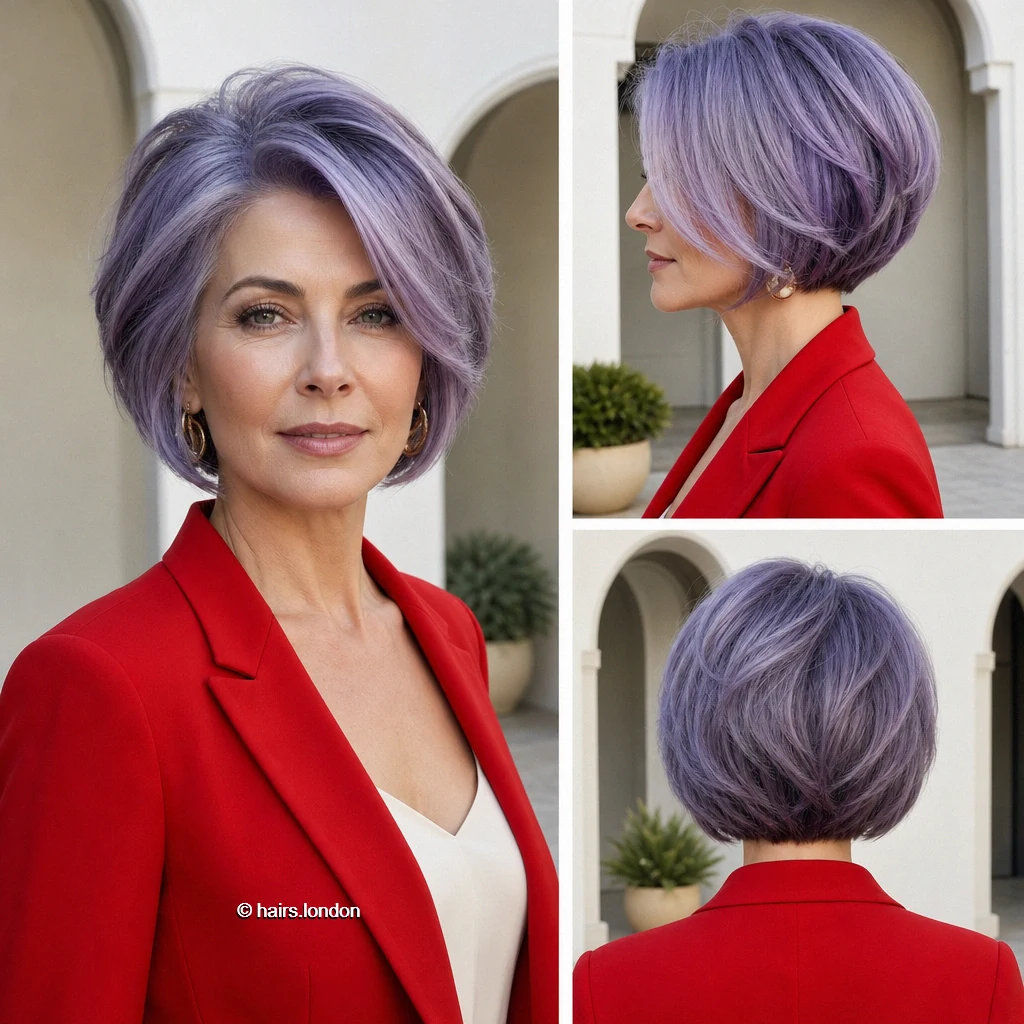
Pale lavender accentuates the layered sweep of this bob. The front crosses the forehead and skims the cheek. From the side, fullness sits above a shorter nape. Back views confirm a compact, rounded graduated shape here. Ask for enough crown length to keep movement soft. Finer hair may benefit from preserving more weight underneath, particularly around the front and sides for balance. Lift roots gently while drying with a directional brush. Guide the fringe across without forcing a rigid curve. Trim the nape when its short outline starts losing definition. Discuss lavender upkeep, including possible tonal changes between color visits.
18. Magenta Layered Bob with a Tapered Nape
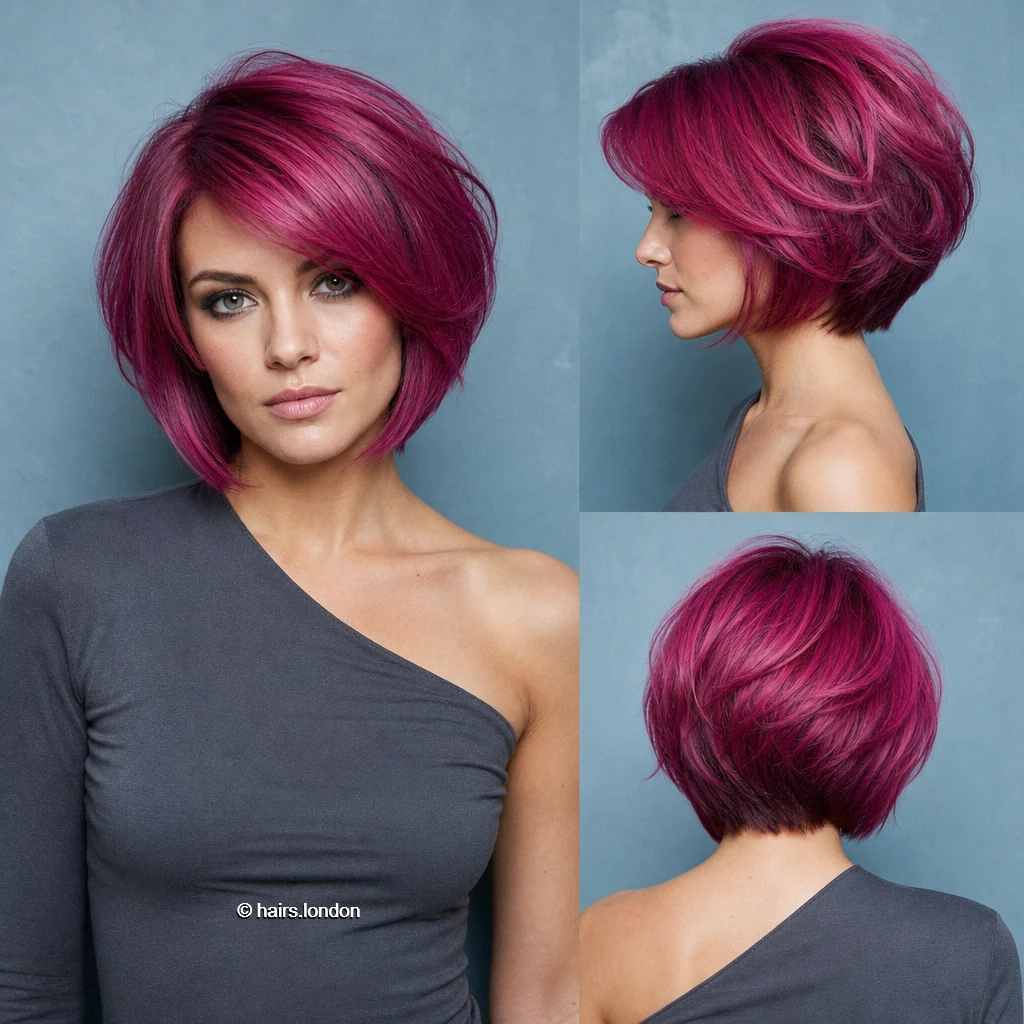
Bright magenta defines the sweeping layers of this compact bob. Its long side fringe crosses the forehead toward the eye. Visible side sections extend past a short, tapered rear edge. Back views show layered fullness narrowing clearly at the nape. Ask for graduation that accommodates your neckline and growth direction. Dense hair may need interior refinement to avoid bulky sides. Blow-dry the fringe sideways while lifting the upper layers. Smooth the front tips for polish, leaving the back with gentle movement. Trim when the nape widens or the fringe becomes intrusive. Ask how often magenta needs refreshing for your routine.
19. Rose Graduated Bob with a Rounded Crown
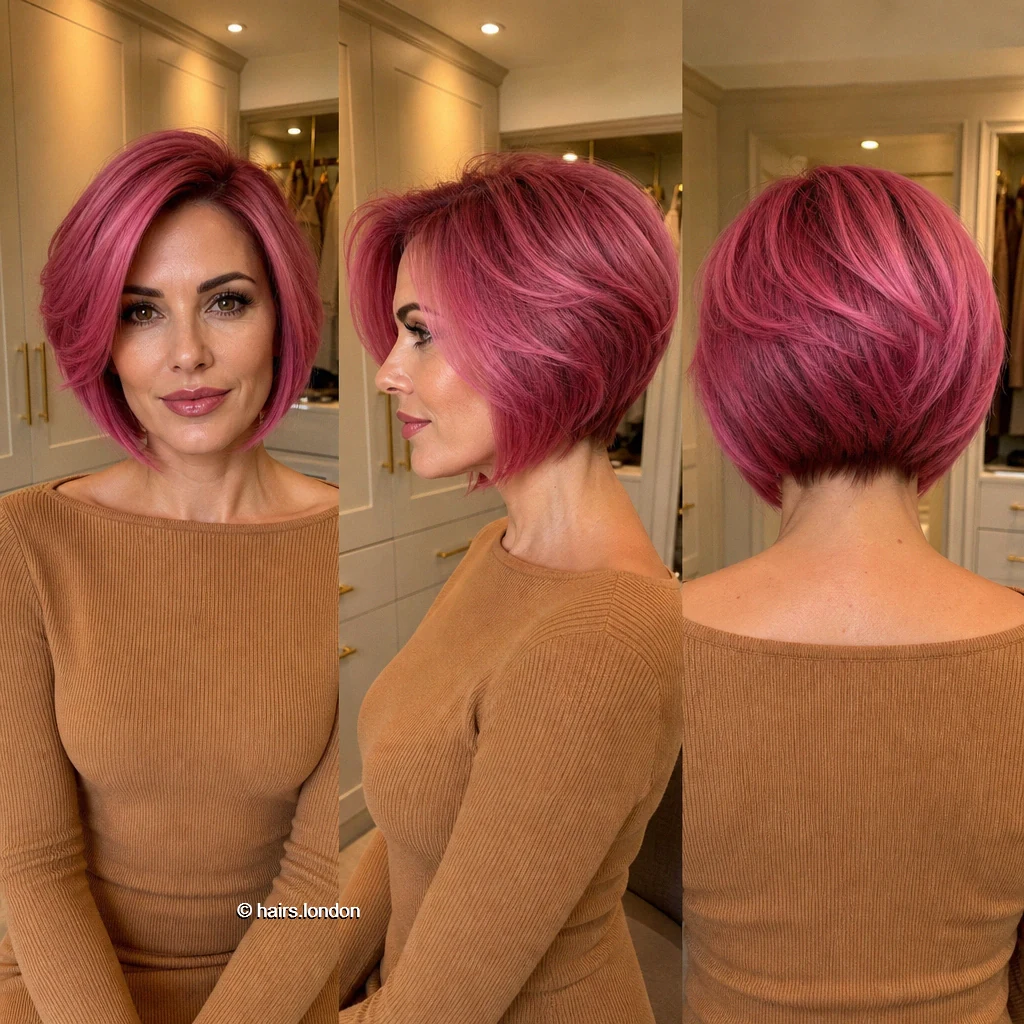
Warm rose color emphasizes this bob’s smooth, rounded crown. A deep side part creates a long, sweeping front. Side views show face-framing tips extending beyond the nape. The back narrows visibly beneath fuller, softly layered sections. Ask for graduation only as pronounced as your density allows. Fine hair may need extra weight along the front edge. Lift roots with a brush while directing the fringe sideways without flattening the rounded crown. Smooth the outer layer without pressing away its rounded volume. Trim the nape when it begins obscuring the tapered shape. Discuss rose color refreshes alongside your expected trimming schedule.
20. Pale Pink Bob with a Sculpted Back
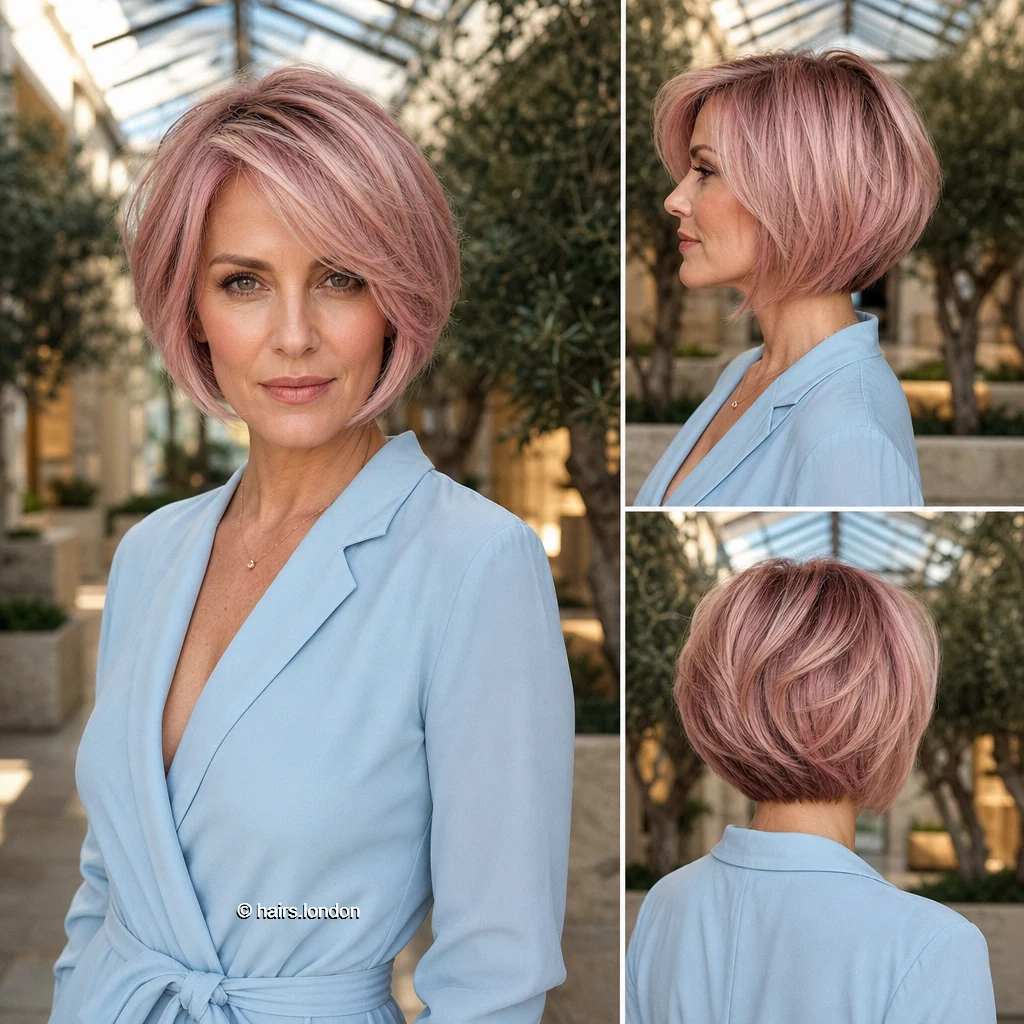
Pale pink brings out the curved layers of this bob. A swept front partly covers the forehead and frames cheeks. Side views show longer face-framing tips above the neckline. Behind, shorter lower layers support a full, rounded silhouette. Ask for graduation that considers your natural nape growth pattern. Thicker hair may need internal shaping beneath that visible fullness. Blow-dry the top with lift, then smooth the perimeter. Keep the fringe flexible so it moves rather than separating. Trim the short back when its curve starts dropping between regular salon appointments. Check how pale pink fades before choosing your refresh schedule.
How to Choose Your Bob Length and Shape
Start with where you want the front to fall: above the jaw, at the chin or below it. Then compare the back. A fuller, near-level perimeter gives a different result from a visible longer-front A-line shape; a graduated bob builds fullness above a shorter nape. Bring side and back references, not just a front portrait. Ask your stylist how your density, natural texture, neckline growth and preferred part will affect the finished outline.
Styling Fine, Thick, Wavy and Curly Textures
Fine hair often benefits from a substantial bottom edge and lightweight styling products. Thick hair may need selective internal weight removal so the bob moves without becoming hollow at the ends. For waves, scrunch a small amount of foam or cream into damp hair and diffuse gently. If your hair forms curls, ask for a cut planned around shrinkage and your curl pattern; style with hydration and minimal brushing once dry. Smooth sleek perimeters with downward airflow, and direct side-swept fringes while they are still damp.
Keeping Plum, Lavender and Pink Color Fresh
These images show both saturated and muted fashion shades, which can fade differently depending on the starting hair color and coloring process. Ask your colorist what upkeep your chosen shade requires before committing. Use their recommended cleansing schedule, limit unnecessary hot-tool exposure and discuss whether a color-depositing product is appropriate. A softer faded tone may be welcome; a precise lavender or bright magenta may call for more frequent salon refreshes.
Maintaining the Bob Perimeter and Graduation
Watch the outline rather than following one trim interval for every cut. Sleek, angled bobs show uneven ends quickly, while textured edges can tolerate more growth before losing their intended shape. Graduated styles need particular attention when the short nape lengthens and the fullness starts sitting too low. Between appointments, avoid aggressive home thinning: it can weaken a clean perimeter or leave a rounded back patchy.
What to Discuss with Your Stylist
Show the image that matches both your preferred front and back, and explain which details matter most. Discuss your usual part, fringe tolerance, natural wave or curl pattern, density, growth patterns and realistic daily styling time. Ask whether the pictured amount of layering, front-to-back slope or nape graduation is practical for your hair. If you want a vivid shade, include the likely color process, maintenance and a future grow-out plan in the same conversation.
Frequently Asked Questions
What is the difference between a bob and a lob?
A bob generally ends around the jaw or neck; a lob is a longer bob that falls below the chin, often approaching the shoulders. The exact label matters less than agreeing on where your perimeter should sit.
Is an A-line bob the same as a stacked bob?
No. A-line describes a perimeter that is longer toward the front. Stacked or graduated describes shorter layers building fullness at the back. A cut can include both features, but one does not automatically imply the other.
Can fine hair wear a textured bob?
Yes, conditionally. Ask for restrained texturizing and enough weight at the bottom to keep the ends from looking sparse. Your stylist can adjust the layering to your density.
How can a thick bob avoid looking bulky?
A stylist can assess where selective internal weight removal or carefully placed layers would help. Avoid removing so much hair that the perimeter becomes thin or the sides lose balance.
Can natural curls work with a graduated bob?
They can, but curl shrinkage, density and nape growth need to guide the shape. Consult a stylist experienced with your curl pattern and agree on the desired outline when the hair is dry.
Should I choose a fringe with my bob?
Choose one if you like styling hair around your forehead and your growth pattern allows it. A long side sweep or parted front can offer face framing with less commitment than a short, straight fringe.
What is a simple daily routine for a sleek bob?
Dry with airflow directed downward, then refine the perimeter with a brush or limited hot-tool use as needed. Apply only enough finishing product to control flyaways without flattening the shape.
How should I style a wavy bob without adding too much bulk?
Apply lightweight product mainly through the midlengths and ends, scrunch and diffuse gently. Keep the roots from becoming product-heavy, and ask whether selective layering would improve movement.
How often does a precise bob need trimming?
It depends on growth rate and how exact you want the outline. A clean angled edge or short graduated nape usually calls for attention sooner than a deliberately tousled perimeter.
What happens when a graduated bob grows out?
The short nape lengthens and the back fullness may sit lower, changing the silhouette. Your stylist can reshape it during trims or gradually transition it toward a more even bob.
Are vivid bob colors difficult to maintain?
Upkeep varies by shade, starting color and coloring process. Ask your colorist about washing, fading, refresh appointments and how the shade will look between visits.
Which views should I bring to a salon consultation?
Bring front, side and back views whenever possible. Point out the exact fringe, perimeter and nape details you like so your stylist can distinguish a longer-front shape from visible graduation.
Conclusion
The most useful bob reference is one that shows more than its color. Compare the front length, lower edge and back shape, then decide how much styling and color upkeep you want. A stylist can translate those visible details into a cut that works with your own density, texture and growth patterns.


