


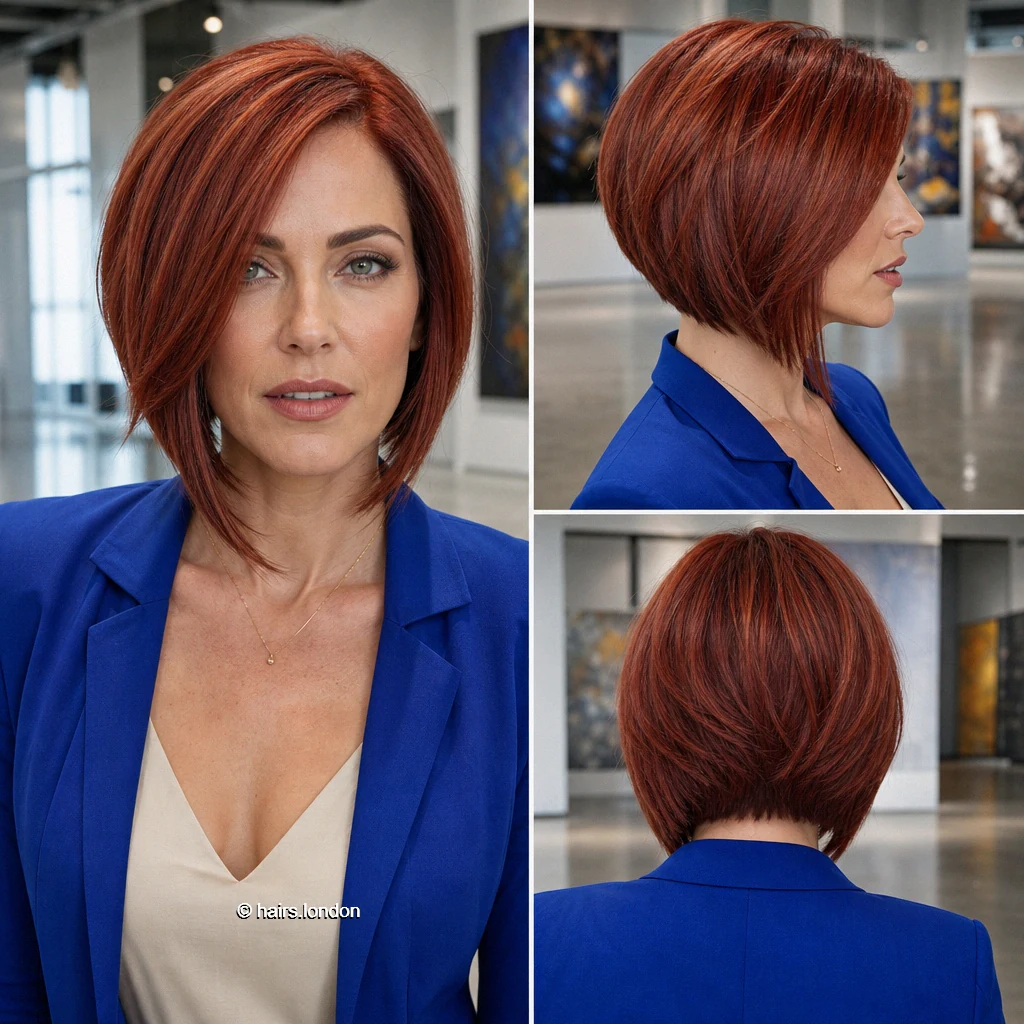
11. Garnet Angled Bob with a Sleek Finish
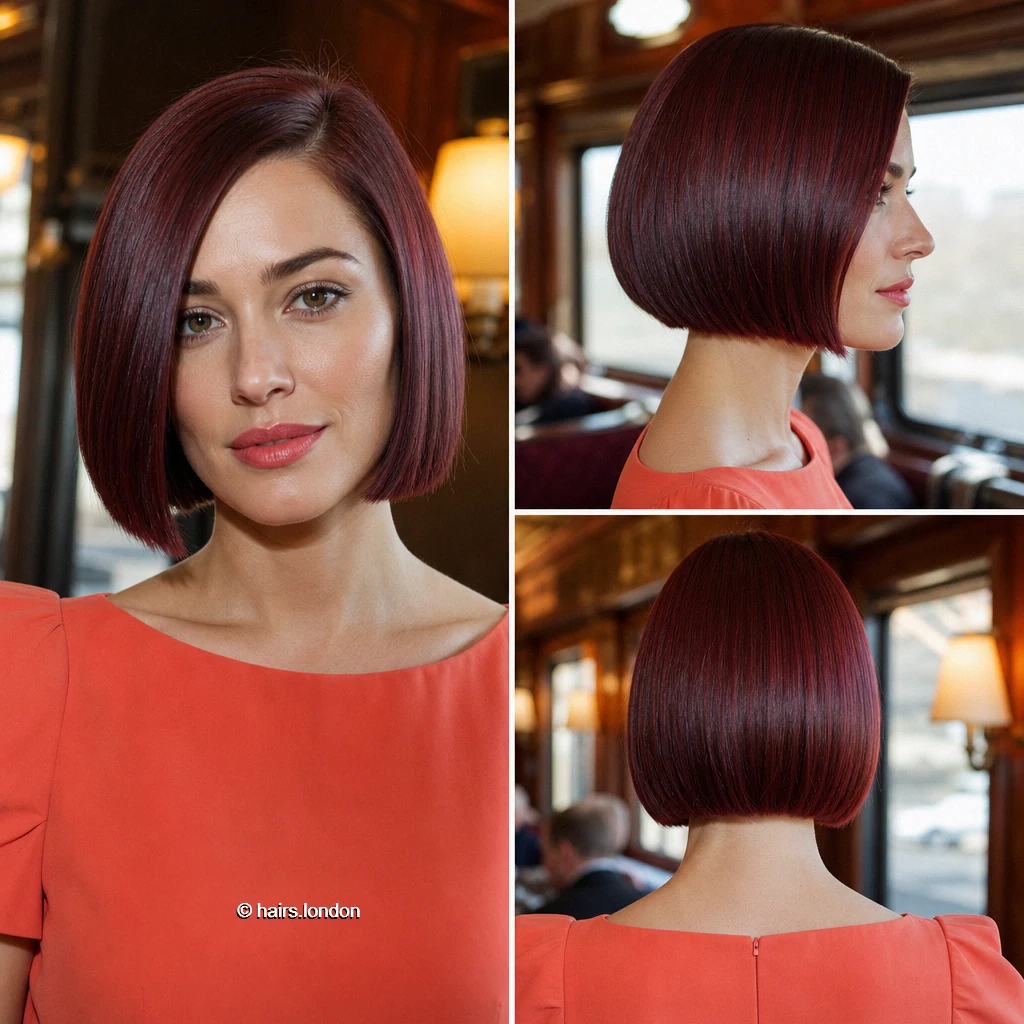
Dark garnet red gives this sleek angled bob depth throughout. One side part sends smooth front hair across the forehead. Front reaches the jaw while back clears the neck cleanly. Back views show a curved edge, not obvious stacked graduation. Ask for precise perimeter balance before introducing extra layers anywhere. Blow dry with directional tension for a smooth surface finish. Straight textures may need less heat to maintain polish daily. Keep ends light with sparing serum rather than heavy creams. Expect regular edging where the short back meets longer sides. Gloss care helps garnet tones remain reflective between refreshes longer.
12. Wine Red Graduated Bob with Longer Front Pieces
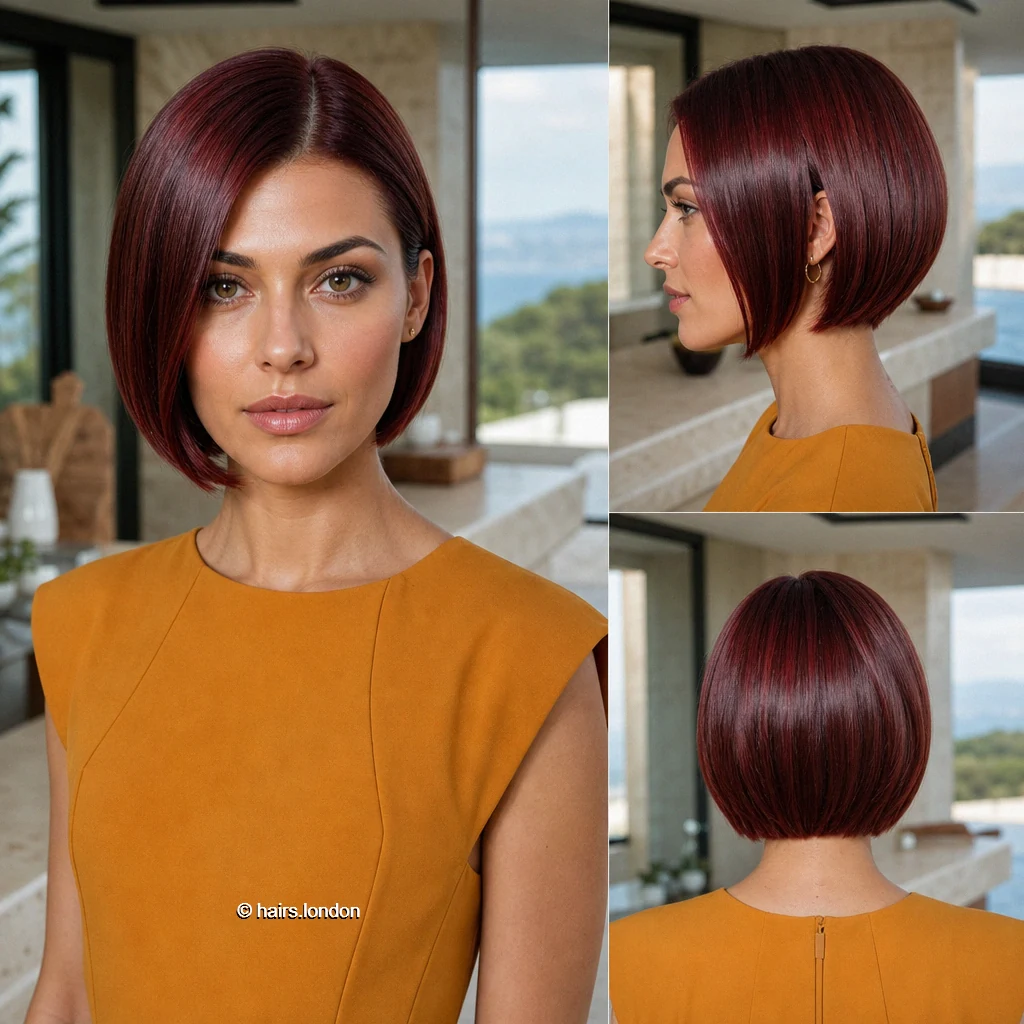
Wine red color sharpens this compact graduated A line bob. Profile views reveal short back layers and longer jawline pieces. The visible nape slopes into rounded fullness above its edge. A deep side part keeps the front cleanly swept aside. Ask for controlled graduation while protecting that prominent frontal length. Blow dry the back inward, smoothing face pieces downward separately. Growth patterns around the nape influence how neatly it settles. Thicker strands may need thoughtful internal lightening, never hollowing out. Keep nape appointments timely to preserve the lifted silhouette consistently. Protect wine color with gentle shampoo and limited heat exposure.
13. Auburn A-Line Bob with a High, Rounded Back
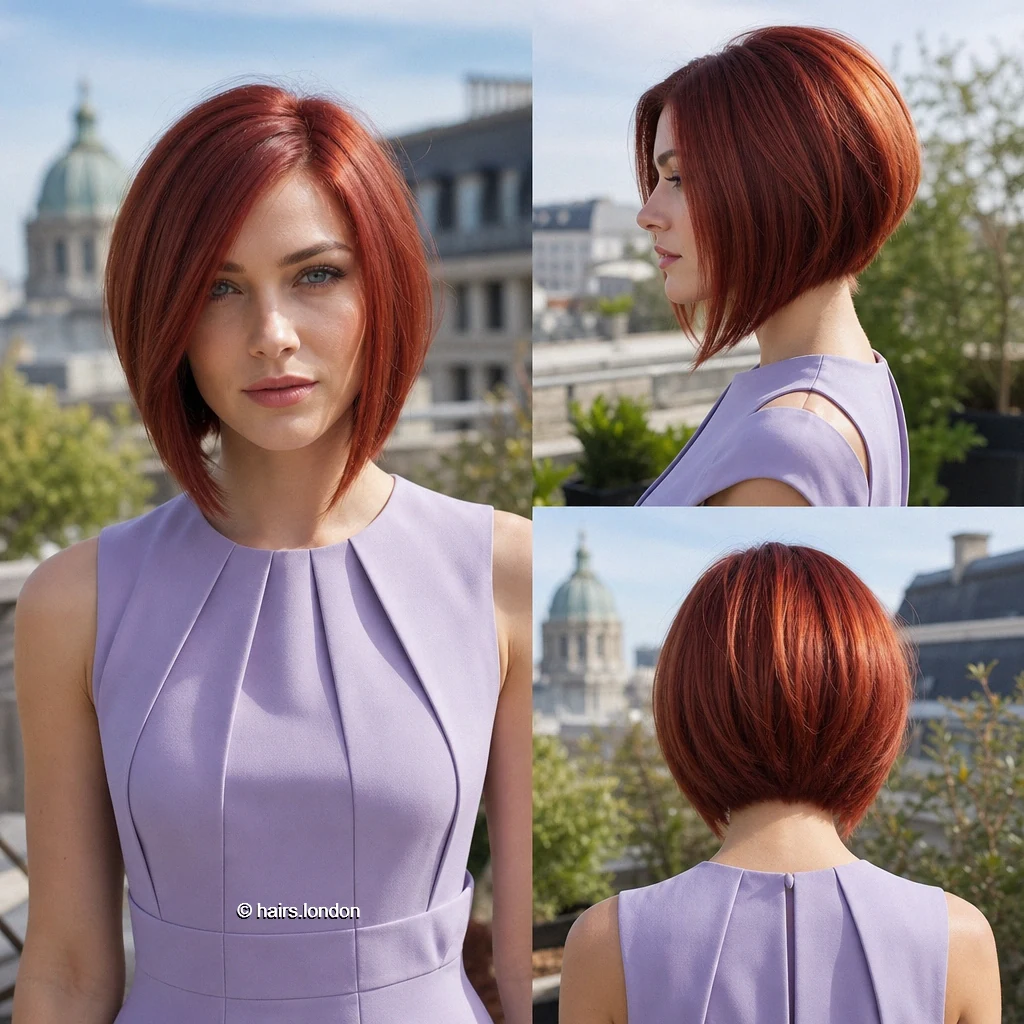
Vibrant auburn creates a smooth, pronounced A line bob shape. Side part lets longer front pieces skim below chin level. The back sits high at the neck with rounded graduation. That visible length contrast gives the profile its distinctive slope. Request a front length that accommodates your preferred tuck comfortably. Dry sections downward for sleekness, lifting the back slightly afterward. Coarse hair may need weight adjustment without weakening front tips. Avoid excessive oil around the roots of this rounded crown. Regular trims keep the sloping edge crisp as hair grows. Color preserving care keeps warm auburn from appearing washed out.
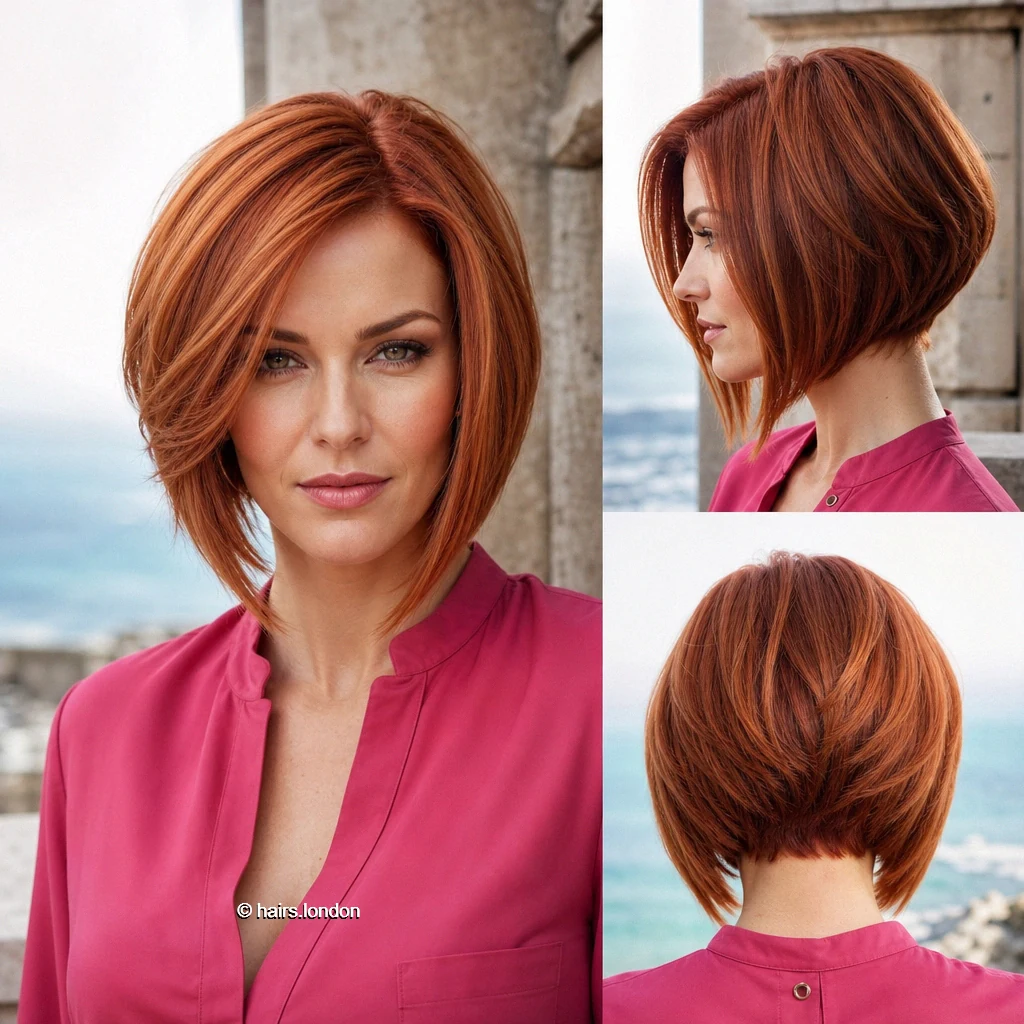
14. Cinnamon Auburn Angled Bob with Long Face-Framing Pieces
Cinnamon auburn layers shape this soft angled short bob silhouette. Long face framing pieces extend below the chin on display. Behind them, visible nape layers taper beneath rounded back volume. A strong side part sends sweeping hair across one eye. Ask for graduated back support without sacrificing longer front movement. Use a brush to smooth ends, then loosen selected strands. Thick hair might need internal shaping around the lower sides. Consider natural part direction before committing to dramatic sweeping fringe. Short back growth changes the profile before front length changes. Keep auburn looking glossy with gentle, heat conscious styling habits.
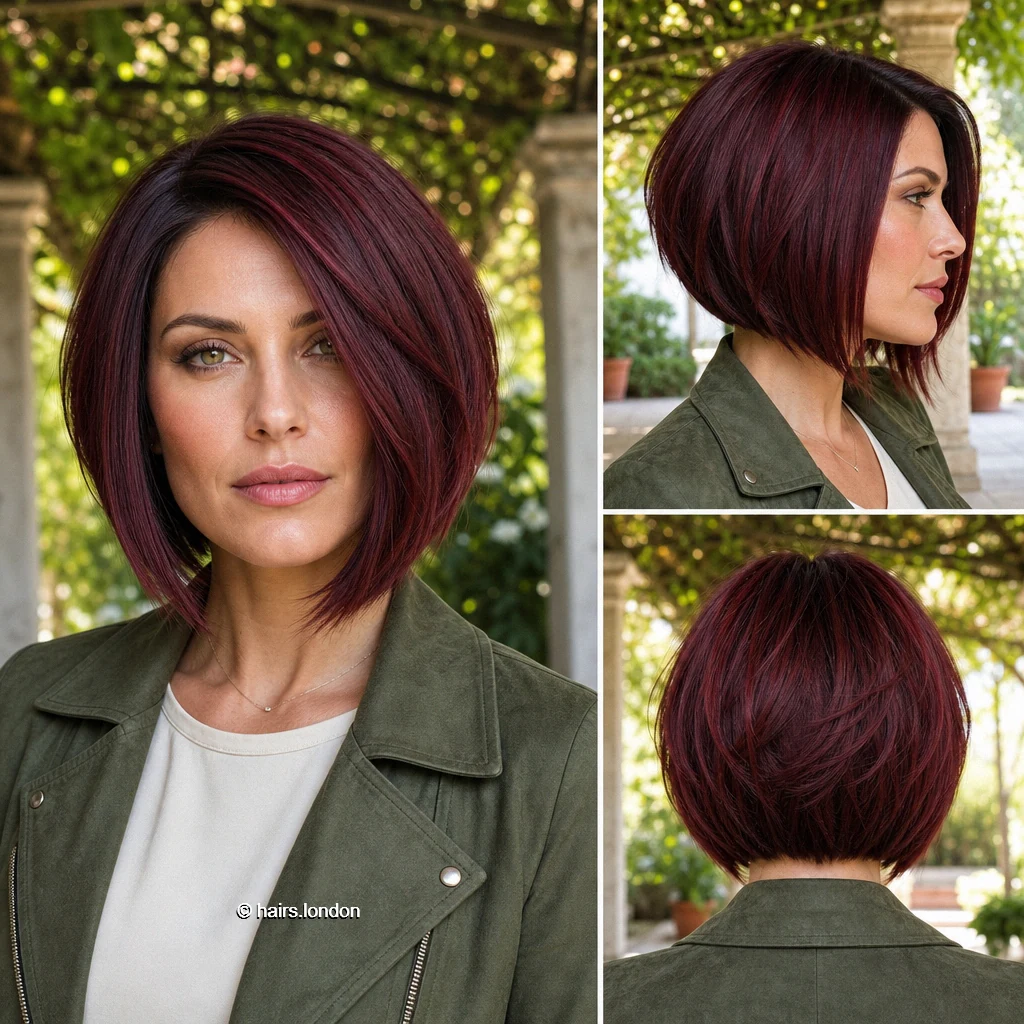
15. Copper Angled Bob with an Elevated Back
Warm copper tones highlight this rounded, sharply angled bob shape. A lifted back shows shorter nape layers beneath crown fullness. Elongated front sections fall below the chin in soft points. Swept layers create movement without erasing the pronounced silhouette entirely. Discuss how much back height your texture will support naturally. Direct root airflow upward, then smooth the longer ends downward. Use light spray instead of rigid product around face pieces. Fine hair needs restrained layering to retain frontal substance visually. Maintain the short nape more often than the front length. Protect dimensional copper from fading through cautious heat use daily.
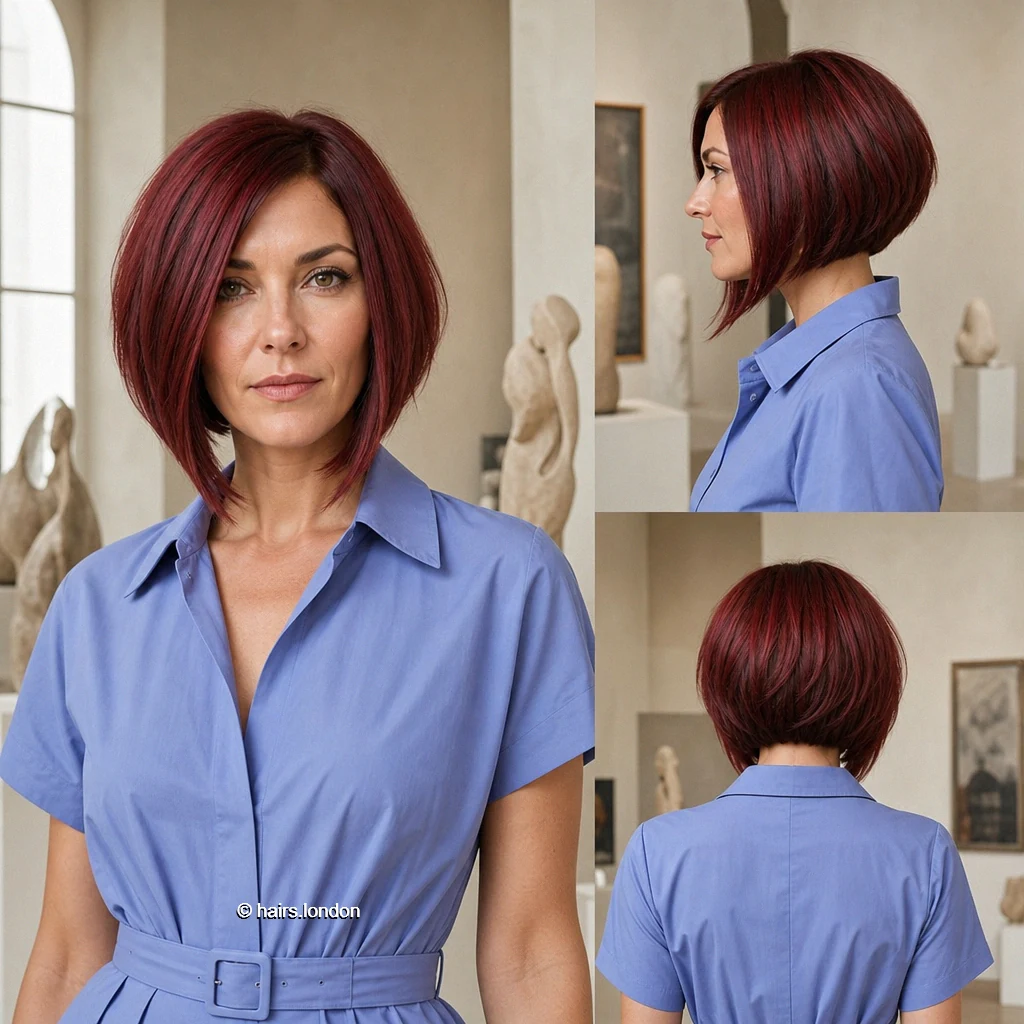
16. Burgundy Sloping Bob with Rounded Back Volume
Deep burgundy panels brighten this smooth forward sloping bob shape. A side part sweeps over the forehead without separate bangs. The back is rounded and shorter than jaw framing sections. Visible interior layers add lift above the tidy nape edge. Ask your stylist whether subtle graduation suits your growth pattern. Smooth the outer layer while preserving gentle crown volume underneath. Fuller textures may need selective bulk removal beneath longer hair. Keep the side part flexible if your hair changes direction. Back and front require coordinated trims to retain proper proportion. Color safe washing helps burgundy highlights stay richly defined longer.
17. Wine Layered Bob with a Short Graduated Nape
Wine toned layers form a rounded jaw grazing bob silhouette. Longer front tips slope toward the chin beneath sweeping hair. Side and rear views reveal a shorter, softly graduated nape. Subtle piece separation keeps the back from appearing solid throughout. Ask for enough crown support without overstacking the neckline hair. Smooth front sections first, then lift back roots gently afterward. Natural waves could benefit from diffuse drying instead of straightening. Keep styling cream light near the lower back layers especially. Trim graduation before its rounded profile becomes bottom heavy again. Maintain burgundy dimension using gentle cleansing and heat protection consistently.
18. Purple Plum Rounded Bob with a Deep Side Part
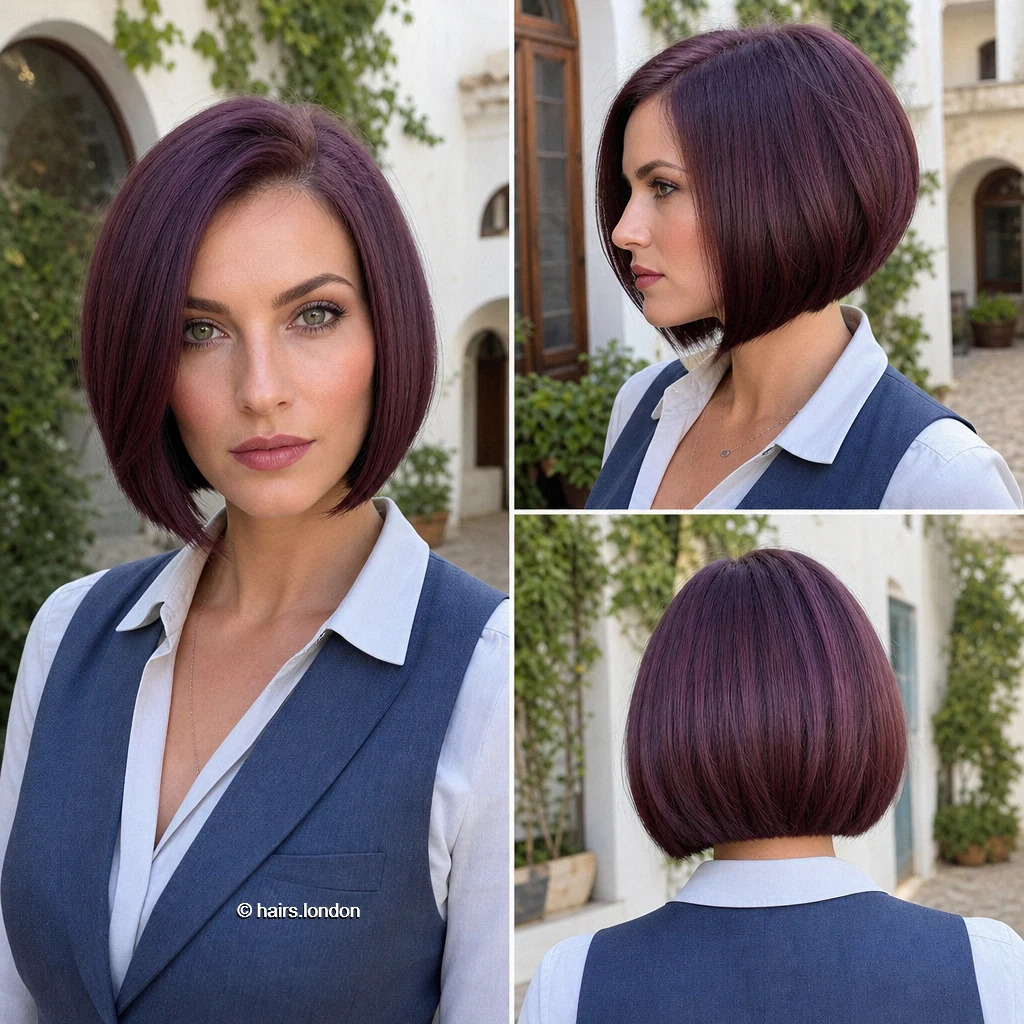
Purple plum gloss defines this compact rounded chin bob shape. A deep side part carries smooth hair across the forehead. The back finishes near the neck with a full edge. Front pieces touch the jaw without a dramatically angled profile. Request a strong perimeter if you value this rounded fullness. Blow dry downward, gently bending ends inward with brushwork alone. Fine density may benefit from keeping exterior layers long here. Thick density could need careful adjustment underneath the surface instead. Keep the back edge neat through consistent perimeter trims throughout. Protect purple reflections from fading with cooler washing routines regularly.
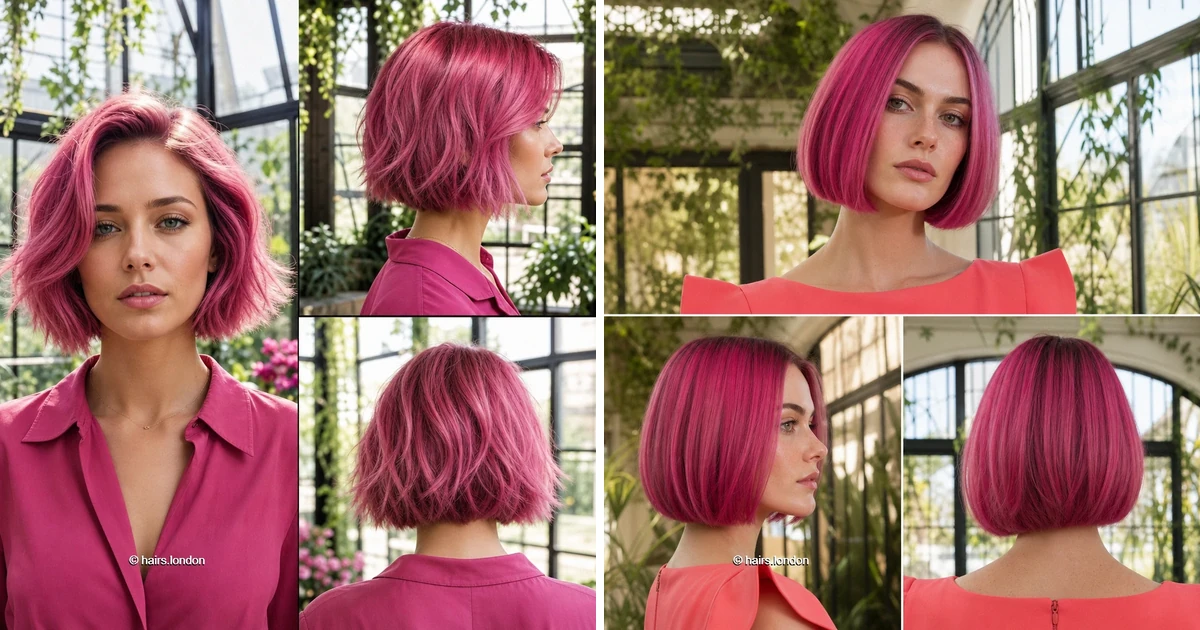
19. Fuchsia Smooth Bob with a Full Perimeter
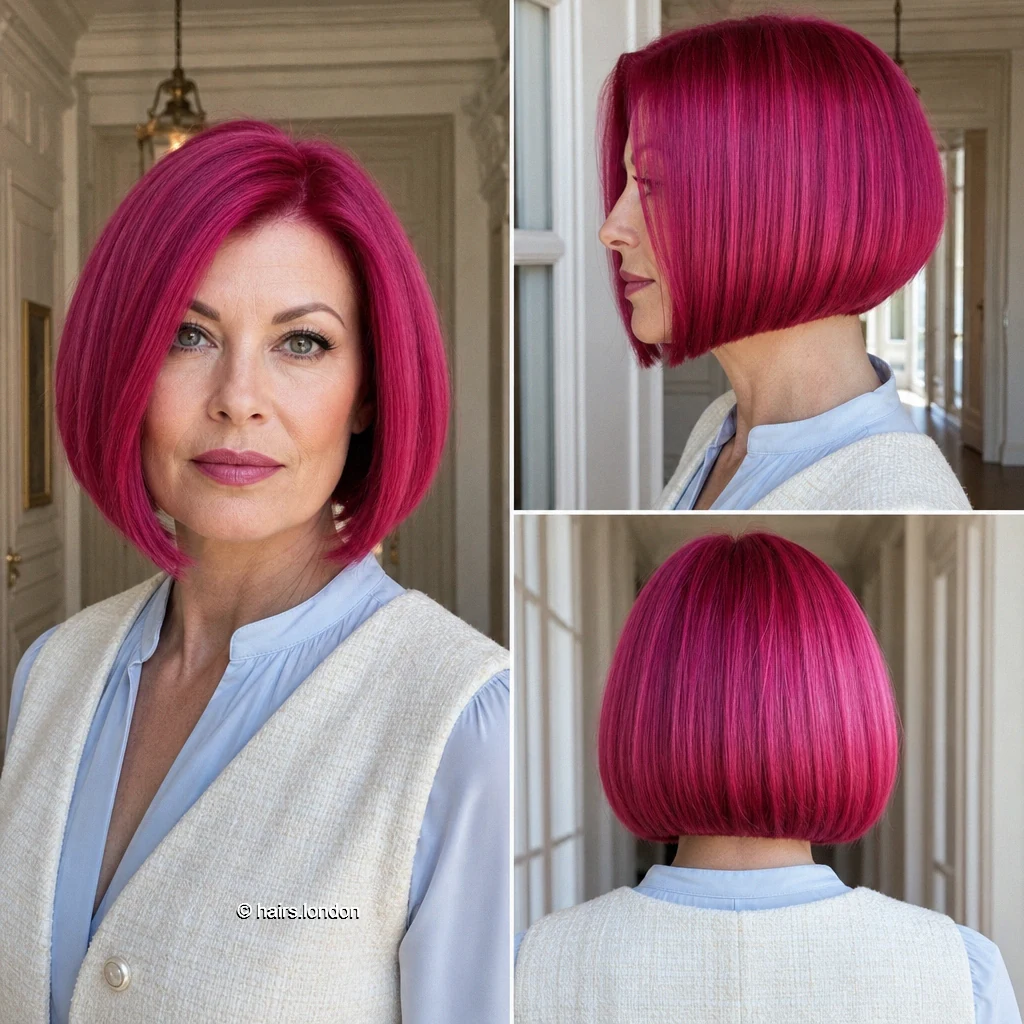
Electric fuchsia gives this sleek rounded bob undeniable vibrancy throughout. A side part opens the face without a separate fringe. Front ends graze the chin while back edges clear neck. Back views show a full perimeter instead of exposed stacking. Ask for careful balance between the rounded sides and edge. Brush lengths smooth, bending the last inch softly inward afterward. Thicker density might require subtle debulking inside this silhouette only. Protect against heat damage, which makes vivid pigments fade faster. Trims maintain that smooth baseline as the short back grows. Discuss color refreshing frequency alongside your regular shaping appointments early.
20. Bright Pink Chin-Length Bob with Curved Ends
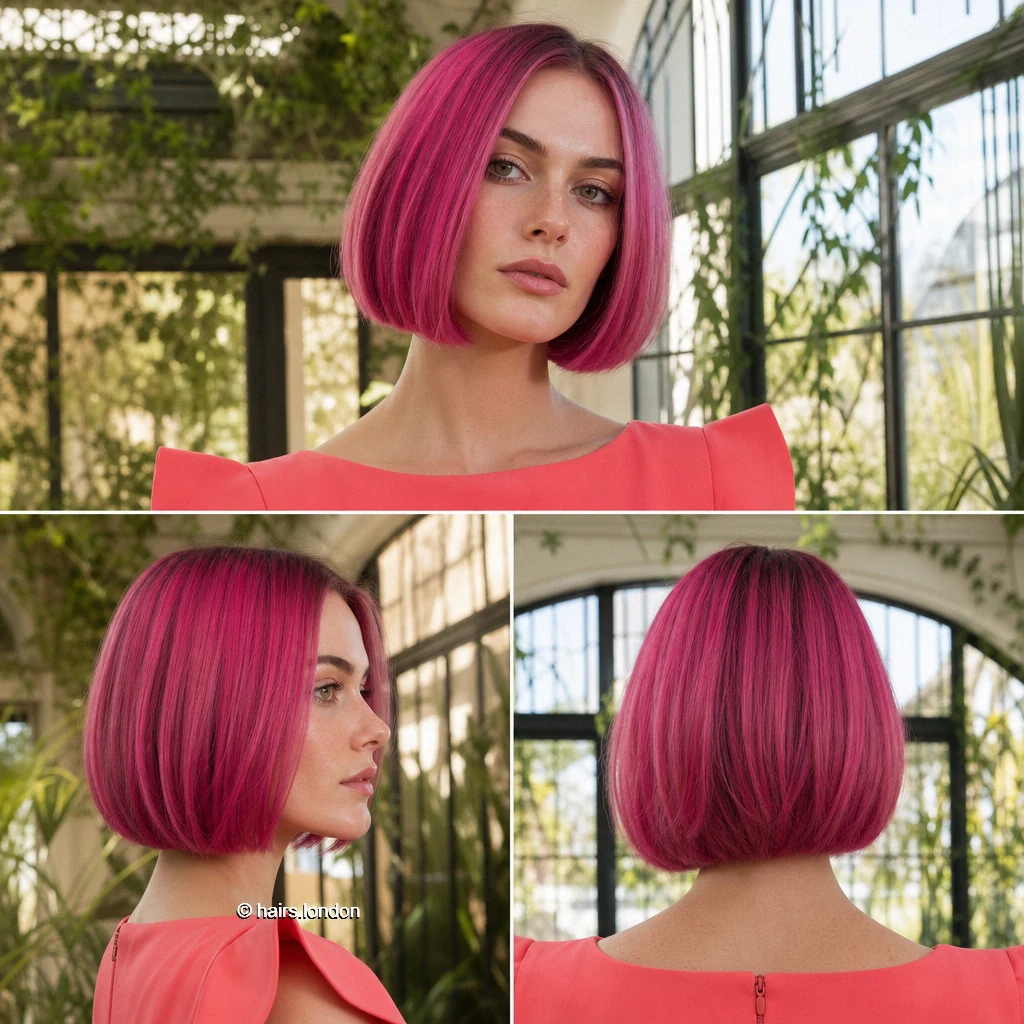
Bright pink lengths form a smooth rounded chin length bob. A slightly offset part frames the face without visible fringe. Full back ends turn inward just above the exposed neck. The front appears nearly level, with no pronounced stacked lift. Request a tidy perimeter while allowing enough interior movement naturally. Smooth damp hair using directional airflow and light brush tension. Naturally wavy textures may prefer a looser air dried shape. Fine hair should avoid excessive layering that reduces end density. Maintain the curved line with trims suited to your growth. Keep vivid pink looking fresh using gentle, cool rinses regularly.
How to Choose Your Bob Length and Shape
Start with where you want the front to fall: above the jaw, at the chin or below it. Then decide whether the back should sit at a similar level or rise toward the nape. An A-line bob has a longer front; a stacked or graduated bob also shows shorter sections building shape at the back. The two details can appear together, but one does not automatically imply the other. Consider how much hair you want to tuck behind your ears and whether a close neckline works with your growth patterns.
Styling Fine, Thick, Wavy and Curly Textures
Fine hair often benefits from a substantial perimeter and restrained layering; use lightweight mousse rather than heavy oils when you want lift. For thick hair, ask about selective internal weight removal so the sides move without losing their outline. Scrunch and diffuse wavy hair for separation, or smooth it with a brush when a crisp edge is the goal. With natural curls, choose the finished length after accounting for shrinkage, and discuss curl-by-curl shaping before committing to a short fringe or nape. Whatever the texture, keep product light enough that the bob can move.
Keeping Vivid Bob Color Fresh
Pink, copper, auburn, purple and burgundy can change in appearance as they fade. Ask your colorist what refresh schedule makes sense for your chosen shade and starting color. Gentle cleansing, cooler rinses when comfortable, heat protection and avoiding unnecessary hot-tool passes can help preserve the finish. If you want a precise bob as well as vivid color, plan color services and shape appointments together so freshly colored ends still form the intended line.
Maintaining the Bob Perimeter and Graduation
A straight or smoothly curved perimeter shows uneven growth sooner than a deliberately textured edge. Check the outline from the front and back, not just around the face. Graduated bobs also need attention where shorter nape sections support the shape; letting that area grow can shift fullness downward while the longer front still looks tidy. Set a trim schedule with your stylist based on your growth rate, fringe, visible graduation and how precise you want the finish.
What to Discuss with Your Stylist
Bring images showing the front, side and back of the bob you like. Point out the exact features you want to keep: fringe width, part placement, end weight, front-to-back length difference and the amount of visible nape graduation. Ask how your density, natural wave or curl, cowlicks and preferred drying time might change the result. For a vivid shade, discuss maintenance and the likely appearance between color appointments before choosing it.
Frequently Asked Questions
What is the difference between a bob and a lob?
A bob generally ends around the jaw, chin or neck, while a lob is a longer bob that falls closer to the shoulders. The boundary is flexible, so show your stylist the length you mean.
Is an A-line bob the same as a stacked bob?
No. A-line describes a perimeter that is longer toward the front. Stacked describes visible graduation that builds shape at the back. A cut can have either feature or both.
How can I choose between a blunt and layered bob?
Choose based on the end weight and movement you want, then account for density. A stronger line preserves fullness; considered layers can release bulk or encourage texture without necessarily making the whole edge wispy.
Can fine hair hold a rounded bob shape?
It may, especially if enough weight remains at the perimeter. Ask your stylist to assess density and growth patterns before adding short layers that could leave the ends looking sparse.
How do I keep a thick bob from looking bulky?
Discuss targeted internal weight removal rather than thinning every visible edge. The right placement depends on where your hair expands and whether you wear it smooth or textured.
Can naturally curly hair be cut into a bob?
Yes, but curl shrinkage and individual curl patterns affect the finished outline. Agree on the dry result you want and discuss a curl-aware cutting approach before choosing the length.
Should I add a fringe to my bob?
A fringe changes both styling time and maintenance. Check how your hair grows at the forehead, whether you prefer a full or side-swept shape, and how often you are willing to have it trimmed.
What is the quickest way to style a smooth bob?
Direct airflow downward while brushing the perimeter into place. Use heat protection if needed, bend just the ends for a rounded finish and keep heavy product away from fine roots.
How can I style a wavy bob without losing its shape?
Apply a light styling product to damp hair, scrunch and diffuse gently or air dry. Define a few pieces afterward while leaving enough weight at the edge to show the bob’s outline.
How often does a precise bob need trimming?
That depends on growth rate and how exact you want the perimeter. A blunt edge or short graduated nape often calls for earlier reshaping than a loose, textured bob; agree on a schedule with your stylist.
How can I grow out a graduated bob?
Have the shorter back reshaped as it catches up with the front. Small adjustments to the perimeter can make the transition look more intentional without repeatedly cutting away all the longer pieces.
Do vivid pink and red bobs need special color care?
They benefit from gentle cleansing, heat protection and a refresh plan tailored to the shade. Ask your colorist how the color is likely to fade and when a gloss or color appointment would be useful.
Conclusion
The most useful bob reference is one that shows the shape you want from more than one angle. Whether you favor a feathered copper crop, a graduated auburn silhouette or a smooth pink perimeter, bring its visible details to your stylist and adapt the length, layering and color upkeep to your own hair.


