

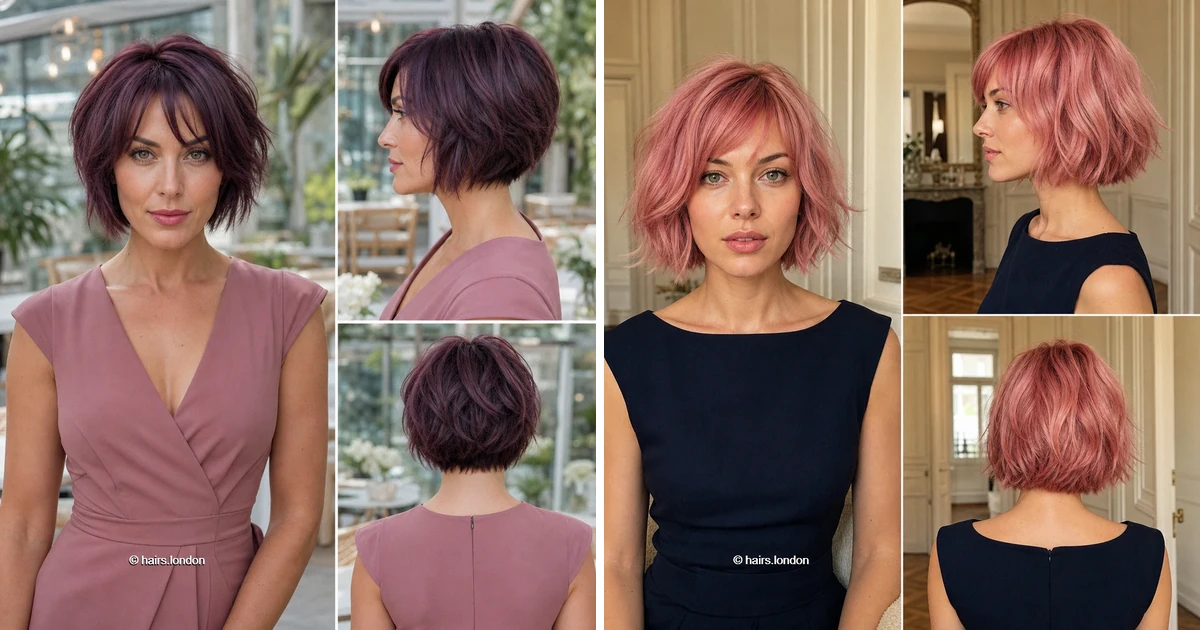
11. Hot-Pink Shaggy Bob with Straight Fringe
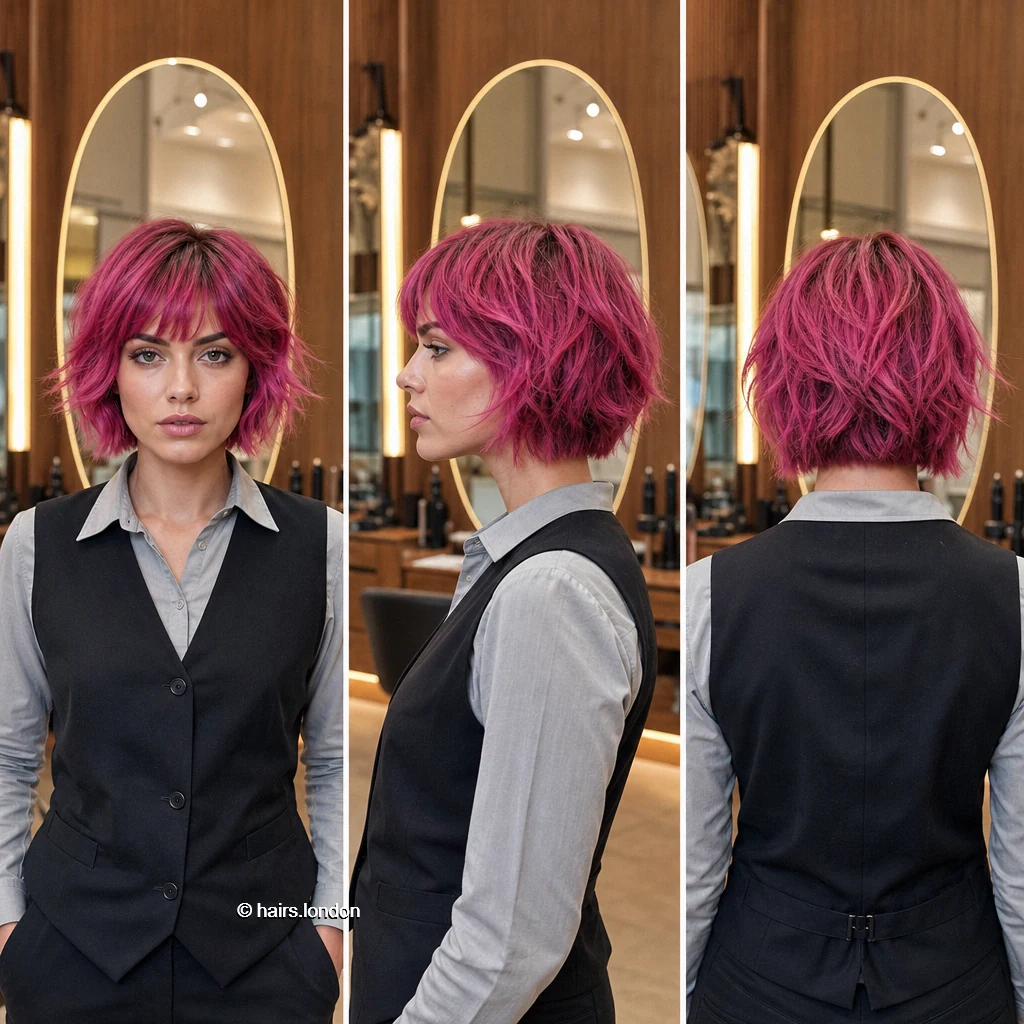
Hot pink color highlights the choppy movement of this bob. A short, fairly straight fringe sits above the brows here. Layered sides flare outward around the jaw and upper neck. Back pieces look tousled, with an intentionally broken perimeter line. Air dry with a light curl enhancer if waves develop. Otherwise, bend selected sections loosely rather than curling everything uniformly. Consider whether your hair density supports this full side shape. Ask for fringe placement that works with your hairline growth. Regular bang adjustments help keep the eyes clearly in view. Refresh vivid color according to fading, not a fixed schedule.
12. Dusty-Rose Wavy Bob with Side Fringe
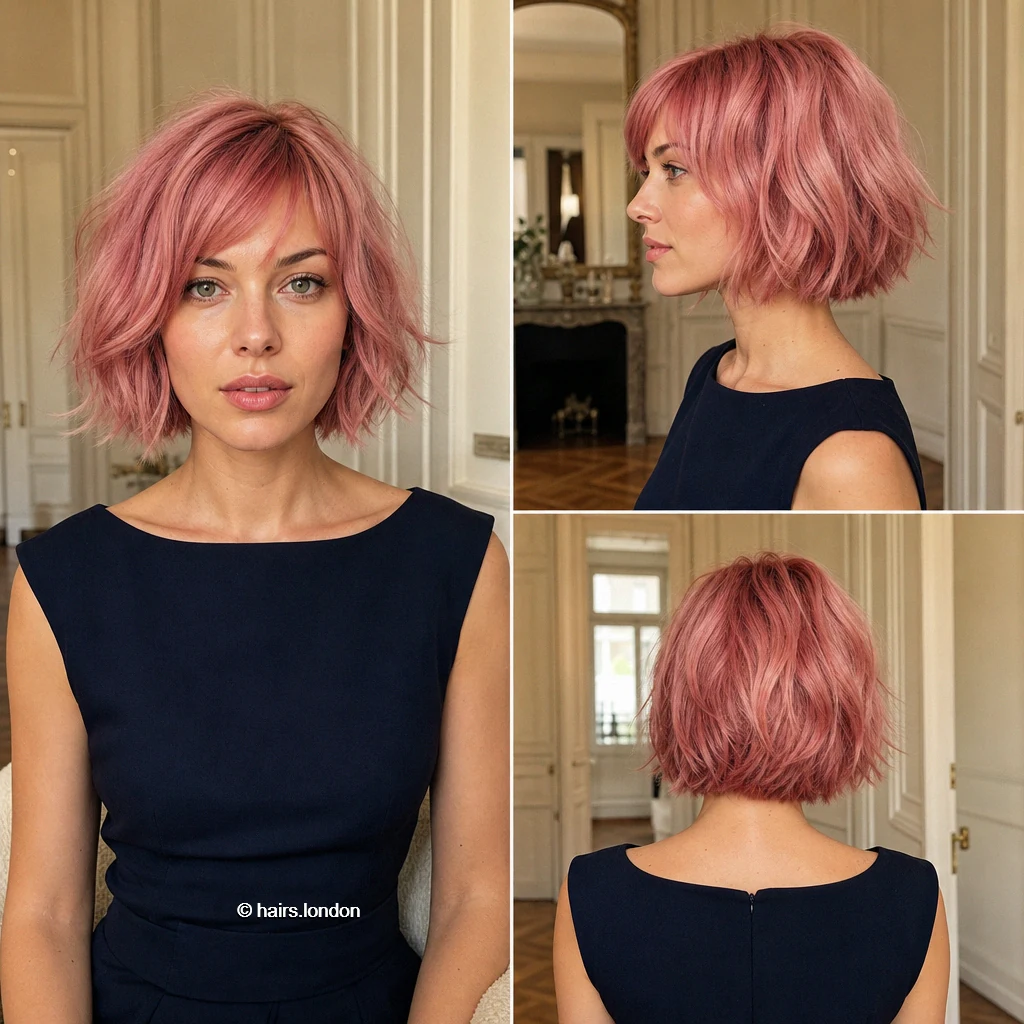
Dusty rose gives this softly waved bob a muted finish. Side swept fringe crosses the forehead and joins face framing layers. The sides hover around jaw level, with feathered ends visible. Gentle back movement leaves the short neckline relatively light overall. Enhance existing waves with mousse scrunched into damp hair. A quick fringe blow dry can control an unhelpful part. If hair is very thick, request strategic weight removal instead. If fine, keep enough perimeter density for a fuller outline. Trim when the neckline loses definition or fringe covers vision. Ask whether this softened pink requires toning between color visits.
13. Blackberry Bob with a Long Side-Swept Point
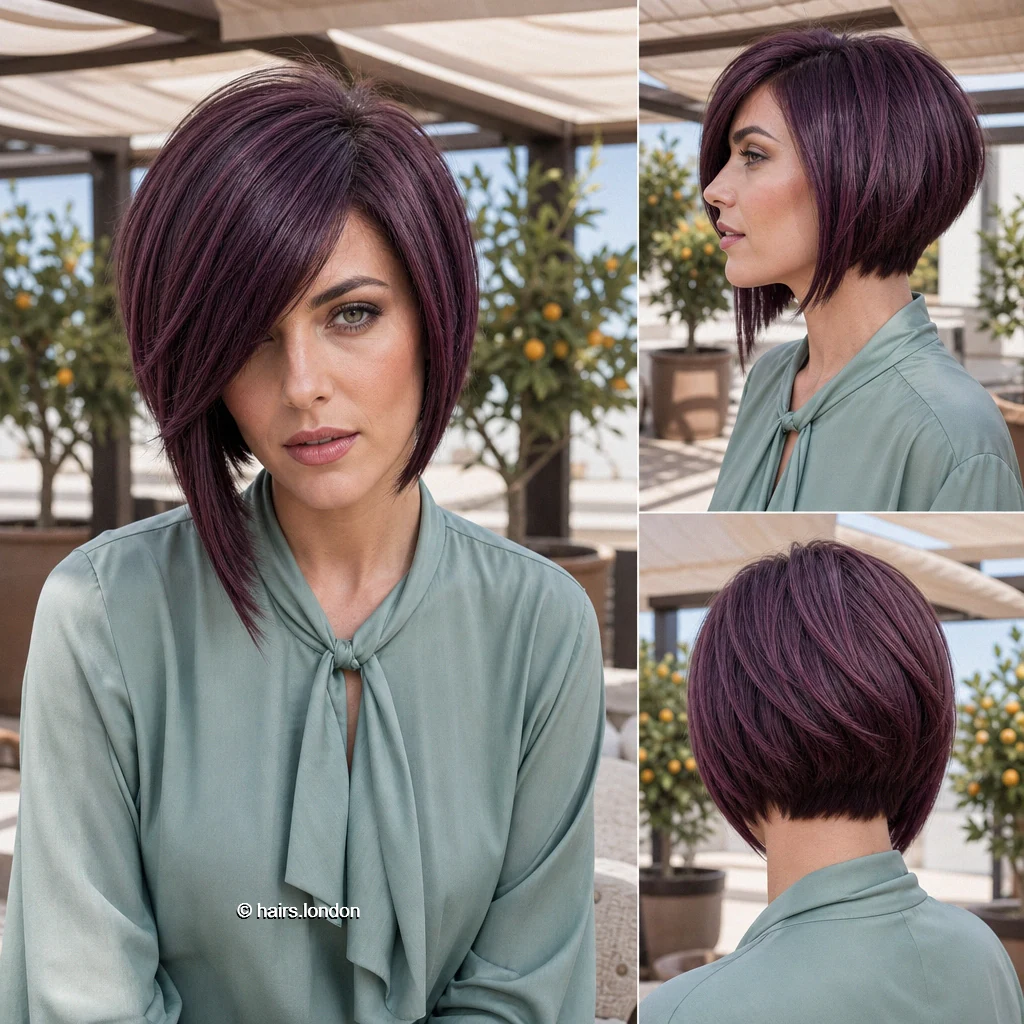
Dark blackberry color lends depth to this smooth, angled bob. A heavy side sweep extends below the jaw in front. The opposite side sits closer to the face and neck. From behind, rounded volume narrows into a short, tidy nape. That visible contrast suggests graduation supporting the longer front shape. Use a brush to smooth ends without pressing down roots. A lightweight serum can emphasize shine along the front section. Discuss whether your density can sustain its substantial side weight. Nape trims preserve the angle before the back becomes bulky. Color care helps retain the cool violet reflections between appointments.
14. Lilac Bob with a Tapered Nape
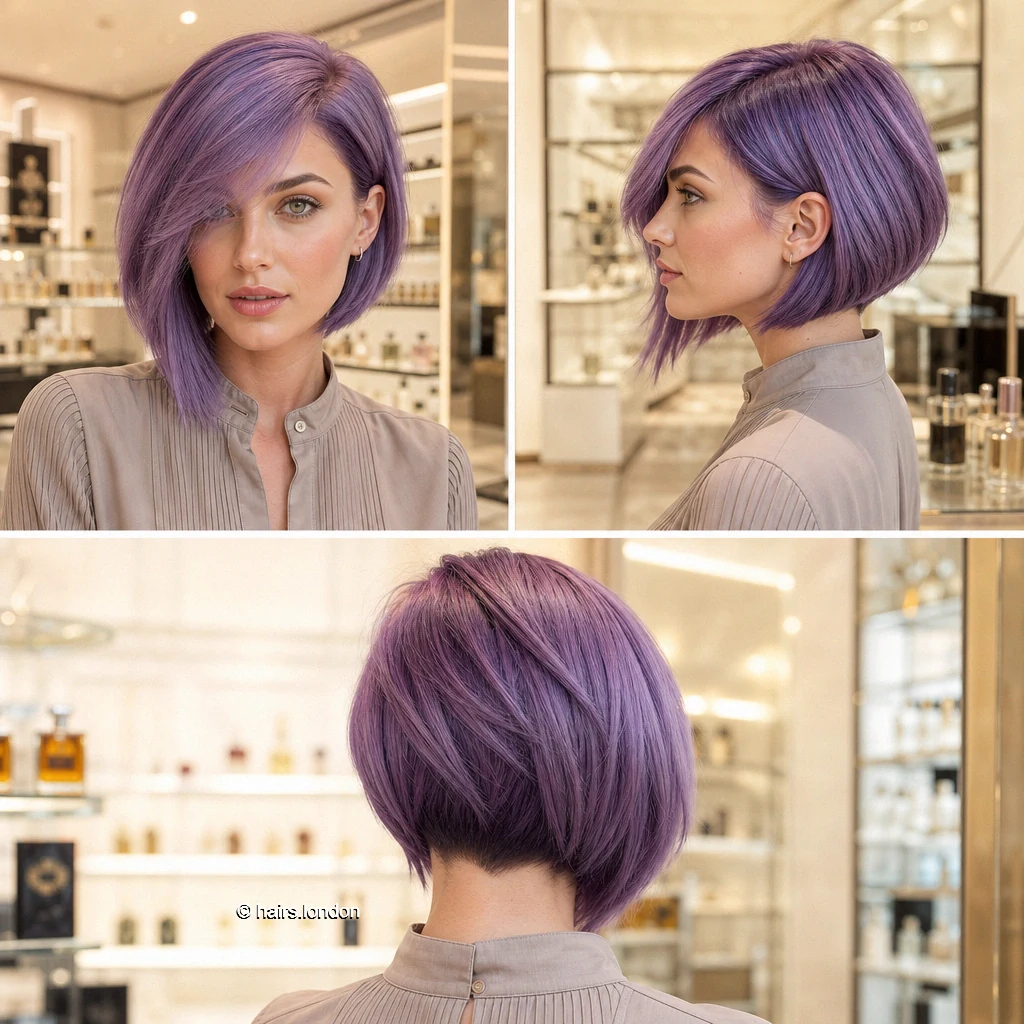
Lilac color draws attention to this smooth, asymmetrical bob. One long side sweeps toward the chin beneath the eye. The tucked side reveals a shorter edge around the jaw. Behind, softly rounded fullness tapers visibly into a short, neatly exposed nape. Smooth the fringe forward, then guide it diagonally across. Light root support can maintain shape without stiffening strands unnecessarily. Ask how your preferred tuck changes the apparent length difference. Dense hair may need careful balancing through the rounded back. Keep nape appointments consistent if you want this compact outline. Discuss fading expectations before choosing such a pale violet shade.
15. Vivid-Pink Bob with a Sweeping Front
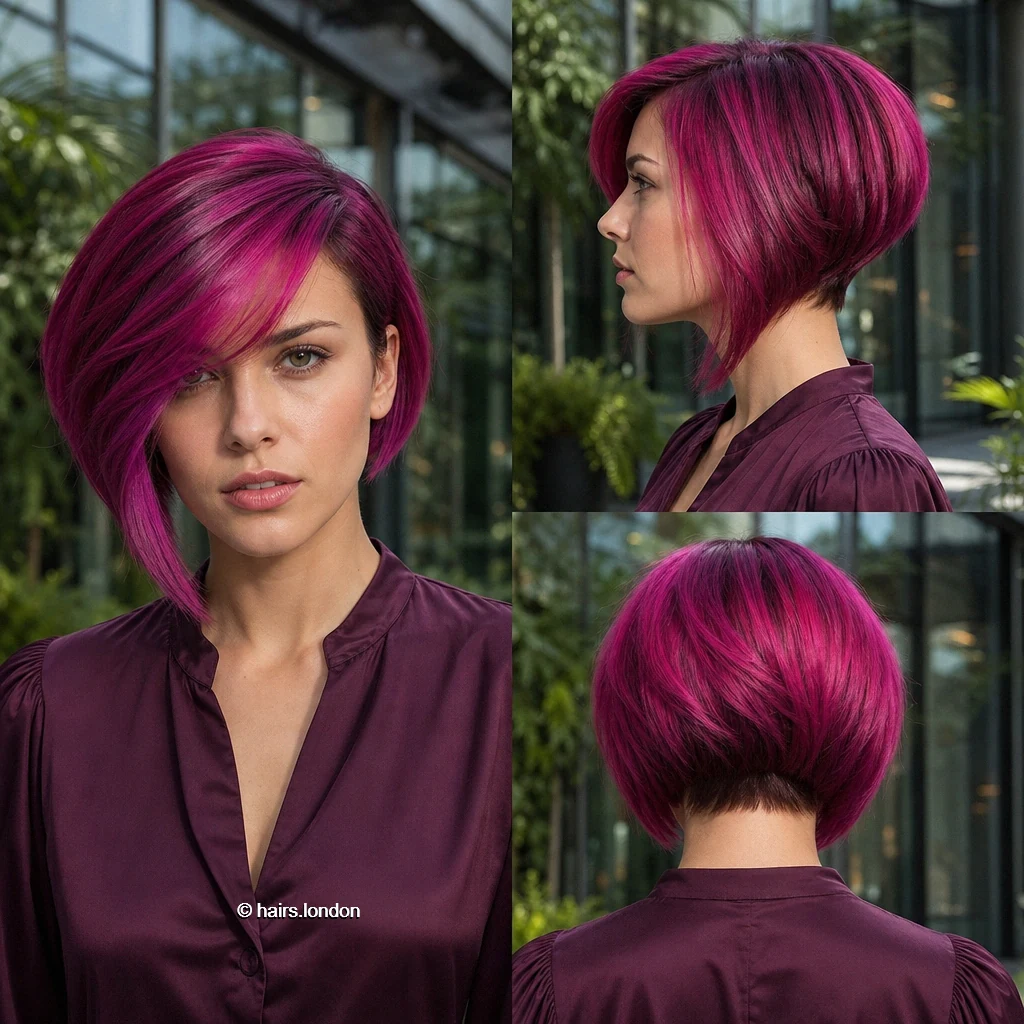
Vivid pink defines this sharply contrasted, longer front bob. The side swept section reaches below the jaw in front. A smooth, rounded back rises above the short, clearly exposed nape. Visible back graduation supports that compact yet forward reaching silhouette. Dry the front with controlled tension to protect its line. Lift the crown gently rather than teasing in extra bulk. This cut depends on density and comfortable daily parting habits. Ask your stylist to balance the short and long sides. Frequent nape upkeep keeps the back from changing shape quickly. Refresh the bright shade when fading no longer suits you.
16. Berry-Pink Graduated Bob with a Face-Framing Point
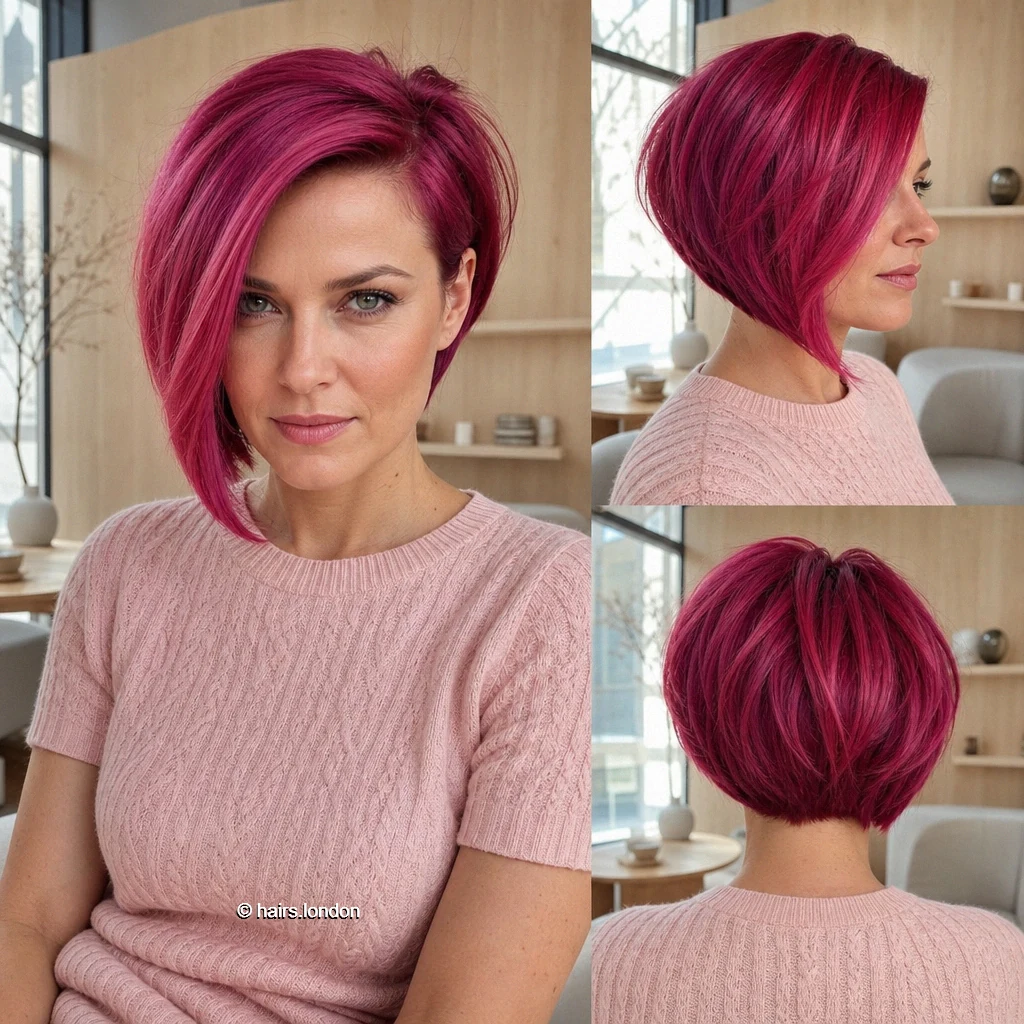
Berry pink color runs through this rounded, side parted bob. Its longer front forms a distinct point beneath the jaw. The back looks full above a closely shaped nape line. That visible buildup makes graduated bob terminology appropriate here visually. Brush the front downward while directing back sections into place. Use minimal finishing cream so the contour retains airy movement. Ask whether your hairline allows this close neckline comfortably daily. Thicker density might need internal shaping to avoid excess width. Book back trims as soon as the rounded outline spreads. Discuss color upkeep alongside the practical frequency of shape appointments.
17. Blush-Pink Bob with a Rounded, Short Back
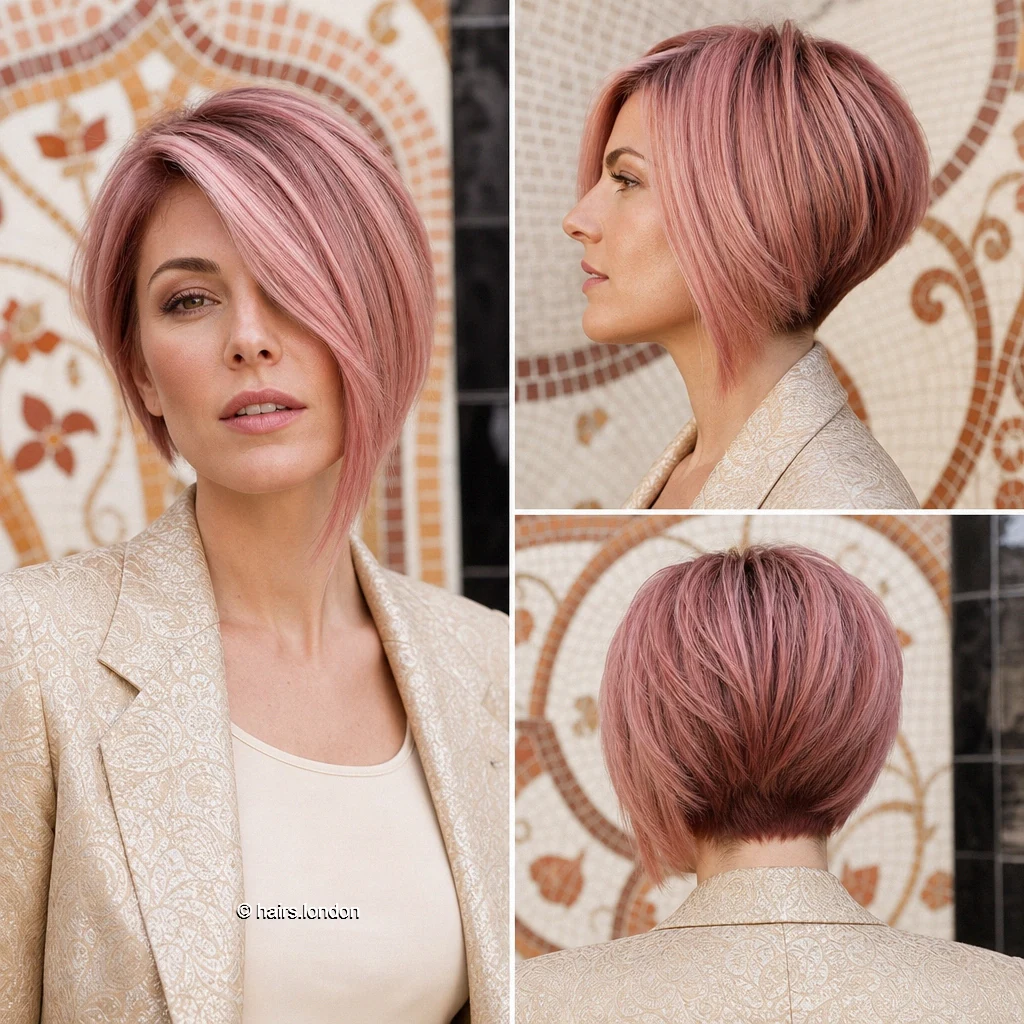
Blush pink softens this smooth bob with a swept front. One face framing section extends below the jaw near chin. Its rounded back curves inward toward a short nape line. The visible taper gives the silhouette a graduated appearance overall. Smooth the surface with a brush while preserving crown lift. Try lightweight shine products only where the longer section needs. Fine hair may require less layering to keep ends substantial. Discuss how an existing part changes the front sweep naturally. Trim the neckline before it obscures the neat back contour. Ask about gentle color care for this pale pink finish.
How to Choose Your Bob Length and Shape
Start with the shortest length you would comfortably wear beside your face, then decide how much contrast you want at the back. Several looks here have longer fronts and visibly graduated backs; the wavy bobs have softer, less precise outlines. Consider where your hair expands when dry, whether you tuck one side, and how often you are willing to maintain a short nape. A longer front can offer flexibility, but it will not behave identically on every density or texture.
Styling Fine, Thick, Wavy and Curly Textures
For fine hair, keep styling products light and direct root lift where the bob needs fullness. Thick hair may need carefully placed weight removal so a rounded back stays shaped without ballooning at the sides. Encourage natural waves with damp scrunching and gentle diffusing; polish only the sections that need a clearer line. For curls, agree on the finished dry length and shrinkage before cutting, then preserve enough weight for curl definition. Dry a fringe in its intended direction early, before it sets into another part.
Keeping Burgundy, Violet and Pink Color Fresh
These shades differ in depth, so their fading and refresh needs will differ too. Ask your colorist what upkeep is realistic for the particular shade and your starting hair color. Wash as needed with suitable color-care products, limit unnecessary heat, and use heat protection when smoothing a bob. Pale lavender and blush may change character as they fade; vivid magenta and fuchsia can lose intensity. Plan color appointments around the result you want to keep, rather than assuming every shade needs the same schedule.
Maintaining the Bob Perimeter and Graduation
A clean, short nape often shows growth before the longer front feels untidy. Check the outline in a mirror from the side and back: if rounded graduation has become heavy or the neckline has spread, it may be time for a trim. Smooth bobs also reveal changes in their front points and perimeter. Textured bobs tolerate a looser edge, although fringe may need attention sooner. Ask your stylist about separate fringe or nape tidy-ups if the rest of your cut still sits well.
What to Discuss with Your Stylist
Bring the views that show the front, profile and back of your favorite bob. Point out whether you want the longer front, the visible back graduation, the fringe, or simply the color; they are separate choices. Discuss natural parting, cowlicks, density, wave or curl shrinkage, daily styling time and how short you are comfortable going at the neck. Request a color-maintenance plan and ask what the cut will look like as it grows.
Frequently Asked Questions
What makes a haircut a bob rather than a lob?
A bob generally finishes around the jaw or neck, while a lob is a longer bob that usually approaches the shoulders. The finished perimeter matters more than its name.
Is an A-line bob the same as a stacked bob?
No. A-line describes a perimeter that becomes longer toward the front. Stacked or graduated describes visible buildup of shorter lengths at the back. A cut can show both features.
Do all longer-front bobs have a graduated back?
No. Front-to-back length contrast alone does not establish graduation. Look for visible rounded weight or shorter lengths building up above the nape.
Can fine hair hold a rounded bob shape?
It can, depending on density and growth pattern. Keeping adequate weight at the perimeter and using light root lift may help; excessive layering can make fine ends look sparse.
How can thick hair avoid too much bulk in a bob?
Ask your stylist to assess where the weight sits and remove it selectively if needed. Removing too much can disturb a smooth outline or make shorter layers expand.
Can naturally curly hair wear these bob lengths?
Yes, with adjustments for curl pattern, density and shrinkage. Agree on the desired dry length and shape rather than copying the position of a straight bob’s ends exactly.
Should I choose a fringe with my bob?
Choose one if you like styling it and your hairline allows it to sit comfortably. Discuss its dry length, how it blends into the sides and whether it will need separate trims.
Which of these bobs needs the least daily styling?
A softly textured bob may take less work if your hair naturally forms similar waves. Sleek, strongly side-swept shapes may require more brushing, especially around the front.
How often should a short graduated nape be trimmed?
Trim it when growth begins changing the neckline or rounded back contour. That point varies with your growth rate and how precise you want the silhouette to remain.
How do I keep a colorful bob from fading quickly?
Follow your colorist’s product advice, avoid unnecessary hot-tool passes and protect hair when heat styling. Refresh timing depends on the shade, starting color and amount of fading you like.
Can I grow out an angled bob without losing its shape?
Yes. Ask for interim trims that tidy the back while gradually reducing the front-to-back contrast. You can then move toward a more even bob or lob.
What should I show my stylist at a consultation?
Show front, side and back views, and identify the particular length, fringe, perimeter and color you want. Explain your natural texture, usual part and realistic styling routine.
Conclusion
The best starting point is not simply your favorite shade: it is the bob shape you can style and maintain comfortably. Choose the front length, back outline and texture that work with your hair, then discuss how a burgundy, violet or pink color would fit your upkeep plans.