


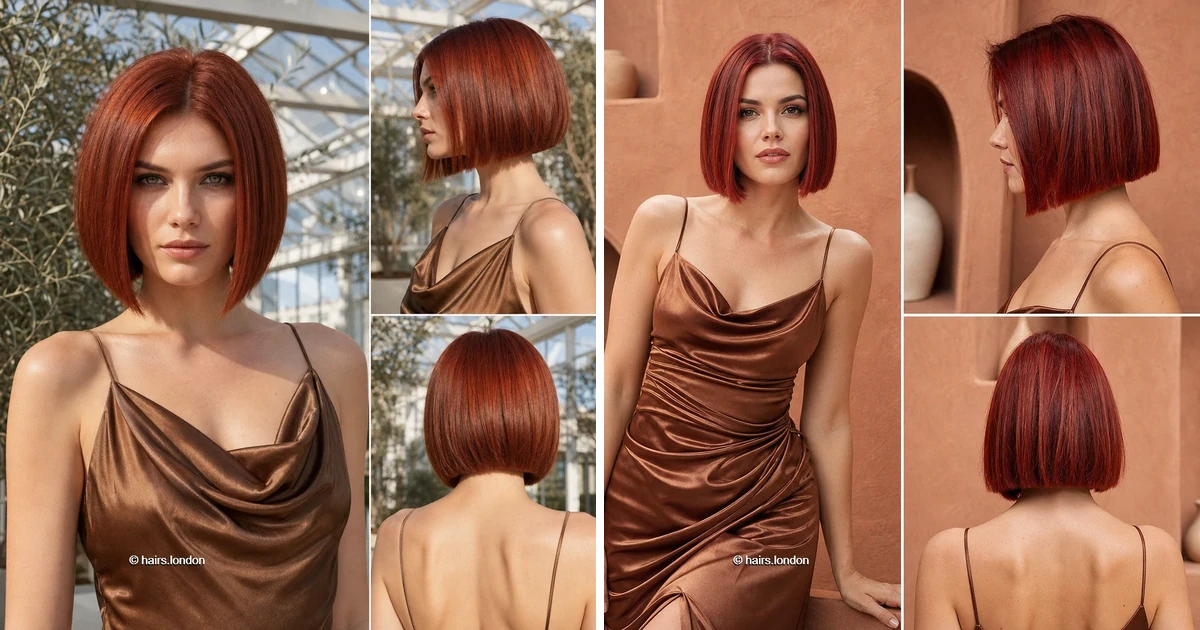
11. Smooth Ginger Bob With a Soft Side Part
Warm ginger color highlights the smooth surface of this bob. A gentle side part leaves longer pieces beside the face. The profile shows a shorter, rounded back and inward ends. From behind, the perimeter appears full and evenly groomed. Ask to retain enough edge weight for this clean finish. Blowdry downward with a paddle brush for reflective, tidy ends. Reserve richer conditioner for ends, avoiding an overly flat crown. Fine strands may benefit from fullness; coarse strands need smoothing. Trim when the back begins losing its compact, softly rounded outline. Protect the warm color with gentle washing and heat protection.
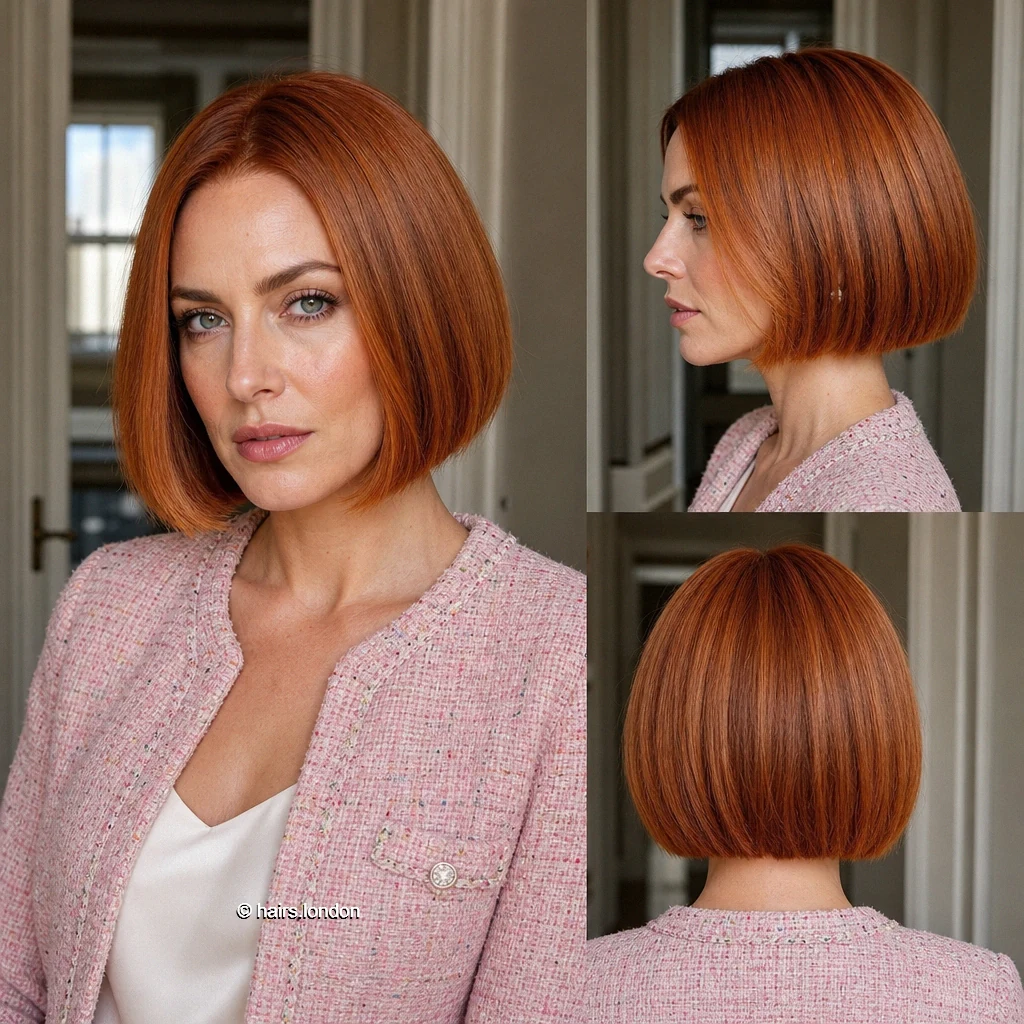
12. Plum A-Line Bob With a Smooth Perimeter
Deep plum hair forms a smooth, lustrous bob with longer fronts. A side part keeps the forehead open and the surface sleek. The profile shows front lengths extending beyond the shorter back. Behind, the curved perimeter rests above the exposed neck. Discuss the amount of front-to-back difference you actually want. Smooth from roots toward ends without flattening the entire crown. Use heat protection before smoothing, then finish with cool air. This finish depends on natural texture and realistic styling time. Check both the back curve and front points at trims. Maintain plum depth according to fading and visible regrowth patterns.
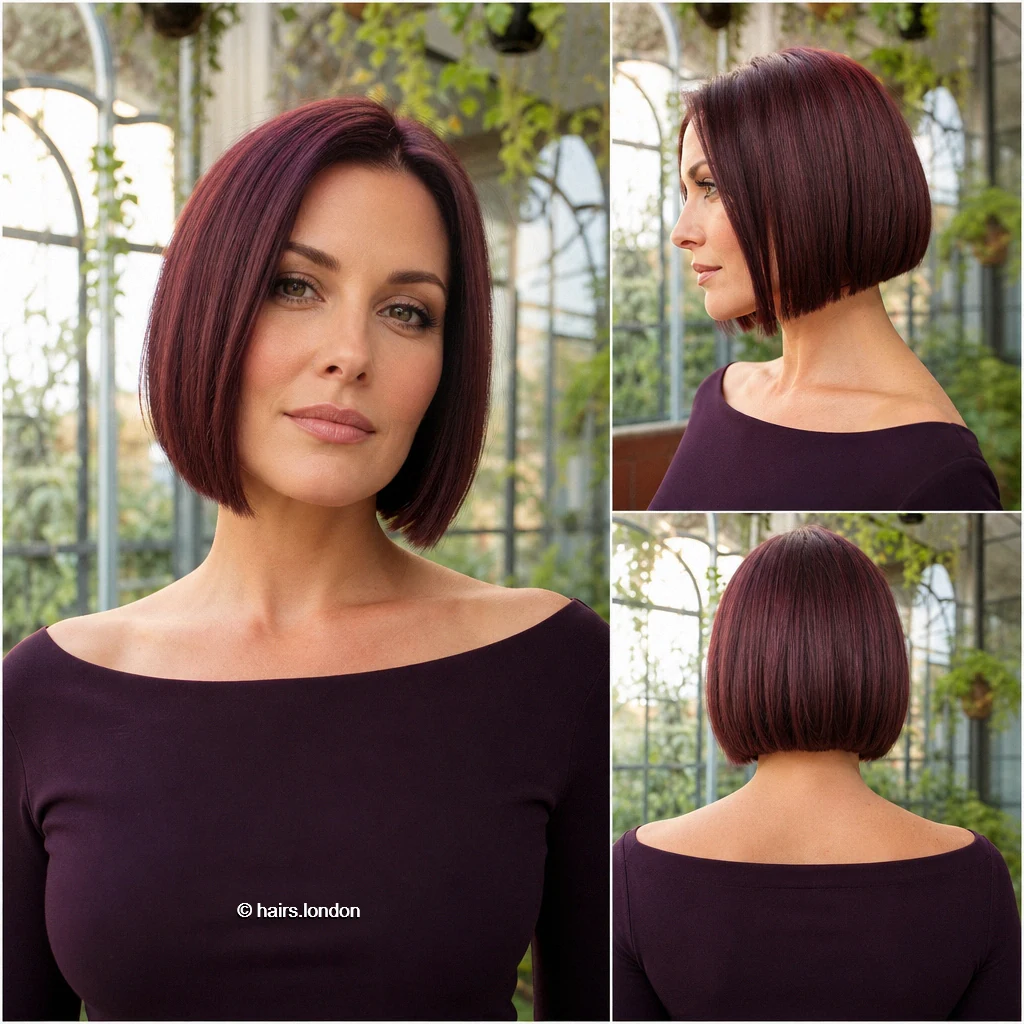
13. Blunt-Edged Cherry Bob With a Center Part
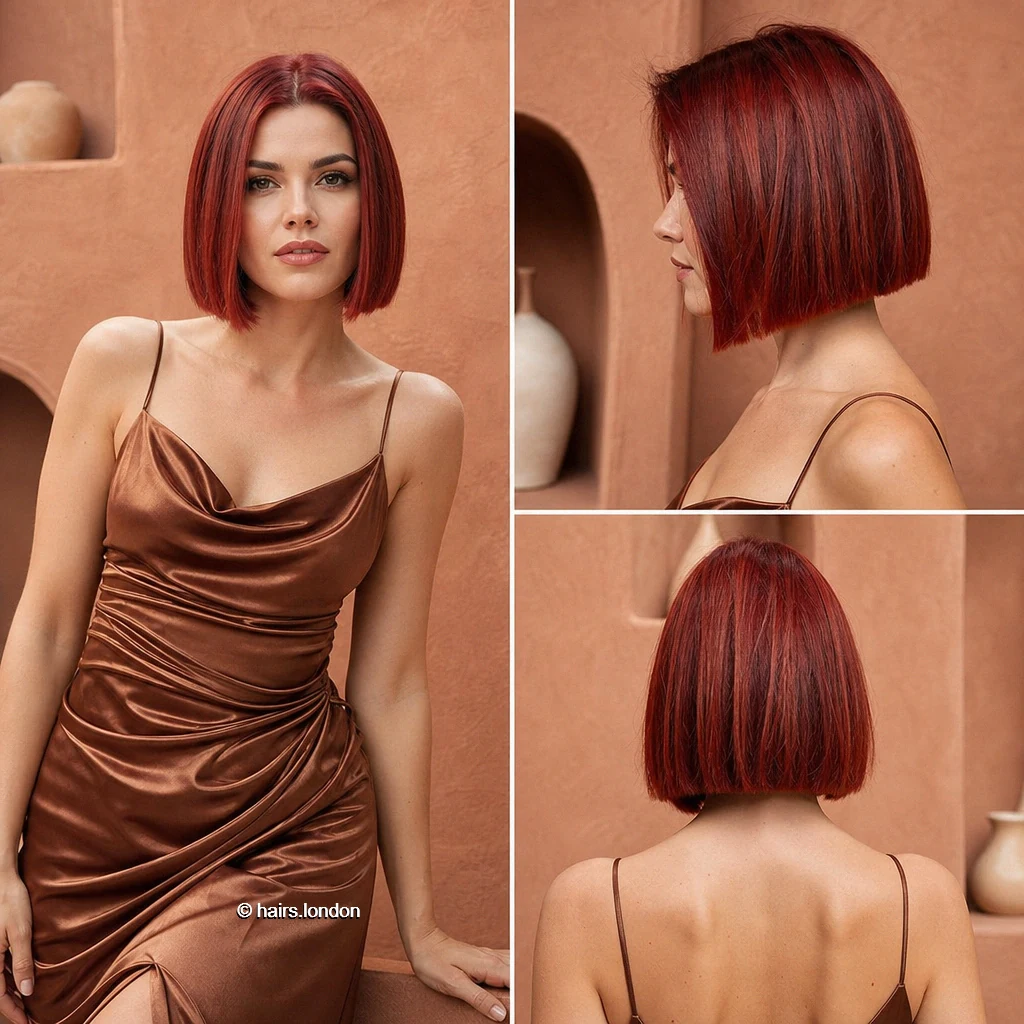
Cherry-red color draws attention to this bob’s tidy, defined lower edge. A central part separates the smooth front sections evenly. The sides sit near the jaw and angle subtly forward. From behind, the back looks shorter with a full perimeter. Ask your stylist to check the outline from every view. Blowdry downward with a paddle brush for reflective, tidy ends. Apply lightweight serum sparingly, especially near the face and roots. Hair with stronger waves will require styling for this finish. Trim before the clean edge becomes visibly uneven or heavy. Refresh red color according to fading and visible regrowth patterns.
14. Layered Red Lob With Flicked Ends
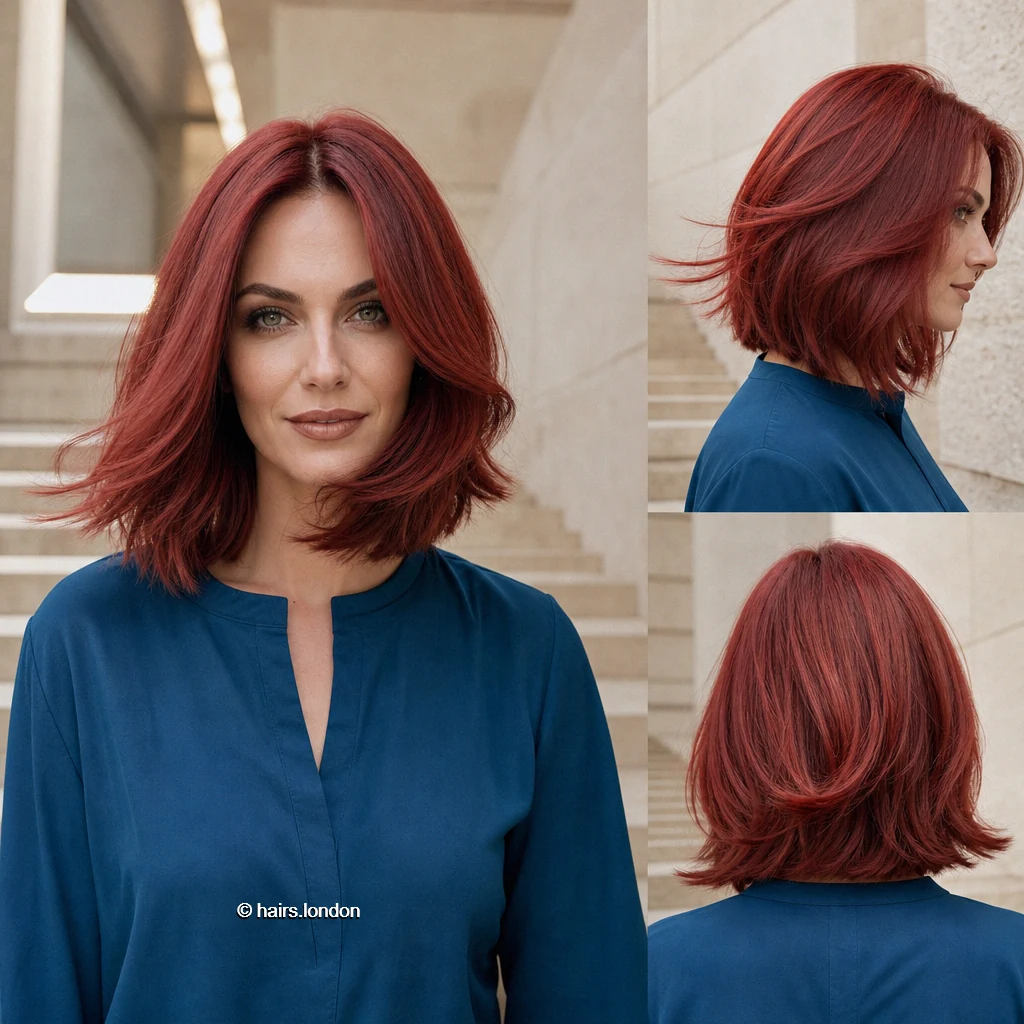
This red layered lob falls below the jaw toward the shoulders. Longer front sections sweep away from a loose central part. The back shows visible layering and ends that flick outward. Its softer perimeter differs from the shorter precision bobs here. Ask for layers that move without removing too much density. Direct a dryer away from the face to encourage lift. Use light styling cream on ends, not across the roots. Thick hair may welcome movement; fine hair needs restrained layering. Trim the ends when their flicks become thin or uneven. Discuss color refreshes based on fading and visible regrowth.
15. Airy Auburn Bob With Face-Framing Layers

Auburn layers make this bob look airy around the jaw. The front opens into soft, face-framing pieces instead of a distinct fringe. In profile, separated ends give the sides gentle movement. The back sits near the neck with a textured outline. Ask your stylist to preserve enough fullness beneath those layers. Lift roots lightly, then let the ends settle naturally. Avoid heavy oils that collapse the movement around the crown. Natural bend can support this finish without constant hot tools. Shape checks matter when the lower layers begin looking straggly. Maintain auburn warmth according to fading and your color preference.
16. Copper Layered Lob With Swept Front Pieces

Copper hair frames the face in this full, layered lob. The longest front pieces fall below the jaw toward the neck. Side and back views reveal feathered ends and internal movement. A relaxed central part lets the front sweep outward. Discuss how much length you need for everyday styling flexibility. Blowdry with a brush, then loosen the ends using fingers. Reserve richer conditioner for ends, avoiding an overly flat crown. Dense hair can support this fullness; fine hair needs restraint. Trim when the layered outline loses its balanced, airy finish. Preserve copper warmth with gentle washing and sensible heat protection.
17. Rounded Auburn Bob With Side-Swept Volume
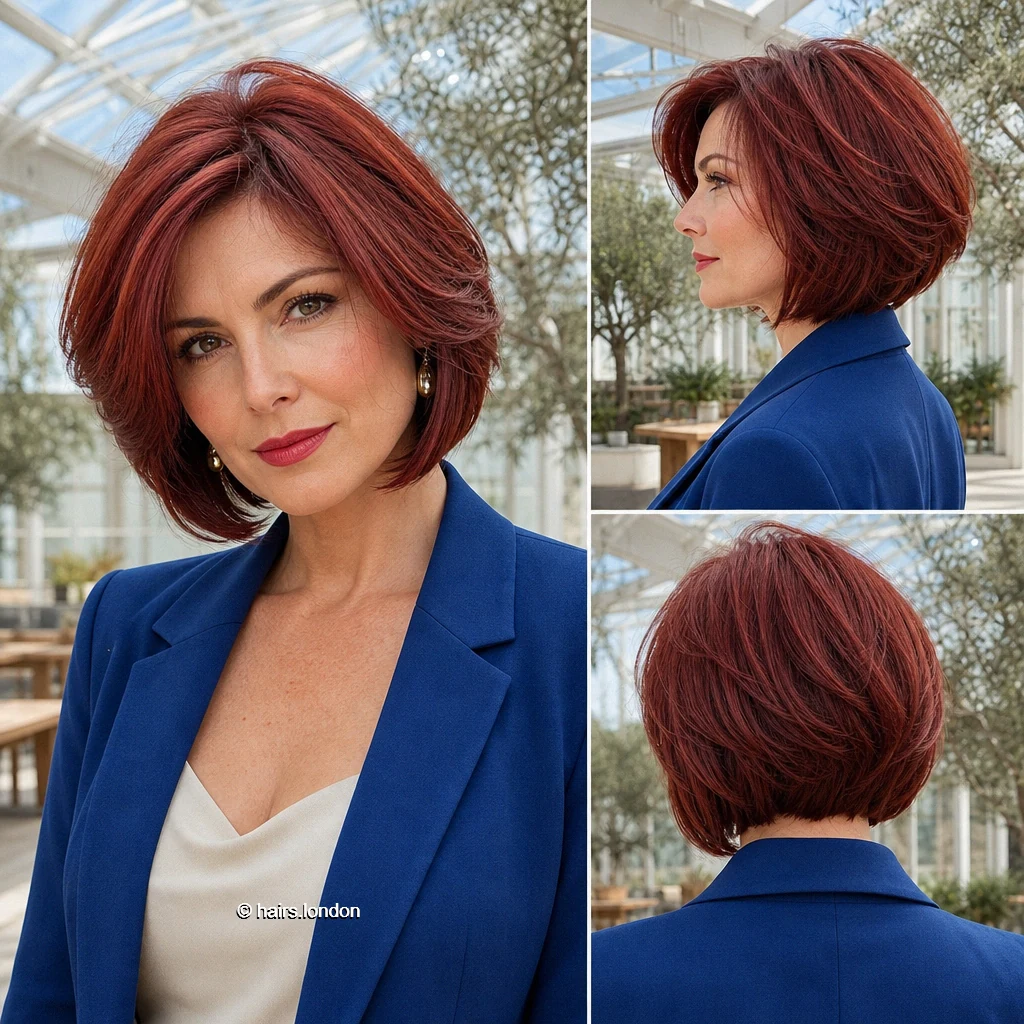
Auburn hair sweeps across the forehead in this softly rounded bob. The lower sides tuck inward close to the jaw. Profile and back views show fullness above a compact neckline. Visible layering softens the surface without breaking the entire outline. Ask how much internal weight removal your density can tolerate. Direct airflow across the part, then smooth the lower edge. Avoid heavy oils that collapse the movement around the crown. This fuller silhouette depends on density, layering, and natural movement. Book a shape check before the nape loses definition completely. Refresh the color according to fading and visible regrowth patterns.
18. Graduated Red Bob With a Rounded Back
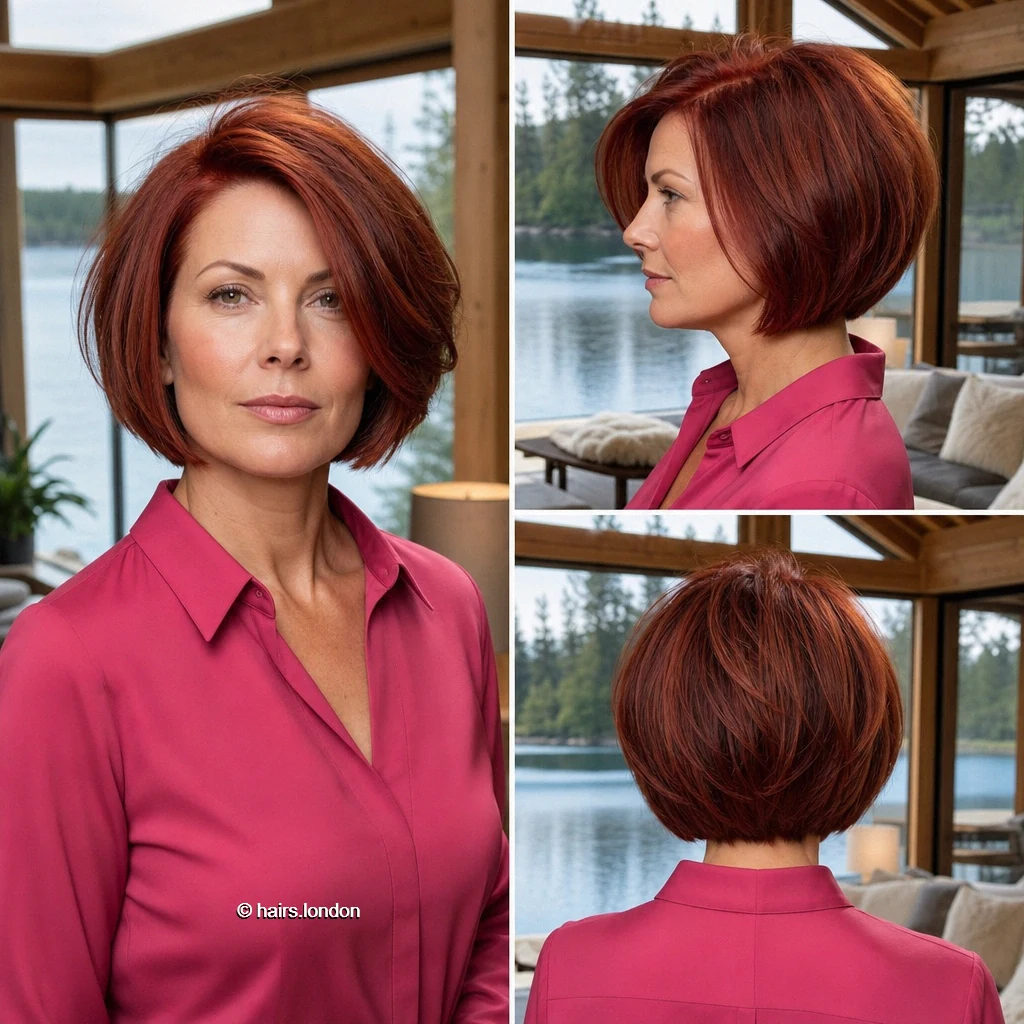
This red bob has a sweeping front and rounded back volume. Its side view shows a shorter nape beneath the fuller back. The rear shape narrows toward the neckline, showing visible graduation. Front pieces remain longer and curve toward the jaw. Ask your stylist to balance graduation against your hair density. Smooth the lower edge while preserving lift above the back. Use heat protection before smoothing, then finish with cool air. Strong growth patterns may affect how the nape lies. Regular reshaping prevents the shorter back from becoming heavy again. Refresh red color according to fading and visible regrowth patterns.
19. Stacked Copper Bob With a Side Fringe
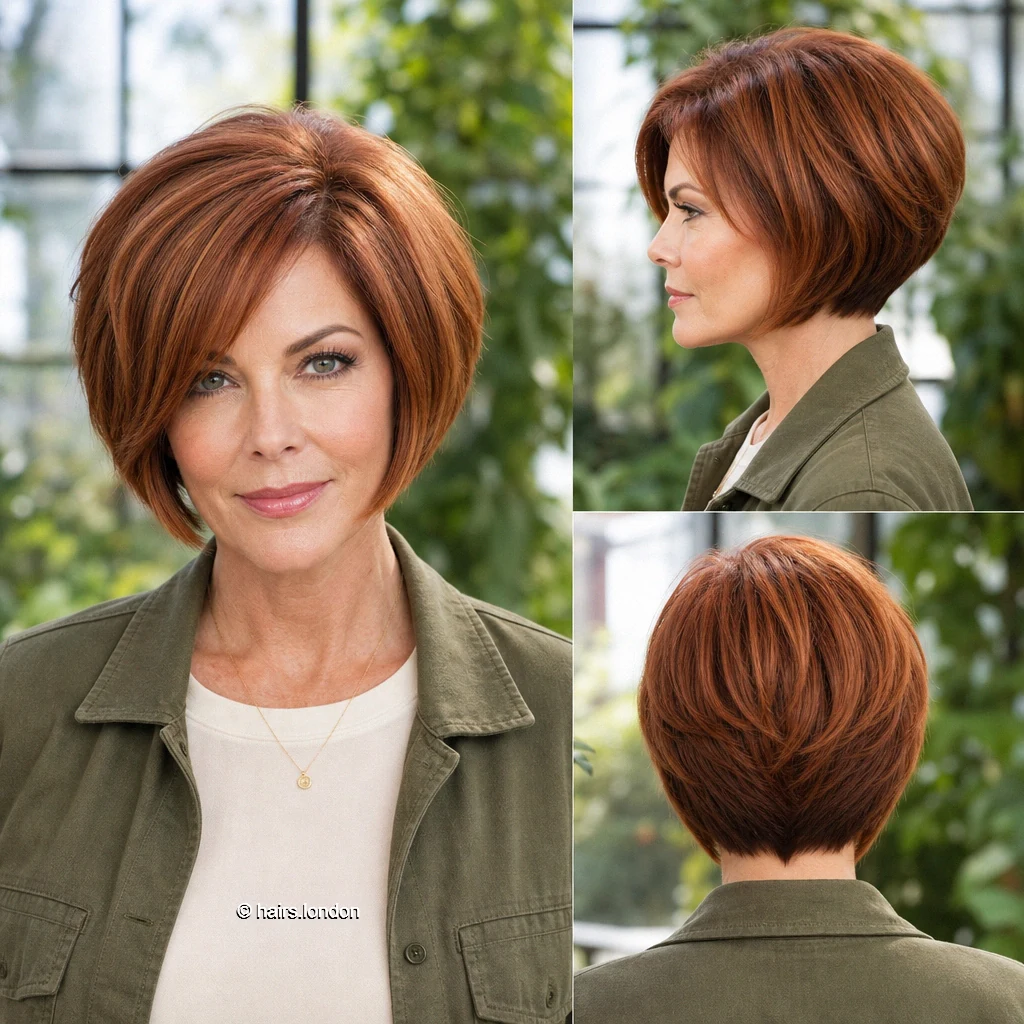
Copper layers build noticeable fullness behind this short, angled bob, around the rounded crown. A long side fringe crosses the forehead toward one eye. The profile shows a longer front and shorter nape. From behind, layered graduation narrows beneath the rounded crown. Ask your stylist whether your density can support that shape. Blowdry the back upward, then direct the ends inward. Keep products light enough to retain definition without unwanted stiffness. A strong cowlick may change how the fringe sits. Schedule trims before the nape and stacked layers lose definition. Maintain copper warmth with gentle washing and planned color refreshes.
20. Textured Auburn Bob With a Lifted Crown
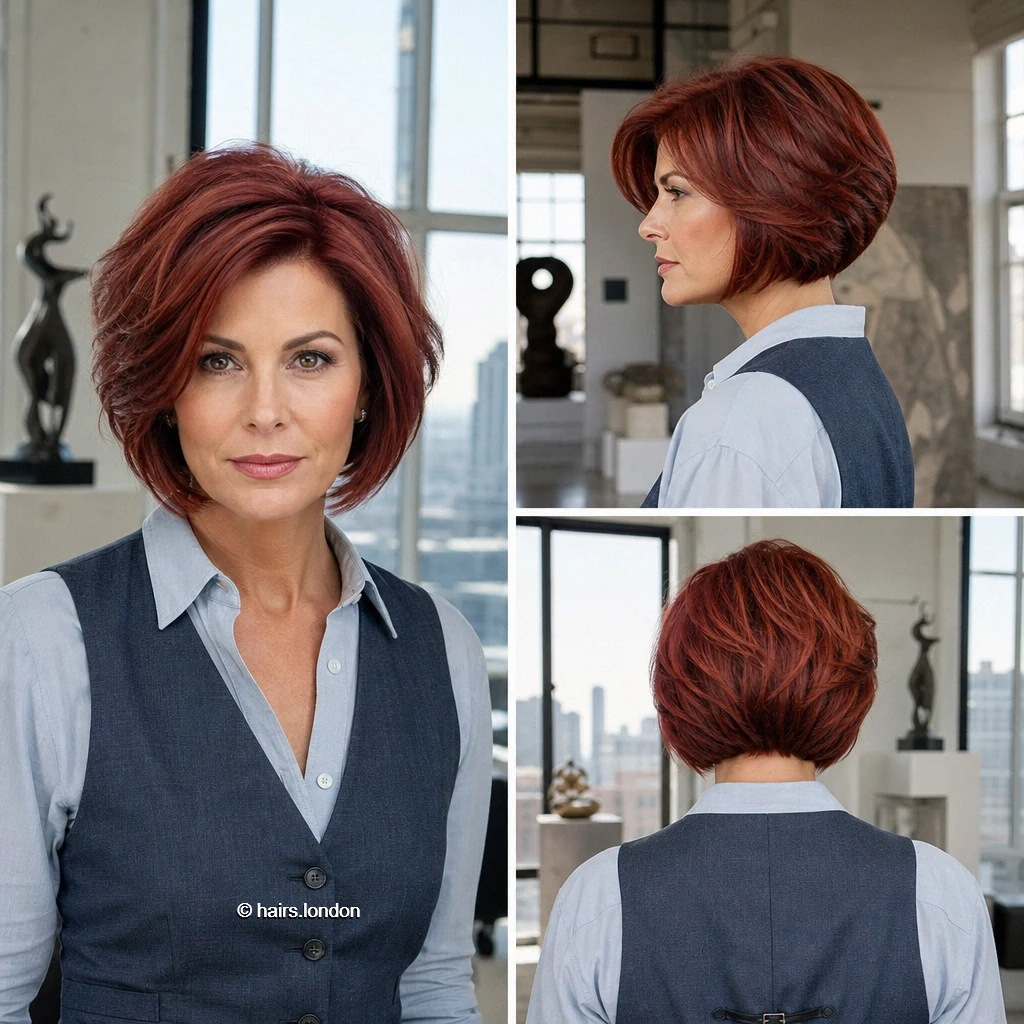
This auburn bob gathers soft, airy volume through its rounded crown. A sweeping front blends into shorter sections beside the face. The side view shows a compact nape below layered fullness. From behind, separated pieces soften the tapered lower outline. Ask for layers that suit your natural density and growth. Lift the roots while smoothing ends with a small brush. Avoid heavy oils that collapse the movement around the crown. Wavy hair may need less styling than very straight hair. Book a shape check before the nape loses definition completely. Refresh the color according to fading and visible regrowth patterns.
21. Copper Graduated Bob With Extended Front Pieces
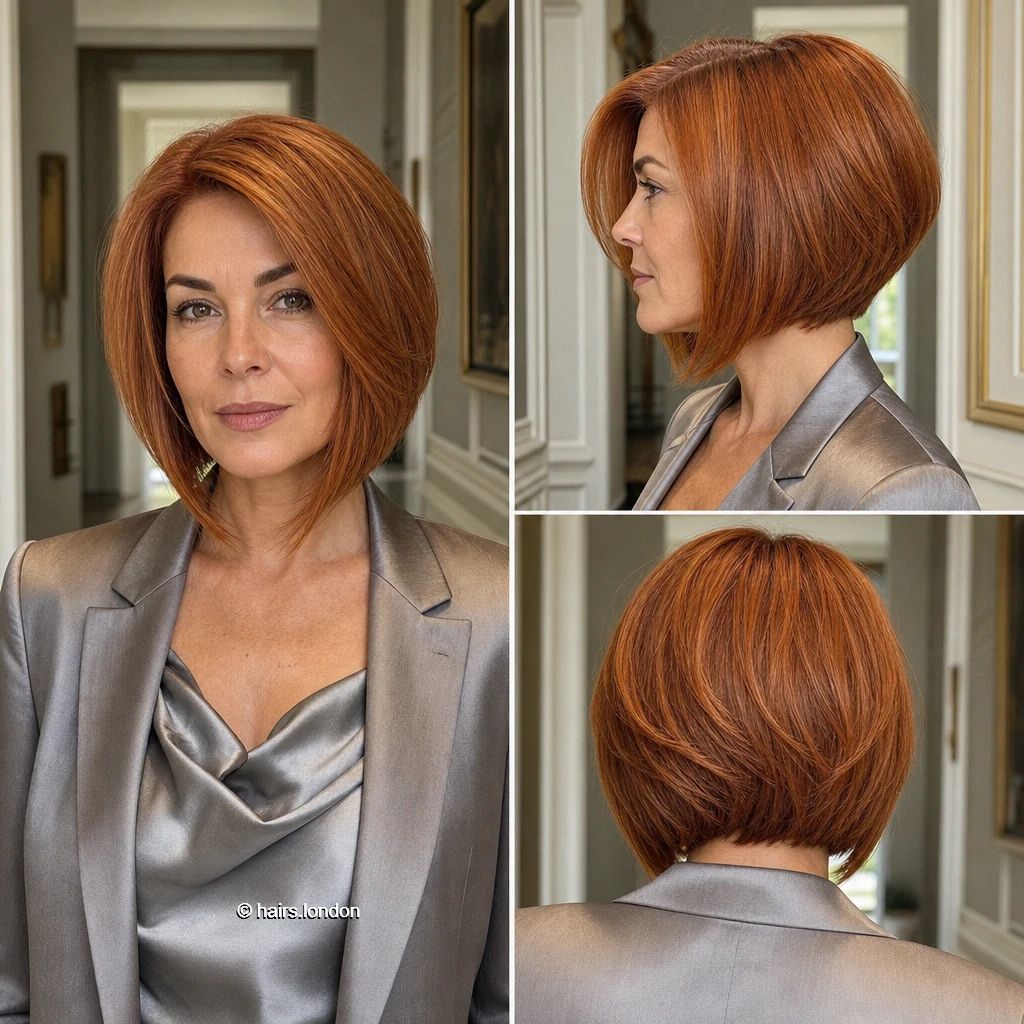
Warm copper hair forms a polished bob with visibly longer face-framing front sections. Its side profile shows the back tapering beneath rounded fullness. The rear view confirms layered graduation above the shorter neckline. A loose side part keeps the face-framing section flexible. Discuss front length and nape maintenance before choosing this shape. Smooth the front downward, then lift the back while drying. Use heat protection before smoothing, then finish with cool air. Suitability depends on density, growth patterns, and styling preferences. Regular reshaping prevents the shorter back from becoming heavy again. Maintain copper color according to fading and visible regrowth.
22. Shaggy Copper Bob With a Sweeping Fringe
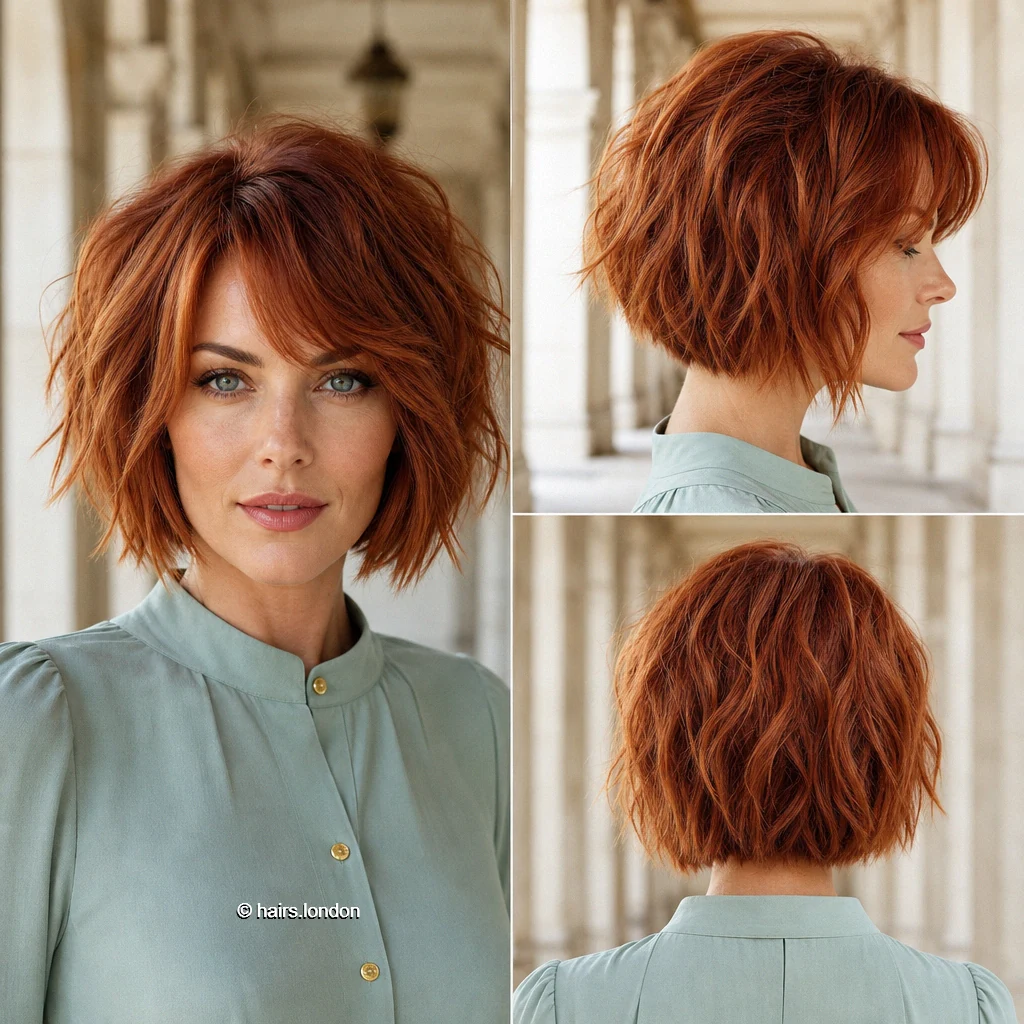
Copper waves and softly uneven ends define this relaxed, shaggy, jaw-length bob. Its sweeping fringe blends into loose pieces around the cheeks. Side and back views show layers throughout the rounded shape. The short nape remains textured rather than sharply precision-cut. Ask your stylist to keep the lower edge from thinning. Scrunch mousse into damp hair to encourage the visible bends. Finger comb instead of brushing once textured strands are dry. Natural waves suit this approach; straight hair needs styling. Trim fringe and perimeter when the shape starts feeling overgrown. Protect copper vibrancy with gentle washing and limited unnecessary heat.
23. Asymmetrical Copper Bob With a Graduated Back
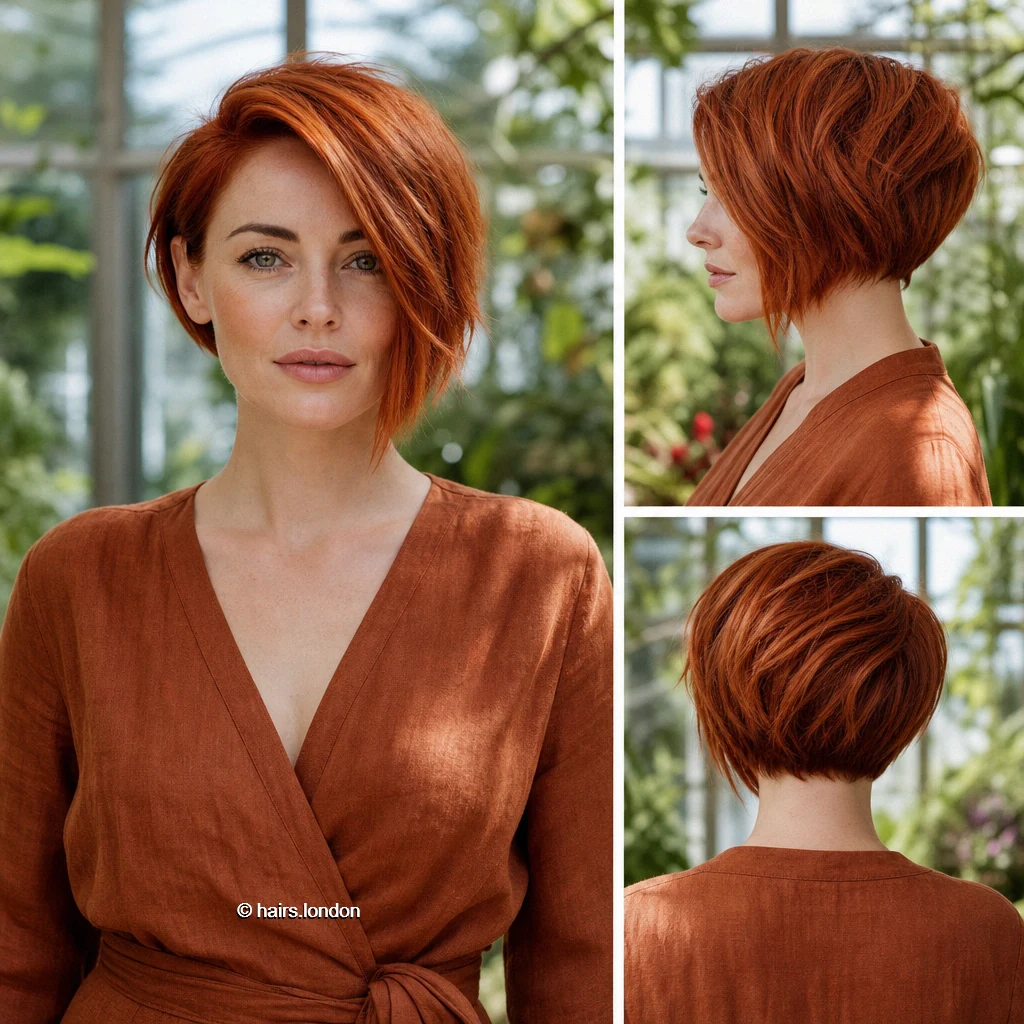
This warm copper bob places a distinctly longer sweep on one side. The opposite side sits shorter, exposing more of the jaw. Its profile shows the front extending beyond a compact nape. Back views reveal layered fullness tapering toward the neckline. Ask your stylist to check the asymmetry from both sides. Dry the long front smoothly without flattening the rounded back. Use heat protection before smoothing, then finish with cool air. Natural parting affects whether the longer sweep stays put. Maintain the nape and unequal front lengths with regular trims. Refresh copper color according to fading and visible regrowth patterns.
How to Choose Your Bob Length and Shape
Decide first where you want the front to land: near the chin, at the jaw, below it, or closer to the shoulders. Then compare the side and back views. An A-line bob has a longer front; a stacked or graduated bob also shows a shorter, built-up back. If you prefer to tuck your hair behind your ears or tie back some length, discuss that before choosing a compact nape. Density, natural bend, and growth patterns can change how closely a cut follows a reference image.
Styling Fine, Thick, Wavy, and Curly Textures
Fine hair often benefits from a substantial perimeter and lightweight products; too many layers can leave the ends sparse. Thick hair may need selective internal weight removal, but excessive thinning can make a bob expand at the sides. For waves, scrunch a small amount of mousse into damp hair and diffuse gently or air-dry. If your hair curls, ask for a shape assessed at its natural spring and allow for shrinkage. Smooth a precision bob’s perimeter with a brush, but leave textured ends free to move.
Keeping Copper and Red Bob Color Fresh
The images range from bright copper and ginger to auburn, cherry, burgundy, and plum-red. Color upkeep will differ with your starting shade, coloring history, and how visibly the tone fades. Wash gently, use heat protection, and ask your colorist when a gloss or color refresh would be useful. Pay attention to the exposed part and fringe as well as the ends: both can make fading or regrowth easier to notice.
Maintaining the Bob Perimeter and Graduation
A smooth jawline edge shows small changes in length, so arrange a trim when its outline stops sitting as intended. Textured bobs can tolerate a looser edge, but still need reshaping if the sides become bulky or the ends look thin. Graduated and stacked backs deserve a view of their own at appointments: as the short nape grows, the built-up shape can settle lower and lose balance. Fringe may need attention before the rest of the cut.
What to Discuss With Your Stylist
Bring the front, side, and back views of the bob you like, then identify the detail that matters most: length, fringe, front angle, nape shape, or texture. Show how your hair falls without styling and mention cowlicks, density concerns, and the time you can spend drying it. Ask which details are achievable on your natural texture, where weight should stay, and how often the cut and color are likely to need maintenance.
Frequently Asked Questions
What is the difference between a bob and a lob?
A lob is a longer bob, commonly falling below the jaw toward the shoulders. The layered looks in images 14 and 16 offer more length than the compact jawline cuts.
How is an A-line bob different from a stacked bob?
A-line describes a front that extends farther than the back. Stacked describes visible layers or graduation building fullness at the back; one cut can have both features.
Does a bob need a blunt perimeter?
No. A smooth, full edge creates a precise outline, while layered or shaggy bobs can have separated, softer ends.
Which bob details matter most for fine hair?
Consider keeping weight at the perimeter and limiting layers that make the ends look sparse. Your stylist can adjust the shape to your actual density.
How can thick hair avoid a bulky bob shape?
Ask about selective internal weight removal while preserving the intended edge. The right approach depends on how your hair expands and where it carries fullness.
Can natural curls work in a bob?
Yes, but the cut should account for curl pattern and shrinkage. Have your stylist assess where the perimeter falls when your curls are worn naturally.
Should I choose bangs or a sweeping front?
Consider your growth patterns and styling routine. Full bangs need deliberate drying and frequent checks; a longer sweep offers a different look and may grow out more easily.
What is a simple daily routine for a smooth bob?
Dry the perimeter downward with a brush, use heat protection before hot tools, and apply a small amount of finishing product without weighing down the roots.
How should I style a wavy bob without losing movement?
Scrunch a lightweight product into damp hair, then air-dry or diffuse on low heat. Once dry, separate sections with your fingers rather than brushing out the waves.
When does a graduated bob need a trim?
Book a shape check when the short nape grows out or the fuller back begins sitting lower than intended. The timing depends on your growth rate and preferred precision.
How do I grow out a short bob?
Ask for periodic reshaping that lets the nape catch up with the sides. You can gradually move toward a longer, more even bob without keeping the original graduation.
How can I keep copper or red color looking fresh?
Use gentle washing and heat protection, then plan color refreshes around visible fading and regrowth. Your colorist can recommend an approach for your particular shade.
Conclusion
The strongest choice is the bob whose front length, back shape, and daily styling needs all make sense for your hair. Save the views that show those details clearly, then use them to discuss a cut—and a copper or red shade—you can maintain comfortably.


