
Honey and caramel sit right in the middle of the warm color family, and that is why they suit a bob so well. Honey is the lighter, golden end: a soft blonde with a yellow-gold glow. Caramel is deeper and toastier, closer to brown sugar, and it looks richest woven into a brunette base. On a short cut, where every strand sits near the face, those warm tones bounce light exactly where you want it. If you are weighing up ribbons against a melt, our caramel balayage ideas by length show how placement changes on longer hair.
We gathered 43 honey and caramel bobs, from glassy blunt honey cuts and rooted blondes to caramel ribbons on espresso, tousled lived-in waves and short stacked crops. Every look comes with the cut and color to ask for, how to style it at home and how often you will be back in the chair. For cooler, more neutral blondes, see our beige blonde bob haircuts.
How to choose a honey or caramel bob
Start with your natural base. Honey reads best on light brown to dark blonde hair, where it needs only a few levels of lift. Caramel is the easier route from medium or dark brown, because it sits two or three shades lighter than the base and grows out softly. For a fully golden finish blended from a shadow root, our honey blonde balayage ideas show the technique on longer lengths.
| Hair type | Honey or caramel bobs that work best | What to avoid |
|---|---|---|
| Fine or thin | Blunt chin-length bob with fine honey babylights or one all-over golden shade | Chunky, high-contrast ribbons that make thin ends look sparse |
| Thick | Layered or stacked bob with caramel ribbons on the top layer | A one-length bob with no internal layering, which turns triangular |
| Wavy | Tousled bob with hand-painted caramel balayage that follows the wave | Fine foiled stripes that break up the wave pattern |
| Dark brown or black | Caramel ribbons or caramel-dipped ends on your natural base | Lifting straight to honey blonde in a single session |
| Light brown or dark blonde | Rooted honey blonde, all-over honey or a honey and caramel blend | A flat single-process shade with no depth at the root |
Match the color to the cut: a blunt bob shows off an even, glossy honey, while a layered or shaggy bob needs balayage so the color moves with the texture. Angled and A-line bobs look sharpest with ribbons that follow the slope. If you are still choosing between shades of blonde, browse our blonde bob and lob hairstyles before you book.
Honey blonde bobs
These 13 lean golden. Some are a single glossy shade, others use a deeper root to keep the honey soft as it grows out, and the cuts run from blunt and rounded to shaggy and feathered.
1. The glass-smooth honey blunt bob
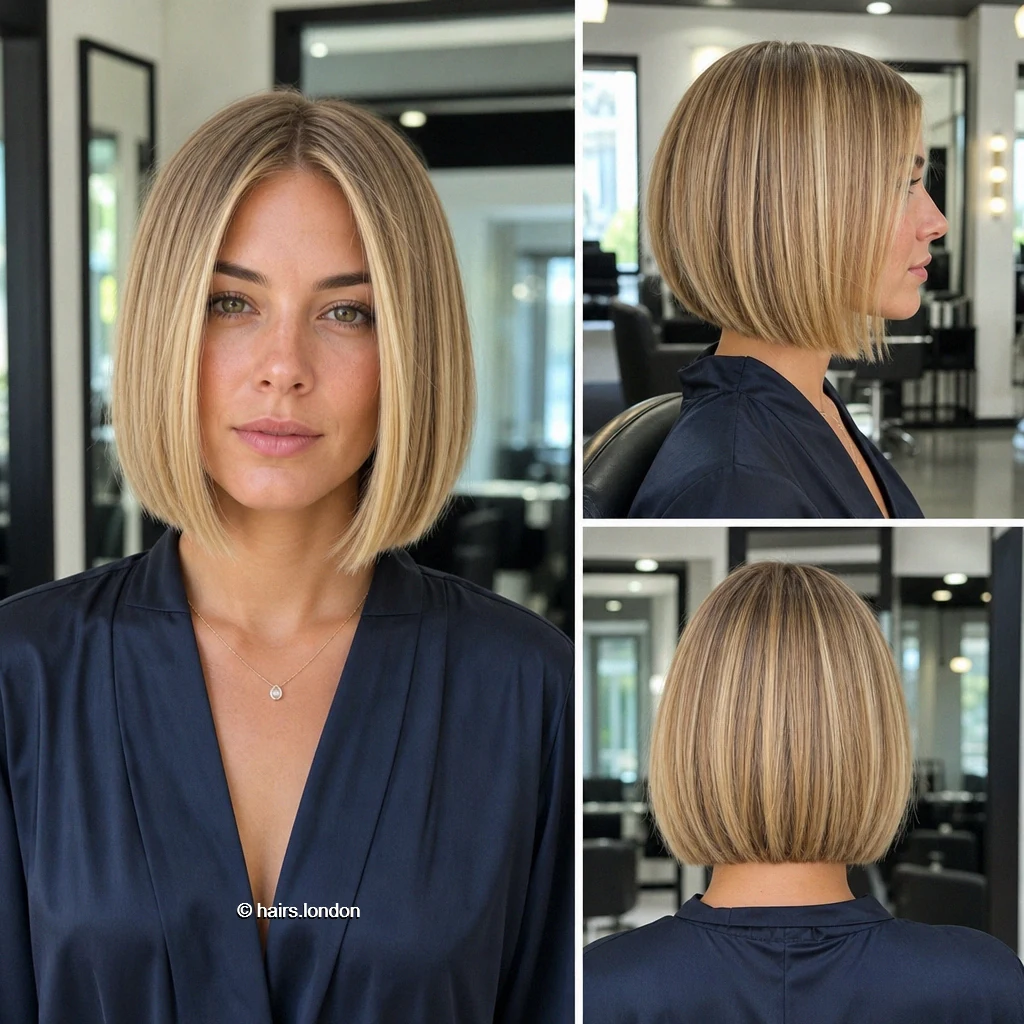
Want one color that looks like sunlight without a single visible stripe? This honey blonde is laid on evenly from root to tip, then cut into a blunt line that stops right at the jaw. The center part splits it into two glossy curtains, and the back view shows the same clean perimeter all the way round. With no layers, every strand reflects light in the same direction, which is where all that shine comes from. Quiet, polished and easy to read.
- Best for: Straight, fine to medium hair; anyone who likes a crisp outline and a short routine.
- Ask your stylist for: A one-length blunt bob at the jaw with a center part, plus an all-over golden honey blonde finished with a gloss.
- How to style it: Blow-dry straight with a paddle brush, run a flat iron over the ends and finish with a light shine spray.
- Upkeep: Trim every 6 weeks to keep the line sharp; gloss every 6 to 8 weeks so the honey stays golden, not brassy.
2. The butter-soft rounded bob
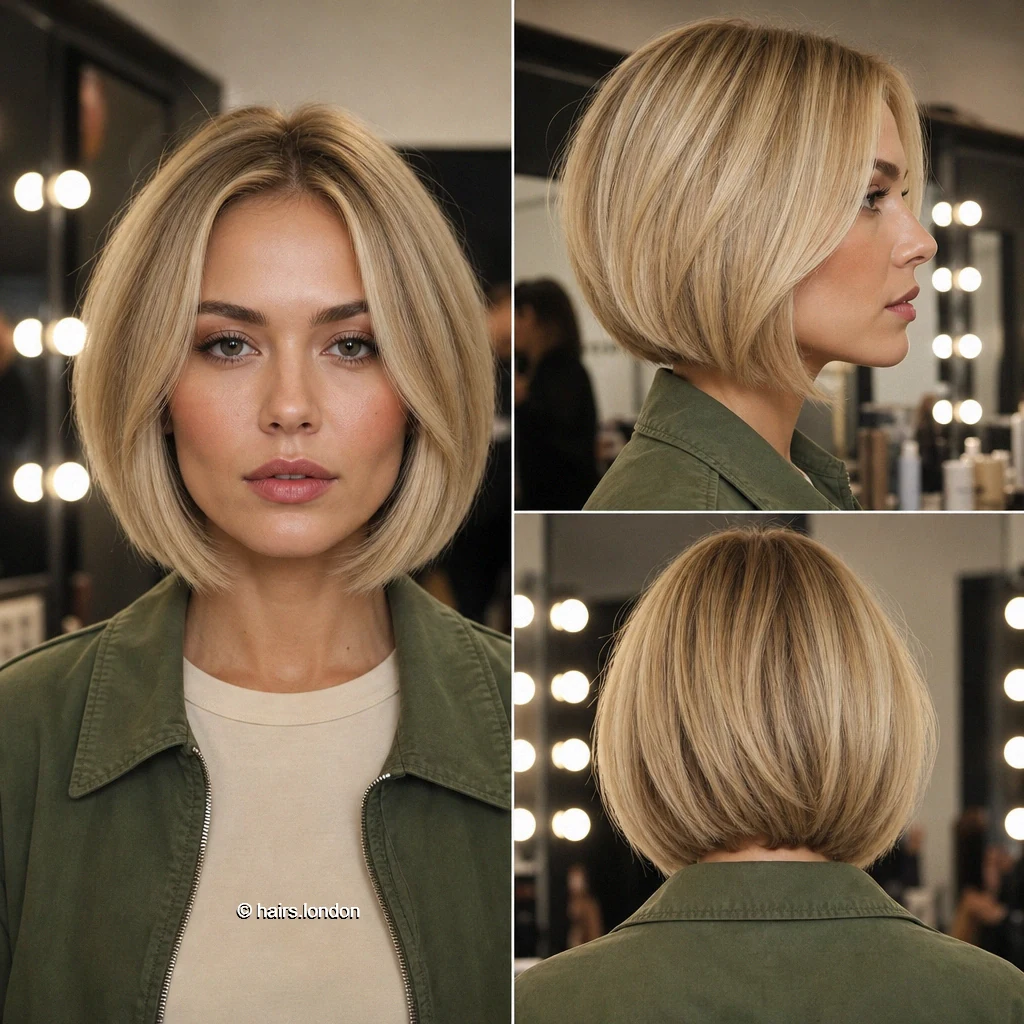
Round is the whole point here. Buttery honey blonde sits over a slightly deeper root, and the center-parted lengths fall to the chin before bending neatly inward, framing the cheeks like a pair of brackets. The side view shows a soft bevel at the ends that is cut in rather than curled in, so the shape holds between washes. Against an olive utility jacket it reads relaxed but still groomed. Soft edges, no struggle.
- Best for: Fine to medium straight hair that holds a bevel; anyone who likes a softer, rounded outline.
- Ask your stylist for: A chin-length rounded bob with a beveled perimeter and a center part; buttery honey blonde with a softly deeper root.
- How to style it: Blow-dry with a medium round brush, rolling the ends under, then smooth the crown with a drop of serum.
- Upkeep: Trim every 6 to 8 weeks; tone every 6 to 8 weeks to keep the butter shade warm.
3. The tucked honey bob
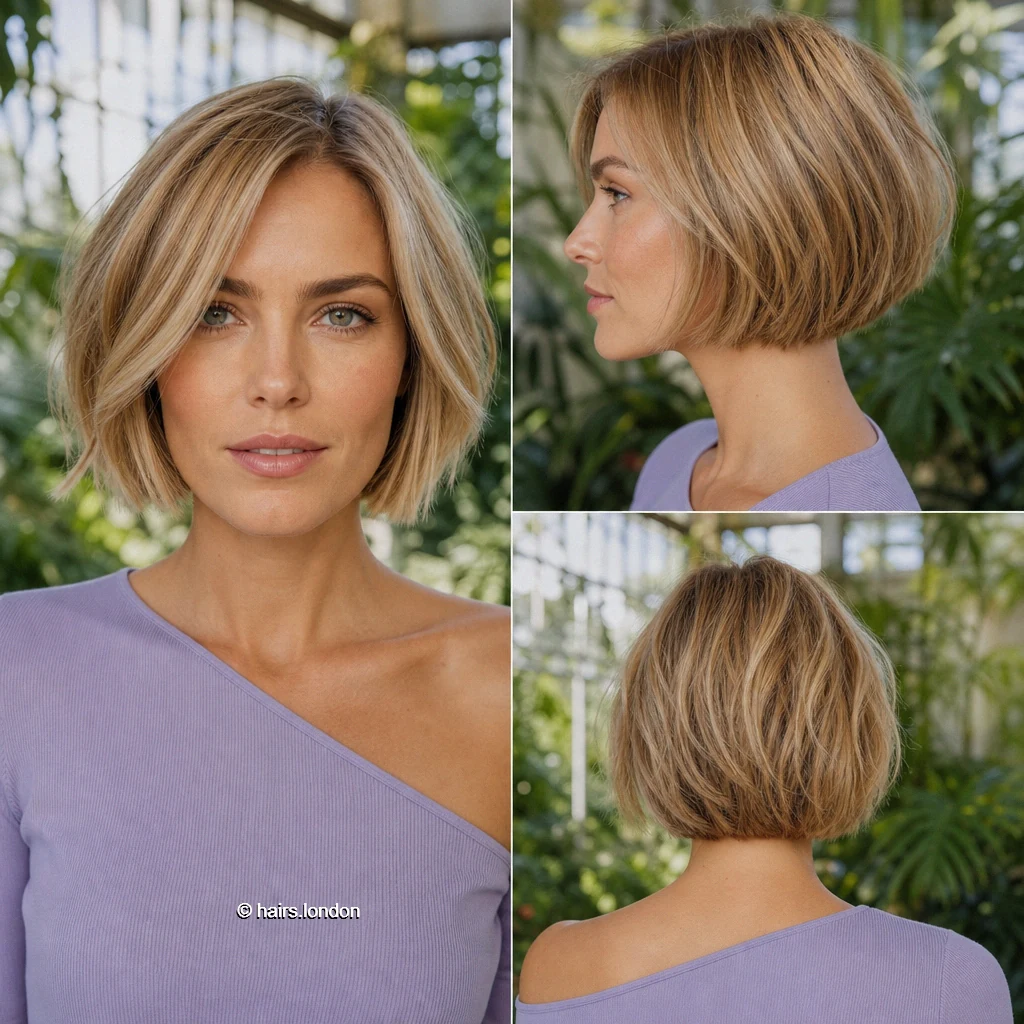
Tuck one side behind your ear and this bob changes mood in a second. The honey blonde starts with a touch of deeper bronde at the root, which keeps the parting from looking stark, and brightens toward ends that land at the chin. A side part puts more weight over one eye while the other side sits close to the face. The back is softly rounded, so the shape still looks finished when you turn around. Easy for a weekend, neat enough for a meeting.
- Best for: Straight to slightly wavy hair; anyone who habitually tucks hair behind the ears.
- Ask your stylist for: A chin-length bob with a side part, light internal layering at the back and a soft rooted honey blonde.
- How to style it: Rough-dry, smooth with a flat iron and tuck one side behind the ear while it is still warm so it stays put.
- Upkeep: Trim every 6 to 8 weeks; root smudge and toner every 8 to 10 weeks.
4. The rooted honey bob with a bright frame
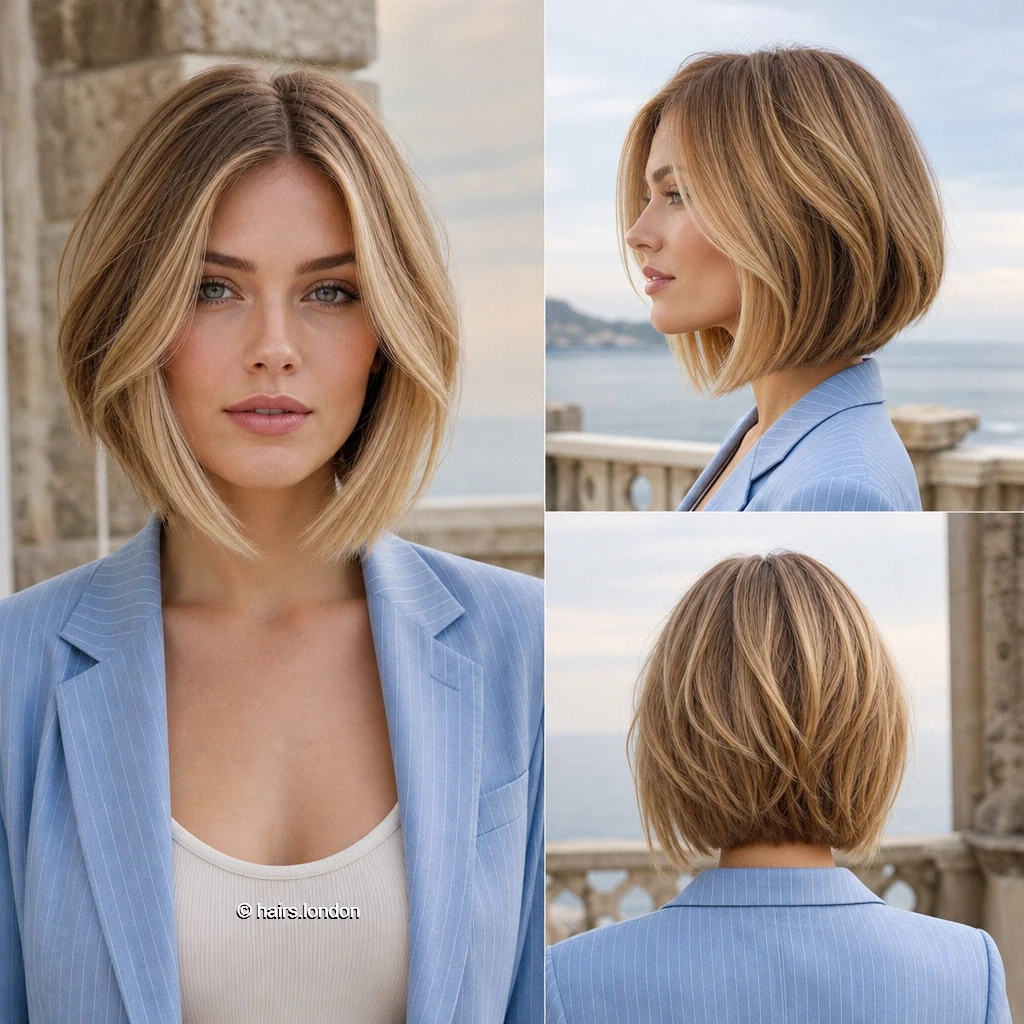
Look closely at the front: the brightest honey sits right around the face, while the root stays a shade deeper. That contrast works like a highlighter, lifting the cheekbones without any makeup. The center-parted, jaw-length ends curve inward, and the back shows soft, blended dimension rather than stripes. It’s a smart choice if you want blonde impact but dread a stark regrowth line, since the root is designed to grow out quietly.
- Best for: Medium to thick straight hair; anyone who wants blonde brightness with longer gaps between appointments.
- Ask your stylist for: A jaw-length bob with a center part, a shadow root and brighter honey face-framing pieces painted in.
- How to style it: Blow-dry with a round brush, turning the ends under; clip the front pieces back while you dry the back.
- Upkeep: Trim every 7 to 8 weeks; color every 10 to 12 weeks thanks to the rooted base.
5. The honey bob with wispy bangs
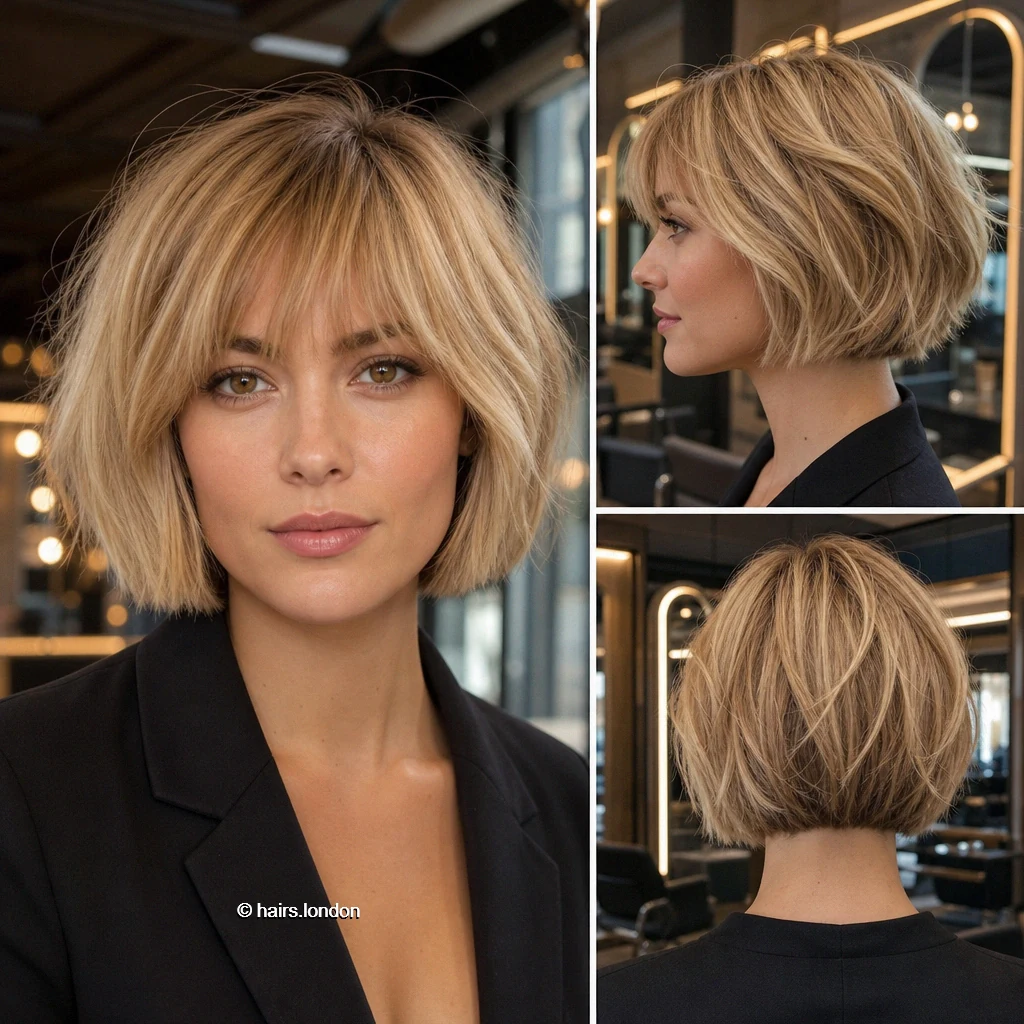
Bangs and a bob in one golden package, and nothing about it feels stiff. The fringe is cut wispy enough to show a little forehead, splitting softly at the center. The lengths stop just below the chin and bend out at the tips, while the back is lightly graduated so the shape tips forward. A slightly deeper root adds depth under the honey, which is why it looks warm rather than flat. Lived-in, not fussed over.
- Best for: Fine to medium straight hair; anyone ready for a fringe that is forgiving to grow out.
- Ask your stylist for: A chin-length bob with light graduation at the back, wispy see-through bangs and honey blonde over a soft root.
- How to style it: Blow-dry the bangs first, side to side with a flat brush, then rough-dry the lengths and bend the ends with a flat iron.
- Upkeep: Bang trims every 3 to 4 weeks; full trim every 6 to 8 weeks; toner every 8 weeks.
6. The sun-warmed soft-bend bob
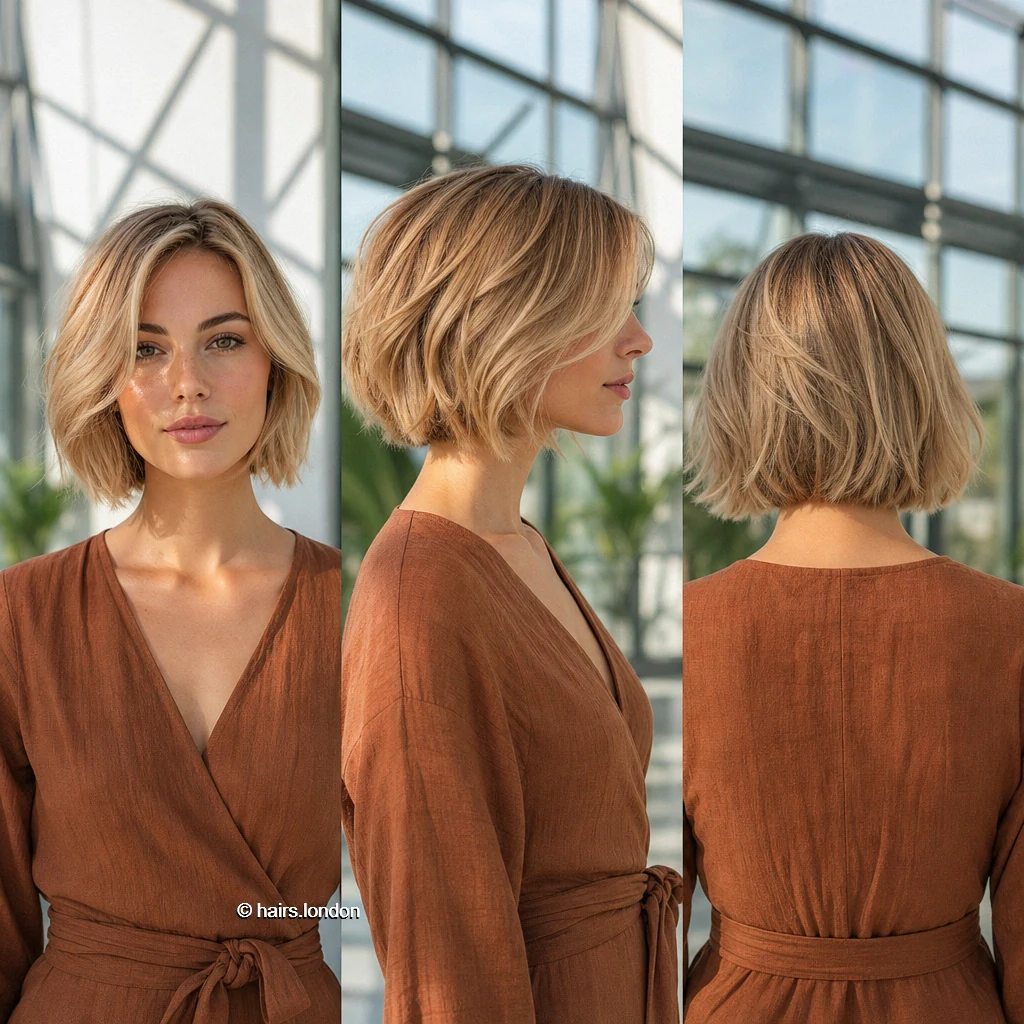
Some bobs look best fresh from the salon; this one looks best on a slow Sunday. The honey blonde is lightly rooted, with paler pieces sitting on the surface, and the lengths stop at the chin with a gentle S-bend running through them. From behind it looks even and soft, with no hard line at the nape. Rust and terracotta clothes pick up the gold in it beautifully. Low effort, high warmth.
- Best for: Fine to medium hair with a slight natural wave; anyone who air-dries most days.
- Ask your stylist for: A chin-length bob with soft, invisible layers and a rooted honey blonde with surface highlights.
- How to style it: Scrunch in a light wave spray, air-dry, then bend a few pieces with a flat iron.
- Upkeep: Trim every 8 weeks; gloss every 8 weeks.
7. The swept golden bob
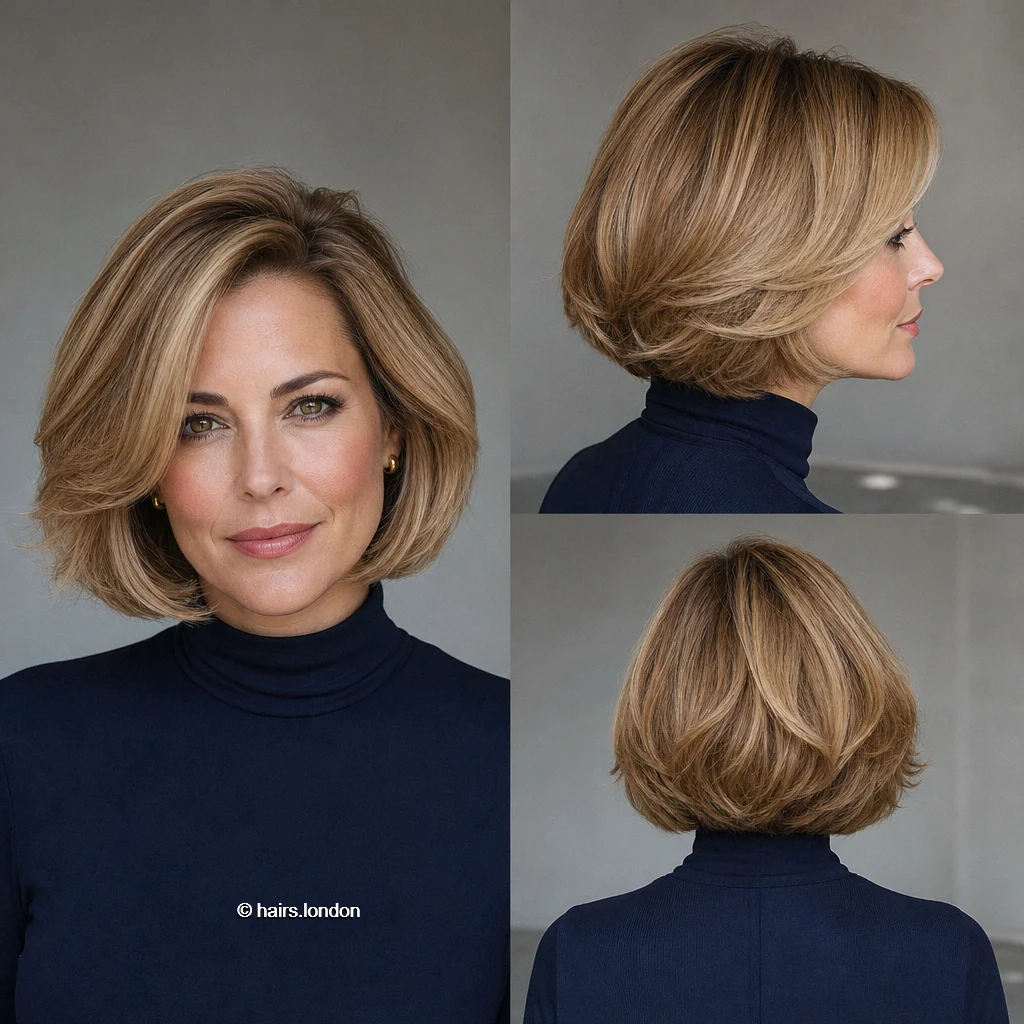
If you like your hair to look done without looking styled, save this one. A deep side part sweeps golden honey across the forehead, and the crown has real lift. The ends turn under neatly at the chin, and the side view shows soft graduation at the back that gives the shape its rounded profile. Lighter gold ribbons sit over a deeper golden base, so it has depth in any light. Classic, with warmth.
- Best for: Medium-density straight hair; anyone who prefers a polished, rounded shape.
- Ask your stylist for: A chin-length graduated bob with a deep side part; honey highlights woven over a dark golden blonde base.
- How to style it: Blow-dry with a large round brush, lifting at the root and rolling the ends under.
- Upkeep: Trim every 6 weeks; highlights every 10 to 12 weeks.
8. The long-fringe honey bob
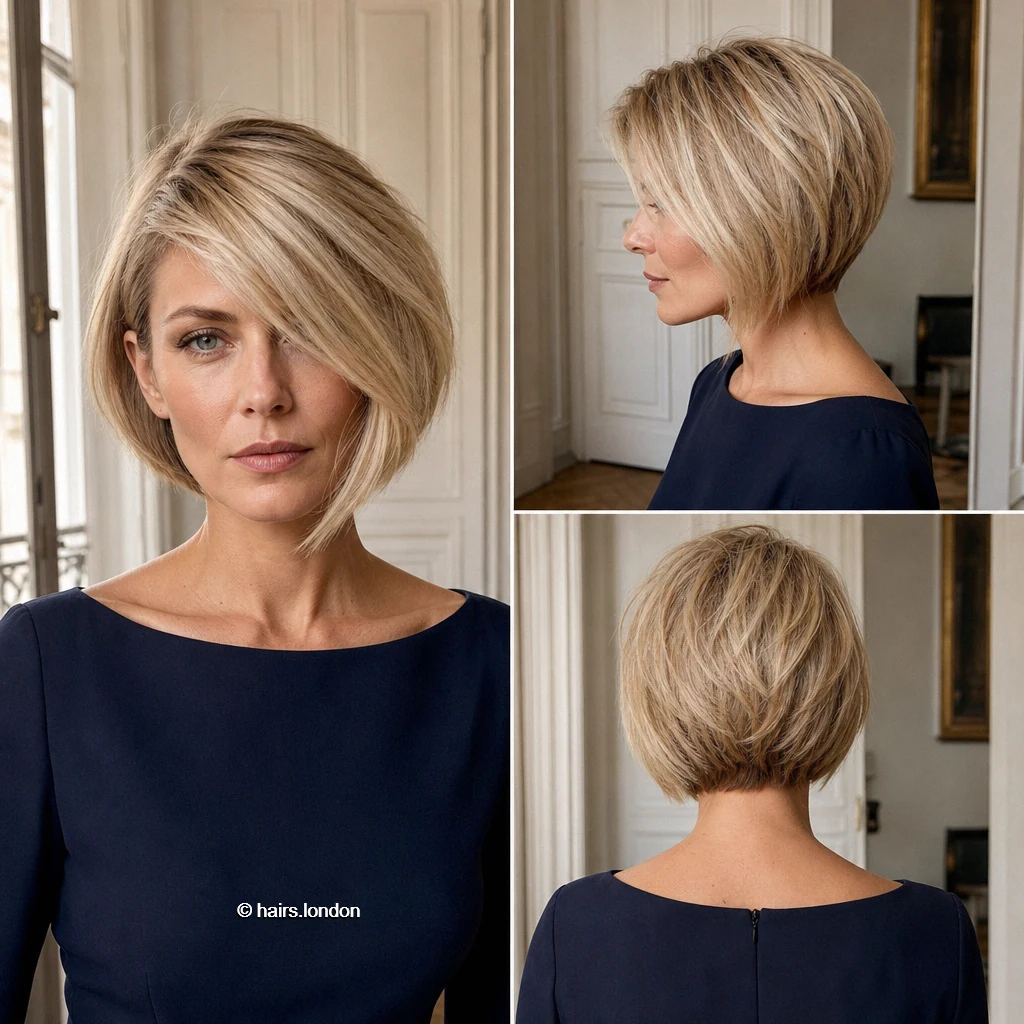
A long side fringe can make a short bob feel almost romantic. Here, pale honey blonde sweeps across one eye from a deep part, while the back is tapered and stacked closer to the nape. A slightly darker root keeps the blonde from looking washed out against the skin. The contrast between the long front and the neat back gives the cut its movement: it falls forward, catches and settles again. Try it if you like a little mystery.
- Best for: Fine to medium straight hair; anyone who wants softness around the face.
- Ask your stylist for: A chin-length bob with a stacked, tapered back, a long side-swept fringe and pale honey blonde over a soft root.
- How to style it: Blow-dry the fringe across the forehead with a flat brush, then smooth the back with a small round brush.
- Upkeep: Trim every 5 to 6 weeks to keep the fringe in place; tone every 6 to 8 weeks.
9. The long-front honey A-line
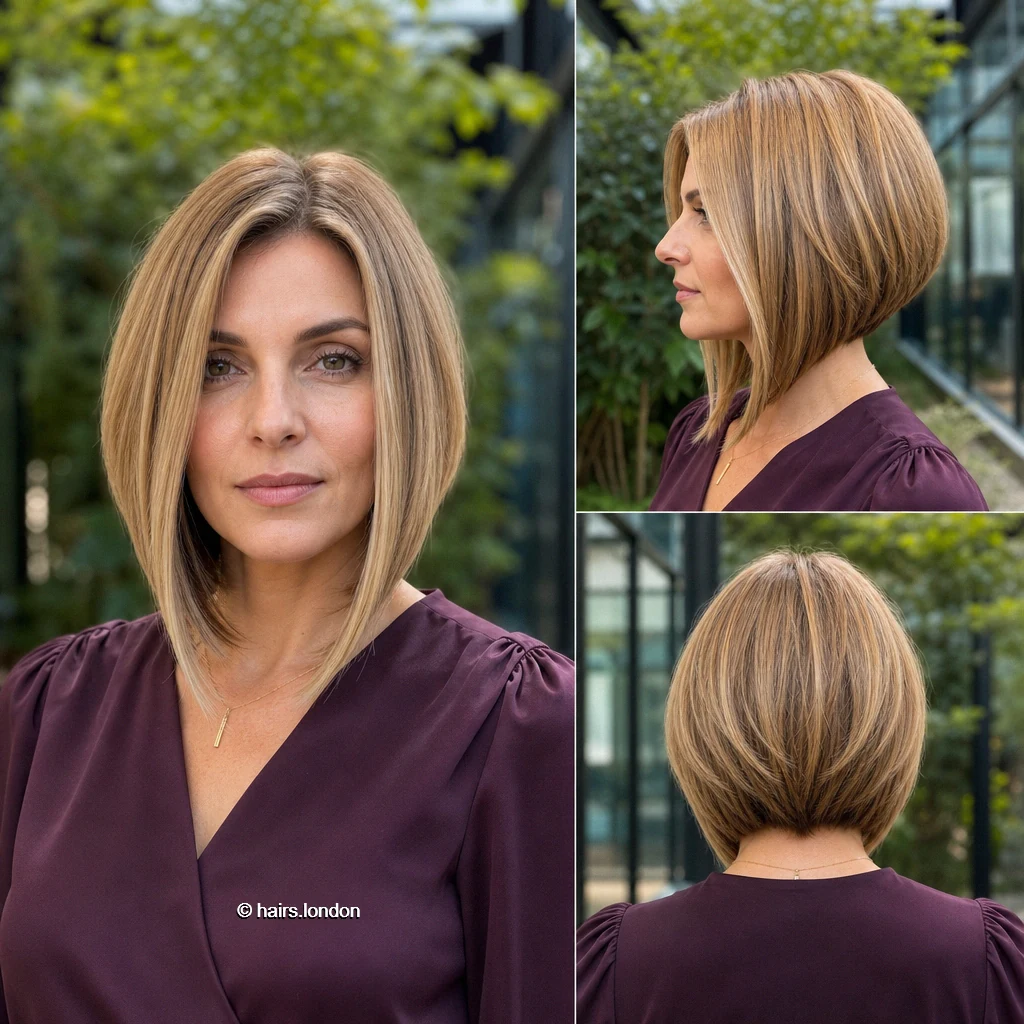
Turn around and you’ll see why this one works: the back is cut short and rounded, while the front lengths slope down to the collarbone in two long points. Honey bronde runs through it, deeper at the roots and lighter on the ends. The center part keeps the angle symmetrical and sleek. You get the length of a lob around your face with the lightness of a bob at the back, and it reads grown-up without trying.
- Best for: Straight, medium-density hair; anyone who wants length at the front but less weight behind.
- Ask your stylist for: A long A-line bob with a center part, a rounded shorter back and front pieces at the collarbone; honey bronde balayage.
- How to style it: Blow-dry straight with a paddle brush, angling the front pieces forward, then finish with a flat iron.
- Upkeep: Trim every 6 to 8 weeks to keep the angle; balayage every 12 weeks.
10. The choppy rooted honey bob
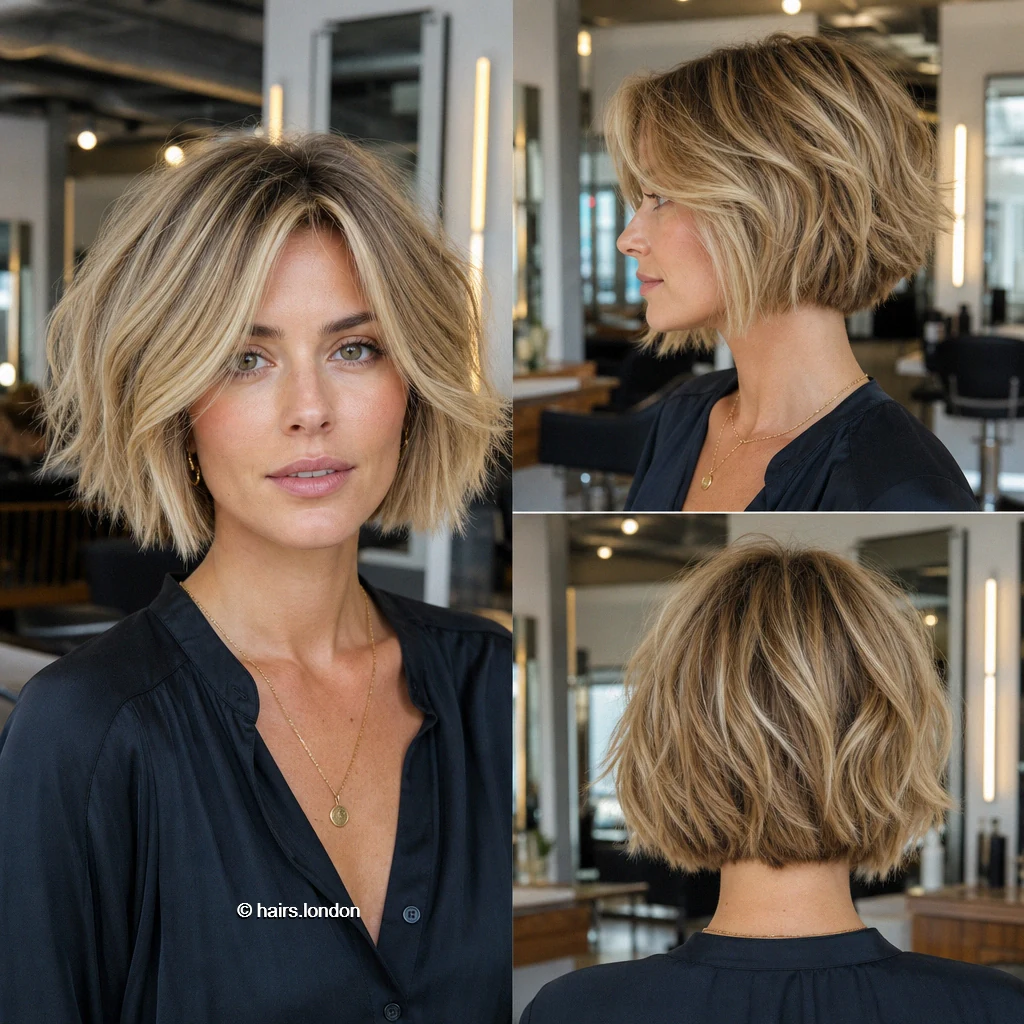
Not every bob wants to be smooth. This one has a darker root that melts into choppy honey blonde, with ends that bend and kick out in different directions around the jaw. The side part throws extra volume over one side, and the back view shows piecey layers instead of a solid line. Point-cut ends are the reason it looks textured even without curls, and the deeper root keeps all that movement from reading brassy. Messy, but on purpose.
- Best for: Medium to thick hair with some natural movement; anyone who prefers texture to polish.
- Ask your stylist for: A jaw-length bob with point-cut, choppy ends and invisible layers; a shadow root melting into honey blonde.
- How to style it: Spray texturizer through damp hair, rough-dry, then twist random sections around a flat iron.
- Upkeep: Trim every 7 to 8 weeks; root melt and toner every 10 to 12 weeks.