

11. Lavender Textured Bob With a Full Outline
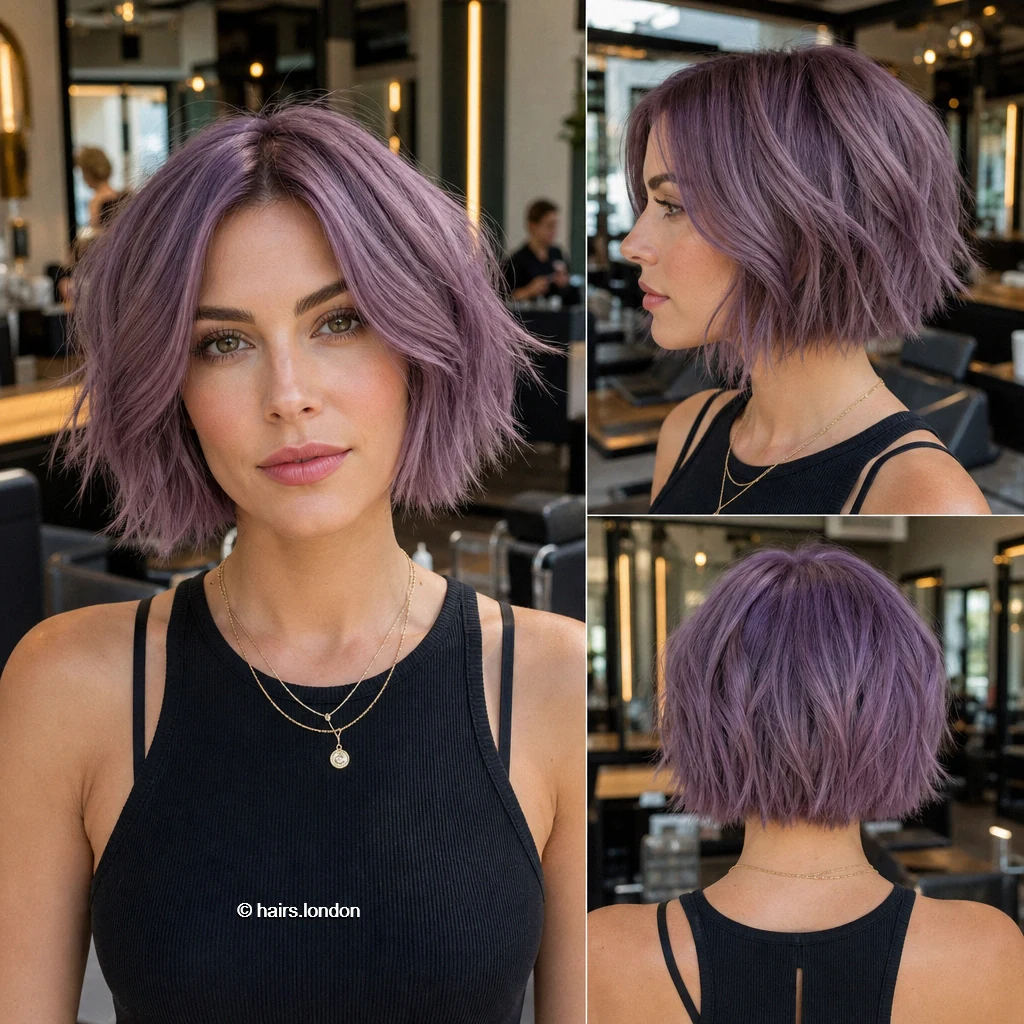
Smoky lavender gives this jaw-length bob a softly dimensional appearance overall. A soft center part opens into loose, face-framing sections. Uneven bends and piecey ends create visible texture across the sides. The back retains a fairly full, gently broken baseline. Request selective texture rather than layers that thin every end. Scrunch lightweight foam into damp hair to encourage separation naturally. Diffuse gently, leaving some strands to settle on their own. Trim when the tips lose definition or become overly sparse. Discuss how frequently the lavender needs refreshing on your hair. This shape suits density that supports fullness beneath the texture.
12. Soft Pink Bob With Airy, Piecey Layers
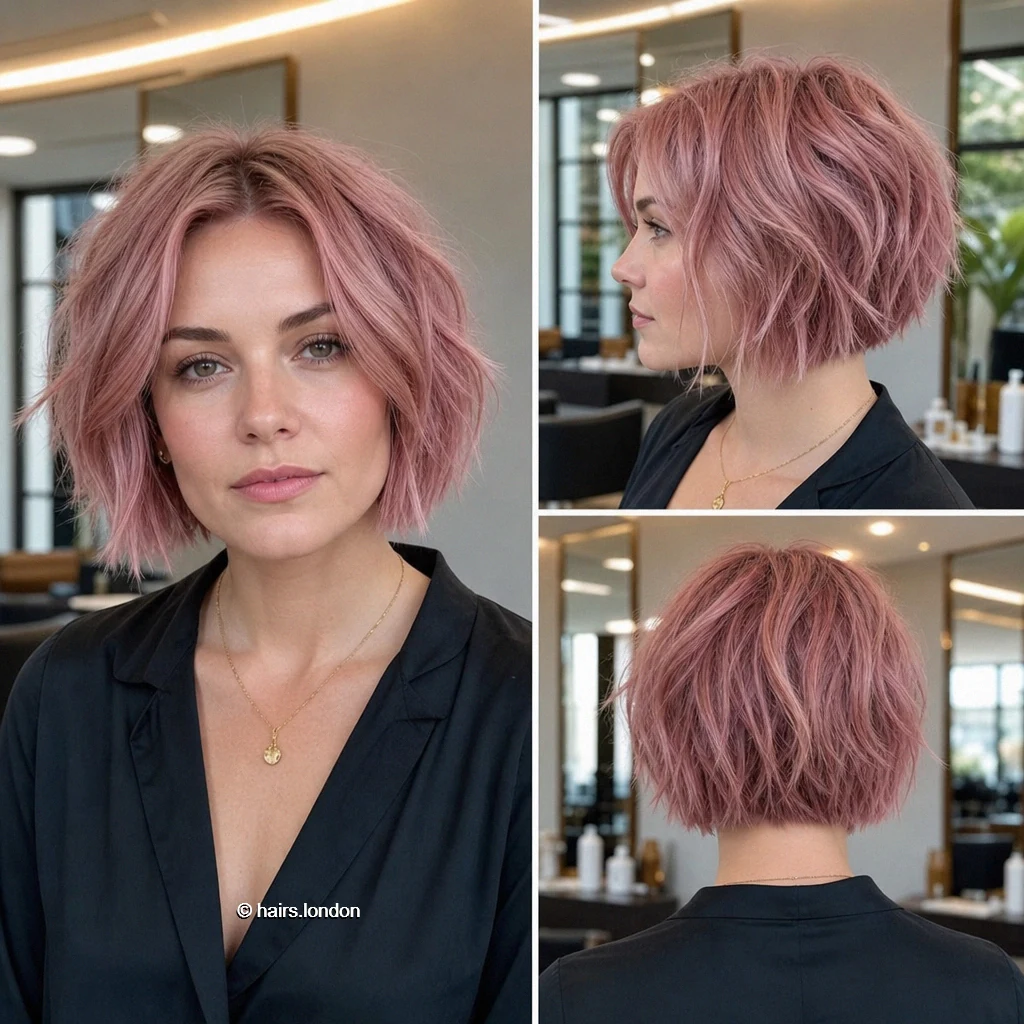
Muted pink warms this short bob without overwhelming its texture. The off-center opening allows soft pieces to frame both cheeks. Loose, irregular waves give the sides and back airy movement. Its neckline-length edge remains visible beneath the separated upper layers. Ask for enough perimeter weight to prevent an overly thin finish. Scrunch damp hair, then diffuse while disturbing the waves. Separate dry pieces with fingers instead of a stiff brush. Schedule trims when the short outline starts losing its shape. Choose color care according to fading and your hair’s condition. Natural movement makes this practical if frequent smoothing feels inconvenient.
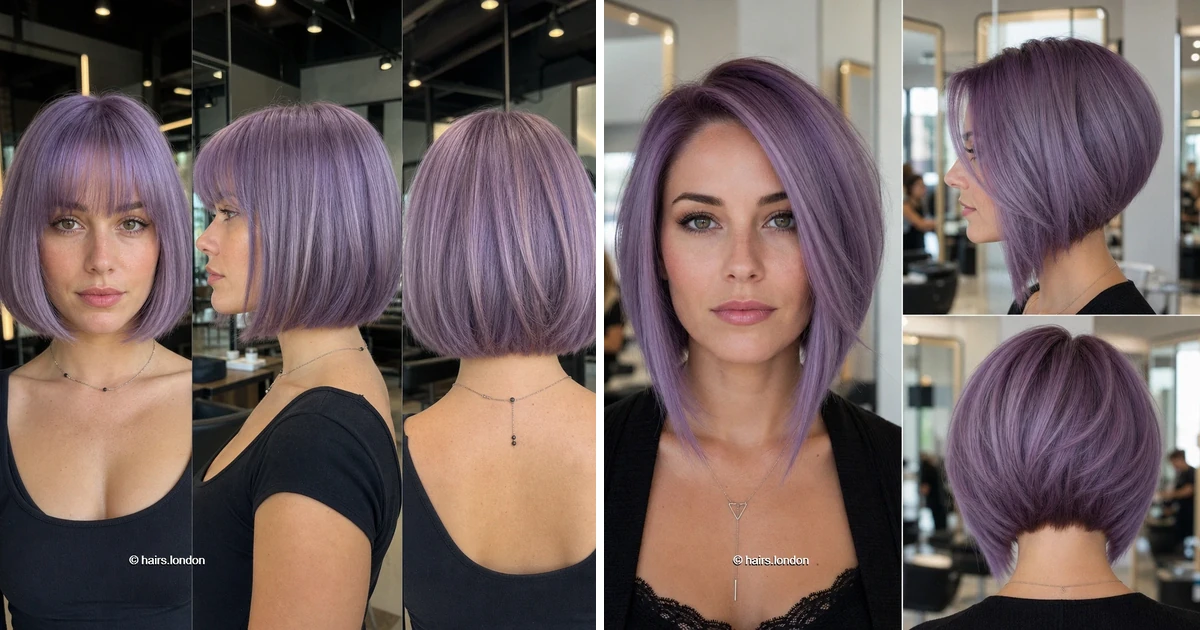
13. Violet Graduated Bob With a Side Sweep
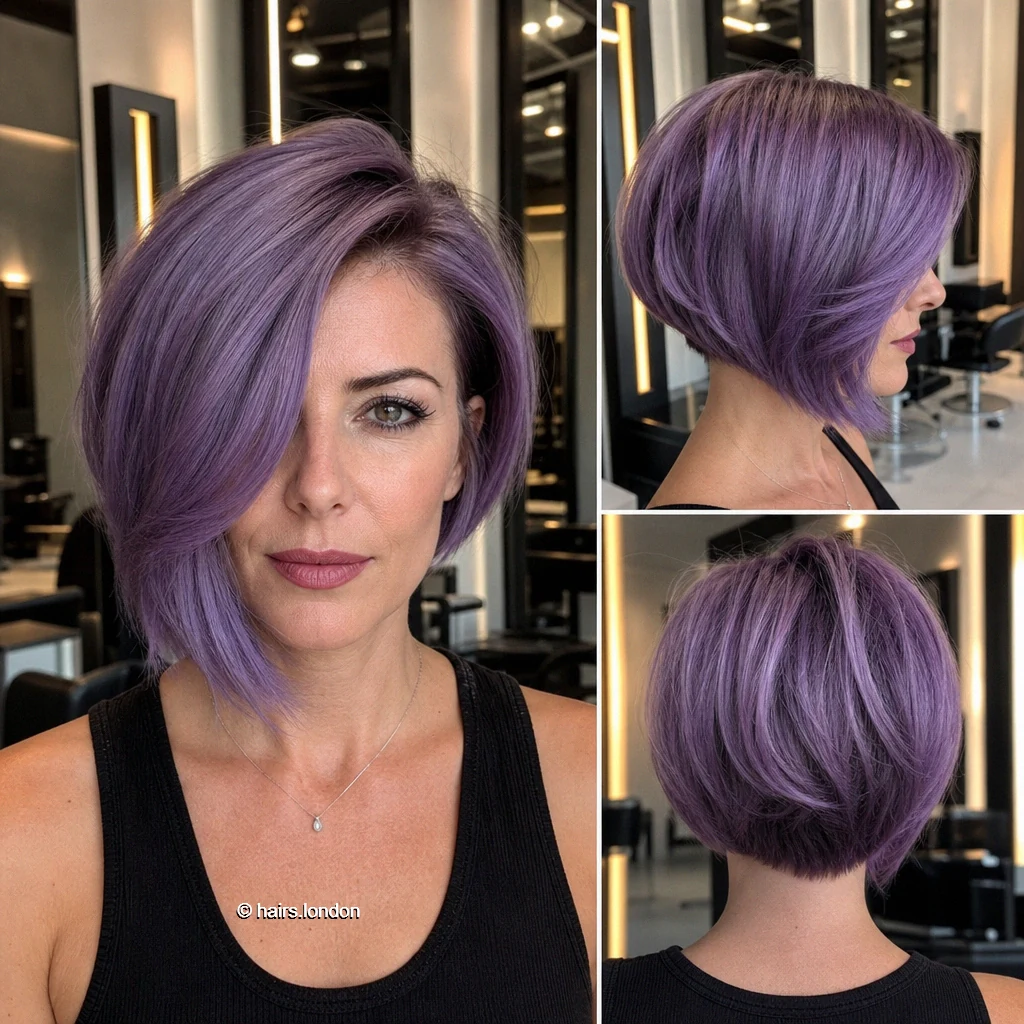
Violet color emphasizes the smooth surface of this graduated bob. A substantial side sweep crosses the forehead toward one cheek. Behind it, rounded volume tapers into a visibly shorter nape. The front remains longer than the compact back and neckline. Ask where the weight should sit for your hair density. Blowdry with root lift, then smooth the sweeping front section. Keep finishing product light to preserve the rounded silhouette neatly. Trim the nape before its defined shape starts growing out. Discuss purple refreshes if frequent washing quickly dulls the tone. This style depends on comfortable upkeep and workable front growth.
14. Rose Pink Asymmetrical Graduated Bob
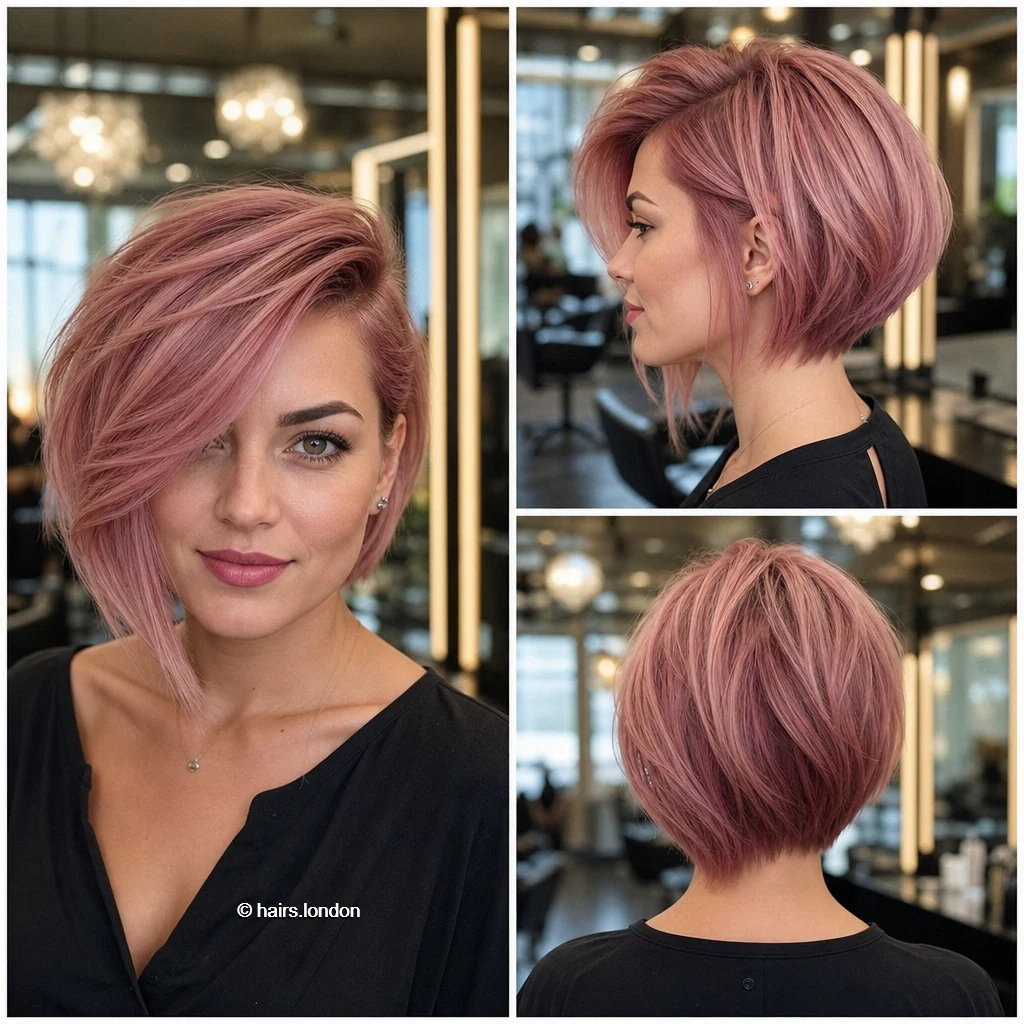
Rose pink draws attention to this bob’s striking uneven front. A long swept section falls much lower than the opposite side. The side view shows rounded graduation above a short nape. Those visible differences give the cut a clear asymmetrical shape. Ask which side should carry length around your natural part. Lift the back while drying, then smooth the extended front. Avoid flattening the crown beneath heavy oils or creams. Regular trims protect the nape shape and intentional front contrast. Discuss pink refreshes alongside your tolerance for color upkeep too. This design suits anyone comfortable styling its pronounced side difference.
How to Choose Your Bob Length and Shape
Start with the point you want the perimeter to meet: jaw, neck or shoulder. A jaw-length outline keeps the face-framing shape compact; a shoulder-grazing lob offers more length. Compare side and back views before requesting an angle. Longer fronts alone can suggest an A-line, while a stacked or graduated bob needs visible shortening and weight buildup at the back. Consider where your hair bends naturally, whether it clears your collar, and how much nape exposure you actually want.
Styling Fine, Thick, Wavy and Curly Textures
On fine hair, preserve a convincing baseline and use lightweight root lift rather than heavy creams. Thick hair may benefit from carefully placed internal weight removal, but excessive thinning can make a bob’s ends expand or look ragged. For waves, scrunch in a light styler and diffuse gently so the perimeter retains movement. For curls, discuss the finished length in its dry state and shape the outline around shrinkage. Smooth a precise bob downward with a brush; keep fringe styling separate if its growth pattern needs another direction.
Keeping Pastel Pink and Purple Color Fresh
The pinks and purples shown range from muted rose to cooler lavender, but photographs cannot establish a color formula or the hair’s starting condition. Ask a colorist what preparation your hair would need and what upkeep is realistic. Gentle washing, reduced heat and color-safe products can help limit fading; a stylist can advise when a gloss or refresh makes sense. Protect dry or processed ends, since a faded pastel and a damaged perimeter can both make a carefully shaped bob look less defined.
Maintaining the Bob Perimeter and Graduation
A smooth, full baseline shows stray lengths sooner than a deliberately piecey edge. Fringe, long front points and exposed napes may also need attention before the rest of the cut feels grown out. On graduated or stacked bobs, watch the shape beneath the rounded back: as the nape grows, the silhouette changes. Ask your stylist for a trim interval based on your growth rate and the precision you want. Longer, softly layered lobs may offer more flexibility between appointments.
What to Discuss with Your Stylist
Bring the front, side and back view of the shape you prefer. Point out the exact features you want to keep, such as a full jaw-length edge, a sweeping front or visible nape graduation. Discuss density, natural waves or curls, cowlicks, fringe behavior and how you normally part your hair. Ask to see where the perimeter will fall after drying, how much daily smoothing or diffusing the cut needs, and whether your desired pastel color fits your hair’s condition and maintenance budget.
Frequently Asked Questions
What is the difference between a bob and a lob?
A lob is a longer bob, typically falling nearer the shoulders. In this collection, the shoulder-grazing lavender cut reads as a lob, while the jaw- and neck-length shapes read as bobs.
Is an A-line bob the same as a stacked bob?
No. A-line describes a perimeter that gets longer toward the front. Stacked describes visible graduation that builds weight at the back. A cut can show both features, but one does not prove the other.
When should I ask for an inverted bob?
Use the term when you want a distinctly shorter back with longer front sections, as seen in the stronger angled examples here. Show your stylist the side and back views so the amount of graduation is clear.
Will a textured bob work with fine hair?
It can, if enough weight stays at the perimeter. Ask for selective texture and lightweight styling products; too many short layers or heavily thinned ends may make fine hair look sparse.
How can thick hair avoid a bulky bob shape?
Ask your stylist to assess where weight collects when your hair is dry. Strategic internal shaping may help, while keeping the visible outline substantial enough for the bob you want.
Can natural curls wear a graduated bob?
Yes, conditionally. Curl shrinkage and growth patterns change how the back and front meet, so discuss the finished dry shape and whether you are comfortable maintaining its shorter nape.
What should I consider before adding a fringe?
Consider how your hair grows at the hairline, how often you will style the fringe, and whether you want regular fringe trims. The smooth lilac bob shows a fuller fringe; other cuts use a longer sweep.
How much daily styling does a smooth bob need?
That depends on your natural texture and the precision you expect. A curved, polished outline may need directional blowdrying, while a textured bob can often be scrunched or diffused.
How often should a short stacked bob be trimmed?
Book based on how quickly your nape grows and when the rounded back starts losing its intended outline. A stylist can suggest an interval after seeing your growth rate.
Can I grow out an inverted bob into a lob?
Yes. Your stylist can gradually rebalance the longer front against the growing back while preserving as much overall length as possible. Expect the silhouette to change during the process.
How do I keep pastel pink or lavender from fading quickly?
Follow your colorist’s washing and product guidance, limit unnecessary heat, and discuss refresh appointments. The best routine depends on the hair’s condition and how the color was achieved.
Which photos should I take to a bob consultation?
Take front, side and back views of your favorite cut. Explain whether its length, perimeter, graduation, fringe, texture or color matters most, since those details may require different upkeep.
Conclusion
The most useful comparison among these pastel pink and purple bob haircuts is shape: a loose, full-edged bob behaves differently from a precise fringe cut or a short graduated nape. Choose the outline you can maintain with your natural texture and preferred routine, then plan the pastel shade with a colorist around your hair’s condition.