


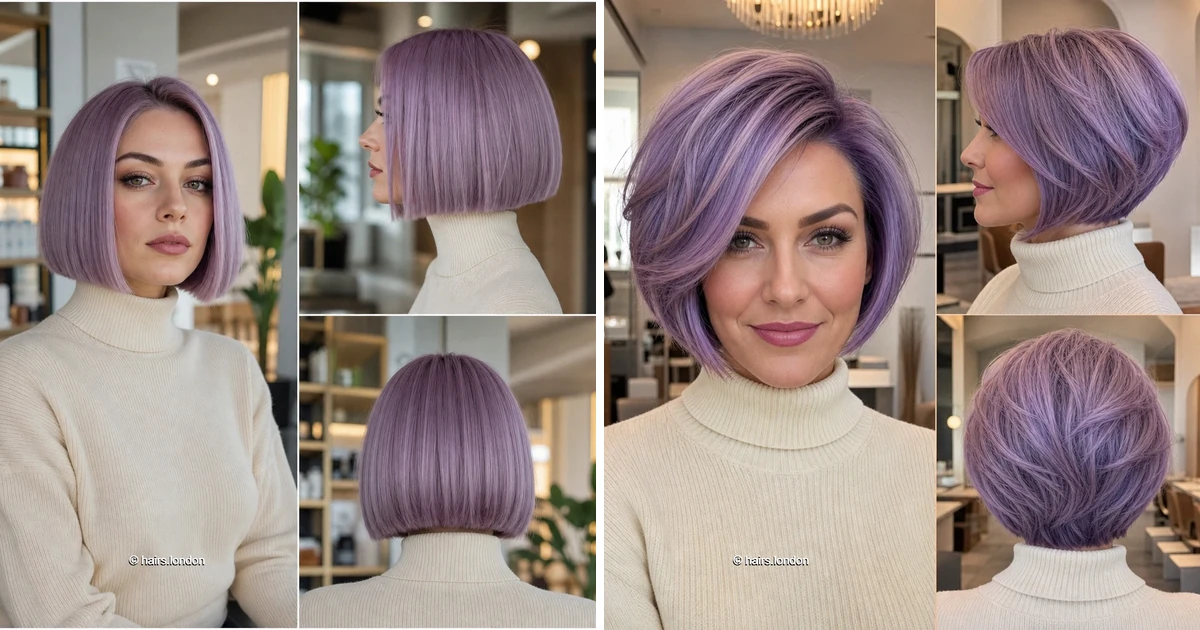
11. Textured Lilac Bob with a Loose Side Sweep
Soft lilac and darker roots give this bob visible depth. A loose side sweep falls toward the cheekbone without bangs. Piecey layers break up the jaw-length sides and back. The lower edge looks textured, not like a precision line. At the rear, the shape narrows slightly toward the neck. Ask for movement without excessive thinning through the lower sections. Encourage natural bends with mousse and gentle scrunching while damp. Smooth only the pieces that need definition after drying. This approach may appeal if you prefer less polished styling. Trim when the ends lose their deliberately broken, airy outline between trims.
12. Deep Plum Bob with a Polished Side Part
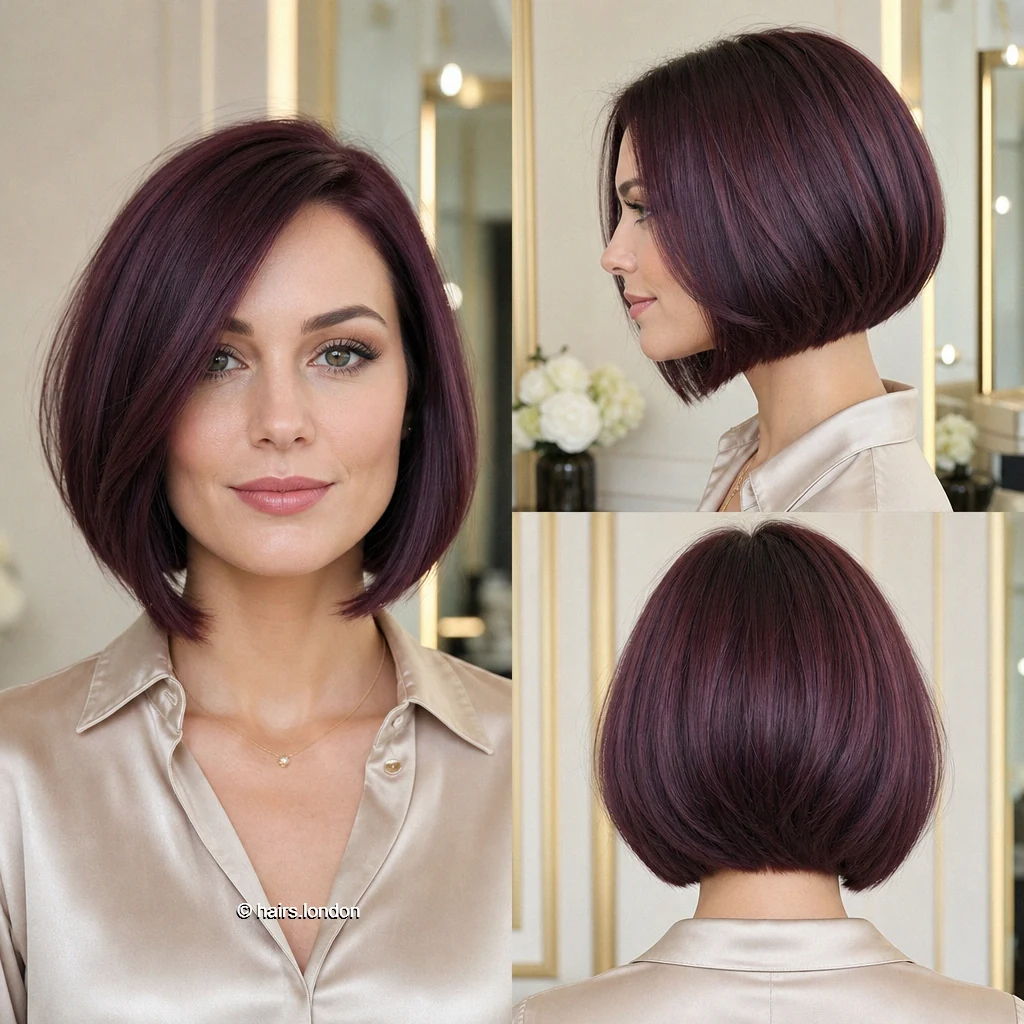
This deep plum bob combines a polished surface with fullness. Its side part sends a broad section across the forehead. The front falls near the jaw and curves toward the neck. A rounded back ends neatly above the lower nape. The side profile suggests a slightly longer front, without exaggeration. Ask where the weight line should sit for your density. Blow-dry downward, then turn the perimeter under with restraint. Hair prone to swelling may need careful product and heat control. Keep trims consistent so the compact back retains its shape. Discuss color maintenance before choosing such a reflective plum shade.
13. Mauve Bob with Subtle A-Line Shape
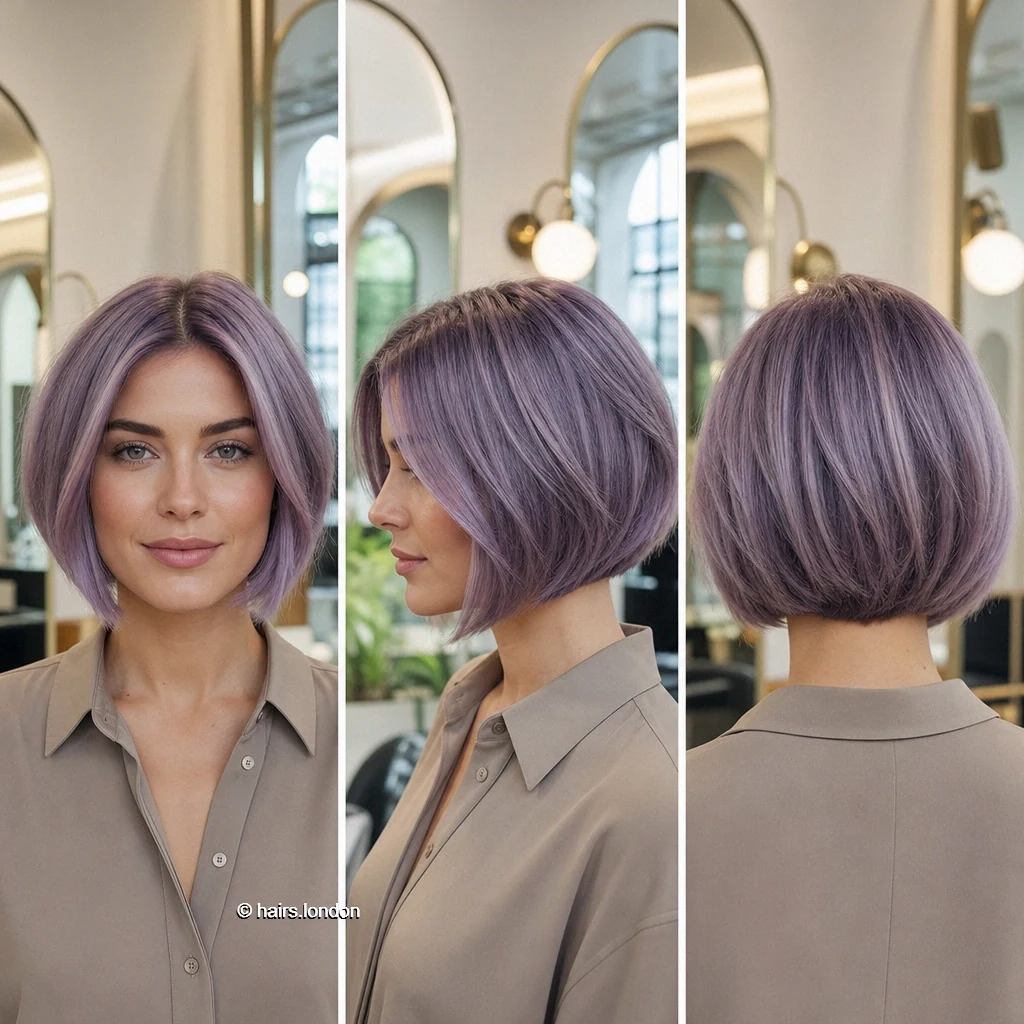
A muted mauve tone complements this softly rounded bob. Its center part keeps both sides of the face open. The front pieces sit slightly longer than the back. From behind, the perimeter rests above the lower neck. Gentle shaping adds volume without visibly choppy surface layers. Ask for a subtle A-line rather than a steep angle. Direct a brush downward to keep the sides looking smooth. Turn the ends inward lightly if your hair allows it. Fine density may benefit from preserving the compact lower edge. Regular trims protect the gentle angle as the nape grows. Avoid overthinning the ends.
14. Burgundy Layered Lob with Relaxed Movement
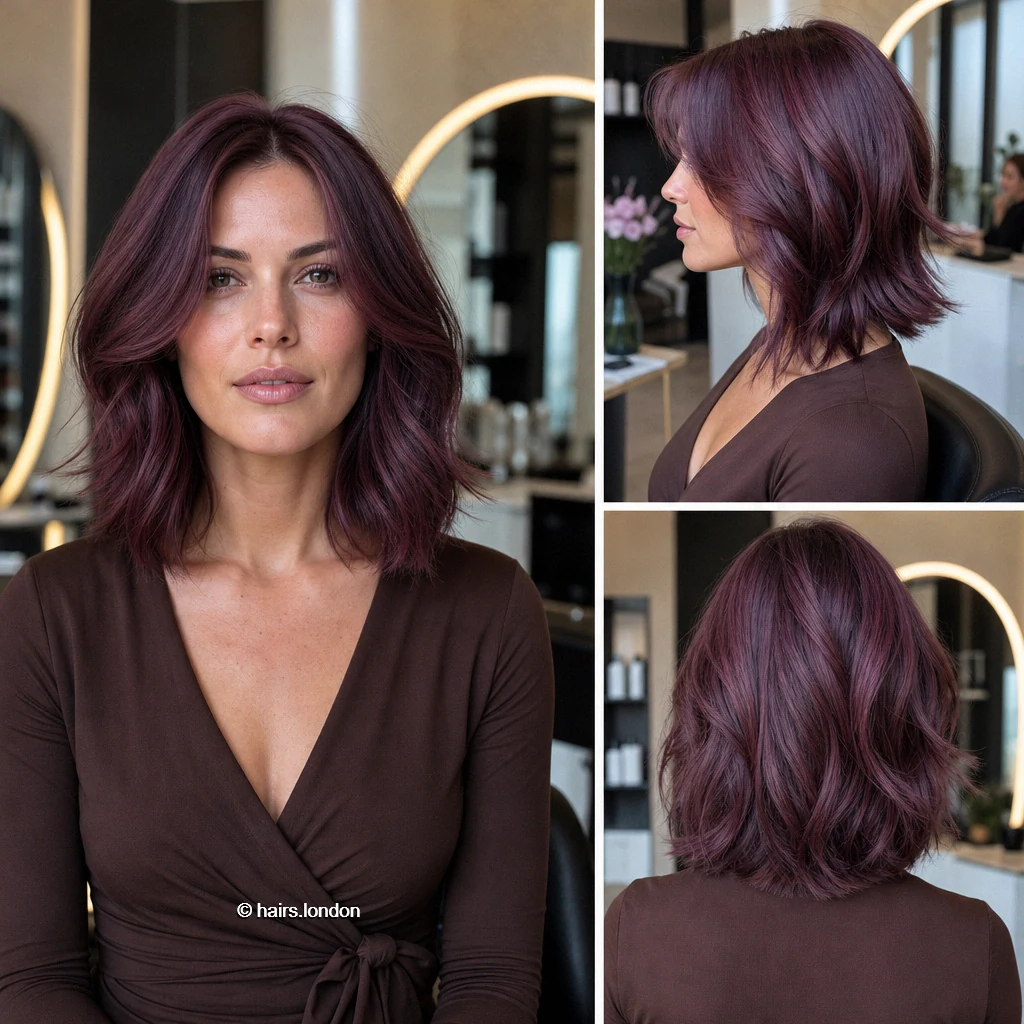
This burgundy-purple lob falls around the shoulders with movement. A center part opens into loose, face-framing front sections. Visible layers and bends soften the sides and lower edge. The back appears longer and fuller than these cropped bobs. Flicked ends keep the shape relaxed rather than sharply geometric. Ask for enough length to accommodate your natural wave pattern. Enhance bends with a diffuser or a few loose twists. Avoid heavy cream if it makes the layers look clumped. This length offers more flexibility for growing out shorter cuts. Trim dry-looking ends and refresh burgundy color when it dulls over time.
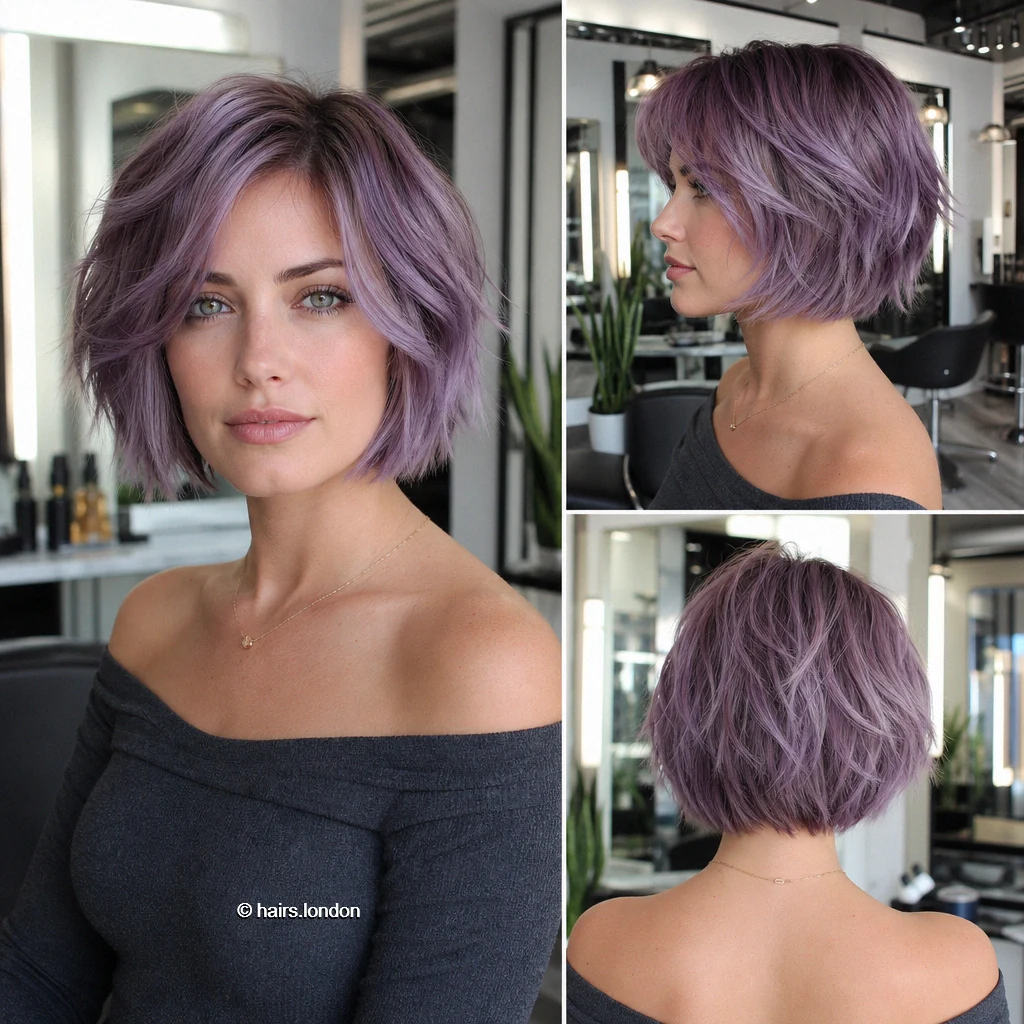
15. Wavy Lavender Bob with Piecey Ends
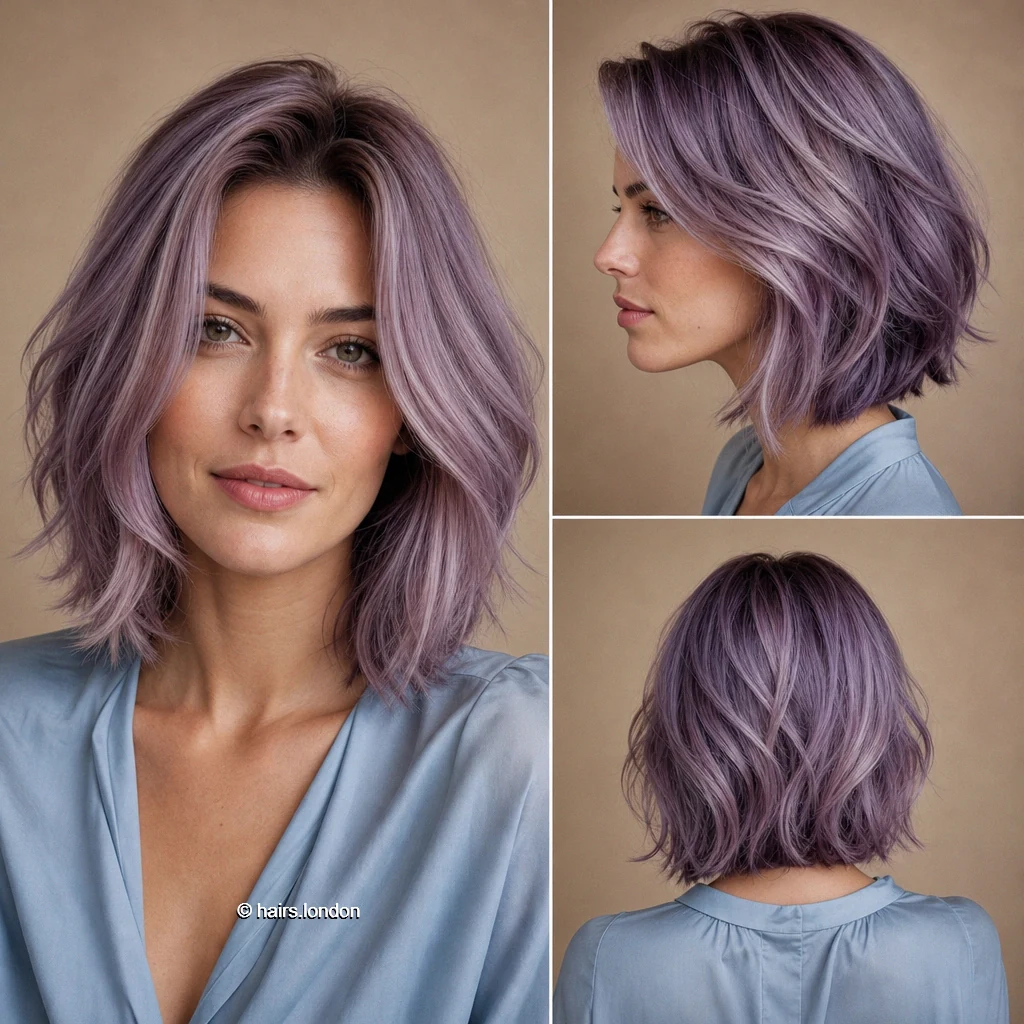
Lavender color highlights the loose waves in this layered bob. A soft, off-center part gives the front an easy sweep. The sides finish near the jaw, with longer pieces underneath. At the back, uneven-looking bends create a broken perimeter. The silhouette stays airy rather than forming a rounded block. Ask for layers that work with your natural wave pattern. Scrunch a lightweight mousse into damp lengths and diffuse gently. Leave the tips separate instead of brushing them smooth. Thicker density may require careful internal shaping to avoid bulk. Trim when the piecey outline loses its intended balance. Avoid heavy oils.
16. Plum Short Bob with Crown Volume
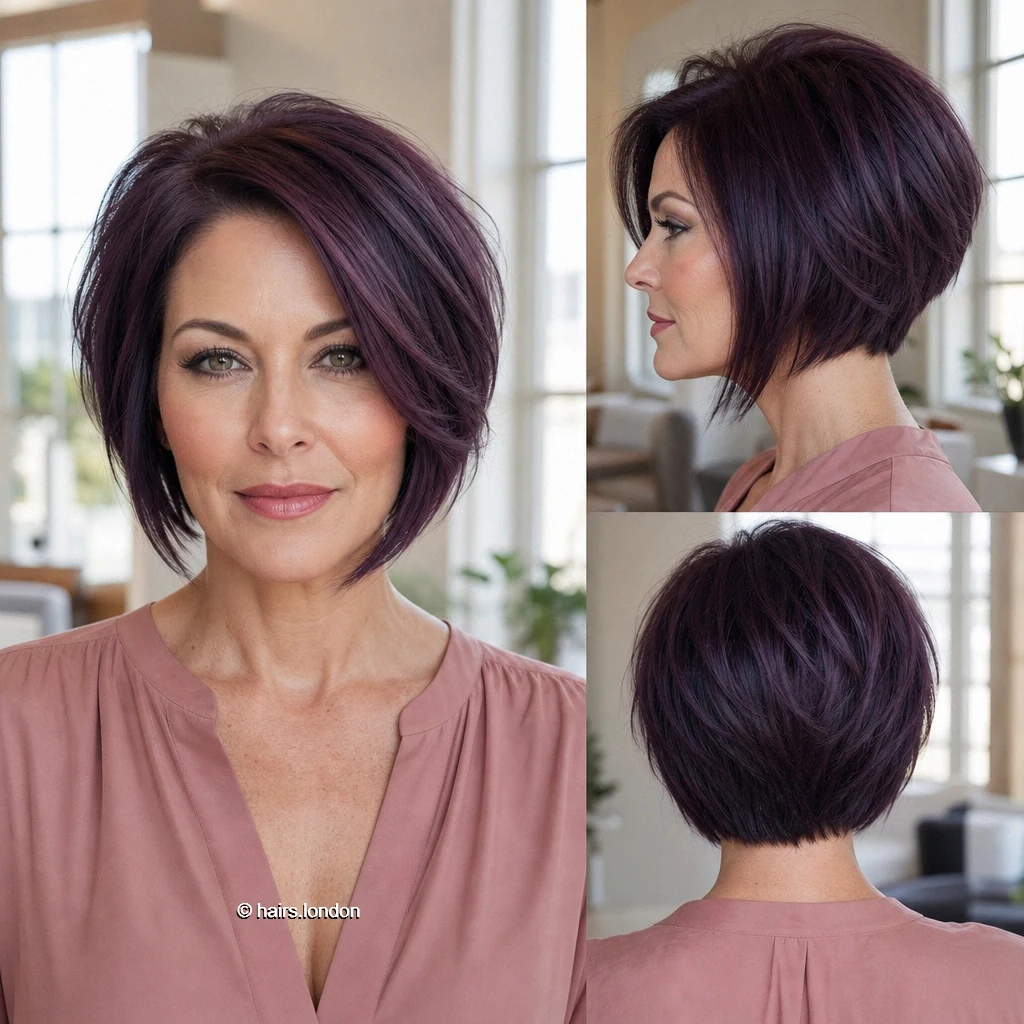
A lifted crown distinguishes this deep plum short bob. The long side sweep creates softness across the upper face. Front lengths reach toward the jaw while the back narrows. In profile, the closely shaped nape sits below fuller layers. That contrast gives the cut its visibly graduated silhouette. Ask whether your density can support volume above the nape. Dry upward at the roots, then smooth the front downward. Use minimal product so the layers retain their separation. Nape growth will change the profile before the fringe disappears. Plan shape checks accordingly, along with plum color refreshes. Avoid flattening the crown.
17. Lavender Graduated Bob with a Broad Side Sweep
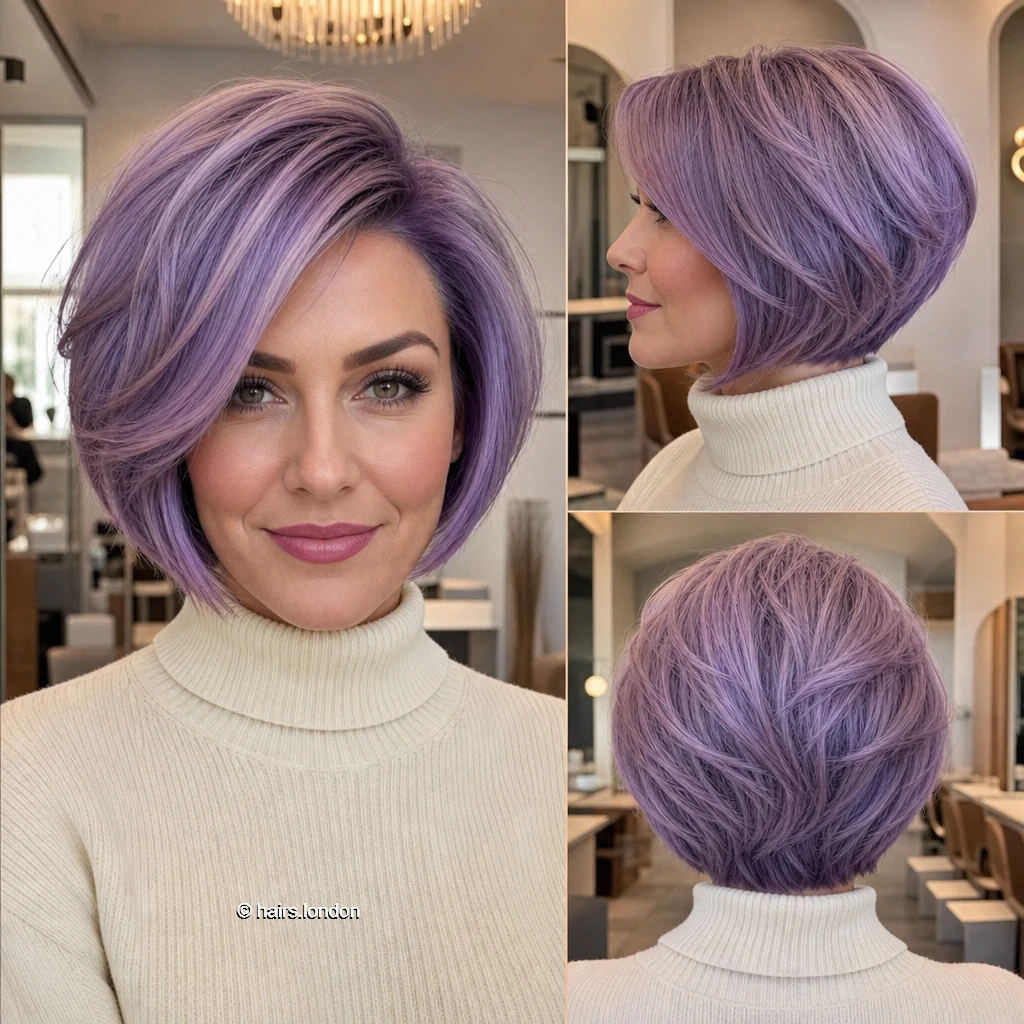
A broad side sweep frames this bright lavender bob. The front curves beside the cheek and approaches the jaw. Visible layering carries volume across the crown and back. The nape finishes shorter beneath that fuller upper shape. This is a rounded, graduated profile rather than a blunt bob. Ask your stylist to place volume where your hair supports it. Lift damp roots while drying, then smooth the sweeping front. A flexible spray can hold shape without making layers rigid. This cut needs nape trims to maintain its proportions. Discuss how quickly the lavender shade may need refreshing for your routine.
18. Burgundy A-Line Bob with an Extended Front
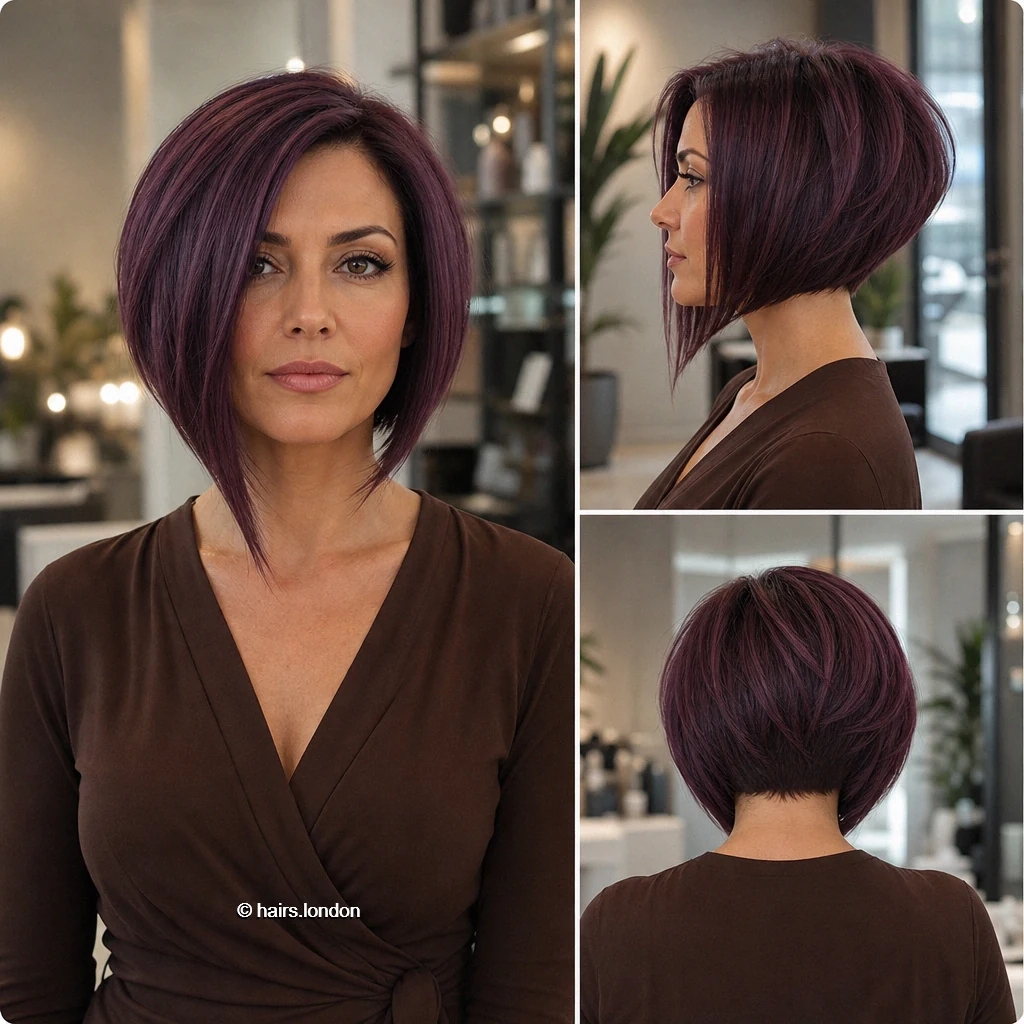
This burgundy bob has a pronounced longer front section. Its deep side part sends smooth hair across the forehead. In profile, the front reaches below the jawline. The back sits much shorter against the upper neck. Rounded rear fullness and a compact nape are clearly visible. Ask for an A-line shape that respects your growth patterns. Smooth the front downward while lifting the back only lightly. Dense hair may need controlled weight removal beneath that fullness. Keep the shorter back tidy before it obscures the contrast. Color care should preserve the richness of its burgundy finish. Protect the colored ends.
19. Violet Bob with Sweeping Layers and an Angled Front
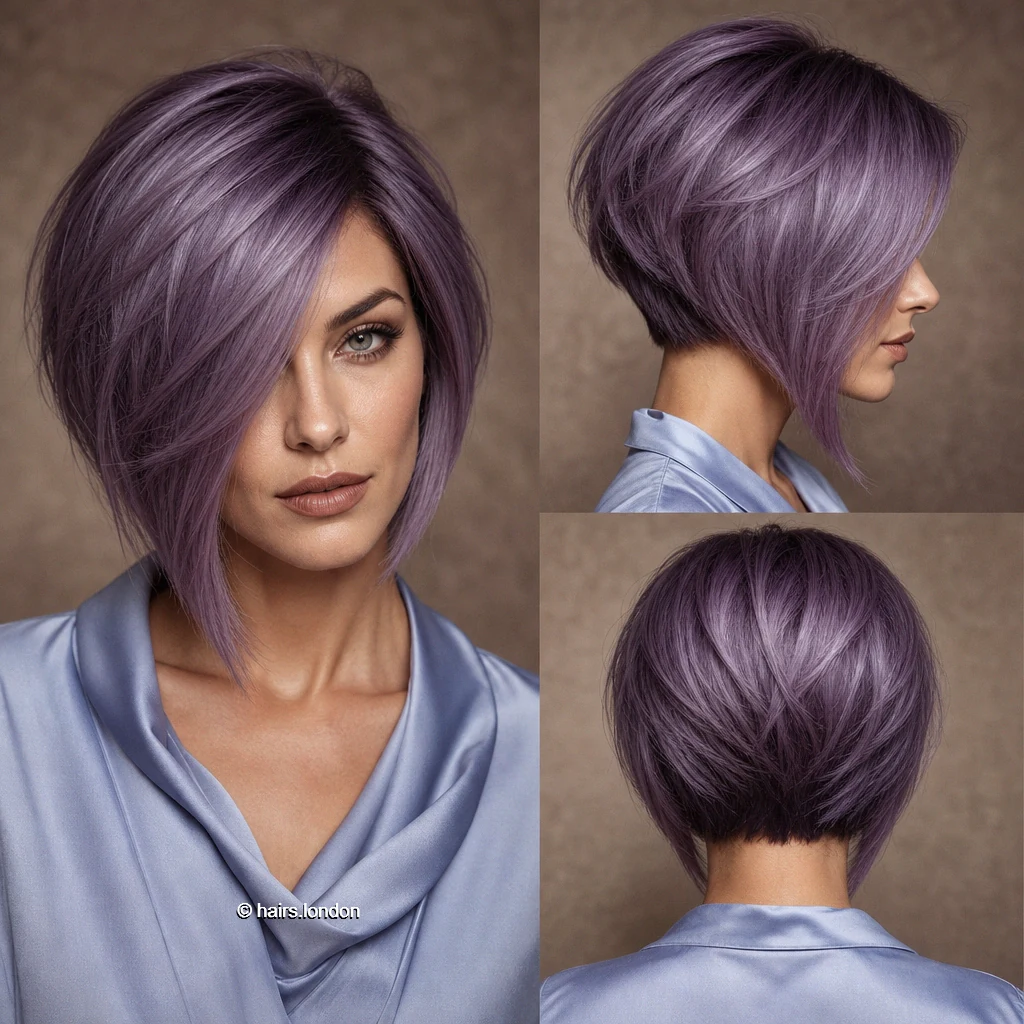
Light violet accents emphasize the sweeping layers of this bob. A deep side part carries the front across one eye. The front extends well below the shorter, closely shaped back. Visible layers create crown fullness above the narrow nape. Its angled outline combines a long front with rear graduation. Ask your stylist how to balance both elements for density. Lift the roots gently, then smooth the longer front section. Use a small amount of product to preserve layer separation. The nape needs attention as soon as it loses definition. Refresh lighter violet tones without overprocessing already colored ends between appointments.
How to Choose Your Bob Length and Shape
Start with where you want the front to land: at the jaw, along the neck or near the shoulders. Then compare the side and back views. A longer front creates an A-line outline; visible shortening and weight through the back indicate graduation. A clean, nearly level edge makes a different commitment from a layered, piecey perimeter. Your density, natural texture, growth patterns and willingness to style should guide the final choice.
Styling Fine, Thick, Wavy and Curly Textures
For fine hair, keep product light and consider a substantial perimeter before adding layers. Thick hair may need carefully placed internal weight removal, especially in a rounded back, without hollowing out the ends. Let natural waves form the movement in a textured bob: scrunch damp hair and diffuse gently. If your hair forms curls, ask for the shape to be assessed with its shrinkage in mind, then define curls without brushing away their pattern. Smooth only the sections that need it.
Keeping Purple Bob Color Fresh
The images include deep plum and burgundy shades as well as pale lilac, lavender and rose-toned color. Their upkeep will differ. Ask your colorist what fading, root growth and refresh appointments to expect for the shade you choose. Follow their washing and conditioning advice, limit unnecessary heat, and use heat protection when styling. Pay particular attention to the ends of a sleek bob, where dryness can interrupt both shine and the visible line.
Maintaining the Bob Perimeter and Graduation
A precise jawline edge shows uneven growth sooner than a broken, wavy perimeter. Short napes and visibly graduated backs also change proportion as they grow, even when the front still looks tidy. At each trim, check the perimeter, the connection from back to front and the placement of rear weight. Layered bobs can be refreshed without sacrificing their movement; ask your stylist to preserve the intended shape rather than simply cutting every end shorter.
What to Discuss with Your Stylist
Bring the front, side and back views of the cut you prefer. Point out the features that matter most: front length, parting, fringe, fullness, nape exposure or a clean versus textured edge. Explain how your hair behaves when air-dried and how much styling time you want to spend. Ask how the proposed shape will work with your density and growth patterns, what it will look like between trims, and what maintaining your chosen purple shade involves.
Frequently Asked Questions
What is the difference between a bob and a lob?
A lob is a longer bob, typically approaching or reaching the shoulders. Several cuts here end around the jaw or neck, while the shoulder-skimming layered style is a lob.
Is an A-line bob the same as a stacked bob?
No. A-line describes a front that is longer than the back. Stacked describes visible short-to-long graduation that builds weight at the back. A cut can show both features.
Do I need thick hair for a rounded bob?
Not necessarily. Density affects how much fullness the shape can hold, while excessive layering can make fine ends look sparse. Ask your stylist to assess your hair before choosing the weight line.
Can a bob work with natural curls?
Yes, but its finished length and outline should be planned around your curl pattern and shrinkage. A stylist can assess the shape with your curls in their natural state.
Should I add a fringe to a short bob?
A side-swept fringe can soften a short, layered shape, but it also needs daily direction and regular attention. Consider how your hair grows around the hairline.
Which bob in this collection needs the least smoothing?
The visibly tousled and wavy layered cuts are better references if you prefer to enhance natural movement. The sleek, clean-edged cuts generally ask for more perimeter control.
How do I style a longer front without losing the angle?
Dry the roots and back first, then guide the front pieces downward. Use only enough product to control flyaways; excessive product can collapse the contrast between the front and back.
How often should I trim a precision bob?
Book a trim when growth begins to distort its edge or front-to-back balance. A sharp jawline perimeter or short nape may show changes sooner than a loose, layered lob.
Will a graduated bob grow out evenly?
Its shorter nape and fuller back can lose their intended relationship as they grow. Your stylist can reshape the back during growth or help you transition toward a more even bob.
How can I avoid too much bulk in a thick bob?
Discuss where fullness gathers, especially behind the ears and at the back. Thoughtful internal weight removal can help, but removing too much from the perimeter may make the ends look thin.
Are pale lavender and deep plum maintained the same way?
No. Their starting color, fading and root visibility can differ. Ask your colorist for a care and refresh plan suited to your chosen shade and current hair.
What should I ask for if I am growing out a short bob?
Tell your stylist your target length and ask which sections need tidying while the shorter back catches up. Preserving useful front length can make the transition to a longer bob easier.
Conclusion
The strongest reference is the bob whose front length, back shape and finish you can picture on your own hair between appointments. Save the views that show those details clearly, then use them to plan a cut and purple color that fit your texture, routine and maintenance preferences.


