

11. Dusty Lavender Bob with Loose Side Movement
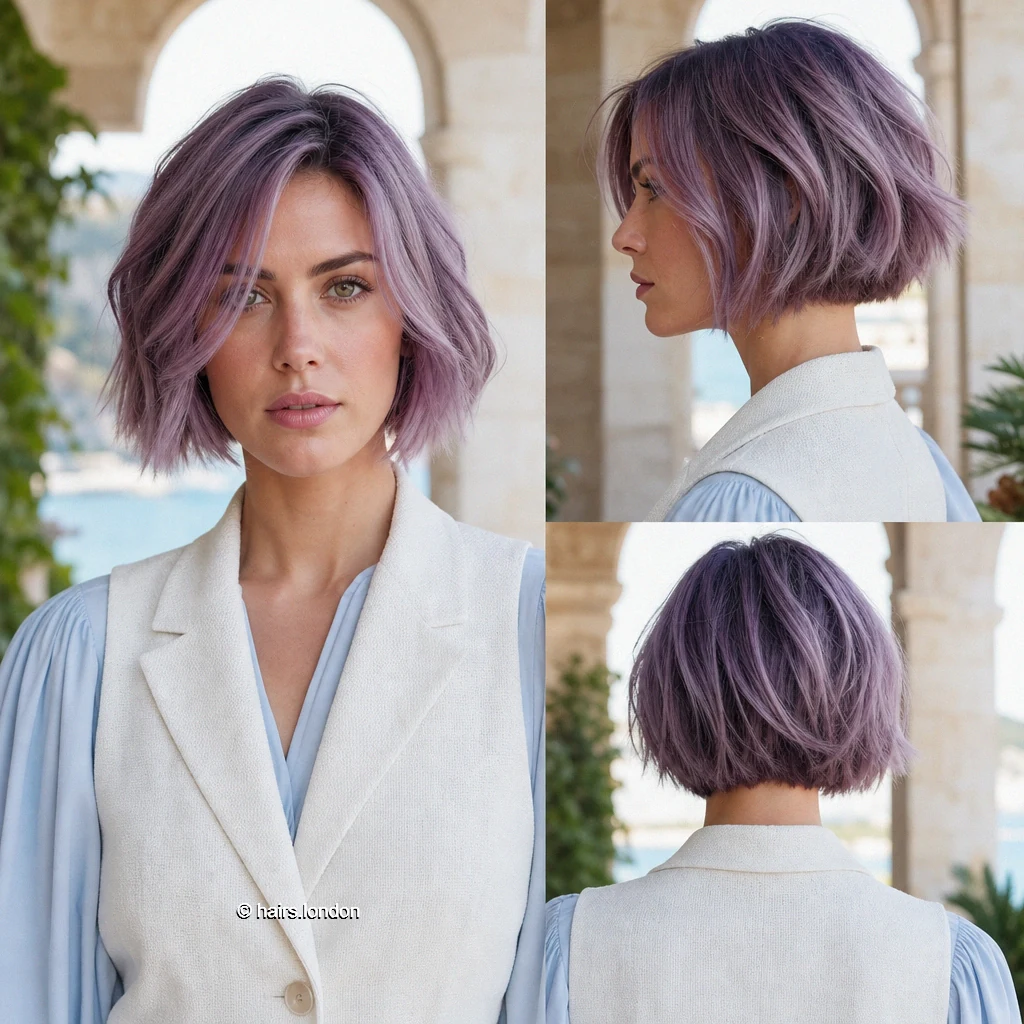
Dusty lavender brightens this relaxed bob without hiding its layers. A loose side part creates movement across the upper face. The ends fall around jaw level with lightly broken texture. Back views show a short edge softened by longer pieces. Let natural waves dry gently before separating only selected strands. If smoothing, keep some bend so the layers remain visible. Ask about reducing bulk if thick hair expands at sides. Fine strands may need a less layered version for fullness. Plan trims when the lower edge starts looking uneven unintentionally. Discuss toning options if your preferred lavender shifts between visits.
12. Violet A-Line Bob with a Smooth Front
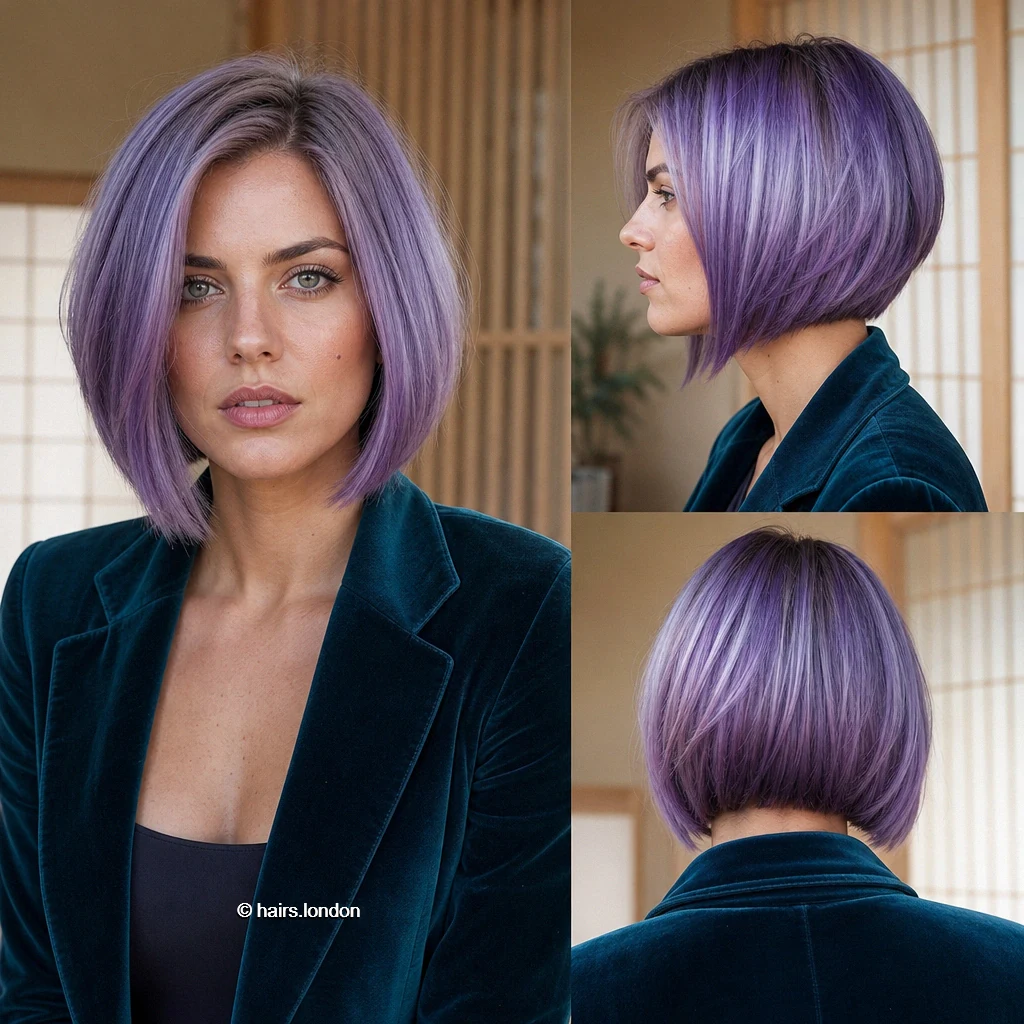
Cool violet tones sharpen this bob’s smooth, angled outline visibly. Longer front sections descend below the shorter back near neckline. The side view supports an A-line shape without obvious stacking. A side part leaves the forehead open and softly framed. Blow dry gently downward, then guide each front section toward shoulders. Avoid excessive oil along the edge, where separation shows quickly. Straight hair may make this precise silhouette easier to maintain. With waves, discuss whether you want smoothing or natural expansion. Schedule trims when the front tips lose their intended point. Ask how color refreshing fits your regular shape maintenance.
13. Lilac Layered Bob with a Loose Side Sweep
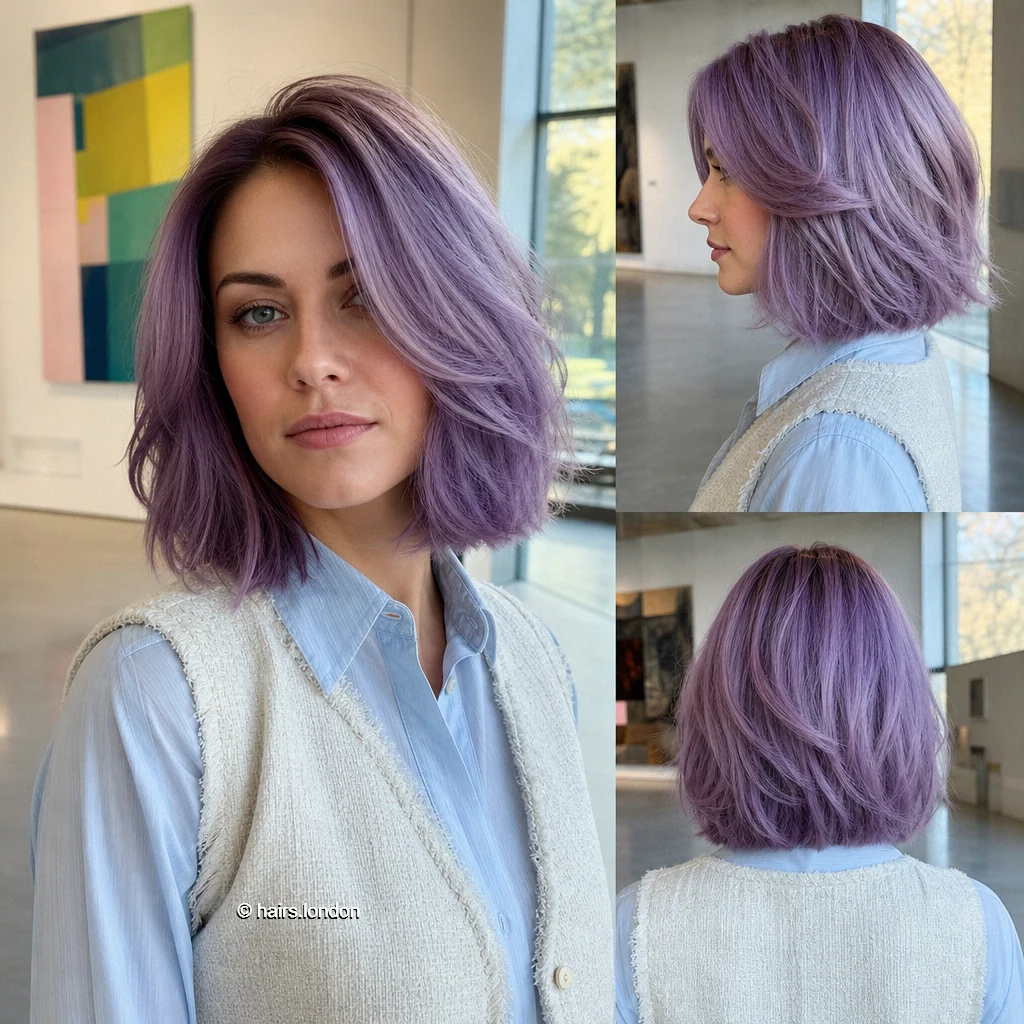
Soft lilac shades lift this fuller, loosely layered bob beautifully. A broad side sweep falls toward one eye and cheek. The ends reach around the jaw, with an airy finish. Back layers create soft movement while retaining a recognizable bob outline. Work mousse through damp roots if you want extra lift. Encourage existing waves with gentle scrunching rather than vigorous brushing. Dense hair could benefit from removing weight inside this silhouette. Fine hair may need restraint to keep the ends substantial. Recut when the sides begin resting heavily against your neck. Discuss how fading will affect this pale lilac result.
14. Sculpted Plum Bob with a Curved Back
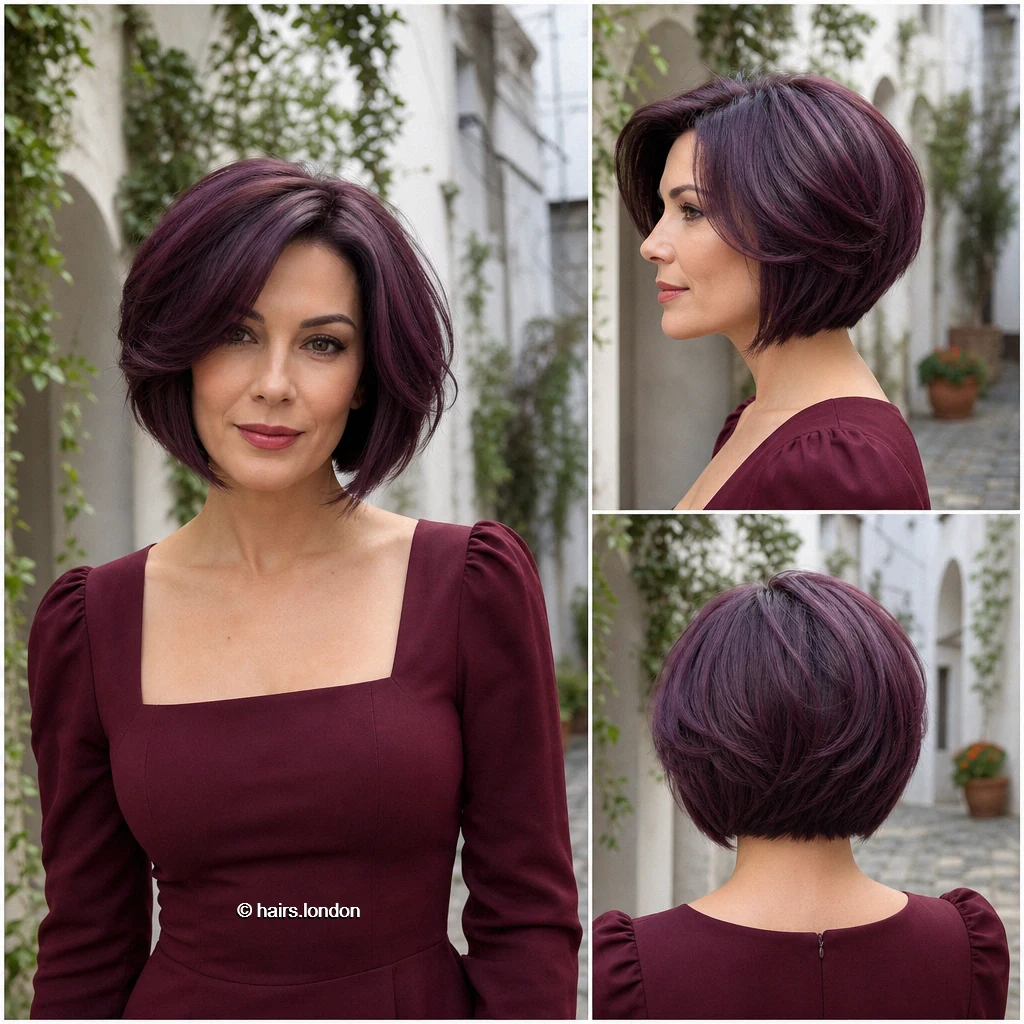
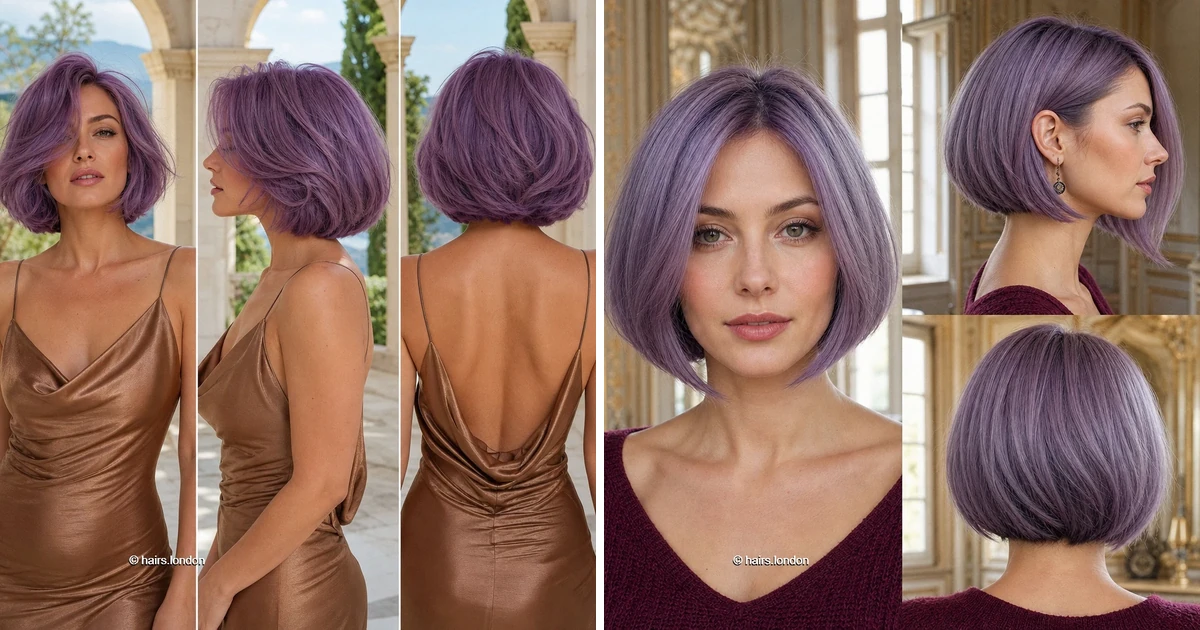
Dark plum color emphasizes the shape of this sculpted bob. A deep side part creates a smooth, face framing sweep. The front falls around the jaw beside a shorter back. Side and rear views clearly show fullness above the neckline edge. That visible rise suggests graduation rather than only an A-line. Round brushing can polish the curve while retaining natural movement. Avoid flattening the crown with too much finishing product here. Ask whether your density supports this concentrated rear weight line. Trim the back before its lifted shape becomes less distinct. Review plum color upkeep alongside those frequent silhouette appointments.
15. Lilac Graduated Bob with a Rounded Crown
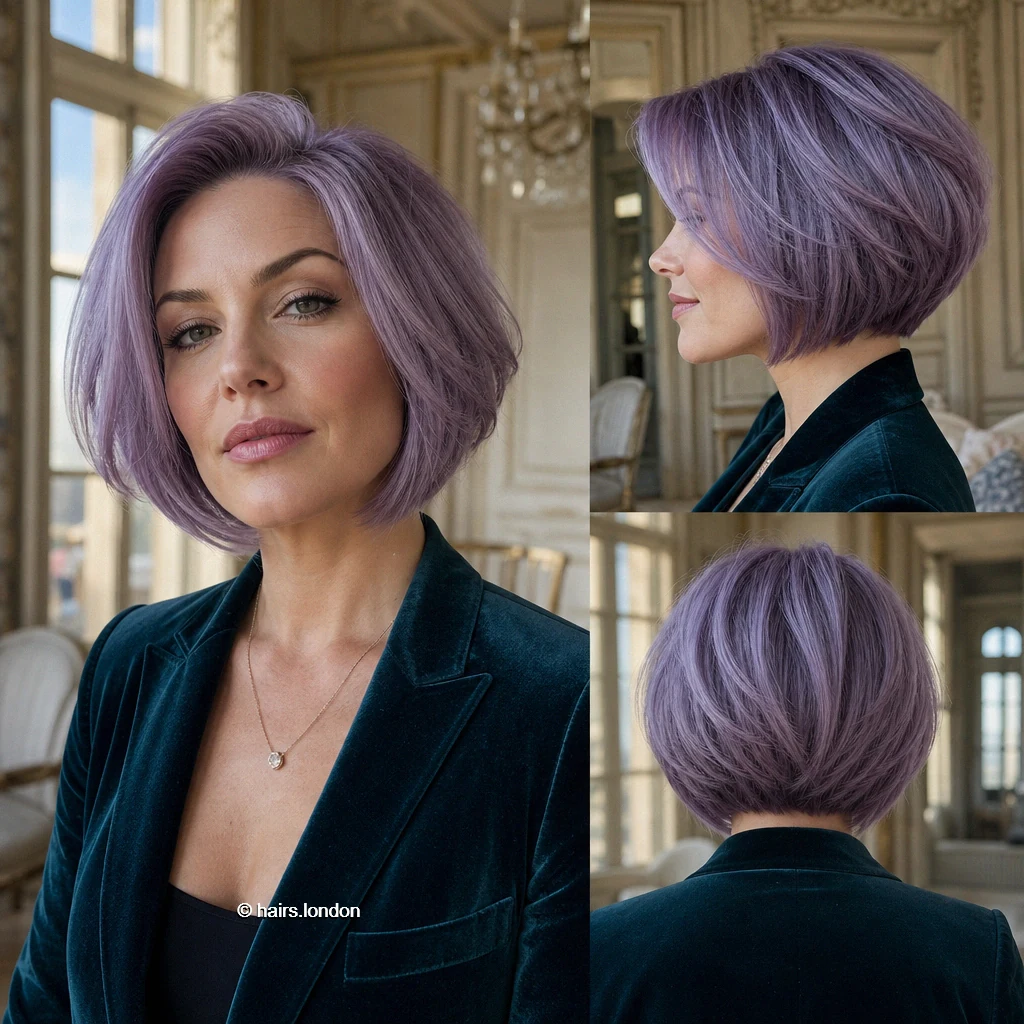
Smoky lilac gives this compact bob a softly dimensional look. Its side part carries longer hair across the front naturally. The back visibly builds fullness above a closer neckline edge. That rounded graduation distinguishes it from a simple blunt bob. Use a brush to direct upper sections over the curve. Keep products light near the nape to avoid unwanted separation. Thick hair may need careful interior shaping to control expansion. Fine hair requires thoughtful graduation to retain enough lower weight. Shorter back sections may call for more frequent shape trims. Ask how your lilac shade will look as roots grow.
16. Lavender Inverted Bob with an Extended Front
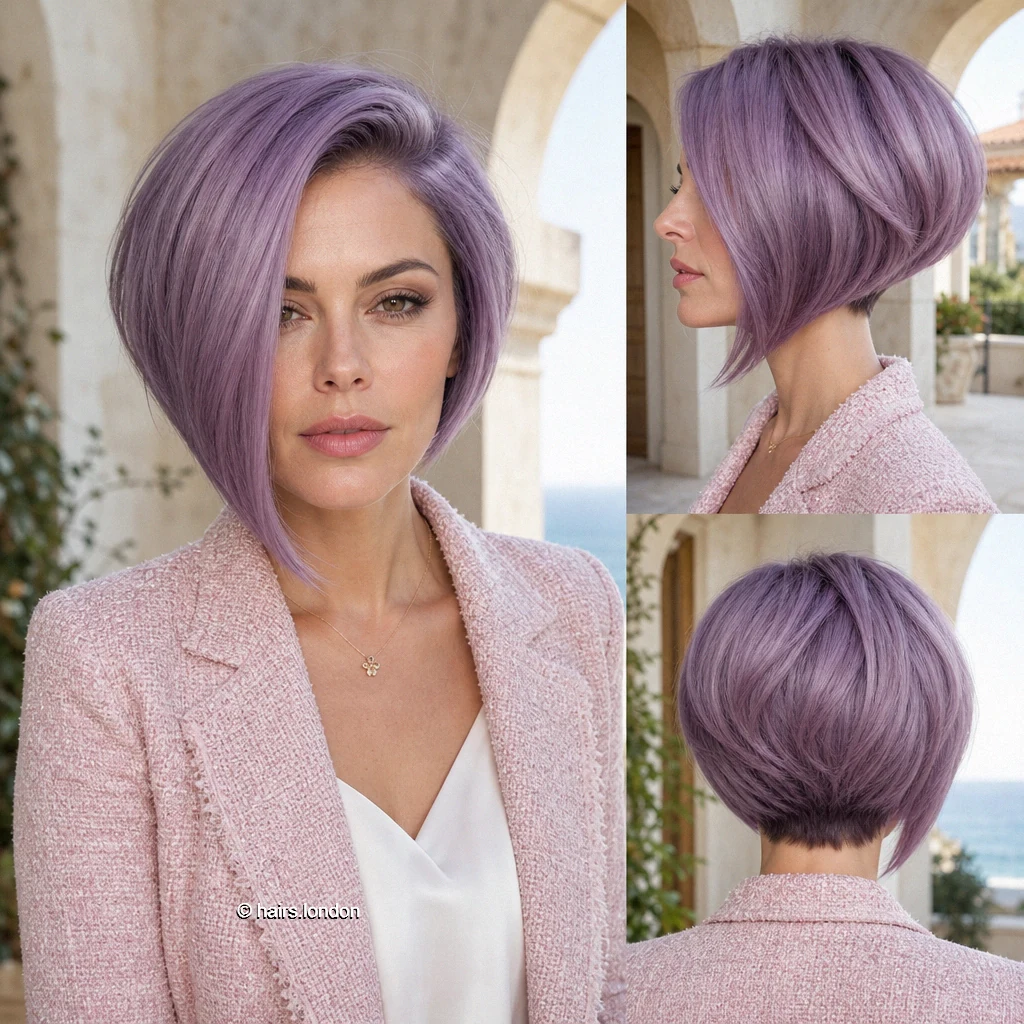
This lavender bob makes its front to back contrast unmistakable. A long, sweeping front reaches below the shorter rear edge. Rear views also show visible fullness above the neat neckline. Together, those features support an inverted, visibly graduated bob shape. Direct airflow down the front for a clean pointed finish. Brush the back around its curve without pressing it flat. This precision suits hair willing to hold deliberate daily shaping. Discuss growth patterns around the nape before choosing that shortness. Trim regularly to preserve both the angle and graduated back. Maintain lavender color with a schedule suited to fading roots.
17. Smoky Violet Shaggy Bob with Wispy Bangs
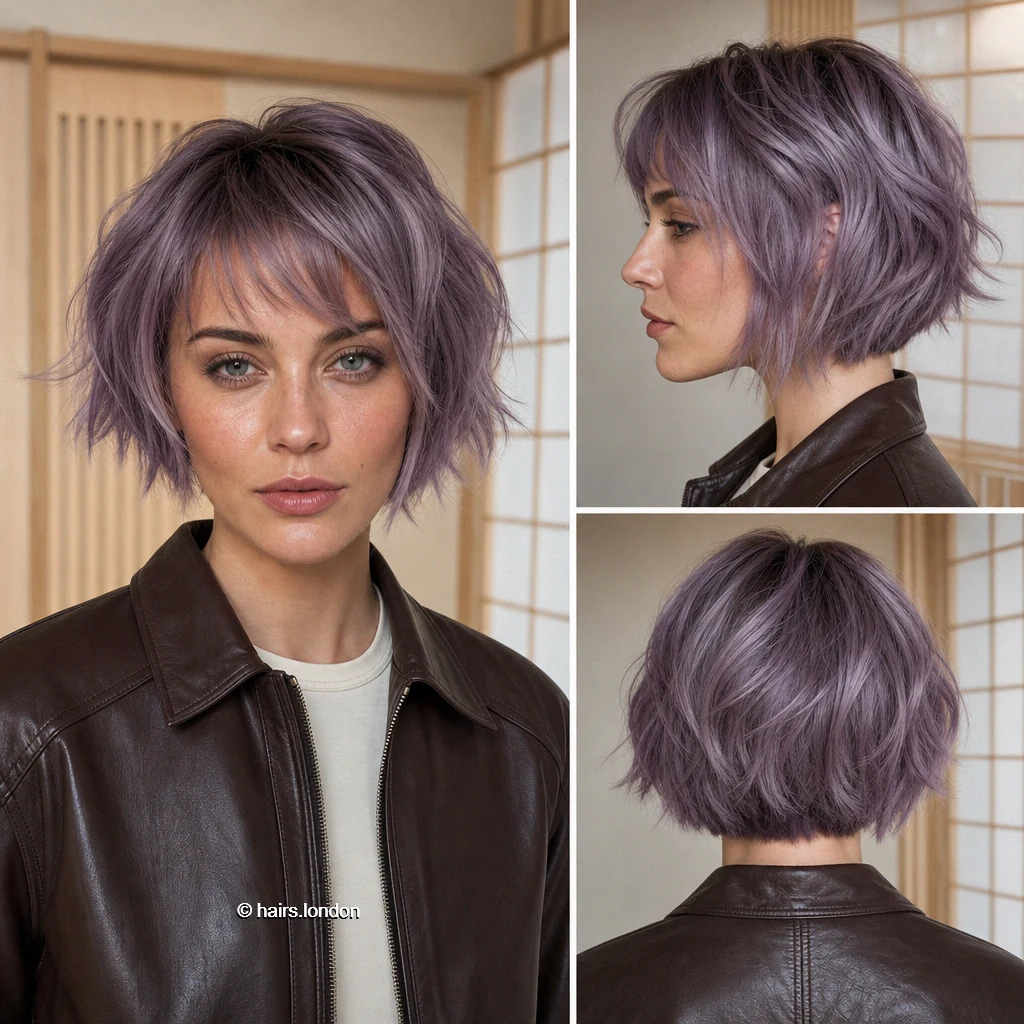
Smoky violet shades complement this short, tousled shaggy bob. Wispy bangs skim the forehead above softly separated side pieces. The choppy lower edge sits close to the jawline here. Layered sections give the back a light, irregular finish. Diffuse gentle waves to encourage movement without expanding the silhouette. Shape bangs separately so they settle comfortably above your eyes. Fine hair might need fewer short layers around the crown. Thick hair can benefit from selective debulking rather than thinning at the ends. Trim when scattered ends obscure the intended bob outline noticeably. Ask about refreshing violet without sacrificing the hair’s condition.
18. Lavender Angled Bob with an Asymmetrical Sweep
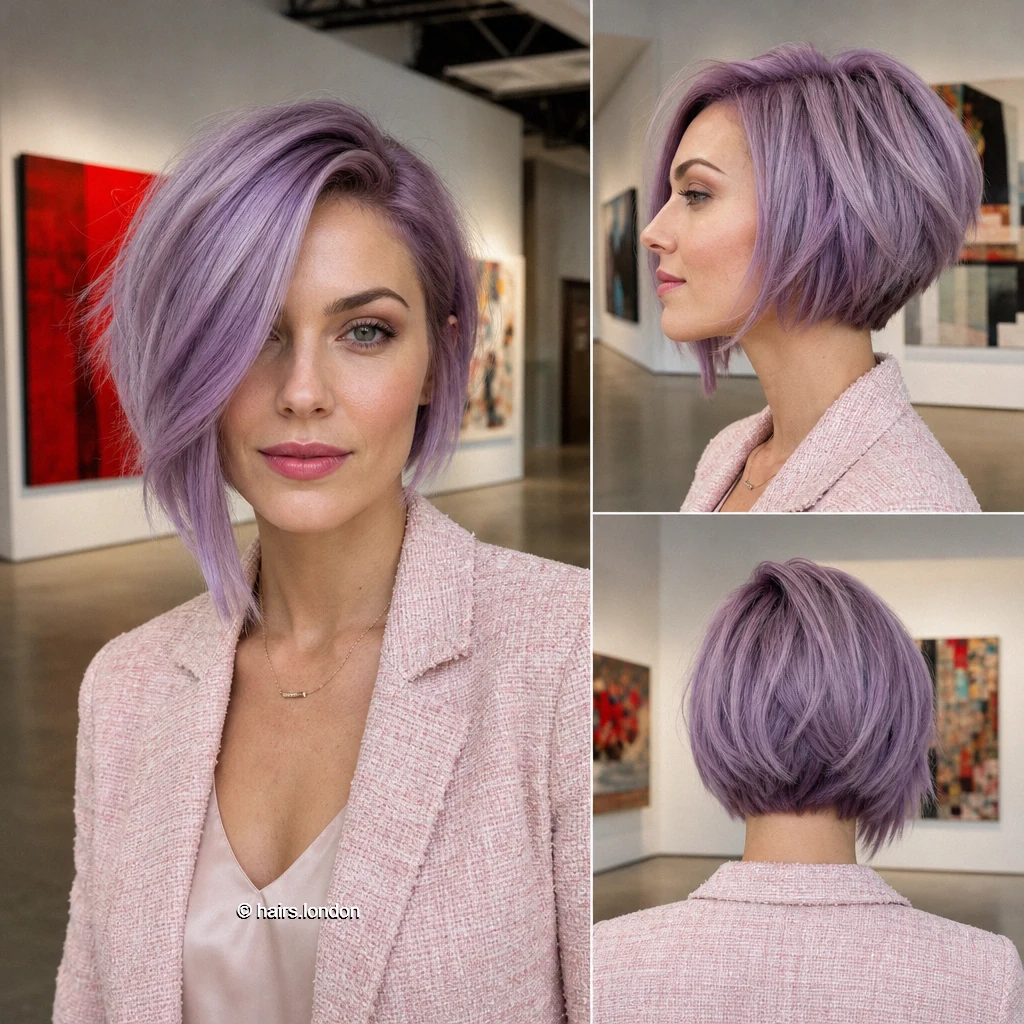
Cool lavender highlights this bob’s dramatic, side swept front section. One long face framing piece drops below the opposite side. The rear remains short, rounded and visibly fuller above neckline. This asymmetrical presentation makes the front length especially noticeable here. Smooth the longest piece carefully while preserving movement at back. A light cream can control flyaways without weighing down layers. Discuss whether your natural part will maintain the unequal front. Density also affects how firmly that extended section holds together. Trim the back and longer tip before proportions drift apart. Coordinate lavender refreshes with visits needed for its defined outline.
How to Choose Your Bob Length and Shape
Start with the place you want the ends to sit: near the jaw for a compact bob, lower on the neck for more movement, or beyond the shoulders for a lob. Compare the side and back views as well as the portrait. A longer front indicates an A-line direction; visible fullness building above a shorter back edge indicates graduation. Consider how your hair shrinks, bends or lifts at the nape before choosing a precise outline.
Styling Fine, Thick, Wavy and Curly Textures
Fine hair often benefits from a substantial perimeter and lightweight root lift rather than extensive layering. For thick hair, ask about internal weight removal that preserves the visible edge. Scrunch or diffuse waves with minimal handling, then smooth only the sections that need it. If your hair forms curls, plan the finished length around their dry shape and shrinkage; a curl-conscious cut can preserve definition without building excessive width.
Keeping Plum, Violet and Lavender Color Fresh
The colors shown range from deep plum to pale lavender, so upkeep will vary with your starting color and chosen result. Ask your colorist what fading and visible regrowth to expect. Gentle washing, comfortable water temperatures and heat protection can help limit unnecessary color loss. Discuss a refresh plan before choosing a pale shade that you would not want to maintain regularly.
Maintaining the Bob Perimeter and Graduation
A smooth A-line edge loses definition as the front and back grow, while a short graduated back can lose its rounded weight line sooner. Softer, layered bobs usually tolerate more movement between trims, though their ends still need attention. Book shape checks according to what you notice in the mirror: a widening nape, a disappearing angle, or a perimeter that no longer falls where you intended.
What to Discuss with Your Stylist
Bring the image that best shows your preferred front, side and back—not just the color. Point out the fringe, longest front piece, neckline and amount of fullness you want to keep. Tell your stylist about density, natural texture, growth patterns, styling time and willingness to maintain a short back. Ask how the proposed cut will look when air dried and as it grows out.
Frequently Asked Questions
What is the difference between a bob and a lob?
A bob generally sits around the jaw or neck; a lob is a longer bob that approaches or reaches the shoulders. The finished position can change when waves or curls dry.
How is an A-line bob different from a stacked bob?
An A-line bob has a front that is visibly longer than its back. A stacked bob has visible graduation that builds fullness above a shorter back edge. A cut can show both features.
Do I need thick hair for a rounded bob?
Not necessarily. Density affects how much fullness the shape can hold, so fine hair may need a stronger perimeter and more restrained layering.
Can naturally curly hair wear a bob?
Yes, if its length and shape account for curl pattern, shrinkage and density. Discuss the dry result rather than choosing a length based only on wet hair.
Should I add bangs to a short bob?
Choose bangs if you like their effect and can accommodate their growth pattern and upkeep. A side sweep is an alternative when you want forehead framing without a short fringe.
Which bob is easiest to style daily?
That depends on your natural texture. A softer perimeter that works with your existing bend may require less daily smoothing than a precise angled or graduated shape.
How often should I trim a bob?
Trim when its defining edge, front-to-back angle or graduated back begins to change. Precision shapes and short backs often need attention sooner than loose layered bobs.
Will a layered bob make fine hair look thinner?
Too many layers can reduce fullness at the ends. Ask for layering that creates the movement you want while preserving enough perimeter weight for your density.
How can I prevent a thick bob from looking bulky?
Discuss where the bulk sits before removing weight. Carefully placed internal shaping can help, but excessive thinning at the perimeter may make the ends appear sparse.
Does lavender bob color require more upkeep than plum?
It can, depending on your starting color, the lightness required and how the shade fades. Your colorist can outline a realistic refresh schedule for either result.
How do I grow out a graduated bob?
Ask for interim trims that allow the shorter back to catch up while keeping the perimeter tidy. The shape may gradually become a more even bob.
What should I bring to a bob consultation?
Bring views showing the length, fringe, side profile and back shape you prefer. Explain how you normally wear and style your hair, including whether you want to air dry it.
Conclusion
The most useful inspiration is the shape you can picture on your own hair—not just a lavender or plum shade you love. Choose the perimeter, front length and amount of back fullness you want, then work with your stylist to adapt those details to your texture, density and maintenance preferences.