

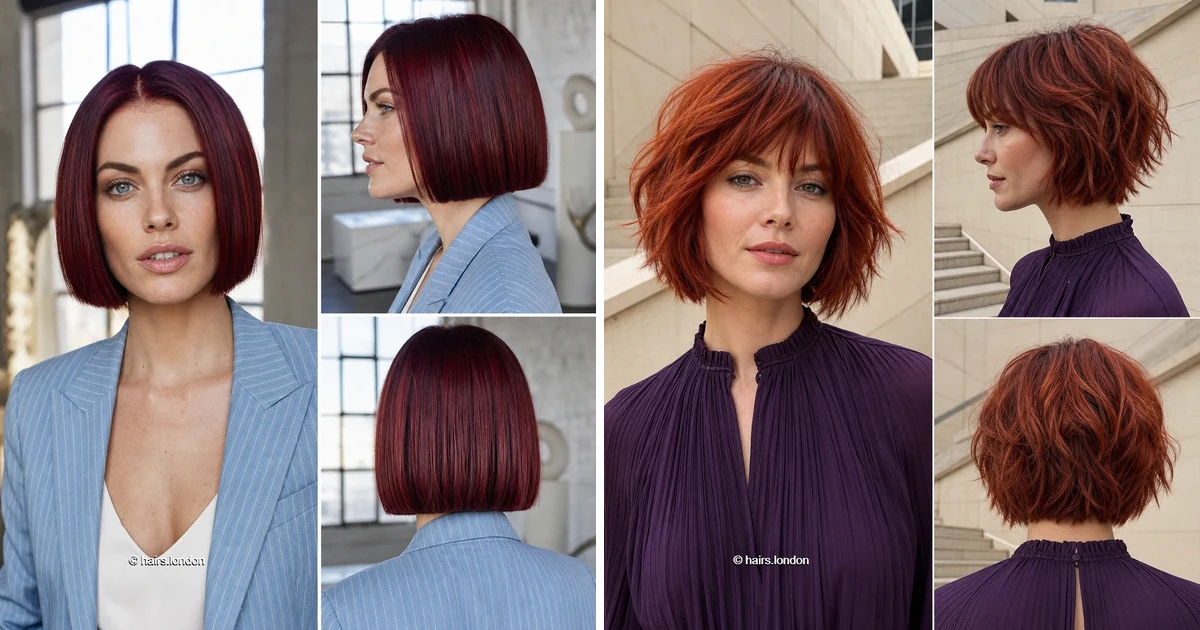
11. Wine Red Graduated Bob with a Dramatic Sweep
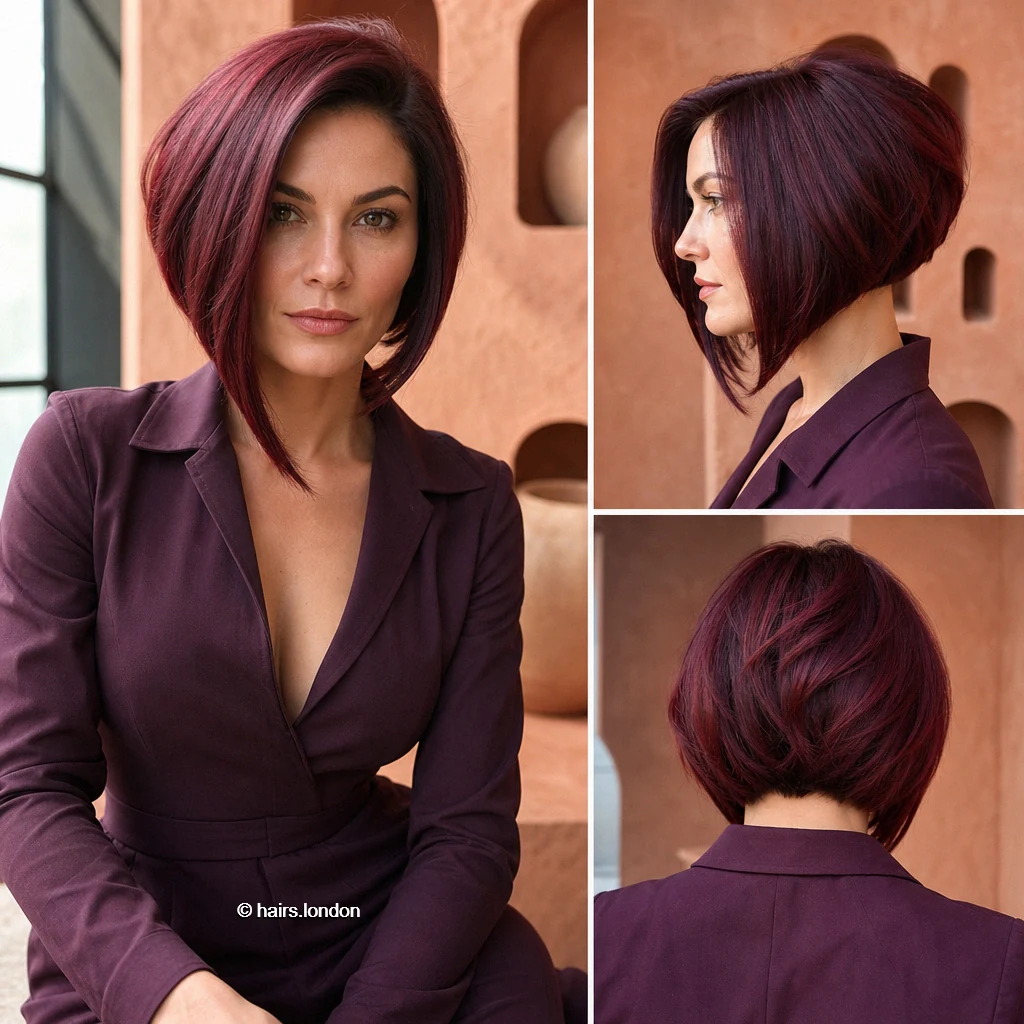
A wine red sweep gives this bob strong contrast. The longer front approaches the neck, while the back sits higher. Visible graduation rounds the rear shape toward its compact nape. The side part places substantial weight over one forehead side. Style that sweep with controlled airflow and a broad brush. Keep the shorter underside smooth so the silhouette stays distinct. Ask whether your natural part supports this much front weight. Fine hair may need less layering to maintain the point. Book shape trims before the back loses its lifted profile. Discuss color refreshes that maintain dimension across the red tones.
12. Copper Shaggy Bob with a Wispy Fringe
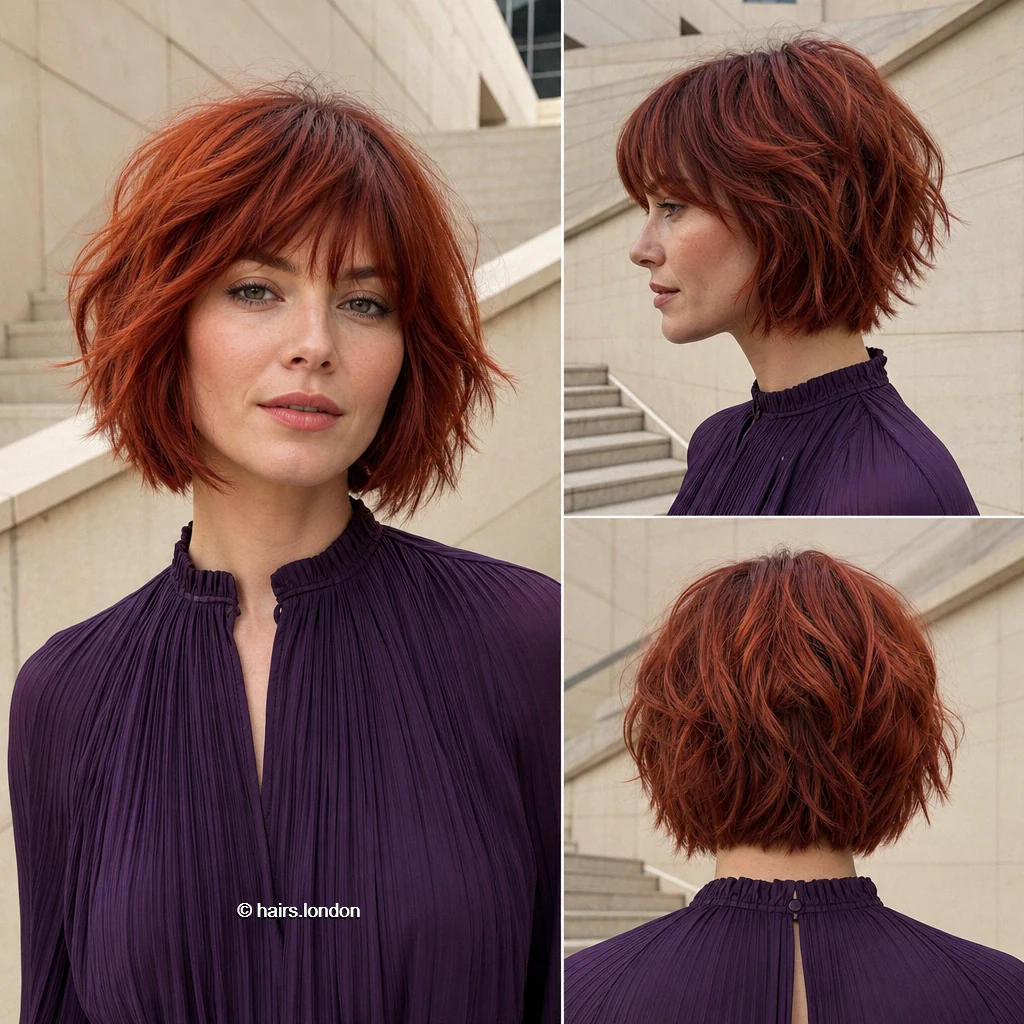
Copper color brings warmth to this short, shaggy bob. A wispy fringe crosses the forehead without forming a solid wall. Choppy layers create an irregular outline around the jaw. The back looks textured and full above the neckline. Scrunch damp hair with lightweight mousse to encourage soft, defined, natural separation. Dry the fringe forward, then loosen it with your fingers. Ask for layers that suit your wave pattern and density. Overtexturing fine hair could make the lower edge look sparse. Fringe adjustments may be needed sooner than full shape trims. Use color safe products if maintaining this vivid copper finish.
13. Tousled Auburn Bob with Lifted Layers
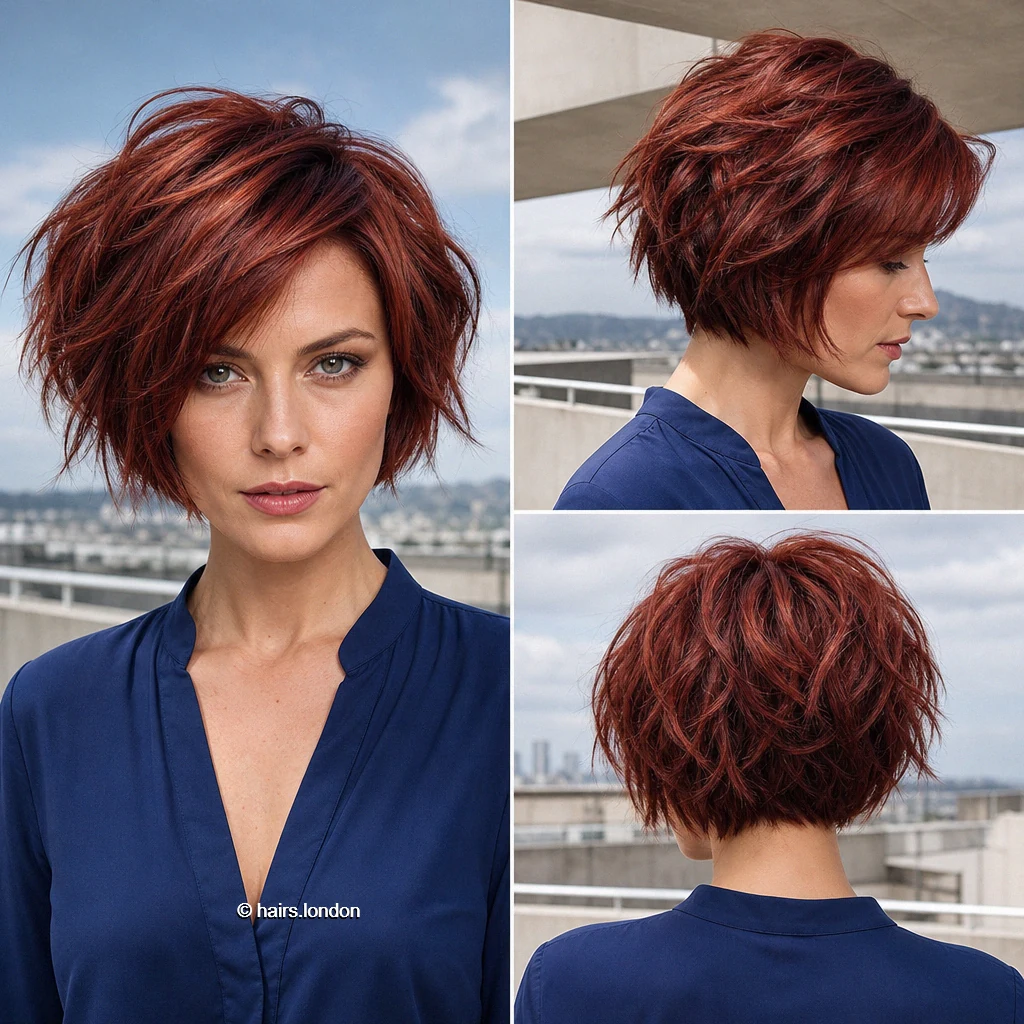
This auburn bob has a deliberately airy, uneven finish. Its side fringe sweeps across the forehead into textured layers. The short outline sits around the jaw and upper neck. From behind, separate pieces build fullness on top without a blunt hemline. Apply a little texture spray at the roots, not everywhere. Pinch the ends apart to retain their loose, mobile appearance. Ask your stylist where layers will release your natural texture. Very fine hair may require a more supported lower edge. Trim when the shape loses lift or develops straggly ends. Limit excessive heat to help preserve the reddish color.
14. Short Berry Shaggy Bob with Piecey Bangs
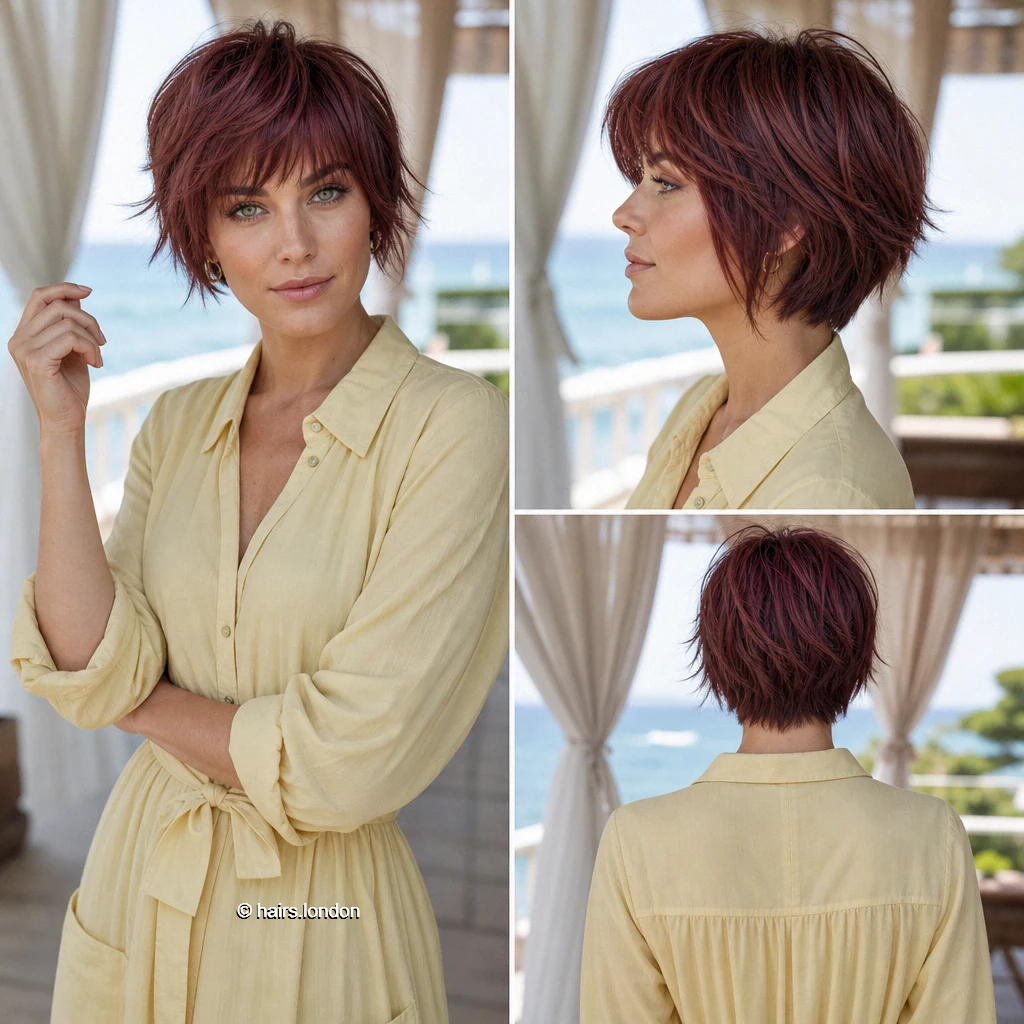
This short berry bob combines piecey bangs with abundant layers. The sides end near the jaw, with wisps projecting outward. Its back shows a textured shape above the neckline. No sharp perimeter dominates; loose movement defines the overall silhouette instead. Work styling paste between fingertips before separating a few ends. Keep the bangs light rather than coating them with product. Ask how much layering your density can comfortably support. Natural bends can make this shape easier to style casually. Regular shape trims should tidy the outline without eliminating its looseness. Protect colored hair from repeated high heat during daily styling.
15. Burgundy Textured Bob with Sweeping Bangs
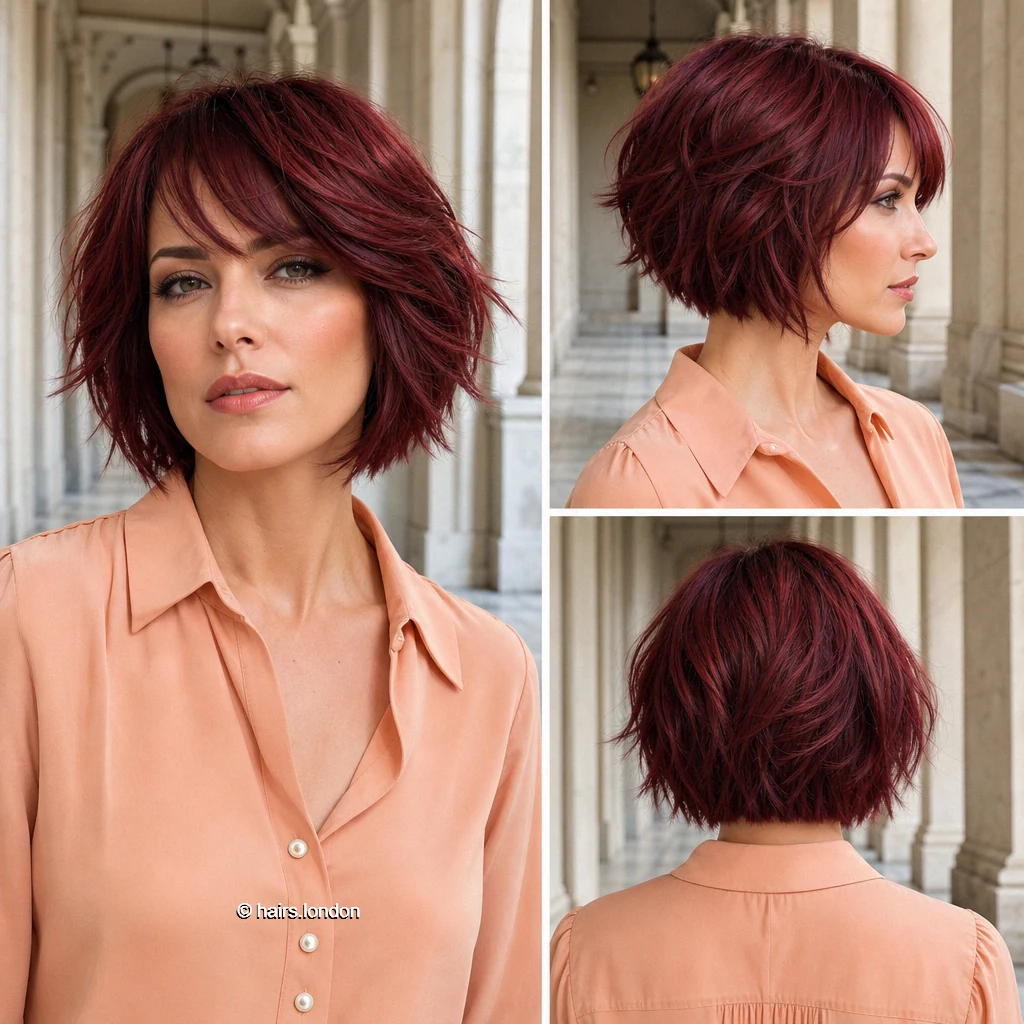
A burgundy side fringe sweeps into this softly textured bob. The sides sit around the jaw, while the nape stays short. Layered ends flick outward, giving the outline an airy finish. Back views show separation through the crown and lengths. Use light foam to build movement without stiffening the fringe. Direct bangs sideways while drying, then loosen their ends. Ask for enough bottom weight to prevent a wispy gap. Thicker hair may need selective internal shaping to avoid triangular fullness. Refresh the fringe whenever it obscures your preferred eye line. Follow a gentle washing routine to maintain the berry shade.
16. Copper Asymmetrical Bob with a Tapered Nape
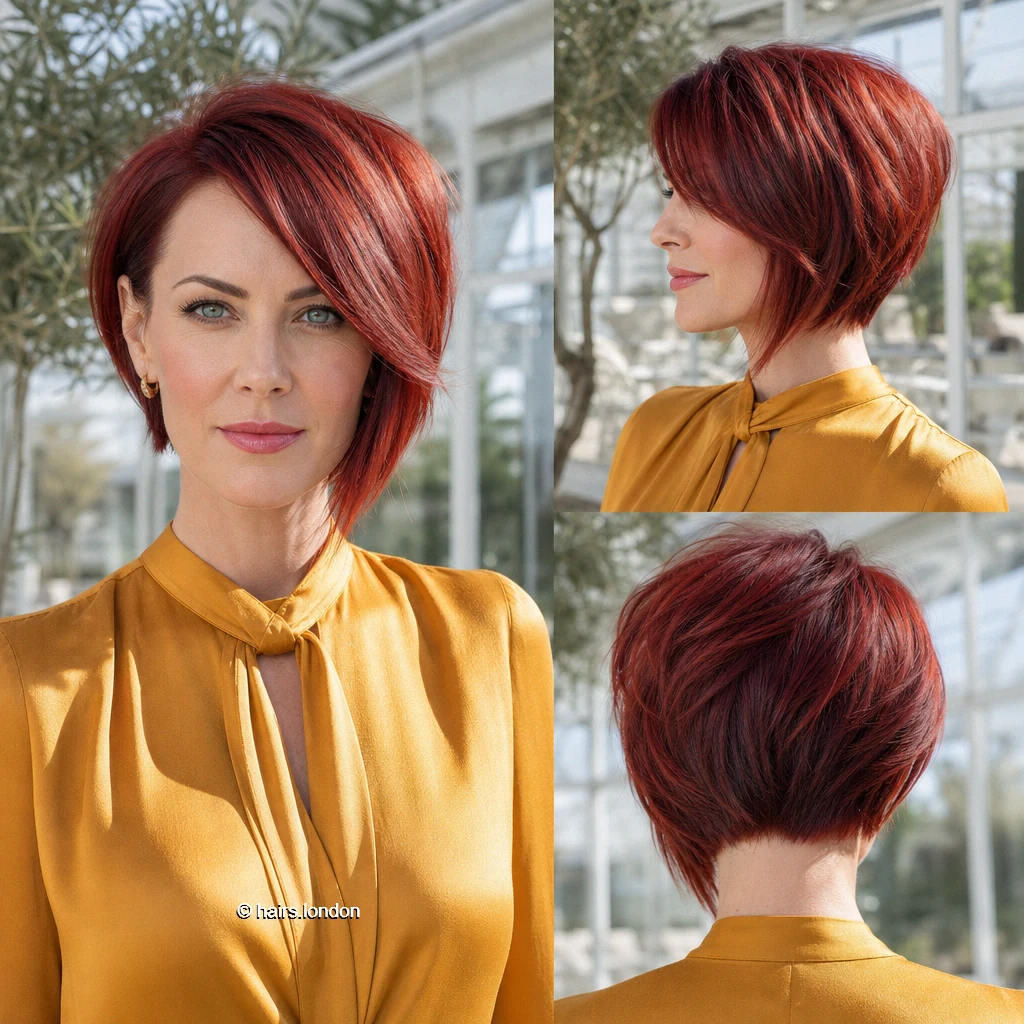
Copper red shine highlights this bob’s strong side to side contrast. One front section falls longer, while the opposite side is shorter. The side view shows a lifted back tapering toward the nape. A deep part sends the longer section across the forehead. Smooth that sweep downward and lift the back roots lightly. Avoid excessive teasing, which would obscure the clean tapered profile. Ask your stylist to account for your preferred parting position. Dense hair may need refinement behind the fuller crown. Trim the nape and long front before their contrast disappears. Discuss color upkeep if copper requires frequent refreshing.
17. Red Angled Bob with Rounded Graduation
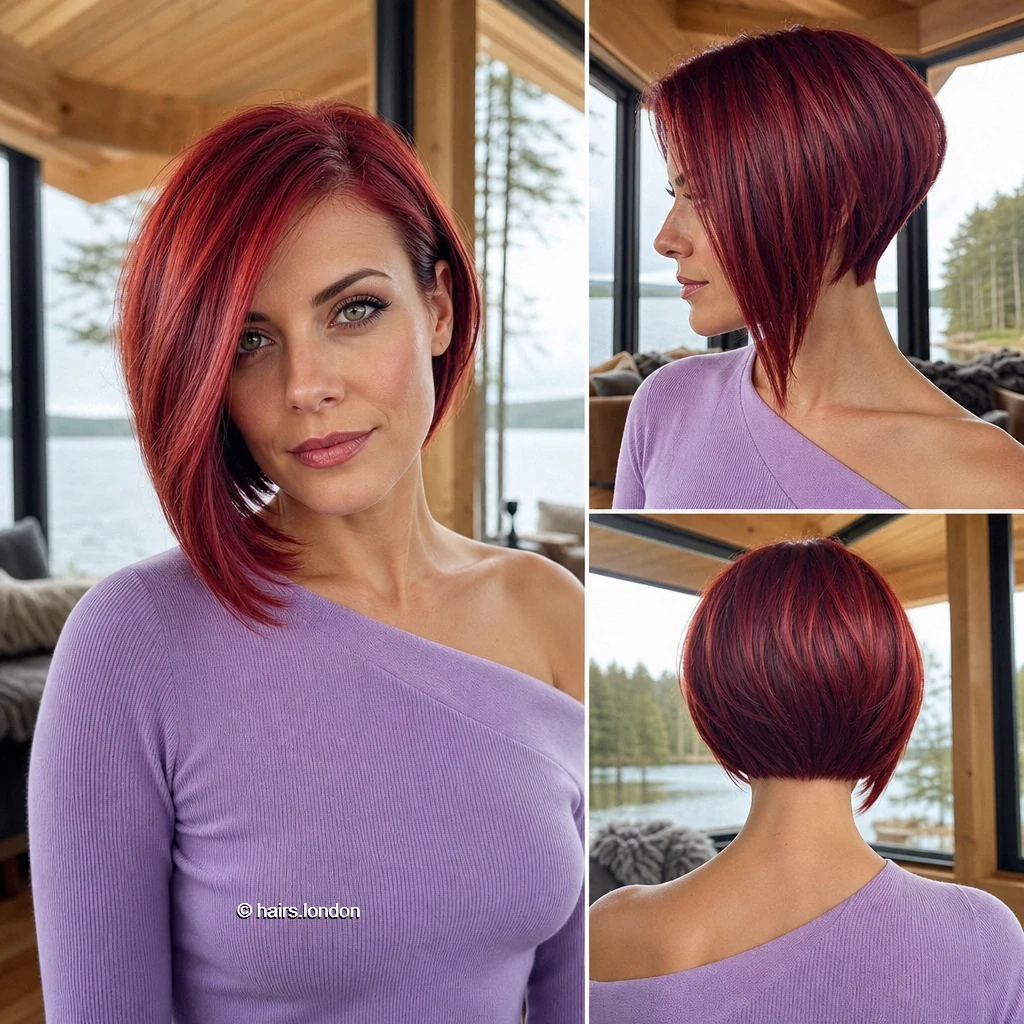
This vivid red bob pairs a longer front with clearly rounded graduation. The front reaches below the jaw; the nape sits higher. Side views make that front to back difference clear. Smooth layers create fullness over the shorter back area. Dry with root lift behind and tension through the front. Keep finishing products light to preserve a precise, clean, mobile outline. Ask how your crown growth will affect the rounded shape. Fine density might require less internal layering for adequate support. Book regular trims before the neckline grows into a heavier shelf. Color preserving care helps maintain the red surface.
18. Deep Wine Bob with an Asymmetrical Front
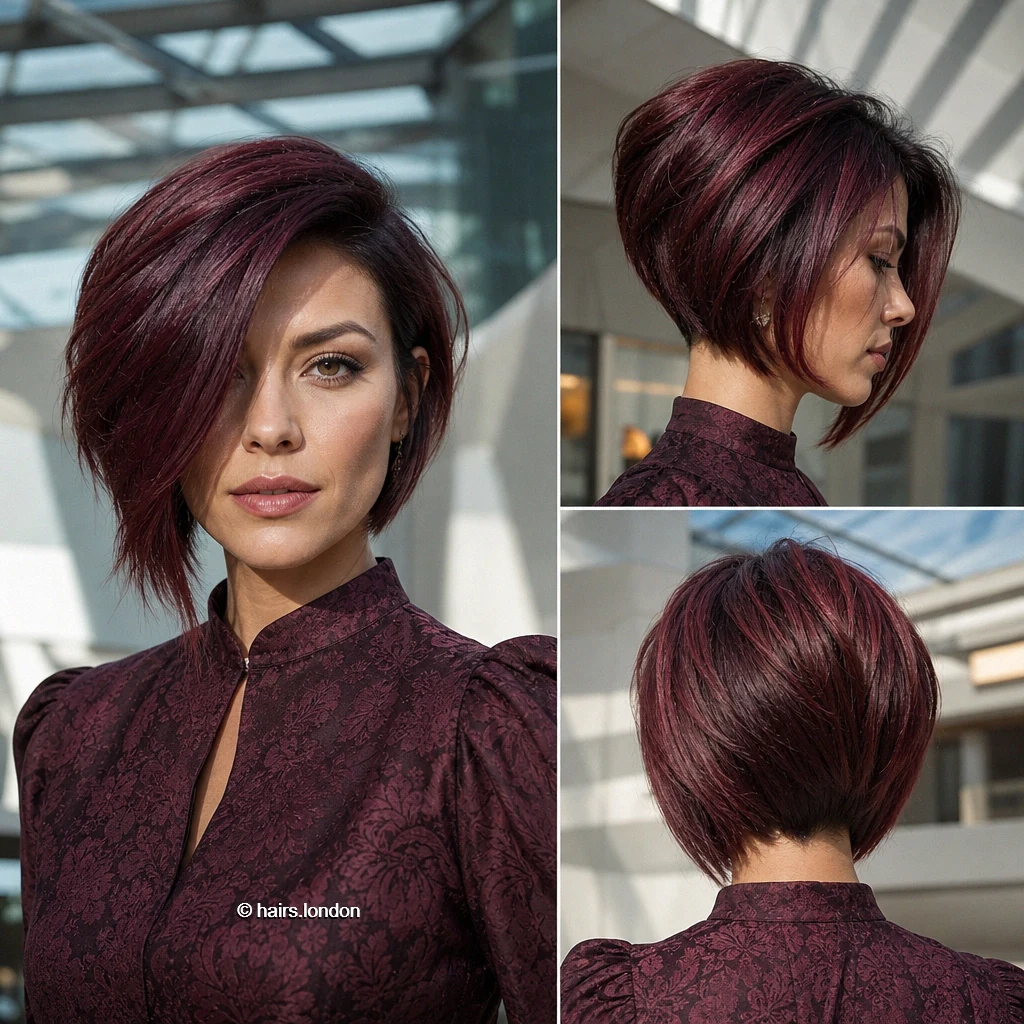
Deep wine color lends dimension to this sharply contrasted bob. One sweeping front exceeds the opposite jaw length side. The back is short, rounded and visibly graduated toward the nape. Its deep side part creates volume above the longer section. Brush the front smooth while gently lifting the shorter back. An amount of serum can refine the visible ends. Discuss whether your natural growth patterns will hold this side part. Dense hair may need thoughtful weight control around the crown. Check the nape regularly because growth quickly changes its proportion. Refresh red tones according to how quickly your color fades.
19. Mulberry Graduated Bob with a Tapered Point
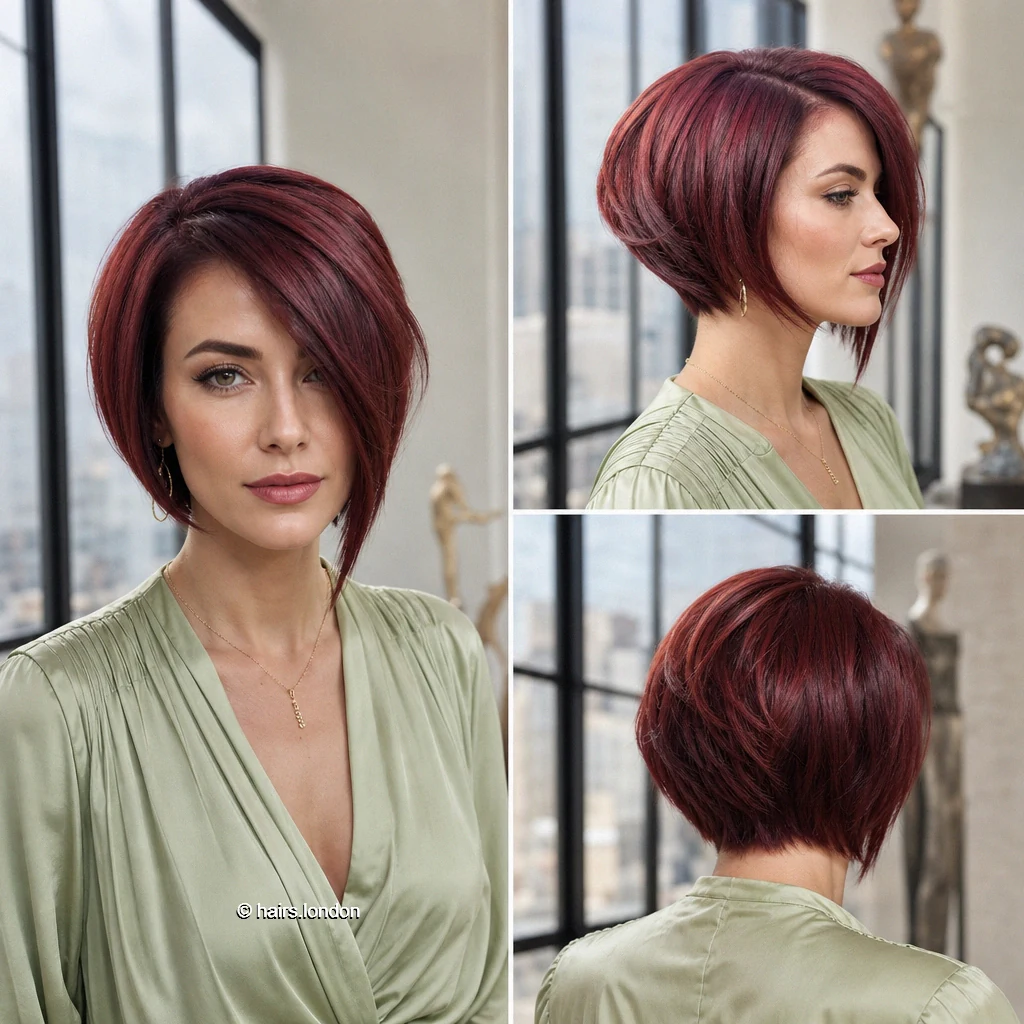
Mulberry red strands form a rounded crown above a narrow nape. The front section tapers into a longer, jaw skimming point. Side and back views show graduation supporting the fuller shape. A side part directs the front diagonally across the forehead. Smooth the point with a brush while raising crown roots. Use flexible hold rather than coating the entire shape heavily. Ask your stylist to assess density around the shorter nape. Coarse hair may need controlled bulk removal to sit neatly. Trim before the point and back lose their intended contrast. Gentle color care can help maintain the berry finish.
20. Violet Plum Bob with a Sculpted Back
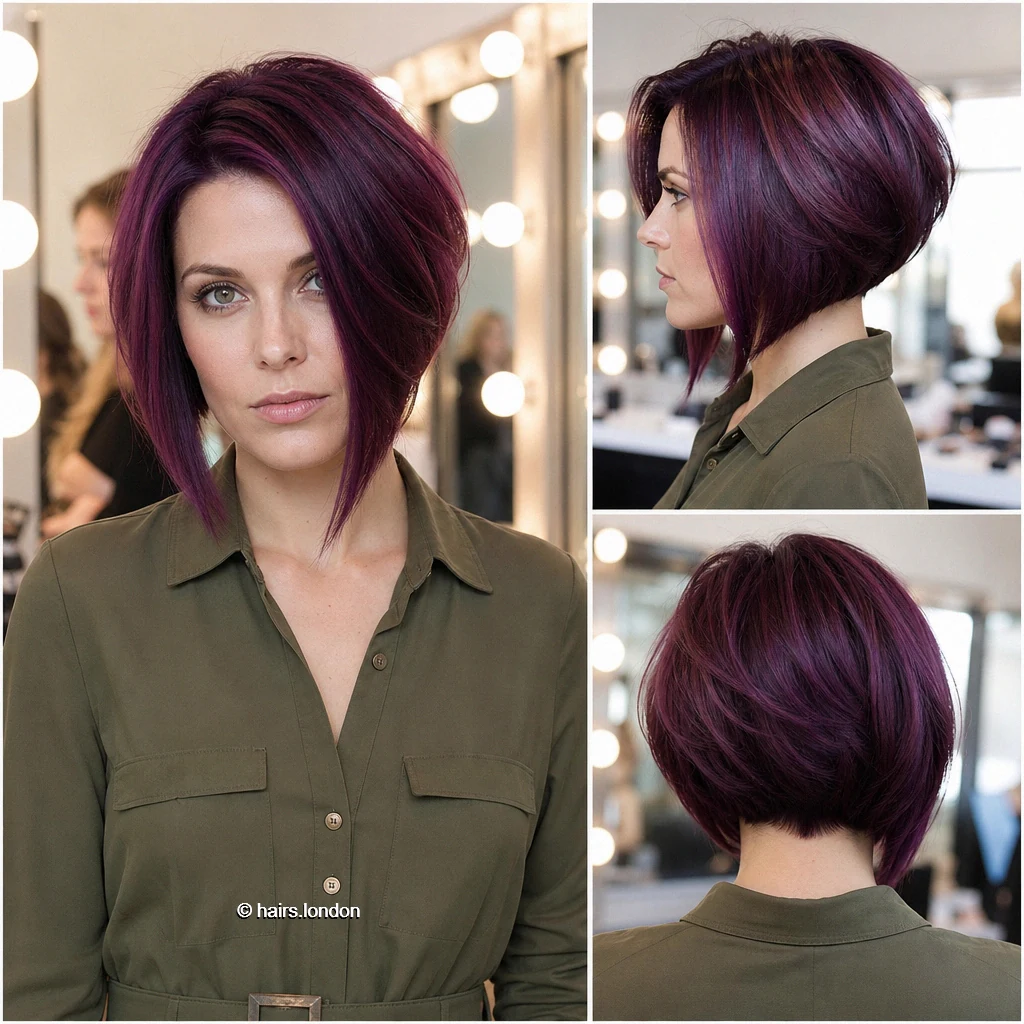
Violet plum highlights catch the light across this graduated bob. A long front piece extends beyond its short, rounded back. The back view reveals fullness above a closely shaped neckline. A side part adds height and directs hair across the face. Dry the front smooth, then lift the crown without teasing. Use heat protection when refining that pointed section with irons. Discuss how your natural density supports the sculpted upper shape. Fine hair might need gentler layering to retain visible fullness. Schedule trims when the short back starts losing its contour. Ask about color refreshes to maintain the violet cast.
21. Plum Shaggy Bob with a Soft Fringe
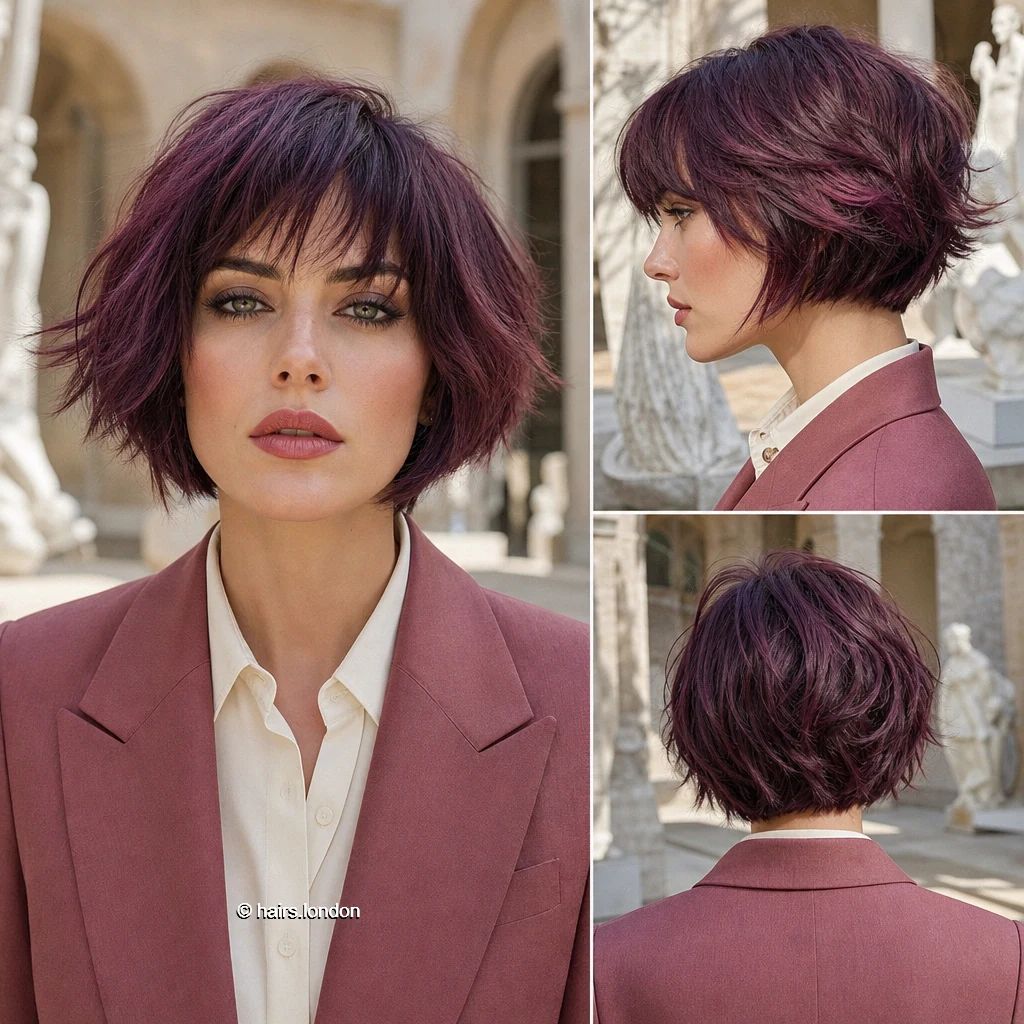
A soft fringe crosses this plum bob’s textured forehead area. Its sides reach roughly the jaw, with feathered ends throughout. The back stays short and layered rather than sharply stacked. Loose pieces give the silhouette width and casual movement. Scrunch a little mousse through damp lengths to enhance bends. Let the fringe dry forward at first before arranging its wispy sections. Ask your stylist to adjust layering for your curl pattern. Very dense hair may require selective weight removal beneath layers. Trim when the ends become ragged instead of intentionally piecey. Color safe washing helps protect the muted plum appearance.
22. Dark Plum Asymmetrical Bob with a Short Nape
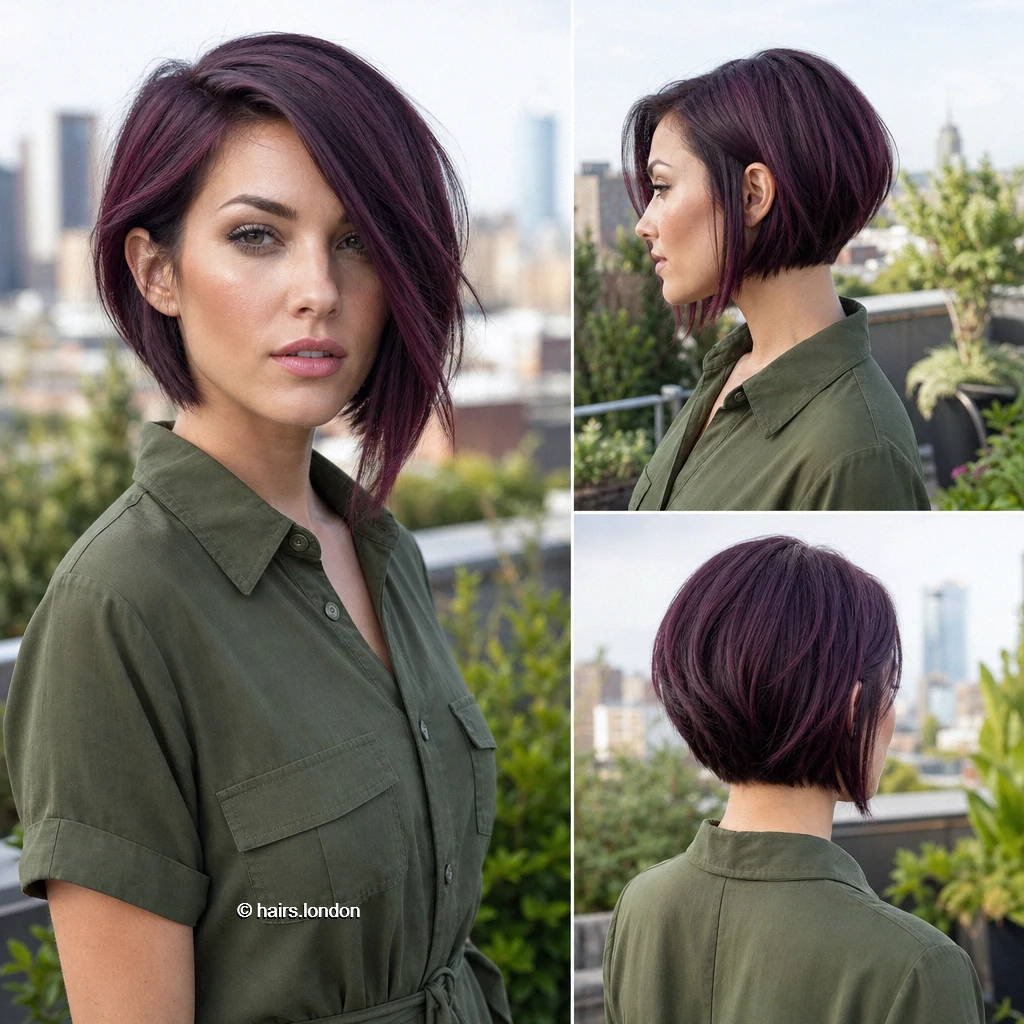
Dark plum color runs through this compact asymmetrical bob. The longer front section passes the jaw on one side. The opposite side and visible back finish much shorter. Rounded layers build fullness above a clearly short nape. A side part helps the long section sweep diagonally. Blow dry that section downward while keeping back roots buoyant. Ask your stylist to check the shape from every angle. Your density and growth patterns will influence its daily balance. Maintain the nape before it softens the front contrast. Use gentle heat and washing to preserve the purple tone. Schedule trims around that contrast.
How to Choose Your Bob Length and Shape
Decide first where you want the perimeter to sit: at the jaw, around the neck or close to the shoulders. A solid edge emphasizes density, while layers add movement and can reduce bulk. A longer front creates an A-line effect; a visibly graduated back builds a different kind of fullness and needs more frequent shaping. Consider how your hair shrinks, bends or lifts at the nape before settling on a length.
Styling Fine, Thick, Wavy and Curly Textures
For fine hair, keep heavy creams away from the roots and smooth the perimeter without flattening it. Thick hair often benefits from carefully placed internal weight removal rather than aggressive thinning at the ends. On wavy hair, scrunch lightweight foam into damp lengths and let the bob’s layers separate. For curls, discuss the cut at its dry, naturally worn length; diffuse gently and preserve enough weight at the edge to avoid unwanted width. Dry a fringe in its intended direction before it sets.
Keeping Red, Copper and Plum Color Fresh
These images show shades ranging from copper red to deep wine and violet plum. If your chosen shade is colored, ask your colorist about its likely fade pattern and an appropriate refresh schedule. Gentle washing, moderate water temperature and heat protection can help reduce avoidable fading. Root upkeep may be especially noticeable on smooth, precisely parted bobs; textured shapes can make regrowth look less uniform.
Maintaining the Bob Perimeter and Graduation
A straight or smoothly rounded perimeter shows uneven growth quickly, so arrange a trim when its edge stops looking intentional. Graduated backs need attention as the nape grows and the weight line drops. Angled and asymmetrical bobs also depend on a clear difference between their front and back lengths. Layered lobs can usually tolerate a softer grow out, although thin or split ends still need tidying.
What to Discuss with Your Stylist
Bring the views that show the details you want, especially the back view if you are considering graduation. Point out your preferred part, fringe length, daily styling time and whether you usually wear your natural texture. Ask where the weight line will sit, how much density will remain at the perimeter and how the proposed shape will grow out. Discuss color upkeep separately from cut maintenance so both fit your routine.
Frequently Asked Questions
What is the difference between a bob and a lob?
A bob generally ends around the jaw or neck, while a lob is a longer bob that approaches or reaches the shoulders. The boundary is flexible; the visible perimeter is more useful than the label.
Is an A-line bob the same as a stacked bob?
No. A-line describes a perimeter that is longer in front. Stacked or graduated describes shorter lengths building weight at the back. One haircut can show both features.
How do I choose between a blunt and layered bob?
Choose based on the edge and movement you want, as well as your density. A solid perimeter can make fine ends appear fuller; layers can release movement or manage bulk when placed carefully.
Can fine hair support a graduated bob?
It can, but the amount of graduation should suit the available density. Ask your stylist to preserve enough weight at the lower edge so the back does not become transparent.
How can thick hair avoid looking bulky in a short bob?
Discuss selective internal weight removal and a perimeter that works with your texture. Removing too much from the ends can replace bulk with frizz or an uneven outline.
Will a bob work with natural curls?
A bob can work with curls when its length, layers and perimeter account for shrinkage and curl pattern. Have your stylist assess how the hair sits in its naturally worn state.
Should I add a fringe to a textured bob?
A fringe is optional. Wispy or sweeping versions can blend into textured layers, but its length should account for your growth patterns and how often you are willing to style it.
Which of these bobs needs the least daily styling?
That depends on your natural texture. A layered bob or lob that follows your existing wave may take less work than a sleek perimeter that requires regular smoothing.
How often should a precise bob be trimmed?
Trim it when the perimeter, front angle or short nape begins to lose its intended shape. Precise and graduated cuts generally show growth sooner than softly layered lobs.
How do I grow out a graduated bob?
Ask for gradual adjustments that reduce the difference between the shorter back and longer front. Keeping the perimeter tidy during the transition helps it look like a chosen shape.
How can I keep red or plum bob color looking fresh?
Use a gentle color care routine, protect hair during heat styling and ask your colorist when a refresh is appropriate. The right schedule depends on the shade and your starting color.
What photos should I take to a bob consultation?
Bring front, side and back views when possible. Identify the specific perimeter, front length, fringe and back fullness you like rather than relying on a haircut name alone.
Conclusion
The strongest choice among these red and plum bob haircuts is the one whose shape works with your density, natural texture and preferred styling routine. Compare the perimeter and back profile as closely as the color, then use those details to guide a practical salon consultation.